
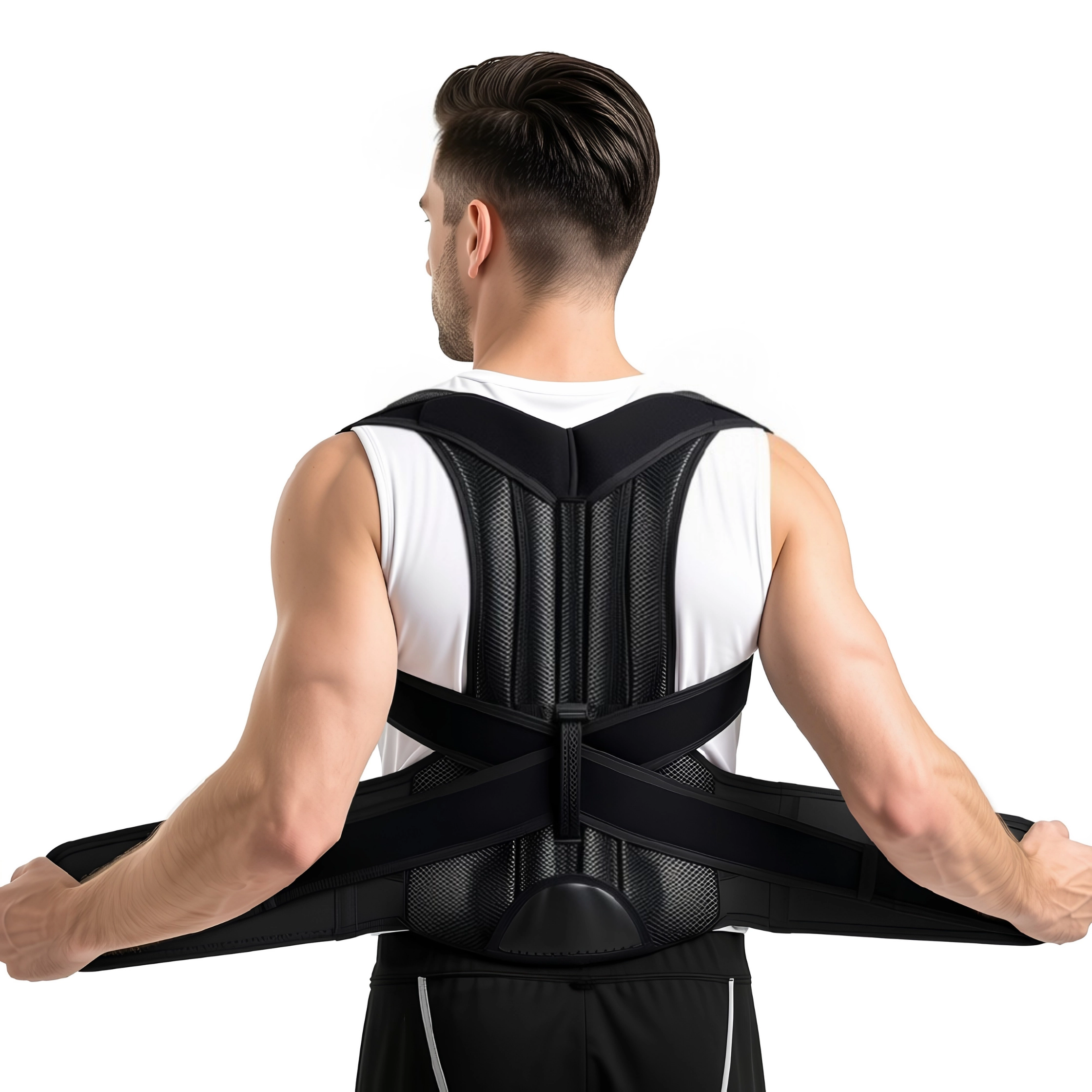
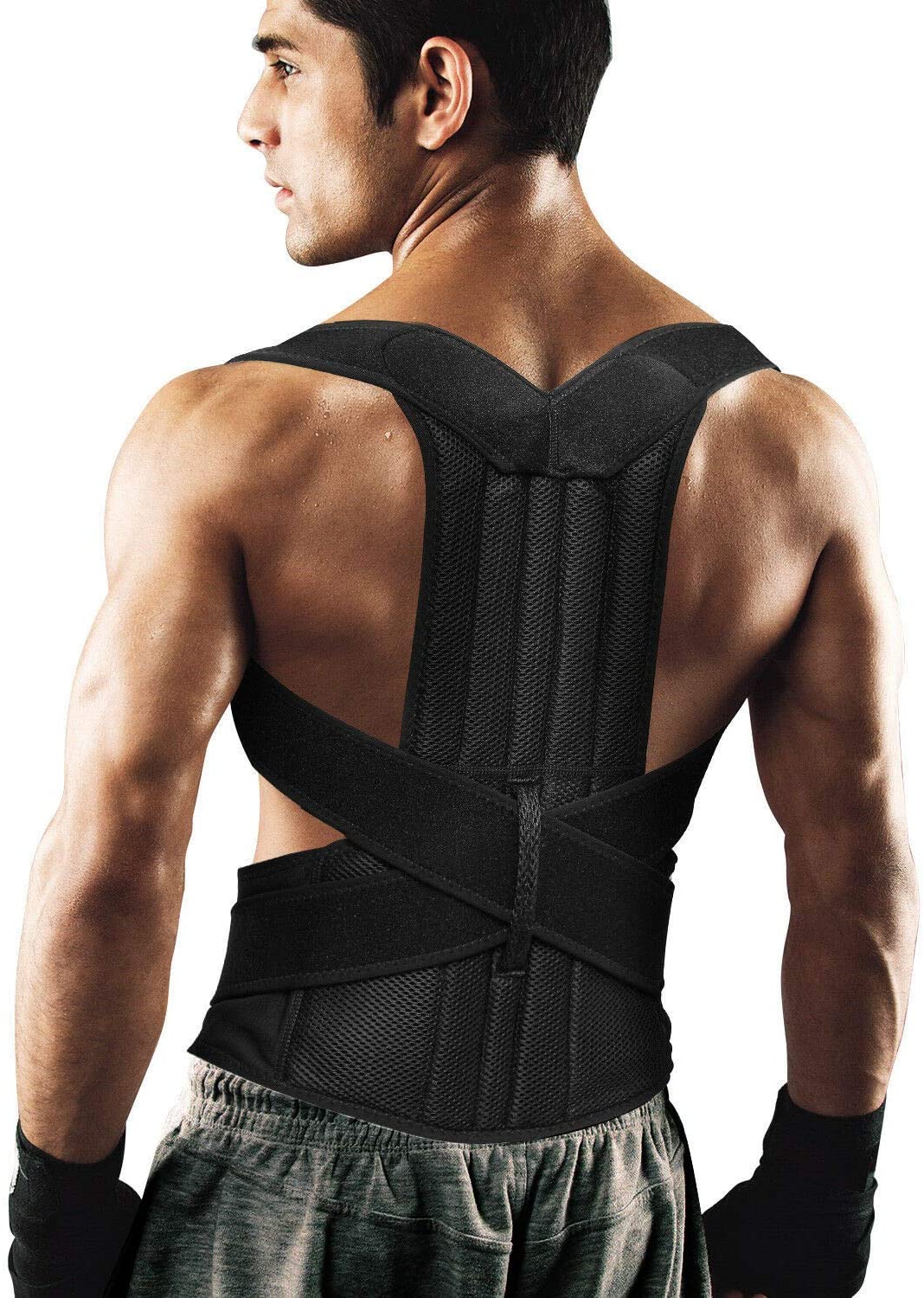
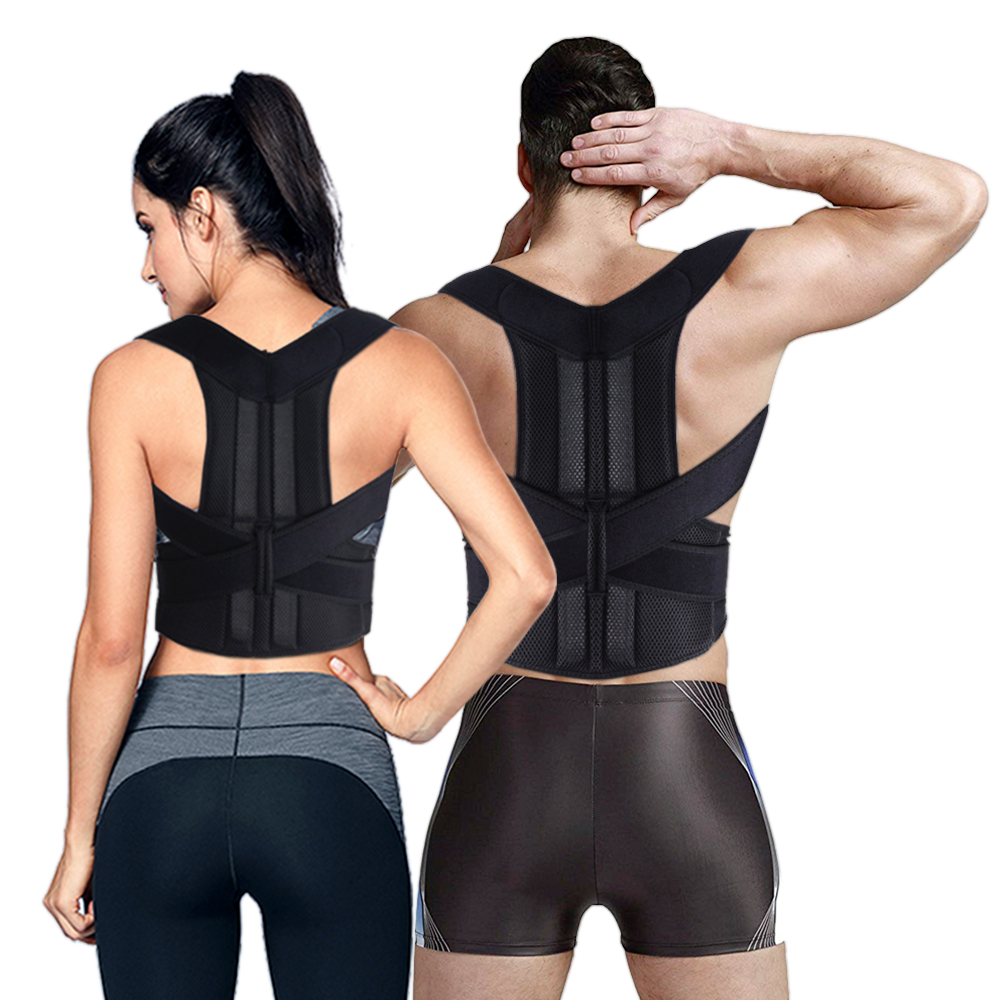
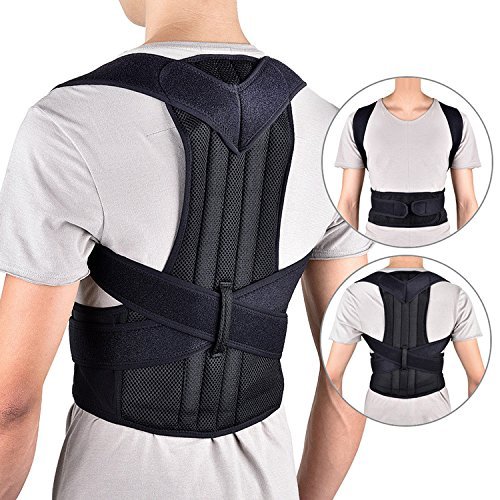
Back Support Brace for Poor Posture, Hunchback, Spine Misalignment & Rounded Shoulders
Price range: £12.49 through £15.99inc VAT
- 1x Back Support Brace for poor posture, thoracic kyphosis, lordosis, hunchback, spine misalignment & Rounded Shoulders
- For both Men & Women
- Available in sizes Small, Medium, Large, XL & XXL, 3XL and 4XL with two easy to use adjustable straps help you find the right support and fit for you.
- The maximum length of the belt are as follows measuring below the rib cage and around the stomach area.
- Medium 75-85cm 29.5-33.5 Inches
Large 85-95cm 33.5-37.4 Inches
XL 90-105cm 35.4-41.3 Inches
2XL 100-110cm 39.4-43.3 Inches
3XL 105-115cm 41.3-45.3 Inches
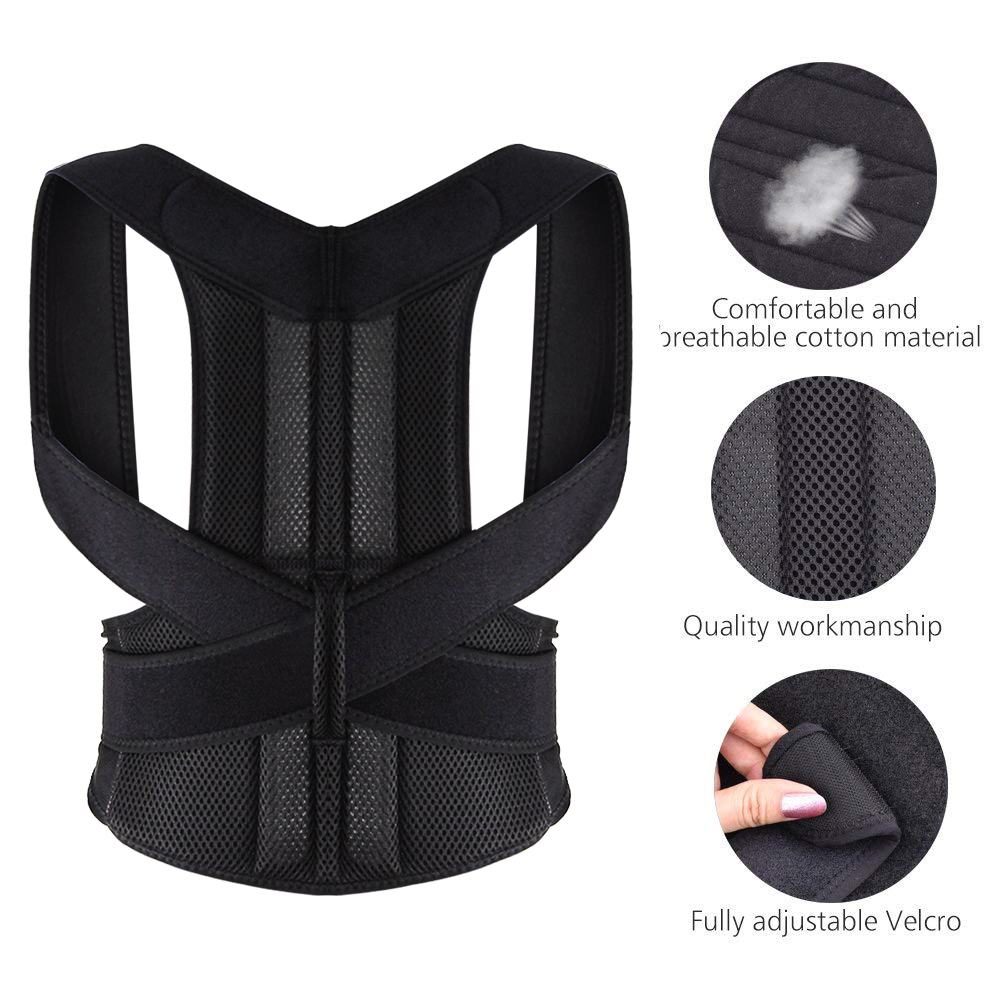
4XL 110-120cm 43.3-47.3 Inches - Made from lightweight breathable material and features a padded lining for extra comfort
- Features two flexible supportive rods that help to keep your spine straight and support your back and shoulders in the correct position
- Ergonomically designed to help improve your posture reducing tension and pressure off your back
- Provides soothing compression to help ease shoulder, lower and upper back pain
- Great for treating and preventing common back problems and injuries including Slipped disc, Sciatica, Facet syndrome, Lumbar spinal stenosis
- Includes a full 30 day money back guarantee if you are not 100% satisfied with your purchase!
Get 15% off - When bought together with:
-
Back Support Brace for Poor Posture, Hunchback, Spine Misalignment & Rounded Shoulders
Price range: £12.49 through £15.99inc VAT
- This item: Back Support Brace for Poor Posture, Hunchback, Spine Misalignment & Rounded Shoulders( Price range: £12.49 through £15.99inc VAT)
Have you ever stood up from a low chair and felt a catch in your lower back? Or noticed a persistent tightness across the top of your shoulders by mid‑afternoon? These small signals from your body are easy to brush off. But they’re not random. They build up gradually, often without you noticing, until one day you realise that sitting, standing, or even walking doesn’t feel as comfortable as it used to.
The way you hold yourself when you’re working, driving, or just relaxing shapes how your back feels hour by hour. When that position pulls you forward—head drifting ahead of your shoulders, upper back rounding, pelvis tilting—your muscles have to work harder to keep you upright. Over time, this becomes a habit. The muscles that should support you start to fatigue, and the ones that pull you into a slump get tighter. It’s a cycle that can leave you with a nagging ache, a stiff neck, or a feeling that you’re not standing as tall as you once did.
That’s why posture matters. It’s not about having a perfect military stance. It’s about giving your body a chance to move and rest in a way that doesn’t cause unnecessary strain. And although it can feel like your current posture is set, it isn’t. Your spine is adaptable, and with the right support and a bit of practice, you can train it back towards a more comfortable, natural alignment. This article looks at what’s happening in your body, how a posture support like the BackReviver brace can help, and how to get the most from it.
At a Glance: What This Brace Does
- Two flexible support rods – gently remind you to straighten up as you start to slump
- Padded lining – stops the rods from digging into your back, even after several hours
- Breathable, lightweight fabric – keeps you comfortable through a full working day
- Low‑profile, slim design – sits discreetly under a t‑shirt, blouse or dress shirt
- Two adjustable straps – let you fine‑tune the fit so it feels snug, not restrictive
- Extended back coverage – spreads support evenly from your upper back down to your lumbar area
- Ideal for rounded shoulders, hunching, or upper back tension
- Works as a training tool, helping you relearn healthy spinal alignment
- Wear for 1–2 hours a day to start, then gradually increase if comfortable
- Combine with simple exercises for longer‑lasting postural change
- Available in a wide range of sizes to suit most adults
- Not a medical device – seek professional advice if symptoms are new, unexplained, or worsening
Understanding Back Pain and Posture: What’s Happening in the Body
To see why a posture brace helps, it’s worth understanding what happens when you slouch. Your spine is made up of 33 vertebrae stacked in a gentle S‑curve. That curve acts as a natural shock absorber, spreading your weight evenly across your back. Between each vertebra sits a small, gel‑filled cushion called a spinal disc. These act like soft spacers, stopping the bones from grinding together and absorbing the everyday jolts of walking, sitting and lifting. When your posture is good, your head sits directly over your shoulders, your shoulders are relaxed and level, and your pelvis is neutral. In that position, the load on each vertebra, disc and muscle is balanced, and movement feels fluid.
When you slouch, that balance falls apart. Your head drifts forward, and for every inch it moves ahead of your shoulders, your neck has to support an extra ten pounds of pressure. Your upper back rounds, so the chest muscles shorten and the shoulder blades spread apart. Your lower back may over‑arch or flatten, depending on how you sit. This pushes on ligaments, irritates joints, and forces muscles to work in awkward patterns. Some muscles become overactive and tight, such as the pectorals at the front of the chest and the upper trapezius that shrug your shoulders. Others become weak and inhibited, like the rhomboids between your shoulder blades and the deep neck flexors that help keep your head upright. It becomes a self‑reinforcing cycle: the weaker your posture muscles get, the harder it is to stand tall, so you slouch more, and the cycle continues.
The effects aren’t limited to a sore back. Poor posture can trigger tension headaches, restrict your breathing, affect your balance, and even lead to digestive discomfort because your abdomen is compressed. It also speeds up wear and tear on the spinal discs, which can contribute to conditions such as degenerative disc disease or a herniated disc. So working on your posture isn’t just dealing with a surface complaint—you’re addressing one of the underlying drivers of many back problems.
The most common postural issues are rounded shoulders, a hunched upper back (thoracic kyphosis), and an over‑arched lower back (lordosis). These aren’t simply cosmetic concerns. They represent a genuine change in the resting length of your muscles and the position of your bones. When the upper spine curves forward excessively, the front of the vertebrae compress and the ligaments at the back of the spine get stretched. When the lower back over‑arches, your pelvis tilts forward and the small facet joints at the back of each vertebra become pinched. Over time, these patterns make everyday tasks—opening a door, lifting a shopping bag, or just sitting through a meeting—feel harder than they should.
Why a Posture Support Makes Sense
If your muscles have adapted to a slouched position, simply telling yourself to “sit up straight” is rarely enough. Your brain has filed that slouched posture as normal, and your muscles have shortened or lengthened to match. Trying to hold yourself upright for more than a few minutes feels tiring and unnatural, because the muscles that should support you are weak while the ones that pull you forward are tight.
A posture support helps for several reasons. First, it gives you gentle physical feedback. As you start to slump, the brace presses against your back and reminds you to straighten up. This is proprioception—your body’s sense of where it is in space. It constantly sends signals to your brain about the position of your spine and shoulders, and that awareness helps break the habit of slouching. Second, it takes some of the load off your muscles, so they’re not fighting gravity all day. Third, it holds your spine in a more neutral position while your muscles and brain relearn what proper posture feels like. Think of it as training wheels on a bicycle: they don’t pedal for you, but they keep you balanced while you learn, and eventually you can manage without them.
This kind of support is especially useful if you spend long hours at a desk, drive a lot, or constantly look down at your phone. Those activities all encourage forward head posture and rounded shoulders, and they can cause muscle fatigue and discomfort even in people who are otherwise healthy. A posture brace gives your body a reference point, so you don’t have to think about your back every minute of every day.
Introducing BackReviver and the Philosophy Behind This Brace
BackReviver is a brand that focuses entirely on back health and posture support. They make a range of products—braces, lumbar supports, and other ergonomic aids—designed to help people sit, stand, and move with better alignment. Their approach is straightforward: your body already knows how to stand well; it has simply forgotten, and the right tool can help it remember.
This particular brace, a full‑back posture corrector for both men and women, is one of their most popular items. It’s aimed at people who struggle with rounded shoulders, hunchback, upper back tension, or general postural fatigue from daily life. It’s also helpful for those already receiving professional care, such as physiotherapy or chiropractic treatment, and need extra support between sessions. In all cases, it works best as part of a broader approach that includes exercise, stretching, and attention to how you move during the day.
Because this brace is designed for everyday posture training rather than clinical treatment, it’s built to be comfortable enough for normal wear and unobtrusive enough to disappear under your clothes. It comes in a wide range of sizes to fit different body types. But the real thought has gone into how it feels and how it works with your body, which we’ll look at in the next sections.
How the Brace Is Designed to Work: The Biomechanics of Support
Let’s look at what this brace actually does in the body. At its core are two flexible support rods that run vertically along your back, one on each side of your spine. These rods aren’t hard or restrictive. They’re made from a springy, lightweight material that offers resistance when you start to round forward. As soon as your shoulders begin to slump, the rods press gently against your upper and mid‑back, reminding you to straighten up.
That gentle pressure is more than just a nudge. Your skin and muscles contain specialised sensory receptors called mechanoreceptors, and your muscles hold tiny sensors called muscle spindles. When the brace presses against your back, it stimulates these receptors, which send a steady stream of information to your brain about the position of your spine and shoulders. Over time, your brain starts to use that information to adjust your posture automatically, even when you’re not consciously thinking about it. This is motor learning—the same process you use to learn to ride a bike or type without looking at the keys. Every time the brace catches you slouching, it’s teaching your nervous system a new movement pattern.
The brace also provides mild compression around your torso. This does two things. First, it creates a tactile reminder of your posture, so you unconsciously adjust even without thinking. Second, it offers light muscular support, taking some of the strain off the erector spinae—the long muscles that run alongside your spine and help you stay upright. Those muscles are often exhausted from holding you up all day, especially if you’re at a desk for hours. The extended coverage of the brace runs from your upper back down to your lumbar area, the lower curve of your spine. This wide footprint spreads the pressure evenly, so you don’t end up with sore spots from concentrated force. Instead, your whole back feels supported, stable, and encouraged to stay erect.
The flexible rods are embedded within the fabric and can’t be removed, so there are no separate pieces to fit or adjust. The rods flex with your natural movement; they don’t lock you into a rigid position. The aim isn’t to pull your shoulders back so far that you feel stiff. Rather, it’s to guide you to a neutral spine—the position your body naturally wants when your muscles are balanced and healthy. Wearing the brace should feel like a subtle reminder, not a correctional device. If you feel any sharp pain or restricted breathing, the brace is probably too tight, or the size is wrong.
What It’s Like to Wear It: Comfort, Fit and Everyday Experience
Comfort is essential. A brace that causes discomfort will end up in a drawer, and it won’t help anyone. BackReviver has clearly given this careful thought. The brace is made from a lightweight, breathable fabric that wicks moisture away from your skin. You can wear it for hours without feeling sweaty or clammy, even in warmer conditions or during light activity.
The inside is lined with a soft, padded material that prevents chafing and pressure points. It’s flexible enough to move with you during everyday tasks, yet structured enough to provide consistent support. The fabric is also stretch‑resistant, so it keeps its shape after repeated use. You won’t worry about it rolling up at the edges or bunching under your clothes.
One of the standout features is the slim, low‑profile design. Unlike bulky medical braces that look like orthopaedic equipment, this BackReviver brace is discreet. It lies flat against your body and can be easily hidden under a regular t‑shirt, blouse, or dress shirt. You can wear it to work, to the shops, out for a walk, or to a meal with friends without anyone noticing. No awkward bulges, no visible lines, no unwelcome questions.
Durability matters as well. The brace has double‑stitched seams at every stress point, which prevents tears and fraying in normal use. The hook‑and‑loop straps are reinforced to stay firm after hundreds of applications, and the flexible rods are encased in protective channels so they won’t poke through the fabric. With proper care, this brace can provide months of reliable support.
Living with the brace also means adjusting to how it feels in different situations. At a desk, you’ll notice it gently stops your shoulders from rounding forward when you reach for the keyboard. In the car, it keeps your upper back from collapsing into a C‑shape during long drives. On a walk, it reminds you to lift your chest and keep your head level. Many people find that standing taller changes how they carry themselves in conversations and meetings. That’s not just a mental effect; it’s your physical alignment changing your centre of gravity and your body language.
Conditions This Brace May Help Support
This brace is designed to promote a more neutral spinal alignment and reduce strain on the muscles and joints of your back. As such, it may provide useful supportive relief for several specific problems. It’s important to be clear from the outset: this brace does not treat or cure any of these conditions. It simply helps create the conditions in which your body can function more comfortably, and it works best alongside professional guidance and appropriate exercise. Think of it as part of a larger toolkit, not a standalone solution.
When your spine is in a neutral position, the pressure inside your spinal discs drops significantly. That’s a measurable effect called intradiscal pressure. Slouching can double or even triple that pressure, which is why poor posture often leads to disc‑related pain. A posture brace helps you maintain a position that keeps that pressure low, and it also reduces abnormal stress on the facet joints at the back of each vertebra. With that general principle in mind, here’s a closer look at how the brace specifically supports each of the following issues.
Kyphosis (Often Called Hunchback Posture)
Thoracic kyphosis is an exaggerated outward curve of the upper spine, often visible as a hunched back. It can develop from years of poor posture, age‑related changes, or other health factors. People with this condition frequently feel a persistent ache between the shoulder blades, and their chest may feel tight and compressed. Because the upper back is rounded, the head has to tilt up to look ahead, which strains the muscles at the back of the neck.
The brace helps by encouraging the thoracic spine to extend and straighten. The flexible rods press gently against the curve and give your body feedback to lengthen rather than slouch. This can ease tension in the upper back and open up the chest, making it easier to take a full breath. For someone used to a rounded upper back, this brace acts as a constant position reminder, gradually teaching the brain that a straighter spine is both possible and comfortable.
Rounded Shoulders
Rounded shoulders are a very common postural issue, often seen alongside kyphosis. Over time, the shoulder blades drift forward, pulling the chest inward and the upper back outward. This can cause tightness across the front of the shoulders and weakness in the muscles between the shoulder blades—the rhomboids. You might notice that your shoulders feel stiff after a day at the keyboard, or that your arms tire quickly when carrying shopping bags.
The brace brings the shoulder blades into a more retracted and depressed position. This opens the chest, relaxes the upper trapezius muscles, and helps you keep your shoulders back during the day. It also reduces strain on the rotator cuff muscles, which can become irritated when your shoulders are constantly rolled forward.
Lordosis (Swayback)
Lordosis is an exaggerated inward curve of the lower back, sometimes called swayback. It’s common in people who spend long hours on their feet, carry extra weight around their abdomen, or have weak core muscles. With lordosis, the pelvis tilts forward and the lower back over‑arches. This can cause a deep, aching pain in the lower back, especially after standing or walking for long periods, along with stiffness in the hips.
The extended lower coverage of the brace helps stabilise the pelvis and lower back, making it easier to find a neutral pelvic tilt rather than an exaggerated arch. The gentle compression also reminds you to engage your deep core muscles, which support the lumbar spine from the inside. Over time, this can reduce lower back fatigue and encourage your pelvis to rest in a more balanced position.
Sciatica
Sciatica is pain that travels along the path of the sciatic nerve, often down the back of one leg. It’s usually caused by a herniated disc or spinal stenosis pressing on a nerve root. The pain can feel sharp, burning, or like a deep muscular ache, and it often worsens when you sit for a long time, bend forward, or lift something awkwardly.
While this brace does not directly treat the cause of sciatica, it can reduce pressure on the lower back by improving spinal alignment and decreasing muscle spasm. When the lumbar spine sits in a more neutral position, there may be less irritation to nearby nerves. The brace also helps you maintain an upright posture while sitting, which is a common trigger for sciatic pain. Some people find that wearing the brace during activities that tend to provoke their sciatica helps them move more comfortably.
Slipped Discs (Herniated or Prolapsed Discs)
A slipped disc—more properly called a herniated or prolapsed disc—occurs when the inner gel of a disc pushes through the outer ring, sometimes pressing on a nerve. This can cause a sudden, sharp pain in your back, or a shooting, numbing sensation down a leg. The area is often tender, and bending or twisting makes it worse.
The brace helps by stabilising your core and reducing excessive flexion or rotation of the spine—the movements that most aggravate disc problems. It encourages safer movement patterns during the day, giving the affected area a chance to settle. It’s not a replacement for medical treatment, but it can be a useful extra layer of support while you recover under professional care.
Facet Syndrome
Facet syndrome involves inflammation of the small joints between your vertebrae, known as the facet joints. These joints guide movement and keep the spine stable, but they can become irritated by repeated extension, rotation, or everyday wear and tear. You might feel a dull ache in your lower back that worsens when you lean backward, stand up from a low chair, or walk on uneven ground.
The brace limits extreme ranges of movement, giving these joints a break from repetitive stress. It also reduces muscle spasm around the affected area, which may help ease the pain. Unlike with lordosis, where the goal is to reduce the arch, facet syndrome often benefits from gentle stabilisation that stops the back from over‑extending. The brace does this by providing a firm but comfortable boundary to your movement range.
Lumbar Spinal Stenosis
Lumbar spinal stenosis is a narrowing of the spinal canal—the bony tunnel that protects the spinal cord and nerve roots. When that space becomes narrower, the nerves passing through it can be compressed, causing pain, numbness, or weakness in the legs. People with stenosis often find that leaning forward brings relief, because it opens up the canal and takes pressure off the nerves. Over time, this can lead to a flattened, stooped posture and a heavy, tired feeling in the legs after walking even short distances.
This brace provides gentle lumbar support that encourages a neutral spine, helping to reduce the pressure that can aggravate stenosis symptoms. It also helps you avoid the excessive forward stoop that can strain your upper back and neck. By stabilising your trunk, it may make it easier to walk with a more upright posture and less leg heaviness.
How to Use It for Best Results
Getting the right fit is essential for both comfort and effectiveness. The BackReviver brace is available in a range of sizes, from Medium up to 4XL. To find your best fit, measure around your torso just below the rib cage, at the narrowest part of your stomach. If you’re between sizes, choose the larger one. A brace that’s too small can dig in and feel restrictive, while one that’s too large won’t give you the feedback you need.
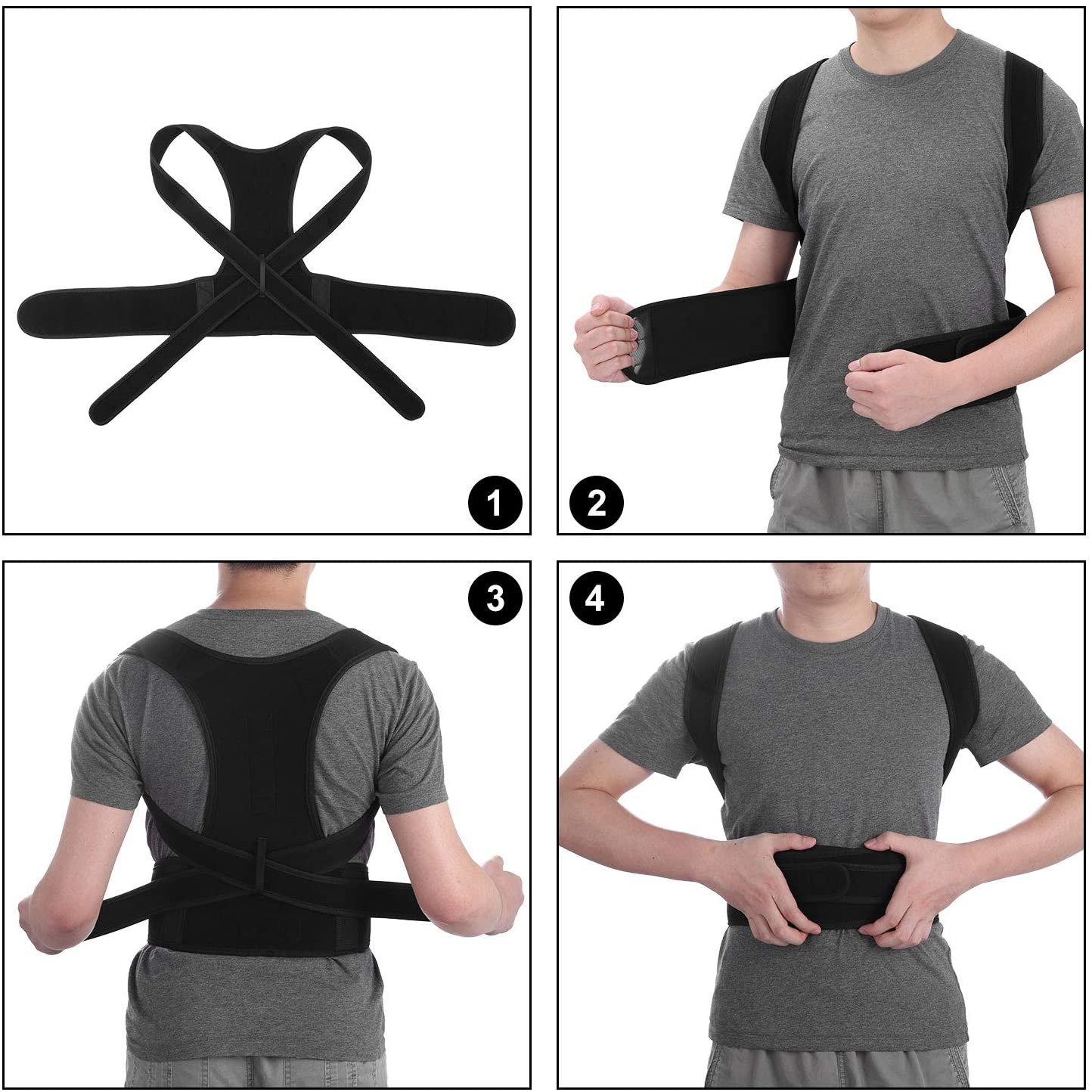
To put the brace on, place it against your back with the lower portion sitting comfortably over your lumbar area. Bring the side panels forward around your torso, and secure the two adjustable straps. The straps should be snug but not restrictive—you should still be able to breathe deeply and move freely. If it pinches, slides, or digs in, adjust the straps or consider a different size.
For best results, start by wearing the brace for one to two hours a day. This gives your body time to adjust. Gradually increase that over a week or two, aiming for three to four hours at a stretch if it feels comfortable. You don’t need to wear it while sleeping; your body needs freedom to move during rest. You should also take it off for any activity that involves intense bending or twisting, unless your doctor advises otherwise.
It’s important not to rely on the brace all day, every day, because your muscles can become dependent on it. Instead, wear it for a few hours during the part of your day when you’re most likely to slouch—perhaps during work hours, a long drive, or while doing chores. That way, your body also has time to practise good posture on its own.
Here’s a sample weekly schedule to give you an idea:
- Week 1: Wear for 1–2 hours in the morning, ideally during your most sedentary period.
- Week 2: Increase to 2–3 hours, in two shorter sessions if you prefer.
- Week 3: Continue with 3–4 hours, but always with breaks. After 60–90 minutes of wear, take it off for 15 minutes before putting it back on.
This gradual approach lets your muscles adapt without becoming reliant on the brace.
What to Expect Over Time and the Exercises That Help
Posture correction doesn’t happen overnight. Your body has spent years, perhaps decades, learning to slouch, and it won’t unlearn that pattern in a few days. What you can expect is a gradual, noticeable shift.
In the first week, you’ll likely be very aware of the brace. Your posture will look better while you wear it, but your muscles may feel tired at the end of the day. That’s normal—the muscles that haven’t been working properly are finally being used. If you feel any sharp pain, remove the brace and check the fit.
After two to four weeks, many people find they no longer have to think about standing up straight so often. The brace has helped them develop a sense of what good posture feels like. They also notice their back aches less at the end of the day, because the brace has been supporting their natural alignment and giving the muscles and joints a break from constant strain.
After a month or more, you may find you can wear the brace less often and still maintain better posture. That’s the goal: the brace is training you to stand tall on your own. To support this, it’s helpful to pair the brace with simple exercises that strengthen your back and core and stretch the tight chest and shoulder muscles.
Here are a few movements that work well alongside the brace:
**Chin tucks** strengthen the deep neck flexors that keep your head aligned over your spine. Sit or stand tall, gently draw your chin back as if making a double chin, hold for five seconds, and repeat ten times.
**Shoulder blade squeezes** activate the muscles between your shoulder blades, which helps prevent rounded shoulders. Squeeze your shoulder blades together as if holding a pencil between them, hold for five seconds, and repeat ten to fifteen times.
**Thoracic extension** counteracts the forward rounding of the upper spine. You can do this by sitting on a chair, placing your hands behind your head, and gently extending your upper back over the top of a rolled towel or the back of the chair. Hold for fifteen seconds.
**Wall angels** improve shoulder mobility and control. Stand with your back against a wall, arms bent at 90 degrees, and slowly slide your arms up and down like a snow angel, keeping your back and arms in contact with the wall.
**Cat‑cow stretches** help maintain flexibility in the whole spine. On all fours, move slowly between arching your back upward and letting it sag downward, following your breath.
Performing these exercises three times a week will strengthen the muscles that the brace helps you engage. Over time, you’ll likely find your posture improves even when you’re not wearing the brace.
It’s also worth looking at your everyday environment. If you sit at a desk, set your monitor so the top of the screen is at eye level, keep your keyboard close, and place your feet flat on the floor. When using a phone, hold it up rather than bending your neck down. In the car, adjust your seat so your hips are slightly higher than your knees and you’re not reaching for the pedals. Small changes like these reinforce the work you’re doing with the brace.
Safety and When to Seek Help
While this brace is generally safe for most adults, it isn’t suitable for everyone. If you have an existing medical condition, have recently had surgery, or are unsure whether a back brace is appropriate for you, talk to your GP, physiotherapist, or another qualified healthcare professional before using it. This is especially important if you have a diagnosed spinal condition, a recent fracture, or a skin condition that affects your torso.
Because this brace is not a medical device, it doesn’t carry the same regulatory approvals or indications. That doesn’t mean it’s unsafe, but it does mean you should treat it as a wellness aid rather than a therapeutic treatment. If you’re already seeing a physiotherapist or chiropractor, ask their advice before wearing this brace. They’ll be able to tell you whether it fits with your treatment plan or whether it might interfere with your progress.
You should not use this brace if you have:
- A recent back or spinal surgery.
- A diagnosed fracture or acute spinal injury.
- Severe osteoporosis or any condition that makes the spine fragile.
- A skin condition affecting your torso, such as an open wound or severe eczema.
- Peripheral neuropathy or loss of sensation in your torso, which could prevent you from noticing if the compression is too tight.
- Uncontrolled high blood pressure or breathing difficulties, as the brace may restrict chest expansion slightly.
- Pregnancy, especially in the later stages, unless your doctor specifically approves.
If you feel any sharp pain, numbness, tingling, or increased discomfort while wearing the brace, stop using it and talk to your healthcare provider. You should also seek medical advice if your back pain is accompanied by any of these warning signs:
- Loss of bladder or bowel control
- Numbness in the area that would touch a saddle
- Severe or progressive weakness in your legs
- A fever, or pain that wakes you at night
- Pain that started after a fall or injury
Those symptoms can point to a more serious underlying problem that needs proper diagnosis and treatment. This brace is intended as a supportive aid, not a substitute for medical care.
Caring for Your Brace
The brace needs minimal but regular care. After each use, wipe it down with a damp cloth to remove sweat and skin oils. That will keep it fresh and prevent odours. For a deeper clean, hand‑wash it in cool water with a mild detergent. Gently squeeze out excess water without twisting the fabric, and lay it flat to air dry. Don’t use a washing machine, tumble dryer, bleach, or fabric softener, as these can damage the elastic, fabric, and supportive rods.
Make sure the brace is completely dry before you wear it again. Store it in a dry place away from direct sunlight, and avoid folding it sharply in ways that could kink the rods. With proper care, this brace will hold its shape and support for a long time.
Frequently Asked Questions
**Can I wear it while working at a desk?**
Yes. Desk work is one of the most common reasons people develop rounded shoulders and forward head posture. Wearing the brace for a few hours during your working day can provide a consistent reminder to sit taller and reduce the strain of staying in one position for too long. Because desk work is a static posture, the brace’s gentle compression also helps maintain blood flow to your back muscles.
**Can I wear it during exercise?**
It’s generally best to take the brace off for intense exercise, especially activities that involve bending, twisting, or heavy lifting. This brace is designed for everyday posture support, not for stabilising your spine under heavy load. If you’re unsure, check with your physiotherapist or doctor. For light activities like walking, you can wear it comfortably, but your body still needs freedom to move.
**Will it show under clothing?**
No. The brace has a slim, low‑profile design that lies flat against your body. It can be easily hidden under a t‑shirt, blouse, or dress shirt without visible bulges or lines. The breathable fabric also means it won’t trap heat, so you won’t feel clammy in a professional setting.
**How many hours a day should I wear it?**
Follow the gradual progression in the “How to Use It” section. Most people do best starting with 1–2 hours and building up to 3–4 hours if comfortable. Wearing it for short, consistent periods is better than wearing it all day, as this allows your muscles to relearn posture on their own between sessions.
**How long before I see results?**
Most people notice improved posture while wearing the brace within the first week. Longer‑lasting change typically develops over two to four weeks of consistent use, especially when combined with the exercises outlined above. Results depend on how consistently you use it and whether you also address other factors like your workstation setup and daily movement.
**How do I wash it?**
Hand‑wash in cool water with a mild detergent, gently squeeze out excess water, and lay flat to air dry. Do not machine wash, tumble dry, or use bleach or fabric softener. Following these simple steps will keep the brace fresh and effective for many months.
Guarantee and Next Steps
BackReviver is confident in the quality of this brace, and backs it with a full 30‑day money‑back guarantee. If you’re not satisfied with the fit, comfort, or results, you can return it within 30 days for a complete refund. That makes trying it a low‑risk decision.
This brace isn’t a magic cure, and it won’t instantly change your posture after one wear. What it can do, when used consistently and sensibly, is give your body the support and feedback it needs to relearn healthy alignment. It can help you stand taller, reduce the daily tension that builds up from slouching, and give your back a chance to feel more comfortable.
If you’ve been putting up with aching shoulders, a stiff neck, or the feeling that you look more stooped than you should, this brace is a practical, affordable step you can take today. Check your size using the measuring guidance earlier in the page, start with one to two hours a day, and pair it with the exercises we’ve outlined. Give your body time to adapt—your future self may just thank you for it.
Disclaimer
This article is for general information only and is not a substitute for individual medical advice, diagnosis, or treatment. Always talk to your GP, physiotherapist, or another appropriate clinician before using a back brace, especially if you have a medical condition, are pregnant, or are recovering from surgery. This brace is not a medical device and is not intended to diagnose, treat, cure, or prevent any disease. If you experience pain, numbness, or worsening symptoms while using it, stop use and seek professional advice. Individual results may vary.
3 Reviews For This Product
Fast & Secure Checkout Through Paypal
Pay with Paypal the secure payment gateway that accepts all credit and debit cards. Paypal is free and secure and no credit or bank information is ever stored or shared with us.
Fast Dispatch
Enjoy your items soon with quick dispatch via Royal Mail. Expect to have your items between 1-3 working days for domestic orders. 7-10 Working days for international orders.
Return Policy – 30 Day Money Back Guarantee
In the unlikely event, you are unhappy with your purchase you can return it within 30 days for a refund. Please contact us via the form on the contact us page to start your return.
To return an item please send it to: Nuova Health UK, 81 Highfield Lane, Waverley, Rotherham, S60 8AL. Please include a note with your order id so we know who to refund. Please retain your postage receipt as proof of postage. All that we ask is that the item is in the original packaging and unused.
by Josh
I’ve been wearing this back brace for the past last 3 weeks and my experience with it so far has just been great! It is really comfortable to wear… I often wear it all day without any discomfort or problems. I have definitely seen a huge improvement with my posture since wearing the brace stopping me from slouching all the time and making me stand up straighter. I also don’t seem to be getting as many aches and pains in my lower back as I used too. Overall this a really great item and I cannot recommend this back brace enough!
by Mr Karim Karim
This posture support is one of the best in the market because it easy to use, light weight, comfortable and reasonable price.
by Gary Johns
Surprised at how well this back brace actually supports my back. I have worn other more expensive back braces before which have not been anywhere near as supportive nor as comfortable to wear as this one.