
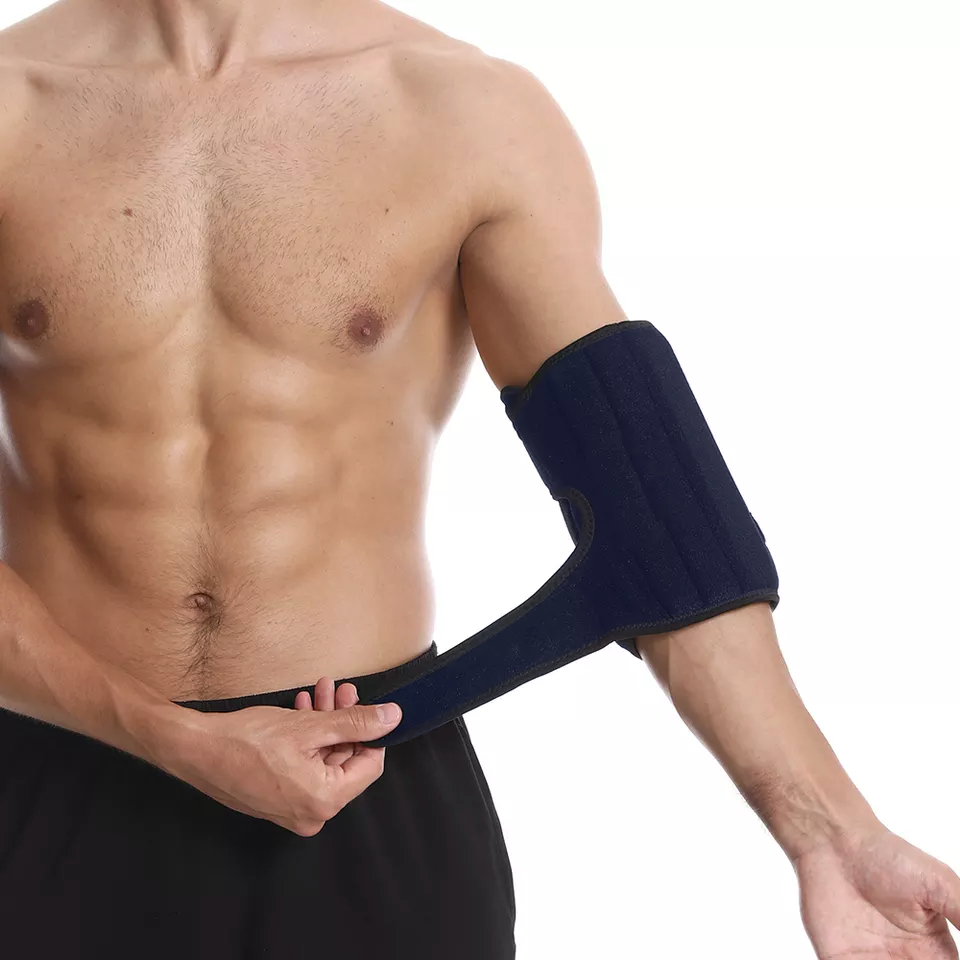

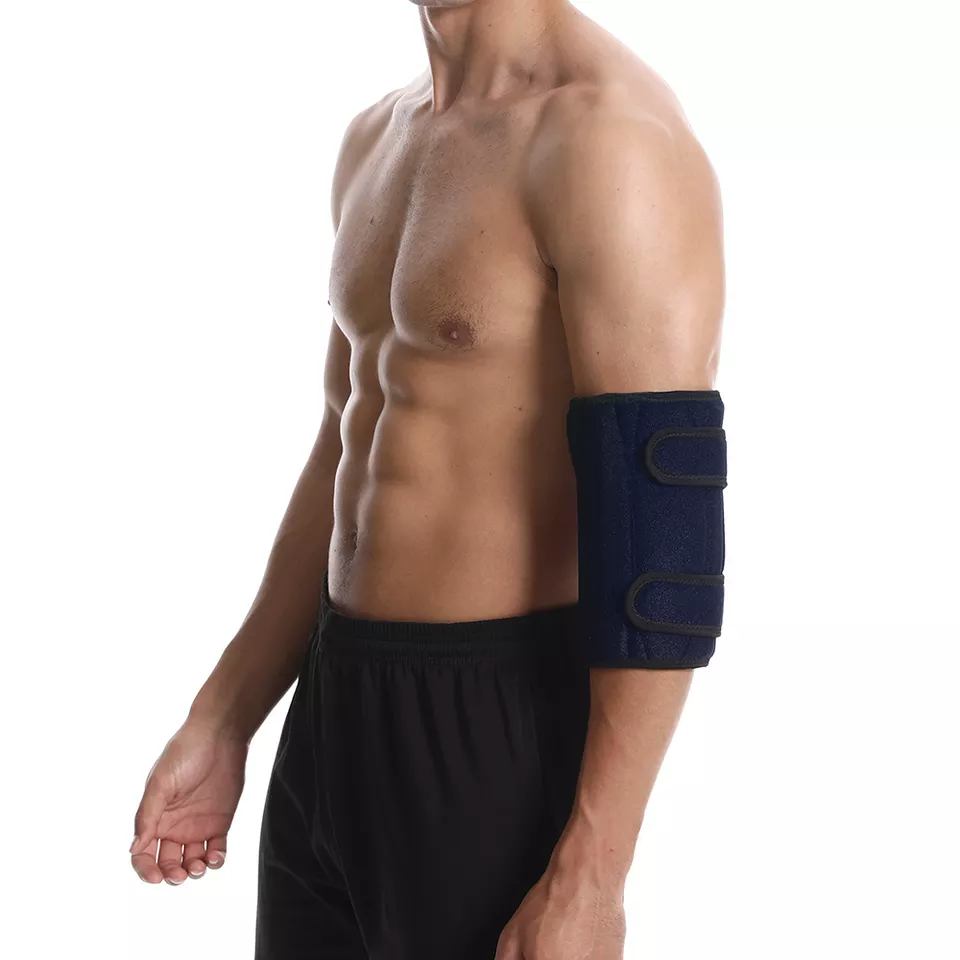
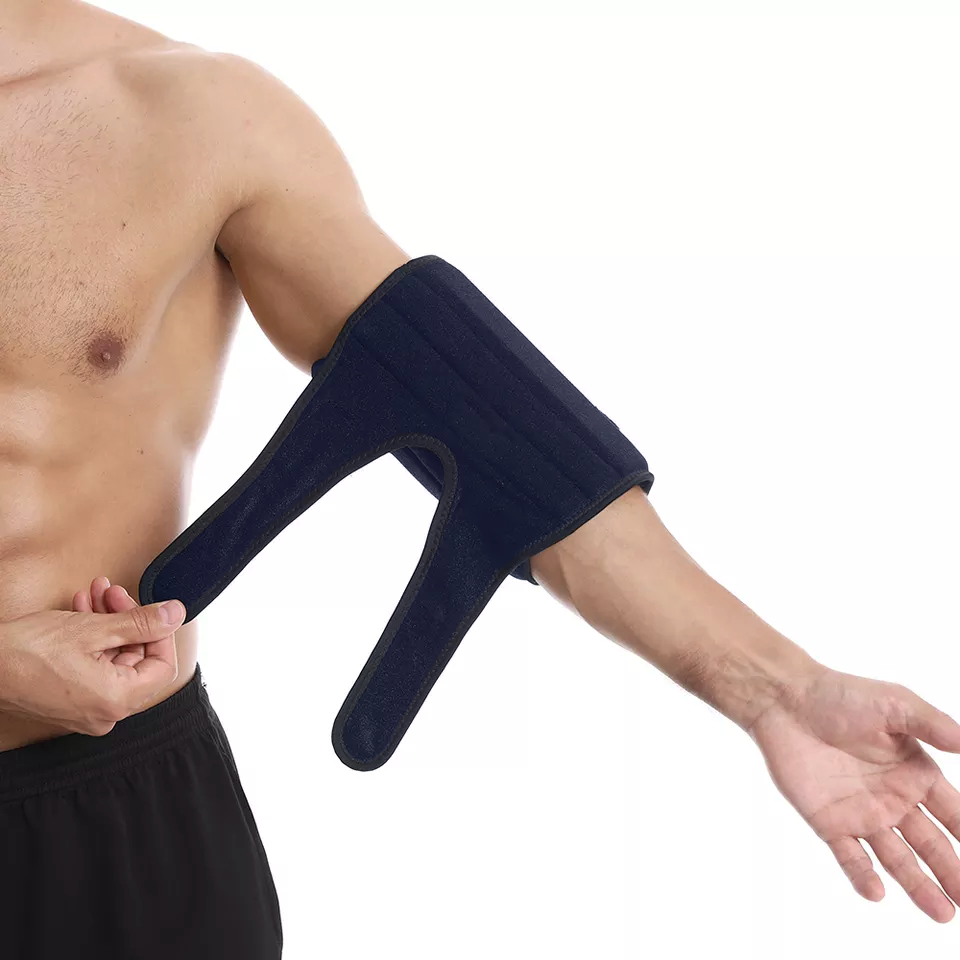
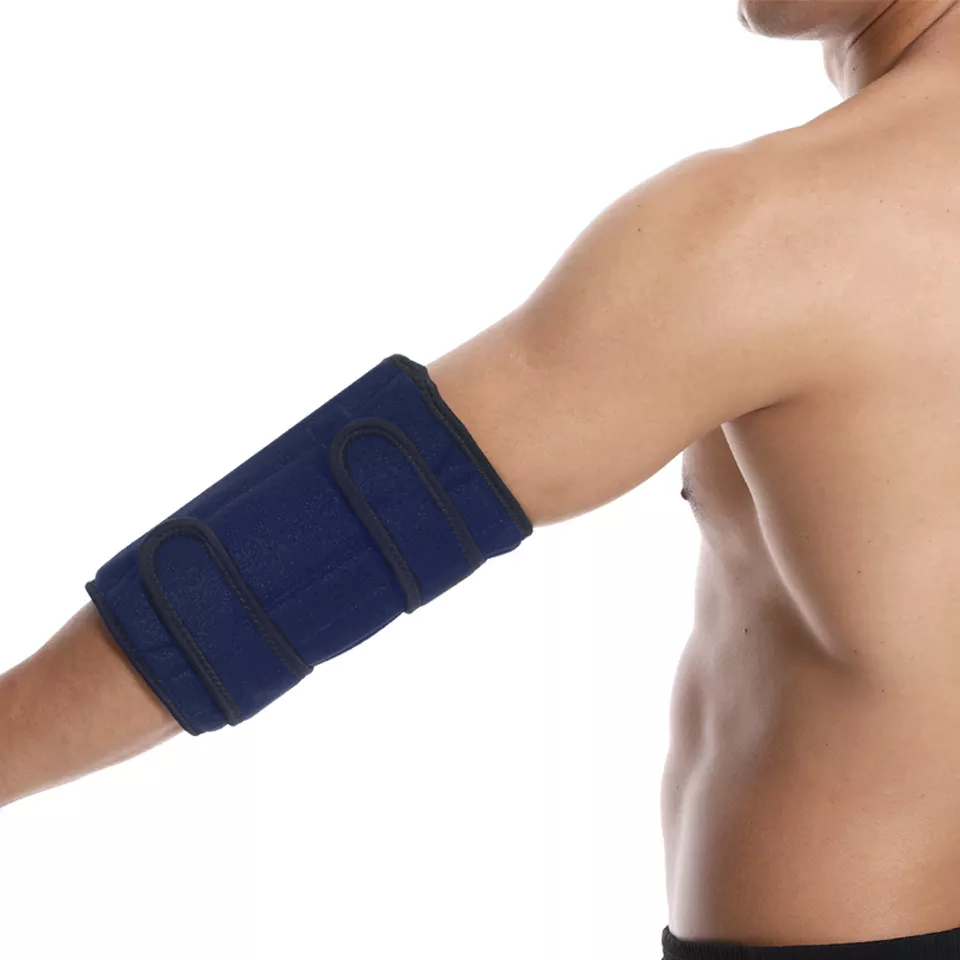
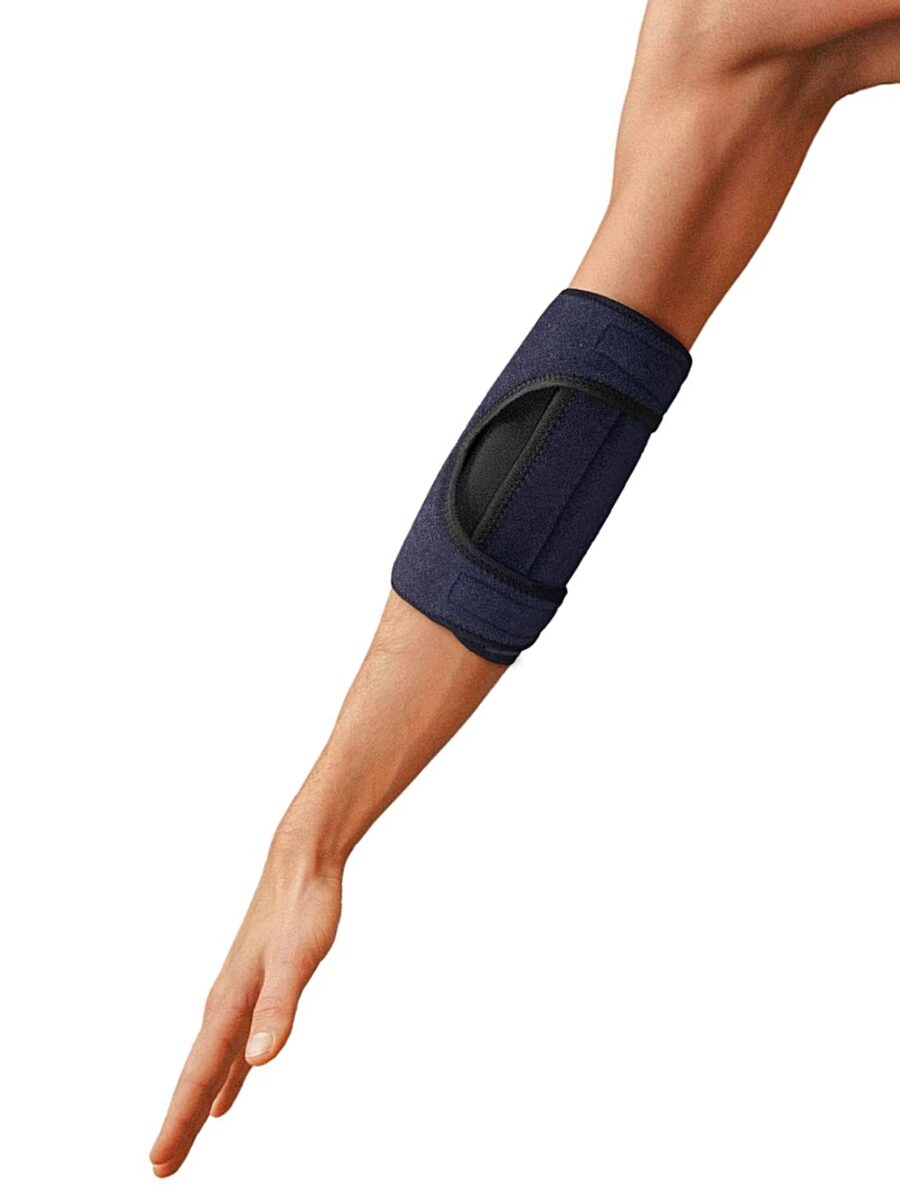
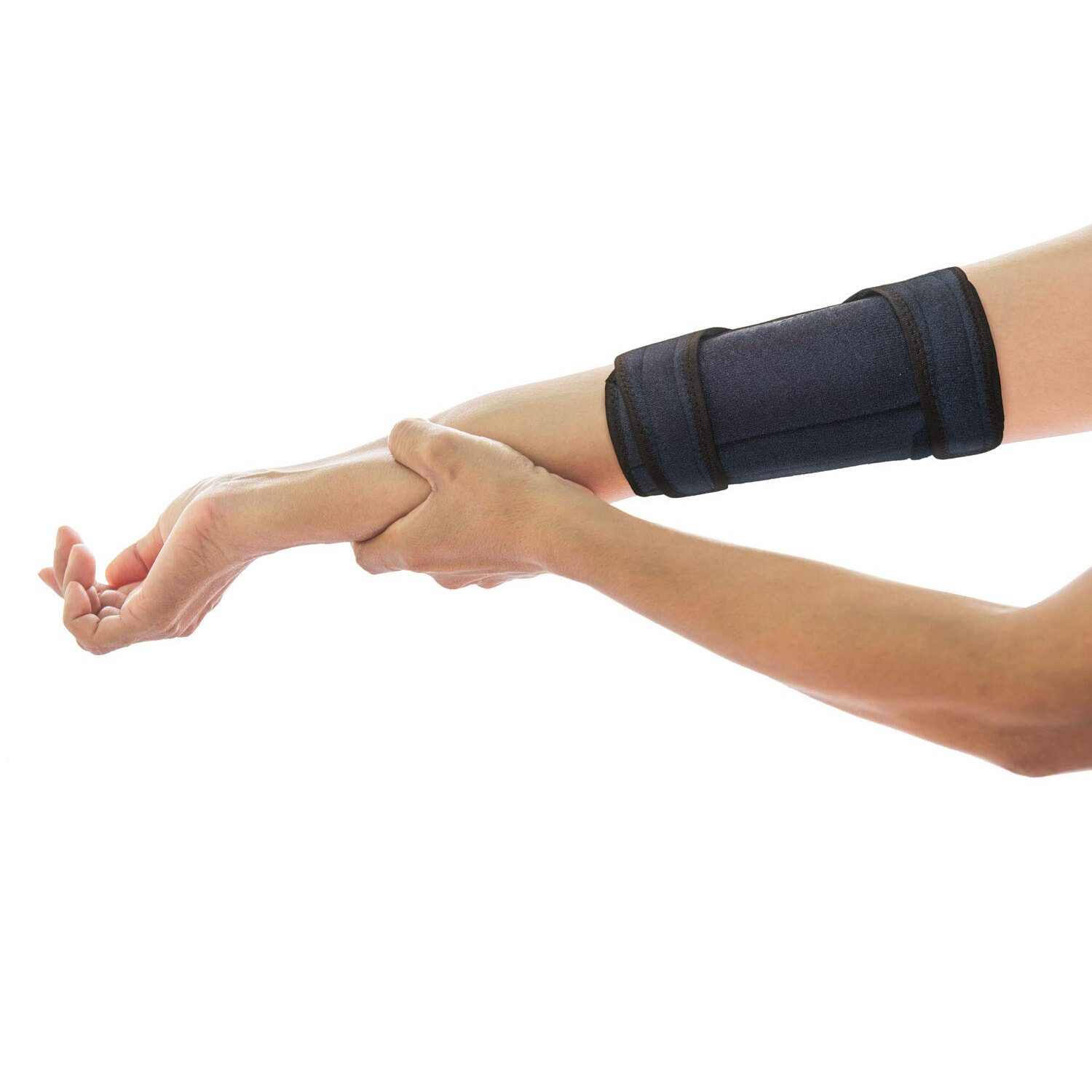
Arm Splint Elbow Immobilizer Brace for Cubital Tunnel Syndrome, Tennis Elbow, Fractures, Elbow hyperextension & Trapped Ulnar Nerves
£10.99inc VAT
- Arm Splint Elbow Immobiliser brace for adults, supplied by NuovaHealth, designed to help manage and protect a wide range of elbow and forearm problems, including later‑stage recovery after fractures and dislocations (once assessed), cubital tunnel syndrome, tennis and golfer’s elbow, tendinitis, elbow hyperextension, ulnar nerve irritation, bursitis, and joint conditions such as arthritis.
- One size fits most adults and can be worn on either arm to support the upper arm, elbow, and forearm.
- Two inbuilt aluminium splints run along the front and back of the arm to hold the elbow near straight, helping to reduce deep bending and over‑straightening that can aggravate nerves, ligaments, tendons, and joint surfaces.
- Full‑length, padded, wraparound design with adjustable straps provides a secure fit, gentle compression, and protection over bony points, making it suitable for use during rest and, when advised, as part of a P.R.I.C.E‑style approach in the early recovery period.
- Even, adjustable compression helps limit swelling, supports irritated soft tissues, and can make deep aches more manageable, while still allowing controlled movement when the brace is removed for clinician‑recommended exercises.
- Lightweight, breathable, skin‑friendly materials minimise bulk and rubbing, so the splint can be worn comfortably for several hours, including overnight, to help keep the elbow in a calmer position while you sleep.
- Simple hook‑and‑loop straps (Velcro‑type fastenings) make it easy to put on, adjust, and remove, allowing you to fine‑tune the level of support and compression.
- Intended for adult use only and not suitable for pregnancy, use over rigid casts, open wounds, fresh unassessed injuries, or situations with major swelling, colour change, or numbness – seek clinical advice in these cases.
Arm and elbow pain – when a straight arm splint may help
Arm and elbow pain can make everyday tasks feel much harder than they should. Lifting and carrying, working at a desk, pushing up from a chair, or simply bending your arm can all trigger sharp or nagging discomfort. For some people the problem is a deep ache that builds with use; for others it is tingling, numbness, or a feeling that the elbow might “give way”.
These symptoms are often seen in problems such as sprains, fractures, tennis or golfer’s elbow, arthritis, tendinitis, bursitis, and nerve compression around the inner elbow. Whatever the label, pain tends to flare when the elbow is kept bent for long periods, pushed fully straight under load, twisted sharply, or jolted unexpectedly.
In situations like this, a straight arm splint that limits how far and how often the elbow moves can sometimes be part of a sensible plan, particularly once a clinician has assessed the underlying problem and advised that this kind of support is suitable.
This Arm Splint Elbow Immobiliser, supplied by NuovaHealth, is designed for adults and can be fitted to either arm. It combines firm inbuilt splints, a padded full‑length body, and adjustable straps to hold the elbow and forearm in a straighter, more controlled part of their movement. To understand why this can help, it helps to know what is happening inside the elbow and forearm when pain or tingling appears.
What’s happening inside your elbow when it hurts
“Elbow pain” sounds simple, but several different structures can be involved, and they react differently depending on how bent the joint is, how much weight it is taking, and how often it is used.
Common ways this pain shows up include:
-
- Tingling, numbness, or burning in the ring and little fingers, often worse when the elbow is bent for long periods, particularly at night.
-
- A feeling that the elbow is less steady after an injury such as a fracture, dislocation, or significant sprain, especially when reaching, pushing up from a surface, or during impact‑type activities.
-
- Sharp pain at the front or back of the elbow when the joint snaps back into hyperextension, followed by a lingering ache and a “giving way” feeling near full straightening.
-
- Aching on the outside or inside of the elbow after longer spells of gripping, lifting, or twisting with the forearm.
-
- Stiffness, swelling, or a dull ache in and around the joint with conditions such as arthritis or bursitis, where holding the elbow in a comfortable middle position tends to feel calmer.
In most people, these symptoms relate to one or more of the following: the nerves, the ligaments and joint capsule, the tendons, the joint surfaces and their lining, or healing bone and surrounding soft tissues.
Nerves around the elbow
On the inner side of the elbow, a major nerve runs in a shallow groove behind the bony point (the medial epicondyle). This is the ulnar nerve. It supplies feeling to the ring and little fingers and powers some of the small hand muscles.
When the elbow is deeply bent:
-
- The ulnar nerve has to curve sharply around the inner elbow bone.
-
- The soft tissues that form its tunnel (the cubital tunnel) tighten and press on it.
-
- Leaning on the inner elbow or knocking this “funny bone” area can add further compression.
That is why many people with irritation here notice tingling or numbness in the ring and little fingers that builds when the elbow stays bent, for example when resting with the arm curled, holding a phone, or during sleep. Symptoms often ease when the elbow is straightened out for a while.
If this pattern continues for long enough, the nerve and its lining can become more easily irritated. Blood flow and signal conduction may be affected, so smaller amounts of bending or pressure can trigger tingling, and, in more long‑standing or severe cases, some of the muscles it supplies may weaken.
Reducing repeated deep bending at the elbow, especially overnight, is often recommended to take some of the pressure off the nerve. That is why many people with cubital tunnel‑type symptoms are advised to keep the elbow nearer to straight during rest. A straight arm splint that holds the elbow near straight can make this much easier.
Ligaments and joint capsule
The elbow joint is surrounded by a tough sleeve of tissue (the joint capsule) and supported by strong ligaments on the inner and outer sides. These structures help keep the joint stable and guide movement.
They work hardest at the ends of movement – when the elbow is forced very straight (extension or hyperextension) or very bent (deep flexion), especially when you are pushing through the arm. Typical situations include:
-
- A hyperextension incident where the elbow is jolted backwards beyond its normal straight position, for example during a fall or a heavy push. This can overstretch the capsule and ligaments at the front of the joint, leaving them sore and more easily provoked when you approach that straight position again.
-
- Repeatedly locking the elbow into a very straight position during weight‑bearing, such as pushing your bodyweight through the arm or bracing on a firm surface. Over time, the front of the joint can become irritated and feel sharp when you “jam” into the last few degrees of straightening.
When these supporting structures are pushed to their limits again and again, the elbow can feel painful at the ends of movement and less secure, as if it might snap back or give way when you try to fully straighten it. That explains why you might feel a sharp catch or a wave of apprehension right as you approach full straightening, even if you are not lifting anything heavy.
Tendons attaching the forearm muscles
The muscles that move your wrist and fingers start in the forearm and attach to the bony bumps on either side of the elbow through strong cords called tendons.
-
- The outer bump (lateral epicondyle) anchors the main wrist‑ and finger‑extending muscles.
-
- The inner bump (medial epicondyle) anchors the main wrist‑ and finger‑flexing muscles.
These tendons are strained by:
-
- Repeated gripping and lifting, particularly with the elbow straight and the wrist held in certain positions.
-
- Twisting tasks that require strong forearm rotation.
-
- Sudden increases in forearm‑demanding activities without enough rest in between.
Over time, small areas within the tendon where it attaches to the bone can become irritated and thickened. The tendon becomes less springy and more sensitive to normal loads. This is often labelled lateral or medial epicondylitis, or called tennis or golfer’s elbow.
Typical features include:
-
- Localised tenderness on the outside or inside of the elbow.
-
- A grumbling ache or sharp pain during or after gripping, lifting, or twisting, especially with the arm straight and the palm down or towards the body.
-
- Sometimes a dull ache at rest after heavy use.
This explains why gripping something at arm’s length or turning the forearm while holding on firmly can feel sharply painful, even if the object is not particularly heavy.
These tendon problems usually do better with carefully planned movement and strengthening to rebuild tolerance. Short periods of reduced loading, where the elbow is held in a less provocative part of its movement and heavy gripping is limited, can make painful bouts easier to manage.
Joint surfaces and lining tissue
Inside the elbow, the ends of the bones are covered with smooth cartilage, and the joint is lined with a membrane (synovium) that produces fluid to lubricate movement.
In some inflammatory joint conditions, the synovium becomes thickened and swollen. In osteoarthritis, the cartilage thins and becomes rougher, and small bony spurs can form around the joint margins. In both situations, the joint is more easily irritated.
This often leads to:
-
- Stiffness, especially after rest.
-
- Pain when the elbow is pushed to the limits of bending or straightening, particularly in the last part of movement where the joint feels tight.
-
- Swelling and a sense of fullness around the joint.
-
- Aching after longer periods of use or weight through the arm.
When inflamed or worn joint surfaces are forced into their tightest positions or jolted, the area often becomes sharply painful. That is why pushing the elbow into its very end range of bend or straightening can feel much worse than keeping it in a comfortable mid‑range.
Healing bone and surrounding soft tissues
After a fracture or dislocation has been assessed and managed by a clinician, the bone and soft tissues around the elbow and forearm go through a healing phase. In this stage, they are:
-
- Sensitive to twisting (turning the palm up or down).
-
- Vulnerable to sudden bending or straightening.
-
- Easily irritated by knocks or unexpected weight.
If the joint or forearm moves too freely, or is repeatedly stressed beyond what the healing tissues can tolerate – for example by lifting heavier items than advised or bracing sharply through the arm – pain can flare and recovery may be slower.
But if you keep the elbow completely rigid for too long, stiffness and weakness can build up. For this reason, clinicians often move from firmer immobilisation (such as a cast or rigid hospital splint) to lighter, removable supports that still limit the extremes of movement but allow some controlled bending and straightening.
Why these problems can become persistent if ignored
When nerves, tendons, joint tissues, or healing structures are repeatedly irritated without changes in position, force, or rest:
-
- Nerves such as the ulnar nerve can become increasingly sensitive, so smaller amounts of bending or pressure trigger tingling and numbness.
-
- Tendons at the inner and outer elbow can thicken and stiffen, making them slower to settle and more reactive to everyday activities.
-
- Joint lining and cartilage can stay inflamed or continue to wear, leading to longer‑lasting stiffness and pain.
-
- Ligaments and capsule that have been overstretched in hyperextension or dislocation can remain slack, leaving a feeling of instability near the ends of movement.
If you carry on with the same positions and habits for months, the same tissues are irritated in the same way day after day, and a short‑term episode can gradually turn into a longer‑term problem. Adjusting how the elbow moves and is loaded – often alongside exercises and other treatment – gives irritated tissues a better chance to calm and adapt.
How a straight arm splint supports your elbow
A straight arm splint does not cure an underlying condition on its own, and it is not suitable for every kind of elbow problem. Used appropriately, though, it changes how the elbow moves and how forces go through it in everyday positions, in ways that reduce irritation while other treatment does its work.
The main aims are to:
-
- Reduce prolonged deep bending that stretches and compresses nerves such as the ulnar nerve.
-
- Prevent full straightening and hyperextension that overloads the front of the joint capsule and ligaments.
-
- Limit sudden, uncontrolled movements that jar healing tissues.
-
- Cushion direct pressure over sore bony points and inflamed bursae.
-
- Offer gentle, adjustable compression around the elbow and forearm to help with swelling and support.
Limiting deep bending to ease nerve irritation
For ulnar nerve irritation around the inner elbow, symptoms are often worse when the elbow is held tightly bent, especially at night. In that position the nerve bends sharply around the inner elbow bone and the tunnel tightens, increasing pressure on the nerve.
A straight arm splint that holds the elbow nearer to straight reduces this angle and lessens the squeeze on the nerve:
-
- The nerve curves less sharply around the bone.
-
- Pressure in the cubital tunnel is reduced because the tissues do not tighten as much.
-
- The nerve spends fewer hours stretched and compressed at the same time.
That is why many people find tingling and numbness build more slowly or ease more readily between daytime demands when they keep the elbow straighter at night. Wearing the brace overnight, when you might otherwise curl the elbow in without realising, is often one of the most effective ways to change this.
Blocking painful hyperextension and extremes of straightening
After a hyperextension injury, or in people whose elbows naturally tend to snap into a locked‑out position, the capsule and ligaments at the front of the joint can be sore and stretched. Each time the elbow clicks into full extension or beyond, these tissues are tightened sharply again. That is why simply moving towards full straightening can feel worrying, even without much weight through the arm.
The inbuilt metal splints in this design run along the front and back of the arm and are shaped to support a near‑straight, not forced‑straight, position. When you fasten the brace so that the elbow sits just shy of fully straight, these splints:
-
- Block the last few degrees of movement that tend to trigger pain and a sense of instability.
-
- Reduce strain on the front of the joint by keeping it away from its most vulnerable part of the movement.
-
- Slow any movement towards straightening so forces are absorbed by the brace rather than all going through the joint.
In day‑to‑day terms, this can make it easier to rest the arm without worrying that it will suddenly snap back, and help protect the joint during lighter activities while you avoid heavy weight‑bearing or impact tasks as advised by a clinician.
Reducing sudden, unwanted movement after fractures and dislocations
Once a fracture or dislocation around the elbow or forearm has been properly assessed and managed, and any necessary rigid immobilisation has been used, there is usually a phase where:
-
- The bones have begun to heal but are not yet fully strong.
-
- The soft tissues are repairing but remain vulnerable to sharp bending, twisting, or knocks.
At this point, a removable straight arm splint can:
-
- Limit how far and how quickly the elbow bends and straightens, so you are less likely to move sharply into painful ranges.
-
- Reduce sudden twisting of the forearm to some extent, depending on how it is positioned and how firmly it is applied.
-
- Provide steady support at times of day when you are more likely to bump or overuse the arm.
Because this brace is removable, it can generally be taken off for gentle, clinician‑recommended exercises, then reapplied for rest and protection. That balance between support and controlled movement helps reduce the risk of both re‑irritation and avoidable stiffness.
Holding the elbow in mid‑range and padding irritated joints and bursae
In arthritis or bursitis around the elbow, pain often comes from:
-
- Joint surfaces and lining being compressed hard at the very ends of movement.
-
- Inflamed bursae over the tip of the elbow being pressed or knocked directly.
A straight arm splint can help by:
-
- Holding the elbow in a comfortable mid‑range (not fully bent, not fully straight) where the joint surfaces are not pushed tightly together.
-
- Placing padded material over the bony point and sides of the elbow, so accidental bumps and prolonged leaning are less jarring.
This does not change the underlying joint condition, but it can reduce day‑to‑day irritation during flares and make rest periods more comfortable. This is often when people notice that simply changing the position they rest in makes a clear difference to how achy the joint feels.
Supporting soft tissues with gentle, adjustable compression
The wraparound design of this brace allows gentle, evenly spread pressure around the elbow and forearm. When adjusted sensibly:
-
- Mild, evenly distributed pressure can help slow the build‑up of swelling after an injury or flare, which may reduce the feeling of tightness and throbbing.
-
- The steady contact can make you more aware of where your arm is, so you are less likely to move suddenly into painful positions without realising.
-
- The tissues around irritated tendons and joints feel more supported, which many people find makes deep aches more manageable during rest.
Compression should always be snug rather than tight. Over‑tightened straps can affect blood flow or nerve function. The arm should feel supported, not squeezed, with no new colour change, coldness, or pins and needles in the hand.
How this splint fits into your recovery
Across these situations, a straight arm splint is best seen in practical terms as:
-
- A way of reducing the deep bending, hyperextension, sudden jolts, direct bumps, and swelling that are aggravating your current problem.
-
- A temporary or intermittent support while you and your clinician focus on exercises, movement exercises, and activity changes.
Used in this way, a straight arm splint can make it easier for irritated or healing tissues to cope with daily life, while you work on restoring strength, movement, and confidence in the arm.
How this arm splint is built – and why it matters for your elbow
This splint is built to address problems such as deep bending, snapping straight, and direct bumps, while still being practical to wear. It combines adjustable straps, inbuilt aluminium splints, a full‑length padded body, and breathable materials to give controlled positioning, protection, and compression for adult users.
Adjustable straps and wraparound design for a secure fit
The splint uses multiple adjustable straps along a wraparound body. This lets you set how closely it hugs the arm and where it sits along the elbow and forearm.
The straps allow you to:
-
- Control the firmness of the fit, which alters the level of compression around the soft tissues.
-
- Position the brace so that the elbow is held nearer to straight, or so that more of the padding and support sit over the forearm muscles and tendons, depending on where your symptoms are most active.
-
- Keep the splint stable so it does not twist or slide when you move gently in bed or during light activities.
For example, if you tend to wake at night with tingling in the ring and little fingers because the elbow curls in, you can secure the straps so that the splint holds the joint in a comfortable near‑straight position and resists deep bending. If your main discomfort is in the muscle and tendon area of the outer forearm, you can place the brace slightly further down the arm so that the straps and padding sit directly over that region.
Because the straps are easy to adjust, you can loosen them slightly if the arm feels fuller at the end of the day, or snug them a little more for shorter periods when you want extra support. The aim is a close, steady contact that helps limit unwanted movement and swelling, without any feeling of cutting in.
Inbuilt aluminium splints to limit painful extremes of movement
Inside the body of the brace are two inbuilt aluminium splints that run along the length of the arm section, one along the front and one along the back. They are pre‑shaped to support a near‑straight position rather than a fully locked‑out elbow.
These rails:
-
- Resist deep bending, limiting how sharply structures like the ulnar nerve are bent around the inner elbow and how much the soft tissues at the back of the joint are stretched.
-
- Prevent full extension and hyperextension, so the capsule and ligaments at the front of the joint are not repeatedly forced into the last, most painful part of movement.
-
- Slow and control movement within the allowed range, rather than allowing sudden, fast changes in angle.
You can usually still make small, comfortable adjustments within this reduced arc of movement, depending on how firmly the straps are set and what your clinician has advised. The splints are there to block the extremes that tend to cause pain and re‑injury, not to make the joint completely rigid.
Full‑length padded body to support the elbow and forearm
The brace extends along the elbow and a substantial portion of the forearm and is padded along its full inner surface.
This length and cushioning help by:
-
- Spreading pressure over a larger area, rather than concentrating it at a single point. This is particularly useful when the skin or soft tissues are sensitive, or when there is swelling.
-
- Providing a barrier over the bony points at the back and sides of the elbow – the tip and the hard bumps on the inner and outer sides – which are often tender in bursitis, arthritis, and after knocks.
-
- Allowing the brace to support not only the joint but also nearby muscle and tendon regions in the forearm that may be contributing to the discomfort.
For example, if you have a swollen bursa over the tip of the elbow, the padded body of the splint can reduce direct pressure on this area when you lean or accidentally bump it. If your tendon pain sits just below the elbow on the outer forearm, the brace can be positioned so that the padding and straps sit over that region, helping to reduce strain by limiting extreme wrist and forearm positions during rest.
Because both sides of the elbow and forearm are covered, many people also feel more confident that the whole area is protected from unexpected bumps or twists while they are resting, which can make it easier to relax the surrounding muscles.
Gentle compression to help with swelling and soft tissue support
The combination of the wraparound body and straps allows the splint to provide gentle, circumferential compression around the elbow and forearm.
In practical terms:
-
- Mild, evenly distributed pressure can help slow the build‑up of swelling after an injury or flare, which may reduce the feeling of tightness and throbbing.
-
- The steady contact can make you more aware of where your arm is, which some people find reduces the chance of moving suddenly into painful ranges without thinking.
-
- The tissues around irritated tendons and joints feel more supported, which can make deep aches easier to tolerate during rest.
If your elbow tends to swell and feel full towards the end of the day, wearing the splint for a period with modest compression may help keep that swelling from building as quickly. After a clinician‑managed fracture or soft tissue injury, it may also help the area feel more protected as you move from a rigid immobilisation to lighter supports.
Compression should always be comfortable. The straps should be tightened just enough that the splint does not slip, and that you feel supported rather than squeezed. Any new or worsening pain, tingling, or colour change in the fingers is a sign to loosen or refit the splint and seek advice if it does not settle.
Breathable, cushioned materials for longer wear
The materials used in this brace are lightweight, padded, and breathable. The inner surface is cushioned to reduce rubbing where the brace touches the skin, and the overall construction aims to minimise bulk so that it can be worn under loose clothing if needed.
This matters because:
-
- Many people need to wear an elbow splint for several hours at a time, particularly overnight, so comfort against the skin is important to avoid pressure areas and irritation.
-
- Breathable fabric helps reduce sweat build‑up under the brace. Damp, warm skin is more likely to rub and break down, so allowing some air flow is useful.
-
- Softer edges and well‑placed seams help reduce the risk of chafing along the forearm or around the elbow crease.
If you are using the brace at night to prevent the elbow from curling, these materials are intended to make it tolerable to keep on through a full sleep period. For daytime use, a brace that feels comfortable is more likely to be worn as advised, which in turn supports consistent protection.
People with particularly sensitive skin, or conditions that affect skin resilience, may still prefer to wear a thin sleeve or light layer underneath. The design allows for this, as long as the straps are adjusted to account for the extra layer.
How the splint’s features work together
All of these features work together to:
-
- Hold the elbow and forearm in a straighter, more controlled part of their movement.
-
- Limit the deep bending, full straightening, and sudden jolts that tend to aggravate many nerve, ligament, tendon, and joint problems.
-
- Provide cushioned protection over bony, tender areas and gentle compression to help manage swelling.
They are designed to do this in a way that is practical to wear overnight or for several hours during the day, when this has been agreed with a clinician. In other words, this splint targets the same mechanical stresses described earlier – deep flexion, snapping into extension, direct bumps, and swelling – while leaving enough flexibility for you and your clinician to integrate it with exercises, movement work, and other parts of your recovery plan.
Who this splint may and may not be suitable for
This Arm Splint Elbow Immobiliser is designed for adults who need extra control over elbow and forearm movement, along with protection and adjustable compression. It is usually used alongside exercises, activity changes, and other care, rather than on its own.
Situations where it may be helpful include adults who:
-
- Have nerve‑related symptoms around the inner elbow, such as tingling or numbness in the ring and little fingers that worsen with prolonged bending, particularly at night, and have been advised to keep the elbow nearer to straight during rest.
-
- Are recovering from fractures, dislocations, or significant sprains around the elbow or nearby forearm, once these have been properly assessed and any necessary initial immobilisation or procedures completed, and a clinician has recommended a lighter support after an initial rigid cast or hospital splint.
-
- Have a tendency towards elbow hyperextension and need a way to limit the last part of straightening during rest, or in specific periods after a hyperextension injury, as part of an agreed plan.
-
- Are managing ongoing joint or soft tissue conditions such as arthritis or bursitis, where short periods of supported rest in a mid‑range position are part of a wider strategy to reduce flare‑ups and manage pain.
Situations where it is not suitable include:
-
- Use on open wounds, infected areas, or fresh surgical incisions, unless a clinician has given specific instructions and shown how to protect the skin underneath.
-
- Use over a rigid plaster or fibreglass cast. This type of brace is not intended to sit on top of existing hard immobilisation.
-
- Situations with obvious, significant, unexplained swelling, marked deformity, or suspected new fracture or dislocation that has not yet been assessed. In these cases, urgent clinical assessment is the priority.
-
- Adults with complex underlying circulation, skin, or nerve problems in the arm, unless a GP or specialist has advised that this type of brace is appropriate and has given guidance on wear time and monitoring.
-
- Use in pregnancy, as applying compression or changing limb position for prolonged periods without clinical advice could be harmful.
If you have significant medical conditions and are unsure about using external supports or compression on the limb, it is sensible to check with a clinician so that your wider health situation can be taken into account.
How to fit and wear the arm splint – and what to expect
Once you know this splint is suitable for your situation, getting the fit right is important for both comfort and effectiveness. The design is intended to fit most adult arm sizes and can be used on either arm. Check the sizing information for forearm circumference and length to ensure a suitable fit.
Basic fitting steps
-
- Lay the brace flat on a bed, sofa, or table with the padded side facing up. You should be able to see the contours where your arm will lie, and feel the metal splints along the length.
-
- Place your arm on the brace so that the elbow crease sits roughly in the centre of the splint section if you are using it mainly to control elbow bend. If you are focusing more on the forearm muscles and tendons, position the brace slightly further down so more of its length lies along the forearm.
-
- Fold the sides of the brace around your arm, then bring the straps around and fasten them to the body of the brace. It is usually easiest to fasten the strap nearest the elbow first, then the ones further up and down the arm.
-
- Adjust each strap gradually until the brace feels snug and secure. You should still be able to slide a finger under each strap. The splint should not feel as if it is cutting in or creating sharp pressure points.
-
- Once fitted, check your hand and fingers after a few minutes. They should stay their usual colour and temperature, with no new tingling, numbness, or swelling. If anything feels wrong, loosen the straps slightly or refit the brace.
Positioning for different needs
You can fine‑tune the position of the brace to match your main symptoms:
-
- For night‑time nerve‑related symptoms around the inner elbow, centring the brace over the elbow and securing the straps so the joint is held closer to straight, but still with a slight comfortable bend, is often helpful. The inbuilt splints then resist deep bending while you sleep.
-
- For problems that mainly involve the forearm muscles and tendons, you may choose to position the brace so more of its length lies along the forearm. This places the padding and straps over the muscle and tendon bulk, helping to limit extreme wrist and forearm positions during rest.
-
- After a clinician‑managed fracture or dislocation, the precise position will depend on guidance from your treating clinician. Often, the brace is centred over the area that needs most protection from sudden movement, with the splints aligned so that the joint cannot easily bend or snap back to its end range.
Daytime and night‑time use
How long and when you wear the brace should be guided by your symptoms and any advice you have been given.
In general:
-
- At night, many people with inner‑elbow nerve symptoms use a straight arm splint to help stop the elbow curling tightly during sleep. The aim is to keep the joint in a comfortable near‑straight position so the nerve is under less stretch and compression for many hours at a time.
-
- During the day, the brace is often used for blocks of time during rest or lighter activities, particularly in the early stages after an injury or during a bout of increased pain. For example, you might wear it in the evening after a day that has aggravated your symptoms, or during times when you are more likely to bump the elbow.
-
- For heavier tasks, contact sports, or work that involves strong forces through the arm, specific guidance from your GP or physiotherapist is important. A rigid or semi‑rigid elbow splint is not always appropriate during demanding activity and may, in some cases, increase the risk of awkward falls or compensations.
Wear time, movement, and avoiding stiffness
Unless you have been told to keep the elbow completely still for a very specific reason:
-
- The brace can usually be worn through the night and for several hours in the day, with short breaks to move the skin and gently bend and straighten the elbow within a comfortable range.
-
- It is generally unwise to hold the joint rigidly still for very long periods without any movement at all, as this can contribute to stiffness and muscle weakness and may slow your return to function.
-
- A common pattern is to use the brace for protection at times when aggravating positions are most likely (for example overnight, when tired, or during particular tasks), and to allow some comfortable movement at other times as part of a wider rehabilitation plan.
Skin and comfort checks
Regular checks help prevent minor issues becoming more serious:
-
- At least once a day, remove the brace fully to inspect the skin underneath. Look for any areas of redness that do not fade after a few minutes, rubbing, blistering, or sore spots.
-
- If you notice irritated areas, you can try adjusting the position of the brace slightly, loosening a strap, or, if advised, wearing a thin, smooth sleeve or clothing layer under the brace to reduce friction.
-
- If skin damage, significant swelling, or worrying changes develop, it is sensible to stop using the brace and speak to a clinician for advice on how best to protect the area.
What to expect when using the splint
When fitted and used appropriately:
-
- The arm should feel more supported, with less sense that the elbow can suddenly snap into painful positions.
-
- Movements that previously pushed the elbow right to its limits of bending or straightening are likely to be reduced or slowed, which can lessen sharp or catching pains linked to those extremes.
-
- If your main problem is night‑time tingling from deep bending, you may notice that symptoms are less intense or less frequent while the brace is in use because the nerve is spending less time in the most irritating position.
It is important to have realistic expectations. The splint does not cure underlying conditions such as arthritis, tendon problems, or nerve compression. It changes the mechanics to reduce strain while other measures – exercises, movement work, and activity changes – address the underlying tissue health and control.
Some awareness of the brace is normal at first, especially if you are not used to sleeping or resting with your arm supported. Most people find this reduces as they get used to the strap tensions and positions that suit them best.
If your symptoms are severe, changing quickly, or not improving at all despite sensible use of the brace and other measures, a review with a GP, physiotherapist, or another appropriate clinician is advisable to check the diagnosis and overall plan.
Safety, warning signs, and blood‑clot information
Even with a well‑designed brace, it is important to pay attention to how your arm responds and to know when to seek further advice.
Stop using the brace and speak to a clinician promptly if you notice:
-
- New or increasing numbness, tingling, or loss of feeling in the hand or fingers that does not quickly ease when the straps are loosened or the brace is taken off.
-
- Fingers becoming very pale, blue, or unusually cold compared with the other hand.
-
- A sudden, severe increase in pain in the elbow, forearm, or hand, especially if this feels different from your usual pattern.
-
- Rapidly developing swelling around the elbow, forearm, or hand, particularly if the skin feels tight or shiny.
-
- Areas of skin breakdown, blistering, or pressure sores under the brace.
When you move less after an injury, blood clot risk can increase in some people, particularly in the legs. This arm splint does not treat or prevent blood clots and should not be relied upon for that purpose. If you know you are at higher risk of clots, it is important to follow the advice you have already been given about movement, hydration, and any treatments, and to seek urgent medical help if you develop new, unexplained limb swelling, sudden chest discomfort, or breathlessness.
The information here is general guidance for adults and cannot replace a face‑to‑face assessment. If your arm or elbow pain is severe, rapidly worsening, associated with significant weakness, or not improving over time despite sensible self‑care, speaking to a GP, physiotherapist, or another appropriate clinician is important.
Is this straight arm splint right for your elbow pain?
Many arm and elbow problems follow recognisable patterns: nerve symptoms that build when the elbow is left bent for long periods, sharp pain and instability when the joint snaps back, aching tendons that complain after repeated gripping, and joints that stiffen and swell when pushed to their limits or knocked. Each of these patterns has a clear story in the tissues and joints underneath.
This Arm Splint Elbow Immobiliser is designed with those specific problems in mind. It holds the elbow and forearm in a straighter, more controlled part of their movement, blocks the last part of bending and straightening that often sets symptoms off, and adds padding and gentle compression around bony and sensitive areas. In everyday terms, it aims to make troublesome positions harder to fall into and calmer positions easier to maintain.
If what you have read here sounds similar to your own experience, it may be worth considering this type of splint, ideally with advice from a GP, physiotherapist, or another appropriate clinician about when and how to wear it. They can help you decide whether it fits your diagnosis and stage of healing, how to build it into your wider plan of exercises and activity changes, and what to watch out for as you use it.
Important information and disclaimer
The information on this page is general guidance for adult readers in the UK. It is not a substitute for individual medical assessment, diagnosis, or treatment.
If you have:
-
- Severe or rapidly worsening arm or elbow pain,
-
- New unexplained swelling, colour or temperature changes in the limb,
-
- Spreading numbness or weakness, or
-
- Other new, unexplained symptoms that do not settle,
you should speak to a GP, physiotherapist, or another appropriate clinician without delay.
This splint does not treat or prevent blood clots and should not be relied on for that purpose. Products of this type cannot guarantee specific outcomes; many people find they help reduce strain and protect the area, but they are usually most effective when combined with appropriate exercises, movement strategies, and clinical care.
Fast & Secure Checkout Through Paypal
Pay with Paypal the secure payment gateway that accepts all credit and debit cards. Paypal is free and secure and no credit or bank information is ever stored or shared with us.
Fast Dispatch
Enjoy your items soon with quick dispatch via Royal Mail. Expect to have your items between 1-3 working days for domestic orders. 7-10 Working days for international orders.
Return Policy – 30 Day Money Back Guarantee
In the unlikely event, you are unhappy with your purchase you can return it within 30 days for a refund. Please contact us via the form on the contact us page to start your return.
To return an item please send it to: Nuova Health UK, 81 Highfield Lane, Waverley, Rotherham, S60 8AL. Please include a note with your order id so we know who to refund. Please retain your postage receipt as proof of postage. All that we ask is that the item is in the original packaging and unused.

Reviews
There are no reviews yet.