


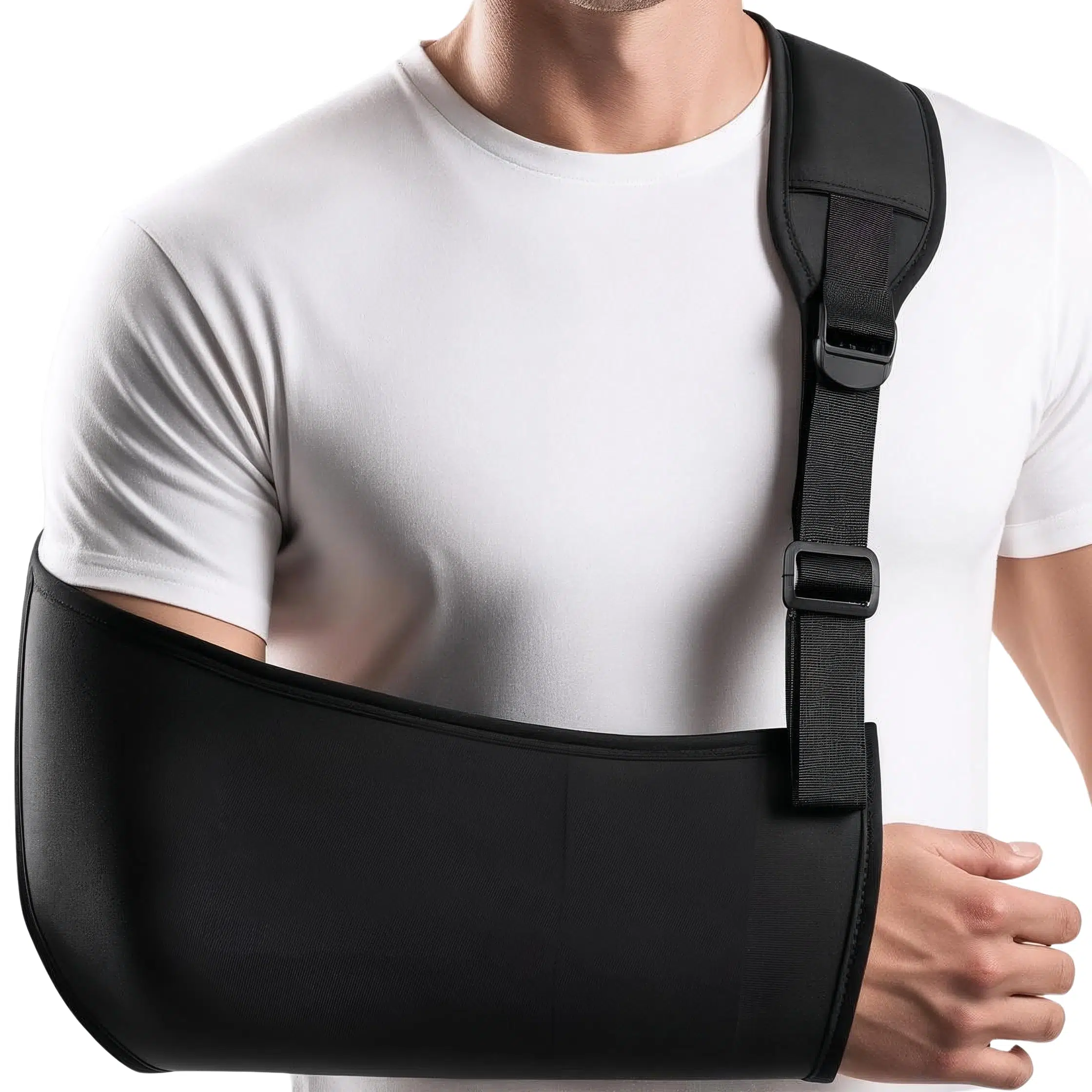

1x Arm Sling & Elbow Immobilizer for Broken Fractured Arm, Tennis Elbow, Rotator Cuff Tear, Dislocation, Sprains and Strains
£9.99inc VAT
- Helps hold your arm in a safer position: Designed for adults who need to support a healing arm, shoulder or elbow after an injury or operation, such as a fracture, dislocation, rotator cuff problem, sprain or strain (as advised by your clinician). The sling keeps your arm bent and close to your body instead of hanging and pulling on sore tissues.
- Deep forearm pouch for whole‑arm support: The shaped pouch supports your elbow, forearm and hand from behind the elbow to beyond the wrist. This helps reduce the downward pull on the shoulder and collarbone and cuts down on arm swinging when you walk or stand.
- Wide, padded cross‑body strap to ease neck and shoulder strain: A broad strap runs across your back and chest to the opposite shoulder, spreading the weight of your arm over stronger areas instead of a thin strap digging into one spot at the side of your neck. A padded shoulder section adds extra comfort if you need to wear the sling for longer periods.
- Thumb loop to steady the hand and wrist: An integrated thumb loop helps keep your hand in place so it doesn’t slip forward, and keeps the wrist closer to a straight position. This can reduce the effort your forearm muscles need to make and may ease aching in the wrist, hand and fingers, especially if you also have a cast or splint.
- One size, easily adjustable for left or right arm: The simple strap adjustment lets you raise or lower the forearm so you can match the height your doctor or physiotherapist has recommended. The sling can be worn on either the left or right arm without complicated re‑threading.
- Lightweight, breathable and made for daily wear: Soft, breathable fabric, smooth edges and a supportive shape are intended to make the sling comfortable enough for regular daytime use, whether you are at home or out of the house.
- Use as part of your recovery plan: This sling is designed to work alongside the advice and exercises given by your healthcare team, not to replace them. If you are unsure whether it is suitable for your injury, check with your clinician.
- 30‑day money‑back guarantee: If the sling isn’t right for you, our 30‑day money‑back guarantee offers extra peace of mind.
Arm and Shoulder Injuries: When a Sling Becomes Helpful
An arm or shoulder injury can make everyday tasks surprisingly difficult. Reaching for a shelf, washing, or putting on a shirt or jumper can trigger a sharp pull in the shoulder, a nagging ache around the collarbone, or swelling in the hand. Even just walking around or standing for a while with the arm hanging can become uncomfortable as the arm swings and tugs on sore tissues. It’s very common to feel unsure how much to move the arm and how much to rest it. You might be worried about doing “too much” or “not enough”.
When the arm hangs, gravity pulls on the shoulder joint, collarbone, upper arm, elbow, and wrist. If any of these areas are injured, the weight of the limb can strain healing bones, irritated tendons, or stretched ligaments. That extra pull often increases pain. The muscles around the area tighten to protect it, and over time that can leave them feeling tired and sore.
A sling is used to support and protect the arm while these structures heal. It does not repair a fracture or tendon tear on its own, but it helps by holding the arm in a more controlled, supported position. That reduces the downward pull on injured tissues, cuts down on uncontrolled swinging, and shields the arm from knocks. All of this can make it easier to follow the advice you’ve been given by your doctor or physiotherapist.
Here you’ll see when a sling is usually used, what this broad arm sling does to the position and weight of your arm, how it can help in different types of injury and situations, and how to use it safely day to day.
How This Broad Arm Sling Supports Your Arm
A sling is a simple support that limits how much your arm moves and helps carry its weight while your arm recovers. Our sling is a broad arm (standard shoulder) sling. It has a pouch that supports your forearm and hand, and a wide, adjustable strap that runs across your back and chest to the shoulder on your uninjured side, rather than just looping round your neck.
The pouch supports the arm from the elbow to beyond the wrist. Your elbow rests at the back, and the forearm lies along the pouch in front of your body. This keeps the arm bent and close to your chest instead of hanging straight down. When the arm hangs, it acts like a long lever, and gravity pulls on the shoulder joint capsule, collarbone, and upper arm muscles. By bringing the arm in towards your body, you shorten that lever and reduce the strain on those tissues. This simple change in position is a key reason a broad arm sling can ease pulling and aching.
The broad strap then takes the weight of the arm across the upper back and chest into the opposite shoulder. With a narrow neck strap, most of the weight ends up on a small area at the side of your neck, which often causes aching and soreness there. A wider strap that runs diagonally across the body shares the load with larger muscle groups and bony areas, so it is generally more comfortable for longer wear.
Our sling has been developed with input from physiotherapists and other clinicians to deal with problems people often report with basic hospital slings: neck ache from thin straps, the wrist dropping, and the arm feeling insecure. By holding the arm up and in, and by spreading the weight in this way, the sling reduces pulling on fractures, repaired joints, and inflamed soft tissues. It also makes it clear to other people that this arm needs to be treated carefully, which can reduce the chance of it being grabbed or knocked.
When a Broad Arm Sling Is Usually Recommended
A broad arm sling like this is usually recommended when the entire arm needs to be supported and kept close to the body. You’ll often see this type of sling used when:
- A broken bone in the upper arm, elbow, or collarbone has been assessed and treated. Supporting the arm eases the downward pull on the healing bone and the tissues around it.
- A shoulder dislocation has been put back into place. The capsule and ligaments around the joint are vulnerable, and limiting movement while they settle helps reduce the risk of another slip.
- Some types of shoulder surgery have been carried out and a standard sling is part of the aftercare plan to protect repairs.
- A clinician has advised resting and supporting the arm because letting it hang or swing makes pain or swelling significantly worse.
In these situations, the sling works alongside other treatments. Plaster casts, splints, or surgical fixation protect and align the injured area; the sling helps you carry the weight of the limb in a safer position while that treatment works.
This style is similar to the broad arm slings commonly issued in clinics and hospitals, but with extra attention to strap width, padding, and hand support so it is more comfortable to use for the periods your clinician advises.
A sling like this is not a substitute for getting a new injury checked. If you suspect a fracture, dislocation, or serious soft-tissue injury, you should see a doctor or attend hospital before relying on a sling at home.
Injuries and Situations Where a Broad Arm Sling Can Help
Here are some common injuries and situations where a broad arm sling is often used. These are examples, not diagnoses. Sling use, and how you use it, should always follow an assessment by a healthcare professional.
How This Sling Supports Your Recovery
When the arm hangs unsupported, it pulls on healing structures and tires the muscles that are trying to protect them. The main features of our sling are there to reduce those forces and deal with common problems seen with basic slings, such as neck strain and poor wrist support.
Forearm pouch and overall arm positioning
Our Arm Sling & Elbow Immobilizer is designed to limit movement, support, and protect your arm, forearm, and wrist. The forearm pouch cradles your arm from the elbow to beyond the wrist, holding it in front of your body. The elbow sits at the back of the pouch and the forearm runs along its length, so the arm is bent and close to your chest rather than hanging.
This supported position reduces the downward pull on the shoulder joint, collarbone, and upper arm muscles. It also helps stop the hand from hanging low, which can allow fluid to collect in the hand and fingers and increase swelling or throbbing. When your arm is injured, small uncontrolled movements can be enough to cause discomfort. Holding it in a stable, supported posture can make standing, walking, and sitting feel more manageable. The pouch also limits free swinging of the arm, which helps prevent sudden jolts, especially if you have had a fracture or joint injury.
Broad cross‑body strap for reduced neck strain
A key feature of this sling is the broad strap that runs across your back and chest to the shoulder on your uninjured side. Simple slings that use a narrow loop round the neck tend to load a small area at the side of the neck. That can lead to new neck or shoulder pain on the “good” side as the small muscles there work hard to carry the arm.
Here, the cross-body strap shares the load across larger muscles of the upper back and chest, as well as the opposite shoulder. The wider strap and padded shoulder section help to spread pressure, reduce digging-in, and make it more comfortable if you need to wear the sling for several hours. This follows the way clinicians often try to reduce strain on the neck in people who need arm support for any length of time. Any sling can still leave the supporting areas a bit tired if it’s worn for long periods, but this layout is built to reduce the strain on the neck compared with a thin neck loop.
Adjustable height and angle for tailored arm support
The one-size design includes an adjustable strap so you can change how high the elbow and hand sit. Shortening the strap lifts the forearm and hand higher. This shortens the lever created by the arm and can reduce the force pulling on the shoulder joint and collarbone. Lengthening the strap lets the arm rest slightly lower if a higher position feels uncomfortable or if you have been told to keep the arm more relaxed.
In some cases, especially after forearm or hand injuries, keeping the hand nearer to chest level can also help manage swelling, because it makes it easier for fluid to travel back up the arm. Being able to adjust the height and angle of your arm helps you match the position your doctor or physiotherapist has recommended. The quick-release buckles are there so you can make small adjustments once you know what feels right, rather than being stuck with one fixed setting. If you’re unsure how high to set it, follow the position your clinician showed you.
Wrist and hand support, including the thumb loop
This sling includes a thumb loop to give the hand extra support. Once your forearm is resting in the pouch, your thumb can be placed through the loop so the hand is gently anchored and less likely to slide forwards. This helps keep the wrist closer to a straight position, instead of letting it drop back into a bent posture.
Supporting the hand in line with the forearm reduces the constant effort from the forearm muscles needed to hold the hand up. That may ease aching and tiredness in the forearm and wrist, particularly later in the day or when a cast or splint adds extra weight. Many basic broad slings do not include a thumb loop; this feature was added to address a common problem where the hand gradually slips forward and the wrist drops. It can be especially useful if you’re dealing with a wrist sprain, forearm fatigue, or a lower-arm injury already protected by another device but still feeling heavy when unsupported. In those situations, the sling looks after the whole limb while the cast or splint looks after the specific joint or bone.
Fit for left or right arm and a range of body shapes
This sling is designed for adults and can be worn on either the left or right arm without complicated adjustments. The pouch and strap layout allow you to place the sling on the affected side and route the strap over the opposite shoulder.
The adjustable strap length helps it fit different heights and builds. A quick way to check fit is to see whether your elbow sits fully inside the back of the pouch without slipping out, and whether the edge of the pouch extends beyond your wrist so your hand is supported. The strap should lie flat over your shoulder and chest without twisting, and your forearm should be roughly level with the ground. In many cases, the hand will rest around the level of the lower chest on the opposite side, unless you have been given different instructions.
Because it is designed for adults, the strap length and pouch size suit typical adult arm length and body shape. If you have a particularly small frame or broad build and are unsure about fit, it is sensible to ask a clinician to check that the sling offers enough coverage and support.
Comfort for longer wear: fabric, padding, and edges
This sling is shaped with comfort in mind for those who need to wear it for several hours at a time. The main fabric is lightweight and breathable to help stop the arm becoming too hot and sticky. Keeping the skin cooler and drier reduces the chance of it becoming sore if the sling is worn day after day.
A padded section where the strap crosses the shoulder helps to stop it digging in, and the edges around the pouch are finished to reduce rubbing at the elbow and wrist. The seams are double-stitched so they are less likely to give way during everyday use, without creating bulky ridges that rub. Inside, a moisture-wicking lining helps draw sweat away from the skin. These details reflect how people often need to wear slings for long stretches after fractures or surgery, and aim to keep the sling tolerable for that kind of use. Even so, it is still important to keep an eye on the skin, especially if you have sensitive skin or are wearing the sling for many hours each day.
Who This Sling Is Suitable For (and When It Isn’t)
This broad arm sling is for adults who need to support an injured arm, shoulder, elbow, or wrist that has already been assessed by a healthcare professional. It is most suitable where a standard broad arm sling has been recommended, either after an injury or following surgery, to hold the arm bent and close to the body.
It is not designed for children. It is also not meant to replace specialist supports such as abduction pillows that hold the arm out to the side, complex shoulder harnesses that control rotation, or hinged elbow braces that control exactly how far the elbow can bend and straighten. Those devices are used when very precise positions or movements are needed, which this type of sling cannot provide.
The sling should not be used as the only treatment if you suspect a serious new injury that has not been examined. If you are pregnant, have a heart or lung condition, or have any concerns about a strap running across your chest, you should check with a clinician before using it to make sure it is suitable and safe for you.
How to Wear This Sling Safely Day to Day
An arm sling is usually one part of a wider recovery plan that may also include rest, gradual movement, and exercises. The steps here are general guidance and do not replace any specific instructions you have been given by your doctor or physiotherapist.
Putting the sling on using the uninjured arm
It is usually safest to put the sling on while sitting, especially in the early stages when you may feel unsteady. Place the pouch in front of your injured side and gently rest your forearm into it so that the elbow sits at the back of the pouch. If someone is helping you, they can support the injured arm as you do this.
Then bring the strap behind your back and over the shoulder on your uninjured side, down across your chest to where it attaches to the pouch. Fasten and adjust the strap using your uninjured hand. Once you’ve done this a couple of times, it usually feels easier. If you find it hard to put the sling on yourself, ask a family member or friend to help, particularly at first.
Checking position, support, and circulation
Once the sling is on, your elbow should be comfortably bent, your forearm should be reasonably level, and your hand should feel well supported rather than slipping forwards. The strap should hold the arm close to your body without feeling excessively tight across the chest or shoulder. It’s best to take off rings and tight bracelets, as swelling can make them dig in.
Keep an eye on the skin around your neck, shoulder, elbow, and wrist for signs of rubbing, redness, or pressure marks, especially if you have reduced feeling or circulation problems. Check regularly that your fingers are warm, their colour looks normal for you, and you can move them freely. If you notice tingling, numbness, coldness, or a clear change in colour in your hand or fingers, loosen the sling and seek advice, as this may mean it is pressing too much on blood vessels or nerves.
Using the sling alongside movement and exercises
A sling is often used alongside gentle movement rather than instead of it. You may be advised to remove it for short periods to move your fingers, wrist, or elbow within a comfortable range, or to perform specific exercises to keep joints flexible and muscles working. This helps blood flow, reduces stiffness, and supports overall recovery.
The balance between rest and movement changes over time. Early on, after some injuries or operations, rest and protection may be the main focus. As healing progresses, controlled movement and strengthening usually become more important, and sling use may gradually reduce. Follow the plan given by your doctor or physiotherapist about when to wear the sling and when to take it off. Try not to change this on your own. Doing too much or too little at the wrong time can interfere with healing or lead to stiffness.
Wearing time, rest periods, and everyday tasks
How long you’re advised to wear the sling each day depends on the type and severity of your injury and whether you have had any surgery. Some people may need to wear it for much of the day in the early stages, then slowly cut down as healing progresses. Others may only need it for particular activities or times of day when pain flares. Wearing a sling more than you’ve been advised can weaken muscles and stiffen joints, so it is important to follow professional advice on how long to wear it.
When you use the sling, keep the arm supported close to your body when you sit or stand. Avoid reaching overhead or carrying items with the injured arm, as these movements increase the forces going through healing tissues and can slow recovery if done too soon. Use the uninjured arm for light tasks such as eating or writing.
It is not advisable to sleep while wearing the sling. When you are asleep, you move without realising. The strap and your arm can become twisted or tighten around the neck or chest, which is not safe. You also can’t easily correct the strap if it starts to dig in while you’re asleep. Instead, remove the sling before bed and use pillows or other supports, as your clinician recommends, to keep the arm comfortable at night. Driving while wearing a sling is often not advisable because the injured arm cannot help control the steering wheel and your reactions may be affected. Always check with your clinician and your insurer before you drive again after an arm or shoulder injury.
Looking After Your Sling and Making Sure It Still Supports You
Hand-wash the sling with mild soap and allow it to air-dry fully. This helps the fabric keep its shape and stay comfortable. Avoid high heat from tumble dryers or radiators, as this can damage fabrics and padding.
Check straps, buckles, and seams regularly for signs of wear, fraying, or stretching. If the sling no longer holds its shape, feels unstable, or the fastenings are damaged, the arm may sit lower or move more than intended. In that case, the sling should be replaced so that it continues to give you reliable support.
If you’re called back to fracture clinic or another follow-up appointment, take the sling with you so the team can check the fit as well as the injury.
Safety, Red Flags, and When to Seek Further Help
A sling can make it easier to protect and support an injured arm, but it is important to watch for signs that something is not right. Stop using the sling and seek urgent medical advice if:
- Your fingers become cold, blue, or suddenly numb while using the sling.
- Pain, swelling, or a visible deformity increases sharply despite support.
- You notice new loss of movement or spreading weakness that was not present before.
- There are signs of infection around wounds or scars, such as increasing redness, warmth, ooze from the area, or fever.
These changes can be a sign of problems with circulation, nerve function, fracture healing, joint position, or infection, and need prompt assessment. Catching changes early can prevent small issues becoming bigger problems.
If you develop new chest discomfort, marked breathlessness, or a feeling of tightness that seems linked to the strap, loosen the sling. If symptoms are severe or do not ease quickly, seek urgent medical help, especially if you have a history of heart or lung problems. If the strap just feels a bit uncomfortable, you can usually discuss this with your clinician, who may suggest adjustments.
People with suspected fractures, dislocations, or other severe injuries should always be assessed in a hospital or A&E before they rely on a sling at home. This product is one part of your overall treatment and does not replace professional assessment or follow-up.
Frequently Asked Questions
When should I see a doctor before using an arm sling?
Speak to a doctor before using the sling if you think you may have a fracture, break, or dislocation. These injuries need checking so the bones and joints can be lined up properly before they start to heal. You should also seek advice if you have ongoing pain, swelling, or stiffness that is getting worse or limiting movement, tingling or numbness, cold fingers, bluish or very pale skin, or signs of infection such as redness, warmth, ooze, or fever. A doctor can confirm whether a sling is suitable and whether other treatments, such as a cast or surgery, are needed.
How do I wear the sling safely?
Bend your elbow roughly to a right angle, unless you have been told otherwise, and rest your forearm in the pouch so your wrist and hand are fully supported. Adjust the strap so the arm is held close to your body without digging into your neck or chest. Check that your fingers are warm, you can move them freely, and their colour looks normal. Loosen the sling and seek advice if you notice numbness, tingling, or a clear colour change. Keeping the sling clean and dry helps protect your skin. If you already have circulation or nerve problems, pay particular attention to any new changes in how the hand feels.
How can I tell if the sling is fitted correctly?
A well-fitted sling holds your forearm level or slightly raised, with no sharp pressure points at the wrist or elbow. The strap should sit flat over your shoulder and chest without cutting into the side of your neck. Your hand should feel supported rather than dragging forwards, and your fingers should stay warm and mobile. If your hand hangs too low, feels unsupported, or the sling rubs uncomfortably, the fit needs adjusting. If you are unsure, ask a doctor, physiotherapist, or other clinician to check it.
When is it appropriate to use an arm sling?
An arm sling is usually used for short-term support after a confirmed injury, or as post-surgery support when your medical team has advised it. It may also be used to ease pain during standing or walking if a clinician has suggested this. If you have not had the injury assessed, if you notice increasing swelling, numbness, or skin discolouration, or if you have open wounds, rashes, or known allergies to sling materials, you should get medical advice before using a sling.
How long should I wear the sling each day?
The amount of time you should wear the sling depends on the type of injury and how it is healing. Your doctor or physiotherapist will advise on this. In some cases it may be worn for much of the day at first, then reduced over time. In others it may only be needed for certain activities. Wearing a sling for longer than advised can lead to stiffness and weakness, so avoid changing the plan without discussing it. You may be asked to remove it for short periods to carry out exercises or gentle movements.
Can I sleep while wearing the sling?
It is not advisable to sleep while wearing this or any similar arm sling. When you are asleep, you change position without realising. The strap and your arm can become twisted or tighten around the neck or chest, which is not safe. For safety, you should normally remove the sling before sleep and use pillows or other supports instead, as advised by your clinician, to keep the arm comfortable and protected during the night.
How do I adjust the sling during daily activities?
Keep the arm supported close to your body when sitting or standing. Avoid reaching overhead or carrying bags or other items with the injured arm, as this increases strain on healing tissues. You can make small strap adjustments for comfort, but try to keep to the basic position your clinician has recommended. Use your uninjured arm for light tasks and avoid sudden pulling or twisting through the injured side.
What should I do if my symptoms worsen?
If your pain suddenly becomes worse, swelling increases, new numbness appears, or you notice a change such as a new deformity or an inability to move the arm that was not there before, stop using the sling and seek urgent medical attention. These changes may mean something has shifted or a complication has developed and needs checking again.
Can I combine the sling with other therapies?
A sling is often used alongside other treatments such as ice or heat, pain relief, or physiotherapy. Before you start or change any of these, it’s best to check with your doctor or physiotherapist so they can advise what is suitable at your stage of recovery and how to use them safely.
When can I return to normal activities?
When you go back to work, sport, or heavier tasks depends on how well the injury is healing and how your movement and strength are coming on. Your doctor or physiotherapist is best placed to guide this. In most cases you will build things up gradually, starting with lighter activities and seeing how the arm responds before moving on to more demanding tasks. Returning too quickly to lifting, impact, or repetitive actions can increase the risk of re-injury.
How do I care for the sling?
Hand-wash the sling with mild soap and let it air-dry completely. This helps preserve the materials and keeps the sling comfortable against your skin. Check straps and fasteners regularly for signs of wear or stretching. If they become frayed, loose, or damaged, the sling may no longer support the arm properly and should be replaced.
Can I shower or bathe while wearing the sling?
You may be told to remove the sling for washing, or to use a protective cover if it must stay on. Avoid soaking the sling, as this can weaken the materials and reduce the support they provide. If it does get damp, pat it dry and let it air-dry fully before wearing it again for longer periods. Take extra care when moving around without the sling if your arm feels weak or unsteady.
Summary, Next Steps, and Important Health Information
An injured arm or shoulder is often made worse by the simple fact that the arm hangs and swings, pulling on healing bones, joints, and soft tissues. A broad arm sling like ours is built to change that. The forearm pouch holds your arm bent and close to your body, the wide cross-body strap shares the weight across your chest and back instead of your neck, and the wrist and thumb support help keep your hand from slipping and your wrist from dropping.
These details reflect the sorts of problems clinicians see every day, and are intended to make it easier to follow the advice you have been given and to carry out everyday tasks more comfortably while your arm recovers. Many people find that having a well-fitting broad arm sling makes it easier to get on with their day while things heal. It doesn’t remove all discomfort, but it often makes things more manageable.
If your doctor or physiotherapist has recommended a standard broad arm sling, our sling is one option you may want to consider. If you’re unsure whether it’s suitable for your particular injury, or how best to use it, ask a clinician involved in your care for guidance.
The information here is general guidance and doesn’t replace medical advice, diagnosis, or treatment. It cannot take into account all the details of your own health or injury on its own. For advice about your specific situation, always speak to a GP, physiotherapist, or other appropriate clinician.
Recovery times and outcomes vary from person to person. They depend on the type and severity of the injury, any operations you have had, your general health, and how closely you can follow rehabilitation advice. No product can guarantee a cure or a particular result, and this sling is no exception. Our sling is designed to support your arm and to sit alongside the care plan agreed with your healthcare team, not to replace it.
Fast & Secure Checkout Through Paypal
Pay with Paypal the secure payment gateway that accepts all credit and debit cards. Paypal is free and secure and no credit or bank information is ever stored or shared with us.
Fast Dispatch
Enjoy your items soon with quick dispatch via Royal Mail. Expect to have your items between 1-3 working days for domestic orders. 7-10 Working days for international orders.
Return Policy – 30 Day Money Back Guarantee
In the unlikely event, you are unhappy with your purchase you can return it within 30 days for a refund. Please contact us via the form on the contact us page to start your return.
To return an item please send it to: Nuova Health UK, 81 Highfield Lane, Waverley, Rotherham, S60 8AL. Please include a note with your order id so we know who to refund. Please retain your postage receipt as proof of postage. All that we ask is that the item is in the original packaging and unused.
Reviews
There are no reviews yet.