No products in the cart.
Finger Splints
When finger pain or injury makes everyday tasks hard
Painful, stiff or injured fingers can make simple things surprisingly difficult. You might feel a sharp pain when you grip or lift something, an ache that builds while you type, or notice that one finger will not fully bend or straighten. Some people feel as though a finger is about to “give way” when they put weight through it. Others find that small, precise movements such as fastening buttons or turning keys become awkward. That can be very wearing over time.
For some, this starts suddenly after a clear accident, such as a fall, a ball hitting the fingertip, or jamming a finger against a hard surface. For others, it creeps in over months or years as joints wear, tendons become irritated, or tissue in the palm gradually tightens. If this keeps going, it can start to get in the way of work, hobbies and everyday tasks.
This page is for adults whose finger pain, stiffness or a sense that a finger is not working properly is getting in the way of daily life. It explains common types of finger problems, what is happening inside the joints and soft tissues, and how finger splints are often used to protect healing areas, support painful joints and guide movement after injury or with longer‑term conditions.
Why sore, stiff or unstable fingers behave this way
Each finger relies on small bones, the joints between them, ligaments that keep those joints steady, and tendons that bend and straighten the finger. When one part is injured or irritated, the others can quickly be affected.
There are a few main types of finger problem:
Bone injuries such as fractures occur when one of the finger bones cracks or breaks. This might be at the tip, along the shaft of the bone, or close to a joint. Pain is usually sharp at the time of injury, with swelling and bruising that follow. Bending or straightening the finger, or pressing on a key or object, can be very painful. If the broken ends shift out of line, the finger can look crooked or shorter and movement may feel blocked.
Joint injuries include sprains and dislocations. A sprain stretches or tears the ligaments that hold a joint together, often around the middle or base joints of a finger. The joint becomes painful, swollen and sometimes feels loose. A dislocation is more severe. The joint surfaces are forced out of position by a strong blow or twist. Pain is sudden and intense, the finger often looks deformed, and you usually cannot move the joint until a clinician has put it back into place.
Tendon problems affect the cords that move the fingers. In mallet finger, the tendon that straightens the fingertip is damaged, so the tip droops and cannot be lifted by itself. In trigger finger, the tendon that bends the finger becomes irritated where it passes through a tight tunnel at the base of the finger or thumb, leading to painful catching or locking. In boutonniere deformity, part of the tendon that straightens the middle joint is disrupted, so the middle joint bends while the tip over‑extends. Because tendons move every time you use your hand, even small injuries can be stressed many times a day. That is one reason they can take time to settle.
Soft‑tissue strains, including a “jammed” finger, involve the ligaments and the thicker band of tissue at the front of a joint when the fingertip is driven back towards the hand or the joint is overloaded. The middle joints of the index and middle fingers are particularly prone to this. Swelling and pain often come on quickly. Bending or straightening the joint, gripping, or pressing through the finger can be uncomfortable for a while afterwards.
Joint wear and inflammation are common causes of longer‑term finger pain and stiffness. In osteoarthritis, the cartilage that covers the ends of the bones becomes thinner and rougher. The body may lay down extra bone at the edges, forming small bony bumps. Joints can then feel stiff and achy, especially in the morning or after rest. Inflammatory types of arthritis, such as rheumatoid arthritis, cause swelling and warmth in the joints, and can gradually damage cartilage and supporting tissues. In Dupuytren’s contracture, the problem lies mainly in the connective tissue in the palm. This tissue thickens and forms cords that slowly pull the fingers into a bent position. The joints themselves may be healthy, but are held in a flexed posture by this constant pull.
If one of these descriptions sounds like what you are noticing, it can help you pick which of the condition explanations below is worth reading first.
How finger splints change stress on your fingers
Although the conditions differ, finger pain and loss of function often come down to the same basic issue: certain movements or positions put more strain on irritated or healing tissues than they can comfortably tolerate. Finger splints are designed to change how those movements affect the joints, ligaments and tendons.
Put simply, splints usually help by one or more of the following:
- Limiting how far a joint can bend or straighten, so it does not reach angles that are particularly uncomfortable or harmful.
- Holding a joint or part of the finger in a position that is more comfortable or safer for healing. For example, keeping a drooping fingertip straight after a mallet‑type injury, or supporting a painful arthritic joint in the middle of its range.
- Spreading pressure around a joint, rather than allowing all the force from gripping or pressing to go through one sore spot.
- Cutting down repeated pulling on an injured tendon or ligament. If that tissue is allowed to move freely when it is damaged, even small movements can keep disturbing the repair.
In day‑to‑day terms, this can mean that gripping a handle, pinching, typing or using tools hurts less or feels more controlled. Joints that felt wobbly can feel steadier. Movements that previously caught or locked may become smoother. That is what splints are doing in the background when you are wearing them.
A splint will not reverse arthritis, remove Dupuytren’s cords, or replace the need for proper assessment of significant injuries. It is usually one part of wider care that can also include rest, exercises, medicines or procedures. Used in the right way, it can reduce strain on painful or healing areas and make it easier to get on with daily tasks while other aspects of treatment are in place.
Conditions where finger splints are often used
Different finger problems benefit from different types of support. Some conditions, such as mallet finger, often need a firm splint that holds one joint straight all the time for several weeks. Others, such as sprains or arthritis, are better helped by softer or adjustable supports that you wear during heavier activities or when pain flares.
If you click on a condition that sounds like yours, you will see:
- how the problem tends to feel and behave,
- what is happening in the bones, joints, tendons or soft tissues,
- where a finger splint might fit into treatment,
- and when it is sensible to ask for further assessment.
Choosing the right type of finger splint
The right splint depends on what is causing your symptoms and exactly where in the finger the problem is. A helpful way to start is to ask yourself:
- Where is the main problem? At the fingertip, the middle joint, the base of the finger, or in the palm?
- What is bothering you most? Pain, a feeling that the joint moves too far, a drooping or bent posture, locking or catching, or loss of movement?
- When does it trouble you? Only with certain tasks, after long periods of use, first thing in the morning, or most of the time?
Very broadly, you might find that:
- A splint that holds the tip joint straight is commonly used for mallet‑type injuries, where the tendon that lifts the fingertip has been damaged.
- A splint that keeps the middle joint straighter can be useful for problems such as boutonniere‑type deformities or sprains where bending that joint fully is painful or unhelpful.
- Wrap‑around or softer supports that cover one or more joints are often used for sprains, strains and arthritis. They allow some movement but limit the ranges that tend to trigger pain.
- For problems at the base of the finger or in the palm, such as trigger finger or Dupuytren’s contracture, splints may focus more on the base joint or on keeping the finger more extended for parts of the day or night, depending on advice.
These questions are a guide and do not replace personal advice. The best choice for you depends on the specific diagnosis, how severe it is, and what you need your hands to do. A GP, physiotherapist, hand therapist or other clinician can help confirm what is going on and suggest a type and level of support that fits your situation, particularly after significant injuries or if you have other conditions affecting your hands.
How to use a finger splint safely and comfortably
How long and how often you wear a finger splint will depend on the underlying problem and any guidance you have been given.
For some tendon and fracture‑related injuries, a splint may need to be worn all the time for a set number of weeks so that the damaged structure can heal in a stable position. Taking it off for long periods or allowing the joint to bend too early can slow or undo that healing. In other situations, such as sprains that are settling or arthritis, a splint may be used mainly:
- during the day for heavier tasks,
- during particular sports or hobbies,
- at times of day when pain is usually worse,
- or during flare‑ups rather than continuously.
Some people with trigger‑type symptoms are advised to use splints at night to stop the finger curling fully for long periods, or during specific gripping tasks that usually bring on catching.
However you have been advised to use a splint, it helps to:
- Check the fit regularly. The splint should feel secure but not uncomfortably tight.
- Look at your skin every so often. Watch for rubbing, blisters, pressure marks or any breaks in the skin, especially under straps or firm edges.
- Avoid over‑tightening straps or fastenings. If the finger becomes very pale, blue, cold, or you notice persistent tingling or numbness, the splint may be too tight or pressing on nerves or blood vessels.
- Follow any movement advice you have been given. Often, you will be encouraged to keep nearby joints moving to limit stiffness while the injured area is protected.
Stop using the splint and seek advice if you notice increasing pain, swelling that spreads beyond the splinted area, colour changes, or tingling and numbness that do not quickly settle. If your movement continues to decline, the deformity is getting worse, or the finger is simply not improving as expected, it is sensible to be reviewed by a healthcare professional.
Why consider this finger splint range
The finger splints in this range are chosen to help with the kinds of problems outlined above, from sudden injuries to longer‑term joint and tendon issues. They are made from materials that are firm enough to support a joint, while still being comfortable enough to wear during normal daily activities when this is recommended.
Each splint is shaped to sit securely around the parts of the finger that most often need support, and can be adjusted to follow the shape of the joints. Fastening points are set slightly away from bony areas and fingertip folds to reduce rubbing when the rest of the finger bends, and edges are softened where they sit near nails or the sides of joints. In practice, that means less rubbing on the knuckles and around the nails when you wear a splint for several hours.
There are slimmer supports for milder issues and more rigid designs for situations where stronger immobilisation is needed. Some focus on the tip joint, others on the middle or base joints, reflecting the different types of pain and injury described earlier. Within those, there are different lengths: shorter splints to isolate a single joint and still allow you to type or handle small items, and longer versions to control more of the finger where that is needed. You can look for a splint that suits both the area that is affected and the level of support you are likely to need.
These products have been developed with input from clinicians who regularly treat hand and finger problems, such as hand therapists and physiotherapists, with an emphasis on practical fit, comfort and the kind of joint positioning that is commonly recommended in rehabilitation. Several designs are low‑profile enough to be worn under gloves or during longer work shifts, and straps can be loosened or tightened slightly to take account of changes in swelling, which can make it more realistic to keep using them through a full day.
When to seek help and what else can support recovery
Finger splints are usually just one part of dealing with finger problems. Rest, gradual return to activity, specific exercises, changes in how you use your hands and, in some cases, medicines or procedures are often important as well.
You should see a GP, physiotherapist or other clinician promptly if:
- you have a severe injury and the finger looks obviously out of place,
- you cannot move the finger at all after an injury,
- there is a deep cut, heavy bruising or a suspected fracture,
- the finger is very pale, blue, cold or numb,
- you notice increasing redness, warmth or swelling that might suggest infection,
- symptoms are getting worse rather than gradually improving.
Go straight to urgent care or an emergency department if the finger is clearly out of position or you cannot move it, as these injuries need prompt reduction and assessment.
Long‑term conditions such as arthritis, trigger finger, boutonniere‑type deformities and Dupuytren’s contracture often need an ongoing plan agreed with a healthcare professional. This might include hand therapy exercises, adjustments to how you do certain tasks, medicines to manage pain or inflammation, and sometimes injections or surgery. A splint usually sits alongside these measures to support joints or tendons during everyday life, rather than acting as a stand‑alone solution.
Summary – matching your finger problem to the right support
Finger pain, stiffness and a feeling that a joint moves too far or not far enough often come from injured or irritated tissues. These might be cracked bones, joints that have been forced out of place, tendons that are torn or inflamed, ligaments that have been overstretched, or tight cords in the palm that are pulling on the fingers. Each time you move or grip, those areas can be stressed again, which is why certain positions or tasks hurt more.
Finger splints can help by guiding or limiting movement at the affected joint, spreading pressure more evenly and giving healing or sensitive tissues some protection. The condition explanations above can help you recognise which problem sounds closest to your own and show how splints might fit into treatment.
If you and your clinician feel that a splint may help, you can use the information on this page to compare the different types of finger splint available and choose one that matches the joint and level of support you need. If you are unsure which type of splint to choose, or your symptoms are severe or worsening, it is worth talking this through with a GP, physiotherapist, hand therapist or other suitable clinician before making a decision.
Disclaimer
The information on this page is for general guidance only. It is not a substitute for personal medical advice, diagnosis or treatment. If you have injured your finger, or you are noticing ongoing pain, stiffness, deformity or changes in how your hand works, you should speak to a healthcare professional. They can examine your hand, arrange tests if needed, and advise on the most appropriate treatment for you, including whether a finger splint from this range is suitable.
A splint is not right for every situation. Some fractures, dislocations or severe soft‑tissue injuries need surgery or other specialist procedures. Conditions such as arthritis, trigger finger, boutonniere deformity and Dupuytren’s contracture often require a wider plan that may include medicines, exercises, changes to how you use your hands and, in some cases, injections or surgery.
Finger splints are usually one part of your overall care. Other treatments that might be used include:
- allowing time for rest and avoiding activities that clearly worsen symptoms,
- structured exercises to improve strength, flexibility and movement,
- anti‑inflammatory or pain‑relieving medicines prescribed or recommended by a clinician,
- cold or heat to help manage swelling or stiffness,
- surgical procedures in more complex or severe cases to realign bones or repair or release soft tissues.
People respond differently to treatment and no particular outcome can be guaranteed. Using a splint does not replace the need for appropriate assessment and follow‑up.

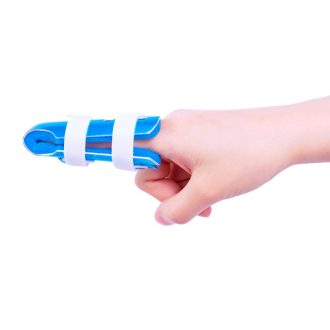
Finger Splint Brace
- 1x Finger Splint Brace designed to straighten and protect your finger
- One size fits all
- Size: Approx. 11.7 x 7.7cm
- Great for speeding up recovery of fractured or broken fingers as well as treating trigger finger & mallet finger
- Soft and comfortable to wear
- Lightweight and breathable design
- Features a removable aluminium metal bar to help keep your finger straight
- Includes a full 30 day money back guarantee if you are not 100% satisfied with your purchase!
£6.99inc VATMallet Finger Splint
- 1x Mallet Finger Splint Brace designed to support, protect against and correct mallet finger
- For both Men & Women
- Available in sizes Small (1 strap) & Large (2 straps)
- Can be worn on any finger
- Recommended for treating and easing a range of different injuries and conditions including Mallet Finger, Trigger finger, Fractures, Broken fingers, Joint Strains & Sprains, Tendonitis, Stiffness, Gout & Arthritis
- Features easy to use adjustable hook and loop straps that keep the finger brace securely in place and allow you quickly and easily adjust the fit and level of support and compression
- Aluminium splint supports, realigns and straightens your finger bones and joints in a neutral position
- Ideal for wearing during the P.R.I.C.E injury recovery protocol to help protect, rest and compress your finger after sustaining a finger injury for faster and a better injury recovery
- Provides soothing compression that boost circulation to your finger reducing inflammation and swelling, eases aches and pains and promotes healing of damaged tissue
- Made from breathable lightweight materials with a soft memory foam interior that cushions your finger and makes the brace perfect for wearing for long periods of time without any discomfort
- Includes a full 30 day money back guarantee!
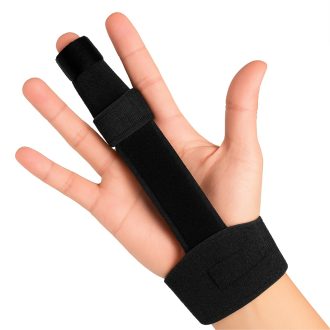
£7.99£9.99inc VATRevitaFit™ Finger Corrector Straightener Splint
- 1x Finger Corrector Straightener Splint ergonomically designed to help support and treat crooked, bent, broken and fractured fingers
- For both Men & Women
- One size fits featuring adjustable Velcro strap that allow you to conveniently adjust to the appropriate level of support, compression and to the right fitting of the finger splint
- Can be worn on both your Left and right hand around ANY finger easily
- Does NOT restrict the movement of your other fingers giving you maximum support to your injured finger without compromising the mobility of your other fingers
- Provides support and compression to your finger to help improve injury recovery and rehabilitation of Broken fingers, Fractures, Trigger Finger, Mallet finger, Finger Stenosing, Tenosynovitis, Sprained Knuckles, Tendonitis as well as for easing conditions such as Arthritis, Gout, and post stroke finger curling
- Gives soothing compression to your finger that stimulates the blood vessels and improves circulation to provide damaged tissue with fresh oxygen and nutrient rich blood to promote the natural healing process and helps ease aches and pains and reduces inflammation and swelling caused by injury
- Features an inbuilt metal support splint that holds your injured finger in a straight but comfortable position to protecting it from excessive movement, strain and further injury whilst allowing your finger to heal properly in a straight position without deformation
- Made from strong, durable yet lightweight and non bulky materials with excellent breathability and moisture wicking properties to keep your hands fresh and comfortable even when wearing the splint for long periods of time
- Can be worn overtime to help strengthen and straighten the muscles, ligaments and tendons in your finger to help train your finger and lessen crookedness and curving
- Includes a full 30 day money back guarantee!
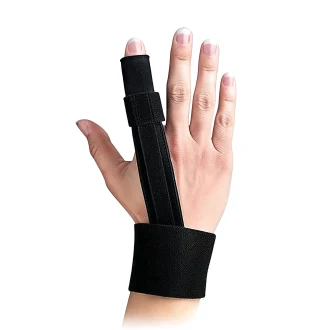
£8.99inc VATFinger Splint Straightener Brace for correcting bent & crooked fingers
- RevitaFit full‑length finger splint that runs from the wrist to the fingertip with a slim, lightweight aluminium stay.
- Designed for adult hands to support any finger except the thumb, on either hand.
- Helps you hold a drooping, bent, or crooked finger closer to a comfortable straight line.
- Limits how far the fingertip (DIP) and middle joint (PIP) can suddenly bend or over‑straighten into painful positions.
- Stay can be worn on the back or the palm side of the finger, so your clinician can choose the direction that best protects your joints and tendons.
- Angled from the wrist to support the index, middle, ring, or little finger, giving control across the whole length of the affected finger rather than just the tip.
- Three adjustable hook‑and‑loop straps – one at the wrist, one at the base of the finger, and one near the fingertip – help the brace fit most adult finger sizes on the right or left hand.
- Padded, breathable RevitaFit sleeve spreads pressure over the finger and hand, helping reduce rubbing on bony areas during longer wear.
- Can be worn during tasks that usually set symptoms off, or at night to rest a painful or curling finger, following clinical advice.
- Often chosen in clinic for problems such as sprains, fractures, mallet‑type droop, arthritis‑related change, or post‑stroke curling of one or more fingers.
- Hand‑washable and quick to air‑dry so you can keep the brace clean and the padding comfortable over time.
- Not a first‑line response for new severe deformity, suspected dislocation, or unstable fracture – seek urgent assessment first. Stop or loosen if you notice numbness, colour change, or skin damage.
£8.99inc VAT