No products in the cart.
Arch support insoles
Arch Support Insoles for Better Foot Comfort, Support and Everyday Mobility
If foot pain is starting to affect how you walk, stand, exercise, or simply get through the day, it is worth taking a closer look at what is happening inside your shoes.
For many adults, aching heels, tired arches, burning under the ball of the foot, and that heavy end-of-day foot fatigue do not appear out of nowhere. They often build gradually when the foot is not getting enough support where it needs it most, or when the same sore area keeps taking too much pressure with every step.
A lot of people begin by looking for more cushioning. That can help, but it is often only part of the answer. Softness may feel good at first, yet if the arch is poorly supported and the heel is not held securely, the same painful areas can still end up doing too much work during standing and walking.
At NuovaHealth, our arch support insole range is built around that difference. We offer our own insole designs alongside carefully selected specialist options, including supportive styles from FootReviver, so you can compare different levels of structure, cushioning, and control depending on how your feet feel, the shoes you wear, and what you need from the day ahead.
Rather than simply adding padding, the right insole helps support the arch, steady the heel, and spread pressure more evenly through the foot. That can make everyday movement feel less tiring, less aggravating, and better supported from the first steps of the day to the last.
Whether you are on your feet for hours at work, dealing with recurring heel or arch pain, replacing the thin flat insert that came with your shoes, or looking for a more supportive option for walking and exercise, a better-chosen insole can make a noticeable difference to day-to-day comfort.
This guide explains why arch support matters, how arch support insoles work, which types of foot and lower-limb problems they may help with, and how to choose the right option from the NuovaHealth range for your needs.
Why Arch Support Matters
Your arches help your feet carry body weight, absorb impact, and adapt to the ground as you move. When that support system is not working especially well, pressure tends to build in the heel, arch, or forefoot instead of being shared more evenly across the foot.
What most people notice first is not always a dramatic injury. More often, it is that familiar pattern of tired, aching feet. Your heels may hurt when you first get up. Your arches may begin to ache halfway through the day. The front of your feet may feel hot, sore, or unsupported after standing on hard floors for too long.
When the arch is not coping well, a few common patterns tend to show up. In some people, the foot flattens more than it should under body weight, which can stretch and irritate the tissues under the sole. In others, the foot stays relatively stiff and does not spread force very well, so the heel and forefoot end up taking more than their share of the load. Either way, the foot is no longer distributing pressure as effectively as it should.
That matters because your foot is the first part of the body to meet the ground. If it rolls inward too much, stays too rigid, or loads unevenly from side to side, that can add to strain further up through the ankles, knees, hips, and lower back over time.
That does not mean every ache starts in the foot. It does mean, though, that better support under the arch and heel can make a real difference when poor foot mechanics are part of the problem.
How Arch Support Insoles Help
Arch support insoles do a simple but important job: they help your feet handle load more efficiently.
A contoured insole supports the midfoot, where the arch sits. If your foot flattens too much under weight, that support can help reduce how far it drops inside the shoe. That may ease repeated strain on the tissues running from the heel towards the toes. If you have high arches, shaping through the midfoot can help bring more of the sole into contact with the shoe, so pressure is not concentrated so heavily at the heel and forefoot.
A supportive heel cup helps hold the heel more securely. This often makes the foot feel steadier inside the shoe and can reduce some of the repeated stress that builds around the heel and ankle during walking and standing.
Good insoles also help redistribute pressure. This is one of the main reasons they are so useful for everyday foot pain. If one small area is taking too much force with every step, soreness tends to build. Better support helps spread that load more evenly across the foot.
- Less strain through the arch
- Less repeated impact under the heel
- Reduced pressure under the ball of the foot
- Better day-long comfort in work shoes, trainers, boots, and walking footwear
Not everyone looks for arch support because of a named condition. Many adults simply notice that their feet tire early, ache after a shift, or feel heavy and unsupported after standing on hard surfaces. In that situation, a more structured insole can help the foot work more comfortably through the day by supporting the sole in places where standard flat insoles often do very little.
Earlier, we looked at how poor support under the foot can affect movement further up the leg. In practical terms, better support under the arch and heel can help the ankle and knee feel steadier and less overworked during everyday walking and standing when the foot is contributing to the problem.
One of the most common mistakes people make is choosing an insole based on softness alone. A softer insole is not always a better one. For many support-related foot problems, shape and stability matter just as much as cushioning, and often more.
Who Arch Support Insoles Are Most Useful For
Arch support insoles are not only for people with a formal diagnosis. Most customers start looking for them because their feet feel tired, flat, unsupported, or sore during normal daily life.
- People who stand or walk for long periods at work
- Adults with sore heels, aching arches, or burning under the forefoot
- Walkers, runners, and gym users who want more support inside their shoes
- People with flat feet, high arches, overpronation, or supination
- Those replacing thin, flat, unsupportive factory insoles
- Adults who feel poor foot comfort is starting to affect their knees, hips, or back
A lot of people describe the same pattern: their feet feel manageable first thing, then progressively more tired and uncomfortable as the day goes on. That is often a sign that the foot is not being supported efficiently inside the shoe.
Within our range, some people do best with a softer everyday support, while others need a firmer or more structured insole to cope with longer shifts, more walking, or repeated impact. That is one reason we offer both NuovaHealth designs and selected specialist options rather than treating every foot as though it needs the same type of support.
If your discomfort is severe, persistent, unexplained, or getting worse, it is sensible to speak with a GP, physiotherapist, podiatrist, or another appropriate clinician before relying on insoles alone.
How to Choose the Right Arch Support Insole
The best insole is the one that fits both your foot and your footwear properly.
More support is not always better if the shoe becomes too tight or the arch feels intrusive. The aim is to match the insole to your symptoms, your daily activity, and the type of shoes you actually wear. The right choice should feel supportive and stable, not bulky, awkward, or as though it is forcing your foot into the wrong shape.
If your main issue is tired, aching feet
A lighter or semi-rigid insole is often a good place to start. This type of support feels more structured than a flat insert, but is usually easier to wear in everyday shoes for longer periods. It suits many people who want more support without stepping straight into a very firm orthotic-style design.
If you have heel pain or arch pain
Look for a shaped arch support combined with good heel cushioning and heel stability. In many cases, that combination works better than soft gel padding alone because it addresses both pressure and support rather than just adding softness under a painful area.
If you are active or on your feet all day
For walking, running, gym use, work shifts, or long periods on hard floors, a firmer and more supportive design usually performs better. Repeated movement places more demand on the arch and heel, so structure becomes increasingly important. This is often where a more supportive NuovaHealth design or a specialist option such as FootReviver may be more suitable than a comfort-first insert.
If your shoes are shallow or narrow
Choose a lower-profile design. Even a very good insole will not feel right if it crowds the toes, lifts the heel too much, or makes the shoe uncomfortably tight. Slimmer options are often the better choice for everyday casual shoes, fitted work shoes, and footwear with less internal depth.
If your pain is mainly under the ball of the foot
Do not choose based on softness alone. Forefoot pain often improves more when the insole supports the arch properly and helps shift some load away from the front of the foot. A good insole should improve how force moves through the whole foot, not simply add padding to one sore spot.
Our range includes softer comfort-focused designs, more structured supports for active use, and semi-rigid options that balance support with day-long wearability. We also stock different shapes and profiles to suit different shoe types and support preferences, so you can compare options more easily and choose a style that fits both your footwear and the way you use it.
Common Problems Arch Support Insoles May Help With
Arch support insoles are not a cure-all, and they do not replace proper assessment when symptoms are severe, persistent, unexplained, or worsening. They can, however, be very helpful when discomfort is being driven by poor support, uneven pressure, or repeated strain through the foot.
Heel Pain and Arch Strain
This is one of the most common reasons people try arch support insoles. If you get sharp heel pain with your first few steps in the morning, tenderness under the heel after walking, or aching through the arch after time on your feet, better support can make everyday movement feel more manageable.
These symptoms are often linked with plantar fascia strain, heel spurs, or irritation around the heel. Plantar fascia strain affects the thick band under the foot that helps support the arch. If it is being stretched and loaded repeatedly without enough support, pain often builds near the heel attachment. Heel spurs and heel bursitis can also be aggravated when the heel keeps taking too much direct force.
A shaped insole helps by supporting the arch, reducing pulling strain under the foot, and helping the heel share load with the rest of the sole more effectively. For many people, that means less strain first thing in the morning and less soreness building later in the day.
Flat Feet and Overpronation
If your feet flatten heavily when you stand, the inner side of the foot and ankle often end up working harder than they should. You might notice aching arches, tired feet, soreness around the inside of the ankle, or shoes that wear down more on the inner edge.
Overpronation means the foot rolls inward more than is ideal as you take weight through it. A small amount of inward roll is normal, but too much can leave the arch and inner ankle dealing with repeated strain. In this situation, a more supportive insole can make a real difference to comfort and control.
The aim is not to force the foot into an unnatural position. It is to give the arch more support and the heel more stability, so the foot feels less strained through the day and the lower leg does not have to compensate as much.
High Arches and Poor Shock Distribution
High-arched feet often have the opposite problem. Instead of flattening too much, they usually stay relatively rigid, so force is not spread evenly through the sole. That tends to leave the heel and forefoot taking more impact than they should.
If you have high arches, walking can feel harsher than it should, especially on harder surfaces. Some people notice a hard heel strike, while others feel soreness under the ball of the foot after longer walks or standing.
A supportive insole can help improve contact through the midfoot and reduce that concentrated feel under the heel and forefoot. Bringing more of the sole into contact with the shoe often makes repeated walking feel less jarring and less fatiguing.
Ball of Foot Pain and Forefoot Pressure
Burning, soreness, or a bruised feeling under the front of the foot is often linked to poor pressure distribution. This can include metatarsalgia, Morton’s neuroma irritation, sesamoid strain, and pressure linked to bunions or hammer toes.
Metatarsalgia is pain in the ball of the foot where a lot of force passes during push-off. Morton’s neuroma often causes burning, tingling, or the sense that something is trapped under the forefoot. Sesamoiditis affects the small bones beneath the big toe joint, which can become sore with repeated loading. Bunions and hammer toes are structural problems that are not corrected by insoles, but they can often be made more comfortable if pressure through the front of the foot is reduced.
Insoles do not reverse toe shape or change the structure of the joint, but they can help by taking some of the load away from the forefoot and spreading it more evenly through the rest of the foot.
For heel pain, people often focus on cushioning. For forefoot pain, support matters just as much.
Achilles, Shin and Ankle Strain
When the foot is not moving well underneath you, the ankle and lower leg often have to compensate. That can contribute to Achilles discomfort, shin splint-type symptoms, and a general sense that the ankle feels less stable than it should.
The Achilles tendon is affected by how the heel and arch move beneath it. Shin splints are often aggravated when the lower leg has to control the same repeated loading pattern again and again. After an ankle sprain, some adults also feel that the foot and ankle are less secure inside the shoe, especially on uneven ground or stairs.
A supportive heel cup and better arch structure can help the foot feel more controlled inside the shoe, which may reduce some of the repeated stress travelling into the lower leg.
Knee, Hip and Lower Back Discomfort
Foot support is not the answer to every knee, hip, or back problem. In practice, though, some people do notice an improvement higher up when poor support below has been affecting the way they stand and walk.
If the foot rolls inward too much, stays too stiff, or loads unevenly, that can change how force passes up the leg. Over time, that may add to discomfort in the knee, fatigue around the hip, or lower back ache during longer periods upright.
If your shoes feel flat, your feet fatigue quickly, and you seem to shift your weight more as the day goes on, better support underfoot may help make standing and walking feel less wearing overall.
Poor Posture and Arthritis-Related Foot Strain
Posture is influenced by many things, but your feet are your base when you stand. If your shoes feel flat, unsupportive, or uncomfortable, standing well for longer periods often becomes more difficult. Some adults notice they shift their weight more, stand unevenly, or tire earlier when their feet are not well supported.
Arthritic joints in the feet and lower limbs can also become more sensitive to repeated impact, concentrated pressure, and long periods on hard surfaces. That can make ordinary daily activity feel more demanding than it should.
Arch support insoles may help by cushioning sensitive areas, spreading pressure more evenly, and giving the foot a steadier base. They do not correct posture in a broad sense or treat arthritis itself, but they can make day-to-day standing and walking feel more comfortable when poor support is part of the problem.
Why Choose Arch Support Insoles from NuovaHealth
At NuovaHealth, we focus on practical, wearable support for real everyday use.
That means insoles designed not just to feel soft when you first step into them, but to keep working through commuting, work shifts, long walks, exercise, and all the hours in between. Some customers want a simple upgrade from the flat insert that came with their shoes. Others are looking for firmer support to help with repeated heel pain, arch fatigue, or forefoot pressure. Our range is built to cover that spread.
We stock arch support insoles across different support levels, profiles, and use cases, including both NuovaHealth own designs and selected specialist options such as FootReviver. This gives you a broader choice of comfort-focused, semi-rigid, and structured designs depending on how much control, cushioning, and day-long support you need.
Our range includes:
- Softer comfort-focused options for everyday wear
- Semi-rigid designs that balance support and day-long wearability
- Firmer structured insoles for active use and repeated loading
- Features such as contoured arches, heel stabilisation, cushioning, and breathable materials
- Options suited to different foot types, activity levels, and shoe styles
No single insole works for everyone. The right choice depends on how your feet feel, how much support your shoes already provide, how much time you spend standing or walking, and whether you need an insole mainly for comfort, pressure relief, or firmer structural support.
We also offer a 30-day money-back guarantee, so you can try the support and decide whether it feels right for you.
What to Expect When You Start Wearing Them
Give your feet time to adjust
If you are used to flat or unsupportive footwear, supportive insoles will feel different at first. That is normal. Start with shorter wear periods and build up gradually over several days.
If the support feels clearly too aggressive, the fit becomes uncomfortable, or pain continues rather than settling, the insole may not be the right shape or support level for you.
Fit matters
In most shoes, arch support insoles work best when they replace the original removable insole rather than sit on top of it. This usually gives a better fit and allows the foot to sit more securely inside the shoe.
The insole should lie flat, the heel should sit properly, and the arch support should line up with your arch rather than sitting too far forward or back. Some insoles can be trimmed for a better fit, but the shape still needs to sit in the right place under the foot.
Use them in suitable footwear
Supportive insoles perform best inside shoes with enough structure to hold them properly. Stable trainers, walking shoes, work shoes, and boots usually give better results than very soft or highly flexible footwear.
Replace them when worn out
Over time, materials compress and support can flatten. If the insole starts to feel uneven, less supportive, or obviously worn, it is usually time to replace it.
Care and cleaning
Most arch support insoles can be hand washed gently and left to air dry. Avoid high heat, as this can affect the materials and alter their shape.
When to Seek Professional Advice
If your pain is severe, persistent, worsening, or not clearly related to footwear and activity, proper assessment matters.
You should also seek professional advice if you have swelling, numbness, new or unexplained symptoms, or a medical condition affecting your feet, joints, nerves, or circulation. If symptoms are changing quickly, or if walking is becoming increasingly difficult, it is sensible to speak with a GP, physiotherapist, podiatrist, or another appropriate clinician rather than relying on insoles alone.
Insoles can improve support and comfort, but they should not delay investigation of symptoms that need clinical attention.
Frequently Asked Questions
Is it normal for arch support insoles to feel strange at first?
Yes. If you are used to flat insoles, a contoured support often feels unfamiliar at first. A short adjustment period is common, but ongoing pain is not something to ignore.
Should I remove my existing insoles first?
Usually, yes. Most supportive insoles fit best when they replace the original removable insert already inside the shoe.
Will softer insoles be better for sore feet?
Not always. One of the most common mistakes is assuming softness alone will solve the problem. For many people, support and pressure distribution matter more.
Can arch support insoles help with plantar fascia pain?
They often help by supporting the arch and reducing repeated strain under the foot, especially when combined with suitable footwear.
Can I use them in sports shoes?
Many can be used in trainers and other active footwear, provided the shape, support level, and fit are suitable for the shoe and the activity.
Will my feet become dependent on them?
No. Arch support insoles do not make your feet lazy. They are there to improve comfort and support when your footwear or foot mechanics are not doing enough on their own.
How long do they last?
That depends on wear frequency, activity level, and shoe type. Once the shape has flattened or the cushioning has noticeably worn down, replacement is usually sensible.
Can I wash arch support insoles?
In most cases, yes. Gentle hand washing and air drying is usually the safest approach. Avoid exposing them to direct heat.
What if they do not fit my shoes?
Check whether the original insole can be removed and whether the model can be trimmed to fit. If the shoe is too shallow or narrow, a slimmer design may be more suitable.
Conclusion
If your feet are aching, tiring quickly, or feeling poorly supported by the end of the day, arch support insoles can be a practical way to improve comfort and reduce repeated strain inside your shoes. They are especially useful where the arch, heel, or forefoot is taking more load than it manages well, or where poor support is starting to affect how comfortable standing and walking feel overall.
At NuovaHealth, our range includes both our own supportive insole designs and selected specialist options, so you can compare different levels of cushioning, structure, and control in one place. Whether you are looking for everyday comfort, firmer support for long hours on your feet, or a more stable insole for walking and active use, choosing the right shape and support level can make a meaningful difference.
The best option depends on your symptoms, the type of shoes you wear, and how much support you need from day to day. If you are exploring your options, it is worth comparing support level, fit, profile, and intended use carefully so you can choose an insole that matches both your feet and your footwear. If you are unsure, or if your symptoms are more complex, speaking with a GP, podiatrist, physiotherapist, or another appropriate clinician can help you decide what is most suitable.
Disclaimer
NuovaHealth arch support insoles are designed to improve foot comfort, support, and day-to-day pressure distribution. This information is general guidance only and is not a substitute for individual medical advice, diagnosis, or treatment.
If you are unsure whether arch support insoles are suitable for you, or if you have more complex, persistent, or new symptoms, speak with a GP, physiotherapist, podiatrist, or another appropriate clinician for personalised advice. Outcomes vary from person to person, and no specific result can be guaranteed.
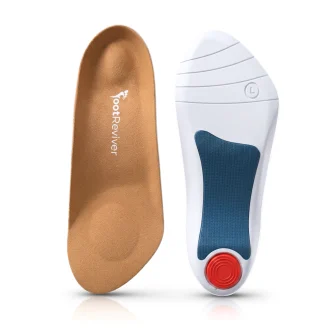
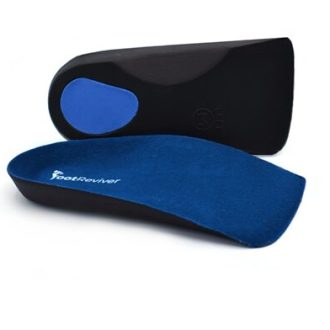
Plantar Fasciitis Arch Support 3/4 Length Heel Pain Relief Insoles
- 1x Pair of Arch Support Insoles — FootReviver Arch Support Insoles designed to steady your heel, support your arch, and help ease plantar‑fasciitis‑related heel discomfort during everyday wear
- For Men & Women
- Available in UK sizes 7–11 and 3–7; trim‑to‑fit forefoot for a closer match
- Slim 3/4‑length design fits most everyday shoes quickly and easily while leaving toes free
- Semi‑rigid plastic arch support, deep heel cup, and gentle medial posting (a small inner‑edge lift that guides alignment) help reduce excess inward roll and the strain it can place on the inner heel, arch, and plantar fascia
- Dual‑density foam cushioning with a built‑in heel pad absorbs impact while keeping midfoot support stable
- Soft, breathable fabric top cover with a moisture‑wicking surface helps keep feet drier and reduces rubbing; smooth against the skin to reduce irritation
- A practical choice for long shifts on your feet—retail, hospitality, healthcare—and for feet with low or high arches that benefit from steady support
- Designed to reduce strain on the plantar fascia and support comfortable daily movement; results vary and this is not a medical device
- Lightweight, durable, and easy to swap between shoes; trim the forefoot only, then seat the heel cup flush at the back
- Includes a full 30‑day money‑back guarantee
£9.99£10.99inc VATFootbed Insoles for Fallen Arches (Flat feet)
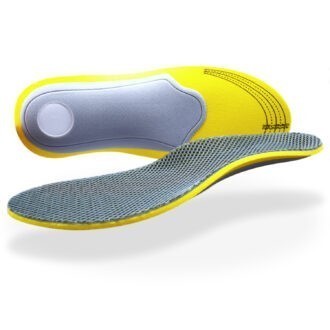
- 1x Pair of Footbed Insoles for Fallen Arches (Flat feet) designed to support, ease and treat foot injuries such as Plantar fasciitis
- For both Men & Women
- Available in sizes: 7-11 & 3-7
- Provides substantial arch support to help take strain and pressure off your plantar fascia ligament allowing you to recover properly from injuries such as Plantar fasciitis
- Ideal for people with flat feet, high arches, diabetes, Neuropathy, Arthritis, and other conditions affecting your feet that increase your risk of injury
- Recommended for helping to treat and prevent Metatarsalgia (Ball of foot pain), Bunions, Morton’s Neuroma, Atrophy, Collapsed arches, Plantar Fasciitis, Cuboid Syndrome, Heel Spurs, Heel bursitis, Ankle sprains and strains, Arthritis as well as shin, knee and lower back pain and problems
- Helps improve the way your feet function by preventing overpronation and supination when you walk which are among the most common causes of overuse injuries in your feet and lower limbs in adults
- The 3/4 length hard shell heel cup is designed to help protect and stabilize your heels and ankles preventing shock, strain and pressure from causing damage and injury to your feet
- Can be fitted inside a wide range of different footwear with total ease – Simply trim carefully using a sharp pair of scissors to the right size using size guide printed on the insoles for the perfect fit
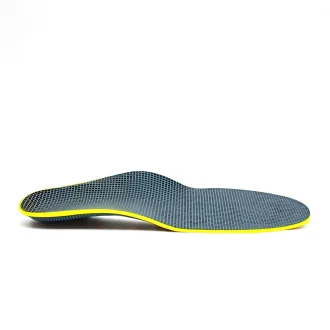
- Made from lightweight Carbon fibre with antibacterial and moisture wicking properties with a breathable memory foam top layer which will provide a soft cushioning footbed to help keep your shoes comfortable when standing for long periods of time
- Includes 30-day money back guarantee!
£9.99£11.99inc VATOrthotic Shoe Insoles for Flat Feet
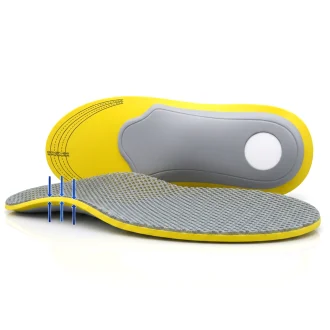
- 1x Pair of Orthotic Shoe Insoles for Flat Feet that features specially designed heel and arch support technology to help reduce strain and pressure off your feet and ease foot and heel pain
- For both Men & Women
- Available in sizes: 7-11 & 3-7 (Can be cut to size and can be fitted inside virtually any type of shoes quickly and easily)
- Made from breathable, moisture wicking Active Carbon Fibre material that helps remove odour and keeps your feet fresh and dry
- Inbuilt arch support helps reduce strain and pressure off your feet and tilts your feet into the correct position as you walk
- Helps prevent common gait problems and biomechanical imbalances such as Overpronation and Supination which are leading causes of foot and lower limb injuries and pain
- Recommended for people with Flat Feet, High Arches, Plantar Fasciitis, Foot and Ankle Sprains and Strains, Achilles Tendonitis, Metatarsalgia, Bunions, Morton’s Neuroma, Heel Spurs, Foot Drop, Shin Splints Arthritis, Gout and more!
- Features a deep heel cup that stabilizes and supports your heels in the correct position preventing movement which could twist, sprain and damage your heels and ankles
- 3/4 Semi rigid plastic shell helps absorbs shock and spreads pressure evenly across the heel and foot stopping pressure points developing for better protection and comfort when standing for long periods of time
- Includes 30 day money back guarantee!
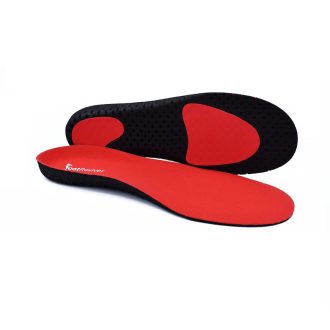
£9.99£11.99inc VATRunning insoles by FootReviver™
Why buy these Running insoles!
Running can take its toll on your feet. The high impact forces and pressure placed upon your feet when you run can damage key ligaments, joints, and bones in your feet. This can cause injuries and problems to develop such as metatarsalgia, plantar fasciitis, heel spurs, Achilles tendinitis as well as other problems that can affect not just your feet but also your lower limbs and lower back.That is why it important to make sure that your feet are properly supported and protected when you run. Wearing a pair of these running insoles in your shoes is one way that you can stay injury free!
Main features
- 1X pair of genuine FootReviver running insoles, features the very best arch support and motion control technology to keep you running injury free!
- Ideal for treating and easing a number of different foot related injuries
- Perfect for people who are on their feet all day featuring a memory foam layer for better shoe comfort.
- Inbuilt arch support corrects your foot functions and stops things such as over-pronation which can cause excessive pressure on your feet and trigger injury
- Ergonomically designed to be shock resistant to prevent shock from causing damage to your feet
- With built-in metatarsal pads you can say no more to ball of foot pain once and for all!
- Heel cup holds your foot in place and prevents damaging movement of your foot and ankle when walking
£9.99inc VATFoot pain insoles by FootReviver™
Main features
- 1x pair of genuine FootReviver™ insoles ideal for people with heel and foot pain
- Designed to help ease the main causes of foot pain by supporting your feet in the most natural position and correcting functional and bio-mechanical problems when you walk.
- Built to last. These insoles have been made out of the very best materials that will endure and keep supporting your feet even after many months of regular wear
- Shock absorbing technology helps to absorb shock and spread pressure reducing your risk of injury
- Highly recommended for people with flat feet or high arches
- 30 day money back guarantee
£10.99inc VATHeel pain arch support heel cups by FootReviver™
These heel cups are the ideal choice for anyone suffering from heel or ankle pain. Featuring the very best orthotic technology these insoles will keep you supported and protected against injury and pain.
Main features
- 1x pair of heel cups made by FootReviver
- Features FootReviver’s own arch support technology that supports your feet in the correct position and helps to restore functional balance to your feet when you walk.
- Heel cup designed to support and hold your heel in place preventing strain and pressure from damaging your heel and ankle.
- Compact and lightweight design means these heel cups will inside a number of shoes easily without making them feel tight or bulky.
- Ideal for shock related injuries such as shin splints, and knee tendinitis. These heel cups have been made from shock absorbing EVA to help better protect your lower limbs from shock.
- Comes with no questions asked full 30 day money back guarantee for customer peace of mind
£7.99inc VAT
Flat feet insoles
- Are flat feet holding you back? Persistent arch discomfort, instability during movement, or nagging heel pain aren’t just inconveniences—they’re warning signs. Left unaddressed, collapsed arches can lead to chronic conditions like plantar fasciitis, ankle strain, and joint degeneration. FootReviver insoles, meticulously crafted for biomechanical correction, offer more than relief—they’re engineered to prevent these issues at their source.
- Biomechanical Precision – Collapsed arches disrupt natural gait patterns, forcing joints and ligaments to compensate. These insoles feature a rigid, contoured arch support that lifts and stabilizes the midfoot, realigning posture to correct overpronation and supination. Result? Reduced strain on vulnerable structures, minimizing injury risk.
- Heel Lock Technology – A deep, reinforced heel cup acts as an anchor, preventing excessive side-to-side motion. Critical for athletes or active individuals—this design curbs ankle instability, reducing sprains during dynamic movements like running or pivoting.
- Friction-Free Performance – Strategically placed heel grips with micro-textured surfaces eliminate slippage inside footwear. No more blisters or hot spots—just secure, consistent foot placement.
- Aerospace-Grade Engineering – Forged from ultralight carbon fiber, these insoles deliver robust support without added weight. Trim-to-fit customization ensures seamless integration into any shoe (Men’s 7–11 / Women’s 3–7), from running shoes to work boots.
- Podiatrist-Validated Design – Developed with input from foot health specialists, these insoles target root causes, not just symptoms. Ideal for those with plantar fasciitis, chronic fatigue, or recurring ankle injuries.
- Act Now—Your Feet Can’t Wait! Your journey to pain-free stability starts now. Experience precision-crafted arch support designed to reduce discomfort, enhance mobility, and restore the natural strength your feet deserve. But here’s the best part: We stand by our innovation with a 30-Day Confidence Guarantee. Walk, run, live—put our engineering to the test. If you’re not utterly convinced, get a full refund, no questions asked.
£10.99inc VAT