
ACL Knee Brace
£15.49inc VAT
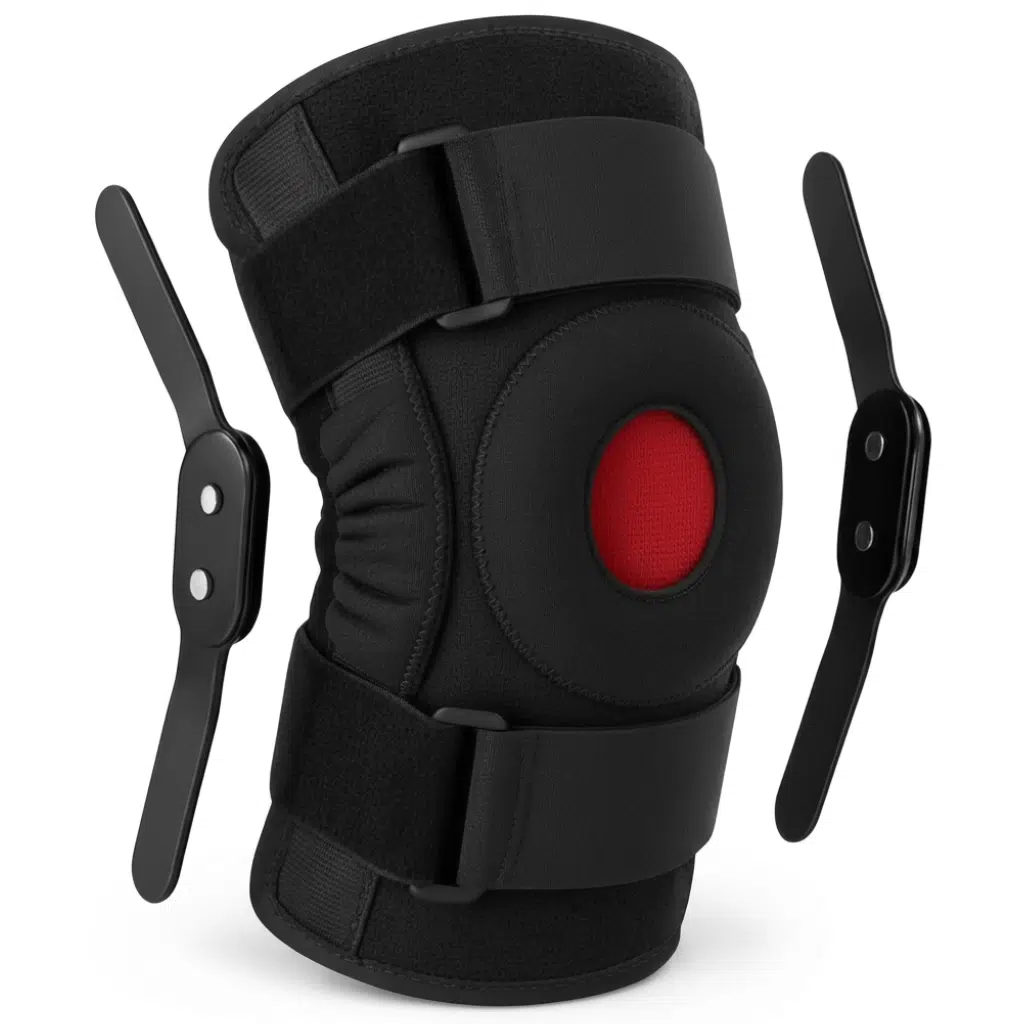
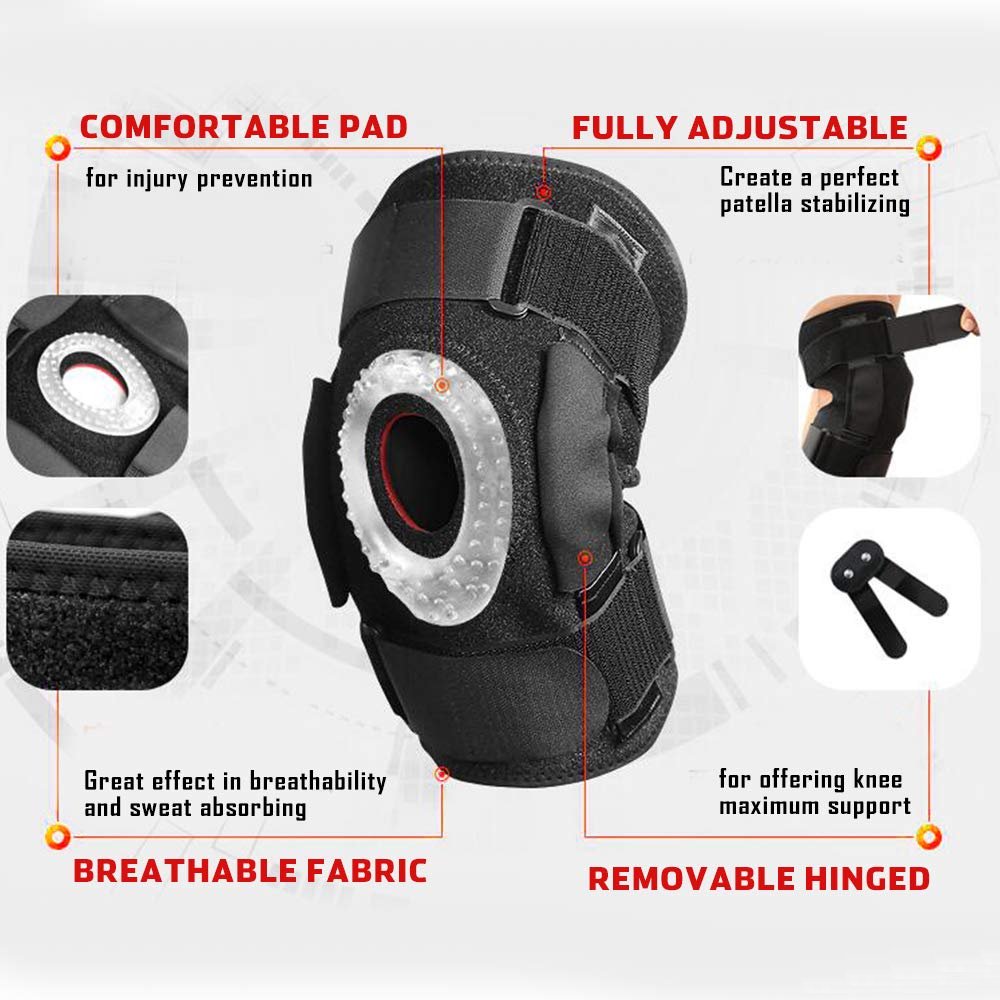
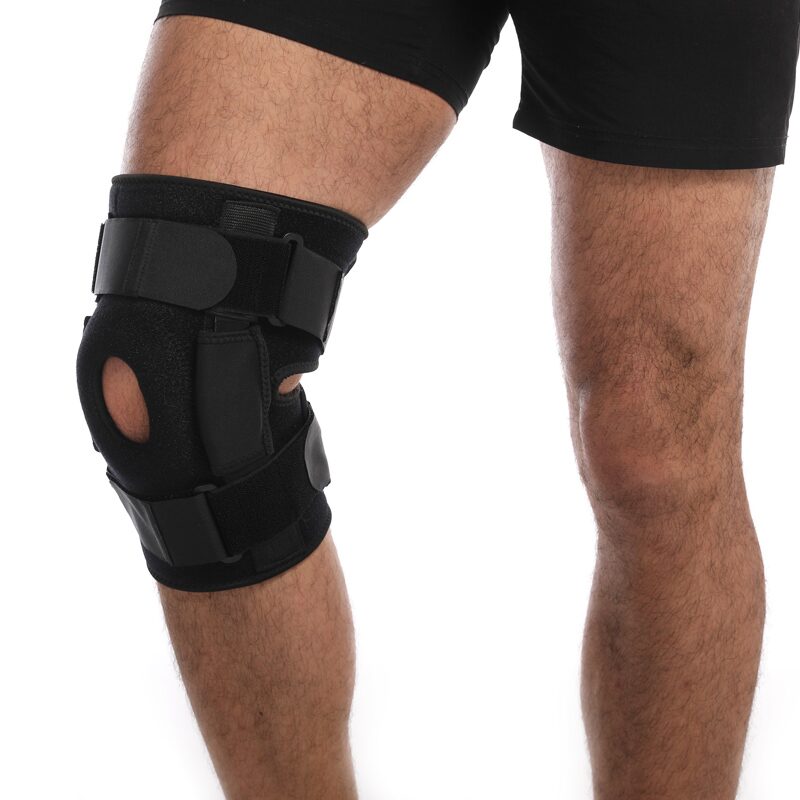
- A hinged knee brace designed to provide more structured support than a simple compression sleeve.
- Designed for adults whose knee feels unstable, unreliable, or prone to wobbling or giving way after ACL injury or similar knee problems.
- Built with rigid side hinges to help guide the knee during walking, stairs, turning, and other loaded daily movements.
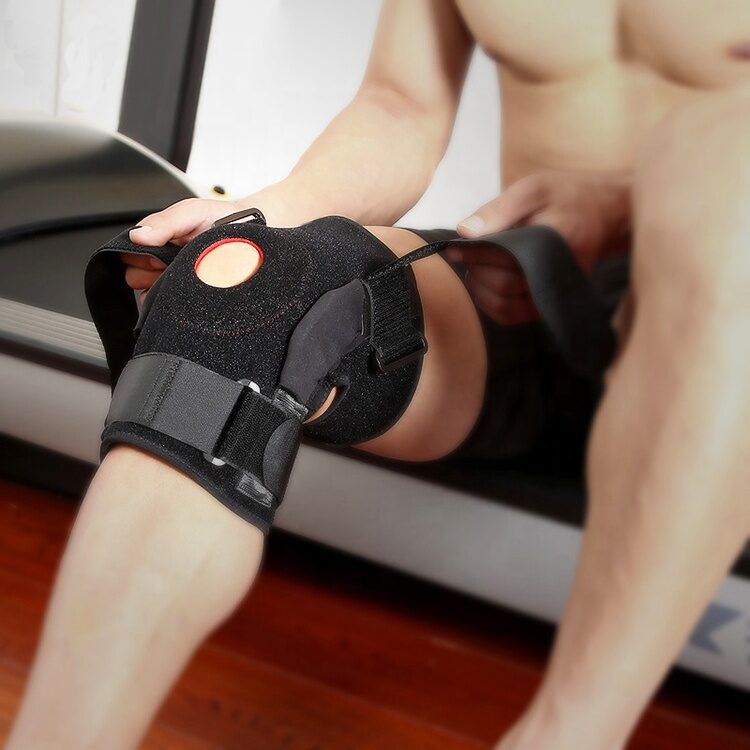
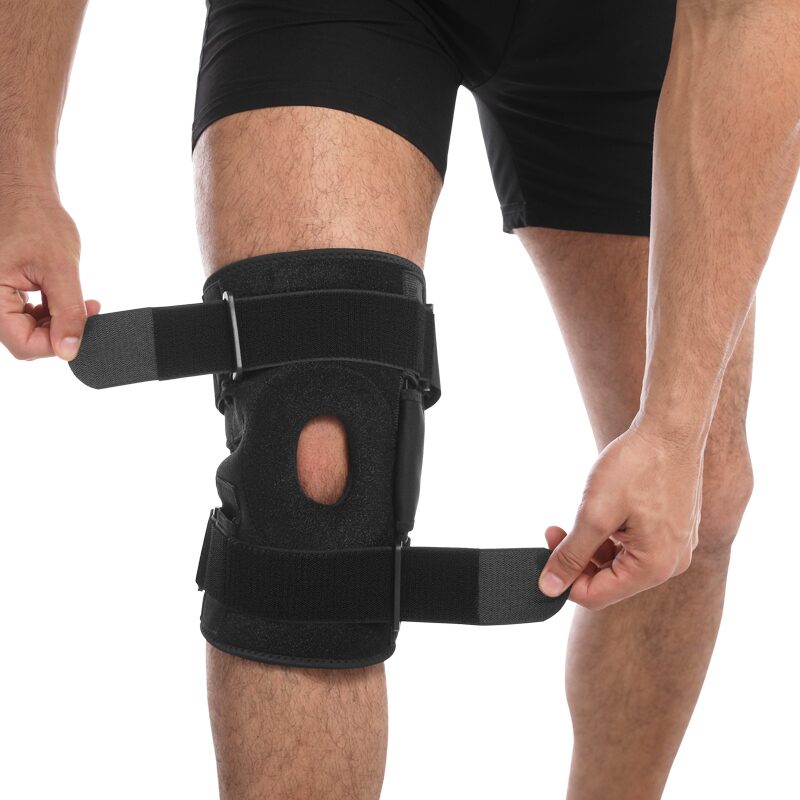
- Uses upper and lower stabilising straps with secondary buckle straps to help keep the brace aligned with the joint.
- The neoprene brace body provides close, supportive compression while the hinges and straps add more structure than a simple sleeve can offer.
- Integrated kneecap support ring offers added front-of-knee cushioning where that area feels irritated or sensitive.
- Available in five sizes from Small to 2X-Large, with a universal design that can be worn on either knee.
- Suitable for a wide range of leg shapes, including plus-size and more muscular legs, when sized carefully.
- May be useful where instability is the main issue, especially on stairs, uneven ground, during turning, or when standing for longer periods.
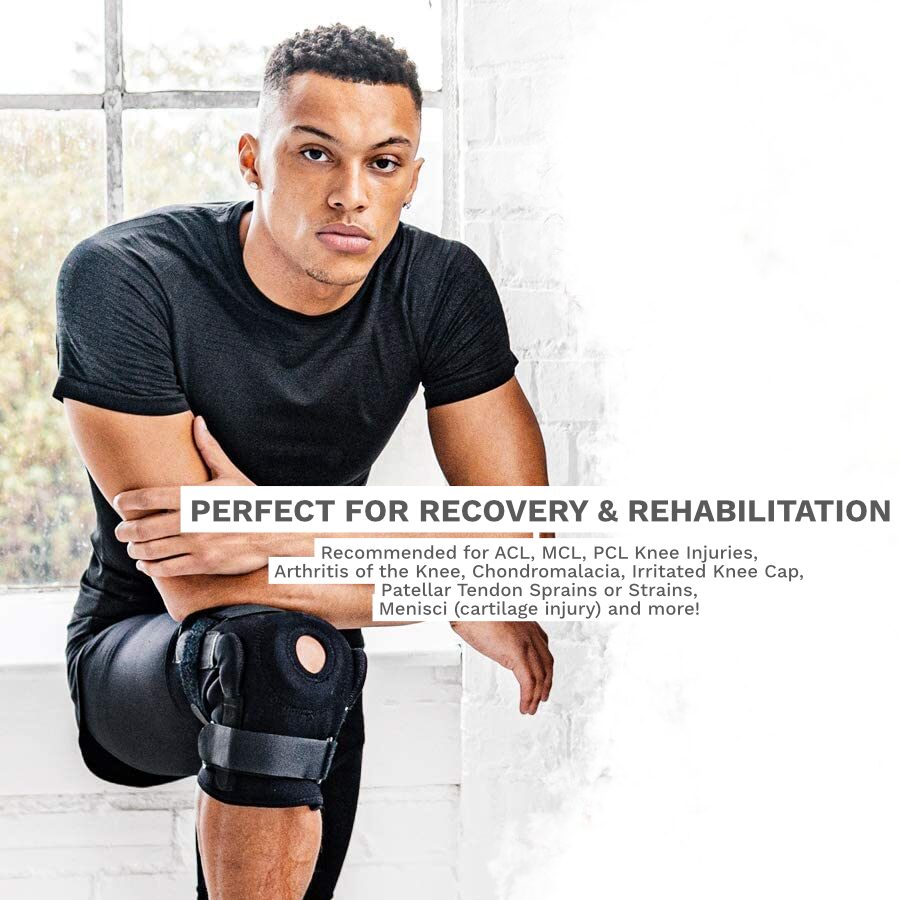
- Can be used as part of non-surgical rehabilitation or during recovery after ACL reconstruction, where guided support is needed.
- Fit the brace with the hinges level with the knee joint and the kneecap support centred correctly at the front.
- It should feel snug and stable, not painfully tight or restrictive, and should not cause numbness, tingling, or colour change below the brace.
- If the knee keeps buckling, remains significantly swollen, locks, or symptoms are new or unexplained, it is sensible to speak to a GP, physiotherapist, or another appropriate clinician.
ACL Knee Injuries: Why Your Knee Feels Unstable — and What Effective Support Needs to Do
If your knee has started giving way after an ACL injury, pain is often only one part of it. What tends to throw people most is the sudden loss of trust in the joint. You go downstairs and hesitate. You step off a kerb and stiffen the leg without thinking. You turn in a tight space and no longer feel sure the knee will stay steady underneath you. Movement starts to feel less automatic and more guarded, often before the pain has properly settled.
You often notice that change quite quickly. Many adults begin avoiding deeper bends, slowing down on stairs, or shifting weight onto the other leg simply because the knee no longer feels dependable. Some start bracing before they stand up, turning more carefully, or avoiding that leg on slopes and stairs. The knee may not give way every time, but once you start expecting it to, the way you move often changes.
At first, it is not always clear what has been injured. Some people do not start with a firm diagnosis. They simply notice that the knee feels swollen, weak, awkward, or unreliable when turning, twisting, or taking weight. What tends to make ACL-related problems feel different from more general knee pain is the mix of discomfort and loss of control. The knee may not hold its line properly when you turn, step down, or load it in a bend.
One of the harder parts of ACL instability is that it changes the way you move before you have fully made sense of it. The knee may not be severely painful all the time, yet certain positions no longer feel safe. Bending to pick something up, stepping down with the affected leg first, or turning quickly to change direction can start to feel like movements that need planning rather than things you do without thinking.
That is what makes instability feel different from pain alone. A painful knee may still feel basically dependable, even if you move more slowly because it hurts. An unstable knee is different. It creates hesitation. You hold back from trusting it fully, you stiffen the leg, and you avoid loading it in the positions that feel least predictable. Over time, confidence can drop just as much as comfort, because the problem is not simply that movement hurts. It is that the knee no longer feels trustworthy during normal daily tasks.
Recovery therefore needs to do more than settle pain. The aim is to help the knee feel steadier in daily life, protect it while strength and control are rebuilt, and reduce the unstable moments that make people lose confidence in the joint. The KneeReviver Hinged Knee Brace is designed for knees that need more than a basic sleeve, combining side support, a secure adjustable fit, supportive compression through its main brace body, and practical day-to-day wear.
Correct sizing is an important part of how this brace works. It is available in five sizes from Small to 2X-Large, is designed to fit either the left or right knee, and can accommodate a wide range of leg shapes when measured carefully. A full size guide appears later on this page, including how to measure the thigh and calf for the best fit.
What the ACL Does — and Why Injury Changes the Way the Knee Behaves
The Anterior Cruciate Ligament, or ACL, is one of the main stabilising ligaments inside the knee. It sits deep within the knee joint and connects the thigh bone to the shin bone. Although the knee is often described as a hinge, it does more than simply bend and straighten. As you walk, turn, land, or change direction, the bones of the knee still need to stay properly lined up while the joint deals with small shifts and twisting forces. The ACL helps control those movements so the knee feels secure rather than loose.
Its role is especially important in two ways. First, it helps limit forward movement of the shin beneath the thigh. Second, it helps control twisting stress when the foot is planted and the body turns, when you land awkwardly, or when you react quickly to a sudden change in direction. These demands are not limited to sport. They also show up in everyday actions such as turning on a planted foot, walking downhill, stepping off a kerb, or descending stairs with body weight moving over a bent knee.
When the ACL is strained or torn, the knee may still bend and straighten, but it often stops feeling well controlled during those more demanding moments. Instead of moving cleanly, it may feel as though it could slip, wobble under load, or shift when the leg has to slow down, turn, or take weight in a bent position. That is why an ACL injury often feels different from general knee pain. The bigger issue is that the knee no longer feels dependable when movement becomes less predictable.
That is why the knee may feel manageable in one situation, then suddenly uncertain in another. Straight-line walking on level ground is relatively simple and repetitive, so some people cope with it reasonably well even after an ACL injury. But as soon as the movement becomes more demanding — slowing down, lowering body weight, turning on a planted foot, or correcting balance on uneven ground — the knee is more likely to feel unsteady, awkward, or slow to respond.
Loaded bending is often where this stands out most. When the knee is bent and taking body weight at the same time, it has to control both forward drift and twisting. That is why going downstairs, stepping down from a kerb, or lowering into a chair often feels more uncomfortable or uncertain than simply standing still. Pivoting feels different again because it combines weight-bearing with rotation, which is one of the situations in which the ACL normally works hardest to keep the joint feeling secure.
A painful knee is not always an unstable knee, and an unstable knee is not simply a painful one. In ACL injury, the knee may no longer control movement as reliably as it should. That is why recovery usually needs to focus on support and movement control as much as comfort. A hinged brace does not replace the ACL, but firm support at the sides of the knee may help it feel steadier during daily movement while strength and coordination are being rebuilt.
How ACL Injuries Commonly Happen — and the Signs They Often Leave Behind
ACL injuries often happen when the knee is exposed to more force than it can control in a split second. In many cases there is no direct collision. A person may plant the foot and turn sharply, land from a jump with the knee poorly aligned, slow down suddenly, or pivot while the body keeps moving over the leg. In those moments, the shin can be driven too far forward beneath the thigh while the knee also twists or drops inward instead of staying better aligned over the foot. If that combined force is greater than the ACL can safely restrain, the ligament may overstretch, partially tear, or rupture.
This is why ACL injuries are often linked to activities involving sudden direction changes, awkward landings, quick stops, or turning on a planted foot. Football, rugby, netball, skiing, racquet sports, and similar activities all place repeated demands on the same movements the ACL helps control. Tired muscles can react more slowly and guide the leg less precisely. If the hamstrings and gluteal muscles are not controlling the leg well, the knee may be more likely to drift into an unsafe position at the wrong moment. Outside sport, a similar pattern can happen with an awkward twist on a wet surface, a missed step on stairs, or an unstable turn while carrying shopping.
The early signs are often quite recognisable. Many people report a sudden pop or snap at the time of injury. Swelling may build over the next few hours, making the knee feel tight and harder to move freely. Pain is usually immediate, although it varies in intensity. What often becomes more significant over the following hours or days is that the knee stops feeling like something you can fully rely on when weight goes through it. Even once the sharpest pain begins to settle, walking downhill, descending stairs, turning, or moving on uneven ground can still feel uncertain.
That matters because a calmer knee is not always a steadier one. Pain can improve before the knee has regained real control. Some people can manage a straight walk on level ground reasonably well, yet still do not trust the knee when they need to pivot in a kitchen, step off a bus, or turn in a tight hallway. Straight-line walking places simpler demands on the knee. Turning and slowing the body over the leg challenge the control the ACL usually provides.
How ACL Instability Can Lead to Wider Knee Problems
Once the knee stops feeling reliable, most people start protecting it automatically. They keep the leg a little straighter, shorten their stride, avoid deeper bends, or move weight more quickly onto the uninjured side. That is a natural reaction, but it also changes how the knee is being loaded.
This is one reason ACL injuries often become part of a broader knee problem rather than staying neatly limited to one structure. If movement becomes stiff or guarded, the front of the knee may start to ache during stairs or rising from a chair. If repeated shifting or giving-way irritates the meniscus, pain may develop along the inner or outer joint line. Swelling can make the whole knee feel heavier, less responsive, and harder to judge during movement. Over time, the thigh, hip, and even lower back may also start compensating for the way the leg is being protected.
This is where the problem can start feeding itself. The less you trust the knee, the more cautiously you move. The more cautiously you move, the harder it becomes to restore normal loading, rebuild confidence, and regain the muscular support the knee depends on. Sometimes this guarded pattern lingers even after pain has eased, simply because you keep protecting the knee in certain positions.
Guarding can become surprisingly persistent. At first it is simply the body reacting to an injury, but over time it can turn into a movement habit. People may continue shortening the stride, avoiding full weight transfer, or keeping the knee out of deeper bends even when the sharpest pain has settled. That often means the thigh and hip have to work harder, so the leg tires earlier.
The knock-on effects often build gradually rather than all at once. The kneecap may start to feel more irritated because the knee is no longer bending and loading as smoothly as it should. If repeated shifting episodes irritate the meniscus, the inner or outer side of the knee may begin to ache more noticeably. Later in the day, fatigue can make all of this more obvious. A knee that feels manageable in the morning may feel much less reliable after repeated stairs, short walks, or longer periods on your feet.
For many people, the real difficulty is not one obvious collapse. It is a knee that becomes harder to rely on as the day goes on. Standing for longer, carrying shopping, getting in and out of a car, or walking on hard ground can all start to feel more effortful. The knee may not give way every time, but the repeated sense that it could is enough to keep movement tense and unnatural. That can also make rehabilitation harder, because exercises that should rebuild control may be done too cautiously or with weight shifted away from the leg.
That is why useful support is not only about comfort. If the knee feels steadier during daily activity, it may reduce the urge to lock the leg back, offload the side too quickly, or avoid bending altogether. That does not replace rehabilitation, but it can make more natural movement easier while strength, balance, and confidence are still being rebuilt.
Why Proper Assessment Matters Before You Commit to a Recovery Plan
Although ACL injuries have some common features, not every unstable knee follows the same pattern. Some injuries involve a partial tear, while others involve a complete rupture. Some occur alongside meniscus damage, irritation of the joint surfaces, or injury to the side ligaments of the knee. These differences matter because they can affect where pain is felt, whether the knee catches or locks, how unstable it feels, and what sort of recovery plan is most appropriate.
In the early stages, swelling can make the picture harder to read clearly. A knee may feel generally painful and stiff without it being obvious which structures are involved. Proper assessment helps clarify whether the main problem is isolated ACL damage, a more complex injury pattern, or a different type of instability altogether. A clinician can also judge whether the main limitation is pain, swelling, loss of movement, poor muscle control, or true giving way of the knee. Those are not all the same thing, and they do not all need the same emphasis in recovery.
This affects practical decisions. One person may do well with structured non-surgical rehabilitation. Another may need a different plan, particularly if the knee repeatedly gives way or daily demands are higher. How much support is needed, how quickly activity should progress, and what type of exercise plan makes sense all depend on what has really been injured and how much control the knee has lost during tasks like turning, descending, or taking weight through one leg.
Repeated episodes of giving way are worth taking seriously. Even if they do not cause a dramatic new injury every time, they can irritate already sensitive tissues and reinforce the movement patterns that make the knee feel less reliable. A brace can be an important part of recovery, but it works best when it supports a clear diagnosis and a properly guided plan rather than standing in for one. If the knee keeps buckling, remains very swollen, or you are unsure what has been injured, it is sensible to speak to a GP, physiotherapist, or another appropriate clinician.
What Recovery Usually Involves
Recovery usually starts with calming the knee enough for proper rehabilitation to begin. That may mean managing swelling, improving comfort, and restoring enough bend and straighten range for daily movement to feel less restricted. Rest, icing, compression, elevation, and short-term pain relief can all help settle the immediate response after injury, but they do not restore the control the ACL normally provides. They help with symptoms, not with the deeper problem of instability.
From there, the focus shifts. The real aim is to rebuild strength, improve control, and restore confidence in the knee under load. For some people, that happens through structured non-surgical rehabilitation, especially if the knee can be made functionally steadier through strengthening and movement retraining. This usually involves restoring full bend and straighten range, building strength in the quadriceps, hamstrings, gluteal muscles, and calf, improving balance, and improving awareness of where the knee is during movement so it can be controlled more confidently when body weight goes through it.
Good rehabilitation is not only about making the knee stronger. It is also about restoring timing, coordination, and trust in the joint. The muscles around the knee need to do more than generate force; they need to switch on at the right moment, control the leg as weight moves over it, and respond quickly when the surface, speed, or direction changes. That is one reason rehabilitation often includes balance work, stepping tasks, controlled lowering exercises, and drills that retrain how the leg behaves when weight goes through it rather than just how strong it is in isolation.
Timing matters as well. In the early stage, the priority is often to calm swelling, restore movement, and stop the knee becoming stiffer and more protective than it needs to be. Later on, the focus shifts towards better loading, stronger muscle support, and more confident movement during real daily tasks. Support can help during that stage by making walking, stairs, and early exercise feel safer while the knee is still rebuilding. The aim is not to rely on the brace forever, but to make those daily demands feel more manageable while the knee catches up.
For others, particularly where instability remains more significant or physical demands are higher, treatment may follow a different pathway under clinical guidance. Whatever route is taken, the knee usually needs a period of better-controlled loading. That means reducing awkward twisting, sudden shifts, and poorly controlled weight-bearing while strength, coordination, and confidence are being rebuilt.
This is often the point where extra support starts to make a real difference. If the knee feels steadier during walking, standing, stair use, or early exercise, many people find it easier to move more normally instead of constantly guarding against a sudden wobble. In practice, that can mean cleaner weight transfer, more confidence on steps, and less hesitation when the knee bends under body weight.
Why Hinged External Support Can Be So Useful During ACL Recovery
A hinged knee brace can be useful in ACL recovery because it supports the kind of control the knee is struggling to provide on its own. Once the ACL is no longer managing forward glide and twisting well enough internally, a brace with rigid side hinges can help the joint feel steadier from the outside, especially during walking, turning, standing, and rehabilitation work.
This can be helpful in both non-surgical recovery and recovery after more involved treatment. In a non-surgical pathway, the brace can make daily movement feel less exposed while the muscles around the knee are being retrained to provide better support. After reconstruction, it can help protect a recovering knee from awkward movement while the tissues are still adapting and confidence is still low. In both situations, the brace is there to make movement feel more controlled during the stage when the joint is not yet ready to cope with everything unsupported.
A well-fitted brace can also help by giving the knee steady contact, which often makes it easier to judge during movement. When a knee has been swollen, injured, or repeatedly unstable, that clearer sense of position can make steps, turns, and weight shifts feel less hesitant. The brace does not heal the ligament by itself, but it can make the knee easier to use with less hesitation during walking, turning, and stepping down.
This matters most in the movements that commonly expose ACL weakness. Going downstairs, for example, asks the knee to control body weight while bent, not just hold you upright. If that position usually makes the shin feel as though it wants to drift and the knee feel uncertain, rigid side hinges and a secure strap system may help the movement feel more controlled. In the same way, when walking on uneven ground creates small side-to-side corrections that the knee no longer handles confidently, a brace that stays aligned with the joint can help reduce the wobble that often makes adults slow down or stiffen the leg.
A simple compression sleeve can feel supportive, but it does not usually offer the same level of directional control. Where the main complaint is genuine instability rather than mild aching or light swelling, a hinged brace is often the more appropriate type of support because it adds structure as well as compression.
A sleeve may provide warmth, light compression, and a bit of reassurance, but it does not offer the same level of guidance when the knee starts to drift or wobble under load. A hinged design adds structure at the sides of the joint, which is especially relevant when the problem is not mild soreness but a repeated sense of instability during movement.
That extra structure can make day-to-day activity easier to tolerate. A person may still need to rebuild strength and movement quality through rehabilitation, but if the knee feels less exposed during ordinary tasks, they are often more willing to move naturally rather than constantly protect it. Confidence in movement is not an optional extra in recovery. It affects whether people bend the knee properly, commit to weight transfer, and stick with the exercises that help restore control over time.
How the KneeReviver Hinged Knee Brace Is Designed to Provide That Support
Once it is clear what an unstable knee actually needs, the value of the brace comes down to design. Effective support is not just about squeezing the joint. It depends on how well the brace helps control movement, how securely it stays aligned with the knee, how comfortable it is to wear during normal activity, and whether it remains practical enough to use consistently. The KneeReviver Hinged Knee Brace is built around those priorities.
Rigid Hinges to Help Control the Movements That Commonly Trigger Buckling
The main structural feature of the KneeReviver Hinged Knee Brace is its pair of rigid side hinges. These are designed to give the knee more guided support during the movements that often feel least reliable after ligament injury, especially when bending under load, walking on uneven ground, descending stairs, or changing direction.
The knee usually feels worst when the movement becomes more demanding, not during the simplest parts of walking. The problem is more often the moment load shifts, the leg bends, or the joint has to react quickly. That is where the knee can feel as though it dips, wobbles, or moves less cleanly than it should.
The rigid hinges help the brace do more than provide compression. They give it a more stabilising role, helping the joint feel better supported from side to side and more controlled as it bends and straightens. For users who feel vulnerable during turning, stepping down, or weight transfer from one leg to the other, that added structure can make movement feel steadier and less uncertain.
The hinges help guide the knee when body weight shifts, the leg bends under load, or the joint starts to drift during movement. If the ground is uneven, the step is awkward, or the knee has to control a descent, that added side structure can make a noticeable difference when the knee feels unstable rather than simply sore.
Because the hinges work alongside a close-fitting brace body and adjustable strap system, the brace is designed to support normal movement more effectively rather than block it altogether. That makes this style of brace more suitable for knees that need meaningful stability support rather than light reassurance alone.
A Secure, Adjustable Fit That Helps Keep Support in the Right Place
A brace can only support the knee properly if it stays lined up with it. If the brace slips, twists, or slides down the leg, the hinges no longer sit where the knee actually bends, and the support becomes much less useful. Fit is not just a comfort detail. It is part of how the brace works.
The KneeReviver brace uses upper and lower stabiliser straps to create the main foundation of support above and below the knee. Once those are secured, the secondary buckle straps allow for finer adjustment, making it easier to refine the fit until it feels snug, stable, and supportive without becoming too tight.
To improve hold further, silicone grip strips at the upper and lower edges help reduce downward slipping during walking and day-to-day activity. This helps the brace stay aligned with the knee so its support remains consistent rather than shifting as you move. A secure fit helps keep the support where it is actually needed, so the knee feels more predictably supported across the day rather than only for the first few minutes of wear.
Fit affects both the support you get and how comfortable the brace is to wear through the day. If it stays where it should, support feels steady and less distracting. If it slips or rotates, you become more aware of the brace than the help it is supposed to give. A secure fit therefore matters not only for stability but for confidence, because it allows the brace to feel like a dependable part of movement rather than something that constantly needs adjusting.
A secure fit also matters during rehabilitation exercises, where repeated bending, stepping, or weight transfer can expose any weakness in brace position. A support that stays properly aligned is more likely to feel dependable, which is one of the main reasons people keep using it rather than giving up on it after a few days.
Compression That Supports Comfort and Improves Movement Awareness
Instability is often accompanied by swelling, and swelling can make the knee feel heavy, stiff, and harder to judge during movement. Even after the sharpest pain eases, the joint may still feel imprecise, as though you cannot quite trust where it is during steps, bends, or changes of direction.
The main body of the KneeReviver brace provides firm, even compression around the knee, which can make the joint feel more comfortable during activity. That close fit can also make movement easier to judge, so the knee feels less vague during walking, bending, and shifting weight.
Compression does not restore the ACL itself. Its role is to make the knee easier to use while rehabilitation continues, especially when swelling or lingering instability has made normal movement feel uncertain. When fluid inside and around the joint makes the knee feel puffy and less responsive, even ordinary tasks such as getting up from a chair or walking across uneven paving can feel clumsy. The neoprene body of the brace may help by making the knee feel more settled and less loose during activity.
Compression is often most useful when the knee feels puffy, slightly heavy, or hard to judge rather than sharply painful. In that setting, the close-fitting body of the brace can make the knee feel easier to place during walking and less awkward during bending. That does not replace structural support, but it can improve comfort during repeated daily movements and make the knee easier to read, especially when swelling has made it feel slow or awkward.
It is a subtle effect, but it often makes the knee feel easier to use. When the knee feels less vague, people are often more willing to bend it naturally, step through more cleanly, and use the leg with less guarding.
Integrated Kneecap Support for Front-of-Knee Comfort
Some people with ACL-related instability also develop discomfort at the front of the knee. This often happens when guarded movement changes the way the kneecap glides over the joint as the knee bends, especially during stairs, rising from a chair, or longer periods on the feet.
The KneeReviver brace includes an integrated silicone support ring around the kneecap area to provide gentle cushioning and guidance there as well. It is not the main reason to choose the brace, but it can be helpful if instability is accompanied by strain or sensitivity around the front of the knee.
By supporting both the overall joint and the kneecap area, the brace can make loaded movements such as stairs, standing up, and repeated bending feel more comfortable while still focusing on its main role as a structured support for instability.
Low-Profile, Breathable Construction for Longer Wear Time
A support brace only helps if it is comfortable enough to wear when you actually need it. If it feels bulky, too warm, awkward under clothing, or irritating after a short time, it becomes much harder to keep it on during the very periods when support would be most useful.
The KneeReviver brace is made from lightweight, breathable materials designed to reduce heat build-up and improve comfort through longer periods of use. Its lower-profile construction makes it easier to wear under everyday clothing, while the fabric helps manage moisture so the brace feels less heavy and enclosed.
This matters in real life because support is often needed during longer walks, day-to-day errands, rehabilitation sessions, work activity, or time spent on your feet at home. A brace that is easier to live with is more likely to be worn consistently enough to be useful.
Comfort also affects confidence. If the brace feels less cumbersome, people are more likely to keep it on through the parts of the day when the knee usually feels least reliable rather than removing it early.
Adaptable Support Across Different Stages of Recovery
Support needs often change as recovery progresses. Early on, the knee may need more help simply to make movement feel safe enough to begin rebuilding. Later, once swelling settles and strength improves, the joint may need less rigid support but still benefit from compression and reassurance during daily activity.
The KneeReviver brace is designed with that progression in mind. In its full configuration it provides structured hinged support for times when the knee needs more control and protection. As recovery advances, it can still provide a lighter compressive and supportive feel even when the knee no longer needs the same degree of firm structural support.
That flexibility matters because recovery is rarely a straight line. Some days involve longer walks, more time on your feet, or more demanding rehabilitation sessions than others. Being able to use firmer support when the knee is being asked to cope with more turning, stairs, or uneven ground, then switch to a lighter supportive feel when less structure is needed, makes the brace more practical across changing demands.
Being able to change the setup means the brace can still be useful as the knee improves and support needs start to shift. That gives it value beyond the first stage of recovery without making it feel overly bulky or restrictive later on.
Built to Withstand Repeated Daily Use
A brace that forms part of recovery often gets used regularly rather than occasionally. Hinges, stitching, fastening systems, and high-contact areas all need to remain dependable if the brace is going to provide meaningful support over time.
The KneeReviver brace is built with durable materials intended to hold up under repeated daily wear. Reinforced fastening points, robust hinge components, and resilient fabric all help it remain reliable through rehabilitation, return-to-activity phases, and longer-term support where needed.
Durability is not only about how long the brace lasts. It also affects whether the support feels consistent from one day to the next. A brace built for repeated use is more likely to keep delivering the same level of support across the period when regular wear is most needed.
That matters because people need the brace to feel dependable every time they put it on. A support that loosens, loses shape, or becomes less secure over time can quickly lose the trust of the person using it. Durable construction helps the brace remain a dependable part of recovery rather than something that feels reassuring at first but less useful after repeated use.
Other Knee Injuries and Instability Problems This Brace May Also Help Support
While the KneeReviver Hinged Knee Brace is especially well suited to ACL-related instability, the same combination of rigid side support, secure strapping, compression, and guided movement can also be useful in other knee problems that leave the knee hard to trust during everyday movement. The shared problem is usually not pain alone. It is difficulty controlling the knee confidently during walking, turning, bending, or putting weight through the leg.
These secondary uses are not all the same, and the brace is not doing exactly the same job in each one. In some cases the main value comes from resisting side-to-side drift. In others it is more about improving the overall sense of support during weight-bearing, or helping a painful knee feel steadier and better guided. What links these situations is that the knee does not simply hurt; it feels less reliable during the movements that matter in everyday life.
For Side-Ligament Sprains, Including MCL and LCL Injuries
The side ligaments of the knee help control unwanted inward and outward movement. The Medial Collateral Ligament, or MCL, supports the inner side of the knee and helps resist the knee collapsing inward. The Lateral Collateral Ligament, or LCL, supports the outer side and helps resist the joint opening outward. When one of these ligaments is sprained, the problem is not just local soreness. The knee can also start to feel less secure when body weight shifts sideways, when the foot lands awkwardly, or when you try to change direction quickly.
Support needs to do more here than provide compression. It needs to help limit the sideways drift that the injured ligament is no longer controlling as well on its own. This is where a hinged brace can be useful. The rigid side hinges help guide the knee and give it a more controlled path during movement, especially on uneven ground, on sloping surfaces, or during walking that involves frequent correction from side to side.
Here, the brace is most useful because of its hinges, secure strapping, and anti-slip hold. The brace needs to stay properly aligned with the joint if it is going to resist the inward or outward drift that tends to provoke pain or a buckling feeling. If the inner or outer side of the knee feels vulnerable during daily activity, this kind of side support may make the joint feel more trustworthy while healing and rehabilitation continue.
For PCL-Related Knee Instability
The Posterior Cruciate Ligament, or PCL, has a different role from the ACL. Rather than helping stop the shin bone sliding too far forward, it helps control backward movement of the shin relative to the thigh. When it is injured, the knee often feels less obviously wobbly and more heavy, deep, or insecure, particularly during stairs, downhill walking, and weight-bearing with the knee bent.
The support need is slightly different here. The problem is not usually the same turning-and-giving-way pattern seen with ACL injury, but a knee that feels less secure in bent, loaded positions where it has to control the body carefully. Support therefore needs to improve the overall sense of structure and control during those tasks, especially when the knee is taking weight while lowering or decelerating.
A hinged brace can be useful here because it adds external structure around the joint and helps movement feel more guided during those demanding positions. The hinges, secure fit, and compression all contribute. They do not take over the exact job of the PCL, but they can help the knee feel more settled, particularly on stairs or during repeated sit-to-stand movement, while rehabilitation is progressing.
For Meniscus Tears With Instability, Catching, or Guarding
The meniscus is the shock-absorbing cartilage inside the knee joint. When it is torn, the knee may not just hurt. It may also catch, hesitate, feel blocked in certain positions, or become difficult to trust during turning and loaded bending. Many people start guarding the knee quite quickly because the movement no longer feels smooth or predictable.
Support needs to help the knee feel calmer and more controlled during the movements that usually trigger catching or apprehension. The brace is not repairing the torn cartilage, but it can reduce the sense that the knee is exposed or likely to shift awkwardly when weight goes through a bent leg.
What matters most here is rigid side support, a secure fit, and compression. The hinges help give the knee a more structured feel, while the compression can make the joint feel less vague when swelling is also present. If the knee feels worst during turning, twisting in tight spaces, or stepping down with the knee bent, this added structure may help movement feel less tentative while the problem is being properly managed.
For General Knee Instability After Previous Injury or Incomplete Recovery
Not every unstable knee has a fresh ACL tear behind it. Some people are left with a lingering sense of weakness or unreliability after previous sprains, repeated minor injuries, or rehabilitation that never fully restored balance and confidence. Others find that the knee does not always hurt dramatically, but still feels as though it may wobble, buckle, or fail to support them properly on stairs, uneven surfaces, or longer walks.
Support needs to help with a broader mix of problems here. The issue may involve reduced muscle support, slower reactions, poorer single-leg control, lingering swelling, or simple mistrust in the knee after repeated minor setbacks. In those situations, the brace is useful not only because it adds structure, but because it gives more consistent feedback about where the knee is during movement.
The rigid side structure, secure fit, and compression matter most. Together they can help the knee feel less exposed during the parts of the day when control is poorest, especially later in the day, after fatigue, or during uneven walking. That is often why a hinged brace works better than a light sleeve when the knee still feels unreliable after earlier injury. It provides a more definite sense of support while strength and coordination are still catching up.
For Post-Surgical Recovery
After knee surgery, the knee often needs more than simple pain relief. Whether the procedure involved ligament reconstruction, meniscus treatment, or another stabilising intervention, the knee usually goes through a phase where strength is reduced, swelling is still present, and trust in movement has not yet returned. Walking, standing up, using stairs, or beginning early rehabilitation exercises can all feel less automatic than they did before.
At this stage, support needs to do two jobs. It needs to help protect the knee from awkward movement while tissues are still recovering, and it needs to make ordinary movement feel secure enough for rehabilitation to progress. Many people can move the knee after treatment, but still hesitate when weight shifts onto it, when the knee bends under load, or when they begin more demanding exercises.
A hinged brace can help by adding structure around the knee during that in-between phase: no longer strict protection, but not yet full confidence either. The rigid hinges, secure fit, and adaptable setup matter most here. They help the brace provide firmer support when the knee feels more vulnerable, while still allowing the role of the support to change as recovery progresses.
For Patellar Instability or Recurrent Kneecap Slipping
Patellar instability refers to a kneecap that does not stay as securely in its normal track as it should. For some people, this creates a recurring feeling that the kneecap is slipping, shifting, or becoming insecure during bending, stairs, turning, or loaded movement. The knee may not feel unstable in exactly the same way as an ACL injury, but it can still feel poorly guided and difficult to trust.
The support need here is usually a mix of local kneecap guidance and broader knee stability. It is not just about cushioning the front of the knee. It is about helping the kneecap feel better guided during bending while also making the whole knee feel more controlled when weight goes through it.
That is why the integrated kneecap support ring and side hinges can work well together in this situation. The ring adds focused contact around the kneecap, while the hinges help the whole knee feel steadier during the same movements. For people whose symptoms are brought on by stairs, rising from a seat, or loaded bending, that combination may make the knee feel more predictable and less shaky.
For Osteoarthritis With Giving-Way Symptoms
Osteoarthritis is often thought of mainly as a wear-and-tear problem involving pain, stiffness, and gradual cartilage loss, but for many people it also brings a second problem: the knee starts to feel less trustworthy under load. Pain changes the way the leg is used, swelling reduces control, and muscles around the knee may become less supportive over time. The result is often a knee that feels weak, hesitant, or prone to giving way, particularly later in the day.
Support needs to do more here than simply cushion an aching knee. It needs to give the knee a steadier feel when body weight goes through it, especially during stairs, standing up, longer walks, or repeated activity once fatigue builds. For some people, that loss of confidence is as limiting as the pain itself.
This is where hinges, compression, secure fit, and all-day wearability matter most. The brace does not change the underlying arthritic process, but it can make the knee feel more supported than a sleeve alone, particularly if the main difficulty is a mix of aching, stiffness, and giving-way symptoms as the day goes on.
For Multi-Ligament Sprain Recovery or Post-Traumatic Knee Weakness
Sometimes the knee does not fit neatly into one single diagnosis. After a significant sprain, awkward twist, or traumatic incident, a person may be left with a knee that feels generally weak, poorly coordinated, and slow to trust weight-bearing again, even if no single structure fully explains the whole picture. In these cases, the most obvious problem is often that the knee does not feel ready for normal movement demands.
The support need is broad but still clear. The knee usually needs more structure while walking, turning, and early strengthening work start to feel safer again. This is less about one precise instability pattern and more about the overall sense that the knee is not yet coping well with ordinary movement.
A hinged brace can help by reducing that sense of exposure. Overall structural support, fit security, compression, and durability matter most here. The brace can make the knee feel steadier during repeated daily use while rehabilitation works on restoring strength, coordination, and confidence. Because these cases can involve more than a simple sprain, proper assessment remains especially important.
Size Guide: How To Measure And Choose The Right Size
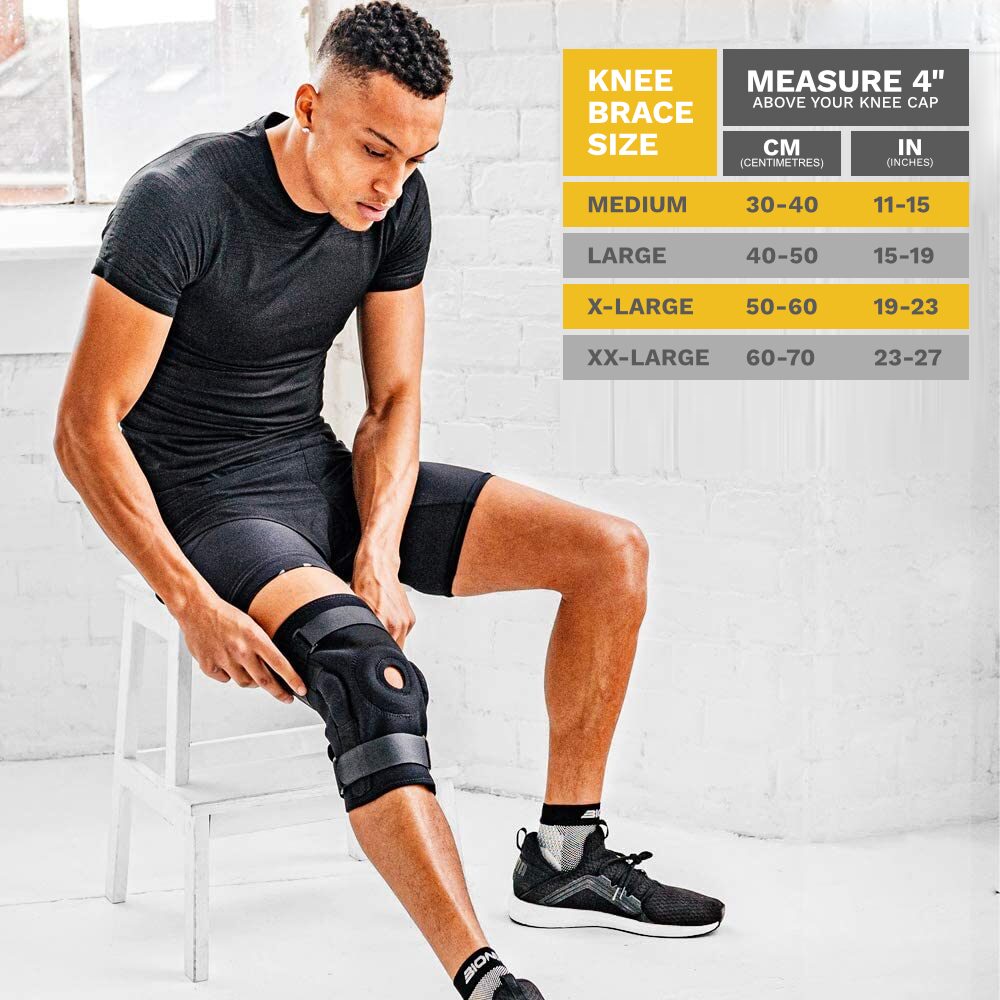
Correct sizing is essential if the brace is going to provide useful support and stay comfortable through longer periods of wear. This brace comes in five sizes from Small to 2X-Large and is designed to fit a wide range of leg shapes, including plus-size and more muscular legs. It can be worn on either the left or right knee.
Sizing is based on two measurements: the circumference of the thigh and the circumference of the calf. For the most reliable fit, measure the leg you plan to wear the brace on. If the injured knee is very swollen, that can make sizing less straightforward, so it may help to measure both legs and use the larger measurements if you need support straight away. If you are able to wait until the initial swelling has settled, that often gives a more reliable starting point.
How To Measure
You will need a flexible tape measure. If you do not have one, a piece of string can be wrapped around the leg and then measured against a ruler.
Measure around the widest part of the thigh, roughly 15 cm above the centre of the kneecap. Then measure around the widest part of the calf, roughly 15 cm below the centre of the kneecap. In both cases, the tape should sit flat against the skin, stay level all the way round, and feel snug without digging in.
Record both measurements before checking the size chart. If your leg shape has changed because of swelling, or if one area falls into a different size band from the other, the guidance below the chart will help you choose more confidently.
Size Chart
| Size | Thigh circumference | Calf circumference |
|---|---|---|
| Small | 40–48 cm | 30–36 cm |
| Medium | 48–56 cm | 36–42 cm |
| Large | 56–64 cm | 42–48 cm |
| X-Large | 64–72 cm | 48–54 cm |
| 2X-Large | 72–80 cm | 54–60 cm |
Choosing Between Sizes
If your measurements sit close to the border between two sizes, it is usually better to avoid choosing a brace that is too small. A brace with adjustable straps can often be refined to improve the fit, but a brace that is too tight may feel uncomfortable and may not sit correctly during movement.
If the thigh measurement falls near the top of one size and the calf measurement falls into the next size up, the larger size is often the safer choice. If your measurements are only just between sizes and you prefer a firmer fit, the smaller option may still work, provided the straps can be adjusted comfortably and the brace stays aligned. If your knee is significantly swollen when you measure, remember that the fit may change as swelling settles.
If your measurements fall between sizes, both comfort and control need to be taken into account. A brace that is too small may feel restrictive, dig in at the edges, or be harder to position properly. A brace that is too large may be more likely to slip, rotate, or stop the hinges sitting where the knee actually bends. The adjustable strap system gives some flexibility, but it still works best when the underlying size is close to the shape of the leg.
Swelling can complicate this, especially in the early stage after injury. If the knee and surrounding tissues are noticeably puffier than usual, the fit may change as swelling settles. That does not necessarily mean the brace is wrong, but it may mean the straps need more adjustment later, or that sizing needs a little more thought if you are measuring soon after injury.
How to Fit the Brace Correctly
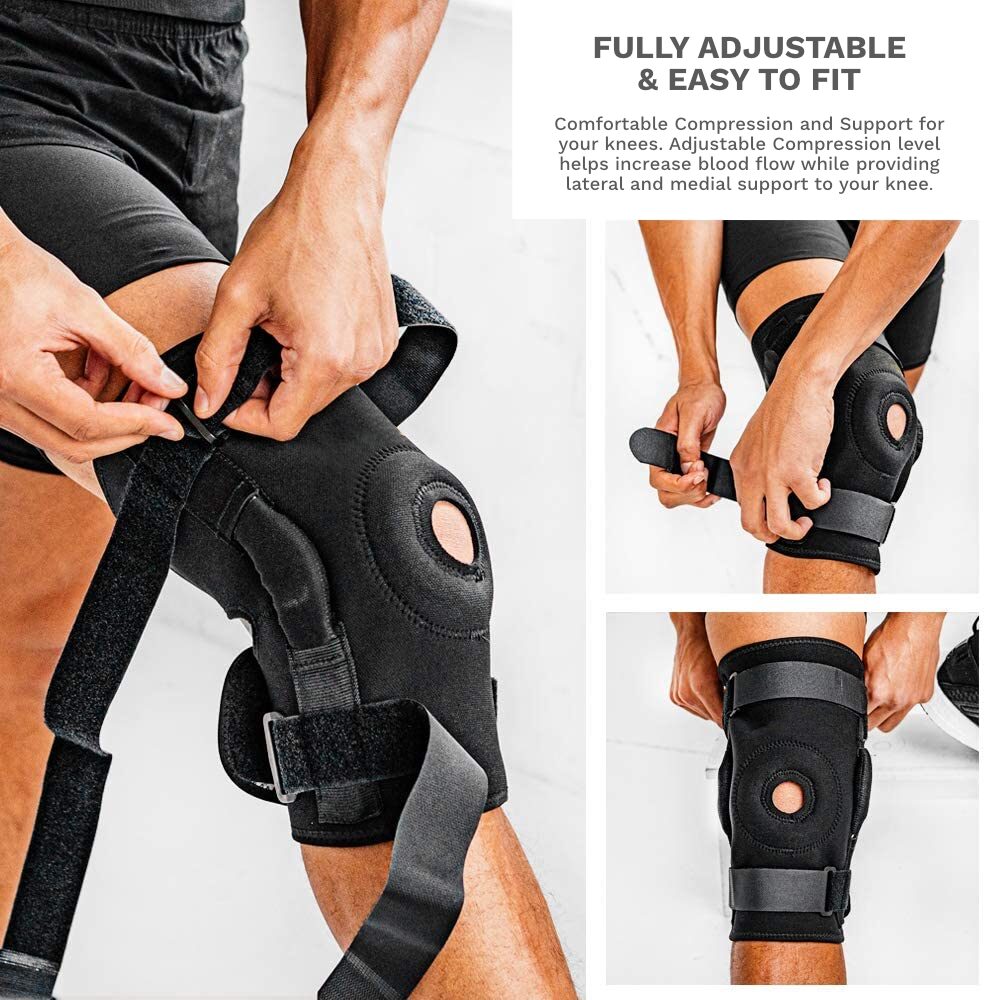
For the brace to work properly, it needs to be aligned carefully with the knee and secured in the right order. Begin seated, with the knee slightly bent in a relaxed position, similar to the angle it naturally sits at when you are seated with the foot flat on the floor.
Position the brace so that the kneecap opening or support ring sits centrally over the front of the knee. The hinges should sit on either side of the joint, level with the point where the knee bends. They should lie comfortably against the sides of the leg rather than angling forward or backward.
Fasten the upper stabiliser strap first to create the main anchor above the knee. Pull it firmly so the brace feels secure, then fasten the lower stabiliser strap below the knee. After that, use the secondary buckle straps to fine-tune the fit. The aim is a snug, supportive feel that holds the brace in place without pinching or restricting circulation.
Once the brace is fastened, stand up and walk for a few minutes to see how it behaves in motion. The brace should remain in place without significant slipping or rotation, the hinges should stay aligned with the sides of the knee, and the kneecap support should stay centred at the front. If the brace slips down or shifts noticeably, adjust the straps and check the position again.
It is also worth checking the lower leg and foot once the brace is on. Your toes should remain warm, look their usual colour, and move freely. If you notice numbness, tingling, unusual coldness, or colour change, loosen the brace straight away and reassess the fit.
When first using the brace, it is sensible to wear it for shorter periods to check comfort and fit before relying on it for longer walks or fuller days on your feet.
A correct fit should feel secure without becoming distracting. Through the day, the brace should stay supportive without needing constant readjustment, and it should not leave the leg feeling pinched, cold, or irritated. If you notice that it starts well but slips as you walk, feels tighter after a period of sitting, or shifts when using stairs, it is worth refitting the straps rather than simply tolerating a poor position. Small adjustments often make a noticeable difference to comfort and support.
It is also sensible to check the fit again if swelling changes, clothing layers change, or the brace is being worn for longer than usual. A fit that feels fine for a few minutes indoors may still need adjusting before a longer walk or a busier day.
Important Safety Information
This brace is designed to support knee stability during movement, but it still needs to be used with common sense and a fit that stays comfortable through activity. It should feel snug and supportive, not painfully tight, and it should not cause numbness, tingling, unusual coldness, or colour change below the brace.
Use caution and seek advice before using the brace if you have significant circulation problems, reduced sensation in the leg, severe swelling of unclear cause, broken or irritated skin where the brace sits, or if the knee is very swollen, acutely injured, or difficult to move.
Stop using the brace and seek advice if it increases pain, seems to make the knee feel less stable, slips badly out of place during walking, causes skin irritation that does not settle, or leaves the lower leg or foot numb, tingling, cold, or discoloured.
If the knee keeps buckling, locks, stays significantly swollen, or symptoms are new, unexplained, or getting worse, it is sensible to speak to a GP, physiotherapist, or another appropriate clinician so the underlying problem can be assessed properly.
Support Your Recovery With More Stable, More Confident Movement
When an ACL injury leaves the knee feeling unreliable, the challenge is often not just pain. It is the loss of control during the movements that matter most in daily life and rehabilitation. Effective support needs to do more than add compression. It needs to help the knee feel steadier, stay well aligned during movement, and remain comfortable enough to use consistently.
The KneeReviver Hinged Knee Brace is designed around those needs. With rigid side hinges, a secure adjustable fit, supportive compression through its main brace body, kneecap guidance, breathable materials, and adaptable support across different stages of recovery, it gives the knee firmer side support and a more guided feel than light compression alone.
If your main difficulty is a knee that feels hard to trust on stairs, uneven ground, or later in the day, this kind of structured support may be worth considering. Check your measurements carefully, use the fitting guidance to position the brace properly, and if you are unsure whether this type of support is right for your knee, speak to a GP, physiotherapist, or another appropriate clinician.
Disclaimer
This page gives general information about ACL-related knee instability and how a hinged knee brace may help support movement. It is not a diagnosis and it does not replace individual medical advice, assessment, or rehabilitation guidance. A brace can help support comfort and stability, but it does not identify the exact cause of knee symptoms and it does not guarantee a particular result. If you are unsure whether this type of support is suitable for your knee, seek personalised advice from a GP, physiotherapist, or another appropriate clinician.
11 Reviews For This Product
Fast & Secure Checkout Through Paypal
Pay with Paypal the secure payment gateway that accepts all credit and debit cards. Paypal is free and secure and no credit or bank information is ever stored or shared with us.
Fast Dispatch
Enjoy your items soon with quick dispatch via Royal Mail. Expect to have your items between 1-3 working days for domestic orders. 7-10 Working days for international orders.
Return Policy – 30 Day Money Back Guarantee
In the unlikely event, you are unhappy with your purchase you can return it within 30 days for a refund. Please contact us via the form on the contact us page to start your return.
To return an item please send it to: Nuova Health UK, 81 Highfield Lane, Waverley, Rotherham, S60 8AL. Please include a note with your order id so we know who to refund. Please retain your postage receipt as proof of postage. All that we ask is that the item is in the original packaging and unused.
by Gary
A very good knee brace that has really helped with my road to recovery!
by Ollie
Bought one of these for my injury, great product does a brilliant job to support my knee I read the postage and it said it would be dispatched within 24 hours but I was very shocked that it arrived within 24 hours of me ordering it! Would buy again.
by Andy
Brilliant piece of kit and really helpful with knee injury. Feels abit weird to wear but hopefully will get use to it
by Mick forte
I highly rate this brace for the money, helping me out with my grade 3 mcl tear.
There is a top and bottom to this brace , the top is a few cm longer.
At first I found the brace uncomfortable due to rubbing my skin when walking etc, I now wear a knee sleeve under the brace which has stopped the rubbing issue, the brace is extremely comfortable. I think you would get the same level of comfort if you put the brace over jogging bottoms or pants.
Brilliant brace for the money
by Michael forte
Just to follow up on my previous review , I’ve been using the acl knee brace since April. I currently have a torn acl and mcl , if it wasn’t for this brace I wouldn’t be able to walk around.
I’ve been using the brace every day with a knee sleeve underneath which makes the acl brace very comfortable.
Unfortunately my knee brace has seen better days as stiching starting to come out etc. So my advice, buy two! when you are wearing a knee brace all day every day it gets alot of wear and tear.
Unfortunately due to the current situation in the world waiting times for surgery are ridiculous. I should of bought two acl knee braces and two knee sleeves when I placed my order. I didn’t expect to be waiting so long for surgery and Unfortunately my financial situation as changed.
So once again if you have a torn acl and mcl you’re going to be waiting along time for surgery. Buy two acl knee brace and two knee sleeves that way you should be good for 6 months plus with those products ( hopefully within that time frame you’ll get the surgery you need )
by AJMAL KHAN
Excellent brace does the job been steady on my 🎶 feet.
by Dan
Great product, has really helped me work on building the muscle mass around my knee after a spell of being on crutches.
I would recommend getting a bandage of some sort to underneath as the velcro sticks out a bit and digs into your leg. I use a cheap knee sleeve to go under mine.
by Joyce hill
Can’t wait to try out this knee brace
by Jim price
Just riecived my brace very comfortable thank you
by wwarburton86
Good knee brace holds my knees as it should lessened the pain I have in my knee
by Miguel Hernandez
Football took a toll on my knees. Constant pain. The KneeReviver brace? Wow, what a difference! My knee feels stable. No more wobbles. It’s comfortable for hours. Easy to put on. Fits perfectly. I’m back on the field. LOVE IT!