
Big Toe Gel Bunion Corrector Protectors For Bunions, Blisters, Gout or Arthritis
£9.99inc VAT
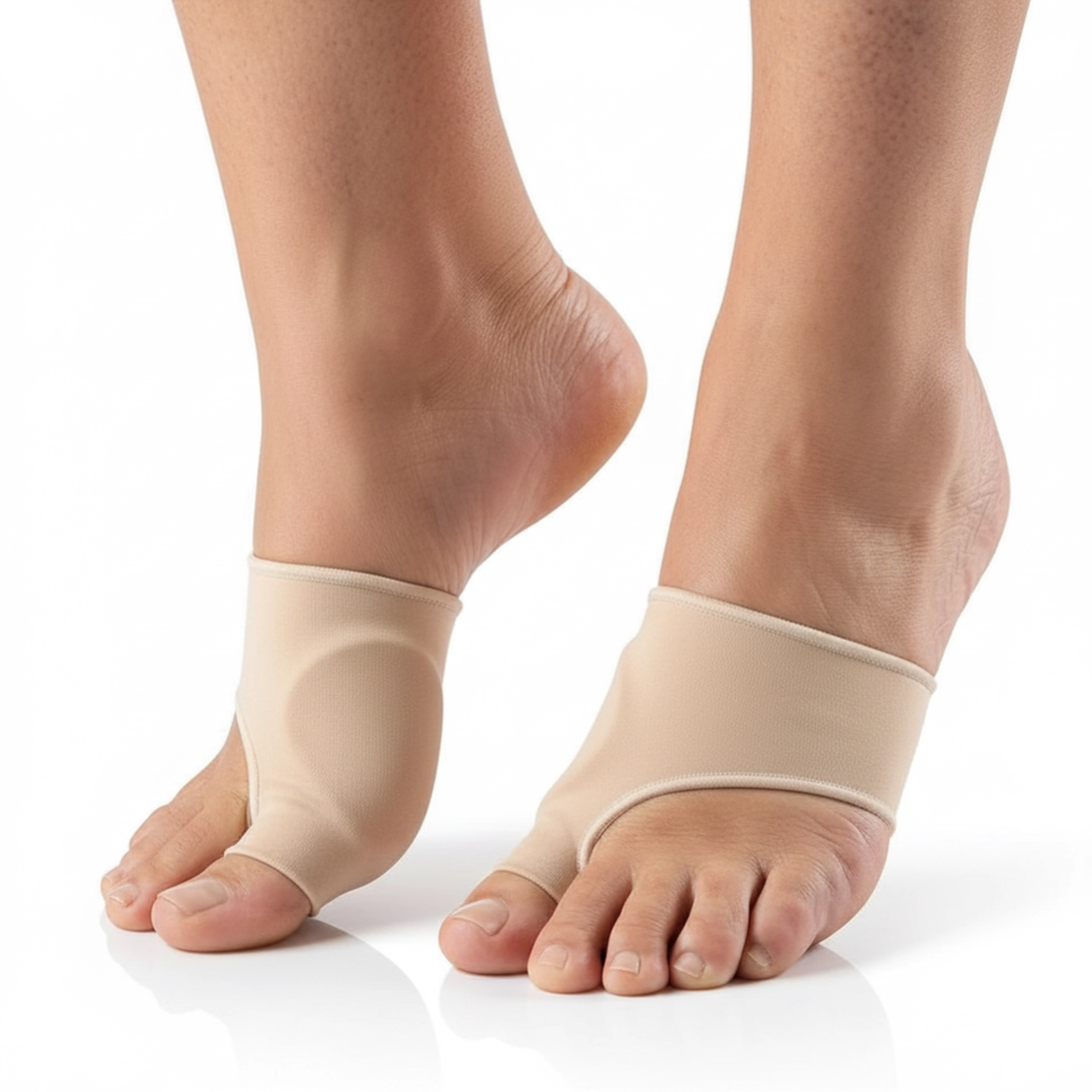
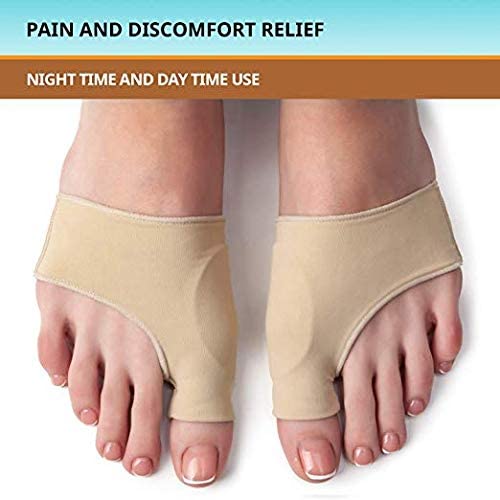
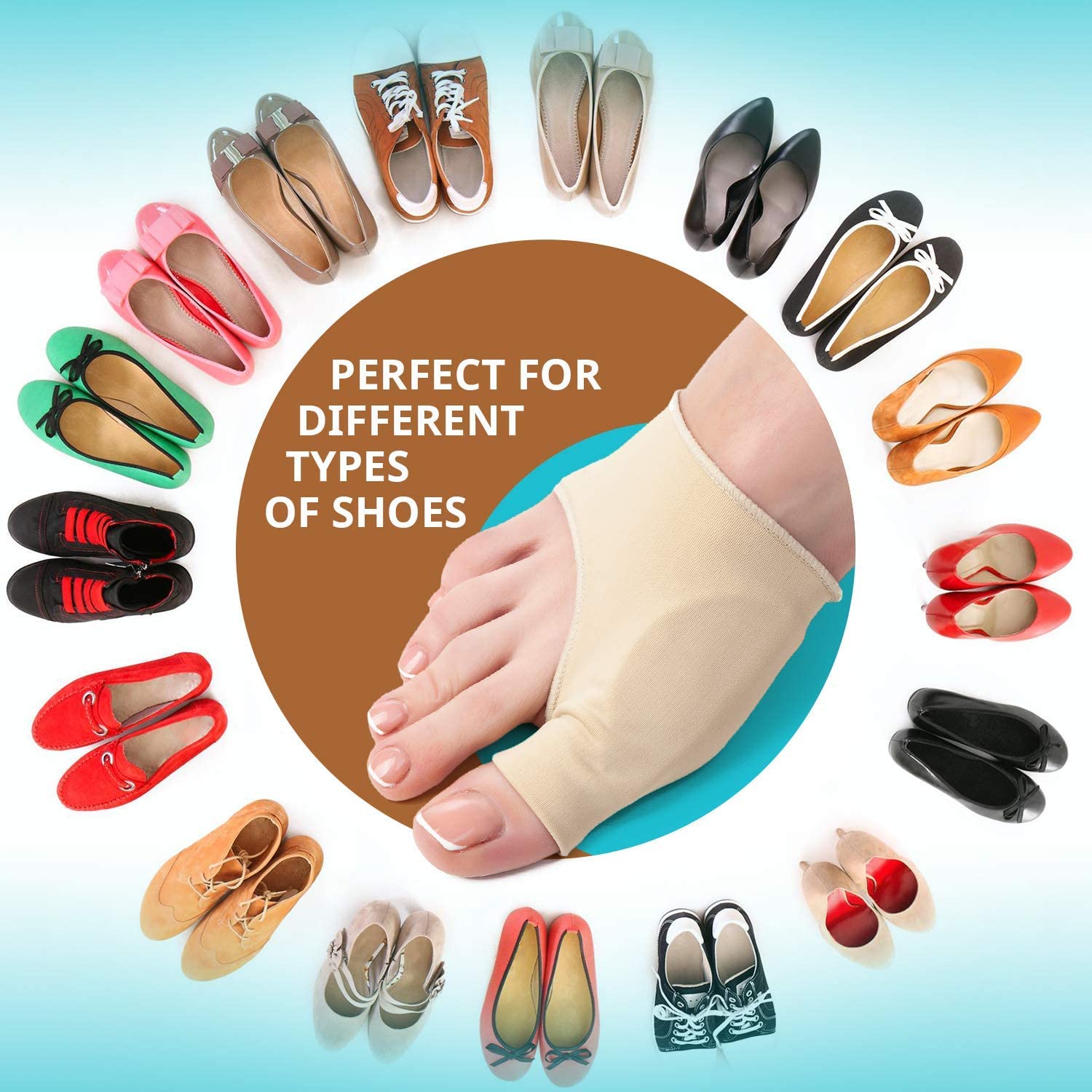
- Gel sleeves designed to cushion bunions and support your big toe back toward a straighter position
- Suitable for hallux valgus (bunions), toe drift, overlapping toes, and hammertoes associated with bunion development
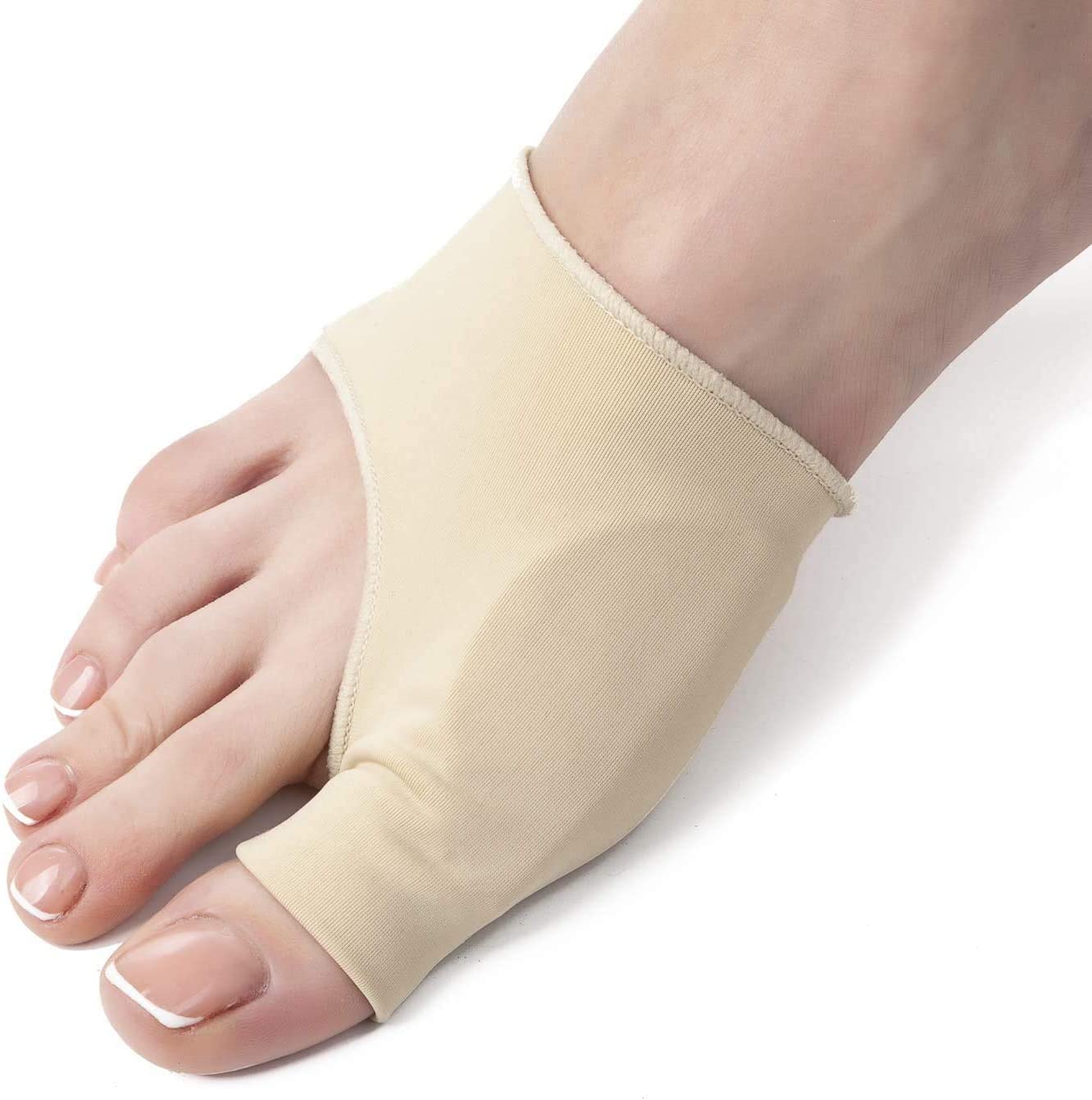
- Gel pad sits over the bunion prominence on the outer edge of your big toe, physically blocking further inward drift
- Provides cushioning and protection from pressure, friction, and shock where rubbing and pressure tend to be worst
- Soothing compression around the MTP joint improves circulation and gives better awareness of toe position
- Helps slow bunion progression by counteracting the inward pull from tight shoes and altered joint angle
- Reduces rubbing from shoes against your big toe, helping prevent and treat blisters
- Made from breathable, lightweight elastic and nylon fabric for all-day comfort once your foot has adjusted
- Low-profile design fits inside most everyday shoes; adds approximately 2–3mm thickness around the big toe
- Available in two sizes: small (UK shoe sizes 3–6) and large (UK shoe sizes 7–11), suitable for men and women
- Start by wearing for a few hours at a time, building up to all-day wear over the first week
- Wear with socks and shoes during the day; remove at night to let your skin breathe
- If you have diabetes with reduced sensation, severe circulation problems, or open wounds, speak to your GP or podiatrist before use
- Designed by FootReviver and stocked at NuovaHealth with a 30-day money-back guarantee
Get 15% off - When bought together with:
- This item: Big Toe Gel Bunion Corrector Protectors For Bunions, Blisters, Gout or Arthritis(£9.99inc VAT)
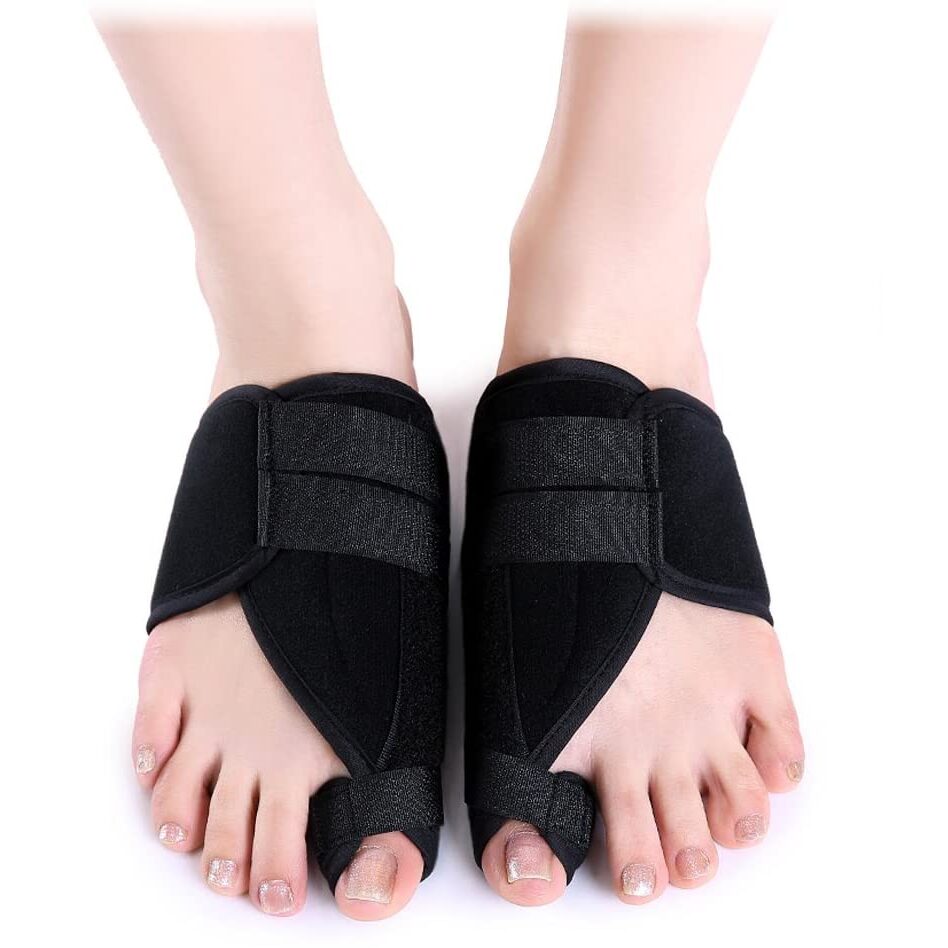
- Bunion Splints(£10.99inc VAT)
Big Toe Gel Bunion Protector Sleeves
If you’ve got a bunion, you’ll already know it’s more than just a bump. That bony prominence at the base of your big toe can turn a simple walk into something you’d rather avoid. Your shoes feel tighter. Your gait shifts. And over time, the discomfort can ripple outward—affecting not just your toe, but your whole foot, your balance, even your knees and hips.
At NuovaHealth, we stock the Big Toe Gel Bunion Protector Sleeves designed by FootReviver. These gel sleeves cushion the bunion, support your big toe back toward a straighter position, and provide soothing compression around the joint. They’re made to be worn all day, inside your everyday shoes, so you can stay on your feet without that constant reminder of pressure and friction.
What follows is a straightforward explanation: what bunions are, how they develop, why they matter beyond your toe, and how these protector sleeves work. You’ll also find practical guidance on sizing, wearing, and what to expect—so you can decide whether they’re right for you.
What’s Happening When You Have a Bunion
A bunion—clinically called hallux valgus—is a bony bump that forms at the metatarsophalangeal joint, or MTP joint for short. That’s the hinge where your big toe meets the rest of your foot.
Normally, your big toe sits in line with the first metatarsal—the long bone behind your big toe—pointing straight forward. The MTP joint acts as a hinge, allowing your toe to bend up and down as you walk. The joint is held in place by ligaments and a joint capsule—the tough fibrous sleeve that wraps around the joint—with smooth cartilage surfaces (the slippery tissue that lines the joint) allowing easy movement.
With a bunion, this alignment changes. The first metatarsal angles outward, away from the midline of your body, while the toe itself drifts inward toward your other toes. Over time, this misalignment becomes more pronounced, and the joint itself can enlarge and become inflamed. The bony prominence you see and feel is the head of the metatarsal bone pushing outward at the joint.
Bunions are common. In the UK alone, around 14 million adults are living with them. They’re more prevalent in women—partly because of footwear patterns, but also because women are more likely to have inherited ligament laxity, the natural looseness in connective tissue that makes joints less stable. Both factors contribute.
How Bunions Form
Bunions don’t appear overnight. They develop gradually, through a combination of factors.
Some people are born with a foot structure that makes the first metatarsal more mobile, or the MTP joint less stable. Inherited factors include ligament laxity—looser ligaments that don’t hold the joint as firmly—a longer first metatarsal, or a flatter arch. Your arch acts as a shock absorber and helps control how your foot rolls inward when you walk. All of these make the MTP joint less stable and more vulnerable to shifting. If your parents or grandparents had bunions, you’re more likely to develop them yourself.
Narrow toe boxes—the front part of the shoe where your toes sit—high heels, and shoes that crowd your toes can accelerate the process. Every time your big toe is forced inward, the joint is nudged a little further out of alignment. Over thousands of steps, that adds up.
If your foot rolls inward excessively when you walk—a pattern called overpronation—more load shifts onto the inner edge of your foot. When your foot rolls inward, your arch drops and the first metatarsal is pushed outward and upward, increasing the angle at the MTP joint. That places extra stress on the joint with every step.
Rheumatoid arthritis and other inflammatory joint conditions can weaken the ligaments and capsule around the MTP joint. Inflammatory arthritis causes ongoing inflammation inside the joint, which gradually damages and stretches the ligaments and capsule that normally hold the bones in alignment, making bunion development more likely.
As you get older, ligaments and tendons lose some of their elasticity. The fat pads under the ball of your foot—the padded area just behind your toes—thin out. These fat pads normally cushion the metatarsal heads; when they thin, more direct pressure goes through the MTP joint with each step, making it more vulnerable to shifting. Both changes reduce natural cushioning and stability. Even if you didn’t have bunions in your younger years, the combination of decades of walking, accumulated footwear stress, and reduced tissue resilience makes bunions more likely to develop or worsen as you get older.
Jobs or activities that involve long periods of standing, especially on hard surfaces, place sustained load through the MTP joint, which can accelerate bunion development in people who are already at risk.
What It Feels Like
Bunions aren’t just cosmetic. The symptoms can be surprisingly disruptive.
You’ll see a visible bony bump on the inner side of your foot, right at the base of your big toe. The area around the MTP joint may feel tender or painful, especially after you’ve been walking or standing for a while. The skin over the joint can look red, feel warm, or swell up. Your big toe may not move as freely as it used to. You might develop calluses or corns where your first and second toes rub together. Some people describe a burning sensation or numbness in the big toe itself—this happens because the enlarged joint can press on nearby nerves, or because the altered toe position stretches nerves along the inner foot.
These symptoms often get worse in tight shoes, or after a long day on your feet. And because your big toe plays a central role in how you walk, any discomfort here tends to affect your whole stride.
Why Bunions Tend to Get Worse
Once the joint starts to shift, the altered angle changes how forces pass through it with every step. This creates a self-reinforcing cycle: the misalignment causes stress that pushes the joint further out of alignment. The ligaments and capsule that normally hold the bones together gradually stretch. The more they stretch, the less they can resist the inward pull on the toe and the outward push on the metatarsal. That’s why bunions tend to progress over time, and why early intervention—supporting the joint before the soft tissues have stretched significantly—can make a real difference.
Mild, Moderate, and Severe Bunions
Bunions range from mild to severe. A mild bunion shows as a small bump, minimal toe drift, and occasional discomfort—usually manageable with footwear changes and support. A moderate bunion has a visible bump, noticeable toe angle, and regular pain that affects daily activities. A severe bunion presents as a large prominence, significant toe deviation, constant pain, and real difficulty finding comfortable footwear.
These protector sleeves are most helpful for mild to moderate bunions, where the joint still has reasonable flexibility and the soft tissues haven’t been overstretched for years. Severe bunions may need more intensive intervention, and it’s worth discussing options with a podiatrist or physiotherapist.
Why Bunions Matter Beyond the Toe
Understanding what a bunion is matters, but understanding what it does to your walking matters more. Your big toe does more work than you might think. During the push-off phase of walking—when your heel lifts and your weight rolls forward over the ball of your foot—your big toe presses down firmly and provides the final push that propels you forward. When a bunion pulls your big toe out of alignment, it can’t press down effectively in that straight line. The whole process becomes less efficient. And because your body is very good at adapting, you’ll start compensating—often without realising it.
What Can Happen Locally
The small fluid-filled sac—called a bursa—that sits over the MTP joint can become inflamed from repeated friction against your shoe. When that happens, you get sharp pain and swelling right over the bunion.
As your big toe pushes against your second toe, the second toe may buckle upward at the middle joint to make room. The drifting big toe pushes constantly against the second toe from the side; with nowhere to go sideways because of your shoe walls, the second toe bends upward at its middle joint. That’s called a hammertoe, and it brings its own set of problems: rubbing, corns, and difficulty finding comfortable shoes.
When your big toe can’t do its job properly, the load shifts onto the ball of your foot—specifically, the heads of the second and third metatarsal bones, the long bones behind your smaller toes. Normally, the big toe and first metatarsal head bear significant weight during push-off. When the big toe can’t function properly, the second and third metatarsal heads take more load than they’re designed for. That can lead to pain and inflammation under the ball of your foot, a condition known as metatarsalgia.
Your big toe loses its ability to stabilise your foot effectively during push-off. Other toes and muscles have to pick up the slack, and they’re not designed for that role.
The Knock-On Effects Further Up
When your big toe can’t work the way it should, your gait changes. You might roll more onto the outer edge of your foot to avoid pressure on the bunion—that means walking on the outside border of your foot instead of through the centre. You might shorten your stride, taking smaller steps because full push-off hurts. You might alter the way you push off, lifting your heel earlier or pushing through your other toes instead of your big toe.
None of these changes happen consciously. Your body just finds a way to keep you moving. But over time, these compensatory patterns can contribute to discomfort elsewhere. These compensations can make walking less efficient and more tiring, reduce your confidence on uneven ground, and limit how long you can comfortably stay on your feet—all of which affect your ability to stay active and independent. That’s why addressing bunions early isn’t just about your toe—it’s about maintaining the way your foot is designed to move and reducing the need for your whole body to adapt around the problem.
How Bunion Protector Sleeves Work
Bunion protector sleeves are designed to support your big toe in a straighter, more neutral position—more in line with the first metatarsal, rather than angled inward toward the other toes—while cushioning the bunion prominence itself. They work through a few straightforward mechanisms.
Realignment Support
The gel pad sits over the bunion prominence on the outer edge of your big toe, right where the bony bump forms. It physically blocks the toe from drifting further inward and provides a slight outward pressure that counteracts the inward pull from tight shoes and the altered joint angle. This won’t reverse the bony changes that have already happened—once the bone has shifted, only surgery can realign it structurally. But it can slow down the rate of progression by counteracting the inward drift, improve joint positioning during activity, and help maintain flexibility in the MTP joint.
By reducing the inward drift of the big toe, the sleeve also reduces the sideways pressure on the second toe, which can help prevent or slow hammertoe development. When your big toe functions better, it can take more of its normal share of weight during push-off, which may reduce the overload on the second and third metatarsal heads and ease ball-of-foot pain.
Think of it as a gentle, continuous reminder to your toe about where it’s supposed to be. Over time, that can make a difference.
Cushioning and Pressure Redistribution
The gel pad sits directly over the bunion prominence, acting as a buffer between the bony bump and your shoe. This reduces direct pressure and friction, which can ease pain and prevent skin irritation, blisters, and inflammation of the bursa. By absorbing shock and distributing pressure more evenly—spreading the load across a larger area so that instead of all the pressure concentrating on the bony prominence, it’s distributed more evenly—the gel protects that vulnerable area during walking and standing. This cushioning also reduces the repeated friction that can inflame the bursa, helping to prevent or ease bursitis.
The gel material is used because it absorbs shock effectively, moulds to the shape of your bunion for even pressure distribution, and doesn’t compress and flatten as quickly as foam would. If you’ve ever had a blister form right over your bunion, you’ll know how much of a difference even a thin layer of cushioning can make.
Soothing Compression Around the Joint
The sleeve itself provides gentle compression around the MTP joint and big toe—firm enough to support the joint and improve circulation, but not so tight that it restricts blood flow. This does a few useful things.
It supports the joint capsule and the ligaments around it. It encourages blood flow to the area, which may help with inflammation and tissue repair. It gives you better proprioception—that’s your body’s sense of where your joints are in space. Compression provides constant gentle pressure that gives your brain more sensory feedback about toe position, which can help you notice and correct poor alignment during walking. This improved awareness can help you notice when you’re rolling onto the outer edge of your foot or shortening your stride, making it easier to correct these patterns consciously.
Compression isn’t a cure, but it’s a form of support that many people find genuinely helpful, especially during activity. The sleeve may also offer relief if you’re experiencing discomfort from gout or arthritis affecting the big toe joint. Compression can ease swelling and provide joint support, which may reduce discomfort during flare-ups of gout or arthritis affecting the MTP joint.
Blister Prevention and Protection
The sleeve acts as a barrier between your shoe and your big toe. For people with bunions, this area is particularly vulnerable to friction and blistering. The bony prominence sticks out further than the normal foot contour, so it rubs against the shoe with more force. Also, skin over bone—with little soft tissue padding underneath—blisters more easily than skin over muscle. The gel pad positioned over the bunion provides cushioning and protection right where rubbing and pressure tend to be worst. The sleeve reduces rubbing from the sides of your shoes, which can make a significant difference to day-to-day comfort.
The Rationale for Bunion Protectors
Bunion protector sleeves won’t eliminate an established bunion. But there’s a clear mechanical reason why they work.
When a device holds the big toe in better alignment, it changes the angle at which forces pass through the MTP joint during standing and walking, reducing the sideways stress that contributes to progression. Cushioning over the bunion spreads the load across a larger area, so instead of all the pressure concentrating on the bony prominence, it’s distributed more evenly—which can reduce pain and prevent skin breakdown.
Many podiatrists and physiotherapists recommend gel sleeves as part of managing bunions without surgery, particularly when they’re combined with appropriate footwear and exercises. The goal here is symptom management and slowing progression, not reversing the deformity. For significant structural correction, surgery remains the only option. But many people find that managing symptoms without surgery—including gel protectors—provides enough relief to avoid or delay surgical intervention. And even if you do eventually need surgery, managing symptoms in the meantime makes life more comfortable.
FootReviver Gel Bunion Protector Sleeves: What You’re Getting
The FootReviver Big Toe Gel Bunion Protector Sleeves are designed to be worn throughout the day, providing cushioning, realignment, and compression in a low-profile sleeve that fits inside most everyday shoes.
Design and Materials
Each pair includes one protector for your left foot and one for your right. Many people develop bunions on both feet, though one foot is often more symptomatic than the other. You can wear both sleeves or just one, depending on your needs.
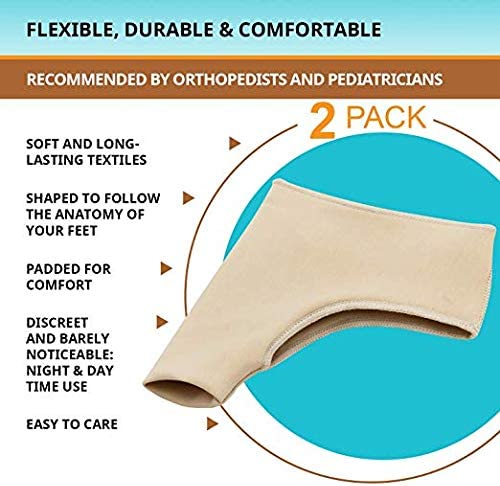
The sleeve is made from a blend of stretchy, lightweight, breathable elastic and nylon fabric. Breathable fabric allows moisture—sweat—to evaporate, which keeps your skin drier and reduces the risk of skin irritation, breakdown from moisture, or fungal issues during all-day wear. The gel cushion is positioned over the bunion prominence on the outer edge of your big toe. It provides cushioning where you need it most, while gently encouraging your toe toward a straighter position and protecting it from pressure, friction, and shock.
What They’re Designed to Help With
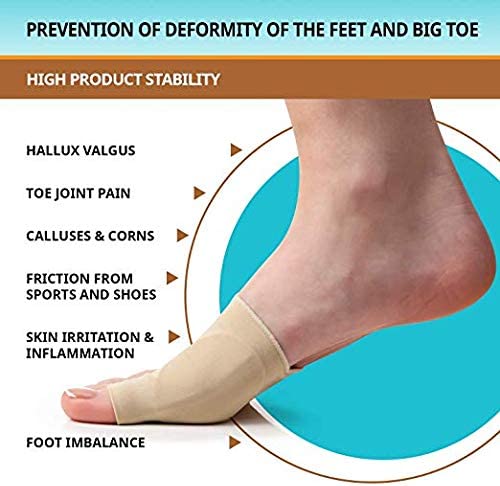
These protector sleeves are suitable for hallux valgus (bunions)—cushioning the bony prominence and supporting realignment. They’re also suitable for toe drift and overlapping toes, supporting your big toe back into a straighter, more neutral alignment—more in line with the first metatarsal, rather than angled inward toward the other toes. They can help with hammertoe when it’s associated with a bunion, easing pressure and supporting alignment.
The design is intended to help slow bunion development and progression, which makes them valuable if you’re noticing early signs or have a family history. They reduce rubbing from your shoes against your big toe, which helps prevent and treat blisters. They provide soothing compression during activity, which can ease MTP joint discomfort. They may also offer relief if you’re experiencing discomfort from blisters, gout, or arthritis affecting the big toe joint.
Sizing and Fit
FootReviver Gel Bunion Protector Sleeves come in two sizes: small and large. Both sizes are suitable for men and women. Choosing the right size ensures the gel pad sits over the bunion without slipping, and the sleeve stays in place comfortably throughout the day.
Small is generally suitable for UK shoe sizes 3 to 6 (approximate). Large is generally suitable for UK shoe sizes 7 to 11 (approximate).
If you’re between sizes, or if you have wider feet, consider sizing up for a more comfortable fit. The fabric is stretchy, so there’s some tolerance, but a sleeve that’s too tight may cause discomfort during extended wear.
How to Wear Them
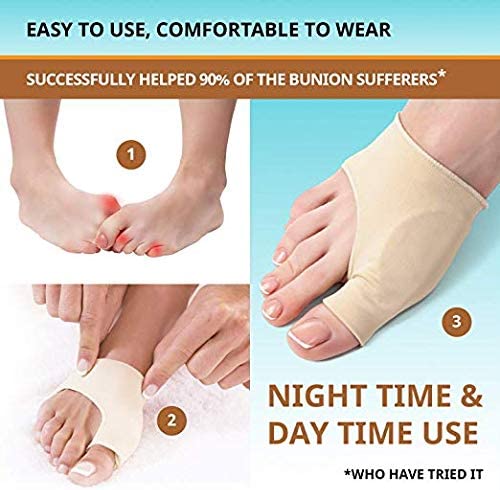
Slide the sleeve onto your bare foot so the gel pad sits directly over the bunion prominence on your big toe. Adjust the position until the gel cushion covers the bony bump and the fabric sits smoothly, without bunching up.
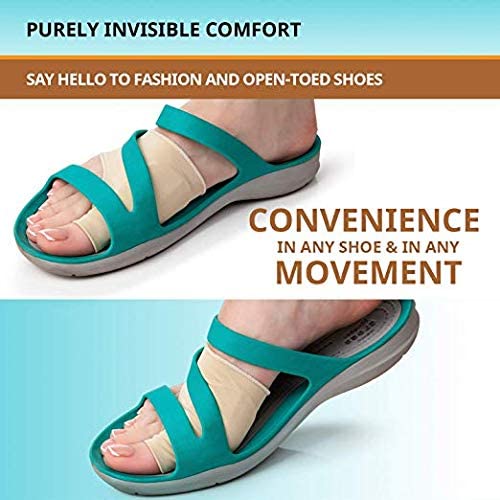
Put your sock on over the sleeve, then your shoe. The sock layer helps the sleeve stay in place and prevents it from rubbing directly against your shoe. Wear them with socks and shoes as normal. The low-profile design fits inside most footwear, though very tight or narrow shoes may feel snug.
The sleeve adds approximately 2–3mm of thickness around the big toe. In a shoe that already fits well, this can make the toe box feel tight, which is why sizing up half a size in footwear often helps.
If you’re new to bunion protectors, start by wearing them for a few hours at a time, then build up to all-day wear as your feet adjust. These sleeves are designed for all-day wear once your foot has adjusted; most people build up to this over the first week.
You can wear them during most daily activities—walking, standing, light exercise. Remove them at night to let your skin breathe. The sleeve is designed for daytime activity and support; at night your foot needs to breathe and you’re not loading the joint, so the sleeve isn’t needed. Night splints—a different product—hold the toe in a stretched position while you sleep, which serves a different purpose.
Getting Comfortable: First Few Days
If this is your first time wearing a bunion protector, your foot needs a short adjustment period. The gel pad will feel unfamiliar at first—that’s normal. Start with two to three hours at home, doing light activity. If the sleeve feels too tight or the gel pad sits awkwardly, take it off, reposition it, and try again.
Some people find the compression feels strange initially, especially if the bunion area has been sensitive. If you’re not used to wearing compression garments, the constant gentle pressure feels unfamiliar; your foot is also getting sensory feedback it’s not used to, which can feel odd until your brain adapts. That sensation usually settles within a few days as your foot adapts. If you’re getting rubbing or pinching, check the size—you may need to go up. If the sleeve keeps sliding down, you may need to go down a size, or the fabric may have stretched and need replacing.
Don’t push through sharp pain or numbness. That’s not an adjustment period—that’s a sign something isn’t right. Sharp pain usually means the sleeve is too tight and pressing on the bunion or joint; numbness means the sleeve or shoe is compressing nerves or blood vessels. Both mean the fit needs adjusting. Reposition the sleeve, check your shoe isn’t too tight, and if the problem persists, stop wearing it and speak to a podiatrist.
Looking After Your Sleeves
Hand wash the sleeves in lukewarm water with mild soap after every few wears, or whenever they start to feel less fresh. Don’t use hot water or harsh detergents—they can break down the gel and fabric. Air dry them away from direct heat. Radiators, tumble dryers, and direct sunlight can all damage the material.
With regular use, the gel will gradually lose its cushioning and the fabric will stretch. If you’re wearing them every day for 8+ hours, you’ll likely need to replace them closer to three months. If you wear them a few times a week or for shorter periods, they’ll last closer to six months. If the gel feels flat, the sleeve keeps slipping, or the fabric has visible wear, it’s time for a new pair. Replacing them regularly ensures you’re getting the full benefit.
Which Shoes Work Best
These gel sleeves fit inside most everyday footwear, but the fit varies depending on how much space there is inside the shoe for your foot plus the sleeve, and whether the front of the shoe is wide and deep enough, or narrow and shallow.
They work well with trainers that have a roomy toe box—many running shoe brands work well—walking shoes and hiking boots, casual leather shoes with lace-up or Velcro fastenings, supportive sandals with a closed toe and adjustable straps, and work shoes designed for all-day standing.
They may feel snug in smart dress shoes, especially men’s Oxfords and women’s court shoes, pointed-toe flats or heels, fashion trainers with a narrow silhouette, and any shoe that already feels close-fitting before you add the sleeve.
They won’t work with flip-flops, backless mules, or any shoe without a secure heel—the sleeve will slip. Ballet flats or very thin-soled shoes where there’s no depth to accommodate the gel pad also won’t work.
If you’re wearing the protectors with shoes that already feel close-fitting, you have two options: size up in footwear (half a size is often enough), or choose styles with a wider, deeper toe box. Many people find it helpful to have one pair of “bunion-friendly” shoes for days when their feet need extra space. If you’re already wearing orthotics or insoles, you’ll need shoes with enough depth and width to accommodate both the insole and the sleeve comfortably. This usually means trainers, walking shoes, or boots with a generous fit.
Realistic Expectations
Bunion protectors are a tool for managing bunions without surgery. Here’s what they can and can’t do.
What to Expect
You can expect reduced pain and discomfort from pressure and friction over the bunion. The design is intended to help slow bunion development and progression. You can expect improved comfort during daily activities, making it easier to stay active. They reduce rubbing from your shoes against your big toe, which helps prevent blisters. The soothing compression eases pain from bunions, blisters, gout, or arthritis. The gel supports and realigns your big toe into a straighter position, which can improve toe alignment over time.
What They Won’t Do
They won’t reverse an established bunion. Once the bone has shifted significantly, only surgery can realign it structurally. They won’t work overnight. You’ll need to wear them consistently over weeks and months to see benefit. They don’t replace other interventions. They work best as part of a broader approach that includes footwear changes, exercises, and possibly orthotics.
If your bunion is severe, causing significant pain, or limiting your mobility despite managing symptoms without surgery, it’s worth discussing surgical options with a podiatrist or orthopaedic specialist.
Timeline: What Happens When
In the first few days, you’ll notice the cushioning effect immediately—less direct pressure on the bunion, less friction from your shoes. The compression may feel unfamiliar, but most people adapt quickly.
Over the first few weeks, pain and discomfort during daily activities often start to ease. You’ll likely notice you’re not thinking about your bunion as much during the day. Blisters, if you’ve been getting them, should stop forming.
Over the first few months, you’re working on slowing progression. You won’t see dramatic changes in the shape of your foot, but if you’re combining the sleeves with appropriate footwear and exercises, you’re giving your big toe the best chance to stay in a straighter position. The joint may feel more stable—less like it’s going to give way or shift awkwardly when you push off. You may notice less wobbling or uncertainty when walking on uneven ground, and you may notice improved comfort during longer walks.
Long-term—six months and beyond—the goal is maintenance and prevention. Progression means the bump getting visibly larger, the toe angling further inward, or symptoms worsening despite consistent use. If these aren’t happening, progression has likely slowed, and you’re staying comfortable during daily activities—the sleeves are doing their job. Keep wearing them consistently, replace them when the gel wears out, and continue with the broader management strategies.
One thing worth knowing: you don’t need an established bunion to benefit. In early stages, the joint hasn’t shifted as far and the soft tissues—ligaments, capsule—haven’t stretched as much. Supporting the toe now can prevent that stretching and slow or stop the progression before the deformity becomes more fixed. If you’re noticing early signs or have a family history, starting now gives you the best chance of slowing or stopping progression.
Who Should Use Them
FootReviver Gel Bunion Protector Sleeves are suitable for adults with early-stage bunions, when the deformity is mild and you want to slow progression or prevent worsening. They’re suitable for moderate bunions, to manage symptoms and improve comfort during daily activities. They’re suitable for bunion-related pain, blistering, or friction. They’re suitable for toe overlapping, toe drift, or hammertoes associated with bunion development. They’re suitable for gout or arthritis affecting the big toe joint, where soothing compression can help. They’re suitable if you prefer managing symptoms without surgery before considering surgical options.
They’re designed for adults and are suitable for both men and women.
Who Should Be Cautious
If you have diabetes with reduced sensation in your feet, severe circulation problems, or any open wounds or infections on your foot, speak to your GP or podiatrist before using compression garments like these sleeves. Compression needs to be used carefully when sensation or circulation is compromised.
When to Seek Professional Advice
See a healthcare professional if you experience severe or worsening pain that doesn’t improve with managing symptoms without surgery, significant swelling, redness, or warmth (which could indicate infection or inflammatory arthritis), difficulty walking or bearing weight, numbness or tingling in your toes, sudden changes in foot shape or function, or any new or unexplained symptoms that concern you.
Complementary Strategies for Bunion Management
These sleeves work best when they’re part of a broader approach. Here are the other measures that can help.
Footwear Choices
Choose shoes with a wide, deep toe box that doesn’t crowd your toes. Avoid high heels and pointed-toe styles, which force your big toe inward. Look for supportive shoes with good arch support and cushioning. Consider shoes with adjustable fastenings—laces, straps, or Velcro—that can accommodate the bunion protector comfortably without squeezing.
Footwear is one of the biggest modifiable factors in bunion progression. If you’re wearing shoes that push your big toe inward for hours every day, even the best protector sleeve can only do so much. Getting your footwear right makes everything else more effective.
Exercises and Stretches
Gently pull your big toe away from your other toes—outward, toward the inner edge of your foot, opposite to the direction the bunion is pulling it—and hold for ten to fifteen seconds. Repeat three to five times per foot. Do this once in the morning and once in the evening. It only takes a minute, and you can do it sitting on the edge of your bed or sofa.
Pick up small objects—marbles, a pencil, a small towel—with your toes. Aim for ten to fifteen repetitions per foot. This strengthens the intrinsic muscles in your foot—the small muscles inside your foot, as opposed to the larger muscles in your calf that also move your toes. These control fine movements and support the arch, which helps control toe position. Do this two to three times a week while watching television or reading.
Spread your toes apart as wide as you comfortably can, hold for five seconds, then relax. Repeat ten times per foot. This reinforces the outward movement you’re trying to encourage. You can do this daily—it’s gentle enough for everyday use.
Tight calf muscles can contribute to overpronation. Tight calves limit how far your ankle can bend forward; to compensate, your foot rolls inward more during walking, which increases stress on the inner foot and MTP joint. Stand facing a wall, step one foot back, keep the heel down, and lean gently forward until you feel a stretch in the back of your lower leg. Hold for twenty to thirty seconds, repeat three times per leg. Do this after walking or standing for long periods, or as part of a daily stretching routine.
These exercises don’t take long, and they don’t require any equipment. The key is consistency. Five minutes a day, most days of the week, will give you better results than an hour once a month.
Orthotics and Insoles
Custom or over-the-counter insoles can improve foot mechanics by supporting your arch and reducing excessive pronation—some inward roll is normal; excessive means your arch flattens significantly and your ankle rolls inward more than it should, which you might notice as your shoes wearing down more on the inner edge. This takes some load off the MTP joint and may slow bunion progression.
If you’re not sure whether you overpronate, a podiatrist can assess your gait and recommend the right type of support. Custom orthotics are more expensive but tailored to your foot. Over-the-counter options—like the insoles we stock at NuovaHealth—are more affordable and work well for many people, especially if your foot mechanics are only mildly off.
You can wear insoles and bunion protector sleeves together. The insole goes inside your shoe, under your entire foot; the sleeve goes on your toe before you put your sock on, so there’s a layer of sock between the sleeve and the insole—they don’t touch or interfere with each other. In fact, they complement each other well: the insole addresses the underlying biomechanics, and the sleeve manages the bunion itself.
Weight Management
Carrying extra weight increases the load on your feet with every step. Maintaining a healthy weight reduces stress on the MTP joint and other foot structures. This isn’t about aesthetics—it’s about reducing the forces that contribute to bunion progression and discomfort.
Ice and Anti-Inflammatories
If your bunion becomes inflamed after activity, apply ice for ten to fifteen minutes. Wrap the ice pack in a thin towel to protect your skin. You can also consider over-the-counter anti-inflammatory medication, following the packet instructions and checking with your GP if you have any health conditions or take other medications.
Ice and anti-inflammatories won’t fix the underlying problem, but they can help manage flare-ups and keep you comfortable while you’re working on the longer-term strategies.
Activity Modification
Staying active is important, but be mindful of activities that place excessive stress on your big toe joint. Running on hard surfaces—concrete, tarmac—can aggravate bunion pain, especially if you’re running several times a week. Jumping activities—aerobics classes, basketball, and similar activities—put a lot of force through the MTP joint during landing. When you land from a jump, your body weight plus momentum is absorbed through your feet; the ball of your foot and MTP joint take a large portion of this impact, which can aggravate an already irritated bunion. Sports that involve sudden direction changes—tennis, football, and similar activities—can twist the joint awkwardly. When you pivot or change direction quickly, your foot plants and your body rotates over it; this twisting motion puts rotational stress through the MTP joint, which can irritate the bunion.
Low-impact options like swimming, cycling, or walking on even surfaces can help you stay fit while managing symptoms. If you love running, consider switching to softer surfaces—grass, trails, treadmills with good cushioning—and reducing your weekly mileage until your symptoms settle.
You don’t have to give up the activities you enjoy. But you may need to adjust how often you do them, how you prepare—warm-up, stretching—and how you recover—ice, rest days.
Why Buy from NuovaHealth?
At NuovaHealth, we focus on products that are designed based on how the body works. We stock the FootReviver range because it’s designed by foot specialists and built for everyday wear—not just short-term relief.
We’re confident these protectors will help, but we know everyone’s feet are different. If you’re not satisfied, return them within 30 days for a full refund. Shopping with us is risk-free, and this guarantee is included with every pair.
The team is here to help with sizing questions, product advice, and any issues that come up. We’re based in the UK and understand the needs of UK customers. We aim to dispatch orders quickly so you can start managing your bunion discomfort without delay.
These bunion protectors are part of the FootReviver range, which includes other foot care solutions. If you’re managing multiple foot issues, we can help you find complementary products that work together.
Final Thoughts
Bunions are common, and they’re progressive. But early intervention can make a real difference. The FootReviver Gel Bunion Protector Sleeves provide cushioning, realignment support, and soothing compression in a design that’s comfortable enough to wear all day once your foot has adjusted.
These protectors cushion and protect your big toe from pressure, friction, and shock while supporting and realigning it into a straighter position. They’re suitable for treating hallux valgus, bunions, toe overlapping, toe drift, and hammer toes. They help prevent blisters by reducing rubbing from your shoes against your big toe. The breathable, lightweight fabric means most people find they can wear them all day comfortably, and the soothing compression eases pain from bunions, blisters, gout, or arthritis.
If you’re looking for a practical way to manage bunion discomfort without surgery or slow bunion progression, these protectors are a solid starting point. Combined with appropriate footwear, exercises, and lifestyle adjustments, they offer a realistic path to better foot health.
Ready to try them? Choose your size—available in small and large for both men and women—and experience the difference for yourself. With the full 30-day money-back guarantee, you can try them risk-free.
Disclaimer
The information on this page is general guidance about bunions and bunion protector sleeves. It is not a substitute for individual medical advice, diagnosis, or treatment. Everyone’s feet are different, and what works well for one person may not suit another.
If you’re unsure whether these sleeves are right for you, or if you have diabetes, circulation problems, open wounds, or any other foot condition that needs careful management, speak to your GP, podiatrist, or physiotherapist before use. If you notice new or unexplained symptoms—such as sudden severe pain, significant swelling, redness, warmth, spreading numbness, or any other changes that concern you—seek professional advice.
These sleeves are designed to help manage symptoms and slow progression as part of a sensible approach to foot care. They do not guarantee specific outcomes, and results will vary depending on the severity of your bunion, your foot structure, your footwear, and how consistently you use them alongside other strategies.
3 Reviews For This Product
Fast & Secure Checkout Through Paypal
Pay with Paypal the secure payment gateway that accepts all credit and debit cards. Paypal is free and secure and no credit or bank information is ever stored or shared with us.
Fast Dispatch
Enjoy your items soon with quick dispatch via Royal Mail. Expect to have your items between 1-3 working days for domestic orders. 7-10 Working days for international orders.
Return Policy – 30 Day Money Back Guarantee
In the unlikely event, you are unhappy with your purchase you can return it within 30 days for a refund. Please contact us via the form on the contact us page to start your return.
To return an item please send it to: Nuova Health UK, 81 Highfield Lane, Waverley, Rotherham, S60 8AL. Please include a note with your order id so we know who to refund. Please retain your postage receipt as proof of postage. All that we ask is that the item is in the original packaging and unused.
by Pamela Black
I wish to change my previous review to 5*. I’ve found they don’t slip off if I wear socks. Although I prefer to be barefoot it’s a small price to pay to be pain free. Excellent value for money 😊
by Connie Fowler
Work great 🙂
by Richard
These are absolutely the best things to wear if you have bunions and don’t want them to get any worse. They help to straighten up your big toes, really comfortable, super easy to put on and a good fit. A must buy if you’ve got bunions id say!!!