
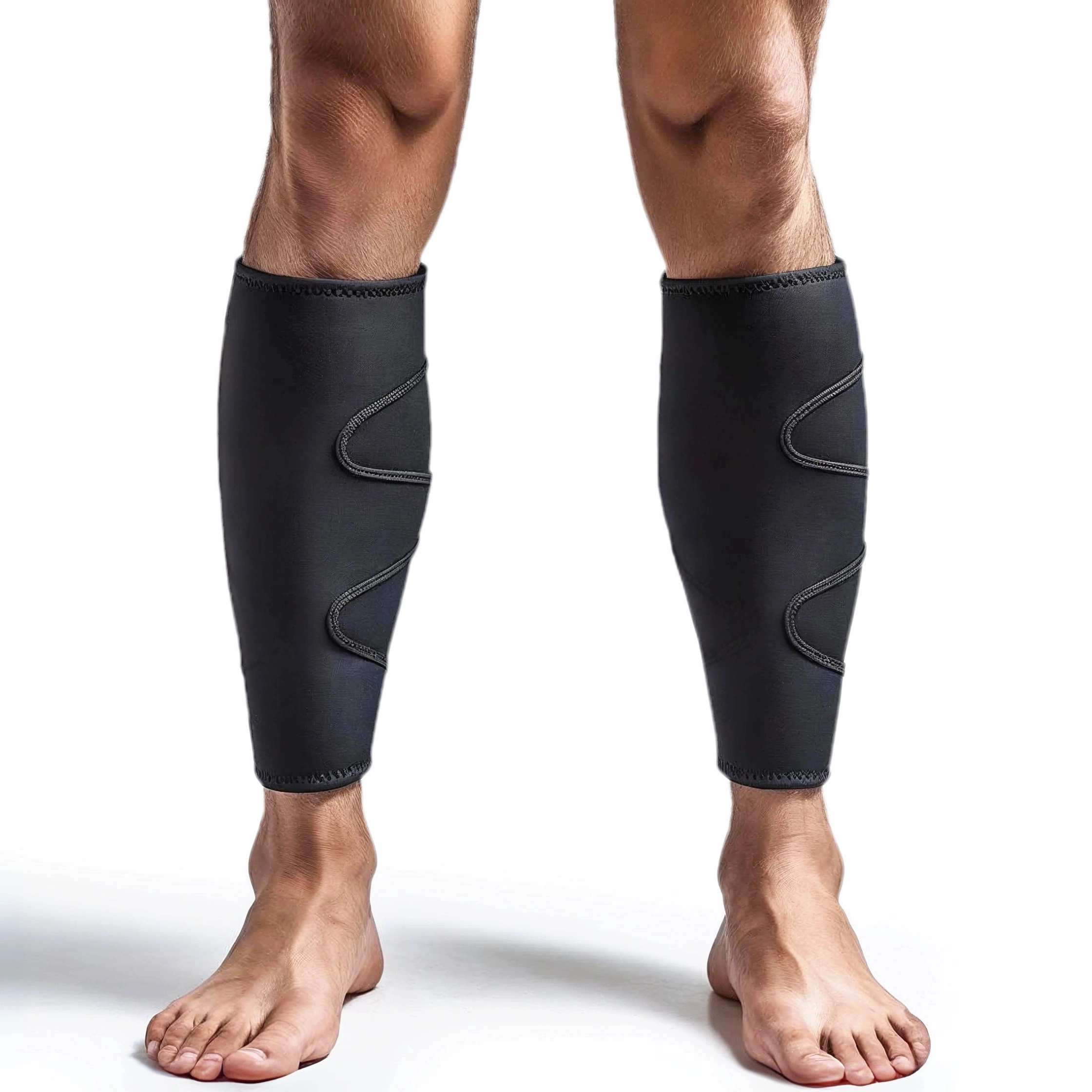
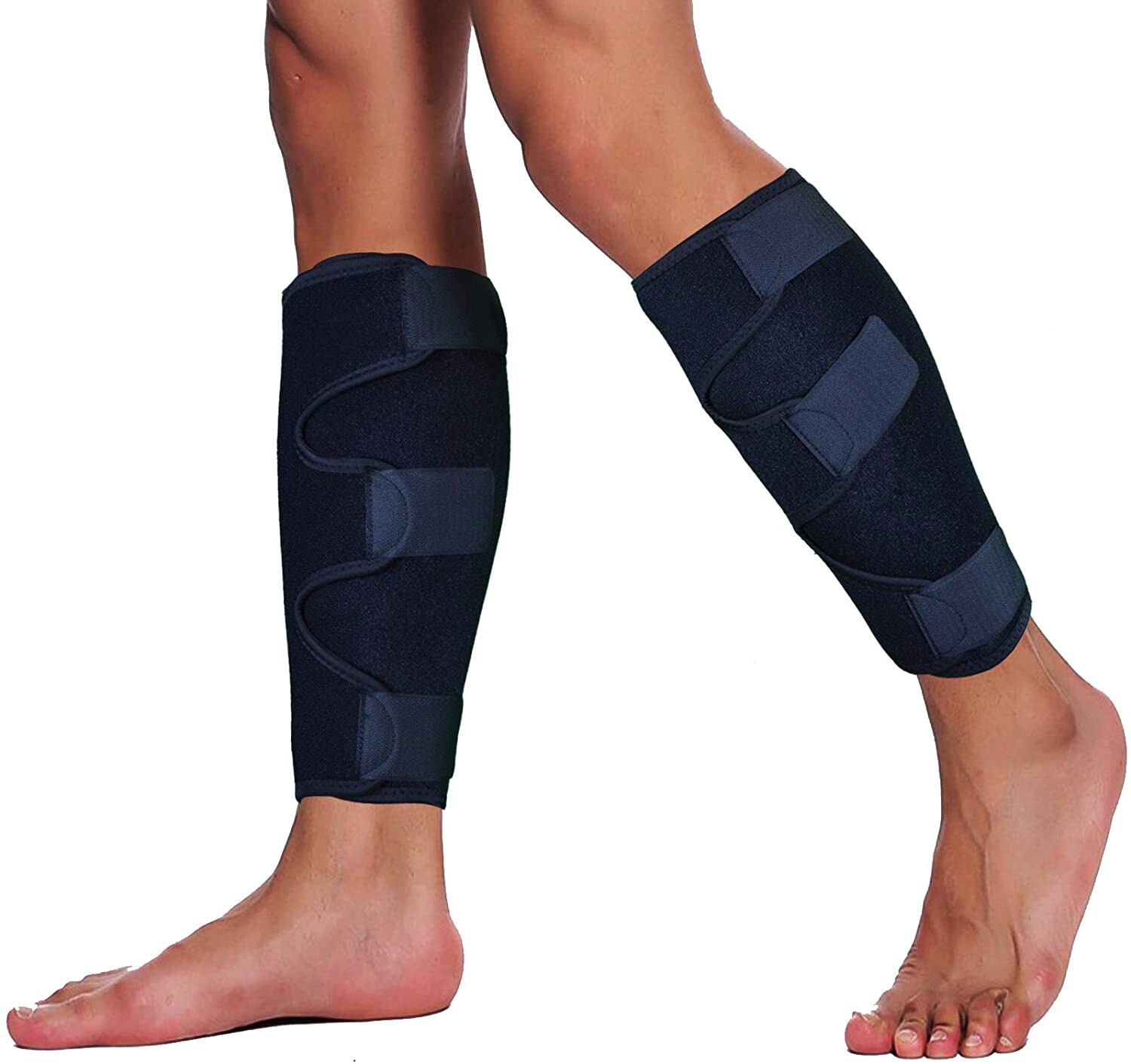
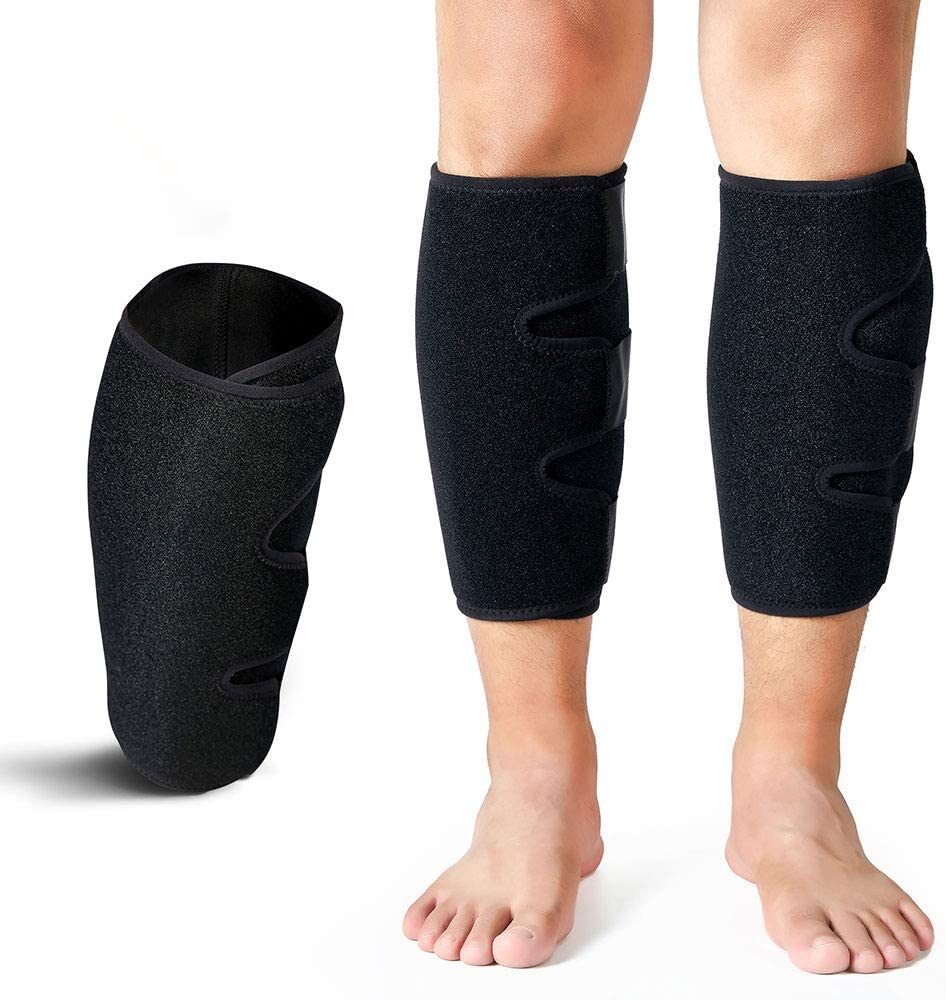
1x Pair of Calf Support Braces for Shin Splints
£19.99inc VAT
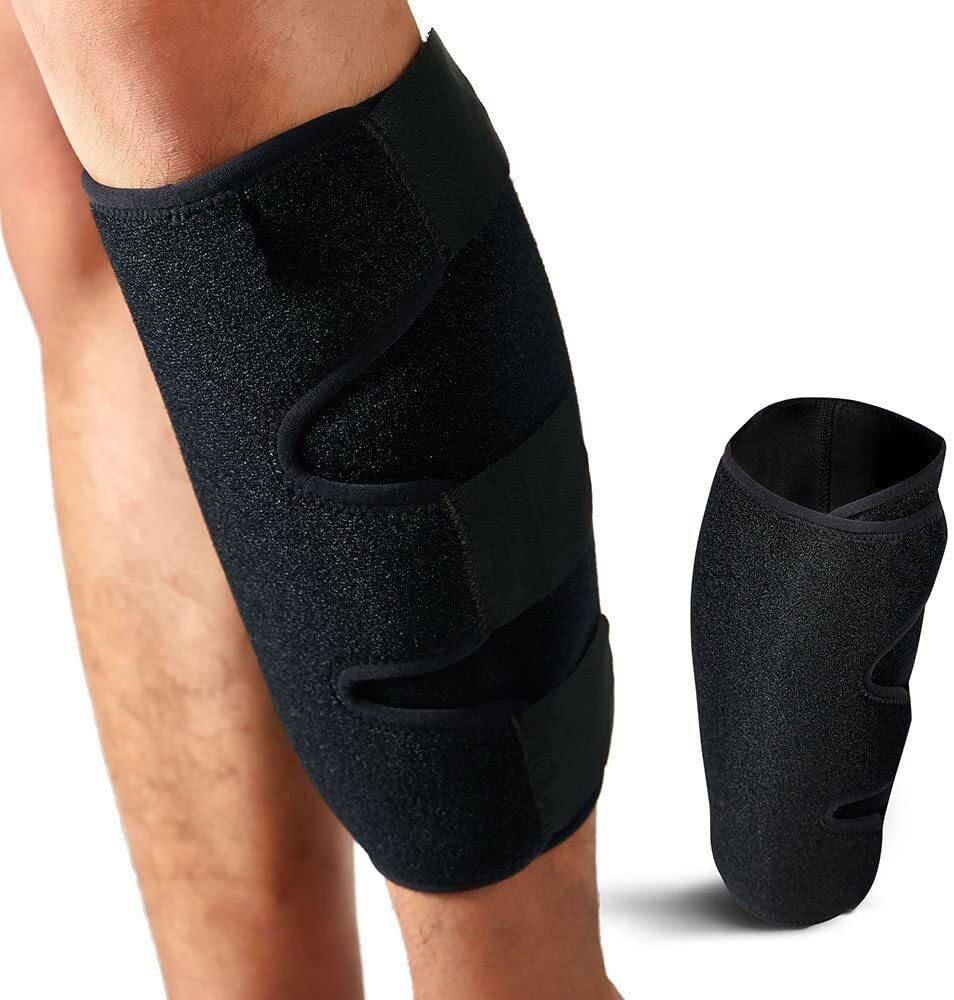
- A pair of adjustable calf support braces for both lower legs.
- Mainly suited to adults with shin splints or lower-leg strain linked with walking, running, training, or long periods on their feet.
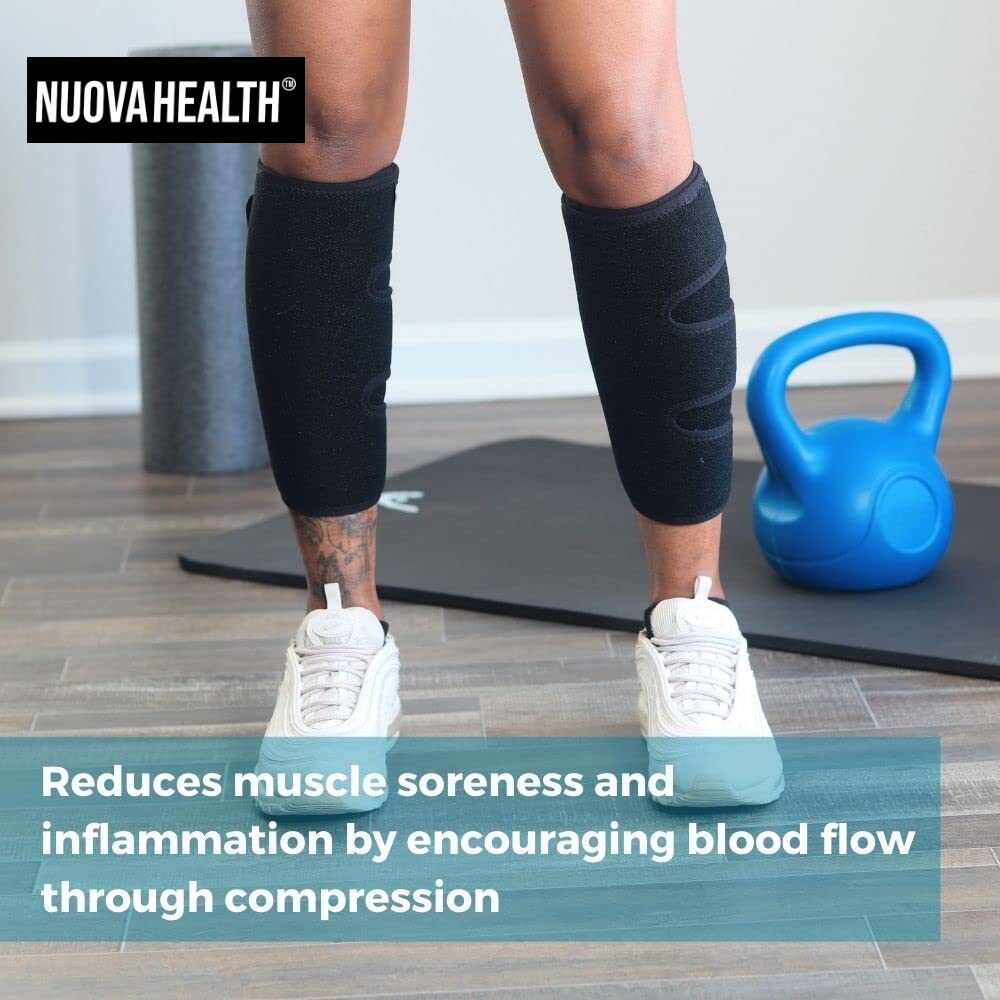
- Helps provide compression, support, and a more secure feel around the calf area.
- Designed to support both legs together, which can feel more balanced during walking and exercise.
- May help reduce the sense of calf tiredness and lower-leg strain that often builds with repeated activity.
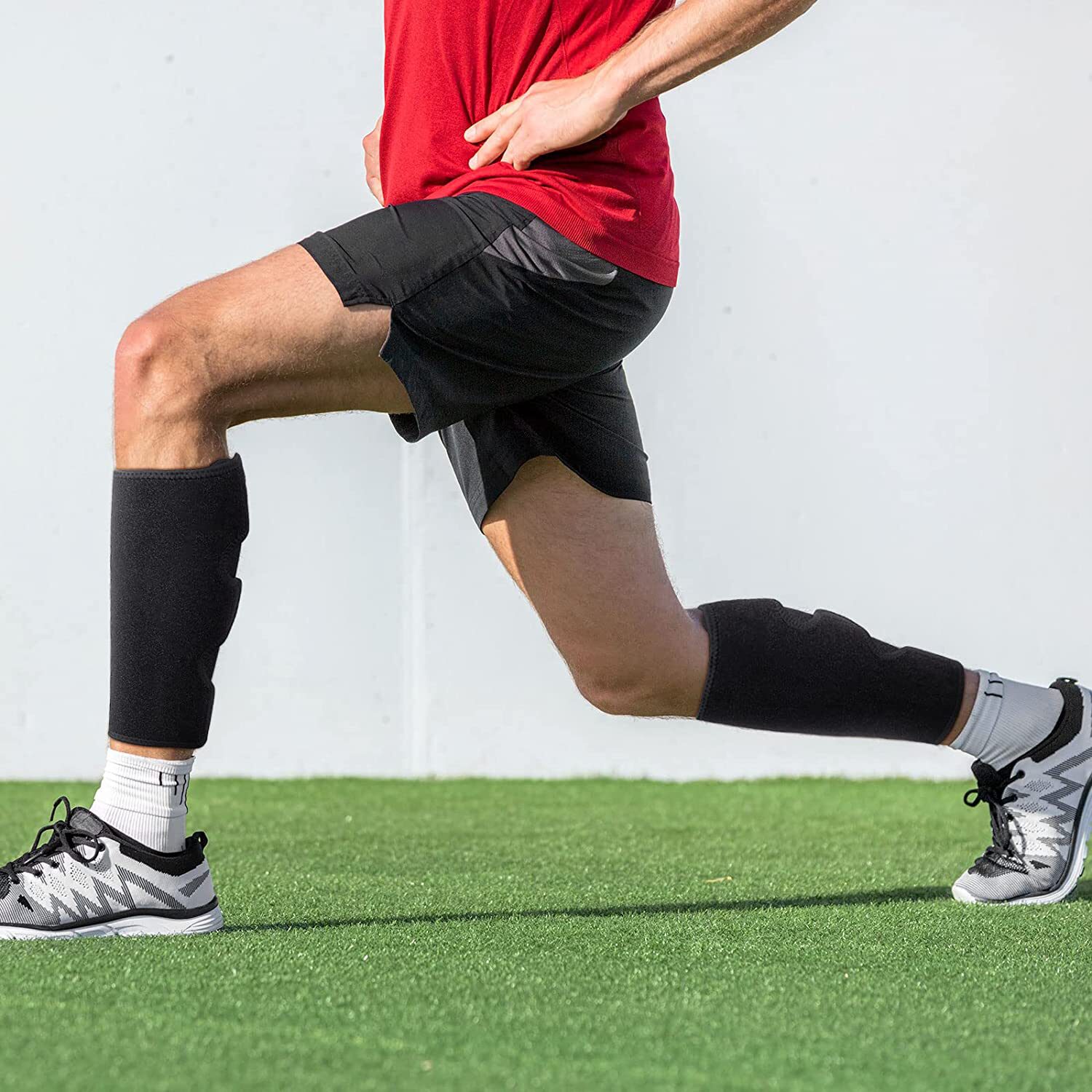
- Useful during exercise, after activity, or while easing back into movement after shin discomfort.
- Adjustable Velcro straps allow you to tailor the fit and level of support.
- Wraparound design helps the braces stay in place more reliably during movement.
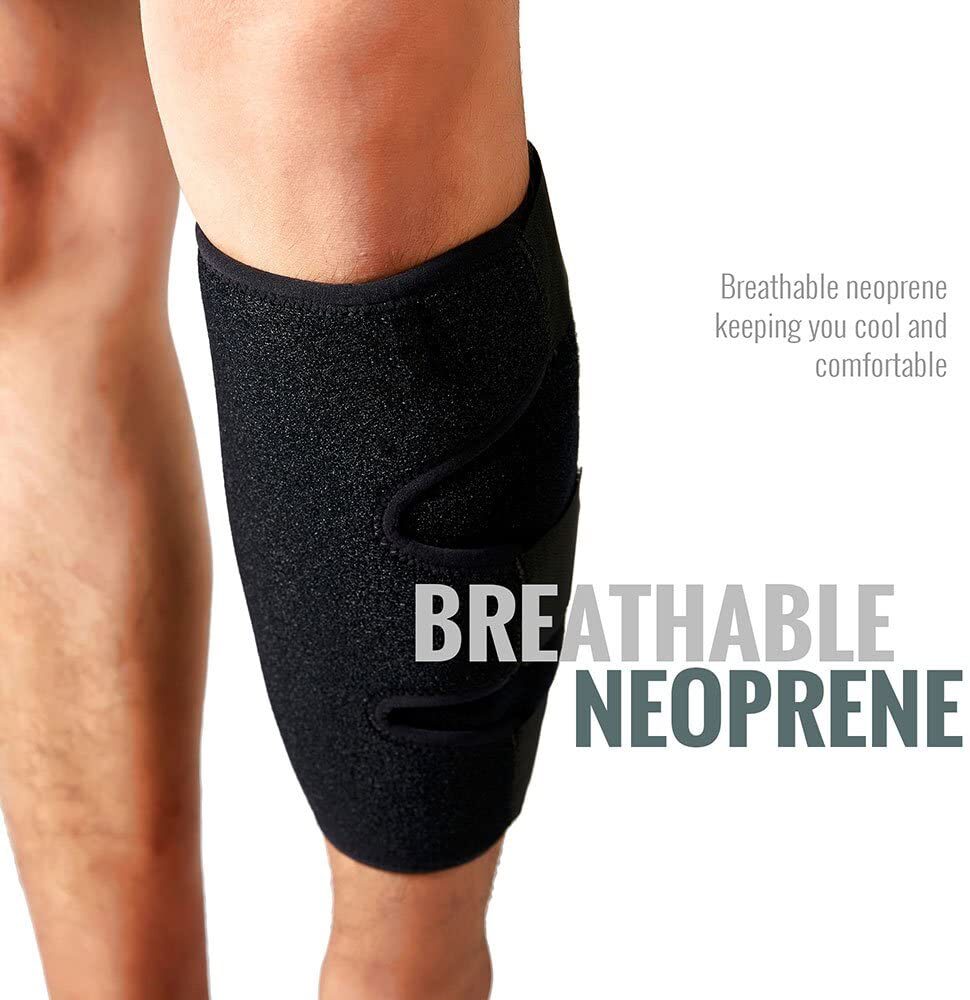
- Made from lightweight neoprene for a supportive feel without too much bulk.
- Breathable, moisture-wicking, and antibacterial material helps with comfort during regular wear.
- Should feel secure and supportive, but not excessively tight or restrictive.
- Best used as part of a sensible approach that also takes account of activity levels and recovery.
- Not a cure for every cause of shin pain, and not a substitute for assessment if symptoms are severe, worsening, or unclear.
Get 15% off - When bought together with:
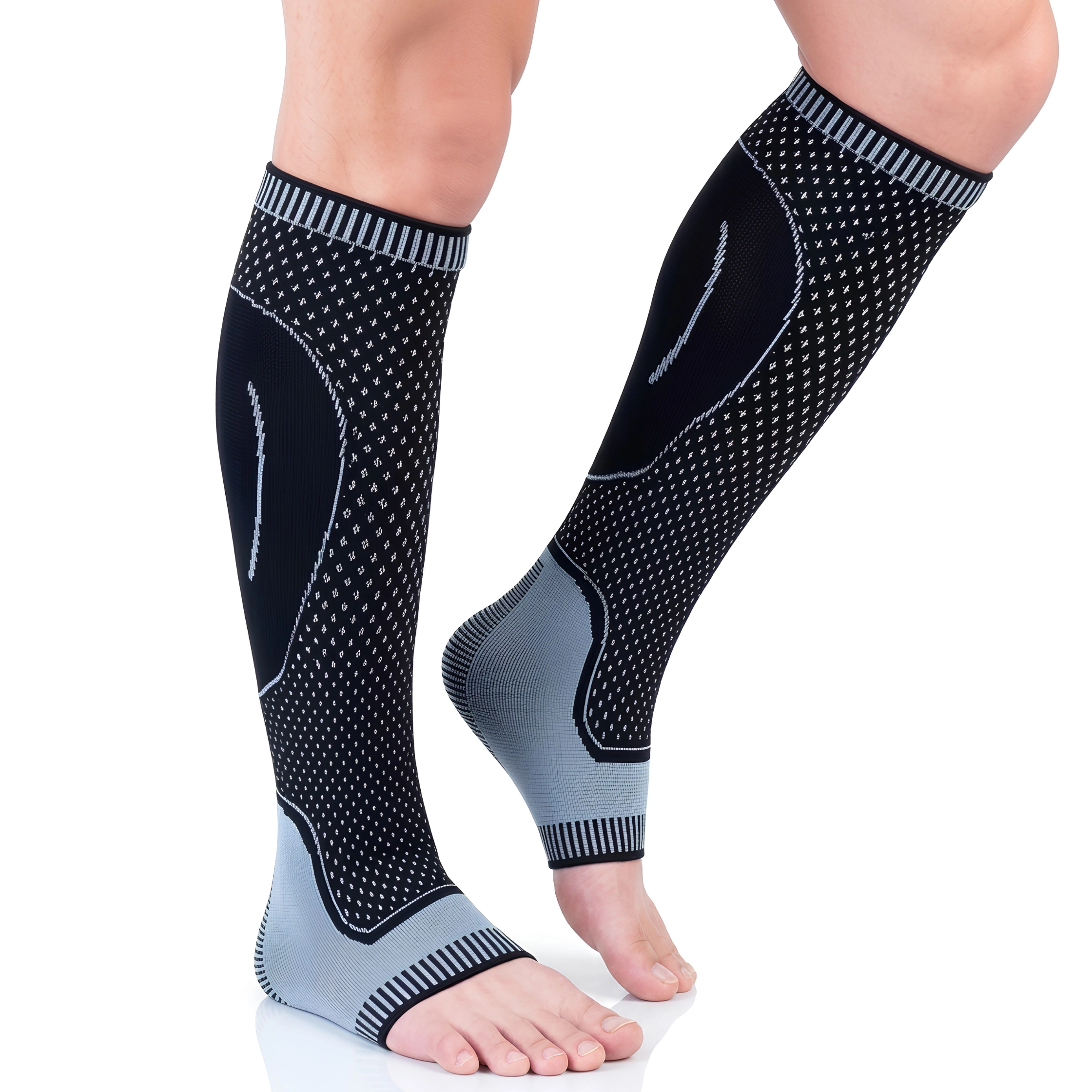
- This item: 1x Pair of Calf Support Braces for Shin Splints(£19.99inc VAT)
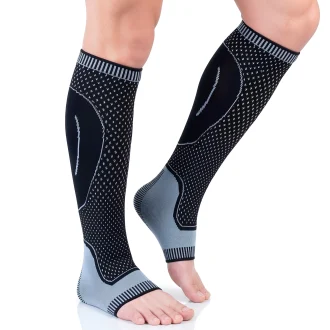
- Shin Splint Compression Sleeves(£9.99inc VAT)
Shin Splints: When Calf Support May Help
If pain along your shins is making exercise, walking, standing, or day-to-day movement more difficult, it can soon become frustrating. Shin splints are a very common cause of lower-leg discomfort, particularly in adults who run, train, walk long distances, spend long periods on their feet, or have recently increased how much they are doing. The pain often starts as a mild ache or tenderness along the inner part of the shin, but it can gradually become more persistent, more noticeable during exercise, and harder to settle if the area keeps being irritated.
For many people, the problem is not only the pain itself. It is the way the whole lower leg starts to feel during movement. Activity that once felt straightforward can begin to feel uncomfortable, tiring, or less steady. You may notice soreness after a run, calves that tire sooner than usual, or a general sense that walking and training no longer feel as comfortable as they should. Even when symptoms are still manageable, that growing strain through the lower legs can make you more cautious about staying active.
Added lower-leg support can be useful here. A pair of calf support braces is designed to support both lower legs together, helping provide compression, stability, and a more secure feel around the calf area during activity and recovery. Because both lower legs are working continuously during walking, running, exercise, and standing, it often makes sense to support both sides rather than focus on one leg alone. Even when one shin is more painful, both lower legs are still involved every time your foot lands, your ankle moves forwards over the foot, and your calf helps push you on.
Our Calf Support Braces are supplied as a pair and are designed to support, compress, and stabilise your lower legs in a comfortable, practical, and wearable way. They can be worn during exercise, while recovering from lower-leg strain, or when easing back into activity after shin discomfort. Before deciding whether this kind of support is right for you, it helps to understand what shin splints are, why the area becomes irritated, and why support around the calves can make a difference.
What Shin Splints Usually Involve
Shin splints are a common overuse problem that usually cause pain along the inner edge of the tibia, the main shinbone in the lower leg. You may also hear this called medial tibial stress syndrome. The term is more technical, but it describes the same basic issue: repeated stress through the lower leg causes irritation around the inner shin, leading to soreness, tenderness, and pain that often becomes more noticeable during or after activity.
Although the pain is felt in the shin, shin splints are not simply a matter of one small spot hurting for no clear reason. The lower leg has to absorb force, pass that force upwards, and help control movement every time you walk, run, climb stairs, jump, or stand for long periods. The tibia has a central role in this, but it does not work alone. The calf muscles and the soft tissues around the shin also have to cope with repeated physical stress. When that build-up of stress increases faster than the area can cope with comfortably, the tissues around the inner shin can become sore, tight, and easier to aggravate.
Running is one obvious trigger, but it is not the only one. Fast walking, gym training, sports drills, exercise classes, and even prolonged standing or physical work can all create the sort of repeated force that makes symptoms more likely. In many cases, the issue is not that movement is harmful in itself. The problem is that the lower leg is being asked to deal with more force, more often, than it is currently coping with well.
The problem often builds gradually. At first, you may only notice discomfort after exercise or some tenderness when pressing the inside of the shin. Later, symptoms may start earlier during activity, last longer afterwards, or leave the lower legs feeling more fatigued and irritated overall. That gradual build-up is one reason shin splints are often underestimated at first. Many people carry on as normal, hoping the area will settle by itself, only to find that the same symptoms keep returning.
If the lower leg is struggling with repeated force, strain, and fatigue, added support around the calves can help make movement and recovery feel more manageable. The reason becomes clearer when you look a little more closely at what is happening in the shin and calf during repeated activity.
How Symptoms Often Build During Activity and Recovery
One reason shin splints can be difficult to manage is that the symptoms often follow a very familiar course. Early on, the discomfort may seem mild enough to ignore. You might finish a run and notice that the inside of your shin feels sore while cooling down, or that the area is slightly tender when you press it later in the day. Because the pain often settles with rest at first, it is easy to assume it is nothing significant and will disappear on its own.
The difficulty is that repeated stress through the lower leg can keep feeding the irritation if nothing changes. What starts as soreness after exercise may begin to appear earlier and earlier during activity. Instead of only hurting afterwards, the shin may start to ache during a run, while walking briskly, or after a period of standing. Once that starts happening, the lower legs can begin to feel less dependable, even on days when the pain is not especially severe.
Symptoms can also vary from day to day. Some days may feel much better than others. A shorter walk may seem fine, while a longer day on your feet or a harder training session causes the area to flare again. That stop-start experience can make the problem feel confusing. It is common to think you are improving, then feel disheartened when the same pain returns after activity. In reality, that inconsistency often means the tissues are still sensitive to what you are asking them to do, even if symptoms are not constant.
Recovery can be misleading as well. Rest often helps, but that does not automatically mean the lower leg is ready for the same amount of stress that caused the symptoms in the first place. Shin splints can easily slip into a cycle of flare-up, partial settling, then flare-up again. The discomfort eases enough to tempt you back into more activity, but the tissues are still not coping well enough with repeated force to avoid being irritated again. Without some change in support, activity, or recovery, the same experience can continue.
Many people also notice that shin splints do not affect the shin alone. The whole lower leg can feel more worked, tighter, heavier, or more fatigued than usual. The calves may feel as though they tire faster, or the lower legs may stop feeling springy and comfortable during movement. That broader lower-leg fatigue helps explain why support around the calves can be relevant even though the main pain is felt along the shin.
So this is not only about where the pain is. It is also about how the lower leg responds when you keep asking it to absorb force and control movement over time. That is why calf tiredness and general lower-leg strain are such an important part of the picture.
Why Calf Fatigue Matters
At first glance, it may seem odd to use a calf support brace for a problem that hurts along the shin. It makes more sense when you remember that the shin and calf work together every time you move. When you walk, run, climb stairs, or exercise, the calf muscles help control the ankle, help manage force as your foot lands, and help with push-off as you move forwards. If those muscles become overworked or fatigued, the whole lower leg can start to feel less comfortable and less able to cope.
The calf muscles do a great deal during forward movement. They help control how the ankle moves as your weight comes onto the foot, they help steady the lower leg over the ankle, and they help push the body forwards as the heel lifts. During repeated activity, particularly higher-impact activity or longer sessions, they have to keep doing this over and over again. When they are coping well, movement tends to feel smoother and more comfortable. When they are tired, tight, or under strain, the lower leg can start to feel heavier, more stressed, and less able to deal with repeated impact.
This matters in shin splints because irritation around the shin rarely happens in complete isolation from the rest of the lower leg. If the calves are working hard and becoming fatigued, the overall sense of strain through the lower leg can increase. The tissues around the shin may then feel the effects more clearly, especially during repeated movement or when you return to activity before the area has properly settled. In practice, people often describe this as their calves and shins both feeling worked, tight, or overloaded, even if the main pain remains along the inner shin.
Calf fatigue can also change how the lower leg feels as activity goes on. Early in a session, you may feel reasonably comfortable, but as the session continues the calves begin to tire and the shin discomfort becomes more noticeable. That sequence is common because repeated stepping keeps placing force through the same lower-leg structures. Once fatigue starts to build, the area may simply feel less able to cope with the same level of activity comfortably.
This does not mean the calf muscles are the sole cause of shin splints. The issue is wider than that. It does, however, help explain why support around the calf region can be relevant. If the calves are a key part of how the lower leg manages repeated force, then giving them supportive compression and a more secure feel may help the whole lower-leg area feel more comfortable and more controlled.
This is also where many people notice the difference between pain and what the leg can cope with. A brace may not remove discomfort completely, but by supporting the calves and surrounding lower-leg tissues it can help the area feel more stable and less strained during movement. That improved sense of support can make a real difference when you are trying to stay active, recover between sessions, or ease back into exercise without the lower legs constantly feeling close to another flare-up.
Once that role of the calf is clear, the reason for using calf support becomes much easier to understand. You are not ignoring the shin. You are supporting the part of the lower leg that helps the shin deal with repeated activity.
Why Calf Support Braces Can Be Helpful
A calf support brace makes sense for shin splints because it supports the lower leg as a whole rather than focusing only on the line of pain along the shin. Shin splints are commonly aggravated by repeated force, calf fatigue, and the build-up of strain during activity. Supporting the calf region can therefore be a practical way to help the lower legs feel more secure, more comfortable, and better supported when those demands are present.
One of the main ways calf support braces help is through gentle compression. Compression gives the lower leg a close, supportive feel that many people find reassuring when the area feels tired, irritable, or vulnerable to flare-ups. It can make the calves feel more held and the lower legs feel less exposed to the strain that often builds with repetitive movement. If you are dealing with shin splints, that more supported feel can make walking, training, or recovering feel more manageable.
Support and stability matter as well. When the lower legs feel overworked, even normal activity can start to feel less comfortable and less controlled. A calf support brace can help by giving the area more structure and a more secure feel during movement. That does not mean it rigidly restricts the leg. Rather, it provides a supportive wrap around the calf that may help reduce the feeling of excessive strain through the lower leg.
There is also a practical comfort benefit. Shin splints often make people more aware of every step, more cautious about impact, and more hesitant about repeating the movements that trigger symptoms. Support around the lower leg can help restore some confidence by making the area feel better supported during activity. That matters because when movement feels more secure, it is often easier to stay sensibly active rather than falling into a cycle of overdoing it, stopping completely, and then starting again without any real support plan.
Calf support braces can also be useful during recovery, not just during exercise. After activity, the lower legs may feel sore, tight, or heavy. Gentle support and compression during this stage may help the area feel more comfortable while you rest and allow symptoms to settle. For that reason, many people use calf braces not only when symptoms are active during movement, but also afterwards or during periods when they are trying to reduce aggravation and support recovery.
Ignoring it and hoping it settles is rarely enough. A support brace gives the calf and the rest of the lower leg a bit more help when repeated activity is continuing to stir symptoms up. From there, it is worth considering why a pair, rather than a single brace, is often the more practical option.
Why a Pair Often Makes More Sense
These calf support braces are supplied as a pair, and that matters more than it may first seem. Most activities linked with shin splints involve both lower legs all the time. Walking, jogging, running, gym work, standing, and most day-to-day movement rely on both calves and both lower legs working together. Even if pain is more obvious on one side, both sides are still handling repeated force.
If one shin is more irritated, the other lower leg is often still working hard and may even be taking on a little extra demand as you unconsciously alter how you move. Supporting both lower legs at the same time can therefore feel more balanced and more practical than treating one side as though it is completely separate from the other.
Wearing a pair can also create a more even feel during activity. When both calves receive the same kind of compression and support, the lower legs may feel more symmetrical and more comfortable overall. For someone returning to running, walking longer distances, or exercising while managing shin discomfort, that balanced support can be reassuring. It allows both lower legs to feel similarly supported rather than one side feeling held and the other unsupported.
There is also the question of consistency. If you know that both lower legs are under repeated strain during movement, having a pair makes it easier to build support into your routine without constantly deciding whether one side needs it and the other does not. This is especially relevant when symptoms vary. One day one leg may feel worse, the next day the other side may feel more tired, or both sides may simply feel generally overworked. A pair of braces gives you a straightforward way to support both lower legs together.
This does not mean everyone always needs exactly the same support on both sides in every situation. But for a product designed to help with repeated lower-leg strain during activity and recovery, a pair is a very practical format. It reflects how people actually move and how the lower legs actually work.
How the Design Helps in Practice
A calf support brace is only useful if it provides enough support to help while still being comfortable enough to wear regularly. That is where the design matters. This pair of Calf Support Braces is made to support, compress, and stabilise both lower legs in a practical way, whether you want extra support during exercise, after activity, or while easing back into movement after shin discomfort.
The braces are designed to feel secure around the calf area without becoming unnecessarily bulky or awkward. That balance matters because a support that is difficult to wear, uncomfortable against the skin, or constantly slipping out of place quickly becomes less useful, whatever its intended purpose. In everyday life, people wear support consistently when it feels manageable and easy to fit into their routine.
Fit and Adjustability
A secure fit is one of the most important parts of any calf support brace. If the brace moves around too much, feels too loose, or causes rubbing during exercise, it becomes distracting rather than helpful. This pair uses adjustable Velcro straps so you can wrap the braces around your lower legs and tailor the fit to the level of support that feels most comfortable for you.
That adjustability matters because lower-leg shape, calf size, and personal preference vary from person to person. A design that allows you to tighten or loosen the wrap means you can create a secure feel that suits how and when you want to wear the braces. Some people prefer a firmer feel during exercise, while others want gentler support during recovery or daily wear. Adjustable fastening makes that possible without making the braces fiddly to use.
The wraparound fit also helps the braces stay in place more reliably while you move. This is especially useful during walking, running, exercise classes, gym sessions, or any situation where repeated leg movement could otherwise cause the support to shift. When the brace stays where it should, it is easier to forget about it and get on with what you are doing. It also helps reduce the chance of rubbing and chafing that can make longer wear unpleasant.
Suitable for both men and women, the pair is designed to provide flexible lower-leg support in a straightforward format. The aim is simple: support that is easy to fit, easy to adjust, and realistic to use regularly.
Comfort and Wearability
Comfort matters just as much as support. If a brace feels too bulky, traps too much heat, or becomes uncomfortable after a short period, most people will stop wearing it. These calf support braces are made from lightweight neoprene to provide a supportive feel without making the braces overly stiff or cumbersome.
Breathability also makes the pair more practical for everyday wear and exercise. Lower-leg supports that feel hot or sweaty too quickly can become frustrating, particularly during activity. A breathable construction helps improve comfort when walking, training, or wearing the braces for longer periods.
The moisture-wicking and antibacterial properties also matter in day-to-day use. Repeated wear, especially during exercise, naturally means heat and sweat can build up around the lower legs. Material that helps manage moisture and keep the braces feeling fresher supports a more comfortable experience over time. It may seem like a small detail, but it can make a real difference to how easy the braces are to keep using.
None of that is an extra. It is central to whether the braces become genuinely useful. If they feel secure, breathable, and manageable, you are far more likely to wear them when you actually need the support.
When Calf Support Is Often Most Useful
People usually start looking at calf support braces when the lower legs begin to feel less reliable, less comfortable, or more easily aggravated during everyday movement and exercise. In many cases, the issue is not only pain but the growing sense that the lower legs are not coping as well as they used to. That shift often leads people to look for support that feels practical, wearable, and easy to build into their routine.
One common point is during flare-ups linked with activity. Someone may notice that shin pain keeps appearing during runs, longer walks, gym sessions, or sports training. Even if the symptoms are not severe enough to stop all activity, they may be irritating enough to make exercise less enjoyable and more uncertain. That is often the point when extra support starts to feel worth considering.
Another common point is during a return to exercise. After cutting back because of shin discomfort, many people do not want to go straight back into unsupported movement and simply hope for the best. They want something that helps the lower legs feel more secure as they rebuild confidence. A calf support brace can be appealing here because it offers a practical sense of support without requiring major changes to the rest of the routine.
People also often choose this kind of support when daily demands increase. That might mean more time walking, longer hours standing, travel, work that keeps you on your feet, or periods when the lower legs simply feel more heavily loaded than usual. Even if the issue is not a formal training plan, the same experience can happen: the shins and calves start to feel overworked, the lower legs become less comfortable, and extra support starts to make sense.
Another group are people whose lower legs feel persistently tight, tired, or vulnerable after activity. In these cases, support is not just about getting through exercise. It is also about helping the lower legs feel more comfortable afterwards and supporting the recovery period between more active days.
Across all of these situations, the point is much the same. The lower legs are coping with less than you want them to. That does not mean the braces are a cure for every cause of shin pain. It does mean they can be a sensible option when your lower legs are feeling strained and in need of a bit more support.
Using the Braces Day to Day
One of the strengths of a pair of calf support braces is that they can be useful at more than one stage. Some people mainly wear them during activity because that is when symptoms build. Others prefer them after exercise, when the lower legs feel tired and irritated. Many use them during a return-to-activity period, when confidence is improving but the lower legs still benefit from added support.
Because both braces are designed to work together, they fit naturally into activities where both lower legs are active at the same time. Whether you are walking, running, training, or simply spending more time on your feet, wearing the pair can help support both sides of the lower-leg area rather than leaving one side unsupported.
During Activity
If your shin pain tends to appear during walking, running, training, or other repetitive movement, wearing the braces during activity can help provide a more supported feel around the lower legs. This may be especially useful when symptoms tend to build gradually with distance, time on your feet, or repeated impact.
During activity, the difference is often quite simple. The lower legs may just feel better supported as the session goes on. A more secure feel around the calves can help reduce the sense of strain that often builds as the lower legs tire. For some people, that means exercise feels more manageable and less aggravating. For others, it means they feel more confident continuing with sensible activity because the lower legs feel less exposed and better supported.
This can be relevant across a range of activities, including walking, jogging, gym sessions, exercise classes, sports drills, or even physically demanding days where you expect to be on your feet for longer than usual. The braces are not there to encourage you to ignore severe pain, but they can be a useful support tool when the aim is to make movement feel more controlled and more comfortable.
During Recovery
Recovery is another time when calf support can be helpful. After activity, shin splints often leave the lower legs feeling sore, tight, tired, or generally overworked. Even once the sharper discomfort settles, the calves and shins may still feel as though they have taken more strain than they were happy with. Wearing the braces during this stage can provide a close, supportive feel that many people find comforting while the area settles.
This kind of use can fit well within a broader recovery routine. If you are resting the area, reducing aggravating activity, using ice where appropriate, or elevating the legs, the braces can sit naturally within that approach by providing compression and support to the lower legs. Their role here is not to replace recovery habits, but to support them by making the area feel more comfortable and contained.
Some people also prefer the braces after a long day on their feet, when the lower legs feel heavy or fatigued even if they have not done formal exercise. That still counts as recovery, because the aim is to support the lower legs after demand has already been placed on them.
During Return to Exercise
The return-to-exercise phase is often one of the trickiest parts of managing shin splints. Once symptoms begin to settle, it is natural to want to get moving again. But lower-leg tissues can remain sensitive even when the pain is less obvious, and confidence is often slower to return than people expect. This is where wearing the braces during a gradual return to exercise can be especially useful.
The goal at this stage is not to rely on support forever, but to use it sensibly while rebuilding what the lower leg can comfortably cope with. Wearing the braces during shorter runs, walks, training sessions, or lower-impact exercise can help make the transition back into movement feel more manageable. The lower legs may feel more supported and less vulnerable during the process, which can reduce the hesitation that often comes with resuming activity after pain.
Using the braces in this way also fits well with a measured progression. Rather than returning to full activity as though nothing happened, the braces can be part of a more sensible approach where support, activity levels, and symptom response are all taken into account.
Getting the Fit Right
A calf support brace works best when it feels secure, supportive, and comfortable enough to wear consistently. Fit matters because even a well-designed brace becomes less useful if it feels awkward, slips during movement, or is tightened to the point of discomfort. Taking a little care with how the braces are fitted can make a meaningful difference to the overall wearing experience.
The first priority is a secure but comfortable feel. The braces should feel supportive around the calves without feeling excessively tight. If the fit is too loose, the braces may shift too much and fail to provide the supported sensation you are looking for. If the fit is too tight, they may feel restrictive, uncomfortable, or distracting, which can put you off wearing them at the times they are most useful. The adjustable Velcro fastening helps here by letting you tailor the fit rather than being stuck with one fixed level of tension.
It can also help to think about context. During exercise, some people prefer a slightly firmer feel because they want the braces to feel secure during repeated movement. During recovery or more casual daily wear, a gentler feel may be enough. The ability to adapt the wrap depending on how you are using the braces adds to their practicality and can make them easier to wear in more than one setting.
Comfort against the skin is another important part of fit. A brace that feels smooth, breathable, and easy to tolerate is far more likely to become part of your routine than one that constantly needs adjusting. When the braces stay in place comfortably and do not create unnecessary rubbing, you can focus on your activity or recovery rather than on the support itself.
Consistent use often comes down to details like this. People do not usually stop wearing support because they dislike the idea of support. They stop because the product becomes inconvenient, uncomfortable, or too much hassle. A good fit reduces that risk and helps turn the pair from something you occasionally try into something you genuinely use when your lower legs need support.
What You Can Realistically Expect
It is important to have clear, realistic expectations about what calf support braces can do. Their role is to support, compress, and stabilise the lower legs in a way that may help make movement, recovery, and return to activity feel more manageable. They may help improve comfort, reduce the sense of lower-leg strain, and give the calves and shins a more secure, supported feel during the activities that would otherwise be more aggravating.
For many people, the biggest benefit is not instant relief. It is the sense that the lower legs feel less vulnerable. That can matter a great deal when shin splints have started to affect confidence as well as comfort. If the legs feel better supported, walking and exercise may feel more manageable, and recovery after activity may feel less uncomfortable. That kind of practical support can make it easier to stay sensibly active rather than swinging between overdoing it and avoiding movement altogether.
At the same time, it is important not to expect the braces to solve everything on their own. Shin splints are linked with repeated force and with how well the lower legs are coping with that force. A support brace can help the lower legs feel better supported within that process, but it does not replace the need to pay attention to activity levels, symptom response, and recovery. The braces are best understood as a useful support tool, not as a complete answer to every possible cause of shin pain.
That is usually how support works in practice. It helps you manage the problem more comfortably and more confidently. It does not make the problem irrelevant.
How the Braces Fit Into Recovery
The most helpful way to think about calf support braces is as one part of a wider approach to managing shin discomfort. Support matters, but it works best when it sits alongside sensible decisions about activity, aggravation, and recovery rather than being expected to do everything on its own. This does not need to mean an overly complicated recovery plan. It simply means recognising that shin splints are usually related to repeated stress, and that the lower legs often benefit from both support and sensible management of how much they are being asked to do.
For some people, that wider approach begins with reducing the activities that are clearly aggravating the pain. For others, it means temporarily adjusting exercise intensity, duration, or frequency while the area settles. In either case, the braces can help by providing support around the calves and lower legs while you continue to move in a more measured way. That can be especially valuable when you want to avoid the all-or-nothing pattern of doing too much on good days and then having to stop completely when symptoms flare again.
Support also has a place in recovery because discomfort is not only about irritation in the tissues. It is also about how much the lower leg can handle before symptoms build again. Lower legs that feel overworked, tight, or vulnerable often benefit from anything that helps them feel more secure and less strained while settling. This is where supportive compression can contribute in a meaningful way, particularly after activity or during phases when you are gradually building back up.
If you are using a recovery approach based around protection, rest, ice, compression, and elevation, the braces fit naturally into the compression and support part of that process. They can help reinforce the idea that recovery is not only about doing less, but also about helping the lower legs feel better managed while symptoms calm down.
Seen that way, the value of the braces is clearer. They are not a stand-alone solution. They are a practical way to support the lower legs while you give the irritated area a better chance to settle and build back up.
Care and Trying Them for Yourself
Once the support side of things makes sense, most people want to know how easy the braces are to live with and what happens if they try them and decide they are not right. Those practical points matter. A support product needs to be straightforward enough to use regularly, otherwise it is unlikely to become part of your routine.
Looking After the Braces
These calf support braces are designed for regular use, whether that means during exercise, recovery, or periods when your lower legs need extra support more often. To keep them clean and comfortable, hand wash them using hot soapy water and allow them to dry fully before wearing them again. Looking after the braces properly helps maintain hygiene, comfort, and the overall feel of the material over time.
Durability matters as well. A pair intended for repeated lower-leg support needs to cope with regular wear without becoming inconvenient to maintain. When a support brace is easy to clean and designed for ongoing use, it is much easier to make it part of your normal routine rather than something you only reach for occasionally.
Trying the Pair
Trying a support product often comes down to whether you feel able to give it a fair test in your own routine. Your purchase includes a full 30-day money-back guarantee, which gives you the chance to try the pair for yourself and see how they feel during activity, recovery, and day-to-day wear.
When to Seek Advice
Although shin splints are common, not every case of lower-leg pain should simply be assumed to be the same thing, especially if symptoms are severe, worsening, or not settling as expected. If your shin pain is new and intense, keeps getting worse, or continues despite rest and support, it is sensible to seek advice from a GP, physiotherapist, or podiatrist.
The same applies if you are unsure whether shin splints are really the cause of your symptoms. Persistent or unexplained lower-leg pain deserves proper assessment. A pair of calf support braces can be a useful way to help your lower legs feel more supported and comfortable, but ongoing or unclear symptoms are better checked properly than guessed at.
A Sensible Option When the Lower Legs Need More Support
Shin splints can make movement feel harder than it should, whether you notice the problem while running, walking, training, or simply getting through a busy day on your feet. When the inner shin becomes sore and the lower legs start to feel tired, tight, or less reliable, extra support can make a genuine difference to comfort and confidence. A pair of calf support braces offers a practical way to support, compress, and stabilise both lower legs together, helping activity, recovery, and return to exercise feel more manageable.
The main reason they can help is straightforward. Shin splints are not only about a sore line along the shin. They are also about how the whole lower leg is coping with repeated force, calf fatigue, and time on your feet. Supporting the calves will not solve every cause of shin pain, but it can make the lower legs feel more secure and less strained while you keep activity sensible and give the area time to settle. If that sounds like your situation, it is worth checking the fit carefully and seeing whether this kind of support gives your lower legs the extra help they have been missing.
Disclaimer
This information is general guidance only and is not a substitute for individual medical advice, diagnosis, or treatment. If you are unsure whether this product is suitable for you, or if you have new, worsening, or more complex symptoms, speak to a GP, physiotherapist, podiatrist, or another appropriate clinician. Individual results will vary, and no specific outcome can be guaranteed.
Fast & Secure Checkout Through Paypal
Pay with Paypal the secure payment gateway that accepts all credit and debit cards. Paypal is free and secure and no credit or bank information is ever stored or shared with us.
Fast Dispatch
Enjoy your items soon with quick dispatch via Royal Mail. Expect to have your items between 1-3 working days for domestic orders. 7-10 Working days for international orders.
Return Policy – 30 Day Money Back Guarantee
In the unlikely event, you are unhappy with your purchase you can return it within 30 days for a refund. Please contact us via the form on the contact us page to start your return.
To return an item please send it to: Nuova Health UK, 81 Highfield Lane, Waverley, Rotherham, S60 8AL. Please include a note with your order id so we know who to refund. Please retain your postage receipt as proof of postage. All that we ask is that the item is in the original packaging and unused.
Reviews
There are no reviews yet.