
Shin Splint Compression Sleeves
£9.99inc VAT
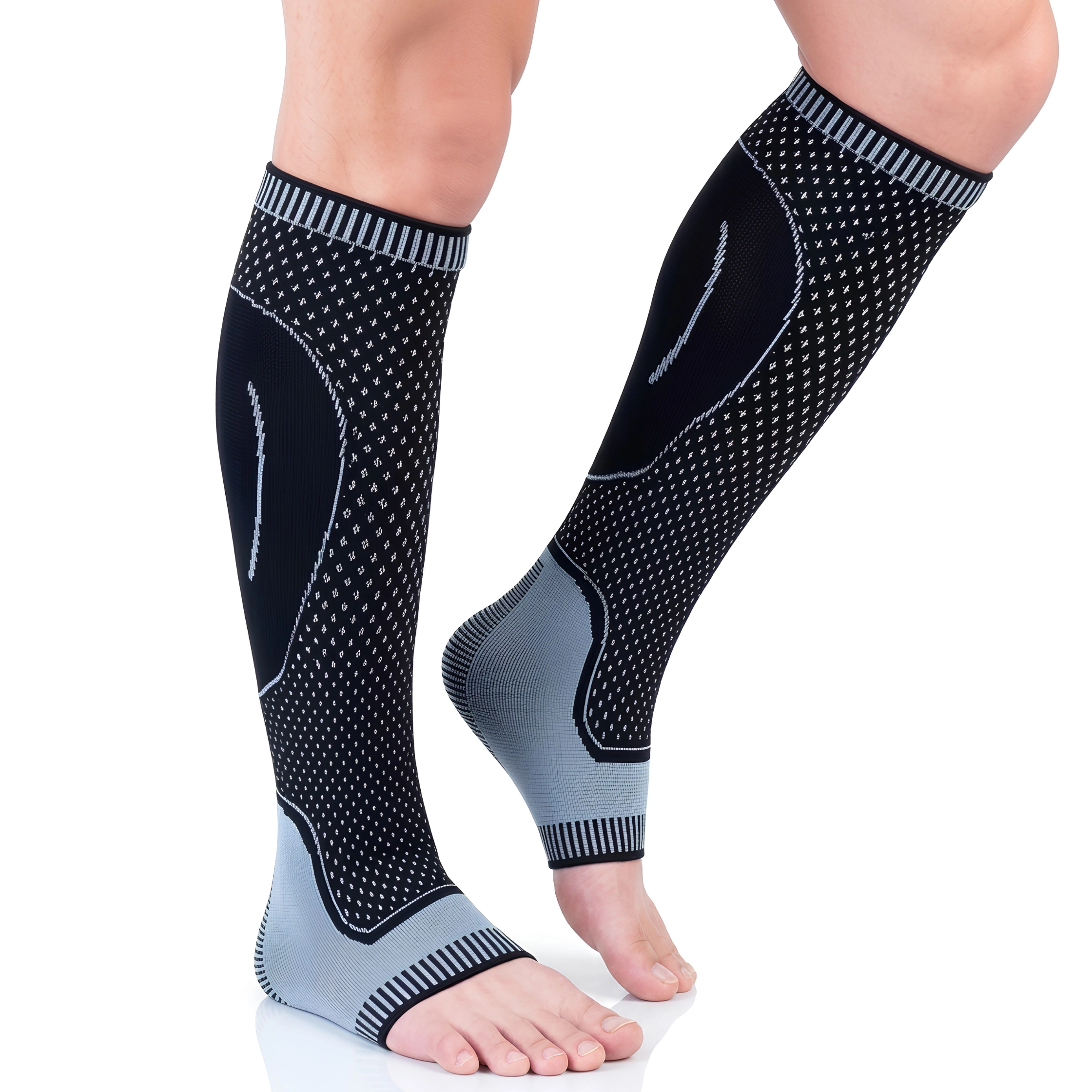
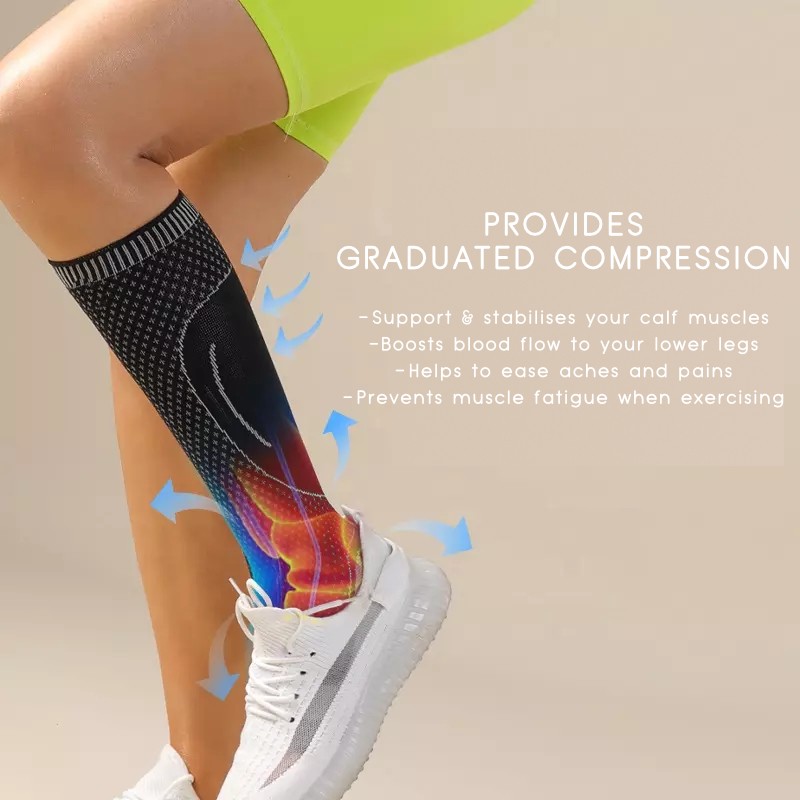
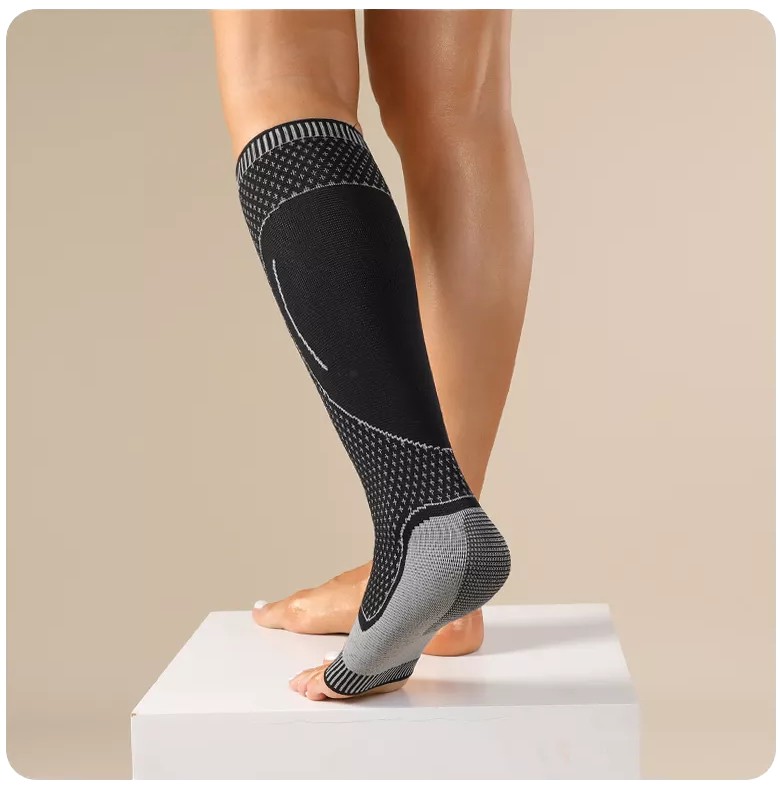
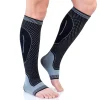
- Targeted support for shin splints, tight calves and heavy lower legs – our compression leg sleeves apply firm, graduated pressure from the arch and ankle up to just below the knee to help reduce muscle wobble, support circulation and ease that heavy, puffy feeling around the ankles and lower calves after runs or long days on hard floors.
- Covers the key areas that usually complain – structured knit zones over the inner border of the shinbone, the main bulk of the calf muscle, the Achilles tendon, heel, sides of the ankle and the arch to support the spots most often involved in shin splints, calf tightness, Achilles irritation and end‑of‑day leg fatigue.
- Activity‑grade compression for active adults – medium‑to‑firm, activity‑grade compression that clearly feels stronger than an everyday sock, similar to sports supports used in training, yet remains breathable and comfortable for most people through full runs, gym sessions, brisk walks and long work shifts.
- Helps your lower legs feel more stable as you move – holds the calf and shin muscles closer to the bone so they move more as one unit, reducing unnecessary soft‑tissue wobble on each foot strike and helping downhills, pavements and firm floors feel less jarring through the shins.
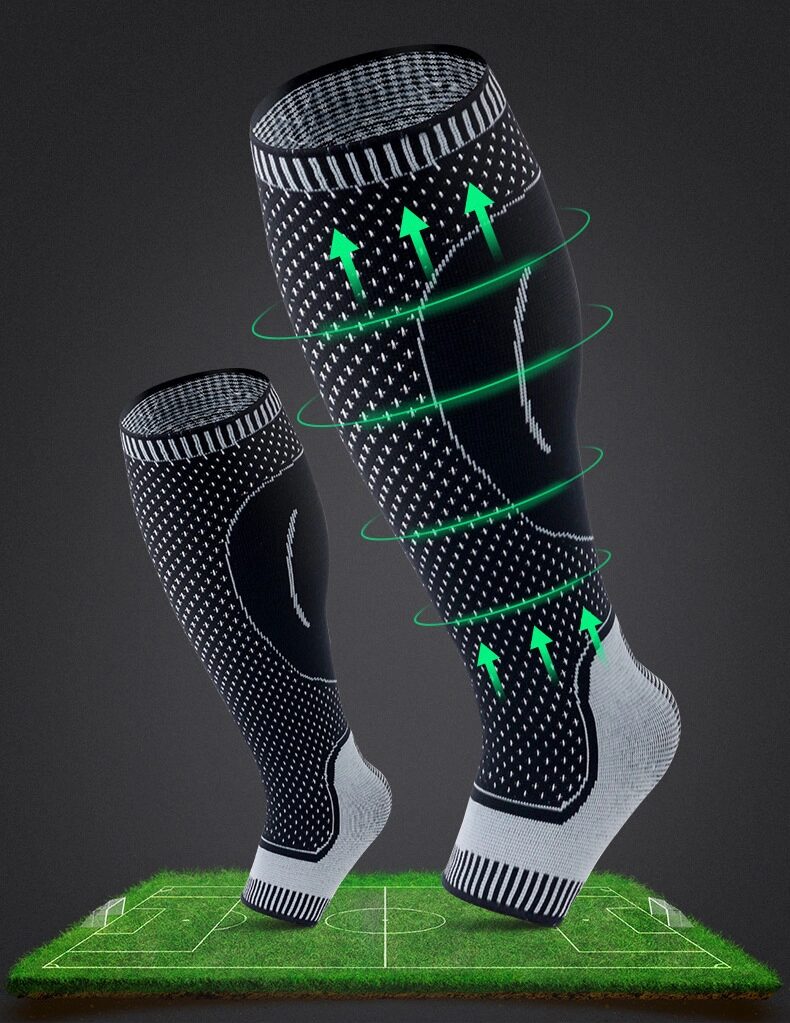
- Supports everyday circulation from ankle to knee – graduated pressure (firmer at the ankle, easing towards the knee) works with the calf muscle pump to discourage fluid from pooling at the ankles and lower calves, helping limit mild swelling and the dragging, heavy feeling that can build by the end of the day.
- Breathable, moisture‑wicking, substantial fabric – thicker than a standard sock to deliver meaningful support, but soft, stretchy and designed to wick sweat away from the skin so your shins and calves feel drier and more comfortable during training and long shifts.
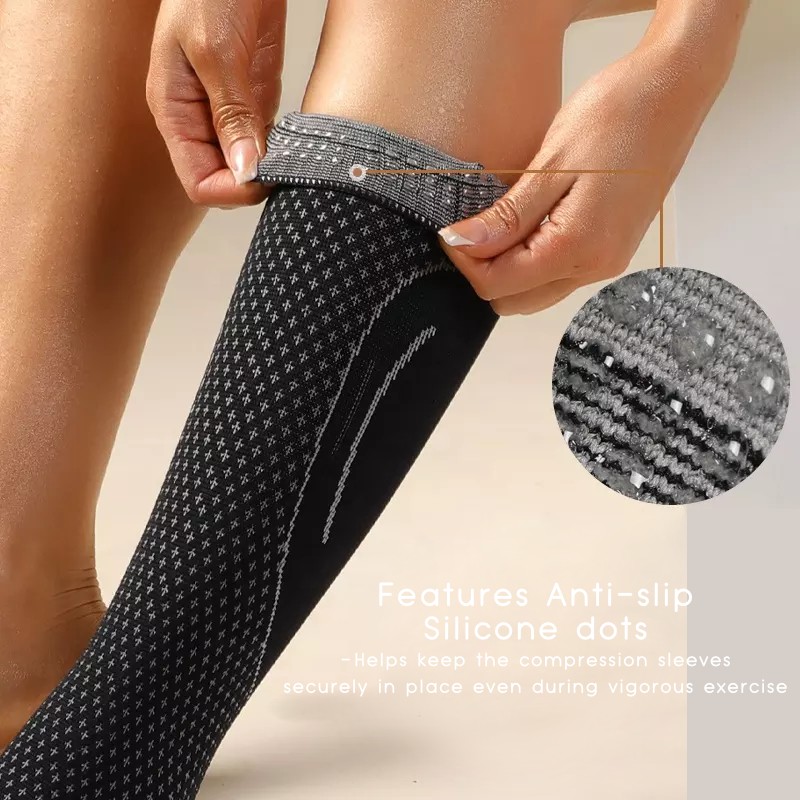
- Secure stay‑up cuffs with low‑irritation edges – upper cuffs with internal grip bands help the sleeves stay in place without harsh cutting‑in, and smooth seams and rounded edges reduce rubbing where the sleeve meets the skin or another garment.
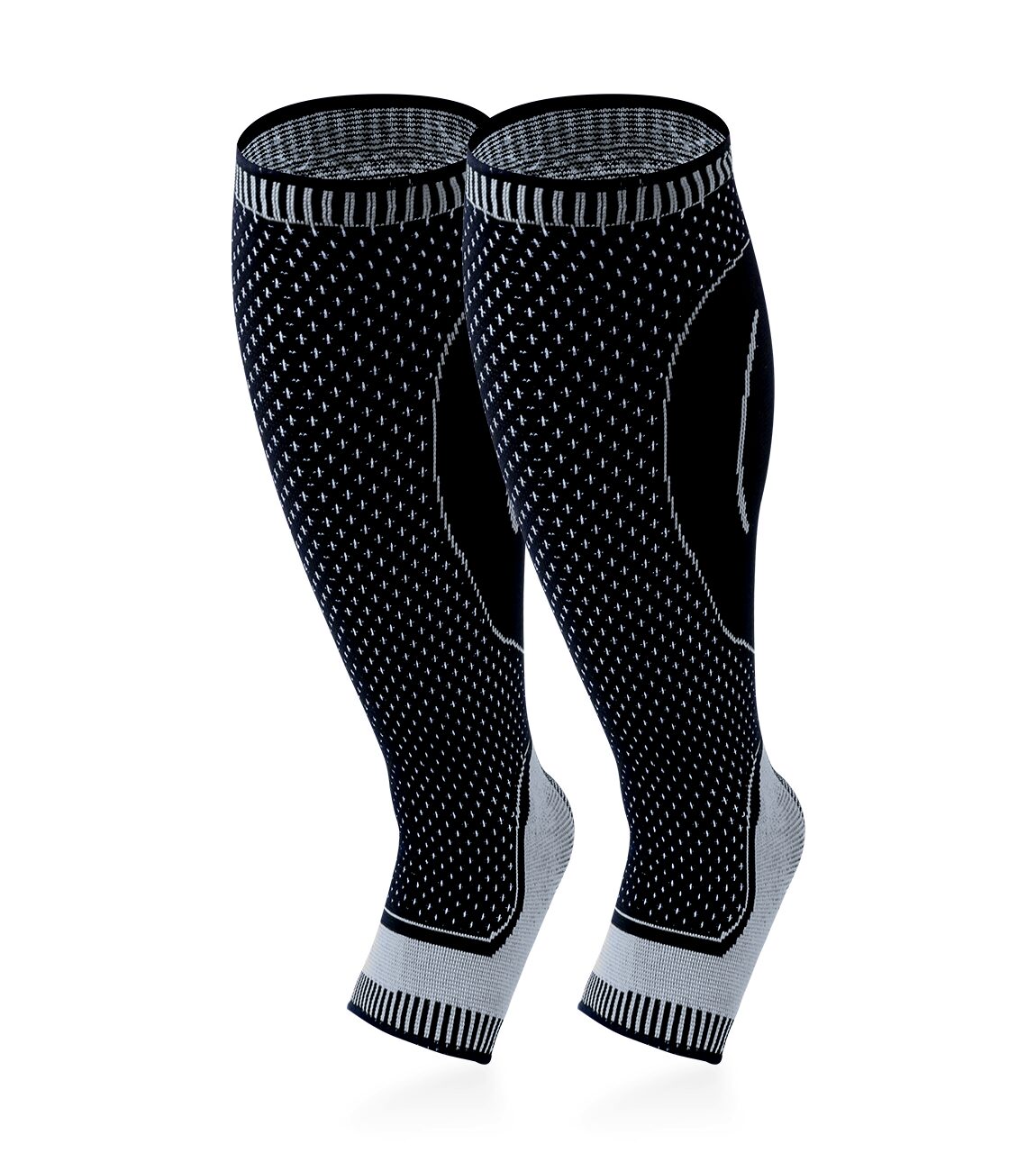
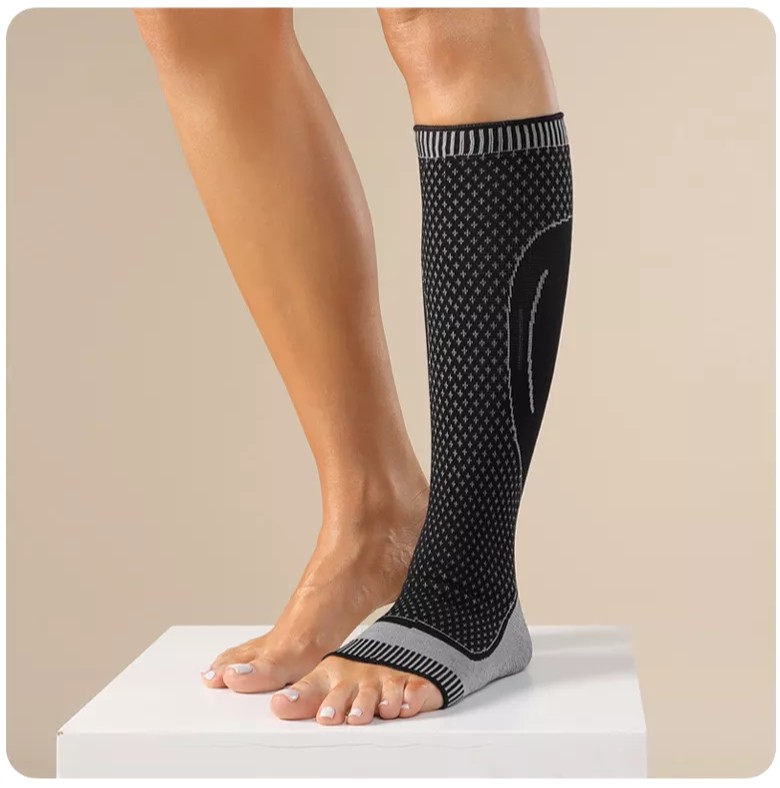
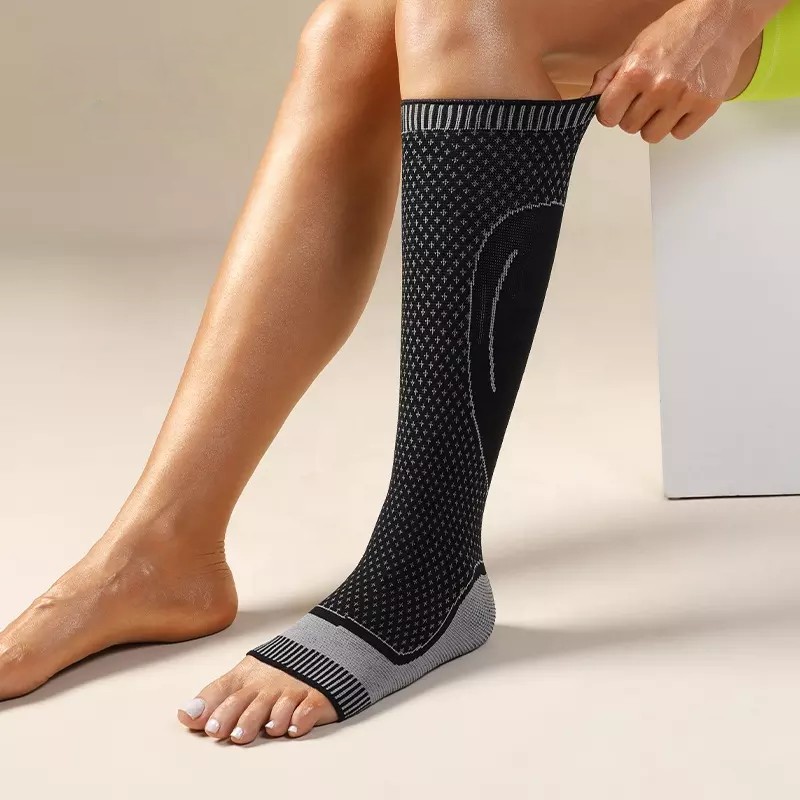
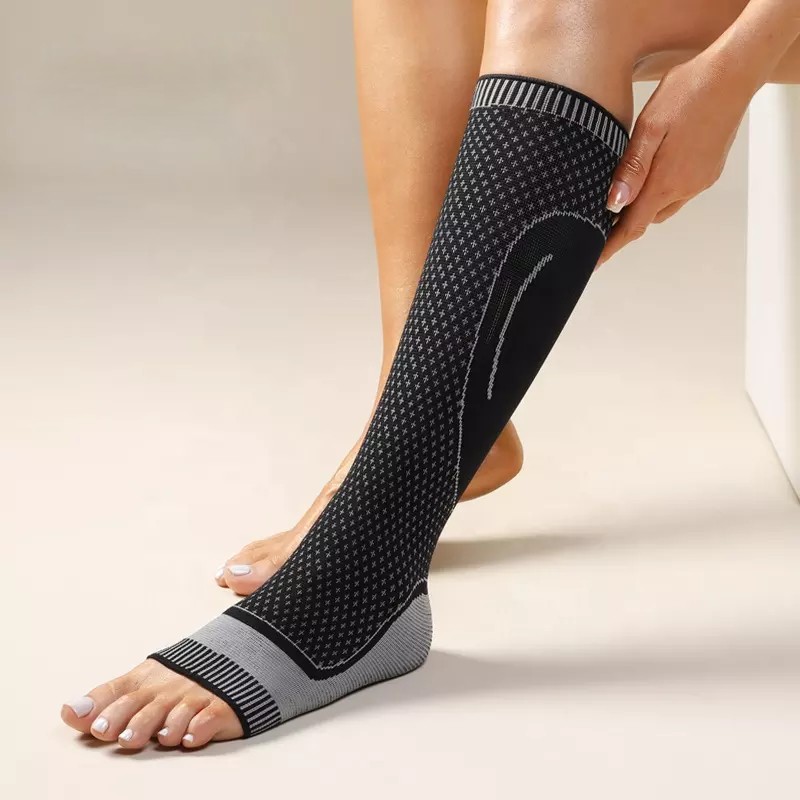
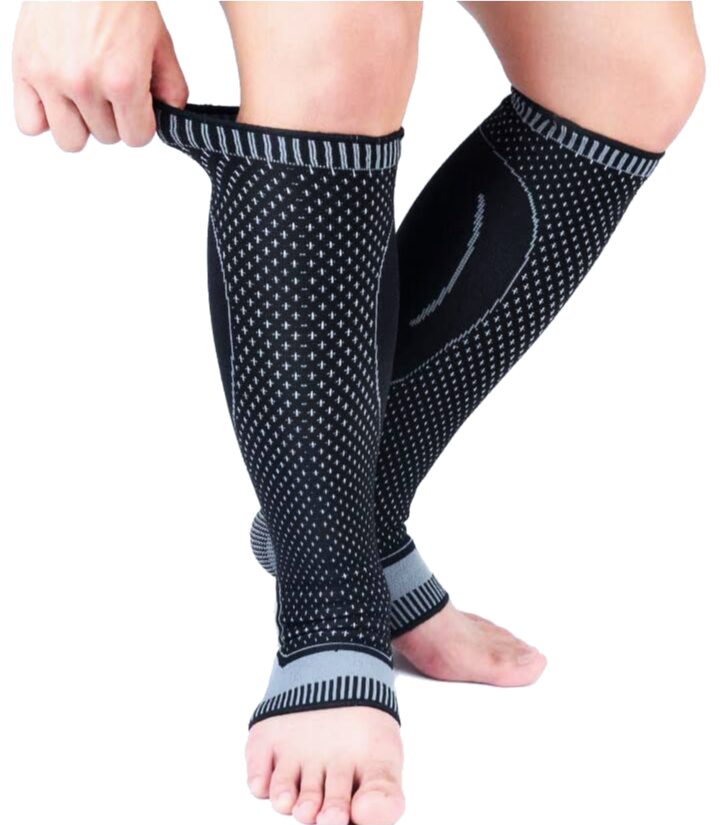
- Open‑toe, knee‑high design supplied as a pair – each pair runs from the arch and ankle to just below the knee, leaving the toes free for comfort, balance and temperature control, and fitting inside most running, walking and work footwear so both legs are supported in the same way.
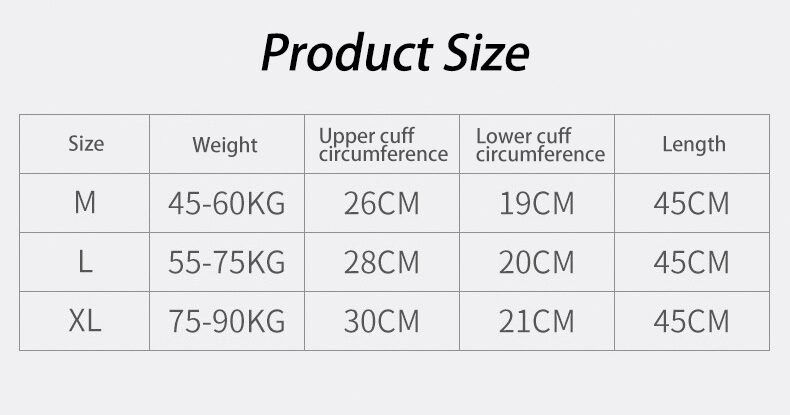
- Three sizes based on simple measurements – measure around the widest part of your calf and just above your ankle, then choose the size that best matches:
-
- Medium: top circumference 26 cm, lower circumference 19 cm, length 45 cm
-
- Large: top circumference 28 cm, lower circumference 20 cm, length 45 cm
-
- Extra Large: top circumference 30 cm, lower circumference 21 cm, length 45 cmThe fit should feel snug and supportive rather than loose, without pain, numbness, pins and needles or colour change in the foot.
- Built with clinical use in mind – many physiotherapists and podiatrists look for a sleeve that is strong enough for active rehabilitation, not just light travel wear. Our knit, compression profile and coverage from arch to below the knee are chosen to meet that need.
- 30‑day money‑back guarantee – a 30‑day guarantee means you can test comfort, fit and day‑to‑day benefit within your own routine and return them within that period if they are not right for you.
Shin splints, tight calves and heavy lower legs – what’s going on?
Are you noticing a dull ache or sharper pain along the front or inner edge of your shins when you run, walk briskly, or spend long hours on your feet? Do your calves feel tight, or your lower legs heavy, sore and a bit puffy around the ankles by the end of the day on hard floors? When everyday things like training, work shifts, or walking home start to bring on pain or tightness in the shins and calves, it can be frustrating and worrying, especially if you are trying to keep up with your running or get through long shifts.
Shin pain and tired lower legs are very common, especially in people who run, increase their activity, or stand and walk for long periods. Many people call this “shin splints”, although calf strains, irritation around the Achilles tendon and a heavy, puffy feeling around the ankles and lower calves can feel quite similar.
In many runners and people on their feet all day, the inner border of the shinbone is often the first area to become sore when distance or impact goes up too quickly. The sensitive outer layer of the bone and the attached muscles are being tugged thousands of times, and if they do not get enough time to adapt, they start to become irritated. Understanding that link between what you feel and what is happening underneath makes your symptoms easier to make sense of.
This page focuses first on pain along the shin and the common lower‑leg symptoms that go with it, such as tight calves and heavy, tired legs. It then explains how our compression sleeves can support the shinbone, calf muscles, Achilles tendon and lower‑leg circulation during running, brisk walking and long periods on hard ground, so you can keep activity more comfortable while working on strength and training changes.
Other lower‑leg problems these sleeves can help you manage
Not all shin and lower‑leg discomfort is pure “shin splints”. Many people notice tight calves, tired and heavy legs after long days on hard floors, mild ankle and lower‑leg swelling, vein‑type aching, or soreness around the Achilles tendon. These problems feel different and show up at different times, but they still involve the same basic area between foot and knee working hard.
The accordion sections below outline how each of these patterns typically feels, what is happening in the underlying tissues, how our NuovaHealth leg sleeves for shin splints can support that particular problem, and when it is sensible to seek further advice. You do not need to have all of these issues for the sleeves to be useful – even if only one or two sound familiar, the same design features can often help you stay more comfortable while you stay active.
How compression changes what your lower legs are coping with
Across shin splints, calf tightness, Achilles irritation, and feelings of heaviness or mild swelling, several common things tend to happen together:
-
- The shinbone and its sensitive outer layer feel repeated impact and slight bending with every step.
-
- The calf and shin muscles, and the tendons that connect them to bone, work hard thousands of times to control and push off each step.
-
- Blood and fluid tend to settle around the ankles and lower calves when you stand, sit with your feet down, or train hard.
A well‑fitting compression sleeve acts on these physical factors by changing pressure in the soft tissues, reducing unnecessary muscle wobble and improving the feeling of support from ankle to knee. It does this without altering bone shape or joint position.
Graduated compression and circulation
A main way compression sleeves work is by influencing circulation and fluid movement in the lower leg. A good sleeve applies firmer pressure around the ankle and lower calf and slightly less further up. This is known as graduated compression.
When you move, the calf muscles act as a pump, squeezing the veins and helping push blood upwards. Graduated compression works alongside this natural pump by gently squeezing the tissues where fluid is most likely to collect and supporting the veins and surrounding soft tissues as they work against gravity. This can help limit the amount of mild swelling and fullness that builds around the ankles and lower calves during long periods of standing, walking or sitting with your feet down.
For many people, that means less of a heavy, dragging feeling in the lower legs by the end of a shift or long walk, reduced puffiness linked to everyday fluid build‑up, and a sense that the legs feel less congested and more comfortable when they get moving again. These effects depend on getting the size right and are aimed at comfort and everyday support in otherwise healthy people. They do not treat serious circulation problems or prevent blood clots.
Tissue support and vibration control
With every step, the muscles in the calf and along the shin lengthen and shorten under load. At the same time they shake or wobble slightly as impact travels up the leg. Over thousands of steps, this repeated vibration adds to the pulling forces on sensitive attachment points along the shin, around the ankle and in overloaded parts of muscle.
A snug compression sleeve holds the calf and shin muscles a little closer to the bone so that the whole muscle mass moves more together, rather than wobbling independently. This can reduce unnecessary soft‑tissue movement from one step to the next and may lessen the intensity of repeated tug on irritated periosteum, tendons and healing muscle fibres.
Many people experience this as a more securely held feeling through the shin and calf, with less obvious shaking of the soft tissues on harder surfaces or towards the end of a session when fatigue would otherwise make control more difficult. People are often surprised how much difference this reduction in “muscle wobble” makes; it is not dramatic step to step, but over thousands of steps that reduction in tug can matter.
A more stable feel from foot to calf
The lower leg does not work in isolation. The ankle joint, the joint beneath it that lets the foot roll in and out, the heel, the arch and the calf all contribute to how you land, control the leg and push off again. When the ankle, heel, arch and calf are wrapped together by a sleeve, they can feel more like they are working together, rather than as separate pieces.
This more connected feel can provide a greater sense of stability when you push off the ground to walk briskly, run or climb stairs. It can make it easier to feel where your foot is landing and how your lower leg is lining up over it, particularly on hard or uneven surfaces. Later in a run or a long day on your feet, when muscles are tiring, that extra sense of support can help movement feel more controlled and may reduce how jarring each step feels.
These points help explain why many runners, gym users, team‑sport players and people on their feet all day choose compression sleeves.
Why our NuovaHealth shin‑splint sleeves are built the way they are
Our NuovaHealth leg sleeves for shin splints are aimed at people who want extra support and protection for the lower leg during activity and long periods on their feet. They are often chosen by:
-
- Runners and joggers who are prone to inner‑shin pain or recurring calf tightness when they increase distance, speed or running and walking on slopes.
-
- People who train in the gym or play field and court sports with repeated sprints, jumps and changes of direction, which place higher loads through the shin, calf and Achilles.
-
- Workers who stand or walk on hard floors for long stretches and notice heavy, achy lower legs by the end of a shift.
-
- People who experience mild, end‑of‑day swelling or vein‑type heaviness around the ankle and lower calf.
The design combines activity‑grade, graduated compression with carefully placed ribbing and stitching around key regions: the front and inner shin, the main bulk of the calf, the Achilles tendon, the heel, the sides of the ankle and the arch of the foot. These zones are placed over areas where the inner shin often becomes sore, where the calf muscle belly works hardest, where the Achilles tendon can feel vulnerable, and where fluid commonly collects around the ankles and lower calves.
In clinic, one of the most common patterns seen with shin splints is a runner who doubles distance or adds more running and walking on slopes in one go: the inner edge of the shinbone starts to become sore long before the runner realises quite how much extra work they have asked it to do. The ribbed zone on our sleeves sits directly over that inner border to provide more consistent support exactly where the periosteum and muscle attachments are most sensitive.
The fabric is thicker and more substantial than an ordinary sock so that it can deliver noticeable compression and support, yet it remains soft, stretchy, breathable and moisture‑wicking. Our sleeves are deliberately more substantial than very thin travel‑style compression socks, because they are intended to be used during active, weight‑bearing tasks such as walking, running and long periods standing, rather than just for sitting on long journeys. An open‑toe, knee‑high construction means each sleeve runs from the arch and ankle up to just below the knee, covering the whole region where shin‑splint‑type pain, calf problems and lower‑leg circulation issues are usually felt.
The knit and compression profile are kept consistent from pair to pair so the level of support is predictable, which many physiotherapists value when they are building graded return‑to‑running plans.
Key features and how they help
Targeted support for shins and calves
Our NuovaHealth leg sleeves for shin splints use reinforced ribbing and stitching over the length of the shin and across the main bulk of the calf. These firmer knit zones are placed over the areas that take most of the repeated impact and muscle pull.
When you run, walk briskly or stand for long periods, the calf muscles contract and relax thousands of times to control and push the body, and the tibia bends and twists slightly under load. The periosteum and the muscle attachment points along the inner shin are repeatedly pulled. In someone with shin splints or a tendency towards shin pain, these areas are already more sensitive.
By wrapping the front of the shin and the calf muscle belly in a snug, structured layer, the sleeve helps reduce how much the soft tissue shakes with each foot strike. The muscle mass moves more as a compact unit and less like a loose mass on the bone. This reduces abrupt stretching and snapping back of the muscle belly during demanding work, such as landing or running downhill, and can lessen the repeated tug on the tender inner shin border.
In practical terms, many people notice that with this support, each step feels a little more controlled and less jarring through the shin, particularly on hard pavements, factory floors or gentle downhills where shin discomfort previously built quickly. Towards the end of a session or long day, when muscle fatigue and altered movement would otherwise add to shin strain, this can make symptoms feel easier to cope with.
Support around Achilles, heel, ankle and arch
Extra structure is built into the fabric around the back of the ankle (Achilles tendon), the heel region, the sides of the ankle and the arch of the foot. These are common sites of strain during running, jumping, walking on hard ground and long spells on your feet.
The Achilles tendon acts as the main cable connecting the calf muscles to the heel, and has to transmit substantial forces with every push‑off. The ankle joints control how the leg lines up over the foot and how far the foot rolls in or out. The arch absorbs and stores energy when you land and then stiffens to help you push off effectively.
The targeted zones around these areas give a firmer, even hug to the Achilles and heel to support those soft tissues, which may help the area feel less vulnerable when it has been irritable. Around the ankle and arch, the sleeve gently contains the soft tissues, so the region feels less like it is rolling too far in or out, without trying to forcefully correct bone alignment. The result is often a more connected feeling from foot to calf as you push off and land.
People who notice an aching pull at the back of the ankle when they run, soreness around the heel after a long day on firm ground, or a tired feeling through the arch in very flat shoes commonly report that this targeted support helps the lower leg feel steadier across these tasks.
Activity‑grade graduated compression
Our NuovaHealth leg sleeves for shin splints provide a medium‑to‑firm, activity‑grade level of compression, with pressure that is somewhat higher around the ankle and lower calf and gently reduces further up the leg. This applies the circulation principles described above in a way that is noticeable enough for active use, while still generally tolerable over longer periods for most people.
By supporting the veins and surrounding tissues in moving fluid upwards from the ankle and lower leg, the sleeves help limit the mild swelling and fullness many people notice around the lower calves and ankles after prolonged standing, walking or training. They can reduce the sense of full or heavy lower legs late in the day or after longer sessions and help the legs feel less congested when you get moving again. These effects depend on correct sizing and overall vein and circulation health and are aimed purely at everyday comfort and support.
Designed for sport, wearable through a full day
These sleeves feel more like a sport support than an everyday sock, with enough compression and structure that you are aware of them when you put them on. At the same time, the fabric blend and shaping are chosen so that most people can wear them through a full training session or a long work shift without them becoming intrusive.
The open‑toe, knee‑high design allows the toes to remain free, which many people find more comfortable for balance, toe movement and temperature regulation. The sleeve can be worn with a wide range of footwear, from running trainers to many types of work shoes. Some prefer a thin sock underneath or over the sleeve to suit footwear fit and comfort.
Because the sleeves are designed to remain comfortable over longer wear, it is easier to keep them on during the periods when strain on the shin, calf and ankle is highest. The benefits of compression and support are only present while the sleeve is in place, so this practical comfort is important.
Breathable, moisture‑wicking fabric
The fabric is deliberately thicker and more substantial than a typical sock so that it can deliver meaningful compression and support, but it is also designed to be breathable and to wick moisture away from the skin. As you move and your temperature rises, the sleeve helps draw sweat away from the skin along the shin and calf and allows air to circulate through the knit. This reduces the clammy, trapped feeling that can occur with less breathable materials.
By keeping the lower leg more comfortable in warmer conditions or during longer sessions, the fabric design makes it more realistic to wear the sleeve for as long as needed to cover your activity or shift. That, in turn, supports consistent use and allows the effects on vibration and circulation to be present throughout the runs, walks or shifts where your lower legs are working hardest.
Secure cuffs designed to stay in place
The upper cuffs include silicone bands and a balanced level of grip to help the sleeves stay in place from the ankle to just below the knee. Without this, sleeves can slide down, twist or bunch up. When that happens, bands of tight fabric can form around one area, creating uneven pressure, while other areas receive less support.
By holding the sleeve securely, the cuffs help maintain an even level of compression over the shin and calf as you move, without a harsh, cutting edge when the fit is correct. Not needing to stop and repeatedly pull the sleeve up also makes it easier to keep it on throughout runs, gym work or long shifts, which helps ensure consistent support to the lower leg.
Low‑irritation edges and seams
Edges and seams are often the first places to rub or chafe when you wear a support for hours. Our NuovaHealth leg sleeves for shin splints use smooth, rounded edging at the top and bottom and minimise bulky seams over sensitive areas. Spreading pressure more evenly around the top of the calf and above the ankle, rather than concentrating it along a single hard ridge, reduces the risk of local sore spots.
This helps reduce rubbing where the sleeve meets bare skin or another garment and limits chafing during longer runs or full‑day wear. For many people, especially those with more sensitive skin, this can make the difference between a sleeve that is removed halfway through the day and one that can be left on comfortably for the full period when support is needed.
Built for regular use and simple care
The fabric and construction are chosen for regular, repeated use. When used and cared for sensibly, the sleeves are suitable for frequent wear through your usual training weeks or work schedule.
As with all compression sleeves, the material will gradually lose some of its firmness and spring over time. When this happens, the level of compression and support around the shin and calf reduces, and the sleeve will no longer provide the same degree of vibration control or support for fluid movement. Checking them periodically for thinning, sagging or reduced elasticity gives a simple guide to when replacement is appropriate.
Washing on a gentle cycle with similar colours and avoiding very high drying temperatures helps preserve the elastic fibres and prolong the life of the sleeves. It is realistic to expect that any compression sleeve will eventually need replacing to maintain its original level of support.
Generic compression socks are often designed mainly for sitting during travel or light day‑to‑day wear. Our NuovaHealth sleeves are built instead for weight‑bearing use – running, brisk walking and long shifts on hard floors – where the shin and calf are taking repeated impact.
How our sleeves fit across the lower‑leg problems described
Although the design centres on supporting the shin and calf for people prone to shin‑splint‑type pain, the same features often assist with the other lower‑leg symptoms described in the accordions.
-
- The ribbed zones over the inner shin help reduce tug on a sensitised inner shin border and can make impact through the shinbone feel more manageable when you run or walk.
-
- The snug compression around the calf belly may ease some of the strain on tired or mildly strained calf fibres, and cut down the sense that the calf is about to “grab” when you push off.
-
- Graduated compression from ankle to knee supports circulation and fluid movement in the tissues, which many people find helpful for tired, heavy legs, mild swelling or vein‑type aching after long periods of standing or sitting.
-
- The reinforced Achilles and heel zones provide extra support for the tendon region and surrounding soft tissues, which can be reassuring when managing a settling Achilles irritation under professional guidance.
These situations differ in where pain or heaviness is felt and which movements tend to bring it on, but they all involve repeated impact and slight bending of the shinbone between foot and knee, strong work in the calf and shin muscles and tendons, and changes in how blood and fluid settle around the ankles and lower calves. A well‑fitted NuovaHealth leg sleeve that supports the shin, calf and ankle area can make the impact and pulling forces on those structures during running, brisk walking and long shifts on hard floors feel more manageable while you address strength, spacing of harder sessions and other long‑term strategies as advised by a clinician.
Choosing your size and getting the fit right
Our NuovaHealth leg sleeves for shin splints are available in three sizes, based on circumferences and length:
-
- Medium: top circumference 26 cm, lower circumference 19 cm, length 45 cm
-
- Large: top circumference 28 cm, lower circumference 20 cm, length 45 cm
-
- Extra Large: top circumference 30 cm, lower circumference 21 cm, length 45 cm
To choose a size, measure around the widest part of your calf and the narrower area just above the ankle, then compare your measurements with the top and lower circumferences. The sleeve should feel snug and supportive rather than loose, but it should not cause pain, pins and needles, numbness, marked colour changes or coldness in the foot. These signs can indicate that blood flow or nerves near the surface are being compressed too much.
If you are between sizes and plan to use the sleeves mainly for sport or shorter periods, many people prefer the closer fit for a slightly firmer sensation. If you are more focused on long‑hour, gentler support, the larger of two sizes may feel more comfortable. Whatever the size, the fabric should sit smoothly against the skin without folding or cutting in.
When you first try a sleeve, it can be useful to wear it for a short period of normal walking or standing, rather than judging fit only when sitting. That way you can see how it feels under the sort of walking and standing you do day to day.
How and when to wear your sleeves
Putting the sleeves on
It is usually easiest to turn the sleeve partially inside out, place the lower, narrower end over the foot so that the open toe sits comfortably at the base of the toes, then gently roll or draw the sleeve up the leg. Aim to position the reinforced zones over the shin and calf, and adjust the top cuff so it rests just below the knee without folding over. Smoothing out any folds or wrinkles helps avoid areas of concentrated pressure.
The sleeves can be worn directly on the skin or with a thin sock underneath or over the top, depending on preference and footwear fit.
When to wear them
Our NuovaHealth leg sleeves for shin splints are mainly designed for periods when the lower leg is being loaded or soon after that loading, such as:
-
- During runs, brisk walks, gym sessions or sports training.
-
- During long shifts standing or walking on hard surfaces.
-
- For shorter periods after activity if your lower legs tend to feel heavy or mildly swollen.
Many people put them on shortly before starting activity and remove them once they are resting properly. If you are new to compression, it is sensible to start with shorter periods to get used to the sensation and then gradually increase towards full sessions or shifts as long as they remain comfortable.
They are not generally intended to be worn all day and all night unless specifically advised by a clinician. Their main role is to support tissues during and shortly after periods of higher load, rather than to provide ongoing compression at all times.
There is no single right timetable; the aim is to use them when your shins and calves are doing the most work.
What to expect – benefits and limits
When you first start using the sleeves, you can expect them to feel noticeably snug, especially around the ankle and widest part of the calf. As you move, many people notice a more held feeling through the shin and calf and less obvious wobbling of the muscles with each step, particularly on harder surfaces. Some describe a steadier sensation around the ankle and arch when pushing off and landing, matching that more connected feel from foot to calf.
After runs, longer walks or long days on your feet, the lower legs may feel less heavy or full compared with going without support. For many people, this translates into being able to walk or run a little further before discomfort builds, or to finish a work day with less lower‑leg fatigue. How much difference you notice depends on what is actually driving your symptoms, on sleeve fit, and on how the sleeves are used alongside other strategies such as graded loading and strengthening.
Most people who find them helpful notice the difference in comfort within the first few runs, walks or shifts, rather than needing to wait weeks. It is worth going into this with realistic expectations. Our NuovaHealth leg sleeves for shin splints cannot, on their own, correct training errors such as very sudden jumps in mileage or intensity, or compensate for a lack of strength work. They do not replace the need for a proper assessment if pain is severe, highly focused in one area, persistent or changing over time. Used consistently at suitable times and as part of a broader plan, many people find they are a helpful tool for keeping lower‑leg symptoms more manageable.
Safety and when to seek further advice
Most people can use compression sleeves safely as long as the size and fit are appropriate. However, there are situations where extra caution or professional advice is important.
You should speak to a GP, physiotherapist or podiatrist, and avoid relying on sleeves alone, if:
-
- Shin or lower‑leg pain is sudden and severe, especially after a specific injury, jump or impact.
-
- Pain is getting worse over time despite reduced load and simple self‑care.
-
- There is new or unexplained swelling, colour change, temperature change or marked tenderness in one leg compared with the other. One‑sided changes are particularly important to check, as many everyday patterns affect both legs more evenly.
-
- You notice numbness, tingling or weakness in the foot or lower leg.
-
- You have known circulation, nerve or significant skin conditions affecting the lower legs.
These sleeves are not intended for use during pregnancy. If you have recently given birth or have been advised you are at higher risk of circulation problems in pregnancy or after delivery, please speak to your GP or midwife before using any compression product on your legs.
If you have a history of blood clots, are on blood‑thinning medication, or have been advised you are at higher risk of clots (for example after certain injuries, surgery or periods of immobility), it is important to discuss any compression product with a clinician before use. Our NuovaHealth leg sleeves for shin splints are designed for comfort and support in everyday walking, running and standing. They do not treat or prevent blood clots or other serious vascular problems and should not be relied upon for that purpose.
If at any point the sleeves cause pain, significant discomfort, unusual pressure marks, or changes in sensation or skin colour, they should be removed and the fit reviewed. Ongoing concerns are best discussed with a health professional who can examine you in person.
Guarantee and reassurance
A 30‑day money‑back guarantee means you can try our NuovaHealth leg sleeves for shin splints within your usual activities and see how they feel in your day‑to‑day routine, without committing long‑term if they do not feel right for you. This gives you time to test size, comfort and how they fit into your running, walking or work routines. If they are not right for you, they can be returned within 30 days in line with the usual returns process.
Many people report that the sleeves feel supportive without being uncomfortably tight, stay in place well during movement, and help their lower legs feel less heavy or sore by the end of activity or a long day. Experiences vary, but common themes include a sense of being more supported around the shin and calf and some relief from that heavy, tired lower‑leg feeling, especially when sleeves are combined with sensible changes to training and strengthening.
Is this shin‑splint sleeve a good fit for you?
Shin‑splint‑type pain and tired, uncomfortable lower legs are often linked to three main things: repeated impact and slight bending through the shinbone and its sensitive outer layer; strong, repetitive work in the calf and shin muscles and tendons; and a tendency for blood and fluid to collect around the lower part of the leg when you are upright for long periods. When these tissues are asked to do more than they can comfortably tolerate, they can become sore, tight or heavy, particularly during running, brisk walking and long spells on hard ground.
Our NuovaHealth leg sleeves for shin splints are designed to work with those underlying mechanics. By wrapping the shin, calf, Achilles, ankle and arch in a supportive, breathable layer, they help reduce unnecessary vibration in muscles and soft tissues, support more comfortable circulation from ankle to knee, and give a more stable, connected feel through the lower leg during everyday tasks, runs and long shifts on firm floors.
If this description of inner‑shin pain on runs, recurring calf tightness, or heavy, puffy lower legs by the end of the day sounds familiar, and your GP or physiotherapist is happy for you to stay active, trying these sleeves for a few weeks alongside graded training and strength work is a realistic next step. They are a simple, low‑profile way to make walking, running and standing on hard ground more manageable while you work on the longer‑term changes that calm symptoms down. Many of the people using our sleeves have been advised by a physiotherapist, podiatrist or GP to use compression as part of their plan to stay active while symptoms settle. Our aim is to provide a reliable, activity‑grade sleeve that clinicians are comfortable building into those plans.
If you are unsure whether they are appropriate for you, or if your symptoms are sudden, severe, very focused in one area, or changing over time, a GP, physiotherapist or podiatrist can help you decide on the safest and most effective approach for your situation, and advise how best to integrate sleeves alongside other treatments and strategies. They are not a magic fix, but used in the right way they can make staying active with lower‑leg problems more realistic.
Disclaimer
The information on this page is general guidance for adult readers in the UK. It does not take into account your full medical history or individual circumstances and is not a substitute for individual medical advice, diagnosis or treatment. Our NuovaHealth leg sleeves for shin splints may help reduce symptoms and improve comfort for some people, but no specific results can be guaranteed. If you have ongoing, severe or unexplained symptoms, or any concerns about circulation, nerves or skin in your lower legs, please speak to a GP, physiotherapist, podiatrist or other appropriate clinician for personalised advice.
Fast & Secure Checkout Through Paypal
Pay with Paypal the secure payment gateway that accepts all credit and debit cards. Paypal is free and secure and no credit or bank information is ever stored or shared with us.
Fast Dispatch
Enjoy your items soon with quick dispatch via Royal Mail. Expect to have your items between 1-3 working days for domestic orders. 7-10 Working days for international orders.
Return Policy – 30 Day Money Back Guarantee
In the unlikely event, you are unhappy with your purchase you can return it within 30 days for a refund. Please contact us via the form on the contact us page to start your return.
To return an item please send it to: Nuova Health UK, 81 Highfield Lane, Waverley, Rotherham, S60 8AL. Please include a note with your order id so we know who to refund. Please retain your postage receipt as proof of postage. All that we ask is that the item is in the original packaging and unused.
Reviews
There are no reviews yet.