
No products in the cart.


Roll over image to zoom in
Sciatica brace
£17.49inc VAT
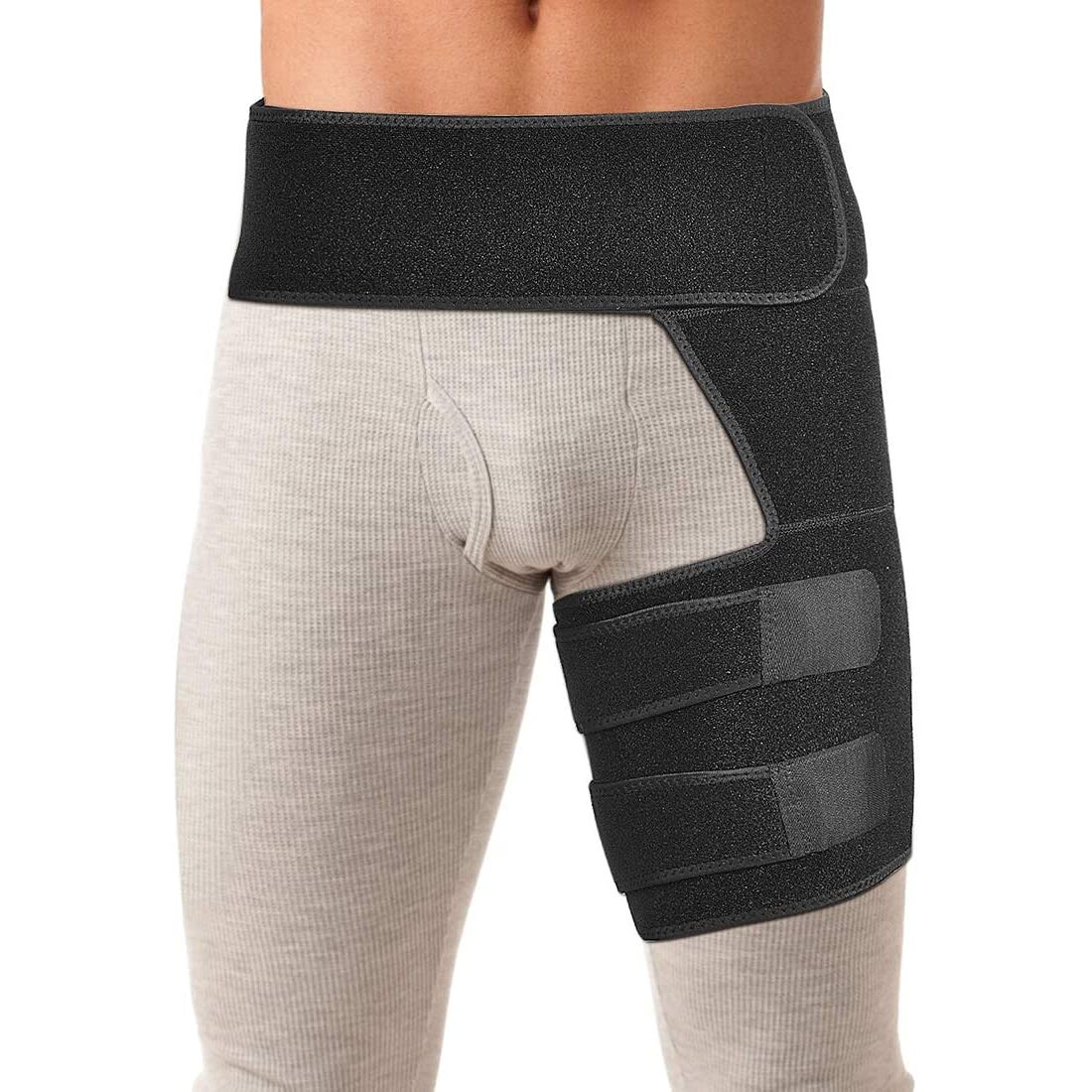
- 1x BackReviver pelvic and thigh brace designed to support sciatica‑type pain coming from the lower back, pelvis and hip
- One size, with adjustable fit (waist up to 117 cm, upper thigh up to 66 cm)
- Suitable for adults of all genders (not for use during pregnancy or the early postnatal period)
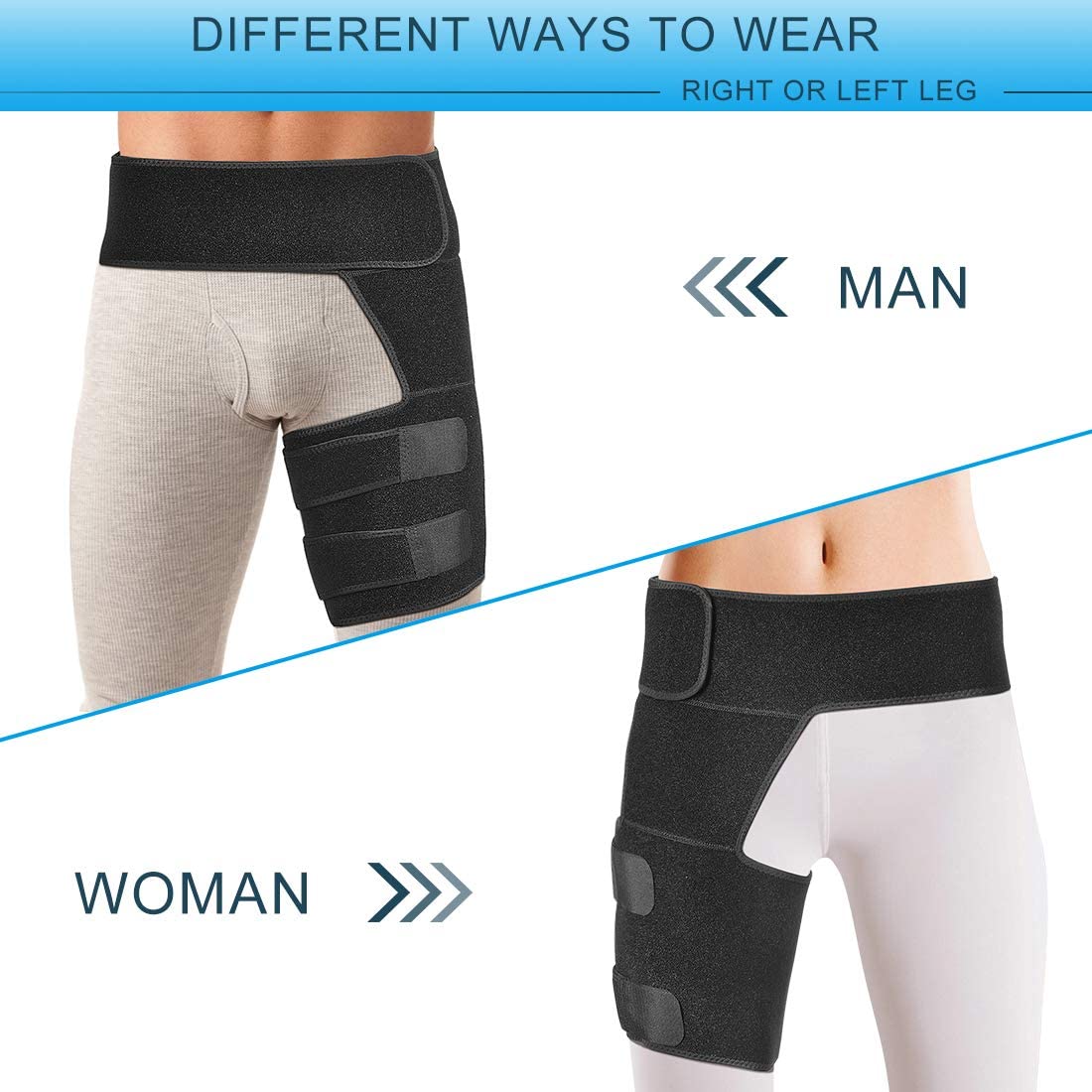
- Worn on the more painful side, with a low pelvic band and upper‑thigh cuff to help steady the pelvis, hip and lower back
- Fully adjustable hook‑and‑loop straps let you set firm, even support quickly and easily
- Helps reduce excessive pelvic drop, rotation and sudden twists that can irritate sensitive discs, joints and sciatic nerve tissue
- Provides firm but comfortable compression around the pelvis and upper thigh, supporting muscles and improving awareness of posture and movement
- Aims to improve stability, confidence and control when standing, walking, using stairs and doing everyday tasks
- Often used alongside exercises and physiotherapy to help manage sciatica‑type pain, sacroiliac and hip‑related pain, posture‑linked back and leg pain, and some arthritis‑related patterns
- Made from lightweight neoprene with small ventilation holes and silicone strips to reduce slipping and help keep you cooler and more comfortable
- Slim, low‑profile design so it can be worn under many everyday clothes without obvious bulk
- Backed by NuovaHealth’s 30‑day money‑back guarantee if you are not satisfied with your purchase
Understanding sciatica‑type leg pain
Sciatica‑type pain can make standing, walking and sitting much harder than you are used to. You might feel a sharp, shooting pain that travels from the lower back or buttock down the back or side of one leg. At other times it can feel more like burning or an electric shock when you move in a particular way. Some people notice their leg feels heavy, tired or crampy if they stand or walk for a while, and there may be patches of numbness or tingling. In some cases the leg can feel weaker, as if it might give way.
The way the pain behaves often gives useful clues. For many people it flares when they bend forwards, lift, or sit in a low, soft chair for too long. Others find that walking beyond a certain distance brings on a heavy, dragging discomfort in the legs that only eases when they sit down or lean forwards. Some mainly feel an ache or sharp pain around the back or side of the pelvis and hip, which sometimes sends pain further down the leg when they stand on one leg, use stairs, or turn in bed.
By itself, this set of symptoms doesn’t tell you exactly what is wrong. It usually means that one or more of the large nerves running from the lower back into the leg are being irritated, but it does not say exactly why. That irritation can come from several different sources: a disc that is bulging or has worn over time, gradual narrowing around the nerves, sensitive joints and ligaments in the pelvis and hips, or a build‑up of strain in muscles and soft tissues. Different people have different combinations of these, which is why two people can both be told they have “sciatica” but describe very different experiences.
Sciatica‑type pain is more common in middle‑aged and older adults as age‑related changes build up in the spine and pelvis. It can also affect younger adults, especially if work or lifestyle involves a lot of heavy lifting, repetitive bending, or long periods of sitting. It’s understandable if this sort of pain has started to wear you down or make you nervous about certain movements.
Understanding what is happening inside the lower back and pelvis helps make sense of why the pain behaves as it does, and why certain types of support can be useful.
What is happening in your lower back, pelvis and nerves?
This section describes some of the main structures that can contribute to sciatica‑type pain and how they interact.
Discs and nerve roots in the lower back
Between each pair of vertebrae in the lower back sits a disc. Each disc has a softer, gel‑like centre that helps absorb shock, and a tougher outer ring that holds it in place. Nerve roots branch off the spinal cord and pass close to these discs as they leave the spine on each side. In a healthy spine there is enough room for the nerve roots to move and glide as you bend and straighten.
With age, repeated loading, or a sudden overload, tiny splits can form in the outer ring. The softer centre can then push outwards, creating a bulge. In some cases, part of the disc material presses further into the space where a nerve root runs. The nerve root is then exposed to direct pressure from the bulge, irritation from inflamed disc tissue, and repeated changes in compression and stretch as the spine moves.
Bending forwards increases pressure inside the disc and can push the bulging part further towards the nerve root, narrowing the small opening it passes through. Sitting with the lower back held in a flexed, slumped position keeps the disc under higher pressure for longer, which can keep the nerve root in a more crowded state. Sudden straightening from a bent position, or twisting while lifting, can create brief spikes in load through the disc and its outer ring. If the nerve is already sensitive, these spikes can produce sharp, shooting leg pain.
Over time, if the disc loses some height and fluid content (degenerative change), the space between the vertebrae can shrink. More load is taken by the small joints and ligaments at the back, and the opening for the nerve root becomes narrower. This can still produce similar leg pain even without a large, fresh herniation. The lowest levels in the lumbar spine (L4/5 and L5/S1 — the lowest two lumbar discs) are frequent sources of this kind of disc‑related sciatica, which is why pain from these levels often runs down the back of the thigh and calf.
It is also common for disc bulges to be seen on scans in people who have no pain at all. Symptoms depend on how the disc and nerve interact, not just on what a scan shows.
Small joints, ligaments and narrowing around the nerves
At the back of the spine, each vertebra connects to the one above and below through small facet joints and surrounding ligaments. These joints guide how the spine bends, straightens and twists, and they share load with the discs. Over many years, these joints and ligaments can thicken and stiffen, and small extra bits of bone can form at their edges. Together, these changes can narrow the nearby spaces where the nerves pass.
This gradual narrowing of the central spinal canal and the side openings where nerves leave the spine is often called spinal stenosis. It does not cause problems for everyone, but when nerves are crowded, some postures are more troublesome than others. Standing very upright or arching the lower back tends to close the canal and openings down further, bringing the thickened ligaments and joints closer to the nerves. Leaning forwards slightly, or bending the spine, tends to open these spaces and can ease pressure on the nerves.
When narrowing is mainly in the central canal, symptoms are often felt in both legs and are strongly linked to walking and standing time. When the narrowing is more at a single side opening, the pain may be more one‑sided. People with this sort of problem often describe leg pain, heaviness or cramping that builds gradually when they walk or stand, and eases when they sit down or lean forwards. Many notice they can walk further leaning on a trolley or worktop than they can on the open pavement.
The pelvis, hips and surrounding muscles
Below the spine, the pelvis forms a ring that connects the spine to the legs. In simple terms, your body weight passes from the spine into the sacrum (the triangular bone at the base of the spine), through the sacroiliac joints into the pelvic bones, and then into the hip joints and down the legs.
The sacroiliac joints are small but important joints that transfer load from spine to legs. In normal movement they move only a little, but they experience significant forces, especially when you stand on one leg or twist. If these joints or their supporting ligaments become irritated, sliding forces when you stand on one leg or turn can be painful. Everyday actions such as stepping up, standing on one leg or turning in bed can then feel sharp or unstable. Sacroiliac problems often appear after pregnancy, a fall, or a period of repeated single‑leg strain.
Deep in the buttock, muscles such as the piriformis sit close to the sciatic nerve. The piriformis helps rotate and stabilise the hip. If it or similar deep muscles become tight, overused or go into spasm, they can press on tissues around the nerve and restrict how smoothly the nerve glides. Hip positions that twist the leg in or out, and prolonged sitting on a firm surface, can then aggravate symptoms.
On the outer side of the hip, small fluid‑filled sacs called bursae sit between the greater trochanter (the bony bump on the side of the hip) and the overlying tendons and soft tissues. Repeated rubbing and pressure in this area, or prolonged pressure from lying on that side, can inflame a bursa. The result is tenderness at the outer hip and pain when lying on that side or when walking and climbing stairs. Hip arthritis can give deep groin or buttock pain, stiffness when starting to move after sitting, and difficulty with tasks such as putting on socks or shoes.
Muscles, soft tissues and long days on your feet
Even without a single obvious injury, sciatica‑type pain can creep in when muscles and soft tissues are repeatedly overloaded. Large muscles around the trunk and hips normally share the job of holding posture and moving the body, while smaller muscles and ligaments provide fine control. Key groups here include the spinal extensor muscles in the lower back and the gluteal and hip abductor muscles around the side of the pelvis.
If you sit or stand in one position for a long time, or repeat the same movement many times, these larger postural muscles can become tired. As they fatigue, posture often drifts into less comfortable positions: sitting becomes more slouched; standing may gradually develop an exaggerated arch. Smaller muscles and ligaments then have to cope with more strain than they are designed for. Over time this can cause small strains, local inflammation and tightness.
If these irritated tissues are close to nerve roots or parts of the sciatic nerve, their swelling or tension can change how freely the nerve moves. Movements that stretch or compress the area can then trigger sciatica‑like pain, even in the absence of a large disc bulge or significant canal narrowing. Many people feel they have not done anything “special” on a given day, yet by evening their back and leg are really complaining; how long the tissues have been under strain is often why.
The sciatic nerve and how it produces different pains
The sciatic nerve is the largest nerve in the body. Several nerve roots in the lower back join together in the pelvis to form this single large nerve. From there it runs through the buttock, behind or close to deep muscles, and down the back of the thigh, before branching near the knee to supply parts of the lower leg and foot. Because it runs such a long course, irritation at different points along the way can produce quite similar patterns of leg pain.
There are a few main ways this nerve can be irritated:
- Direct pressure on a nerve root or on the nerve itself, for example from a disc bulge or a narrowed bony tunnel.
- Crowding, where thickened joints or ligaments take up more space in the canals and openings the nerve passes through, especially when the spine is held upright or arched.
- Stretch and tension, where tight or spasmed muscles or stiff tissues tether or pull on the nerve as you move.
- Inflammation in nearby tissues, where swelling and irritating chemicals around the nerve make it more reactive.
These different ways the nerve is irritated help explain why your pain can feel so different at different times. A sudden squeeze or stretch of a nerve root often produces the classic sharp, shooting or burning pain that runs down the leg. Ongoing inflammation around a nerve can give rise to burning pain and odd sensations. Crowding and reduced room for the nerves when you stand or walk can contribute to heaviness, tiredness or cramping in the legs. Numbness and weakness usually reflect more marked, longer‑standing involvement of the nerve fibres that carry sensation or control muscles.
Symptoms can flare and then settle because the amount and type of irritation the nerve experiences change over time. Posture, activity level and time of day all play a part. Certain positions, such as prolonged sitting or standing very upright, may increase pressure or tension on the nerve. Gentle movement can sometimes ease stiffness and improve blood flow, but repeated over‑use can also make things worse. Inflammation can wax and wane, so the same movement may be tolerated on one day and feel more uncomfortable on another.
Over weeks and months, if sciatica‑type symptoms are ignored and lead to ongoing avoidance of movement, it is common for muscles to weaken, joints to stiffen and confidence in movement to reduce. Walking patterns can change in ways that strain other body areas. In a small minority of people, more serious nerve compromise can develop, with problems such as bladder or bowel changes or marked weakness. These “red flag” situations need urgent medical assessment. For most people, it is usually easier to stay active and avoid other problems if symptoms are managed sensibly earlier on, rather than waiting for them to drag on.
Why the nerve becomes more sensitive
When a nerve root or part of the sciatic nerve is repeatedly exposed to pressure, inflammation, stretching and compression, it can become more reactive. Its threshold for sending pain signals drops. Movements or positions that previously felt normal can start to feel painful or odd. Signals such as gentle compression or mild stretch, which would not usually cause discomfort, are now more likely to be interpreted by the body as pain or tingling.
The way your sciatica‑type pain behaves usually reflects a mix of these changes. In some people, the main driver is a disc bulge pressing on a nerve root. In others, it is narrowing around the nerves due to joint and ligament changes, sensitive sacroiliac or hip structures, or ongoing muscle fatigue and soft‑tissue strain. Whether your symptoms are on the left or right does not usually change the principles; the brace is simply worn on the more affected side. If the descriptions above feel familiar, you are in the group this type of brace is often used for.
How support around your lower back, pelvis and hip can help
When areas of the lower back, pelvis or hip are sensitive, the way they move and take load has a strong influence on symptoms. Support around these areas is sometimes used to limit how far and how quickly certain movements happen, to share some of the work that particular muscles and ligaments would otherwise do alone, and to make you more aware of your posture so that you spend more time in positions that suit your back and pelvis better.
This kind of support is usually most relevant when pain clearly changes with movement and posture. If sitting, bending, standing or walking alter your symptoms, changing how those movements load the spine and pelvis can be useful. It is less likely to help if pain is severe and constant regardless of position, or if there are worrying signs such as significant weakness or changes in bladder and bowel control. Those situations need urgent medical assessment rather than self‑management with a brace.
A BackReviver pelvic and thigh brace like this can apply gentle, even compression and give the sense that the area is being held more securely. This can support muscles that are working hard to maintain posture. By resisting some of the most extreme movements, such as very deep bending or sharp twisting, it can reduce repeated stretching and squeezing of irritated tissues. The contact of the brace with the skin and underlying tissues also gives extra feedback, so you are more aware of how you are holding yourself and when you start to drift into less comfortable positions.
For example, if repeatedly bending deeply forwards tends to push a bulging disc into a nerve root, a brace that helps you stay closer to a mid‑range when you move can reduce how often that disc and nerve are pushed together. If the pelvis and hip on one side tend to drop or twist with each step, a brace that steadies that side can reduce repeated sliding forces through the sacroiliac joint and hip structures. If muscles around the lower back and pelvis tire quickly and let posture slump or arch excessively, an external support can take some of the strain off those muscles so they are less likely to give way suddenly.
The aim is not to lock you in place, but to keep you away from the extremes that usually provoke your pain. Support is not suitable for every problem, and it does not replace movement, exercise or medical care. When it is used for the right type of problem, though, it can be a useful tool to help manage sciatica‑type symptoms during everyday tasks by changing how forces act on the most sensitive areas.
When this BackReviver brace is likely to help you
Sciatica‑type pain is a way of describing how the pain behaves, rather than a single diagnosis. It can arise from several different problems in the lower back, pelvis and hips. Some people are told they have a disc problem; others hear terms like “stenosis”, “spondylolisthesis”, “sacroiliac joint pain” or “piriformis syndrome”. Some have a strong postural and muscle‑fatigue element, while others have arthritis or diabetes as part of what is causing the problem.
The way this BackReviver pelvic and thigh brace may help can vary slightly depending on which problem is most important for you. The sections in the accordions below outline some common situations and how support around the pelvis, hip and lower back may fit into managing each one. You do not need to match one perfectly, but many people find that one or two feel close to what they experience.
A diagnosis needs to come from a clinician. This information is there to help you recognise how your pain behaves and to see where this BackReviver pelvic and thigh brace, available from NuovaHealth, might fit into your overall plan.
If your pain behaves most like one of these patterns, you may wish to discuss that particular overview with your GP or physiotherapist:
How the BackReviver pelvic and thigh brace works
This section looks at how this brace is put together and how it changes movement around your lower back, pelvis and hip.
Where it sits and how it fits
This BackReviver brace is made to support the pelvis, hip and lower back on the side where your symptoms are most noticeable. A broad band wraps right around your waist and pelvis. It sits low, over the bony ridge at the top of your hips (the iliac crest) and across the sacrum at the base of the spine, rather than high up on the waist alone. This helps it grip the pelvic ring and lower back firmly, rather than riding up and down.
On one side, a cuff and straps wrap around the upper thigh. You choose the side that matches the leg where pain or weakness is most significant. The thigh cuff sits near the top of the leg, clear of the groin crease, so it can anchor to the pelvis without digging in. The one‑sided design is deliberate: it focuses support on the more affected side without over‑restricting both hips and legs.
Hook‑and‑loop fastenings let you tighten the pelvic band and the thigh cuff separately. You might choose a firmer fit around the pelvis and a slightly looser fit around the thigh, or the other way round, depending on comfort and what you are doing. Silicone strips along the inner edges at the waist and thigh help the brace stay put when you walk or stand, so you are not constantly pulling it back into place. The neoprene material includes small ventilation holes to let air move through more easily than a solid sheet would, which can help reduce heat and sweat build‑up.
The brace is made from durable neoprene with reinforced stitching at key joins, so it is built to cope with regular use and repeated strap tension. The inner surface is smooth and the edges are finished to be soft against the skin, to reduce rubbing and digging. The overall design reflects ideas from physiotherapists and other clinicians who regularly manage sciatica‑type pain, and mirrors the kind of pelvic and hip support they often aim to provide with taping or hands‑on guidance.
When it is on properly, you should feel steady, even pressure sitting low over the top of your hips and across the lower back, and a snug but comfortable hold around the upper thigh on the painful side. That “held” feeling, rather than a sense of tightness or digging, is what helps the pelvis feel steadier when you move. The brace is slim enough to be worn under many everyday clothes without standing out, although looser trousers or skirts are usually more comfortable over the top. This is a one‑size brace with an adjustable fit, suitable for waists up to 117 cm and upper thighs up to 66 cm. It is intended for adult men and women, but not for use during pregnancy or the early postnatal period.
How it supports the pelvis, hip and lower back
Because the brace wraps around the pelvis and connects to the upper thigh on one side, it can influence how the pelvis, hip and lower back move together on that side.
The pelvic band applies gentle, even pressure around the pelvis. This can make the pelvic ring feel more stable and reduce small, uncontrolled movements at joints such as the sacroiliac joints and the lumbosacral junction at L5/S1. It gives the lower part of the spine a steadier base to move on and shares some of the work that ligaments and deep stabilising muscles would otherwise do on their own.
The one‑sided thigh cuff and straps link the pelvis to the thigh on the painful side. This link reduces how far the pelvis on that side can drop when you stand on the opposite leg and limits how freely it can twist or side‑bend relative to that thigh. As a result, the pelvis and lower back tend to move in a more controlled way on that side, rather than in sudden, separate movements.
Put simply, the band helps keep the base of your spine steady, and the thigh cuff helps stop the sore side of the pelvis from dropping or twisting as much with each step. In everyday terms, this can soften the very deep hip bends and sharp twists that often aggravate disc‑related or pelvic problems, reduce side‑to‑side rocking of the pelvis when you walk (which can ease strain on sacroiliac and hip structures), and make movement at the lower lumbar levels more predictable when those segments are sensitive to sudden jolts.
The materials are flexible enough that you can still walk, go up and down moderate stairs and carry out everyday movements. The aim is not to stop the lower back and hip moving, but to take the edge off the movements that usually hurt the most and to steady sudden changes of position. This is a flexible support, not a rigid medical brace. Rigid braces for fractures or severe instability are specialist devices prescribed by clinicians.
Compression, body awareness and nerve irritation
The neoprene fabric applies firm but gentle compression around your waist, pelvis and upper thigh. This often gives a feeling of being better supported when the area has been feeling vulnerable. The extra contact with the skin and underlying tissues also helps you feel more clearly how you are holding yourself. Many people find they notice sooner if they start to slump, over‑arch or twist awkwardly and correct themselves more quickly.
Compression also supports the muscles around the pelvis and hip, including the gluteal and hip abductor muscles, so they do not have to work quite as hard to keep control. When these muscles are less fatigued, they are less likely to give way into the positions that hurt.
By combining this compression with the positional support described above, the brace helps you spend more time in movement ranges that your back and pelvis tolerate better. It reduces repeated stretching, compressing and shearing of sensitive discs, joints and soft tissues. That means an already irritable nerve root or section of the sciatic nerve is pushed or pulled into a painful state less often during daily activities.
The brace does not directly “free” a trapped nerve, and it does not reverse underlying structural changes. Any effect on nerve irritation is indirect, through the way it alters how the spine, pelvis and hip move and take load.
Everyday situations where this design may help
Because it supports the pelvis and hip on one side, this BackReviver brace is usually most helpful during standing and walking. If you tend to get back or leg symptoms when you have been on your feet for a while, the brace can help you hold a posture that your back and pelvis find more comfortable, and may slow how quickly pain or heaviness builds.
When you walk, the link between pelvis and upper thigh on the painful side can make each step feel more controlled. The pelvis is less likely to drop or twist sharply on that side, and the lower back tends to move in a steadier way above it. Some people find they can walk a little further or with a bit less discomfort when the brace is on, within their overall limits.
For everyday tasks that involve repeated bending and straightening — loading a washing machine, reaching to mid‑height shelves, getting in and out of a car — the brace’s tendency to nudge you away from the very deepest bends and abrupt changes between bending and straightening can make those movements feel more manageable. Some people also find it comfortable enough for shorter sitting periods, particularly if sitting usually leads to a gradual slump and worsening symptoms. If you wear it when sitting, it often helps to loosen the straps slightly so it does not dig into the waist or groin creases.
The main change for many people is not that all pain disappears, but that they can do more before pain builds, or that certain movements feel less likely to provoke a sharp jolt.
Comfort, adjustability and skin care
The brace is intended to balance firm support with everyday comfort. The edges are soft and rounded and the inside surface is smooth to reduce the chance of rubbing at the waist and thigh. The small ventilation holes in the neoprene allow air to move through, so it is less hot and sweaty than a solid neoprene sheet. The silicone strips at the top and bottom help stop the brace sliding out of place, so it continues to grip the more affected side even during longer walks.
Even so, any snug brace can feel warm, especially in hot weather or when worn for long periods. It can rub in skin folds such as the groin or waist if the material creases or the straps are pulled very tight, and sitting or bending deeply can cause the edges to press uncomfortably into the body if the brace is not adjusted carefully.
It is sensible to start with shorter periods of wear to see how your skin and soft tissues respond. Check the skin regularly under the thigh cuff and around the waist band. The brace should not be applied over open wounds, active skin infections or areas of broken skin. If you notice any discomfort, marking or redness that does not fade quickly after the brace is removed, loosen or reposition it. People with reduced sensation in the legs or pelvis, or who take medicines that thin the skin or affect healing, should be particularly careful, as early signs of rubbing may not be felt. If there is any sign of skin breakdown, blistering, unexplained bruising or unusual swelling, remove the brace and speak to a clinician before using it again.
If you notice changes in skin colour or temperature in the limb under the brace that do not settle quickly when you remove it, or if the leg feels unusually cold or swollen, stop using the brace and seek advice. Very occasionally, any brace can make some people feel more unsteady; if you notice this, it is reasonable to stop and discuss it with a clinician.
How to use the brace and what to expect
This section covers fitting, when to wear the brace, how it sits alongside other treatments, and what sort of changes to look for.
Fitting and adjustment
A good fit makes a big difference to both comfort and effect. The pelvic band should sit low around the pelvis, over the bony ridge at the top of the hips and across the sacrum, not high on the waist alone. The upper‑thigh cuff should sit around the top of the thigh on the side where your symptoms are most marked, and it should be clear of the groin crease.
In general, it works best to fasten the waist section first. Wrap it around, then pull it snug so that it feels supportive but not so tight that it is hard to breathe or that soft tissues bulge above or below the band. Then fasten the thigh strap. Tighten it so that it feels secure but not as if it is cutting into the skin or causing pins and needles.
Most adults can put the brace on and adjust it themselves while standing or sitting. Most people need a few tries to find the strap tension that feels right for them — firm enough to feel supported, but not so tight that it digs in. A sign of a reasonable fit is that the brace feels stable when you walk around, nothing is slipping or rolling, and there are no sharp pressure points when you sit or move. If it does not feel right, it is fine to take it off and try again rather than putting up with discomfort. If you are unsure, asking a physiotherapist or other clinician to watch you put it on and tweak the fit with you can be very reassuring, especially the first time you use it.
Do not use this brace over a recent operation site on the back or pelvis unless your surgeon has specifically advised it.
When to wear it
Most people use this brace for upright activities such as standing and walking. It can be particularly useful for tasks you know tend to trigger your symptoms, such as longer walks, certain household jobs, or busier days at work. On quieter days, you may not need it at all, and that is also fine. A common approach is to wear the brace for the more demanding periods, then have breaks without it so that your skin can rest and your muscles continue to work on their own.
Some people choose to wear it while resting or at night if they find the gentle compression and support makes the area feel calmer. If you do this, keep the straps a little looser than you would for walking, and check your skin regularly. If the brace disturbs sleep or causes any discomfort or irritation, adjust it or remove it.
It is better not to wear the brace continuously all day, every day for long periods. Allowing time without external support helps maintain muscle strength and reduces the risk of skin problems. The aim is to help you move more comfortably, not to make you dependent on the brace.
Using this brace alongside other treatments
Many people also work with a physiotherapist on exercises to strengthen and mobilise the lower back, pelvis and hips. These might include simple core‑stability work, hip‑strengthening exercises and gentle stretches or nerve‑gliding movements. The brace can make it easier to manage these in the early stages by giving extra support while you move. Your physiotherapist can show you which exercises are right for your particular problem.
Your GP or specialist may also suggest pain‑relief medicines to help you stay comfortable while other treatments have time to work. Decisions about which medicines to use, and for how long, should always be made with them. The BackReviver brace, and the movement and exercise work discussed here, sit in the non‑drug side of managing sciatica‑type pain.
What kind of changes to expect
Most people who benefit from this brace notice that the pelvis and lower back on the painful side feel more stable and supported, that sharp, movement‑provoked jolts of pain happen less often or feel less intense during certain tasks, and that they can stand or walk for a bit longer before symptoms build, compared with doing the same activities without the brace.
For example, you may notice you can stand at the sink a little longer before needing to sit, walk to local shops with fewer stops than before, or stand up from a chair with less of a sharp “catch” in the leg. The change is usually small but helpful rather than dramatic.
The brace is unlikely to remove pain completely, especially if the problem is more severe or has been there for a long time. Its role is to make particular activities more manageable, to reduce the impact of sudden or extreme movements, and to support you while you work on longer‑term measures such as exercise, weight management where relevant, and balancing activity and rest through the day.
It is usually best to judge the brace by how it affects a few specific tasks you struggle with, rather than expecting every movement to feel different. If you have worn the brace regularly for a few weeks in the situations that usually set your pain off and have not noticed any real change, or if symptoms clearly worsen when you use the brace, it is sensible to review things with a clinician. If something about using the brace does not feel right to you, it is reasonable to stop and talk it through with a clinician who knows your history.
Safety, red flags and when to seek help
This BackReviver sciatica brace, sold by NuovaHealth, is intended for adult use. It is one part of symptom management and does not replace a proper medical assessment.
Who should not use this brace
Do not use this brace if:
- You are pregnant or have recently given birth. Pelvic support in pregnancy and the early postnatal period is a specialist area and this brace is not suitable for that purpose.
- You have a recent fracture or suspected fracture of the spine, pelvis or hip, unless a specialist has specifically advised this brace.
- You have had recent surgery to the lower back, pelvis or hip and your surgeon has not advised using this brace.
- You have open wounds, active skin infections or fragile skin exactly where the brace would sit.
Who should speak to a clinician before using the brace
You should speak to a GP, physiotherapist or other suitable clinician before using the brace if:
- You have been told you have severe osteoporosis or other significant bone conditions.
- You have diabetes with established nerve or skin complications, or known circulation problems.
- You have markedly reduced sensation in your legs or around the pelvis.
- You have a history of skin ulcers, poor wound healing or very fragile skin around the lower back, pelvis or thighs.
- You use other supports, splints or mobility aids and are unsure how a brace like this might interact with them.
When to book an appointment soon
You should book an appointment as soon as you reasonably can if:
- Pain is becoming more severe or frequent despite using the brace and other measures.
- You notice increasing weakness, numbness or loss of coordination in one or both legs.
- Your walking distance is shrinking over weeks and you feel less steady on your feet.
Red flags — when to seek urgent assessment
Seek urgent medical assessment if you notice:
- New difficulty controlling your bladder or bowels, or not knowing when you need to go.
- New numbness around the groin, inner thighs or genital area.
- Severe pain following a significant fall, direct blow or other trauma to the back or pelvis.
- Back or leg pain together with feeling generally unwell, fever, unexplained weight loss or night sweats.
In these situations, the priority is getting assessed, not adjusting or using a brace.
When to stop using the brace and seek advice
You should remove the brace and seek advice if:
- Pain is clearly worse while you are wearing it than when you leave it off.
- New symptoms such as tingling, colour changes, coldness or swelling in the leg appear and do not settle soon after removing the brace.
- The skin under the brace becomes broken, blistered or very sore.
This is particularly important if you have reduced sensation and might not feel early warning signs. If you are unsure whether a symptom is serious, it is safer to get it checked.
Bringing it together and next steps
Sciatica‑type pain arises when the nerves running from the lower back into the leg are irritated. That irritation can come from a bulging or ageing disc affecting a nerve root, narrowing around the nerves due to joint and ligament changes, sensitive joints and soft tissues in the pelvis and hips, a build‑up of strain in muscles and soft tissues, or wider conditions such as arthritis and diabetes. Whatever the underlying mix, certain movements and positions — bending, long periods of standing, uncontrolled twisting or single‑leg loading — tend to place extra strain on these sensitive structures and provoke symptoms.
The BackReviver brace described here wraps around the pelvis and waist and anchors to the upper thigh on one side. It has been put together this way to mirror the sort of support physiotherapists and other clinicians often try to give with their hands or with taping: firm but flexible pelvic ring support, and extra control on the more troublesome side. By steadying the pelvis and hip on that side, providing gentle compression, and nudging you away from the movements that usually hurt the most, it can help you spend more time in ranges your back and pelvis tolerate better.
This brace will not suit every pattern of sciatica‑type pain, and it is not designed to cure underlying conditions. Used alongside movement, exercise and appropriate medical guidance, though, it can help many adults with sciatica‑type pain stand, walk and carry out daily tasks with more confidence and a bit less discomfort. Small improvements in how far you can walk or how long you can stand can still make a noticeable difference to your day.
If a clinician has already suggested this kind of pelvic and hip support, you may wish to discuss whether this BackReviver pelvic and thigh brace, available from NuovaHealth, is a good fit for you. If you are unsure, you can take the information from this page to your GP or physiotherapist and ask:
- Whether the way your pain behaves is likely to respond to this style of bracing.
- How long to try it for and when to review its effect.
- Which exercises and other measures to pair with it.
After a period of regular use — for many people, a few weeks during the tasks that usually set symptoms off — it is sensible to look back with your clinician and decide whether the brace is worth continuing, adjusting, or phasing out as strength and control improve.
Frequently asked questions
A few questions often come up when people are thinking about trying this BackReviver sciatica brace:
How do I know if this type of brace is suitable for my sciatica‑type pain?
This kind of brace is usually most helpful when your pain clearly changes with movement and posture, and when a clinician has suggested a mechanical problem such as disc‑related pain, spinal narrowing, sacroiliac or hip‑driven pain, or posture‑related overload. If your symptoms improve when you adjust position, and if they fit one of the situations described above, a BackReviver pelvic and thigh brace on the more affected side may be worth trying. If your pain is severe and constant regardless of position, or if you have red‑flag signs such as bladder or bowel changes, new groin numbness or marked weakness, you should be assessed urgently before considering a brace.
How long should I wear the brace each day to start with?
Most people start with short periods, for example 30 to 60 minutes at a time for the tasks that tend to provoke their symptoms most, and then see how their back, leg and skin respond. Over days to weeks, you and your clinician can decide together how long and how often you use the brace, based on whether it genuinely helps key activities without causing discomfort or making you over‑reliant on it.
Can wearing a sciatica brace make my muscles weaker?
A brace does share some of the work of supporting the pelvis and lower back with your muscles. If it is worn all day, every day for long periods without any effort to keep muscles strong, there is a risk of becoming over‑reliant. Used part‑time, especially for more demanding tasks, and combined with appropriate exercises, a brace is unlikely to cause significant weakness and can support you while you build better strength and control.
Is it safe to use this brace if I have arthritis in my spine or hips as well?
Many people with arthritis in the spine or hips use support around the pelvis and lower back to help them feel steadier and to smooth out jarring movements. Whether this particular BackReviver brace is suitable for you depends on how advanced your arthritis is, how stiff or irritable the joints are, and whether you have any additional issues such as poor circulation or fragile skin. It is always a good idea to discuss brace use with a clinician who knows your arthritis history before you start.
What if I have sciatica‑type pain in both legs?
This brace is anchored on one thigh at a time, usually on the more troublesome side. If both legs are affected, some people support the side that is worse first, then review whether the brace is providing enough benefit. In more severe or clearly bilateral situations, such as marked spinal narrowing, a GP or physiotherapist can advise whether a one‑sided pelvic and thigh brace like this is appropriate and, if so, how best to use it.
Can I wear the brace while exercising or doing my physiotherapy?
This BackReviver brace is often used during lower‑intensity activities such as walking, lighter daily tasks and some exercises, especially early on when you are building confidence. It can make these movements feel more controlled. For higher‑impact or twisting activities, or for certain strengthening exercises, it may or may not be suitable, depending on your problem. Your physiotherapist can advise which exercises to do with the brace on, which to do without it, and how to progress over time.
How is this different from a simple back belt?
Simple back belts usually wrap around the lower back and abdomen without anchoring to the thigh. They can provide general lumbar support but do not directly influence how the pelvis and hip move on one side. This BackReviver pelvic and thigh brace sits low over the pelvis and sacrum and links to the upper thigh on the more affected side. That design allows it to steady pelvic drop and rotation and to control some of the sliding and twisting forces at the sacroiliac region and lower lumbar levels in a way a straight lumbar belt cannot.
What should I do if the brace seems to make my pain worse?
If pain is clearly worse while you are wearing the brace, take it off rather than pushing on to see if it settles. Check that it is in the right position and not overly tight. If you try it again, do so for only a short period. If symptoms are still worse in the brace than out of it, it is best to stop using it and ask a clinician to review whether this is the right type of support for you. Until you have had that review, do not keep using a brace that seems to aggravate your symptoms.
Disclaimer
The information on this page is general guidance for adults with sciatica‑type pain. It is not a personal diagnosis or a substitute for medical advice, assessment or treatment from a qualified professional. A brace of this kind may help to manage symptoms in some situations, but it does not cure underlying conditions and it is not suitable for everyone. No specific results or levels of pain relief can be guaranteed.
Nothing here is intended to advise you on medicines or to replace your GP or specialist’s guidance on pain relief. If you have questions about pain‑relief medicines, possible side‑effects, or how long to use them, please discuss these with the person who prescribed them.
If you have new, severe or changing symptoms, or if you are unsure whether this product is appropriate for you, talk to a GP, physiotherapist or other appropriate clinician before using it. This BackReviver sciatica brace is sold by NuovaHealth and is intended for adult use only. It is not designed for use during pregnancy or the early postnatal period and should not be used at those times.
2 Reviews For This Product
Fast & Secure Checkout Through Paypal
Pay with Paypal the secure payment gateway that accepts all credit and debit cards. Paypal is free and secure and no credit or bank information is ever stored or shared with us.
Fast Dispatch
Enjoy your items soon with quick dispatch via Royal Mail First Class. Expect to have your items between 1-3 days for domestic orders. 7-10 Working days for international orders.
Return Policy – 30 Day Money Back Guarantee
We are so confident that you will just love our product that we offer a full 30 day money back guarantee. In the unlikely event, you are unhappy with your purchase you can simply return it within 30 days for a refund. Please contact us via the form on the contact us page to start your return.
To return an item please send it to: Nuova Health UK, 81 Highfield Lane, Waverley, Rotherham, S60 8AL. Please include a note with your order id so we know who to refund. Please retain your postage receipt as proof of postage. All that we ask is that the item is in the original packaging and unused.
by James
Helped a lot stopping those nasty shooting pains you get from sciatica 🙂
by Gerard Devlin
Just put this on, can feel difference straight away, pain not as bad already. Can’t wait to see improvement with long term wear. Can highly recommend. Ordered, arrived within 3 days, excellent service.