
No products in the cart.

Roll over image to zoom in
Shoulder Ice Wrap – Hot & Cold Therapy Support Brace
£17.99inc VAT
- Targeted support for sore or unstable shoulders
- NuovaHealth’s Shoulder Ice Wrap – Hot & Cold Therapy Support Brace for adults.
- Single‑sided wrap that can be worn on either the left or right shoulder.
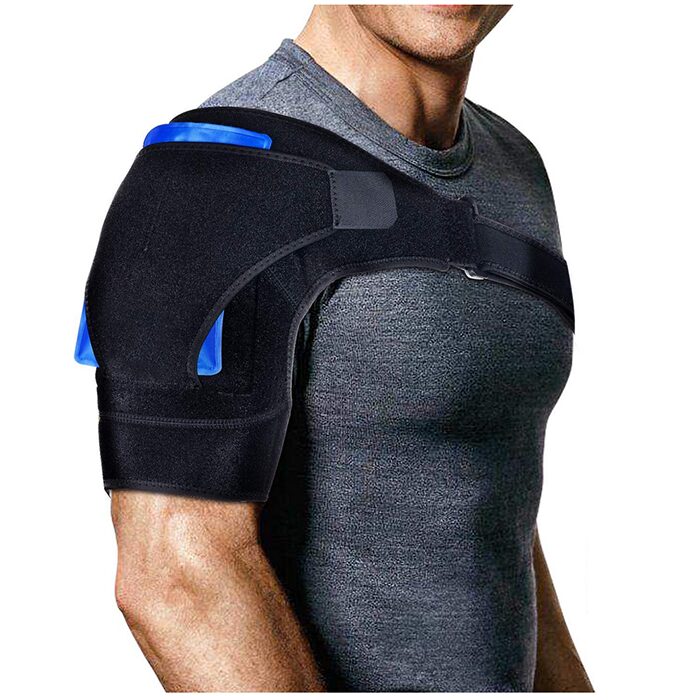
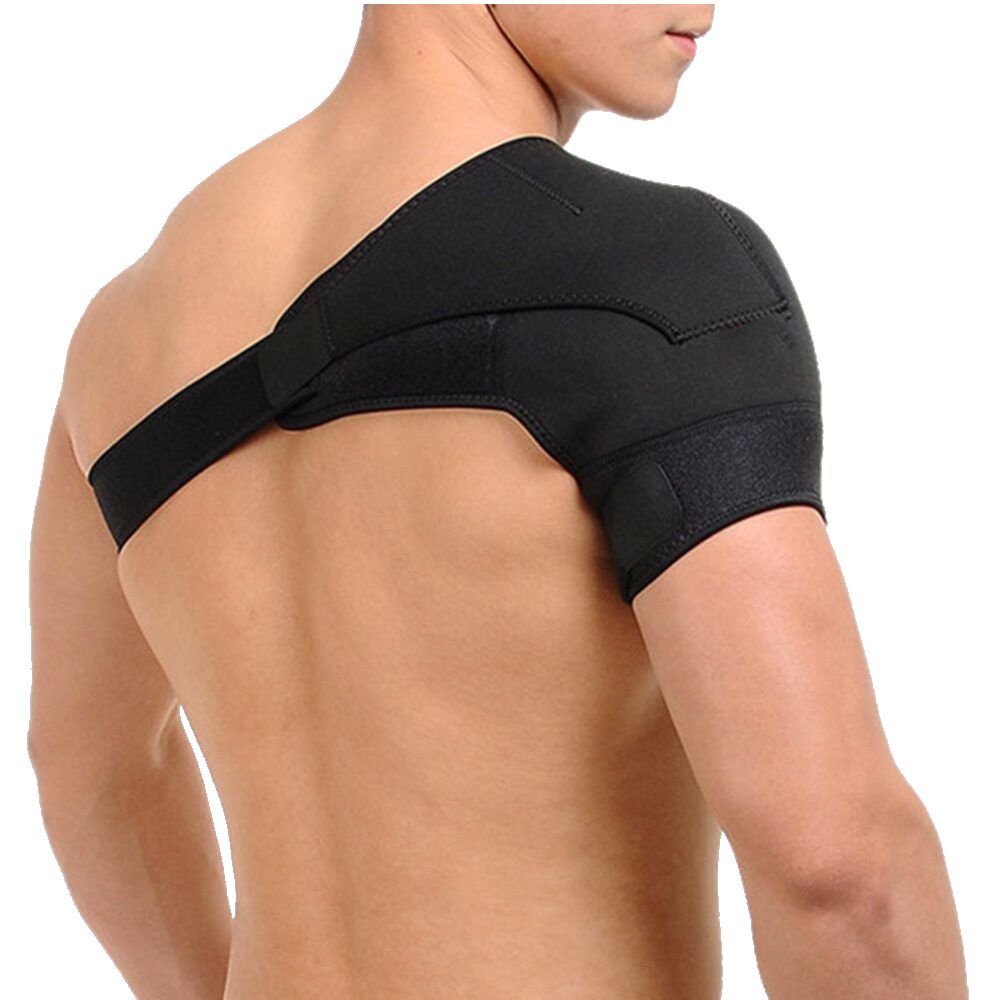
- The wrap sits around the shoulder and upper arm and is held in place by an adjustable strap that runs across the chest and under the opposite arm.
- This helps the shoulder feel more secure and makes it harder to move quickly into the wide, rotated‑back positions that often set pain or a feeling of “giving way” off.
- Adjustable compression where it’s most needed
- One‑size design to fit most adult shoulders, with a snug but comfortable fit for both men and women.
- The wrap closes over the upper arm so that compression sits directly over the tendon and bursa region at the top of the shoulder.
- This steady pressure helps limit build‑up of fluid after activity and gives a more “held together” feeling around an irritated shoulder.
- Built‑in pocket for hot and cold therapy
- Comes with a reusable gel pack that slides into a pocket over the top of the joint.
- Use it cold after a flare‑up or heavier use to help calm soreness and swelling.
- Use it warm when stiffness and background ache are the main problems, for example before gentle movement or exercises.
- The pocket keeps the pack in place over the painful area so you don’t have to hold an ice or heat pack against your shoulder.
- Common situations where people use this wrap
- Ongoing shoulder pain when lifting the arm, often linked with rotator cuff‑type problems.
- Frozen‑shoulder‑style stiffness where movement is limited and painful.
- Bursitis or impingement‑type pain with sharp catching around shoulder height.
- Mild feelings of instability after a dislocation, once a clinician has assessed the joint.
- Osteoarthritis and longer‑term “wear and tear”‑type aching and stiffness.
- General soreness and swelling after days when the shoulder has worked harder than usual.
- How it fits with your overall care
- Designed to sit alongside exercises, activity changes and advice from a GP or physiotherapist, not to replace them.
- Intended for day‑time wear at times when your shoulder is under more strain, not for use while sleeping.
- NuovaHealth guarantee
- Supplied by NuovaHealth with a 30‑day money‑back guarantee if you are not satisfied.
What you might be feeling in your shoulder
Shoulder pain can show up in several ways. You might notice:
- A sharp twinge when you lift your arm to the side or in front.
- A dull ache deep in the joint after using your arm for a while.
- Tenderness and swelling over the top or outside of the shoulder.
- Stiffness, where the shoulder feels slow or reluctant to move.
- A sense that the joint is loose or could “give way” in certain positions.
This kind of pain and stiffness can start to affect everyday tasks. Reaching up to a shelf, putting on or taking off a jacket, carrying bags, or doing repeated movements for work or sport may all become uncomfortable or make the shoulder feel vulnerable. Many people find themselves protecting the sore side by using their neck, back or the other arm more, which can then create extra aches elsewhere. Over time, that can make simple days feel more effortful than they should.
If pain, stiffness or a feeling of instability keeps going, it usually means the joint or the soft tissues around it are under more strain than they can easily cope with. That can lead to reduced movement, weaker supporting muscles and more strain on the remaining structures. You may start to avoid using that arm fully, simply because every time you do it hurts. It helps to find ways to ease that strain and make movement more comfortable, rather than simply hoping it will settle on its own.
The Shoulder Ice Wrap – Hot & Cold Therapy Support Brace from NuovaHealth is designed for people in this situation: adults with sore, stiff or vulnerable shoulders who need both support and a simple way to use cold or heat on the joint.
What’s going on inside the shoulder joint
The shoulder is a ball and socket joint. The ball at the top of the upper arm bone sits in a fairly shallow socket on the shoulder blade. That shallow socket gives you a large range of movement, but it also means the soft tissues around the joint have to work hard to keep everything controlled.
Around the joint you have:
- The rotator cuff – a group of muscles and tendons that wrap around the ball of the shoulder and guide it as you lift, reach and rotate your arm.
- A capsule and lining – a sleeve of tissue that surrounds the joint and holds the joint fluid in place.
- Small fluid‑filled sacs called bursae – cushions that sit between tendons and bone to reduce rubbing.
When these tissues are healthy, the ball glides smoothly in the socket and the soft tissues slide past each other without trouble. With years of use, age‑related changes, or injuries, these tissues can become irritated:
- Tendons can develop areas of wear and swell slightly.
- Bursae can become inflamed and fill with extra fluid.
- The capsule can tighten and thicken.
- The joint surfaces can lose some of their smooth cartilage covering and become a little rougher.
Inflammation is the body’s way of reacting to irritation or injury. More blood and fluid collect in the area to support repair. That can be helpful, but it also makes the tissues more swollen, warm and sensitive. When tendons and bursae are puffy, they take up more space in the already tight gap under the bony arch at the top of the shoulder. If the capsule has tightened, it physically blocks some movements, particularly twisting and lifting.
Because of this, movements that used to feel easy – lifting the arm to shoulder height, reaching overhead, or holding something away from the body – can now pinch or stretch these sore tissues. The joint may feel painful, guarded or unstable, especially after repeated use. These changes are more likely in adults who use their arms a lot at work or in sport, in people in mid‑life and older, and in those with a history of shoulder injury or long‑term health conditions that affect tendons and other soft tissues.
If the shoulder keeps being pushed into uncomfortable positions such as high overhead reaches or heavy lifts out to the side, without enough time to settle, the tissues can end up in a constant “almost healed but still irritated” state. Pain and stiffness then become more long‑lasting, and you may start to avoid using that arm fully. That in turn can weaken the muscles that should be helping to protect the joint.
Put simply, irritated tissues and a joint that is working harder than it should often need both sensible movement and a bit of extra support while they recover.
Why a Shoulder Ice Wrap with a gel pack can help in some cases
A Shoulder Ice Wrap with a gel pack can help by adding support from the outside and giving you a simple way to use cold or heat on the joint.
Support from the wrap and its cross‑chest strap helps keep the top of the arm bone sitting more steadily in the socket as you move. It makes it harder to rush into the more extreme or uncontrolled positions that often stir things up, such as fast, wide movements or heavy lifts right up overhead. That helps you stay in the ranges your shoulder can cope with more comfortably, and reduces how often irritated tissues are pinched or overstretched.
The snug fit of the Shoulder Ice Wrap also provides compression, which helps with swelling and comfort. When tissues are inflamed they hold extra fluid. Gentle, even pressure from the wrap helps limit how much extra fluid builds up and can encourage some of it to move back into the general circulation. The pressure on the skin and underlying tissues also sends steady signals to the brain about where the shoulder is. That can improve your sense of joint position and encourage smoother, more controlled movement.
The reusable gel pack gives you another way to calm the shoulder down. Cooling the area after a flare‑up or heavier activity can help settle pain and swelling. Gentle warmth, used when stiffness and long‑standing ache are more of a problem, can bring more blood to the area, help muscles relax and make the joint feel less stiff and reluctant to move.
In this Shoulder Ice Wrap, the gel pack sits in a built‑in pocket over the top of the joint, where pain is often felt, so you do not have to hold a separate pack or cloth in place. The wrap material between the skin and the pack takes some of the edge off the temperature and helps spread it more evenly over the shoulder.
Cold is often used to calm pain and swelling after a flare. Warmth is often used to ease stiffness and background ache before you start moving. The detailed “when and how” is covered in the hot and cold section below.
A Shoulder Ice Wrap like this does not take the place of having your shoulder properly assessed or following a sensible exercise plan, but it can sit alongside those things. The aim is to protect sensitive structures, manage swelling and stiffness, and make day‑to‑day use of the arm a bit more manageable while the underlying tissues settle and strengthen.
When this Shoulder Ice Wrap is likely to be useful
Our Shoulder Ice Wrap – Hot & Cold Therapy Support Brace is made as a one‑size wrap to fit most adults with a range of shoulder problems. The single‑sided wrap, cross‑chest strap, half‑arm coverage and built‑in gel pack pocket have been put together so you can support the joint and hold cold or heat directly over the top of the shoulder, without extra straps or separate ice covers.
It may be especially helpful if you have been told you have, or your symptoms are thought to fit with:
- Rotator cuff‑related pain – often a painful arc when lifting or lowering the arm, especially between shoulder height and just above. More common in people who do repeated lifting or overhead work, or who are in mid‑life and older.
- Frozen shoulder‑type stiffness – marked loss of movement and pain, especially when turning the arm outwards or lifting overhead. Often develops gradually and more commonly seen in people in mid‑life and some long‑term health conditions.
- Shoulder bursitis or impingement‑type pain – sharp catching pain when lifting the arm into a T‑shape or overhead, or when putting on and taking off clothing. Often linked with frequent overhead tasks or certain sports.
- Dislocation and instability patterns – after a dislocation has been reduced and assessed, the shoulder may feel loose or untrustworthy in certain positions.
- Osteoarthritis and longer‑term “wear and tear” – deep ache, stiffness and sometimes grinding or clicking in the joint, usually more noticeable with age, previous trauma, or years of heavier shoulder use.
- Acute strains and sprains – pain and tenderness after a smaller soft‑tissue injury from lifting awkwardly or over‑stretching, once a serious injury has been ruled out.
- General soreness and swelling after activity – a puffy, tired feeling in the shoulder after a day of extra lifting, carrying or overhead use, often from extra fluid in irritated muscles and tendons after they have done more than they are used to.
The Shoulder Ice Wrap can be worn on either the left or the right side. It often plays a role alongside early care after a minor injury, for example:
- Helping to protect the joint from further strain.
- Applying compression over irritated tissues.
- Holding the gel pack in the right place when using cold.
If these descriptions sound familiar, the overviews further down go into more detail about each problem and how this Shoulder Ice Wrap may help.
Persistent pain, stiffness or a sense of the shoulder being loose are worth taking seriously. Over time they can lead to reduced movement, less strength and confidence, and more pressure on other joints. Our Shoulder Ice Wrap is best used as one part of an overall plan that includes advice and exercises from a health professional, rather than being seen as the only answer.
How the Shoulder Ice Wrap is built and how it works on your shoulder
Single‑sided wrap and cross‑chest strap
The Shoulder Ice Wrap is a single‑sided brace that wraps around one shoulder and upper arm. A strap then runs across the front of your chest and under the opposite arm to hold it in place.
When the strap is done up, it pulls the wrap gently in towards the body. That helps keep the top of the arm bone more centred in the socket as you move. As you reach or lift, the strap offers a steady counter‑pull, so it is harder to fling the arm quickly into the wide, rotated‑back positions that many people find uncomfortable or worrying, especially after a dislocation or with a generally loose joint.
The wrap does not lock the shoulder solid. You can still move, but if you start to push into positions that tend to hurt or feel unsafe, you will feel a bit of resistance. That gentle check can reduce how often you reach the very end of your range, where tendons and bursae are more likely to be pinched or stretched.
Upper arm coverage and compression
The Shoulder Ice Wrap comes down to about halfway along the upper arm. It closes around the soft tissues at the top of the arm bone, including the rotator cuff tendons, the bursa region and nearby muscles and ligaments. The coverage is designed so that compression sits over the main structures that often become irritated.
This gives you compression in that area. The pressure helps by limiting how much extra fluid can build up in the tissues after activity or a flare‑up, which can ease the feeling of puffiness and tightness. It also puts steady pressure on the skin and underlying tissues, which helps the brain know more clearly where the arm is. That can lead to smoother, more controlled movements instead of quick, jerky ones.
If your rotator cuff tendons or the bursa at the top of the shoulder are irritated, this can make lifting to shoulder height or carrying light loads feel less sharp and less jarring. If you have had a dislocation or your shoulder feels generally loose, the snug fit around the upper arm can add to the sense that the joint is being held and is less likely to move unexpectedly.
Because you can adjust the straps, you can choose firmer compression for short bursts of higher‑demand activity, and a lighter fit when you want more gentle support for everyday tasks.
Gel pack pocket and secure positioning
Over the top of the shoulder, the wrap has a built‑in pocket that holds a reusable gel pack. Two small straps help keep the pack in the right place.
The pack sits on the outside of the wrap material, not directly on the skin. The fabric between your skin and the pack takes some of the edge off the temperature, so heat or cold is spread more evenly and feels less harsh.
Because the pocket covers the area where many people feel their pain most strongly, there is usually no need to keep moving the pack around. You can sit or lie with the shoulder supported and let the cold or warmth work on the area without needing to hold anything in place or worry about a loose pack slipping away from the joint.
Adjustable strap and one‑size‑fits‑most fit
The Shoulder Ice Wrap is made as a one‑size wrap to fit most adults. The main strap that crosses the chest has an adjustable buckle, and the sleeve around the arm has some give, so you can tailor the fit.
The strap is padded and reasonably wide to spread any pressure and reduce the chance of it digging in. Once fitted, the wrap should feel snug around the shoulder and upper arm, but not so tight that it is uncomfortable or interferes with breathing or arm movement.
If taking a deep breath feels restricted, or if the strap feels as though it is pulling the shoulder or chest awkwardly when you turn, it is likely too tight and should be loosened. The adjustability means it can work for a range of body shapes, from slimmer frames to broader chests and shoulders, while letting you control how much support and compression you feel.
Materials, ventilation and comfort
The main body of the Shoulder Ice Wrap is made from a neoprene‑style material that is soft, slightly stretchy and cushioned. It moulds to the contours of your shoulder and arm, giving a firm but comfortable fit rather than a hard, rigid hold.
Small perforations and the way the fabric is made help the skin to breathe and allow moisture to move away, so the area is less likely to feel clammy during use. The padding also compresses a little if you bump the area and then springs back, which can take some of the sting out of minor knocks in crowded spaces or around other people or equipment.
Altogether, the way the Shoulder Ice Wrap is made is intended to let you wear it for periods when you need extra support, without it feeling overly hot or bulky, while still keeping the shoulder guided and protected.
Using hot and cold therapy safely with this Shoulder Ice Wrap
When cold therapy may help
You can cool the gel pack in a fridge or freezer and then use it as a cold pack. Cold is usually most helpful soon after a flare‑up or after heavier activity that leaves the shoulder feeling hot, puffy or sharply sore.
When a joint is inflamed, small blood vessels in the area open up and more fluid leaks into the tissues. That can make the area feel full and tender. Applying cold makes those small vessels narrow for a while, so less extra fluid comes in. Cooling also slows some of the nerve signals that carry pain to the brain, which many people experience as numbing and soothing.
Cold can be especially useful:
- In the first few days after a minor strain or sprain, once a more serious injury has been ruled out.
- After a period of heavier use that has made the shoulder feel hotter and more aggravated.
- At the end of the day if the joint feels swollen and irritated.
Because the Shoulder Ice Wrap holds the pack in place over the top of the joint, you can rest the arm comfortably while you use it, rather than having to hold the pack there.
When warmth may feel more comfortable
You can also warm the gel pack (following the instructions printed on it) and use it as a warm pack. Heat is often more comfortable when longer‑term stiffness and background aching are the main problems, rather than obvious fresh swelling.
Gentle warmth brings more blood into the area and helps muscles and other soft tissues relax. Warmer muscles and soft tissues are often easier to move and feel less stiff at the start of activity. Warmth is often used:
- First thing in the morning if the shoulder feels especially stiff on waking.
- Before doing light mobility or strengthening exercises advised by your clinician.
- In longer‑standing conditions, such as frozen‑shoulder‑type stiffness or osteoarthritis, where the main issue is tightness rather than a new injury.
Using the warm pack in the Shoulder Ice Wrap lets you apply heat directly over the joint while still having support around it.
Combining hot and cold over time
As your shoulder settles and changes, you might find that what feels helpful changes too. Many people use:
- Cold more in the earlier phase after a flare‑up or when the joint feels hot and swollen.
- Gentle heat more when the main complaint is stiffness and a dull ache.
Because the same pack can be used either cold or warm at different times, you can adapt how you use it as your symptoms change. For example, you might use cold after a day that you know has pushed the shoulder more, and warmth before a planned exercise session on another day.
More complex routines that involve swapping quickly between hot and cold several times are not needed for most people. If you are thinking about doing that, it is worth checking with a clinician first to make sure it suits your particular shoulder problem.
Practical guidance and precautions
The gel pack has clear printed instructions on how to cool or warm it safely, and those should always be followed.
In general, it is better to use hot or cold therapy for short periods with breaks in between, rather than leaving it on for a very long time. It is sensible to check the skin regularly. If you notice unusual redness, mottling, numbness or discomfort from the temperature, take the pack off and allow the skin to return to normal.
Do not use the pack on broken, infected or very irritated skin. If the shoulder or arm often feels unusually numb, cold or hot compared with the other side, or if you have known circulation or nerve problems in that area, speak to a health professional before using strong hot or cold treatments or tight compression.
The Shoulder Ice Wrap and gel pack are not designed to be worn at night. When you are asleep you cannot easily notice if straps have moved, if a pack is too hot or too cold, or if the shoulder or neck has ended up in an awkward position. For that reason, the wrap should be taken off for sleep.
If you are not sure whether heat, cold, or a combination over time is right for your particular shoulder problem, it is a good idea to discuss this with a GP, physiotherapist or other suitable clinician.
How to fit and wear the Shoulder Ice Wrap
Step‑by‑step fitting
To put the Shoulder Ice Wrap on, slip your arm through the sleeve so that the main body of the wrap sits over the shoulder and upper arm. The top edge should sit comfortably around the shoulder joint, and the lower edge should sit around the upper arm without digging in.
If you plan to use the gel pack, place it into the pocket over the top of the shoulder and fasten the small straps that hold it there. Then take the main strap, bring it across the front of your chest and under the opposite arm, and clip it into the buckle.
Once everything is fastened, check in a mirror if you can. The wrap should lie flat without big folds or twists, and the pack, if used, should sit over the top of the shoulder. If lifting your arm into the sleeve is very difficult or painful, ask someone to help you if possible. If you still cannot get it on comfortably even with help, speak to a clinician about whether a brace is suitable at that stage.
Adjusting support and compression
How much support and compression you get depends mainly on how firmly you tighten the straps. It is usually best to start with a comfortable, moderate tightening so the wrap feels secure but not squeezed.
Signs that it is too tight include:
- Tingling or numbness in the arm, hand or fingers.
- Skin under the strap or edges turning very red, very pale, or blotchy compared with the other side.
- A feeling that it is hard to take a full, easy breath because the strap is pressing too much on the chest.
If you notice any of these, loosen the straps and check again. You are aiming for the shoulder to feel steadier and better supported, not compressed to the point of discomfort.
You might choose to tighten the wrap slightly more for a short period of heavier activity, then loosen it again for lighter tasks or rest. If wearing the wrap clearly makes your pain worse, especially if the pain feels sharper, spreads, or feels very different from usual, it should be taken off and the situation discussed with a health professional.
Wear time and combining with movement and rehabilitation
You can use the Shoulder Ice Wrap at times when your shoulder feels more vulnerable or is likely to be under more stress, for example:
- During particular tasks that often set symptoms off.
- For a while after you have done more with your arm than usual.
- At stages in your recovery when any unsupported movement feels worrying.
Rather than putting it on first thing and keeping it on all day, many people find it better to build up gradually and use it more at times when they know the shoulder will be working harder, and less when it is not under much strain. This gives your skin and soft tissues time without constant pressure and allows your muscles to keep working without relying on the wrap all the time.
For most shoulder problems, keeping the joint moving within a comfortable range and working on strength are important parts of recovery. Exercises and sensible changes to how much you load the shoulder are what usually drive long‑term improvement. The Shoulder Ice Wrap is there to make that work easier and less painful, not to replace it. If you wear the wrap all the time and let it do most of the work of holding the joint, the muscles that should stabilise the shoulder may not get enough challenge to get stronger.
A health professional can help you decide how to fit wrap use around your exercise routine and daily activities, and when it makes sense to start reducing how much you use it.
Common times to use the wrap include while doing tasks that usually set your shoulder off, and for a short period afterwards if the shoulder tends to ache more later in the day. On quieter days, when you are not using the arm as much, it can be helpful to give the skin and muscles a break from the wrap.
Using the Shoulder Ice Wrap during sport and heavier activity
The Shoulder Ice Wrap can be worn during some sports and heavier activities to give extra support and awareness around the shoulder. Because it is soft and flexible, you can still move your arm through the ranges you need for most everyday movements, while the wrap and strap add some stability and compression.
If your shoulder feels at risk of “popping out” or you have had previous injuries, wearing the Shoulder Ice Wrap without the gel pack during certain activities can help in a few ways:
- It makes it a bit harder to move quickly into the very wide, rotated‑back positions that have caused trouble before.
- It can reduce the sense of jarring from repeated arm swing during running or brisk walking.
- It gives a steady feeling of support, which can help your confidence and control.
The padding can also take some of the sting out of minor bumps, though it is not designed as specialist protective gear for full‑contact sport.
If you are getting back to sport or heavier work after a shoulder problem, it is important to build up gradually. The wrap helps, but it is not a quick fix or a replacement for rehabilitation exercises and proper conditioning. Working with a physiotherapist or similar professional on a graded return plan is usually the safest route. The Shoulder Ice Wrap can be one tool in that plan, used at the right times, but cannot guarantee protection on its own.
If you are interested in how this fits with particular shoulder conditions you have heard about, the sections below go into more detail.
Condition and situation‑specific overviews
Designed in the UK with clinical input
This Shoulder Ice Wrap from NuovaHealth was designed in the UK with input from clinicians who regularly see people with shoulder problems, including physiotherapists. Their experience has helped design:
- The route of the strap across the chest and under the opposite arm, so it supports positions that commonly feel vulnerable.
- The way compression is applied around the upper arm and shoulder, targeting the main tendon and bursa areas.
- The placement and size of the gel pack pocket over the top of the joint, where pain is often felt.
Feedback from clinicians and users has helped refine the strap route and pocket placement so they work with, rather than against, common rehabilitation positions. The way the Shoulder Ice Wrap sits on your shoulder, and the way the gel pack is positioned, is designed to match what is needed in real‑life shoulder rehabilitation and day‑to‑day use. At NuovaHealth, the goal with this Shoulder Ice Wrap was to create a support that mirrors what clinicians look for in a shoulder wrap with hot and cold options, while remaining straightforward to use at home.
Safety, boundaries, and disclaimer
The Shoulder Ice Wrap and gel pack are intended for adults. They do not replace a medical assessment, diagnosis, or treatment plan.
You should get urgent medical help before using a wrap or brace if you have:
- Sudden, severe shoulder pain after a significant injury.
- A clearly altered shoulder shape or suspected dislocation or fracture.
- Inability to move or use the arm at all.
- Marked swelling or major changes in skin colour or temperature over the shoulder.
- New or worsening numbness, tingling or weakness in the arm or hand.
In those situations, do not try to manage it yourself with a wrap – get urgent medical help.
Even when symptoms are less dramatic, you should speak to a GP, physiotherapist or other healthcare professional if:
- Pain has been present for several weeks and is not improving.
- Pain is gradually getting worse or is interfering more with sleep or your usual activities.
- You notice a steady loss of movement or strength in the arm – this needs checking rather than just being “watched”.
- You are unsure what has caused the problem or whether it is safe to keep using the shoulder.
If shoulder symptoms carry on and gradually get worse without being checked, they can be harder to settle and may have more impact on your day‑to‑day life. An assessment can help clarify what is likely to be going on, rule out more serious issues, and provide a plan for exercises, activity changes and appropriate use of support.
If you know you have problems with circulation or sensation in your shoulder or arm, you should speak to a health professional before using firm compression or hot and cold treatments over the area.
The Shoulder Ice Wrap and gel pack are not designed to be worn while sleeping and should not be used at night. When you are asleep you cannot easily monitor comfort, strap position, or changes in skin and circulation, and there is a small risk that the wrap could move into an awkward position.
Everything on this page is general guidance for adults. It is not a personal medical consultation or prescription. No product can promise a cure or a particular result. If you are unsure whether NuovaHealth’s Shoulder Ice Wrap – Hot & Cold Therapy Support Brace is suitable for you, it is a good idea to discuss it with a GP, physiotherapist or other suitable professional.
Money‑back guarantee and next steps
NuovaHealth’s Shoulder Ice Wrap – Hot & Cold Therapy Support Brace is designed to support the shoulder joint, provide adjustable compression, and hold cold or heat directly over the top of the shoulder. The strap path, half‑arm coverage and built‑in gel pack pocket have been developed around the types of support and hot/cold placement physiotherapists and other clinicians commonly use in shoulder rehabilitation.
By helping to steer you away from positions that tend to set your symptoms off, managing swelling, and easing stiffness or post‑activity soreness, the Shoulder Ice Wrap can help you manage pain and stiffness from a range of common shoulder problems in everyday life. It is usually most effective when used alongside other steps such as appropriate exercises, activity changes and advice from a health professional. Exercises and activity changes are what usually drive longer‑term change; the wrap is there to make that process more comfortable and less daunting.
If the situations and pain patterns described here sound familiar, and you are looking for a practical way to support your shoulder while using hot or cold more easily, our Shoulder Ice Wrap is worth considering. If you are unsure whether it is right for your situation, discussing it with a GP or physiotherapist can help you decide how it might fit into your overall plan.
If you decide to try it, NuovaHealth includes a 30‑day money‑back guarantee if you are not satisfied with your purchase.
1 Review For This Product
Fast & Secure Checkout Through Paypal
Pay with Paypal the secure payment gateway that accepts all credit and debit cards. Paypal is free and secure and no credit or bank information is ever stored or shared with us.
Fast Dispatch
Enjoy your items soon with quick dispatch via Royal Mail First Class. Expect to have your items between 1-3 days for domestic orders. 7-10 Working days for international orders.
Return Policy – 30 Day Money Back Guarantee
We are so confident that you will just love our product that we offer a full 30 day money back guarantee. In the unlikely event, you are unhappy with your purchase you can simply return it within 30 days for a refund. Please contact us via the form on the contact us page to start your return.
To return an item please send it to: Nuova Health UK, 81 Highfield Lane, Waverley, Rotherham, S60 8AL. Please include a note with your order id so we know who to refund. Please retain your postage receipt as proof of postage. All that we ask is that the item is in the original packaging and unused.
by Peter Jennings
The support really helps especially when you use it with the ice pack.