
Gel Arch Support Sleeve Socks for Flat feet
£7.99inc VAT
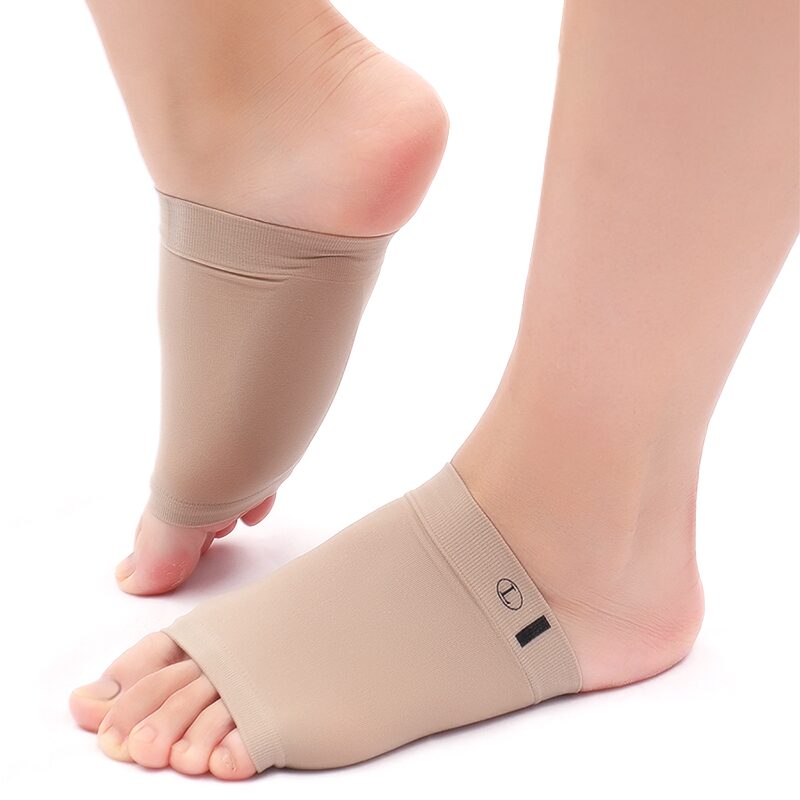
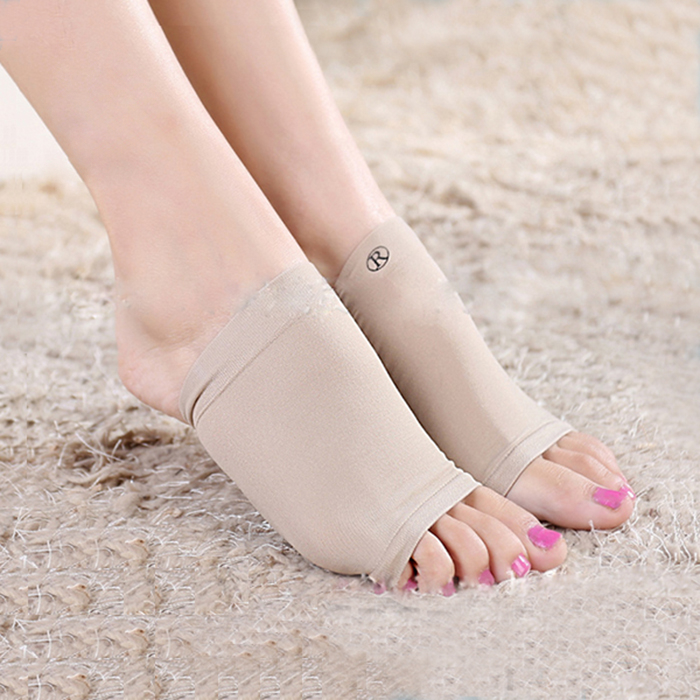
- Soft, stretchy sleeves — one for each foot — with a moulded gel pad running the length of the arch.
- Shaped separately for left and right, so the pad sits the right way round on each foot.
- Intended for adults with plantar fasciitis, flat feet, fallen arches, high arches, and everyday heel or arch pain.
- Under the sole, the gel spreads pressure across a wider area rather than letting it gather in one spot.
- Gives the arch something soft to press into, so the band beneath it isn’t stretched quite so far with each step.
- Every step presses the arch into the gel and releases it, for a gentle massage as you move.
- Shifting the thickest part of the gel towards the heel or the ball of the foot puts it under your sore spot.
- Thin enough to sit inside most everyday shoes and trainers without changing the way they fit.
- Comfortable at home with or without socks, and can be worn alongside insoles or orthotics already in your shoes.
- One size that stretches to fit men and women, so there’s no sizing chart to get wrong.
- Start with an hour or two a day, then build up over a week or two.
- For daytime wear, not overnight.
- Not a medical compression device, and not designed to prevent blood clots.
- Speak to a GP, physiotherapist or podiatrist before you try them if you have diabetes, poor circulation, an open wound on the foot or lower leg, or a marked foot deformity.
About these gel arch sleeves
A pair of soft, stretchy sleeves, one for each foot. Inside each sits a moulded gel pad that runs the length of the arch, shaped separately for left and right so the pad sits the right way round on each foot. They’re made for adults with plantar fasciitis — irritation of the band of tissue under the arch, most often where it attaches to the heel bone — along with flat feet, fallen arches, high arches, and everyday heel or arch pain.
The gel fills the dip under the arch. Pressure is spread across a wider area, which helps when a tender heel or a narrow strip along the middle of the sole is carrying more than its share. Every step presses the arch into the gel and releases it, giving a soft, steady massage as you move.
Thin enough to sit inside most everyday shoes and trainers without changing the way they fit, and comfortable at home with or without socks. One size that stretches to fit men and women, so there’s no sizing chart to get wrong.
What it feels like when your arches are struggling
The first sign arrives the moment you get out of bed. You swing your legs over the side, put your feet down, and there it is: a sharp pull along the underside of the foot. It sits under the heel more often than not, towards the inside edge, and can spread forwards along the arch. That first step of the day is often the worst. You hobble about for a few minutes, things loosen up, and by mid-morning you can almost forget it. Then the next morning, it’s back: same place, same moment.
Not everyone gets that sharp sting, though. A dull ache that builds steadily through the day is just as common. You start to notice it after standing in a queue, walking the dog, or putting in a long shift on your feet. By the evening the arch and heel feel bruised and warm, and the first few steps after sitting down are stiff again. If you drive a lot, the walk to the front door after getting out of the car can be the sharpest part of the day, because the foot has been held still and is suddenly back under load.
A third pattern is easy to miss, because it doesn’t look like an arch problem at all. The arch itself feels fine, but the heel is tender to touch, or the sole of the foot burns after a long day, or the outside edge aches in a narrow strip.
That’s how a very high arch tends to show up. There’s no flattening to see, so nothing obvious to blame, yet the ground presses into one small, tender patch with every step. If that rings true, your arch may never hurt at all — which is why this pattern takes longer to work out.
These three overlap, and telling them apart helps. The sharp, first-step pain belongs to the morning. The bruised, heavy feeling that builds over hours belongs to the evening. Many people get both, and it doesn’t mean two separate problems — just one arch being asked to work harder than it can, showing up at different points in the day.
Whichever of these you recognise, the same thing is happening underneath. Your arch is being asked to do more than it comfortably can, or it’s being loaded in a way its structure doesn’t handle well. The soreness is a symptom of strain, not the strain itself. So the useful question is what’s going wrong beneath that soreness — and whether a soft gel sleeve is likely to help.
Why arches start to hurt
Under the foot, a tough band of tissue runs from the heel bone to the base of the toes. This is the plantar fascia — the band under the arch — and it acts a little like the string on a bow. Put weight through the foot and the arch flattens slightly, the string stretches, and the whole structure springs back as you push off.
The spring matters more than it might look. Your foot stores and returns energy with every step, and the load gets shared so no single part takes all the pressure at once. When everything is working well, you barely notice any of it. Your shoes wear evenly, your calves don’t tire just from walking, and you don’t feel the ground under your feet.
Problems start when the arch changes shape, when the load through it changes, or when the tissue gets pulled harder than it’s used to. The strain then shows up in a few ways, and these tend to feed each other.
The band gets overstretched. When the arch sits lower than it should under load, that band is pulled tighter and for longer with every step. Over time, small strains build up near the heel, where it attaches to bone. This is what plantar fasciitis usually looks like — irritation at the point where the band meets the heel bone. On a quiet day the load is small enough that you wouldn’t notice it. On a day full of walking, standing or stairs, the pull adds up, and the soreness settles under the heel.
Pressure also collects where it shouldn’t. Depending on the shape of the arch, some parts of the foot take more than their share of your weight, and sore spots develop where that pressure settles. Usually it’s a small patch under the heel, or a narrow strip along the outer edge, or the midfoot — the middle section of your foot, between the arch and the ball. It’s why standing for a long stretch on a hard floor feels worse than a short walk on grass, even though the walk uses more of the foot.
The arch also plays a part in guiding your leg over the ground, and that’s easy to overlook. When the arch stops doing its share of that job, the foot may roll too far inwards or outwards with each step, sending strain upwards into the ankle, shin and knee. Often that’s why an arch problem shows up as a knee or shin ache, particularly after a longer walk or a flight of stairs.
Resting overnight makes the first step of the day worse. While you sleep, the band sits in a shortened position for hours on end. That first step stretches it sharply, which is why mornings are so often the worst, and why the pull eases once you’ve been moving for a while. Time on your feet has eased it back to its usual length, but that’s not the same as mending it. If nothing else changes, the sting returns the next morning for the same reason.
None of this is dramatic as it happens. It’s a slow build-up, which is exactly why it so often gets ignored until the ache is hard to work around.
The shape of your arch — and the way your foot rolls
Two things shape how much load your arch can comfortably carry: the shape of the arch itself, and the way your foot rolls as you walk. They overlap, but it helps to look at them one at a time, because the same kind of support helps both in slightly different ways.
Flat feet and fallen arches
A fallen arch is one that has dropped, either gradually over the years or because the tissue holding it up has become less able to do that job. In a flat foot, the whole sole tends to sit down against the ground, and the inner edge of the shoe wears through faster than the rest.
It rarely happens overnight. More often, the tissue that props the arch up gives a little over years, sometimes after a stretch of heavier walking, a change of work, or simply time itself. By the time the ache shows up, the foot has been settling lower for a while, and what you feel is the result of that: the calf and shin doing more of the work, the arch taking load it wasn’t built to take, and the inner heel sore by the evening. Tiredness usually arrives before pain does, because the muscles that have taken over the arch’s job are the first to notice the extra work.
You can often spot a flat foot by looking at your shoes rather than your foot. The inner heel wears at an angle, the sole wears quickly along the inside edge, and the upper bulges outwards over the arch. Then come the symptoms: tiredness in the calf and shin, aching through the arch, and that bruised feeling under the inner heel at the end of a long day. Walking for long stretches at a time brings it on more than shorter spells do, because the foot has less chance to give, so the shin and calf end up doing more of the work.
A flat foot isn’t a problem in itself. Where it does cause trouble, the foot is no longer springing back the way it should, so the leg has to make up the difference. The awkward part is the arch itself, which sits so close to the ground that there’s no spring left in it.
High arches
A high arch looks like a strong foot. It has a deep curve, plenty of clearance underneath, and it goes unnoticed for years because there’s nothing obvious to complain about. That’s why it gets missed: nothing hurts at rest, nothing looks unusual, so the ache gets blamed on long days rather than on the foot.
Yet a high arch is often a rigid one. It doesn’t spread load well, and pressure sits under the heel and along the outer edge instead of being shared across the whole sole. A normal day on your feet can then feel tougher than you’d expect, the ball of the foot aches after a walk, and the heel feels bruised by the end of it.
Less of the foot meets the ground, so each step lands on a smaller patch than it would with a broader arch. A rigid arch also gives less as it meets the ground, so there’s less of that small spring that softens the landing, and the same load has fewer places to go.
Going down stairs can be a useful clue here, and it’s the descent rather than the climb that bothers people most. The ball of the foot and the heel take a quick, focused load, on a foot that already touches the ground in only two or three small places at once. There’s nothing wrong with a high arch in itself — plenty of people with one never have a day’s trouble. It becomes a problem when the load that would once have been shared across the whole sole lands instead on a strip no wider than a finger.
Rolling in and out
When you walk, your foot doesn’t just go up and down. It also rolls, and that roll is part of how your body absorbs shock and moves your weight forward. Rolling slightly inwards is normal, and it’s called pronation. When the foot rolls too far inwards and lingers there a little longer than it should, that’s overpronation. When it rolls outwards instead, taking the weight onto the outer edge, it’s often called supination or underpronation.
Both patterns change where the stress lands. Overpronation tends to pull on the band under the arch and load the inner heel and the midfoot. Supination drives pressure towards the outer edge and the base of the little toe, and leaves the ankle and knee absorbing more than they’d like. Day to day, the first shows up as tiredness along the inside of the shin, while the second is more likely to leave the outer ankle and the base of the little toe feeling the strain.
Neither is a fault in the person. They’re patterns of movement, shaped by the foot itself, and they can be made worse by long hours on your feet, a sudden increase in walking or running, or footwear that doesn’t suit the foot. If you’ve ever noticed your ankles tiring on a longer walk, or your knee aching after plenty of stairs, that rolling is often what’s behind it.
These patterns of movement aren’t something a sleeve can change. What a soft support at the arch can do is soften where the load lands, so the tissues doing the extra work aren’t taking quite so much of the strain from step to step.
Whatever shape your arch is, and however your foot rolls, the same underlying need shows up: the arch wants something soft and steady to press down into, so the tissues around it don’t have to absorb every bit of load on their own.
What a soft gel pad does under the arch
The first thing it changes is where pressure goes. Under your weight the gel gives slightly and reshapes, so your foot presses into a broader, softer surface than a firm insole or the floor would give. That wider landing is what makes a long day on your feet gentler on the sole — and if you spend hours standing in one place, it’s the part you notice first.
The second is how much the band has to give. A pad that sits where the arch dips gives the foot something soft to settle onto, so the band isn’t stretched quite so far with every step. It won’t undo tissue changes that have built up over months, but it eases the daily pull on a structure that’s been working harder than it should.
A gentle massage is built into every step, too. As you walk, the arch presses into the gel and lifts again, and many people find that small, steady motion soothing on an ache that’s been hanging around for hours.
There’s a reason the layer is soft rather than firm. A hard support pushes straight back against the arch, and if it doesn’t match your shape exactly, it can feel like a lump under the foot. A gel pad gives a little, so it meets your foot where it actually is and spreads the load across more of its width, rather than concentrating it into one small spot. It also means the pad can work with a foot it hasn’t met before. A rigid shape can only do that if it was made for you.
Both a low arch and a high one ask the same thing of a pad, just for different reasons. On a low arch, the gel fills the dip that has formed. On a high arch, it cushions the narrow strip that would otherwise take all the load. Either way, the foot has something yielding to bear down on, and the rest of the leg has less to make up for.
An insole, by contrast, fills the shoe. A sleeve sits against your skin and moves with your foot. That makes it easier to wear barefoot at home, and easier to move between one pair of shoes and another.
How these sleeves are designed to help
The sleeves are soft, stretchy and shaped. Each one is moulded for left and right separately, so the pad follows the curve of your own foot rather than sitting the same way round on both. As it warms against your skin, the gel softens and settles into the shape of your arch. You get a pad that’s already shaped to a foot, and then takes on the shape of yours over the first few wears.
A soft, close fit around the arch holds the foot steady through each step, so it isn’t sliding around inside the shoe. What that gives you is a steadier footing, so the softer tissues around the arch aren’t pulled this way and that with every step.
None of this makes it a compression garment. A compression device is built to squeeze the leg or foot in a controlled way, often to help circulation. It isn’t built to treat or prevent blood clots, and it shouldn’t be used in place of one.
How to use them
Finding the right position
Slide the sleeve onto the foot with the gel pad facing the underside of your arch. Before you put weight on it, shift the whole sleeve so the thickest part of the gel sits directly under the spot that feels most tender. Nudge it slightly forwards and it sits closer to the ball of the foot. Pull it slightly back and it sits nearer the heel. A quick nudge is all it takes, and it changes how the sleeve feels more than anything else you can do.
Smooth the sleeve out so there are no folds or bunches under the arch. Stand up slowly and check how it feels through one or two steps. The fit should feel snug and secure, but never tight enough to pinch, dig in or leave a mark. A fit that feels like a band gripping your foot means the position needs adjusting, or the wear time needs shortening. When the sleeve slides about instead, it’s sitting too far forward or back, and moving it a little will sort it.
Check again at the end of the day, too. Take the sleeve off and look at the skin underneath. If it looks the way it did before you put the sleeve on, you’re fine. Deep marks, a red line, or a patch that still feels sore to press all mean the fit is too tight, or it’s been on longer than it should.
Building up your wear time
It’s tempting to put the sleeves on and leave them on all day from the first morning. Try not to. A sleeve changes the way your foot takes weight, and your foot needs a chance to get used to the new support.
Start with an hour or two a day. The easiest time is often in the evening, when your feet are already tired and you’re sitting or pottering about at home. If that feels fine, add a little more the next day, then try a short walk in your usual shoes with the sleeves on. Build up over a week or two rather than in a single day.
An immediate easing of pressure is what some people feel. Others notice the sleeve more than they notice their pain for the first few days, simply because anything new against the arch takes some getting used to. That usually settles as the gel softens and your foot adjusts. If it doesn’t, wear them for less time each day and build up more slowly. And if it’s the sleeve itself that starts to ache rather than the arch, take a break from wearing it.
Because the sleeve sits against your foot rather than being fixed inside a shoe, you can move it between pairs of shoes through the day. Wear it in the shoes you walk in, then keep it on at home once the shoes come off. Some people wear the sleeves barefoot around the house, and others prefer them over a thin sock. Both work, and the choice comes down to comfort and how much you want the gel pressing directly against the skin. If one pair of shoes is noticeably tighter than the others, keep the sleeves for the roomier pairs.
Anyone who already wears insoles or orthotics in their shoes can wear the sleeves alongside them. The sleeve sits against the foot; the insole sits under it. If the two together feel tight or squashed, try the sleeve on its own first, or keep the sleeve for the hours you’re at home and skip the shoes.
These sleeves are for daytime wear, not overnight. The gel does its work through the pressure of walking — each step presses the arch down into the pad, and that’s what spreads the load and provides the small massage. Lying still through the night, there’s nothing doing the pressing, so there’s little for the gel to do. A snug fit that stays on for eight hours while you sleep is a different matter from one you’re aware of all day, and that’s where the caution over circulation problems applies.
Try to have the sleeve in position before your first steps of the day, when the arch is most sensitive and the band under it is at its tightest. In practice, that means fitting it while you’re sitting on the edge of the bed, before you stand.
Give the gel a minute to warm against your skin before you walk on it. It softens as it takes on your body heat, which helps it sit comfortably.
A fortnight of regular, gentle use is a fair trial before deciding whether they help.
Washing and looking after them
Because the sleeves are worn against skin and inside shoes, they pick up sweat and dust, so they’ll need a wash every few wears. Hand wash them in cool or lukewarm water with a little mild soap, rinse well, and let them air dry away from direct heat.
Don’t put them through a hot wash or a tumble dryer, because heat can distort the gel and the stretch. With a bit of care, a pair will see you through months of daily wear. When the gel stops springing back, or the fabric starts to lose its stretch, that’s the point to replace them.
When to check in with a professional
A soft gel sleeve is a supportive aid, not a treatment in its own right, and it isn’t suitable for every foot without a conversation with a GP, physiotherapist or podiatrist first.
With diabetes, the nerves and circulation in the feet can be affected, which can mean you don’t feel pressure or rubbing the way you usually would. A snug sleeve pressing on the skin needs checking by someone who can assess how your feet are doing. If your circulation isn’t what it was, a snug fit is harder to judge, because the usual signs that something is sitting too tight may not show up as you’d expect. An open wound needs to heal without pressure sitting on it. And a marked foot deformity often means the shape of the foot is unusual enough that an off-the-shelf sleeve may not sit the way it needs to, or may press where it shouldn’t.
Where none of those apply and the sleeves aren’t helping after a fair trial, a podiatrist or physiotherapist can take a proper look and tell you whether support is the right answer for you, or whether something else needs attention first. Getting that look isn’t a setback. It’s simply the sensible line between a self-care product that helps a common, well-understood ache and a symptom that deserves a closer look.
If you notice new or unexplained symptoms that don’t settle, or pain that is getting steadily worse despite sensible use of support, have it looked at rather than waiting.
What to expect, and where that leaves you
What you’re looking for over the first couple of weeks is gradual change, not instant relief. You may find mornings feel less sharp, and that standing for a longer spell isn’t as bruising as it was. By the evening, your feet may feel less puffy and tired. If small improvements like that start to appear, you’re on the right track, and you can keep wearing them as part of your normal routine.
The difference shows up within a few days for some people. For others it creeps up quietly, and it’s only looking back over a fortnight that they realise their mornings have been easier. A gel sleeve is a comfort and support aid rather than a cure. It works best alongside sensible habits: breaking up long spells on your feet where you can, wearing shoes that support the foot rather than squeeze it, and increasing your activity gradually rather than in bursts.
Pain that is getting worse rather than better is useful information rather than a failure. Sometimes the pad position needs adjusting. Sometimes the wear time needs shortening. And sometimes something else is keeping the pain going, something a sleeve can’t reach, and that’s a conversation to have with a professional rather than something to push through.
Where the sleeves help a little but not enough, that tells you something too. Partial improvement suggests that support in the right place is part of the answer, but it may also mean a gel pad alone isn’t enough. A podiatrist or physiotherapist can assess what’s happening more thoroughly and talk through what else might help.
Sore arches, a heel that’s tender in the morning, long days on your feet that leave you tired by the evening — these are common. It’s a foot being loaded in a way it isn’t handling comfortably, and that’s exactly the kind of foot that benefits from some support behind it. A pair of soft gel arch sleeves is a simple, low-commitment way to do that. Slip them on and take a minute to find the spot where the gel sits under the sorest part of your arch. Then give them a fair trial.
No two feet are the same shape, and no single support suits every foot. The 30-day money-back guarantee exists so you can try the sleeves properly, adjust the position, and see how your arch responds before you decide. If your symptoms are new, sharp, or don’t match what’s described here, a quick word with a clinician is the sensible first step.
Disclaimer
The information here is general guidance and isn’t a substitute for individual medical advice, diagnosis, or treatment. If you’re unsure whether these sleeves suit your feet, or you have new, more complex, or unexplained symptoms, speak to a GP, physiotherapist, or podiatrist for personalised advice. No specific outcome is guaranteed, and results vary from person to person.
1 Review For This Product
Fast & Secure Checkout Through Paypal
Pay with Paypal the secure payment gateway that accepts all credit and debit cards. Paypal is free and secure and no credit or bank information is ever stored or shared with us.
Fast Dispatch
Enjoy your items soon with quick dispatch via Royal Mail. Expect to have your items between 1-3 working days for domestic orders. 7-10 Working days for international orders.
Return Policy – 30 Day Money Back Guarantee
In the unlikely event, you are unhappy with your purchase you can return it within 30 days for a refund. Please contact us via the form on the contact us page to start your return.
To return an item please send it to: Nuova Health UK, 81 Highfield Lane, Waverley, Rotherham, S60 8AL. Please include a note with your order id so we know who to refund. Please retain your postage receipt as proof of postage. All that we ask is that the item is in the original packaging and unused.
by Greg
Oi, these socks are the bees knees! Got ’em for my plantar fasciitis and blimey, they’re brilliant. They’re snug, not too tight, and the gel pads are lush, proper comfy. They’ve been a game changer, that’s for sure. No more pain in the foot, it’s all smooth sailing now, innit?