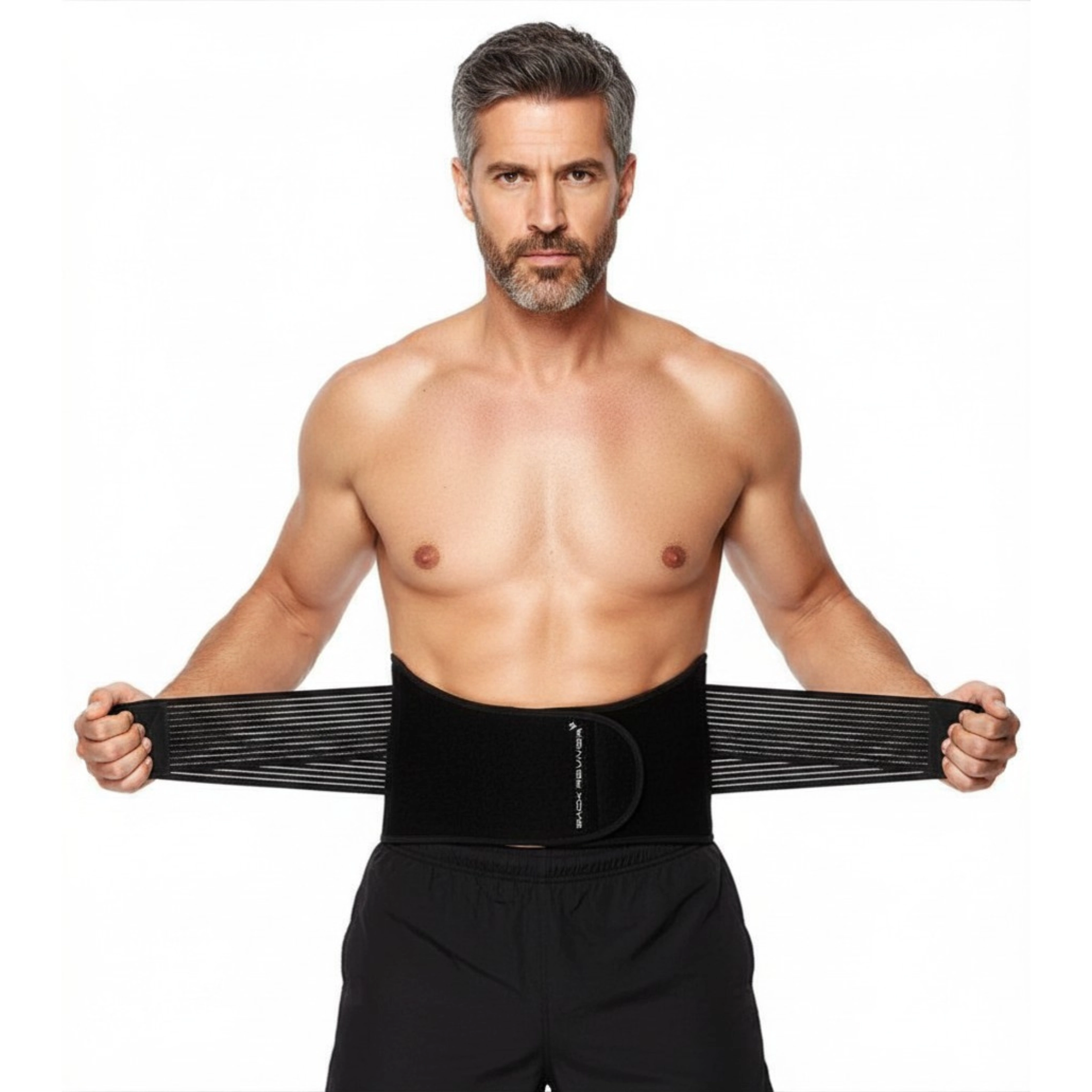
The BackReviver Lower Back Support Belt is a semi-rigid lumbar brace designed for adults with lower back pain. It combines a contoured rigid back panel, eight flexible metal spring stays, thick padded lining, and adjustable compression straps to provide firm, structural support during the tasks and situations that place your lower back under the most strain.
This belt limits forward bending, resists twisting, and encourages your lower back to maintain a stable, neutral position. It reduces the load on your muscles, discs, and joints during lifting, prolonged standing or sitting, physical work, and flare-ups. It’s designed to help you stay active and manage symptoms while your body heals and strengthens.
Available in three sizes. Suitable for men and women. Discreet under clothing. 30-day money-back guarantee.
Understanding Lower Back Pain
Lower back pain is one of the most common problems adults face. It affects how you move, work, sleep, and feel about your body’s ability to cope with everyday demands. For most people, the pain is related to the way the lower back moves and bears load—how you sit, stand, bend, lift, and carry—rather than serious structural damage.
Understanding what’s happening in your lower back, and why certain movements and positions make it worse, is the first step towards managing your symptoms and staying active.
The Lower Back: Structure and Function
The lumbar spine consists of five vertebrae stacked on top of each other, separated by discs that act as shock absorbers. Ligaments—strong fibrous bands—hold the vertebrae together and provide stability. Muscles wrap around the spine, supporting it and controlling movement. Nerves exit the spine through small openings on either side, travelling down into the legs.
The lower back curves inward naturally—a shape called lumbar lordosis. This curve distributes load efficiently and allows the spine to absorb shocks during movement. When this curve is lost—through poor posture, muscle weakness, or prolonged sitting—the load on the discs, ligaments, and joints increases, raising the risk of pain.
The lower back sits between the upper body and legs, carrying weight from above and transferring it below. Every time you bend, twist, lift, or reach, your lower back moves and bears load. Deep abdominal and back muscles wrap around the spine like a natural corset, stabilising it during movement. When these muscles are weak, fatigued, or not working properly, the spine becomes less stable and more vulnerable to strain.
Why the Lower Back Is Vulnerable
The lower back is vulnerable for several reasons:
High load. The lower back carries the weight of your upper body, plus anything you’re holding or lifting. The forces on the discs and joints can be several times your body weight during certain movements.
High mobility. The lower back bends forward and backward, twists, and side-bends. This range of movement is essential for daily life, but it also means the structures are constantly moving and bearing load, which increases wear and tear over time.
Poor posture. Sitting or standing in positions that flatten the lumbar curve, round the shoulders forward, or shift weight unevenly places ongoing strain on the muscles, ligaments, and joints. Over time, this strain leads to fatigue, irritation, and pain.
Weak or imbalanced muscles. If the muscles that support your spine are weak, tight, or not working in coordination, other structures have to compensate. This compensation leads to overload and pain.
Repetitive strain. Jobs or activities that involve repeated bending, lifting, twisting, or reaching place cumulative stress on the lower back. If you don’t have enough strength, flexibility, or recovery time, that stress builds up and eventually causes pain.
Age-related changes. As we get older, the discs lose water content and become thinner and less flexible. The joints develop wear-and-tear changes. The ligaments become thicker and less elastic. These changes don’t always cause pain, but they make the lower back less resilient to strain.
Common Lower Back Pain Patterns
Lower back pain presents in different ways, depending on which structures are affected and what’s causing the problem. Common patterns include:
Muscle strain. Sharp, localised pain that comes on suddenly during or after a movement. Often accompanied by muscle spasms and stiffness. Worse with movement, better with rest.
Mechanical pain. Dull, aching discomfort that varies throughout the day depending on posture and activity. Worse with prolonged sitting, standing, bending, or lifting. Often eases with movement initially, but returns if you overdo it.
Disc-related pain. Deep, intense pain in the lower back, often worse with forward bending, sitting, coughing, or sneezing. May be accompanied by leg pain, tingling, numbness, or weakness if the disc is pressing on a nerve.
Facet joint pain. Pain on one or both sides of the lower back, worse with arching backwards, twisting, or prolonged standing. Often accompanied by stiffness and referred pain into the buttocks or thighs.
Nerve-related pain. Pain that radiates down one or both legs, following the path of a nerve. Often accompanied by tingling, numbness, or weakness. Worse with certain positions and movements that increase nerve compression.
Most lower back pain is mechanical—related to the way the spine moves and bears load—rather than caused by serious structural damage or disease. This is good news, because mechanical pain usually responds well to activity modification, strengthening exercises, posture awareness, and supportive measures like wearing a lumbar support belt.
When to Seek Urgent Medical Advice
Most lower back pain settles down over days to weeks with sensible self-management. However, seek urgent medical advice if you develop:
- Severe or rapidly worsening leg weakness—difficulty walking, standing, or controlling your leg
- Numbness in the saddle area—the area between your legs, including your groin, buttocks, and inner thighs
- Loss of bladder or bowel control—difficulty starting or stopping urination, or loss of bowel control
These are signs of cauda equina syndrome, a rare but serious condition that requires immediate medical attention.
You should also speak to a GP if your pain is severe and not improving after a few weeks, if you have unexplained weight loss, fever, or night sweats, if you’ve had a significant injury or fall, or if you’re unsure what’s causing your pain.
How the BackReviver Belt Works
The BackReviver belt provides semi-rigid lumbar stabilisation. It combines structural support with adjustable compression to limit the movements that aggravate lower back pain, encourage a stable spinal position, and reduce the load on muscles, discs, and joints.
Limiting Aggravating Movements
Forward bending places the highest load on the discs in your lower back and stretches the ligaments and muscles at the back of your spine. For many people with lower back pain—particularly disc-related pain, muscle strain, or nerve compression—forward bending is one of the most painful movements.
The rigid back panel resists forward bending. It doesn’t lock your spine completely, but it limits how far you can bend forward, reducing the pressure on the discs and the strain on the muscles and ligaments. This makes tasks like lifting, bending down to pick something up, or leaning forward over a desk more tolerable.
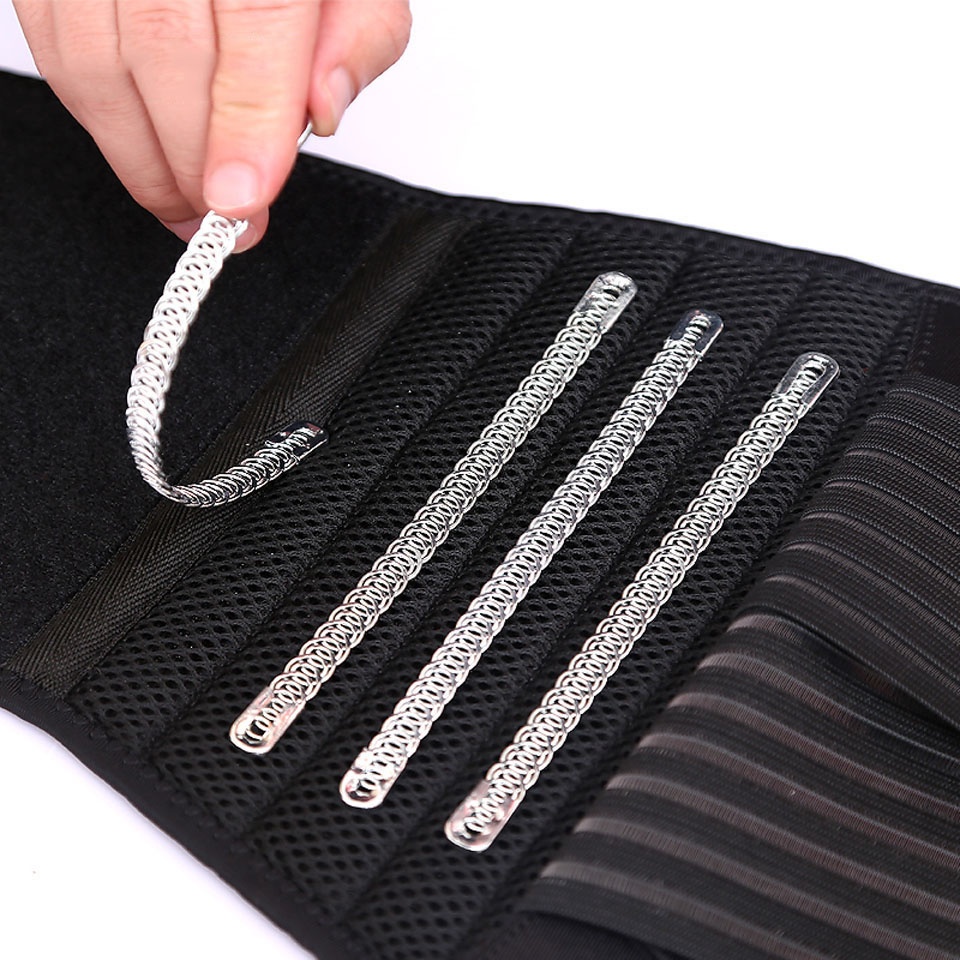
Twisting and side-bending also place significant strain on the lower back, particularly on the facet joints and the muscles that control rotation. The eight flexible metal spring stays—four on each side of the rigid panel—resist twisting and side-bending, keeping your spine in a more controlled, stable position during daily activities.
Arching backwards can aggravate facet joint pain, spinal stenosis, and spondylolisthesis. The rigid panel and stays resist excessive backward arching, reducing the load on the joints at the back of your spine.
Encouraging a Neutral Spinal Position
The rigid back panel is contoured to follow the natural inward curve of the lumbar spine. When you wear the belt, this contoured shape encourages your lower back to maintain its lordosis—the natural curve that distributes load efficiently and keeps the discs, joints, and ligaments in their optimal position.
Sitting or standing in a slumped position flattens this curve, increasing the pressure on the front of the discs and the strain on the ligaments and muscles at the back of your spine. The belt provides a physical reminder and gentle support that helps you maintain better posture throughout the day.
Reducing Load on Muscles and Spine
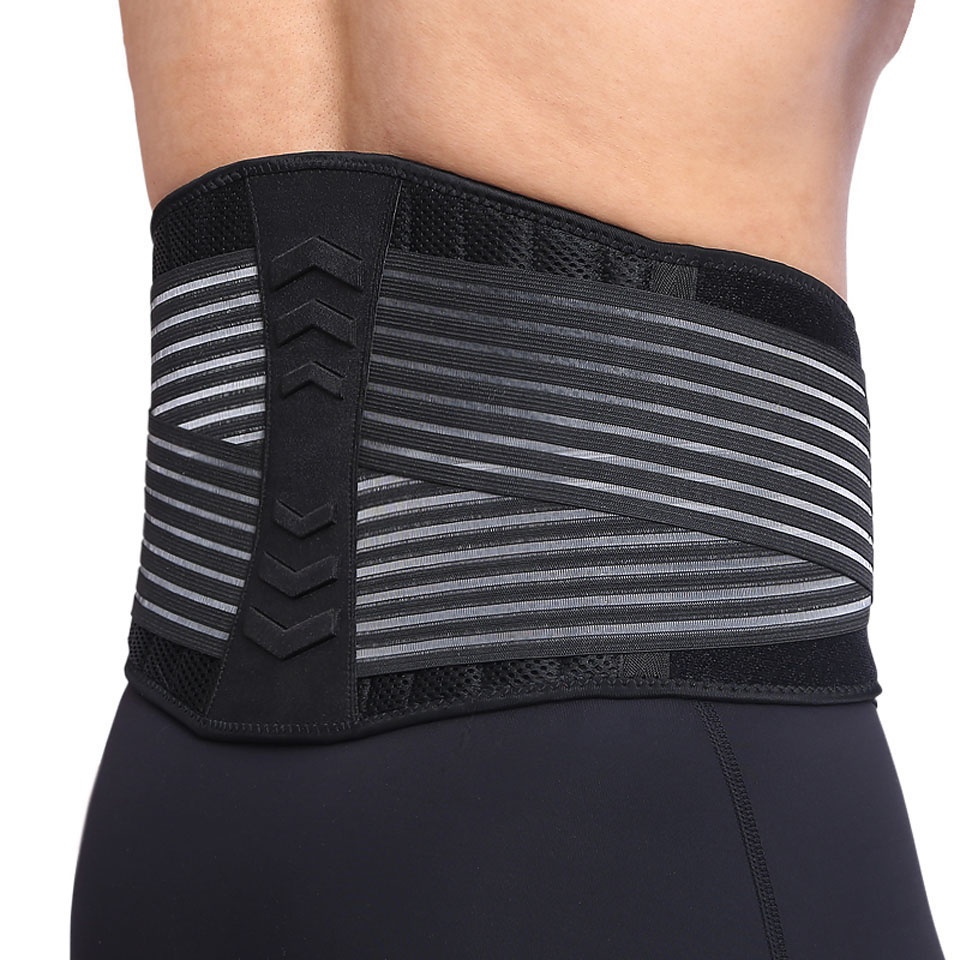
The two wide elastic tension straps wrap around your lower back and abdomen, providing adjustable compression. This compression supports the muscles around your spine, reducing the demand on them during prolonged standing, sitting, or physical tasks.
When your lower back muscles are fatigued, weak, or in spasm—which is common during a pain flare-up—they struggle to support your spine effectively. The external support from the belt takes some of the load, reducing muscle-related pain and helping you move more comfortably.
The compression also increases intra-abdominal pressure slightly. This creates a supportive “cylinder” of pressure around your lower back and abdomen, which helps stabilise your spine and reduces the load on the discs and joints during lifting and bending.
Cushioning Against Shocks and Impacts
The thick padded interior lining cushions your lower back from jolts and impacts—stepping down from a kerb, sitting down quickly, or getting bumped. For someone with an inflamed disc, irritated facet joint, or strained muscle, even small shocks can trigger sharp pain. The padding reduces that risk.
Providing Confidence and Stability
Lower back pain can be frightening, especially if certain movements trigger sharp, intense pain or a feeling that your back might “give way”. The belt provides a sense of protection and stability that helps you keep moving—carefully and within your limits—which is important for recovery.
Prolonged rest and inactivity lead to stiffness, weakness, and deconditioning, which can make pain worse and recovery slower. The belt gives you the support and confidence to stay active during the times when your lower back needs extra help.
Key Features
Contoured Rigid Back Panel
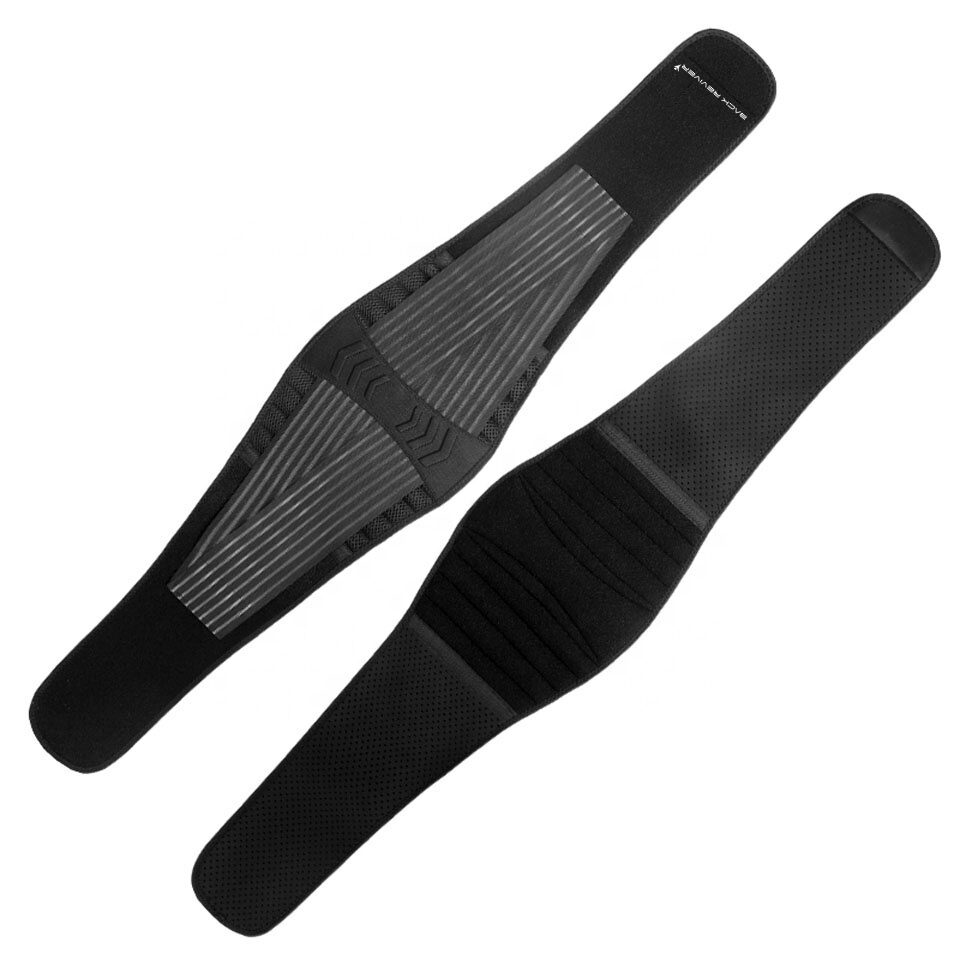
A rigid plastic panel sits over the lumbar spine, shaped to follow the natural inward curve of the lower back. This panel provides structural support that resists forward bending, twisting, and excessive arching. It’s built into the belt and covered with padded fabric for comfort.
Four metal spring stays on each side of the rigid panel—left and right of the spine—provide additional resistance to twisting and side-bending. These stays are flexible enough to allow controlled movement, but firm enough to limit the movements that place your spine at risk.
Thick Padded Interior Lining
The entire interior of the belt is lined with thick padding. This padding sits between the rigid structures and your skin, providing cushioning against shocks and impacts and preventing pressure points during extended wear. The belt feels soft and comfortable against your body, even though the underlying structure is firm.
Breathable Ventilation Layer
A separate breathable layer with ventilation holes sits beneath the fabric covering. This layer allows air to circulate, reducing heat and moisture build-up during prolonged wear. The belt stays comfortable even during physical work or warm conditions.
Elastic Neoprene-Type Main Body
The main body of the belt is made from a stretchy, neoprene-type fabric that moulds to your body shape. This elastic construction provides a snug, secure fit without feeling restrictive, and it moves with you during daily activities.
Two-Stage Adjustable Fastening System
The belt fastens in two stages. First, the main belt wraps around your waist and fastens across the front of your abdomen with a velcro closure. This holds the rigid back panel in position. Then, two wide elastic tension straps—one on each side—pull forward and across your body, fastening with velcro at the front. These straps provide adjustable compression that you can tighten or loosen throughout the day to suit what you’re doing.
This two-stage system gives you control over the level of support. Tighten the straps for maximum support during demanding tasks. Loosen them for comfort during sitting or easier activities.
Height and Coverage
The belt is approximately 6–7 inches tall, providing coverage across the lumbar spine and lower abdomen. This height is enough to support the five lumbar vertebrae and the surrounding muscles without restricting your rib cage or hips.
Slim Profile, Discreet Under Clothing
Despite the rigid panel and metal stays, the belt has a slim profile and sits close to your body. Most people find it’s not noticeable under regular clothing—shirts, jumpers, trousers, jeans. The belt is designed to be worn discreetly during work, social occasions, and daily activities.
Unisex Design, Three Sizes
The belt is suitable for men and women. It’s available in three sizes based on waist measurement:
- Medium: 25.2–28.8 inches (64–73 cm)
- Large: 28.8–32.4 inches (73–82 cm)
- Extra Large: 32.4–36 inches (82–91 cm)
Measure around your waist at the level where the belt will sit—roughly at the top of your hips, covering your lower back. If you’re between sizes, consider your build and preferences. The adjustable tension straps give you flexibility within each size range.
Conditions the Belt May Help Manage
The BackReviver belt is designed to support adults with common mechanical lower back problems. The following accordions provide detailed overviews of specific conditions, explaining what each condition feels like, why it happens, how the belt may help, and when to seek further clinical advice.
These overviews are for general guidance. If you’re unsure what’s causing your pain, or if your symptoms are severe or worsening, speak to a GP or physiotherapist for a personalised assessment.
Lower Back Strain
Lower Back Strain
Lower back strain is one of the most common causes of acute lower back pain. It occurs when the muscles, tendons, or ligaments in your lower back are stretched, torn, or overloaded. This can happen suddenly—during a single awkward movement, a heavy lift, or a fall—or gradually, through repetitive strain over time.
What It Feels Like
The pain from a lower back strain is usually sharp and localised. You can often point to the exact spot where it hurts. The pain typically comes on suddenly, either during the movement that caused the strain or within a few hours afterwards.
Movement makes it worse. Bending forward, twisting, lifting, or reaching can trigger sharp pain or a pulling sensation. Standing up from sitting, getting out of bed, or turning over in bed can be difficult and painful. Coughing, sneezing, or laughing may also hurt, because these actions tense the muscles around your lower back.
Muscle spasms are common. Your lower back muscles may tighten up suddenly and involuntarily, creating a feeling of stiffness or “locking”. These spasms are your body’s way of protecting the injured area by limiting movement, but they can be painful and make it hard to move normally.
Stiffness is typical, especially first thing in the morning or after sitting for a while. Your lower back may feel tight and restricted, and you might need to move slowly and carefully until it loosens up.
The pain usually eases with rest, at least initially. Lying down in a comfortable position often provides relief. However, if you rest for too long—more than a day or two—your muscles can become stiffer and weaker, which can make the pain worse when you try to move again.
Why It Happens
Lower back strain can be caused by a single event or cumulative stress. Common triggers include lifting something heavy with poor technique—bending from your back instead of your legs, twisting while holding a load, or lifting something awkwardly positioned. Sudden, uncontrolled movements—slipping, tripping, catching yourself from a fall, or twisting sharply—can overload the muscles and ligaments before they have time to respond.
Repetitive strain from activities that involve repeated bending, lifting, twisting, or reaching—manual work, gardening, cleaning, caring for children—places cumulative stress on the lower back. If you don’t have enough strength, flexibility, or recovery time, that stress builds up and eventually causes pain.
Poor posture during prolonged sitting or standing places ongoing strain on the muscles and ligaments. Over time, this strain leads to fatigue, irritation, and pain. Weak or imbalanced core muscles mean other structures have to compensate, leading to overload. Previous injury or strain to the lower back can leave the area more vulnerable to re-injury.
How the Belt May Help
The BackReviver belt supports strained muscles and ligaments by limiting the movements that place them under the most stress.
Forward bending and twisting are the two movements most likely to aggravate a lower back strain. The rigid back panel and metal stays resist these movements, reducing the load on the injured tissues. This makes everyday tasks—bending down to pick something up, getting in and out of a car, lifting and carrying—more tolerable during the acute phase of injury.
The compression from the adjustable tension straps supports the muscles around your lower back, reducing the demand on them during movement. When muscles are strained, fatigued, or in spasm, this external support takes some of the load, easing pain and helping you move more comfortably.
The thick padding cushions your lower back from jolts and impacts—stepping down from a kerb, sitting down quickly, or getting bumped. For someone with a fresh muscle strain, even small shocks can trigger sharp pain or muscle spasms. The padding reduces that risk.
The belt provides a sense of stability and protection that helps you keep moving—carefully and within your limits—during the early stages of recovery. Staying gently active is important. Prolonged rest leads to stiffness, weakness, and a longer recovery period. The belt gives you the confidence and support to move without fear of making things worse.
When to Seek Further Help
Most lower back strains settle down within a few days to a couple of weeks with activity modification, gentle movement, and supportive measures like wearing a belt. However, speak to a GP or physiotherapist if your pain is severe and not improving after a few days, if you develop new symptoms such as numbness, tingling, or weakness in your legs, if the pain spreads down your leg, if you’re unable to work or do everyday activities because of the pain, or if you’ve had multiple episodes of lower back strain and want to address the underlying causes.
A physiotherapist can assess your movement patterns, identify any muscle imbalances or weaknesses, and give you exercises to strengthen your core and improve your flexibility. A GP can discuss pain management options and rule out other causes of your pain.
Mechanical Lower Back Pain
Mechanical Lower Back Pain
Mechanical lower back pain is pain related to the way your spine moves and bears load. It’s not caused by infection, tumour, fracture, or inflammatory disease. Instead, it’s related to the everyday stresses and strains placed on the muscles, ligaments, discs, and joints of your lower back during sitting, standing, bending, lifting, and twisting.
Mechanical pain is the most common type of lower back pain. It affects people of all ages and activity levels, and it’s often related to posture, muscle weakness, repetitive strain, or age-related changes in the spine.
What It Feels Like
Mechanical lower back pain is usually described as a dull, aching discomfort across the lower back. It’s often difficult to pinpoint an exact spot—the pain feels more diffuse, spread across the lower back or on one side.
The pain usually comes and goes depending on what you’re doing. It’s worse with certain positions and activities—prolonged sitting, standing, bending, lifting, twisting—and better with others. You might notice that the pain eases when you change position, lie down, or move around gently, but it returns if you stay in one position too long or overdo it.
Stiffness is common, especially first thing in the morning or after sitting for a while. Your lower back may feel tight and restricted, and you might need to move slowly until it loosens up. The pain often returns after prolonged activity, even if you felt fine at the start.
This on-and-off pattern is typical of mechanical lower back pain. The pain is rarely constant. It fluctuates throughout the day depending on posture, activity, and fatigue.
Why It Happens
Mechanical lower back pain develops when the structures in your lower back—muscles, ligaments, discs, joints—are placed under more stress than they can comfortably handle. Common contributing factors include poor posture during prolonged sitting or standing, which places ongoing strain on the muscles and ligaments. Over time, this strain leads to fatigue, irritation, and pain.
Weak or imbalanced core muscles mean the spine doesn’t have the support it needs during movement. Other structures have to compensate, leading to overload. Repetitive strain from activities that involve repeated bending, lifting, twisting, or reaching places cumulative stress on the lower back. If you don’t have enough strength, flexibility, or recovery time, that stress builds up and eventually causes pain.
Age-related changes—discs lose water content and become thinner, joints develop wear-and-tear changes, ligaments become thicker and less elastic—make the lower back less resilient to strain. These changes don’t always cause pain, but they increase the risk. Previous injury or strain to the lower back can leave the area more vulnerable to pain, even from relatively minor stresses.
How the Belt May Help
The BackReviver belt addresses mechanical lower back pain by reducing the movements and positions that place your spine under the most strain.
Prolonged sitting increases the pressure on the discs in your lower back, and sitting in a slumped or poorly supported position makes it worse. The belt encourages you to maintain better posture while sitting, and the compression from the tension straps provides external support that reduces the load on your spine. This makes sitting more tolerable during work, meetings, or long journeys.
Prolonged standing places ongoing load on your lower back muscles and joints. The belt provides external support that reduces muscle fatigue and helps you maintain better posture, making prolonged standing more comfortable.
Bending, lifting, and twisting are the movements that place the highest load on your lower back. The rigid back panel and metal stays resist these movements, reducing the strain on your muscles, discs, and joints during everyday tasks.
The contoured back panel encourages your lower back to maintain its natural inward curve. This distributes load more efficiently and reduces the strain on the discs and ligaments. The compression from the tension straps supports the muscles around your lower back and abdomen, reducing the demand on them during prolonged activity. This prevents the muscle fatigue that often triggers or worsens mechanical lower back pain.
The belt provides external stability that helps you stay active despite the discomfort of mechanical pain. Staying active is important—prolonged inactivity leads to further stiffness, weakness, and worsening pain.
When to Seek Further Help
Mechanical lower back pain often improves with activity modification, strengthening exercises, posture awareness, and supportive measures like wearing a belt. However, speak to a GP or physiotherapist if your pain is getting worse despite using the belt and making changes to your activities, if you develop new symptoms such as numbness, tingling, or weakness in your legs, if the pain is affecting your ability to work, sleep, or do everyday activities, if you’ve been managing the pain for months without improvement, or if you’re unsure what’s causing your pain.
A physiotherapist can assess your movement patterns, give you exercises to strengthen your core and improve your flexibility, and help you identify and change the habits that are contributing to your pain. A GP can discuss pain management options and, if needed, arrange imaging or refer you to a specialist for further assessment.
Disc-Related Pain and Sciatica
Disc-Related Pain and Sciatica
The discs in your lower back sit between the vertebrae, acting as shock absorbers and allowing the spine to bend and twist. Each disc has a tough outer layer and a softer, gel-like centre. When a disc is damaged, irritated, or degenerating, it can cause pain in the lower back. If the disc bulges or herniates and presses on a nerve root, it can cause sciatica—pain that radiates down the leg.
What It Feels Like
Disc-related pain in the lower back is usually deep and intense. It’s often felt in the centre of the lower back, though it can spread to one or both sides. The pain is typically worse with forward bending, sitting, coughing, sneezing, or straining. These actions increase the pressure inside the disc, which aggravates the irritation.
Sitting is often particularly uncomfortable, especially sitting in a slumped position or on a soft surface that doesn’t support your lower back. Standing and walking may ease the pain initially, but it often returns if you’re on your feet for too long.
If the disc is pressing on a nerve root, you may develop sciatica—pain that radiates down one leg, following the path of the sciatic nerve. Sciatica pain is often described as sharp, burning, or shooting. It typically travels down the buttock, the back of the thigh, and into the calf or foot. It may be accompanied by tingling, numbness, or a feeling of weakness in the leg.
Sciatica is usually worse on one side, though in some cases both legs can be affected. The leg pain is often more troublesome than the lower back pain. Certain positions and movements—sitting, bending forward, coughing, sneezing—make it worse. Lying down or standing may ease it.
Why It Happens
Disc problems can develop for several reasons. Acute injury—a heavy lift, an awkward movement, a fall—can damage the outer layer of the disc, causing it to bulge or tear. Repetitive strain from activities that involve repeated bending, lifting, or twisting can place cumulative stress on the discs, leading to gradual wear and irritation.
Age-related degeneration is common. As we get older, the discs lose water content and become thinner, drier, and less flexible. The outer layer can develop small tears, and the disc may bulge or flatten. These changes don’t always cause pain, but they make the disc more vulnerable to injury and irritation.
Poor posture, particularly prolonged sitting in a slumped position, increases the pressure on the front of the discs and places ongoing strain on the outer layer. Over time, this strain can lead to disc irritation and pain.
How the Belt May Help
The BackReviver belt cannot heal a damaged disc or push a bulging disc back into place, but it can reduce the movements and positions that increase disc pressure and nerve compression.
Forward bending places the highest load on the discs in your lower back. The rigid back panel resists forward bending, limiting how far you can bend and reducing the pressure on the discs. This makes tasks like lifting, bending down to pick something up, or leaning forward over a desk more tolerable.
Sitting increases the pressure on the discs, particularly if you’re sitting in a slumped or poorly supported position. The belt encourages you to maintain better posture while sitting, and the compression from the tension straps provides external support that reduces the load on your spine. This makes sitting more tolerable during work, meetings, or long journeys.
The contoured back panel encourages your lower back to maintain its natural inward curve. This distributes load more evenly across the disc, rather than concentrating it on the front edge, which is where most disc problems occur.
The compression from the adjustable tension straps increases intra-abdominal pressure slightly, creating a supportive cylinder of pressure around your lower back and abdomen. This helps stabilise your spine and reduces the load on the discs during lifting and bending.
If the disc is pressing on a nerve and causing sciatica, reducing the pressure on the disc can reduce the nerve compression, which may ease leg symptoms. However, the belt is not a cure for sciatica. If your leg symptoms are severe, worsening, or accompanied by significant weakness, numbness in the saddle area, or loss of bladder or bowel control, you need urgent medical advice.
When to Seek Further Help
Many disc problems settle down over weeks to months with activity modification, gentle movement, and supportive measures like wearing a belt. However, speak to a GP or physiotherapist if your pain is severe and not improving after a few weeks, if you develop new or worsening leg symptoms—pain, tingling, numbness, or weakness, if you experience severe or rapidly worsening leg weakness—difficulty walking, standing, or controlling your leg, if you develop numbness in the saddle area—the area between your legs, including your groin, buttocks, and inner thighs—or loss of bladder or bowel control (these are signs of cauda equina syndrome and require urgent medical attention), or if conservative measures are not helping and your symptoms are severely affecting your quality of life.
A physiotherapist can give you exercises to strengthen your core and improve your movement patterns, which can reduce the load on your discs and help prevent future problems. A GP or specialist can arrange imaging to assess the disc and discuss other treatment options, including pain management or, in some cases, surgery.
Lumbar Spondylosis (Degenerative Changes)
Lumbar Spondylosis (Degenerative Changes)
Lumbar spondylosis is the medical term for age-related wear-and-tear changes in the lower back. As we get older, the discs lose water content and become thinner and less flexible. The facet joints—the small joints at the back of the spine—develop wear-and-tear changes, and the bones may develop small spurs. The ligaments can become thicker and less elastic.
These changes are a normal part of ageing. They don’t always cause pain, and many people have significant degenerative changes on imaging but no symptoms at all. However, for some people, these changes lead to stiffness, discomfort, and reduced tolerance for certain activities.
What It Feels Like
The pain from lumbar spondylosis is usually a dull, aching discomfort across the lower back. It’s often worse first thing in the morning or after sitting for a while, and it eases once you’ve moved around and loosened up. Stiffness is common—your lower back may feel tight and restricted, and you might need to move slowly and carefully until it warms up.
The pain is typically worse with prolonged activity—standing, walking, bending, lifting—and better with rest, at least initially. However, if you rest for too long, the stiffness can get worse. The pain often returns after prolonged activity, even if you felt fine at the start.
Some people with lumbar spondylosis also experience referred pain—discomfort that spreads into the buttocks or the back of the thighs. This is different from sciatica, which involves nerve compression and radiates down the leg with tingling or numbness. Referred pain from degenerative changes is usually a dull ache that doesn’t travel below the knee and isn’t accompanied by neurological symptoms.
Why It Happens
Lumbar spondylosis is primarily related to ageing. Over time, the discs lose water content and become thinner, the cartilage in the facet joints wears down, and the bones develop small spurs as the body tries to stabilise the spine. These changes are more common in people who have done physically demanding work, who have had previous injuries to the lower back, or who have poor posture or weak core muscles.
However, degenerative changes are found in many people who have never had lower back pain, and the severity of the changes on imaging doesn’t always match the severity of symptoms. Some people with significant degeneration have minimal pain, while others with mild changes have considerable discomfort.
How the Belt May Help
The BackReviver belt cannot reverse degenerative changes, but it can help manage the symptoms by reducing the movements and positions that place your spine under the most strain.
Prolonged standing and walking place ongoing load on the degenerative joints and discs. The belt provides external support that reduces muscle fatigue and helps you maintain better posture, making prolonged standing and walking more tolerable.
Bending, lifting, and twisting place high loads on the discs and joints. The rigid back panel and metal stays resist these movements, reducing the strain on the degenerative structures during everyday tasks.
The contoured back panel encourages your lower back to maintain its natural curve, which distributes load more evenly across the discs and joints. The compression from the tension straps supports the muscles around your lower back and abdomen, reducing the demand on them during prolonged activity. This prevents the muscle fatigue that often accompanies degenerative lower back pain.
The belt provides external stability that helps you stay active despite the discomfort of degenerative changes. Staying active is important—prolonged inactivity leads to further stiffness, weakness, and worsening pain.
When to Seek Further Help
Lumbar spondylosis is usually managed with activity modification, strengthening exercises, and supportive measures like wearing a belt. However, speak to a GP or physiotherapist if your pain is getting worse despite using the belt and making changes to your activities, if you develop new symptoms such as numbness, tingling, or weakness in your legs, if the pain is affecting your ability to work, sleep, or do everyday activities, if you’ve been managing the pain for months without improvement, or if you’re unsure what’s causing your pain.
A physiotherapist can give you exercises to strengthen your core and improve your flexibility, which can help compensate for the degenerative changes and reduce symptoms. A GP can discuss pain management options and, if needed, arrange imaging or refer you to a specialist for further assessment.
Facet Joint Pain
Facet Joint Pain
Facet joints connect each vertebra to the one above and below, guiding spinal movement. These small joints sit at the back of the spine, on either side. They allow your lower back to bend, twist, and arch backwards, but they also bear load, particularly when you’re standing upright or arching backwards.
Facet joint pain occurs when these joints become irritated, inflamed, or worn down. This can happen through acute injury, repetitive strain, or age-related wear-and-tear changes.
What It Feels Like
Facet joint pain is usually felt on one or both sides of the lower back, rather than in the centre. The pain is often described as a deep ache or stiffness, though it can be sharp during certain movements.
Arching backwards is typically the most painful movement. Standing for long periods, walking downhill, or reaching overhead can all aggravate facet joint pain because these activities increase the load on the joints at the back of your spine. Twisting can also be uncomfortable.
Forward bending often eases the pain, at least temporarily, because it opens up the space at the back of the spine and reduces the load on the facet joints. However, if you bend forward for too long or too far, the pain may return when you straighten up.
Stiffness is common, especially first thing in the morning or after sitting for a while. Your lower back may feel tight and restricted, and you might need to move slowly until it loosens up.
Some people with facet joint pain also experience referred pain—discomfort that spreads into the buttocks or the back of the thighs. This is different from sciatica. Referred pain from facet joints is usually a dull ache that doesn’t travel below the knee and isn’t accompanied by tingling, numbness, or weakness.
Why It Happens
Facet joint pain can develop through acute injury—a sudden twist, a fall, or an awkward movement that jars the joint. Repetitive strain from activities that involve repeated arching backwards, twisting, or prolonged standing can place cumulative stress on the facet joints, leading to irritation and pain.
Age-related wear-and-tear changes are common. The cartilage that lines the facet joints can wear down over time, and the joints can develop arthritic changes. These changes are more common in people who have done physically demanding work, who have had previous injuries to the lower back, or who have poor posture or weak core muscles.
Poor posture, particularly standing or sitting with an exaggerated arch in the lower back, increases the load on the facet joints. Over time, this can lead to irritation and pain.
How the Belt May Help
The BackReviver belt reduces the movements and positions that place the facet joints under the most strain.
Arching backwards increases the load on the facet joints. The rigid back panel and metal stays resist excessive backward arching, reducing the load on the joints at the back of your spine. This makes prolonged standing, walking, and reaching overhead more tolerable.
Twisting places rotational stress on the facet joints. The eight metal spring stays—four on each side of the rigid panel—resist twisting, keeping your spine in a more controlled, stable position during daily activities.
Prolonged standing places ongoing load on the facet joints. The belt provides external support that reduces muscle fatigue and helps you maintain better posture, making prolonged standing more comfortable.
The contoured back panel encourages your lower back to maintain its natural curve without excessive arching. This distributes load more evenly and reduces the strain on the facet joints. The compression from the tension straps supports the muscles around your lower back and abdomen, reducing the demand on them during prolonged activity. This prevents the muscle fatigue that often accompanies facet joint pain.
When to Seek Further Help
Facet joint pain often improves with activity modification, strengthening exercises, and supportive measures like wearing a belt. However, speak to a GP or physiotherapist if your pain is getting worse despite using the belt and making changes to your activities, if you develop new symptoms such as numbness, tingling, or weakness in your legs, if the pain is affecting your ability to work, sleep, or do everyday activities, if you’ve been managing the pain for months without improvement, or if you’re unsure what’s causing your pain.
A physiotherapist can give you exercises to strengthen your core and improve your movement patterns, which can reduce the load on your facet joints. A GP can discuss pain management options and, if needed, arrange imaging or refer you to a specialist for further assessment. In some cases, facet joint injections may be considered to reduce inflammation and pain.
Lumbar Spinal Stenosis
Lumbar Spinal Stenosis
Lumbar spinal stenosis is a narrowing of the spaces within the lower spine. This narrowing can compress the spinal cord or the nerve roots that exit the spine, causing pain, tingling, numbness, or weakness in the lower back and legs.
Stenosis is most commonly caused by age-related changes. As the discs lose height, the facet joints develop arthritic changes, and the ligaments thicken, the spaces within the spine become smaller. This gradual narrowing can eventually compress the nerves.
What It Feels Like
The main symptom is leg pain that comes on with walking or standing and eases with sitting or bending forward. This pattern is typical of lumbar spinal stenosis and helps distinguish it from other causes of leg pain.
When you walk or stand upright, the spaces within your spine become narrower, increasing the compression on the nerves. This causes pain, heaviness, cramping, or weakness in one or both legs. The pain usually starts in the buttocks or thighs and spreads down into the calves or feet. It may be accompanied by tingling, numbness, or a feeling that your legs are about to give way.
Sitting down or bending forward opens up the spaces within the spine, reducing the compression on the nerves and easing the leg symptoms. Many people with spinal stenosis find that they can walk further if they lean forward slightly—for example, pushing a shopping trolley or leaning on a walking stick.
Lower back pain is common, but it’s often less troublesome than the leg symptoms. The lower back may feel stiff and achy, particularly after prolonged standing or walking.
Why It Happens
Lumbar spinal stenosis is primarily related to ageing. Over time, the discs lose height, the facet joints develop arthritic changes and may enlarge, and the ligaments that run along the back of the spine can thicken. All of these changes reduce the space available for the spinal cord and nerve roots.
Some people are born with a naturally narrow spinal canal, which makes them more vulnerable to stenosis as they age. Previous injuries, disc problems, or spinal surgery can also increase the risk.
How the Belt May Help
The BackReviver belt cannot widen the spaces within your spine, but it can help manage symptoms by encouraging a spinal position that reduces nerve compression.
Standing upright or arching backwards narrows the spaces within the spine, increasing the compression on the nerves. The rigid back panel and metal stays resist excessive backward arching, helping you maintain a more neutral or slightly forward-flexed position. This can reduce nerve compression and ease leg symptoms during standing and walking.
The belt provides external support that reduces muscle fatigue during prolonged standing and walking. When your lower back muscles are fatigued, you’re more likely to arch backwards or lose good posture, which can worsen nerve compression. The belt helps you maintain better posture for longer.
The compression from the tension straps supports the muscles around your lower back and abdomen, reducing the demand on them during activity. This can help you stay active for longer before symptoms develop.
The belt provides a sense of stability and support that helps you keep moving—carefully and within your limits—which is important for maintaining strength and function. However, the belt is not a cure for spinal stenosis. If your leg symptoms are severe, worsening, or significantly affecting your ability to walk and do everyday activities, you may need other treatments.
When to Seek Further Help
Speak to a GP or physiotherapist if your leg symptoms are getting worse despite using the belt and making changes to your activities, if you’re unable to walk more than a short distance before leg pain or weakness forces you to stop, if you develop severe or rapidly worsening leg weakness—difficulty walking, standing, or controlling your leg, if you develop numbness in the saddle area—the area between your legs, including your groin, buttocks, and inner thighs—or loss of bladder or bowel control (these are signs of cauda equina syndrome and require urgent medical attention), or if conservative measures are not helping and your symptoms are severely affecting your quality of life.
A physiotherapist can give you exercises to strengthen your core and improve your flexibility, which can help you maintain function and reduce symptoms. A GP or specialist can arrange imaging to assess the severity of the stenosis and discuss other treatment options, including pain management, injections, or, in some cases, surgery to widen the spaces within the spine.
Spondylolisthesis
Spondylolisthesis
Spondylolisthesis occurs when one vertebra slips forward over the vertebra below it. This slippage can happen at any level of the spine, but it’s most common in the lower back, particularly at the junction between the lowest lumbar vertebra and the sacrum.
The slippage can be caused by a defect in the bone—often present from birth or developing during childhood—or by age-related degeneration of the discs and facet joints. In some cases, it’s related to a stress fracture in the bone, which can occur in athletes who do repetitive arching and twisting movements.
What It Feels Like
Many people with spondylolisthesis have no symptoms at all. The slippage is discovered incidentally on imaging done for another reason. However, for some people, the slippage causes lower back pain, stiffness, and reduced tolerance for certain activities.
The pain is usually a dull ache across the lower back, often worse with prolonged standing, walking, or arching backwards. Bending forward may ease the pain temporarily. Stiffness is common, particularly first thing in the morning or after sitting for a while.
Some people also get leg symptoms: pain, tingling, numbness, or weakness down one or both legs. This happens when the slipped vertebra narrows the space available for the nerve roots, compressing them. The leg symptoms are often worse with standing and walking, and better with sitting or bending forward—similar to the pattern seen in spinal stenosis.
Why It Happens
Spondylolisthesis can develop for several reasons. A defect in the bone—called a pars defect or spondylolysis—can allow one vertebra to slip forward over the one below. This defect is sometimes present from birth, or it can develop during childhood or adolescence, particularly in young athletes who do repetitive arching and twisting movements such as gymnastics, diving, or cricket bowling.
Age-related degeneration of the discs and facet joints can also lead to spondylolisthesis. As the discs lose height and the facet joints wear down, the spine becomes less stable, and one vertebra may gradually slip forward. This type of spondylolisthesis is more common in older adults.
Previous injury or surgery to the lower back can increase the risk of spondylolisthesis by weakening the structures that normally hold the vertebrae in place.
How the Belt May Help
The BackReviver belt cannot push a slipped vertebra back into place, but it can help manage symptoms by providing external stability and reducing the movements that place your spine under the most strain.
Arching backwards and prolonged standing increase the load on the slipped vertebra and can worsen symptoms. The rigid back panel and metal stays resist excessive backward arching, helping you maintain a more neutral spinal position. This reduces the load on the affected area and can ease lower back pain.
If the slippage is compressing a nerve and causing leg symptoms, maintaining a more neutral or slightly forward-flexed position can reduce nerve compression and ease leg pain, tingling, or numbness. The belt encourages this position during standing and walking.
The compression from the tension straps supports the muscles around your lower back and abdomen, reducing the demand on them during activity. This can help you stay active for longer before symptoms develop.
The belt provides external stability that helps you keep moving—carefully and within your limits—which is important for maintaining strength and function. However, the belt is not a cure for spondylolisthesis. If your symptoms are severe, worsening, or significantly affecting your ability to do everyday activities, you may need other treatments.
When to Seek Further Help
Speak to a GP or physiotherapist if your pain is getting worse despite using the belt and making changes to your activities, if you develop new or worsening leg symptoms—pain, tingling, numbness, or weakness, if you experience severe or rapidly worsening leg weakness—difficulty walking, standing, or controlling your leg, if you develop numbness in the saddle area—the area between your legs, including your groin, buttocks, and inner thighs—or loss of bladder or bowel control (these are signs of cauda equina syndrome and require urgent medical attention), or if conservative measures are not helping and your symptoms are severely affecting your quality of life.
A physiotherapist can give you exercises to strengthen your core and improve your stability, which can help compensate for the slippage and reduce symptoms. A GP or specialist can arrange imaging to assess the severity of the slippage and discuss other treatment options, including pain management or, in some cases, surgery to stabilise the spine.
When to Wear the Belt
The BackReviver belt is designed to provide support during the tasks and situations that place your lower back under the most strain. You don’t need to wear it all the time. Use it strategically during the activities that aggravate your pain, and take it off during rest periods and activities that don’t cause discomfort.
Lifting and Carrying
Lifting and carrying place high loads on your lower back, particularly if you’re lifting something heavy, awkwardly positioned, or from a low height. The belt limits forward bending and twisting, encourages better posture, and provides external support that reduces the load on your muscles and spine. Wear it during manual work, moving furniture, lifting boxes, carrying shopping, or any task that involves repeated or heavy lifting.
Prolonged Standing
Standing for long periods places ongoing load on your lower back muscles and joints. The belt provides external support that reduces muscle fatigue and helps you maintain better posture. Wear it during work that involves prolonged standing—retail, hospitality, healthcare, teaching—or during activities like cooking, ironing, or attending events where you’ll be on your feet for extended periods.
Prolonged Sitting
Sitting increases the pressure on the discs in your lower back, and sitting in a slumped or poorly supported position makes it worse. The belt encourages you to maintain better posture while sitting, and the compression from the tension straps provides external support that reduces the load on your spine. Wear it during desk work, meetings, long journeys, or any situation where you’ll be sitting for extended periods.
Physical Work and Demanding Tasks
Jobs or activities that involve repeated bending, lifting, twisting, reaching, or carrying place cumulative stress on your lower back. The belt provides structural support and stability that helps you manage these demands more safely. Wear it during manual work, gardening, DIY projects, cleaning, or caring for children or dependents.
During Pain Flare-Ups
Pain flare-ups—periods when your symptoms are worse than usual—can be triggered by overactivity, poor posture, stress, or simply the natural fluctuation of your condition. During a flare-up, your lower back is more sensitive, and movements that are usually tolerable may become painful. The belt provides extra support and stability during these periods, helping you stay active and manage symptoms while your back settles down.
Returning to Activity After Rest
If you’ve had to rest because of severe pain, returning to normal activity can be daunting. The belt provides confidence and support during this transition, helping you gradually rebuild your tolerance for movement and activity without fear of making things worse.
When Not to Wear the Belt
Take the belt off during rest periods—sitting comfortably at home, lying down, relaxing—and during activities that don’t aggravate your pain. Your muscles need to stay active. If you wear the belt constantly, even when you don’t need it, your muscles may become reliant on the external support and lose strength over time.
Do not wear the belt while sleeping. Your body needs to move freely during sleep, and wearing a rigid support overnight can cause discomfort and restrict natural movement.
Use the belt as a tool to help you stay active and manage symptoms during demanding tasks and flare-ups, not as a permanent replacement for your own muscle strength and stability.
How to Fit and Adjust the Belt
Proper fit and adjustment are essential for comfort and effectiveness. The belt should feel snug and supportive without being uncomfortably tight or restrictive. Follow these steps to put the belt on and adjust it correctly.
Putting the Belt On
Step 1: Position the rigid back panel. Stand upright and hold the belt so the rigid back panel is centred over your lower back, covering the lumbar spine. The bottom edge of the belt should sit roughly at the top of your hips. The top edge should sit below your rib cage. The rigid panel should be in the middle of your lower back, not off to one side.
Step 2: Wrap the main belt around your waist. Wrap the main belt around your waist and fasten it across the front of your abdomen using the velcro closure. Pull it snug, but not tight. This first stage holds the rigid back panel in position against your lower back.
Step 3: Adjust the tension straps. Take the two wide elastic tension straps—one on each side—and pull them forward and across your body. Fasten them with velcro at the front of the belt. These straps provide the compression and adjustable support. Pull them as tight as feels comfortable and supportive. You should feel firm, even pressure around your lower back and abdomen, but you should still be able to breathe comfortably and move without restriction.
Checking the Fit
Once the belt is fastened, check the following:
The rigid back panel should be centred over your lower back, covering the lumbar spine from roughly the bottom of your rib cage to the top of your hips. It should not be sitting too high or too low, and it should not be twisted or off to one side.
The belt should feel snug and supportive, but not uncomfortably tight. You should be able to breathe comfortably, bend slightly, and move without the belt digging in or causing pain.
The tension straps should be fastened securely, with no loose ends flapping around. The velcro should hold firmly without slipping.
The belt should not ride up or slip down during movement. If it does, adjust the position of the rigid back panel and tighten the tension straps slightly.
Adjusting Throughout the Day
You can adjust the tension straps throughout the day to suit what you’re doing. Tighten them for maximum support during demanding tasks—lifting, prolonged standing, physical work. Loosen them slightly for comfort during sitting or easier activities. If the belt feels uncomfortable at any point, loosen the tension straps or take the belt off for a break.
Wearing Under Clothing
The belt can be worn directly against your skin or over a thin layer of clothing—a T-shirt or vest. Wearing it over a thin layer can be more comfortable, particularly if you have sensitive skin or if you’re wearing the belt for extended periods. The belt has a slim profile and is usually not noticeable under regular clothing—shirts, jumpers, trousers, jeans.
Care and Maintenance
Proper care will keep the belt clean, comfortable, and effective for longer.
Cleaning
Wipe the belt regularly with a damp cloth to remove sweat, dirt, and skin oils. For deeper cleaning, hand wash the belt in warm water with a mild detergent. Do not use bleach or harsh chemicals. Rinse thoroughly and allow the belt to air dry completely before wearing it again. Do not tumble dry, iron, or dry clean the belt. Do not immerse the rigid back panel or metal stays in water for extended periods.
Storage
Store the belt in a cool, dry place away from direct sunlight and heat sources. Do not fold or crease the rigid back panel. Lay the belt flat or hang it up to maintain its shape.
Checking the Condition
Check the belt regularly for signs of wear—fraying fabric, weakened velcro, bent or damaged stays, cracks in the rigid panel. If the belt is damaged or no longer provides adequate support, replace it. A worn or damaged belt may not provide the support you need and could cause discomfort.
Sizing and Fit
The BackReviver belt is available in three sizes based on waist measurement. Measure around your waist at the level where the belt will sit—roughly at the top of your hips, covering your lower back. Use a tape measure and measure over the clothing you’ll typically wear under the belt, or measure directly against your skin.
Size Chart
- Medium: 25.2–28.8 inches (64–73 cm)
- Large: 28.8–32.4 inches (73–82 cm)
- Extra Large: 32.4–36 inches (82–91 cm)
Choosing Your Size
If your measurement falls within one size range, choose that size. If you’re between sizes, consider your build and preferences. If you prefer a firmer, more supportive fit, choose the smaller size. If you prefer a more comfortable, less restrictive fit, choose the larger size. The adjustable tension straps give you flexibility within each size range, so you can fine-tune the fit to suit your needs.
Unisex Design
The belt is suitable for men and women. The sizing is based on waist measurement, not gender, so choose the size that matches your measurement.
If You’re Unsure
If you’re unsure which size to choose, or if your measurement falls outside the available size range, contact customer support for advice before ordering. A belt that’s too small will be uncomfortable and restrictive. A belt that’s too large will not provide adequate support and may slip or ride up during movement.
Cautions and Warnings
The BackReviver belt is designed for adults with mechanical lower back pain. Read the following cautions before use.
Do Not Wear While Sleeping
Do not wear the belt while sleeping. Your body needs to move freely during sleep, and wearing a rigid support overnight can cause discomfort and restrict natural movement.
Not a Substitute for Medical Advice
The belt is a supportive aid, not a cure. It cannot heal damaged discs, repair torn ligaments, reverse degenerative changes, or push slipped vertebrae back into place. If you’re unsure what’s causing your pain, or if your symptoms are severe or worsening, speak to a GP or physiotherapist for a proper assessment.
Seek Urgent Medical Advice If You Develop
- Severe or rapidly worsening leg weakness—difficulty walking, standing, or controlling your leg
- Numbness in the saddle area—the area between your legs, including your groin, buttocks, and inner thighs
- Loss of bladder or bowel control—difficulty starting or stopping urination, or loss of bowel control
These are signs of cauda equina syndrome, a rare but serious condition that requires immediate medical attention.
Avoid Over-Reliance
Use the belt strategically during the tasks and situations that place your lower back under the most strain. Take it off during rest periods and activities that don’t aggravate your pain. If you wear the belt constantly, even when you don’t need it, your muscles may become reliant on the external support and lose strength over time. The goal is to use the belt as a tool to help you stay active and manage symptoms while you work on strengthening your core and improving your movement patterns.
Skin Irritation
If you develop skin irritation, redness, or discomfort from wearing the belt, take it off and allow your skin to recover. Wearing the belt over a thin layer of clothing—a T-shirt or vest—can reduce the risk of irritation. If irritation persists, stop using the belt and speak to a healthcare professional.
Circulation or Breathing Difficulties
If the belt feels too tight, causes numbness or tingling, restricts your breathing, or causes any other discomfort, loosen the tension straps or take the belt off. The belt should feel snug and supportive, but never uncomfortably tight or restrictive.
Pregnancy
If you’re pregnant, speak to your GP or midwife before using a lumbar support belt. Some supports are suitable for pregnancy-related lower back pain, but you should get professional advice first.
Recent Surgery or Injury
If you’ve had recent surgery or a significant injury to your lower back, abdomen, or pelvis, speak to your surgeon or physiotherapist before using the belt. You may need specific guidance on when and how to use external support during your recovery.
Existing Medical Conditions
If you have any existing medical conditions affecting your lower back, abdomen, or circulation, speak to a healthcare professional before using the belt. This includes conditions such as abdominal hernias, severe osteoporosis, spinal fractures, infections, tumours, or inflammatory spinal conditions.
Warranty and Returns
30-Day Money-Back Guarantee
We offer a 30-day money-back guarantee. If you’re not satisfied with the belt for any reason, you can return it within 30 days of delivery for a full refund. The belt should be in clean, resaleable condition. Contact customer support to arrange a return.
Warranty
The belt is covered by a manufacturer’s warranty against defects in materials and workmanship. If the belt develops a fault during normal use within the warranty period, we’ll repair or replace it free of charge. The warranty does not cover damage caused by misuse, improper care, or normal wear and tear. Contact customer support for warranty claims.
Customer Support
If you have any questions about sizing, fitting, using, or caring for the belt, contact our customer support team. We’re here to help you get the most out of your BackReviver belt.
Summary
The BackReviver Lower Back Support Belt is a semi-rigid lumbar brace designed for adults with lower back pain. It combines a contoured rigid back panel, eight flexible metal spring stays, thick padded lining, and adjustable compression straps to provide firm, structural support during the tasks and situations that place your lower back under the most strain.
The belt limits forward bending, resists twisting, and encourages your lower back to maintain a stable, neutral position. It reduces the load on your muscles, discs, and joints during lifting, prolonged standing or sitting, physical work, and flare-ups. It’s designed to help you stay active and manage symptoms while your body heals and strengthens.
Use the belt strategically during demanding tasks and pain flare-ups. Take it off during rest periods and activities that don’t cause discomfort. Combine the belt with strengthening exercises, posture awareness, and activity modification for the best results.
Available in three sizes. Suitable for men and women. Discreet under clothing. 30-day money-back guarantee.
If you’re unsure what’s causing your pain, or if your symptoms are severe or worsening, speak to a GP or physiotherapist for a proper assessment and personalised advice.

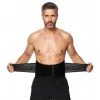
by Andrew
My husband bought this support for lower back pain after steroid injections failed to work. He would definitely recommend this product for giving back pain relief! Just ordered another one.
by Mike Anderson
I’ve been suffering from lower back pain ever since I started working from home. With my makeshift office setup, my back was taking quite a hit. My wife suggested I try a lower back support, and after reading some reviews, I decided on this one. It’s been a game-changer.
The first thing I noticed was how easy it was to put on. The design is intuitive, and I didn’t have to wrestle with it to get it in place. Within days, I could feel a difference. My posture improved, and the pain that would usually creep in by early afternoon was significantly reduced.
What’s really cool is that it’s not bulky at all. I can wear it under my clothes without it being noticeable, which is a big plus during video calls. Also, the velcro straps are strong and secure, so I don’t have to keep readjusting it throughout the day.
I even wore it during a long drive last weekend, which is usually a nightmare for my back. Surprisingly, I got through the trip without the usual aches and pains. It’s become an essential part of my daily routine, and I can’t imagine going back to life without it.