
Therapeutic Gloves
£9.99inc VAT
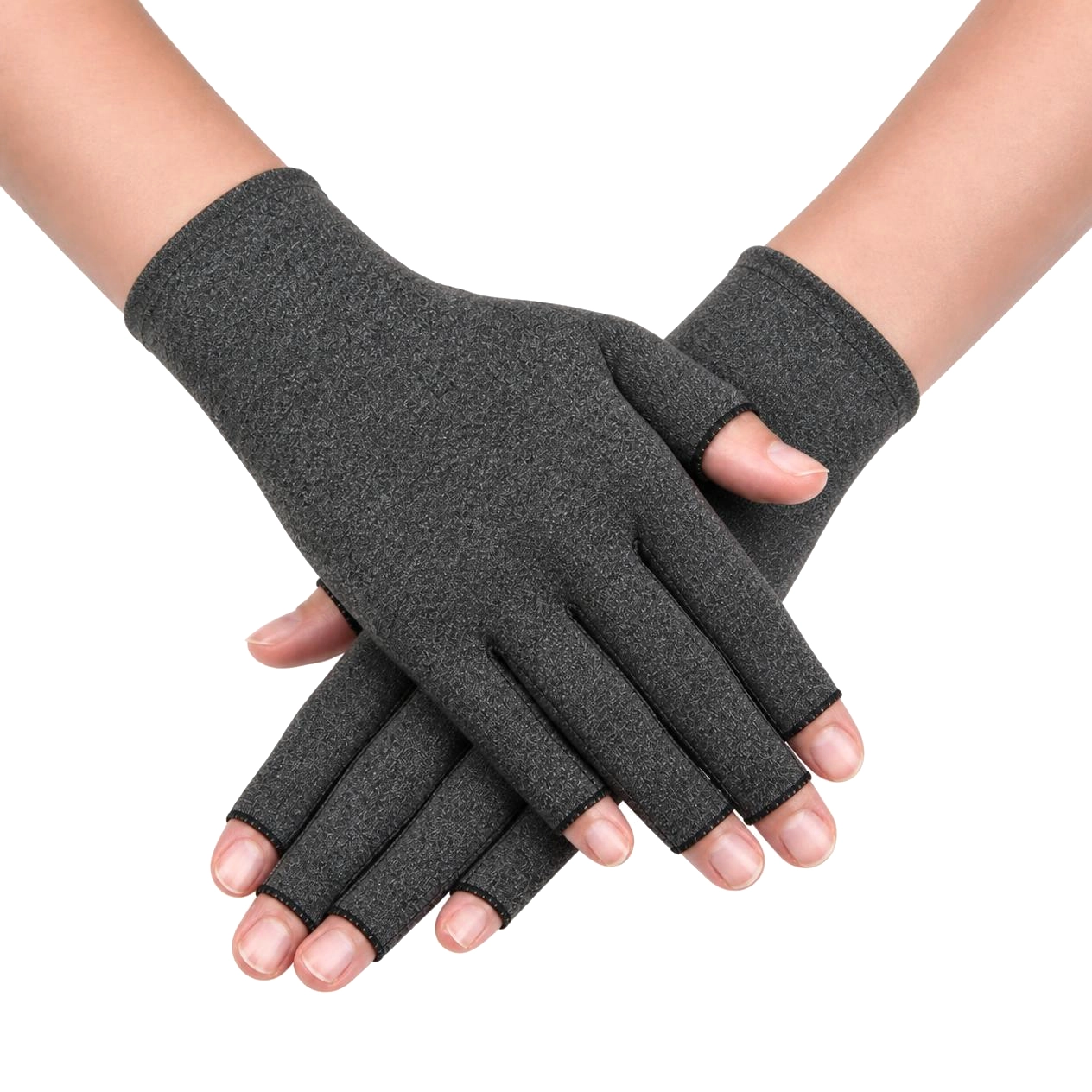
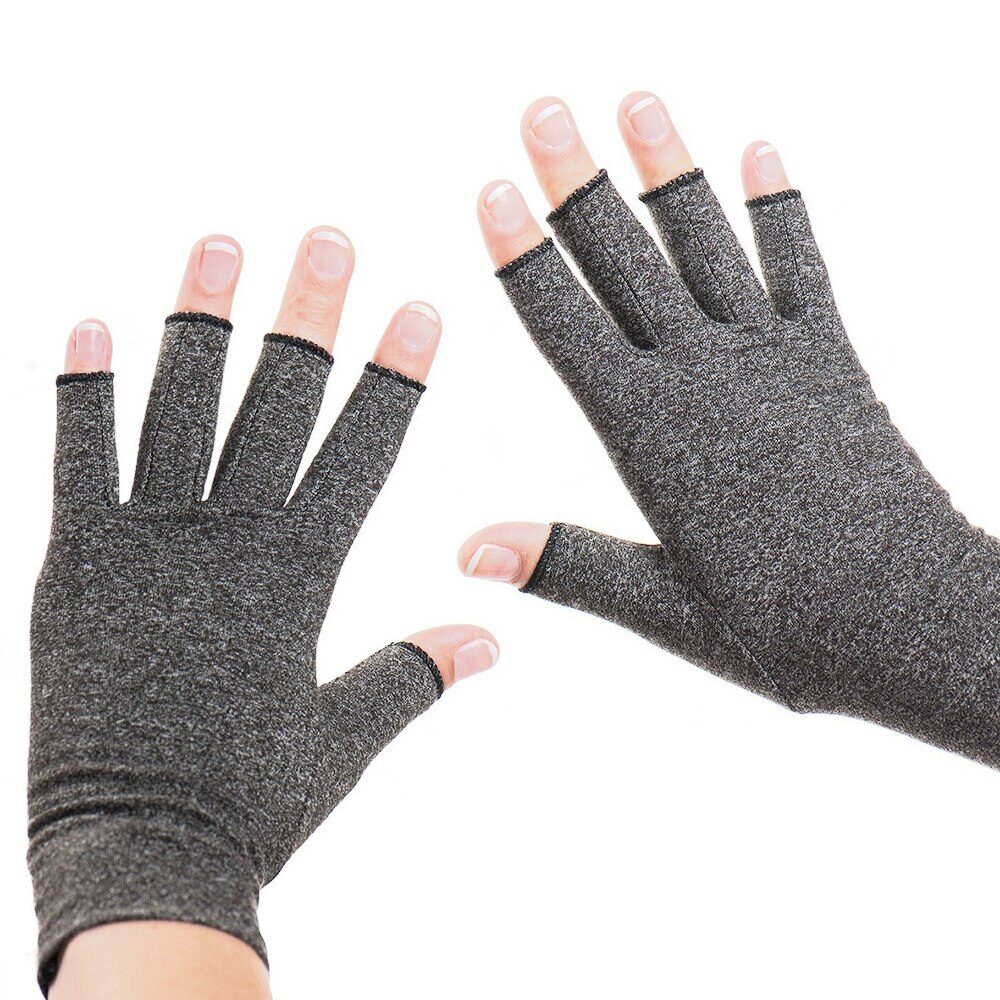
- Half-finger therapeutic gloves that bring gentle compression, warmth and light support to the hands.
- Worn by adults to ease stiffness, cold fingers, aching joints and tingling, from arthritis, Raynaud’s, carpal tunnel or general hand strain.
- Made for hand arthritis, Raynaud’s disease, carpal tunnel syndrome and other common sources of hand strain.
- Soft cotton, polyester and spandex, knitted into a breathable fabric.
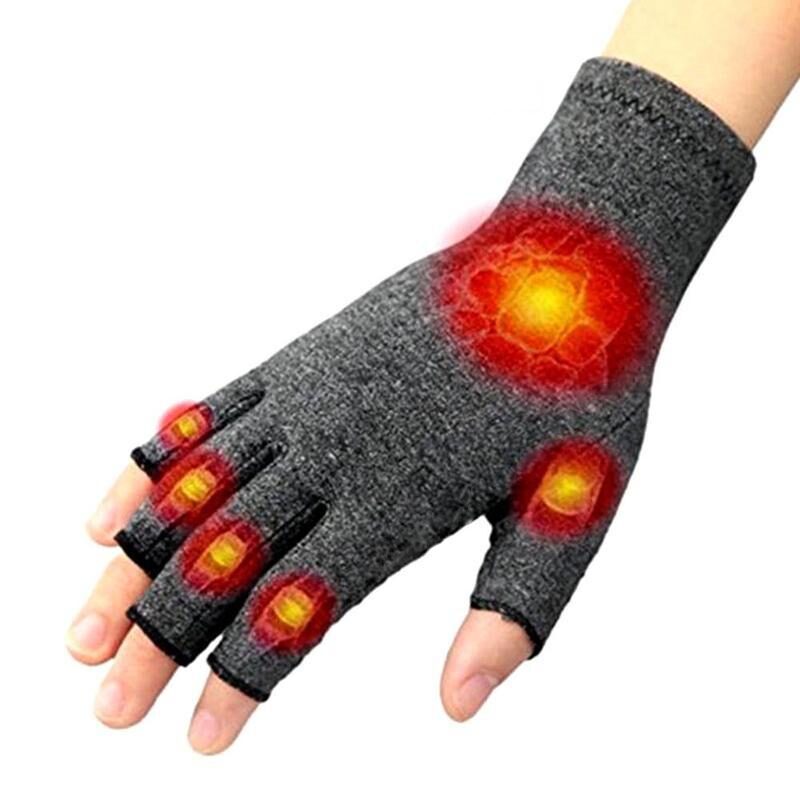
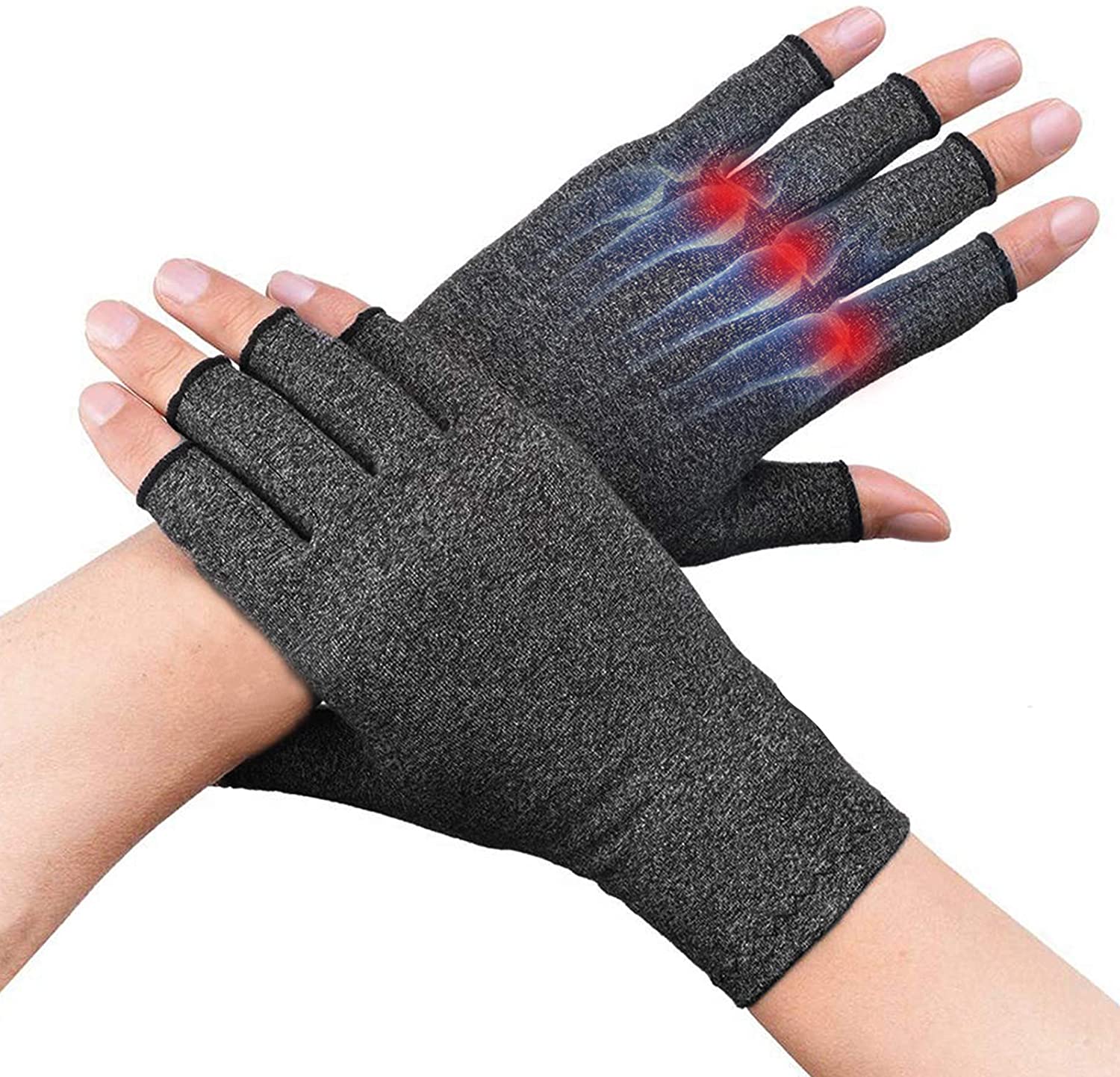
- Even, low-level pressure spread across the whole hand, not focused on one point.
- Smooth seams kept clear of the thumb base, wrist and knuckles, so nothing rubs.
- Warmth held close to the skin, which helps stiff joints and cold-sensitive fingers.
- Even pressure across the whole hand gives it a surface to settle against, so it stops curling or tensing.
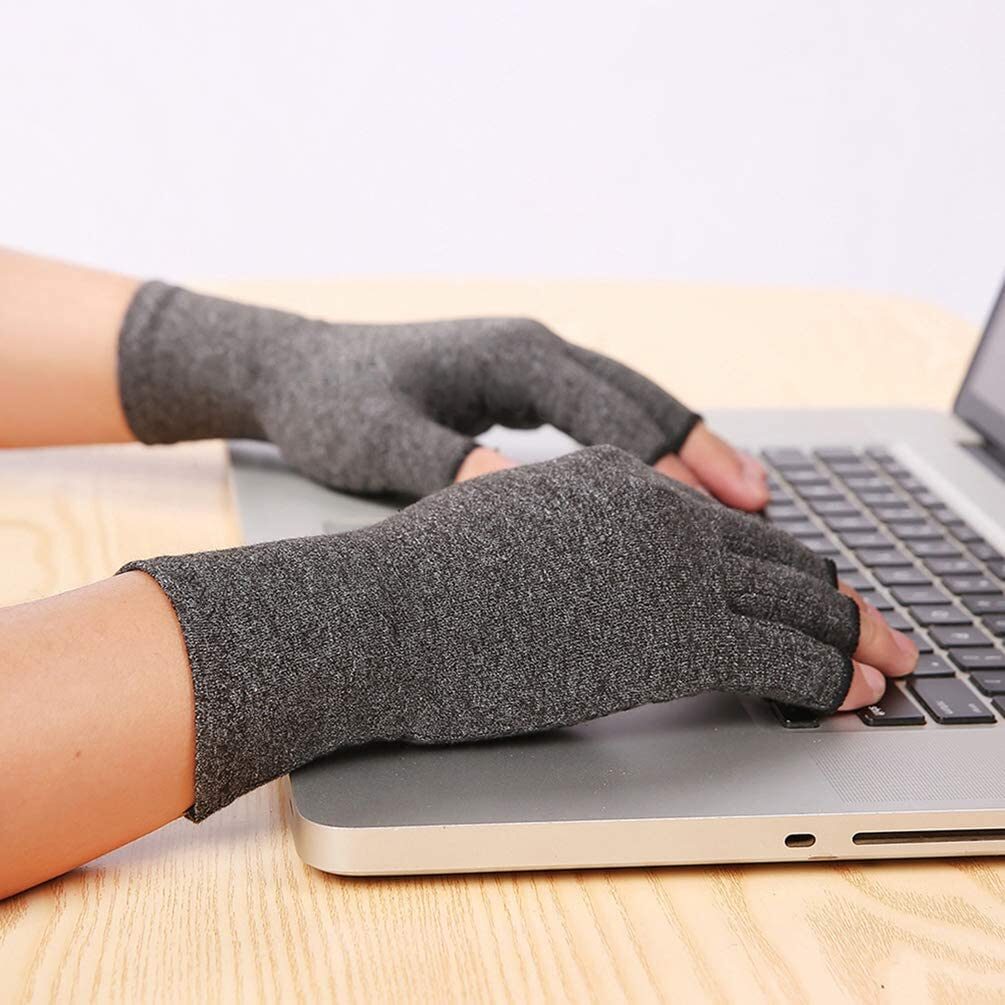
- Open fingertips, so you can still type, grip, cook, drive and use a phone.
- Worn on one hand or both, through the day, during long spells of repetitive work, or overnight.
- Available in Small, Medium and Large, for both men and women.
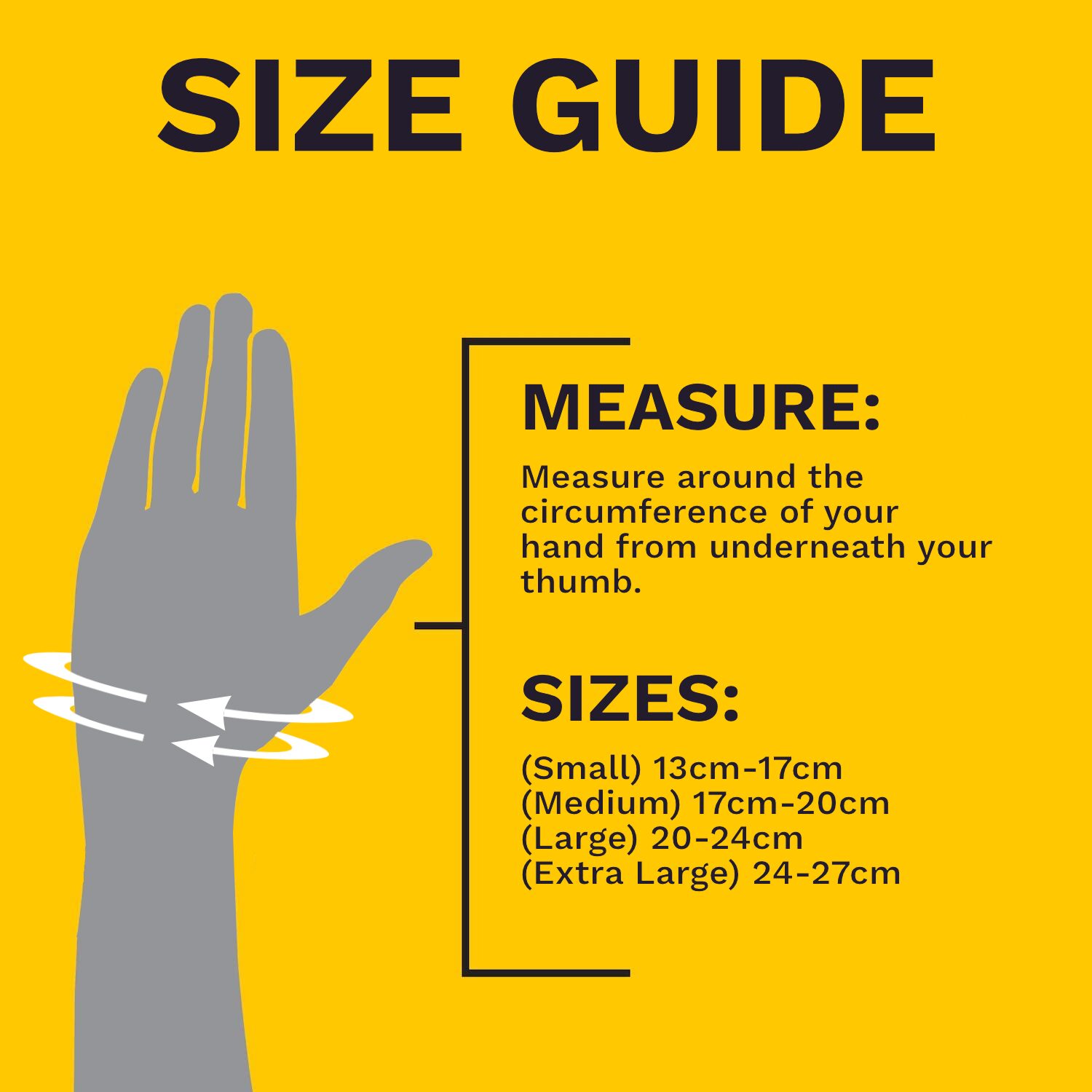
- Measure around the palm, just below the fingers, to pick a size.
- Wash by hand in cool water and air-dry. Tumble-dryer heat shortens the life of the elastic.
- Not a treatment or a cure. They work alongside whatever else you’re doing for them.
- Gentle compression does not treat or prevent blood clots. If you’re at risk of a clot, or have a circulation or skin condition affecting your hands, speak to a GP or physiotherapist first.
- If you notice new or unexplained symptoms that don’t settle, or your hands are getting worse, see a GP or physiotherapist.
- Every pair comes with a thirty-day money-back guarantee.
Half-finger therapeutic gloves that bring gentle compression, warmth and light support to hands that ache, stiffen or lose feeling. Made for adults living with hand arthritis, Raynaud’s disease, carpal tunnel syndrome and other common sources of hand pain, and backed by a thirty-day money-back guarantee.
Reading the signs in your hands
It starts small. You reach for the kettle first thing in the morning and your fingers don’t close the way they used to. You twist the lid off a jar and the base of your thumb aches. You’re buttoning a shirt and it takes an extra few seconds because your fingers feel thick and clumsy. On its own, any one of those means very little. What matters is how often they happen and when, and most people notice that long before they mention it to anyone.
How did the last week go? How often did your hands feel cold when the rest of you didn’t? How often did you shake them out to get the feeling back? Did you wake in the night with pins and needles and have to hang your arm over the edge of the bed until it settled? Did a long drive leave your fingers stiff for the rest of the afternoon? If any of that sounds familiar, you’re not imagining it.
Stiffness in the morning that eases once you’ve been up and about for a while. A dull ache after a day of gripping, whether that’s chopping vegetables, carrying bags or typing. Fingers that go white or blue in winter and take a long time to warm back up. Tingling or numbness running through the thumb and first two or three fingers, often at night. A grip that feels weaker than it did, or things slipping out of your hand more often. Some days are fine and some aren’t, and you can’t tell what makes the difference.
Where you feel it usually tells you which structure is involved. Pain sitting deep at the base of the thumb, or across the middle joints of the fingers, points towards the joints themselves. Fingers that go cold and change colour point towards the blood supply. Tingling through the thumb and first fingers, or in the little finger, points towards a nerve being squeezed somewhere along its path. You don’t need a name for any of this to know it deserves attention. But it helps to understand that these problems behave very differently from one another, and that they respond differently too.
A hand that’s stiff for ten minutes after gardening and then fine is doing what a hand does. A hand that’s stiff every morning, or that goes numb in the same fingers most nights, or that hurts when you squeeze, is telling you something. Those are the signs to take seriously early, before they settle in and become the new normal. And that’s encouraging, because hands respond well to steady support, delivered continuously rather than in short bursts.
Hands rarely get a proper rest, either. You can put a foot up, take weight off a knee, or rest a shoulder by using the other arm. But hands are needed for nearly everything, all day. Every meal, every door, every phone call, every shopping bag. So when they begin to hurt, they keep on being used, and whatever is going on underneath keeps being nudged. Small problems therefore grow into bigger ones, which is why a little help early on goes a long way.
Hands used this heavily, with so little chance to recover, are hands that do well with steady day-to-day support. What a glove can realistically change, and what it can’t, follows from the way the hand is put together underneath.
Why hands behave this way
Your hands are built for precision, and that comes at a price. Each hand contains twenty-seven bones, a network of small joints held together by ligaments, a set of long tendons that run up through the wrist and into the forearm, and a dense web of nerves and blood vessels feeding everything from the fingertips inward. Any structure this intricate, and this heavily used, will be sensitive to how it’s treated. Not because it’s weak, but because it’s doing a great deal, all day, with very little chance to recover.
When a hand is healthy, none of this registers. The joints glide, the tendons slide smoothly through their sheaths, and the nerves carry their signals without being pressed on anywhere along the way. You grip a bag, twist a lid, or type for an hour, and nothing in the hand feels like effort or discomfort. A healthy hand manages all of it without complaint. The hand’s design doesn’t change with the problems below. What changes is how much irritation has built up inside it, and how little chance it gets to settle between days.
Padding is in short supply too. Compare how much soft tissue sits across the palm with the size of the joints and tendons passing through it. Not much. Pressure on the hands therefore lands close to the structures underneath. Cold gets in quickly. Grip force builds up quickly. And small joints that are already irritated don’t have a big cushion around them to absorb the shock.
Three things account for most hand trouble, and they’re worth separating, because each one behaves differently and each one asks for a slightly different kind of help.
The first is joint trouble. The small joints in your fingers, the joint at the base of the thumb, and the joints of the wrist are lined with cartilage and the synovium, a thin membrane that keeps the surfaces gliding smoothly against each other. When that lining becomes irritated, the joint swells slightly, stiffens when it’s still, and aches after use. This pattern sits behind most forms of hand arthritis. It’s why the morning is usually the worst part of the day, and why moving around genuinely helps rather than makes it worse. The stiffness you feel first thing isn’t damage happening in real time. It’s the joint clearing the fluid that gathered around the lining while the hand was still overnight.
The second is circulation trouble. Your fingers sit furthest from your heart, and a very fine, narrow network of vessels supplies them. Its main job is to keep the skin warm and the tissue nourished. Cold shuts that network down further, which is why fingers go pale and cold when the rest of you is fine. In some people, the response is stronger than it needs to be. The small vessels overreact to temperature and to stress, tightening more than they should, so the fingers can go white, then blue, then red as the blood returns. When circulation to the fingers is unreliable, they warm slowly and stay sensitive to cold right through the day.
The third is nerve trouble. There’s a narrow passage at the front of the wrist, formed by the small bones of the wrist on three sides and a tough band of tissue across the top called the transverse carpal ligament. The median nerve, which carries sensation from the thumb side of the hand, travels through this passage on its way to the fingers. So do several tendons that bend the fingers and thumb. When those tendons swell, or when the passage is narrow to begin with, the nerve gets squeezed against the surrounding tissue.
That squeeze is what produces tingling and numbness through the thumb, index finger, middle finger, and half of the ring finger. It worsens at night, when your wrists fall into a curled position and fluid shifts in the body, and after long spells of grip with the wrist bent. Both lead to the same result: the tunnel gets tighter, and the nerve takes the pressure.
These three kinds of trouble aren’t completely separate. The same hands can have more than one going on at once. A joint that’s swollen can crowd a nerve. Poor circulation can slow the healing of an inflamed joint. Even so, the pattern each one produces is distinctive enough to recognise, and so is the way each one responds to pressure and warmth.
All three share a common thread: small, delicate structures loaded regularly, often in the cold, with too little time to recover between days. That’s why hands respond to the same kinds of care. Consistent warmth. Gentle, even pressure. A little light hold, kept close to the skin. Not immobilisation, not a dramatic intervention, but support you wear regularly. Hands respond to consistency far more reliably than to occasional bursts of help.
Knowing which of the three is behind your symptoms changes what you should expect from a glove, and how you’d use one through the day. Each pattern asks for a slightly different emphasis.
Three patterns behind most hand trouble
Joints, circulation and nerves account for most hand trouble, and the three conditions below sit at the centre of that. They’re the ones these gloves are designed around, and it helps to know which one you recognise most strongly, because that shapes how you use them and what you should expect. They aren’t the whole list. Several other common hand problems respond to that same kind of warmth and light pressure, and those come next.
Other hand problems these gloves can help with
Warmth, even light pressure and a relaxed hold work on any problem where the strain traces back to joints, circulation or nerves. If what you’re dealing with isn’t arthritis, Raynaud’s or carpal tunnel but sits in the same territory, a pair of gloves can still help.
Repetitive strain and tendon pain. Long spells of gripping, typing or tool use leave the tendons and their sheaths tender. De Quervain’s, where the tendons on the thumb side of the wrist become sore, and trigger finger, where a finger catches or locks as it bends, are the two most common. Warmth and light support ease the stiffness that builds between bouts of use, and both should be looked at by a GP or physiotherapist if they persist.
Vibration white finger. Regular use of vibrating tools, such as drills, sanders and chainsaws, can produce the cold, pale, numb fingers that Raynaud’s produces, and it’s usually worse in winter. The warmth of a glove helps in much the way it helps in Raynaud’s. Talk to a GP about the tool use as well, because cutting down exposure helps as much as anything you wear.
Peripheral neuropathy. Tingling, numbness and burning in the hands from diabetes, chemotherapy or another cause. Warmth and gentle pressure can make the discomfort easier to live with. One caution: where sensation in the hands is reduced, you can’t feel it if a glove is too tight, so check the fit more carefully than usual, and ask a clinician before you start.
Hypermobility and joint laxity. Hands that ache because the joints are more flexible than usual, often at the base of the thumb and through the fingers. The light hold supports the joint without restricting movement, which helps a great deal in hands that need to keep working through their full range.
Recovery after an injury or an operation. Following a fracture, a sprain or hand surgery, warmth and light support can make prescribed exercises and everyday use more comfortable. Wait until any wounds have closed, and check with whoever is managing your recovery before you start.
Swelling and puffiness in the hands. Hands that swell after inactivity, in pregnancy, in hot weather or after long spells with the arm down. Light, even pressure helps the fluid move on rather than gather. Lymphoedema is a separate matter and needs specialist fitting, so ask before using anything off the shelf.
Rheumatic conditions beyond osteoarthritis. Psoriatic arthritis, lupus, scleroderma and mixed connective tissue disease all bring hand joint pain, often with Raynaud’s alongside. Warmth and light pressure help the hands, while the condition as a whole belongs with a rheumatology team.
Where gloves won’t help
Some hand problems need something else entirely. Compression gloves won’t change a Dupuytren’s contracture, a ganglion cyst, a fracture or nerve compression that needs surgery. Compression also has no place with an active infection, an open wound, a suspected blood clot, or swelling that has come on suddenly in one hand. In each of those, the right move is to get the problem looked at. A glove may well be useful later, alongside whatever is recommended, but it isn’t the starting point.
Why gentle compression makes sense
These conditions have more in common than their differences suggest. Hands do better with steady, gentle support than with dramatic intervention. Trap them, over-tighten them, or wrap them in something rigid, and you lose the very thing you’re trying to protect: the natural movement and warming that lets a hand feel like a hand. But leave them bare in the cold with no support at all, and they stay in the same irritated cycle.
So the useful middle ground is compression. Not the tight compression you might associate with a serious injury, but light, even, consistent pressure worn close to the skin for hours at a time. This is the same principle behind support stockings and therapeutic sleeve garments used for other parts of the body. It’s been well understood for a long time. Hands have simply been slower to benefit, because the shape is harder to make well.
Here’s why light compression helps sore hands.
Start with swelling. Whenever a joint, tendon or soft tissue in the hand is irritated, the body sends a bit of extra fluid to that area, and a bit of it lingers. You notice it as puffiness around the knuckles, tightness in the morning, and rings that fit differently at different times of day. Gentle, even pressure encourages that fluid to move on rather than pool. It isn’t squeezing anything out of anywhere; it’s helping a sluggish area drain the way a light massage does, without you having to do anything.
Circulation comes next. Hands, especially in older adults or in Raynaud’s, can have sluggish blood flow near the surface. Gentle compression helps the small vessels keep working rather than closing down. It also holds warmth in, and when the outer layers of the hand stay slightly warmer, tendons and joints move more comfortably and nerves are less easily irritated.
Then there’s support. Gripping is hard work. Every time you carry a bag, hold a tool, or squeeze a bottle, the small muscles and tendons in the hand and forearm take the load. Light compression gives a bit of that back. It doesn’t take the load away, but it takes the edge off, and over a long day that adds up. The glove also holds the hand in a more relaxed position, which reduces the amount of tension the hand builds up in the first place.
Habit plays a bigger part than you’d expect. A glove is something you put on and then forget about. You don’t have to remember to warm your hands every thirty minutes. You don’t have to think about your posture constantly. You put the gloves on, they stay there, and your hands are better off for it. For a problem that’s all about long spells of ongoing strain, that kind of passive support is far more useful than an intervention you have to keep consciously applying.
Why gloves rather than a splint or a wrap? Because hands need to work. If a support stops you from doing the things you do, you’ll stop wearing it, and that defeats the point. A soft, half-finger glove keeps your grip available, keeps your fingers free, sits comfortably under ordinary clothes, and can be worn for long stretches without getting in the way. It sits on the side of support rather than restriction, and that’s the balance hands do best with.
Compression only helps if it’s built well. A glove with thick, raised seams sitting under the wrist or across a joint will rub with every movement of the hand, and over a day that turns into sore spots, redness and irritation, which undoes the benefit. Pressure that concentrates in one area does more harm than good too. What a glove changes in your hand depends on how it’s made.
How these gloves are designed to help
The fabric blend
Each glove is made from soft cotton, polyester and spandex. The cotton is what makes them kind to the skin, with no scratchy feel against delicate or sensitive skin, which counts when they’re on for most of the day. The polyester gives the fabric durability and helps it hold its shape through regular wear and washing, so the compression stays as consistent in week twelve as it was in week one. The spandex provides the stretch and the low-level pressure itself. Together, they give a glove that’s lightweight, breathable and pleasant to wear, rather than something you have to put up with.
Because cotton and polyester both move moisture away from your skin rather than trapping it, your hands stay drier than they would inside a plain fabric glove. That matters more than it sounds: dampness chills quickly, and cold, damp hands make poor circulation worse. Wicking and warmth aren’t in conflict, either, even though they sound like they might be. A fabric that only wicks gets the sweat out but lets the hand go cold. A fabric that only insulates traps sweat and ends up feeling damp. A breathable knit does both jobs at once. It moves moisture out through the fabric while the structure of the knit holds a thin layer of still, warm air against the skin.
Even compression across the whole hand
The pressure from these gloves is low-level and spread evenly across the hand, rather than concentrated at any one point. That’s deliberate, and it’s the opposite of how many compression garments are built. A tight cuff, or a firm band across the knuckles, presses hardest on exactly the structures that are already irritated. A swollen thumb-base joint squeezed by a firm band, or cold fingers pressed on by a tight wrist seam, ends up worse off than before. Spreading the pressure out means the glove holds the whole hand without picking on any single sore spot. It’s the difference between a glove that hugs your hand and one that grips it.
Where the seams sit, and why it matters
The seams are smooth, and they sit clear of the spots where a hand catches, presses or rubs. It sounds like a small detail, and it is, until it goes wrong. A seam sitting across the base of the thumb, under the wrist band, or against a swollen knuckle will rub every time you move your hand, and over a day you end up with sore spots and redness exactly where the trouble started. Keeping the seams flat and out of the way means the gloves can be worn for long stretches without constant adjustment, and without leaving irritation behind when you take them off.
Supporting the hand, not locking it up
The gloves encourage your hand to rest in a relaxed, natural position rather than letting it curl awkwardly or tense in the background. Even, encircling pressure is what does that. Because the fabric presses gently across the whole hand rather than at any single point, the hand has a constant, uniform surface to rest against, and the small muscles that would otherwise hold a low level of tension slacken off. Unlike a splint, it doesn’t force the hand into a shape. It gives the hand something to rest in, so it doesn’t default to curling or tensing when you’re not thinking about it.
That gentle hold on the hand’s position is where a good deal of the day-to-day benefit comes from. Less residual tension means less strain through the fingers and forearm, smoother tendon movement, and less repetitive pressure through the small joints. Over time, that reduces the kind of low-grade daily load behind a repetitive strain injury. Repetitive strain is what develops when the small muscles and tendons around the fingers and wrist are worked the same way, day after day, without enough recovery in between. Nothing here stops the hand from moving. It just stops the hand from working harder than it needs to.
Reducing stiffness and improving mobility
Because the fingertips are free, you can carry on bending and straightening your fingers, gripping, pinching, and using your hands as you normally would. That continued movement, alongside the warmth the fabric holds close to the skin, is what keeps a stiff hand loosening rather than tightening. Warm connective tissue moves more easily than cold tissue, and the gloves keep that warmth where it’s needed most. Nothing changes overnight. What people report after the first week or two of consistent wear is that the hand feels less awkward, less heavy, and less on their mind.
What the half-finger cut lets you keep doing
This is the piece of design that makes everything else usable in real life. Because your fingertips are free, you can still type, use a phone, pick up coins, tie laces, hold a pen, cook, drive or open a door without taking the gloves off. Support stops being an interruption to your day and starts being part of it. You can wear the gloves out of the house under a coat, at the wheel of a car, or through a long afternoon at the desk, without them getting in the way or drawing attention.
Sizing for both men and women
The gloves are made for adults, and the three sizes cover a wide range of hand sizes: Small (13 to 17cm), Medium (17 to 20cm) and Large (20 to 24cm), measured around the palm just below the fingers. Getting the fit right is central to everything above. A glove that’s even slightly too loose won’t deliver the even compression properly, and one that’s too tight will press harder than is helpful, which on a cold-sensitive hand can work against the circulation it’s meant to support.
A thirty-day money-back guarantee
Every pair comes with a thirty-day money-back guarantee, so you can wear them properly, through real mornings and real days, and decide for yourself whether they help.
Fitting, wearing and what to expect
A compression glove only helps if it fits properly. Too loose and it just feels like a glove without doing anything useful. Too tight and it works against the very circulation you’re trying to support, which is especially important if you have Raynaud’s or any trouble with blood flow to the hands. So getting the size right is the first thing to sort out.
How to measure
Take a soft tape measure and wrap it around your hand at its widest point, which is across the palm just below where the fingers start, not including the thumb. Keep the tape snug against the skin, not tight. Take the measurement in centimetres. Small covers 13 to 17cm, Medium covers 17 to 20cm, and Large covers 20 to 24cm. If you’re between sizes, the safer choice is usually the larger one, particularly if your hands swell, and especially if stiffness is worse in the mornings. A hand that swells into a slightly generous glove is far more comfortable than a hand pressed into one that’s a touch too small. If your hands don’t swell much, and your measurement falls in the smaller band, take that size. It will sit snugly without slipping.
What the right fit feels like
Once it’s on, the glove should feel like a firm, even hug rather than a squeeze. You should be able to bend your fingers fully, make a fist, straighten your hand flat, and feel no tightness around the wrist or across the knuckles from doing any of that. There should be no pinching and no visible red marks once you take them off. Your fingertips should stay warm, not cool off. If any of that isn’t right, the size is wrong. If they slip when you grip, they’re too loose to do much good.
Putting them on
Roll the glove on gently, easing it over the hand rather than yanking it. If it catches, work it up in small stages, first over the fingers, then settle it over the palm and wrist. Give the fabric a moment to settle, and smooth the wrist band so it’s flat and even rather than bunched. The half-finger ends should sit neatly across the middle of the fingers, not too high up towards the fingertips, and not so low that they crowd the knuckles.
When to wear them
The most common routine is to wear them through the cold part of the day, during long spells of repetitive work, and overnight if you have trouble with your hands in bed. For morning stiffness, putting them on before you get out of bed, or while you’re having your first cup of tea, helps you ease into the day. For carpal tunnel symptoms that wake you at night, wearing them overnight is often the most useful single change. It keeps the wrist roughly straight, not curled forward and not bent back, which keeps the least pressure on the nerve inside the passage. For Raynaud’s, keeping them on through cold spells and when you step outside is what helps most. You can wear them for hours at a time, take them off for washing your hands and for anything that needs bare fingers, and put them straight back on.
What to expect
You won’t feel a dramatic change in the first hour. What happens is subtler. The mornings feel a bit easier. The hand feels a bit lighter through the day. The sting of cold on the fingers is a bit less sharp. The tingling at night is a bit less frequent. Most people notice the difference most clearly after the first week or two of consistent wear, once they’ve worked out what fits their day. Some notice it in the first few days; some take longer. This works gradually, not overnight. It’s a supportive tool to use alongside the rest of what you’re doing.
A few practical notes
Wash the gloves by hand in cool water with a mild detergent, then reshape them gently and leave them to air-dry away from direct heat. Don’t put them in a tumble dryer, as the heat will shorten the life of the elastic and reduce the compression. Aim to have them on clean, dry skin, and give them a rest overnight if your skin needs one. If you notice your hands getting hot, unusually red, or if any fingers go cold because of the gloves themselves, that’s a sign the fit is wrong, and the size should be changed.
Who this suits
The gloves are intended for adults living with hand pain, stiffness, cold sensitivity or tingling from arthritis, Raynaud’s disease, carpal tunnel syndrome and other common hand problems. They can be worn on one hand or both, and they work alongside whatever else you’re doing, whether that’s physiotherapy exercises, keeping your hands moving, or just trying to get through a cold winter more comfortably. If you’re not sure they’d suit you, a quick word with your GP or physiotherapist first is sensible.
Who should get advice first
If you’ve been told you have a circulation problem affecting your hands, or a skin condition that leaves the skin on your hands fragile or easily irritated, or you’ve been told you have nerve damage, speak to your GP or physiotherapist before using compression wear on your hands. The same goes if your symptoms are new or getting worse, or if your hands are changing shape or losing strength. A pair of gloves is a supportive tool, not a diagnostic one, and there are situations where a proper opinion tells you far more than anything you can put on at home.
One thing needs saying plainly. These gloves provide gentle compression, and gentle compression is not a treatment for blood clots. They don’t treat or prevent clots, and they shouldn’t be relied on for that. If you’ve been told you’re at risk of a clot, or you have a history of one, speak to your GP or physiotherapist before using compression wear on your hands.
When to get help
Gloves are useful, but they’re not a replacement for proper assessment. Some changes in your hands should send you to a GP or physiotherapist rather than have you carrying on and hoping.
See your GP or a physiotherapist if:
-
- Your symptoms are new or unexplained, especially if they’ve come on without an obvious reason and don’t settle.
-
- Your hands are getting worse rather than settling, despite using support.
-
- You’re losing grip strength, dropping things more often, or finding it hard to do up buttons or pick up small objects.
-
- You have persistent numbness, or tingling that no longer eases when you change position.
-
- Fingers are changing colour more severely, more often, or are becoming painful in a way they didn’t used to be.
-
- You notice your hands are changing shape, especially if it’s happening quickly.
-
- The pain is waking you at night despite support.
-
- You’re getting symptoms in other parts of your body as well.
Any of those changes is the sort of thing a GP or physiotherapist can look at properly. Bring up what you’ve noticed, and ask what’s likely to help. There are usually several options, from exercises and changes to how you use your hands through to other kinds of support. Compression and warmth are often part of that plan, but they work best when they’re sitting alongside proper advice, not instead of it.
The earlier hand problems are looked at, the more room there is to work with them. Hands respond well to support when it’s set up early, and getting a proper opinion early gives you more to work with too. Asking for that opinion isn’t an overreaction. You wouldn’t ignore a knee that kept buckling, and you shouldn’t ignore hands that keep going numb or stiff either.
Where this leaves you
If you’ve recognised your own hands above — stiff every morning, pale and cold in winter, tingling at night — you’re describing problems that are well understood, and there’s a good deal you can do about them. Arthritis, Raynaud’s, carpal tunnel and the other problems covered above behave differently from each other, but each one has a recognised set of signs, and each one responds to steady day-to-day help.
That’s what this pair of gloves is for. Not to treat these conditions, and not to replace proper advice, but to sit alongside your everyday life and keep your hands going through it. You put them on, you carry on with your day, and your hands do their work with a little less strain on them. Warmth held close to the skin, even pressure across the whole hand, and open fingertips that let you keep using your hands as normal: those three are what do the work.
So the sensible next step is a practical one. Check your measurement against the size guide, decide which part of your day the gloves would do most good, and read the wearing guidance once more before you start. Every pair comes with a thirty-day money-back guarantee, so you can see for yourself how they perform on real mornings and real days with your own hands. If your hands have been giving you the same trouble for weeks, or anything about your symptoms is new, unexplained or getting worse, speak to a GP or physiotherapist first. They can look at what’s going on and talk through what’s likely to help.
Disclaimer
The information on this page is general guidance about compression gloves and the hand problems they’re designed to support. It isn’t a substitute for individual medical advice, diagnosis or treatment. If you have new, unexplained or more complex symptoms, speak to a GP, physiotherapist or another appropriate clinician for personalised advice. No specific outcomes are promised or guaranteed.
Fast & Secure Checkout Through Paypal
Pay with Paypal the secure payment gateway that accepts all credit and debit cards. Paypal is free and secure and no credit or bank information is ever stored or shared with us.
Fast Dispatch
Enjoy your items soon with quick dispatch via Royal Mail. Expect to have your items between 1-3 working days for domestic orders. 7-10 Working days for international orders.
Return Policy – 30 Day Money Back Guarantee
In the unlikely event, you are unhappy with your purchase you can return it within 30 days for a refund. Please contact us via the form on the contact us page to start your return.
To return an item please send it to: Nuova Health UK, 81 Highfield Lane, Waverley, Rotherham, S60 8AL. Please include a note with your order id so we know who to refund. Please retain your postage receipt as proof of postage. All that we ask is that the item is in the original packaging and unused.
Reviews
There are no reviews yet.