
Sciatica brace
£17.49inc VAT
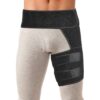
- 1x BackReviver pelvic and thigh brace designed to support sciatica‑type pain coming from the lower back, pelvis and hip
- One size, with adjustable fit (waist up to 117 cm, upper thigh up to 66 cm)
- Suitable for adults of all genders (not for use during pregnancy or the early postnatal period)
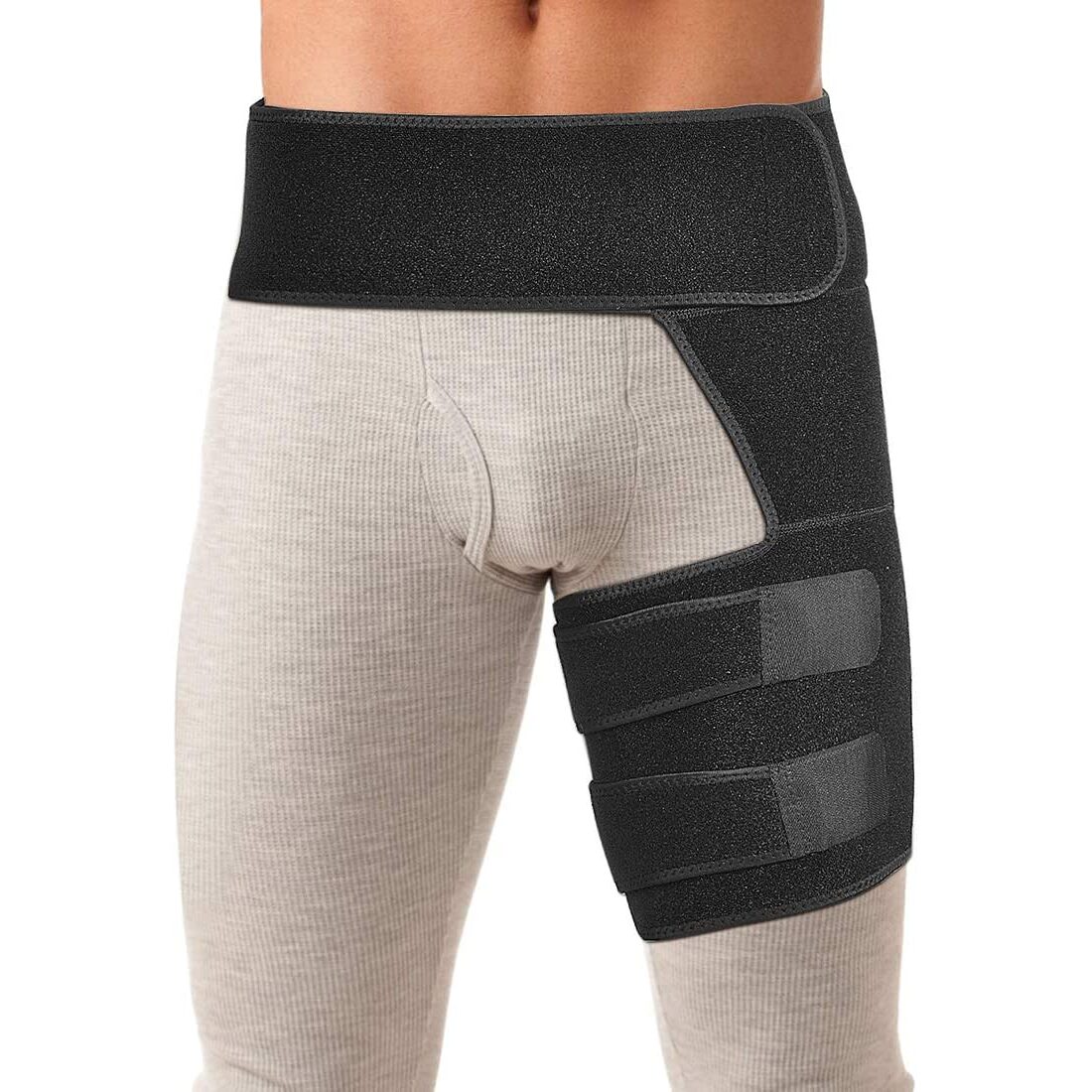
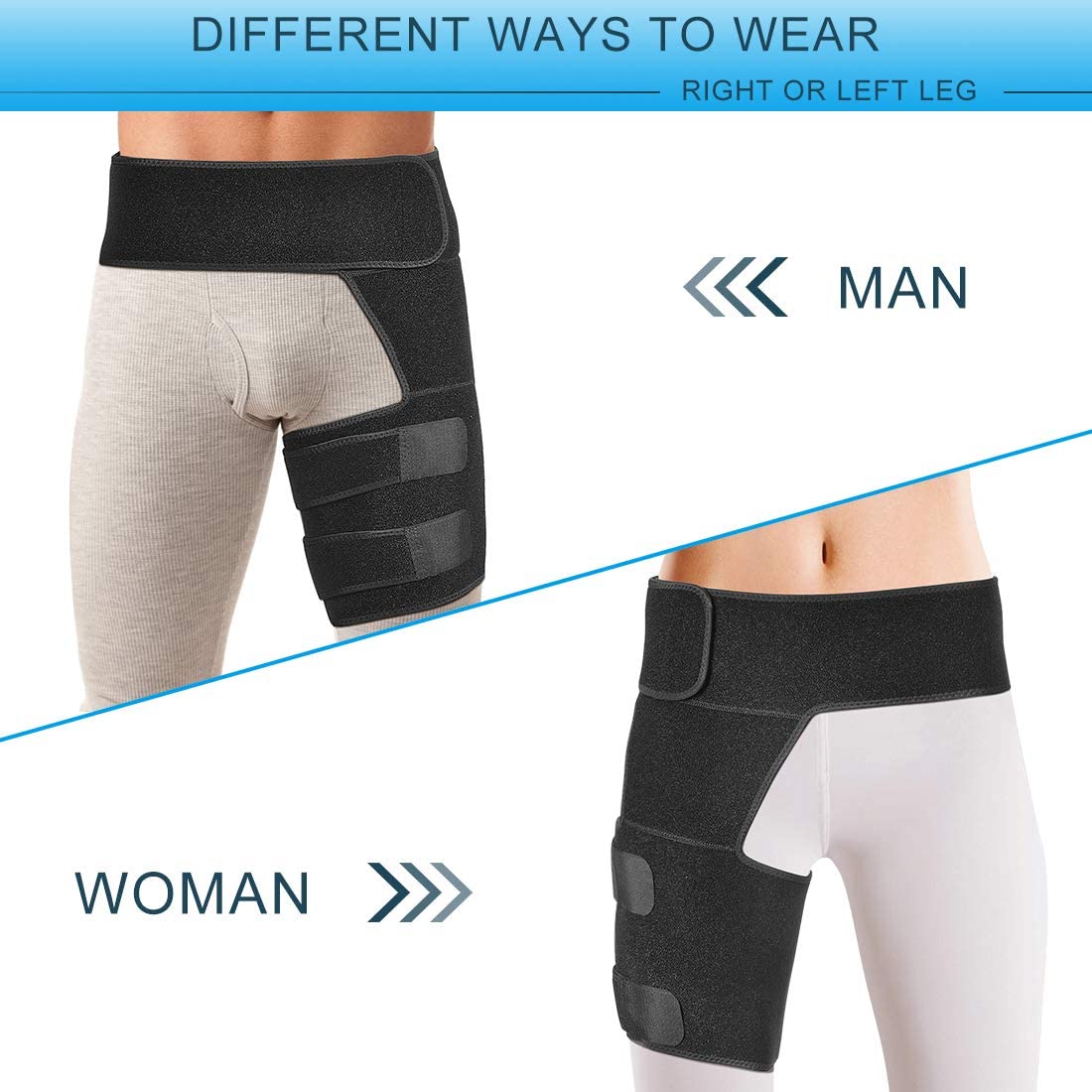
- Worn on the more painful side, with a low pelvic band and upper‑thigh cuff to help steady the pelvis, hip and lower back
- Fully adjustable hook‑and‑loop straps let you set firm, even support quickly and easily
- Helps reduce excessive pelvic drop, rotation and sudden twists that can irritate sensitive discs, joints and sciatic nerve tissue
- Provides firm but comfortable compression around the pelvis and upper thigh, supporting muscles and improving awareness of posture and movement
- Aims to improve stability, confidence and control when standing, walking, using stairs and doing everyday tasks
- Often used alongside exercises and physiotherapy to help manage sciatica‑type pain, sacroiliac and hip‑related pain, posture‑linked back and leg pain, and some arthritis‑related patterns
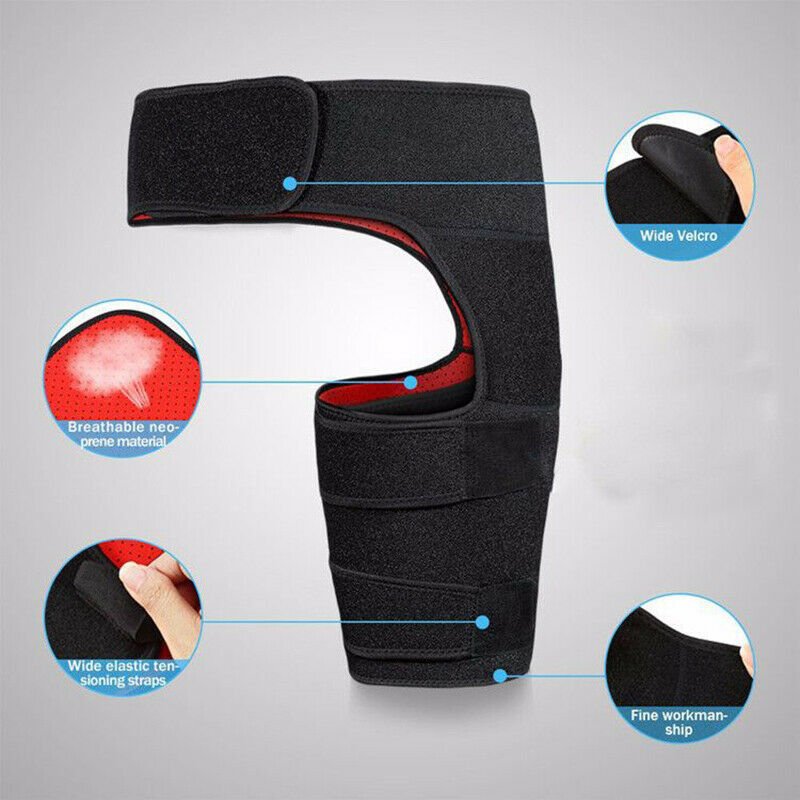
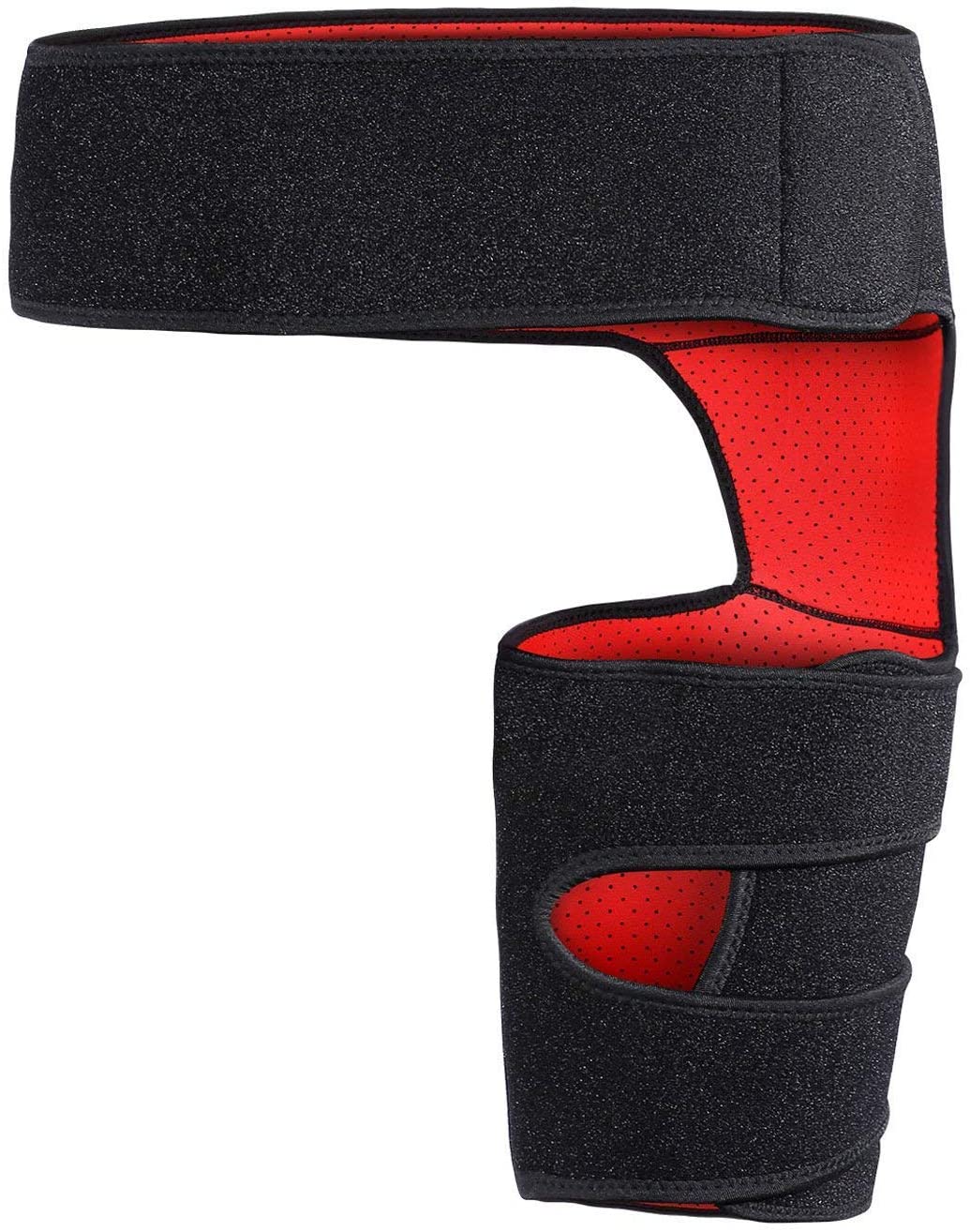
- Made from lightweight neoprene with small ventilation holes and silicone strips to reduce slipping and help keep you cooler and more comfortable
- Slim, low‑profile design so it can be worn under many everyday clothes without obvious bulk
- Backed by NuovaHealth’s 30‑day money‑back guarantee if you are not satisfied with your purchase
BackReviver pelvic and thigh brace
Sciatica-type pain rarely follows a steady pattern. It flares when you bend, when you sit too long, when you stand or walk past a certain point, or when you shift your full weight onto one leg. Then, just as you start to work out the pattern, changing what you’re doing eases it again. If that sounds like your week, you already know how hard that makes planning a day.
BackReviver makes this pelvic and thigh brace for exactly that pattern. It wraps low around your pelvis and anchors to the upper thigh on your more painful side, so the base of your spine and the sore side of your pelvis stay better supported as you move. You wear it during the activities that set your symptoms off — standing, walking, stairs, the everyday tasks that catch you out — and take it off when you don’t need it. It’s a soft support, not a cure, and it works best alongside exercise and whatever your GP, physiotherapist or specialist has already suggested.
There’s one question worth holding on to. Does your pain change when you move? If it does — worse with sitting or bending, a little easier with gentle walking, better when you lean forward — then a support of this kind has something to work with. If it genuinely doesn’t change with movement, no brace will move the needle, and a conversation with a clinician is a better next step than a purchase.
The essentials
What it is
A soft, adjustable pelvic and thigh brace for sciatica-type pain coming from the lower back, pelvis and hip. Worn on the more painful side, with a low pelvic band and a one-sided upper-thigh cuff. Made from lightweight neoprene — a stretchy, rubber-like fabric, the kind used in many sports supports — with small ventilation holes and silicone strips to reduce slipping. Slim and low-profile, so it can be worn under many everyday clothes without obvious bulk. Supplied as one pelvic and thigh brace with adjustable straps.
How it fits and adjusts
One size with an adjustable fit. Adult sizing only: waist up to 117 cm (46 in), upper thigh up to 66 cm (26 in). Fully adjustable hook-and-loop straps — the reusable fastener that presses to grip and peels to release — so you can set a firm, even fit quickly and let it out just as easily. The pelvic band and thigh cuff fasten separately, so each can be tensioned on its own.
What it’s designed to do
Apply firm, even compression around the pelvis and upper thigh. Limit how far the pelvis on one side drops when you stand on the other leg, along with the rotation and sudden twists that can irritate sensitive discs, joints and nerve tissue.
Who it’s for, and who it isn’t
For adults. Not suitable during pregnancy or in the first six weeks after giving birth. Often used alongside exercise and physiotherapy for sciatica-type pain, for pain arising from the pelvis and hip, and for some arthritis-related patterns.
Before you use it
Two things to settle before anything else. First, whether anything here needs urgent medical attention. Second, whether this brace suits you.
Get urgent medical assessment if you notice:
- New difficulty controlling your bladder or bowels, or not knowing when you need to go
- New numbness around the groin, inner thighs or genital area
- Severe pain following a fall, a direct blow, or any other trauma to the back or pelvis
- Back or leg pain together with feeling generally unwell, a fever, unexplained weight loss, or night sweats
If any of those apply, leave the brace off and get seen. A brace can’t address what is causing symptoms like these, and that needs looking at first.
Do not use this brace if:
- You are pregnant, or you gave birth within the last six weeks. After six weeks, only once a clinician has cleared you to use a pelvic support. Pelvic support in pregnancy and the early weeks after birth is a specialist area, and this brace isn’t designed for it.
- You have a recent fracture, or a suspected fracture, of the spine, pelvis or hip, unless a specialist has specifically advised this brace.
- You have had recent surgery to the lower back, pelvis or hip and your surgeon has not advised using it.
- You have open wounds, active skin infections, or fragile skin exactly where the brace would sit.
- You have a known or suspected blood clot in the leg or pelvis.
- You have severe circulation problems in the legs.
Talk to a GP, physiotherapist or other suitable clinician first if:
- You have been told you have severe osteoporosis or another significant bone condition
- You have diabetes with established nerve or skin complications, or known circulation problems
- You have markedly reduced sensation in your legs or around the pelvis
- You have a history of skin ulcers, poor wound healing, or very fragile skin around the lower back, pelvis or thighs
- You have a hernia, or a stoma — an opening in the abdomen made during surgery so waste can leave the body — or you have had recent abdominal surgery
- You have swelling in one or both legs, or varicose veins
- You use other supports, splints or mobility aids and are not sure how a brace like this might work alongside them
If any of those apply, the fit and the skin care need more attention, not less.
What’s behind sciatica-type pain
Sciatica-type pain is an umbrella description, not a single condition. It’s the name given to pain that travels from the lower back or buttock down one leg, and several different things can be driving it at the same time.
The nerve at the centre of it is the sciatic nerve. It travels a long way, which is why a problem at one point on it can be felt somewhere else entirely. Several nerve roots in your lower back — the parts of the nerves where they leave the spine — join together inside the pelvis to form this single large nerve. From there it threads through the buttock, past deep muscles, down the back of the thigh, and branches near the knee to supply parts of the lower leg and foot.
That long journey explains a lot. Irritate the nerve anywhere along it, and the pain shows up in surprisingly similar places. What changes is the type of pain. A disc bulge pressing on a nerve root from the front tends to produce sharp, shooting pain. Thickened joints and ligaments narrowing the openings the nerve passes through bring on heaviness, tiredness or cramping in the legs. A pelvic joint that has become sensitive changes how load transfers through the base of the spine. Deep buttock muscles tightened by a guarding response squeeze the nerve from the side. Long stretches of work by muscles and soft tissue leave the surrounding area inflamed and the nerve more reactive.
What separates the patterns below is what sets them off. That’s what points to which mix is yours, and whether a brace has anything useful to do.
Why a nerve becomes more sensitive
When a nerve root or part of the sciatic nerve is repeatedly exposed to pressure, inflammation, stretching and compression, it becomes more reactive. It takes less pressure or stretch than before to set off a pain signal. Movements and positions that used to feel normal start to feel painful or strange. Gentle compression or mild stretch that wouldn’t normally cause discomfort gets interpreted by the body as pain or tingling.
Symptoms come and go, and that is normal. Posture, activity level and the time of day all play a part. Prolonged sitting, or standing very upright, increases pressure or tension on the nerve. Gentle movement sometimes eases stiffness and improves blood flow, but repeated overuse makes things worse. Inflammation rises and falls, which is why the same movement can be tolerated one day and uncomfortable the next.
If symptoms carry on long enough, muscles weaken, joints stiffen, and confidence in movement drops. Walking patterns change in ways that strain other parts of the body. For most people, staying active and managing symptoms sensibly earlier on is easier than waiting for the problem to drag on.
Five patterns of sciatica-type pain
The five patterns below are the ones that turn up most often. Most people recognise themselves clearly in one and see something of themselves in another. Each is defined by the pattern your symptoms follow — which positions and movements set them off, and which give you relief. That pattern tells you more about what is driving your pain than any single line on a scan, because it points to where the irritation is coming from and whether a support like this has anything to work with.
Before the detail, here is the shared idea. This brace works in two places at once. A band wraps low around the pelvis, carrying support right around the ring that connects your spine to your legs. A one-sided cuff anchors to the upper thigh on your more painful side. Between them, they steady the base of your spine and pelvis during the movements described below. Each pattern uses them in a slightly different way.
How this brace is designed to help
The shape of this pelvic and thigh brace follows the same idea a physiotherapist or other clinician would use when they support the pelvis and hip by hand, or with taping.
A broad band wraps right around your waist and pelvis. It sits low, over the bony ridge at the top of your hips — the iliac crest — and across the sacrum at the base of the spine, rather than high up on the waist. Positioned like that, it grips the pelvis itself instead of riding up and down on the soft waist above it.
On one side, a cuff and straps wrap around the upper thigh. You choose the side that matches your more painful leg. The thigh cuff sits near the top of the leg, clear of the groin crease, so it can anchor to the pelvis without digging in. The one-sided design is deliberate: it focuses support on the more painful side without over-restricting both hips and legs.
Worn the right way, that combination of band, cuff and compression does four things at once. It limits how far and how quickly certain movements happen, so you spend less time in the ranges that provoke your pain — particularly the very end of a bend or a twist, where sensitive tissue is pushed hardest. It also shares some of the work that particular muscles and ligaments would otherwise do alone, which delays the fatigue that tends to bring symptoms on during longer tasks. Alongside that, it keeps you more aware of your own posture, so you notice sooner when you’re drifting into a position your back and pelvis tolerate less well. And it applies firm, even compression around the pelvis and hip, so that part of your back and pelvis feels steadier.
What the pelvic band adds
The pelvic band closes evenly around the pelvis. That steady pressure makes the whole pelvic ring feel more secure and reduces the small, uncontrolled movements that happen at joints such as the sacroiliac joints and the lumbosacral junction — the point where the lowest part of the spine meets the pelvis. It gives the lower spine a firmer base to move on, and eases the load the ligaments and deep stabilising muscles around it have to take.
You notice the steadier pelvis most clearly when you turn over in bed, swing your legs out of a car, or stand on one leg to step into trousers. Those are the moments when an irritated sacroiliac joint is most likely to hurt, and when a band running low and all the way around the pelvis holds that part of your back steadier.
What the thigh cuff adds
The one-sided thigh cuff and straps link the pelvis to the thigh on the more painful side. That link reduces how far the pelvis on that side can drop when you stand on the opposite leg, and limits how freely it can twist or tilt sideways relative to that thigh. The two sides of the pelvis and the thigh are no longer moving quite independently; movement on one side is partly carried by the other. Clinicians describe the pelvis and hip as coupled when they move together this way.
When you walk, that means less side-to-side rocking through the pelvis, which eases the strain on the sacroiliac joint and on the soft tissues around the hip. When you bend, the movement is spread over a slightly smaller range, so the deepest part of the bend is reached less often. And at the lower levels of the spine, where sudden jolts are felt most, movement becomes more predictable.
The materials are flexible enough that you can still walk, go up and down stairs, and get on with your usual movements. The aim isn’t to stop your lower back and hip moving, but to ease the positions that hurt most, and to steady sudden changes of position. It’s a flexible support, not a rigid medical brace. Rigid braces are used for fractures and severe instability, which is a different job from the one this brace does.
What the compression adds
The fabric wraps closely around your waist, pelvis and upper thigh, and that steady contact does something concrete. It feeds a stream of touch and pressure signals into the same pathways that carry pain. Those signals compete for attention, which is one reason steady, even contact over a sore area tends to make it feel calmer. It also gives a sense of steadiness when the area has felt vulnerable, and that sense of steadiness feeds into how freely you move.
A lot of people also find the close contact around the pelvis and hip makes the gluteal and hip abductor muscles feel less like they’re carrying the load alone. Some of that is likely physical, and some is the reassurance that comes from the area feeling held, and the two are hard to separate.
Taken together, the compression and the steadying effect of the band and cuff help you spend more time in the ranges of movement your back and pelvis tolerate better. Sensitive discs, joints and soft tissues are stretched and compressed less often, and less sharply, during ordinary activity. The knock-on effect on an already irritable nerve root or section of the sciatic nerve is indirect but real: it gets pushed or pulled into a painful state less frequently.
What a brace like this can’t do
A brace won’t move a disc back into place, undo narrowing in the spine, or repair arthritic joints. It doesn’t free a trapped nerve directly, either. What it can do is change how forces act on the most sensitive areas during daily activity, and for many people that’s enough to make standing, walking and ordinary tasks more manageable while other measures, such as exercise and time, do their work.
Nor can it supply a pattern where none exists. If your pain doesn’t shift with position, the questions worth asking are clinical ones rather than questions about a brace.
How this compares with a simple back belt
A simple back belt wraps the lower back and abdomen and stops there. It can’t influence how the pelvis and hip move on one side, because it has nothing to anchor to below the waist. This brace wraps low around the pelvis and the sacrum, and links to the upper thigh on the more painful side. That link is what lets it limit pelvic drop and rotation. Same broad idea of support, different job on the body — not a larger version of the same one.
Choosing your side and getting the fit right
Wear the brace on the more painful side. That’s the side the thigh cuff anchors to, while the pelvic band wraps right around the pelvis so both sides of the base of the spine get support.
Whether your symptoms sit on the left or the right, or shift around over time, doesn’t change the basic approach. Wear the brace on whichever side is giving you the most trouble at the moment. If both legs are affected — what clinicians sometimes call bilateral pain, meaning symptoms on both sides — support the worse side first, then review whether the brace is giving enough benefit. In more severe or clearly two-sided situations, such as marked spinal narrowing, ask a GP or physiotherapist whether a one-sided pelvic and thigh brace is appropriate and, if so, how best to use it. If your pain switches sides, treat that as a change worth mentioning to a clinician rather than simply swapping the brace over.
Measuring for the right fit
This is a one-size brace with an adjustable fit, built for adult bodies: up to 117 cm (46 in) at the waist and up to 66 cm (26 in) at the upper thigh. Because it’s an adjustable one-size design rather than a range of set sizes, it will suit some body shapes better than others. If you’re close to either limit, ask a pharmacist or physiotherapist to measure you against both before you decide — those two numbers are the whole test.
Measure in light clothing and keep the tape snug rather than tight — firm against the body, but not pulled in. Take each measurement twice, just to be sure, and use the larger of the two readings.
Measure your waist around the bony ridge at the top of your hips, not at your natural waistline above it. That ridge is the level the pelvic band needs to sit at. Measure at your trouser waistline instead and you’ll usually get a smaller number, which means the brace ends up sitting too high and losing its grip on the pelvis. For the thigh, measure around the top of the leg on the side you intend to support, just below the groin crease. That’s where the cuff will sit, so it needs to reflect that part of the leg rather than the thigh at its widest point.
What a good fit feels like
The pelvic band should rest low, over the bony ridge at the top of your hips and across the sacrum at the base of the spine. If it has ridden up onto the soft part of the waist, it has lost its grip on the pelvis, and it will do far less of the steadying work it’s meant to do. Slide it back down until you can feel it against the hip bones at the front and the broad plate of the sacrum at the back.
The upper-thigh cuff should sit around the top of the thigh on the more painful side, clear of the groin crease, so it can anchor to the pelvis without digging in.
When it’s on properly, you should feel steady pressure, spread evenly over the top of your hips and across the lower back, and a secure but comfortable hold around the upper thigh. That held feeling, rather than tightness or digging, is what helps the pelvis feel secure when you move. The band should stay put when you stand and walk, the thigh cuff shouldn’t roll down or pinch, and you shouldn’t be aware of either after a minute or two of moving around. If you’re still thinking about the straps rather than what you’re doing, they’re either too tight or not sitting right.
Putting it on and adjusting it
Most adults can put the brace on and adjust it themselves, standing or sitting. Expect to need a few tries before you find the strap tension that suits you. That isn’t a sign you’ve bought the wrong thing — it’s how these supports work.
Fasten the waist section first. Wrap it around, then pull it firm enough to feel supportive without making it hard to breathe or squeezing soft tissue out above or below the band. Then fasten the thigh strap, tight enough to feel secure but not so tight that it cuts in or brings on pins and needles.
A useful test of the waist band is to take a full, deep breath and then get up from a chair. If either feels restricted, or if the band is pressing a crease into the skin above or below it, it is set too tight. You should also be able to slide a fingertip under the edge of the band without much effort; if you can’t, let it out a notch.
Move around for a minute or two once you’ve set them. Stand, take a few steps, sit down, stand up again. Then check the skin underneath the straps, especially at first.
Silicone strips run along the inner edges at the waist and thigh. They help the brace stay put against the skin when you walk or stand, so you’re not constantly pulling it back into position.
If you’re unsure, asking a physiotherapist to watch you put it on and adjust it with you is reassuring, particularly the first time. A good fit feels stable when you walk, nothing slips or rolls, and there are no sharp pressure points when you sit or move. If it doesn’t feel right, take it off and try again rather than putting up with discomfort.
If something isn’t sitting right
- The band rides up onto the waist. It’s too high or too loose. Take it off, reposition it low over the hip bones and the sacrum, and fasten it again.
- The thigh cuff rolls down. It’s too loose or sitting too low. Move it slightly higher on the thigh and fasten it a little firmer.
- The thigh cuff digs into the groin. It’s sitting too high. Move it down until it’s clear of the crease.
- Pins and needles, tingling, numbness, coldness or a change in colour in the leg. That’s too tight. Take the brace off straight away and refasten it more loosely once things have settled. If it doesn’t settle, get advice.
- A sharp pressure point when you sit. The band or cuff is pinching somewhere. Reposition or loosen it and check again.
- It slips during walks. Check the silicone edges are clean and free of fluff or cream, both of which reduce grip.
- It feels like it’s doing nothing. Check the band is low on the pelvis rather than high on the waist, and that the cuff is anchoring to the thigh without restricting the groin.
When to wear it
The brace is designed for upright activity — standing and walking. It’s most useful for the tasks you already know provoke symptoms: longer walks, certain household jobs, busier days at work. On quieter days you may not need it at all, and that’s fine. Most people wear it for the demanding periods and leave it off for the rest.
Because it supports the pelvis and hip on one side, the benefit shows most when you’re up on your feet. If your back or leg symptoms build after you’ve been standing a while, it can help you hold a posture your back and pelvis tolerate better, and may slow how quickly pain or heaviness builds.
When you walk, the cuff’s link between pelvis and upper thigh on the painful side makes each step feel more controlled. A few people find they can walk further, or with less discomfort, when the brace is on — within their overall limits.
For tasks with a lot of bending and straightening — unloading a dishwasher, working at a low bench, gardening at ground level — it keeps you away from the deepest bends and softens sudden changes of direction, so those movements often feel more manageable. Others find it comfortable enough for shorter sitting periods, particularly if sitting usually leads to a gradual slump and worsening symptoms.
If you wear it while sitting, it often helps to loosen the straps slightly so it doesn’t dig into the waist or groin creases. When you sit, the hip folds and the front of the pelvis presses forwards, so a band set snug for walking can start to bite over the crease or the top of the thigh. Easing both straps out a notch for a sitting spell keeps the support without the pressure point, and you can tighten them again before you stand up and walk.
If you drive, the brace can be comfortable for shorter journeys, but loosen the straps a little for longer ones.
Some people choose to wear it while resting or at night if the gentle compression and support helps the area feel calmer. If you do, keep the straps looser than you would for walking. If it disturbs your sleep or causes discomfort, adjust it or take it off.
Time out of the brace counts, too. Leaving it off for part of the day helps maintain muscle strength and gives the skin a chance to rest. The aim is to help you move more comfortably, not to make you dependent on it.
Pairing it with exercise
You may also be working with a physiotherapist on exercises to strengthen and mobilise the lower back, pelvis and hips. That might include core stability work — exercises for the deep muscles around the trunk that help hold the spine steady — along with hip strengthening, and gentle stretches or nerve-gliding movements, where the leg is moved slowly through a controlled range to help the nerve slide more freely.
The brace can make those exercises easier to manage early on by giving extra support while you move. A physiotherapist can show you which exercises suit your particular problem, and whether to do them with the brace on or off.
A GP or specialist may also suggest pain relief to help you stay comfortable while other treatments have time to work. Decisions about which medicines to use, and for how long, should always be made with them. This brace is one of the non-drug options for managing sciatica-type pain.
If you’re getting back to exercise, treat the brace as a support for daily activity first. How it fits with exercise is something to agree with a physiotherapist, because the answer depends on what you’re doing. Gentle walking and simple strength work are often fine with the brace on early on, while activities involving a lot of twisting, impact or deep squatting may need a different approach. Build up gradually, and ease back if symptoms increase.
What to expect, and when to review
People who benefit from this brace notice a few modest changes rather than dramatic ones: the pelvis and lower back on the more painful side feel better supported, jolts of pain brought on by movement happen less often, and you can do more before symptoms build. It is a support, not a treatment, and the gains it offers tend to be steadier rather than larger.
Judge it by how it affects a few specific tasks you struggle with, rather than expecting every movement to feel different. Walking to the end of the road, getting out of the car, standing through teatime without having to sit down — those are the sorts of things to measure against. Pick two or three before you start, and keep them in mind over the next few weeks.
In the first week or two
Expect to need several tries before the strap tension feels right. The first setting you choose is rarely the one you’ll settle on.
You may be very aware of the brace at first, then stop noticing it. The band may ride up until you get the position right, which means moving it back down over the hip bones rather than tightening it further. Tightening it more to stop it riding up will make it less comfortable without helping it grip, so resist that instinct.
Your skin may be more sensitive for the first few days, so shorter wear times early on are usually easier. A reasonable starting point for many people is 30 to 60 minutes at a time, during the tasks and times of day that provoke your symptoms most. Extend that gradually over the first week or so as your skin and soft tissues get used to the fit.
Give it a few weeks in the situations that normally set your symptoms off before deciding whether it’s helping. One afternoon won’t tell you much, and a single bad day says more about the day than about the brace.
Reviewing it, and phasing it out
If you’ve worn it regularly through the tasks and times of day it’s meant for, and noticed no real change after a few weeks, or if symptoms clearly get worse when you use it, it’s sensible to review things with a clinician. If something about it doesn’t feel right to you, stop and talk it through with someone who knows your history.
As your symptoms settle and your muscles get stronger, you’ll probably need the brace less. People often stop wearing it for easier tasks first — the short walks, the light jobs around the house — and keep wearing it for the most demanding ones, then cut back on those too over time. Others reach a point where they use it only during a flare, or keep it for a handful of known triggers. How quickly to do any of that is best agreed with whoever is guiding your care, because it depends on which symptoms you’re getting and what else you’re doing to build strength.
Looking after your skin and the brace
Neoprene can trap heat and sweat. The small ventilation holes let air move through more easily than a solid sheet would, which helps during longer spells of wear, but a simple routine still helps a lot.
Your skin
Look at the skin under the band and the cuff before and after you wear it, especially in the early days. Redness that fades within a short time of taking the brace off is common with close-fitting support. What you’re watching for is redness that doesn’t fade, blisters, broken skin, unusual warmth or coolness, or swelling that doesn’t settle.
If your feeling in the legs or around the pelvis is reduced, the skin underneath the brace needs closer attention rather than less. Reduced feeling can mask the early discomfort that would normally warn you something is rubbing or pressing, so a problem can build quietly. Check the skin by eye rather than by feel, and ask someone to check the areas you can’t see easily. Watch for colour changes, unusual warmth or coolness, redness that does not fade, or swelling that does not settle. If the skin becomes broken, blistered or very sore, stop using the brace and get advice.
If you’d rather not wear the brace directly against your skin, a thin, smooth base layer underneath works well and can also make it easier to slide the brace into position.
Cleaning and drying
Rinse the brace by hand in cool or lukewarm water with a mild soap, working it gently rather than scrubbing at it. Rinse well until the water runs clear. Don’t use harsh detergents, bleach or fabric softener, as these can break down the fabric and reduce how well the straps hold.
Close the hook-and-loop straps before washing so they don’t snag the fabric or pick up fluff. Then air dry the brace flat, away from direct heat and sunlight. Don’t tumble dry it, and don’t leave it somewhere hot, as heat can distort the shape.
Make sure it’s completely dry before you wear it again. Damp neoprene against skin is the most common reason people get sore patches from a brace that’s otherwise fine, so let it dry through rather than wearing it damp.
Storing it and keeping it in good order
Wipe the silicone strips clean of fluff, dust and creams, which all reduce their grip. Store the brace flat, away from heat, sharp objects and anything that could snag it, and don’t leave it squashed under heavy items.
Check the straps and edges from time to time. The parts that wear first are the straps and the silicone strips. Hook-and-loop fasteners gradually lose their grip with use, and the silicone strips lose tack as they pick up fluff and body oils. Replace the brace when the straps no longer hold the tension you set, when the fabric has stretched or torn, or when the edges have become rough.
Don’t wear the brace over creams, ointments or oils that could degrade the material or reduce the silicone grip, and don’t wear it over a recent operation site on the back or pelvis unless your surgeon has specifically advised it.
When to stop and get help
The brace is one part of managing your symptoms, and it does not replace a proper medical assessment.
Seek urgent assessment straight away if any of these appear, or get worse, while you are using the brace. Leave the brace off while you get seen.
- New trouble controlling your bladder or bowels, or you cannot tell when you need to go
- New numbness in the groin, inner thighs or genital area
- Severe pain after a fall, a blow, or any other injury to the back or pelvis
- Back or leg pain along with feeling generally unwell, a fever, weight loss you cannot explain, or night sweats
Arrange an appointment soon if:
- Pain is becoming more severe or more frequent despite using the brace and other measures
- You notice increasing weakness, numbness or loss of coordination in one or both legs
- Your walking distance is shrinking over weeks and you feel less steady on your feet
Take the brace off and seek advice if:
- Pain is clearly worse while you are wearing it than when you leave it off
- New symptoms such as tingling, colour changes, coldness or swelling in the leg appear and do not settle soon after removing the brace
- The skin under the brace becomes broken, blistered or very sore
New or worsening leg pain while you are using a support is a reason to have it looked at, not a reason to keep going. Very occasionally, any brace of this kind can make some people feel more unsteady rather than more secure, particularly at first. If you notice that happening, stop using it and speak to a clinician before trying again.
If the feeling in your legs or around your pelvis is reduced, treat any change in the skin under the brace as a reason to stop and get it checked.
Questions people often ask
How do I work out which of the five patterns fits me best?
Start with one question: what actually sets yours off? Bending and sitting, distance and standing, single-leg moments like stairs and getting dressed, a slow build over a long day, or symptoms sitting on top of conditions you already manage. That tells you which of the five to read first. A lot of people recognise themselves in more than one, and that isn’t a mistake — more than one source can drive the same pain at once, and the pattern that dominates can shift from week to week. If you still can’t place yourself clearly, the question to ask a clinician is which pattern they think is driving the symptoms you have now, because that answer decides whether a brace of this type is worth trying.
Can wearing a brace make my muscles weaker?
Not in the way most people worry about, and not if you use it as intended. The pattern to avoid is wearing any support around the clock for months without trying to keep the surrounding muscles strong. Used part-time, for the tasks that set your symptoms off, alongside appropriate exercise, it supports you while strength and control build up rather than replacing them.
Can I wear it over my clothes?
Yes. It’s often worn over a thin, smooth base layer, and looser trousers or skirts are usually more comfortable over the top than close-fitting ones.
Will it show under my clothes?
Under looser clothing, it usually goes unnoticed. It’s deliberately slim and low-profile, and the band sits at the top of the hips rather than around the waist, so it tends not to press against a waistband. Under close-fitting or tucked-in clothing, you are more likely to notice the thigh cuff than the pelvic band, because it wraps the upper leg.
Will it be too warm to wear?
It can feel warm in hot weather or during heavy activity, because neoprene holds heat. The ventilation holes let a bit of air move through, and a thin base layer underneath helps. On very warm days or during sweaty work, shorter spells and more frequent skin checks usually keep it comfortable. If it becomes uncomfortable, take it off and let the area cool down.
Can I wear it to help prevent a flare, or only when I’m already sore?
Either works. Some people reach for it when symptoms are already building, to hold off the worst of it. Others put it on before activities they know set symptoms off — a long walk, a heavy shift, a day of gardening — as a way of lessening how much that day takes out of them. What it can’t do is remove the underlying problem, so it softens how much a known trigger affects you, but it doesn’t prevent it.
Is this supportive enough for me, or do I need something firmer?
This is a flexible support, not a rigid one. It’s designed to steady the pelvis and hip during daily movement, not to lock a joint in place or protect a healing fracture. If a specialist has advised a rigid brace for a specific reason — certain injuries, or a joint that is unstable in a particular way — that’s a different job, and this isn’t a substitute. If you’re not sure which level of support suits your situation, ask the clinician who knows your history.
I had surgery on my back or hip in the past — can I still use it?
That depends on what the surgery was and how long ago. Recent surgery to the lower back, pelvis or hip is one of the situations where you should only wear a brace if your surgeon has advised it. Surgery further back in your history is a different matter, and it doesn’t rule the brace out on its own. If you have metalwork, a fusion or a joint replacement in that area, mention it to your clinician or surgeon before you use the brace, so they can tell you whether the fit and the pressure are appropriate for you.
Where this leaves you
Sciatica-type pain comes from irritated nerves running from the lower back into the leg. The source of that irritation can sit in a disc, in narrowed openings around the nerves, in the joints and soft tissue of the pelvis and hips, in muscle and connective tissue pushed too long without recovery, or in wider conditions such as arthritis and diabetes. Whatever the mix, certain movements and positions — bending, long periods of standing, uncontrolled twisting, single-leg loading — place extra strain on those sensitive structures and set symptoms off.
This brace wraps around the pelvis and waist and anchors to the upper thigh on one side. It gives firm but flexible support around the pelvic ring, with extra control on the more painful side — the same idea a physiotherapist or other clinician uses when they support that area by hand or with taping. By steadying the pelvis and hip on that side and applying steady compression, it can help you spend more time in movement your back and pelvis tolerate better.
It won’t suit every pattern of sciatica-type pain, and it won’t reverse the changes in your spine, pelvis or hip that set it off. Used alongside movement, exercise and appropriate medical guidance, though, it can help many adults stand, walk and carry out daily tasks with more confidence and less discomfort. Being able to walk further, or stand longer before symptoms build, is a real gain, even if the condition behind it hasn’t changed.
If a clinician has already suggested this kind of pelvic and hip support, there are three questions worth asking them: whether the pattern your symptoms follow is likely to respond to this kind of bracing, how long to try it for and when to review the effect, and which exercises and other measures to pair with it. After a few weeks of regular use, look back with your clinician and decide whether to continue, adjust, or gradually phase the brace out as your own strength and control build back up.
Disclaimer
The information here is general guidance for adults with sciatica-type pain. It is not a personal diagnosis, and it is not a substitute for medical advice, assessment or treatment from a qualified professional. A brace of this kind may help manage symptoms in some situations, but it is not suitable for everyone, and how much it helps varies from person to person.
Nothing here is intended to advise you on medicines, or to replace your GP or specialist’s guidance on pain relief. If you have questions about pain relief, possible side effects, or how long to use it, please discuss these with the person who prescribed it.
If you have new, severe or changing symptoms, or you are unsure whether this product is appropriate for you, talk to a GP, physiotherapist or other appropriate clinician before using it. This brace is for adults, and it is not suitable during pregnancy or in the first six weeks after giving birth. After that, only once a clinician has cleared you to use a pelvic support.
2 Reviews For This Product
Fast & Secure Checkout Through Paypal
Pay with Paypal the secure payment gateway that accepts all credit and debit cards. Paypal is free and secure and no credit or bank information is ever stored or shared with us.
Fast Dispatch
Enjoy your items soon with quick dispatch via Royal Mail. Expect to have your items between 1-3 working days for domestic orders. 7-10 Working days for international orders.
Return Policy – 30 Day Money Back Guarantee
In the unlikely event, you are unhappy with your purchase you can return it within 30 days for a refund. Please contact us via the form on the contact us page to start your return.
To return an item please send it to: Nuova Health UK, 81 Highfield Lane, Waverley, Rotherham, S60 8AL. Please include a note with your order id so we know who to refund. Please retain your postage receipt as proof of postage. All that we ask is that the item is in the original packaging and unused.
by James
Helped a lot stopping those nasty shooting pains you get from sciatica 🙂
by Gerard Devlin
Just put this on, can feel difference straight away, pain not as bad already. Can’t wait to see improvement with long term wear. Can highly recommend. Ordered, arrived within 3 days, excellent service.