

Trigger finger splint
£6.99inc VAT
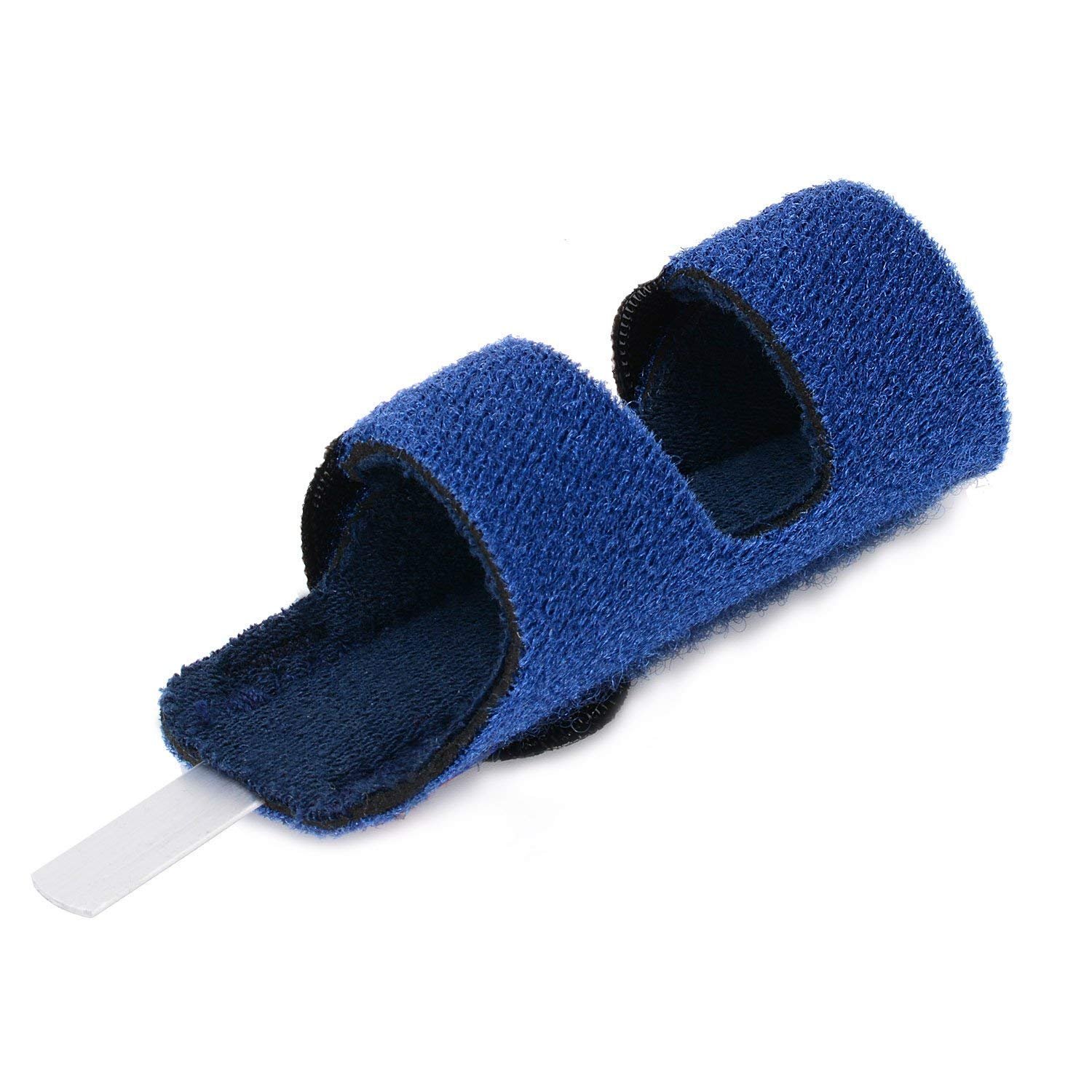
- Rigid trigger finger splint for adults, designed to support one affected finger at a time
- Suitable for common trigger finger symptoms including catching, clicking, locking and soreness where the finger meets the palm
- Helps keep the finger straighter to limit the tight curl that often triggers painful snapping or locking
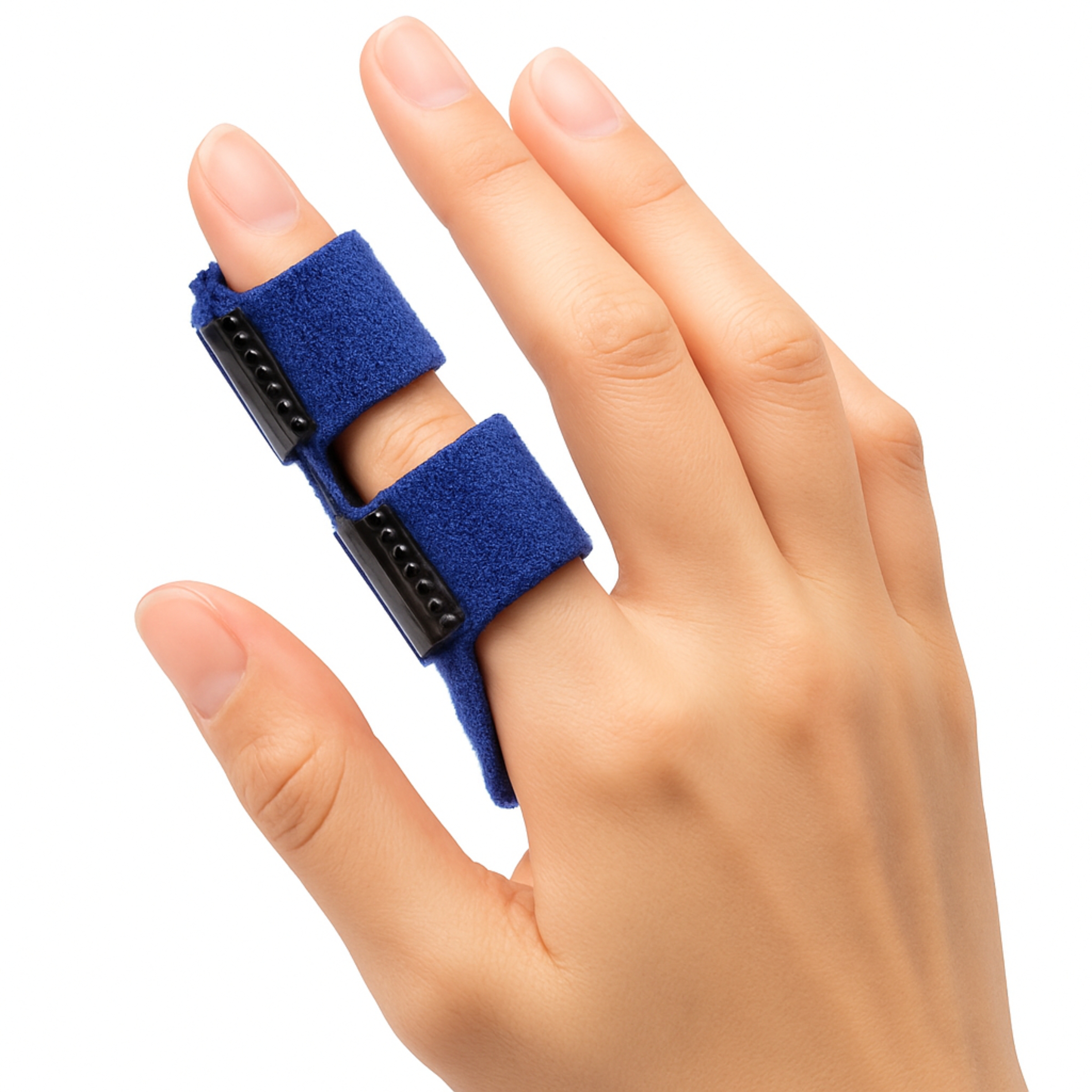
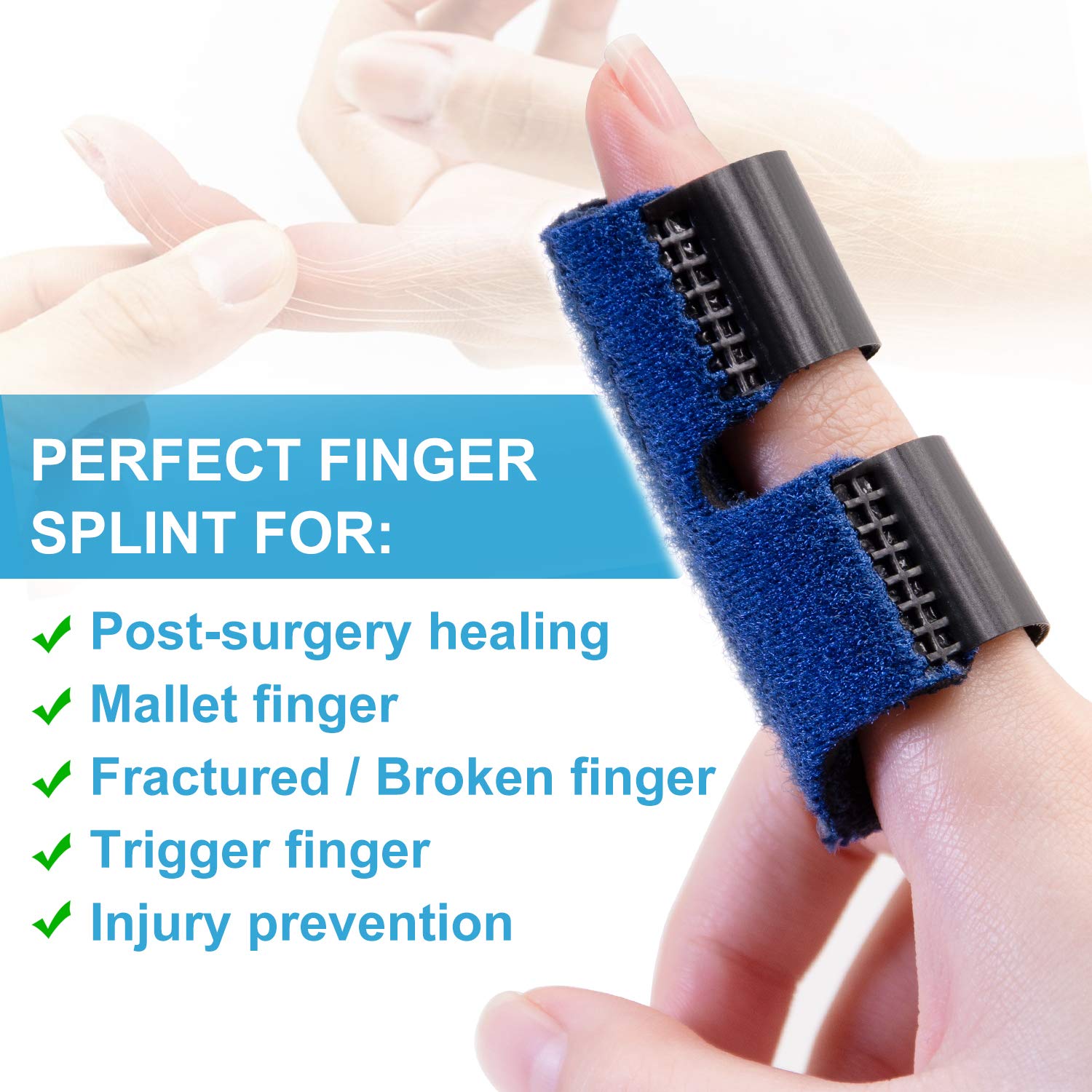
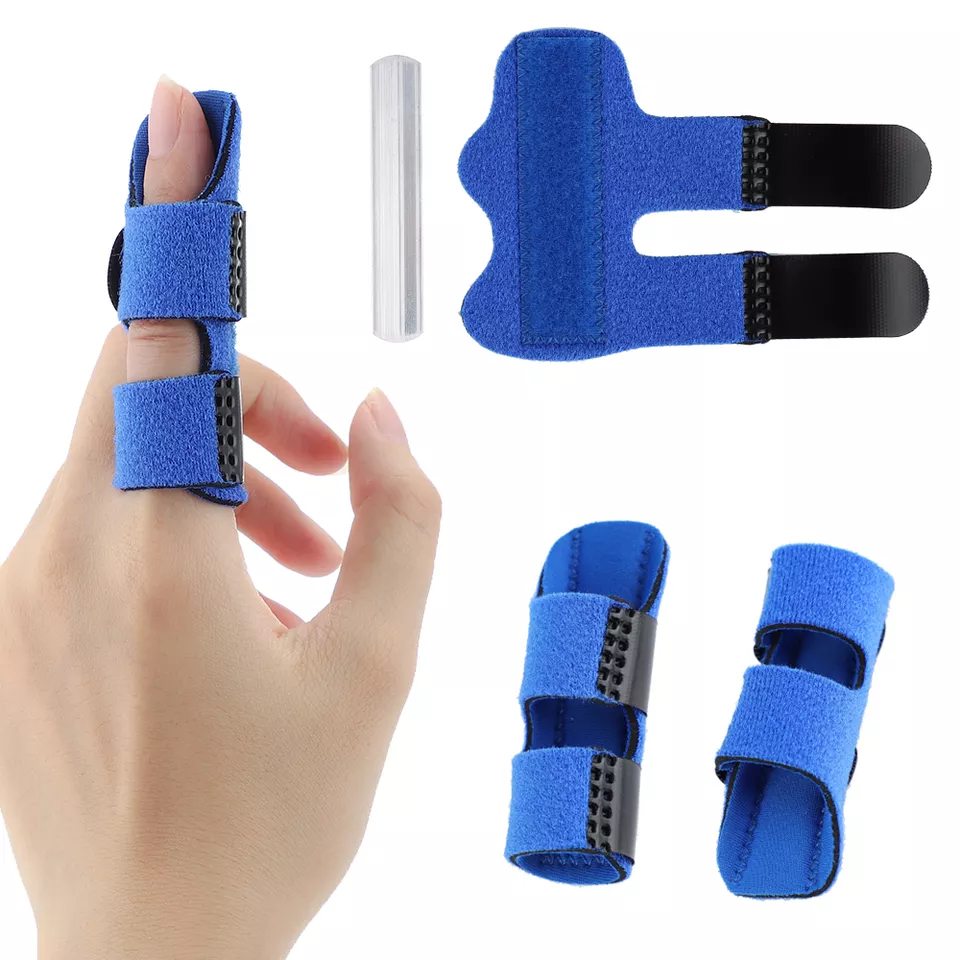
- Firm full-length support spans the two main finger joints while leaving the fingertip free
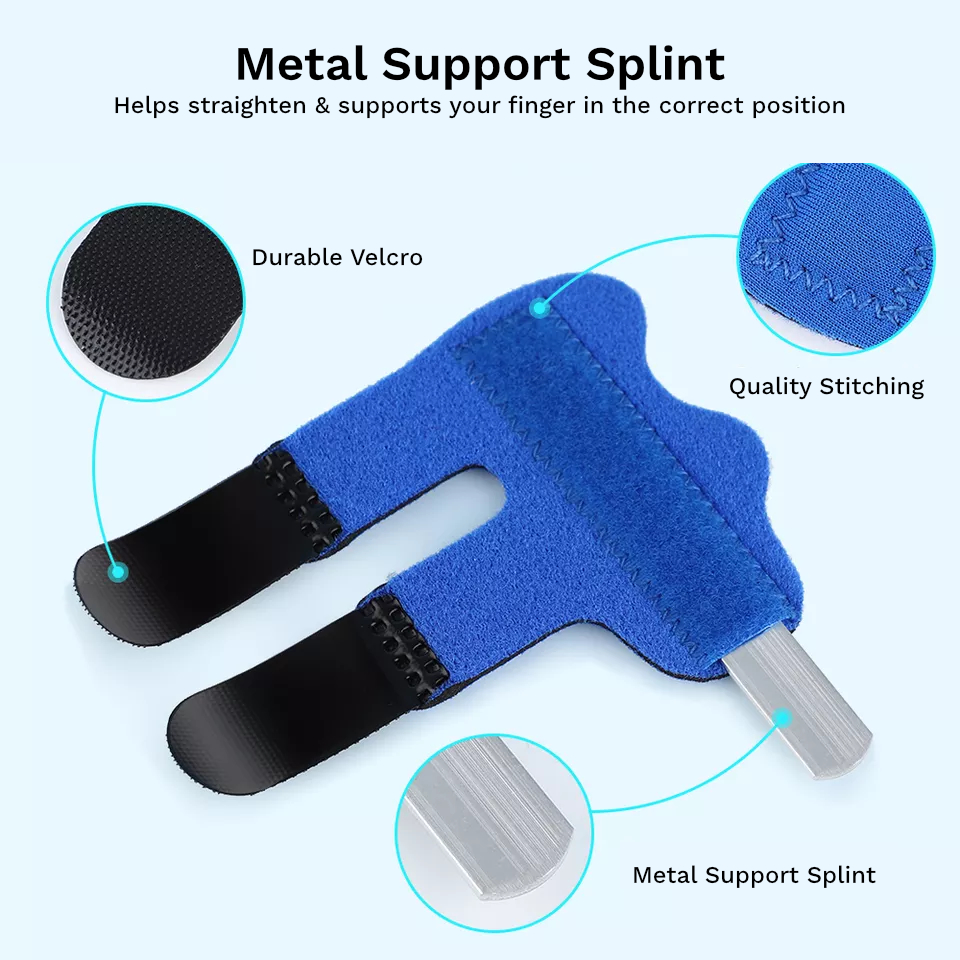
- Built-in aluminium support helps steady the finger during daily use, rest and sleep
- Two adjustable straps let you personalise the fit for comfort and mild swelling changes
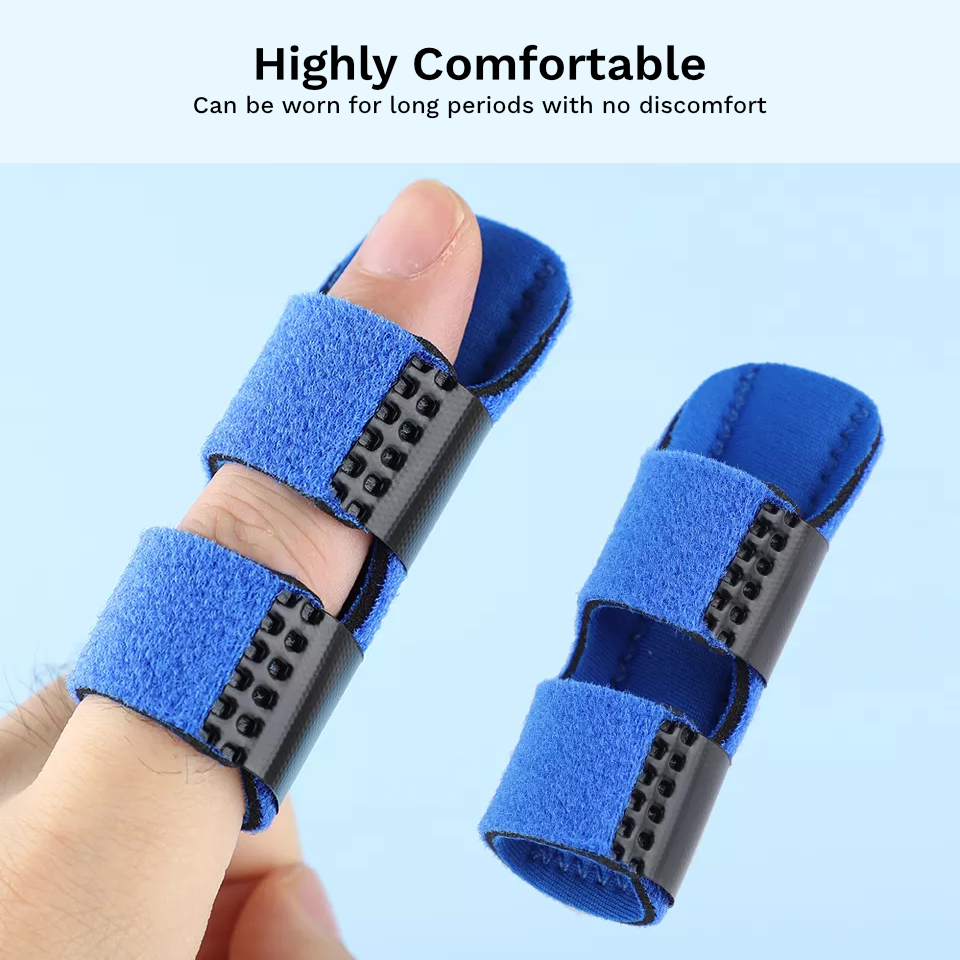
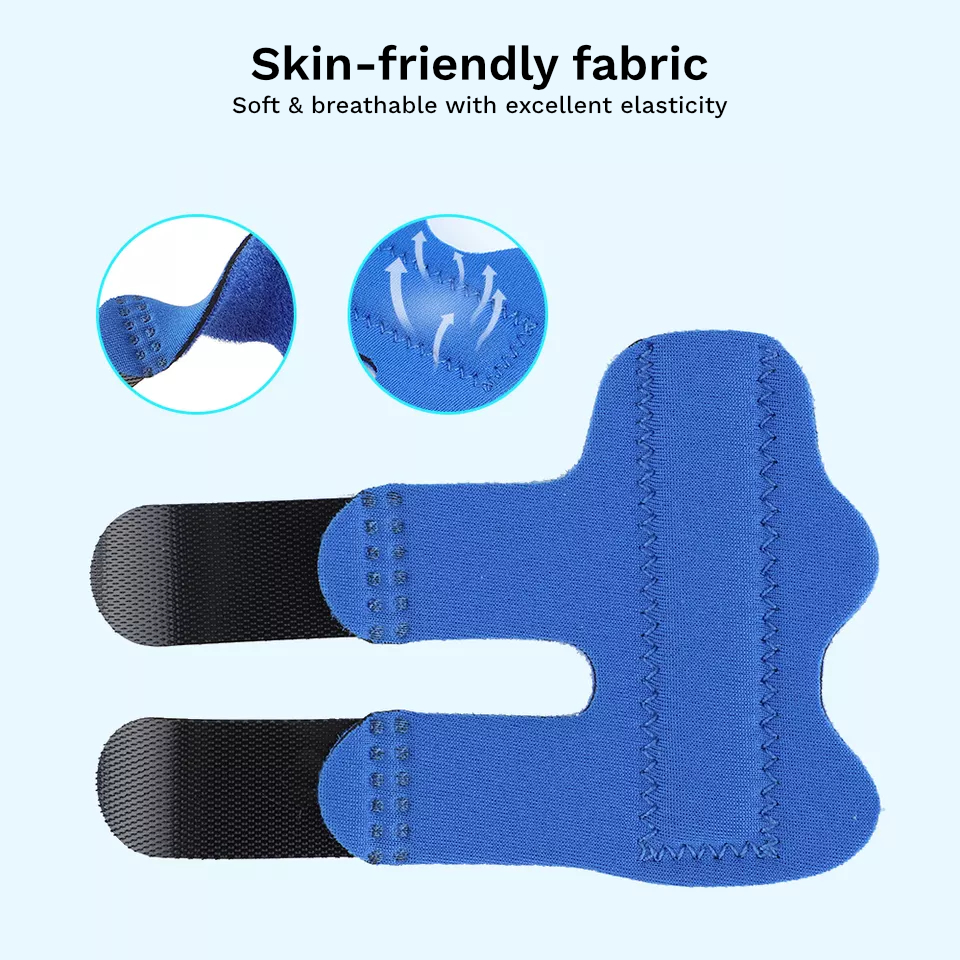
- Slim padding and smooth edges help improve comfort over sore or sensitive areas
- Low-profile design is easier to wear during everyday tasks and overnight
- Designed for one finger at a time and not suitable for the thumb
If one finger keeps catching, clicking, locking or snapping painfully, this rigid finger splint is designed to help keep it in a straighter, steadier position. By limiting how tightly that finger curls into the palm, it may help reduce the repeated bending that often keeps trigger finger symptoms going during daily use, rest and sleep.
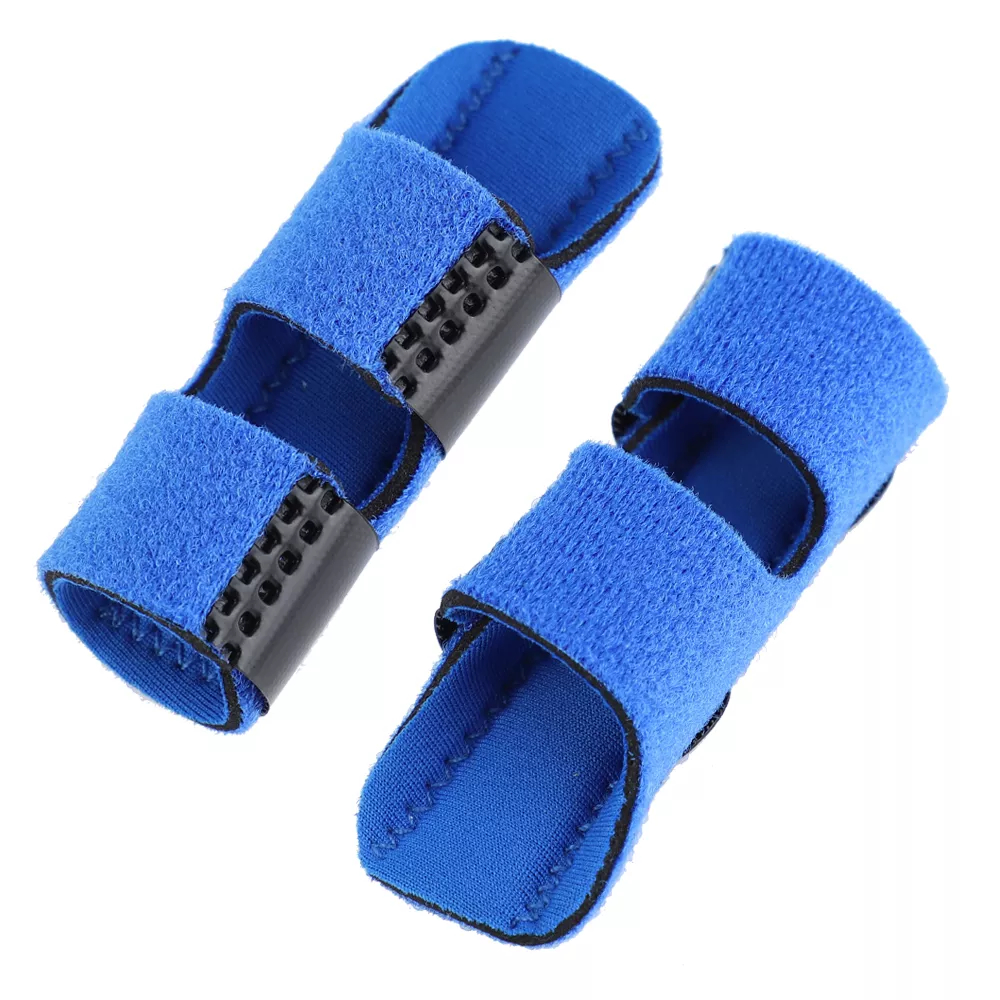
Designed for adults and intended for one finger at a time, this splint gives firm support without unnecessary bulk. A built-in aluminium support strip helps keep the finger straighter, while slim padding, smooth edges and two adjustable fastening straps help make regular wear more comfortable over sore joints and tender areas. The splint spans the two main finger joints but leaves the fingertip open, so it is easier to check warmth, colour and overall comfort after fitting.
- Rigid finger splint for adults, designed to support one affected finger at a time
- Best suited to trigger finger symptoms such as catching, clicking, locking and soreness where the finger meets the palm
- Helps keep the finger straighter to reduce the deeper bend that often sets off painful snapping or locking
- Full-length support spans the two main finger joints while leaving the fingertip open for comfort and colour checks
- Built-in aluminium support helps hold the finger steady during the day and overnight
- Two adjustable straps help you fine-tune the fit for comfort, finger width and mild swelling changes
- Slim padding, smooth edges and a low-profile design help make regular wear more comfortable
- Designed for one finger at a time and not suitable for the thumb
A practical non-surgical option to consider if your symptoms sound typical of trigger finger.
Use it during lighter daily tasks, at rest or overnight, starting with shorter wear periods and building up as it feels comfortable. If your finger changed shape after an injury, is very swollen or hot, or cannot be moved at all, it is better to get it checked before relying on a splint alone.
Does this sound like your finger?
This splint is best suited to adults with one finger that no longer moves as smoothly as it used to. You may find that it bends well enough, then sticks on the way back up, releases with a snap, or sometimes stays bent until you help it straighten with the other hand. For many people, the main problem is not constant pain so much as one finger becoming awkward, unreliable and less predictable during normal use.
Early signs you may notice
It often starts subtly. You may notice that one finger feels a little different from the others, especially when opening your hand. It may feel stiffer first thing in the morning, or there may be a small hitch in the movement that was not there before. At this stage, symptoms often come and go, so they can be easy to brush off.
You may also notice soreness low in the palm where that finger begins. Some people describe this as a tender spot. Others say it feels bruised or irritated after gripping, carrying, typing or using smaller handles. It is also common for the finger to feel worse after rest, particularly when you first wake up.
Common signs that fit trigger finger
Common signs include:
- clicking or snapping when the finger bends or straightens
- a sticking or catching feeling part-way through movement
- the finger locking in a bent position and needing help to release
- tenderness where the finger meets the palm
- stiffness when you first wake up or after the hand has been still
- symptoms that flare after gripping, carrying, typing or tool use
- a sense that one finger feels less reliable than it used to
When it starts to feel more established
For some people, symptoms stay at the level of an occasional click or a small hitch for quite a while. For others, they become more obvious over time. The finger may start catching more definitely, feel sorer at the base, or begin locking in a bent position often enough to interfere with everyday tasks. Many people recognise that gradual shift from “something feels slightly off” to “this finger is becoming a nuisance” once the pattern becomes clearer.
One reason trigger finger often stands out is that it usually keeps affecting the same finger in the same place. Rather than a vague ache through the whole hand, the sticking and tenderness tend to keep coming back to one finger, especially near where it joins the palm.
Who this splint is designed for
This splint is made for one affected finger at a time and is not suitable for the thumb. The adjustable adult design is intended to fit most men and women, with two straps that can be tightened or loosened for comfort, finger width and mild day-to-day swelling changes. If your symptoms sound like the pattern described here, a rigid straightening splint is often a sensible non-surgical option to try.
When it may be worth getting it checked first
If the finger became misshapen after an injury, is very hot or swollen, or cannot be moved at all, it is better to get it checked before relying on a splint alone. But if what you are dealing with is one finger that repeatedly sticks, clicks, locks or snaps, especially with soreness where it meets the palm and stiffness after rest, this is the sort of symptom pattern the splint is designed for.
What trigger finger often feels like in daily life
Trigger finger often starts in a way that is easy to brush off. One finger feels a bit stiff, or it no longer opens as smoothly as the others. You may notice it first in the morning, or after the hand has been still for a while. At that stage, it may feel more odd than painful. The finger still moves, but not as freely or smoothly as it should.
How it often starts to feel different
As the symptoms become clearer, the same finger keeps drawing your attention. It may click when you bend it, hesitate as you straighten it, or release with a distinct snap that feels as though something has briefly caught and then slipped free. For some people, that sensation is more noticeable than any actual sound. The movement can feel jerky or uneven, rather than smooth like the other fingers.
There is often one sore spot that keeps returning: low in the palm where the finger begins. That area may feel tender when pressed, irritated after use, or bruised even though there has been no obvious injury. This is one reason the problem often feels quite specific. Rather than the whole hand aching in a vague way, the trouble keeps coming back to one finger and one small area near its base.
What tends to happen during everyday tasks
In daily life, the problem usually shows itself during ordinary tasks rather than dramatic ones. You may feel it when your finger curls around a mug handle and then catches as you try to let go, when you carry shopping and the finger is harder to straighten afterwards, or when you hold a pen, toothbrush or utensil and notice a jab low in the palm. Typing, using tools or holding narrow handles for a while can also stir it up, especially if that finger has to keep curling into the palm and then straightening again.
What is often surprising is how quickly the problem starts affecting movements you would normally not think about. Releasing a cup, opening your hand after carrying a bag, changing your grip on cutlery, or reaching for keys can all become small moments of hesitation. You may become more cautious about opening your hand, which can make it feel less natural to use even when the pain itself is not severe.
That is what can make trigger finger so frustrating. It gets in the way of routine hand use. Small movements that used to happen automatically can start needing more caution, simply because you are no longer sure the finger will open smoothly.
Why mornings can feel worse
Many people notice the problem most in the morning. During sleep, fingers naturally rest in some bend, and if one finger already tends to stick, it may feel much stiffer when you first wake up. In milder cases, the finger simply feels slow or reluctant to open. In more troublesome cases, it may be tucked into the palm enough that you need the other hand to help straighten it. Once you get moving it may ease a little, but that does not always stop it becoming sore or clicky again later in the day.
How you may start to work around it
Over time, you may notice yourself making small adjustments. You might shift more tasks to the other hand, avoid gripping too firmly with the sore finger, use the neighbouring fingers more, or prefer larger handles because tighter ones feel worse. These changes often creep in gradually, but they can be a sign that the finger has become less predictable than it used to be.
Why it can feel unpredictable
Symptoms often come and go. Some days the finger may only click once or twice and seem fairly manageable. On other days, especially after more gripping, carrying, typing or hand use, the catching may happen repeatedly and the sore area may feel more stirred up. That variation can be misleading. The problem may seem to settle for a while, then flare again after a busy day or an awkward night with the finger curled into the palm.
That stop-start pattern is one reason people often put up with trigger finger for longer than they expected. A better day can make it seem as though it is settling, only for the same finger to become awkward again the next morning or after a busier spell. The inconsistency can be frustrating in its own right, because it makes the symptoms feel unpredictable even when the overall pattern is slowly becoming more established.
As the condition becomes more established, the movement may progress from a mild click to a definite catch, and from there to episodes where the finger locks in a bent position before releasing suddenly. Not everyone follows exactly the same course, but many people recognise that gradual change from “slightly stiff and odd” to “reliably troublesome”.
What gives trigger finger its distinctive feel is this mix of local soreness, interrupted movement and unpredictability. The finger does not simply hurt. It behaves differently. It sticks, hesitates, releases suddenly or refuses to straighten smoothly. When that keeps happening in the same finger, especially with stiffness after rest and tenderness low in the palm, it is a pattern many people recognise once they know what to look for.
Why your finger catches, clicks or locks
If the symptoms sound familiar, the next question is usually why this keeps happening. Trigger finger is not just random finger pain. It affects the way the finger moves, which is why the problem often feels so specific and consistent.
How the finger normally moves
Your fingers bend and straighten with the help of tendons. These are strong cord-like tissues that connect muscles in the forearm to the bones in the hand and fingers. When they move freely, finger movement feels smooth and easy, and you do not usually notice them at all.
On the palm side of the hand, the tendons that bend the fingers run through a snug pathway and under small bands that keep them close to the finger bones. This helps the tendon follow the right line each time you grip, pinch, hold, type or let go of something. In a healthy finger, the tendon slides through this system with very little resistance.
What changes in trigger finger
With trigger finger, that smooth movement becomes less reliable. The problem usually centres near the base of the finger, where the tendon passes through a tighter part of its pathway. If the tendon, its lining, or the surrounding tissue becomes irritated and slightly thickened, it no longer moves through that tight spot as easily as it should.
A simple way to picture it is to imagine the tendon becoming slightly bulkier and then having to pass through the same narrow point every time the finger bends and straightens. If that area is already tight, movement starts to drag instead of running cleanly. That is why the movement can start to feel rough, sticky or hesitant rather than smooth.
Why the movement starts to catch
Early on, the tendon may still pass through the tight spot, but with a small hitch along the way. That is often when people first notice a click or a feeling that the finger is no longer moving cleanly. As the irritation continues, the movement can become more abrupt. The finger may hesitate and then release suddenly, creating the familiar snapping or catching feeling.
If the resistance becomes greater, the tendon may briefly stick before forcing its way through. That is often when the snapping becomes more obvious or more uncomfortable. In more established cases, the finger may lock in a bent position because the tendon does not move back through the tight area easily on its own. When it finally releases, the movement can feel sudden and unpleasant.
Why the base of the finger often feels sore
The soreness low in the palm where the finger begins fits the same pattern. Each time the irritated tendon is pulled through the troublesome area, it can create local friction and strain. Over time, that repeated rubbing makes the area tender. It may feel bruised when pressed, sore after gripping or carrying, or more reactive after longer periods of typing or hand use. Some people also notice a small thickened spot along the tendon line.
How the cycle keeps going
One reason trigger finger can be frustrating is that it often develops gradually. It may start with a mild click and very little pain, then slowly become more noticeable as the finger grows stiffer, the base becomes more tender and the movement less predictable. Because the change is often gradual, it is easy to keep using the hand in the same way for quite a while before realising the symptoms are becoming more established.
Repeated gripping and finger use can keep the problem going for a simple reason. Every time the finger bends deeply into the palm and then straightens again, the tendon has to pass through the same irritated area. If that area is already sore and tight, each pass can keep stirring it up. This helps explain why trigger finger is often linked to repeated hand use rather than one clear injury.
Morning stiffness also fits this same explanation. During sleep, fingers naturally rest slightly curled. If one finger already tends to stick, spending hours in that position can make it slower, stiffer or more reluctant to move freely when you first open your hand. It may loosen a little once you start moving, but the underlying irritation can still flare again later with use.
Seen simply, the process usually goes like this:
- the tendon or its lining becomes irritated
- the irritated area thickens slightly
- the tendon has more difficulty moving through a tight part of its pathway
- movement becomes less smooth and starts to catch
- the finger clicks, snaps or locks
- repeated use keeps pulling the same irritated area through the same narrow spot
- the cycle continues
Once that cycle is clear, the reasoning behind splinting makes more sense. If deep bending keeps dragging the sore tendon through the problem area, supporting the finger in a straighter position is a sensible way to cut down that repeated irritation.
Why keeping the finger straighter can help
Trigger finger is often made worse by one very ordinary movement: the finger bends tightly into the palm, then has to straighten again through the same sore point where it tends to catch. A straightening splint helps by limiting how far the finger can curl, so the tendon is not being pulled through that aggravating range as often or as forcefully.
What changes when the finger stays straighter
The main aim of splinting is to reduce the repeated deep bending that commonly sets symptoms off. If the finger spends more time in a straighter position, the irritated tissues at its base usually get less provocation during the day and less prolonged curling during rest.
This matters because trigger finger often becomes a cycle. The finger bends, catches, snaps or locks, then gets irritated again when the same movement happens over and over. Keeping it straighter helps interrupt that pattern.
Why this can help during the day
This can be especially helpful during the activities that stir symptoms up most. Gripping a mug handle, carrying shopping bags, holding utensils, typing for long periods or using tools all ask the finger to bend and open again and again. If that movement already produces clicking, sticking or painful snapping, reducing the depth of the bend can make those episodes less likely while the splint is on.
For many people, the early benefit is not dramatic relief so much as better control. The finger feels steadier, less likely to stick without warning, and less able to fold into the exact position that usually causes trouble. That sense of protection matters because it usually means the splint is limiting the movement that tends to set symptoms off.
Keeping the finger straighter may help by:
- reducing the tight curl that often sets off catching
- limiting repeated strain where the finger meets the palm
- making painful snapping movements less likely
- protecting the finger during lighter daily tasks
- stopping it tucking so deeply into the palm during sleep
Why overnight support often matters
Night-time support is often particularly useful because many people wake with the finger feeling worse than it did the evening before. During sleep, fingers naturally rest in some bend. If one finger already tends to catch or lock, spending hours in that curled position can leave it stiffer, sorer and harder to open in the morning. Supporting it in a straighter position overnight can reduce that prolonged curled posture and may make the first movements of the day easier.
This is why overnight splinting often becomes such an important part of the routine. You may not notice much while you are asleep, but you notice the after-effects when you wake. If mornings are the worst time for you, night wear may be one of the most helpful ways to use the splint.
Why consistency matters more than occasional wear
Daytime wear can also help, especially if there are clear tasks that repeatedly bring symptoms on. Some people wear the splint during desk work, longer stretches of typing, household jobs or other lighter activities that tend to make the finger more clicky or sore. Others mainly use it after a flare-up, when the finger feels more sensitive and needs a quieter period.
You do not need to wear the splint all the time for it to be useful, but regular use usually works better than occasional wear. If the finger is supported for a short time but spends the rest of the day gripping tightly, catching repeatedly and curling into the palm overnight, you may not notice much overall improvement. The more consistently the finger is kept out of its most aggravating range, the more realistic it is to expect some reduction in irritation over time.
That does not mean wearing it constantly. It means using it at the times that matter most: when the finger would otherwise keep bending into the positions that usually set it off, or when rest tends to leave it worse afterwards. Used that way, splinting becomes a practical way of interrupting the cycle rather than simply giving the finger extra support.
Over time, if that cycle is interrupted often enough, some people find the finger catches less, feels less sore at the base and is easier to open in the morning. Others mainly notice that it feels calmer and more predictable while the splint is on. Either way, the reasoning is the same: when repeated deep bending is part of what keeps the problem going, reducing that bending is a sensible and targeted thing to try.
What makes this splint practical to wear and support
A trigger finger splint only really helps if you wear it often enough to change the way the finger moves from day to day. For a splint to help, it needs to do two things well: support the finger properly and feel manageable enough to wear regularly. If a splint is too soft, the finger may still bend into the same position that keeps provoking symptoms. If it is too bulky, awkward or uncomfortable, many people simply stop using it. This splint is designed to give firm straightening support without feeling unnecessarily cumbersome in everyday use.
Support along the part of the finger that matters
One of its main strengths is that it supports the finger along most of the length that matters, rather than focusing on one small spot. Trigger finger is often aggravated when the finger bends deeply at its joints and curls into the palm. By spanning the two main finger joints, the splint helps limit that deeper bend and encourages a straighter resting position. That makes it more relevant to the movement that tends to set symptoms off, rather than acting as a simple wrap or cushion.
Why the open fingertip helps
The fingertip is intentionally left free. This helps in several practical ways. It allows you to keep normal touch at the tip of the finger, makes it easier to check warmth and colour after fitting, and generally makes the splint feel less enclosing than a fully covered design. Many people find a support easier to live with when the whole finger is not sealed in, especially if they plan to wear it repeatedly during the day or overnight.
What the rigid support strip does
Inside the splint is a rigid aluminium support strip, and this is what gives it its straightening strength. Trigger finger often needs more than soft support or light compression. If the finger can still curl deeply into the palm, the movement that keeps aggravating the tendon is not really being changed. The built-in support helps the splint hold the finger in a steadier, straighter position more reliably than a soft sleeve would on its own.
Why the padding and edges matter
Firm support is much harder to tolerate if it feels harsh against the skin or joints. That is why the splint also includes slim internal padding. The padding helps soften contact along the finger and spread pressure more comfortably over sore areas, bony joints and sensitive skin. It is slim rather than bulky, so the splint still feels purposeful and supportive rather than oversized or clumsy.
Smooth rounded edges are another detail that makes a practical difference. A finger splint can sound ideal on paper, but if the edges rub, dig in or feel sharp after a few hours, it quickly becomes much less realistic to wear consistently. Rounded edges help reduce that kind of irritation and make a close fit easier to tolerate, whether the splint is being used for shorter daytime periods or overnight.
How the two straps improve the fit
The two adjustable fastening straps make the splint more adaptable than a fixed-shape finger support. Fingers are not all the same width, and even the same finger can feel slightly different through the day if there is mild swelling or extra tenderness after use. With two separate fastening points, you can fine-tune the fit along the finger instead of relying on one tight strap to do everything. That usually gives a more stable and balanced feel.
This adjustability is especially helpful if one part of the finger is more sensitive than another, or if the fit needs a small change later in the day. You might want the lower part anchored a little more firmly while keeping the upper section slightly gentler, or you may need to loosen one strap slightly if the finger feels puffier after activity. Being able to make those small changes helps make regular wear more realistic.
Why a one-finger design is often more practical
The splint is slim enough to focus on one affected finger without turning the whole hand into a bulky brace. That matters because trigger finger often affects one finger much more than the rest. A larger support that immobilises more of the hand can feel excessive when the problem is so localised. By targeting just the troublesome finger, this splint leaves the neighbouring fingers freer for lighter everyday tasks and tends to feel less intrusive overall.
A smaller, more focused splint often feels easier to use regularly when the problem is limited to one finger. If the main issue is one finger that keeps sticking or locking, this kind of design usually feels easier to live with than something that makes the whole hand feel heavily braced.
An adjustable fit for most adults
The adult one-size adjustable design is intended to fit most men and women. Rather than coming in several rigid sizes, it uses its shape and adjustable straps to accommodate a range of finger widths. That makes it simpler for people who want a practical support without dealing with complicated sizing, while still allowing some flexibility for mild day-to-day changes in swelling.
It is important to note that the splint is designed for one finger at a time and is not suitable for the thumb. The thumb has different movement demands and usually needs a different style of support. It is designed specifically to support and protect one finger at a time.
Taken together, these features make it more than a basic finger support. The rigid support strip gives real straightening control. The full-length shape helps limit the bend that often sets symptoms off. The open fingertip makes everyday use and circulation checks easier. The slim padding softens contact without adding too much bulk. The rounded edges help reduce rubbing. The two straps make the fit more adjustable. And the one-finger, low-profile design makes it far more realistic to wear regularly.
How to fit it and wear it comfortably
A trigger finger splint works best when it feels secure, supportive and comfortable enough to use regularly. It should feel secure, but not tight. The aim is to keep the finger in a straight or near-straight position without causing pressure problems, rubbing or circulation issues. A good fit should feel controlled and reassuring, not harsh or restrictive.
Taking a little care over the fit at the start makes a real difference. If the splint is too loose, it may shift around or let the finger bend more than intended. If it is too tight, it can cause throbbing, tingling or unnecessary soreness under the straps. Getting that balance right usually makes the splint much easier to wear consistently over the days and weeks ahead.
Before you put it on
Before fitting the splint, make sure the finger is clean and dry. If you have just washed your hands, dry the finger properly so moisture is not trapped under the support. If you have used hand cream, let it absorb first so the splint does not slide more easily against the skin.
It can also help to take a quick note of how the finger feels before you put the splint on. Is it especially sore at the base today? Is one joint puffier than usual? Does it straighten fairly comfortably, or does it resist? These quick checks make it easier to tell whether the fit feels right once the splint is on.
How to position the splint
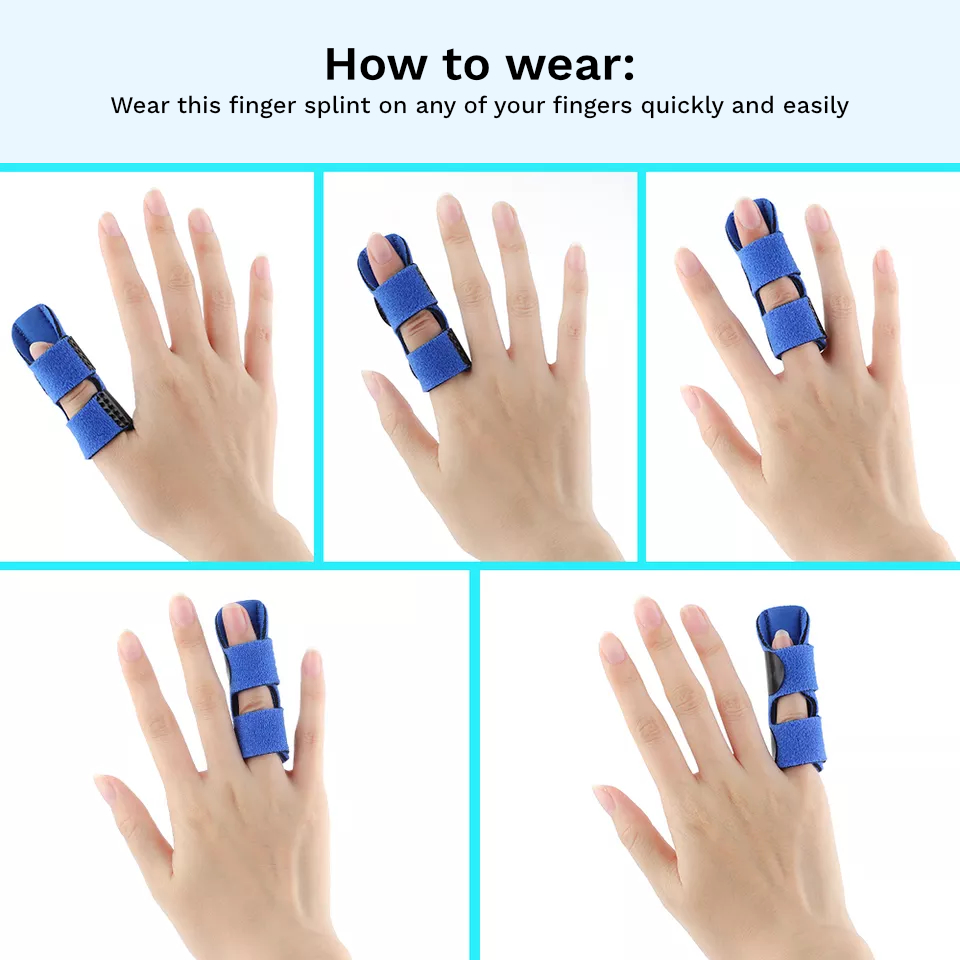
The splint is usually easiest to apply when both straps are opened fully first, so you can place it neatly against the finger and adjust it from there.
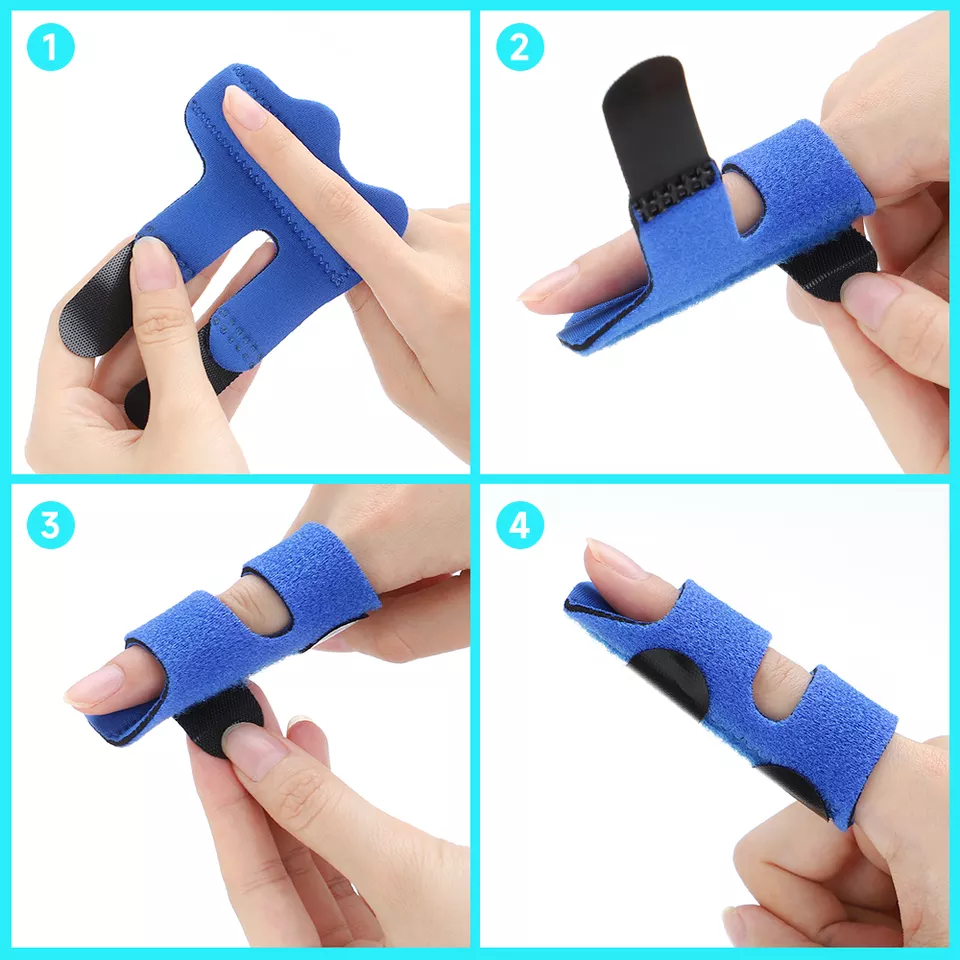
- Open both straps fully.
- Place the padded side of the splint against the finger.
- Line it up so it spans the two main finger joints.
- Keep the fingertip uncovered and fully visible.
- Position the lower end so it sits just short of the large knuckle where the finger meets the hand.
- Bring the finger into a comfortable straight or near-straight position without forcing it sharply.
- Fasten the lower strap first to anchor the splint.
- Fasten the upper strap so the finger feels supported along the length of the splint.
- Check that the splint is centred and has not shifted as you tightened it.
If the finger does not straighten easily
Some people can place the finger almost fully straight into the splint without much discomfort. Others find it naturally sits in some bend and does not like being straightened far, especially if it has been catching or locking regularly. If that happens, do not force it hard into a painfully straight position.
Usually it is best to place the finger in the straightest position that feels comfortably manageable and secure it there. As the finger settles, that position may become easier to tolerate. Forcing it sharply from the start often just makes the splint harder to wear consistently.
What a good fit should feel like
The splint should feel snug enough to stay in place and keep the finger well supported, but not so tight that it feels squeezed. Support should come from the structure of the splint and the way it holds the finger straighter, not from heavy compression.
A good fit often feels:
- stable rather than loose
- firm rather than tight
- supportive rather than restrictive
- comfortable enough to manage for the intended wear time
A fit that is too tight may cause:
- throbbing
- tingling
- numbness
- increased soreness under the straps
- a fingertip that feels cold or changes colour
If you notice any of those signs, loosen the straps and refit the splint rather than trying to put up with it.
How to check the fingertip afterwards
Because the fingertip stays uncovered, it is easier to check how the finger is coping once the splint is on. After fitting, make sure the fingertip still feels warm, looks its usual colour and does not tingle or feel numb. It should not feel as though pressure is building under the splint.
A simple check is to gently press the fingertip until the skin briefly lightens, then let go and see that normal colour returns promptly. A quick check is usually enough, especially when you are first getting used to the fit or after making adjustments.
What to look for on the skin
During the first few days of use, it is sensible to remove the splint at intervals and inspect the skin. This helps you spot pressure points early and adjust the fit before minor irritation becomes a bigger problem.
Look for:
- red marks that fade quickly
- red marks that stay for a long time
- sore patches along the sides of the finger
- areas that feel rubbed or tender
- blistering
- extra sensitivity directly under a strap or edge
Light marks that fade fairly quickly can be normal at first while you are fine-tuning the fit. Marks that remain painful, last for a long time or become worse with each wear period suggest the splint needs adjusting. That may mean loosening one strap slightly, repositioning the splint or shortening the next wear session.
How to build up wear time
Even if the splint feels comfortable straight away, most people do better if they build up wear time gradually. The finger, the skin and the joints often need a little time to adapt to being held straighter, especially if the finger has been moving freely, even if that movement has been troublesome.
A sensible starting pattern is often:
- 1 to 2 hours at a time
- once or twice a day
- during a period when you can pay attention to comfort and fit
These early sessions help you learn how the splint feels in real use and whether any rubbing or circulation issues show up.
If the first few sessions go well and the skin is tolerating the splint, you can gradually increase the time you wear it. Many people then move on to longer daytime periods and, if stiffness first thing in the morning or waking with the finger curled is a problem, add overnight use as well.
A gradual build-up helps avoid two common mistakes: wearing the splint too loosely and deciding it does nothing, or wearing it for too long too soon and ending up more bothered by pressure than helped by support. A steady routine is usually easier to sustain and easier to judge properly.
When daytime wear helps most
The splint often helps most when you wear it at the times your symptoms are usually triggered. For some people that means using it during desk work, typing, lighter household tasks or periods when the finger usually becomes more sensitive. For others, overnight wear is the most valuable part of the routine.
Try to match use to your own pattern. If mornings are your main issue, night wear may matter most. If certain daytime tasks reliably make the finger stick or feel sore afterwards, those may be the best times to wear it.
Why overnight wear can be useful
Many people with trigger finger wake with the finger more curled, stiff or reluctant to open than it was the evening before. That is because fingers naturally rest in some bend during sleep, and a finger that already tends to catch may become noticeably stiffer after staying in that position for hours at a time.
Wearing the splint overnight can help keep the finger from folding so tightly into the palm. This may reduce:
- waking with the finger deeply curled
- marked stiffness first thing in the morning
- the need to use the other hand to help straighten it
- that first painful catch or snap of the day
If early mornings are when the problem feels worst, overnight support is often one of the most worthwhile ways to use the splint.
What a practical routine often looks like
Many people settle into a pattern such as:
- short daytime sessions at first while getting used to the splint
- longer daytime use during tasks that usually trigger symptoms
- regular overnight wear if the finger is stiff or curled on waking
- removing the splint for washing, skin checks and any advised exercises
This kind of flexible routine often works better than trying to wear the splint every possible moment. The finger simply needs regular time in a straighter, less aggravating position.
When to take it off
Remove the splint for washing the hand and the splint itself, for checking the skin and for any exercises or movement advice you have been given. It is also sensible to remove a rigid finger splint during heavier or more unpredictable activity unless you have been specifically advised otherwise.
That includes situations such as:
- heavy lifting
- forceful gripping
- contact sport
- using heavier hand tools
- tasks where the finger might be knocked, trapped or bent sharply
Because the splint limits movement, the finger cannot move out of the way as easily. During rough activity, that can sometimes make it more vulnerable rather than more protected.
If swelling changes during the day
It is normal for fingers to vary slightly through the day. If the finger feels puffier later on, warmer after use or a little more tender than when you first put the splint on, you may need to adjust the straps. That is one reason the two-strap design is useful. It allows you to loosen and refit without losing the overall position of the support.
If the fit changes noticeably, it is better to adjust the fit and recheck the fingertip than keep wearing it uncomfortably.
What it should feel like in everyday use
When the splint is fitted properly, the finger should feel more controlled and less likely to move into the range that usually causes trouble. You will still be aware that the splint is there, but it should feel supportive rather than intrusive.
Many people describe a good fit as making the finger feel:
- steadier
- less vulnerable to sudden snapping
- better protected during lighter activity
- easier to keep in a safer resting position
When to stop and reassess
Take the splint off and refit it if it slips, starts digging in, suddenly feels much tighter or looser than before, or creates a new pressure point. Stop using it and get advice if the fingertip becomes cold, pale, blue or numb, if the splint causes severe pain, or if the skin breaks down or blisters.
Used properly, the splint should make the finger feel more supported, not more distressed. Getting the fit right is not just about putting it on once. It is about finding a repeatable, comfortable routine that lets the finger spend regular time in a straighter and less aggravating position.
What you may notice over time
It helps to think of a trigger finger splint as something that reduces strain on the finger, rather than something that fixes everything straight away. This splint is designed to keep the finger in a straighter, less aggravating position, but irritated tendons and soft tissues usually need time to settle. Because of that, the earliest signs that it is helping are often small and practical rather than dramatic.
What you may notice at first
At first, many people simply notice that the finger feels more protected while the splint is on. It may feel steadier, less likely to curl tightly into the palm, and less prone to those sudden awkward catches that make the movement feel unreliable. That early sense of control often shows that the splint is doing what it is meant to do, even before the finger itself has had much time to calm down.
In the first few days, some common early changes include:
- the finger feels more supported during wear
- it does not tuck as deeply into the palm
- snapping or catching happens less often while the splint is on
- the base of the finger feels less irritated after lighter activity
- overnight use leaves the finger less stiff or less tightly curled on waking
If stiffness first thing in the morning or waking with the finger bent into the palm is one of your main symptoms, night-time use may be where you notice the first worthwhile difference. The change is not always dramatic. You may simply find that the finger is easier to open when you wake, or that the first movements of the day feel less awkward and less sore. Even that can be a meaningful sign that the finger is spending rest time in a better position.
What may change over the next few weeks
As use continues, it often helps to separate two kinds of benefit. One is the immediate effect while the splint is actually being worn: the finger is held straighter, so it has fewer chances to move into the range where it usually catches. The other is the slower change that may develop over days and weeks if the repeated irritation starts to settle. You may notice the first quite quickly. The second usually takes longer.
Sometimes the earliest sign of improvement is not that the finger feels “better” in a general sense, but that certain irritating moments happen less often. You may notice fewer catches while making a drink, less reluctance when opening the hand after carrying something, or a finger that feels calmer after a normal day instead of ending it sore and reactive. Those small shifts can be easy to miss if you are only looking for a big improvement all at once, but they often matter more than a single unusually good day.
Over several weeks of regular use, if the splint is helping, you may begin to notice changes such as:
- catching happens less often than before
- locking episodes become less frequent or less forceful
- the finger feels calmer after tasks that used to stir it up
- the sore area at the base becomes less reactive
- mornings start more comfortably
- you feel more confident using the hand for ordinary tasks
How to tell whether it is helping
The best way to judge progress is usually by looking at the general trend rather than isolated moments. One very good day does not necessarily mean the problem has fully settled, and one difficult day does not automatically mean the splint is not helping. What matters most is whether the finger is gradually becoming easier to manage. Is it locking less often? Are the bad mornings less severe? Does the sore spot at the base stay calmer after a normal day of hand use? Those broader changes usually tell you more than any single day can.
It is also normal for symptoms to fluctuate while things are improving. A busy day with more gripping, carrying, typing or tool use may still stir the finger up even if the general direction is positive. That can be frustrating, but it does not necessarily mean progress is not happening. Trigger finger often settles unevenly, especially if the finger is still being challenged by the tasks that irritated it in the first place.
Some people also find that progress shows up first in confidence rather than pain. The hand feels less awkward. You stop thinking about the finger quite so often. You hesitate less before certain tasks. That can be an important sign in its own right, because trigger finger is not just uncomfortable, it is also disruptive. Regaining trust in the finger is often part of getting better.
When to rethink the plan
For that reason, it is usually better to judge the splint over several weeks of regular use rather than deciding too quickly after only a few wear periods. The finger often needs repeated time in a less provoking position before the overall effect becomes clearer. Regular use tends to work better than occasional long sessions followed by long gaps.
It also helps to keep expectations realistic. A splint does not directly remove the underlying irritation in one step. What it does is reduce the repeated movement that keeps provoking the problem. In that sense, its role is protective and mechanical. It creates better conditions for the finger to settle, but the finger still needs time to respond to those better conditions.
If, after several weeks of regular wear, there is no clear improvement at all, it is sensible to pause and reassess. That might mean thinking about whether the splint is being worn at the most useful times, whether the symptoms really fit a typical trigger finger pattern, or whether a different treatment approach may be needed. Similarly, if the finger is clearly becoming more painful, more swollen or harder to straighten despite consistent use, that is a sign to get further advice rather than simply carrying on without review.
In many cases, progress with trigger finger is gradual and practical rather than dramatic. The finger may not feel completely normal straight away, but if it catches less, starts the day more easily, feels less sore after use and seems more predictable during ordinary hand activity, those are all worthwhile signs that the splint may be helping.
When to seek advice instead of self-managing
Many adults with a typical trigger finger pattern can reasonably try a straightening splint as an early non-surgical step, especially when the problem is clearly centred on one finger that sticks, clicks, locks or snaps and feels sore where it meets the palm. Even so, not every painful or stiff finger problem is trigger finger, and not every finger that catches is something to manage at home on your own. Sometimes getting the finger properly assessed is the safer and more sensible option.
When self-management may be reasonable
If the symptoms are straightforward and sound like the familiar trigger finger pattern, splinting can make good sense. That usually means one finger that repeatedly catches, clicks, locks or snaps, often with tenderness at the base and stiffness after rest. When the picture is less clear, or the finger has been injured, changed shape or developed broader symptoms, it is better to get more individual advice.
Get it checked after an injury
If the problem started after a clear injury and the finger now looks misshapen, twisted, unusually swollen or out of line, it should be assessed before you rely on a splint. A finger that has changed shape after trauma may involve a fracture, dislocation, ligament injury or tendon damage rather than a straightforward triggering problem.
This is especially important if you notice:
- sudden deformity after trapping, twisting or striking the finger
- marked bruising and swelling soon after the injury
- pain focused along the bone or joint rather than mainly low in the palm
- a fingertip or joint that no longer sits normally
- a finger that looks out of line compared with the others
Get advice if the finger is very swollen, hot or extremely painful
Trigger finger often causes soreness, tenderness and stiffness, but it does not usually make a finger become suddenly very hot, dramatically swollen or severely painful in a way that feels out of keeping with the usual pattern. If the finger changes quickly or begins to look much more inflamed than expected, it is sensible to get it checked.
This is particularly relevant if there is:
- sudden major swelling
- marked heat or redness
- pain that feels severe rather than mechanically awkward or irritating
- a finger that is becoming increasingly difficult to touch or move
Get advice if you cannot move it at all
With trigger finger, the finger may catch, lock or need help from the other hand to release. But if you cannot bend or straighten it at all, even with assistance, that goes beyond what would usually be reasonable to manage at home. It may point to a more severe locking problem, a tendon injury, a joint problem or another issue that needs proper assessment before you rely on a splint alone.
Get advice if you suspect a fracture or dislocation
If the finger became painful after a direct impact, crush, fall or twisting injury and you think it may be broken or dislocated, do not assume it is simply trigger finger or try to manage it with a general support intended for another purpose. A broken or displaced finger may need assessment of its position and stability before any splinting plan is chosen.
Signs that make this more likely include:
- pain after a definite traumatic event
- rapid swelling or bruising
- pain when pressing along the bone
- visible change in shape
- difficulty moving the finger because it feels unstable or structurally wrong
Get advice after recent surgery
After surgery, the position and timing of splint use can vary a lot depending on what was done. Some procedures need very specific protection, while others need carefully staged movement to avoid stiffness or protect a repair. If your symptoms are appearing in the context of recent surgery, it is better to check with the team involved in your care before starting a different splint on your own.
Get advice if your hand changed after a stroke
If the posture of the hand or the way the fingers curl has changed after a stroke, splinting decisions usually need to be made as part of a broader rehabilitation plan. In that situation, factors such as muscle tone, skin tolerance, sensation and overall hand function all matter. A removable finger splint may still have a role, but it is usually best used with individual guidance rather than by self-diagnosis.
Get advice if the symptoms do not stay local to one finger
Trigger finger often affects one finger quite specifically, even if more than one finger can become involved over time. If your symptoms include broader numbness, wider weakness, pain spreading well beyond the finger or an experience that does not seem clearly localised, it is worth getting a more individual assessment.
This is especially true if you notice:
- numbness affecting much of the hand
- weakness rather than mainly catching or soreness
- symptoms spreading up into the wrist or forearm
- several different symptoms appearing together in a way that does not feel like one finger problem
Get advice if other health conditions make the picture less clear
Some people already have inflammatory joint conditions, diabetes, previous tendon problems or other hand issues that can make a new finger symptom harder to interpret. Trigger finger is more common in some of these groups, but not every new finger problem should automatically be assumed to be trigger finger just because it is one possibility.
If you already have other conditions affecting the hands, joints or soft tissues and you are unsure whether this new problem fits the usual trigger finger pattern, more specific advice can help make sure the splint is being used appropriately.
Get advice if it is not improving
Trigger finger often takes time to settle, and a splint usually needs a consistent period of use before it can be judged fairly. But if you have used it regularly for several weeks and there is no meaningful improvement, or the finger is clearly becoming worse, it is sensible to get further advice rather than simply continuing indefinitely without reassessment.
This matters especially if:
- locking is becoming more frequent
- pain is increasing rather than easing
- the finger is becoming harder to straighten
- swelling or tenderness is worsening
- the experience no longer feels like a straightforward catching problem
For many people, trying a trigger finger splint is a practical first step. The important thing is knowing when the symptoms look typical and when they do not. If the experience fits the familiar pattern of one finger catching, clicking, locking and feeling sore at its base, self-management with a splint can be very reasonable. If there are signs of injury, deformity, marked inflammation, complete loss of movement, recent surgery, wider nerve-related symptoms or failure to improve over time, getting the finger assessed is the safer next step.
Where splinting fits among other trigger finger treatments
Once trigger finger starts interfering with everyday life, it is natural to wonder what the sensible treatment options are and where a splint fits among them. Not everyone with trigger finger needs an injection or surgery. In many cases, treatment begins with simpler measures, especially when symptoms are still fairly localised and the finger can still be moved. A straightening splint is one of the main non-surgical options because it does more than simply cushion the finger for a while. It helps change the movement pattern that keeps irritating the finger.
Simple changes people often try first
One of the first things many people try is cutting back on the tasks that aggravate the finger most. That makes sense because trigger finger is often stirred up by repeated gripping, forceful squeezing or long stretches of hand use that keep pulling the irritated tendon through the same tight area. The aim is not to stop using the hand completely, but to reduce the movements that are most provocative while the finger is flared.
Helpful changes may include:
- taking short breaks during repetitive hand tasks
- spreading heavier hand use more evenly through the day
- reducing forceful gripping where possible
- switching hands for some tasks when practical
- temporarily easing back on activities that reliably trigger symptoms
These adjustments can help reduce repeated irritation, especially in earlier or milder cases. Even so, they do not directly control finger position. The finger can still curl deeply and still catch, which is one reason activity changes alone are not always enough.
Larger or softer grips
Another simple measure is making handles easier on the hand. Narrow, hard handles often make trigger finger worse because they encourage the finger to curl more tightly into the palm. Larger or softer grips can reduce how sharply the finger has to bend and may make some tasks more tolerable.
This can be useful for things like:
- kitchen utensils
- pens and pencils
- tools
- cleaning equipment
- garden tools
- exercise handles
These changes do not treat the underlying problem directly, but they can reduce aggravation and often work well alongside splint use.
Simple comfort measures
Some people also use simple comfort strategies to make the finger easier to manage. That might include warming the hand before use if stiffness is a problem, using brief cooling after heavier activity if the finger feels more irritated, or taking simple pain relief if appropriate for them. These measures can help with comfort, but they do not do much to change the repeated bending and straightening that often lies behind the clicking or locking itself.
The finger may feel a little more comfortable for a while, but if it continues to curl tightly, stick and snap through the same troublesome range, the underlying irritation may still carry on.
Where splinting often becomes useful
Splinting is often most useful when the main problem is repeated catching, clicking, locking, painful snapping or waking with the finger curled into the palm. In other words, it becomes especially relevant when the movement itself has become the issue.
Activity changes, pacing and grip modifications can all reduce strain to some extent, but they do not directly stop the finger moving into the range that keeps provoking symptoms. A straightening splint does. By limiting the deeper bend, it helps reduce the cycle of irritation rather than only trying to make that cycle more comfortable.
That makes splinting a practical step between general self-care and procedures such as injections or surgery. It is more targeted than simple comfort measures, but much less invasive than procedural treatment. It can be worn at home, removed when needed and fitted into day or night routines depending on when symptoms are worst.
Splinting is often chosen because it is:
- non-surgical
- removable
- practical for home use
- easy to combine with activity changes
- useful both during symptom-triggering tasks and overnight
For many people, this makes it a sensible next step when the finger is too troublesome to ignore but the situation has not yet reached the point where injections or surgery feel necessary.
When injections may be considered
If symptoms are more persistent or more disruptive, an injection may be considered. The usual aim is to reduce irritation around the tendon sheath so the tendon can move more freely through the tight area where it is catching. In some people, this can improve both pain and triggering quite effectively.
Injections are often considered more seriously when:
- the finger has been troublesome for some time
- locking is becoming more frequent
- day-to-day hand use is being affected significantly
- splinting and simpler measures have not helped enough
Some people improve very well after an injection, while others improve only partly or for a limited time. The response varies, but it is usually thought about after a reasonable attempt at simpler treatment rather than as the automatic first step in every case.
When surgery may come into the picture
If trigger finger is severe, long-standing or resistant to non-surgical treatment, surgery may be recommended. The usual aim is to release the tight structure at the base of the finger that the tendon keeps catching under. This gives the tendon more room to move and can address the locking problem more directly.
Surgery is more often considered when:
- the finger locks frequently or severely
- the problem has lasted a long time
- hand function is being significantly affected
- other treatments have not provided enough improvement
For straightforward earlier cases, many people prefer to try less invasive options first if that is reasonable.
Why many people try splinting first
One of the main strengths of splinting is that it directly addresses the movement that often keeps trigger finger active. Its role is not just to cushion the finger or make it feel slightly more supported. It aims to reduce how often the finger bends into the range that provokes catching and pain. That makes it more purposeful than comfort measures alone, while still being much simpler and lower-commitment than procedural treatment.
For many people, the next steps look something like this:
- recognise the symptoms
- reduce aggravating tasks where possible
- modify grips or pacing if needed
- use a splint regularly, especially at night or during provoking activities
- get further assessment if symptoms persist or worsen
- consider injection or surgery if simpler treatment is not enough
Not everyone follows that exact path, but it reflects where splinting often sits in real life. It sits somewhere in the middle: more targeted than basic self-care, but much less invasive than an injection or surgery. It is one of the main practical non-surgical tools for people whose symptoms fit a typical trigger finger pattern and who want to try reducing the repeated aggravation before moving on to more invasive options.
Other finger problems this rigid straightening splint may support under clinical guidance
This splint is mainly designed for trigger finger, where the aim is to support one finger in a straighter position and cut down the repeated catching, locking and snapping that often keep symptoms going. Even so, the same features that make a rigid finger splint useful for trigger finger can also make it helpful in some other situations, especially when one finger needs protecting, settling down or being held in a more controlled position for a while.
When this kind of splint may help beyond trigger finger
That does not mean every painful finger problem should be managed with the same routine or for the same reason. In these other situations, the splint is usually being used differently. The position may need to be more specific, the wear schedule may be stricter, and the aim may be healing support, protection or staged rehabilitation rather than simply reducing triggering.
What these situations often have in common is that one finger may benefit from being kept straighter, better protected or less free to move through a range that keeps aggravating it. The reason that support helps, though, is different in each case.
Why these uses need more individual guidance
These are best thought of as guided uses of the same type of splint, not as reasons to self-diagnose a different problem. If the issue is injury-related, post-operative or part of a more complex hand problem, the best finger position, wear time and routine may differ from the way this splint is usually used for trigger finger.
How to care for the splint
Looking after the splint properly helps it stay comfortable, supportive and suitable for regular use. Because it sits directly against the skin and may be worn for several hours at a time, it is worth keeping it clean and checking now and then that it is still in good condition.
How to wash it
Wash the splint by hand using lukewarm water and a mild detergent. That is usually enough to remove everyday sweat, skin oils and light dirt without being too harsh on the materials. A gentle wash is better than anything too hot or abrasive.
It is best to avoid:
- very hot water
- strong cleaning chemicals
- bleach
- abrasive cleaning products
- rough scrubbing
How to dry it
After washing, rinse the splint thoroughly so no detergent is left behind. Gently press out excess water rather than twisting or wringing it, then leave it to air dry naturally at room temperature.
Try to avoid drying it with strong direct heat such as:
- radiators
- heaters
- tumble dryers
- very hot airing cupboards
Too much heat may affect the materials and alter how the splint feels or fits. Natural air drying is the safest approach.
How often to clean it
How often the splint needs washing depends on how frequently you wear it. If you use it most days, especially overnight, cleaning it two or three times a week is often reasonable. If it becomes visibly dirty, damp with sweat or starts to feel less fresh, wash it sooner.
More frequent cleaning may be useful if:
- you wear it overnight regularly
- your skin tends to perspire more
- you are using it in warmer conditions
- it has picked up dirt, food residue or hand cream
What to check over time
Alongside cleaning, it is worth checking the splint now and then to make sure it is still doing its job properly. With regular use, straps can lose some grip, padding can flatten or crease, and parts of the splint may become less comfortable than they were at first.
Look out for:
- straps that no longer fasten securely
- padding that has become uneven, creased or worn thin
- edges that feel rougher than before
- a support that no longer sits straight or feels stable on the finger
When to replace it
A finger splint should still feel secure and supportive. If it becomes noticeably worn, misshapen or less supportive, replacing it is sensible. Continuing to use a splint that no longer holds the finger well may reduce its benefit and make wear less comfortable than it should be.
Care does not need to be complicated. A simple routine of gentle washing, natural drying and occasional checks of the straps, padding and overall condition will usually help keep the splint in good shape for regular use.
Could this splint help you?
This splint is most likely to help if your symptoms fit the usual trigger finger pattern in one finger. That typically means repeated sticking, clicking, locking or snapping during movement, often with tenderness low in the palm where the finger begins and stiffness that feels worse after rest or first thing in the morning.
This splint may suit you if…
If that sounds familiar, this splint offers a practical non-surgical way to support the finger in a straighter position so it is less likely to keep moving into the range that aggravates it. By limiting the deeper curl into the palm, especially during sleep and during tasks that usually stir symptoms up, it helps reduce the movement that often keeps trigger finger going.
- you have one finger that repeatedly catches or locks
- you feel soreness or tenderness where that finger meets the palm
- you wake with the finger stiff, curled or harder to open
- you notice symptoms during gripping, carrying, typing or tool use
- you want to try a structured non-surgical option before considering injections or surgery
It may be less suitable if…
It is usually most useful when you wear it regularly over several weeks, rather than expecting a quick fix from one or two uses. For many people, the most helpful routine includes overnight wear, use during activities that reliably trigger symptoms, or a combination of both. The finger often needs repeated time in a less aggravating position before the overall pattern begins to settle.
This splint may be less suitable as a self-managed option if the finger became misshapen after an injury, if you suspect a fracture, if you cannot move it at all, or if the symptoms do not really match one clearly catching or locking finger. It is also worth getting more individual advice first if there is wider numbness, broader weakness, recent surgery or a more unusual experience that does not fit typical trigger finger very well.
What to expect if you decide to try it
If the symptoms do match trigger finger, though, this splint is a sensible option to try. It is designed to be firm enough to change the movement that often keeps the problem active, while still being practical enough for repeated wear in normal day-to-day life. Used consistently and fitted comfortably, it can help keep the finger in a steadier, less aggravating position during the times when symptoms are most likely to flare.
It also comes with a 30-day money-back guarantee, giving you the chance to see how it fits into your routine and whether it helps make the finger easier to manage over time.
Medical disclaimer
The information on this page is general guidance for adults and is not a substitute for personal medical advice, diagnosis or treatment. Finger pain, stiffness, clicking and locking can have more than one cause, and not every finger problem needs the same type of support or the same treatment approach.
If you are unsure what is causing your symptoms, if your finger has been injured, or if your symptoms are severe, worsening or unusual, seek advice from an appropriate clinician before relying on this splint as your main treatment. This splint is designed to support one finger in suitable cases, but no splint can guarantee a specific outcome.
Fast & Secure Checkout Through Paypal
Pay with Paypal the secure payment gateway that accepts all credit and debit cards. Paypal is free and secure and no credit or bank information is ever stored or shared with us.
Fast Dispatch
Enjoy your items soon with quick dispatch via Royal Mail. Expect to have your items between 1-3 working days for domestic orders. 7-10 Working days for international orders.
Return Policy – 30 Day Money Back Guarantee
In the unlikely event, you are unhappy with your purchase you can return it within 30 days for a refund. Please contact us via the form on the contact us page to start your return.
To return an item please send it to: Nuova Health UK, 81 Highfield Lane, Waverley, Rotherham, S60 8AL. Please include a note with your order id so we know who to refund. Please retain your postage receipt as proof of postage. All that we ask is that the item is in the original packaging and unused.
Reviews
There are no reviews yet.