
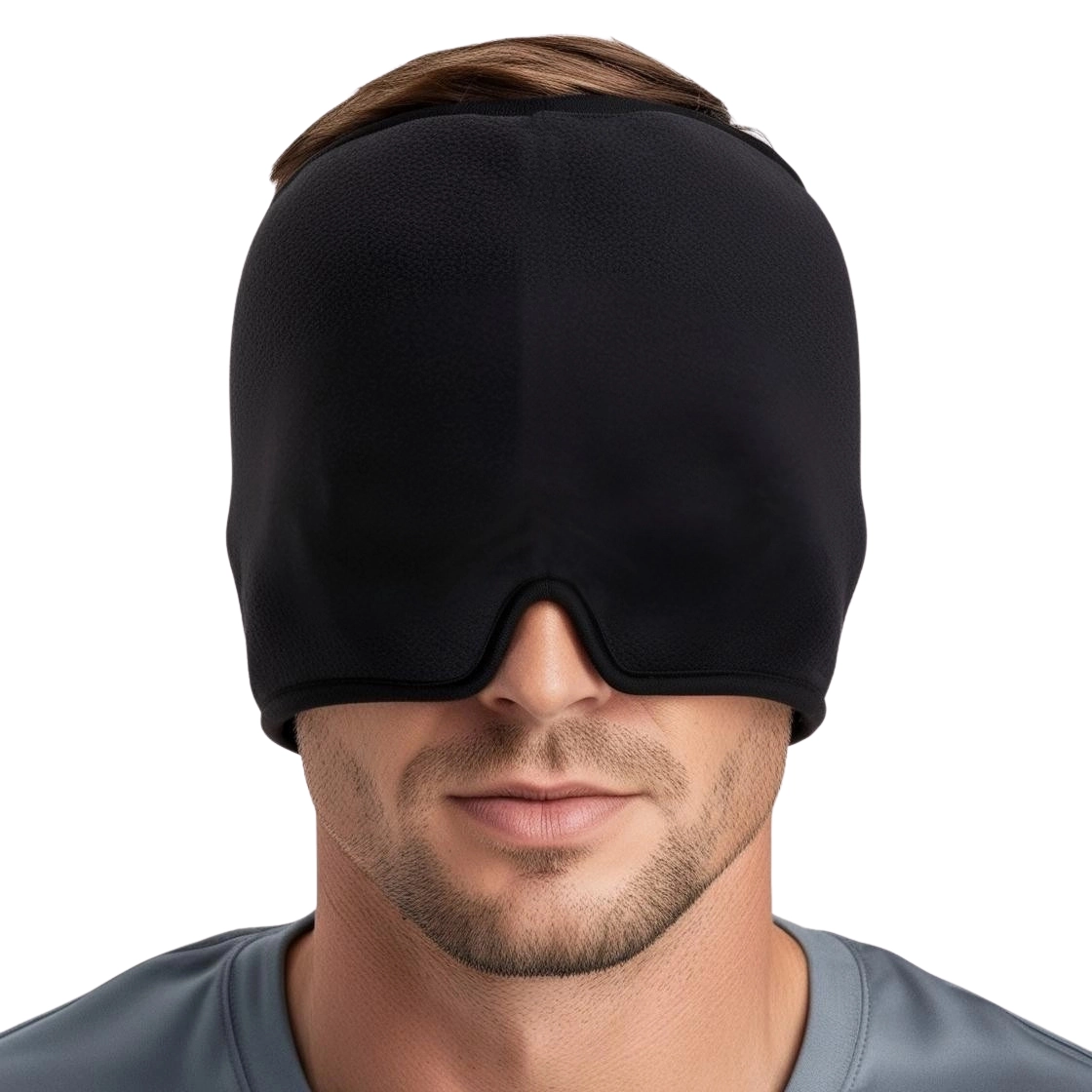
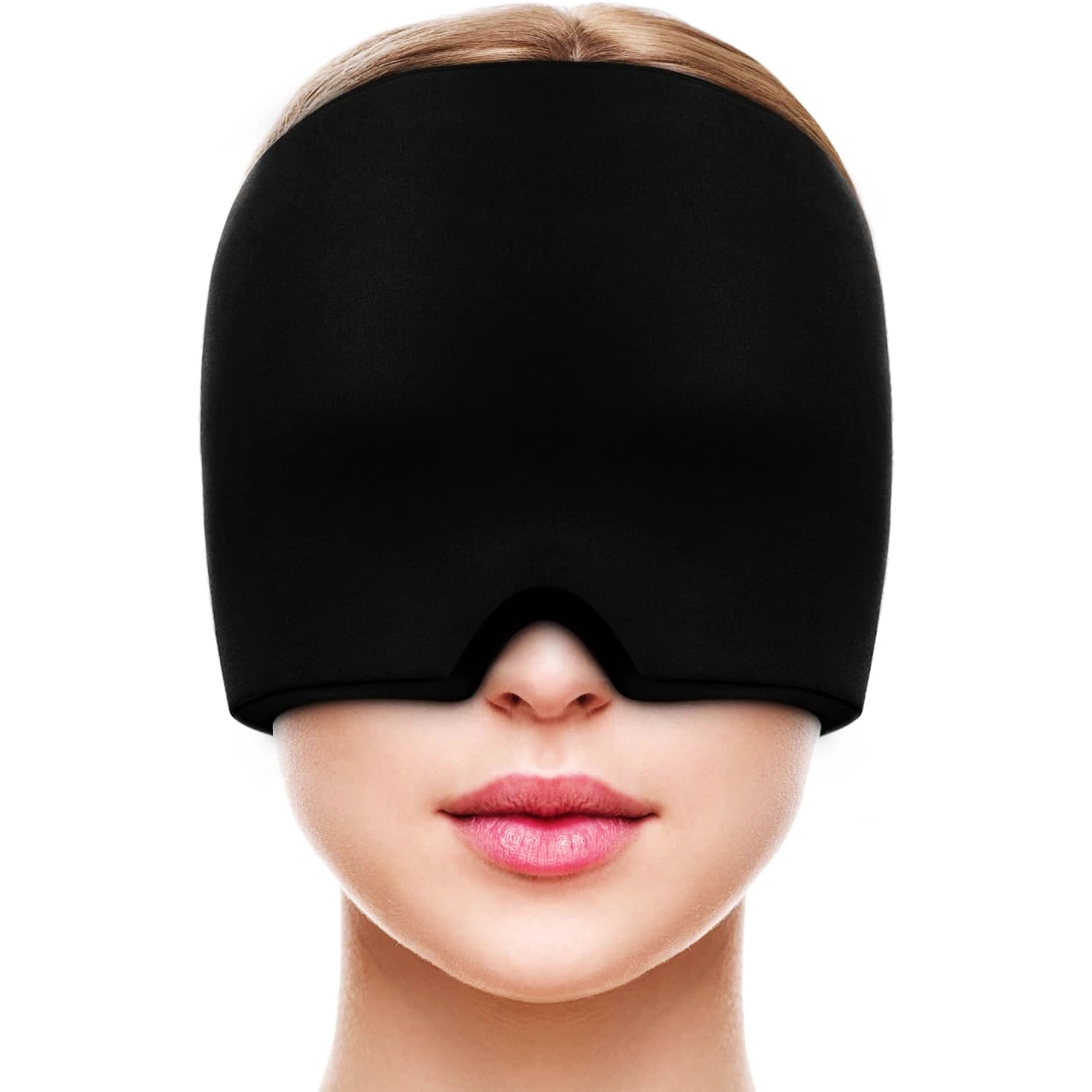
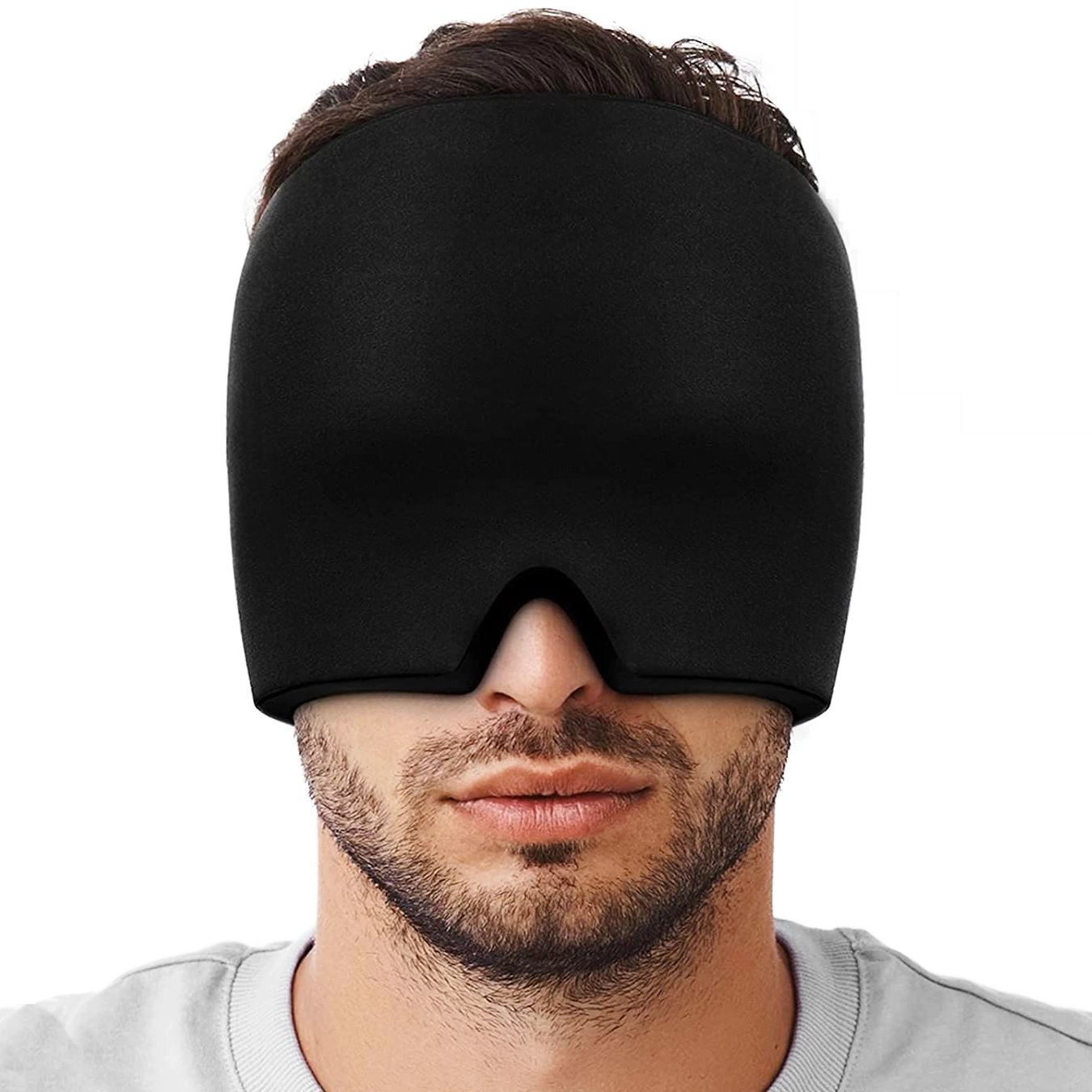
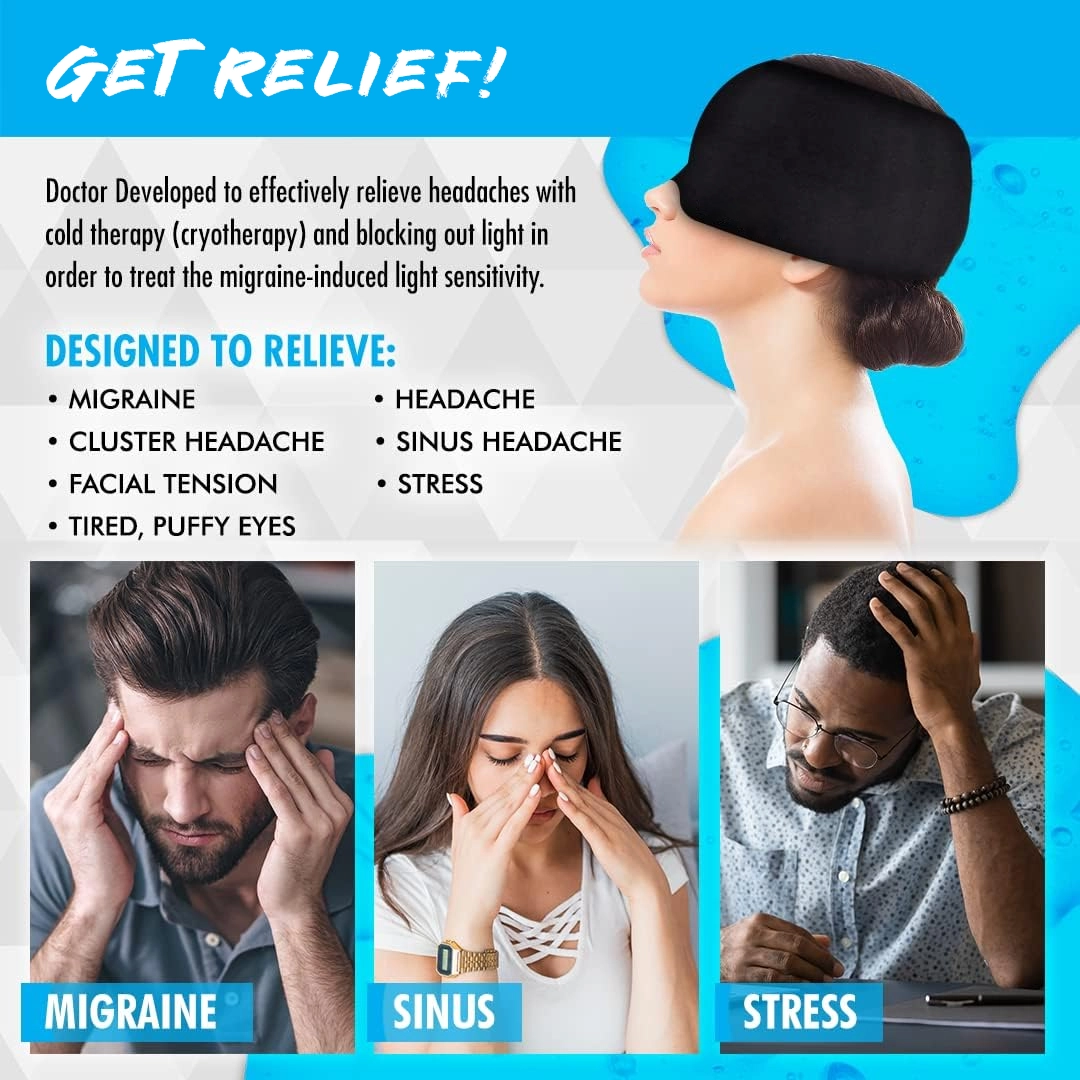
Headache & Migraine Relief Cap
£18.99£22.99 (-17%)inc VAT
- Reusable gel cap delivering cold therapy, heat therapy, or gentle compression for headache and migraine relief
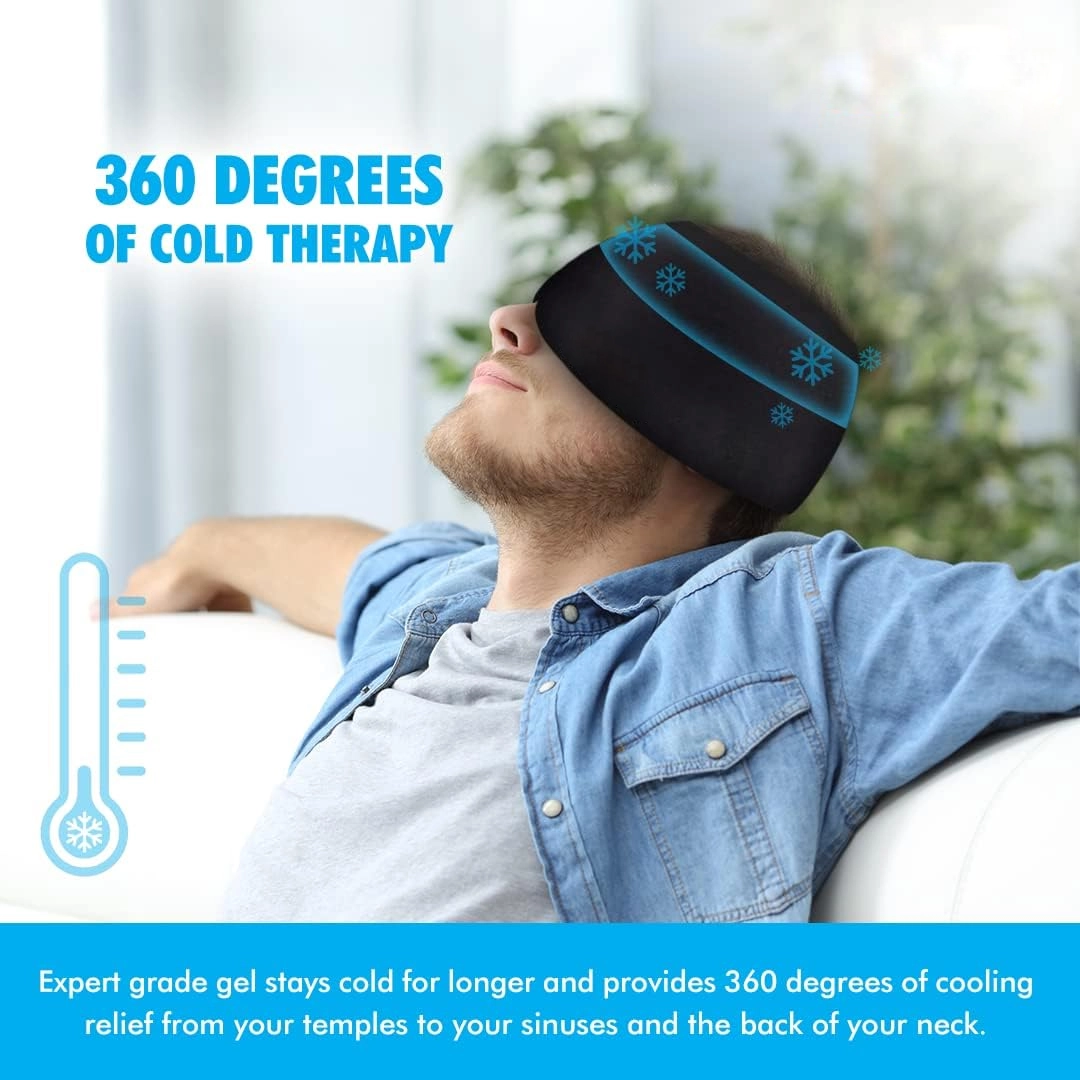
- Full-head coverage wraps forehead, temples, and base of skull—targets all the areas where pain occurs
- Built-in fabric barrier protects skin from extreme temperatures; use straight from fridge, freezer, or microwave
- Adjustable strap lets you control compression level for comfort and effectiveness
- Hands-free design stays in place while you rest—no need to hold anything
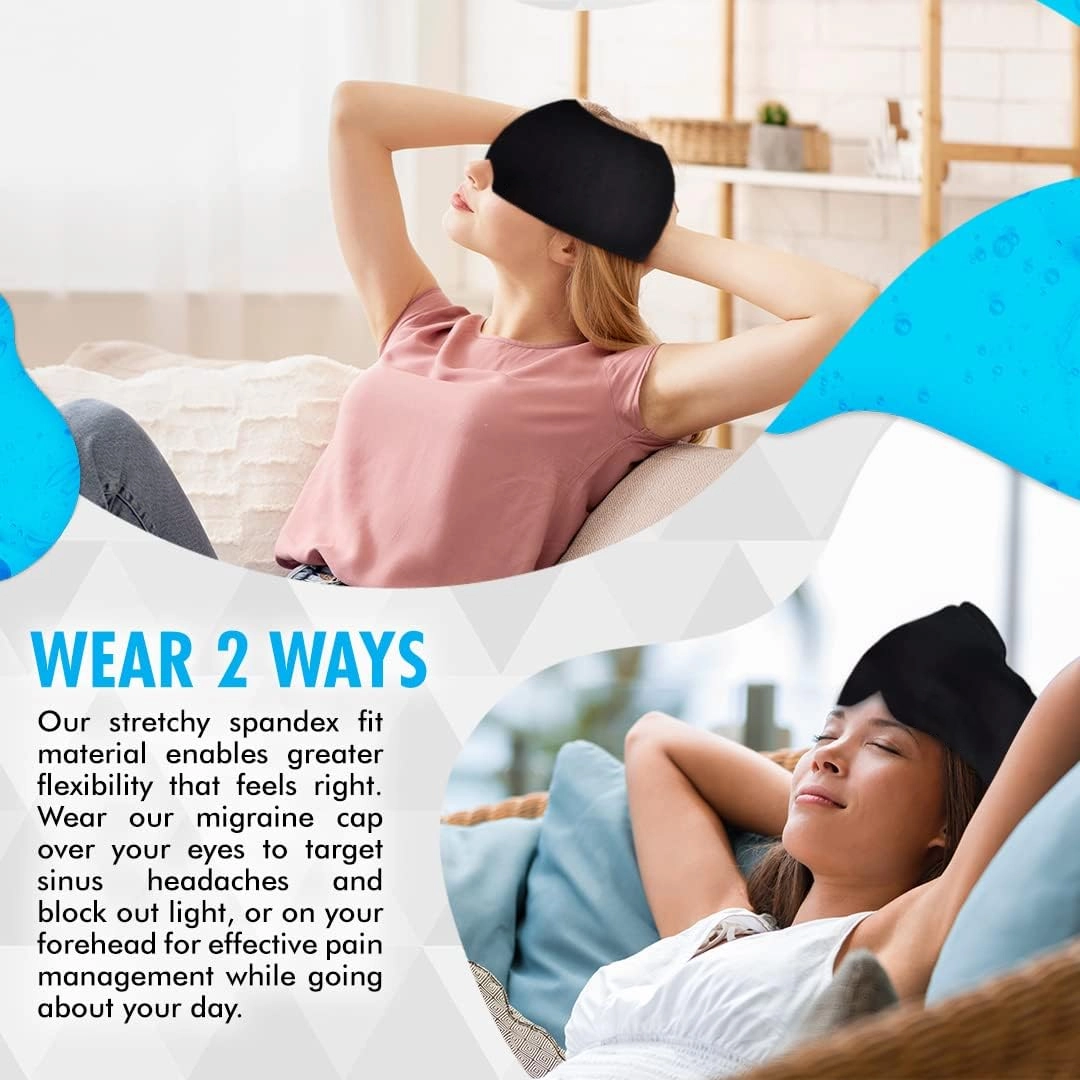
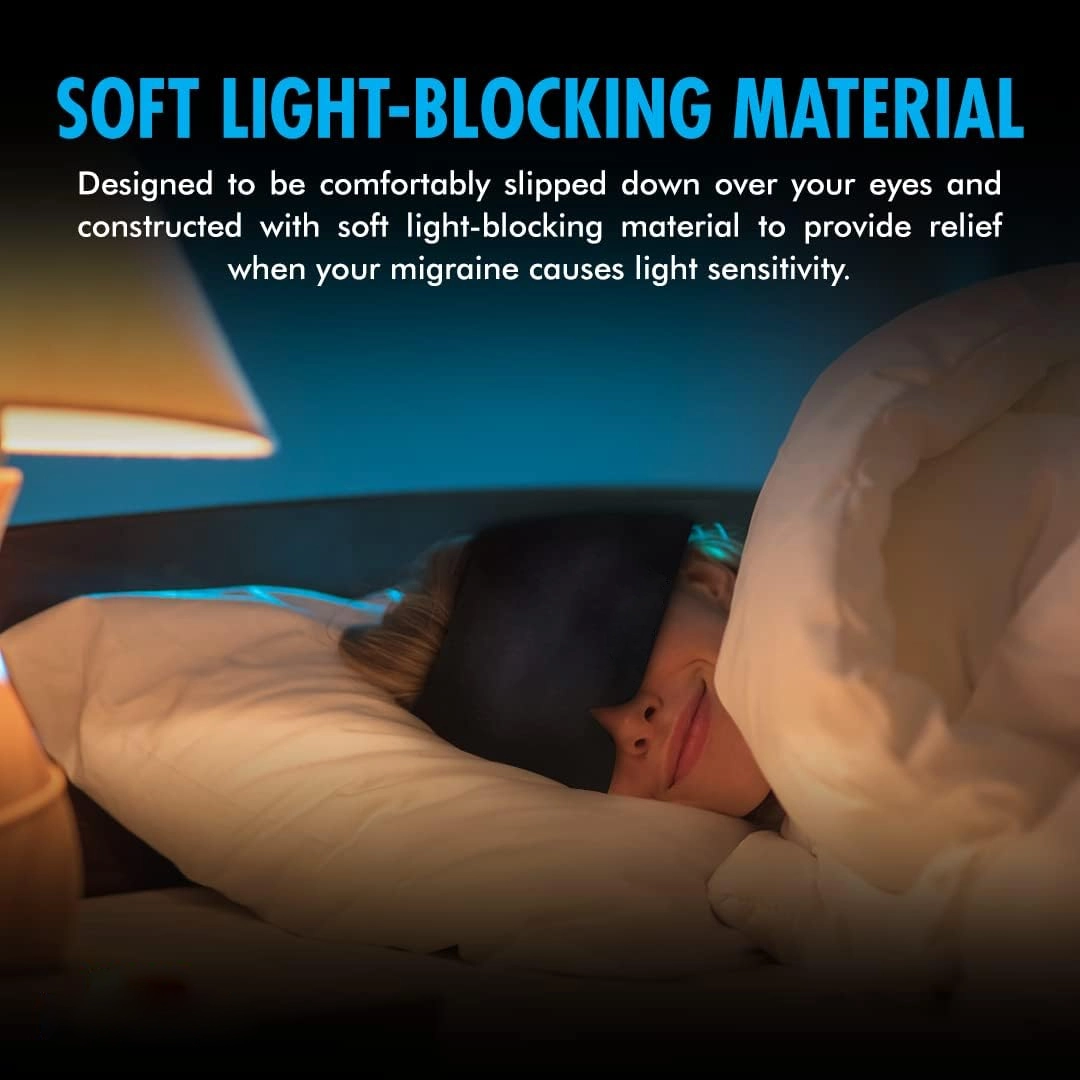
- Light-blocking feature can be pulled down to cover eyes during migraines
- Cold therapy helps with migraines, throbbing pain, and inflammation by narrowing dilated blood vessels and slowing pain signals
- Heat therapy helps with tension headaches and muscle-related pain by relaxing tight muscles and improving circulation
- Use for 20 minutes per session; allow 1–2 hours recovery between sessions
- Portable and lightweight—keep at home or take with you to work or when travelling
- Not suitable for use over open wounds, infections, or broken skin; consult your GP if you have sensory impairments, Raynaud’s, or cardiovascular disease
- Does not diagnose, treat, or cure medical conditions; speak to your GP if headaches are frequent, severe, or worsening
- Machine-washable fabric; gel insert designed for repeated use with proper care
- Call 999 if headache is accompanied by sudden severe pain, vision changes, weakness, confusion, or loss of consciousness
If your symptoms persist or worsen, they may indicate a more serious health concern. Always consult a healthcare professional, especially if you have experienced any head trauma.
NuovaHealth Migraine Relief Cap – Cold, Heat, and Compression Therapy for Headache and Migraine Relief
When a headache strikes, you need relief that works—quickly, safely, and without adding more medication to your routine. The NuovaHealth Migraine Relief Cap delivers targeted cold therapy, heat therapy, or gentle compression to help manage headache and migraine symptoms at home.
This reusable gel cap wraps around your entire head—forehead, temples, and base of skull—providing full coverage that targets all the areas where pain occurs. Whether you’re dealing with the throbbing intensity of a migraine, the tight band of a tension headache, or neck-related pain that radiates into your head, the cap gives you a non-drug option that addresses the underlying mechanisms driving your symptoms.
Cold therapy works by narrowing dilated blood vessels, slowing pain signals, and reducing inflammation—particularly effective for migraines and throbbing pain. Heat therapy relaxes tense muscles, improves circulation, and releases trigger points—ideal for tension headaches and muscle-related discomfort. Compression provides counterstimulation that dampens pain perception and stabilises blood flow. The cap delivers all three in one adjustable, hands-free design.
You can use the cap straight from the fridge, freezer, or microwave—the built-in fabric barrier protects your skin from extreme temperatures. The adjustable strap lets you control compression level for comfort and effectiveness. The light-blocking feature can be pulled down to cover your eyes during migraines when sensitivity to light is overwhelming. Once it’s on, it stays in place while you rest—no need to hold anything or keep readjusting.
The cap is one tool in your headache management toolkit. It works best as part of a broader approach that may include medication when appropriate, lifestyle modifications, stress management, and professional guidance. For people who experience frequent headaches, having an effective non-drug option reduces reliance on painkillers and provides a sense of control when symptoms strike.
This page explains what’s happening in your body during different types of headaches, why cold, heat, and compression help, how to use the cap safely and effectively, and when to seek medical care. Understanding the science behind your symptoms helps you make informed choices about managing them.
Key Features at a Glance
- Reusable gel cap delivering cold therapy, heat therapy, or gentle compression for headache and migraine relief
- Full-head coverage wraps forehead, temples, and base of skull—targets all the areas where pain occurs
- Built-in fabric barrier protects skin from extreme temperatures; use straight from fridge, freezer, or microwave
- Adjustable strap lets you control compression level for comfort and effectiveness
- Hands-free design stays in place while you rest—no need to hold anything
- Light-blocking feature can be pulled down to cover eyes during migraines
- Cold therapy helps with migraines, throbbing pain, and inflammation by narrowing dilated blood vessels and slowing pain signals
- Heat therapy helps with tension headaches and muscle-related pain by relaxing tight muscles and improving circulation
- Portable and lightweight—keep at home or take with you to work or when travelling
- Not suitable for use over open wounds, infections, or broken skin; consult your GP if you have sensory impairments, Raynaud’s, or cardiovascular disease
- Does not diagnose, treat, or cure medical conditions; speak to your GP if headaches are frequent, severe, or worsening
- Machine-washable fabric; gel insert designed for repeated use with proper care
- Call 999 if headache is accompanied by sudden severe pain, vision changes, weakness, confusion, or loss of consciousness
Understanding Headaches and Migraines – What’s Actually Happening in Your Body
When a headache strikes, it can feel overwhelming. A relentless pressure, a sharp stabbing pain, or a deep throbbing ache that makes it hard to think, work, or simply get through the day. But what’s actually happening inside your head when that pain takes hold?
Understanding the mechanisms behind your headaches helps you make informed choices about how to manage them. Headaches aren’t just “pain in your head”. They’re complex events involving muscles, blood vessels, nerves, and inflammatory processes. Different types of headaches have different underlying causes, and recognising what’s happening in your body is the first step towards finding effective relief.
Tension Headaches – When Muscle Tension Becomes Pain
Tension headaches are the most common type, affecting around 80% of people at some point. They typically feel like a tight band or pressure around your forehead, temples, or the back of your head and neck. The pain is usually dull and constant rather than throbbing, and it can last anywhere from 30 minutes to several days.
What Causes Tension Headaches?
The pain comes from sustained muscle contraction in your head, neck, and shoulders. When you’re stressed, anxious, or holding poor posture for long periods—hunching over a desk or looking down at a phone—the muscles in your neck and scalp remain contracted. This sustained tension restricts blood flow to the muscle tissue, depriving it of oxygen and causing a build-up of metabolic waste products like lactic acid. These waste products irritate nerve endings in the muscle, contributing to the aching, fatigued sensation you feel.
Prolonged muscle tension creates trigger points—knots in the muscle that refer pain to other areas. Press on one in your neck, and you’ll feel pain in your temples or forehead. Tension headaches often feel diffuse and widespread because of this referral pattern.
As the muscles remain tight, they compress nearby nerves and blood vessels. This compression amplifies pain signals and creates a vicious cycle: pain causes more muscle tension, which causes more pain. Your nervous system becomes sensitised, meaning it starts to interpret even normal sensations as painful. What began as mild muscle tightness can escalate into a persistent, debilitating headache.
Common Triggers for Tension Headaches
Tension headaches cluster around three main triggers. Physical strain—poor posture at your desk, eye strain from screens, jaw clenching while you sleep. Lifestyle gaps—skipped meals, dehydration, irregular sleep. And stress, which is both a direct trigger (emotional tension becomes physical tension) and an amplifier for everything else.
Common Scenario: Desk Work and Posture-Related Tension Headaches
If you spend long hours at a desk, you’re particularly vulnerable to tension headaches. Forward head posture—where your head juts forward from your shoulders while looking at a screen—places enormous strain on your neck muscles. For every inch your head moves forward, the effective weight on your neck increases significantly. Over hours of sustained poor posture, these muscles become fatigued and develop trigger points that refer pain into your head.
You might notice the headache building gradually through the afternoon, starting as mild tightness at the base of your skull and spreading forward to your temples and forehead. By the end of the workday, the pain can be significant enough to interfere with your evening plans.
How the cap helps: Heat is ideal for desk-work tension headaches because it directly addresses muscle tension. Applying heat at the end of your workday—or during a break if symptoms start—helps relax tight muscles, improve circulation, and release trigger points. The cap’s coverage extends to the base of your skull where neck muscles attach, providing warmth to the areas most affected by poor posture.
Common Scenario: Stress and Anxiety-Related Headaches
Stress and anxiety are among the most common headache triggers. When you’re under pressure—whether from work deadlines, relationship difficulties, financial worries, or simply the accumulated stress of daily life—your body responds with physical tension. Your shoulders rise, your jaw clenches, your neck muscles tighten. This physical manifestation of psychological stress creates the perfect conditions for tension headaches.
The relationship between stress and headaches works both ways: stress triggers headaches, and frequent headaches create more stress and anxiety. You might find yourself worrying about when the next headache will strike, which itself becomes a trigger.
How the cap helps: Beyond the physical relief from heat, the cap provides a structured, calming ritual that supports stress management. Taking 20 minutes to rest in a dark, quiet space with the cap on creates a break from stressors and gives your nervous system a chance to reset. The physical sensation of warmth, combined with gentle compression, can be grounding and soothing.
Migraines – A Complex Neurovascular Event
Migraines are more than just severe headaches. They’re a distinct neurological condition involving complex changes in brain activity, blood vessel behaviour, and inflammatory processes. Around 15% of the UK population experiences migraines, with women three times more likely to be affected than men, largely due to hormonal influences.
A migraine typically causes intense, throbbing pain on one side of the head, though it can affect both sides. The pain is often accompanied by nausea, vomiting, and extreme sensitivity to light and sound. Many people need to lie down in a dark, quiet room until the migraine passes. Attacks can last anywhere from 4 hours to 3 days.
What Causes Migraines?
Migraines begin with abnormal electrical activity in your brain—a slow-moving wave that suppresses normal function as it spreads across the surface of your brain. This wave, called cortical spreading depression, temporarily disrupts nerve cell communication in the affected area. When the wave passes through the visual processing regions at the back of your brain, it causes the visual disturbances known as aura—flashing lights, zigzag lines, or temporary blind spots that some people experience before the headache begins.
As the wave spreads, it activates the trigeminal nerve, a major nerve that carries sensation from your face and head to your brain. The nerve releases CGRP (calcitonin gene-related peptide), a powerful inflammatory molecule. CGRP causes blood vessels in the meninges—the protective membranes around your brain—to dilate and swell. These membranes are packed with pain-sensitive nerve endings, so when blood vessels pulse and throb, you feel intense, rhythmic pain.
The throbbing often pulses in time with your heartbeat as blood surges through the dilated vessels. Each pulse triggers another wave of pain. As the migraine progresses, your nervous system becomes increasingly sensitive. Normally non-painful stimuli—such as light, sound, or even gentle touch—are interpreted as painful. This heightened sensitivity is why many people with migraines need to retreat to a dark, quiet room and avoid any sensory input.
Common Migraine Triggers
Migraine triggers fall into three broad categories. Hormonal—particularly the drop in oestrogen before menstruation. Dietary—aged cheese, alcohol, caffeine withdrawal, artificial sweeteners. Environmental and lifestyle—stress, sleep disturbances (too little or too much), sensory overload (bright lights, strong smells, loud noises), weather changes, dehydration, and skipped meals.
Common Scenario: Menstrual Migraines
Menstrual migraines occur in a predictable pattern around your menstrual cycle, typically in the days just before or during your period. They’re triggered by the natural drop in oestrogen that happens at this time. For many women, these migraines are more severe and longer-lasting than migraines at other times of the month, and they often respond less well to standard treatments.
The drop in oestrogen affects blood vessel behaviour and increases the release of inflammatory chemicals in the brain. This makes your nervous system more sensitive and lowers the threshold for migraine attacks.
How the cap helps: Cold is particularly effective for menstrual migraines because it directly addresses the vascular changes and inflammation that drive these attacks. The predictable timing means you can use the cap as soon as you notice early warning signs, or at the first hint of symptoms, to help reduce severity and duration.
Common Scenario: Neck-Related Headaches (Cervicogenic Headaches)
Neck-related headaches originate from problems in your neck—such as joint dysfunction, muscle tension, or nerve irritation—but the pain is felt in your head. The pain typically starts at the base of your skull and radiates forward towards your forehead, temples, or around your eyes. It’s often one-sided and may be accompanied by neck stiffness or reduced range of motion.
The upper cervical spine has complex connections with the nerves that supply sensation to your head. When joints in this area aren’t moving properly, or when muscles become tight and develop trigger points, pain signals are referred up into your head. Poor posture, previous neck injuries, and prolonged static positions like desk work are common contributing factors.
How the cap helps: Heat can help with neck-related headaches by delivering warmth to the base of your skull and the areas where referred pain is felt—your temples, forehead, and back of your head. While the cap doesn’t directly cover your neck, many people find that the warmth at the skull base and the overall relaxation effect provide meaningful relief.
Common Scenario: Medication-Overuse Headaches (Rebound Headaches)
Medication-overuse headaches occur when you’ve been using painkillers frequently—typically more than two or three times per week—and your nervous system has become sensitised to the medication. Your brain adapts to the regular presence of the painkiller and starts to rely on it to maintain normal pain thresholds. When the medication wears off, the headache returns, often more severe than before. This creates a cycle where you need more medication to manage the pain, which in turn perpetuates the problem.
The only way to break this cycle is to reduce or stop the medication under medical guidance—but this often means enduring a period of worsening headaches before things improve.
How the cap helps: The cap provides a non-drug alternative that can help you manage symptoms while you’re working to reduce medication use. Cold or heat doesn’t create dependency or rebound effects, so you can use it as often as needed without worsening the underlying problem. Many people find that having an effective non-drug option reduces their anxiety about cutting back on medication.
Why Headaches Are So Disruptive
Whether you experience tension headaches or migraines, the impact on your daily life can be profound. Headaches don’t just cause physical pain—they affect your ability to concentrate, work, socialise, and enjoy activities. The unpredictability of headaches can create anxiety and stress, which in turn can trigger more headaches, creating a frustrating cycle.
For people with frequent headaches, the constant threat of an attack can be as debilitating as the pain itself. You might find yourself avoiding social events, cancelling plans, or struggling to meet work deadlines. The cumulative effect on your quality of life, relationships, and mental wellbeing can be significant.
Many people reach for painkillers—but there are limitations. Over-the-counter medications like paracetamol, ibuprofen, and aspirin can provide temporary relief, but frequent use can lead to medication-overuse headaches. Non-drug approaches are increasingly important for people who experience regular headaches.
Understanding what’s happening in your body during a headache is the foundation for finding effective relief. Cold, heat, and compression work with your body’s natural pain-relief mechanisms to address the underlying processes driving your symptoms.
Why Cold, Heat, and Compression Help – The Science Behind Temperature Therapy
Cold therapy, heat therapy, and compression have been used for centuries to manage pain and discomfort. We now understand the biological processes behind why they work. Each approach targets different aspects of headache pain through distinct mechanisms in your nervous system, muscles, and blood vessels.
Cold Therapy – Reducing Inflammation and Slowing Pain Signals
Cold works by lowering tissue temperature. Simple mechanism, powerful effects.
Narrowing Dilated Blood Vessels (Vasoconstriction)
When you apply cold to your head, blood vessels in your skin and the tissues beneath constrict—they narrow. For migraines, where dilated blood vessels in the meninges are a major source of throbbing pain, this matters enormously. By narrowing these vessels, cold reduces the volume of blood flowing through them and decreases the pressure on irritated nerve endings in the vessel walls. Less dilation, less throbbing.
Slowing Nerve Conduction – Interrupting Pain Signals
Cold slows down the speed at which nerves transmit signals. Pain signals travel along nerve fibres as electrical impulses, and when you lower tissue temperature, these impulses move more slowly. Some pain signals don’t reach your brain at all because the cold essentially interrupts the transmission. Fewer pain messages get through.
Reducing Inflammation – Limiting Tissue Damage and Swelling
Inflammation is a key component of many headaches, particularly migraines. When tissues are inflamed, they release chemicals that sensitise nerve endings and amplify pain signals. Cold reduces inflammation by slowing down the metabolic activity of cells in the affected area. Fewer inflammatory chemicals are produced and released. Cold also reduces swelling by constricting blood vessels, which limits the amount of fluid that leaks into surrounding tissues.
Numbing Effect – Temporary Pain Relief
Cold has a direct numbing effect on nerve endings. When the temperature of your skin and underlying tissues drops, nerve endings become less responsive to pain stimuli. This provides temporary relief from the sharp, stabbing, or throbbing sensations that characterise many headaches.
When Cold Therapy Works Best
Cold is most effective for migraines, where vascular changes and inflammation are primary drivers of pain. It’s also helpful for headaches that involve throbbing or pulsating pain, and for headaches triggered by heat or exertion. Many people find cold particularly soothing during the acute phase of a migraine, when the pain is at its worst and sensitivity to light and sound is most intense.
Heat Therapy – Relaxing Muscles and Improving Circulation
Heat raises tissue temperature. The warmth triggers a different set of beneficial changes that are particularly effective for tension headaches and muscle-related pain.
Muscle Relaxation – Releasing Tension and Trigger Points
When you apply heat to tense muscles, the warmth causes muscle fibres to relax. Heat increases the elasticity of muscle tissue, making it more pliable and less prone to spasm. For tension headaches, where sustained muscle contraction in your neck, shoulders, and scalp is the primary source of pain, this relaxation effect can provide significant relief. Heat also helps release trigger points—those knots within the muscle that refer pain to your head.
Improving Blood Flow and Oxygen Delivery (Vasodilation)
Heat causes blood vessels to dilate, which increases blood flow to the affected area. This improved circulation delivers more oxygen and nutrients to fatigued, tense muscles, helping them recover. At the same time, increased blood flow helps flush away metabolic waste products like lactic acid that have built up in the muscle tissue during prolonged contraction. Better oxygen delivery plus waste removal equals reduced muscle fatigue and discomfort.
Pain Gate Mechanism – Blocking Pain Signals
The warmth from heat therapy activates non-pain nerve fibres in your skin. Your spinal cord acts like a gatekeeper, deciding which signals get through to your brain. When non-pain nerve fibres sensing warmth are activated, they effectively close the gate on pain signals trying to reach your brain—the warmth takes priority, and fewer pain messages get through. Your nervous system can only process a limited amount of sensory information at once, and the warm sensation competes with and partially blocks the pain signals.
Psychological Comfort – Reducing Stress and Promoting Relaxation
Beyond the physical mechanisms, warmth has a psychological effect. Most people find heat soothing and comforting, and this sense of comfort can help reduce the stress and anxiety that often accompany headaches. Since stress and tension are common headache triggers, anything that promotes relaxation can help break the cycle of pain and tension.
When Heat Therapy Works Best
Heat is most effective for tension headaches, where muscle tension and trigger points are the primary drivers of pain. It’s also helpful for headaches that involve stiffness in your neck and shoulders, and for headaches that worsen with stress or poor posture. Many people find heat particularly soothing in the evening after a long day of desk work, or when they’re feeling stressed and tense.
Compression – Dampening Pain Perception and Providing Stability
Compression involves applying gentle, even pressure to your head. The cap delivers this through an adjustable strap that allows you to control the level of pressure. Compression works through several mechanisms that complement the effects of cold and heat therapy.
Counterstimulation – Competing with Pain Signals
When you apply gentle pressure to your head, you activate pressure-sensitive nerve fibres in your skin. These nerve fibres send signals to your brain that compete with pain signals for attention. Your brain can only process a limited amount of sensory information at once, and the pressure sensation partially blocks the pain signals from getting through. This is similar to the gate control mechanism described for heat therapy, but using pressure instead of temperature as the competing stimulus.
Reducing Vascular Pulsation – Stabilising Blood Flow
For migraines and other headaches involving throbbing pain, gentle compression can help stabilise blood flow through the dilated vessels. Think of it like gently pressing on a pulsing vein—the external pressure provides a counterforce against the pulsating blood flow, reducing the mechanical stimulation of irritated nerve endings in the vessel walls. Many people instinctively press their hands against their temples during a headache because this external pressure provides temporary relief from the throbbing sensation.
Proprioceptive Input – Grounding and Calming
Compression provides proprioceptive input—your brain’s awareness of where your body is in space and what pressure is being applied to it. This type of sensory information can be grounding and calming, particularly for people who feel disoriented or overwhelmed during a headache. The gentle, even pressure around your head can create a sense of containment and support that many people find soothing.
When Compression Works Best
Compression is effective for most headache types, but it’s particularly helpful for migraines with throbbing pain, and for headaches where you instinctively want to press your hands against your head. The adjustable strap on the cap allows you to find the level of pressure that feels most comfortable and effective for you.
Why Combining Cold, Heat, and Compression Is More Effective
Each of these approaches works through different mechanisms. Cold targets inflammation and vascular changes. Heat addresses muscle tension and circulation. Compression dampens pain perception and provides stability. By combining all three in a single tool, the cap allows you to address multiple aspects of headache pain simultaneously.
You can choose the approach that best matches your headache type and symptoms. Cold for migraines and throbbing pain. Heat for tension headaches and muscle-related discomfort. Compression for both, providing additional relief and support. The cap gives you flexibility to adapt your treatment to what you’re experiencing in the moment.
How the NuovaHealth Migraine Relief Cap Delivers Effective Therapy
Understanding the science behind cold, heat, and compression is one thing. Having a practical, comfortable way to apply these therapies when you need them is another. The cap is designed to make temperature therapy accessible, effective, and easy to use—even when you’re in pain and just need relief.
Full-Head Coverage – Targeting All the Areas Where Pain Occurs
You don’t need to guess where to place it. The cap wraps around your entire head—forehead, temples, back of skull—so whether your pain sits behind your eyes or grips the base of your neck, you’re covered. Many headache relief products only target one area, forcing you to choose between treating your forehead or the back of your head. The cap eliminates that compromise.
Headache pain rarely stays in one spot. Tension headaches often start at the base of your skull and spread forward to your temples and forehead. Migraines can shift from one side of your head to the other, or involve your entire head. Neck-related headaches start in your neck but refer pain to your temples, forehead, and around your eyes. The cap’s wraparound design addresses all these areas at once, providing comprehensive coverage that adapts to your pain rather than forcing your pain to fit the product.
The coverage extends down to the base of your skull, where many neck muscles attach. This is particularly important for tension headaches and neck-related headaches, where muscle tension in this area is a major contributor to pain. By delivering cold or heat to the skull base, the cap addresses the source of muscle-related pain, not just the referred pain you feel elsewhere in your head.
Dual Therapy – Cold or Heat, Depending on What You Need
Not all headaches respond to the same treatment. The cap gives you both options in one product. Prepare it in the fridge or freezer for cold therapy when you’re dealing with a migraine or throbbing pain. Heat it in the microwave for warmth when muscle tension is the problem. You don’t need to buy separate products or decide in advance which therapy you’ll need—the cap adapts to whatever you’re experiencing.
The gel inside the cap is formulated to hold temperature effectively, whether cold or hot. When chilled, it stays cold long enough to provide a full therapy session. When heated, it delivers consistent warmth without cooling too quickly. You get the full benefit of the therapy without needing to interrupt your rest to reheat or re-chill the cap.
Built-In Fabric Barrier – Safe, Comfortable Temperature Delivery
The cap includes a protective fabric layer between the gel and your skin. This barrier protects your skin from extreme temperatures and makes the cap comfortable to wear. You can use the cap straight from the fridge, freezer, or microwave without needing to wrap it in a towel or wait for it to moderate. The fabric layer does the work for you.
The fabric is soft against your skin and doesn’t create uncomfortable pressure points or irritation, even during extended wear. It’s also machine-washable, so you can keep the cap clean and hygienic with regular use.
Adjustable Compression – Customised Pressure for Your Comfort
The adjustable strap at the back of the cap allows you to control the level of compression. Start with a looser fit and gradually tighten until you find the pressure that feels right. Some people prefer minimal compression—just enough to keep the cap in place. Others find that firmer pressure enhances relief by providing more counterstimulation and stability. The cap adapts to your preference.
The strap is easy to adjust even when you’re in pain and your fine motor skills aren’t at their best. You don’t need to fumble with complicated fastenings or struggle to get the fit right. A simple pull tightens the strap; a quick release loosens it.
Hands-Free Design – Rest Without Holding Anything in Place
Once the cap is on and adjusted, it stays in place without any effort from you. You don’t need to hold an ice pack against your head or keep readjusting a compress that’s slipping out of position. Your hands are free to rest at your sides, support your head, or hold a pillow. You can lie down in whatever position feels most comfortable without worrying about the cap shifting or falling off.
This hands-free design is particularly important during migraines, when even small movements can worsen pain and nausea. The cap allows you to stay as still as possible, minimising sensory input and giving your body the best chance to recover.
Light-Blocking Feature – Creating Darkness When You Need It
The front of the cap can be pulled down gently to cover your eyes, blocking out light. For people with migraines, where sensitivity to light is a common and distressing symptom, this feature provides immediate relief. You don’t need to search for blackout curtains or struggle to find a dark room—the cap creates darkness wherever you are.
Even for tension headaches, reducing visual stimulation can help promote relaxation and reduce the sensory load on your nervous system. Closing your eyes and blocking out light signals to your body that it’s time to rest and recover.
Portable and Convenient – Relief Wherever You Are
The cap is lightweight and portable. You can keep it in your fridge at home so it’s always ready when you need it, or take it with you to work, on trips, or anywhere you might need relief. If you’re prone to headaches, having the cap with you provides peace of mind—you’re not helpless if an attack strikes when you’re away from home.
Preparation is simple. A couple of hours in the fridge or 30–45 minutes in the freezer for cold therapy. Twenty to thirty seconds in the microwave for heat therapy. No complicated setup, no special equipment, no waiting around. When a headache starts, you want relief quickly—the cap delivers that without unnecessary delays.
Reusable and Cost-Effective – Long-Term Relief Without Ongoing Costs
Unlike disposable cold packs or single-use heat patches, the cap is designed for repeated use. With proper care, it will last for many months of regular use, providing consistent relief without the need for replacements or refills. There are no ongoing costs beyond the initial purchase—no batteries to replace, no consumables to buy, no subscription fees.
For people who experience frequent headaches, this cost-effectiveness matters. Over time, the cap pays for itself compared to the cumulative cost of disposable products or frequent painkiller purchases.
Important Safety Information – Using the Cap Safely
The NuovaHealth Migraine Relief Cap is designed to be safe and straightforward to use, but like any therapy that involves temperature and compression, it’s important to follow safety guidelines. This section brings together all the safety information you need in one place, so you can use the cap confidently and avoid potential risks.
Who Should Consult Their GP or Physiotherapist Before Use
For most people, cold and heat therapy are safe and well-tolerated. However, certain conditions can affect how your body responds to temperature changes or compression. If any of the following apply to you, speak with your GP or physiotherapist before using the cap:
Sensory impairments: If you have reduced sensation in your head, face, or scalp—due to nerve damage, diabetes-related neuropathy, or any other condition—you may not be able to accurately judge whether the temperature is too cold or too hot. This increases the risk of tissue damage.
Raynaud’s phenomenon: Raynaud’s causes blood vessels in your extremities to constrict excessively in response to cold, reducing blood flow and potentially causing tissue damage. Cold therapy may trigger an episode or worsen symptoms. Stick to heat, and check with your GP first.
Cold urticaria: Cold urticaria is a condition where exposure to cold triggers hives, swelling, and in severe cases, a serious allergic-type reaction. If you have cold urticaria, do not use cold therapy. Heat therapy may be appropriate, but discuss this with your GP first.
Severe cardiovascular disease: Sudden temperature changes can affect blood pressure and heart rate. Severe heart disease, uncontrolled hypertension, or stroke history warrant a GP conversation before you start.
Recent head injury or surgery: If you’ve had a recent head injury, concussion, or surgery involving your head or neck, speak with your GP before using the cap. Temperature therapy and compression may not be appropriate during the acute recovery phase.
Who Should Not Use the Cap
Do not use the cap if any of the following apply:
Open wounds, cuts, or infections on your head or scalp: Temperature therapy should never be applied over broken skin or active infections, as this can worsen the condition, delay healing, or spread infection.
Active skin conditions with severe inflammation or broken skin: If you have eczema, psoriasis, or another skin condition that has caused your skin to break, blister, or become severely inflamed, avoid using the cap on those areas until the skin has healed. Mild, stable skin conditions are generally fine, but if you’re unsure, consult your GP.
Safe Usage Guidelines
Following these guidelines will help you get the maximum benefit from the cap while minimising any risk of discomfort or injury.
Temperature Safety – Avoiding Burns and Tissue Damage
Both cold and heat can cause tissue damage if applied at extreme temperatures or for too long. The cap is designed with a built-in fabric barrier to reduce this risk, but you still need to follow safe preparation and usage practices.
Cooling guidelines:
- Fridge: Place the cap in the fridge for 1–2 hours before use. This provides effective cold therapy without the risk of ice burns.
- Freezer: If you prefer a colder therapy, place the cap in the freezer for 30–45 minutes maximum. Do not leave it in the freezer for extended periods (several hours or overnight), as this can make it uncomfortably cold and increase the risk of tissue damage.
Heating guidelines:
- Microwave: Heat the cap for 20–30 seconds on medium power. Check the temperature by holding the cap in your hands. If it needs to be warmer, heat in additional 10-second intervals, checking after each interval. Microwaves vary in power, so start conservatively and adjust based on your appliance.
- Never overheat: The cap should feel warm and soothing, not hot or uncomfortable. Overheating can cause burns.
Always test the temperature before applying: Before putting the cap on your head, hold it in your hands for a few seconds. It should feel cold (but not painfully icy) or warm (but not hot). If it feels too extreme, wait a few minutes for it to moderate, or adjust your preparation method next time.
Wear-Time Limits – Preventing Overuse
Use for 20 minutes per session: This duration provides effective relief without increasing the risk of tissue damage. Most people experience noticeable relief within this timeframe.
Never exceed 30 minutes: Prolonged exposure to cold or heat increases the risk of tissue damage, even with the protective fabric barrier. Set a timer when you put the cap on so you don’t lose track of time, especially if you’re likely to fall asleep.
Allow 1–2 hours recovery between sessions: Your skin and underlying tissues need time to return to normal temperature and recover between therapy sessions. If you apply cold or heat too frequently without breaks, you increase the risk of tissue damage and reduce the effectiveness of the therapy.
Compression Safety – Ensuring Comfortable Pressure
Adjust the strap for gentle, even pressure: The cap should feel snug and supportive, but not tight. Start with a looser fit and gradually tighten the strap until you find a level of compression that feels comfortable and effective.
Signs that compression is too tight:
- Throbbing or pulsating sensation that worsens
- Numbness or tingling in your scalp
- Deep red marks or indentations in your skin after removing the cap
- Worsening headache rather than relief
If you experience any of these signs, loosen the strap immediately.
What proper compression should feel like: You should feel gentle, even pressure around your head—supportive and grounding, but not restrictive. The cap should stay in place when you move your head, but you shouldn’t feel like it’s squeezing or constricting.
Checking Your Skin After Use
After removing the cap, take a moment to check your skin. This helps you catch any early signs of problems and adjust your usage for next time.
Normal response: Mild redness that fades within 30–60 minutes is normal and expected. This is simply your skin’s response to temperature change and is not a cause for concern.
Warning signs – stop using the cap and consult your GP if you notice:
- White or pale patches on your skin that don’t return to normal colour within a few minutes (this can indicate frostbite from cold therapy)
- Blistering or burns
- Persistent numbness or tingling that lasts more than an hour after removing the cap
- Severe redness, swelling, or pain that worsens rather than improves
Gel Safety – Handling Leaks and Exposure
The gel inside the cap is sealed within a durable inner pouch and is not intended to come into contact with your skin, eyes, or mouth. The gel is a non-toxic formulation, but it is not food-grade and should be treated with appropriate caution.
With normal use, the gel remains safely contained. However, if the cap is damaged—through excessive wear, puncture, or misuse—the gel may leak. If this happens, follow the guidance below.
If Gel Contacts Your Skin
Wash the affected area thoroughly with soap and water. The gel is not corrosive or highly toxic, but it’s not meant for skin contact. If you notice any irritation, redness, or discomfort after washing, monitor the area. If irritation persists or worsens, contact your GP or call NHS 111 for advice.
If Gel Is Ingested
If someone swallows gel from the cap, do not induce vomiting. Rinse their mouth with water if they are conscious and able to swallow. Contact NHS 111 immediately for advice. Have the product packaging or information available when you call, as this will help the healthcare professional assess the situation. If the person becomes unwell, loses consciousness, has difficulty breathing, or shows signs of a serious reaction, call 999.
If Gel Contacts Eyes
Rinse the affected eye immediately with clean, lukewarm water for at least 15 minutes. Hold the eyelid open to ensure thorough rinsing. Remove contact lenses if present and easy to remove. After rinsing, if irritation, redness, pain, or vision changes persist, seek medical attention. Contact your GP, visit an urgent care centre, or go to A&E depending on the severity of symptoms.
If Gel Is Inhaled
Move the person to fresh air immediately. If they are having difficulty breathing, call 999. If breathing is normal but they feel unwell, contact NHS 111 for advice.
Preventing Gel Exposure
Inspect the cap regularly for signs of damage—tears, punctures, or leaking gel. If you notice any damage, stop using the cap immediately and dispose of it safely. Do not attempt to repair a damaged cap.
Keep the cap away from sharp objects and pets. Store it in a safe place where it won’t be punctured or chewed.
If the cap is leaking, place it in a sealed plastic bag before disposing of it in your household waste. Wash your hands thoroughly after handling a damaged cap.
When Not to Use the Cap
There are certain situations where using the cap is not appropriate, even if you have a headache. Recognising these situations helps you avoid worsening your condition or delaying necessary medical care.
Do not use the cap as a substitute for medical treatment: The cap is a symptom-management tool. It does not diagnose, treat, or cure underlying medical conditions. If your headaches are frequent, severe, or worsening, consult your GP. You may need medication, preventive treatment, or referral to a specialist.
Do not use the cap if you have emergency warning signs: If your headache is accompanied by sudden severe pain (worst headache of your life), vision changes, weakness, numbness, difficulty speaking, confusion, loss of consciousness, seizures, high fever with stiff neck, or any other emergency symptoms, call 999 immediately. Do not waste time trying to manage symptoms at home—these signs indicate potentially life-threatening conditions that require immediate medical attention.
When to Seek Medical Help – Recognising Warning Signs
The NuovaHealth Migraine Relief Cap is designed to help you manage headache symptoms at home, but it’s important to recognise when professional medical care is needed. Some headaches are signs of underlying conditions that require diagnosis and treatment, and certain symptoms indicate medical emergencies.
When to Book a Routine GP Appointment
You should schedule a non-urgent appointment with your GP if any of the following apply:
Your headaches are becoming more frequent or severe: If you notice your headaches occurring more often, lasting longer, or becoming more intense, this warrants investigation. Your GP can help identify triggers, assess whether preventive treatment is appropriate, and rule out underlying causes.
Your headaches are significantly affecting your quality of life: If headaches are causing you to miss work, cancel social plans, or struggle with daily activities on a regular basis, you deserve support. Your GP can discuss treatment options, refer you to a specialist if needed, and help you develop a management plan.
You’re using painkillers more than 2–3 times per week: Frequent painkiller use can lead to medication-overuse headaches, where the medication itself becomes a trigger. If you’re relying on painkillers regularly, speak with your GP about alternative approaches and strategies to reduce medication use safely.
Your headache symptoms have changed: If you’ve had headaches for years but they’ve recently changed in character—different location, different quality of pain, different associated symptoms—this is worth discussing with your GP. Changes in symptoms can sometimes indicate new underlying factors that need assessment.
You’re experiencing new symptoms alongside your headaches: If your headaches are now accompanied by symptoms you haven’t had before—such as persistent nausea, visual disturbances, dizziness, or cognitive changes—your GP should evaluate these.
You’re not sure what type of headache you have: If you’re uncertain whether you’re experiencing tension headaches, migraines, or another type of headache, your GP can help with diagnosis. Understanding your headache type helps you choose the most effective management strategies.
You want to explore preventive treatments: If you experience frequent headaches (more than a few times per month), preventive medications or other interventions may be appropriate. Your GP can discuss options and refer you to a specialist if needed.
When to Seek Same-Day Urgent Care
Contact your GP for a same-day appointment, call NHS 111, or visit an urgent care centre if you experience:
A headache that’s significantly worse than any you’ve had before: If the pain is dramatically more severe than your usual headaches, even if it doesn’t have other concerning features, it’s worth getting checked the same day. This is sometimes called a “thunderclap headache” if it reaches maximum intensity within seconds to minutes, and it requires immediate evaluation.
A headache accompanied by a high fever (above 38°C) and stiff neck: This combination of symptoms can indicate meningitis, a serious infection of the membranes surrounding the brain and spinal cord. Meningitis requires urgent treatment. Other symptoms may include sensitivity to light, confusion, drowsiness, or a rash that doesn’t fade when pressed with a glass.
A mild headache following a minor head injury: If you’ve had a minor bump to your head (no loss of consciousness, no confusion, no vomiting) and develop a headache, contact your GP for same-day advice or call NHS 111. If you develop any of the emergency symptoms listed below (confusion, drowsiness, vomiting, worsening headache), call 999 immediately.
A headache with persistent vomiting: While nausea and occasional vomiting can occur with migraines, persistent vomiting that prevents you from keeping down fluids requires medical attention to prevent dehydration and to rule out other causes.
When to Call 999 – Emergency Situations
Call 999 immediately if you or someone else experiences a headache with any of the following symptoms. These can indicate life-threatening conditions such as stroke, brain haemorrhage, or severe infection:
Sudden, severe headache that reaches maximum intensity within seconds (“thunderclap headache”): This can indicate bleeding in or around the brain (subarachnoid haemorrhage) and requires immediate emergency care.
Headache with sudden weakness, numbness, or paralysis on one side of your body: These are signs of a possible stroke. Other stroke symptoms include facial drooping, arm weakness, and speech difficulties. Time is critical—call 999 immediately.
Headache with sudden vision loss or severe visual disturbances: Sudden loss of vision in one or both eyes, or severe visual changes beyond typical migraine aura, can indicate serious conditions affecting the brain or blood vessels.
Headache with difficulty speaking, slurred speech, or confusion: These symptoms can indicate stroke, severe infection, or other neurological emergencies.
Headache with loss of consciousness or altered level of consciousness: If someone becomes unresponsive, extremely drowsy, or difficult to wake, this is a medical emergency.
Headache with seizures (fits): Seizures accompanying a headache can indicate serious underlying conditions and require immediate medical attention.
Headache with a very high fever (above 39°C), stiff neck, and a rash that doesn’t fade when pressed: This combination strongly suggests meningitis or sepsis, both of which are medical emergencies requiring immediate treatment.
Headache following a head injury with loss of consciousness, confusion, drowsiness, repeated vomiting, or worsening symptoms: If you’ve hit your head and lost consciousness (even briefly), or if you’re experiencing confusion, increasing drowsiness, repeated vomiting, or symptoms that are getting worse rather than better, call 999. These can indicate bleeding or swelling inside the skull and require immediate assessment.
Headache during pregnancy with sudden swelling, visual disturbances, or severe upper abdominal pain: These can be signs of pre-eclampsia, a serious pregnancy complication that requires emergency care.
Important Context – Most Headaches Are Not Emergencies
While it’s crucial to recognise warning signs, it’s equally important to understand that the vast majority of headaches—even severe ones—are not medical emergencies. Tension headaches and migraines, while painful and disruptive, are not dangerous in themselves.
If you experience frequent headaches, you may already be familiar with your symptoms and know what’s normal for you. The warning signs above are about recognising when something is different or new—not about treating every headache as a potential emergency.
You know your body better than anyone. If something feels seriously wrong—if this headache is different from your usual experience in a way that concerns you—it’s always appropriate to seek medical advice. Healthcare professionals would rather assess you and provide reassurance than have you delay seeking help for something serious.
How to Use the Cap – Practical Instructions
Now that you understand the science behind temperature therapy, the cap’s design features, and important safety considerations, let’s walk through exactly how to use the cap for cold therapy and heat therapy.
Using the Cap for Cold Therapy
Cold therapy is most effective for migraines, inflammation-related headaches, and throbbing pain. Follow these steps for safe, effective use:
Step 1: Prepare the Cap
- For moderate cold: Place the cap in the fridge for 1–2 hours before use. This provides effective cold therapy with minimal risk of discomfort or tissue damage.
- For intense cold: Place the cap in the freezer for 30–45 minutes maximum. Do not leave it in the freezer for extended periods (several hours or overnight), as this can make it uncomfortably cold.
Step 2: Test the Temperature
Before putting the cap on your head, hold it in your hands for a few seconds. It should feel cold but not painfully icy. If it feels too extreme, wait 2–3 minutes for it to moderate slightly.
Step 3: Apply the Cap
Place the cap on your head, positioning it so it covers your forehead, temples, and the back of your head. If you want light-blocking coverage, pull the front of the cap down gently to cover your eyes. Adjust the strap at the back to achieve a snug, comfortable fit. The cap should stay in place when you move your head, but it shouldn’t feel tight or restrictive.
Step 4: Rest and Relax
Lie down in a comfortable position in a quiet, dark room if possible. Set a timer for 20 minutes. Close your eyes, focus on your breathing, and allow your body to rest.
Step 5: Remove the Cap and Check Your Skin
After 20 minutes, remove the cap and check your skin. Mild redness that fades within 30–60 minutes is normal. If you notice white or pale patches, blistering, or persistent numbness, discontinue use and consult your GP.
Using the Cap for Heat Therapy
Heat therapy is most effective for tension headaches, muscle-related pain, and stiffness in your neck and shoulders. Follow these steps:
Step 1: Prepare the Cap
Place the cap in the microwave. Heat on medium power for 20–30 seconds. Remove carefully (the cap may be hot to touch) and check the temperature by holding it in your hands. If it needs to be warmer, heat in additional 10-second intervals, checking after each interval. Microwaves vary in power, so start conservatively and adjust based on your appliance.
The cap should feel warm and soothing, not hot or uncomfortable. Overheating can cause burns.
Step 2: Test the Temperature
Hold the cap in your hands for a few seconds. It should feel warm and comforting, but not hot. If it feels too hot, wait a few minutes for it to cool slightly before applying.
Step 3: Apply the Cap
Place the cap on your head, ensuring it covers your forehead, temples, and the back of your head down to the base of your skull. Adjust the strap for a snug, comfortable fit.
Step 4: Rest and Relax
Sit or lie down in a comfortable position. Set a timer for 20 minutes. Focus on relaxing your neck, shoulders, and jaw. Consciously release any tension you’re holding in these areas.
Step 5: Remove the Cap and Check Your Skin
After 20 minutes, remove the cap and check your skin. Mild redness that fades within 30–60 minutes is normal. If you notice blistering, burns, or severe redness, discontinue use and consult your GP.
Adjusting the Fit for Comfort and Effectiveness
The adjustable strap allows you to customise both the fit and the level of compression. Start with the strap fairly loose, then gradually tighten it until the cap feels snug and supportive.
What proper fit feels like: The cap stays in place when you move your head. You feel gentle, even pressure around your head. The pressure feels grounding and supportive, not restrictive. You can wear the cap comfortably for the full 20-minute session.
Signs the fit is too tight: Throbbing or pulsating sensation that worsens. Numbness or tingling in your scalp. Deep red marks or indentations after removing the cap. Worsening headache rather than relief.
If you experience any of these signs, loosen the strap immediately. Individual preferences vary—experiment to find what works best for you.
How to Know If It’s Working
Most people notice some degree of relief within 15–20 minutes of applying cold or heat therapy. Signs of effective relief include gradual reduction in pain intensity, reduced throbbing or pulsating sensation, decreased muscle tension and tightness, feeling of relaxation and calm, and reduced sensitivity to light and sound (for migraines).
Relief may be partial rather than complete. You may not experience total elimination of pain, and that’s normal. Even a 30–50% reduction in pain intensity can make a significant difference to your ability to function and feel more comfortable.
Timing matters. Cold and heat therapy tend to work best when applied early—at the first sign of headache symptoms. If you wait until the pain is severe and well-established, the therapy may be less effective. Try to intervene as soon as you notice symptoms developing.
What to Do If the Cap Isn’t Helping
If you’ve used the cap several times and aren’t experiencing meaningful relief, consider the following:
Are you using the right therapy for your headache type? Migraines and throbbing pain typically respond better to cold therapy. Tension headaches and muscle-related pain typically respond better to heat therapy. If you’ve been using cold, try heat (or vice versa).
Are you applying it early enough? Temperature therapy is most effective when used at the first sign of symptoms. If you’re waiting until the pain is severe, try intervening earlier next time.
Are you allowing enough time? Give the therapy the full 20 minutes to work. Some people notice relief within 5–10 minutes, while others need the full session.
Are you creating the right environment? Rest in a quiet, dark room if possible. Continuing to work, look at screens, or remain in a stimulating environment can reduce the effectiveness of the therapy.
Is your headache severe or complex? Some headaches require medical treatment and won’t respond adequately to temperature therapy alone. If the cap isn’t providing meaningful relief after several uses, consult your GP. You may benefit from medication, preventive treatment, or referral to a specialist.
Care and Maintenance – Keeping Your Cap in Good Condition
Proper care will help your cap last longer and remain hygienic with regular use.
Cleaning the cap: The outer fabric is machine-washable. Remove the gel insert (if your cap design allows), and wash the fabric cover on a gentle cycle with mild detergent. Allow it to air dry completely before reassembling and using again. If the gel insert cannot be removed, wipe the outer fabric with a damp cloth and mild soap, then air dry.
Storing the cap: Store the cap in a clean, dry place when not in use. You can keep it in the fridge if you use cold therapy frequently, so it’s always ready when you need it. Avoid storing it in direct sunlight or near heat sources, as this can degrade the gel and fabric over time.
Inspecting for damage: Regularly check the cap for signs of wear, tears, or leaking gel. If you notice any damage, stop using the cap and replace it. Continued use of a damaged cap can lead to gel leakage and reduced effectiveness.
When to replace: With proper care, the cap should last for many months of regular use. Replace it if the gel no longer holds temperature effectively, if the fabric becomes worn or torn, or if you notice any leakage.
Frequently Asked Questions
Can I use the cap for other types of pain besides headaches?
The cap is specifically designed for headache and migraine relief, with coverage that targets the forehead, temples, and base of skull. While cold and heat therapy can be effective for other types of pain, this product is optimised for head pain. For other areas of the body, consider products designed for those specific applications.
How often can I use the cap?
You can use the cap as often as needed, provided you follow the safety guidelines. Use for 20 minutes per session, and allow 1–2 hours recovery time between sessions. There’s no daily limit on the number of sessions, but if you’re using the cap multiple times per day on a regular basis, it’s worth discussing your headache management with your GP to explore additional treatment options.
Can I use the cap while sleeping?
No. Do not use the cap while sleeping. You need to be awake and alert to monitor the temperature, adjust the fit if needed, and remove the cap after 20 minutes. Falling asleep with the cap on increases the risk of tissue damage from prolonged exposure to cold or heat. Always set a timer and stay awake during use.
Will the cap work for cluster headaches?
Cluster headaches are a distinct type of headache with different underlying mechanisms than tension headaches or migraines. Some people with cluster headaches find cold therapy helpful, while others do not. If you experience cluster headaches, work with your GP or neurologist to develop a comprehensive management plan. The cap may be a useful addition to your toolkit, but cluster headaches typically require medical treatment.
Can I use the cap if I’m pregnant?
Cold and heat therapy are generally considered safe during pregnancy when used appropriately. However, if you’re pregnant and experiencing headaches, it’s important to discuss this with your midwife or GP, as headaches can sometimes indicate complications that need medical attention. If you’ve been cleared to use temperature therapy, follow the standard safety guidelines and avoid overheating.
Can I use the cap with other headache treatments?
Yes. The cap can be used alongside other headache treatments, including over-the-counter painkillers, prescription medications, and other non-drug approaches. Temperature therapy works through different mechanisms than medication, so combining approaches can be more effective than using either alone. If you’re taking prescription medication for headaches or migraines, discuss your full treatment plan with your GP.
How long does the cap stay cold or hot?
The gel is formulated to maintain temperature for the duration of a 20-minute therapy session. After 20 minutes, the cap will have warmed up (if using cold therapy) or cooled down (if using heat therapy) somewhat, but it should still provide effective therapy throughout the session. If you find the temperature is moderating too quickly, adjust your preparation method—use the freezer instead of the fridge for colder therapy, or heat for a few extra seconds for warmer therapy.
What should I do if the cap feels uncomfortable?
If the cap feels uncomfortable, first check the strap adjustment—it may be too tight. Loosen the strap and see if that improves comfort. If the temperature feels too extreme, remove the cap and allow it to moderate for a few minutes before trying again. If discomfort persists, discontinue use and consult your GP, particularly if you notice any skin changes or worsening symptoms.
Can I travel with the cap?
Yes. The cap is lightweight and portable, making it suitable for travel. If you’re flying, pack the cap in your checked luggage or carry-on—it’s not a restricted item. You won’t be able to use it during the flight (no access to fridge/freezer/microwave), but you can use it at your destination. If you’re prone to headaches while travelling, having the cap with you provides peace of mind.
Important Information and Disclaimer
The information on this page is general guidance about headache symptoms and the use of cold therapy, heat therapy, and compression for symptom management. It is not a substitute for individual medical advice, diagnosis, or treatment.
The NuovaHealth Migraine Relief Cap is designed to provide temporary relief from headache and migraine symptoms. It is a symptom-management tool and does not diagnose, treat, cure, or prevent any medical condition.
If you experience frequent, severe, or worsening headaches; if your headaches are accompanied by new or unexplained symptoms; or if you have any underlying health conditions, speak with your GP or physiotherapist for personalised advice.
Individual results vary. Some people may experience significant relief, while others may experience minimal or no benefit.
Always follow the safety guidelines provided. If you experience any unexpected side effects, discomfort, or worsening symptoms while using the cap, stop using it and consult your GP.
No guaranteed outcomes are promised. The cap is intended to support symptom relief and does not replace medical care or professional treatment.
Fast & Secure Checkout Through Paypal
Pay with Paypal the secure payment gateway that accepts all credit and debit cards. Paypal is free and secure and no credit or bank information is ever stored or shared with us.
Fast Dispatch
Enjoy your items soon with quick dispatch via Royal Mail. Expect to have your items between 1-3 working days for domestic orders. 7-10 Working days for international orders.
Return Policy – 30 Day Money Back Guarantee
In the unlikely event, you are unhappy with your purchase you can return it within 30 days for a refund. Please contact us via the form on the contact us page to start your return.
To return an item please send it to: Nuova Health UK, 81 Highfield Lane, Waverley, Rotherham, S60 8AL. Please include a note with your order id so we know who to refund. Please retain your postage receipt as proof of postage. All that we ask is that the item is in the original packaging and unused.

Reviews
There are no reviews yet.