Compression Typing Gloves for Hand, Wrist and Finger Support During Desk Work
If you spend long stretches of the day typing, clicking, scrolling, writing, or moving between a keyboard and mouse, you may already know how hand discomfort can build without much warning. It often starts subtly. Your fingers may feel a little less free than they did earlier in the day. Then you notice a tired ache through the hand, tightness around the wrist, stiffness in the finger joints, a slightly puffy feeling in the fingers, or the sense that your mouse hand is taking more of the strain than the other one. For some people, it stays mild but persistent. For others, it becomes a regular part of longer working days.
What makes this especially frustrating is that desk work does not look demanding in the way people usually expect physical strain to look. There is no heavy lifting, no obvious impact, and no single movement that seems large enough to explain why your hands feel so overused. Even so, the hands can end up doing a surprising amount of work. Repeated small movements, long periods in much the same position, low-level muscle tension, cool working conditions, and too little variation through the day can all add up. The result may be soreness, fatigue, stiffness, cramping, swelling, cold fingers, reduced dexterity, or discomfort that becomes more noticeable the longer you work.
For many adults, the answer is not a bulky brace that gets in the way of ordinary tasks. Usually, they want something lighter, easier to wear, and more realistic to keep on while they carry on working. That is where compression typing gloves can be useful. Rather than trying to heavily restrict movement, they provide light compression, gentle support, warmth, and day-to-day comfort while you continue using your hands. For some people, that is enough to make desk work feel more manageable and to reduce the sense that the hands become steadily more strained as the day goes on.
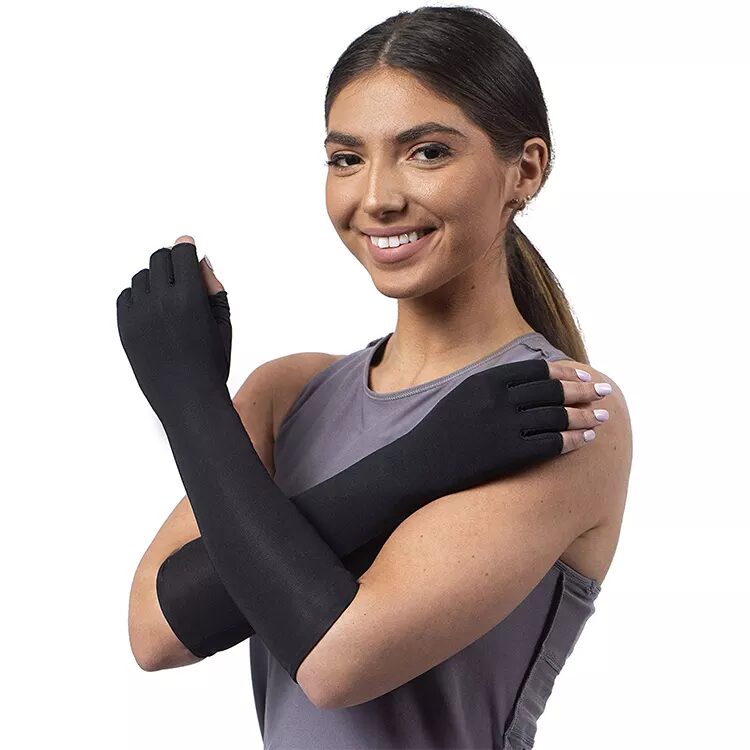
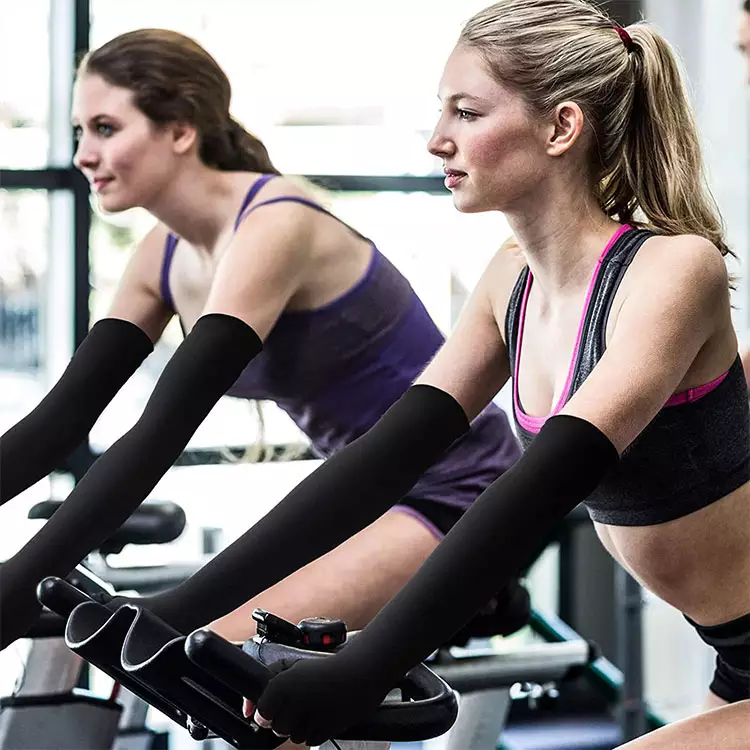
The RevitaFit™ Long Style Compression Computer Typing Gloves are designed around that kind of real use. They extend across the forearms, wrists, hands, and fingers, giving broader coverage than a short glove while still remaining suitable for desk-based tasks where comfort, dexterity, and wearability matter.
Before choosing any sort of hand support, it helps to understand why typing and mouse use can leave the hands feeling sore, tight, cold, tired, or less comfortable than they should, and why light compression may feel helpful for some people during repetitive work.
Why Hands Become Sore, Stiff or Tired During Desk Work
Typing is often treated as harmless because each movement looks so small. In one sense, that is true. Every key press is minor. Every mouse click is brief. Each small finger adjustment seems insignificant on its own. The problem is usually not one movement in isolation. It is the repeated use of the same small movements, often while the hands and wrists stay in much the same working position for long periods.
Repeated Small Movements Can Add Up to a Significant Daily Demand
The hands contain many small joints, tendons, muscles, and soft tissues that are built for varied use across the day. During desk work, though, they often end up doing hundreds or thousands of very similar actions with very little change in movement. The fingers lift and press. The mouse hand grips and releases. The thumb steadies the hand. The wrist stays ready for small adjustments. The forearm helps hold everything in position. None of that may feel demanding at the time, but the total amount of repeated work can still be considerable.
This helps explain why typing-related discomfort often builds gradually rather than arriving all at once. You may begin work feeling completely fine, then notice by late morning that the fingers feel a little less free. By afternoon, the mouse hand may feel more tired. By evening, the wrists or finger joints may feel stiffer than they did at the start of the day. This sort of build-up reflects the whole working day rather than one obvious event.
Some people also notice that the discomfort does not stay in one exact place. One day the wrist feels tight. The next day it may be the thumb base, and later in the week the fingers feel more tired. That sort of shift is common with repetitive desk work because several nearby tissues are sharing the work rather than one exact point taking all of it.
Stillness and Static Position Matter More Than People Often Expect
When people think about strain, they usually think about movement. In reality, one of the bigger contributors during desk work can be stillness. Even while the fingers are active, the overall position of the hand and wrist may barely change for long stretches. Muscles that hold those positions continue working in the background, and joints that stay in a narrow range for hours can begin to feel stiff or less comfortable.
That helps explain why typing-related symptoms are often described as tightness, heaviness, or a worked feeling rather than sharp pain. The tissues are not necessarily being challenged by force. They are being asked to work in a repetitive, restricted, and sustained way.
It also explains why discomfort may be worse after a long spell of concentrated work, even if that work did not feel strenuous. Holding the hand ready over a keyboard, keeping the wrist at much the same angle on a mouse, or leaving the fingers poised for quick movement can create background muscular effort for much longer than most people realise.
Wrist and Hand Position Change How the Work Is Spread
The wrist is a crowded area. Tendons, nerves, ligaments, and blood vessels all pass through or around it, and small changes in position can alter how comfortable the surrounding tissues feel during repeated work. If the wrist is held bent backwards, bent forwards, angled to one side, or left unsupported for a long time, that can change how demand is spread through the hand and forearm.
The same applies to the fingers and thumb. If the hand is repeatedly reaching, hovering, or stretching to meet the keyboard or mouse, low-level strain can build over time. You do not need obviously dramatic posture for this to matter. More often, it is the small habits that gradually add up: reaching slightly too far, gripping the mouse too firmly, typing with more tension than necessary, or letting the wrists sit in less comfortable positions for hours.
There is no single perfect posture for everyone, but there are certainly ways of working that make the hands do more than they need to. Once that happens, even ordinary office tasks can start to feel more wearing than people expect.
The Mouse Hand Often Takes a Different Sort of Strain
Many people notice that one hand feels worse than the other. This is especially common when the mouse hand becomes more troublesome than the keyboard hand. That makes sense because mouse use asks for a different mix of movement and static effort. Instead of relatively even finger activity across both hands, one hand may spend long periods gripping, clicking, stabilising, and making small repeated adjustments.
Depending on how the mouse is held, the thumb base, outer hand, side of the wrist, and forearm can all become involved. The thumb in particular often does more than people realise, especially if there is a steady pinch or gripping habit. That can create a more local ache or tightness than the broader fatigue some people notice from keyboard work alone.
The difference between the two hands is often an important clue. It suggests that the issue is not simply typing in a broad sense, but the total way each hand is being used across the day.
Low-Force Activity Can Still Tire and Irritate Tissues
A common misunderstanding is that discomfort only comes from forceful work. In reality, low-force activity carried on for long enough can still be tiring. Small muscles do not need very heavy loads to become fatigued, and tendons do not need dramatic stress to become irritated if they are working repeatedly without enough variation.
Desk work can be deceptive for exactly that reason. The effort stays below the level that people naturally respect. Because it does not feel heavy, they keep going for long periods without realising how much the tissues are being asked to do. Hours later, the discomfort arrives.
That gradual build-up also helps explain why symptoms are often worse at the end of the day than at the beginning, and why a short break, gentle warmth, or a change of task may make the hands feel temporarily easier. The tissues are responding not just to the task itself, but to the length of time, the repetition, and the lack of variety within that task.
Cool Working Conditions Can Make Symptoms More Noticeable
Temperature matters more than many people expect. In cool rooms, air-conditioned offices, or colder months, the hands may feel stiffer, slower, less coordinated, or generally less comfortable. Finger joints may feel more reluctant to move, muscles may feel tighter, and fine hand tasks can become more irritating.
For some people, the difference is quite marked. They can type reasonably well when the hands feel warm, then struggle with stiffness and discomfort once the temperature drops. This may be especially relevant if you already notice cold sensitivity, colour change, numbness, tingling, or reduced ease in the fingers when the hands are chilled.
Cold hands also tend to encourage protective tension. People grip more firmly, hold themselves more rigidly, and move less freely. That can make already tired hands feel even less comfortable.
The Whole Working Day Often Matters More Than One Single Detail
Typing-related hand discomfort is rarely explained by one thing on its own. Usually, it is the combination that matters: how long you work, how few breaks you take, how little your position changes, whether one hand is doing more than the other, whether your hands tend to run cold, whether you hold tension while you work, and whether the tissues get any support while they are being used repeatedly.
That is why the symptoms often feel familiar from one day to the next. You may not be injuring the hand each day, but you may be repeating the same mechanical demands each day. Once you recognise that, it becomes much easier to see why some people find light compression, warmth, and gentle support helpful during ordinary desk work.
The key point is simple. Typing discomfort is often less about one dramatic injury and more about repeated small demands building across the day. Once that is clear, using a glove for support, warmth, and comfort makes much more sense.
Why Compression Gloves Can Be a Practical Support Option
Compression gloves are often useful not because they do one dramatic thing, but because they bring together several smaller benefits in a form that is practical enough for daily wear. For desk workers, that matters. A support that sounds impressive in theory but feels awkward while typing is unlikely to become part of the routine. A glove that feels comfortable, lightly supportive, warm, and workable during ordinary tasks is often much more useful in real life.
Gentle Compression Can Help the Hands Feel More Settled
A good compression glove applies light, even pressure around the hand, wrist, and fingers. That is not the same as rigid support. It does not try to lock the joints in one position or stop normal movement. Instead, it gives the tissues a more contained and supported feel.
For some people, that alone makes a noticeable difference. Hands that feel tired, puffy, or slightly irritated can feel more settled with gentle compression. The glove may not change the task itself, but it may change how well the hand copes with the task. That can be enough to make a work session feel easier, especially when the discomfort is linked to repetitive use rather than one sudden episode.
Warmth Is Often One of the First Benefits People Notice
Many users notice warmth before anything else. That is not surprising. Warmth can make tissues feel less stiff and more comfortable to move, especially if your hands tend to feel cold or symptoms are worse in cooler conditions. A glove helps maintain a steadier temperature around the hand and wrist, which can improve day-to-day comfort during typing and other tasks that need fine control.
That is one reason compression gloves often appeal to people whose main problem is not severe pain, but a mixture of stiffness, achiness, cold sensitivity, and reduced ease in the fingers. In that sort of situation, the value of the glove is often as much about comfort and readiness to move as it is about direct support.
Light Pressure May Help When the Hands Feel Puffy or Tight
Some people are less troubled by sharp pain and more by the feeling that their hands are swollen, thick, heavy, or awkward. The fingers may feel less precise. Rings may feel tighter. Keys may feel slightly harder to press comfortably. Even mild puffiness can interfere with dexterity.
Light compression may help by giving the soft tissues a more secure and contained feel. For some people, this reduces that puffy-hand sensation and helps movement feel smoother. That is one reason compression gloves are often appreciated by people whose symptoms shift between stiffness, heaviness, swelling, and fatigue rather than fitting one neat label.
The Supported Feel Can Encourage Easier Hand Use
There is also a practical behavioural side to glove use. When the hands feel lightly supported, some people naturally ease their grip, move with a little more awareness, or become more conscious of how they are positioning the wrist and fingers. The glove does not force that change, but it can encourage it.
That matters because desk-related discomfort often builds from small habits. A slightly tense grip, a thumb that stays rigid on the mouse, a wrist that drifts into an awkward angle, or fingers that strike more forcefully than they need to can all contribute over time. A glove can sometimes act as a quiet reminder to use the hands more comfortably.
They Suit Everyday Desk Tasks Better Than Bulkier Supports
Some kinds of support are simply too bulky or awkward for desk work. If a support is rigid, hot, or gets in the way, it may interfere with typing, mouse use, writing, or normal daily activity. Compression gloves fill a different role. They are better suited to people who want to keep moving and working while adding light support rather than major restriction.
That makes them a sensible middle ground. They do not replace more structured supports where those are needed, but they can be a good fit for adults who mainly want wearable comfort and support during routine, repetitive hand use.
Wearability Matters Just As Much As the Theory
Support only helps if you actually wear it. That sounds obvious, but it matters a great deal with desk-based products. A glove that becomes irritating after twenty minutes, traps unpleasant heat, or gets in the way of normal typing will often be abandoned, however sensible the idea behind it may be. By contrast, a glove that feels natural enough to wear through real tasks may have far more value simply because it fits into daily life.
That is why comfort, fabric feel, breathability, and practicality are not minor extras. They are part of what makes the glove useful. If you can wear it consistently during the periods when symptoms usually build, you are much more likely to get genuine value from it.
What Compression Gloves Can and Cannot Realistically Do
Compression gloves can support comfort. They can help some people feel warmer, steadier, and less irritated during repetitive tasks. They may be helpful where symptoms include stiffness, mild swelling, fatigue, cold sensitivity, or the sense that the hands become progressively less comfortable over time. They may also work well alongside better desk habits, changes of task, and sensible movement breaks.
They are not, though, a cure for every hand problem. They do not replace proper assessment if symptoms are worsening, severe, unusual, or persistent. They do not undo the full mechanical demands of the day on their own. Their role is supportive and practical: helping the hands feel more comfortable and easier to manage during everyday use.
That distinction matters. Compression gloves make most sense when you see them as a realistic support tool rather than an all-or-nothing fix. If your main aim is to make repetitive desk work easier to tolerate, they can be a very sensible option.
Common Hand and Wrist Problems Readers May Recognise
Not everyone with typing-related hand discomfort has a formal diagnosis, and not everyone needs one to recognise that their hands are becoming less comfortable during desk work. Even so, certain symptom experiences come up again and again. Some are broad and build gradually. Others are more local and easier to recognise. The sections below are there to help you compare what you are noticing with common hand, wrist, and finger problems, and to understand where compression typing gloves may fit.
These overviews are not a substitute for assessment. They are there to add context: what these problems often feel like, why desk work can aggravate them, and why warmth, light compression, and gentle support may be useful for some people during everyday tasks.
For Carpal Tunnel Syndrome
Carpal tunnel syndrome often creates a symptom picture that people recognise quite clearly during keyboard and mouse work. Rather than a broad tired ache through the whole hand, the discomfort often centres on tingling, numbness, pins and needles, burning, or altered sensation in the thumb, index finger, middle finger, and part of the ring finger. Some people also notice that their grip feels less dependable, that small tasks feel clumsier than usual, or that they wake at night with the hand feeling irritated or asleep.
The main structure involved is the median nerve, which passes through a narrow space at the wrist called the carpal tunnel. That tunnel also contains the tendons that bend the fingers. If the nerve is not sitting comfortably in that space, symptoms can travel from the wrist into the hand and fingers. That helps explain why the problem often feels quite specific rather than diffuse.
Desk work can aggravate this because the wrist is being kept in working positions for long periods while the fingers repeat small movements again and again. Even when typing feels light, the combination of sustained wrist position and repeated finger use can make symptoms more noticeable. Mouse work can add further strain, especially if the wrist stays bent back or angled for long stretches.
A compression typing glove is not the same as a rigid night splint, and it is not there to replace one if that has been advised. What it may offer is light support, warmth, and a more settled feel around the wrist and hand during daily activity. For some people, that makes long desk sessions more tolerable, especially when symptoms build during ordinary work rather than in one acute flare.
Repetitive Strain Injury (RSI)
RSI is one of the broadest and most familiar labels people use when their hands, wrists, or forearms start to feel worn down by repeated desk work. What makes it recognisable is not one exact symptom, but how the discomfort tends to build. The hands may feel fairly normal at the start of the day, then more tired by lunchtime, more uncomfortable by late afternoon, and slower to recover by evening. One week the wrist may seem to take the strain. Another week it may be the fingers, thumb base, or forearm that feels most worked.
This shifting experience reflects the fact that RSI is often less about one single structure and more about cumulative demand across several tissues. Repeated small movements, low-level muscle effort, too little variation, and long periods holding much the same position all contribute. Instead of one dramatic injury, the issue is often that the same tissues are being asked to do similar work again and again with too little change. Over time, that can leave the hand feeling overused, less comfortable, and less tolerant of long sessions.
Typing and mouse use fit this picture closely. The task may be light, but it is often sustained. The fingers repeat, the mouse hand grips and clicks, and the wrist remains ready in a narrow working range. Even small habits, such as striking keys harder than necessary or gripping the mouse more tightly than needed, can quietly add to the total daily demand.
Compression gloves may feel useful in this sort of situation because they offer support that matches the nature of the problem. Where the issue is cumulative strain, mild swelling, fatigue, or that sense that your hands are simply getting overworked, warmth and light compression can help the hands feel more supported and less exposed to the build-up of long repetitive sessions.
For Muscle Cramps, Stiffness, and Fatigue
This is one of the most common experiences in people who spend long hours at a keyboard. There may be no formal diagnosis at all. Instead, the hands simply feel overworked. The fingers may seem slower than usual, the palms and forearms may feel heavy, and the wrists may feel tight or less free by the end of the day. Some people notice cramping or a tendency for the fingers to feel tense and reluctant to fully relax after prolonged use.
What is happening here is often less about one damaged structure and more about a combination of muscle fatigue, low-level tension, reduced movement variety, and repeated background effort. During desk work, the hands do not usually get complete rest. Even when the fingers pause, the muscles that keep the hands ready for action may still be working. Over time, that can create a tired, loaded feeling that is hard to describe but easy to recognise once it becomes familiar.
This sort of discomfort often shows up during longer uninterrupted sessions, in cooler rooms, or after days when the hands have done the same task for many hours. People may also notice that symptoms improve for a while when they shake the hands out, warm them up, or switch to a different hand task. That is a clue that the problem is closely tied to how the hands are being used rather than one sharply local issue.
Compression typing gloves often make particularly good sense here because they suit the symptom picture well. The combination of warmth, light pressure, and a more contained feel can help some people feel less stiff, less tired, and more comfortable during exactly the sort of tasks that usually make the problem worse. If your main issue is day-to-day hand fatigue rather than one dramatic pain condition, this is often one of the clearest fits.
For De Quervain’s Tenosynovitis
De Quervain’s tenosynovitis usually creates a more local area of discomfort on the thumb side of the wrist. People often notice pain, tenderness, or irritation when gripping, pinching, lifting, or moving the thumb away from the hand. In desk-based work, the mouse hand is often what gives it away. The side of the wrist near the thumb may become increasingly uncomfortable during clicking, holding the mouse, or repeated thumb use through the day.
The structures involved are tendons near the base of the thumb as they pass through a sheath at the wrist. If that area becomes irritated, movements involving grip, thumb control, or repeated coordination between the wrist and thumb can feel increasingly sore. That is why the problem often shows itself not just during obvious lifting tasks, but during apparently simple desk actions such as holding a mouse for hours or keeping the thumb in much the same position while working.
This experience is especially relevant if one hand is clearly worse than the other, particularly the mouse hand. The thumb often does more stabilising than people realise, and a steady habit of gripping or pinching can gradually make the thumb-side wrist more sensitive.
A long-style compression glove may help by giving the wrist and thumb-side area a warmer, more supported feel during everyday activity. It will not directly alter the way the tendons move, but it may reduce the sense that the area is working without support or becoming more irritated the longer the task continues. For some users, that makes repetitive desk work easier to manage.
For Oedema (Swollen Hands)
Not all uncomfortable hands are painful in a sharp or dramatic way. For some people, the main problem is swelling, puffiness, or a tight, full feeling through the fingers and hands. The skin may feel stretched, rings may feel tighter than usual, and simple tasks such as typing or gripping a mouse can feel clumsy. Even without severe pain, that loss of ease can be frustrating because the hands no longer move as smoothly or lightly as they should.
This experience often reflects extra fluid or tissue fullness within the hand, which changes how movement feels. Fingers that are slightly swollen do not glide as comfortably. Joints may feel stiffer simply because everything feels more crowded. Fine hand tasks become more irritating because the hand does not feel as precise or free.
Desk work can make this more noticeable because the hands are often kept in fairly fixed positions for long periods. Movement is repetitive but not especially varied, and some people find that this combination makes the hands feel tighter as the day goes on. When swelling is part of the picture, even normal typing can begin to feel uncomfortable earlier than you would expect.
Compression gloves are especially relevant here because light pressure matches the symptom experience directly. Rather than needing rigid support, these hands often do better with a glove that gives a contained, secure feeling around the soft tissues. If your main complaint is puffiness, heaviness, and awkward movement rather than sharp pain, compression can feel especially intuitive and useful.
For Osteoarthritis
When osteoarthritis affects the hands, the discomfort is often linked to stiffness, joint ache, and reduced ease with repeated movement. You may notice that the fingers feel slow to loosen in the morning, that typing becomes more tiring after a while, or that the small joints in the fingers feel more noticeable than they used to. There may also be a dull ache after prolonged use, especially in cooler conditions or after long periods of repetitive work.
The small joints of the hand are asked to do frequent, precise movement during typing, and when those joints are already less tolerant of repeated use, the task can start to feel wearing. This does not always show up as severe pain. More often, it feels like resistance, stiffness, or a low-level ache that gradually builds as the session goes on.
That is why some people with hand osteoarthritis find ordinary desk work more tiring than they expect. The movement itself may be light, but the repetition can make already sensitive joints feel less comfortable. Cold conditions may add to the stiffness, and reduced confidence in finger movement can make the hands feel less nimble overall.
Compression gloves may help here mainly through warmth and gentle support. Warmth can be especially welcome when joints feel stiff, while light pressure may help the hands feel more settled and protected during repeated activity. For many people with osteoarthritis, the benefit is not dramatic correction but steadier comfort during everyday hand use.
For Rheumatoid Arthritis
Rheumatoid arthritis often creates a somewhat different hand experience from osteoarthritis. Rather than mainly feeling like wear-and-tear stiffness, the hands may feel swollen, puffy, warm, and unsettled, especially during more active periods. The finger joints may be tender, movement may feel less precise, and repetitive tasks can quickly become tiring because the joints do not feel fully comfortable or stable.
That matters during typing because keyboard and mouse tasks rely on frequent, accurate finger movement. When the joints already feel inflamed or sensitive, even routine desk work can begin to feel like more effort than it should. The issue is not only pain. It is also the reduced ease of movement that comes with swelling, stiffness, and local joint sensitivity.
Compression gloves may be useful here as a comfort aid rather than a stand-alone answer. The warmth can feel soothing, while gentle pressure may help create a more contained, supported feel around the hands. For some users, that makes the hands feel less exposed during repetitive activity and improves comfort during ordinary daily tasks.
The glove does not replace wider management of the condition, but it may still have a helpful day-to-day role when the hands feel stiff, puffy, or unsettled during desk work.
For Raynaud’s Syndrome
Raynaud’s tends to be recognised less by pain alone and more by what happens when the hands are exposed to cold. Fingers may become very cold, change colour, feel numb or tingly, or lose their usual dexterity. In practical terms, the hands often feel less responsive and less comfortable to use. Fine tasks such as typing can become frustrating because the fingers no longer feel warm enough, quick enough, or free enough to move easily.
The key issue here is sensitivity in the small blood vessels of the fingers. When those vessels narrow too much in response to cold or stress, blood flow to the fingers becomes less comfortable and symptoms follow. For someone working in a cool office, near air conditioning, or during colder weather, this can become a regular day-to-day problem.
Desk work can aggravate it because typing needs repeated small movements and reasonable dexterity at exactly the point when the fingers may feel cold and less capable. People may then compensate by holding more tension, hitting keys harder, or moving less freely, which adds another layer of discomfort on top of the cold sensitivity itself.
Compression gloves may help here mainly because of warmth. That is often the main reason they are valued by people with Raynaud’s-type symptoms. If the glove helps the hands stay warmer during the working day, it may support better comfort, easier movement, and less of the chilled, numb feeling that makes desk work so awkward.
For Trigger Finger
Trigger finger often stands out because one finger does not move smoothly. Instead of bending and straightening freely, it may click, catch, hesitate, or briefly lock before releasing. Some people notice it most first thing in the morning. Others become aware of it when typing rhythm is disrupted because one finger seems less willing to move cleanly than the others.
The local issue involves the flexor tendon and the sheath it moves through in the finger or palm. When that glide becomes less smooth, movement can feel jerky or resistant. Because typing depends on repeated, quick finger motion, even a small interruption in that smooth movement can become very noticeable during work.
This is one of the situations where a compression glove is not directly changing the main local problem. It is not widening the tendon sheath or removing the cause of the clicking. What it may still do is support overall hand comfort by keeping the hand warm and lightly compressed, which some users find helpful when the wider hand feels overworked by repeated use.
So while the fit here is more indirect than with general stiffness or swelling, a glove may still have a role as a comfort aid around repetitive tasks.
For Tendinitis
Tendinitis often feels more local and more clearly linked to activity than general desk fatigue. Rather than the whole hand feeling worked, one particular line of movement or one specific area may become increasingly noticeable with use. A tendon around the wrist, thumb, or finger may feel tender, irritable, or sore the longer the hand is active.
Tendons are loaded repeatedly during typing and mouse work because they transfer muscle effort into movement. If one becomes irritated, even ordinary desk tasks can start to feel more effortful than you would expect. The discomfort may not be dramatic at first, but it often builds with repetition. A session that begins comfortably can end with one exact area feeling overused.
This can be frustrating because the task itself seems light, yet the irritation keeps returning. That is typical of tendon-based symptoms under repeated low-level demand.
A compression glove may help here by warming the area and making the wider hand feel more supported during activity. It is not a direct treatment for the tendon itself, but some people find that the surrounding support and reduced sense of exposure make repetitive tasks easier to tolerate while the irritated area settles.
For Cubital Tunnel Syndrome
Cubital tunnel syndrome usually has a more specific nerve picture than general hand strain. People often notice tingling, numbness, or altered sensation in the ring finger, little finger, and outer side of the hand. The hand may feel a little clumsier than usual, and grip may feel less dependable, especially after prolonged desk work or positions that keep the arm bent for long periods.
The main nerve involved is the ulnar nerve. Although the irritation is commonly associated with the area around the elbow, the symptoms are often felt down in the hand. That can make the hand itself feel like the problem even when the main source is not entirely local.
That is why the fit of a glove here is more indirect. A compression glove is not targeting the main point of nerve irritation in the same way an elbow-focused approach might. Even so, some users still appreciate the hand-level benefits of warmth, comfort, and a more supported feel during repetitive work. If the hand itself feels tired, cold, or unsettled, that extra comfort may still be useful.
So while this is not one of the closest matches on the page, it can still be relevant where desk work is making hand symptoms more noticeable.
For Gout
When gout affects the hand, the experience is usually more inflammatory and more intense than ordinary typing-related discomfort. A joint may feel hot, swollen, very tender, and difficult to move comfortably. During a flare, even small movements can feel unpleasant, and the hand may become far less tolerant of routine tasks than usual.
This is quite different from the more familiar desk-work experience of gradual fatigue or mild stiffness. Gout-related symptoms are often more local, more sensitive, and more clearly flare-like. That difference matters because it changes how useful a glove may feel.
For some people, once the area is comfortable enough to tolerate light contact, the warmth and gentle containment of a glove may still feel reassuring. For others, any pressure on a hot, tender joint during an active flare may simply be unwelcome. In that sense, glove use here depends very much on timing and tolerance.
So this is one of the situations where compression gloves have a more limited, comfort-based role. They are not aimed at the cause of the flare itself, but some users may still appreciate them when the joint feels puffy, exposed, or uncomfortable during calmer phases.
For Bursitis
Bursitis is not the first problem most people think of when they develop hand discomfort during desk work, but if one local area becomes sore, pressure-sensitive, or irritated, it can still affect how comfortable the hand feels during repeated use. Some people notice that one spot becomes tender when resting the hand, moving repeatedly, or loading the area in certain positions. Over time, that local irritation can make ordinary work feel more guarded and less comfortable.
A bursa is a small cushioning structure that helps reduce friction around a joint or between nearby tissues. If that local cushioning area becomes irritated, movement or pressure in the region may feel more uncomfortable than it should. The person may then begin to protect the area without fully realising it, which can change how the rest of the hand is being used.
That matters during desk work because even low-force activity can feel wearing when one area is already sensitive. Typing may not be heavy, but repetition and sustained positioning can keep reminding the hand that something is irritated. A person may shift position, grip differently, or hold extra tension in response.
A compression glove does not specifically treat bursitis, but it may still help as a comfort aid. The warmth, light compression, and gently supported feel can make the surrounding hand feel less exposed during routine tasks. For some users, that is enough to improve day-to-day comfort when the aim is simply to make normal hand use less aggravating.
Why the RevitaFit™ Long-Style Design Is Especially Suited to Typing and Desk Work
Why Extended Coverage Matters for Desk-Based Discomfort
Desk-work discomfort does not always stay neatly in one small area. Some people feel it mainly in the fingers. Others notice it around the wrist. Others feel a line of tension running into the lower forearm. A short glove can still help, but longer coverage often makes better sense when the symptom experience is broader.
The RevitaFit™ long-style design extends across the forearms, wrists, hands, and fingers, creating a more continuous area of support. That matters because the hand does not work in isolation. Finger movement is influenced by tendons that pass through the wrist and connect to muscles in the forearm. Tension through the lower forearm can affect how the wrist and hand feel during prolonged work. A glove that stops abruptly may still help, but it may not feel as coherent or as supportive for people whose discomfort spans more than one small point.
Extended coverage can also feel more balanced during desk tasks. Rather than creating a sharp end-point of compression at one narrow area, a longer glove can provide a smoother transition across the parts that tend to feel loaded during repetitive use. For some users, that simply feels more natural on the arm and hand.
Why Light Compression Needs to Stay Workable During Typing
Support is only useful if it can be worn during the tasks that matter. For typing gloves, that means the design has to stay workable during normal desk use. If the glove is too restrictive, too thick, too stiff, or too distracting, it may never become part of your real routine.
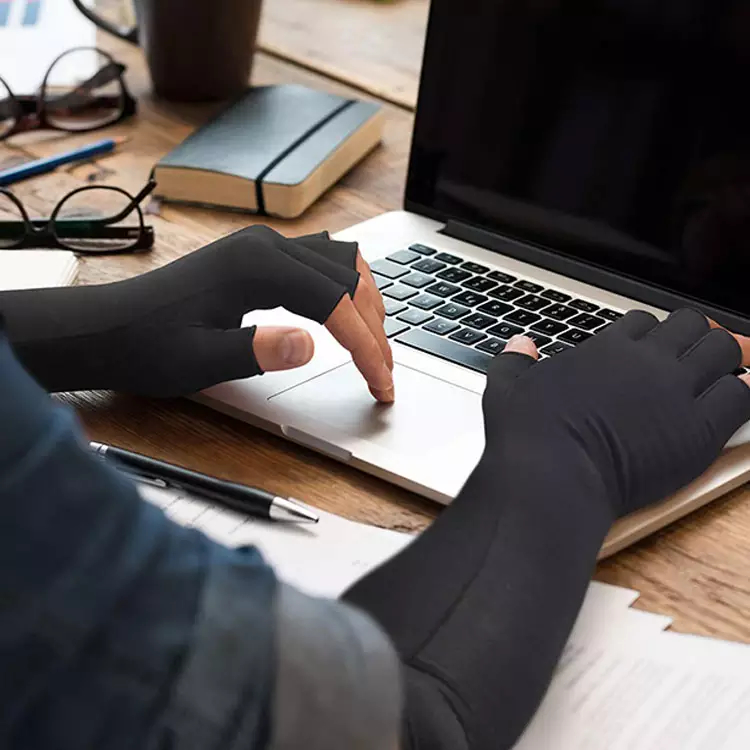
RevitaFit™ gloves are intended to provide light compression rather than heavy restriction. That makes them more suitable for people who still need normal hand movement while typing, writing, using a mouse, or getting on with everyday tasks. The aim is not to immobilise the hand, but to create a gently supported feel that still fits real use.
That balance matters because the hands need freedom as well as support. Desk-based tasks depend on coordination, repetition, and comfort over time. A glove that interferes with those things may sound supportive in theory but prove unhelpful in practice. What tends to work better is support you can actually live and work in.
Why Comfort and Fabric Feel Matter During Long Wear
Typing and other fine hand tasks make people especially aware of what is on their hands. A seam that rubs, fabric that feels rough, a glove that traps unpleasant heat, or material that leaves the skin feeling damp can quickly become distracting. Small irritations matter more when the hands are doing precise work for long periods.
That is why fabric feel is not a minor detail. It is central to day-to-day usability. RevitaFit™ gloves are designed with comfort in mind so that longer wear feels more realistic. Soft, skin-friendly fabric, breathability, and moisture handling all matter because they affect whether the glove stays tolerable through the hours when support is actually wanted.
Comfort is also tied to consistency. If the glove feels good enough to wear through normal work, it is far more likely to become something you use regularly rather than something you try once and put aside.
Why Construction Quality Matters When Gloves Are Worn Often
A glove used during daily desk work is not a novelty item. It may be worn for many hours at a time, taken on and off repeatedly, and washed regularly. That sort of use places real demands on stitching, shape retention, and the overall integrity of the material.
RevitaFit™ gloves are designed with durability in mind so that the supportive feel is maintained through regular use. Reinforced stitching and solid construction matter particularly around areas that move constantly, such as the fingers, wrist, and palm. These are the points most likely to show weakness in lower-quality gloves.
Durability is not just about value. It also affects confidence in the product. If a glove quickly loses its shape, becomes uneven, or starts to feel less supportive after repeated wear, it stops being reliable. For a product intended to support routine comfort, that reliability matters.
Why Thermal Comfort Can Make a Genuine Difference
For people whose hands tend to run cold, thermal comfort can be one of the most important parts of the design. A glove that helps maintain warmth without becoming bulky can make desk work feel much more manageable, especially in cool offices, air-conditioned rooms, or colder weather.
The RevitaFit™ design aims to support warmth while still remaining practical enough for typing and normal hand tasks. That balance is important. Thick winter gloves may keep the hands warm, but they are often unusable at a keyboard. A compression glove that helps maintain warmth while preserving function is much better suited to desk life.
Warmth also feeds back into comfort and movement quality. Hands that feel warm often feel more relaxed, less stiff, and easier to use. For some people, that alone is a major reason to wear gloves at work.
Why Practicality Is Part of the Value
A product does not become genuinely useful simply because it sounds well designed. It becomes useful because it fits into daily life. That means it needs to be easy enough to put on, comfortable enough to keep on, practical enough to use while working, and straightforward enough to keep clean.
RevitaFit™ gloves are machine washable, which matters more than it may first seem. If you are going to wear gloves regularly, they need to be easy to wash and easy to use again. If looking after them feels awkward, regular wear becomes less likely. In the same way, if a glove feels too fussy, too hot, or too inconvenient, it quickly loses its value.
This is one of the quieter strengths of a well-designed typing glove. It does not need dramatic claims. It simply needs to work in the situations where support is actually wanted. For adults who need a glove to function in normal working life, practicality is not separate from performance. It is part of it.
What These Gloves May Help With in Day-to-Day Use
These gloves are likely to suit adults who spend long periods at a keyboard, use a mouse heavily, work in cooler conditions, or regularly notice that their hands feel more tired, stiff, cold, tight, or less comfortable as the day goes on. They may be especially relevant if you do not want a rigid brace but would still welcome a more supported feel around the hands and wrists during repetitive tasks.
In day-to-day use, some people mainly value the warmth. They like that their hands feel less cold, less stiff, and more ready to move. Others value the contained feeling from the compression, especially when the hands feel puffy, heavy, or overworked. Others simply value the sense that their hands are less exposed to the cumulative strain of long desk sessions.
They may also be useful for people whose mouse hand becomes more uncomfortable than their keyboard hand, for those who notice evening stiffness after a full working day, or for those whose hands feel less dextrous in cool conditions. They are not only for one diagnosis. In many cases, they are most relevant to people whose main issue is a recurring experience of desk-related discomfort rather than one dramatic injury.
If your symptoms are mainly about loss of comfort during routine work rather than severe or rapidly worsening pain, this type of glove often makes the most sense.
Fit, Wear Time, Care, and What to Realistically Expect
For a compression glove to feel helpful, the fit needs to feel close and supportive without feeling harsh. The glove should sit snugly against the skin and provide even pressure, but it should not feel distractingly tight, sharply restrictive, or uncomfortable to keep on. If a glove feels as though it is squeezing aggressively, digging in, or making the hand less comfortable rather than more comfortable, the fit is unlikely to be right for you. Equally, if it feels loose, baggy, or uneven across the hand and wrist, it may not provide the supported feel people are usually looking for.
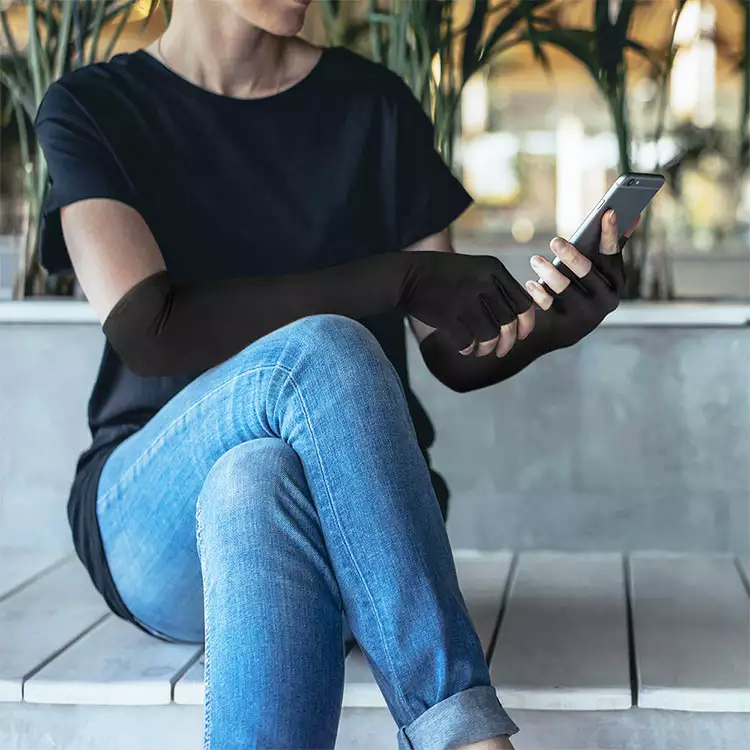
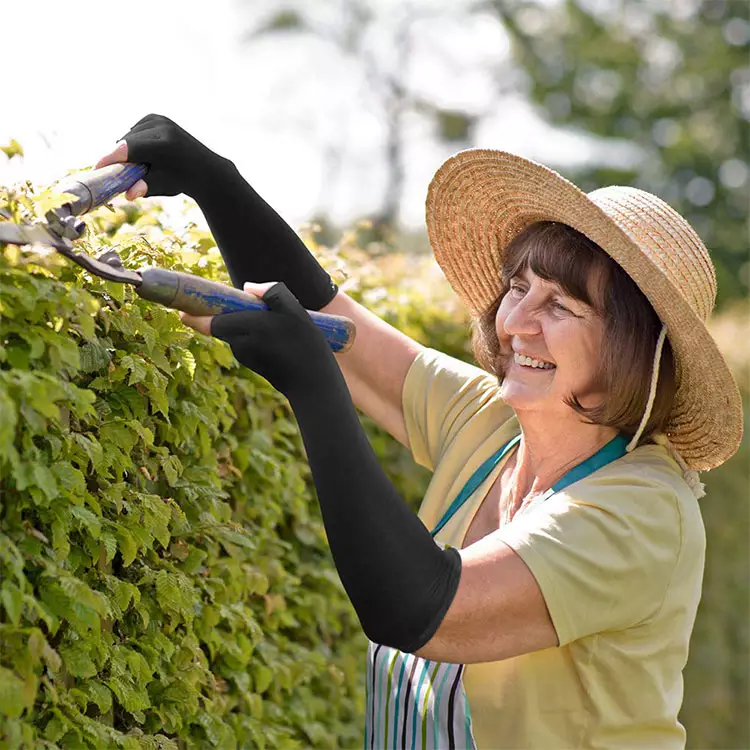
Many people choose to wear typing gloves during the parts of the day when symptoms usually build. That may be during a long work session, during evening desk tasks, when working in a cooler room, or when the hands already feel tired and need a bit of extra support. Some prefer them mainly while working. Others also like them during other repetitive activities such as writing, reading on a device, crafting, or gaming.
What people notice first varies. For some, the most immediate change is warmth. The hands simply feel less cold and less stiff. For others, the biggest difference is the supported feel: the hand feels more contained, less puffy, or less irritated as the session goes on. Some notice less of the heavy, overworked feeling they usually get after hours of desk use. Others mainly value that the gloves make long sessions feel easier to tolerate.
It is worth keeping expectations realistic. Compression gloves do not usually create a dramatic overnight change. Their value is often practical and cumulative. They may help the hands feel more comfortable during the tasks that normally bring symptoms on. They may reduce the sense that the hands are becoming progressively less settled as the day goes on. They may also work best alongside sensible hand use, occasional movement breaks, spreading tasks more evenly through the day, and awareness of wrist or mouse habits that aggravate symptoms.
They are not a replacement for assessment if symptoms are more severe, persistent, or hard to understand. Nor are they a substitute for every other part of good desk comfort. It is better to think of them as a support tool: something that may improve comfort, warmth, and day-to-day manageability during ordinary tasks.
It also helps if the gloves are easy to look after. RevitaFit™ gloves are machine washable, which makes regular cleaning straightforward and supports repeat wear over time. That simple practicality is part of what makes them suitable for regular daily use rather than occasional use only.
When to Seek Professional Advice
If your hand symptoms are severe, getting worse, persistent, or difficult to make sense of, it is sensible to seek professional advice rather than relying on self-management alone. The same applies if you are noticing marked weakness, increasing numbness, significant loss of hand function, or new or unexplained symptoms that are not settling.
A GP, physiotherapist, podiatrist where relevant, or another appropriate clinician can help assess what may be contributing to the problem and whether a different approach is needed. Compression gloves can be a useful comfort aid, but they are not a substitute for proper assessment when symptoms are more complex, more intense, or not improving as expected.
Support Your Hands During Typing, Work, and Everyday Tasks
When hand discomfort builds gradually through typing and repetitive desk work, the products that tend to help most are often the ones that fit naturally into daily life. Light compression, warmth, longer coverage, and a more supported feel can all make a real difference if your hands tend to feel tired, stiff, cold, puffy, or overworked during prolonged tasks.
RevitaFit™ Long Style Compression Computer Typing Gloves are designed around that practical need. By covering the forearms, wrists, hands, and fingers while remaining workable for normal desk use, they offer a wearable support option for adults who want comfort without the bulk and restriction of a brace.
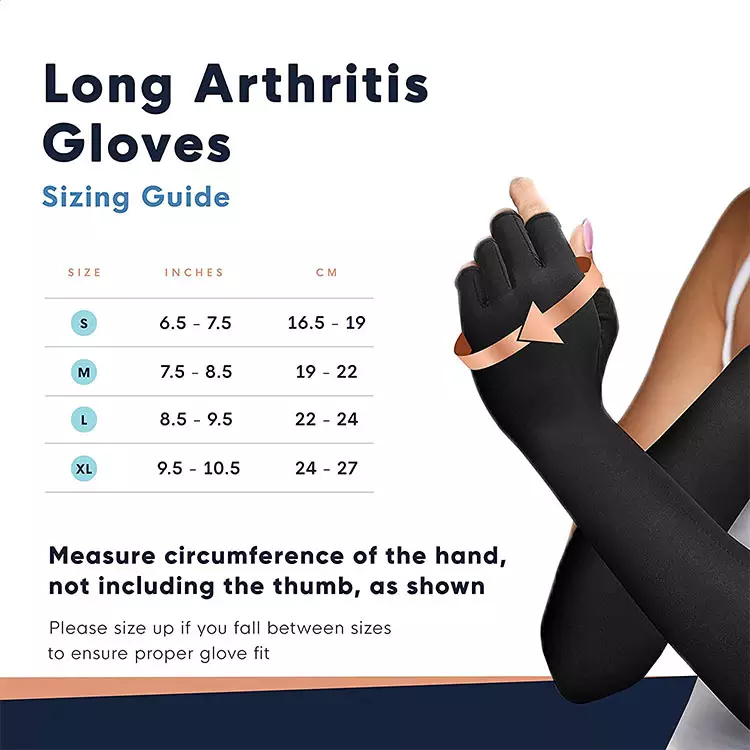
If your symptoms fit the kinds of experiences described here and you want a simple, everyday way to support comfort during typing and routine activity, these gloves are a sensible option to consider. Check the sizing and fit carefully, use them during the parts of the day when symptoms usually build, and seek clinical advice if you are unsure whether this type of support suits your situation.
Disclaimer
This information is general guidance only. It is not a substitute for individual medical advice, diagnosis, or treatment. If you are unsure, if your symptoms are new or more complex, or if they are not settling as expected, speak to a GP, physiotherapist, podiatrist, or another appropriate clinician for personalised advice. No product can guarantee a particular outcome.





by Maryam Al-Sayed
After months of wrist pain, I decided to try these compression gloves. Excellent choice! They’re easy to wear and make a world of difference during my workday. I can type for hours without that nagging numbness creeping in. And they’re breathable, so no sweaty palms here! Why didn’t I get these sooner? My only regret. But hey, better late than never, right? 😊