The Ultimate Guide to Choosing the Right Arch Support Insoles
Why Your Feet Hurt – and How Insoles Can Help
If you’re on the hunt for the best arch support insoles, you’re in the right place. Maybe you’re feeling a twinge in your feet after a long day, or noticing a dull ache in your knees after a morning run. Or perhaps it’s your hips or back that’s begging for some relief. These could all point to the need for better foot support. Arch support insoles can be a game-changer, not just for your feet, but also for your legs, knees, hips, and back.
It doesn’t have to be this way. Foot pain is usually a mechanical problem – and mechanical problems can often be corrected. There’s a reason those symptoms appear, and there’s a practical solution that doesn’t mean giving up the activities you enjoy. The answer is to support your feet properly – with insoles that work with the way your foot actually moves.
This article explains what your arch is, why certain types of pain develop, how insoles help, and how to choose the right pair based on your foot shape. We’ll also cover how to use them correctly, what to expect during the adjustment period, and when you should see a professional rather than trying to run through the pain.
What Your Arch Is – and Why Support Matters
Your foot has three main contact points – two at the front, under the joints where your toes meet the foot, and one at the back, under your heel. Between these points sits your arch. The arch isn’t one bone. It’s a spring-like system of bones, ligaments, and tendons held together in a curve. The key player is the plantar fascia – a thick band of tissue that runs from your heel to the base of your toes.
When your arch works normally, it acts like a spring. As you land, it flattens slightly, absorbing the impact. Then it rebounds, helping you push off the ground. You don’t think about any of this – until it stops working properly.
Some people have naturally low arches, or no arch at all. Their feet roll too far inward when they land – a pattern called overpronation. Others have very high arches that don’t flatten enough, so their feet roll outward – this is supination. Both patterns load the plantar fascia and its surrounding structures unevenly, and that’s what causes pain.
An arch support insole changes this by giving your foot a stable platform to land on. It holds your arch in a neutral position – not too high, not too low – and stops your foot from rolling too far in either direction. This reduces the stress on your plantar fascia and lets the tissue recover instead of being re-strained with every step. In short: it doesn’t just cushion your foot; it guides it into a healthier movement pattern.
What Your Foot Does With Every Step
Every time you walk or run, your foot absorbs a significant amount of force. Each stride follows the same sequence: your heel hits the ground, your foot rolls slightly inward to spread the impact, then your arch stiffens and your foot rolls outward as you push off from the toes. This cycle is called the gait cycle, and it happens in a fraction of a second.
In an ideal gait, the foot rolls inward just a little – enough to absorb the force evenly. Then the arch springs back, the foot rolls outward, and you push off. The force of each step travels from your heel, through your arch, and up into your ankle, knee, and hip. That force is meant to spread evenly across your foot. When alignment is off, some structures take on far more than their share.
If your foot rolls inward too far, the arch collapses and the plantar fascia gets stretched taut with every single step. Over time, this repeated pulling causes tiny tears and inflammation – the sharp pain you feel under the heel or along the arch. This is why overpronators feel it hardest in the morning – the fascia shortens overnight, and your first steps pull straight on the inflamed tissue.
If your foot doesn’t roll inward enough, the impact stays concentrated on the outer edge. That places stress on the outer heel, the side of your foot near your little toe, and the outside of your ankle. Supinators are more prone to stress fractures, ankle sprains, and pain along the outside of the knee.
Whether you overpronate or supinate, your foot moves in a way that overloads certain tissues. Pain may start as a dull ache and quickly become sharp and persistent – and it doesn’t just interrupt training. It ends up affecting everyday activities too. The good news is that this isn’t random. It’s a pattern, and once you understand your pattern, you can do something about it.
Why Insoles Are the Answer
Running shoes and everyday trainers provide general cushioning, but they can’t control how your foot moves. The midsole of a shoe absorbs shock across the whole foot, but it doesn’t stop your foot from rolling too far inward or outward. If your foot moves excessively, a standard shoe simply accommodates that motion – it doesn’t prevent it.
Insoles sit between your foot and the shoe. A good insole gives you a supportive layer that works with your foot’s shape and movement pattern. It does two things at once:
- It absorbs shock at the heel and forefoot, reducing the force that travels up through your knees, hips, and lower back.
- It keeps your foot in a more neutral position, preventing excessive inward or outward rolling.
By adding an insole, you’re not just adding extra cushioning. You’re giving your foot the support it needs to stay stable. That reduces strain on your arch and heel, and it helps the muscles and tendons in your lower leg work more naturally. The result is less pain, more comfort over longer distances, and a smoother stride.
Not all insoles are created equal. The right one depends on how your foot moves – and the wrong one can press on areas that are already sensitive. It pays to understand the categories before you buy.
How to Choose the Right Insole for Your Foot Type
Before you look at product options, it helps to know which category your foot falls into. There’s a simple way to check at home – no special equipment needed.
The wet foot test: Wet the bottom of your foot and stand on a piece of paper or a dark surface that will show your footprint. Then step away and look at the shape.
If your footprint looks like a solid, wide shape with almost no inward curve around the arch area, you likely have low arches or flat feet – which often accompany overpronation. If the footprint shows only a thin strip connecting your heel and the ball of your foot, you have a high arch, which often points to supination. If you can see a clear inward curve that isn’t too wide or too narrow, you likely have a neutral arch and a balanced gait.
Your old shoes can tell you a lot too. Heavy wear on the inner edge usually points to overpronation; wear on the outer edge suggests supination. Even wear across the sole suggests a neutral gait. These tests aren’t a replacement for a medical diagnosis, but together they’re a useful starting point.
Below, we’ve grouped the insoles we offer by the problems they solve. Read the descriptions carefully, because each product solves a different problem.
If you land fairly neutrally, pick the cushioned pair that feels best underfoot. If you overpronate, look for the firmer, supportive models. If you supinate, choose the softer options with flexible arch support. If you’re still unsure, speak to a podiatrist or try the wet foot test again – it’s a reliable starting point.
Key Features to Look For in Arch Support Insoles
Once you know your foot type, the next step is understanding what makes an insole effective. Not every insole labelled “arch support” is built the same way. Here are the features that actually matter when you’re comparing insoles.
- Proper fit: The insole should sit comfortably inside your shoe without bunching up at the sides or sliding forward. Most quality insoles can be trimmed to size, which helps them match your shoes better.
- Correct arch type: Insoles are available with low, medium, or high arch profiles. Matching the profile to your natural arch is essential. Wearing an arch that’s too high can cause pressure points; one that’s too low won’t give you enough support.
- Material: Foam provides cushioning and comfort, gel absorbs more impact, and carbon fibre or EVA shells offer firmer, longer-lasting support. Many effective insoles combine a rigid base with a soft top layer.
- Heel cup: A deep heel cup cradles your heel and keeps it stable. This prevents the heel from tilting inward or outward, which helps protect your ankle, knee, and hip.
- Flexibility: A good insole strikes a balance between firmness and flexibility. Too rigid, and they’re uncomfortable. Too soft, and they won’t control excess movement.
- Trim-to-fit design: Most insoles need a little trimming to fit perfectly. Look for a size guide on the underside and use sharp scissors for a clean cut.
If you’re replacing an old pair of insoles, take them out and compare the shape with the new ones. This gives you a quick visual check of where the arch sits and whether the heel cup depth is similar.
What to Expect When You Start Wearing Insoles
Your feet have spent years moving in a particular way. Adding a structured insole changes that movement, which means there’s an adjustment period. This is normal – and it’s one of the most important things to understand before you buy.
Most people adapt within one to two weeks. Start by wearing the insoles for a few hours a day, then gradually increase the time. With firmer corrective insoles, begin with shorter walks before trying a run or a long day out. Your calves, Achilles tendons, and the small muscles in your feet need time to get used to the new support.
You may feel mild soreness in your arches or calves during the first few days. That’s usually a sign that the insole is doing its job – supporting muscles and tendons that weren’t working as efficiently before. However, sharp pain, numbness, or tingling is not normal. If that happens, stop wearing them and check that you’ve chosen the right level of support.
One tip: wear your new insoles around the house for an hour or two before committing to a full day or a run. This lets you spot any obvious pressure points while there’s still time to adjust or trim them.
How Long Do Arch Support Insoles Last?
The lifespan of an insole depends on the materials and how often you use them. As a general rule, most good arch support insoles last between six months and a year with regular use. If you run several times a week, or if you’re on your feet all day for work, you may need to replace them sooner.
Signs that it’s time for a new pair include visible flattening of the arch, cracks in the shell or foam, a permanent compression mark under the heel, or a return of the foot pain you originally bought them for. Insoles are like any other piece of footwear – they wear out, and they need replacing once they stop doing their job.
At NuovaHealth, we’re confident in the quality of our insoles, which is why every pair comes with a 30-day money-back guarantee. If they don’t work for you, send them back for a full refund – no questions asked. But the real goal is to help you find the pair that genuinely supports your feet, day after day.
Now let’s look at the specific conditions that arch support insoles can help with – from plantar fasciitis and flat feet to knee pain and poor posture – and then introduce you to the insoles we recommend for each situation.
How Arch Support Insoles Can Alleviate Various Injuries and Conditions
Arch support insoles aren’t a one-size-fits-all fix. They work in different ways depending on what’s going on with your feet, your gait, and even your knees, hips, and back. Below we’ve broken down the most common conditions that arch support insoles are used for, and how they help in each case. Some of this may feel familiar – which is a good starting point. The more you understand your own body, the better choice you’ll make.
Conditions Linked to Overpronation
Overpronation – your foot rolling too far inward – is a common root cause of pain in the arch, heel, shin, and even the knee. When the arch collapses with each step, the plantar fascia gets stretched, the tibialis muscle pulls on the shin bone, and the kneecap can track out of line. The following conditions are often linked to this pattern.
For Plantar Fasciitis
Plantar fasciitis is one of the most common causes of heel pain. It happens when the plantar fascia – the thick band of tissue that runs from your heel to the base of your toes – becomes inflamed. You usually feel a sharp pain right under the heel, especially when you take your first steps in the morning or after sitting for a while.
Runners, people who spend long hours on their feet, and those with flat feet or high arches are particularly at risk. The repeated pulling on the fascia creates tiny tears, and without proper support, the tissue doesn’t get a chance to heal properly.
Arch support insoles help by giving the arch a solid foundation. A firm arch support holds the foot in a neutral position and prevents the arch from collapsing, which takes tension off the plantar fascia. Many insoles also have a deep heel cup that cushions the heel and spreads pressure more evenly. The goal is to reduce the pull on the fascia while you walk or run so it can recover.
For Flat Feet
Flat feet, or fallen arches, mean your arch is very low or completely absent. This can be something you were born with, or it can develop over time due to age, weight gain, pregnancy, or weakening of the muscles and ligaments that support the arch.
People with flat feet often experience foot pain, ankle instability, and a tendency to overpronate. Without proper arch support, the entire foot can roll inward, which sets off a chain reaction that affects the knees, hips, and spine.
The best insoles for flat feet are those with firm, structured arch support that physically holds the arch up. They should also have a good heel cup to stabilise the heel and prevent excessive inward rolling. Wearing them consistently can make a noticeable difference in how your feet feel after a long walk, a run, or a full day on your feet.
For Shin Splints
Shin splints – also called medial tibial stress syndrome – cause pain along the inner edge of the shinbone. They’re extremely common in runners, particularly when you increase your mileage too quickly or run on hard surfaces. Overpronation is a major contributing factor, because the inward rolling of the foot puts extra stress on the muscles and connective tissue that attach to the shinbone.
Arch support insoles that control overpronation can significantly reduce the risk of shin splints. By keeping the foot in a neutral position, they prevent the excessive twisting and pulling that irritates the muscles along the shin. Insoles with good shock absorption also help – the more impact they soak up, the less your shins have to handle.
If you’re already dealing with shin splints, insoles won’t instantly fix the injury, but they’ll stop the cause from continuing to add stress. Pair them with rest, ice, and a gradual return to activity.
For Knee Pain
Your knees are caught in the middle of everything. If your feet aren’t aligned properly, the misalignment travels straight up to your knees. This can cause pain in the front of the knee – a condition called patellofemoral pain syndrome, where the kneecap rubs against the thigh bone. It can also cause pain on the inner side or the outer side, depending on how your foot moves.
Overpronation is a common culprit for knee pain because the inward rolling of the foot causes the kneecap to track incorrectly. Insoles that correct overpronation can help realign the entire leg, reducing pressure on the kneecap and the surrounding structures.
For people with arthritis in the knee, especially in the inner compartment, insoles with a slight lateral wedge – a built-up area under the outside of the insole that tilts the foot slightly outward – can help shift weight away from the affected area. This type of insole is often recommended by healthcare practitioners as a non-invasive way to reduce knee pain.
For Bunions
A bunion is a bony bump that forms at the base of the big toe, pushing it toward the other toes. It can make wearing shoes painful and significantly affect your gait. Bunions are more common in women, but men get them too – often due to footwear that’s too tight or narrow.
With a bunion, the joint itself is misaligned, which is why it’s hard to fix with just a shoe insert. Still, arch support insoles can help by improving overall foot alignment and reducing pressure on the affected joint. A stable arch support helps keep the foot from rolling inward, which is a common contributor to bunion progression. Softer cushioning around the big toe area can also make a difference in comfort.
Look for insoles that offer a wide toe area, or trim them so they don’t add extra pressure on the bunion. Some insoles also have a slight medial wedge – a built-up area under the inside of the insole that tilts the foot slightly inward – which helps stop the big toe from pushing in further.
Conditions Linked to Supination
Supination – your foot rolling too far outward – is less common than overpronation, but it can be just as troublesome. With a high arch and a rigid foot, the outer edge takes most of the impact. This pattern often leads to pain on the outside of the foot, ankle instability, and stress fractures.
For High Arches
High arches are the opposite of flat feet. The arch is excessively raised, which puts a lot of pressure on the ball of the foot and the heel. This can cause pain in those areas, along with ankle instability and a tendency to supinate.
People with high arches often have stiff feet that don’t absorb impact well. The lack of natural shock absorption means every step jars the foot, which can lead to stress fractures, metatarsalgia, and Achilles tendon issues.
For high arches, you need insoles with good cushioning and a softer, more flexible arch support. The aim is to fill the gap under the arch and provide a platform that absorbs shock rather than trying to correct the arch itself. Look for insoles with shock-absorbing material in the heel and ball of the foot, and a flexible shell that works with your natural foot motion.
For Supination
Supination, also known as underpronation, is the opposite of overpronation. Instead of rolling inward, the foot rolls outward, so more pressure lands on the outside edge of the foot. This is common in people with high arches, and it can lead to stress fractures, ankle sprains, and pain along the outside of the foot or knee.
If your footprint shows only a thin band between the heel and the ball of your foot, and your shoes wear out on the outer edge, you’re likely a supinator.
For supination, you need insoles that are softer and more flexible, with cushioning under the outer heel and ball of the foot. A flexible arch support that allows a little inward motion helps spread the load across the entire foot. The goal is to absorb shock and prevent the foot from staying locked in that outward position.
For Sesamoiditis
Sesamoiditis is inflammation of the two small pea-sized bones embedded in the tendon under the big toe joint. It’s an overuse injury that runners, dancers, and people who spend a lot of time on the balls of their feet often deal with. The main symptom is pain under the big toe – it can make every push-off while walking or running very uncomfortable.
Because sesamoiditis is caused by repetitive pressure, the key is to redistribute that pressure and give the area time to heal. Arch support insoles help by taking some of the load off the ball of the foot. Adding a metatarsal pad – a small raised section sitting just behind the ball of the foot – or extra cushioning under the forefoot can also help. Some insoles have a cutout under the big toe joint, which completely offloads that specific area – but that’s a more specialised design.
In general, look for insoles with good arch support and a thick shock-absorbing layer under the forefoot. This will reduce the impact that reaches the sesamoid bones and help you move more comfortably.
For Ankle Sprains
Ankle sprains happen when the ligaments on the outside of the ankle overstretch or tear. They’re common in sports, especially those with quick changes of direction. After an initial sprain, your ankle can become weaker and less stable, making future sprains more likely.
Arch support insoles play a role in prevention and recovery. By improving foot alignment and giving your foot a stable base, they help your ankle stay in a more neutral position. This reduces the chance of rolling it again. A deep heel cup also adds an extra layer of stability – it holds the heel firmly in place, which helps keep the ankle joint aligned.
For people recovering from a sprain, insoles with good shock absorption can also make walking less painful by cushioning the surrounding structures.
Conditions Not Tied to a Single Gait Pattern
Some conditions can affect neutral walkers as well, or they may stem from a combination of factors. Here’s how insoles help in these more general cases.
For Metatarsalgia
Metatarsalgia is a catch-all term for pain and inflammation in the ball of your foot, specifically around the metatarsal bones – the long bones that lead to your toes. It often feels like a sharp, burning pain, or like you’re walking on a pebble. Runners, people who are on their feet a lot, and those with high arches or tight calf muscles are prone to it.
You get this pain when too much pressure lands on the ball of your foot, specifically on the metatarsal bones. Poor foot mechanics, tight shoes, or repeated impact can all cause it.
Insoles help by shifting some of that pressure away from the ball of your foot. A metatarsal pad – a small raised bump placed just behind the ball of the foot – gently spreads the metatarsal bones, like spacing your fingers apart. This relieves pressure on the nerve and soft tissue. Paired with good arch support, this can take a lot of the sting out of each step.
For Morton’s Neuroma
Morton’s neuroma is a thickening of the nerve tissue between the third and fourth toes. It feels like a sharp, burning pain, or like you have a pebble in your shoe. It’s often triggered by narrow footwear or repetitive impact, and it tends to affect women more than men.
The most effective way insoles help with Morton’s neuroma is by adding a metatarsal pad. This pad gently spreads the metatarsal bones, which relieves pressure and gives the irritated nerve more space. Arch support is also important because it keeps the foot in better alignment and prevents the bones from squeezing together.
Many people find that insoles with a metatarsal pad make a dramatic difference. If you have this condition, avoid narrow shoes and look for insoles that let your toes spread naturally.
For Heel Spurs
Heel spurs are bony growths that develop on the underside of the heel bone, often as a result of long-term strain on the plantar fascia. They’re not always painful by themselves, but they often go hand in hand with plantar fasciitis, and the combination can be seriously uncomfortable.
The pain from heel spurs is usually sharp and localised under the heel, especially when you first stand up. Insoles help by cushioning the heel and providing firm arch support that reduces the pull on the plantar fascia. A deep, cushioned heel cup is particularly useful – it helps absorb shock and keeps the fat pad under your heel working effectively.
When you reduce the strain on the fascia, the heel spur often becomes less irritated. Insoles won’t remove the spur itself, but they can noticeably reduce the pain it causes during the day.
For Achilles Tendonitis
Achilles tendonitis is inflammation of the large tendon at the back of your ankle. It’s an overuse injury that’s common in runners, and it can feel like stiffness and pain in the back of the heel, especially after a run or first thing in the morning.
The Achilles tendon attaches to the heel bone, and its pull is influenced by how your foot moves when you land. If your foot rolls inward excessively or your arch collapses, it puts extra tension on the tendon. Insoles that correct overpronation – by providing firm arch support – can take a significant amount of strain off the Achilles.
Insoles with a small heel lift are also helpful because they reduce the stretch on the tendon while you’re standing and walking. This gives the tendon a chance to recover without completely stopping your activity.
For Hip Pain
Hip pain can have many causes, but one that’s often ignored is your feet. The way your foot strikes the ground affects the way your hip moves and absorbs force. If you overpronate, your femur rotates inward, which can strain the muscles around the hip and contribute to pain over time.
Arch support insoles that control pronation help by keeping the lower leg and thigh in better alignment. This reduces the abnormal twisting forces on the hip and allows the muscles to work more efficiently.
For those with hip bursitis or arthritis, insoles with good shock absorption – such as the Orthotic Arch Support Gel Insoles or NuovaHealth Sports Insoles – can also help by reducing the overall impact that travels up to the hip. They won’t cure the underlying condition, but they can make daily movement noticeably more comfortable.
For Back Pain & Poor Posture
Your spine is the central support of your body, but it relies on a solid foundation. When the arches of your feet collapse or your foot alignment is off, it can cause your pelvis to tilt and your spine to curve in ways that lead to lower back pain. This is often something people don’t realise is coming from their feet until they address the root cause.
Insoles that improve foot alignment can have a surprisingly positive effect on posture and back pain. By keeping the feet level, they help keep your pelvis level too, which reduces the strain on your lower back muscles.
There’s no single insole that fixes all back pain, but if your feet are clearly part of the problem – if you stand a lot, if your shoes wear unevenly, or if you’ve been told you have flat feet – they’re worth trying. Many people report that after a few weeks of use, their back pain feels less intense.
For Arthritis
Arthritis affects millions of people, and when it hits the feet, it can make every step painful. The most common type is osteoarthritis, which causes the cartilage in the joints to wear down. This often affects the big toe joint and the midfoot area.
Insoles can help by providing cushioning that absorbs shock and reduces the stress on painful joints. For people with arthritis in the foot, insoles with a soft, flexible base and good arch support are usually the best choice – the Orthotic Arch Support Gel Insoles or NuovaHealth Sports Insoles are both good options here. They also help improve foot alignment, which can reduce the friction inside the joint.
If your arthritis affects your knees or hips, the same logic applies – better foot alignment means less maladaptive stress on those joints. Again, insoles aren’t a treatment for arthritis itself, but they can be a valuable part of a pain management plan.
A Selection of Our Arch Support Insoles
Now that you understand what to look for and why it matters, here are the insoles we carry at NuovaHealth that have helped many people find relief. Each one is designed for a specific set of needs, so read the descriptions carefully and match them to your situation.
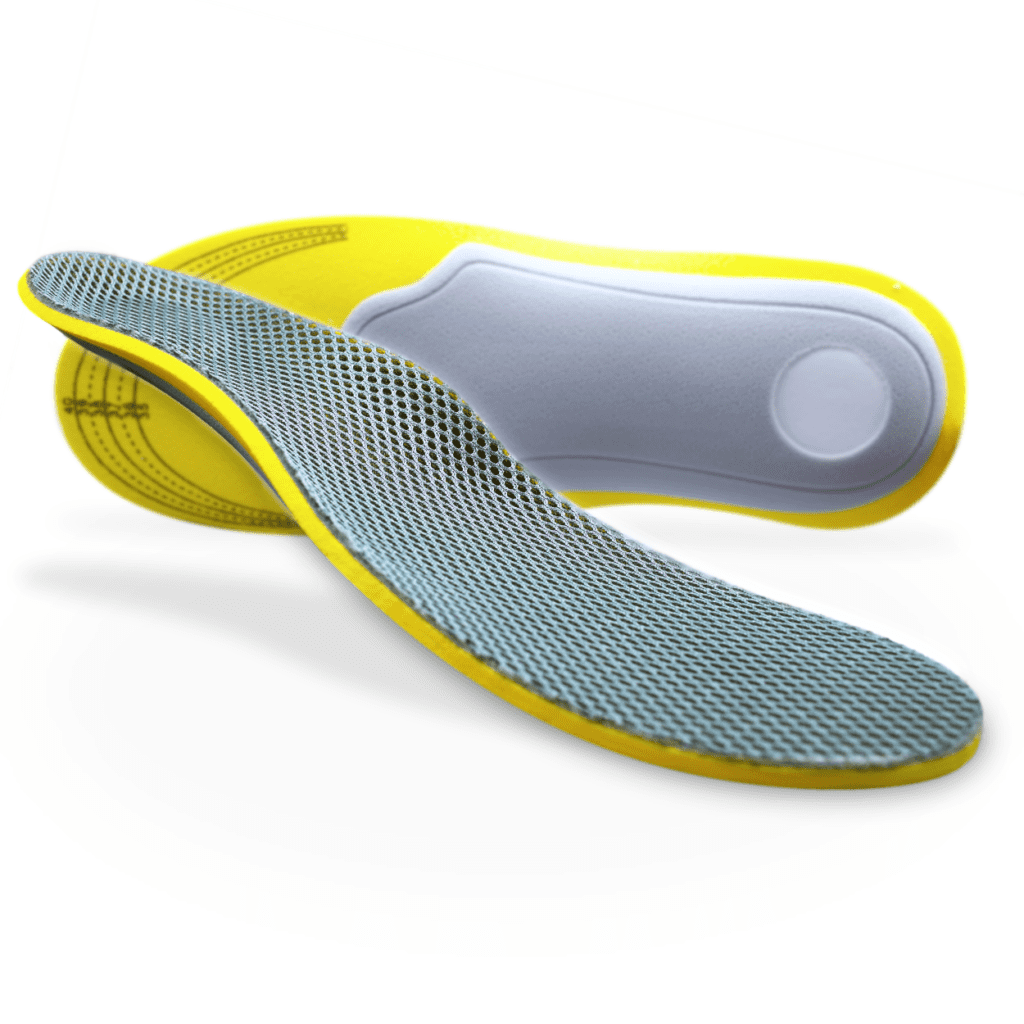
Arch support insoles for plantar fasciitis and flat feet
If your feet are on the flatter side, or you deal with that sharp heel pain first thing in the morning, these are designed to target the source. The key is a rigid carbon-fibre shell that holds your arch in a supported position, so it can’t collapse inward when you run.
The firm arch support runs along the inside of your foot, giving your arch a solid platform to push against. That stops your foot from rolling inward, which would otherwise overstretch the plantar fascia. There’s also a deep heel cup that holds your heel in place, improving ankle stability and making each step feel more controlled. Despite the firm base, the top layer is memory foam, so your foot sits on something soft while the shell does the structural work.
You can trim them to fit most shoe sizes, and they work well in running shoes, cross-trainers, or even work boots if you spend long hours on your feet. Comes with our full 30-day money-back promise.
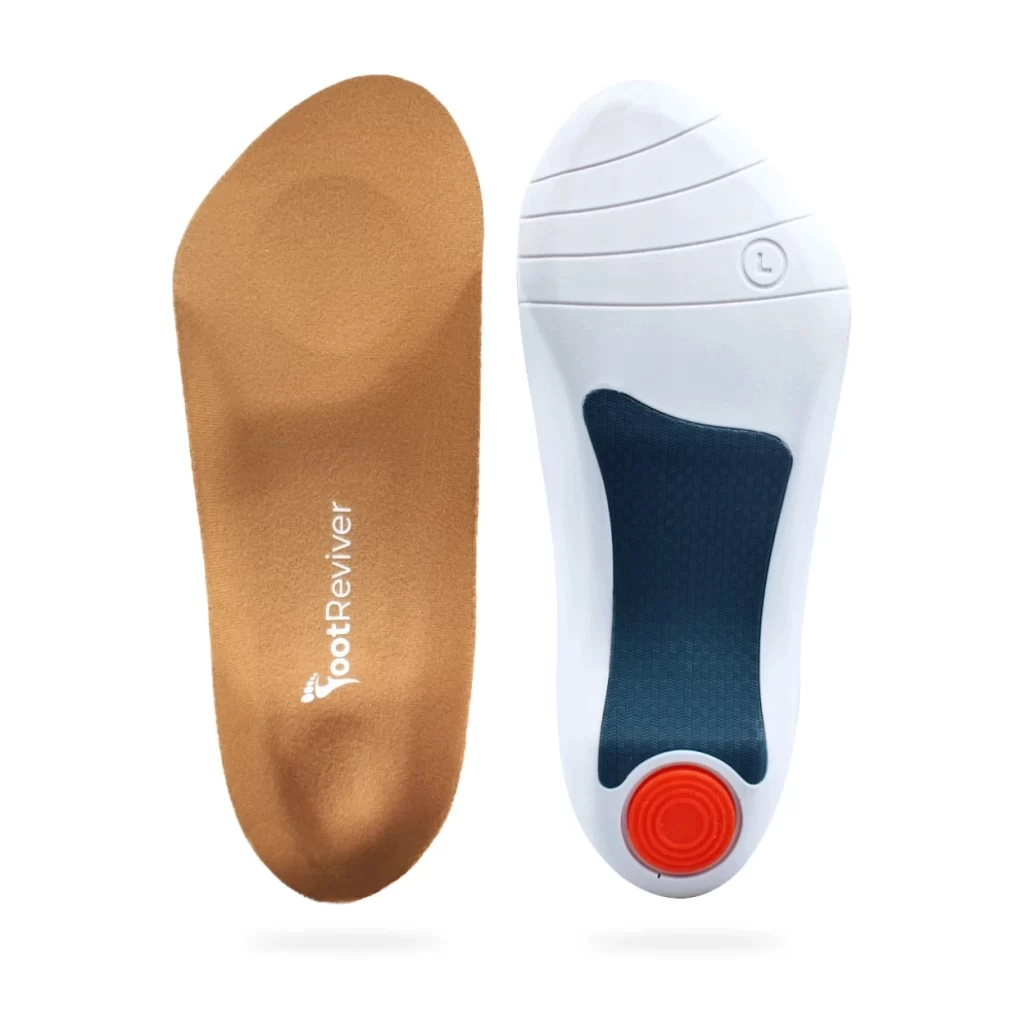
3/4 Length Plantar Fasciitis Arch Support Insoles By FootReviver™
If your main issue is heel pain, this pair focuses all its effort there. The 3/4 length means the insole stops just before your toes, which makes it easier to fit into shoes that are already snug.
The main feature is a solid carbon-fibre heel cup. It’s rigid, so it holds your heel firmly and stops it from tilting inward or outward. That stability matters because it stops the plantar fascia from being overstretched where it joins the heel bone – exactly the spot that gets inflamed with plantar fasciitis. The arch support is built into the same shell, working together with the heel cup to keep your whole foot in a neutral position.
The top layer uses medical-grade foam – soft for comfort, yet dense enough to absorb shock. Available in sizes UK 3–7 and 7–11, with a trim-to-fit guide included. Backed by our 30-day no-quibble refund guarantee.
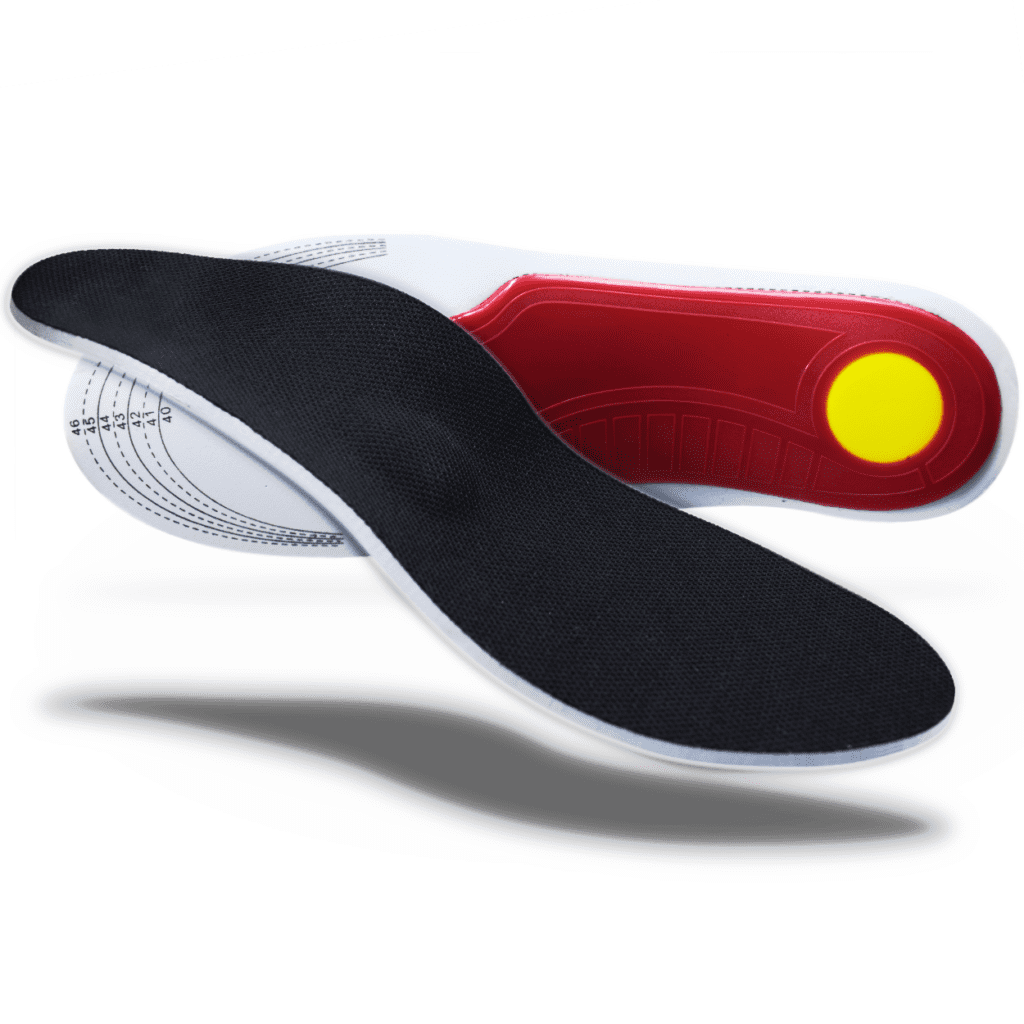
Plantar Fasciitis Orthotics By FootReviver™
This is the firmer, more corrective option in the range. It’s designed for people who don’t just want extra cushioning – they want something that actively stops their foot from rolling too far inward. If you know you overpronate, or your footprint shows a very flat arch, this is the one to look at.
The 3/4-length semi-rigid shell sits under your arch and heel, providing a stable base that resists collapse. It acts like a wedge that keeps your foot from rolling inward, which over time helps retrain your foot to land in a more neutral position. The heel cup is deep and supportive, cradling your heel and keeping it in place – this helps your ankle, knee, and hip stay better aligned through your stride.
The material contains activated carbon, which helps neutralise odours. Because they’re corrective, introduce them gradually – as covered earlier, start with shorter walks before running in them. Includes our complete 30-day money-back guarantee.
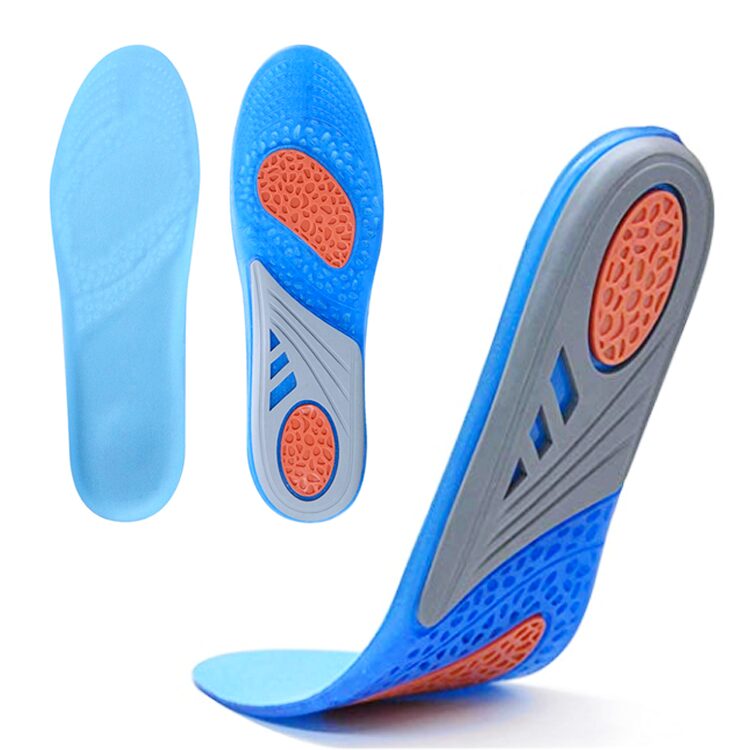
Orthotic Arch Support Gel Insoles by FootReviver™
If shin splints or pain at the ball of your foot are your main concern, this pair works differently. Instead of a rigid shell, it uses a medical-grade silicone gel that absorbs far more impact than standard foam.
The gel is placed under your heel and the ball of your foot, which are the two areas that take the hardest hits when you run. It compresses with each step and then rebounds, smoothing out the impact of landing on hard ground. There’s also a built-in metatarsal pad – a raised section just behind the ball of your foot – which helps spread the bones in your forefoot and takes pressure off the nerve between the toe bones.
The arch support is firm enough to guide your foot but still flexible, so it suits runners with a neutral gait who want extra cushioning without full correction. Available in UK sizes 3–9 and 9–12. Try them risk-free for 30 days – full refund if they’re not right.
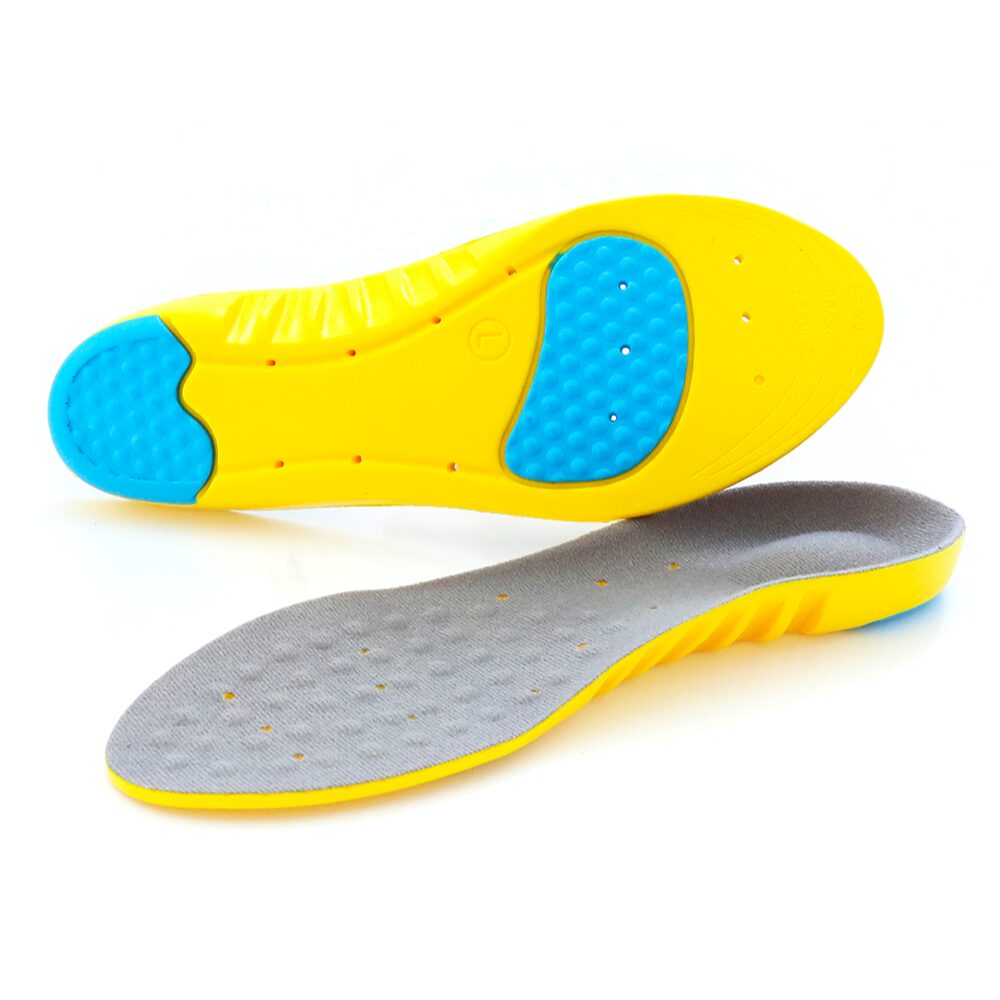
Orthotic Insoles for Sports & Running
This pair is for runners who want a firm, stable feel underfoot rather than a soft, cushioned one. The semi-rigid shell doesn’t flex with your foot – it holds its shape and gives you a consistent platform to run on.
Because the shell resists bending, it keeps your arch supported even after a long run, when your foot would normally start to flatten. That helps reduce the rotational forces that can strain your knee, and it lowers the risk of common overuse issues like shin splints. The gentle heel cup keeps your foot stable without feeling restrictive.
The top layer is a breathable fabric that wicks moisture, and the low profile means they fit comfortably in most running shoes without creating pressure points. If you have a neutral gait or only mild overpronation, this is a good middle ground. Backed by our 30-day money-back guarantee.
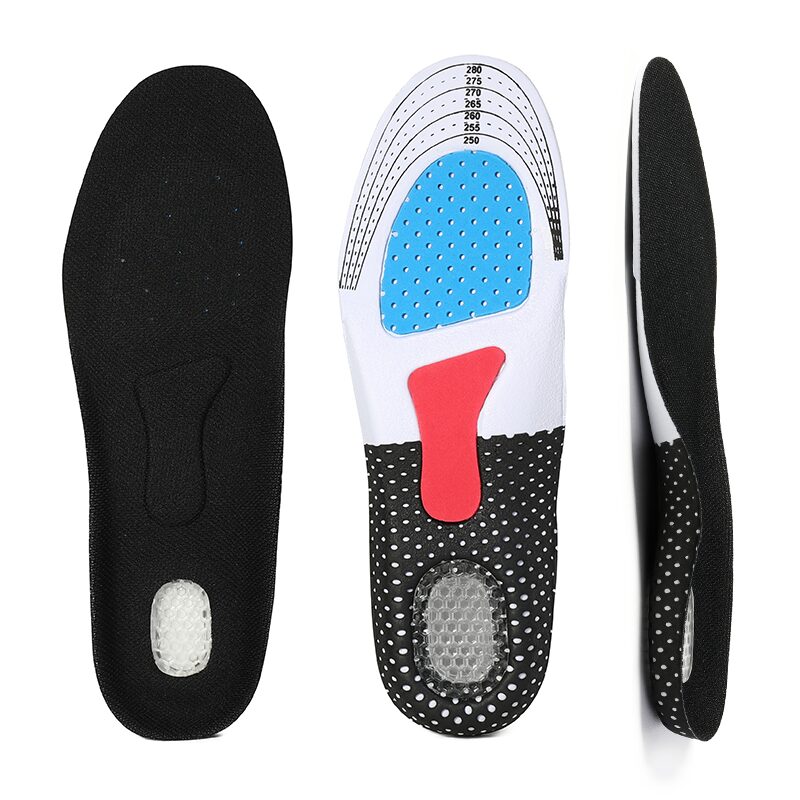
NuovaHealth Sports Insoles
If you just want extra comfort in your current shoes, try this pair. It’s built around a thick layer of memory foam that moulds to the shape of your foot over the first few times you wear them, so it feels like a custom fit after a couple of runs.
The memory foam compresses beneath your heel each time you land and slowly rebounds, which reduces the impact of every step. That’s especially helpful if you run on hard surfaces like pavement or concrete. It also cushions the ball of your foot, the area you push off from, so your feet feel fresher on long runs.
The arch support is low-profile and follows your natural curve. The base is made from EVA foam – a firm, durable material that holds its shape well – and breathable holes help keep air moving. Available in UK sizes 5–7 and 8–10, with almost no adjustment period needed. Comes with a 30-day money-back guarantee.
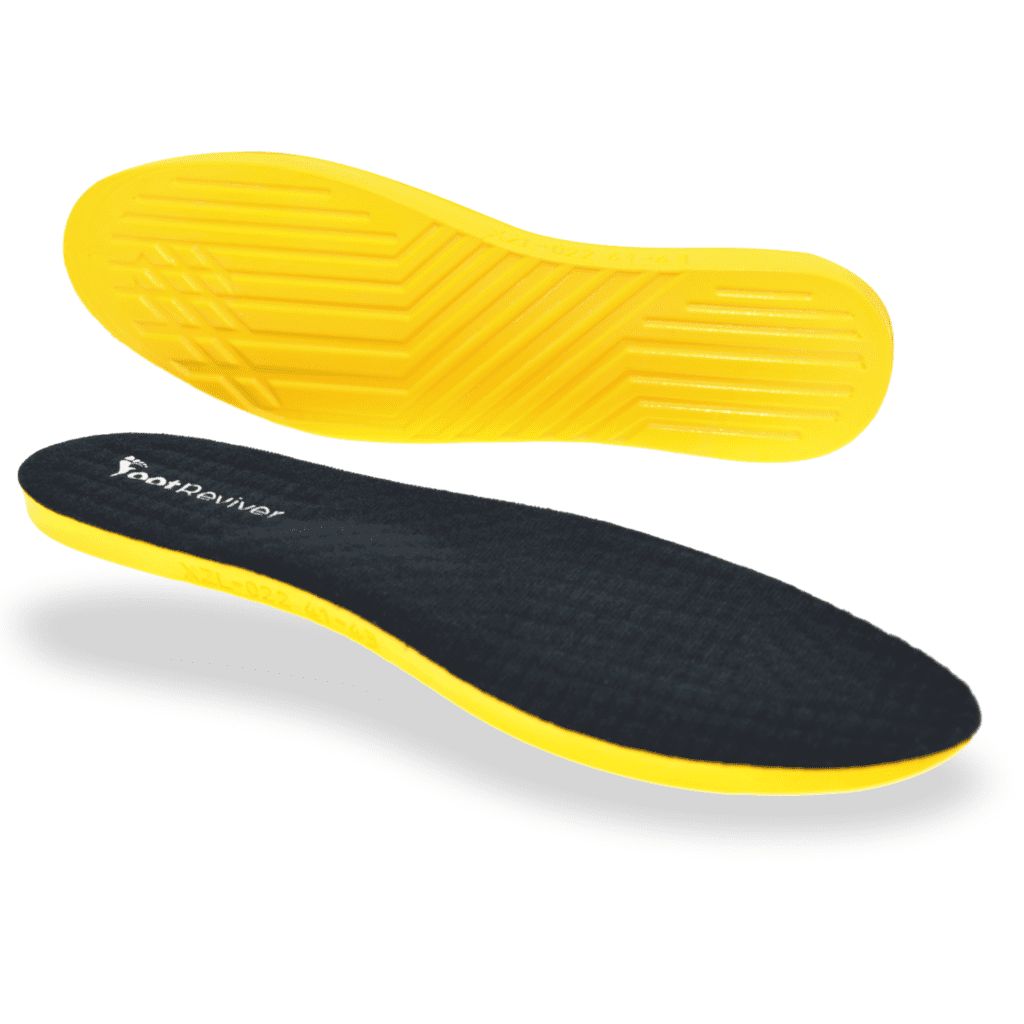
Pronation insoles for Overpronation by FootReviver™
These are the firmest insoles we carry, designed specifically for people whose feet roll inward too much. If you’ve been told you overpronate, or your wet footprint showed a very flat arch, this is the pair that will support your foot most firmly.
The key feature is a firm, built-in arch support that presses against the inside of your foot and stops your arch from collapsing when you land. A deep heel cup works alongside it, cradling your heel and keeping it from tilting inward. Together, these two elements keep your foot in a neutral alignment and reduce the stress on your plantar fascia, Achilles tendon, and the inner side of your knee.
Although the structure is firm, there’s a layer of soft material under the heel to absorb the initial impact of each footstrike. The top fabric is smooth and breathable, and the whole insole can be trimmed to fit. Expect to feel a strong pressure under your arch for the first few days – that’s the insole holding your foot in a position it isn’t used to. This should ease within a week. Full 30-day money-back guarantee included.
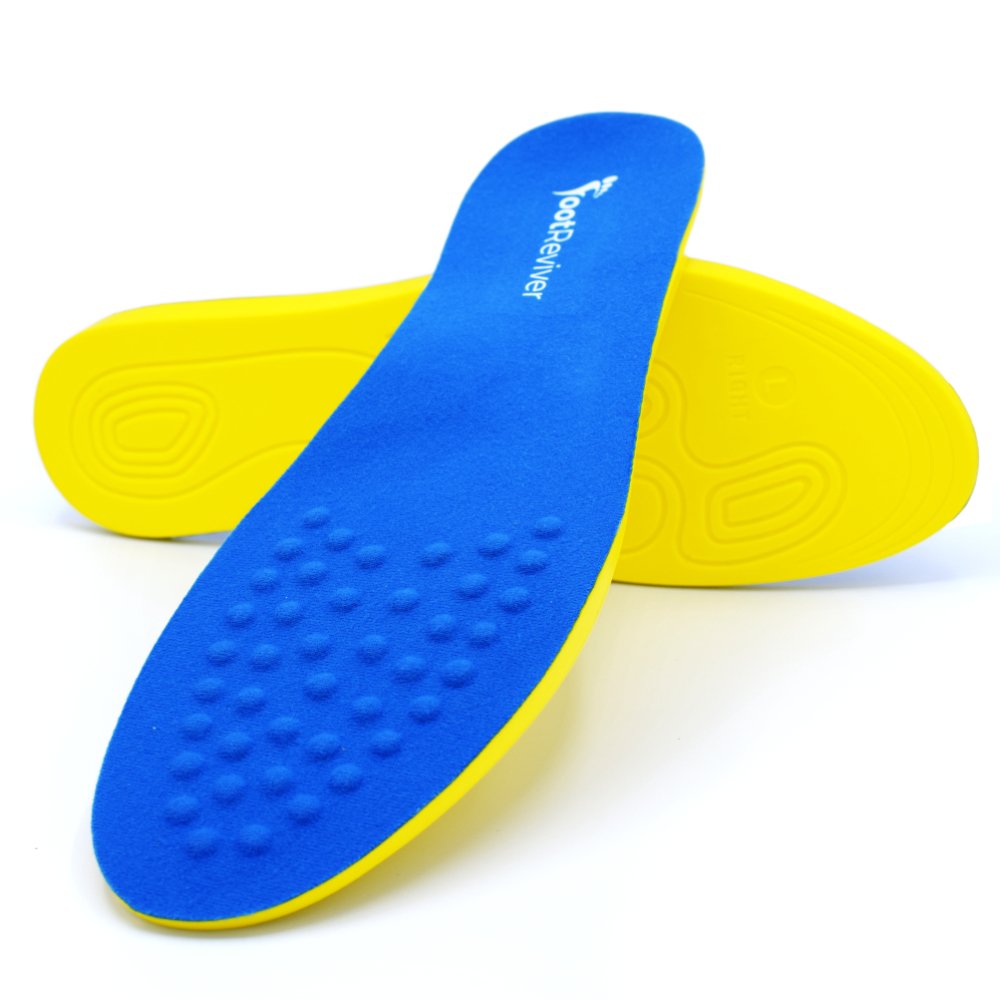
Supination Insoles for Underpronation by FootReviver™
At the other end of the scale, these insoles are for people whose feet roll outward, so the outside edge takes most of the impact. If you have high arches and feel pain along the outside of your foot or ankle, this is the pair that matches your foot shape.
Instead of a rigid shell, these use a thick layer of shock-absorbing EVA foam that compresses under the outer heel and along the outside edge – the areas that hit the ground hardest for you. The arch support is low and flexible, so it bends with your foot and allows a small amount of inward roll. That helps spread the load across your whole foot rather than leaving it concentrated on the bone that runs toward your little toe.
The cushioning layer under the outer heel is particularly important, because supinators often develop pressure points in that area. These insoles are slim enough to fit in trainers, boots, or even heels, and they can be trimmed to size. Backed by our 30-day refund promise.
Quick Comparison
Here’s a quick summary of all eight insoles, so you can compare them at a glance. Use the “Best For” column to narrow down your options, then refer back to the full descriptions in Part 2 for more detail.
| Product | Best For | Key Feature | Price |
|---|---|---|---|
| Arch Support Insoles for Plantar Fasciitis & Flat Feet | Plantar fasciitis, flat feet, overpronation | Rigid carbon-fibre shell and deep heel cup | £9.99 |
| 3/4 Length Plantar Fasciitis Insoles by FootReviver™ | Heel pain, heel spurs | Semi-rigid 3/4 shell with deep heel cup | £9.99 |
| Plantar Fasciitis Orthotics by FootReviver™ | Overpronation, flat feet, arch strain | 3/4-length orthotic control shell | £9.99 |
| Orthotic Arch Support Gel Insoles by FootReviver™ | Shin splints, metatarsalgia, general impact | Medical-grade gel and metatarsal pad | £9.99 |
| Orthotic Insoles for Sports & Running | Neutral runners, mild overpronation | Semi-rigid shell, firm and stable | £12.99 |
| NuovaHealth Sports Insoles | Neutral runners, comfort and cushioning | Memory foam with EVA base | £9.74 |
| Pronation Insoles for Overpronation by FootReviver™ | Overpronation, flat feet, knee pain | Firm arch support and deep heel cup | £14.95 |
| Supination Insoles for Underpronation by FootReviver™ | High arches, supination, ankle sprains | Soft EVA cushioning and flexible arch | £14.95 |
Getting the Most From Your Insoles
Choosing the right insole is only half the job. The other half is using it properly. This section covers how to match insoles to your shoes, common mistakes to avoid, and when to speak to a professional. These practical details will make the difference between a pair that works and a pair that gets left in a drawer.
Matching Your Insole to Your Shoe
Insoles are designed to sit flat inside a shoe, so the fit matters as much as the insole itself. If you add a thick insole to a tight pair of trainers, you’ll create pressure points rather than relieving them. Before you buy, check that your shoes have a removable insole – most running shoes do. Take the original insole out and place your new one on top of it to compare the shape and thickness. The new insole should sit flush against the bottom of the shoe, with no bunching at the sides.
Some insoles are designed to be trimmed to fit. Mark the area that needs trimming based on the outline in the shoe, and use sharp scissors. A clean cut prevents fraying and keeps the insole from sliding. If you’re between sizes, choose the larger size and trim down.
Worn-out shoes are another factor. You don’t need new shoes, but a severely worn sole can reduce the effectiveness of any insole. The midsole of the shoe also provides some shock absorption; if it’s compressed and tired, the insole has to do all the work. If your shoes are past their best, consider replacing them before you invest in an insole.
Common Mistakes to Avoid
Even with the right insole, a few common missteps can undermine the results. Here’s what to watch out for.
- Wearing corrective insoles all day immediately. Give your feet time to adapt. Start with a couple of hours a day and build up over a week or two – your calves and the small muscles in your feet need to adjust to the new support.
- Ignoring sharp pain. Mild soreness in the arches or calves is normal at first, but sharp pain, numbness, or tingling is not. If that happens, stop wearing them and check that you’ve chosen the right level of support.
- Reusing insoles that have worn out. Foam compresses and shells can crack. If you notice a return of the pain you bought them for, or the arch looks flattened, replace them. Most insoles last three to six months with regular use.
- Using insoles in inappropriate footwear. If you wear dress shoes with no removable insole, a bulky insole might not fit. Some insoles are low-profile and slim – check the product description to see if it suits your shoe type.
Symptom-Based Quick Guide
If you’re still uncertain which insole matches your situation, this table is a handy shortcut. It’s a quick reference, not a replacement for the wet foot test or the shoe-wear checks in Part 1. Find your main symptom and see which category it points to.
| Your Main Symptom | Likely Foot Type | Look For |
|---|---|---|
| Pain under the heel, especially first thing in the morning | Plantar fasciitis, often with slight overpronation | Rigid arch support, deep heel cup, shock-absorbing heel layer |
| Arch pain or a feeling that your foot is collapsing | Flat feet or overpronation | Firm or semi-rigid arch support with a supportive heel cup |
| Pain along the outside of your foot or ankle | Supination / underpronation | Soft EVA foam, flexible arch, extra cushioning on the outer edge |
| Shin pain or shin splints after running | Often overpronation; sometimes weak foot muscles | Good arch support plus shock absorption to cut down impact |
| Ball-of-foot pain, burning, or tingling | Metatarsalgia or Morton’s neuroma | Metatarsal pad plus extra cushioning under the forefoot |
| General foot fatigue after long periods standing | Neutral feet or mild pronation | Memory foam and moderate arch support for all-day comfort |
The right insole depends on your shoes, how active you are, and any existing foot problems. Use this guide to narrow things down. If you’re in doubt, choose the insole that gives you a comfortable, supported feel without any pressure points.
Caring for Your Insoles
With a little care, your insoles will keep their shape and support for months. Here’s how to look after them:
- Take them out of your shoes after exercise so they can air out and dry fully.
- Wash them by hand with warm water and mild soap. A washing machine or tumble dryer can damage the support materials.
- Check them regularly for wear and tear. When you notice flattening, cracking, or a loss of firmness, it’s time for a replacement – most insoles last three to six months with regular use.
- If you move them between shoes, make sure they sit flat and don’t fold or crease. A wrinkled insole can cause more problems than it solves.
When to See a Doctor
Insoles can make a real difference for many foot problems, but they’re not the answer to everything. If any of the following apply, get a professional opinion before relying on an insole alone:
- Pain that came on suddenly after an injury, a fall, or a specific incident during a run.
- Numbness, tingling, or weakness in your feet or legs that doesn’t resolve quickly.
- Swelling that doesn’t settle with rest and ice.
- Pain that continues even when you’re not active – for example, it keeps you awake at night.
- A noticeable change in the shape of your foot – a bony bump, a collapsed arch, or a change you can’t explain.
- No improvement after several weeks of consistent use of the right insole.
A podiatrist or sports medicine doctor can examine your gait, take X-rays if necessary, and recommend a more specific plan. Sometimes the issue is more complex than foot alignment alone – you may need custom orthotics, physiotherapy, or other treatment.
Our Guarantee and How We Can Help
This guide is meant to help you understand how arch support insoles work and what to look for when choosing a pair. The products featured above are just a selection from the range we carry at NuovaHealth. If your needs aren’t covered, or you’d like a recommendation based on your foot shape and walking or running habits, we’re happy to help.
Every pair of insoles we sell comes with a 30-day money-back guarantee. If they don’t work out for any reason, send them back for a full refund – no questions asked. That’s how confident we are in what we offer.
If you’re not sure which insole to choose, just get in touch. We can talk through your foot type, your daily routine, and the kind of discomfort you’re feeling, and point you in the right direction. Foot pain doesn’t have to become a permanent part of your routine. The right support can change how you feel on your feet.
Important Disclaimer
This article is provided for guidance purposes only and isn’t a substitute for professional medical advice. If you have persistent pain or any concerning symptoms, always consult a qualified healthcare provider. Insoles are supportive devices – they can’t diagnose underlying conditions or replace medical treatment.
If you’ve had recent foot surgery, or you’re waiting for a procedure, speak to your surgeon or podiatrist before using any new insole.
Individual results vary. The effectiveness of an insole depends on correct fit, proper shoe compatibility, and consistent use. If you have diabetes, circulation problems, or any condition that affects feeling in your feet, speak to your doctor or podiatrist before using over-the-counter insoles.
We hope this guide has been helpful and that it gives you the clarity you need to make the right choice for your feet. Remember – your feet carry you through every run and every step of your day. They deserve the right support.