The Ultimate Guide to Choosing the Best Plantar Fasciitis Insoles
Do you wake up to a sharp, stabbing pain in your heel, as if you’ve stepped on something hard? It fades as you move, but returns after a long walk or a run. If this sounds familiar, you may be living with plantar fasciitis — one of the most common causes of heel pain in adults.
Understanding Plantar Fasciitis
The plantar fascia is a thick, rope‑like band of connective tissue running from your heel bone to the base of your toes. It supports the arch of your foot and acts like a spring when you push off. When you take a step, your toes bend upward, which pulls the fascia taut along the sole and lifts your arch. This spring‑like action is called the windlass mechanism. It helps you move forward efficiently, but it also places the plantar fascia under its greatest tension — which is exactly why repeated pushing‑off movements can cause tiny tears near the heel.
When those tears accumulate, the tissue becomes irritated and painful. Previously, doctors thought the main problem was inflammation, which is why it was called “plantar fasciitis.” More recent research shows that degeneration – the breaking down of collagen in the tissue – plays a larger role. This matters because it explains why healing takes time and why simply resting isn’t always enough.
Recognising the Symptoms
The most common symptom is a sharp, localised pain on the underside of the heel, but some people also feel it along the arch of the foot. It can affect one foot or both feet. The hallmark pattern is pain with your first few steps in the morning, or after sitting for a long time. While you sleep or rest, your foot points down, which shortens the plantar fascia. The moment you stand, the tissue is suddenly pulled taut — that sudden stretch triggers the stabbing pain.
As you move around, the fascia gradually warms up and the pain often settles. However, it may return after long periods of standing, after high‑impact exercise, or at the end of the day. Many people also notice that the pain is worse after exercise rather than during it.
How Is Plantar Fasciitis Diagnosed?
Diagnosis is usually straightforward. A doctor will ask about your symptoms and examine your foot. They will often press on the inner edge of your heel, where the plantar fascia attaches, and they may ask you to flex your foot while they apply pressure. This can recreate the pain and help confirm the diagnosis. Imaging tests such as X‑rays or MRIs are not usually needed unless the pain is unusual, or the doctor suspects a stress fracture or nerve irritation.
If you haven’t seen a professional yet, it is worth getting an accurate diagnosis before starting any treatment. Home care works for most people, but a professional can rule out other problems.
What Causes Plantar Fasciitis?
Plantar fasciitis develops when the plantar fascia is repeatedly strained. The most common triggers include:
- Sudden increases in walking or running distance
- Long periods of standing on hard surfaces
- Wearing shoes with poor arch support or worn‑down soles
- Tight calf muscles or a stiff ankle – tight calves pull on the Achilles tendon, which attaches to the heel, and that pull is transferred directly to the plantar fascia
- Carrying extra body weight, which adds load to the feet
- Foot shapes such as flat feet or high arches that place uneven stress on the fascia
Each of these factors increases the amount of tension on the plantar fascia with every step. Over time, micro‑tears accumulate and the tissue becomes painful.
The Role of Foot Motion: Pronation and Supination
You may have heard the terms overpronation and supination. These describe how your foot rolls when it hits the ground. In a normal walking pattern – called your gait – the foot lands on the outside of the heel and rolls slightly inward to absorb shock. That inward motion is pronation. At heel strike, the arch flattens a little to act as a shock absorber. At push‑off, the arch rises and the plantar fascia tightens.
When that inward rolling is excessive, it is called overpronation. Your foot rolls inward too much, the arch flattens more than it should, and the plantar fascia gets overstretched. This is common in people with flat feet or low arches.
On the other hand, underpronation – often called supination – occurs when the foot rolls outward too little. The arch stays high and the foot remains stiff, so it cannot absorb shock effectively. That means the outer edge of the heel and the plantar fascia have to handle more impact than they are designed for. This is more common in people with high arches or rigid feet.
Neither pattern is inherently bad on its own – our feet come in many shapes. But when combined with training errors, unsupportive footwear, or other risk factors, excessive inward or outward rolling can place repeated stress on the plantar fascia and lead to the pain we call plantar fasciitis.
Are You at Risk?
Plantar fasciitis can affect anyone, but some groups are more vulnerable. You are at higher risk if:
- You are between the ages of 40 and 60
- Your job keeps you on your feet, especially on concrete or tile
- You run or participate in sports that involve repeated hard landings
- You have recently increased your mileage or training intensity
- You have flat feet, high arches, or a walking pattern that places extra stress on your heels
- You are carrying extra weight
- You frequently wear shoes with thin soles or little arch support
- You have tight calves or limited ankle flexibility
Can Plantar Fasciitis Be Prevented?
Prevention is always better than treatment. The most effective preventive measures include choosing supportive shoes, not increasing training load too quickly, stretching your calves regularly, and wearing insoles that keep your arches supported. For people who overpronate or have flat feet, good insoles stop the arch from collapsing and reduce the strain that leads to plantar fasciitis. For those with high arches, insoles with extra cushioning can absorb shock that the foot isn’t naturally absorbing.
Maintaining a weight that is healthy for you also reduces the load on your feet, and going barefoot on hard surfaces should be avoided if you are prone to heel pain. Early action, even before pain appears, makes a real difference.
How Long Does Plantar Fasciitis Last?
With consistent treatment, most people see significant improvement within 6 to 12 months. In milder cases, a few weeks of stretching and supportive insoles may be enough. The recovery timeline depends on how long the condition has been present, how well you stick to your treatment plan, and whether you continue to wear supportive shoes. It is not an overnight fix, but it is a curable condition.
Now that you understand why the pain occurs, let’s move on to the treatments that directly target the cause.
Treatment and Relief: What Actually Works
Plantar fasciitis can be stubborn, but most cases improve with a consistent, multi‑pronged approach. The key is to reduce strain on the plantar fascia while giving the tissue time to heal. Below, we explain the most effective methods and why each one helps.
Stretching and Strengthening: Your First Line of Defence
If you have plantar fasciitis, tight calf muscles are often part of the problem. The calf muscles attach to the heel via the Achilles tendon, and the plantar fascia connects to the same area. When your calves are tight, they pull on the heel, which in turn puts extra tension on the plantar fascia. Stretching your calves – and the underside of your foot – releases that tension and directly reduces strain on the painful band.
A simple, effective stretch is to sit with one leg crossed, hold the affected foot, and gently pull your toes back toward your shin. You should feel a stretch along the sole of your foot. Hold for 30 seconds, a few times a day, especially before getting out of bed. You can also stretch your calf by standing with your hands against a wall, one leg bent forward and the other leg straight back, pressing the heel of the straight leg into the floor. The more flexible your calves become, the less tension is transmitted to your plantar fascia.
Strengthening the small muscles in your foot also helps. When your foot muscles are stronger, they support your arch more actively, which takes the load off the plantar fascia. Simple towel curls or picking up marbles with your toes are good starting points. Remember: consistency matters more than intensity. A few minutes of stretching every day is better than one long session once a week.
Pain Relief and Ice
Over‑the‑counter pain relievers such as ibuprofen or naproxen sodium can help reduce discomfort in the short term, especially during the first week when pain is at its worst. They do not treat the cause, but they can make it easier to stretch and walk comfortably.
Applying an ice pack to the heel for about 15 minutes after exercise or at the end of a long day can help calm irritation. Always wrap the ice in a cloth – never apply it directly to the skin – and avoid using ice if you have circulatory problems. Heat is not usually recommended for plantar fasciitis, as it can increase blood flow to already irritated tissue.
Night Splints: Why the Morning Pain Happens
Remember the sharp pain you feel with your first steps in the morning? While you sleep, your foot naturally points downward. This shortens the plantar fascia and Achilles tendon. When you stand, the tissue is suddenly forced to stretch – that’s the stabbing sensation.
A night splint holds your foot at a right angle while you sleep. This keeps the plantar fascia and Achilles tendon in a gently stretched position throughout the night. When you wake and stand, the tissue is already at a similar length to the one it needs during walking, so the pain is much less intense. Night splints take a little getting used to, but many people find they make a significant difference within a few weeks.
Footwear: The Unsuspecting Cause
Your shoes are the foundation of every step you take. When shoes become worn down, they lose their shock‑absorbing ability. The heel counter (the part that holds your heel) loosens, and the arch support flattens. Walking in worn‑out shoes is like walking on a thin sheet of rubber – every landing sends stress straight through the plantar fascia.
Choosing supportive shoes is one of the simplest and most effective changes you can make. Look for a firm heel counter that your heel doesn’t slide out of, a sole that doesn’t bend easily in half, and a neutral shape that suits your foot type. Avoid going barefoot on hard floors, especially first thing in the morning. If your shoes are worn or too flexible, even the best insoles won’t fully help. Insoles are a complement to good shoes – not a replacement for them.
Insoles: The Missing Support
This brings us to one of the most widely recommended treatments for plantar fasciitis: insoles. For many people, the arch support built into standard shoes is simply not enough – especially if you have flat feet, high arches, or a walking pattern that places extra strain on the heel. Insoles fill that gap.
What Does “Orthotic” Mean?
You will see the word “orthotic” used throughout this article and in product names. An orthotic is simply a supportive insole that helps correct foot positioning. It can be soft or firm, over‑the‑counter or custom‑made. When we say “orthotic shoe insoles,” we mean insoles that actively change the angle of your foot – they don’t just provide cushioning. That’s an important distinction, because most foot pain from plantar fasciitis involves some kind of alignment issue, not just a lack of padding.
Why Do Doctors Recommend Insoles?
Doctors often recommend insoles because they do two things at once. First, they support the arch, which stops the plantar fascia from being stretched too far with each step. Second, they cushion the heel, which absorbs the impact of walking and standing. This combined effect reduces the workload on the plantar fascia, allowing it to heal while you continue with your daily activities. Insoles are also one of the few treatments that work continuously throughout the day – you wear them every time you put your shoes on.
How Do Insoles Work?
When your foot lands on the ground, it naturally pronates – the arch flattens slightly to absorb shock. For some people, that flattening is too much, and the plantar fascia is overstretched. Insoles provide a firm surface under the arch that limits how far it can collapse. This keeps the plantar fascia within a more comfortable range of motion.
Insoles with a deep heel cup do something extra. The heel cup holds the pad of fat under your heel in place, so it can effectively absorb shock. As we age, or after repeated impact, this fat pad can thin. A deep heel cup stops it from spreading sideways, which preserves its cushioning effect. That is why many plantar fasciitis insoles include both arch support and a contoured heel cup.
Why Do Insoles Take Time to Work?
You may not feel dramatic relief on the first day, and that’s normal. The plantar fascia is a tough band of tissue, and tissue repair is gradual. Insoles reduce the load on it, but the body needs weeks to rebuild those micro‑tears. Also, your foot and leg muscles are adapting to a new position – one that may be healthier, but different. During the first few days, you might feel some muscle ache or a stretch sensation in your calf or arch. That’s a sign the support is working, not that it’s harming you.
For long‑standing or severe plantar fasciitis, it can take several weeks or even months of consistent use to see a major change. The important thing is to keep wearing the insoles every day, not just on days when you already have pain. Once the symptoms settle, you should continue using the insoles to prevent the condition from returning – especially if you stand, walk, or run regularly.
Types of Insoles: Which Is Right for You?
There are three main types of insoles, and they serve slightly different purposes:
- Full‑length insoles run from the heel to the base of the toes. They offer arch support and cushioning under the entire foot, which makes them a good all‑rounder. They work best in trainers, boots, or lace‑up shoes.
- Three‑quarter‑length insoles stop just before the toes. They fit more easily into shoes with a narrow toe area, such as smart shoes or dress shoes. They still provide the arch and heel support you need, but take up less room in the front of the shoe.
- Heel cups sit only under the heel. They don’t provide arch support, but they do cushion the heel and help hold the fat pad in place. They are most useful if you only need shock absorption, not arch correction.
For most people with plantar fasciitis, a full‑length or three‑quarter‑length insole with noticeable arch support is the best choice. Heel cups alone often aren’t enough because they don’t address the arch strain that is causing the problem.
What Makes a Good Plantar Fasciitis Insole?
Three features matter most. First, firm arch support. A good insole should feel solid under your arch, not squishy. Memory foam alone is not enough – you need a base that holds its shape. Second, heel cushioning. A deep heel cup and a shock‑absorbing material under the heel are essential. Third, a firm but slightly flexible shell. The insole should bend a little at the front of the foot, but not collapse at the arch.
You’ll also see materials like EVA or memory foam mentioned in product descriptions. EVA (ethylene‑vinyl acetate) is a lightweight, durable foam used in many running shoes – it strikes a good balance between cushioning and support. Memory foam is a softer, heat‑sensitive foam that moulds to the shape of your foot, spreading pressure more evenly. Both have their place, but for plantar fasciitis you want a firm base for arch support, with a softer layer on top for comfort.
You should also make sure the insole fits your shoe comfortably. Full‑length insoles can be trimmed to size, and three‑quarter insoles are easier to fit into limited space. If the insole moves around inside your shoe, it won’t provide consistent support.
Will Insoles Fit in Your Shoes?
In most cases, yes. Full‑length insoles fit into trainers, boots, and many casual shoes. Three‑quarter‑length insoles are the better option for shoes with a pointed or narrow toe area. Heel cups can fit into almost anything, but they only support the heel.
If your shoes are very tight or have a built‑in arch that can’t be removed, you may need to size up or try a thinner insole. The goal is to have the insole sit flat in the shoe without causing your foot to feel crowded. When in doubt, choose a three‑quarter insole – they fit more easily and still provide the essential support.
Do Insoles Have Side Effects?
Insoles are generally safe, but there is an adjustment period. Because your foot is now held in a slightly different position, the muscles and tendons have to adapt. This can cause a mild aching sensation in the arch, the calf, or even the knee during the first few days. This is normal and usually settles within a week.
If you experience sharp pain, numbness, or tingling, stop using the insoles and speak to a healthcare professional. This might mean the arch height is too high for your foot, or that a different type of support would suit you better. It’s always better to check than to push through.
Can You Use Insoles for Sports and Running?
Yes, and many runners use insoles specifically to prevent plantar fasciitis. When you run, your foot strikes the ground with several times your body weight. If your arch collapses or your heel lacks cushioning, the plantar fascia takes the brunt of that impact. A supportive insole with a shock‑absorbing heel cup gives your foot something to push off from, reducing the strain on the plantar fascia.
If you are returning to high‑impact sport after plantar fasciitis, start with shorter distances and monitor how your foot feels during and after the session. If pain returns, scale back and give yourself more time. Insoles are a long‑term support, not a quick fix – they work best when combined with a gradual increase in activity.
How Do You Clean and Care for Your Insoles?
Most insoles can be cleaned with a damp cloth and mild soap. Remove them from your shoes and wipe them down regularly to keep them hygienic. Avoid soaking them in water, as this can break down the materials. Let them air dry away from direct heat or sunlight, which can warp their shape. With proper care, a good pair of insoles should last several months before needing replacement.
You’ll know it’s time for a new pair when the arch support starts to flatten or the heel cup no longer feels firm. If you notice your heel pain returning after a period of being comfortable, check the condition of your insoles – they may have lost their structural support.
When to See a Professional
Home care, including insoles and stretching, helps most people with plantar fasciitis. However, you should see a doctor or podiatrist if your pain is severe, if it has not improved after a month of consistent self‑care, or if it is getting worse. You should also seek advice if you have swelling, redness, numbness, or if the pain came on after an injury rather than gradually.
If you’ve been using insoles correctly – every day, in supportive shoes – and you don’t notice any improvement after four to six weeks, a professional can reassess your foot mechanics. They may recommend a different arch height, a custom orthotic, physiotherapy, or other treatments that go beyond what’s available over the counter. It’s always better to get a proper diagnosis than to push through persistent pain.
Choosing the Right Insole: A Simple Guide
Not all insoles are the same, and the best one for you depends on your foot shape, your symptoms, and the shoes you wear. Use this guide to narrow it down quickly:
- If you have flat feet or overpronate – choose an insole with firm arch support and a solid heel cup. This will stop your arch from collapsing and reduce tension on the plantar fascia.
- If you have high arches or supinate – choose an insole with extra heel cushioning and a softer arch profile. Your foot needs to absorb shock more effectively.
- If you’re a runner or do high‑impact sport – choose a sports insole with a shock‑absorbing heel insert and a breathable design.
- If you need to fit insoles into smart or narrow shoes – choose a three‑quarter‑length insole that stops short of the toe box.
- If you only need extra heel cushioning – a heel cup may be enough, but it won’t address arch strain. You may need to combine it with a supportive shoe.
Every insole in our range comes with a 30‑day money‑back guarantee, so you can try it and return it if it doesn’t feel right. The table below gives you a side‑by‑side comparison.
| Product | Arch Support | Heel Cup | Material | Best For | Sizes | Price |
|---|---|---|---|---|---|---|
| Arch Support Insoles for Plantar Fasciitis and Flat Feet | Firm, rigid | Deep | Carbon fibre + memory foam | Flat feet, overpronation | Trim to fit | £9.99 |
| 3/4 Length Insoles by FootReviver™ | Firm | Solid carbon‑fibre shell | Medical‑grade materials | Narrow shoes, heel pain | UK 3‑7, 7‑11 | £9.99 |
| Plantar Fasciitis Orthotics by FootReviver™ | Firm, corrective | 3/4 length shell | Active carbon fibre | Overpronation, recovery | Trim to fit | £9.99 |
| Orthotic Arch Support Gel Insoles by FootReviver™ | Medium | Deep | Silicone gel | High arches, shock absorption | UK 3‑9, 9‑12 | £9.99 |
| Orthotic Insoles for Sports & Running | Firm | Deep | Memory foam + breathable holes | Runners, athletes | Trim to fit | £12.99 |
| NuovaHealth Sports Insoles | Medium | Deep | Medical‑grade EVA | Everyday active wear | UK 5‑7, 8‑10 | £9.74 |
| Supination Insoles by FootReviver™ | Medium, flexible | Heel shock absorber | EVA shell | High arches, underpronation | Multiple sizes | £14.95 |
| Pronation Insoles by FootReviver™ | Firm, medial post | Deep | Medical‑grade | Overpronation, flat feet | Five UK sizes | £14.95 |
Our Selection Of the Best Insoles for Plantar Fasciitis
Now that you know what to look for, here are the insoles we stock. Each product has been chosen for a specific need, and the descriptions focus on what makes that pair different from the others. All of them are made from durable, tested materials and come with our 30‑day money‑back guarantee.
1. Arch Support Insoles for Plantar Fasciitis and Flat Feet
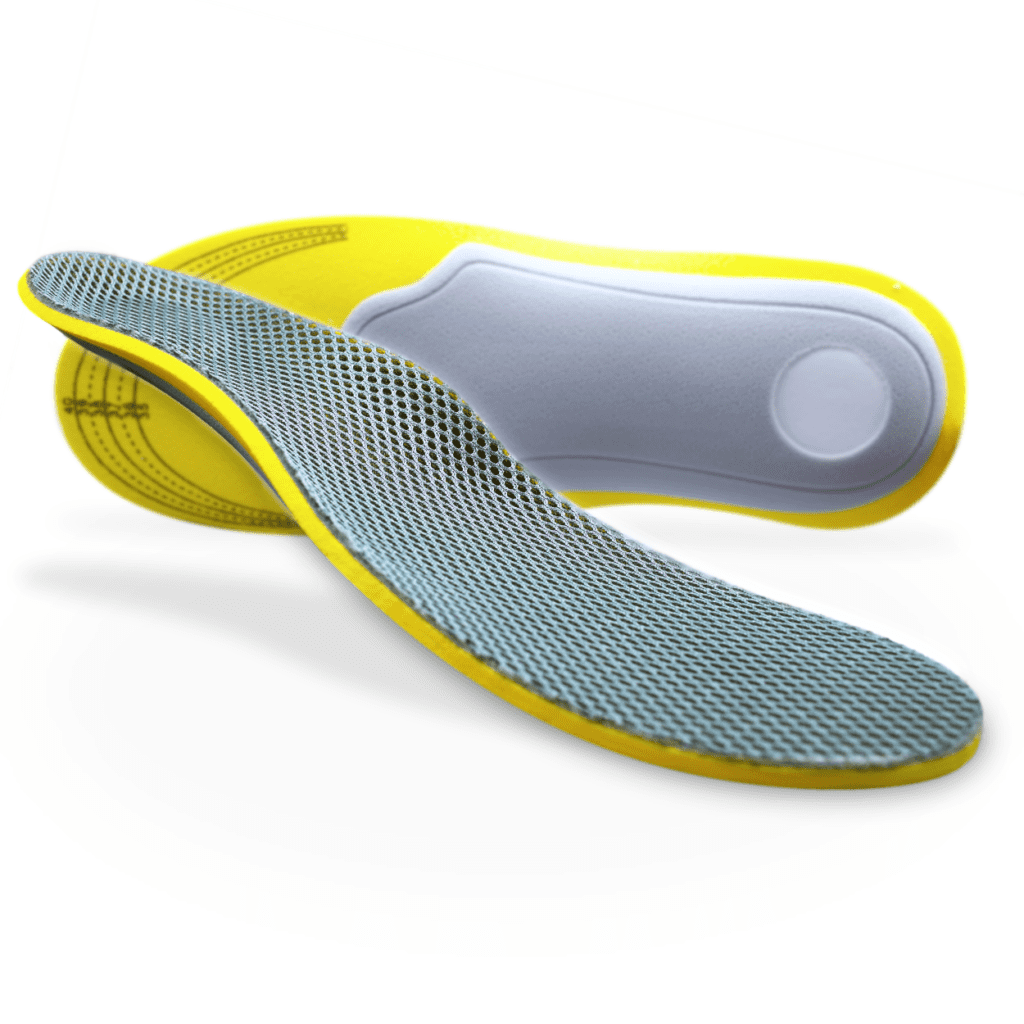
Best for: flat feet, overpronation, and when your arch visibly collapses when you stand.
These insoles use a rigid carbon‑fibre shell that does not bend under pressure. Because it’s firm, it holds your arch in a natural position and prevents the arch from dropping too far. That stops the plantar fascia from being overstretched with each step. The memory‑foam top layer moulds to the shape of your foot, which spreads pressure evenly and keeps them comfortable for all‑day wear. They can be trimmed to size and will fit most trainers and day shoes.
Price: £9.99 · View this product
2. 3/4 Length Insoles by FootReviver™
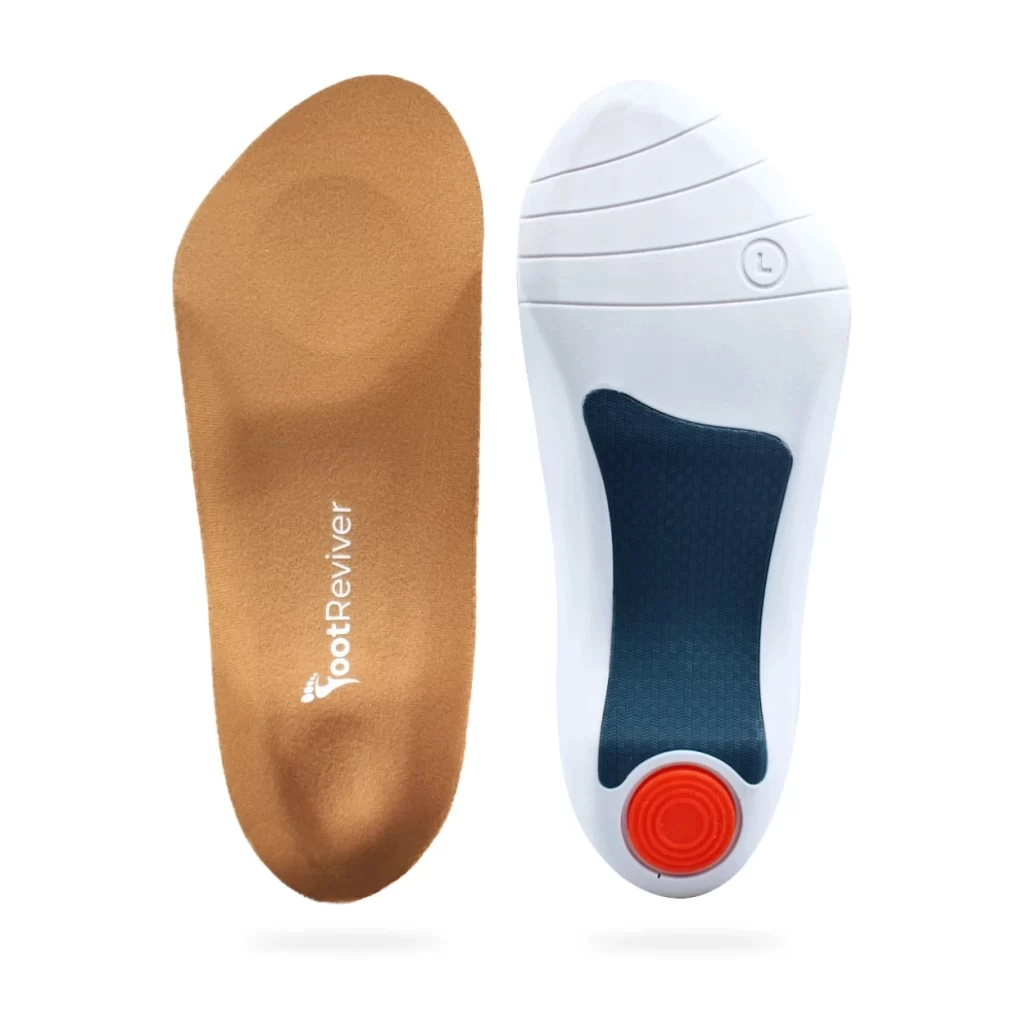
Best for: narrow shoes, dress shoes, and when you need heel support without extra bulk at the toes.
These stop just before the toes, so they fit easily into pointy or narrow footwear without causing a jammed feeling. The solid carbon‑fibre heel cup keeps your heel stable and protects the natural fat pad, while the firm arch support still gives you the essential correction for plantar fasciitis. Available in UK sizes 7‑11 and 3‑7, both trimmable.
Price: £9.99 · View this product
3. Plantar Fasciitis Orthotics by FootReviver™
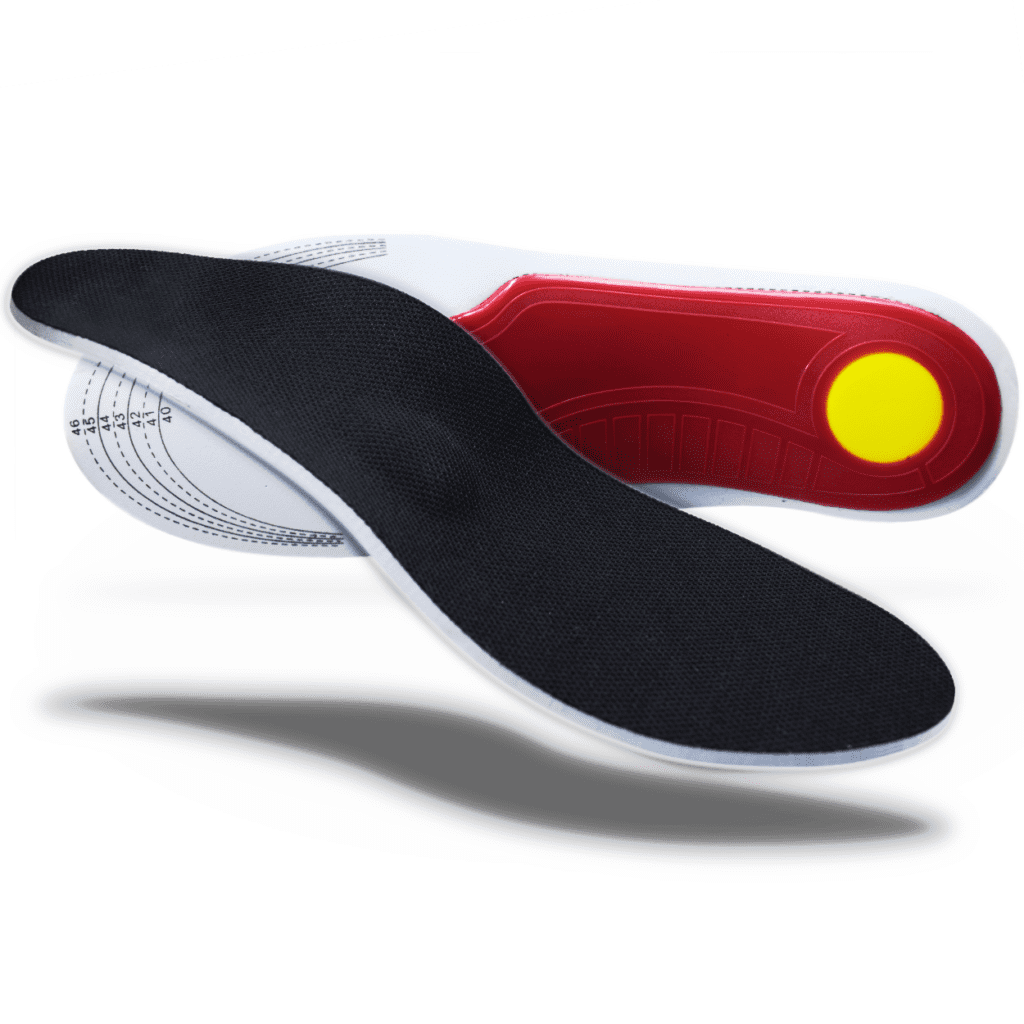
Best for: overpronation, flat feet, and for people who need a more corrective, structural approach.
These full‑length orthotics include a medial post – a firmer wedge on the inside edge of the insole – that resists excessive inward rolling. This is the main mechanism that prevents overpronation. The three‑quarter‑length solid heel cup keeps your foot stable, and the active carbon‑fibre layer helps resist odours. If you’ve tried softer insoles and still get heel pain, these are designed to give you firmer correction.
Price: £9.99 · View this product
4. Orthotic Arch Support Gel Insoles by FootReviver™
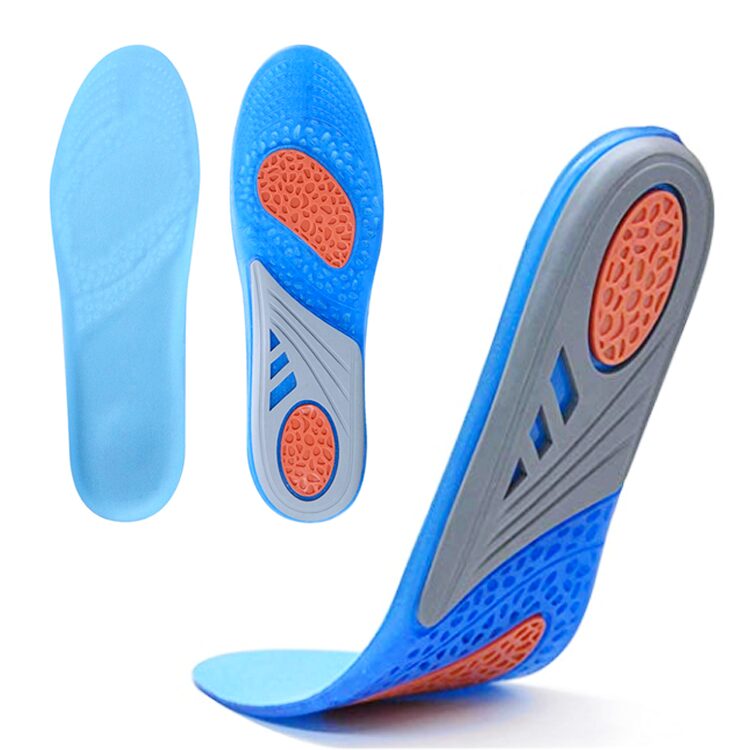
Best for: high arches, supination, and when the main problem is impact rather than arch collapse.
The medical‑grade silicone gel sits under the heel and ball of the foot, absorbing shock that would otherwise travel up your legs. That’s especially useful for high‑arched feet, which are naturally stiffer and less able to absorb load on their own. They still provide arch support, but the gel construction gives you more cushioning and less rigidity.
Price: £9.99 · View this product
5. Orthotic Insoles for Sports & Running
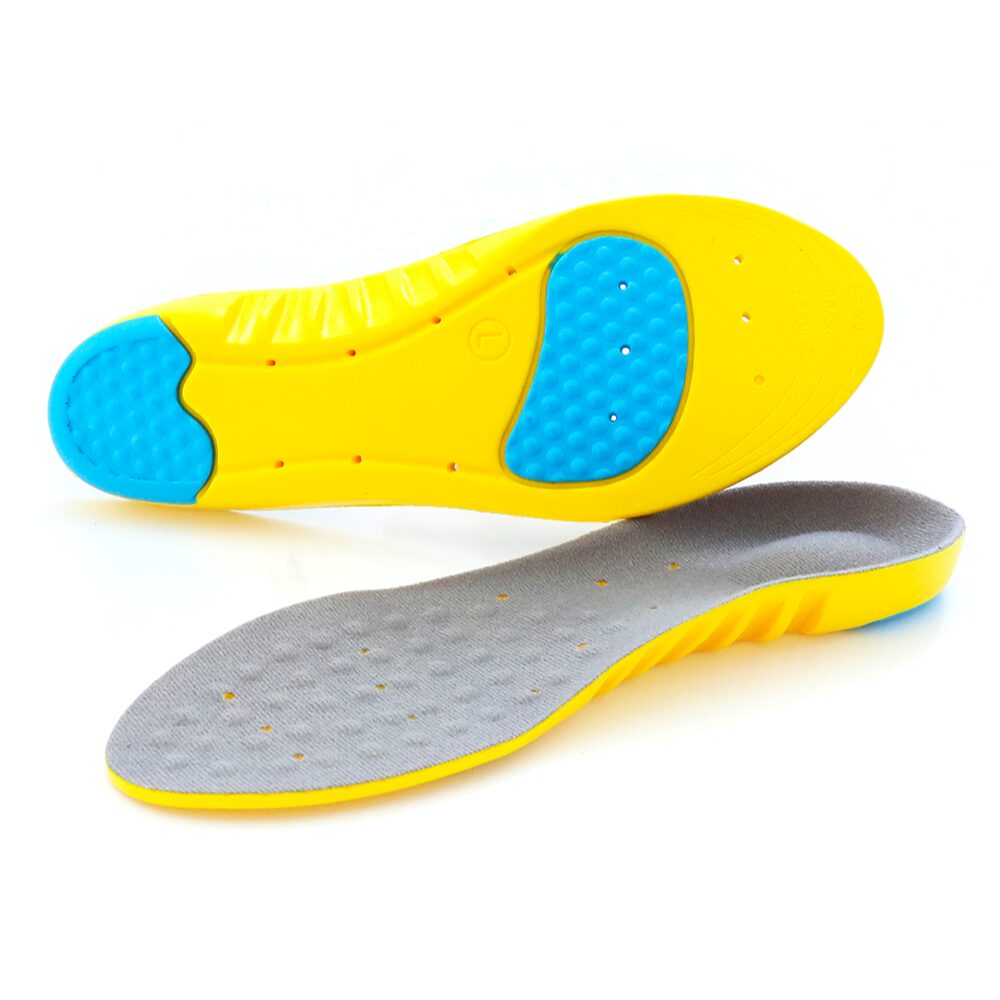
Best for: runners, athletes, and anyone doing high‑impact activities.
These insoles have a slim profile that fits performance shoes without adding bulk. The deep heel cup keeps your foot stable on uneven ground, while the shock‑absorbing layer protects against repeated landings – important because running puts several times your body weight through your heel. The memory‑foam top moulds to your foot for comfort on longer runs, and breathable holes help reduce moisture.
Price: £12.99 · View this product
6. NuovaHealth Sports Insoles
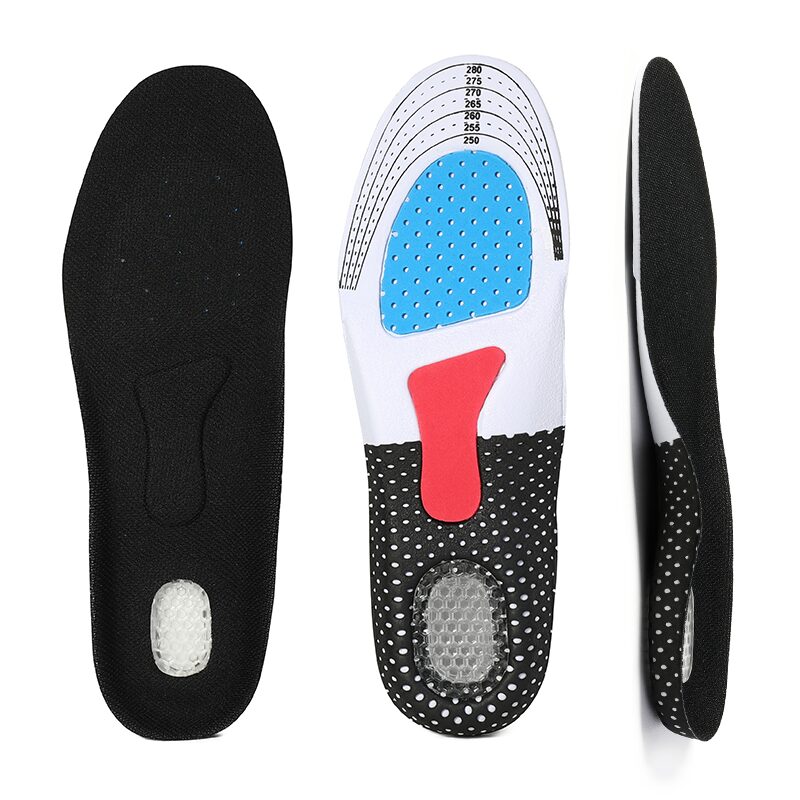
Best for: everyday active wear and as a lighter, more flexible entry point.
These are less rigid than the FootReviver options, so they’re a good starting point if you’re new to insoles or want a pair for casual trainers. The deep heel cup provides solid stability without feeling stiff, and the medical‑grade EVA foam (the same lightweight, durable material used in running shoes) keeps the insole flexible without bottoming out. Available in UK sizes 5‑7 and 8‑10.
Price: £9.74 · View this product
7. Supination Insoles for Underpronation by FootReviver™
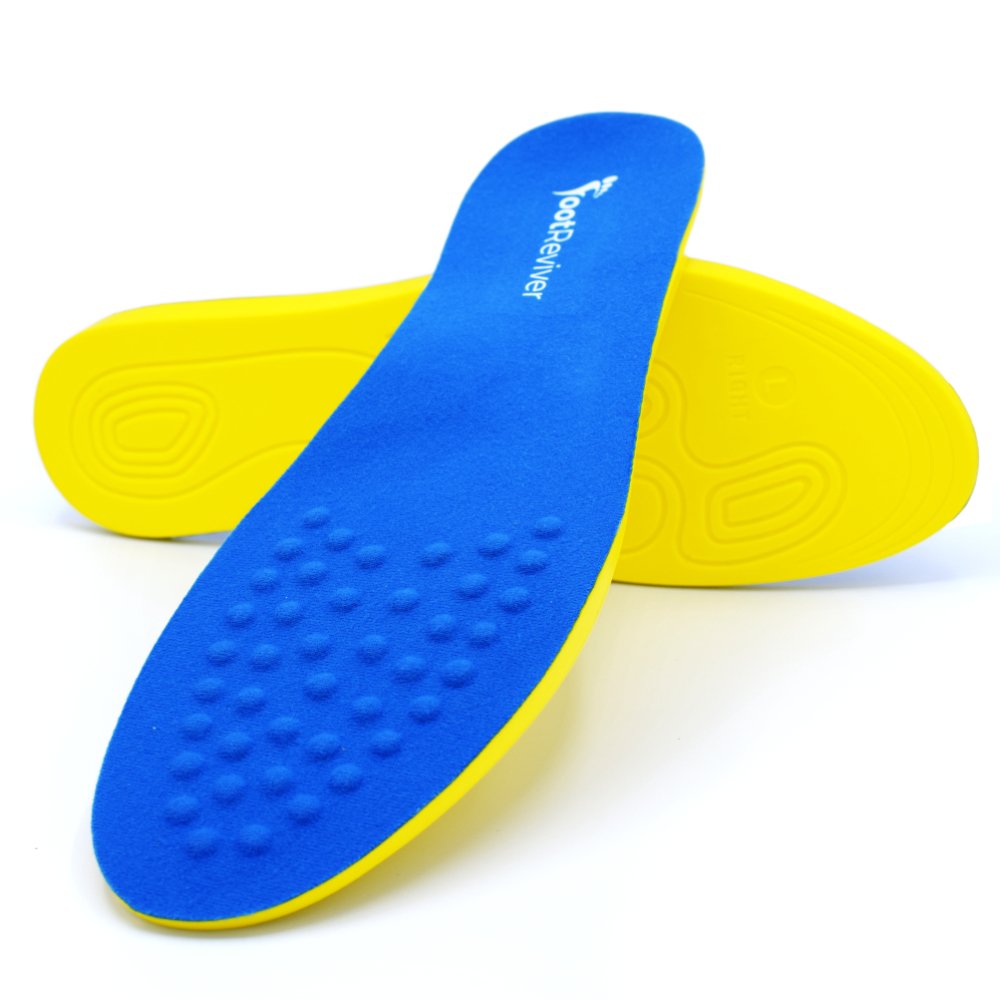
Best for: high arches, underpronation (foot rolls outward), and people who need shock absorption rather than arch correction.
These insoles tilt the foot gently back toward a neutral position. The soft, flexible arch profile does not push the foot up too much, which is important for high‑arched feet that need support without feeling forced. The heel shock absorber cushions the impact that a high‑arched foot cannot naturally absorb, reducing strain on the plantar fascia.
Price: £14.95 · View this product
8. Pronation Insoles for Overpronation by FootReviver™
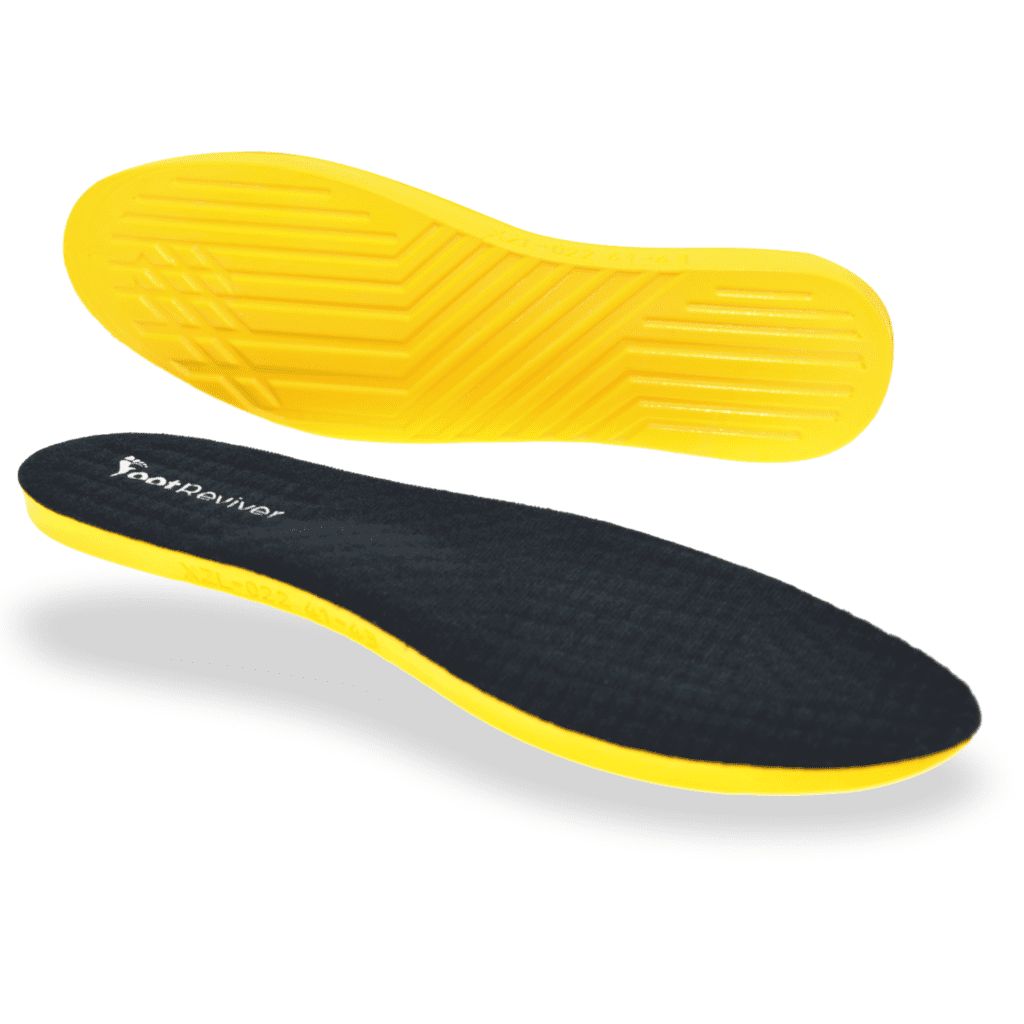
Best for: flat feet, overpronation, and when you need firm, corrective support.
These insoles have a firm medial post (the same firmer wedge used in our Plantar Fasciitis Orthotics, but here it’s more pronounced) that resists excessive inward rolling. This prevents the arch from collapsing and keeps the plantar fascia from being overstretched with each step. The deep heel cup holds your heel in stable alignment, so the whole foot works as a unit. Available in five UK sizes.
Price: £14.95 · View this product
Final Recommendation
If you’re still deciding between two pairs, ask yourself which symptom is most dominant. If your heel pain is linked to flat feet or visible overpronation, the Pronation Insoles by FootReviver™ are the closest match – but the Arch Support Insoles are a lighter, more flexible alternative. If you have high arches or need extra shock absorption, the Gel Insoles or the Supination Insoles will serve you better. Runners should consider the sports‑specific options, and anyone wearing smart shoes should try the three‑quarter‑length insoles.
All of these insoles are covered by our 30‑day money‑back guarantee, so you can try them with confidence. Your feet will let you know which pair feels right.
Disclaimer
This article is for general information and is not a substitute for professional medical advice. If your pain is severe, persistent, or worsening, please see a doctor or podiatrist for a proper diagnosis.