
Thumb Support Splint Brace
£9.99inc VAT
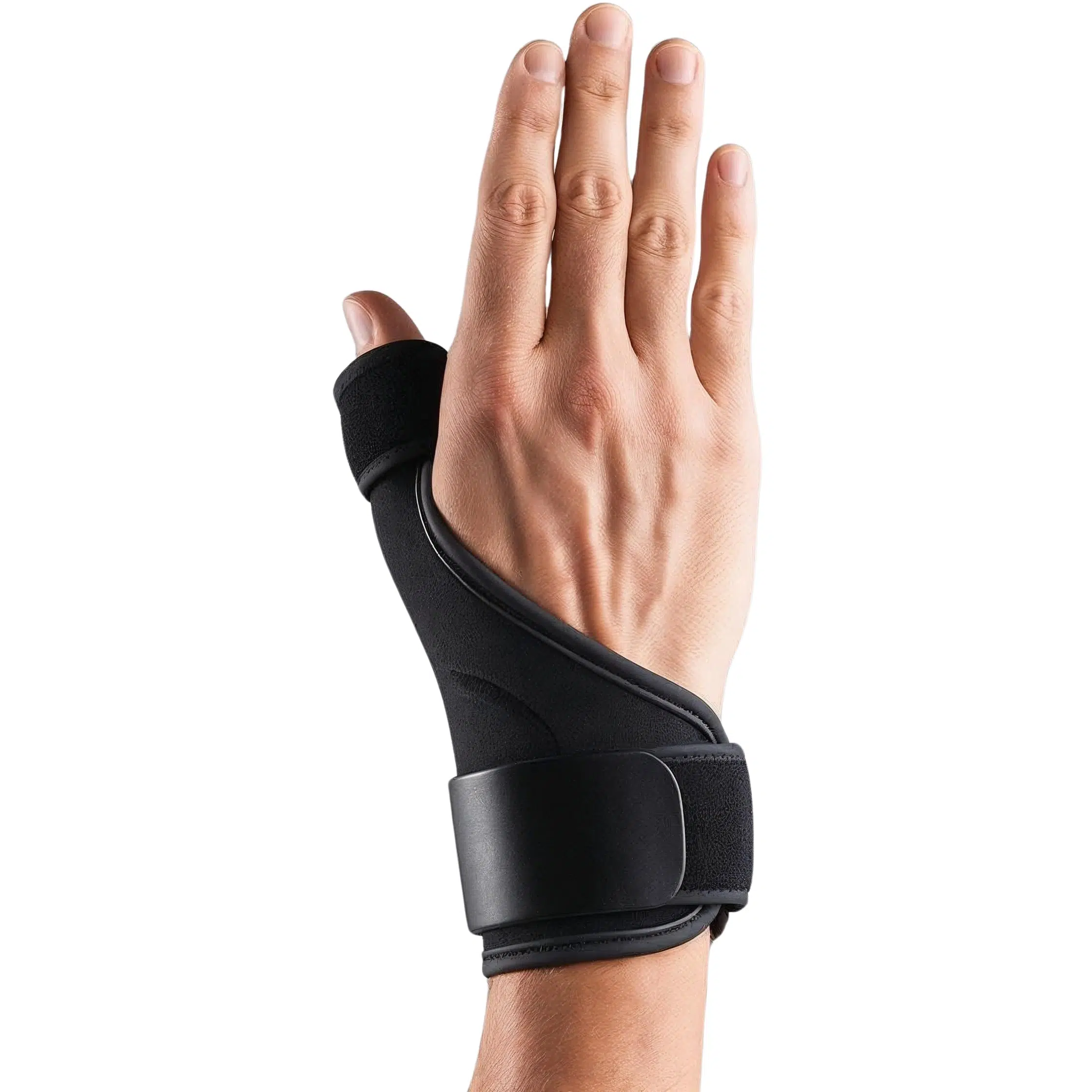
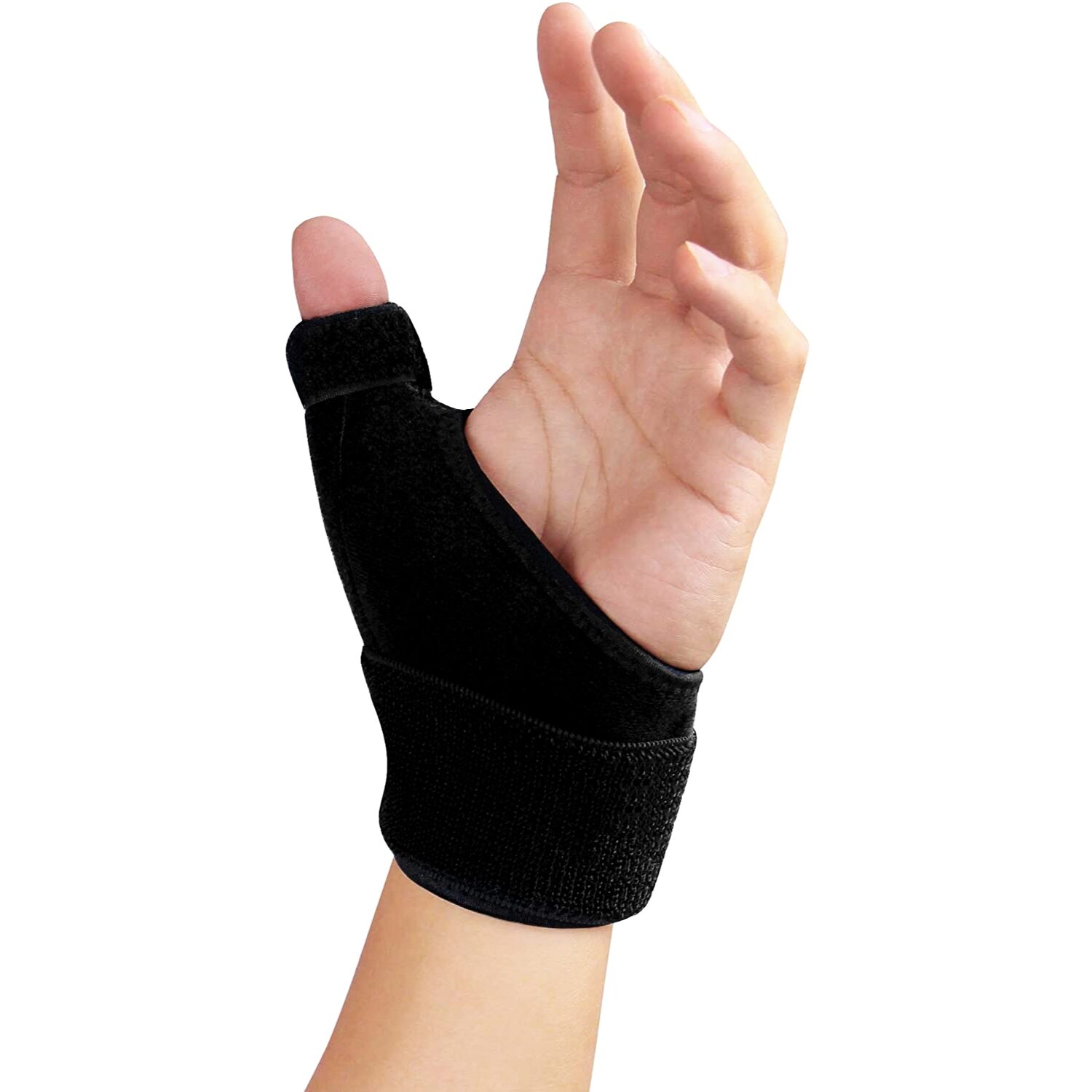
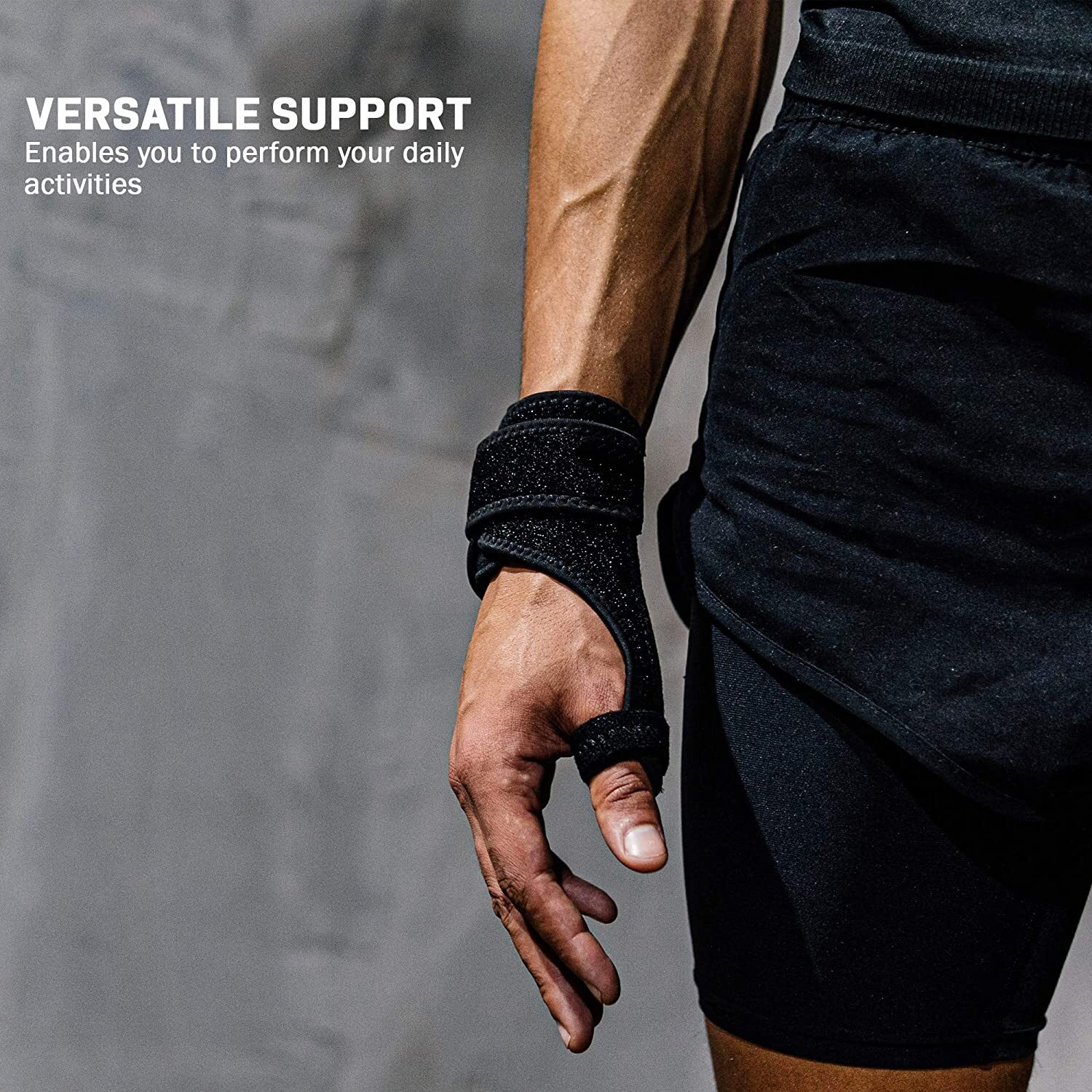
- What’s included: 1x Thumb Spica Brace with removable aluminium splint. Designed to immobilise the thumb, support the wrist, and compress the injured area while ligaments, tendons, or bones heal. Hand-specific design—choose left or right hand when ordering.
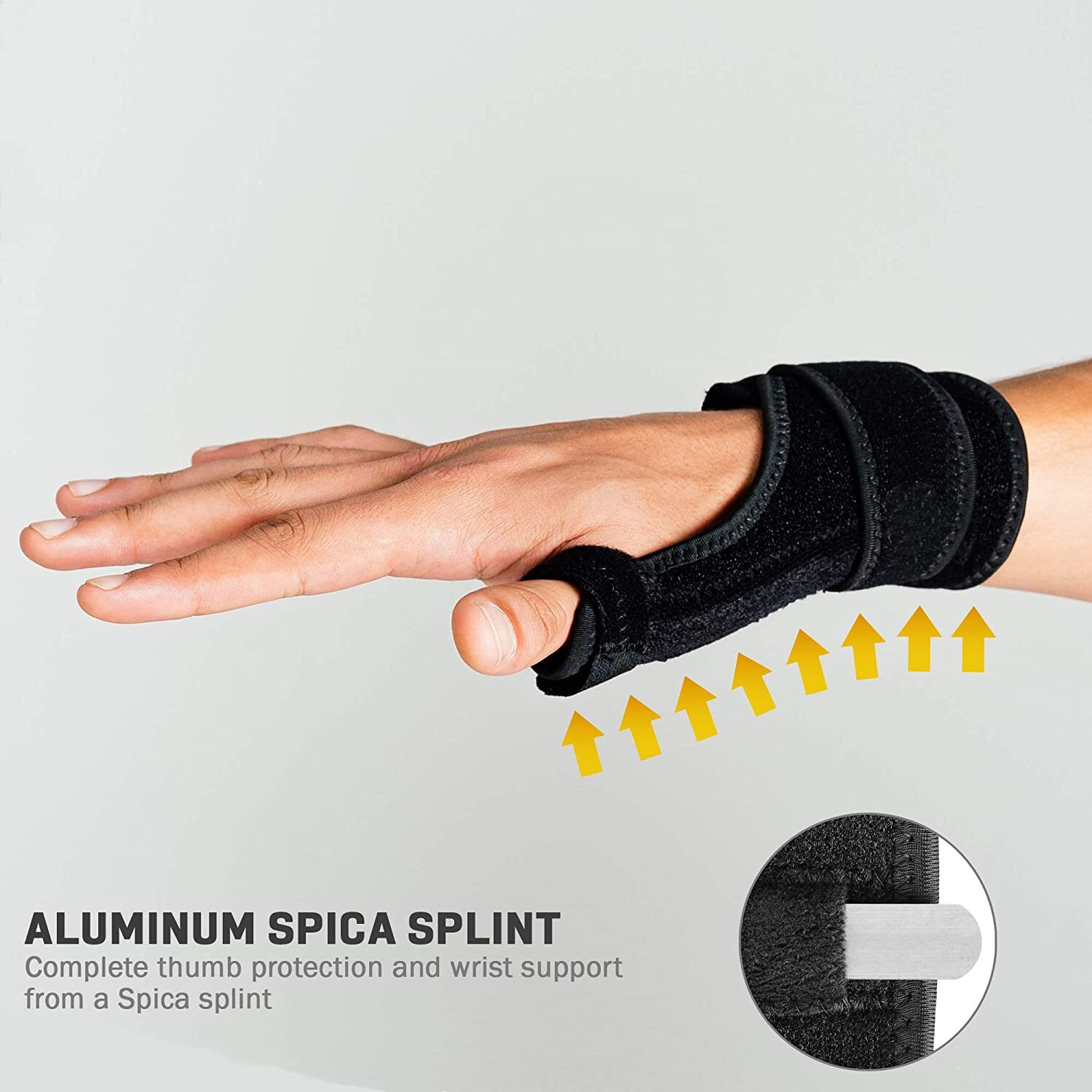
- Clinical-grade immobilisation for thumb sprains and injuries: The rigid aluminium splint runs along the side of your thumb from wrist to thumb tip, preventing backwards bending and sideways movement—the motions that stress injured ligaments and tendons. Holds the thumb still while the UCL (ulnar collateral ligament) and other supporting structures heal properly.
- Wrist support reduces strain on the thumb: The full wrist wrap stabilises the CMC joint (the base of your thumb where most thumb movements originate). When you grip something, your wrist stabilises the hand so the thumb can generate force. Supporting the wrist takes load off the injured thumb and prevents compensatory strain.
- Targeted compression to reduce swelling and support healing: Medical-grade neoprene provides even compression across the base of the thumb and CMC joint. Compression encourages excess fluid to drain away from the injured area, reducing swelling and pressure on pain-sensitive structures. It also gives your brain constant feedback about your thumb’s position, which can reduce pain signals and improve confidence during movement.
- Dual-strap adjustable design for a secure, personalised fit: The wrist strap wraps fully around your wrist with Velcro closure, providing adjustable support. The thumb strap secures just below the thumb tip, holding the splint in place and delivering targeted compression. Both straps are fully adjustable to suit different hand sizes and the level of support you need—tighter for maximum immobilisation in the acute phase, or looser for comfort during lighter activities as you recover. No slipping, no constant readjustment.
- Breathable, lightweight, and comfortable for all-day wear: Perforated neoprene with ventilation holes keeps your hand cool and dry even during extended wear. The material wicks moisture away from your skin rather than trapping it. Despite offering firm immobilisation, the brace is surprisingly low-profile and lightweight—you can wear it under a loose sleeve if needed. The thumb tip remains free to move, so you can still type, use a phone, or do light gripping tasks without stressing the injured ligament at the base.
- Removable splint for adjustable support: The aluminium splint can be removed for hand-washing the brace, or if you want to reduce the level of support as your thumb improves. In the early stages of healing, keep the splint in place for maximum immobilisation. As you recover, you might remove it for short periods during light activities.
- Ideal for a wide range of thumb and wrist conditions: Thumb sprains (UCL injuries, skier’s thumb), thumb strains, thumb fractures after medical clearance, De Quervain’s tenosynovitis (thumb-side wrist tendonitis), carpal tunnel syndrome affecting the thumb, trigger thumb (catching or locking), and CMC joint arthritis (basal joint arthritis at the base of the thumb). Also useful for protecting the thumb during return to work, sports, or household tasks before full recovery.
- When and how long to wear it: Wear all day (and at night if comfortable) during the first 1–2 weeks after injury for maximum protection. Continue wearing during all hand-use activities for weeks 2–4. Gradually reduce wear time from week 4 onwards, but keep wearing during higher-risk activities (gripping, lifting, sports) for several weeks. For chronic conditions like arthritis or tendonitis, wear during activities that trigger pain and during flare-ups. Night-time wear is especially helpful for carpal tunnel syndrome, De Quervain’s, and trigger thumb, where symptoms are often worse in the morning.
- Fits both men and women, adjustable sizing: The dual-strap design accommodates a wide range of hand and wrist sizes. Adjust the Velcro straps to find your perfect fit—snug and supportive without restricting circulation. Important: This brace is hand-specific. You must choose either left or right hand when ordering.
- Care instructions: Remove the aluminium splint, hand wash in warm water with mild soap, air dry flat. Do not tumble dry or use direct heat. Wash every few days to keep fresh.
- Affordable clinical-grade support: Just £9.99—a fraction of the cost of many competitor braces (£20–£30+) without compromising on design, support, or comfort.
- 30-day money-back guarantee: Try the NuovaHealth Thumb Spica Brace risk-free. If you’re not satisfied for any reason, return it within 30 days for a full refund—no questions asked.
You’ve tweaked your thumb—maybe catching a ball, breaking a fall, or just gripping something awkwardly—and now every time you try to hold a mug, open a jar, or even button your jeans, you’re reminded it’s not right.
Thumb injuries are surprisingly common. Because we use our thumbs in almost every hand movement—pinching, gripping, twisting—even a mild sprain can disrupt your day. The good news? With the right support, most thumb injuries settle well. That’s where a thumb spica brace comes in.
A thumb spica brace holds your thumb still, supports your wrist, compresses the injured area, and gives the ligaments and tendons the time and protection they need to heal. Whether you’re recovering from a sprain, managing ongoing thumb pain, or protecting your thumb during activities, the right brace can make a real difference.
In this guide, we’ll walk you through what happens when you sprain your thumb, why a thumb spica brace is the right tool for recovery, and how the NuovaHealth Thumb Spica Brace is designed to help you get back to normal.
Understanding Thumb Sprains: What’s Happening and Why It Hurts
A thumb sprain happens when the ligaments that support your thumb stretch beyond their normal range or tear. Ligaments are tough, fibrous bands that connect bone to bone and keep your joints stable. When you force your thumb into an awkward position—backwards, sideways, or with sudden twisting force—those ligaments can overstretch or partially tear.
The most commonly injured ligament is the ulnar collateral ligament (UCL), which runs along the inside edge of your thumb at the base, near the webbing between your thumb and index finger. This ligament is crucial for pinching and gripping. When it’s damaged, even simple tasks like holding a pen or turning a key can feel weak and painful.
How Do Thumb Sprains Happen?
Thumb sprains often occur during sports—catching a ball awkwardly, falling onto an outstretched hand, or gripping equipment (common in basketball, netball, rugby, skiing). These scenarios force the thumb into extreme positions faster than the ligament can resist. Falls are particularly high-risk: instinctively putting your hand out to break a fall forces the thumb backwards and sideways, pulling the UCL beyond its normal range. They also happen during everyday accidents—twisting your thumb while gripping something heavy, or catching your thumb in a door or strap. The injury happens in a split second, but the effects can linger for weeks if the ligament isn’t given proper support to heal.
What does a thumb sprain feel like? You’ll probably notice pain at the base of your thumb—especially on the inside edge near the webbing—along with swelling, bruising, and tenderness when you press on the area. The UCL normally stabilises the thumb during pinching and gripping. When it’s damaged, the thumb can’t resist sideways forces, so it feels weak or “wobbly” when you try to hold objects between your thumb and fingers. Your thumb might feel like it “gives way” or can’t generate normal grip strength. Stiffness is common too, particularly after resting—your thumb may feel tight and reluctant to move first thing in the morning or after sitting still.
In more severe sprains, you might notice significant bruising spreading into your hand, or a feeling that your thumb is “loose” or unstable at the joint.
Why Thumb Sprains Need Proper Support
The challenge is that ligaments heal slowly. They don’t have a rich blood supply like muscles do, so the body needs time to lay down new collagen fibres and rebuild the tissue. But if you keep using your thumb normally while it’s trying to heal, you’re constantly re-stressing the injured ligament. Every time you grip, pinch, or twist, you’re pulling on those damaged fibres before they’ve had a chance to knit back together properly.
This is why thumb sprains can become frustratingly persistent. You might feel better for a few days, then do something simple—like opening a jar or carrying shopping—and the pain flares right back up. Without proper immobilisation and support, a mild sprain can turn into a chronic, nagging injury that takes months to settle instead of weeks.
Even worse, if you keep using your thumb normally while it’s healing, the ligament is constantly being pulled on, so it heals in a longer, looser position than it should. You can end up with long-term instability—your thumb might feel weak or “wobbly” during gripping tasks, and you may be more prone to re-injury. In some cases, untreated or poorly managed thumb sprains can lead to early-onset arthritis at the base of the thumb, as the joint becomes less stable and wears unevenly over time.
Why a Thumb Spica Brace Works
The most important thing you can do for a thumb sprain is limit movement while the ligament heals. When you immobilise the thumb, you’re protecting the ligament from further stretching and allowing the body’s repair process to work properly. Ligament healing happens in stages: inflammation (first few days), repair (weeks 1–6), and remodelling (weeks 6–12). During the repair phase, new collagen fibres are laid down in the direction the ligament is being pulled. If you keep moving the thumb, those fibres get disrupted and can’t align properly. Immobilisation lets them knit back together in a strong, stable pattern.
A thumb spica brace is specifically designed to immobilise the thumb while also supporting the wrist. The term “spica” refers to the way the brace wraps around both the wrist and the thumb, forming a figure-of-eight pattern that holds everything in place.
This design addresses four mechanical problems. First, it stabilises the CMC joint (carpometacarpal joint)—the joint at the very base of your thumb, where the thumb bone meets the wrist. Many thumb movements originate here. When the CMC joint moves, it changes the angle and tension on the UCL at the base of the thumb. Stabilising the CMC reduces this shifting stress. Second, it prevents thumb abduction and extension—the movements that put the most stress on the ulnar collateral ligament by pulling the thumb away from the hand or bending it backwards. These movements stretch the UCL and other supporting ligaments, which can re-injure the healing tissue. A spica brace with a rigid splint along the side of the thumb blocks these movements. Third, it supports the wrist. When you grip something, your wrist stabilises the hand so the thumb can generate force. If the wrist is unstable or sore, the thumb has to work harder to compensate. Supporting the wrist lets the thumb relax. This is especially important if you’ve injured your thumb during a fall, as the wrist may also be sore or strained. Fourth, it allows the thumb tip to move. A good spica brace immobilises the main thumb joint (the MCP joint, or “knuckle” of the thumb) but leaves the very tip of the thumb free. This means you can still do light tasks like typing or holding a phone, without putting stress on the injured ligament at the base.
The brace also provides gentle, even compression, which helps reduce swelling by encouraging excess fluid to drain away from the injured area. This can improve blood flow to the healing tissue and reduce pressure on pain-sensitive structures. Compression also gives your brain constant feedback about your thumb’s position, which can reduce the brain’s pain signals and help you move more confidently without fear of re-injury.
By combining immobilisation, wrist support, and compression, a thumb spica brace gives your ligament the best possible environment to heal properly—reducing pain, preventing re-injury, and helping you get back to normal activities faster.
If you suspect a complete ligament tear or fracture (severe pain, heard a “pop”, significant instability), see a GP or hand specialist for assessment. We’ll cover red flags and when to seek help in detail later in this guide.
Who Should Use a Thumb Spica Brace?
A thumb spica brace is right for you if you need firm immobilisation and support while your thumb heals or settles. Here are the most common scenarios:
You’d Use This Brace If You Have:
- Acute thumb injuries—sprains or strains (sprains affect ligaments, strains affect muscles or tendons), or fractures after medical clearance, from falls, sports, or everyday accidents where you need to keep the thumb still while the ligament, tendon, or bone heals.
- Chronic thumb conditions—arthritis at the base of the thumb (CMC joint), thumb tendonitis (De Quervain’s tenosynovitis), carpal tunnel syndrome affecting the thumb, or trigger thumb. Immobilisation and compression can reduce pain during flare-ups and help you get through daily tasks more comfortably.
- Need for protection during activities—if you’re returning to work, sports, or household tasks before your thumb is fully healed, a brace provides extra support and confidence.
When to See a Clinician First
While a thumb spica brace is an excellent tool for managing many thumb injuries and conditions, you should see a GP, physiotherapist, or hand specialist before using a brace if:
- You suspect a fracture or complete ligament tear (heard or felt a “pop”, severe pain and swelling, can’t move your thumb, or thumb feels very loose)—you need an X-ray and clinical assessment to rule out a broken bone or complete ligament rupture.
- You have severe swelling, bruising, numbness, tingling, or colour changes in your thumb or hand—these can indicate nerve compression, circulation problems, or a more serious injury.
- You have an open wound or broken skin over the injured area—a brace should not be worn over an open wound.
- Your thumb feels very loose or unstable, as if it’s “giving way”—you may have a complete ligament tear that needs specialist assessment.
- The pain isn’t improving after 1–2 weeks of rest and bracing—persistent pain may indicate a more complex injury.
- You’ve had multiple thumb injuries in the past—recurrent sprains or instability may indicate underlying joint problems that need addressing with physiotherapy.
If you’re unsure, it’s always worth getting your thumb checked. A clinician can assess the injury, rule out serious problems, and advise on the best course of action. Even if you’re given a basic NHS thumb support, you can often upgrade to a better-designed brace for more effective immobilisation and comfort.
Important: A thumb brace does not prevent or treat blood clots. If you have a history of clotting disorders, or if you develop sudden severe swelling, pain, or discolouration in your hand or arm, seek medical attention immediately.
Other Conditions That May Benefit from a Thumb Spica Brace
While thumb sprains are the most common reason people use a spica brace, it can also help with several other conditions. If any of these sound familiar, a spica brace may be right for you too.
Introducing the NuovaHealth Thumb Spica Brace
So what does a good thumb spica brace need to do? It needs to hold the thumb still without being bulky or restrictive. It needs to support the wrist to take strain off the CMC joint. It needs to compress the injured area to reduce swelling. And it needs to stay comfortable enough to wear all day—and even at night if needed—without rubbing, slipping, or overheating your hand.
That’s a tall order, and many thumb braces on the market fall short. They’re either too rigid and uncomfortable, or too flimsy and don’t provide enough support. They slip out of place during use, or they’re so bulky you can’t do anything while wearing them. And often, they’re expensive—£20, £30, or more for a basic design.
We designed the NuovaHealth Thumb Spica Brace to solve these problems. It combines clinical-grade support with practical, everyday comfort, at a price that makes sense. Here’s how it works.
Firm Immobilisation with a Removable Aluminium Splint
At the heart of the brace is a lightweight aluminium splint that runs along the side of your thumb from the wrist up to just below the thumb tip. This splint prevents your thumb from bending backwards or pulling away from your hand. These movements stretch the UCL and other supporting ligaments, which can re-injure the healing tissue.
The splint is removable, which means you can take it out if you need to hand-wash the brace, or if you want to adjust the level of support as you recover. In the early stages of healing, you’ll want the splint in place for maximum immobilisation. As your thumb improves, you might choose to remove the splint for short periods during light activities.
The aluminium is rigid enough to hold your thumb still, but lightweight enough that you barely notice it’s there. It doesn’t add bulk or weight, so you can wear the brace comfortably throughout the day.
Dual-Strap Design for a Secure, Adjustable Fit
The brace uses a two-strap system to hold everything in place. A full wrist wrap secures the base of the brace and supports your wrist—it’s made from stretchy, elastic material with a Velcro closure, so you can adjust the tightness to suit your wrist size and the level of support you need. A thumb strap wraps around your thumb just below the tip, holding the splint against your thumb and providing targeted compression. Like the wrist wrap, it’s fully adjustable with Velcro.
This dual-strap design holds the brace securely in place during movement, so you don’t need to keep adjusting it. You can fine-tune the fit to your hand size and the level of support you need—tighter for more immobilisation in the acute phase, or looser for comfort during lighter activities as you recover. The brace fits both men and women, and accommodates a wide range of hand and wrist sizes.
Important: The brace is hand-specific—you’ll need to choose either a left-hand or right-hand version when you order. Make sure you select the correct side for your injured thumb.
Targeted Compression from Breathable Neoprene
The body of the brace is made from neoprene—a supportive, slightly stretchy material that provides even compression across the thumb and wrist. The compression is focused on the CMC joint (the base of the thumb) and the base of your thumb pad, which are the areas most commonly affected by sprains, tendonitis, and arthritis. Compression reduces swelling by encouraging fluid to drain away from the injured area, and provides support to the joint capsule and surrounding tissues.
The palm and back of your hand are left open, which keeps the brace breathable and allows you to retain some hand function while wearing it. You can still move your fingers freely for typing, holding objects, and light gripping tasks. The neoprene has perforated ventilation holes throughout, which help keep your hand cool and dry even during extended wear. The material also has moisture-wicking properties, drawing sweat away from your skin rather than trapping it.
You can adjust the level of compression by tightening or loosening the wrist wrap and thumb strap. The compression should feel firm and supportive, but not so tight that it causes numbness, tingling, or discomfort. If you notice any of these symptoms, loosen the straps slightly.
Lightweight, Low-Profile, and Comfortable for All-Day Wear
Despite offering firm immobilisation and support, the NuovaHealth Thumb Spica Brace is surprisingly lightweight and low-profile. You can wear it under a loose sleeve or glove if needed, and it doesn’t add significant bulk to your hand. This means you can continue with many everyday tasks while wearing the brace—typing, using a phone, holding a cup, even light cooking or household chores.
The brace immobilises the main thumb joint (the MCP joint) but leaves the thumb tip free to move. This is a key design feature—it means you can still do light pinching and gripping tasks without putting stress on the injured ligament or tendon at the base of your thumb.
The edges of the brace are finished smoothly to prevent rubbing or chafing, and the Velcro straps are positioned so they don’t dig into your skin or catch on clothing. This makes the brace comfortable enough to wear all day, and even at night if needed.
Affordable, Clinical-Grade Support
At just £9.99, the NuovaHealth Thumb Spica Brace offers clinical-grade support at a fraction of the cost of many competitor braces. We’ve focused on getting the design right—effective immobilisation, proper wrist support, breathable materials, and a secure fit—without inflating the price.
Many thumb braces on the market cost £20, £30, or more, yet they’re often poorly designed—too bulky, too flimsy, or uncomfortable to wear for more than an hour or two. We wanted to create a brace that actually works, that you’ll want to wear consistently, and that doesn’t break the bank.
How to Use Your Thumb Spica Brace
Getting the most from your thumb brace means wearing it correctly and consistently. Here’s how to fit it, when to wear it, and what to expect during recovery.
Fitting Your Brace
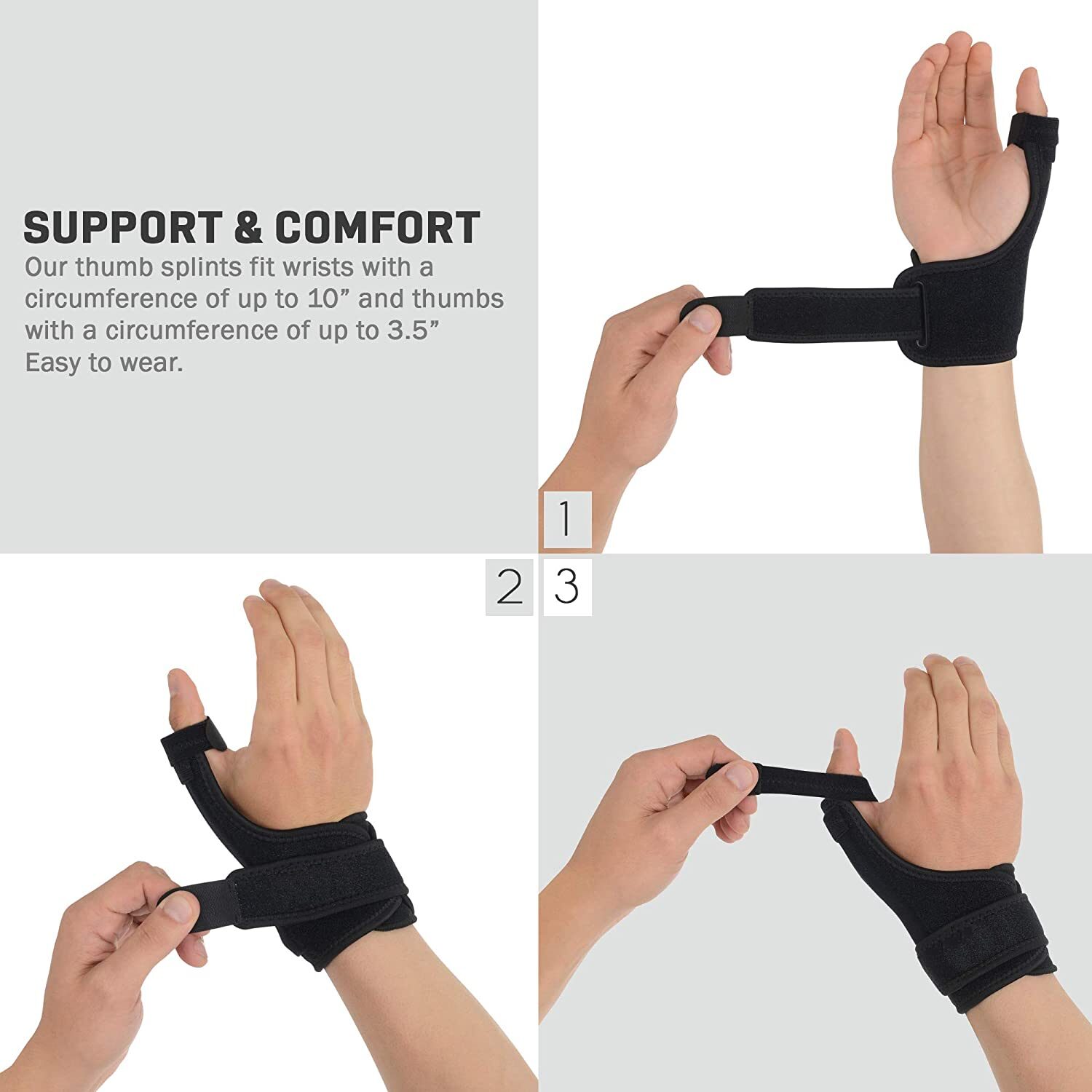
Before putting the brace on, make sure the aluminium splint is inserted into the pocket along the side of the thumb section. The splint should run from the wrist up to just below your thumb tip, along the outside edge of your thumb (the side away from your fingers).
Place your hand through the brace so the main body sits over the base of your thumb and the wrist wrap sits around your wrist. Wrap the wrist strap around your wrist and secure it with the Velcro closure. The strap should feel snug and supportive, but not so tight that it restricts circulation or causes discomfort. You should be able to slide a finger under the strap, but it shouldn’t feel loose or able to twist around your wrist.
Wrap the thumb strap around your thumb, just below the tip. Again, adjust the tightness so it feels firm and supportive without cutting off circulation. Your thumb should rest in a relaxed position, as if you’re gently holding a small ball—not pulled backwards or forced into an awkward angle. The tip of your thumb should remain free to move.
Once both straps are secured, check that the splint is sitting flat against the side of your thumb (not digging in or twisted), the brace feels snug and supportive without any numbness, tingling, or throbbing, you can still move your thumb tip slightly but the main thumb joint is held still, and the wrist wrap is supporting your wrist without restricting your ability to move your fingers.
If anything feels too tight, loosen the straps slightly. If the brace feels loose or shifts during movement, tighten the straps. It may take a day or two to find the perfect fit—don’t be afraid to adjust as needed.
When and How Long to Wear It
During the first 1–2 weeks (acute phase): Wear the brace as much as possible—ideally all day, and at night if comfortable. This is when your thumb is most vulnerable and needs maximum protection and immobilisation. You can remove the brace briefly for washing (both yourself and the brace), but try to keep wear time to at least 20–22 hours per day.
Weeks 2–4 (healing phase): Continue wearing the brace during all activities that involve hand use—work, household tasks, driving, etc. You may be able to remove it for short periods when resting (watching TV, reading), but put it back on before doing anything with your hands. If you’re sleeping comfortably without the brace and your symptoms are improving, you can try leaving it off at night, but many people find night-time wear helpful for several weeks.
Weeks 4–6 and beyond (recovery phase): As your thumb improves, you can gradually reduce wear time. Start by removing the brace during light, low-risk activities, and keep wearing it during tasks that put more stress on your thumb (gripping, lifting, sports). Listen to your body—if an activity causes pain or your thumb feels unstable, put the brace back on. Sharp pain or pain that lasts more than a few hours after the activity suggests you’ve pushed too hard. Mild soreness that settles within an hour or two is normal. Some people continue wearing the brace during higher-risk activities (sports, manual work) for several months after the initial injury has healed, as a preventive measure.
For chronic conditions (arthritis, tendonitis): Wear the brace during activities that trigger pain (gripping, lifting, repetitive thumb use), and when your thumb feels more swollen, stiff, or achy than usual. You don’t necessarily need to wear it all day every day—use it as a tool to help you get through tasks that would otherwise be too painful. Many people with chronic thumb problems keep a brace on hand and wear it as needed.
Can You Wear It at Night?
Yes. The brace is comfortable enough for night-time wear, and many people find this helpful, particularly in the first few weeks after injury. Wearing the brace at night prevents you from unconsciously moving or curling your thumb in your sleep, which can aggravate the injury and cause morning stiffness and pain.
Night-time wear is especially useful for conditions like carpal tunnel syndrome, De Quervain’s tenosynovitis, and trigger thumb, where symptoms are often worse first thing in the morning due to overnight wrist and thumb positioning.
If you find the brace uncomfortable at night, try loosening the straps slightly—you need less compression while resting than during activity. If it’s still uncomfortable, focus on daytime wear and see how your symptoms respond.
Caring for Your Brace
To keep your brace clean and in good condition, hand wash only. Remove the aluminium splint, then wash the brace in warm water with a mild soap or detergent. Gently squeeze out excess water (don’t wring or twist), then air dry flat. Do not tumble dry or use direct heat, as this can damage the neoprene and elastic.
Aim to wash the brace every few days, or more often if you’re wearing it all day and sweating. This prevents odour and keeps the material fresh against your skin. If you’re wearing the brace all day every day, it’s worth having a second one so you can rotate them—one to wear while the other is drying. This also means you always have a backup if one gets damaged or lost.
What to Expect During Recovery
Recovery from a thumb injury or flare-up isn’t always linear—you’ll have good days and setbacks. Here’s what’s normal.
First few days: Expect swelling, stiffness, and moderate to severe pain, particularly when you try to use your thumb. The brace will help, but you’ll still feel sore. Don’t worry—your body is in the acute inflammatory phase. Focus on rest, ice (10–15 minutes every few hours), and keeping the brace on. Avoid activities that stress your thumb.
Week 1–2: The sharp pain should start to ease, and swelling should gradually reduce. You’ll still feel sore and weak, and your thumb will feel stiff after resting because the healing tissue tightens up when you’re not moving it, and takes a few minutes to loosen again. This is expected—the ligament or tendon is starting to repair, but it’s still fragile. Keep wearing the brace consistently, and start gentle range-of-motion exercises if advised by a clinician (usually just moving your thumb tip and fingers, not the main thumb joint).
Week 2–4: Pain should continue to improve, and you’ll notice your grip strength starting to return. You might have occasional “twinges” or soreness after using your hand more than usual. The healing ligament is still adapting to load, so it can feel sore when you push it a bit harder. This is normal tissue response, not re-injury, as long as the pain settles within a few hours. Continue wearing the brace during activities, and gradually increase what you’re doing as comfort allows.
Week 4–6: Most people feel significantly better by this point. You should be able to do most everyday tasks with minimal or no pain, though your thumb may still feel slightly weak or stiff. You can start reducing brace wear, but keep using it during higher-risk activities. If you’re returning to sports or manual work, do so gradually and keep the brace on for extra protection.
Beyond 6 weeks: Full ligament healing can take 8–12 weeks, even if you feel much better earlier. The ligament may feel strong enough for everyday tasks, but it’s still remodelling and strengthening. Loading it too heavily too early can re-stretch the healing fibres, leaving you with a weaker, more injury-prone ligament. Don’t rush back to full activity too soon—this is the most common reason thumb sprains become chronic problems. If you’re still having significant pain or weakness beyond 6 weeks, see a physiotherapist or hand specialist for assessment.
For chronic conditions: Conditions like arthritis and tendonitis don’t “heal” in the same way as acute injuries—they’re ongoing problems that need management. The brace is a tool to help you manage flare-ups and get through difficult tasks. You’ll likely have periods where you need to wear it more, and periods where you barely need it at all. That’s completely normal. The goal is to keep your thumb functional and comfortable, not to achieve perfect pain-free movement.
Recovery timelines by severity (thumb sprains): Mild sprains (grade 1—ligament stretched but fibres intact): with consistent brace use, most people feel significantly better within 1–2 weeks, though full healing takes 3–4 weeks. Moderate sprains (grade 2—some ligament fibres torn, but ligament still continuous): you’ll likely need to wear the brace for 3–6 weeks, with gradual return to normal activities as pain allows. Severe sprains (grade 3—ligament completely torn through, two separate ends): these injuries may require 6–8 weeks of immobilisation, and in some cases, a referral to a hand specialist or physiotherapist for further assessment.
Be patient. Ligaments heal slowly, and rushing back to full activity too soon is the most common reason thumb sprains become chronic problems.
When to Seek Further Help
A thumb spica brace is an excellent tool for managing many thumb injuries and conditions, but it’s not a substitute for proper medical assessment when needed. You should see a GP, physiotherapist, or hand specialist if:
- You suspect a fracture or complete ligament tear. If you heard or felt a “pop” at the time of injury, have severe pain and swelling, or your thumb feels very loose or unstable, you need an X-ray and clinical assessment. Some injuries need more rigid immobilisation (a cast) or even surgery.
- You have numbness, tingling, or colour changes in your thumb or hand. These symptoms can indicate nerve compression or circulation problems, which need prompt medical attention. If your hand or fingers turn white, blue, or feel cold, or if you lose sensation, remove the brace immediately and seek help.
- You have severe swelling that doesn’t improve with rest, ice, and elevation. Significant, persistent swelling may indicate a more serious injury or an underlying problem that needs investigation.
- You have an open wound, broken skin, or signs of infection. Do not wear the brace over an open wound. If you develop redness, warmth, increasing pain, or discharge around the injured area, see a clinician—these are signs of infection.
- Your pain isn’t improving after 1–2 weeks of rest and bracing. Some improvement should be noticeable within the first week or two. If your pain is staying the same or getting worse, you may have a more complex injury or an underlying condition that needs further assessment.
- You’ve had multiple thumb injuries or your thumb keeps “giving way”. Recurrent sprains or instability may indicate underlying joint problems, ligament laxity, or biomechanical issues that need addressing with physiotherapy or other treatments.
- You develop new or unexplained symptoms. If you notice new pain, swelling, weakness, or other symptoms that weren’t there initially, get it checked. Don’t assume it’s just part of the healing process.
Important Safety Notes
- This brace does not prevent or treat blood clots. If you have a history of clotting disorders, or if you develop sudden severe swelling, pain, warmth, or discolouration in your hand, wrist, or arm, seek medical attention immediately.
- If the brace causes numbness, tingling, throbbing, or increased pain, it’s too tight. Loosen the straps immediately. If symptoms don’t improve within a few minutes of loosening, remove the brace and seek advice.
- Do not wear the brace over broken or infected skin. The brace should only be worn on intact, healthy skin. If you have cuts, grazes, or any signs of infection, wait until the skin has healed before using the brace.
- If you have diabetes, peripheral neuropathy, or circulation problems, check with a clinician before using a compression brace. You may have reduced sensation and be less able to detect if the brace is too tight or causing problems.
- The brace is designed for support and immobilisation, not for high-impact protection. It will help prevent accidental re-injury during everyday activities, but it’s not designed to protect against direct blows or high-force impacts. If you’re returning to contact sports or activities with a high risk of thumb injury, speak to a physiotherapist or sports medicine specialist about appropriate protection.
When in doubt, get it checked. Early assessment and appropriate treatment give you the best chance of full recovery and help prevent long-term problems.
Supporting Your Thumb Through Recovery
Thumb injuries and chronic thumb pain can be frustrating and disruptive, but with the right support, most people recover well and get back to normal activities. The key is giving your thumb the protection, immobilisation, and compression it needs during the healing process—and that’s exactly what a well-designed thumb spica brace provides.
The NuovaHealth Thumb Spica Brace combines clinical-grade support with practical, everyday comfort. The removable aluminium splint holds your thumb still and protects it from further injury. The dual-strap design keeps everything securely in place without slipping or rubbing. The neoprene construction provides targeted compression to reduce swelling and support healing. And the breathable, perforated design means you can wear it all day—and even at night—without discomfort.
Whether you’re recovering from a thumb sprain, managing a flare-up of tendonitis or arthritis, or protecting your thumb during activities, this brace gives you the support you need to keep moving while your thumb heals.
At just £9.99, it’s an affordable, effective solution that doesn’t compromise on quality or design. And with our 30-day money-back guarantee, you can try it risk-free. If you’re not satisfied with the brace for any reason, simply return it for a full refund—no questions asked.
Ready to support your recovery? Choose your hand (left or right) and add the NuovaHealth Thumb Spica Brace to your basket. Your thumb will thank you.
And if you know someone struggling with thumb pain or recovering from an injury, this brace makes a thoughtful, practical gift that can genuinely help them get back to the things they enjoy.
At a Glance: NuovaHealth Thumb Spica Brace
The NuovaHealth Thumb Spica Brace immobilises the thumb, supports the wrist, compresses the injured area, and protects against further injury. It’s designed for anyone recovering from a thumb sprain, strain, or fracture (after medical clearance), or managing chronic conditions like tendonitis, arthritis, carpal tunnel syndrome, or trigger thumb.
Key features include a removable aluminium splint, dual-strap adjustable design, breathable perforated neoprene, and a lightweight, low-profile fit that works for both men and women. Wear it all day during the acute phase (first 1–2 weeks), then gradually reduce wear time as symptoms improve. It’s comfortable enough for night-time wear, and you can hand wash and air dry it to keep it fresh.
Recovery timelines vary: mild sprains typically settle within 3–4 weeks, moderate sprains take 4–6 weeks, and severe sprains may need 6–8 weeks or longer. Full ligament healing can take 8–12 weeks. At £9.99 with a 30-day money-back guarantee, it’s an affordable, effective solution. Just remember to choose left or right hand when ordering, and see a clinician if you suspect a fracture, have severe swelling, numbness, or if pain isn’t improving after 1–2 weeks.
3 Reviews For This Product
Fast & Secure Checkout Through Paypal
Pay with Paypal the secure payment gateway that accepts all credit and debit cards. Paypal is free and secure and no credit or bank information is ever stored or shared with us.
Fast Dispatch
Enjoy your items soon with quick dispatch via Royal Mail. Expect to have your items between 1-3 working days for domestic orders. 7-10 Working days for international orders.
Return Policy – 30 Day Money Back Guarantee
In the unlikely event, you are unhappy with your purchase you can return it within 30 days for a refund. Please contact us via the form on the contact us page to start your return.
To return an item please send it to: Nuova Health UK, 81 Highfield Lane, Waverley, Rotherham, S60 8AL. Please include a note with your order id so we know who to refund. Please retain your postage receipt as proof of postage. All that we ask is that the item is in the original packaging and unused.
by Mark J
Very good! I hurt my thumb whilst playing basketball… Wearing this support has definitely helped a lot with easing the pain and now my thumb feels so much better.
by John Anderson
Works great!
by Malcolm ASHFORD
Good