
Si Joint Belt
£11.99inc VAT
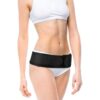
- SI Joint Support Belt for sacroiliac‑related pain: Designed to help ease lower back, hip and buttock pain coming from the sacroiliac joints. Suitable for men and women. Not for use during pregnancy.
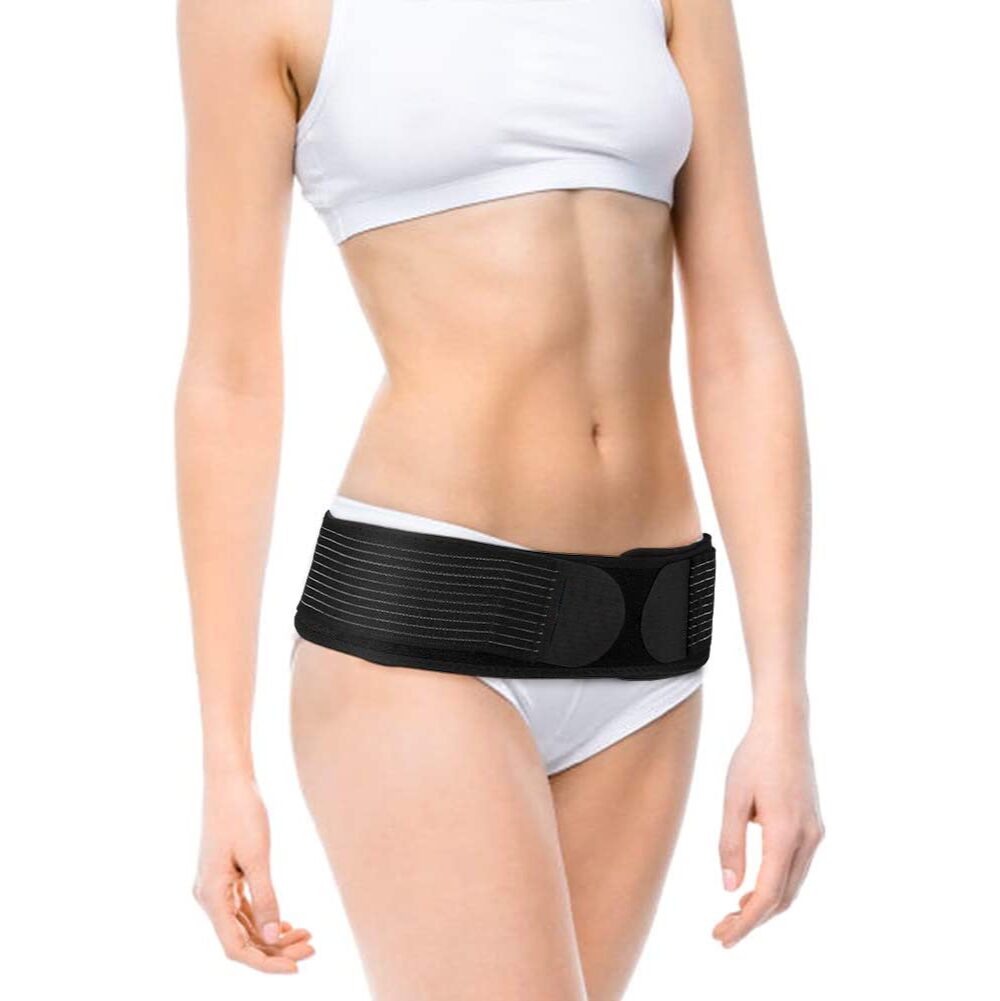
- Simple sizing, easy to adjust: Fits hips up to around 96 cm at full stretch. The main belt fastens at the front with velcro, and two stretchy side straps let you quickly change how firmly it supports you.
- Steadies the pelvis where it matters: Holds the hips, pelvis and lower back in a more secure position to reduce small, painful movements at the sacroiliac joints – aiming to ease sharp twinges when you stand up, walk, go up stairs or turn in bed.
- Gentle compression that feels supportive, not tight: Provides gentle, all‑round compression around the sacroiliac area to calm irritated tissues and give a more “held together” feeling, so everyday movements can feel more controlled and less sharp.
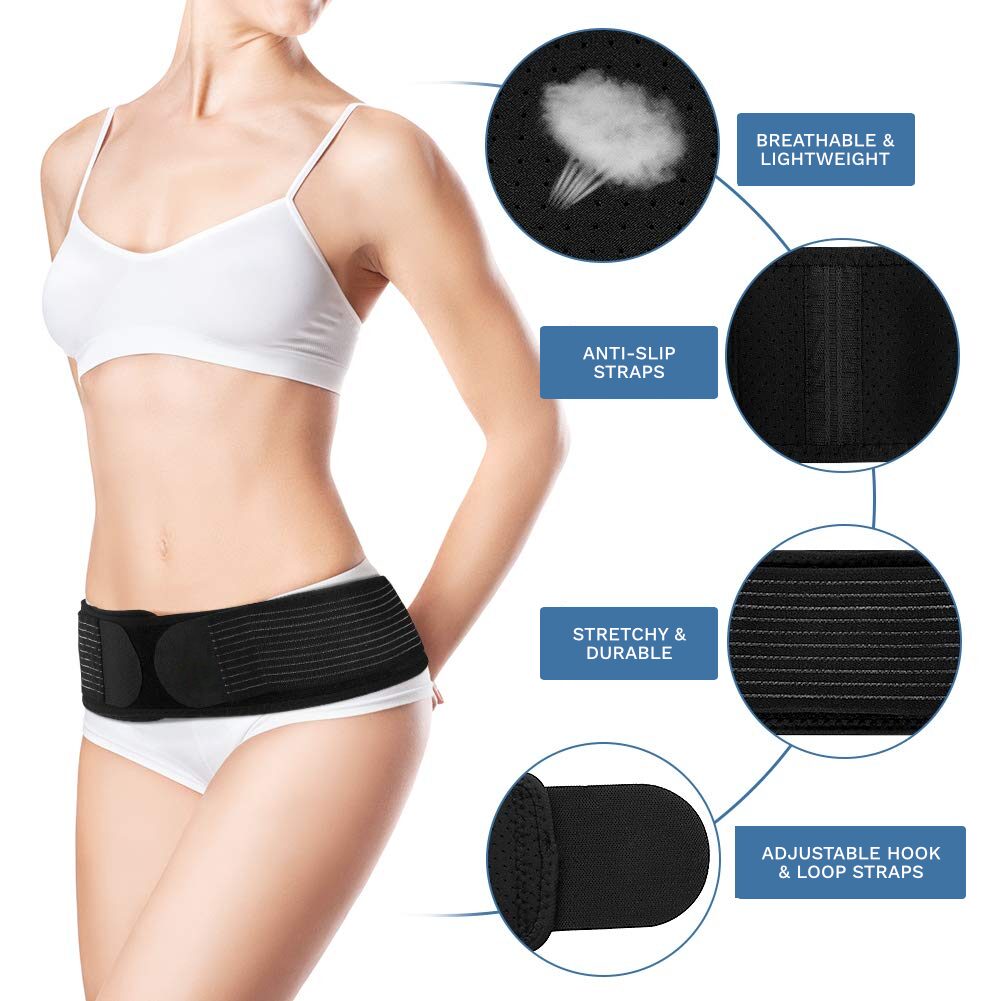
- Comfortable and discreet under clothing: Made from firm but smooth materials with soft‑finished edges, designed to sit low and slim under everyday clothing without feeling bulky or showing obvious lines, even when worn for several hours.
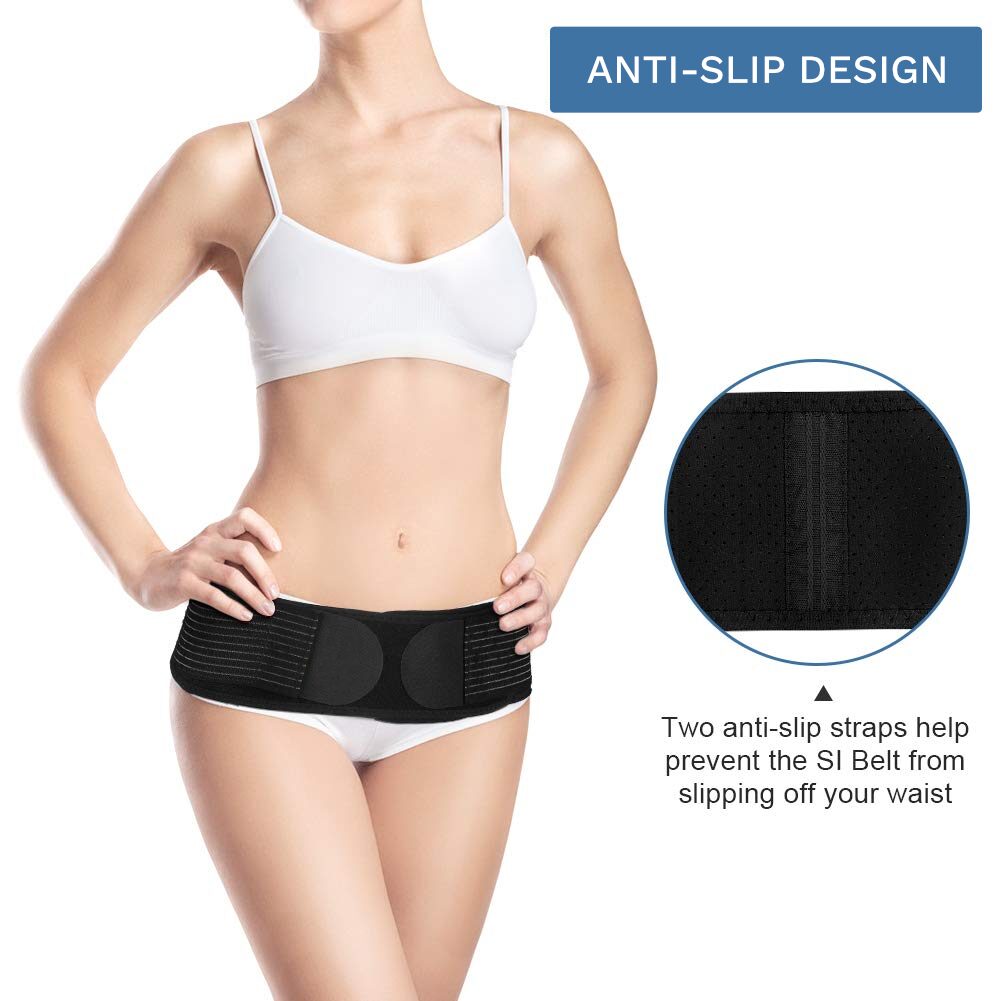
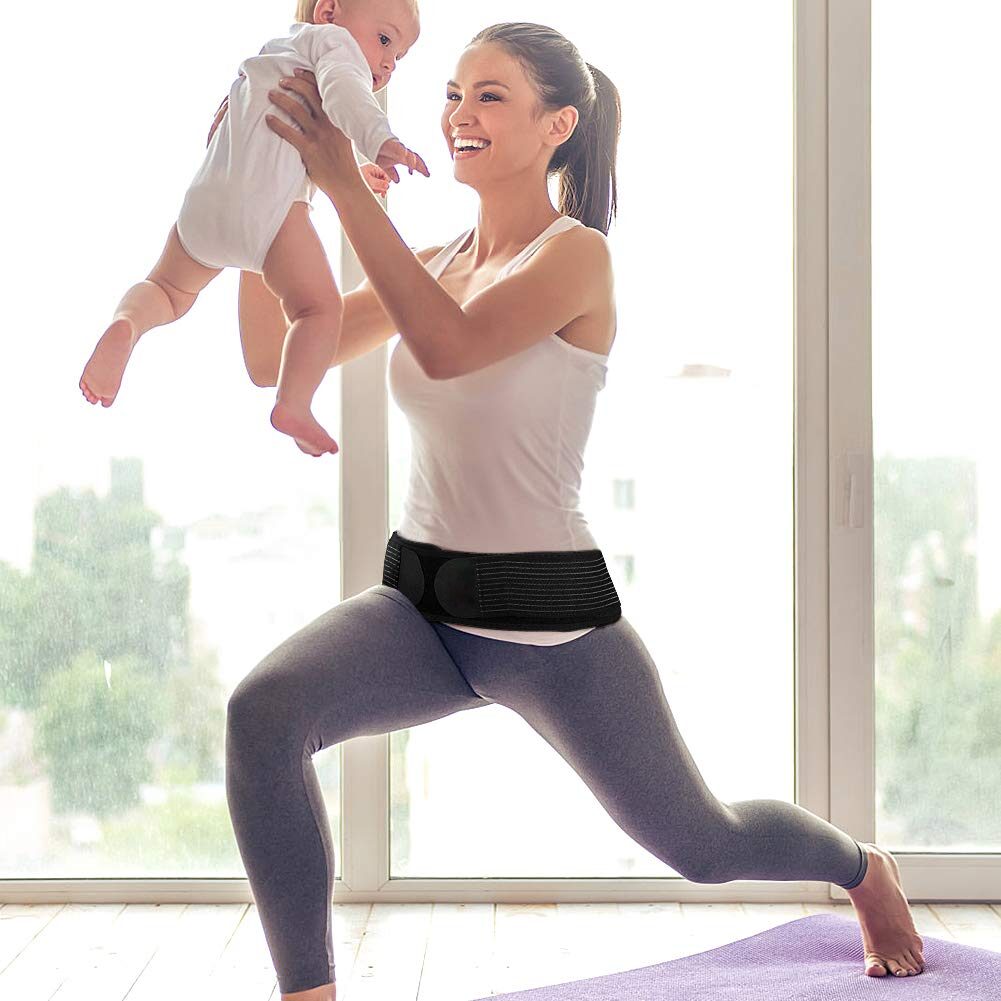
- Stays in place as you move: Non‑slip design helps the belt stay in the right position over the pelvis as you walk, bend or work. Can be worn for extra support during day‑to‑day activities and low‑ to moderate‑impact exercise, such as walking or gentle gym work.
- When it is often used: Commonly used for sacroiliac instability or hypermobility, mechanical SI joint pain, and sacroiliac stress after lumbar fusion surgery. May be part of postpartum recovery under clinical guidance (but not during pregnancy). Some people with disc‑related or sciatica‑type pain use an SI belt when sacroiliac strain is adding to their symptoms, usually alongside physiotherapy or other treatment.
- Try it with confidence: Comes with a 30‑day money‑back guarantee if you are not completely satisfied, so you can try the belt and see how it feels for you.
If you’re living with ongoing pain in your lower back and hips, it can be difficult to pin down exactly where it is coming from. For many adults, the source is the sacroiliac (SI) joints – the two joints that sit deep at the back of the pelvis, one on each side of the spine. Pain from this area often feels like a deep ache in one or both buttocks, sometimes spreading to the outer hip, groin or upper thigh. Because the joints lie close to the lower spine and the large nerves in that region, this pain is often mistaken for sciatica or a disc problem. So if you’ve been given different explanations over time, that is very understandable.
The way the pain behaves can vary. Some people notice a sharp catch when they stand up from a chair, step onto one leg, or walk up stairs. Others find that a dull ache builds if they stand or walk for longer periods, then eases once they sit down or change position. Turning over in bed, moving from lying to sitting, or walking on uneven ground can all bring on a sharp twinge if the SI joints are irritated. Over time, you may naturally shift your weight to the less painful side or change how you move to protect the area, which can then lead to extra strain in the lower back, hips, or even the knees.
If the problem has been there for a while, the area can feel stiff as well as painful, especially first thing in the morning or after sitting for a long time. You might feel as if your lower back and pelvis have “lost their give” when you bend or twist. That combination of pain and stiffness can be draining. Understanding what is happening inside the sacroiliac joints and in the tissues around them can make it clearer why certain movements hurt and how a support belt might help you manage those loads.
What’s going on in the sacroiliac joints?
How the joints are built and how they move
The sacroiliac joints link the base of the spine (the sacrum) to the two halves of the pelvis (the iliac bones). They are built to be very stable, rather than freely moving like the hip or shoulder. They allow only a very small amount of movement – just a few degrees – so that they can transfer weight from the upper body into the legs while keeping the pelvis solid.
Strong ligaments wrap around and across these joints, and the large muscles of the buttocks, lower back and thighs help support them. In normal movement, the sacrum and pelvic bones make tiny tilting and sliding movements against one another when you stand, walk, go up and down stairs, or shift your weight from one leg to the other. These small adjustments help to absorb shock and allow the pelvis to adapt as you move.
Because the normal movement is small, any extra glide, tilt or twist beyond that comfortable range can pull on the ligaments and joint surfaces more than they are used to. Even very slight extra movement can be enough to trigger pain if the tissues have been strained or inflamed. When people say their pelvis feels “wobbly” or “unstable”, it is often these subtle shifts they are noticing.
Why the area can become painful
There are several main ways in which the sacroiliac area can become overloaded or irritated.
Strain, overuse and everyday stress on the joints
A direct fall onto the buttocks, a heavy lift, or a sudden twist can strain or sprain the ligaments that hold the SI joints firm. Just as a sprained ankle becomes sore when you put weight through it, a strained ligament around the sacroiliac joint can react sharply when you stand on that leg, walk up stairs or twist your pelvis.
Day‑to‑day habits can add up too. High‑impact activities, repeated bending and lifting, or very long periods of standing can load the joints many times over, gradually irritating the supporting tissues. If one leg is slightly shorter, if you have a longstanding problem in a hip, knee or foot, or if pain elsewhere makes you limp, the pelvis may tilt or rotate more on one side. That side of the sacroiliac joint system then has to work harder to keep the pelvis level, and the ligaments can become sore from the extra strain.
In people with hypermobility, the ligaments and other soft tissues that usually hold the joints tightly may be naturally more stretchy. This allows a little more movement between the sacrum and pelvic bones. Over time, that extra sliding or tilting can leave the ligaments and joint capsules irritated and make the joints feel as if they are moving “too much”, particularly during single‑leg activities such as stepping up, standing on one leg to dress, or walking on uneven ground.
Wear‑and‑tear and arthritis around the SI joints
As joints age, the smooth cartilage that lines the joint surfaces can thin and become a bit rougher. In the sacroiliac joints, this can make the small gliding movements less well cushioned. Conditions such as osteoarthritis can speed up this process. When the joint surfaces are worn and the joint space is narrowed, even everyday tasks like standing, walking, or turning in bed can increase friction and pressure in the joint, leading to a deep ache and stiffness around the base of the spine and buttocks.
If you have had a lumbar fusion, some of the movement that used to happen between the fused vertebrae is now greatly reduced. Your body still needs to bend and twist for daily tasks, so some of that movement and load is taken up by the joints below, including the sacroiliac joints. Over time, this extra demand can irritate the SI area and make it more sensitive to weight‑bearing.
When inflammation affects the SI joints
In some people, the sacroiliac joints are affected by inflammatory conditions such as ankylosing spondylitis, psoriatic arthritis, or other forms of inflammatory arthritis. In these conditions, the body’s immune system attacks joint tissues, which can cause swelling, warmth and pain in and around the joint. This often leads to marked stiffness, particularly in the morning or after rest, and can gradually limit how much the joints move.
Sacroiliitis simply means inflammation in one or both sacroiliac joints. It can occur on its own or as part of a wider inflammatory illness. When the tissues are inflamed, they can become very sensitive, so even normal load through the joints may feel painful, sometimes even at rest or at night.
Less common but serious causes
Occasionally, pain in the sacroiliac area is caused by conditions such as infection, tumour, or severe gout. An infection within or around the joint can make it intensely painful, hot and swollen, and is often accompanied by fever and feeling generally unwell. Tumours affecting the pelvis or spine can sometimes present with persistent, deep pain that may disturb sleep and is not clearly linked to movement. Gout can cause sudden, very painful attacks if crystals deposit in the joint, often associated with visible swelling and redness.
These more serious problems are much less common than the usual wear‑and‑tear or strain described above, but they do need prompt medical assessment rather than trying to manage the pain by yourself. The safety section below outlines some specific warning signs.
Pregnancy‑related changes
During pregnancy, the body releases hormones that loosen the ligaments around the pelvis in preparation for childbirth. This can allow more movement at the sacroiliac joints and other pelvic joints, which may lead to a feeling of instability or pain when turning in bed, standing on one leg, or walking. However, this particular SI belt is not intended for use during pregnancy. Compression around the pelvis and abdomen in pregnancy can be unhelpful or harmful, and any support for pregnant users should be chosen and fitted under specific clinical guidance.
Because so many different factors can affect the sacroiliac area, it is important to speak to a healthcare professional for an accurate diagnosis, especially if the pain is severe, persistent, or associated with worrying features such as fever, unexplained weight loss, or changes in leg strength or bladder and bowel control.
Managing sacroiliac joint pain – where a belt can fit in
Other ways SI‑area pain is often managed
There are several approaches commonly used to manage sacroiliac‑related pain. Physiotherapy and specific exercises help the muscles around the pelvis and lower back work better together, so they can take more of the strain that is currently going through the irritated joints and ligaments. Hands‑on treatments and movement coaching can help restore more comfortable ways of moving and reduce extra stress on one side of the pelvis.
Medication, such as pain‑relieving or anti‑inflammatory drugs, may be used to help manage symptoms, particularly in the short term. In some cases, especially where inflammatory arthritis is involved, more specific medical treatments are needed under specialist care. If pain has gone on for a long time or is very severe, injections or surgical procedures may be discussed when other options have not helped enough.
Alongside these options, many people look for practical ways to ease the everyday pressure on their sacroiliac joints so they can continue with work and normal activities. This might include adjusting how long they stand at once, changing position more often, pacing heavier tasks, and, for some, using external supports such as an SI belt.
Given that small joint movements and repeated loading are at the heart of this pain, most treatments either try to help the muscles share more of the work, or support the joints from the outside. An SI belt sits in that second group.
How an SI belt can help in some types of pain
An SI belt sits around the pelvis, across the back of the hips and over the region of the sacroiliac joints. When you position it properly, it gives gentle, even pressure around the bony ring of the pelvis. This creates a firm “hoop” around the pelvis that helps limit small, painful movements at the SI joints and share load more evenly across the tissues around them.
If your pain is brought on by single‑leg activities or twisting – for example, stepping up, standing on one leg to dress, or turning sharply – the problem is often that the sacroiliac joint and its ligaments are having to control more small movement on that side than they are comfortable with. External support from a belt can reduce how far and how quickly the pelvic bones move relative to the sacrum, so the ligaments are not being stretched as suddenly or as far. Those movements can then feel more controlled and less sharp.
Where pain builds up with longer periods of standing or walking, the issue may be repeated loading through joints that are already irritated or have some wear‑and‑tear changes. With each step, force travels up through the legs into the pelvis. A well‑fitted belt can help hold the pelvis in a steadier position and give extra support to the joint area with every weight‑bearing step. Over a day, this can reduce the total strain that the irritated tissues are exposed to.
In people who have had a lumbar fusion, movement that used to be shared between levels in the lower spine can shift further down into the sacroiliac joints. An SI belt can give additional support around the pelvis, aiming to limit some of that extra motion in these joints during standing and walking and to ease some of the extra work they are now doing.
An SI belt does not remove the underlying cause of sacroiliac pain, whether that is wear‑and‑tear, inflammatory disease or another condition. It is best seen as one part of how you manage the problem day to day, usually alongside exercises, lifestyle adjustments and medical care where needed.
How our SI support belt works on your pelvis
Focused support around the pelvic ring
Our SI Joint Pain Belt is designed to sit low around the hips and lower back, over the sacroiliac joints rather than up at the waist. When it is in the right place, the back panel lies over the bony area at the base of the spine and the back of the pelvis, where the spine meets the pelvic bones. The front part of the belt comes around the hips and fastens at the front.
Once the main belt is in place, two stretchy straps on either side can be pulled forwards and fixed at the front with velcro. These side straps let you add extra tension over the back of the pelvis when you need more support, such as for longer walks, busy days on your feet, or more physical tasks, and ease off when you are resting.
Drawing the two sides of the pelvis gently towards each other helps to reduce the tiny gliding and twisting movements at the SI joints. The belt keeps the sacrum and pelvic bones moving within a smaller, more comfortable range, instead of slipping into the positions that tend to trigger pain. In everyday terms, this can mean less “give” in the pelvis when you stand up, walk, go up stairs or turn over, and those activities may start to feel more solid and predictable.
For people with hypermobility or a sense that the pelvis is moving too freely, this focused support can make the area feel more secure during tasks that put one side under extra load, such as standing on one leg or stepping sideways. For those with degenerative or arthritic changes, it can help reduce jarring at the joint surfaces when weight is repeatedly transferred from one leg to the other.
Gentle compression and a steadier feeling
Alongside its position, the belt provides gentle compression around the pelvis. This steady, all‑round pressure helps to calm sensitive tissues by reducing the sudden stretching that occurs when the pelvis moves quickly or unexpectedly. Instead of the ligaments and joint capsules having to take all of that movement on their own, some of it is resisted by the belt.
Many people describe this as the pelvis feeling more “held together”. The sensation of the belt against the skin and underlying tissues also increases awareness of how the pelvis is moving. This can encourage more controlled, deliberate movements rather than quick twists or bends that tend to set symptoms off. In this way, the belt acts both as a mechanical support and as a prompt to keep movements within a more comfortable range.
The main role of this compression is to steady the joint area and make load through the sacroiliac region feel easier to cope with. It is not a direct replacement for medical treatment where there is active inflammation, but it can help some people feel more settled during everyday movement.
Staying in place when you move
The belt is made from firm, slightly textured materials that help it stay in place during normal daily activity. If a support rides up onto the waist or slips down off the hips, it is no longer centred over the sacroiliac joints and the stabilising effect is reduced.
Our design helps the belt stay where it needs to be – across the back of the hips and lower pelvis – even as you walk, bend or change position. The edges are finished smoothly to be kinder to the skin, so they are less likely to dig in or rub as you move, even if you wear the belt for several hours at a time. The belt has a relatively slim profile, so it can sit under everyday clothing without feeling bulky or showing obvious lines. That can make it easier to wear at work or out and about without drawing attention to it.
This consistent, comfortable positioning matters for activities where the pelvis is repeatedly loaded and unloaded, such as walking longer distances, going up and down stairs, or working on your feet. Without a stable support, the tissues around an irritable joint can tire and become more painful as the day goes on. With a belt that remains in the correct position, the same movements may place less varying stress on the joint area, which can help symptoms feel more controlled over time.
Adjustable fit for different body shapes
The main belt and the two stretchy side straps are adjustable, so the fit can be altered to suit your build and what you are doing. At full stretch, the belt fits hips up to around 96 cm. The aim is to achieve a snug, supportive feel without restricting breathing or causing pins and needles.
How tight the belt feels often needs to change throughout the day. You might prefer a slightly firmer fit when you know you will be standing or walking for longer, then ease the straps a little when sitting for a prolonged period. Being able to fine‑tune the tightness allows you to find a level where you feel clearly supported but can still slide a couple of fingers under the belt, take deep breaths comfortably, and move without feeling squeezed.
Because the belt is slim, once you have adjusted it to a comfortable tension it usually sits neatly under work clothes or casual wear without getting in the way. Adjustability also helps if you feel a bit more bloated later in the day. Rather than putting up with a belt that becomes too tight or too loose, you can make small changes so the support stays comfortable and effective.
Built with clinical understanding of the sacroiliac area
This belt has been put together to match how the pelvis and sacroiliac joints move in everyday life. Instead of wrapping higher up around the waist, it is shaped and sized to sit lower, over the area where people with SI problems usually point when asked where it hurts. The back panel follows the curve of the back of the pelvis, so the main pressure falls over the sacrum and the back parts of the pelvic bones, where key supporting ligaments lie.
NuovaHealth has worked with clinicians who regularly see sacroiliac pain to decide on the height of the back panel and the position of the side straps. By placing the support directly over these joints and ligaments, our belt acts on the small tilting and sliding movements that tend to cause pain in sacroiliac problems, rather than simply supporting the general lower back.
Is this belt right for your type of SI pain?
Common situations where this belt is often used
People who find this type of belt helpful often describe one or more of the following:
- A deep ache over one or both buttocks, sometimes spreading into the outer hip or upper thigh, that worsens with standing or walking and eases when they sit or support the area with their hands.
- Sharp twinges or a feeling that something “catches” when they move from sitting to standing, stand on one leg, walk up stairs, or turn over in bed.
- A sense that the pelvis is moving too freely or is difficult to control, especially in people known to have hypermobile joints.
- New or increased pain around the sacroiliac area after lumbar fusion surgery, particularly during weight‑bearing activities.
- Pain mainly on one side that worsens when standing on that leg, often linked to differences in leg length or long‑standing changes in walking pattern.
- Ache and fatigue around the pelvis that build up over a long, physically demanding day, such as in jobs where you are on your feet a lot, lifting, carrying or working in awkward positions.
If some of these descriptions sound familiar, the explanations below look at specific situations in more depth and how a sacroiliac belt like ours may fit into them. These sections build on the general information above and are intended for adult readers.
Who should not use this belt or should seek advice first
This belt is for adults. It is not recommended for use during pregnancy, as compression around the pelvis and abdomen at that time can be unhelpful or harmful. If you are pregnant or think you might be, this belt should not be used.
Anyone with severe or rapidly worsening pain, particularly after a fall or accident, should see a doctor or other healthcare professional promptly before using a support. Likewise, if pain in the sacroiliac area is accompanied by fever, feeling generally unwell, unexplained weight loss, new weakness, numbness or tingling in the legs, or new problems controlling the bladder or bowels, urgent medical advice is essential. These features can indicate conditions affecting the nerves, spine or general health and are not appropriate for self‑management with a belt. Most people with sacroiliac‑type pain will not have these warning signs, but it is important to know when to seek help quickly.
People with known inflammatory conditions, such as ankylosing spondylitis, psoriatic arthritis or other systemic illnesses, should speak to their GP, rheumatologist or physiotherapist before deciding whether to use a sacroiliac belt. In these situations, support garments may be useful, but they should sit alongside your regular medical care, not replace it.
How to wear the belt and build it into your day
Positioning and fastening
For the belt to help, it needs to sit over the area it is designed to support. Rather than sitting high around the waist, it should lie low around the pelvis. The back of the belt should sit over the bony area at the base of the spine and the tops of the buttocks, where you can feel two firm bumps on either side with your fingers – these are the back parts of the pelvic bones close to the sacroiliac joints. From there, the belt should wrap forwards over the hips and fasten just below the level of the front pelvic bones.
Once the main belt is in position and joined at the front with the velcro, the side straps can be pulled forwards and fixed to the front section. The aim is to feel gentle but firm pressure all the way round, without any digging in. You should still be able to take a deep breath comfortably and slide a couple of fingers under the belt at several points. If the belt feels as though it is making it hard to breathe, causing pins and needles, or creating sharp pressure points, it is likely too tight and should be loosened a little. Making sure the belt lies flat, without twisting or folding, helps keep the pressure even and reduces the risk of rubbing. It can take a few attempts to find the position and tightness that feel right for you; once you do, it usually becomes quick to put on in the same way each time.
When to wear it and for how long
Many people choose to wear an SI belt at times when they know their sacroiliac area is under more demand. This may include periods of prolonged standing, walking further distances, or carrying out tasks that involve repeated bending, lifting or twisting. Wearing the belt in these situations can help control small joint movements and reduce the build‑up of strain on sensitive tissues.
It is usually sensible to begin with shorter periods of wear – for example, an hour or two when you know you will be on your feet more – and see how your body responds. You can then gradually increase the time if you feel it is helpful, always leaving some parts of the day without the belt so that the skin can breathe and the muscles can continue to work without external support. You do not usually need to wear it all day and night, and this should only be done if a clinician has advised it for a specific reason.
Using the belt alongside movement and exercise
Our SI belt is there to help you stay active in a manageable way, not to stop you moving. Keeping the muscles around the hips, pelvis and lower back active helps them support the joints and can improve overall function. Many people find that the belt allows them to continue with low‑impact activities or rehabilitation exercises that might otherwise feel too uncomfortable, such as gentle walking, controlled squats, or targeted strengthening prescribed by a physiotherapist.
If you are following an exercise programme, you may choose to wear the belt during the more demanding parts, particularly those that involve standing, stepping, or single‑leg tasks, and then remove it for lower‑load exercises or when resting. A clinician can advise on the best pattern for you. The key is to let the belt make movement more comfortable and give you confidence, while you still gradually build up how much activity and strength the area can tolerate over time.
What you might notice when you start using the belt
When used correctly, a sacroiliac belt may reduce the intensity of pain during certain movements and make standing and walking feel more manageable. Some people notice that the sharpness of their pain when rising from a chair or walking up stairs is less obvious soon after they start using the belt. Others find that, over several days or weeks of using it during higher‑load activities, they can stand or walk a little longer before pain builds.
The belt does not cure underlying arthritis, inflammatory disease or other structural problems, and it will not remove pain in every situation. Its main role is to reduce the strain on irritated joints and ligaments during the tasks that usually aggravate them, and to provide a clearer sense of stability around the pelvis. Wanting to be completely pain‑free is understandable, but for many people with sacroiliac pain, reducing the sharp spikes and making everyday tasks more manageable feels like a big step forward.
Realistic expectations might include being able to complete necessary daily activities with less discomfort. Many people also find they rely less on using their hands or nearby furniture to support the area once the belt is in place, even if some background ache remains at times.
When to review, adjust, or stop using it
If you find that pain increases noticeably when wearing the belt, or that a new, different pain develops, it is worth first checking the fit and position. A belt worn too high on the waist, too low over the buttocks, or too tight around the abdomen may place pressure on areas it is not designed to support and could make symptoms worse. Adjusting the position so that it sits over the bony parts of the pelvis, and loosening the tension slightly, may resolve this.
If, after adjusting the fit, pain remains worse with the belt than without it, or if you experience new symptoms such as numbness, tingling, unusual coldness, or marked colour changes in the skin under or below the belt, you should remove it and seek advice from a healthcare professional. Persistent skin irritation, soreness or rubbing where the belt sits can sometimes be helped by wearing it over a thin, breathable layer of clothing rather than directly on the skin. If irritation continues despite this, it is sensible to have it reviewed by a clinician.
When to seek urgent or early medical advice
Most sacroiliac‑related pain is mechanical or degenerative and can be managed with a mixture of self‑care, exercises and, where needed, professional support. However, certain features suggest that a more serious problem may be present and should prompt urgent medical assessment:
- Sudden, severe pain in the lower back or pelvic region after a fall, accident, or other significant trauma.
- Marked heat, redness or swelling over the sacroiliac area, especially if you feel generally unwell or have a fever.
- New weakness, numbness or tingling affecting one or both legs.
- New difficulty controlling your bladder or bowels.
- Unexplained weight loss, night sweats, or pain that is constant and not eased at all by rest or change of position.
In these situations, a belt on its own is not enough. Seeing a GP or other healthcare professional promptly is important to identify the cause and arrange suitable treatment.
Brief recap and next steps
Sacroiliac joint pain often arises when the joints and supporting tissues at the base of the spine are asked to cope with more movement or load than they can comfortably manage. This can happen through strain and overuse, hypermobility, wear‑and‑tear changes, or shifts in how the spine and pelvis share the work of bending and twisting, such as after lumbar fusion surgery. The result can be a mix of deep ache, sharp twinges with certain movements, and a feeling that the pelvis is hard to control.
Our SI Joint Pain Belt is designed to wrap around the pelvis and provide focused support and gentle compression around the sacroiliac area. By sitting low over the base of the spine, using a shaped back panel and two adjustable side straps, and keeping a slim, smooth‑edged profile that sits comfortably under clothing, it helps to steady the pelvic ring, limit small, painful movements at the joints, and share load more evenly across the tissues. If your pain behaves in the ways described here, it is likely that those small joint movements and loads are part of the picture, and this belt is designed to act directly on that problem.
If the explanations and situations described here reflect what you are experiencing, and you are not pregnant, our belt is a sensible option to consider. It is wise to discuss it with a GP, physiotherapist or other healthcare professional, especially if you have other medical conditions or are unsure about the cause of your pain. They can help you decide whether this belt is suitable for you and how best to use it alongside other treatments.
This information is offered as general guidance about sacroiliac pain and the possible role of an SI belt. It is not a substitute for personal medical advice, diagnosis or treatment, and should not be used to delay seeking medical care. No specific results can be guaranteed, as people respond differently to any support. The belt and the content on this page are intended for adult users, and anyone with concerns about new, severe or changing symptoms should seek advice from an appropriate healthcare professional.
2 Reviews For This Product
Fast & Secure Checkout Through Paypal
Pay with Paypal the secure payment gateway that accepts all credit and debit cards. Paypal is free and secure and no credit or bank information is ever stored or shared with us.
Fast Dispatch
Enjoy your items soon with quick dispatch via Royal Mail. Expect to have your items between 1-3 working days for domestic orders. 7-10 Working days for international orders.
Return Policy – 30 Day Money Back Guarantee
In the unlikely event, you are unhappy with your purchase you can return it within 30 days for a refund. Please contact us via the form on the contact us page to start your return.
To return an item please send it to: Nuova Health UK, 81 Highfield Lane, Waverley, Rotherham, S60 8AL. Please include a note with your order id so we know who to refund. Please retain your postage receipt as proof of postage. All that we ask is that the item is in the original packaging and unused.
by Ann Kay
Was so surprised at just how much support that this belt actually gives your waist and hips considering how simple the belt looked I guess appearances can be deceiving but in a good way sometimes 🙂
by Emma Rafferty
recieved today. So far so good. Have hypermobility of joints and especially around SI joint. Definitely feels like it is adding stability and hopefully will reduce pain from joint and help stabilise.