
Adjustable Shoe Lifts
£11.99£14.99 (-20%)inc VAT
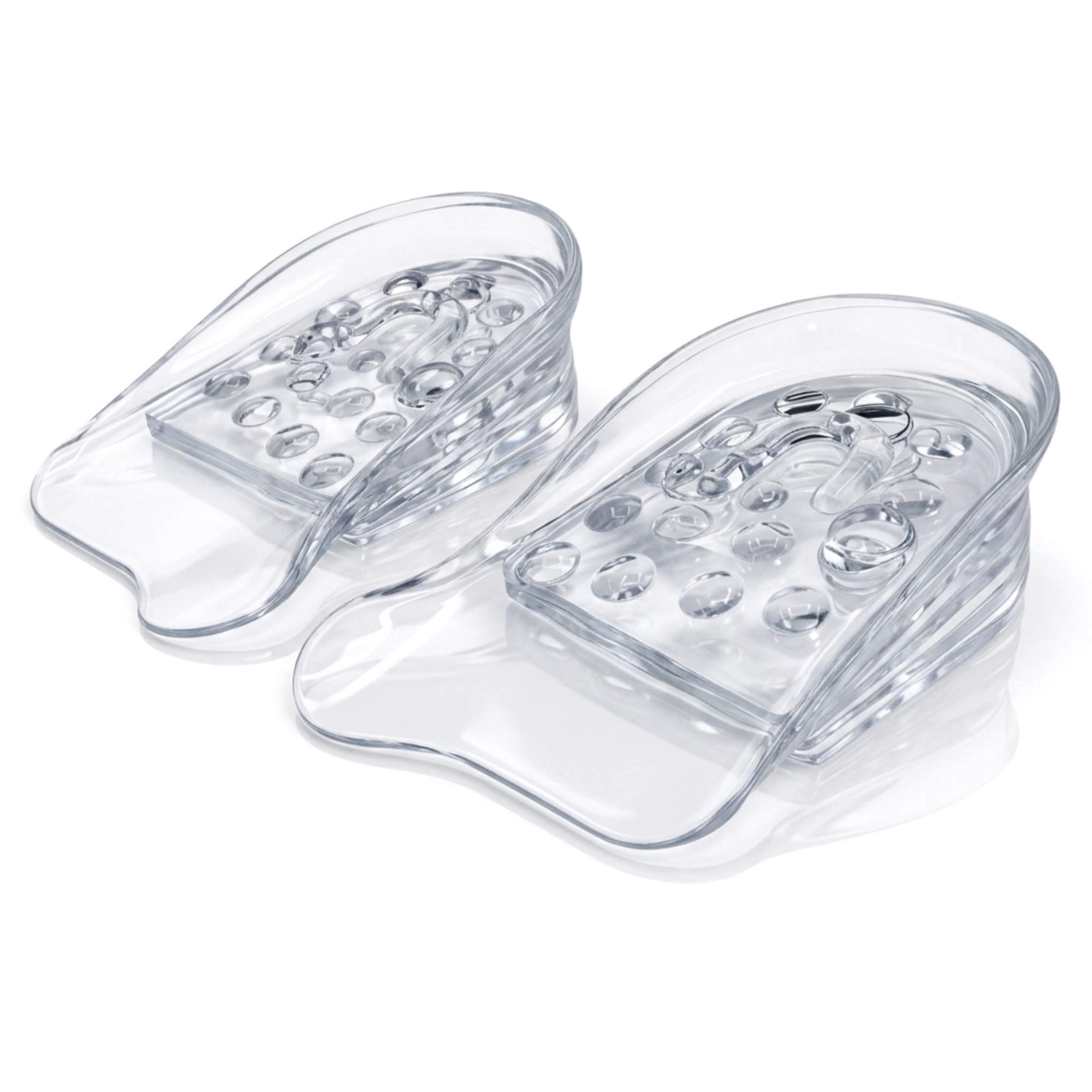
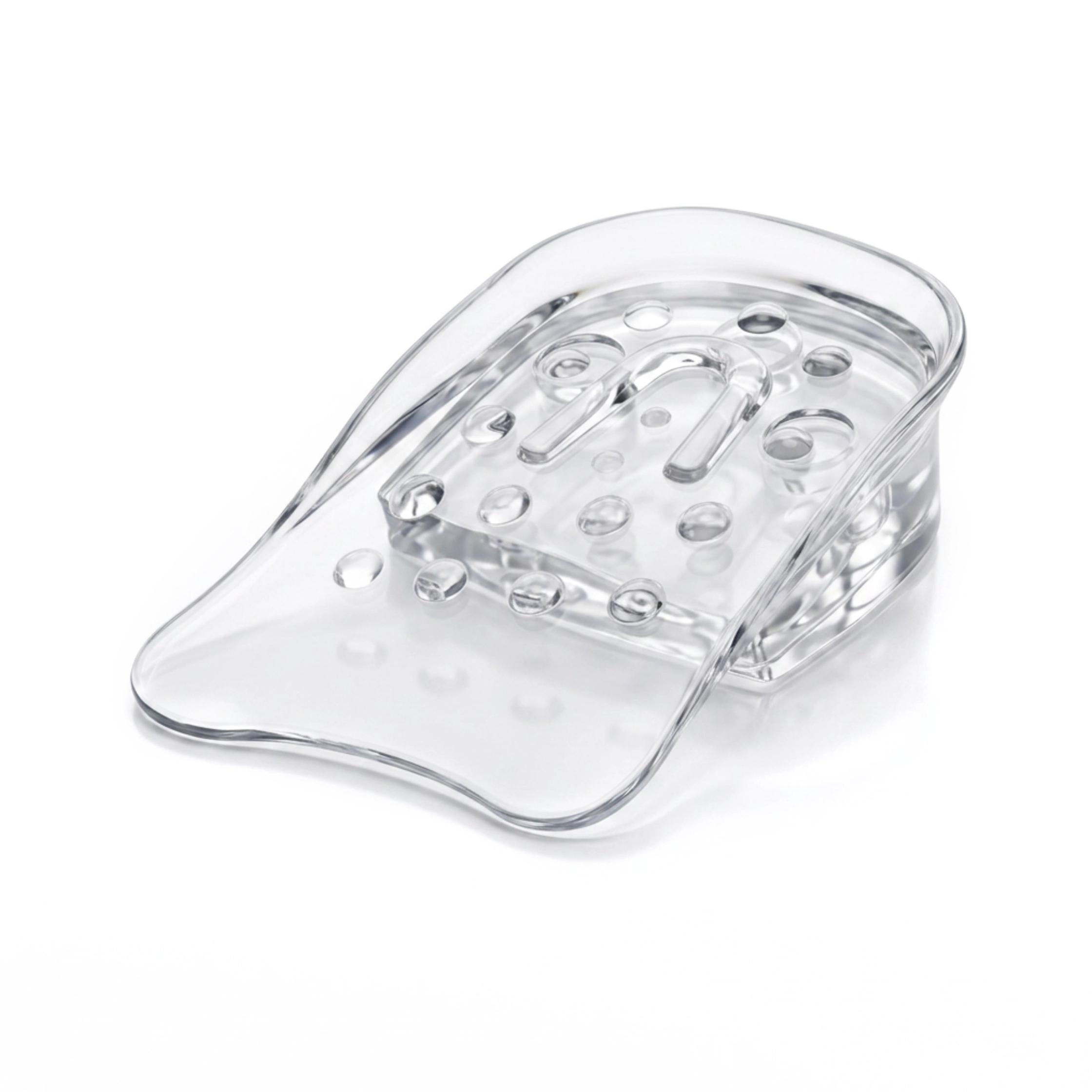
- HeightBoosters Shoe Lifts are adjustable heel lifts that discreetly add up to 1.5 inches to your height, correct leg length discrepancies causing hip or back pain, or reduce strain from Achilles tendonitis and plantar fasciitis. Made from medical-grade silicone gel with 5 removable layers, they let you adjust the height from about 8mm to 38mm. Sold as a pair: 5 layers for left foot, 5 layers for right foot (10 layers total).
- Sizing: One size fits all. Heel-cup-length design sits under your heel only.
- Lifespan: 6-12 months with regular use (varies by body weight and activity level).
- Who they’re for: People who want to increase their height discreetly. Those with leg length discrepancies causing hip or back pain. Anyone managing Achilles tendonitis or plantar fasciitis who needs a heel lift to reduce strain.
- How they work: The adjustable layer system lets you add or remove layers to reach your desired height. Lower heights (8-16mm, or 1-2 layers) are typically used for therapeutic purposes like Achilles tendonitis or plantar fasciitis. Higher heights (24-38mm, or 3-5 layers) are used for height increase or larger leg length discrepancies. Medical-grade silicone gel cushions your heel and absorbs impact as your body weight presses down. The deep heel cup wraps around the back and sides of your heel, stabilising it and preventing your foot from sliding forward in your shoe.
- What to expect: Immediate height increase. For leg length discrepancies, gradual reduction in hip and back pain as your pelvis levels out. For Achilles tendonitis and plantar fasciitis, reduced strain on the affected structures.
- Fit: Designed for trainers, boots, and casual lace-up shoes. Gradual adaptation recommended—start with fewer layers and build up over 2-3 weeks.
- Guarantee: 30-day money-back guarantee from NuovaHealth.
- Delivery: UK delivery 3-5 working days. In stock and dispatched within 24 hours.
HeightBoosters Shoe Lifts – Adjustable Heel Lifts for Height, Leg Length Correction, and Foot Pain Relief
Add height, correct leg length, or ease heel pain?
Whether you want a discreet boost of a few inches, need to balance a leg length difference, or are managing Achilles tendonitis, plantar fasciitis, or general foot fatigue, heel lifts can make a real difference. They sit under your heel inside your shoe, raising it by a few millimetres to over an inch – depending on how many layers you use – and change the way your foot, ankle, and lower body work together.
HeightBoosters Shoe Lifts from NuovaHealth are adjustable heel lifts made from medical‑grade silicone gel. Each lift has 5 removable layers, so you can dial the height from about 8mm (one layer) up to 38mm (all five – roughly 1.5 inches). This adjustability makes them suitable for discreet height increase, leg length correction, or therapeutic heel elevation for Achilles tendonitis and plantar fasciitis.
What are heel lifts and how do they work?
Heel lifts are inserts that sit under your heel, lifting it relative to your forefoot. This changes the angle at your ankle and shifts how your weight is distributed through your foot. They are used for three main reasons: to increase height, to correct leg length discrepancies, and to reduce strain on the Achilles tendon and plantar fascia.
HeightBoosters Shoe Lifts are made from medical‑grade silicone gel – safe for prolonged skin contact, durable, and able to withstand daily wear. The gel compresses under your body weight, absorbing impact before it reaches your heel bone, then rebounds when the load is removed. The deep heel cup wraps around the back and sides of your heel, holding it in place and preventing forward sliding or sideways rolling.
Who can benefit from HeightBoosters?
These heel lifts are designed for adults who:
- Want discreet height increase without platform shoes or special footwear that draws attention.
- Have been told they have a leg length discrepancy and experience hip pain, lower back pain, or uneven gait as a result.
- Are managing Achilles tendonitis or plantar fasciitis and need to reduce strain on these structures while they heal.
- Experience posture‑related back pain that may be linked to pelvic tilt or leg length difference.
If you’re unsure whether heel lifts are right for you, or whether you have a leg length discrepancy, see a physiotherapist or podiatrist for assessment. They can measure any difference accurately and advise on the appropriate lift height.
Why choose heel lifts over alternatives?
If you’re considering heel lifts, you may be weighing them against other options. Here’s how they compare:
Heel Lifts vs Elevator Shoes
Elevator shoes have built-in height increase hidden in the sole. They work well but have significant drawbacks: they’re expensive (typically £100-300+ per pair), you can only get the height increase when wearing those specific shoes, and the built-in lift is fixed—you can’t adjust it. If you own multiple pairs, the cost adds up quickly.
Heel lifts cost a fraction of the price, work in all your existing shoes (trainers, boots, casual shoes), and let you adjust the height to suit different situations. You can use more height for social occasions and less for everyday comfort. The lifts are completely hidden inside your shoes—no one can tell you’re wearing them.
Heel Lifts vs Custom Orthotics
Custom orthotics (typically £200-400+ per pair) are made specifically for your feet and provide targeted arch support, pressure redistribution, and correction of foot mechanics issues like overpronation or supination. They’re ideal if you have significant foot problems, flat feet, or complex biomechanical issues.
Heel lifts are more affordable and sufficient if your primary need is height increase, leg length correction, or reducing strain on your Achilles tendon or plantar fascia. If you don’t have complex foot mechanics issues, heel lifts provide the correction you need without the cost and wait time of custom orthotics. In some cases, heel lifts and orthotics can be used together—ask a podiatrist for advice.
Heel Lifts vs Surgery (for Leg Length Discrepancy)
Limb lengthening surgery is an option for significant leg length discrepancies (typically over 5cm). The procedure involves surgically breaking the bone and gradually lengthening it over several months using an external or internal fixation device. It’s invasive, expensive (£50,000+ in the UK), requires months of recovery and physiotherapy, and carries significant risks including infection, nerve damage, and complications with bone healing.
Heel lifts provide immediate correction without surgery, cost, or recovery time. You’ll need to wear them long-term to maintain the correction, but there’s no surgical risk and you can stop using them at any time. For most people with leg length discrepancies under 5cm, heel lifts are the first-line treatment recommended by physiotherapists and orthopaedic specialists. Surgery is only considered when conservative measures have failed and the discrepancy is causing significant functional problems.
The Bottom Line
Heel lifts are the smart, affordable, low-risk option for height increase and leg length correction. They give you flexibility, work in your existing shoes, and cost a fraction of the alternatives. If they don’t work for you, the 30-day money-back guarantee means you’ve risked nothing.
How these lifts are designed to help
Adjustable 5‑layer system
The standout feature is the adjustable layer system. Each lift comes with 5 removable layers, each adding about 7–8mm of height. This lets you adjust from roughly 8mm (one layer) up to 38mm (five layers, about 1.5 inches). Starting low and building up gradually is key – it gives your muscles, tendons, and joints time to adapt and avoids sudden strain on your calves or Achilles. It also lets you match the lift to your specific need: a 15mm leg length difference can be corrected with two layers; Achilles tendonitis may need only one or two layers; and you can vary the height depending on the shoe depth.
To adjust, simply peel apart the layers. The raised bumps lock them together during wear but separate easily when you want to change height.
Medical‑grade silicone gel construction
The silicone gel is selected for its durability, safety, and cushioning properties. When you step down, the gel compresses and absorbs impact before it reaches your heel bone, reducing jarring forces that travel up through your ankle, knee, and hip. It rebounds when your heel lifts off, ready for the next step. Over time, the gel moulds slightly to the shape of your heel, distributing pressure evenly and reducing hot spots. It doesn’t absorb moisture or odours, and it’s easy to clean with a damp cloth.
Deep heel cup design
Raising your heel changes your centre of gravity and can make your foot feel less stable inside the shoe. The deep heel cup wraps around the back and sides of your heel, holding it securely in the middle of the shoe and preventing side‑to‑side movement or forward sliding. This stability is especially important when you’re correcting a leg length discrepancy, because the lifted leg is naturally in a less stable position. The heel cup helps compensate by providing lateral support and reducing ankle sprain risk.
Shock absorption and impact protection
Every heel strike sends a shockwave through your heel bone, ankle, shin, knee, hip, and lower back. The silicone gel absorbs a portion of this force, reducing the peak impact your joints and soft tissues have to handle. This is particularly valuable if you’re on your feet on hard surfaces all day, or if you have Achilles tendonitis or plantar fasciitis – less jarring on already irritated attachments means faster healing.
Discreet design
These lifts are completely hidden inside your shoes. Unlike platform shoes, Cuban heels, or elevator shoes, no one can see them. Even at full height with all five layers, they fit inside most trainers, boots, and casual lace‑up shoes without making the shoe feel excessively tight or causing your heel to slip out. The tapered shape – thicker at the heel, thinner at the front – helps them blend into the shoe’s heel counter.
Detailed guidance for your condition
Each condition or use has its own section below. Expand the one that matches your situation for a full explanation of what’s happening, how heel lifts can help, and when to seek professional advice.
Getting started with your heel lifts
Finding your starting height
The adjustable layer system lets you start low and build up gradually. Jumping straight to a large heel lift can cause calf tightness, Achilles pain, balance issues, or lower back discomfort.
For leg length discrepancy: If you know your difference, start with roughly half your discrepancy for the first week, then increase to match the full amount in the second week. For example, if your left leg is 15mm shorter, use 8mm (1 layer) in your left shoe only for the first week, then increase to 16mm (2 layers) in the second week.
For Achilles tendonitis or plantar fasciitis: Start with 1 layer (8mm) in both shoes for the first week. After a week, if your symptoms are improving but you still have some pain, add another layer to reach 16mm. Most people find 8–16mm sufficient.
For height increase: Start with 1–2 layers (8–16mm) in both shoes for the first week. After a week, add another layer. Build up gradually over 2–3 weeks. Most people find 3–4 layers (24–32mm) comfortable for everyday wear.
For foot cramps and fatigue: Start with 1–2 layers (8–16mm) in both shoes. Add another layer if needed. Most people find 1–3 layers sufficient.
How to insert and adjust the lifts
Remove the existing insole from your shoe if it’s removable. This creates space for the heel lift and prevents the shoe from feeling too tight. Place the heel lift under your heel, with the deep heel cup wrapping around the back and sides. The lift should sit flat against the bottom of the shoe, with the thickest part directly under your heel bone. If you removed the insole, place it back on top. Put your shoe on and walk for a few minutes to check that your heel feels stable and centred. If your heel feels unstable or your foot slides forward, remove one layer and reassess. To adjust the height, pull the layers apart gently, add or remove as needed, then press them back together – the raised bumps lock them securely.
Gradual adaptation – what to expect week by week
Your body needs time to adjust to heel lifts, especially for leg length correction or significant height increase. The adaptation period usually takes 2–3 weeks.
Week 1: Start with 1–2 layers. Wear the lifts for a few hours each day, gradually increasing to full‑day wear by the end of the week. You may notice some calf tightness or mild Achilles discomfort – this is normal and usually settles within a few days. Gentle calf stretching can help.
Week 2: If you are building up to a higher lift, add another layer. By the end of week 2, initial tightness should have settled. If you are using the lifts for leg length correction, you may notice your lower back or hips feeling different – temporary discomfort is normal; if severe, reduce the lift height.
Week 3 and beyond: If building up to 3–5 layers, continue adding one layer per week. By week 3, the lifts should feel natural. If you are using them therapeutically, you should notice gradual improvement in your symptoms during this period.
If at any point you experience severe pain, significant balance problems, or worsening symptoms, reduce the lift height or stop using the lifts and see a physiotherapist or podiatrist.
Which shoes work best
These heel lifts work best in trainers, boots, and casual lace‑up shoes – shoes with adequate depth at the heel and a secure fit. Shoes with removable insoles are ideal. Very tight dress shoes, slip‑on shoes without a secure heel counter, very shallow shoes, or high heels may not work well. If you are unsure, start with 1 layer and see how it feels.
Wearing them consistently
For best results, wear the heel lifts consistently throughout the day in all your shoes. If you are using them for leg length correction, occasional wear means your pelvis is level part of the day and tilted the rest – your body never fully adapts. For Achilles tendonitis or plantar fasciitis, switching to flat shoes in the evening re‑stretches the affected structures. Ideally, have lifts in all your regular shoes. You do not need to wear them at night.
How long to use them
For leg length discrepancy: If you have a structural difference, you will likely need to use heel lifts long‑term – potentially for life. The bone length difference does not change, so the lift is a permanent correction.
For Achilles tendonitis or plantar fasciitis: Heel lifts are usually a temporary measure while the tendon or fascia heals – typically 6–12 weeks. Once your pain has resolved and you have completed a strengthening programme, gradually reduce the lift height over 2–3 weeks.
For height increase: This is entirely up to you. Wear them consistently if you want to maintain the extra height, or only for specific occasions.
For foot cramps and fatigue: Use the lifts as long as they help. If you want to try going without them, reduce the lift height gradually.
Caring for your lifts
Wipe them down regularly with a damp cloth and mild soap. Rinse with clean water and air dry – do not use heat or direct sunlight. Do not machine wash or tumble dry. Store in a cool, dry place. With regular use, most people need to replace heel lifts every 6–12 months. Signs of wear include visible compression, loss of cushioning, cracks, or layers that no longer lock together.
What to expect and potential issues
When you first start wearing heel lifts, you may notice calf tightness or mild Achilles discomfort. This is normal and usually settles within a few days to a week. Start with a low height and build up gradually. Gentle calf stretching helps.
If your foot slides forward in the shoe, check that your shoes fit well and are laced securely. The deep heel cup is designed to prevent this, but if it persists, try a heel grip or reduce the lift height.
Raising your heel changes your centre of gravity and can affect balance initially. Start low and build up gradually. The deep heel cup provides lateral support. If balance problems persist, see a physiotherapist.
If you are using heel lifts to correct a leg length discrepancy, you may notice temporary lower back or hip discomfort during the first 1–2 weeks as your body adjusts. This is normal and usually settles within 2–3 weeks. Start with a lift height slightly less than your full discrepancy. If discomfort is severe or persists beyond 3 weeks, see a physiotherapist.
Adding heel lifts takes up space inside your shoe. Remove the existing insole if possible. If the shoe still feels too tight, use fewer layers or choose shoes with more depth. Consider buying shoes a half‑size larger if you plan to use lifts regularly.
When to seek professional help
See a physiotherapist, podiatrist, or GP if your pain is severe, constant, or getting worse despite using heel lifts and resting for 3–4 weeks; if you experience numbness, tingling, or weakness in your feet or legs; if you are unsure whether you have a leg length discrepancy or what lift height to use; if you have significant balance problems when wearing the lifts; or if you have other medical conditions that may affect your feet or lower limbs. For condition‑specific red flags, see the relevant section above in the detailed guidance.
Frequently asked questions
Can I wear these heel lifts in all my shoes?
They work best in trainers, boots, and casual lace‑up shoes with adequate heel depth and a secure fit. Very tight dress shoes, slip‑ons, or high heels may not work. Start with 1 layer and see.
Will people be able to tell I’m wearing heel lifts?
The lifts are completely hidden inside your shoes. No one can see them. If you add an inch or two and see the same people daily, they may notice you seem taller, but will not know why unless you tell them.
Can I use just one heel lift for leg length discrepancy?
Yes. Use it in the shoe on the shorter leg only. Make sure the height is correct – ideally measured by a physiotherapist or podiatrist – and build up gradually.
Can I wear these lifts if I have flat feet or high arches?
Yes. However, if you have significant foot mechanics issues, you may benefit more from custom orthotics. A podiatrist can advise. In some cases, heel lifts and orthotics can be used together.
Can I exercise or run while wearing heel lifts?
You can wear them during low‑impact activities like walking. They are not ideal for running or high‑impact sports – impact forces are much higher and the lifts may compress or become unstable. If you need heel elevation for running, consider shoes with a higher heel‑to‑toe drop or ask a podiatrist about running‑specific orthotics.
What if the heel lifts feel uncomfortable?
Check: Are you using too many layers? Are your shoes too tight? Is your foot sliding forward? Is your heel stable? Calf tightness is normal initially. If discomfort persists after trying adjustments, see a physiotherapist.
What’s included
1 pair of adjustable heel lifts (10 layers total: 5 for the left foot, 5 for the right). Each layer adds approximately 7–8mm of height. Total adjustable range: 8mm (1 layer) to 38mm (5 layers, roughly 1.5 inches). Made from medical‑grade silicone gel with deep heel cup design. One size fits all – sits under your heel only. Suitable for men and women.
Returns & Guarantee
30-day money-back guarantee. If you’re not satisfied with the heel lifts for any reason, return them within 30 days of purchase for a full refund. No questions asked. Simply contact our customer service team to arrange your return. The product should be in its original condition with all layers included.
This gives you a full month to try the heel lifts, assess whether they’re helping, and decide if they’re right for you—without any financial risk.
Works well with
Many customers find these complementary products helpful:
- NuovaHealth Insoles – for additional arch support and cushioning throughout your foot, not just the heel
- Heel Grips – prevent your heel from slipping out when wearing heel lifts in slightly larger shoes
- Compression Socks – improve circulation and reduce foot fatigue during long days on your feet
Using heel lifts alongside proper arch support and cushioning can provide more comprehensive comfort and correction, especially if you’re on your feet all day or managing multiple foot issues.
Summary and next steps
HeightBoosters Shoe Lifts are adjustable heel lifts designed to increase height, correct leg length discrepancies, or reduce strain on the Achilles tendon and plantar fascia. Made from medical‑grade silicone gel with 5 removable layers, they let you adjust the height from about 8mm to 38mm (up to 1.5 inches). The deep heel cup provides stability and prevents your foot from sliding forward. They work best in trainers, boots, and casual lace‑up shoes. Start with 1–2 layers and build up gradually over 2–3 weeks. Use them consistently for best results. If you are unsure whether heel lifts are right for you, or if your symptoms are not improving after 3–4 weeks, see a physiotherapist or podiatrist. Backed by a 30‑day money‑back guarantee from NuovaHealth.
2 Reviews For This Product
Fast & Secure Checkout Through Paypal
Pay with Paypal the secure payment gateway that accepts all credit and debit cards. Paypal is free and secure and no credit or bank information is ever stored or shared with us.
Fast Dispatch
Enjoy your items soon with quick dispatch via Royal Mail. Expect to have your items between 1-3 working days for domestic orders. 7-10 Working days for international orders.
Return Policy – 30 Day Money Back Guarantee
In the unlikely event, you are unhappy with your purchase you can return it within 30 days for a refund. Please contact us via the form on the contact us page to start your return.
To return an item please send it to: Nuova Health UK, 81 Highfield Lane, Waverley, Rotherham, S60 8AL. Please include a note with your order id so we know who to refund. Please retain your postage receipt as proof of postage. All that we ask is that the item is in the original packaging and unused.
by Ian
Man, these HeightBoosters are amazing! I work long hours on my feet, and my shoes were killing me. I slipped these into my sneakers, and the difference was immediate. No more pain. No more discomfort. Just pure, unadulterated comfort. I also got a bit of a height boost, which was a nice bonus. They’re so easy to use and fit perfectly in any shoe. I even put them in my dress shoes for a wedding last week. No issues whatsoever. If you’re on your feet all day like me, you NEED these in your life!
by Harish Kumar
After an ankle injury, I struggled with uneven walking. 🤕 These lifts provided the perfect solution. They fit so well in my shoes, and the cushioned feel is pure comfort. My gait is much more natural now, and the pain has significantly reduced. Highly recommend for anyone dealing with similar issues!