
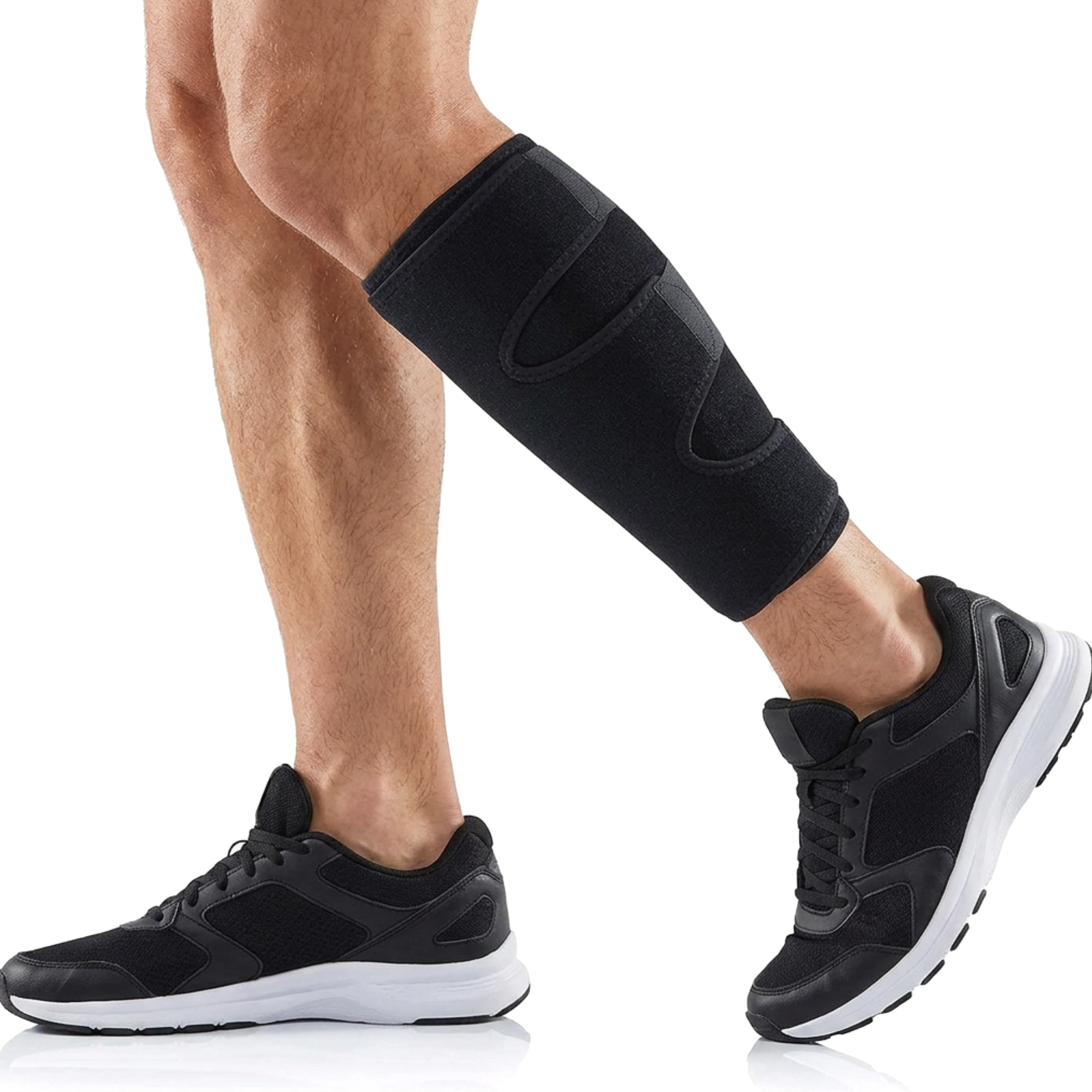
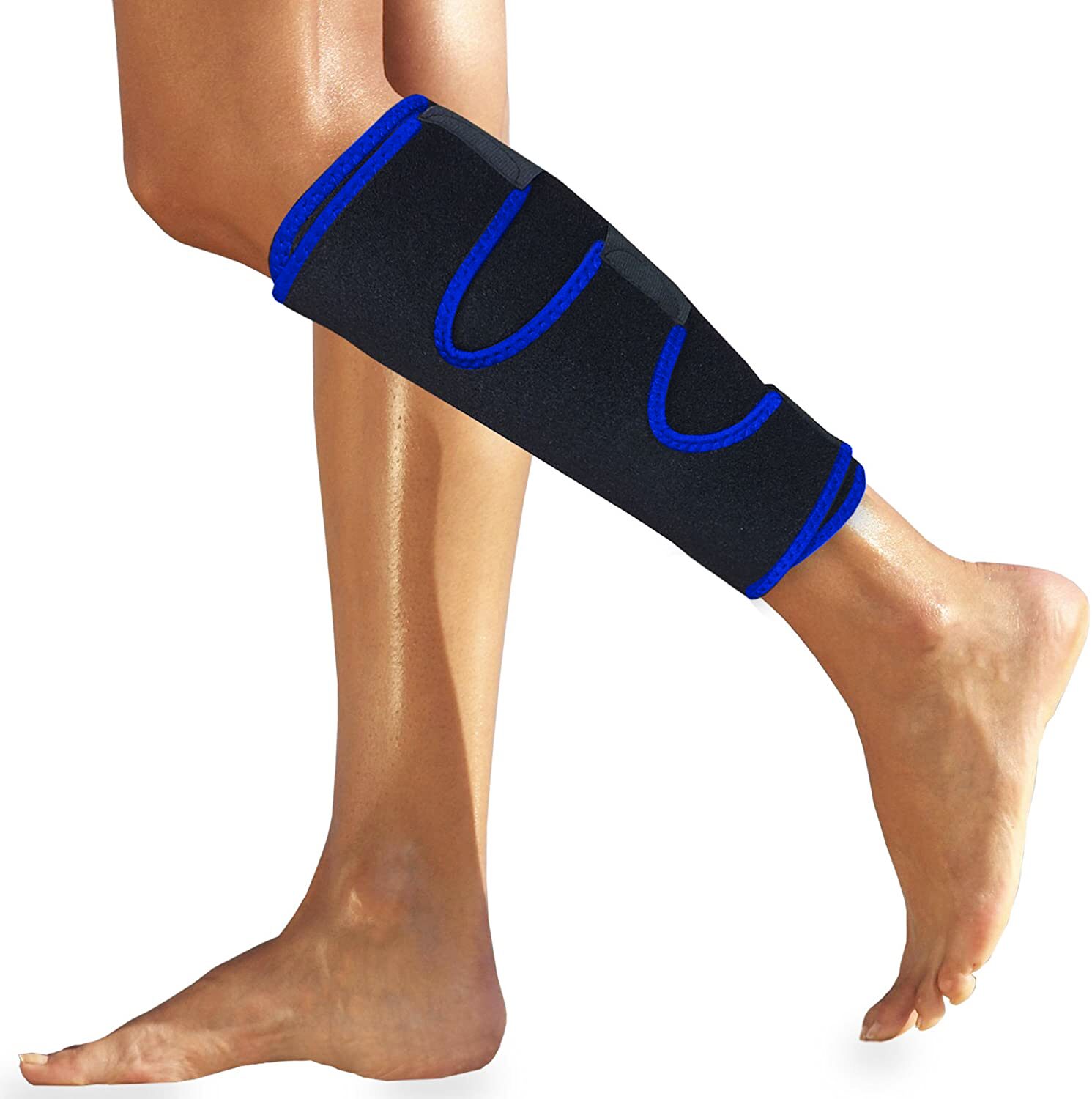
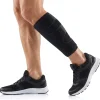
Shin Compression Sleeve Brace
£11.99inc VAT
- Adjustable compression sleeve for shin and calf discomfort linked to repetitive impact or overuse
- Three Velcro straps (top, middle, bottom) let you dial in compression to target the sorest areas
- Reduces tissue vibration and supports calf shock absorption with each footstrike
- Promotes circulation to help clear inflammatory byproducts and reduce post-activity heaviness
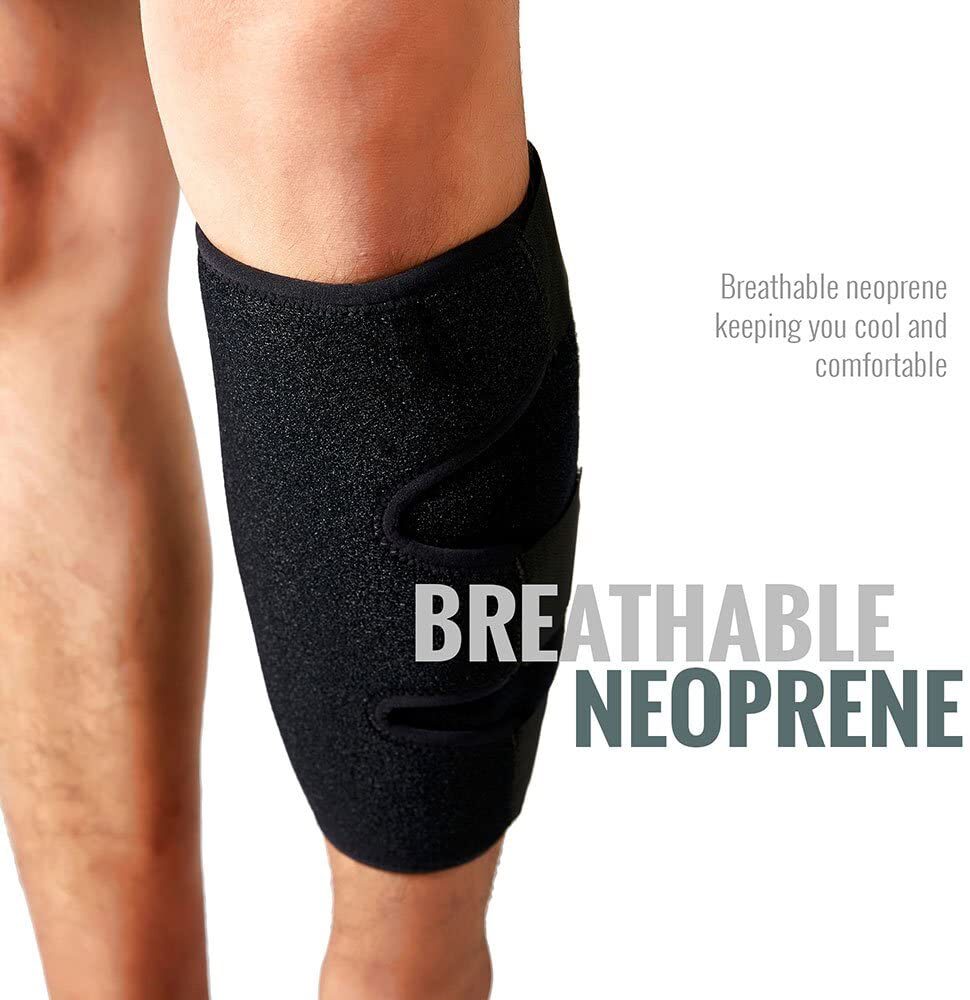
- Made from breathable, moisture-wicking neoprene that moves with your leg
- Suitable for runners, walkers, and anyone returning to activity after a break
- Wear during or after exercise; start with 1-2 hours and build up gradually
- Do not sleep in this sleeve; remove before bed
- Not suitable if you have open wounds, known DVT, severe circulation problems, or diabetes with reduced sensation
- One size fits most adults; universal design for left or right leg
When shin pain won’t settle
There’s a nagging ache down the front of your lower leg that builds as you walk, run, or simply stay on your feet. At first, you might have pushed through, hoping it would fade. But instead of fading, the discomfort has become a constant companion, limiting what you can do and leaving you wondering what’s actually going on beneath the surface.
The pain typically follows the inner edge of your shin bone—the tibia—anywhere from just above your ankle up towards your knee. It often feels like a dull, persistent ache that sharpens when you press the bone or land on your foot. Some people describe it as a bruised sensation—the bone itself tender to touch. Others notice it more as a deep, nagging soreness that won’t quite go away, occasionally spiking into something sharper when they land awkwardly or push off hard during a run.
You’ll notice it most after walking on hard pavements for a while, or when you’re coming down stairs, your shin working to control each landing. First thing in the morning, your leg might feel stiff and sore—that initial walk to the bathroom surprisingly uncomfortable. The pain often eases slightly as you move around and your tissues warm up. Then it builds again as the day goes on and you spend more time on your feet. If you’ve tried to push through a run or longer walk, the ache often flares during the activity—sometimes forcing you to slow down or stop—then lingers for hours or even days. By evening, your shin may feel heavy and tender, and even gentle pressure along the inner edge of the bone can provoke a wince.
What makes this particularly frustrating is the unpredictability. Some days you feel almost normal. Other days, the pain announces itself within minutes of starting to move. You might manage a full walk one afternoon, then struggle to get through the next morning’s commute. This inconsistency makes it hard to plan, hard to trust your leg, and hard to know whether you’re helping or hindering your recovery.
If this sounds familiar, you’re likely dealing with shin splints—a common but stubborn condition that affects runners, walkers returning to activity after a break, and anyone whose lower legs are under repetitive stress without enough recovery time. The good news is that with the right support and a clear understanding of what’s happening in your leg, most people find their symptoms settle and their confidence returns.
Who this may help
This sleeve is designed for adults with persistent shin discomfort linked to repetitive impact or overuse. You may find it helpful if you:
You run regularly and have developed shin pain that builds during or after your sessions, especially if you’ve recently increased your distance, changed from soft trails to hard pavements, or returned to running after a break. The sleeve provides real-time support during runs, helping you maintain training more comfortably while your tissues adapt.
You walk long distances or spend extended periods on your feet at work—retail, healthcare, hospitality—and your shins ache by the end of the day. The compression helps reduce the cumulative load over a long shift or a day spent walking, and may ease the heavy, congested feeling that builds after hours of standing.
You’re returning to exercise after time off and your lower legs are struggling to adapt, with pain that flares during activity and lingers for hours or days afterwards. The sleeve provides additional support during the early weeks when your tissues are still rebuilding their tolerance to repetitive loading.
You have flat feet or overpronation—your feet roll inward excessively when you land—which places extra strain on the inner shin. The sleeve won’t correct the foot mechanics themselves, but by supporting your calf and reducing tissue oscillation, it may make activity more comfortable while you work on footwear or strengthening exercises.
You experience recurring shin splints and want additional support during activity or recovery, especially if previous episodes have taken weeks to settle and you’re keen to avoid another long layoff.
If this sounds like your situation, the following sections explain what’s happening in your leg, how compression support helps, and how to use this sleeve effectively as part of your recovery.
Seek advice from a GP or physiotherapist first if
This sleeve suits shin pain that builds gradually during activity and eases with rest. However, some patterns of shin pain need clinical assessment before compression support is appropriate. Speak to a GP or physiotherapist first if:
Your shin pain is new, severe, or appeared suddenly without obvious cause—especially if it’s sharp and localised to one spot on the bone. This may suggest a stress fracture rather than shin splints, and needs imaging to rule out a more serious bone injury. The sleeve won’t help a stress fracture and may give false reassurance, allowing you to keep loading a bone that needs rest.
You have pain at rest or at night that wakes you or prevents you getting comfortable, which may suggest something other than simple overuse. Shin splints typically ease when you’re not loading your leg; pain that persists or worsens at rest warrants clinical assessment. This pattern can indicate a stress fracture, compartment syndrome, or less commonly, infection or other inflammatory conditions requiring different management.
You notice swelling that doesn’t settle with rest and ice, or swelling that feels warm to the touch. Persistent or increasing swelling can be a sign of a stress fracture, where the bone is inflamed and the surrounding soft tissues are reacting. It can also indicate infection—though this is rare and usually accompanied by other signs such as redness, heat, and feeling generally unwell—or other problems that need assessment. Swelling that feels warm and is accompanied by redness or tenderness may suggest an inflammatory process that requires medical attention.
You have a history of stress fractures or bone-related injuries, especially if this pain feels similar to previous episodes. Your risk of developing another stress fracture is higher, and it’s worth getting assessed early rather than waiting to see if it settles on its own, so that imaging can be arranged if needed and you can start appropriate management before the problem worsens. Bones that have been fractured before can sometimes be slower to adapt to new loads, and if the factors that contributed to the original fracture haven’t been fully addressed, you’re more vulnerable to recurrence.
You have diabetes, reduced sensation in your legs, or any circulation problems such as peripheral arterial disease. Compression support may not be suitable, and you should check with a clinician before using it. If you can’t feel your leg properly, you won’t be able to detect warning signs such as excessive tightness, numbness, or skin irritation, which increases the risk of injury. If your arteries are already narrowed or blocked, compression can further restrict blood flow and cause tissue damage.
You have a known or suspected blood clot (DVT) or a history of clotting disorders. Compression should not be used in these circumstances without medical advice. If a clot is present, compression can be dangerous—it may dislodge the clot or worsen the blockage.
Your shin pain is getting worse despite reducing your activity, resting, and using ice, or it’s been present for several weeks without any sign of improvement. This may indicate that something else is going on, or that you need a more structured rehabilitation plan. Shin splints should gradually improve with appropriate load management. If they’re not, you may have a stress fracture that wasn’t initially apparent, or there may be another contributing factor—such as severe overpronation, significant muscle weakness, or biomechanical issues—that needs to be addressed more directly with professional guidance.
This sleeve is a support aid, not a substitute for proper assessment or treatment. If you’re unsure whether it’s right for you, seek clinical advice before ordering. A physiotherapist can assess your movement patterns, footwear, and training load to identify contributing factors. A GP can arrange imaging if needed and check for medical factors that might be affecting your bone health or healing.
Why the front of your lower leg struggles
The pain you’re feeling is a sign of overload—your shin tissues are being asked to do more than they can currently handle. Your shin tissues—muscles, their attachments to bone, and the connective tissue that wraps around them—are under more demand than they can manage. Each footstrike stresses these structures, and over hundreds or thousands of steps, the repetitive loading creates tiny tears and inflammation. The tissues become sensitised, so even moderate activity that wouldn’t normally bother you starts to provoke pain. This is medial tibial stress syndrome, commonly known as shin splints.
To understand why, it helps to know what’s happening beneath the surface.
The front and inner edge of your shin contains a group of hardworking muscles and the connective tissue that anchors them to your tibia. The key muscle here is the tibialis anterior—it runs down the front of your shin from just below your knee to the top of your foot. It does two crucial jobs: it lifts your foot upward as you walk, clearing your toes during the swing phase of your stride, and it controls how your foot lowers back down after your heel strikes the pavement.
Every time you take a step, the tibialis anterior contracts to lift your foot, then lengthens under tension to guide it smoothly down. This lengthening-under-load—where the muscle works hard while being stretched and bearing weight—places significant strain on the muscle fibres and, crucially, on the points where muscle joins tendon and attaches to bone. These attachment points are anchored via a tough, fibrous layer called the periosteum, which wraps around the tibia and serves as the interface between muscle and bone.
When you press along the inner edge of the tibia and wince sharply, that tells you the periosteum—the bone lining—is inflamed. It’s not the bone itself that’s damaged, but the attachment points where the muscles pull on it with every step. That’s why rest alone often isn’t enough—you need to reduce the repetitive strain while you’re still moving.
When you walk or run on hard surfaces, the impact travels up through your foot and into your shin with every footstrike. Your calf muscles—the gastrocnemius and soleus at the back of your lower leg—work together with the muscles along the front of your shin to absorb and control these forces. The calf muscles lengthen under load as your heel drops after landing, acting as shock absorbers that slow how quickly your ankle bends forward. The tibialis anterior, meanwhile, works to control the rate at which your foot rolls inward and flattens against the ground. When this system is working well, the forces are shared and managed smoothly.
But when the demand outpaces your tissues’ ability to recover—perhaps you’ve increased your running mileage too quickly, switched from soft trails to concrete pavements, or your feet roll inward more than usual when you land—the repeated stress begins to irritate the periosteum and strain the points where muscles join their tendons along the inner shin. Each footstrike tugs on the periosteum where the tibialis anterior and other deep muscles attach. Over hundreds or thousands of steps, this repetitive pulling creates tiny tears and damage in the bone lining and the surrounding fascia—the tough connective tissue that wraps around muscles. Your periosteum can handle a certain amount of stress, but when you exceed its capacity—whether through volume, intensity, or surface hardness—it starts to break down faster than it can repair.
Inflammation builds in the periosteum and the connective tissue that wraps around the muscles. The tissues become sensitised, meaning that even moderate levels of activity that wouldn’t normally bother you start to provoke pain. You feel it as that persistent ache along the inner edge of your tibia—a sign that the tissues are struggling to keep up with the repetitive demand you’re placing on them. The pain isn’t usually sharp or sudden like a muscle tear or a fracture; it’s more of a grumbling, building discomfort that gets worse the more you ask of your leg.
What makes shin splints stubborn is that the activities that caused the problem in the first place—walking, standing, climbing stairs—are also the activities you need to do every day. So even when you’re trying to rest, you’re still placing stress on the irritated tissues enough to keep them simmering. The periosteum and muscle attachments never get a long enough break to fully settle. The cycle continues: you rest a bit, feel better, try to return to normal activity, and the pain flares again. Over weeks or months, this can lead to chronic sensitisation, where the tissues remain irritable and reactive even to relatively light levels of activity.
The key point is this: shin splints aren’t a single injury—they’re a sign of overload in the tissues that attach muscle to bone. The pain you feel is those tissues telling you they can’t keep up with the demand you’re placing on them. Compression support works by reducing that demand while you’re still active. But to understand how, it helps to know what’s tipping you into overload in the first place.
Why this happens and who it affects
Shin splints don’t appear from nowhere. They develop when the stress you’re placing on your lower leg consistently outpaces your tissues’ ability to adapt and recover. Understanding the common patterns can help you recognise what’s contributing to your pain—and what you need to address alongside any support measures.
Doing too much, too soon
One of the most common triggers is a sudden increase in training volume or intensity. If you’ve recently jumped from three runs a week to five, or added a few extra kilometres to each session without giving your body time to adapt, your tibialis anterior and the periosteum along your shin haven’t had the weeks they need to strengthen and catch up. Your cardiovascular system adapts quickly—you might not feel breathless—but the connective tissues lag behind. You feel capable, so you keep pushing, and the tissues quietly accumulate damage faster than they can repair.
The same happens if you’ve switched from running on soft trails or grass to hard pavements or treadmills. The increased impact with each footstrike on an unyielding surface places more stress on the tissues, and they struggle to keep up. Even changing the gradient of your usual route—adding more hills or downhill sections—can shift the stress pattern enough to tip you into overload. Downhill running places extra strain on the tibialis anterior as it works harder to control how your foot lands and stop your toes slapping the ground.
Coming back after time off
Perhaps you’ve taken time off due to illness, injury, or simply life getting in the way, and when you restart, you try to pick up where you left off. Your cardiovascular fitness returns relatively quickly—you don’t feel breathless—but the tissues in your lower leg need longer to rebuild their tolerance to repetitive stress. Muscle fibres, fascia, and the periosteum all adapt more slowly than your heart and lungs. The mismatch between what you feel capable of doing and what your shin tissues can handle typically causes overload within the first few weeks of returning.
This is especially common in January, when people return to running after the festive break, or in spring, when the weather improves and outdoor activity picks up. You remember being able to run 5k comfortably a few months ago, so you assume you still can. But your tissues have lost their conditioning, and they need a gradual ramp-up to rebuild their capacity.
How your foot lands—and what you’re wearing
If your feet roll inward excessively when you land—a pattern called overpronation—the tibialis anterior has to work harder to control the movement and slow how quickly your arch collapses. This places extra strain on its attachment points along the inner shin, especially during the phase of your stride when your foot is flattening against the ground and your shin is rotating inward. Flat feet or low arches can make this worse, because the ligaments and muscles that hold your arch up can’t resist the inward roll as well.
Worn-out trainers that no longer provide adequate support or cushioning make the problem worse. If the heel of your shoe is compressed or worn down on one side, it can alter how your foot lands and increase the stress on your shin with every step. Even a small asymmetry—one shoe more worn than the other—can create an imbalance that your lower leg has to compensate for. Looking at the sole of your trainers can reveal the wear pattern: heavily compressed on the inner heel, almost no tread left. That tells you the shoe isn’t doing its job anymore, and the shin is paying the price.
When your job adds to the load
If you spend most of your day standing on hard floors—retail, healthcare, hospitality—or climbing stairs repeatedly, your lower legs are taking a hammering even before you add any formal exercise. A nurse walking miles of hospital corridors on concrete floors, or a warehouse worker climbing stairs repeatedly to access stock, is placing cumulative stress on the tibialis anterior and periosteum. Add a run or a long walk on top of that, and the total daily demand can tip your tissues into overload. The problem isn’t any single activity; it’s the sum of all the stress across the day, with insufficient recovery time between bouts.
Shin splints are common in runners, especially those new to the sport or returning after a layoff, but they also affect walkers, military recruits during basic training, dancers who spend long periods on the balls of their feet, and anyone whose work or lifestyle involves sustained or repetitive impact on hard surfaces. If you recognise any of these patterns in your own situation, addressing them will be an important part of your recovery. The sleeve can’t fix worn-out trainers or training errors, but it can reduce the repetitive strain on your shin while you’re still active—giving your tissues a better chance to settle.
How compression support helps
Once you understand that shin splints stem from repetitive stress on overworked tissues, the logic behind compression support becomes clearer. Compression doesn’t heal the damage directly, but it changes the mechanical environment in your lower leg in ways that reduce ongoing strain and support the natural healing process. It works in four ways: it dampens tissue oscillation with each footstrike, supports your calf muscles to absorb more shock, promotes circulation to clear inflammatory byproducts, and provides proprioceptive feedback that helps you move more confidently.
Reducing tissue oscillation and repetitive strain
Every time your foot strikes the ground, the muscles in your lower leg oscillate slightly—a natural vibration that, over thousands of steps, contributes to fatigue and tiny tears in the muscle fibres and their attachments to bone. This oscillation is most pronounced in the calf muscles, which have to lengthen rapidly under load as your heel drops and your ankle bends forward after landing. As the calf muscles vibrate and stretch, they transmit forces forward through the deep fascia and interosseous membrane—the tough connective tissue that links your tibia and fibula—to the muscles and periosteum along the front and inner edge of your shin.
External compression reduces this oscillation. When a sleeve wraps firmly around your calf and lower shin, it dampens the repetitive stretch and recoil that happens with each footstrike. The points where muscles join their tendons and the periosteum experience less repetitive strain with every step you take. It’s like dampening a vibrating string: the string still moves, but the amplitude is smaller, and the anchor points experience less stress.
This matters most when you’re fatigued. In the first ten minutes of a walk or run, your muscles are fresh and can control the oscillation themselves. But after twenty or thirty minutes, as fatigue sets in, that natural control starts to fade. The muscles lengthen more, oscillate more, and the forces transmitted to the periosteum increase. That’s often when the ache starts to build. The sleeve provides external control that doesn’t fatigue, which means the tissues along your shin are protected even when your muscles are tiring.
Supporting calf shock absorption
A well-designed compression sleeve supports your calf muscles—the gastrocnemius and soleus—which play a crucial role in absorbing shock before it travels forward to your shin. When you land on your foot, your calf muscles lengthen under load to control how quickly your heel drops and how much your ankle bends. If your calf is well-supported and working efficiently, it can absorb more of the impact energy, reducing the peak forces that reach the tibialis anterior and the stressed tissues along the front and inner edge of your tibia.
This matters when you’re walking on hard pavements or running on tarmac, where there’s little natural cushioning and the ground pushes back with equal force to every footstrike. By helping your calf muscles do their shock-absorbing job more effectively, the sleeve takes some of the repetitive load off the already irritated periosteum and muscle attachments.
On soft grass or trails, your calf doesn’t have to work as hard because the ground absorbs some of the impact. On concrete, it’s doing all the work. And after twenty minutes on concrete, when the calf is starting to fatigue, it absorbs less and transmits more. The sleeve helps maintain that shock absorption even as you tire, which is why many people notice the biggest difference in the second half of a long walk or run—the point where, without the sleeve, the pain would normally start to spike.
Promoting circulation and recovery
Compression also encourages the flow of blood back up your leg toward your heart—a process called venous return. This matters because efficient circulation helps clear the inflammatory byproducts—waste products from damaged cells and the immune response—that build up in irritated tissues, and delivers the oxygen and nutrients needed for repair.
When you’ve been on your feet for a long spell and your lower leg feels heavy and achy, that sluggish, congested feeling is partly due to fluid and waste products pooling in the tissues. The veins in your lower leg rely on muscle contractions and one-way valves to push blood upward against gravity. When tissues are inflamed and you’re moving less—perhaps because the pain has made you more cautious—this pumping mechanism becomes less efficient. Graduated compression—firmer at the bottom near your ankle, slightly lighter at the top near your knee—helps push that fluid back up, reducing the sense of heaviness and supporting the natural healing process.
This is why many people notice the sleeve helps most after activity, not just during it. You finish a run or a long shift, and normally your shin would feel heavy and throbbing for the rest of the evening. With the sleeve on for an hour or two afterwards, that congested feeling eases more quickly. You’re not just managing the pain during the activity—you’re actively supporting the recovery process in the hours that follow, which means you start the next day in a better state. Over days and weeks, this improved clearance between sessions can make the difference between tissues that slowly settle and tissues that stay chronically irritable.
Proprioceptive feedback and movement confidence
The sleeve also provides a degree of proprioceptive feedback—an awareness of where your leg is in space and how it’s moving. When the tissues around your shin are inflamed and sensitised, your brain receives less clear information about joint position and movement, which can make you move more tentatively or land more heavily. The gentle, consistent pressure from the sleeve gives your nervous system additional sensory input, which can help you move more confidently and with slightly better control.
This may reduce the jarring forces that travel up through your shin with each step, especially when you’re navigating uneven ground or stairs. It’s a subtle effect—you won’t necessarily notice it consciously—but over hundreds of steps, moving with slightly better control and slightly less jarring impact adds up. You might find that activities which previously felt unpredictable—where you never quite knew if the next step would provoke a sharp twinge—start to feel more manageable and consistent.
How this sleeve delivers it
The NuovaHealth Shin Compression Sleeve is built around these principles, but with one key difference from most compression sleeves: adjustability.
Three adjustable straps—target compression where you need it
Most compression sleeves are pull-on garments that offer the same pressure everywhere. That’s fine if your pain is general and evenly distributed, but shin splints are rarely like that. The sorest spot is usually concentrated in one area—often lower down near the ankle where the tibialis anterior and other deep muscles attach to the inner edge of the tibia, or sometimes higher up towards the middle of the shin. A pull-on sleeve gives you the same compression at the top, middle, and bottom, which means you’re either under-compressing where you need it most, or over-compressing where you don’t need it at all.
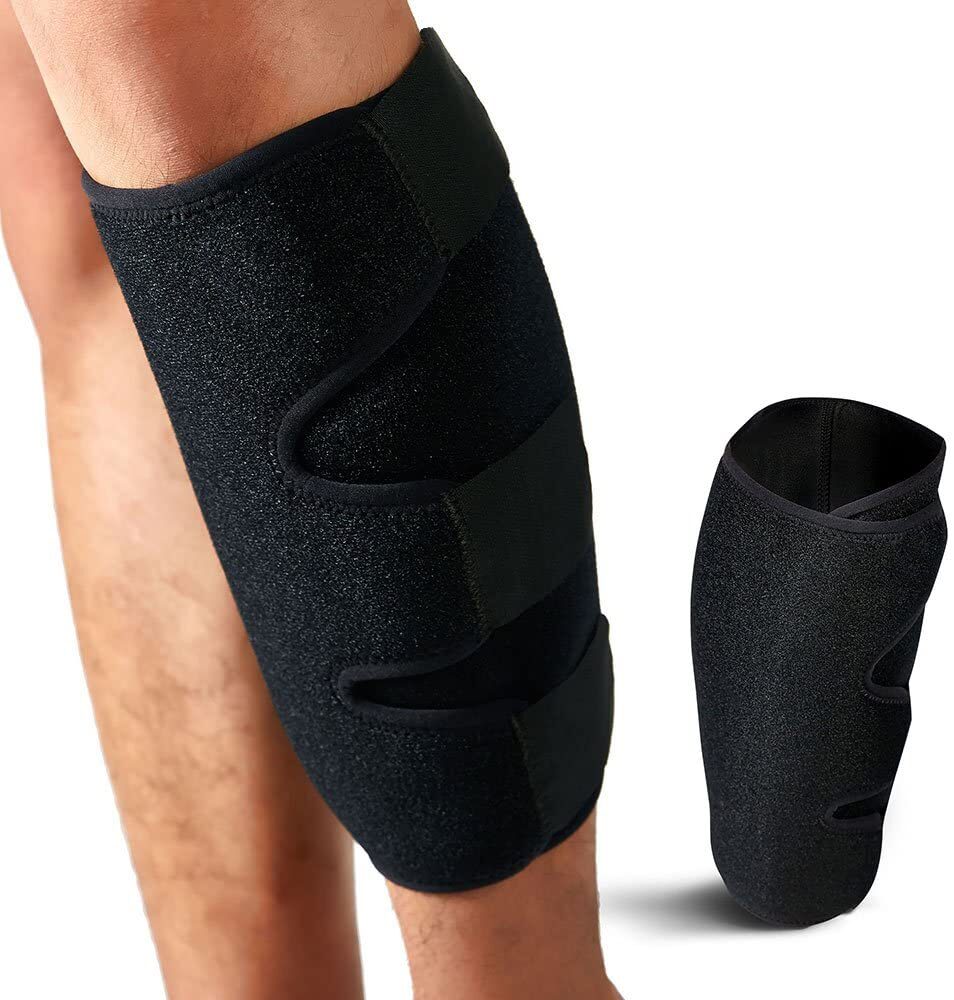
This sleeve has three independent Velcro straps—positioned at the top, middle, and bottom of your calf—that let you control the level of compression at each point. If your sorest spot is low, near the ankle, you can tighten the bottom strap firmly to concentrate the compression where the periosteum is most irritated, while keeping the upper straps slightly looser so you’re not restricting circulation or creating unnecessary pressure higher up. If the pain is higher, closer to the middle of your shin, you adjust the middle strap accordingly. You’re not stuck with one-size-fits-all compression that might feel too tight in some areas and too loose in others, or that slips down your leg as you move.
This also means you can create a graduated compression effect if you prefer: firmer at the bottom near your ankle, slightly lighter at the top near your knee. This mirrors the natural compression gradient used in clinical compression garments and can help promote venous return more effectively than uniform compression. You can experiment with the tension until you find what feels right for your leg and your activity—and if your pain shifts as you recover, or if different activities aggravate different areas, you can adjust on the fly without needing a different product.
Real-world example: Imagine you’re halfway through a long walk. Your shin starts to ache, and you realise the pain is concentrated lower down, near your ankle. With a pull-on sleeve, you’re stuck—you can’t increase the compression where you need it without taking the whole thing off and trying a smaller size (which might then be too tight everywhere else). With this sleeve, you stop for a moment, tighten the bottom strap by one notch, and continue. The targeted compression takes the edge off the pain, and you finish the walk without having to cut it short.
Neoprene material—support, breathability, durability
The sleeve is made from a neoprene blend—a material chosen for its combination of support, durability, and breathability. Neoprene is lightweight and flexible, so it moves with your leg rather than restricting it or bunching up behind your knee when you bend. It also has natural moisture-wicking properties that help keep your skin dry during exercise, which matters when you’re wearing the sleeve for longer periods or during more intense activity. The material provides a degree of warmth, which can feel comforting when tissues are sore and may help maintain local circulation without overheating.
The edges are rounded and smooth-seamed, so they sit comfortably against your skin without digging in or causing irritation—even during longer wear. The neoprene grips your calf naturally, which means the sleeve stays in place as you move without needing to be over-tightened.
The three Velcro straps are fully adjustable and wide enough to distribute pressure evenly. You can secure the sleeve firmly without it slipping down your leg as you move, but you can also loosen it quickly if you need to adjust the fit partway through a walk or run.
Universal fit—left or right leg, most adult sizes
The design is universal—suitable for either your left or right leg—and fits most adult calf sizes. The adjustable straps mean you’re not reliant on a fixed size that may be too tight in some places and too loose in others. You tailor the fit to your leg shape and your pain pattern, which makes the sleeve more versatile and more likely to provide the support you actually need.
What to expect
Compression support can feel reassuring from the moment you put it on—many people notice an immediate sense of stability and reduced discomfort during activity. However, it’s important to set realistic expectations about what the sleeve can and cannot do, and how those effects change over different timescales.
Weeks 1–2: Taking the edge off
You may notice the sleeve makes activity more comfortable—less jarring pain during exercise, less heaviness afterwards. The pain is still there, but the sharp edges are blunted. For many people, this translates into being able to walk or run for longer before the familiar ache builds. Instead of the pain starting to nag after ten minutes of walking, you might find you can manage twenty or twenty-five minutes before it becomes noticeable. Or you might notice that the sharp, bruised feeling when your foot lands—that wince-inducing jolt that makes you want to shorten your stride—is less intense, allowing you to move more naturally and confidently.
The difference is often most noticeable in the second half of a longer session, when fatigue normally causes the pain to spike. With the sleeve, that spike is blunted. You still feel some discomfort, but it doesn’t escalate to the point where you have to stop or significantly slow down.
After exercise, wearing the sleeve may help ease post-activity soreness and reduce the heavy, congested feeling that often lingers in your lower leg. Instead of hobbling for the first few steps when you get out of bed, you might find your shin feels sore but not locked up, and that it eases more quickly as you start moving. Over the course of a few days, this can make it easier to stay active without each session leaving you struggling for the next day or two.
Weeks 3–4: Pain starts later, eases faster
The pain starts later in your sessions and eases more quickly afterwards. Activities that used to leave you hobbling the next day now leave you sore but functional. You might notice that you can exercise on consecutive days without the pain building cumulatively—something that would normally force you to take two or three rest days between sessions. Or that the evening heaviness and throbbing that used to keep you awake or make it uncomfortable to sit with your leg down eases more quickly, so you can relax and sleep better.
You may find that activities which previously felt punishing—a brisk walk to the shops on concrete, a jog around the park—feel more manageable, with less of that deep, nagging soreness building as you go. The sharp jolt when you land becomes a dull ache. The next-morning stiffness that used to last an hour now eases within ten minutes.
Weeks 5–8: Pain becomes occasional rather than constant
You can complete most activities without significant discomfort, though you may still feel a dull ache after harder sessions or long days on your feet. The pain that used to start after ten minutes now starts after twenty, or doesn’t appear at all on easier days. The evening throbbing that used to keep you awake fades to a mild soreness. These incremental improvements are signs that the tissues are adapting and healing. If you’re seeing this pattern over weeks, you’re on the right track.
Tissue healing takes time. Even with compression support, the inflamed bone lining and strained muscle attachments need weeks of appropriate load management to settle fully. The tiny tears and damage that have built up over hundreds or thousands of footstrikes don’t resolve overnight. The sleeve aids this process by reducing repetitive strain and promoting circulation, but it doesn’t replace the need for gradual progression, rest when needed, and attention to the factors that caused the problem.
Most people find that their shin pain improves steadily over four to eight weeks when they use the sleeve alongside sensible pacing of their activity. This means spreading your walking and standing more evenly through the day rather than doing it all at once—taking short breaks to sit down during a long shift, or breaking a long walk into two shorter sessions with rest in between. It means choosing softer surfaces when you can—grass or trails instead of tarmac, or a rubberised track instead of concrete pavements.
It also means ensuring your trainers aren’t worn down at the heel or compressed on one side, and replacing them if they are. And it means building your mileage or time on your feet gradually rather than jumping back to where you were before the pain started—adding no more than ten to fifteen percent to your weekly distance or time each week, and having at least one full rest day between harder sessions.
Some people notice faster progress, especially if they catch the problem early and address contributing factors quickly. If you’ve only had shin pain for a couple of weeks, your footwear is good, and you’re able to modify your activity promptly, you might find the pain settles within three to four weeks. Others take longer, depending on how irritated the tissues were to begin with, how well they manage their activity levels, and whether they address issues such as foot mechanics or training habits.
What the sleeve can’t fix
The sleeve can’t heal a stress fracture or other bone injury. If your pain is sharp, localised to one specific spot on the bone, and doesn’t ease with rest, you need imaging—usually an X-ray or MRI—and clinical assessment to rule out a fracture. Stress fractures require a different management approach, often involving a period of complete rest or modified weight-bearing, and the sleeve alone won’t be enough. Continuing to load a stress fracture can lead to a complete break, which requires much longer recovery and sometimes surgical intervention.
The sleeve can’t correct the way your foot rolls inward when you land, muscle imbalances, or poor running technique, though it may make activity more comfortable while you address these separately through footwear changes, strengthening exercises, or gait retraining. If overpronation is a significant contributor to your shin pain, you’ll likely need to address it directly—through supportive trainers, insoles, or exercises that strengthen the muscles that control your arch—rather than relying on the sleeve alone. The sleeve can buy you time and comfort while you work on those factors, but it’s not a substitute for them.
The sleeve can’t replace rest, appropriate footwear, or gradual training progression. If you continue to overload your shin without giving the tissues time to adapt—running hard every day, ignoring pain signals, or wearing worn-out shoes—the sleeve will only mask the problem temporarily. The irritation will continue, and you risk turning an acute overload into a chronic, recurring issue that takes months to settle and may eventually require a complete break from activity.
The sleeve is one part of your recovery approach—a helpful one, but not a standalone solution. It works best when combined with sensible management of your activity, addressing any contributing factors, and giving your tissues the time and conditions they need to heal.
How to use this sleeve
Getting the most from the sleeve means wearing it correctly, building up gradually, and paying attention to how your leg responds.
Fitting the sleeve
The sleeve wraps around your calf and lower shin, with three adjustable Velcro straps that let you dial in the compression at different points. Start by positioning the sleeve so that the bottom edge sits just above your ankle bone, with the main body of the sleeve covering your calf and the lower part of your shin where the pain is most noticeable.
Fasten the straps one at a time, starting with the bottom strap. Pull it snug enough that you feel firm, even pressure around your lower leg, but not so tight that it digs in, causes numbness, or makes your skin bulge around the edges. The compression should feel supportive and slightly restrictive, but you should still be able to slide a finger underneath the strap without too much resistance. If the strap is so tight that you can’t fit a finger under it, or if your skin starts to tingle or feel numb, loosen it immediately.
Move up to the middle strap, then the top strap, adjusting each one to create the level of compression that feels right for your leg. You can make the bottom strap firmer if that’s where your pain is concentrated, or adjust the middle strap more tightly if the soreness is higher up your shin. The goal is to create targeted support where you need it most, without over-compressing areas that don’t need as much pressure.
The sleeve should stay in place as you move, without slipping down your leg or bunching up behind your knee. If it slides down during activity, tighten the straps slightly. If it feels too restrictive or uncomfortable, loosen them. Finding the right balance may take a few attempts—everyone’s leg shape and pain pattern is slightly different.
When and how long to wear it
You can wear the sleeve during exercise—walking, running, or any activity that normally aggravates your shin pain—or after exercise to support recovery. Some people find it most helpful during activity, others prefer to use it afterwards, and many use it for both.
When you first start using the sleeve, wear it for shorter periods—one to two hours at a time—to let your leg adapt to the compression. Your tissues need time to get used to the external pressure, and wearing it for too long initially can sometimes cause discomfort or a feeling of heaviness once you take it off. After a few days, if your leg is tolerating it well, you can gradually increase the duration.
During activity, you can wear the sleeve for the full duration of your walk, run, or shift at work, as long as it remains comfortable and doesn’t cause any numbness, tingling, or excessive tightness. If you notice any of these signs, stop and loosen the straps, or remove the sleeve and give your leg a break.
After activity, many people find it helpful to wear the sleeve for an hour or two while resting—sitting with their feet up, or moving around the house—to promote circulation and reduce the heavy, achy feeling that often lingers post-exercise. This can help your leg recover more quickly and reduce next-day stiffness.
Do not sleep in the sleeve. Remove it before bed. Compression during sleep can restrict circulation when your leg is stationary for long periods, and you won’t be awake to notice warning signs such as numbness or excessive tightness.
What else you need to do
The sleeve works best when used alongside other strategies to manage your shin pain and address what caused it:
- Replace worn trainers—check for compressed heels or worn tread, especially on the inner edge
- Build mileage gradually—no more than 10-15% increase per week, with rest days between harder sessions
- Choose softer surfaces when possible—grass, trails, or rubberised tracks instead of concrete
- Strengthen and stretch your calf—a physiotherapist can prescribe exercises to improve shock absorption
- Use ice after activity—if your shin feels hot or swollen, apply a cold pack wrapped in a towel for 10-15 minutes
The sleeve supports these measures—it doesn’t replace them.
Care and maintenance
Hand wash the sleeve in cool water with a mild detergent after each use, or every few uses if you’re wearing it daily. Rinse thoroughly, squeeze out excess water gently—don’t wring or twist—and lay flat to air dry away from direct heat. High heat can damage the neoprene and weaken the Velcro. Check the straps regularly for signs of wear.
Signs to stop or adjust
Remove the sleeve immediately if you notice:
- Numbness, tingling, or pins and needles in your lower leg, ankle, or foot
- Skin that feels cold to the touch, or colour changes (pale, blue, or mottled)
- Increased pain or swelling that gets worse while wearing the sleeve
- Skin irritation, redness, or broken skin under the straps
If symptoms persist after removing the sleeve, consult a GP or physiotherapist.
Sizing and fit
This sleeve is designed as a universal fit for most adults. The three adjustable Velcro straps allow you to tailor the compression to suit your leg shape and the specific areas where you need support, so you’re not reliant on a fixed size that may be too tight in some places and too loose in others.
The sleeve is suitable for either your left or right leg—there’s no specific left or right design—and the neoprene material has enough stretch to accommodate a range of calf sizes while still providing firm, supportive compression.
If you’re unsure whether the sleeve will fit comfortably, or if you have particularly large or small calves, it’s worth checking with a clinician or contacting the supplier before ordering. A physiotherapist or podiatrist can also advise on whether compression support is appropriate for your specific situation, especially if you have any underlying circulation issues or medical conditions that might affect how your leg tolerates compression.
Who should not use this sleeve
This sleeve is not suitable for everyone. Do not use it if you have any of the following:
- Open wounds, cuts, or broken skin on your lower leg—compression over damaged skin can delay healing and increase the risk of infection.
- Known or suspected deep vein thrombosis (DVT) or a history of blood clots—compression can be dangerous if a clot is present, as it may dislodge the clot or worsen the blockage.
- Severe peripheral arterial disease or poor circulation in your legs—compression can further restrict blood flow and cause tissue damage.
- Diabetes with reduced sensation in your legs or feet—if you can’t feel your leg properly, you won’t be able to detect warning signs such as excessive tightness, numbness, or skin damage.
- Significant swelling in your lower leg that hasn’t been assessed by a clinician—unexplained swelling can be a sign of a more serious problem that needs medical attention before compression is used.
This sleeve does not treat or prevent blood clots and must not be relied upon for that purpose. If you have risk factors for clotting, or if you notice sudden swelling, pain, warmth, or redness in your calf that doesn’t settle, seek medical advice promptly.
If you develop any new or unexplained symptoms while using the sleeve—such as increased pain, spreading numbness, skin colour changes, or swelling that gets worse—remove the sleeve and speak to a GP or physiotherapist.
Compression support is intended to aid symptom management and support tissue healing as part of a broader recovery plan. It is not a cure, and it does not replace the need for appropriate assessment, load management, or treatment of what caused the problem.
Disclaimer
The information on this page is general guidance based on common patterns of shin pain and the principles of compression support. It is not a substitute for individual medical advice, diagnosis, or treatment.
If you have new, severe, or unexplained shin pain, or if your symptoms are not improving with rest and self-management, speak to a GP or physiotherapist for a proper assessment. They can arrange imaging if needed, check for underlying medical factors, and provide a tailored rehabilitation plan.
This product is designed to support symptom management and tissue healing as part of a broader recovery approach. No guaranteed outcomes are promised, and results will vary depending on the severity of your condition, how well you manage your activity levels, and whether you address any contributing factors.
If you are unsure whether this sleeve is suitable for you, especially if you have diabetes, circulation problems, or a history of blood clots, seek professional advice before use.
Fast & Secure Checkout Through Paypal
Pay with Paypal the secure payment gateway that accepts all credit and debit cards. Paypal is free and secure and no credit or bank information is ever stored or shared with us.
Fast Dispatch
Enjoy your items soon with quick dispatch via Royal Mail. Expect to have your items between 1-3 working days for domestic orders. 7-10 Working days for international orders.
Return Policy – 30 Day Money Back Guarantee
In the unlikely event, you are unhappy with your purchase you can return it within 30 days for a refund. Please contact us via the form on the contact us page to start your return.
To return an item please send it to: Nuova Health UK, 81 Highfield Lane, Waverley, Rotherham, S60 8AL. Please include a note with your order id so we know who to refund. Please retain your postage receipt as proof of postage. All that we ask is that the item is in the original packaging and unused.
Reviews
There are no reviews yet.