
RevitaFit™ Compression Raynauds Gloves for Raynaud’s disease
£10.99inc VAT
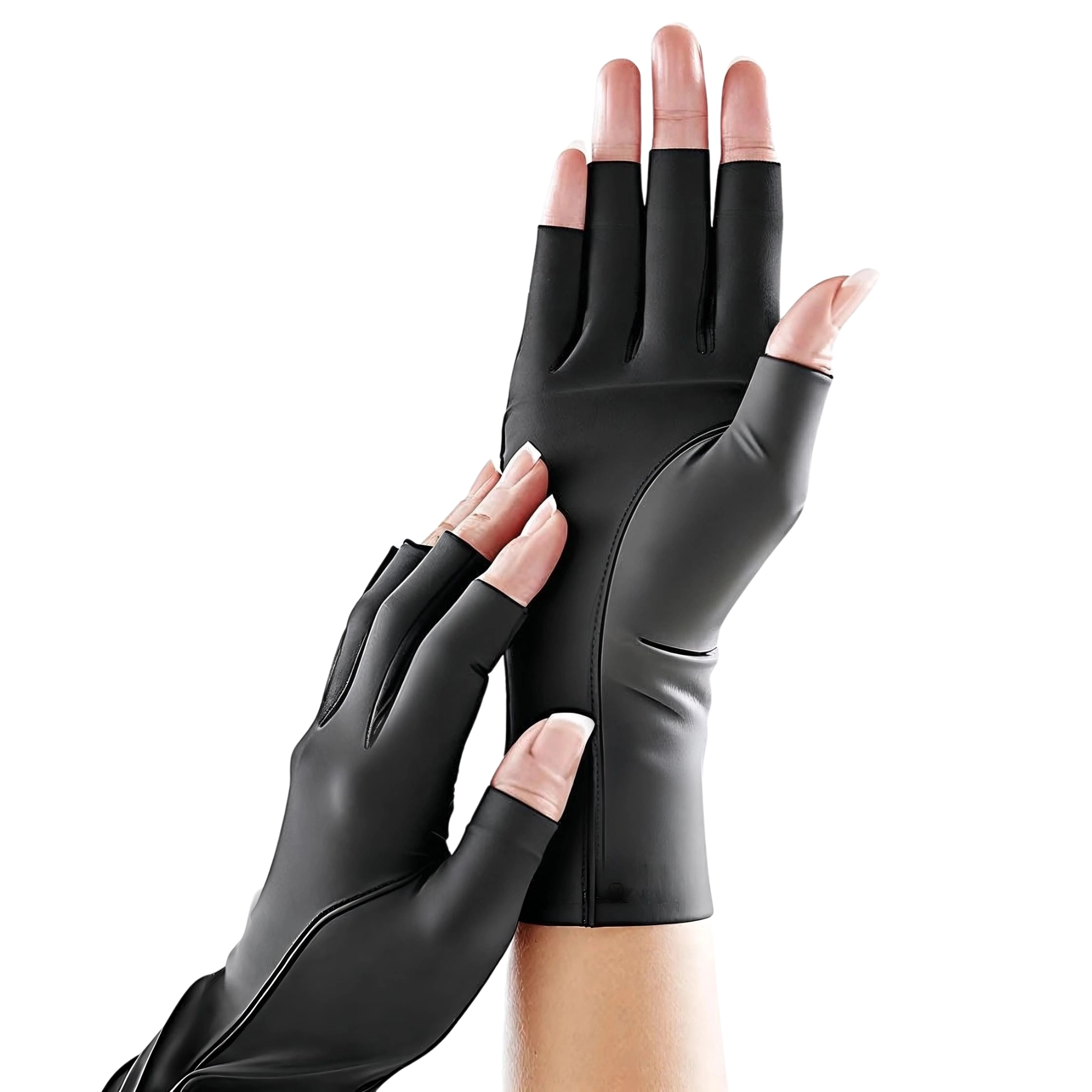
- Slim, close-fitting fingerless gloves for adults whose hands go cold easily and ache with it
- Designed mainly for Raynaud’s, where keeping the hands warm is the main way to reduce episodes
- Worn next to the skin, the close fit holds a thin layer of still air against your hands, and still air slows heat loss
- Helps keep the hands at a steadier temperature, so they react less sharply to a sudden chill
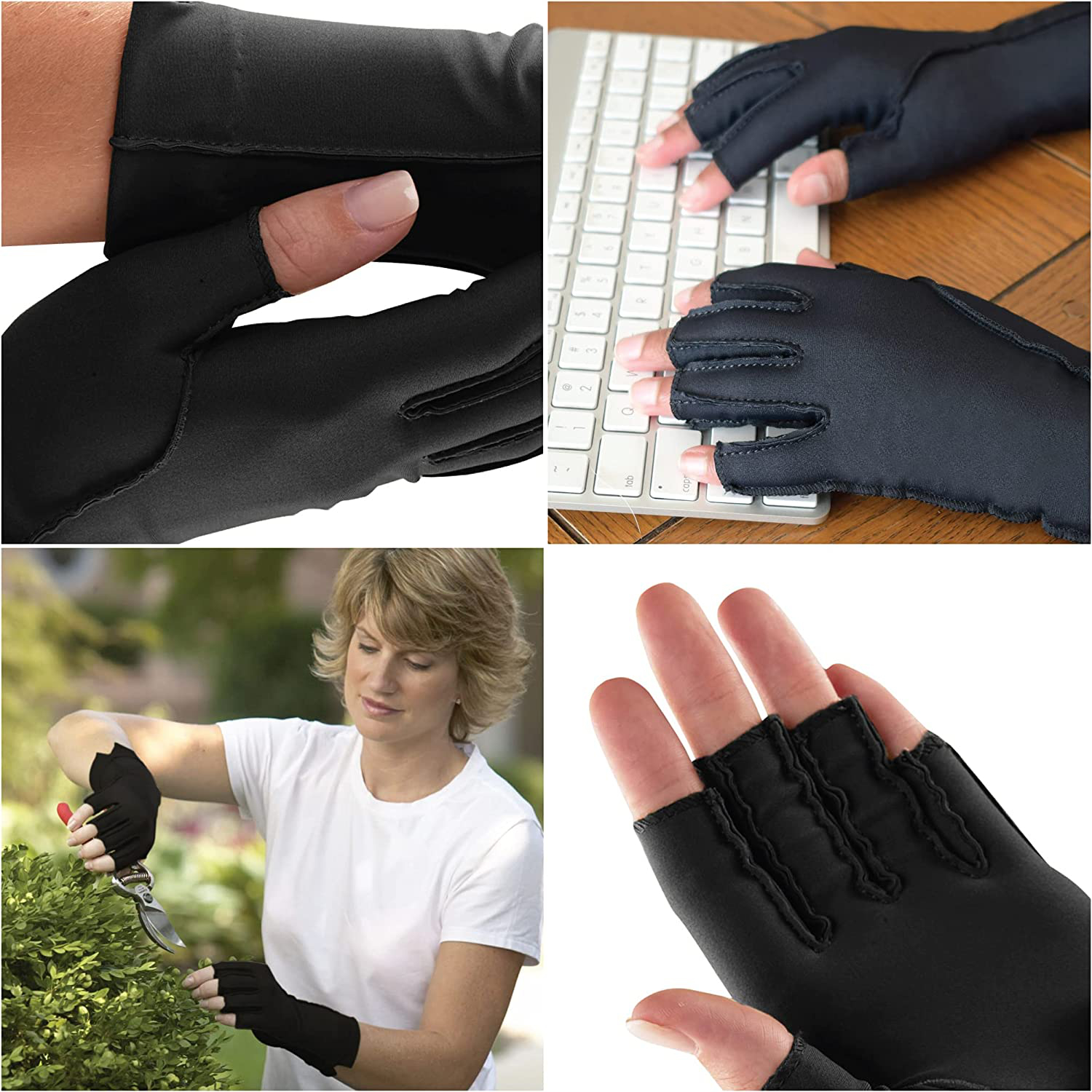
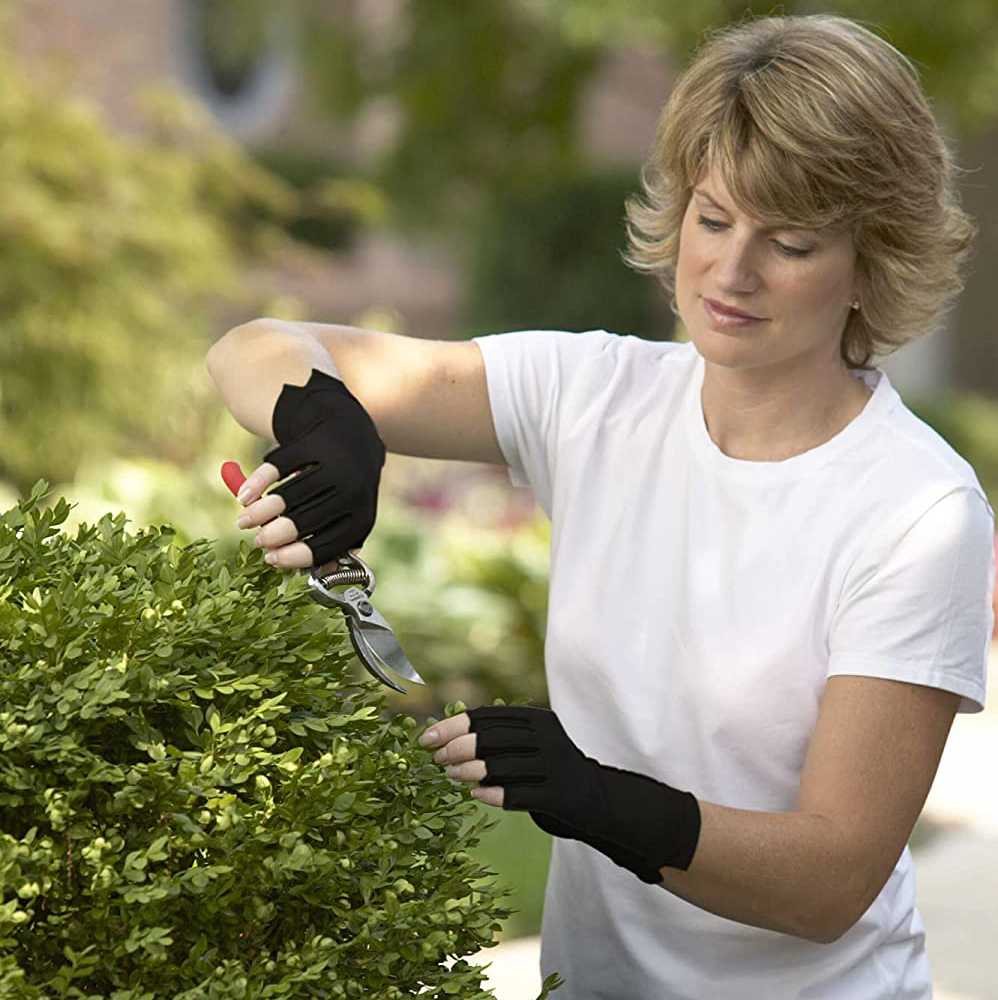
- Fingerless, so your fingertips stay free for typing, touchscreens, cooking, writing and small fiddly jobs
- Breathable fabric moves moisture away from your skin, which keeps your hands dry — damp skin loses heat much faster than dry skin
- A seamless build, with no internal stitching to press into the skin
- Wear on their own indoors, or as a base layer under thermal gloves and mittens outdoors
- Gentle, even contact across the hand, as a supporting detail only — very light, not medical-grade compression, and not a replacement for any compression you’ve been prescribed
- Speak to a GP or physiotherapist first if sensation in your hands is reduced
- Not a cure for Raynaud’s, and not designed to treat or prevent blood clots
- If symptoms are new or getting worse, or you notice sores or severe pain, see a GP before relying on them
- Machine-washable on a gentle cycle; hand washing is the gentlest option
Understanding Raynaud’s: what’s actually happening to your hands
Raynaud’s often begins with something completely ordinary. You pick up a cold glass. You step outside on a frosty morning. You walk into a chilled supermarket aisle in short sleeves. Seconds later, your fingers turn white, then blue. They feel numb and stiff, and an ache builds in the tips. When the warmth finally returns, the feeling changes to a throbbing, tingling discomfort that lingers far longer than you’d like.
The first few episodes can be unsettling. Raynaud’s is a condition where your blood vessels overreact to cold and to stress, and it’s far more common than most people assume. There’s no cure, but there is a great deal you can do to make episodes less frequent and less disruptive. Keeping your hands properly warm is the most effective of those things, and it’s where most people start.
What it feels like day to day
Once episodes become regular, they start to shape how you go about ordinary things. You might hesitate before reaching into the fridge, or notice it as soon as you step outside on a cold morning. Getting dressed, making a hot drink, or carrying shopping bags can all become harder than they should be when your fingers stiffen and lose their grip.
It affects more of the day than you might expect. Fastening the buttons on a coat takes longer when the tips of your fingers can’t feel the fabric properly. Preparing food — chopping vegetables, opening a jar, lifting something out of the freezer — becomes awkward when your grip is unreliable. Typing, replying to a message, or holding a phone can feel clumsy. Even picking up coins, turning a key, or doing up a zip can become slow and awkward.
The unpredictability is often the hardest part. Episodes can begin without warning, which makes ordinary activities harder to plan around. Over time, you may find yourself arranging your day around the chance of a flare-up — a period when symptoms are worse — skipping certain tasks, staying indoors on cold days, or worrying about being caught somewhere with no way to warm up. For some, the visible change in colour makes social situations awkward too.
That said, there’s plenty you can do to reduce how often episodes happen and how much they interfere with your day. And to use those measures well, it helps to understand what’s happening inside the blood vessels.
Why your hands react the way you do
The reason warmth helps so much comes down to what’s happening inside your blood vessels.
Blood vessels are muscular tubes that carry blood around the body. They’re not rigid pipes. They can tighten and widen, and they do it constantly. When you’re cold, they narrow to keep heat near your core, where your vital organs are. When you warm up, they widen again. That’s a normal, healthy reflex, and it’s one of the ways your body protects itself.
In Raynaud’s, that reflex goes much further than it should. A tiny drop in temperature — smaller than most people would even notice — or a moment of stress causes the vessels to tighten sharply and suddenly. This sudden narrowing is called a vasospasm. Blood flow to the fingertips drops away, which is why your fingers turn pale, then blue, and feel intensely cold. When the spasm passes and the vessels open again, blood rushes back in, and that rush is what produces the throbbing or burning sensation. It feels like a fresh problem, but it’s actually the episode resolving.
So Raynaud’s is about more than feeling cold. The problem lies in how your blood vessels react, and how far they overshoot.
Why your hands are hit hardest
Your hands are especially vulnerable, for several reasons that add up.
Your body sends heat where it’s needed most, and it protects the core first — your heart, lungs, and the organs in your trunk. When you get cold, the vessels in your hands and feet narrow to reduce blood flow out to the extremities and keep that heat nearer the middle. That’s why hands and feet go cold first when the rest of you is merely cool. It’s also why keeping your own core warm helps your hands: if your core is warm enough, there’s less reason for your body to reduce blood flow to the fingers.
On top of that, your hands sit furthest from the centre of the body, so they’re last to receive heat when your body is conserving it. Fingers are long, thin and narrow, which gives them a lot of surface area for the amount of tissue inside them, and heat leaves that surface quickly. The vessels serving them are small and sit right at the end of the circulation, so any reduction in flow shows up there before it shows up almost anywhere else. And your hands are the part of you most likely to come into contact with cold air, cold metal, cold water and cold surfaces — a door handle, a steering wheel, a chilled food packet, a washing-up bowl.
Together, these explain why the fingers are usually the first part of the hand to change colour.
Why it happens so quickly
In someone without the condition, the vessels narrow gradually, and only when the temperature falls enough to warrant it. In Raynaud’s, that same protective reflex triggers at a smaller drop in temperature, and does so sooner and more strongly than it should. A change that would barely register for most people is enough to set it off.
For someone without Raynaud’s, that response is mild and barely noticeable. In Raynaud’s, it’s far stronger, and once that response begins, your hands lose heat quickly.
That’s where having warmth in reserve helps. If your hands are already warm when a sudden drop in temperature arrives — a cold handle, a draught, a chill room — there’s more warmth stored in them before the vessels respond. That stored warmth slows the fall in temperature. Once it’s gone, your hands cool faster, and the trigger point is reached sooner. That difference is often what decides whether a cold spell passes without an episode.
Cold is behind most episodes, but it isn’t the only factor.
A closer look at triggers and risk factors
Two things shape how often an episode happens: what sets it off, and how readily your blood vessels narrow in response. A handful of factors make some people more prone to Raynaud’s than others, and knowing what tends to set yours off helps you plan around it.
Cold is by far the most common trigger, and it doesn’t take freezing weather. Something as simple as reaching into a fridge, holding a cold drink, or sitting in an air-conditioned room can be enough to make the blood vessels narrow more than they should. Stress plays a part too. When you’re anxious or under pressure, your body releases hormones that naturally tighten blood vessels. That’s a normal response, but if you have Raynaud’s, it becomes exaggerated — so a tense morning or a stressful phone call can set off an episode just as cold can.
Some things about you make it more likely to develop. Women are several times more likely to be affected than men, partly because hormonal influences affect blood vessel tone. Primary Raynaud’s usually starts between 18 and 30, though it can appear at any age. People in colder regions tend to have more frequent episodes, partly because repeated exposure to cold can make blood vessels increasingly reactive over time. Even those living in warmer areas can develop it, though it’s less common there.
Smoking and caffeine are worth mentioning specifically. Smoking damages the lining of blood vessels and makes them more prone to sudden narrowing. Caffeine can amplify the signals that cause constriction, especially in people who are already sensitive to it. And there’s often a genetic link — if a family member has Raynaud’s, your chances of having it are higher.
All of this helps explain why managing Raynaud’s isn’t a one-size-fits-all approach. It’s about recognising your own triggers and building practical strategies around them. And since cold is the most common trigger by a distance, keeping your hands warm is where most people begin.
Primary and secondary Raynaud’s, and why a diagnosis matters
Not every case of Raynaud’s is the same, and which type you have shapes how you manage it. Broadly, it falls into two groups.
Primary Raynaud’s is the more common form. It happens on its own, without any other underlying condition. If this is your situation, you may experience episodes of cold, numb fingers, but they tend to be less severe and don’t usually lead to skin or tissue damage. It often first appears in early adulthood, and affects more women than men, although it can develop at any age.
Secondary Raynaud’s is different. It happens because another health condition is causing your blood vessels to overreact. Usually that condition is autoimmune, which means the immune system — the network that normally defends you against infection — mistakenly attacks your own healthy tissue. Scleroderma, lupus and rheumatoid arthritis are common examples. Scleroderma can lead to a build-up of scar-like tissue in the skin and organs. Lupus can trigger widespread inflammation. Rheumatoid arthritis mainly targets the joints. Secondary Raynaud’s can feel more intense, and it may come alongside joint pain, skin rashes, fatigue, or changes in the texture of your skin.
So if you haven’t been formally diagnosed but you regularly notice your fingers turning white or blue, speaking to your GP is a sensible step. A doctor can determine which type of Raynaud’s you have and check whether there’s an underlying condition that needs attention. They may ask about your symptoms, how often they occur, and whether you have any other health issues. In some cases they may arrange blood tests or refer you to a specialist.
A proper diagnosis does more than protect your health. It brings clarity. Instead of wondering why your hands behave this way, you can move forward with a clearer understanding, and manage your symptoms with more confidence.
Why a warm base layer makes sense
Keeping your hands warm is the most direct thing you can do, and a base layer is one of the simplest ways to do it.
A base layer is a thin piece of clothing worn directly against the skin, underneath whatever you’d normally wear on top. It doesn’t need to be thick to work. It needs to sit close.
Here’s the reasoning. Still air is a poor conductor of heat — it loses warmth slowly. When a close-fitting layer holds a thin film of still air against your skin, that film acts as a buffer. It slows how quickly your hands cool, and keeps them at a higher starting temperature than they’d reach if they were bare.
That higher starting point changes the odds. You don’t have to become fully cold for an episode to begin; a small drop in temperature is often enough to set the vessels narrowing. If your hands are already warm, the cold air around them has to draw more heat away before that trigger point is reached. In practice, that means more of the ordinary chills of a day pass without a reaction, and the ones that do get through tend to be milder.
The fit is what decides whether that buffer actually forms. The layer only holds warmth while it stays in contact with your skin.
These gloves also add a very light, even contact across the hand.
How these gloves are designed to help
These warm base layer gloves are built for people whose hands struggle in the cold. They’re fingerless, slim enough to sit under another pair, and designed to be worn next to the skin so the heat your hands produce stays where it’s needed.
Warmth through the fit
These gloves are cut to sit close against the hand, following its shape rather than standing away from it. That closeness is what keeps the warm layer in place. A glove that stands away from the skin lets warmth escape at the edges and shifts about as you move, so the warm layer never forms properly and the heat you’ve built up is lost.
Because this one stays put, your hands hold more of the warmth they produce. That warmth stays where the glove is closest — across the palm, the back of the hand and the bases of the fingers — rather than escaping at the edges as you work.
Comfort and breathability
A glove is only useful if you can comfortably keep it on, so the fabric lets air move through it. That stops your hands feeling stuffy after an hour or two, and keeps the layer comfortable against the skin.
The fabric also moves moisture away from your hands. That’s not just about comfort. Damp skin loses heat much faster than dry skin, because water carries warmth away from the body more effectively than air does. When your hands get damp — from washing up, from mild sweat, or from being caught in the rain — they cool faster than they otherwise would, which undoes much of the warmth the glove has built up. Moving that moisture away keeps the skin dry, and dry hands hold their warmth.
Your hands also stay at a more even temperature, so they’re less likely to overheat indoors and then chill the moment you step outside.
Free fingertips for everyday tasks
The fingerless design is one of the most practical features. Your fingertips stay uncovered, so you can keep the gloves on for typing, using a touchscreen, picking up small objects, writing, cooking, or detailed craft work. You can feel the keys, the screen, the fabric and the surfaces you’re working with, which is what you need for anything requiring fine control.
The trade-off is that fingertips lose heat faster than covered skin. Most people still find the gloves help a great deal, because the palm, the back of the hand and the bases of the fingers stay warm. And a glove only helps if you keep it on, which is easier when you don’t have to take it off every time you need your hands.
Seamless comfort
You’re going to be wearing these for long stretches, so comfort counts here, because the gloves only work if you keep them on. They’re made with a seamless design, which means there are no internal stitches to press into the skin or catch on tender areas.
Seams are the most common cause of discomfort in a close-fitting glove. A seam is a ridge where two pieces of fabric are joined, and under a snug glove it presses into the skin along a single line. The places it tends to cause trouble are the knuckles and the sides of the fingers, where there’s very little soft tissue to cushion it. Take those seams away and the pressure lines go with them — the glove presses evenly rather than digging in at one spot. That’s a particular benefit during a Raynaud’s flare-up, when hands are already tender, because a smooth surface doesn’t add irritation on top.
The gloves fit closely but comfortably, moving with your hand rather than pulling against it. There’s enough gentle contact to add light support without pinching, which counts if you’re wearing them for hours.
Very light pressure, as a supporting detail
Alongside the warmth, these gloves give a small amount of even pressure across your hands and fingers.
It’s light — nothing like the measured compression of a medical garment, where the pressure level is set deliberately by a clinician. If you’ve been prescribed compression for your hands, these aren’t a replacement for it. What they offer is closer to a gentle, even contact: no band that tightens, and no pressure that builds the longer you wear it.
That light contact supports the natural return of blood through the veins — the part of the circulation that carries used blood back towards the heart. In the hands, that journey runs against gravity, and a little external pressure can support that return.
What it can’t do is stop the vessels narrowing or push blood into the fingertips. Those are reactions inside the vessel wall, and a thin glove resting on the skin can’t override them. So the pressure here is a supporting detail. Warmth does most of the work.
Getting the fit right
The fit affects how well the gloves work. If they’re too loose, they won’t hold warmth close to your skin, and they won’t give you the light support they’re designed for. If they’re too tight, they’ll be uncomfortable, and they could reduce rather than help your circulation — the opposite of what you want.
These gloves should feel snug but not tight. When you put them on, you should feel a close, even layer across your palm and fingers. You should be able to cross your fingers, make a fist, and move your thumb naturally without any pinching.
If you notice deep red marks on your skin after removal, tingling or numbness in your fingers, difficulty bending them, or a sense of throbbing or discomfort, the gloves may be too small. On the other hand, if the fabric wrinkles at the fingertips or palm, the gloves shift around when you move your hands, or you feel very little close support, they may be too large.
To measure your hand, use a soft tape measure and wrap it around the widest part, usually across the knuckles just below the base of your fingers. Keep the tape snug but not tight, and note the measurement in centimetres. Then compare it with the size guide. If you’re between sizes, think about whether you’d prefer a slightly closer fit or a gentler one. It’s usually best to start with the size that feels comfortable and supportive without causing strain.
Wearing them day to day
A few practical points make the gloves easier to live with.
Around the house and for everyday tasks
The gloves work well on their own around the house. Whether you’re at a desk, reading, preparing food, or doing chores, they keep your hands warm. It’s common to keep them on for much of the day once you get used to them.
Because the fingertips stay free, you don’t have to take the gloves off to keep working. That makes it easy to wear them consistently, and wearing them often is what keeps your hands warmest.
How long to wear them
You don’t need to follow a fixed rule or a set number of hours. The sensible approach is to wear them whenever your hands are likely to get cold, and take them off when they don’t need to be on.
For most people, that means putting them on first thing in the morning, when hands tend to be stiff and the house is at its coolest. They’re also useful at a desk, where hands sit still for long stretches and cool down without you noticing. Many people keep them on through the working day, then take them off in the evening once the house is warm. Wearing them for a set number of hours brings no extra benefit, so there’s nothing to keep track of.
As a base layer outdoors
When you head out into cold weather, use these gloves as your base layer. Put them on first, then add your normal thermal gloves or mittens on top. Because they’re so slim, you’ll barely notice the extra layer, but your hands will feel noticeably warmer.
The two layers work together. The base layer holds warmth against your skin, while the outer layer blocks wind and cold. A further pocket of air between the two layers slows heat loss, so together they give your hands a much better chance of staying warm.
Put them on before you go outside, rather than once your hands are already cold. It’s much easier to hold warmth in than to bring it back once it’s gone.
Can you wear them at night?
Some people do, especially if their hands feel stiff and cold in the morning. If you wear them overnight, make sure they fit comfortably and don’t feel tight. If they ever cause discomfort, it’s better to take them off.
What to expect
Everyone is different. Some people notice within the first few wears that their hands feel warmer and more comfortable. For others, the benefit becomes clearer after a few days of regular use, as their episodes become less frequent and less severe.
Wear them often, and you’re likely to notice more benefit. Rather than trying to wear them constantly, most people get the clearest results by putting them on at the times their hands are most exposed to the cold.
It’s also worth being realistic about what a warm base layer can do. It reduces how often your hands get cold and how uncomfortable they feel when they do, but it won’t stop every episode. The clearest results tend to come on cold days, when the gloves are worn under your usual outdoor gloves, because that’s when the two layers together hold the most warmth. Worn as part of a wider routine — keeping your core warm, managing stress where you can, and avoiding cold where practical — a base layer is one of the more useful everyday options.
Who else may find them helpful
While these gloves are designed with Raynaud’s in mind, many people with other hand-related problems find them helpful too. The combination of warmth, a close fit and gentle contact can make several common symptoms feel easier, and warmth is usually the benefit people notice first.
Arthritis
Arthritis in the hands often follows the same daily pattern. Stiffness is common first thing in the morning, or after you’ve been sitting still for a while, because the joints and the muscles around them have had no movement to loosen them up. Gripping a kettle, opening a jar, or working through a pile of buttons can all feel harder until they have warmed through.
Osteoarthritis is the form that comes with gradual wear to the joint itself, and it’s most often felt at the base of the thumb and the joints nearest the fingertips. Rheumatoid arthritis is an autoimmune condition, in which the immune system attacks the joints themselves, and it tends to affect the knuckles and wrists on both hands.
Warmth helps both for the same practical reason: warmed tissue moves more freely than cold tissue. A close-fitting glove holds heat around the knuckles and along each finger, so the first gripping tasks of the day feel less stiff. The gentle, even contact adds a little support across the joints as you grip, which some people find makes gripping feel more secure.
Carpal tunnel syndrome
The tingling, numbness or dull ache that builds in the hand during long spells of the same position — typing, mouse work, or lots of repetitive gripping — is the usual pattern of carpal tunnel syndrome. The cause sits in a narrow channel that runs through the front of the wrist.
The carpal tunnel is formed by a curved arch of small bones with a tough band stretched across the top. A nerve that carries sensation from the thumb, index and middle fingers — and controls some of the small muscles of the hand — passes through that channel on its way to your hand. The channel is narrow to begin with, so anything that narrows it further or presses on the nerve produces the symptoms.
Warmth through the palm and fingers can make long spells of hand work more comfortable, because warm tissue is less likely to feel tight and sore as the hours add up. It doesn’t take the pressure off the nerve running through the tunnel, so if your symptoms are persistent or your grip is affected, it’s worth getting them looked at.
Repetitive strain injuries and tendonitis
Pain that builds up during a long spell of repeated movement, rather than appearing all at once, usually points to a repetitive strain injury. The label covers a group of problems rather than a single condition, and the two most common have a useful distinction between them.
Tendons are the tough cords that attach muscle to bone. Tendonitis means one of those tendons has become inflamed. Tenosynovitis means the sheath around the tendon — a sleeve it slides through with each movement — has become inflamed instead. Either way, tissue that should glide smoothly starts to feel sore and stiff.
It’s often seen in people who spend hours at a keyboard, or whose day involves a lot of gripping and twisting. Warmth and light support can make those long sessions more comfortable: warm tissue is less likely to stiffen, and the close fit gives the hand a little steady contact as you work.
Poor circulation
Poor circulation describes a pattern rather than naming a single condition. If your hands feel cold most of the time, and take a long time to warm back up once they’ve got cold, that’s the usual picture. The blood isn’t moving through the small vessels in the hands as efficiently as it should.
The practical effect is that your hands start each task cooler and recover more slowly. A close-fitting layer holds warmth around the palm and fingers, so your hands don’t shed heat as quickly in the first place. And because your fingertips stay free, you can keep the gloves on through the working day rather than taking them off each time you need your hands. If your circulation problem is significant, or you’re not sure what’s causing it, speak to your clinician before using these as your main support.
Neuropathy
When the nerves in your hands are damaged, the feedback you get from them becomes unreliable. Nerves carry sensation from your skin back to your brain, so when they’re damaged, those messages can be dulled, distorted, or slow to arrive. Hands affected by neuropathy may feel cold, numb, or tingly even when the temperature around them hasn’t changed.
That unreliability is what makes a glove worth thinking about carefully. Warmth can feel genuinely soothing on a hand that feels cold for no clear reason. But the same nerve damage means you may not feel a glove pressing too tightly, because the nerves that would normally send that warning aren’t sending clear signals any more. A glove that digs in could sit too tight for hours without you noticing. Check the fit carefully, and speak to a GP or physiotherapist before using gloves like these.
Oedema
Hands that feel puffy, tight and heavy — often worse by the end of the day, or after sitting still for a while — usually come down to fluid collecting in the soft tissue. Oedema is the medical word for it. It happens when fluid that normally moves out of the tissues and back into the circulation isn’t cleared as efficiently as it should be, so it gathers instead.
Mild swelling like this often feels easier with gentle, even compression. The close fit of these gloves gives a light, steady contact across the hand, which some people find makes the heaviness feel less pronounced. If your swelling is significant, one-sided, or caused by a medical condition, check with your GP or physiotherapist before using a glove like this on its own.
Wrist sprains
A wrist that feels weak or gives way after a fall onto your hand is usually a sprain. Ligaments are the tough bands that hold a joint together, and a sprain means one of them has been stretched or partly torn.
The wrist is the base the whole hand moves from, so when it’s damaged, everything above it feels less secure — gripping, lifting and pushing all become things you approach warily. A close-fitting glove adds warmth and a light layer of contact around the hand, which can make it feel a little steadier while the wrist heals. It won’t replace a brace or proper treatment, but it’s a comfortable addition during recovery if the fit is right.
If you have a specific condition and you’re unsure whether these gloves are suitable, a GP, physiotherapist, or another appropriate clinician can help you decide based on your individual circumstances.
When to seek professional help
These gloves are designed to ease symptoms day to day, not to treat the condition underneath.
They aren’t suitable for everyone. If you have severe nerve damage that reduces feeling in your hands, a significant circulatory disorder, or reduced sensation in your fingers, speak to a GP or physiotherapist before using them. In some cases, pressure on the hands could aggravate symptoms. Because these gloves provide only very light pressure, they’re not intended for anyone who has been prescribed a specific level of medical compression.
Remember, too, that gloves like these are not designed to treat or prevent blood clots. If you have a history of circulatory problems, or you’re concerned about your risk, discuss it with a clinician rather than relying on hand coverings alone.
Seek medical advice promptly if you notice sores on your fingertips, intense pain that isn’t improving, or symptoms that are getting worse. These can point to complications that need professional attention.
Used sensibly, as part of a broader approach, gloves like these can make day-to-day life easier. If anything about your symptoms is new, unexplained or getting worse, speak to a GP, physiotherapist, or another appropriate clinician.
Looking after your gloves
To keep the fabric working as it should, hand washing is the gentlest option. Use lukewarm water and a mild detergent, then rinse thoroughly. Gently squeeze out excess water without wringing, and lay the gloves flat to air dry away from direct heat or sunlight.
If you prefer to use a machine, a gentle cycle with a laundry bag will help protect the fabric. Avoid high heat drying and fabric softeners, as these can affect the elasticity and fit over time.
As for how often, a good rule of thumb is to wash them every couple of wears, or more frequently if you’re wearing them daily or they’re starting to feel less fresh. Keeping the gloves clean helps them sit comfortably against your skin, and a close, clean layer is what holds warmth in.
Your next step
Living with Raynaud’s can be frustrating and uncomfortable, but the right support can make a meaningful difference. These warm base layer gloves keep your hands warmer, hold that warmth close to your skin, and let you carry on with the activities you enjoy. They’re slim enough to wear on their own indoors, or as a base layer under your usual gloves on cold days, so they fit easily into an existing routine.
If you’re weighing it up, start with the size guide, so the fit ends up snug rather than tight. And if you’re unsure whether they suit your hands, a GP or physiotherapist can help you decide. If cold hands are getting in the way of your day, they’re a simple thing to try.
Disclaimer
This information is general guidance only. It isn’t a substitute for personal medical advice, diagnosis or treatment, and no outcome is guaranteed. If you’re unsure whether gloves like these suit you, or if your symptoms are new, unexplained or getting worse, speak to a GP, physiotherapist, or another appropriate clinician.
3 Reviews For This Product
Fast & Secure Checkout Through Paypal
Pay with Paypal the secure payment gateway that accepts all credit and debit cards. Paypal is free and secure and no credit or bank information is ever stored or shared with us.
Fast Dispatch
Enjoy your items soon with quick dispatch via Royal Mail. Expect to have your items between 1-3 working days for domestic orders. 7-10 Working days for international orders.
Return Policy – 30 Day Money Back Guarantee
In the unlikely event, you are unhappy with your purchase you can return it within 30 days for a refund. Please contact us via the form on the contact us page to start your return.
To return an item please send it to: Nuova Health UK, 81 Highfield Lane, Waverley, Rotherham, S60 8AL. Please include a note with your order id so we know who to refund. Please retain your postage receipt as proof of postage. All that we ask is that the item is in the original packaging and unused.
by Susan Wilson
I’ve been using these compression gloves for a few weeks now and all I can say is, they’re great! They provide good support, are comfortable and help reduce the pain in my hands. I use them while doing household chores and even at work. They’re easy to maintain and the quality is top-notch. It’s not an overnight miracle, but they sure do help.
by Jenny
As a writer, having Raynaud’s disease is a nightmare. My hands would go numb and it was difficult to type. I decided to try these compression gloves and I’m glad I did. They keep my hands warm and the compression helps to stimulate blood flow. The gloves are comfortable and the material is breathable. It’s been a month now and there’s a significant improvement in my condition.
by Elly
Who would’ve thought a pair of gloves could make such a difference? I’ve been living with Raynaud’s disease since my late teens, and it’s always been a challenge to keep my hands warm and comfortable, especially in colder months. RevitaFit’s compression gloves came recommended by a friend, and they’ve honestly been a blessing.