






RevitaFit™ Compression gloves for poor circulation
£14.99inc VAT
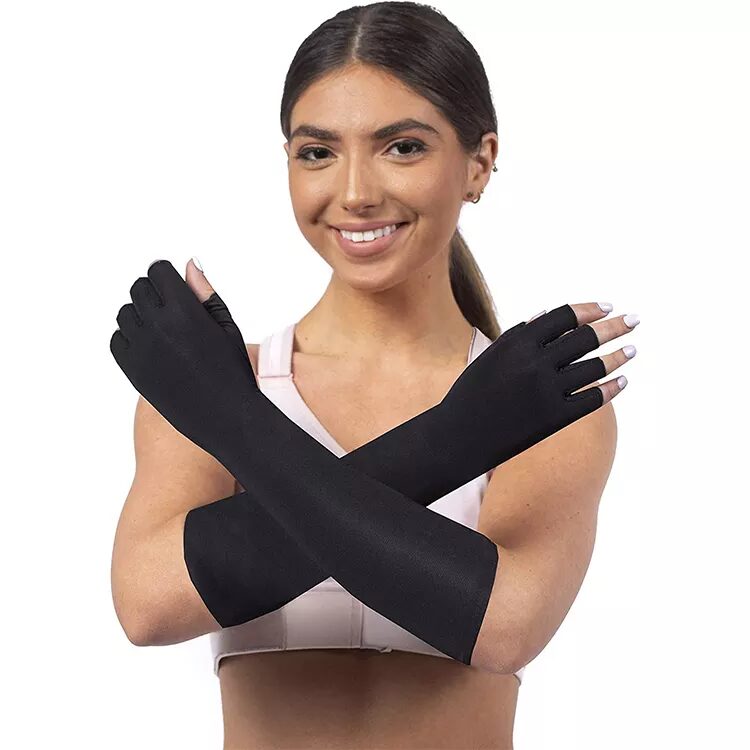
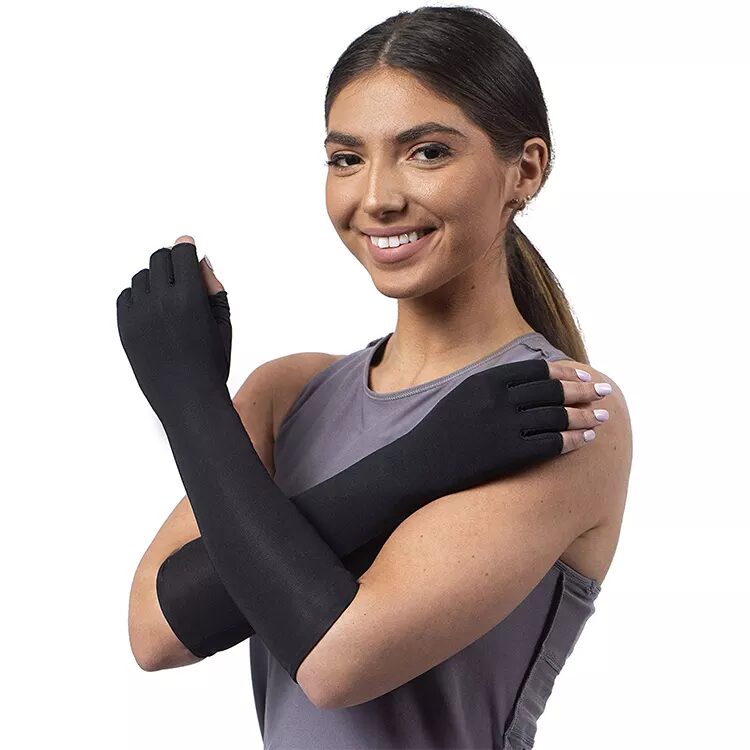
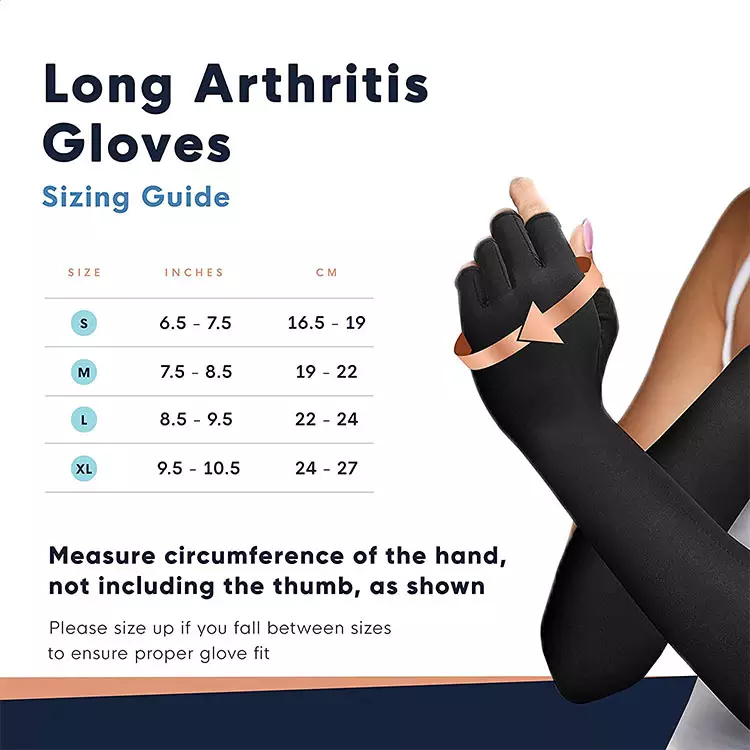
- What you get: 1 pair of RevitaFit elbow-length compression gloves, suitable for both men and women, available in multiple sizes (see sizing chart above), with a 30-day money-back guarantee
- Graduated compression from hand to elbow: Firmest at the hand and wrist, gradually reducing toward the elbow to support circulation and reduce fluid pooling
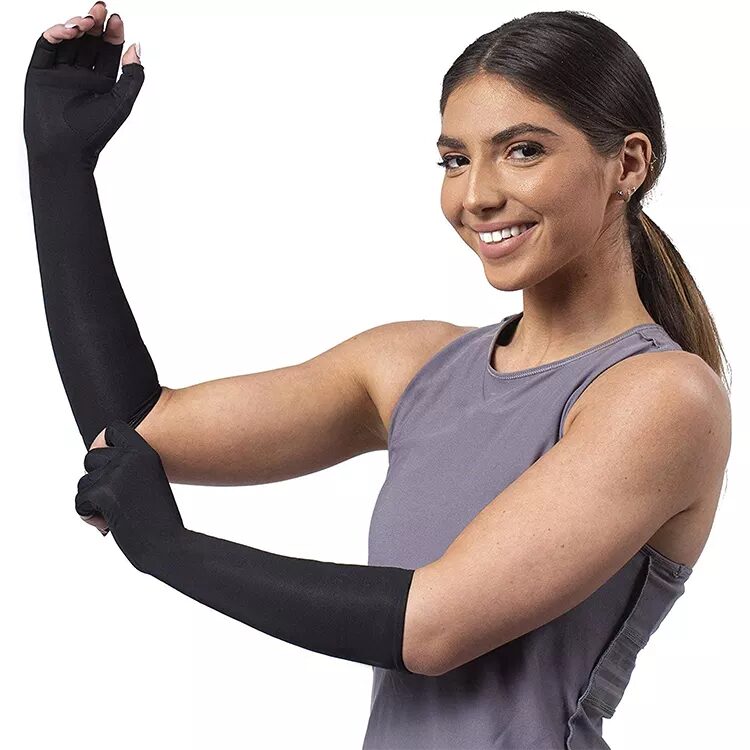
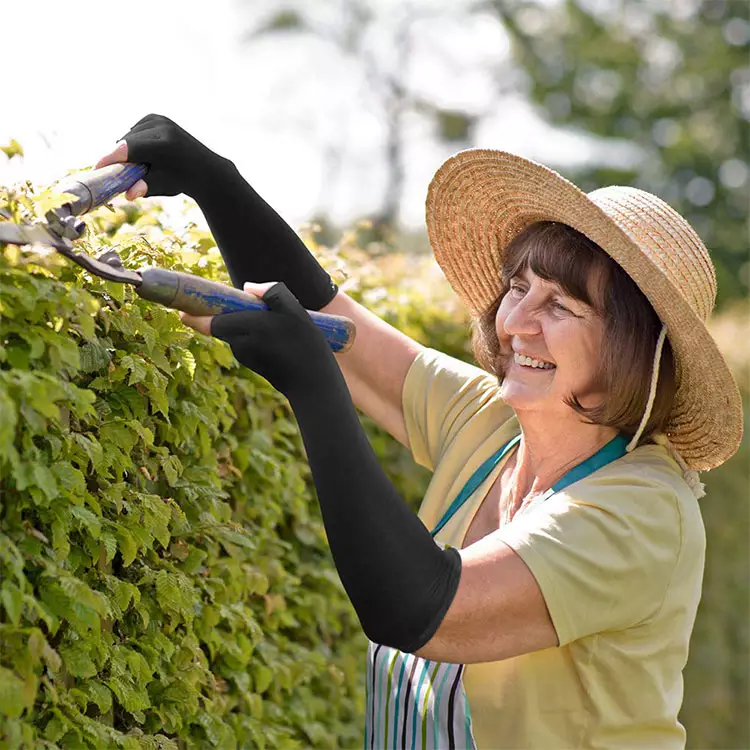
- Extended elbow-length coverage: Warms the forearm muscles that control your fingers and wrist, providing support where it’s needed most
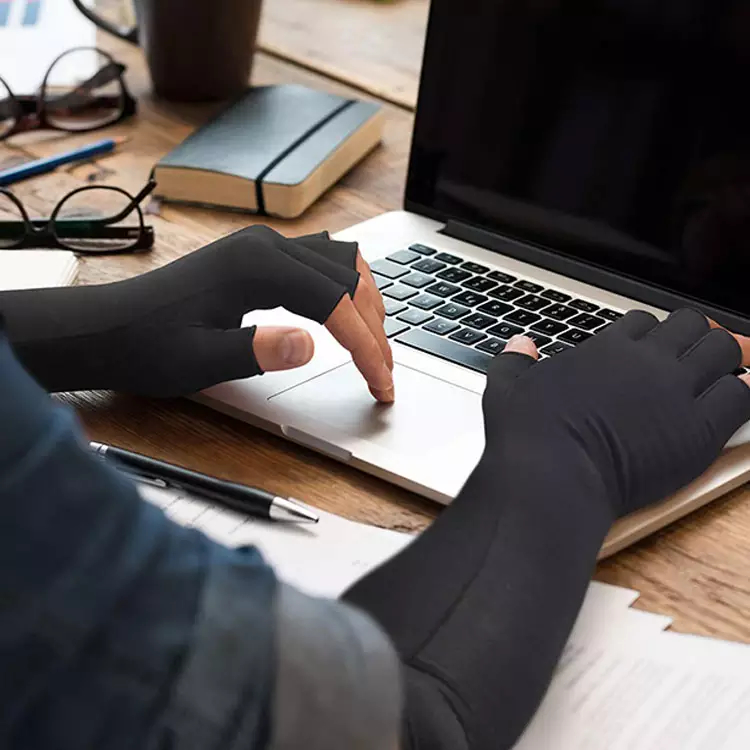
- Fingerless design: Keeps fingertips free for typing, phone use, and tasks requiring fine touch and dexterity
- Breathable, lightweight fabric: Soft against the skin with moisture-wicking properties, suitable for all-day wear or overnight use
- Machine washable: Easy care with cool water and gentle cycle, air dry flat—remains effective for several months with daily wear
- Helps manage symptoms in osteoarthritis and rheumatoid arthritis: Reduces swelling, eases morning stiffness, provides warmth and gentle support to stiff joints
- Helps manage Raynaud’s disease and cold-sensitive hands: Keeps hands and forearms warm to reduce the frequency of cold-triggered episodes
- May help with mild carpal tunnel syndrome: Reduces swelling in the soft tissues around the median nerve—moderate to severe symptoms may need a wrist splint and other treatments
- Supports hands during repetitive strain and hand-intensive tasks: Reduces the heavy, achy sensation during and after typing, gripping, and other hand-intensive activities
- Helps manage post-injury swelling: Can be worn once the acute phase has passed to help manage residual swelling
- Eases morning stiffness and hand fatigue: Reduces the tight, swollen sensation when you wake up or after periods of rest
- How they work: Graduated pressure encourages pooled blood and fluid to move back up the arm, extended coverage provides warmth to the muscles that control your fingers and wrist, and gentle sustained pressure offers support during hand-intensive tasks—they help manage day-to-day symptoms but are not a cure and won’t reverse joint damage or prevent disease progression
- Check with a clinician first if you have: Peripheral arterial disease (PAD) or poor circulation, diabetes with loss of sensation, history of blood clots (DVT), significant swelling from heart/kidney/liver disease, open wounds or active infection, skin conditions such as eczema or psoriasis affecting your hands or forearms, or new/unexplained/worsening symptoms
- What to expect: Many people notice reduced swelling and less morning stiffness within the first week—warmth benefit for cold-sensitivity is often immediate, but reduction in episode frequency may take longer to assess—benefit for chronic conditions may build gradually over a few weeks of consistent use
- No benefit after 3–4 weeks? Return them within 30 days for a full refund—not satisfied for any reason? Full refund, no questions asked
- Care instructions: Wash in cool water (30°C or lower) on a gentle cycle with mild detergent, no bleach or fabric softeners, air dry flat and avoid heat sources—replace once the fabric feels loose or shows visible wear
Compression Gloves for Hands: Support for Arthritis, Raynaud’s, Carpal Tunnel, and Hand Pain
Your hands feel stiff and swollen when you wake up. They ache after typing or gripping for long periods. They turn pale and numb in the cold. Gripping a steering wheel, typing an email, lifting a bag, even holding a pen—tasks most people don’t think twice about—become frustrating, painful, or impossible.
Compression gloves are a practical, non-invasive tool designed to help manage these symptoms. They support circulation, reduce swelling, provide warmth, and offer gentle support to the muscles and soft tissues. They’re not a cure, and they won’t work for everyone, but for many people they become a valued part of daily life—something that helps hands feel more comfortable, move more easily, and cope better with everyday tasks.
This page explains how compression gloves work, who they may help, when to seek professional advice, and how to choose and use them effectively. Living with hand pain, stiffness, swelling, or cold-sensitive symptoms? This guide will help you decide whether compression gloves are right for you.
How Compression Gloves Work
Compression gloves apply gentle, graduated pressure along your hand and forearm. The pressure is firmest at your hand and wrist—where swelling is most likely—and gradually reduces as the fabric extends up your forearm. This design works with the natural direction of blood flow, supporting the return journey back up your arm rather than letting fluid pool in your fingers and palm.
Supporting Circulation and Reducing Swelling
Your hands are upright most of the day. Gravity pulls blood and fluid down through the arteries easily. The return flow through the veins has to work against gravity. Your veins rely on three things to push blood back up toward your heart: the squeezing action of your muscles as they contract and relax, one-way valves inside the veins that stop blood flowing backwards, and the pressure difference created by breathing and movement.
The muscle pump stops working when your hands stay still—overnight while you sleep, or during long periods of sitting or standing. Blood and interstitial fluid (the fluid that sits between the cells in your soft tissues) pool in the lower parts of your body, including your hands and fingers. This pooling causes the puffy, swollen sensation many people notice first thing in the morning or after sitting still for a few hours.
Graduated compression works by squeezing the superficial veins and the soft tissues around them. This external pressure encourages pooled blood and interstitial fluid to move back up the arm toward your heart, rather than sitting in the tissues of your hand and fingers. Less swelling, less of that tight, puffy feeling, and often less stiffness when you start moving.
Your hands often feel worse in the morning because fluid has pooled overnight while you’ve been still. Wearing compression gloves overnight, or putting them on as soon as you wake up, reduces the severity of morning swelling and stiffness.
Providing Warmth and Insulation
RevitaFit compression gloves extend from your fingertips to your elbow, providing warmth and insulation along the entire hand and forearm. This extended coverage matters because the muscles that control your fingers and wrist—the flexors on the palm side and the extensors on the back of your hand—actually sit in your forearm, not in your hand itself. Cold muscles become stiffer, tighter, and less comfortable to use. Keeping them warm helps them stay relaxed and responsive.
For people with cold-sensitive conditions such as Raynaud’s disease or cold-sensitive arthritis, warmth makes a significant difference. Cold triggers protective responses in your body—your blood vessels narrow to conserve heat, and your muscles tense up. By keeping your hands and forearms at a stable, comfortable temperature, compression gloves reduce the frequency of cold-triggered symptoms and help you feel more comfortable throughout the day.
Supporting Muscles and Soft Tissues
The gentle, sustained pressure from compression gloves provides support to the working muscles in your forearm and the soft tissues in your hand. Typing, gripping, or performing other hand-intensive tasks for long periods means the muscles in your forearm contract repeatedly. Waste products such as lactic acid build up in the tissues, and the muscles become fatigued, heavy, and achy.
By supporting circulation to the working muscles and helping to clear metabolic waste products, compression gloves reduce the heavy, achy sensation that often builds during or after long periods of keyboard work or repetitive gripping. The warmth also eases muscle tension and stiffness. Typing for hours leaves your forearms feeling heavy and achy because the muscles have been working continuously without a break, and waste products have accumulated in the tissues.
Product Features and Design
RevitaFit compression gloves are designed with input from UK physiotherapists to provide practical, evidence-informed support for people managing hand and wrist symptoms that affect their daily lives. The gloves combine graduated compression, extended elbow-length coverage, and a fingerless design to support circulation, reduce swelling, provide warmth, and preserve dexterity for everyday tasks.
The design is informed by an understanding of how the body manages fluid balance and circulation in the hands and forearms, and how compression, warmth, and gentle support ease symptoms in conditions such as arthritis, Raynaud’s disease, carpal tunnel syndrome, and repetitive strain. The gloves are made from a breathable synthetic fabric blend that’s lightweight and soft against the skin, designed for extended wear during the day or overnight.
Key features:
- Graduated compression: Firmest at the hand and wrist, gradually reducing toward the elbow, to support venous return and reduce fluid pooling
- Elbow-length coverage: Full forearm coverage from fingertips to elbow, warming the muscles that control your fingers and wrist
- Fingerless design: Fingertips exposed for typing, phone use, and tasks requiring fine touch
- Breathable fabric: Lightweight synthetic blend, soft against the skin, suitable for extended wear
- Machine washable: Easy to care for with proper washing and drying
RevitaFit compression gloves are suitable for men and women and are available in multiple sizes to fit a range of hand sizes. With proper care, they remain effective for several months with daily wear. The 30-day money-back guarantee allows you to try the gloves and assess whether they’re helping.
Who Compression Gloves May Help
Compression gloves are designed to help manage symptoms, not to diagnose or treat underlying conditions. They work best for people whose symptoms are related to swelling, stiffness, cold sensitivity, or muscle fatigue in the hands and forearms. The people who benefit most are those who notice their hands feel worse after periods of rest—first thing in the morning, or after sitting still for a few hours—or during and after hand-intensive tasks such as typing, gripping, or lifting.
Arthritis: Osteoarthritis and Rheumatoid Arthritis
Arthritis is one of the most common reasons people use compression gloves. Both osteoarthritis and rheumatoid arthritis cause pain, stiffness, and swelling in the joints of the hands and wrists, and these symptoms often interfere with daily activities.
Osteoarthritis is a wear-and-tear condition where the smooth cartilage that cushions the ends of the bones in your joints gradually breaks down. As the cartilage wears away, the bones can rub against each other, causing pain, stiffness, and sometimes swelling. The joints most commonly affected in the hands are the base of the thumb, the knuckles, and the small joints at the ends of the fingers. Morning stiffness is common in osteoarthritis, but it usually eases within 30 minutes of starting to move. The stiffness comes from fluid that has pooled in and around the joint overnight, combined with the natural stiffness of a joint that hasn’t moved for several hours.
Rheumatoid arthritis is an autoimmune condition where your immune system mistakenly attacks the synovium—the soft lining that covers the inside of your joints. This causes inflammation, pain, swelling, and stiffness, and over time it can damage the joint structures themselves. Rheumatoid arthritis typically affects multiple joints on both sides of the body, and the hands and wrists are often involved early in the disease. Morning stiffness in rheumatoid arthritis tends to be more severe and longer-lasting than in osteoarthritis—often an hour or more—and the joints may feel warm, swollen, and tender to touch.
Compression gloves help manage symptoms in both types of arthritis by reducing swelling and fluid pooling in the soft tissues around the joints, easing morning stiffness and the tight, swollen sensation in the knuckles and fingers, and providing warmth and gentle support to stiff joints and tight muscles. However, they are a supportive measure, not a treatment for the underlying disease. If you have rheumatoid arthritis, you should be under the care of a rheumatologist, as the condition requires medical management to prevent joint damage and control inflammation. If you have severe osteoarthritis with significant joint deformity, constant pain, or loss of function, speak to a GP or physiotherapist for advice on other treatment options.
Carpal Tunnel Syndrome
Carpal tunnel syndrome occurs when the median nerve—one of the main nerves that supplies sensation and movement to your hand—becomes compressed as it passes through a narrow tunnel at the front of your wrist. This tunnel, called the carpal tunnel, is formed by the small bones of your wrist and a thick band of tissue that stretches across the front of the wrist like a roof over the tunnel.
Inside the carpal tunnel, the median nerve shares space with nine tendons—the flexor tendons that bend your fingers and thumb. The soft tissues inside the tunnel become swollen or thickened, or the wrist is held in a bent position for long periods. The available space inside the tunnel reduces and the median nerve gets squeezed. This compression causes the characteristic symptoms of carpal tunnel syndrome: tingling, numbness, or pins and needles in the thumb, index finger, middle finger, and the thumb side of the ring finger (the areas supplied by the median nerve), pain or aching in the hand, wrist, or forearm, particularly at night or first thing in the morning, weakness in the thumb, making it difficult to pinch or grip, and clumsiness or difficulty with fine tasks such as buttoning clothes or holding a pen.
Symptoms are often worse at night because many people sleep with their wrists bent, which narrows the carpal tunnel further and increases pressure on the nerve. Fluid also tends to pool in the hands overnight, and this extra swelling adds to the compression.
Compression gloves may help with mild carpal tunnel symptoms by reducing swelling in the soft tissues around the tendons inside the carpal tunnel. Less swelling means more space for the median nerve, which eases pressure and reduces symptoms. However, compression gloves do not hold your wrist in a neutral position—they provide gentle, even pressure, not structural support. If your symptoms are moderate to severe, you’ll likely need a wrist splint that holds your wrist straight, particularly at night, along with other treatments such as nerve gliding exercises, activity modification, or in some cases, corticosteroid injections or surgery.
Constant numbness, weakness in your thumb making it difficult to pinch or grip, or difficulty with fine tasks? See a GP or physiotherapist for assessment. Carpal tunnel syndrome can progress if left untreated, and early intervention often prevents the need for surgery and reduces the risk of permanent nerve damage.
Tendonitis and Tenosynovitis
Tendonitis is inflammation or irritation of a tendon—the tough, fibrous cord that connects muscle to bone. Tenosynovitis is inflammation of the synovial sheath, a slippery covering that surrounds certain tendons and allows them to glide smoothly as they move. Both conditions cause pain, stiffness, and sometimes swelling along the affected tendon, and they’re often triggered by repetitive movements, overuse, or sudden increases in activity.
In the hand and wrist, the most common sites for tendonitis and tenosynovitis are the thumb side of the wrist (De Quervain’s tenosynovitis, affecting the tendons that lift the thumb away from the hand), the palm side of the fingers (flexor tenosynovitis, affecting the tendons that bend the fingers), and the back of the wrist (extensor tenosynovitis, affecting the tendons that straighten the fingers and lift the wrist).
Symptoms typically include pain along the affected tendon, particularly during or after movements that load the tendon, stiffness, especially first thing in the morning or after periods of rest, swelling or puffiness along the tendon, and sometimes a sensation of catching, clicking, or grinding as the tendon moves.
Compression gloves help manage symptoms by reducing swelling in the soft tissues around the tendon, providing warmth that eases stiffness and discomfort, and offering gentle support during hand-intensive tasks. However, they are not a substitute for addressing the underlying cause. If you have tendonitis or tenosynovitis, it’s important to identify and modify the activities or movements that are irritating the tendon, take regular breaks during repetitive tasks, and consider physiotherapy for exercises that strengthen the muscles and improve tendon resilience. Severe symptoms or not improving with rest and activity modification? Speak to a GP or physiotherapist for advice.
Vascular and Cold-Sensitivity Conditions: Raynaud’s Disease
Raynaud’s disease (also called Raynaud’s phenomenon or Raynaud’s syndrome) is a condition where the small arteries that supply blood to your fingers and toes narrow suddenly in response to cold or stress, temporarily cutting off blood flow. During an episode, your fingers typically turn white as blood flow stops, then blue as the tissues become starved of oxygen, and finally red as blood flow returns and the tissues reperfuse. The colour changes are often accompanied by numbness, tingling, pain, or a throbbing sensation, and episodes can last from a few minutes to over an hour.
Raynaud’s can be primary—occurring on its own without an underlying cause—or secondary, associated with autoimmune conditions such as scleroderma, lupus, or rheumatoid arthritis. Secondary Raynaud’s tends to be more severe and can sometimes lead to tissue damage or ulcers if episodes are frequent and prolonged.
Compression gloves cannot prevent or reverse the arterial spasm that causes Raynaud’s episodes—that’s a vascular response controlled by your nervous system and the smooth muscle in the artery walls. However, by keeping the entire hand and forearm warm, the gloves reduce the frequency of cold-triggered episodes. Your body is less likely to trigger the protective spasm if your hands stay at a stable, comfortable temperature rather than experiencing sudden drops. Many people with Raynaud’s find that wearing compression gloves indoors during the colder months, or outdoors under a windproof outer layer, helps them avoid the sudden temperature changes that trigger episodes.
Frequent or severe Raynaud’s episodes affecting your quality of life? Prolonged colour changes, significant pain, or skin ulcers? You should be under the care of a GP, rheumatologist, or vascular specialist. Medication and other treatments are available that reduce the frequency and severity of attacks, and secondary Raynaud’s associated with autoimmune conditions needs medical management to prevent complications.
Overuse, Fatigue, and Repetitive Strain
Repetitive strain injury, hand cramps, and muscle fatigue are common in people who spend long hours typing, using a mouse, playing musical instruments, or performing manual tasks that involve repeated gripping or fine finger movements. The condition can affect muscles, tendons, nerves, or a combination of all three, and symptoms often include aching, stiffness, weakness, or a sensation of heaviness in the hands and forearms.
The muscles that control your fingers and wrist—the flexors on the palm side and the extensors on the back of your hand—sit in your forearm. Typing, gripping, or performing fine finger movements means these forearm muscles contract repeatedly, and the tendons that connect them to your fingers glide back and forth through tight spaces in your wrist and hand. Doing this for hours at a time without breaks, or holding your wrist in an awkward position such as bent upwards or to the side while using a mouse, fatigues the muscles, irritates the tendons and their sheaths, and allows waste products such as lactic acid to build up in the tissues.
By supporting circulation to the working muscles and helping to clear metabolic waste products, compression gloves reduce the heavy, achy sensation that often builds during or after long periods of keyboard work or repetitive gripping. The warmth also eases muscle tension and stiffness. However, compression gloves are a supportive measure, not a solution. If you’re experiencing repetitive strain symptoms, address the root cause—whether that’s poor desk ergonomics, prolonged static postures, inadequate breaks, or technique concerns. A physiotherapist or occupational therapist can assess your workstation setup and movement patterns and suggest adjustments that reduce strain. Compression gloves help you feel more comfortable while you’re making those changes, but they won’t prevent the problem from returning if the underlying strain pattern continues.
Safety and Who Should Check with a Clinician First
Compression gloves are generally safe for most people, but there are some situations where you must seek medical advice before using them, or where compression may not be appropriate at all.
Conditions That Need Medical Clearance
Speak to your GP, physiotherapist, or specialist before using compression gloves if you have any of the following:
Peripheral arterial disease (PAD) or poor circulation in your arms. In PAD, the arteries that carry oxygen-rich blood to your limbs are narrowed by fatty deposits—a process called atherosclerosis—and they’re already struggling to deliver enough blood to your tissues. External compression can reduce blood flow further by squeezing the arteries and the tissues around them, potentially causing harm. PAD, poor circulation, weak pulses, or narrowed arteries? Check with your GP or vascular specialist before using compression gloves. They may want to assess the blood flow in your arms to make sure compression is safe.
Severe diabetes with loss of sensation. High blood sugar levels over time can damage the nerves that carry sensation from your hands and feet—a condition called peripheral neuropathy. If you’ve lost feeling in your hands or fingers, you may not be able to tell if the gloves are too tight or causing damage. Reduced sensation also increases the risk of skin breakdown or pressure injuries, as you won’t feel the early warning signs—such as discomfort, rubbing, or pressure—that would normally prompt you to adjust or remove the gloves. Diabetes with numbness, tingling, or reduced sensation in your hands? Check with your GP or diabetes nurse before using compression gloves.
History of deep vein thrombosis (DVT) or blood clots. While compression is sometimes used to prevent clots in the legs after surgery or during long flights, check with a doctor before using compression on your arms if you have a history of clotting disorders, DVT, or conditions that increase your risk of clots such as certain cancers, clotting disorders, or recent surgery. Your doctor can advise whether compression is safe and appropriate for you. Compression gloves do not treat or prevent blood clots and must not be relied upon for that purpose.
Significant swelling from heart, kidney, or liver disease. Swelling from organ dysfunction needs medical management. Compression may help with the swelling, but it should be used under medical supervision to make sure it’s safe and appropriate, and that it doesn’t interfere with other treatments or mask symptoms that need monitoring.
Open wounds, broken skin, or active infection on your hands or arms. Compression gloves shouldn’t be worn over broken skin, cuts, sores, or areas of infection, as the pressure and warmth can delay healing, trap bacteria, or spread infection. Wound or infection? Wait until it’s fully healed before using compression gloves, and check with your GP or practice nurse if you’re unsure.
Skin conditions such as eczema, psoriasis, or dermatitis affecting your hands or forearms. The pressure and warmth from the gloves, combined with the synthetic fabric, may irritate sensitive or inflamed skin. Skin condition? Check with a dermatologist or GP before using compression. They may suggest using the gloves for shorter periods, applying a barrier cream first, or choosing a different approach if compression is likely to worsen your skin.
When to Seek Assessment Rather Than Self-Managing
Compression gloves are designed for symptom management, not diagnosis or treatment of new or unexplained problems. See a physiotherapist, GP, or hand specialist if:
You have new or sudden hand swelling, pain, or loss of function that you can’t explain. This could indicate an acute injury such as a fracture, ligament tear, or severe sprain, an infection such as cellulitis or septic arthritis, or another condition that needs assessment. Severe swelling, hot or red hand, unable to move your fingers or wrist, or pain getting worse? Seek assessment promptly.
Your symptoms are severe or getting worse despite using compression gloves or other self-care measures. For example, if you have carpal tunnel syndrome and you’re experiencing constant numbness, weakness in your thumb making it difficult to pinch or grip, or difficulty with fine tasks such as buttoning clothes or holding a pen, you may need medical treatment such as wrist splinting, nerve gliding exercises, corticosteroid injections, or in some cases, surgery. Carpal tunnel syndrome can progress if left untreated, and early intervention often prevents the need for surgery and reduces the risk of permanent nerve damage.
You have frequent or severe Raynaud’s episodes that are affecting your quality of life, or episodes that last a long time and cause significant pain, prolonged colour changes, or skin ulcers. Secondary Raynaud’s—associated with autoimmune conditions such as scleroderma, lupus, or rheumatoid arthritis—can sometimes lead to tissue damage if not managed properly, and you should be under the care of a rheumatologist or vascular specialist. Episodes frequent, severe, or not responding to simple measures such as keeping warm and avoiding triggers? Speak to your GP, as medication and other treatments are available that reduce the frequency and severity of attacks.
You’re unsure whether your symptoms are due to a condition that compression can help, or whether something else is going on. A physiotherapist or GP can assess your hands, identify the underlying cause, and recommend the most appropriate treatment. Hand pain and stiffness could be osteoarthritis, rheumatoid arthritis, tendonitis, carpal tunnel syndrome, or something else entirely, and the right approach depends on the diagnosis.
Compression gloves are one tool among many for managing hand and wrist symptoms. They work best when used as part of a broader approach that may include ergonomic adjustments—improving your desk setup or changing how you perform repetitive tasks, activity modification—taking regular breaks, spreading your activity more evenly through the day with regular pauses rather than doing everything in one go, or avoiding positions and movements that trigger symptoms, strengthening and stretching exercises to improve muscle endurance, joint stability, and flexibility, medical treatment such as anti-inflammatory medication, injections, or surgery where appropriate, or other supportive measures tailored to your specific condition.
What to Expect During the First Few Weeks
If you’ve decided to try compression gloves, it’s helpful to know what to expect during the first few days and weeks of use, how long it typically takes to notice benefit, and what signs suggest the gloves are—or aren’t—working for you.
Getting Used to the Sensation
The first time you put compression gloves on, the sensation may feel unfamiliar. The fabric applies gentle, sustained pressure along your hand and forearm, and if you’re not used to wearing anything on your hands, it can feel snug or slightly restrictive at first. Most people adjust to the sensation within a few days of regular wear.
The gloves should feel snug and supportive, but not painful or restrictive. You should be able to move your fingers freely, make a fist, bend your wrist, and flex your elbow without the fabric digging in or causing numbness. Your fingers should remain a normal colour—pink or your usual skin tone—and you shouldn’t feel any tingling, increased numbness, or a sensation of your hand “falling asleep”.
If the gloves feel uncomfortable during the first few wears, give yourself a few days to adjust before deciding they’re not right for you. Some people find the sensation distracting initially but quickly get used to it and stop noticing the pressure once it becomes familiar. However, if the discomfort persists, or if you notice any of the warning signs listed below, the gloves may not be the right fit or approach for you.
How Long Before You Notice a Difference
The timeline for noticing benefit depends on your condition and what symptoms you’re managing.
For swelling and morning stiffness—such as in arthritis or after an injury—many people notice a difference within the first week of consistent use. Your hands feel less puffy when you wake up, your fingers move more easily first thing in the morning, or the tight, swollen sensation in your knuckles or wrist eases more quickly as you start moving. Wearing the gloves overnight often means the morning stiffness you usually experience is less severe or resolves faster.
For cold-sensitivity and Raynaud’s disease, the benefit in terms of warmth retention is often immediate—you’ll feel that your hands stay warmer throughout the day. The reduction in frequency of cold-triggered episodes may take a bit longer to assess. You’ll need to wear the gloves consistently during situations where you’d normally experience episodes—such as indoors during winter, or outdoors in cold weather—and track whether you’re having fewer episodes or whether the episodes you do have are less severe or shorter in duration.
For chronic conditions such as osteoarthritis or repetitive strain, the benefit may be more gradual and subtle. You might notice that your hands feel less achy at the end of the day, that you can type or grip for longer before discomfort sets in, or that the heavy, fatigued sensation in your forearms is less pronounced. These improvements may build over a few weeks of consistent use rather than appearing suddenly.
Haven’t noticed any benefit after three to four weeks of daily use? It’s worth reassessing whether compression gloves are the right approach for your symptoms. They don’t work for everyone, and if your symptoms aren’t responding, speak to a physiotherapist or GP to explore other options.
Signs the Gloves Are Helping
You’ll know the gloves are working if you notice:
- Your hands feel less swollen, especially in the morning or after sitting still
- Morning stiffness eases faster when you first wake up
- Typing, gripping, and other hand-intensive tasks feel more comfortable, and your hands ache less at the end of the day
- If you have Raynaud’s, you’ll have fewer episodes—or they’ll be shorter and less severe
- Your hands feel more supported and capable throughout the day
These improvements may be subtle rather than dramatic, and they may build gradually over time. Noticing any of these signs? The gloves are likely helping, and it’s worth continuing to use them as part of your daily routine.
Signs the Gloves Aren’t Right for You
Stop using the gloves and reassess if you notice:
- Increased pain, tingling, or numbness that wasn’t there before, or worsening of existing symptoms
- Pale, bluish, or mottled skin on your fingers or hand—this may indicate that the gloves are too tight and restricting blood flow
- Throbbing or pulsing sensation in your hand or fingers, or a feeling that your hand is “falling asleep”
- Skin irritation, redness, or rashes where the fabric sits against your skin, particularly if this persists after a few days or worsens over time
- No noticeable benefit after three to four weeks of daily use
If any of these signs appear, remove the gloves and check the fit. Correct size still causes discomfort or worsening symptoms? Compression gloves may not be suitable for you, and it’s worth discussing alternatives with a physiotherapist or GP. Some people have very sensitive hands, significant swelling that makes it difficult to achieve a comfortable fit, or underlying conditions that make compression inappropriate.
Choosing and Using Compression Gloves
Once you’ve decided to try compression gloves, here’s what you need to know about getting the right fit, when and how long to wear them, and what to expect when you start using them.
Getting the Right Fit and Sizing
Compression gloves need to fit snugly to provide effective graduated pressure, but they shouldn’t be so tight that they restrict movement, cause pain, or cut off circulation. The right size depends on the circumference of your hand at its widest point—usually across your knuckles when you make a loose fist.
To measure your hand:
- Use a soft tape measure (the kind used for sewing) and wrap it around your hand at the widest point, usually across your knuckles excluding your thumb.
- Keep your hand relaxed and flat—don’t clench your fist or spread your fingers wide.
- Note the measurement in centimetres or inches.
- Check the sizing chart provided above in the product image gallery to find your size.
Sizing guidance:
Sizing is based on hand circumference. Check the sizing chart provided above in the product image gallery for specific measurements. If your measurement falls between two sizes:
- Choose the smaller size if you have significant swelling or prefer firmer compression
- Choose the larger size if you have sensitive hands or prefer lighter compression
What the right fit should feel like:
- Snug but not painful. The fabric should apply gentle, even pressure along your hand and forearm, but you shouldn’t feel throbbing, pinching, or sharp discomfort.
- Supportive but not restrictive. You should be able to move your fingers freely, make a fist, bend your wrist, and flex your elbow without the fabric digging in or limiting your range of movement.
- Comfortable for extended wear. If the gloves feel uncomfortable after 10–15 minutes, they may be too tight. If they feel loose, slide down your arm, or bunch up at the wrist, they may be too large.
Your fingers should remain a normal colour—pink or your usual skin tone—while wearing the gloves. Fingers turn pale, bluish, or mottled? Tingling, increased numbness, or throbbing? The gloves are too tight. Remove them immediately and reassess the size.
When and How Long to Wear Them
During the day: Most people wear compression gloves during waking hours, particularly during activities that trigger or worsen their symptoms—such as typing, using a mouse, light household tasks, driving, or other hand-intensive activities. You can wear them continuously throughout the day if that’s comfortable, or put them on for specific tasks and remove them during breaks.
Managing morning stiffness or swelling? Put the gloves on as soon as you wake up. This helps ease the tight, swollen sensation and supports your hands as you start moving. Many people find that wearing the gloves for the first few hours of the morning makes the biggest difference, as this is when stiffness and swelling are often most pronounced.
Managing repetitive strain or fatigue from desk work? Wear the gloves during your working hours—particularly during long typing or mouse sessions. This reduces the heavy, achy sensation that builds in your hands and forearms. The fingerless design means you can keep them on continuously without needing to remove them for typing, phone use, or other tasks that require fingertip sensitivity.
Overnight: Some people find it helpful to wear compression gloves overnight, particularly if they wake with significant morning stiffness or swelling. Wearing the gloves while you sleep prevents fluid from pooling in your hands during the night, which may reduce the severity of morning symptoms. However, overnight wear isn’t suitable for everyone. If you have carpal tunnel syndrome, for example, you may need a rigid or semi-rigid wrist splint that holds your wrist in a neutral position overnight, rather than compression gloves alone.
Considering overnight wear? Start by wearing the gloves for a few hours during the day to make sure they’re comfortable and don’t cause any adverse effects. If they feel comfortable during the day, try wearing them for one night and assess how your hands feel in the morning. Wake with increased pain, numbness, or discomfort, or fingers look pale or feel cold? Overnight wear may not be appropriate for you.
During physical activity: Compression gloves can be worn during light to moderate physical activity such as walking, gentle stretching, or light resistance exercises, and some people find the warmth and support helpful during or after activity. However, they’re not designed for high-intensity exercise or activities that involve heavy gripping, impact, or significant hand loading. Weightlifting, rock climbing, or manual labour? You may need task-specific gloves or supports that provide more robust protection.
How long to wear them each day: There’s no fixed rule. Some people wear them for a few hours in the morning to ease stiffness, others wear them throughout the working day, and some wear them continuously except when washing or bathing. Start with a few hours a day and gradually increase the duration if you find them helpful and comfortable. Monitor how your hands respond—if your hands feel better with the gloves on, continue wearing them; if they feel uncomfortable or if your symptoms worsen, reduce the duration or reassess the fit and approach.
Using Compression Gloves Effectively
Be consistent. Compression gloves work best when worn regularly and consistently, particularly during the times of day or activities when your symptoms are most pronounced. Wearing them only occasionally? You may not notice much benefit.
Combine with other measures. Compression gloves are one tool among many. Managing arthritis? Consider combining them with gentle hand exercises, heat or cold therapy, and anti-inflammatory medication as advised by your GP or rheumatologist. Managing repetitive strain? Address your desk ergonomics, take regular breaks—spreading your activity more evenly through the day with regular pauses rather than doing everything in one go—and consider strengthening and stretching exercises for your hands and forearms. Managing Raynaud’s disease? Avoid smoking, manage stress, and keep your whole body warm, not just your hands.
Track your symptoms. Keep a simple note of how your hands feel before you start using the gloves, and then check in after a week, two weeks, and a month of consistent use. Noticing less swelling? Less morning stiffness? Improved comfort during tasks? Fewer cold-triggered episodes? If you’re seeing improvements, the gloves are helping. If not, it’s worth reassessing and discussing alternatives with a physiotherapist or GP.
Don’t ignore worsening symptoms. Compression gloves are for symptom management, not for masking or ignoring problems that need medical attention. Symptoms getting worse despite using the gloves? Developing new symptoms such as severe pain, significant weakness, or skin changes? Seek assessment from a physiotherapist or GP.
When You Start Using Them: Care and Maintenance
Once you start using the gloves, here’s how to keep them effective and in good condition.
Washing
Compression gloves are machine washable, but proper care will help preserve the elasticity of the fabric and extend their effective lifespan.
- Wash the gloves in cool or lukewarm water (30°C or lower) on a gentle cycle.
- Use a mild detergent without bleach or fabric softeners, as these can break down the elastic fibres and reduce the compression over time.
- Place the gloves in a mesh laundry bag or pillowcase to protect them during the wash cycle.
- Avoid washing them with heavy items such as jeans or towels, as the friction and weight can stretch the fabric.
Drying
- Air dry the gloves by laying them flat on a clean towel or hanging them in a well-ventilated area. Avoid direct sunlight or heat sources such as radiators, as heat can damage the elastic fibres.
- Do not tumble dry, as the heat and agitation can cause the fabric to lose its stretch and compression.
Replacing
Over time, with regular use and washing, the fabric will gradually lose its elasticity and the compression will reduce. You can expect the gloves to remain effective for several months with daily wear and proper care, but it’s worth replacing them once the fabric feels loose, no longer feels snug when you put them on, or starts to show visible signs of wear such as thinning, pilling, or holes.
Gloves no longer providing the same level of support or symptom relief? Starting to slide down your arm or bunch up at the wrist? It’s likely time to replace them.
Frequently Asked Questions
How long should I wear compression gloves each day?
There’s no fixed rule—some people wear them for a few hours in the morning, others throughout the working day, and some continuously except when washing. Start with a few hours and increase gradually if helpful. See the When and How Long to Wear Them section above for full guidance.
Can I wear compression gloves overnight?
Some people find overnight wear helpful for reducing morning stiffness and swelling, but it’s not suitable for everyone. If you have carpal tunnel syndrome, you may need a wrist splint instead. See the When and How Long to Wear Them section above for full guidance on overnight wear.
How long does it take to notice benefit?
For swelling and morning stiffness, many people notice a difference within the first week. For cold-sensitivity and Raynaud’s disease, warmth benefit is often immediate, but reduction in episode frequency may take longer to assess. For chronic conditions, benefit may build over a few weeks. See the How Long Before You Notice a Difference section above for full details.
How do I wash compression gloves?
Wash in cool water (30°C or lower) on a gentle cycle with mild detergent, no bleach or fabric softeners. Air dry flat—avoid heat sources and tumble drying. See the Washing section above for full care instructions.
How long do compression gloves last?
With daily wear and proper care, they typically remain effective for several months. Replace them once the fabric feels loose or shows visible wear. See the Replacing section above for full guidance.
Will compression gloves help with carpal tunnel syndrome?
They may help with mild symptoms by reducing swelling, but they don’t provide the structural support or wrist positioning that a splint offers. For moderate to severe symptoms, you’ll likely need a wrist splint and other treatments. See the Carpal Tunnel Syndrome section above for full guidance.
Will compression gloves help with Raynaud’s disease?
They cannot prevent or reverse the arterial spasm that causes episodes, but by keeping your hands and forearms warm, they can reduce the frequency of cold-triggered episodes. See the Raynaud’s Disease section above for full guidance.
Will compression gloves help with arthritis?
They can help manage symptoms by reducing swelling, easing morning stiffness, and providing warmth and support. However, they are a supportive measure, not a treatment for the underlying disease. See the Arthritis section above for full guidance.
Can I wear compression gloves while typing?
Yes. The fingerless design preserves fingertip sensation and dexterity, so you can wear them while typing, using a mouse, or performing other tasks without needing to remove them.
Do I need to wear gloves on both hands?
If both hands are affected, wear gloves on both hands. If only one hand is affected, you can wear a glove on that hand only. However, many people find it more comfortable to wear gloves on both hands for symmetry and balance.
What if the gloves feel too tight?
Pain, throbbing, numbness, or fingers turning pale or bluish? Remove them immediately and reassess the size. They should feel snug and supportive, but not painful or restrictive. Correct size still causes discomfort? Compression gloves may not be suitable for you.
What if the gloves feel too loose?
Gloves feel loose, slide down your arm, or bunch up at the wrist? They may be too large and won’t provide effective compression. Check your measurement and try the next size down.
What if I develop skin irritation or a rash?
Stop using the gloves and allow your skin to recover. The irritation may be due to sensitivity to the fabric, moisture build-up, or friction. Irritation persists or worsens? Speak to a GP or dermatologist.
Can I wear compression gloves if I have diabetes?
Diabetes with loss of sensation in your hands or fingers? Check with your GP or diabetes nurse before using compression gloves. See the Conditions That Need Medical Clearance section above for full guidance.
Can I wear compression gloves if I have poor circulation?
Peripheral arterial disease or poor circulation in your arms due to narrowed arteries? Check with your GP or vascular specialist before using compression gloves. See the Conditions That Need Medical Clearance section above for full guidance.
Can I wear compression gloves if I have a history of blood clots?
History of deep vein thrombosis or blood clots? Check with your doctor before using compression gloves. Compression gloves do not treat or prevent blood clots. See the Conditions That Need Medical Clearance section above for full guidance.
Can I wear compression gloves during pregnancy?
Compression gloves are not recommended for use during pregnancy. Pregnant and experiencing hand symptoms? Speak to your midwife or GP for advice on safe and appropriate management.
Can I wear compression gloves after an injury?
Once the acute phase has passed—usually after the first 48 to 72 hours—and you’ve been given the go-ahead to start moving the hand again, compression gloves can help manage residual swelling. However, do not use them during the acute phase without checking with a physiotherapist or doctor. Acute injury with severe pain, significant swelling, or loss of function? Seek assessment before using compression gloves.
Can I wear compression gloves during exercise?
They can be worn during light to moderate physical activity such as walking, gentle stretching, or light resistance exercises. However, they’re not designed for high-intensity exercise or activities that involve heavy gripping, impact, or significant hand loading such as weightlifting, rock climbing, or manual labour.
Can I use compression gloves alongside other treatments?
Yes. Compression gloves can be used alongside other treatments such as physiotherapy, medication, exercises, heat or cold therapy, and ergonomic adjustments. They work best as part of a broader approach that addresses the underlying cause of your symptoms.
Will compression gloves cure my condition?
No. Compression gloves are a supportive tool that may help manage symptoms, but they are not a cure for underlying conditions. They will not reverse joint damage, prevent disease progression, or replace medical treatment where that’s needed. They can, however, help you manage day-to-day symptoms and support your hands through the activities that matter to you.
What is the 30-day money-back guarantee?
Not satisfied with the gloves for any reason within 30 days of purchase? You can return them for a full refund. This allows you to try the gloves and assess whether they’re helping.
Which size should I choose if I’m between sizes?
Significant swelling or prefer firmer compression? Choose the smaller size. Sensitive hands or prefer lighter compression? Choose the larger size. See the Getting the Right Fit and Sizing section above for full sizing guidance.
Are compression gloves suitable for both men and women?
Yes. RevitaFit compression gloves are suitable for both men and women. Sizing is based on hand circumference, so choose the size that matches your measurement regardless of gender.
Are the gloves left and right specific?
No. The gloves are designed to fit either hand, so you don’t need to worry about left and right.
How many pairs should I buy?
Many people find it helpful to have two pairs—one to wear while the other is being washed. This ensures you can wear the gloves consistently without interruption. However, one pair is sufficient if you’re happy to wash and dry them between uses.
I’m still unsure whether compression gloves are right for me. What should I do?
Unsure whether compression gloves are suitable for your condition, or have concerns about your symptoms? Speak to a GP, physiotherapist, or hand specialist for personalised advice. They can assess your hands, identify the underlying cause of your symptoms, and recommend the most appropriate treatment. If your symptoms are mild to moderate and you’re looking for a supportive measure, the 30-day money-back guarantee allows you to try the gloves and assess whether they’re helping.
Medical Disclaimer
The information provided on this page is for general guidance only and is not intended as a substitute for individual medical advice, diagnosis, or treatment. New, unexplained, or worsening symptoms? Unsure whether compression gloves are suitable for your condition? Speak to a GP, physiotherapist, or hand specialist for personalised advice. See the Safety section above for full guidance on who should check with a clinician before use.
Compression gloves are a supportive tool that may help manage symptoms, but they are not a cure and do not replace medical treatment where that’s needed. Experience any adverse effects while using compression gloves? Stop using them immediately and seek advice from a healthcare professional.
Summary
RevitaFit elbow-length compression gloves provide graduated compression from hand to elbow, supporting circulation, reducing swelling, and easing stiffness. The extended coverage warms the muscles that control your fingers and wrist, while the fingerless design preserves dexterity for everyday tasks.
The gloves help manage symptoms in osteoarthritis, rheumatoid arthritis, carpal tunnel syndrome, Raynaud’s disease, tendonitis, repetitive strain injury, and post-injury swelling. They work by supporting the body’s natural mechanisms for managing fluid balance and circulation, providing warmth to reduce cold-triggered symptoms, and offering gentle support to working muscles during and after hand-intensive tasks.
They’re not a cure for underlying conditions, and they won’t reverse joint damage, prevent disease progression, or replace medical treatment where that’s needed. What they can do is help you manage day-to-day symptoms, support your hands through the activities that matter to you, and provide a practical, non-invasive tool that fits into your broader approach to hand and wrist health.
New, unexplained, or worsening symptoms? Any of the conditions listed in the safety section? Speak to a physiotherapist or GP before starting. Symptoms mild to moderate? Check your size, assess suitability, and give them a try.
Ready to Try RevitaFit Compression Gloves?
If your hands feel stiff and swollen in the morning, ache after typing or gripping, or turn cold and numb easily, you already know how much that disrupts your day. RevitaFit compression gloves are designed to help you feel more comfortable and capable—whether you’re typing, driving, cooking, or just getting through the morning routine.
Reduced swelling? Less morning stiffness? Improved comfort during tasks? Fewer cold-triggered episodes? That’s what you’re looking for. No benefit after a few weeks, or they cause discomfort? Return them within 30 days for a full refund.
Choose your size, place your order, and start supporting your hands through the activities that matter to you.
About NuovaHealth
RevitaFit is part of NuovaHealth, a UK-based health brand focused on providing clear, trustworthy guidance and practical products for people managing musculoskeletal and vascular symptoms. We work with UK physiotherapists and product designers to develop products that are grounded in evidence and real-world lived experience, and we’re committed to keeping information accessible, accurate, and free from hype.
Our approach is simple: be useful, be accurate, and keep things human. We don’t make exaggerated claims or promise cures. We provide practical tools that can help you manage symptoms and support your body through the activities that matter to you, alongside clear guidance on when to seek professional advice and what other measures may help.
Questions about RevitaFit compression gloves, or advice on whether they’re suitable for your situation? You can contact us or speak to a GP, physiotherapist, or hand specialist for personalised guidance.
References and Further Reading
If you’d like to learn more about the conditions discussed on this page, the following resources may be helpful:
- NHS – Osteoarthritis: https://www.nhs.uk/conditions/osteoarthritis/
- NHS – Rheumatoid Arthritis: https://www.nhs.uk/conditions/rheumatoid-arthritis/
- NHS – Carpal Tunnel Syndrome: https://www.nhs.uk/conditions/carpal-tunnel-syndrome/
- NHS – Raynaud’s Phenomenon: https://www.nhs.uk/conditions/raynauds/
- NHS – Tendonitis: https://www.nhs.uk/conditions/tendonitis/
- NHS – Repetitive Strain Injury (RSI): https://www.nhs.uk/conditions/repetitive-strain-injury-rsi/
- Versus Arthritis – Hand and Wrist Pain: https://www.versusarthritis.org/about-arthritis/conditions/hand-and-wrist-pain/
Concerns about your symptoms or need personalised advice? Speak to a GP, physiotherapist, or specialist.
Fast & Secure Checkout Through Paypal
Pay with Paypal the secure payment gateway that accepts all credit and debit cards. Paypal is free and secure and no credit or bank information is ever stored or shared with us.
Fast Dispatch
Enjoy your items soon with quick dispatch via Royal Mail. Expect to have your items between 1-3 working days for domestic orders. 7-10 Working days for international orders.
Return Policy – 30 Day Money Back Guarantee
In the unlikely event, you are unhappy with your purchase you can return it within 30 days for a refund. Please contact us via the form on the contact us page to start your return.
To return an item please send it to: Nuova Health UK, 81 Highfield Lane, Waverley, Rotherham, S60 8AL. Please include a note with your order id so we know who to refund. Please retain your postage receipt as proof of postage. All that we ask is that the item is in the original packaging and unused.
Reviews
There are no reviews yet.