Why Hands Hurt and Stiffen—And Why Compression Helps
Arthritis in the hands causes pain, stiffness, and swelling that make everyday tasks—opening jars, gripping a pen, buttoning a shirt—uncomfortable or difficult. When you know what’s going wrong, the glove design makes more sense.
What arthritis does to your joints
Cartilage normally cushions your finger joints, letting bones glide smoothly past each other. When that protective layer wears away, bones rub together. Pain, swelling, and stiffness follow.
Your body tries to stabilise the joint by tightening the structures around it. Ligaments and the joint capsule—the fibrous sleeve wrapping each joint—pull tighter. But this compensation creates stiffness.
Over time, constant strain stretches or weakens these structures. Ligaments, tendons, and the joint capsule lose their supportive tension. Joints feel loose or unstable during gripping and twisting.
It becomes a cycle—damaged cartilage causes instability, your body tightens structures to compensate, this creates stiffness, and weakened support leaves joints vulnerable during movement. Pain, swelling, and restricted movement follow.
Carpal tunnel syndrome, tendonitis, circulation problems triggered by cold, and other hand conditions cause similar issues. The specific causes differ, but the experience is the same: hands that feel stiff, swollen, weak, or painful during tasks that should be straightforward.
How Compression Gloves Work
Three things happen when you wear them.
Swelling reduction
When joints are inflamed, fluid builds up in surrounding tissue. This causes puffiness and stiffness. Compression applies gentle pressure that pushes excess fluid back into the lymphatic system—the network draining fluid from tissues to the bloodstream.
Puffiness reduces. That tight, restricted feeling? It eases. Movement becomes more comfortable.
Warmth eases stiffness
Cold makes joint fluid thicker and tissues stiffer—which is why hands feel tight and slow when waking up or after sitting still. The fabric traps body heat close to your skin, keeping your hands warm.
Warmth increases blood flow to joint tissues, bringing oxygen and nutrients while removing inflammatory chemicals. Warmer tissues stay pliable, so keeping your hands warm means less morning stiffness and easier movement when getting up from a desk or out of the car.
Joint stabilisation
Arthritis and other conditions weaken the structures around joints—ligaments stretch, tendons strain, joint capsules loosen. When gripping or twisting, forces pull finger joints sideways and at angles. Without strong support, joints shift excessively, causing pain and further damage.
The fabric acts like gentle external bracing, limiting excessive side-to-side movement during gripping and twisting. Joints feel more stable and controlled. Most helpful during gripping and twisting tasks.
Using them alongside other approaches
Compression gloves work best alongside other approaches—hand exercises to maintain strength and movement, heat or cold as needed, spreading activities through the day to avoid overloading sore joints, and following your GP or physio’s advice. The gloves support these efforts but don’t replace them.
How RevitaFit™ Gloves Are Designed
RevitaFit™ gloves deliver these compression benefits through three specific design features.
Why the gloves extend over the elbow
Every time you grip, type, or pinch, forearm muscles do the work. These muscles connect to finger tendons that run through the wrist and hand. When forearm muscles tire or tighten from overuse, they pull harder on these tendons, transmitting extra strain to finger joints.
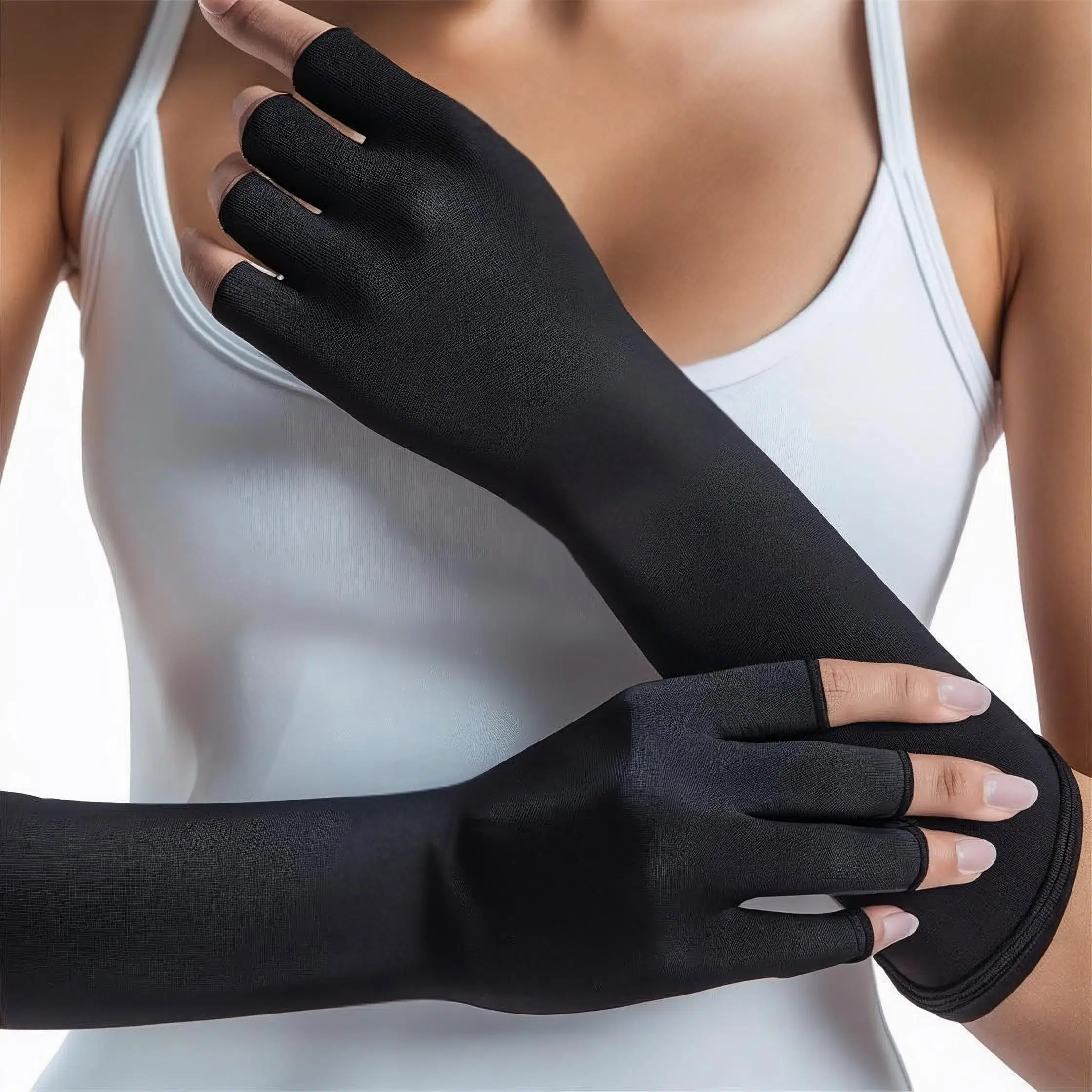
By compressing the entire forearm, the gloves support these working muscles. This reduces the strain transmitted through tendons to finger joints during gripping and repetitive tasks. The extended length also ensures compression reaches the wrist—a common site of swelling and discomfort in carpal tunnel syndrome and arthritis.
Graduated compression
The pressure is firmer at fingertips and gradually lighter toward the elbow. This pushes fluid back toward your heart instead of letting it pool in your fingers and cause puffiness.
Firm enough to support joints without feeling tight. Less puffiness. More comfort.
Fingertips stay exposed for a reason
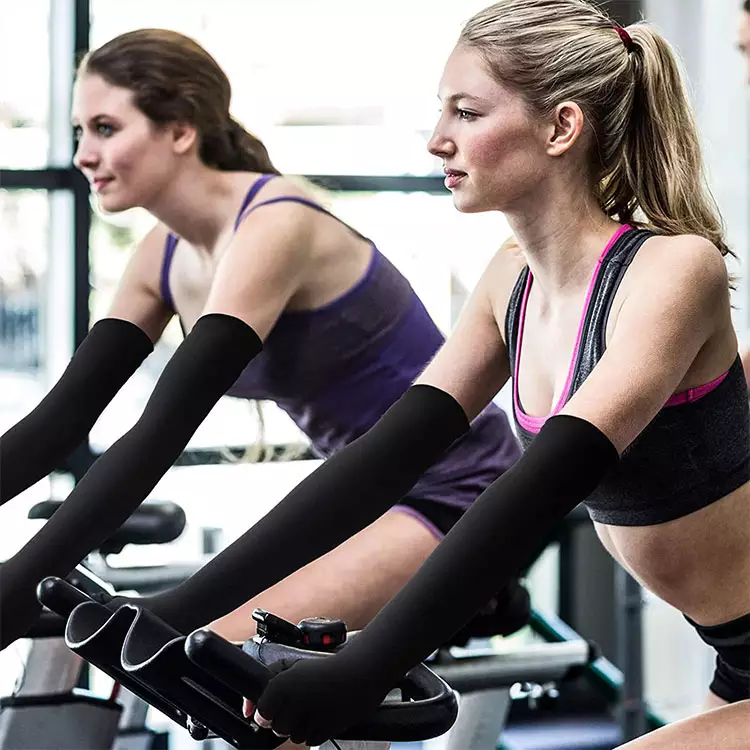
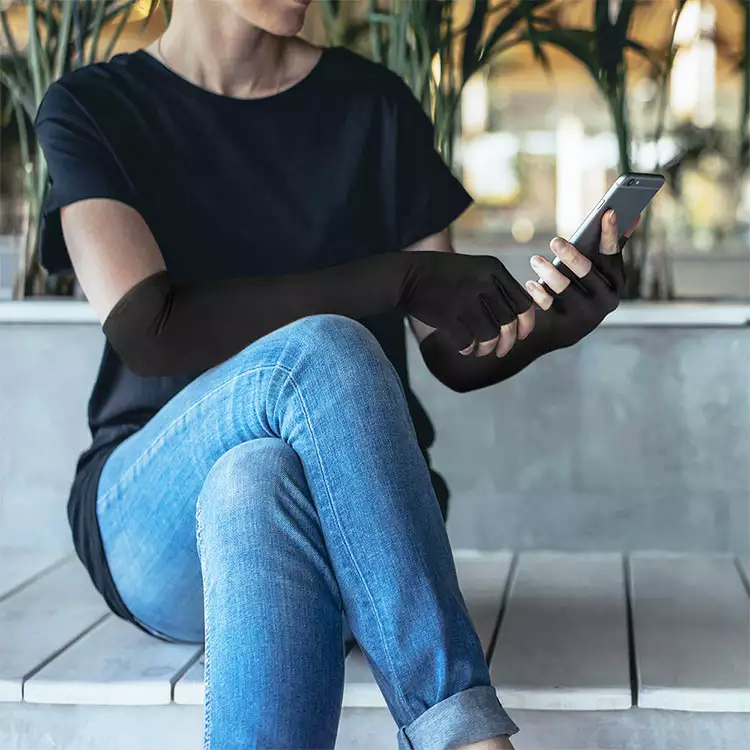
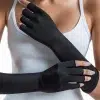
The fingerless design leaves fingertips and thumb tips uncovered. This keeps full feeling in fingertips (tactile sensitivity), so textures can be felt, small objects handled, and tasks like fastening buttons or sorting coins completed without removing the gloves.
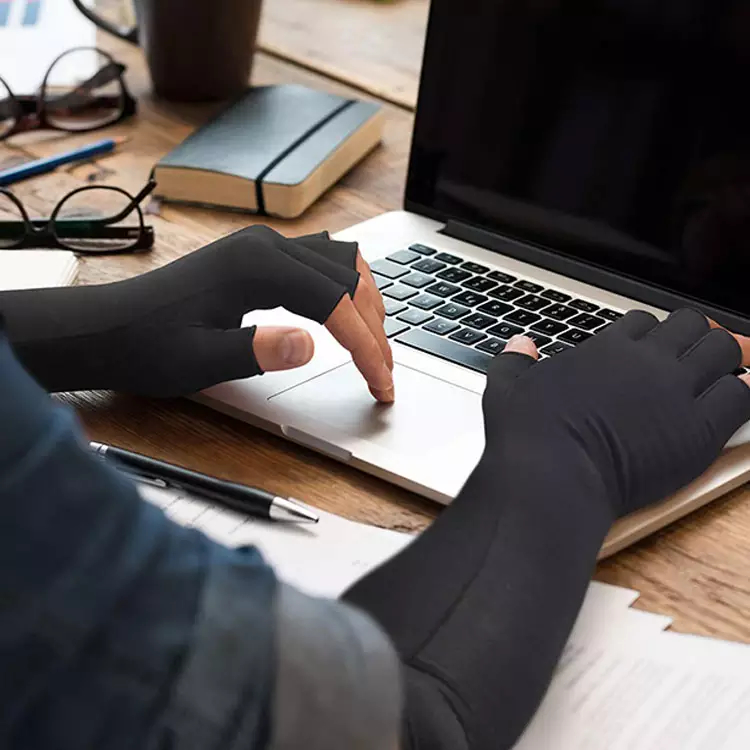
Exposed fingertips also allow skin to breathe and prevent overheating at the most active parts of the hand. This helps when you need precision—typing, using a phone, handling tools—where covered fingertips would feel clumsy or sweaty.
Design Features That Support All-Day Wear
Copper-infused fabric
The fabric is infused with copper ions woven into the fibres. Copper has natural antimicrobial properties—it stops bacteria from multiplying on the fabric surface.
Hands naturally produce sweat and oils while wearing the gloves, especially when worn for several hours or during physical activity. These conditions let bacteria multiply quickly, leading to odour and the need for frequent washing. The copper-infused fabric stays fresher longer, so the gloves can be worn comfortably throughout the day without odour.
Breathable fabric
The knit structure creates tiny spaces between fibres that allow air to pass through while keeping compression. Hand movement pumps air through the fabric—when fingers bend and straighten, the fabric stretches and relaxes, creating airflow. This prevents heat and sweat from building up inside the gloves, which would make hands feel clammy and uncomfortable.
If you have circulation problems or Raynaud’s phenomenon, breathability matters—trapped heat can trigger discomfort or worsen symptoms.
Smooth seam construction
The gloves feature smooth seams positioned away from pressure points and high-friction areas. Traditional seams and stitching form raised edges that rub against skin during hand movement. After a few hours, that rubbing leaves your skin red, sore, or blistered.
This matters more if you have sensitive skin, eczema, or thin skin from ageing or long-term steroid cream use. Smooth seams positioned away from irritation-prone areas allow comfortable wear for extended periods without rubbing or chafing.
Lightweight, low-profile fit
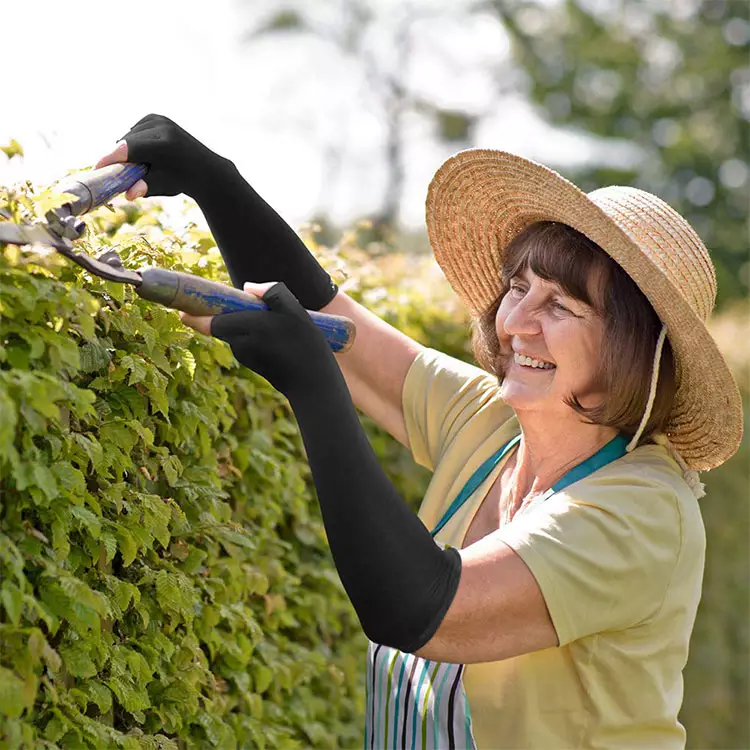
The fabric is thin enough to wear under other gloves in cold weather or beneath work gloves for added support. The low-profile fit means the gloves don’t add bulk—hands can still fit into pockets, gloves, or tight spaces without the compression gloves getting in the way.
You can wear them all day—at work, around the house, outdoors—without needing to take them off and put them back on constantly.
Who This May Help
RevitaFit™ Compression Gloves may help people with:
Inflammatory joint conditions: Osteoarthritis (wear-and-tear arthritis often in finger joints and thumb base, causing pain, stiffness, and visible joint changes), rheumatoid arthritis (autoimmune condition causing symmetrical joint inflammation, often in multiple finger joints), and psoriatic arthritis (inflammatory arthritis linked to psoriasis).
Circulation and nerve-related conditions: Raynaud’s phenomenon (poor circulation triggered by cold, causing fingers to turn white or blue), carpal tunnel syndrome (nerve compression in the wrist causing numbness, tingling, and hand weakness), and peripheral neuropathy (nerve damage causing numbness or altered sensation in hands).
Tendon and overuse conditions: Trigger finger (tendon inflammation causing fingers to catch or lock when bending), tendonitis (inflamed tendons in wrist or hand from repetitive strain), and repetitive strain injury (RSI) (overuse injury from repeated hand movements).
Other hand conditions: Gout (sudden severe joint pain from uric acid crystal build-up, often affecting finger joints), hand cramps and muscle spasms (involuntary muscle contractions from overuse, dehydration, or nerve irritation), wrist sprains and strains (ligament or muscle injuries from falls, twisting, or overuse), post-surgical recovery (following hand or wrist surgery when compression supports healing), general hand stiffness (age-related stiffness or discomfort during cold weather), and occupational hand strain (from manual work, typing, or repetitive tasks).
These conditions all cause similar problems: swelling, stiffness, pain, or weakness that make hand use uncomfortable. Compression gloves address these shared symptoms through the mechanisms explained above—reducing swelling, providing warmth, and stabilising joints.
The gloves work best alongside medical advice—they’re a supportive tool, not a main treatment. If symptoms are new, worsening, or unexplained, professional assessment is needed to check for complications and ensure appropriate treatment.
For detailed information about how the gloves help specific conditions, the sections below explain mechanisms, symptoms, and when to seek advice.
How to Use the Gloves and What to Expect
When to wear them
Wear the gloves whenever hands need support. Many people notice stiffness peaks when waking up, aching increases by the end of the day, or cold weather triggers discomfort. Common times include when waking up to ease morning stiffness, during activities that strain hands (typing, preparing food, using hand tools), throughout the day if symptoms persist, or in cold environments to maintain warmth.
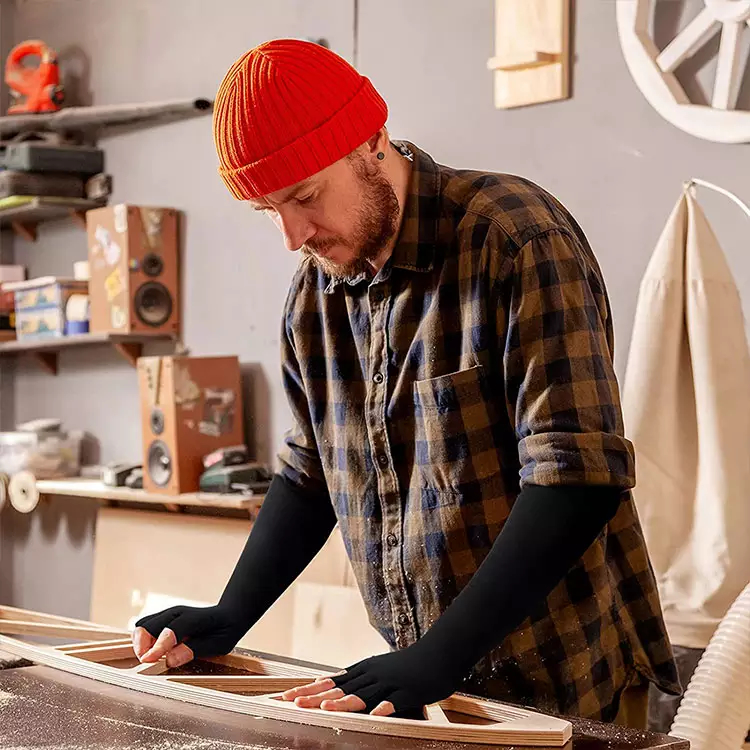
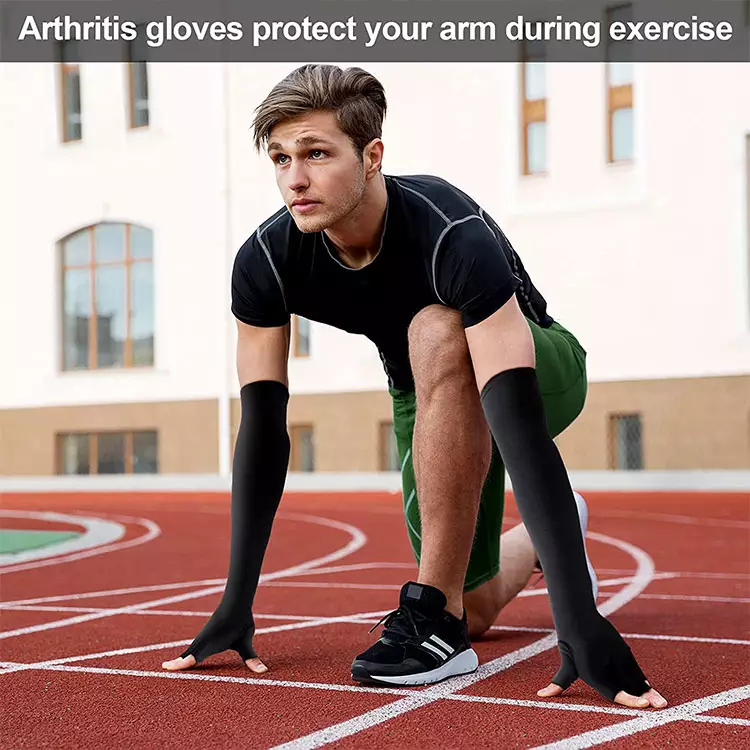
The gloves can be worn during most activities—typing, household tasks, light exercise, driving—but should be removed for activities where grip safety matters (handling hot liquids, using sharp tools, operating machinery) or where gloves could get caught.
Getting used to the compression
If new to compression gloves, start with 1-2 hours at a time and gradually increase wear duration as hands adjust. This allows skin and joints to adapt to the gentle pressure without discomfort.
The right fit feels snug but not tight. Fingers should move freely, and no numbness, tingling, or colour change should occur in fingertips. If any of these occur, the gloves may be too tight. Try the next size up or remove them and reassess fit.
What to expect
Gradual relief: Compression gloves don’t provide instant pain relief. In the first few days, hands might feel warmer and a bit less puffy. That’s the first sign. Real relief takes longer.
Over 2-3 weeks of regular wear—wearing them daily when hands are stiff or painful—many people notice joints feel more stable during gripping, stiffness eases (especially in the morning or after rest), and swelling reduces, making rings fit more comfortably or fingers look less puffy. Relief builds gradually because compression reduces swelling and supports joints during movement, and these effects accumulate over time.
Everyone responds differently: Response varies. Mild irritation responds better than advanced joint damage. Wearing the gloves daily when hands are stiff or painful provides more benefit than occasional use. Addressing other factors affecting symptoms—rest, spreading activities throughout the day, exercises—also helps. And some people naturally have more responsive circulation and inflammation control.
If no improvement is noticed after 3-4 weeks of consistent wear, the gloves may not be the right solution, or the underlying condition may need different treatment. Speak with a GP or physiotherapist.
Sizing & Fit
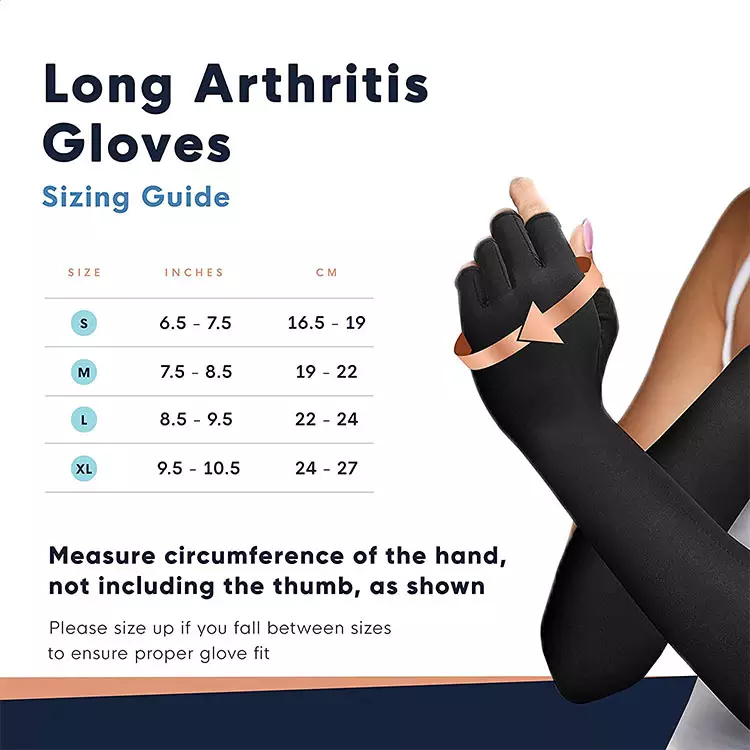
Correct sizing ensures effective compression without restricting circulation. Measure hand circumference at the widest part (across knuckles, excluding thumb):
- Small: 17.8–20.3 cm (7–8 inches)
- Medium: 20.3–22.9 cm (8–9 inches)
- Large: 22.9–25.4 cm (9–10 inches)
- Extra Large: 25.4–27.9 cm (10–11 inches)
Between sizes? Here’s how to choose: for circulation problems (conditions like Raynaud’s, peripheral arterial disease, or diabetes with poor circulation), choose the larger size to avoid restricting blood flow. For joint support (arthritis, tendonitis, or instability), the smaller size provides firmer compression and better stabilisation. If unsure, the larger size is safer—too-tight gloves can cause harm, while slightly loose gloves simply provide less compression.
The right fit feels snug but not tight. Fingers should move freely, and no numbness, tingling, or colour change should occur in fingertips during wear.
Care & Maintenance
Washing
Wash after every 2-3 wears, or daily if worn during exercise or for more than 8 hours at a time. Regular washing removes sweat, oils, and dead skin cells that can degrade the elastic fibres over time.
Hand wash in cool or lukewarm water with mild detergent. Gently squeeze to clean—don’t wring or twist, which can damage the elastic fibres. Rinse thoroughly and lay flat to air dry. Machine washing (gentle cycle, cool water, in a mesh laundry bag) is acceptable but hand washing extends the gloves’ lifespan.
What to avoid
Avoid fabric softeners, which coat fibres with waxy residue that reduces elasticity and compression effectiveness. Don’t use high heat—no tumble drying or ironing—which damages elastic fibres and causes the gloves to lose their compression. And skip bleach or harsh chemicals, which weaken the fabric and copper infusion.
Storage
Store flat or loosely folded in a cool, dry place. Don’t stretch them over objects or hang them by the fingers, which can distort the shape and reduce compression over time.
Safety & When to Seek Advice
Compression gloves are safe for most people when used correctly, but certain conditions require caution.
Don’t use compression gloves if you have:
- Severe peripheral arterial disease or poor circulation (conditions where blood flow to hands is significantly reduced)
- Active infection, open wounds, or broken skin on hands or arms (compression can worsen infection or delay healing)
- Severe swelling of unknown cause (unexplained swelling needs medical assessment before compression is applied)
- Known allergy to copper or fabric materials (can cause skin reactions)
- Numbness or loss of sensation in hands (without medical advice—inability to feel pressure means inability to detect if gloves are too tight)
Warning signs during wear
During wear, certain symptoms mean the gloves must come off immediately:
- Increased pain, numbness, or tingling
- Fingertips turning white, blue, or purple
- Skin becoming red, itchy, or developing a rash
- Swelling worsening rather than improving
These signs suggest the gloves are too tight, circulation is being restricted, or an allergic reaction is occurring.
When to speak with a GP or physiotherapist
Get advice if symptoms are new or worsening (sudden severe pain, rapid swelling, or loss of hand function needs assessment), if there’s no improvement after 3-4 weeks of consistent wear (the underlying condition may need different treatment), or if there’s uncertainty about whether compression gloves are appropriate for a specific condition.
30-Day Satisfaction Guarantee
RevitaFit™ Compression Gloves are backed by a 30-day satisfaction guarantee. If they don’t help or satisfaction isn’t achieved for any reason, we offer a straightforward returns process and refund policy. Simple as that.
Full details are available on the returns and refunds page.
Ready to Try RevitaFit™ Compression Gloves?
If hands feel stiff, swollen, or painful during everyday tasks, compression gloves may help. They won’t fix the underlying condition, but they can make movement more comfortable and joints feel more stable.
Find your size in the guide above, try them for a few weeks, and see if they help. You’ve got 30 days to decide.
Understanding Your Condition
Raynaud's Phenomenon
What causes it
Raynaud’s phenomenon occurs when small blood vessels in fingers (and sometimes toes) narrow excessively in response to cold or stress, temporarily cutting off blood supply. Everyone’s blood vessels narrow slightly in cold conditions to preserve core body temperature. That’s normal. Raynaud’s is different.
In Raynaud’s, this response is exaggerated—vessels constrict so much that blood flow nearly stops, causing fingers to turn white (no blood), then blue (low oxygen), then red (blood rushing back as vessels reopen). The cycle can last minutes to hours.
Primary Raynaud’s has no underlying cause and is usually mild. Secondary Raynaud’s is linked to other conditions (autoimmune diseases, circulation disorders) and tends to be more severe.
What it feels like
You’ll typically notice fingers turning white, then blue, then red during episodes; numbness and tingling while blood flow is restricted; throbbing pain as blood returns and vessels reopen; episodes triggered by cold temperatures, handling cold objects, or emotional stress; and in severe cases, skin ulcers or tissue damage if blood flow is repeatedly cut off for extended periods.
How the gloves help
Warmth is key here. The gloves act as an insulating layer, trapping body heat close to the skin and keeping hands warm. This reduces how often blood vessels constrict in response to mild to moderate cold.
The gloves reduce how often episodes occur and how severe they are, particularly during mild to moderate cold exposure. They won’t prevent all episodes—severe cold or secondary Raynaud’s linked to other conditions may still trigger attacks—but many people find they can tolerate cooler environments more comfortably and experience fewer episodes during everyday activities.
The fingerless design is useful here: fingertips stay exposed so any colour changes can be monitored during wear, allowing early detection of an episode.
When to get help
See a GP if episodes are frequent, severe, or interfering with daily life; fingers develop ulcers, sores, or persistent pain; or Raynaud’s symptoms appear for the first time after age 30 (more likely to be secondary Raynaud’s linked to another condition).
Carpal Tunnel Syndrome
What causes it
Carpal tunnel syndrome occurs when the median nerve—which runs through a narrow passage (the carpal tunnel) in the wrist—becomes compressed. This nerve controls sensation in the thumb, index, middle, and part of the ring finger, and also controls some thumb muscles.
The carpal tunnel is formed by wrist bones on three sides and a thick ligament across the top. When tissues inside this tunnel swell (from repetitive hand use, pregnancy, arthritis, or other causes), the space becomes even tighter, squeezing the nerve.
What it feels like
Signs include numbness and tingling in thumb, index, middle, and ring fingers (but not the little finger); symptoms often worse at night or first thing in the morning; pain radiating from wrist up the forearm; weakness in the hand, making it difficult to grip objects or perform fine tasks; and a tendency to drop things due to weakened grip and reduced sensation.
How the gloves help
Two mechanisms help. The compression provides external support along the wrist and forearm, helping to stabilise the area during movement. This limits excessive wrist bending and twisting—movements that narrow the carpal tunnel further and increase pressure on the nerve.
The graduated compression—firmer at fingertips, lighter toward elbow—applies gentle pressure that can reduce swelling inside the carpal tunnel. Less swelling means less pressure on the nerve, which may ease numbness and tingling.
They work best for mild to moderate carpal tunnel syndrome, especially when symptoms are triggered by repetitive tasks (typing, using a mouse, assembly work). They won’t fix severe nerve compression—if symptoms are constant, worsening, or affecting hand function significantly, medical treatment (splinting, injections, or surgery) may be needed.
When to get help
See a GP if symptoms are constant rather than intermittent; hand weakness is worsening or affecting daily tasks; or there’s no improvement after 2-3 weeks of rest, activity modification, and supportive measures like compression gloves.
Trigger Finger (Stenosing Tenosynovitis)
What causes it
Trigger finger occurs when a tendon in the finger becomes inflamed and struggles to glide smoothly through its sheath—the tunnel-like structure that guides the tendon as the finger bends and straightens.
Tendons connect muscle to bone and are covered by a protective sheath that produces lubricating fluid. In trigger finger, the tendon or its sheath becomes inflamed and swollen. The swollen tendon catches on the sheath opening (like a rope catching on a pulley), causing the finger to lock in a bent position. When enough force is applied, the tendon suddenly pops through, causing the finger to snap straight—the characteristic “trigger” sensation.
Thumb, middle, and ring fingers get this most often, and it affects people who perform repetitive gripping (manual work, playing musical instruments, conditions like diabetes or rheumatoid arthritis that increase inflammation).
What it feels like
You’ll typically notice a catching or locking sensation when bending or straightening the finger; a painful click or snap as the finger releases; stiffness, especially when waking up; a tender lump at the base of the affected finger (the swollen tendon); and in severe cases, the finger becoming locked in a bent position and unable to straighten without help.
What the gloves won’t do
The gloves won’t fix the catching or locking—that requires the tendon inflammation to settle or, in persistent cases, medical treatment (steroid injection or minor surgery to release the tendon sheath). But they can ease background discomfort.
How the gloves help
The warmth increases blood flow to the area, which can help reduce inflammation in the tendon and sheath over time. Increased circulation brings oxygen and nutrients while removing inflammatory chemicals, supporting the body’s natural healing process.
The compression also provides gentle support around the hand and fingers, which may reduce strain on the affected tendon during gripping tasks. This won’t stop the catching sensation, but it can make the hand feel more comfortable during activities that would otherwise aggravate the condition.
Most useful for mild trigger finger or during recovery after treatment. They’re not a substitute for medical treatment if the finger is frequently locking or if symptoms are worsening.
When to get help
See a GP if the finger is frequently locking or unable to straighten without help; there’s a painful lump at the base of the finger that’s worsening; or symptoms persist despite rest and supportive measures.
Tendonitis (Tendon Inflammation)
What causes it
Tendonitis occurs when tendons—the tough cords connecting muscle to bone—become inflamed from overuse, repetitive strain, or sudden injury. In the hand and wrist, this most commonly affects tendons controlling finger movement, thumb movement, and wrist stability.
Tendons are designed to handle repeated stress, but excessive or repetitive strain (typing, using hand tools, sports, manual work) causes microscopic tears in tendon fibres. The body responds with inflammation—swelling, pain, and stiffness—as it tries to repair the damage. If the tendon doesn’t get adequate rest, inflammation becomes chronic, and the tendon weakens further.
Common types
Pain on the thumb side of the wrist? That’s De Quervain’s tenosynovitis—inflammation of tendons controlling thumb movement, often from repetitive thumb use (texting, lifting with thumb extended). Pain on the back of the wrist? That’s wrist extensor tendonitis—inflammation of tendons that lift the hand upward, common in activities requiring repeated wrist extension (typing, using a mouse). Pain in fingers or palm? That’s flexor tendonitis—inflammation of tendons that curl fingers, often from gripping tools, climbing, or repetitive hand use.
What it feels like
Signs include pain along the affected tendon, worsening with movement; swelling and tenderness over the tendon; stiffness, especially after rest or when waking up; weakness in the affected hand or wrist; and a grating or creaking sensation (crepitus) when moving the tendon.
How the gloves help
The compression provides gentle external support that helps stabilise the wrist and hand during movement. This reduces the strain placed on inflamed tendons during gripping, typing, and repetitive tasks, giving tendons a chance to settle while still allowing functional hand use.
The warmth also supports healing by increasing blood flow. Better circulation delivers oxygen and nutrients to damaged tendon tissue while removing inflammatory chemicals, supporting the body’s repair process.
Most useful during the recovery phase of tendonitis, when rest and activity modification are already in place. They won’t fix severe tendonitis or replace the need for rest—tendons need time to heal—but they can make everyday tasks more comfortable while healing occurs.
When to get help
Speak to a GP if pain is severe or not improving with rest and activity modification; swelling is significant or worsening; or weakness is affecting hand function or daily tasks.
Osteoarthritis vs Rheumatoid Arthritis
Both conditions cause hand pain, stiffness, and swelling, but they develop differently and affect joints in distinct patterns.
Osteoarthritis (OA): What causes it
Osteoarthritis is wear-and-tear arthritis. Cartilage cushioning the joints gradually breaks down over years of use. Without that protective layer, bones rub together. The body tries to stabilise the joint by forming extra bone (bone spurs) and tightening surrounding structures, but this creates stiffness and pain.
OA typically develops after age 50 and affects joints that have experienced the most mechanical stress—finger joints closest to the nails (distal joints), middle finger joints, and the thumb base.
What it feels like
Pain often starts as a dull ache when using the hands and may ease with rest. Stiffness, however, is typically worst after sitting still or resting. Morning stiffness usually lasts less than 30 minutes. Joints may look enlarged or knobbly (bone spurs forming), and there’s often a grinding or grating sensation (crepitus) when moving affected joints. Symptoms usually affect one or a few joints rather than many at once.
Rheumatoid Arthritis (RA): What causes it
Rheumatoid arthritis is an autoimmune condition. The immune system mistakenly attacks the synovium—the lining inside joints that produces lubricating fluid. This causes inflammation, swelling, and pain. Over time, chronic inflammation damages cartilage and bone.
RA can develop at any age (often between 30-60) and tends to affect multiple joints symmetrically—if the right hand is affected, the left usually is too. It commonly affects knuckles (metacarpophalangeal joints) and middle finger joints, but typically spares the joints closest to the nails.
What it feels like
Pain is often described as throbbing or burning and may persist even at rest. Stiffness is typically worst when waking up and can last an hour or more. Joints feel warm, swollen, and tender to touch. Symptoms often come in flares (active periods of inflammation) and quieter periods. Fatigue and general unwellness are common during flares. Symmetrical joint involvement is typical—both hands affected similarly.
Comparison table
| Feature |
Osteoarthritis (OA) |
Rheumatoid Arthritis (RA) |
| Cause |
Wear-and-tear, cartilage breakdown |
Autoimmune, immune system attacks joints |
| Age of onset |
Usually after 50 |
Often 30-60, but can occur at any age |
| Pattern |
Affects individual joints, often asymmetrical |
Affects multiple joints symmetrically |
| Joints affected |
Finger tips, middle joints, thumb base |
Knuckles, middle joints (spares finger tips) |
| Morning stiffness |
Less than 30 minutes |
Often more than 1 hour |
| Swelling |
Bony enlargement (bone spurs) |
Soft, warm swelling (inflammation) |
| Systemic symptoms |
Rare |
Common (fatigue, general unwellness) |
How the gloves help both conditions
The key difference here is mechanism, not benefit. Both OA and RA cause swelling, stiffness, and joint instability—and compression addresses all three.
For OA, the gloves reduce swelling around worn joints, provide warmth to ease stiffness (especially helpful after rest), and stabilise joints weakened by cartilage loss and bone changes.
For RA, the gloves reduce inflammatory swelling during flares, provide gentle support to inflamed joints, and offer warmth that many people find soothing during active inflammation. They work best during mild to moderate flares or between flares to maintain comfort—they won’t control severe inflammation, which requires medical treatment.
When to get help
See a GP or rheumatologist if joints are hot, red, and severely swollen (particularly if this is new or worsening); symptoms are affecting multiple joints symmetrically (suggests RA rather than OA); or morning stiffness lasts more than an hour (common in RA, needs assessment).
Repetitive Strain Injury (RSI)
What causes it
RSI is an umbrella term for pain and dysfunction caused by repetitive movements, sustained awkward postures, or prolonged use of hands and wrists without adequate rest. It’s not a single condition—it includes tendonitis, nerve compression, muscle strain, and other overuse injuries.
RSI develops when tissues (tendons, muscles, nerves) are subjected to repeated stress without enough recovery time. Microscopic damage accumulates faster than the body can repair it, leading to inflammation, pain, and dysfunction. Common triggers include typing, using a mouse, assembly line work, playing musical instruments, and prolonged phone or tablet use.
What it feels like
Signs include aching, throbbing, or burning pain in hands, wrists, or forearms; stiffness or reduced range of movement; weakness or loss of grip strength; tingling, numbness, or altered sensation; and symptoms that worsen during or after the triggering activity and may improve with rest.
How the gloves help
The compression stabilises the wrist and hand during repetitive tasks, reducing excessive movement that strains already-irritated tissues. This allows continued function (typing, using tools) while giving tissues some mechanical support.
The warmth increases blood flow, supporting tissue repair by delivering oxygen and nutrients while removing inflammatory chemicals. The gloves also reduce swelling that can compress nerves or restrict movement.
Most helpful when combined with other measures: taking regular breaks during repetitive tasks, adjusting workstation ergonomics (keyboard height, chair position, screen distance), and doing stretching or strengthening exercises. They support recovery—they don’t replace the need to address the underlying cause.
When to get help
See a GP or occupational health specialist if symptoms are worsening despite rest and activity modification; pain is affecting sleep or daily function; or numbness or weakness is developing (suggests nerve involvement).
Gout
What causes it
Gout occurs when uric acid—a waste product normally dissolved in blood and excreted by the kidneys—builds up to high levels and forms sharp needle-like crystals in joints. These crystals trigger sudden, severe inflammation.
Uric acid comes from the breakdown of purines, substances found in certain foods (red meat, seafood, alcohol) and produced naturally by the body. When uric acid levels rise (from diet, reduced kidney function, certain medications, or genetic factors), crystals form in joints, particularly in cooler areas like fingers and toes.
Gout attacks are sudden and extremely painful—often described as the worst joint pain people have experienced.
What it feels like
Signs include sudden severe pain in a joint, often starting at night; the affected joint becomes hot, red, swollen, and extremely tender to touch; pain so intense that even light touch (bedsheets, clothing) is unbearable; and attacks typically lasting days to weeks if untreated, then resolving completely between episodes.
In hands, gout most commonly affects finger joints, particularly knuckles and the joint at the base of the thumb.
What the gloves won’t do
The gloves won’t stop a gout attack or provide meaningful relief during an acute flare. Gout pain is too severe, and the joint is too inflamed and tender for compression to help—in fact, any pressure may worsen discomfort.
How the gloves help
Between attacks, some people find the gloves helpful for lingering stiffness or mild discomfort as inflammation settles. The warmth and gentle compression may ease residual swelling and support joint movement during recovery.
The gloves are not a gout treatment. Gout requires medical management—medications to lower uric acid levels, treat acute attacks, and prevent future episodes. Compression gloves are, at most, a comfort measure between flares.
When to get help
Sudden severe joint pain needs immediate assessment—especially if it’s the first attack. See a GP if experiencing sudden severe pain in a finger joint (particularly if the joint is hot, red, and swollen); recurrent attacks (gout needs long-term management to prevent joint damage); or attacks becoming more frequent or affecting multiple joints.
Hand Cramps, Spasms & Muscle Fatigue
What causes it
Hand cramps and muscle spasms are sudden, involuntary muscle contractions that cause pain and temporary loss of hand function. They occur when muscles contract forcefully and don’t relax.
Common causes include muscle overuse from repetitive tasks (typing, gripping tools, writing for extended periods), dehydration or electrolyte imbalances (low potassium, magnesium, or calcium affecting muscle function), poor circulation reducing oxygen delivery to hand muscles, nerve irritation or compression (carpal tunnel syndrome, cervical spine issues), and underlying conditions like arthritis, diabetes, or thyroid disorders.
What it feels like
You’ll typically notice sudden sharp pain as the muscle contracts involuntarily; visible muscle tightening or fingers curling into a fixed position; difficulty releasing the grip or straightening fingers during a cramp; aching or soreness in the hand after the cramp releases; and cramps often occurring during or after repetitive tasks, at night, or in cold conditions.
How the gloves help
The warmth improves circulation to hand muscles, delivering more oxygen and nutrients while removing waste products (like lactic acid) that contribute to cramping. Better blood flow helps muscles work more efficiently and recover faster after exertion.
The compression provides gentle support to fatigued muscles during repetitive tasks, reducing the strain that leads to cramping. The gloves also help maintain warmth in cold environments, which is useful because cold temperatures increase cramping risk by reducing circulation and making muscles contract more easily.
Most useful for cramps triggered by overuse, cold, or mild circulation issues. They won’t fix cramps caused by severe electrolyte imbalances, nerve compression, or underlying medical conditions—those need specific treatment.
When to get help
See a GP if cramps are frequent, severe, or interfering with daily activities; weakness is developing alongside cramping; cramps occur with other symptoms (numbness, tingling, muscle wasting); or there’s no clear trigger (not linked to overuse, dehydration, or cold).
Wrist Sprains & Strains
What causes it
A wrist sprain occurs when ligaments (the tough bands connecting bones) are stretched or torn, usually from a fall onto an outstretched hand, sudden twisting, or impact. A wrist strain involves muscles or tendons rather than ligaments and typically results from overuse or repetitive movements.
Both injuries cause similar symptoms—pain, swelling, and reduced function—but sprains affect the structural stability of the wrist joint, while strains affect the muscles and tendons that move the wrist and hand.
Mild sprains and strains involve slight stretching or microscopic tears. Moderate injuries involve partial tearing of ligaments or tendons. Severe injuries involve complete tears, often requiring medical treatment or immobilisation.
What it feels like
Signs include pain at the time of injury and ongoing pain with movement; swelling and tenderness around the wrist; bruising (may appear hours or days after injury); reduced range of movement or difficulty gripping; a feeling of instability or weakness in the wrist; and a popping or tearing sensation at the time of injury (suggests more severe damage).
How the gloves help
The extended length over the elbow provides compression and support along the entire forearm and wrist, helping to stabilise the injured area during recovery. This reduces excessive movement that could aggravate healing tissues.
The compression also reduces swelling, which is common after sprains and strains. Less swelling means less pressure on surrounding tissues, reducing pain and stiffness. The warmth supports healing by increasing blood flow, delivering oxygen and nutrients to damaged ligaments, tendons, and muscles.
Most useful during the recovery phase after initial acute treatment (rest, ice, elevation in the first 48-72 hours). They provide ongoing support as you gradually return to normal activities, but they’re not a substitute for proper immobilisation if the injury is severe.
When to get help
See a GP or visit A&E if pain is severe or you can’t bear weight on the wrist; there’s visible deformity or the wrist looks misshapen; numbness or tingling develops (suggests nerve involvement); or there’s no improvement after 48-72 hours of rest, ice, compression, and elevation.
Disclaimer
The information on this page is general guidance only and is not a substitute for individual medical advice, diagnosis, or treatment. If you have new, worsening, or unexplained symptoms, or if you’re unsure whether compression gloves are appropriate for your situation, speak to a GP or physiotherapist for personalised advice. No guaranteed outcomes are promised—individual response varies.
Conclusion
Hand pain, stiffness, and swelling make everyday tasks uncomfortable. RevitaFit™ Compression Gloves address these problems through three mechanisms: reducing swelling with graduated compression, providing warmth to ease stiffness and support circulation, and stabilising joints weakened by arthritis, tendonitis, or overuse.
The extended length over the elbow supports forearm muscles that control finger movement. The fingerless design preserves touch sensitivity for everyday tasks. Copper-infused, breathable fabric stays fresh during all-day wear, and smooth seams positioned away from pressure points prevent irritation on sensitive skin.
If hands feel stiff, swollen, or painful during gripping, typing, or cold weather, compression gloves may help. They won’t fix the underlying condition, but they can make movement more comfortable and joints feel more stable.
Find your size in the guide above, try them for a few weeks, and see if they help. You’ve got 30 days to decide.


by John Taylor
I bought these for my mom who has arthritis. She felt a noticeable difference after a week’s use. The design was comfortable and the fit was perfect for her. The gloves offer firm compression yet are easy to put on and take off. The only thing I’d suggest is making them in more colors!
by Kez
The pain from my carpal tunnel syndrome was becoming unbearable, making even simple tasks difficult. A friend recommended the RevitaFit compression gloves and I decided to give them a try. Boy, am I glad I did! They offer targeted compression that really alleviates the strain in my wrist and fingers. They’re comfortable enough to wear all day, too. I was skeptical at first, but these gloves really do the trick for me.
by Richard Davis
Five stars from me! I’ve been dealing with Raynaud’s disease for a while now. I was skeptical at first, but these gloves are fantastic. They have noticeably reduced my discomfort. The feel of the material is soft and comfortable on my skin. It’s great to have a product that can help me manage my symptoms. Well done!
by Josh
Solid four stars for these gloves! I’m a carpenter and my hands and fingers often ache after a long day of work. These gloves have helped alleviate that pain and stiffness. They feel snug but not overly tight. The only downside for me was the initial smell but it faded after a few washes. Worth every penny.
by Kel Garcia
Struggling with sore hands for years, I gave these compression gloves a try. The best part is, they do not restrict movement, they simply provide support and ease discomfort. The gloves are made of good quality material and the stitching is neat. They are quite durable as I’ve been using them daily and they’ve held up well. A solid product all in all.