
Raynauds Gloves for stiff, numb & cold hands
£12.49inc VAT
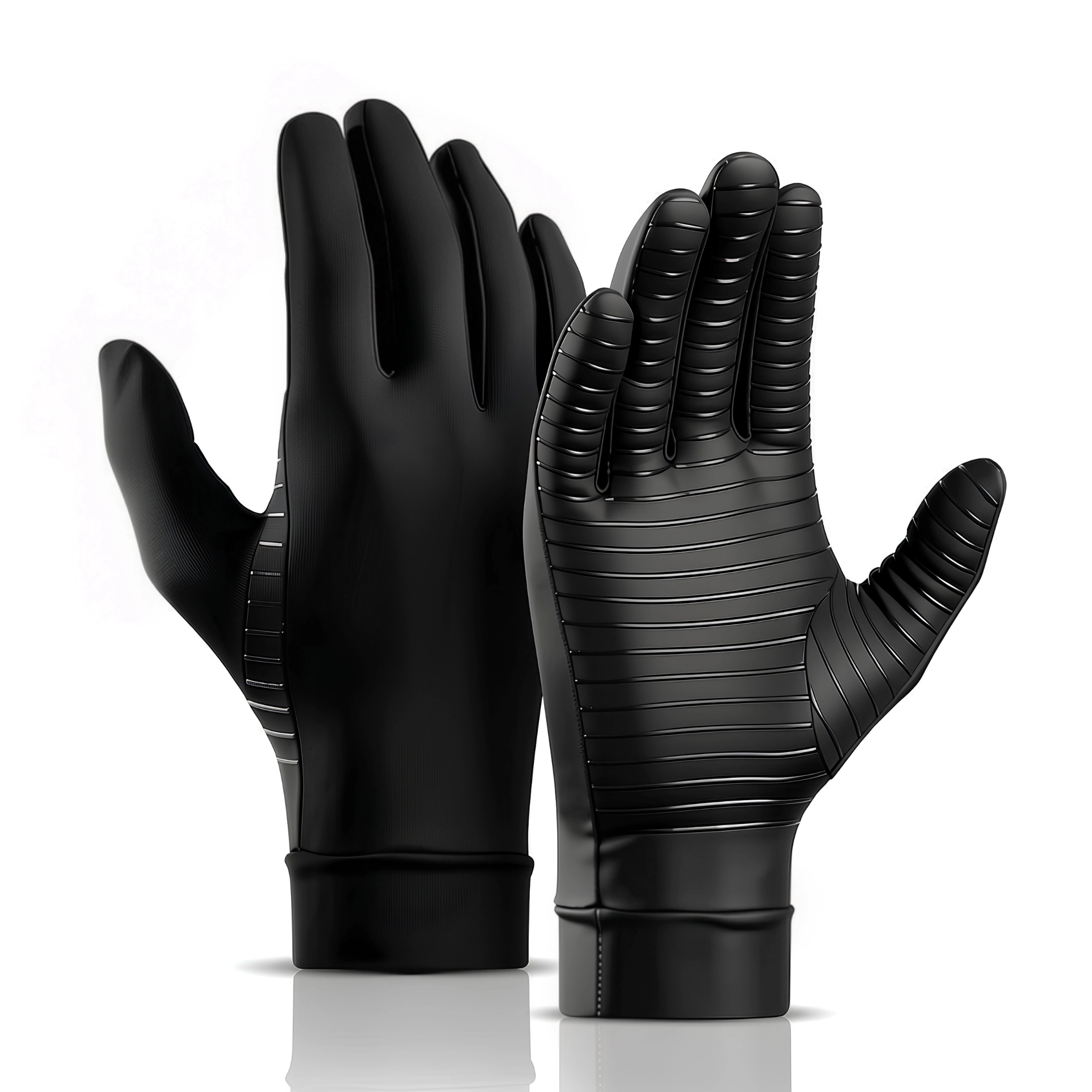
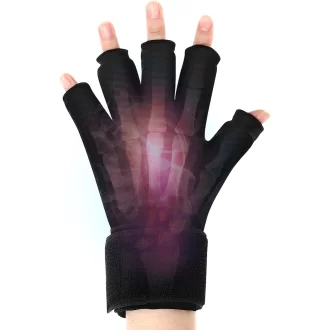
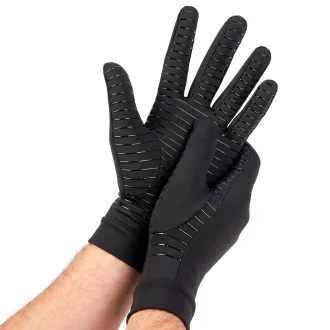
- Slim, full-length base-layer gloves for adults, worn next to the skin on their own in mild weather or under heavier winter gloves when it’s colder.
- Made for hands that turn white, blue or numb in the cold, and ache or throb as the warmth comes back; also worn by people with cold-sensitive or stiff hands, chilblains, hand and finger arthritis, or hands that tire quickly with typing and light manual work.
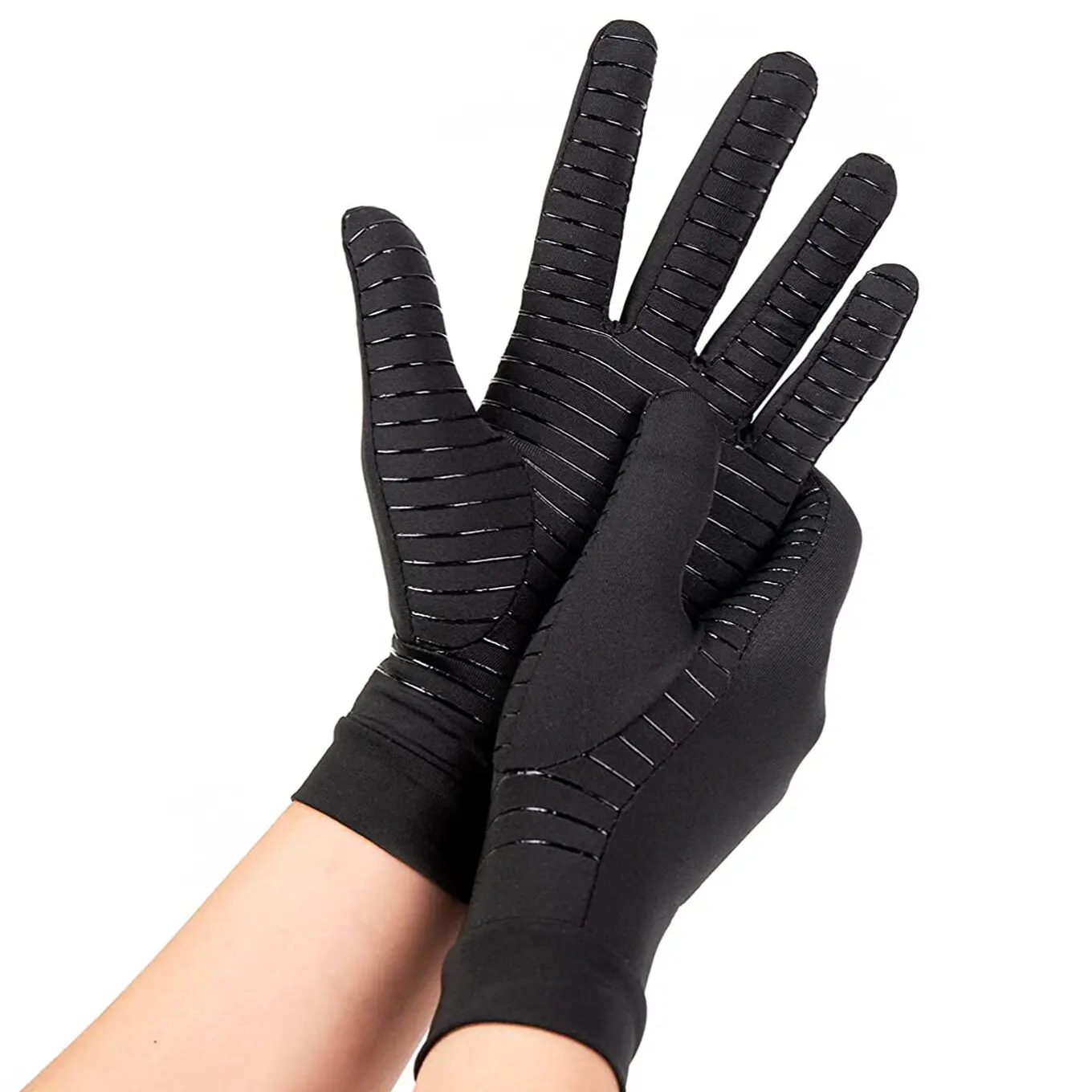
- Full coverage over every finger and the thumb, so the tips, where episodes usually start, are never left bare.
- A soft, stretchy, copper-infused thermal layer that traps a thin layer of still air, slowing how quickly heat leaves the hand. The fabric also moves sweat away from the skin and lets it dry gradually, because damp hands cool faster in moving air.
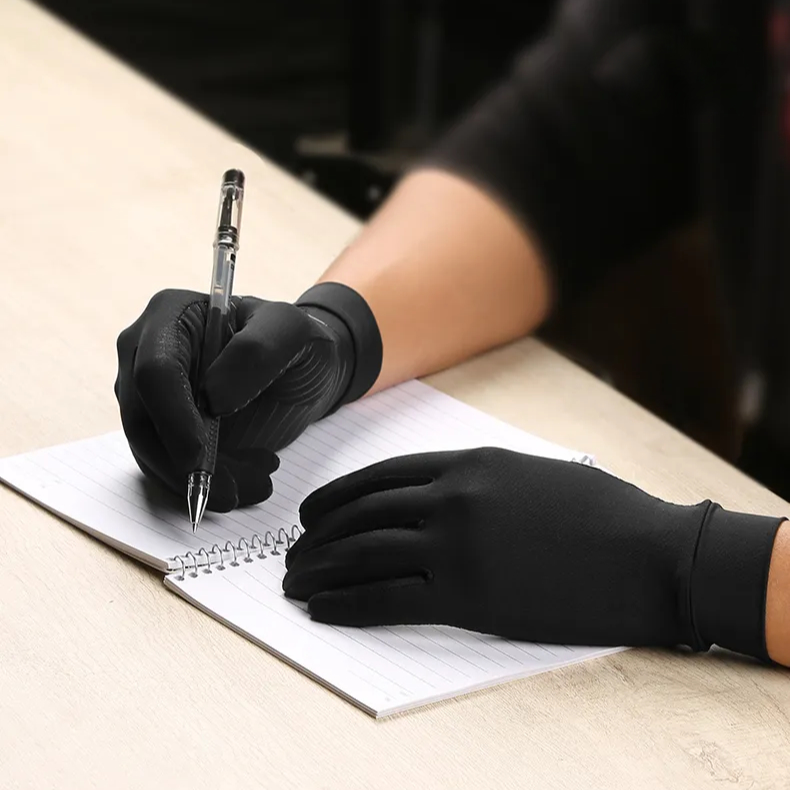
- Thin enough that buttons, keys, writing and typing stay manageable.
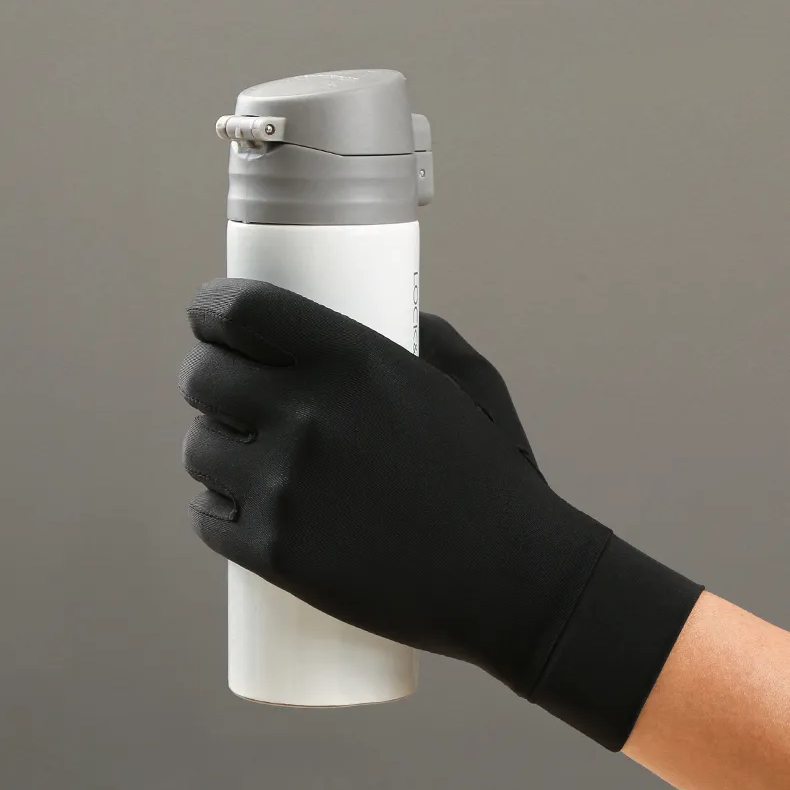
- A textured silicone grip on the palm and fingers, so holding a mug, a key or a steering wheel takes less clenching.
- Light graduated compression, a little firmer at the fingers and easing towards the wrist, to help with the puffy, heavy feeling after an episode. It is a comfort feature, not a treatment.
- Seams kept away from the fingertips and the webbing between the fingers, with flat stitching inside to reduce rubbing over tender joints.
- Wear them before your hands get cold rather than once an episode has started, and for the whole trip rather than just the cold part of it.
- They should feel snug, never tight. Take them off if they cause new pain, numbness or colour change, and speak to a clinician.
- Speak to your GP before using a glove with graduated compression if you have a circulation problem in the hands, fragile or broken skin, reduced sensation, or have been advised to avoid compression.
- They can help reduce how often and how badly episodes happen, but they won’t stop every one, and they do not treat or prevent blood clots.
The moment you know it’s Raynaud’s
Most people with Raynaud’s know that moment instantly. You reach into the fridge for a drink, or grab a car door handle on a frosty morning, and within seconds one finger loses its colour. Then another. The blood seems to drain away, leaving the skin pale and the finger stiff, so it no longer feels like your own. When the warmth comes back, it doesn’t feel like relief. It’s a throbbing, burning ache that turns a simple task into something you dread.
That’s the part people who don’t have it find hardest to understand. Ordinary cold hands are uncomfortable, but the colour stays normal throughout and they warm up quickly once you’re back indoors. Raynaud’s doesn’t behave that way. The colour drains away in patches, the finger goes numb, and the pain arrives afterwards, on the way back. That mix of colour change, numbness and pain on rewarming is what sets it apart from simply feeling cold. It’s also what makes it so disruptive.
A short walk to the car, a few seconds holding a chilled bottle, a few minutes in an air-conditioned room: none of that should be memorable, yet any one of them can slow down the rest of your morning. Hands that have just been through an episode often feel stiff and tired for a while afterwards, even once the colour has returned. Buttons take longer. Keys don’t turn first time. Holding a hot cup is briefly painful rather than soothing. Over a day, those small tasks add up.
None of this is imagined, and none of it is something you simply have to put up with. Understanding why it happens is the first step towards having fewer episodes.
What’s happening in your hands
Raynaud’s happens when the small arteries in your fingers and toes react far too strongly to cold or stress. It’s named after Maurice Raynaud, the French doctor who first described the pattern in the 1800s. It’s more common in women than in men, and it’s seen more often in people who live in colder climates. For most people, it’s a condition in its own right, with no other illness behind it. In a smaller group, it develops alongside another health condition. That distinction matters, because the two types behave differently and the advice you’d be given changes with it. Knowing which type you have makes a difference to the care you’re offered.
How the blood vessels normally behave
Normally, the small arteries in your hands widen and narrow all the time as your temperature and activity change. When you’re warm, they open up and let more blood through. When you’re cold, they narrow a little to reduce heat loss from the skin’s surface. It’s automatic, and you never notice it happening.
In Raynaud’s, those same arteries are oversensitive. Cold or stress makes the muscular walls of the artery tighten suddenly and far more than they should. That sudden tightening is called a vasospasm: a spasm in the blood vessel itself. The channel inside the artery narrows to almost nothing, and the flow of blood to the fingertip drops sharply.
Why the fingers are especially vulnerable
Your fingers are at the far end of your circulation, a long way from the heart. The arteries there are narrow to begin with, so even a small amount of extra tightening has a noticeable effect. Fingers also lose heat quickly, because they have a large surface area for their size. That’s why a mild drop in temperature can be enough to set off an episode: a cool breeze across your hands, a cold handrail, or washing your hands under a cold tap.
The three phases of an episode
The pattern usually runs the same way each time: white, then blue, then bright red as the warmth returns, with numbness in the middle and pain on the way back. Each stage tells you something different about what’s happening inside the finger.
When a vasospasm happens, the reduced blood flow causes the skin to lose its warmth and its colour. One or more fingers turn pale or white, and the skin feels cool to the touch. You may see a clear line where the pale part of a finger meets its usual colour, often at a knuckle or near the base of the finger. This is the first phase.
If the spasm carries on, the small amount of blood still in the capillaries near the surface loses more of its oxygen. The skin takes on a blue tint. The nerves in that area are also short of blood, so the finger feels numb and clumsy, and you can’t tell what you’re touching. This is the second phase.
Then the spasm eases and the arteries open again. Blood rushes back in. The small vessels stretch, the surrounding tissues swell slightly, and the nerves that have been short of blood begin firing again. That combination of stretching, swelling and returning nerve activity is why the warming phase can be so intensely uncomfortable. The fingers may turn bright red, throb, burn and feel tender to the lightest touch. For many people, this rewarming phase is the worst part, and even holding a warm cup can be painful. This is the third phase.
What lingers
Even after an episode is over, you may not be back to normal straight away. After repeated episodes, your hands can feel stiff, swollen and tired even when you’re not having one. The small joints in your fingers may ache, and the tissue around them can feel tight. When sensation is reduced, you may grip harder without realising, which puts extra strain on the tendons and makes your hands feel clumsier. For many people, that background ache lasts long after the colour has come back.
What tends to set an episode off
Some triggers come from the cold, or from a sudden change in temperature. Others don’t involve temperature at all, and they can catch people by surprise.
Bare hands in cool or windy air; direct contact with cold, hard surfaces such as metal rails, door handles, steering wheels, or items straight from the fridge or freezer; moving from a warm room into a cooler hallway, a shop entrance or the outdoors; and sweaty hands in a draught.
Feeling tense, anxious, shocked or stressed can bring on an episode even when the temperature hasn’t changed. It happens for much the same reason cold does: the nerves that control the width of those small arteries respond to more than cold.
Once you begin to notice which moments tend to set off an episode, it’s easier to see why keeping your hands warm and dry helps.
Why a warm base layer makes sense
When you have Raynaud’s, there are two things you can influence: how fast your hands lose heat, and how well they recover once blood flow returns. A close-fitting glove can affect both, but only when it fits well and suits the temperature and the task.
Keeping your fingers warm and dry slows the fall in skin temperature that starts a spasm in the first place. A close fit matters as much as the fabric, because it keeps the material resting against your skin rather than sitting loose, so warmth stays near the fingers instead of drifting away. The same fit also keeps sweat from pooling, and damp skin cools faster than dry skin in moving air. That’s why a sudden chill after your hands have been warm can be enough to tip you into an episode.
There’s another effect that’s easy to overlook: grip. A slightly grippier surface means you don’t have to clench so hard to feel secure. That matters more than you might think, because when your fingers are numb, the natural instinct is to hold everything much more tightly than the task actually needs. Over the course of a day, that extra tension puts real strain on the small muscles and tendons in the hand, which is part of why your hands ache by the evening.
The main thing to be careful about is pressure. A close, supportive fit is helpful. Tightness is not. Pressure that squeezes the hand is not a reliable way to treat Raynaud’s, and if it’s too strong it can reduce blood flow, make the fingers feel colder, or cause numbness and tingling. If a glove leaves deep marks, or your fingers go pale or numb because of the glove rather than the cold, that’s a sign it’s too tight, not a sign it’s working.
This is also why a slim base layer often works better than a thick winter glove for everyday tasks. Bulk keeps heat in, but it also takes away your ability to do anything fiddly: doing up buttons, turning keys, typing, using a phone. A close-fitting layer rests directly on the skin, holds warmth right where it’s needed, and leaves your fingers free to work.
You can wear them on their own in a cool room or mild weather, or slide them inside a heavier glove or mitten when you head out into serious cold, so warmth, dryness and support are all working together.
How these gloves are designed
These are slim, close-fitting base-layer gloves for adults, worn directly against the skin. You can use them alone in cool indoor spaces or mild outdoor weather, or under thicker winter gloves for extra insulation and wind protection. The design focuses on the areas that matter most in Raynaud’s: the fingertips, the finger joints, the palm and the wrist.
Full-finger and thumb coverage
Raynaud’s usually starts at the tips: the nails and the soft pads at the very end of each finger. This glove covers the full length of every finger and the thumb, so the parts that lose their colour first stay protected. Some circulation gloves stop short of the fingertips, which defeats the point if your Raynaud’s is worst there. Full coverage also means that when you wear these under a heavier pair, the warmth and support are consistent all the way to the ends of your fingers, where you need them most. Keeping the finger and thumb joints warmer can also make the stiffness and tightness after an episode easier to manage.
Soft, stretchy thermal base layer
This is where the glove does most of its work. The fabric is a copper-infused thermal blend that rests close against the skin and traps a thin layer of still air. Air is a good insulator, and a still layer of it between your skin and the outside world slows the rate at which heat leaves your hand. That holds true whether heat is escaping into cold air or being pulled out through a cold object you’ve just picked up.
The difference shows most when you touch cold, hard surfaces: a metal handrail, a door handle, a steering wheel, a shopping trolley. Metal in particular pulls heat out of skin very quickly, and a thin layer of insulation makes a real difference there. The material is soft against the skin, which matters when hands are tender during and after an episode. It stretches and moves with your fingers rather than rubbing over bony areas like knuckles or the base of the thumb, and it springs back into shape after being pulled on and off, so the fit stays close through the day.
The slim fit is deliberate. Thick gloves are warm, but they add bulk, and bulk makes buttons, keys and keyboards awkward. This base layer rests directly on the skin with almost no padding, so you keep your dexterity. Worn as a liner, it sits under a thicker glove and traps warmth closest to the skin, so the outer layer has less to do.
Moisture management
Damp skin cools faster in moving air, and a sudden drop in skin temperature is exactly what sets off an episode. Sweaty hands are a common trigger for people with Raynaud’s, especially if you then step into a breeze. The fabric moves sweat away from your skin and spreads it across a wider area, so it can evaporate gradually rather than staying against the skin in one cold, wet patch. The material is breathable, so your hands are less likely to overheat during long wear. A hand that has built up sweat indoors can chill very quickly the moment you step outside, and that is what this part of the design is guarding against.
Textured grip
When your fingers lose their normal feeling, you tend to grip things much harder than you need to, just to feel secure. A textured silicone pattern on the palm and fingers increases friction at the contact points, so you can hold a mug, a key, a steering wheel or a shopping bag with less effort and still feel in control. The texture also gives your hand a bit of sensory feedback, a sense of where your fingers are and how firmly you’re gripping, which helps you hold on with the right amount of effort. Because you don’t have to clench as hard, the small joints and tendons in the palm get a break.
Light, graduated compression
The gloves are a little firmer around the fingers and ease off towards the wrist. That’s a pattern called graduated compression: highest pressure at the fingertips, gradually reducing as you move up the hand.
It helps to be clear about what this does and does not do. The gentle pressure is there to hold the tissue steady and to help with the puffy, heavy feeling that can build up after an episode, when blood returns to the fingers and the tissues swell briefly. Your fingers should still move freely, and you shouldn’t be aware of the pressure at all. If you can feel it, or it leaves marks, the fit is too tight, and the answer is a larger size rather than persistence.
Low-seam construction
Comfort comes from the seams as much as the fabric. The seams are kept away from the most sensitive parts of the hand, which are the fingertips and the webbing between the fingers, and where a seam does cross a finger, the stitching is flat on the inside. Raised stitching rubs against skin that’s tender or swollen, so keeping it flat saves the skin that friction. Flat seams are also less likely to press into the sides of your fingers or across your joints when you make a fist or grip something, which helps if you have enlarged knuckles from arthritis or fingers that swell after an episode.
How to wear them
The most important thing is to put the gloves on before your hands get cold, rather than waiting until an episode is already under way. By the time the vessels have gone into spasm, the gloves can still give warmth and support, but they can’t undo what’s already happening. Their real value is in preventing the rapid cooling that starts an episode in the first place.
Getting the most out of them
The idea is to let your skin temperature fall slowly, so the vessels are less likely to close down suddenly. The tightening starts in the muscular wall of the small artery, triggered by the nerves that control its width. Warmth and gentle pressure work on the skin and the tissue just beneath it, so they can ease how the hand feels partway through an episode, without switching off the nerve signal that set it going.
Use them for the tasks that reliably set off an episode: driving in the cold, carrying chilled items, stepping through a doorway into cold air, sitting in an air-conditioned room.
In cool indoor spaces or mild weather outdoors, wear them on their own. In colder conditions, wear them as a liner under a thicker pair, so the support stays close to your skin and the insulation goes over the top. Keep your core warm at the same time. When your body is cold, your blood vessels are more likely to narrow, so a warm torso and warm hands work together. In freezing weather, the liner is part of the answer, not the whole answer.
Mistakes worth avoiding
Leaving it too late is the most common one. If you only put them on once your fingers have gone white or numb, most of the benefit is already gone.
Next is choosing a size that’s too loose. A loose glove won’t sit steadily against the skin, and the excess fabric bunches at the fingertips. Snug, with nothing gathering at the ends of your fingers, is what you’re after.
The opposite mistake, a size that’s too tight, can make things worse. A glove that digs into the skin or brings on new numbness can reduce circulation rather than help it. Take it off and try a larger size.
It’s easy to end up wearing them only indoors. Many of the worst triggers happen on the way from a warm space to a cool one, so try to wear the gloves for the whole trip, not just the cold bit at the end.
Be realistic about what they’re for. They slow the cooling and make episodes less severe, but they’re not a substitute for proper outdoor gloves in freezing weather.
What to expect in the first few weeks
When you first try them, wear them for short periods and check how your skin looks and feels afterwards. Everyone’s experience is different. Some people notice a clear improvement within the first week. For others, the benefit builds more gradually over several weeks, as they get into the habit of wearing them at the right moments. There’s no guarantee, and how much they help depends on how severe your circulation or joint problem is, and whether anything else is going on with your health.
Keeping a simple record for the first month helps here. Write down how often episodes happen, how strong they feel, and how quickly your hands recover. Note, too, whether everyday tasks feel more secure, and whether your hands feel less swollen or stiff afterwards. If you’d like to make it a bit more objective, score each of those from one to five every evening, so you’re comparing like with like rather than relying on memory.
As you go through the day, check a few things each time you take the gloves off. Your fingers should look and feel as they normally do, with no tingling, numbness or deep marks left by the glove. If you can still see the imprint of the fabric on your skin hours later, or if the marks are red or purple and don’t fade, the size is wrong for you. If everything looks and feels normal, and tasks feel steadier through the day, that’s the sign the fit is right and the gloves are worth keeping.
Look back at those notes at the end of four weeks and you’ll have an honest picture of whether the gloves are making a real difference for you. If episodes are shorter, rewarming is less painful, or your hands simply feel steadier through the day, that’s a good reason to stick with them.
Fit, sizing and care
Getting the size right matters more than most people expect. Too loose, and the glove slips and bunches instead of holding warmth steadily against the skin. Too tight, and it’s uncomfortable, it restricts how your fingers move, and it can reduce circulation rather than help it.
Measuring your hand
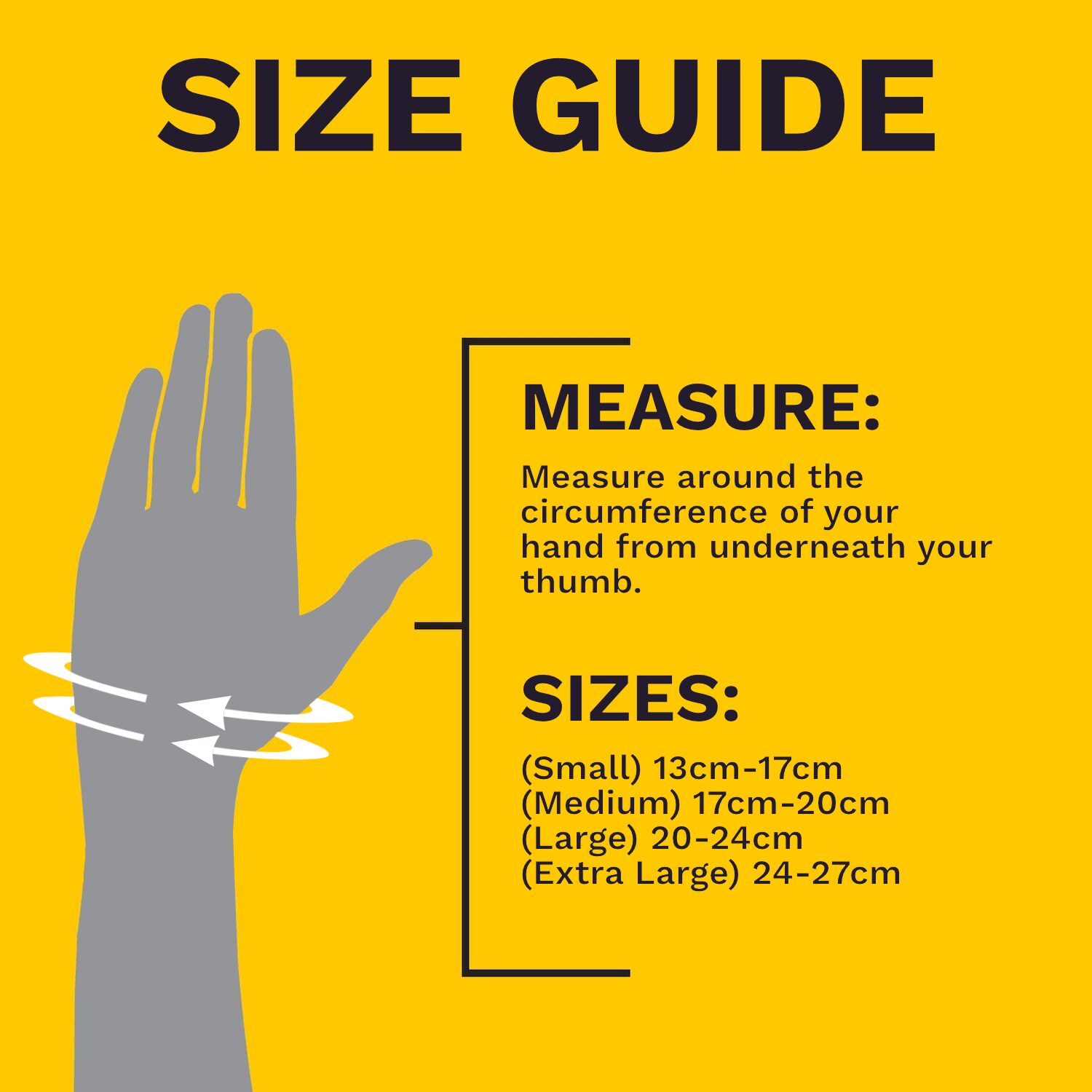
Measure around the widest part of your hand, just behind the knuckles, and leave the thumb out of it. A soft tape measure is the easiest thing to use. If you don’t have one, wrap a piece of string around your hand at that point, mark where it overlaps, then lay the string flat against a ruler and measure it in centimetres.
Choosing a size
These gloves are unisex and come in a range of sizes. Your size comes from the circumference of your hand, not the length of your fingers. Take the measurement you made and match it against the size information that comes with the gloves. Go by that rather than by whichever size looks closest on paper.
If one hand is slightly larger than the other, which is common, size to the larger hand. If your hands swell later in the day or after long use, allow a little extra room, though not so much that the glove turns loose. If you’re between two sizes, go smaller if you prefer a firmer feel and larger if you’d rather have something lighter. Above all, the glove should feel snug without pinching or leaving deep marks.
Checking the fit
When you first put them on, bend and straighten your fingers all the way to check that nothing catches. Then close your hand into a fist and open it out a few times, so you can feel whether any part of the glove digs in, pinches, or leaves a deep red mark while your hand is working. That physical check is the one to run before you rely on them for the day.
If the gloves themselves seem to cause more pain, more numbness or worse colour changes while you’re wearing them, take them off and don’t wear them again until you’ve had advice. You may simply need a different size, or compression may not be right for you.
Looking after them
Hand wash in cool or lukewarm water with a mild detergent. Don’t use bleach, fabric softener or high heat. Rinse gently and press the excess water out rather than wringing. Dry them flat, away from direct heat or sunlight, and don’t tumble dry.
Wash them regularly to clear the sweat and skin oils that build up and can irritate the skin. Make sure they’re completely dry before you wear them again, since damp fabric can bring on exactly the cooling you’re trying to avoid. As a rough guide, many people wash them every few wears, or after a day of heavy use.
Over time, the fabric softens and the compression eases. Once the gloves start to feel noticeably looser or thinner, or show worn patches, they’ve stopped giving you the same level of support, and it’s time for a new pair. That softening is simply how compression garments age as the elastic relaxes with wear and washing. It isn’t a sign the gloves were faulty, and it happens to every pair eventually.
Other things that help alongside the gloves
Gloves are one part of managing Raynaud’s, not the whole of it. What the gloves do is slow how quickly your hands lose heat. The measures below work on the other side of the same problem: how readily the small arteries in your fingers tighten in the first place. Used together, they take some of the load off the gloves.
Keeping your whole body warm does as much for your hands as covering your fingers. When your core is cold, your body moves blood away from the hands and feet to protect its vital organs, so the arteries in your fingers are already more likely to tighten before the cold even reaches them. On a cold day, a warm torso and a pair of gloves are doing the same job from two directions.
Smoking works against the gloves in much the same way. Nicotine narrows blood vessels, which makes Raynaud’s worse, and even a small amount of regular smoke exposure can affect how easily your fingers go into spasm. The warmth a base layer holds close to the skin has less to work with when the vessels are already narrowed. If you smoke, stopping is one of the most effective things you can do for your circulation.
Stress and emotional tension act on those same small arteries through the nerves that control their width, which is why an episode can start in a warm room. Anything that reliably calms you down can reduce how often that happens: a walk, a few slow breaths, or giving yourself ten minutes before a stressful task. Fewer episodes mean the gloves have less to sit through. Staying active within your own limits supports your circulation in general, but it makes sense to avoid heavy hand work when your hands are already painful or swollen.
Other situations where warmth and closer coverage help
Those wider measures help your circulation as a whole. The gloves themselves are made mainly for adults living with Raynaud’s in their hands, particularly when episodes involve the familiar colour changes, the numbness and the pain on rewarming. If your symptoms don’t fit that pattern, some of the same practical measures still help. A few other conditions are worth knowing about, because warmth and steady coverage help with them too. Each one is a separate problem, though, and each has its own reason for improving.
Chilblains on the fingers
Chilblains make themselves known through touch. If one has formed on the side of your finger after a cold, damp walk, even a light brush against the skin can sting or itch in a way that’s hard to ignore. They are painful, itchy patches that appear after repeated exposure to cold and damp, and they sit in the skin itself. That is what makes them different from Raynaud’s, where the problem is in the blood vessels. Both are made worse by the cold, though, and keeping the whole finger steadily warm and dry is the main defence, both to stop chilblains forming and to make existing ones less painful to manage. Full-finger coverage makes that easier, and it keeps the damp out too.
Hand and finger arthritis
Opening a jar, turning a key, gripping a pan handle: the small joints of the hand do a lot of work, and in osteoarthritis they become stiff and sore, especially in cold weather. Some people find that holding warmth over those joints, with light, even support through the movement, makes tasks like these feel easier. It doesn’t change the joint itself, but a hand that isn’t cold and stiff tends to cope better with the work in front of it.
Long hours at a keyboard or mouse
By the end of a working day, the ache in the small muscles of the hand is often more about effort than about time. Typing and using a mouse keep those muscles and tendons working without much rest, and if the room is cool or the device is smooth and slippery, you end up gripping harder than you need to. Holding the fingers in a typing position for hours at a stretch is a form of static work: the small muscles that control the fingers stay switched on but barely moving, so the flow of blood through them stays low, and the ache builds from there. The textured palm cuts down on that effort, so your hand does less work to control the same device. The light compression helps too, easing the mild swelling that builds up after long stretches of repetitive use.
Cold-sensitive hands without a clear diagnosis
Some people notice their hands stiffen and tire quickly in mildly cold weather, without the dramatic colour changes of Raynaud’s and without the joint changes of arthritis. The hands simply feel colder, stiffer and slower to warm back up than everybody else’s in the same room. There’s no name for this in most cases, but the discomfort is real. Steady warmth over the hands, put on before they start to complain rather than after, is often enough to make daily tasks feel easier. If your symptoms are severe, getting worse, or come alongside other health problems, it makes sense to see your GP, since there may be an underlying reason that deserves proper attention.
Safety and when to get advice
Raynaud’s affects how blood flows into the fingers, so a few safety points are important to know before you start wearing these gloves and while you have them on.
Why the type of Raynaud’s matters
There are two forms, and they behave differently enough that knowing which one you’re dealing with makes a difference. Primary Raynaud’s is the more common form. It often begins in early adult life, and for most people it stays manageable with the simple measures: keeping warm, avoiding triggers and protecting the hands. The fingers and toes are most often affected, though other areas such as the ears, nose or nipples can be involved too. It isn’t usually linked to serious health problems, though it can still be uncomfortable and disruptive.
Secondary Raynaud’s behaves differently. Because it develops alongside another condition, the spasms tend to start later in life, usually after thirty or forty, and they can be more severe. Episodes may last longer, and over time there’s a greater chance of damage to the fingertip tissue. For that reason, treatment in secondary Raynaud’s often has to focus on the underlying condition, not just the hands.
The conditions most often linked to it are connective tissue diseases, a group of autoimmune conditions that affect the skin, joints and internal organs, as well as the small blood vessels. They include systemic sclerosis, also called scleroderma, which can cause the skin to thicken and tighten; systemic lupus erythematosus, usually just called lupus, which can affect joints, skin, kidneys and other organs; rheumatoid arthritis, an inflammatory joint condition that causes pain and swelling, often in the hands and feet; Sjögren’s syndrome, which causes very dry eyes and mouth and can also bring joint and blood vessel problems; and some forms of vasculitis, where inflammation affects the walls of the blood vessels themselves.
Your GP can help work out which type you have through a clinical assessment and, if needed, some blood tests.
When to speak to your GP
Speak to your GP, and possibly a rheumatologist, a doctor who specialises in joints and connective tissue conditions, if any of the following apply:
-
- Raynaud’s starts for the first time in adult life, especially after the age of thirty or forty.
-
- Your usual pattern suddenly becomes much more severe or much more frequent.
-
- Episodes last longer than they used to, or start affecting new parts of the body.
-
- You have Raynaud’s symptoms alongside other new or unexplained symptoms, such as joint pain and swelling elsewhere in the body; thickening or tightening of the skin on the fingers or face; unexplained weight loss, fevers or marked fatigue; shortness of breath or chest discomfort; very dry eyes or mouth alongside joint pain; or difficulty swallowing, or new or worsening heartburn.
None of these means you definitely have a serious underlying condition. But they’re a strong reason to get things checked, and a proper assessment can clarify whether your Raynaud’s is primary or secondary. In secondary cases, it also guides treatment for the underlying condition as well as your hands. It’s better to mention these things early, even if they later turn out to be mild, than to wait until they’ve caused more trouble. You’re not wasting anyone’s time by asking about fingers that change colour, go numb, or hurt when they warm up.
Before you use a glove with graduated compression
Talk to your GP, a physiotherapist or another appropriate clinician before you use a glove with graduated compression if any of the following apply to you. Significant circulation problems in your hands matter most here, for example peripheral arterial disease, a condition where the arteries in the limbs are narrowed, reducing blood flow.
There are a few other things to keep in mind. These include severe ulcers or sores on your hands that healed slowly, and any current open wounds, ulcers, or broken skin on your fingers or hands. Also consider a skin condition that is easily irritated by fabrics or by sweating under gloves; having been advised to avoid compression garments on your hands or arms; diabetes with reduced sensation in your hands or feet; a history of diabetes-related complications in your hands or feet; recent surgery on your hands or wrists; and blood-thinning medication, especially if you bruise easily or your skin is fragile.
None of these means you can’t use the gloves. They simply mean professional advice first is sensible, to check that compression suits your situation.
These gloves are designed to support comfort, warmth and grip in the hands. They do not treat or prevent blood clots, and must not be relied on for that. If you have a known risk of clots, or worrying symptoms in a hand or arm, seek clinical advice rather than relying on the gloves.
While you’re wearing them
Stop using the gloves and contact your GP or another clinician if you notice:
-
- New pain, numbness or colour change that appears while you’re wearing them.
-
- Dark, bluish-black or black areas on the skin, which can be a sign of tissue damage.
-
- Sores or ulcers on your fingertips or hands that are slow to heal.
-
- Episodes that suddenly become more severe, or that start affecting new areas.
-
- Numbness or weakness spreading beyond your hands and into your arms.
-
- Pins and needles that don’t go away after you take the gloves off.
-
- Deep red or purple marks that last more than a few hours after removing the gloves.
If any of these happen, take the gloves off and don’t put them back on until you’ve had professional advice.
Other signs worth mentioning to your GP
Some symptoms aren’t caused by the gloves themselves, but they’re signs that Raynaud’s or a related condition may need a closer look. These include fingertips that crack, split or take a long time to heal, and skin on the fingers that becomes tight, shiny or hard. Small red or white bumps under the skin, especially around the nails, and difficulty moving the fingers, or a finger that feels as if it’s locking in a bent position, are also reasons to mention it to your GP.
Questions people often ask
These come up again and again, and they’re worth answering directly rather than leaving you to guess.
Can I wear them in bed?
They’re not designed for overnight wear. They’re a base layer for daytime activity, and the support isn’t needed while you’re resting. Most people also find their hands overheat under compression overnight, which is uncomfortable. If you want warmth at night, choose a loose-fitting thermal glove without compression.
How long can I wear them during the day?
As long as they stay comfortable. There’s no set time limit, so a long commute, a full day at the desk or an afternoon in a cool room are all fine if the gloves still feel snug rather than tight. Give your skin a break when you can, because a few minutes with the gloves off lets the skin dry out and settles any warmth that has built up. If you become aware of the pressure after a few hours, or your fingers start to tingle, the size is probably too small.
Should I wear them during exercise or sport?
Walking, cycling, gardening and similar activity are exactly what they’re for, and keeping the hands warm while you’re moving about is the main reason to wear them. Think a little more carefully about anything that makes your hands sweat heavily. Damp skin followed by moving air is one of the triggers for an episode, so if you finish a session with wet hands, change into a dry pair rather than carrying on in the damp ones. The fabric moves sweat away from the skin, which helps, but heavy sweating will eventually be more than it can carry away.
Can I wear them on just one hand?
Yes. Raynaud’s doesn’t affect both hands equally, and plenty of people have one side that’s noticeably worse. A single glove on that hand works exactly as well as a pair would. Choose the size that fits that hand, since hands often differ slightly in width, and it’s the fit on the affected hand that matters.
Can I wear them all year round, or only in winter?
All year round. Air-conditioned offices, cool shop floors, chilled aisles and cool evening air can all set off an episode, and none of those depend on the season. Plenty of people find they wear the gloves more indoors during the warmer months, then add them as a liner under heavier gloves once the weather turns.
Can I type or write with them on?
Yes. The slim fabric and the textured grip keep your dexterity high, so typing, writing, doing up buttons and handling keys all stay manageable. Many people find they can do fiddly tasks comfortably while wearing them.
Are they suitable for driving?
Yes. The textured palm and fingers give you a secure grip on the wheel without needing to clench hard, and they keep you aware of how you’re holding it. As with any glove, make sure they don’t restrict your movement or your feeling before you set off. If you notice any loss of sensation or control, take them off before getting behind the wheel.
Can I use a touchscreen while wearing them?
The gloves don’t have conductive fingertips, so touchscreens won’t respond reliably. You can slip off the glove on the finger you use, or use a stylus. The slim fit makes them easy to take off and put back on.
Will they stop the numbness and the colour change?
No, and it’s best to be clear about that. The colour change and the numbness come from the spasm itself, and the gloves don’t switch that off. What they do is slow the cooling that starts the spasm, so episodes are less likely to begin, and when one does start, the hands hold their warmth for longer. The light pressure also helps with the tenderness as the blood returns. They can help reduce how often and how badly it happens rather than preventing it altogether.
Do they still help if my Raynaud’s is secondary?
They can still help with warmth, comfort and grip, and there’s no reason to avoid them just because your Raynaud’s is secondary. What changes is the wider picture. Secondary Raynaud’s is driven by another condition, and if that condition isn’t being treated, gloves can only do so much. If you haven’t had it looked at, speak to your GP so the gloves are one part of your approach rather than the whole of it.
Is this glove right for you?
Raynaud’s turns ordinary cold into numbness, pain and stiffness. Warmth makes the biggest difference, and that is where these gloves are focused: a slim thermal base layer that keeps heat close to the skin, full coverage from wrist to fingertips, and a close fit that holds warmth steadily rather than letting it drift away. Worn as a liner under a thicker glove in cold weather, they add insulation against the skin where it counts.
The light compression and textured grip are there to make the hands feel steadier through the day. They are a comfort feature, not a treatment, and the fit should feel close and comfortable, not tight. If the gloves leave deep marks or make your fingers colder, they are the wrong size.
They’re not right for everyone, particularly if you have a serious circulation or skin condition, or a health condition that affects your whole body. But used sensibly, alongside keeping warm, avoiding smoking, managing stress and following medical advice, many people find gloves like these make daily life more manageable.
If what you’ve read matches your own experience, they may suit you as part of your approach. If you’re unsure whether they fit your situation, or you haven’t yet had a clear diagnosis, particularly if you’re concerned about secondary Raynaud’s, speak to your GP first. Take a few minutes to get the size right before you start, and if it’s still unclear which size to choose, ask your GP, a physiotherapist or another clinician.
They won’t stop every episode. But they can make the ordinary moments a little more dependable: your hands steadier through the cold part of the day, and less sore when the warmth returns. The next time you reach into the fridge, or grab a car door handle on a frosty morning, your fingers can stay warmer and better supported.
Disclaimer
This page is general information about warm base-layer gloves with light compression, for Raynaud’s and cold-sensitive hands. It isn’t personal medical advice, and it can’t take account of your own history, your other conditions, or how your hands behave on a particular day.
Compression isn’t right for everyone. If you have a circulation problem in your hands, fragile or broken skin, reduced sensation, or you’re unsure how much pressure is safe for you, speak to your GP, a physiotherapist or another appropriate clinician before you wear them. The same applies if your symptoms are new, changing, or don’t settle.
How much these gloves help will vary from person to person. They’re designed to slow how quickly your hands cool and to make everyday grip easier. They don’t treat or prevent blood clots, they won’t stop every episode, and no particular outcome is promised.
Fast & Secure Checkout Through Paypal
Pay with Paypal the secure payment gateway that accepts all credit and debit cards. Paypal is free and secure and no credit or bank information is ever stored or shared with us.
Fast Dispatch
Enjoy your items soon with quick dispatch via Royal Mail. Expect to have your items between 1-3 working days for domestic orders. 7-10 Working days for international orders.
Return Policy – 30 Day Money Back Guarantee
In the unlikely event, you are unhappy with your purchase you can return it within 30 days for a refund. Please contact us via the form on the contact us page to start your return.
To return an item please send it to: Nuova Health UK, 81 Highfield Lane, Waverley, Rotherham, S60 8AL. Please include a note with your order id so we know who to refund. Please retain your postage receipt as proof of postage. All that we ask is that the item is in the original packaging and unused.
Reviews
There are no reviews yet.