
Posture brace
£9.99£14.99 (-33%)inc VAT
- Upper‑back posture brace by BackReviver for people with neck, shoulder or upper‑back ache linked to rounded shoulders or forward‑head posture (“tech neck”)
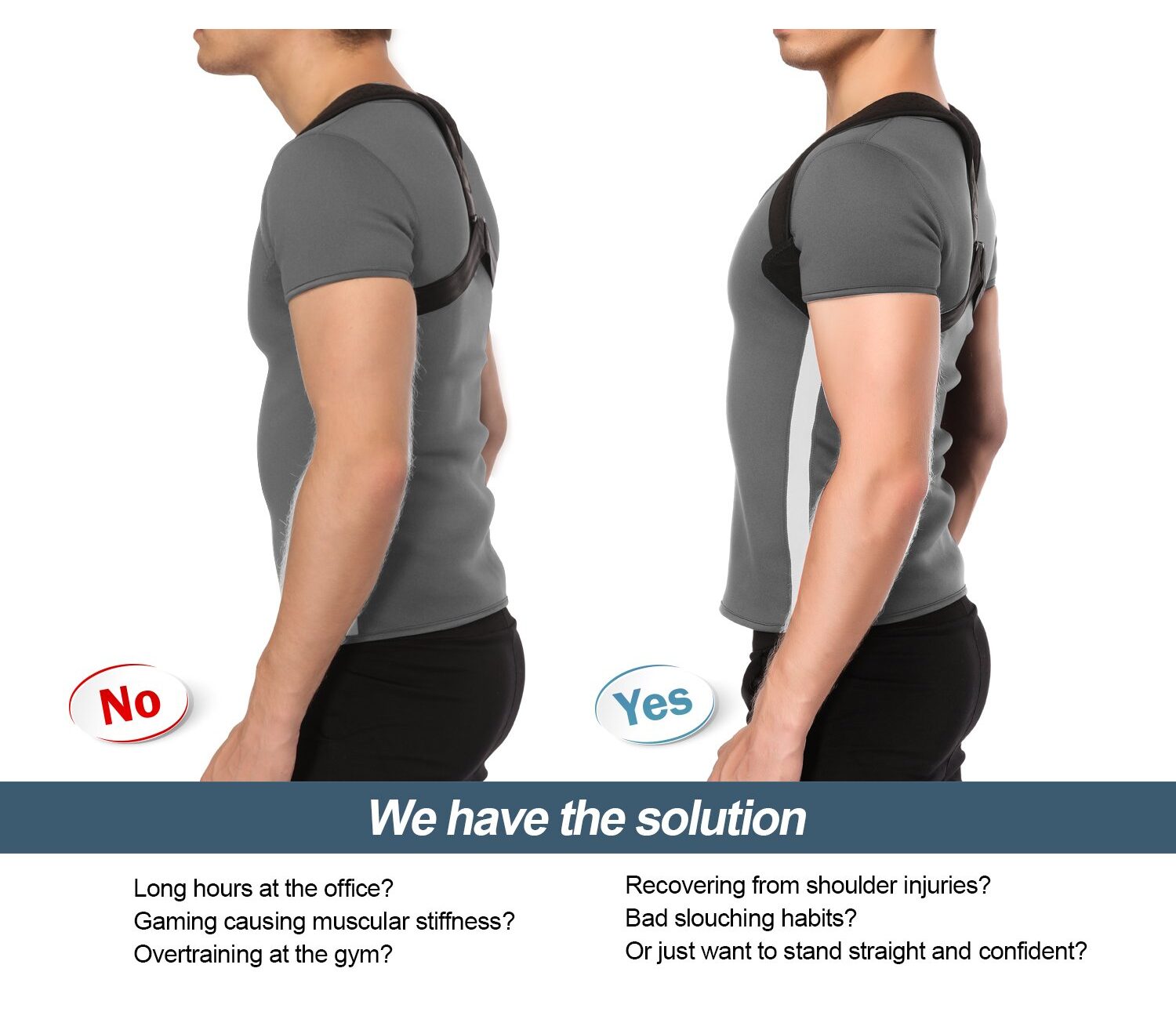
- Applies a gentle backward and downward pull on the shoulders when you begin to slump, prompting you to sit and stand more upright
- Acts as a postural cue rather than a rigid cast, so your own muscles still hold you up and build strength over time
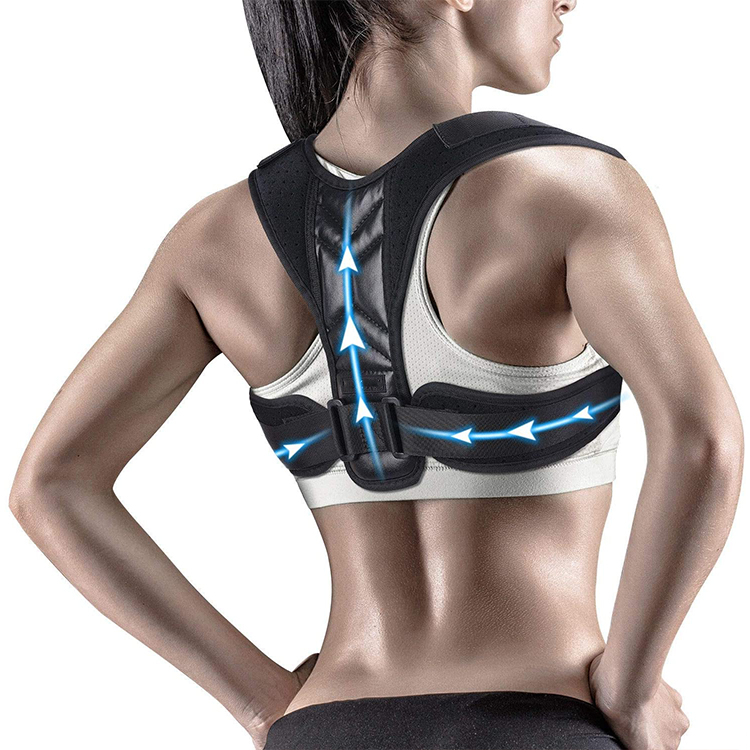
- BackReviver Y‑shaped back panel and backpack‑style straps spread pressure across the upper back for broad, even support
- Light, steady contact across shoulders and upper back increases awareness of posture without feeling tight or restrictive
- Soft padded lining, flat seams and rounded edges designed to reduce rubbing and digging‑in during longer wear
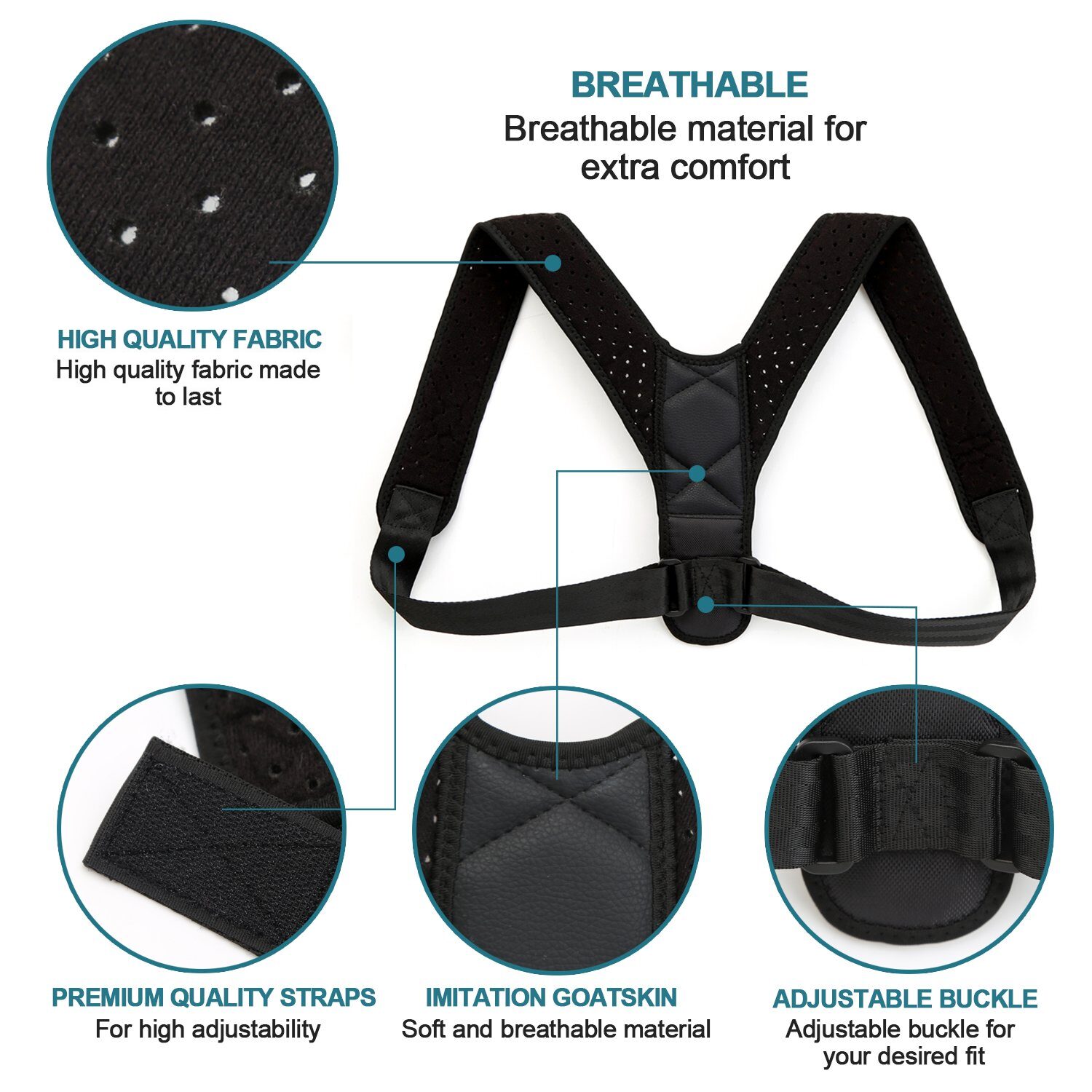
- Breathable neoprene with ventilation holes to help reduce heat build‑up and clamminess under clothing
- One‑size‑fits‑most design with four adjustable buckles so you can set a secure, balanced fit on most average adult builds
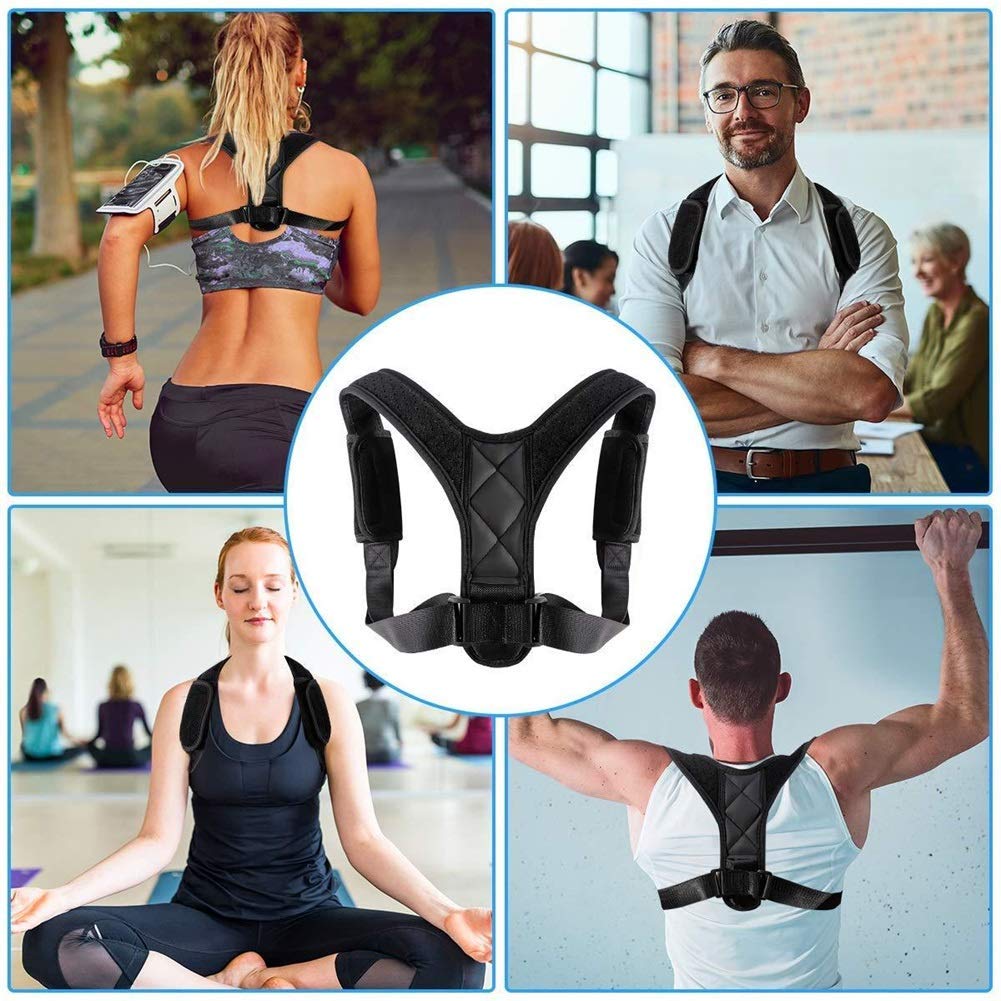
- Allows natural arm and trunk movement for everyday tasks such as desk work, walking and light jobs at home
- Best introduced in short spells during times you know you tend to hunch, then built up gradually as your body adapts
- Do not wear over broken or irritated skin, if you react to the materials, or while sleeping; ease off if pain, numbness or new symptoms appear
- BackReviver focus on high‑quality back and joint supports; this design reflects the strap layout and padding many clinicians prefer for everyday posture work
- 30‑day money‑back guarantee so you can test comfort and fit in your normal routine
How the BackReviver posture brace can help your upper back and neck
By the end of a long day — at a desk, in the car, or simply on your feet — your upper back, neck and shoulders can feel heavy, tight or sore. Perhaps you notice your shoulders creeping forwards, your head craning towards the screen, or that you’re not standing as tall as you’d like. Straightening up helps for a few minutes, but before you know it, you’ve slumped again.
This way of holding yourself — head carried forwards, shoulders rounded — is often called “tech neck.” It’s one of the most common reasons we seek help for ongoing neck and upper-back discomfort.
The BackReviver posture brace is designed as gentle, everyday support for your upper back and shoulders. When you start to round forwards, you’ll feel a light pull across the tops of your shoulders and between your shoulder blades. Think of it as a gentle reminder to lift your chest and bring your head back over your spine — reducing strain on tired muscles and joints. You can wear it at home, at work, or out and about, so the support is there during the times your posture is most likely to drift.
BackReviver specialises in supports for back and joint problems, and we’ve chosen this particular Y-shaped brace because its strap path, padding and adjustability are close to what physiotherapists and other clinicians often look for when recommending an everyday posture cue — rather than a rigid medical brace.
How everyday posture can lead to upper‑back and neck ache
Everyday routines make it easy for posture to drift into positions that feel fine at first but become less comfortable as the day goes on. Think about how much time you spend sitting at a screen, looking down at a phone, driving, or standing in one spot. In all of these situations, the head and shoulders tend to sit forwards, and the upper back barely moves for long stretches.
Over time, you might notice your shoulders rounding forwards and a sense of hunching through the upper back. Your head may sit further in front of your body. A dull ache can build between your shoulder blades after sitting still, and tightness often develops across the tops of your shoulders by the end of the day. Neck stiffness, or headaches that start at the base of the skull and spread over the back or sides of the head, are also common. Once you notice these changes, you may start to feel less confident about how you sit or stand.
This isn’t just about sitting at a desk. Standing at a work counter, queueing, or talking to people for long periods can all lead to relaxed, forward-rounded shoulders and a head that creeps in front of the body. The upper back stays in one position, and the muscles supporting it keep working without much variation.
The BackReviver posture brace is particularly suited to people who recognise that they slump more when tired or concentrating, and would welcome a clear, gentle prompt to stay more upright. It’s not a rigid medical cast — your own muscles still hold you up. The brace simply adds a small, steady pull backwards and downwards on the shoulders when you drift too far forwards, nudging you away from the positions that tend to cause trouble.
Many people choose to wear this type of brace during the tasks that most often trigger discomfort — longer spells of computer work, steady driving, or standing on hard floors — so their upper back and shoulders are gently guided towards a more comfortable position while they get on with normal activities.
What slouching is doing to your upper back and neck
When you sit or stand with rounded shoulders and a curved upper back, a few things happen in the supporting muscles and joints.
The muscles between your shoulder blades, which normally help pull them back and keep them resting on your ribcage, are held in a stretched-out position for long periods. And when muscles stay stretched out for much of the day, they fatigue more easily. So they’re more likely to ache or feel tight when you ask them to work. That’s why they can feel sore — even though they’ve actually been lengthened, not scrunched up.
Across the front of your chest and shoulders, the muscles that pull your shoulders forwards and turn your arms inwards tend to tighten and shorten. Eventually, that can make it feel harder to open your chest or pull your shoulders back without a pulling sensation across the front.
Your head often drifts forwards, so your ears sit in front of your shoulders instead of roughly over them. When that happens, the smaller, deeper muscles at the front of the neck — which normally help support the head close to the spine — tend to work less. The larger muscles at the back and sides of the neck and across the tops of the shoulders take over, and the small joints at the back of the neck and upper back, along with the supporting ligaments, also take more load. That’s why even a short spell leaning towards the screen can leave the back of your neck feeling heavy if you’re already slumped.
With your head sitting further forward, the muscles and joints in your neck and shoulders have to work harder just to keep you upright. So it’s no surprise you feel aching across the tops of your shoulders, the burning sensation between your shoulder blades after sitting still, the stiffness when you first stand up from a chair, and the headaches that start at the base of the skull and spread over the back or sides of the head.
When your upper back rounds or your head drifts forward, the rest of your spine has to compensate. Your hips may drift slightly in front of your ankles, and the lower-back curve increases into a more “swayed” position. Your pelvis tilts forwards and the small of your back arches more, putting extra pressure on the lower-back joints and stretching the ligaments along the lower spine. That can translate into aching or stiffness after standing for a while.
Holding these positions briefly doesn’t usually cause sudden injury. The problem is spending many hours, most days, in the same strained position. Some structures work harder than they need to, while others become underused and stiff. Muscles tire and become sore, the small joints and ligaments at the back of the spine get easily irritated, and your body starts to treat this strained alignment as normal. When you do try to sit or stand taller, it can feel awkward or short-lived — the supporting muscles aren’t used to that position, and the tight tissues at the front pull against you.
The good news is that your body can adapt in the other direction too. With regular prompts to bring your head and shoulders back, plus some gentle strengthening and movement, you can gradually find a more comfortable line. Load is shared more evenly through your spine, and the steady build-up of tension that leaves you sore at the end of the day starts to ease. A consistent, physical reminder is often what helps that change last.
How this posture brace changes the strain on your upper back and neck
The BackReviver posture brace puts a small, steady limit on how far your upper back and shoulders can slump forwards. It does not hold you bolt upright or take over from your muscles completely. Instead, it adds gentle resistance and clear sensory cues when you move into the rounded positions that tend to cause problems.
When fitted properly, the brace sits across the upper back and around the shoulders. As you begin to slump at a desk or let your shoulders roll forwards while standing, tension in the straps and back panel increases. You feel this as a firmer contact over the tops of the shoulders and across the upper back. That sensation reminds you to bring your chest up slightly, draw your shoulders back and down so your shoulder blades rest more evenly on your ribcage, and let your head sit more directly over your spine instead of in front of it. That extra pull is your prompt that you have gone further into a slump than your neck and upper back can comfortably manage for long.
By helping the upper back sit less rounded and the shoulders less rolled in, the weight of your head is carried more directly over your shoulders. This reduces how hard the neck muscles and small joints at the back of the neck have to pull to hold it up. The muscles between your shoulder blades are no longer stuck working all day in that stretched‑out position, and the muscles at the top of the shoulders do not have to carry as much of the load alone.
As your chest feels more open, your ribcage and upper spine have more freedom to move when you breathe in or reach overhead, because the ribs at the top of your chest can lift and spread more easily. Many people using this type of support notice that it feels slightly easier to take a deep breath or to lift the arms above shoulder height when they are not collapsed forwards.
Over time, spending more of your day in this better‑aligned position can help reduce muscle tension through the upper back and neck, ease some of the aching that builds up by the end of a shift, and increase your awareness of when you are starting to slump, even when the brace is off.
The main job of the brace is to give you feedback. Your own back and shoulder muscles still do the work of holding you up, and that is important. Wearing any support constantly, without breaks and without movement or strengthening, can mean those muscles are not challenged enough. A posture brace like this is most effective when it is used during the times you are most prone to slouch, alongside regular movement, stretching and strengthening, rather than as something you wear all day, every day.
Features that make this BackReviver brace comfortable to wear day to day
The BackReviver posture brace has been developed as an everyday upper‑back and shoulder support for people with discomfort linked to how they sit or stand. The Y‑shaped back panel, strap path, padding and fabric have been chosen to give clear support and cues without feeling bulky, scratchy or restrictive. We have tried and rejected narrower, less adjustable designs that tend to dig in or twist. This BackReviver brace is one we consistently come back to when people want an everyday posture cue they can actually tolerate for longer spells.
Y‑shaped back panel and backpack‑style straps for even support
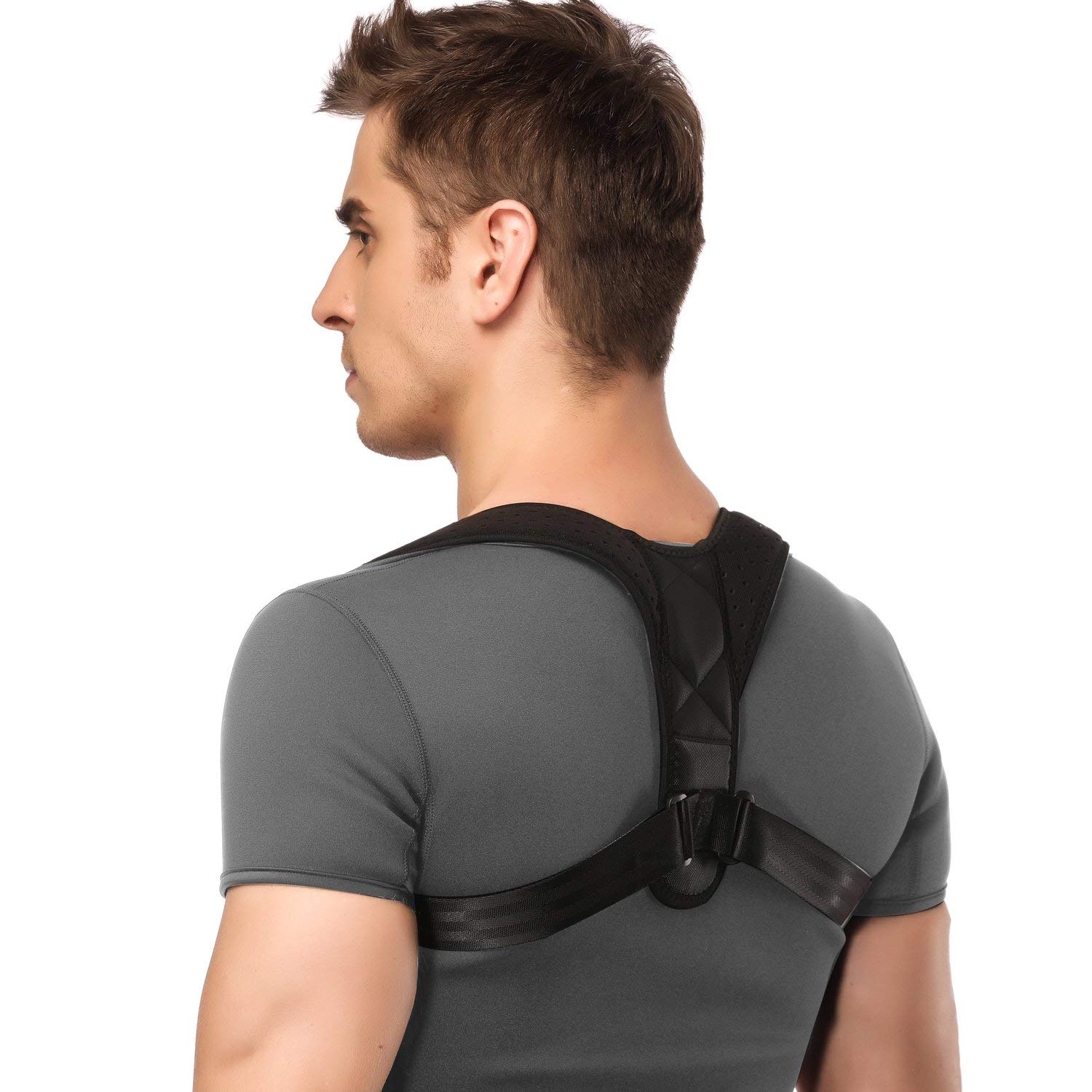
At the centre of the brace is a Y‑shaped back panel that rests between your shoulder blades. From the upper corners of this panel, two straps run over your shoulders like a rucksack. They pass under your arms and return to the lower part of the Y‑panel, where they anchor securely.
This layout spreads pressure across the middle of your upper back rather than focusing it on one narrow strap line, so you feel broad, gentle contact rather than a sharp edge. It applies a light backward and downward pull on the shoulders, helping to open the chest and encourage the shoulder blades to lie flatter against the ribcage. That supports a more upright upper‑back position so your head can sit more comfortably over your spine instead of drifting in front of it.
Because the straps follow a familiar backpack path, it is straightforward to put on and adjust. There are no awkward cross‑overs across the chest and nothing running across the front of the neck.
The back panel and straps also provide light, even contact around the upper back and the tops of the shoulders. People often notice this as steady, even pressure rather than a tight band. This gentle contact increases your awareness of how you are holding yourself, so you notice more quickly when you start to sag forwards. You should feel supported and gently prompted to sit or stand taller, but still able to move your arms and trunk freely.
Simple, secure strap adjustment so you can get a balanced fit
The brace is designed as “one size fits most” for people with an average build, with enough adjustment to allow you to fine‑tune the fit for your own shape. If you are very slim or very broad across the chest, you may need to adjust it more carefully, and in some cases it may not be the ideal fit.
There are four durable plastic buckles: two on the shoulder straps, which work much like a backpack to set the main strap length, and two on the lower part of the Y‑panel, anchoring the straps where they return.
Once you have slipped the brace on, you pull the free ends of the straps forwards and slightly upwards until you feel a firm but comfortable level of support, then secure the hook‑and‑loop strap ends onto the upper shoulder sections of the brace. This system allows you to set each side evenly so the brace sits straight between your shoulder blades, quickly loosen or tighten it as your day changes, and make small adjustments if your clothing layers change between seasons.
A good fit means the straps are firm enough that you feel a clear increase in pull when you slump, but not so tight that you feel dragged backwards, pinched under the arms or short of breath. In a more upright posture the brace should feel snug but not pulling hard. If you notice rubbing, sharp pressure, tingling, numbness or deep marks that do not fade soon after you take it off, you should ease the straps or reposition the brace until it feels more comfortable.
Soft padded interior, flat seams and rounded edges for comfort
Comfort is critical if you are going to wear a posture brace for more than a few minutes at a time. The inside of this BackReviver brace is lined with soft, padded material so it feels comfortable whether you wear it over a light T‑shirt or under a shirt or blouse.
Comfort‑focused details include padded arm straps to cushion the tops of the shoulders and the underarm area, flat seams that sit smoothly against your skin or clothing to reduce friction, rounded strap edges that are less likely to dig in when you move or reach, and a smooth inner surface along the Y‑panel to avoid concentrated pressure on the spine.
These details matter if you plan to wear the brace through part of a working day, combine it with gentle walking, or use it regularly over many weeks. By reducing friction and localised pressure points, they lower the risk of rubbing and irritation. The aim is for the brace to feel like an extra supportive layer that you do not have to keep adjusting, rather than something you are constantly aware of digging or scratching. When a brace is comfortable, you are more likely to wear it during the periods when your posture most needs support, such as busy afternoons at a desk or long spells of standing.
Breathable fabric with ventilation holes to help keep you cooler
The main body of the brace is made from soft neoprene with small ventilation holes in the back panel and straps. These help air circulate under the straps and back panel, reducing heat build‑up.
The fabric is also designed to draw moisture away from your skin. As you warm up through the day, this helps to pull sweat away from the skin surface, reduce the hot, sticky feeling that can build up under non‑breathable supports, and lower the risk of rubbing from damp material.
This is particularly useful if you wear the brace under work clothing, walk as part of your commute, or use it while doing light tasks at home. A brace that stays reasonably cool and dry underneath is easier to keep on during the times you actually need support, rather than feeling you have to take it off because you are too hot.
Secure support that still allows natural movement
Although the brace holds firmly around your upper back and shoulders, it is not designed to lock you rigid. The combination of flexible materials and the way the straps run allows normal arm swing while walking, reaching forwards and to the side for items on desks and shelves, and gentle turning of your trunk for everyday tasks.
The straps can glide slightly over clothing and the material has some give, so they move with your shoulders rather than blocking them. Where you will feel the brace most is when you move into the postures that usually cause problems: letting your chest drop, your shoulders roll in and your head creep forwards. As you approach those positions, you will feel a distinct increase in strap tension, prompting you to bring your chest up and your shoulders back again.
This balance between support and movement means the brace can reduce the amount of collapsing that strains the upper back, support you during long periods of sitting or standing, and encourage healthier movement patterns without making you feel strapped down or unable to get on with everyday tasks.
Made to cope with frequent daily use
Posture habits usually change over weeks and months rather than days, and that is normal. Any brace you use needs to cope with repeated wear and adjustment. On this BackReviver design, high‑stress points such as the strap anchors and buckle attachments are reinforced with strong stitching, the plastic buckles are chosen to be tough but lightweight, and the hook‑and‑loop fastenings are designed to be opened and closed many times without quickly losing their grip.
If you hand wash it and air dry it as described in the care section, the brace is built to provide consistent support over the longer term, not just for a few wears. You can use it frequently through your working week as you build new posture habits, without having to worry that the key components will give way quickly.
How to fit the brace and build up your wear time
Getting the brace sitting correctly and building up your wear time gradually will make a noticeable difference to how comfortable and effective it feels.
How to put the brace on
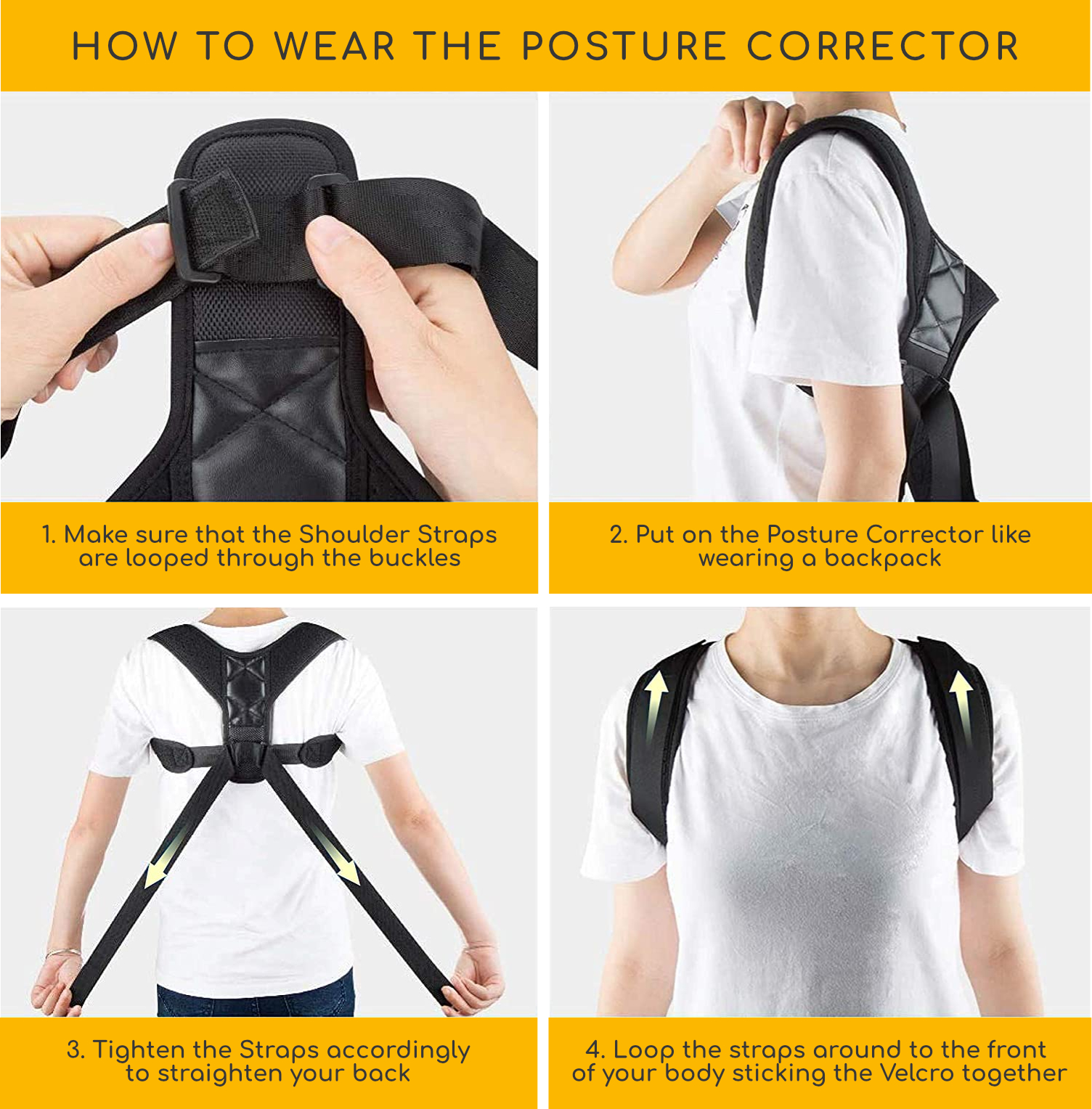
You wear this brace in a similar way to a backpack.
Hold the Y‑shaped back panel so the stem of the Y points downwards. Slip each arm through a shoulder strap, as you would with a rucksack. Position the back panel so it sits flat between your shoulder blades, roughly in the centre of your upper back rather than up on your neck or down towards the middle of your back. Gently tighten the shoulder straps by pulling the free ends forwards and slightly upwards until you feel a light but definite pull that encourages your shoulders back, without pinching or restricting your breathing. Secure the strap ends onto the upper shoulder sections of the brace using the hook‑and‑loop fastening.
If you can, check in a mirror that your shoulders feel open but not forced backwards, the straps lie flat without twisting, the back panel sits centrally between the shoulder blades at a comfortable height, and you can still move your arms freely.
If you feel rubbing, sharp pressure, tingling, numbness or a sense of being pulled too far back, loosen the straps slightly or reposition the brace until it feels more comfortable. Persistent discomfort is a sign to adjust the fit or take the brace off and seek advice if things do not settle.
How long to wear it at first (and build up safely)
Although the brace is designed to be comfortable enough for extended wear, it often helps to introduce it gradually and use it mainly during the times you know you tend to slouch.
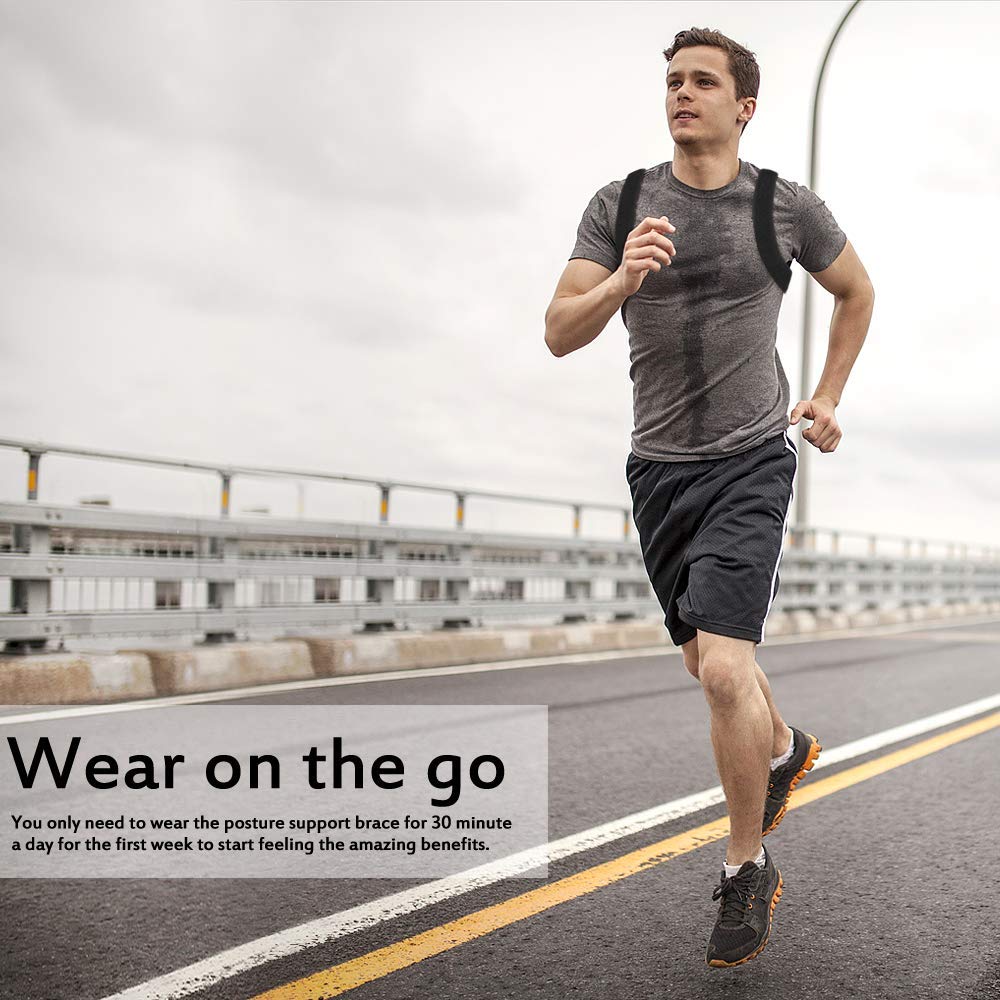
A simple pattern many people find helpful is to start with short periods, for example 20–30 minutes at a time, and use it during tasks where you know you tend to hunch, such as desk work, driving or standing for long stretches. You can then gradually build up the length and number of sessions over days and weeks as your body gets used to the new position.
In the first few days, the muscles between your shoulder blades and at the back of your neck may feel more tired or worked. This is often a sign that they are being asked to support you in a position they are not yet used to. Mild, short‑lived tiredness or aching that settles when you take the brace off or change position is usually part of that adjustment. Pain that feels sharp, strong or does not settle is not expected and should prompt you to ease off and, if needed, seek advice.
Rather than wearing the brace from morning to night, it is usually more useful to wear it for several shorter periods during the day when your posture is most at risk – for example, in the middle of a work shift, on longer drives or through meetings. Short breaks without the brace, where you consciously sit or stand in the same more upright position, help your own muscles learn to maintain that alignment without external support.
If you have a history of back or neck problems and are unsure how long to wear the brace, it is sensible to discuss this with a GP or physiotherapist, who can help you tailor a plan to your situation.
What you may notice in the first few weeks
When you first start using a posture brace, you will usually notice the change straight away. You may feel more aware of how you are sitting and standing, a gentle pull across the front of the shoulders and chest as you open out, and mild tiredness in the muscles between the shoulder blades and at the back of the neck as they work in a different position.
These sensations are generally a sign that muscles which have been under‑used or held in less helpful positions are being asked to work more evenly. As long as the brace is not causing pain that feels sharp or strong, deep grooves that do not fade, numbness or skin irritation, this early adjustment phase is expected. Any mild aching should settle reasonably quickly when you take the brace off or change position.
With regular use over the following weeks, many people find that it becomes easier to notice when they are starting to slouch, it feels more natural to sit or stand upright for longer spells, and there is less end‑of‑day aching in the upper back, neck and shoulders on days they use the brace during longer or more tiring desk, driving or standing periods.
There will still be better and worse days. After particularly long days at a screen, a disturbed night’s sleep or more stress than usual, symptoms may feel more noticeable even if you are using the brace. Over time, you are aiming for fewer bad days, less intense aching, and a clearer sense that you can stay comfortably upright for longer.
On its own, the brace will not change the structure of your spine or reverse established spinal conditions. It also is not a substitute for exercises to strengthen and mobilise the back and shoulders where these are needed. What it can do is reduce the amount of time you spend in the postures that most often aggravate your symptoms, and support you in holding a more balanced position during key parts of the day. Used regularly at the right times and combined with sensible movement and stretching, it can be a practical part of how you manage your back and neck through a normal working week.
Safety: when to be cautious and when to seek advice
Most people can use a posture brace safely as part of day‑to‑day management of discomfort linked to how they sit or stand. There are, however, some sensible precautions.
Avoid wearing the brace while sleeping, over broken skin, open wounds or areas of significant rash or irritation. Do not use it if you have a known allergy to materials such as neoprene or similar fabrics, or if you develop itching, marked redness or blistering under the brace.
If you notice any of the following while using the brace – new or increasing pain, numbness, tingling or unusual weakness in your arms or legs, significant changes in balance, or any other new, unexplained symptoms – remove the brace. If these symptoms do not settle, or if they keep returning when you try the brace again, stop using it and speak to a GP, physiotherapist or other appropriate clinician. These signs can indicate that the brace is pressing on sensitive structures or that it is not suitable for you in its current form.
If you have been told you have a spinal condition such as a marked spinal curvature, a slipped vertebra, fractures in the spine, or narrowing around the nerves, seek professional advice before relying on any brace or support. In these situations, posture supports can sometimes form part of a broader plan, but they should be used under the guidance of a clinician who understands your individual case. A general posture brace like this is not a substitute for any specific medical brace that may be prescribed after a fracture or surgery.
A posture brace is one tool among others. It does not replace a full medical assessment, diagnosis or tailored rehabilitation plan where that is needed.
More detail on common back and neck problems linked to posture
Guarantee and how to look after your brace
If you decide to try a posture brace, it is understandable to want some reassurance that you can test it in everyday life. This BackReviver brace comes with a 30‑day money‑back guarantee. If you are not completely satisfied, you can return it within this period for a full refund, subject to our standard returns policy. This gives you time to check that it fits comfortably, see how it feels during your normal day, and decide whether this is the right brace for you.
It also helps to know how to look after it properly so it lasts. To help your brace last as long as possible, hand wash it in cool or lukewarm water with a mild detergent, fasten any hook‑and‑loop straps before washing to prevent snagging, rinse thoroughly to remove soap, and leave it to air dry away from direct heat sources.
Avoid tumble drying or ironing, as high heat can damage the materials and shorten the working life of the brace.
If you have any questions about fit, comfort or care, it is usually better to ask early rather than carry on with a brace that does not feel quite right.
Who this BackReviver posture brace is for – and next steps
This BackReviver posture brace is most likely to suit people who spend long periods at a desk, driving or standing still and notice upper‑back, neck or shoulder aching by the end of the day. It is especially relevant if you know your shoulders round forwards or your head creeps towards the screen when you are tired or concentrating, and you want a clear, gentle reminder to stay more upright without being held rigid.
If that sounds like you, this brace offers a straightforward way to spend less time in deep slumps and more time in a comfortable, sustainable position for your neck and upper back. Its Y‑shaped back panel and padded, adjustable straps are there to make those gentle posture cues comfortable enough to live with during desk work, driving and everyday standing tasks. BackReviver focus on soft inner finishes, rounded strap edges and reinforced stitching, because in practice these are the details that decide whether a brace is worn or left in a drawer.
The next step is to check the sizing guidance and choose one or two parts of your day to start with – for example, mid‑afternoon computer work or longer drives – then see how your upper back and neck feel over the next few weeks when you use the brace at those times. If you are unsure whether this type of brace is suitable for your particular back or neck problem, a short discussion with a GP or physiotherapist can help you decide. If the patterns described here sound familiar, this BackReviver posture brace is a sensible option to consider.
Important information and medical advice
The information on this page is general guidance about posture and the BackReviver posture brace described. It is not a substitute for individual medical assessment, diagnosis or treatment.
If you are unsure whether this brace is suitable for you, or if you have new, complex or unexplained symptoms, speak to a GP, physiotherapist, or another appropriate clinician for personalised advice. Outcomes vary from person to person and cannot be guaranteed.
1 Review For This Product
Fast & Secure Checkout Through Paypal
Pay with Paypal the secure payment gateway that accepts all credit and debit cards. Paypal is free and secure and no credit or bank information is ever stored or shared with us.
Fast Dispatch
Enjoy your items soon with quick dispatch via Royal Mail. Expect to have your items between 1-3 working days for domestic orders. 7-10 Working days for international orders.
Return Policy – 30 Day Money Back Guarantee
In the unlikely event, you are unhappy with your purchase you can return it within 30 days for a refund. Please contact us via the form on the contact us page to start your return.
To return an item please send it to: Nuova Health UK, 81 Highfield Lane, Waverley, Rotherham, S60 8AL. Please include a note with your order id so we know who to refund. Please retain your postage receipt as proof of postage. All that we ask is that the item is in the original packaging and unused.
by Mikey
Over the years of poor posture playing sports I’ve developed a bit of a hunchback. It was never too bad, didn’t bother me much, until recently when I started experiencing an annoying ache in my upper back. A friend suggested this posture corrector, so I thought, why not? Firstly, it’s super lightweight and easy to put on. Literally fits like a backpack – simple as that. I’ve been wearing it during my morning runs and it doesn’t even feel like it’s there. Secondly, it’s surprisingly discreet! Wore it to the grocery store underneath my jacket and no one could tell. I’ve been using it for a few weeks and I can actually feel the difference. My posture feels more upright, the ache in my back has significantly reduced. I’d say it definitely helps in preventing further strain on my back during sports. However, it does take a bit of getting used to. All in all, a worthy investment; it’s not a magic wand, but it’s a step in the right direction.