
Plus Size Knee Brace
£15.49inc VAT
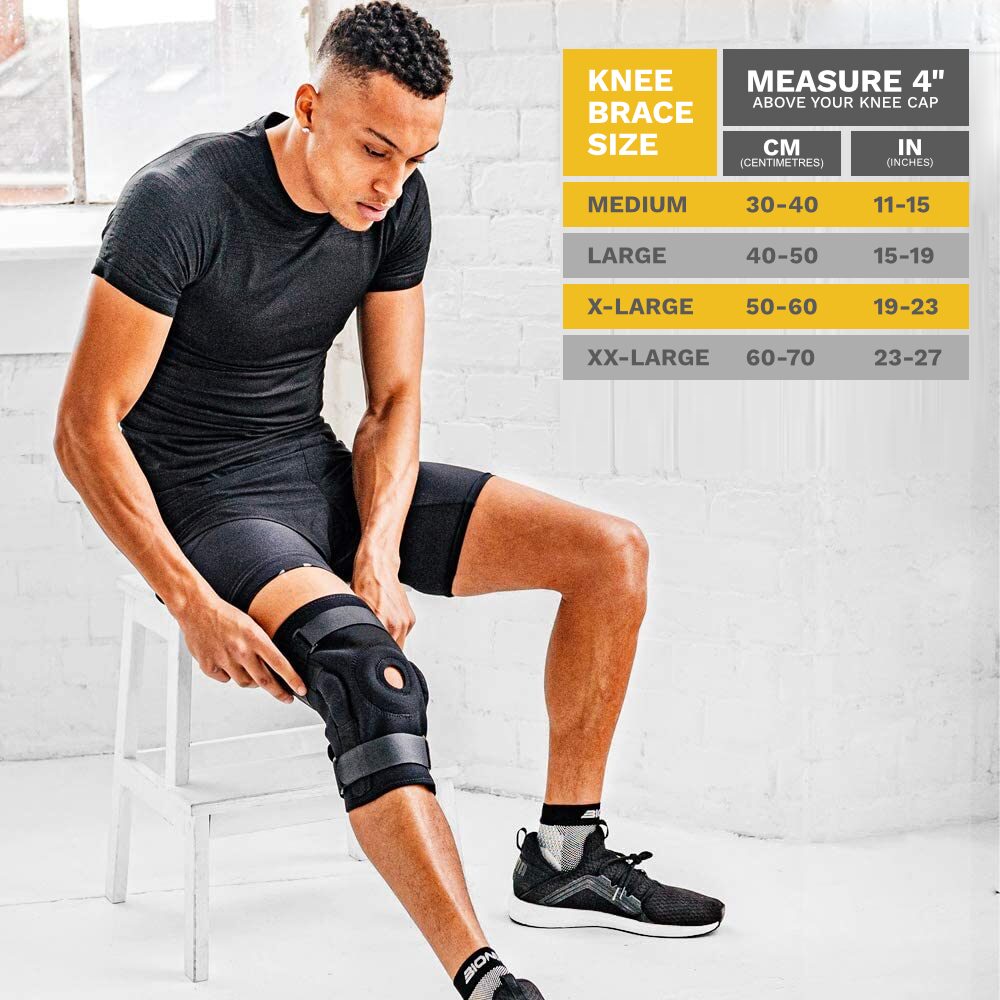
- Available in 4 sizes: Medium (max circumference 40 cm), Large (50 cm), XL (60 cm), XXL (70 cm)
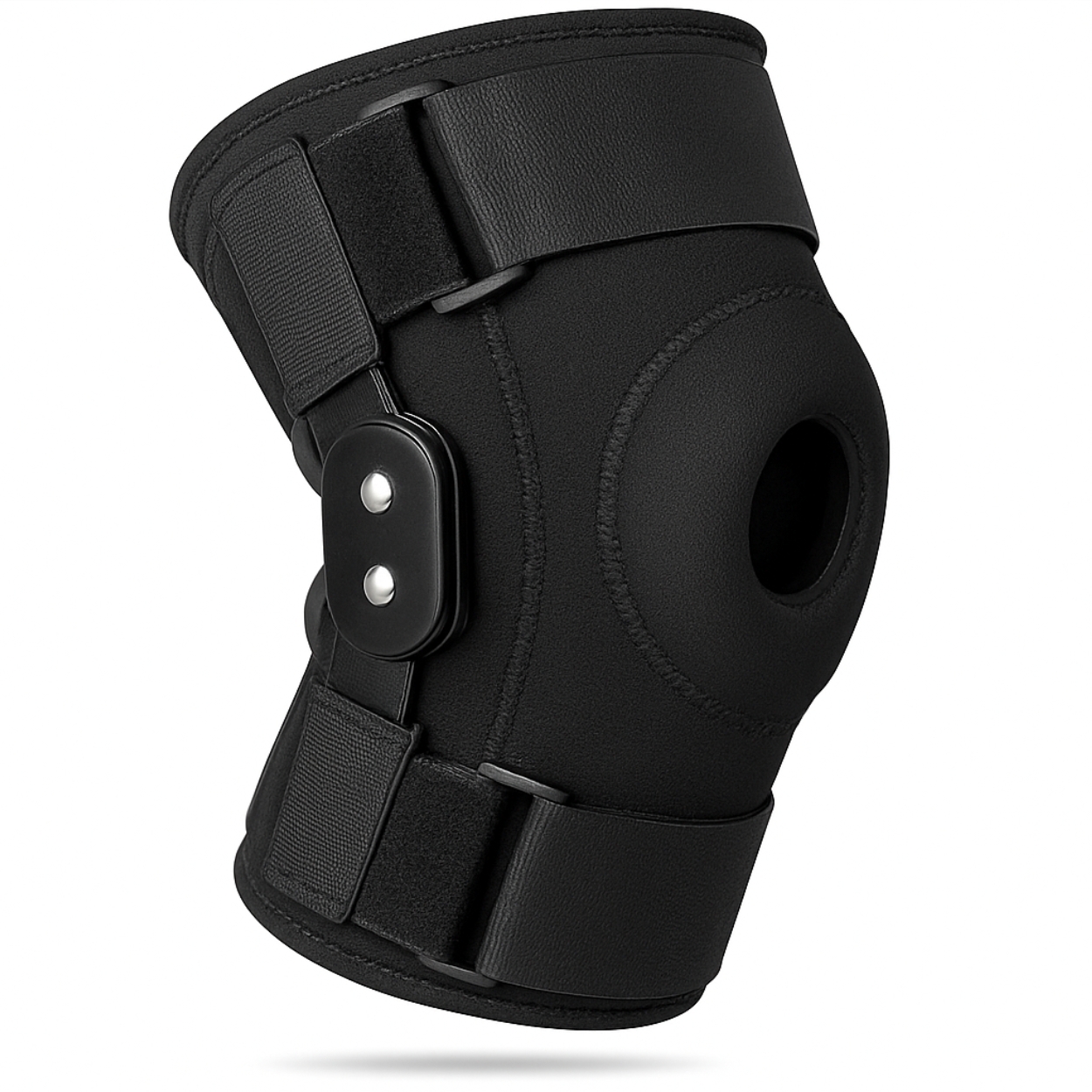
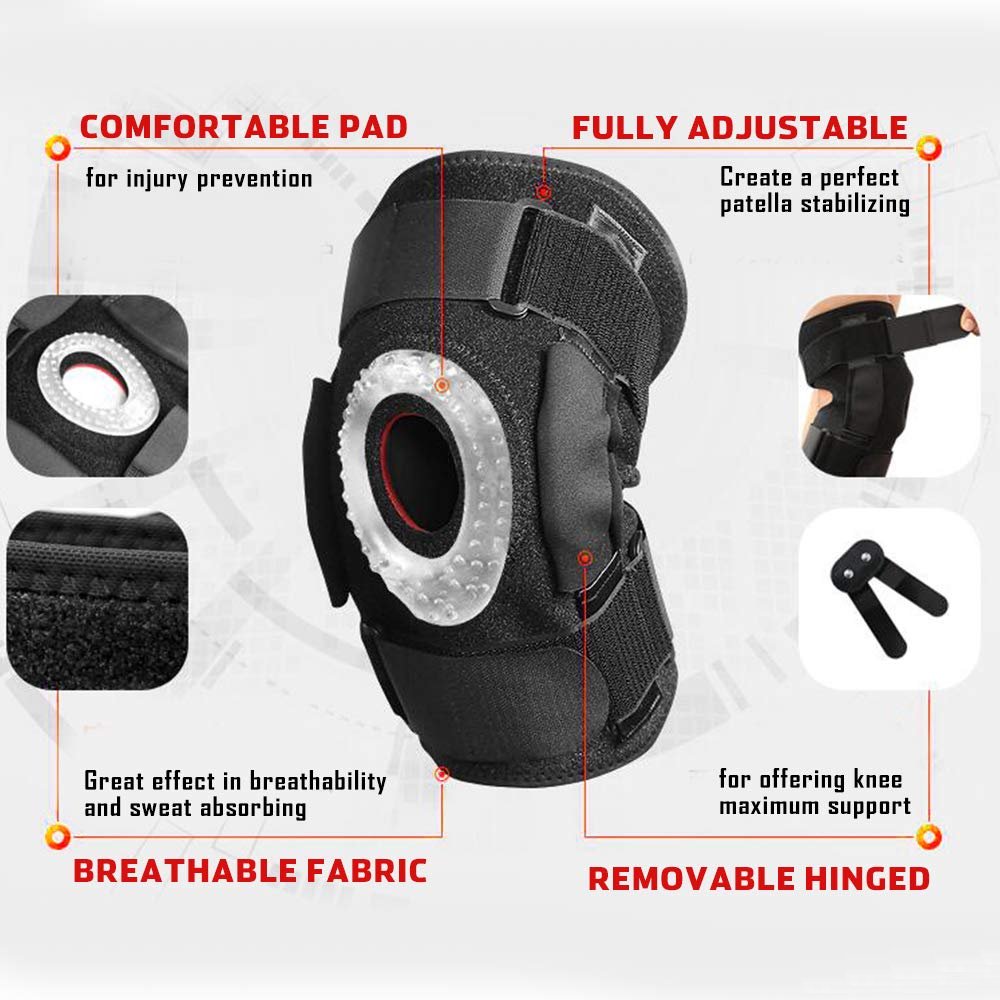
- 2 removable metal hinges (with protective cover sleeves included) that improve knee stability and function, preventing movement and excessive pressure from damaging your injured knee joint whilst you’re recovering
- Inbuilt silicone gel ring surrounding the open patella hole, protecting the area around your kneecap from shock and impacts, supporting your patella tendon in the correct position to improve patella tracking and stability, and soothing aches and pains deep within your knee
- Soothing compression that boosts blood flow to your knee joint, speeding up and improving your injury recovery by reducing inflammation and swelling, easing aches and pains, and promoting the natural healing process of damaged tendons, ligaments, muscles, and bones
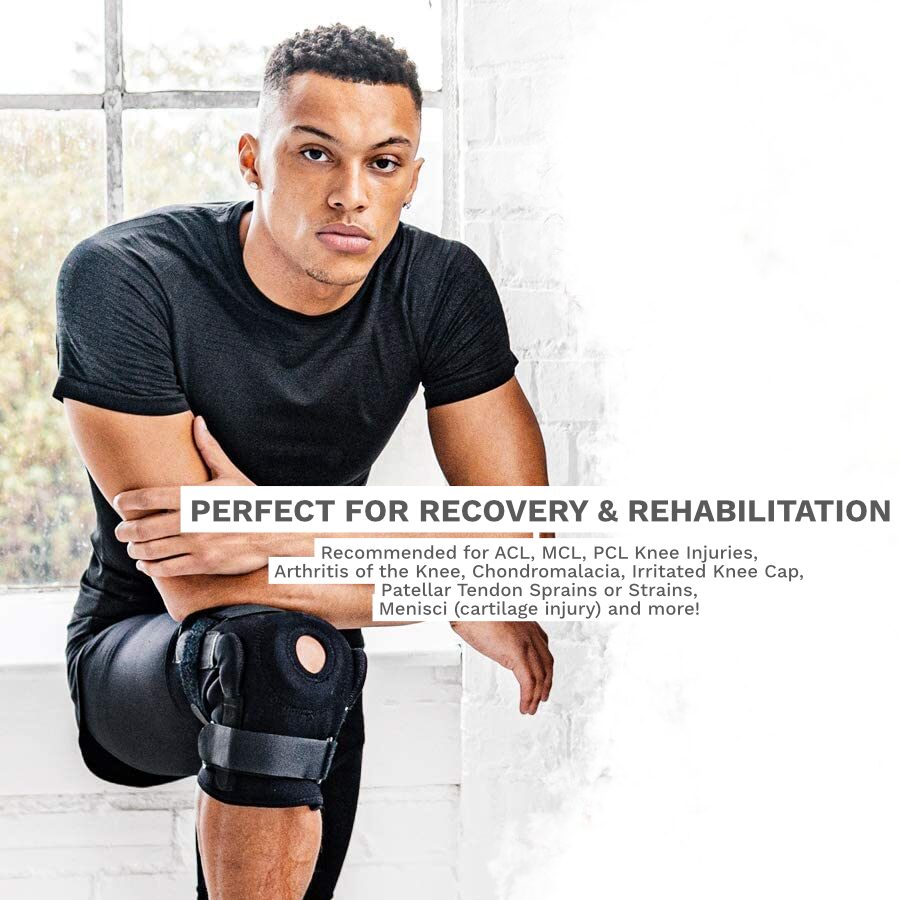
- Suitable for: osteoarthritis, ACL and MCL injuries, patellofemoral pain, patellar tendonitis, meniscus tears, rheumatoid arthritis, knee bursitis, post-surgical recovery (under specialist guidance), and chronic knee instability
- Made from high-quality, soft, padded, and breathable Neoprene material with moisture-wicking and anti-bacterial properties that keep your knee dry, odour-free, and comfortable whilst wearing the brace
- Can be worn whilst exercising and playing sports to prevent knee injuries and wear and tear from occurring
- Suitable for both men and women
- Full 30-day money-back guarantee – if you’re not satisfied for any reason, you can return it within 30 days for a full refund, no restocking fees, no conditions
Plus-Size Hinged Knee Brace – Structural Support for Osteoarthritis, Ligament Injuries & More
Knee pain shouldn’t stop you living your life. But when you’re carrying extra weight, finding support that actually fits—and works—can feel impossible.
Most knee braces either don’t go large enough, or they’re just stretchy sleeves that slide down and do nothing for stability. You need something that holds your knee properly, reduces pain when you’re on your feet, and gives you the confidence to move without that constant worry your knee might give way.
This hinged knee brace is built for that. It fits thigh circumferences up to 70 cm, with dual metal hinges either side of your knee for real structural support, and a gel ring that centres your kneecap and takes pressure off damaged cartilage. It’s designed for people managing osteoarthritis, ligament injuries, meniscus tears, or any condition where your knee needs more than just compression—it needs stability.
You’ll notice the difference when you walk, climb stairs, or stand for any length of time. Pain drops. Stability improves. You move with more confidence. And you can actually do the strengthening work that improves things long-term, because the brace gives you the support to complete exercises without aggravating your symptoms.
What This Brace Does
Built for Plus-Sized Bodies
This brace comes in four sizes. The largest fits thigh circumferences up to 70 cm. Adjustable straps let you fine-tune the fit, so it stays put during movement without sliding down or digging in.
Sizing Guide:
- Medium: Thigh circumference 45–52 cm
- Large: Thigh circumference 52–59 cm
- X-Large: Thigh circumference 59–66 cm
- XX-Large: Thigh circumference 66–70 cm
How to measure: Stand with your leg straight and relaxed. Measure around the widest part of your thigh, roughly 15 cm above the centre of your kneecap. If you’re between sizes, go larger—the straps let you tighten it once it’s on.
Dual Metal Hinges for Structural Stability
Two metal hinges sit either side of your knee. They hold your bones in proper alignment during weight-bearing activities, which spreads load more evenly across your joint and reduces stress on damaged ligaments, cartilage, and other structures inside your knee.
The hinges let you bend and straighten your knee naturally—you can walk, climb stairs, sit down, stand up. But they resist the movements that cause pain and instability: your knee collapsing inward, twisting awkwardly, or wobbling side to side.
That external support matters most when you’re carrying extra weight. Your knee has to handle forces that are 2–3 times your body weight when you walk, and 3–4 times when you climb stairs. If your ligaments are damaged, your cartilage is worn, or your muscles are weak, those forces cause pain and accelerate breakdown. The hinges share that load, which reduces pain and slows further damage.
Gel Ring Around Your Kneecap
A soft gel ring sits around your kneecap. It does two things:
First, it centres your kneecap in the groove. Many knee problems—particularly pain around or behind the kneecap—happen because the kneecap isn’t tracking correctly. It tilts or shifts to the outside, which creates uneven pressure on the cartilage underneath. The gel ring applies gentle, even pressure around the kneecap, guiding it into the correct position. Grinding and pain drop as a result.
Second, it spreads pressure more evenly. When you bend your knee or put weight on it, the gel ring distributes forces across a larger area of cartilage. Peak pressure on any single spot drops, which reduces pain and slows cartilage breakdown—particularly helpful if you’ve got arthritis behind the kneecap or damaged cartilage from previous injury.
Open Patella Design
The brace has a circular opening over your kneecap. There’s no direct pressure on the front of your knee, which makes it more comfortable than a fully enclosed brace. It’s essential if you’ve got prepatellar bursitis—inflammation of the fluid-filled sac in front of your kneecap—where direct pressure would make pain worse.
The open design also lets you check your kneecap position and makes sure the gel ring sits correctly around the patella.
Adjustable Compression
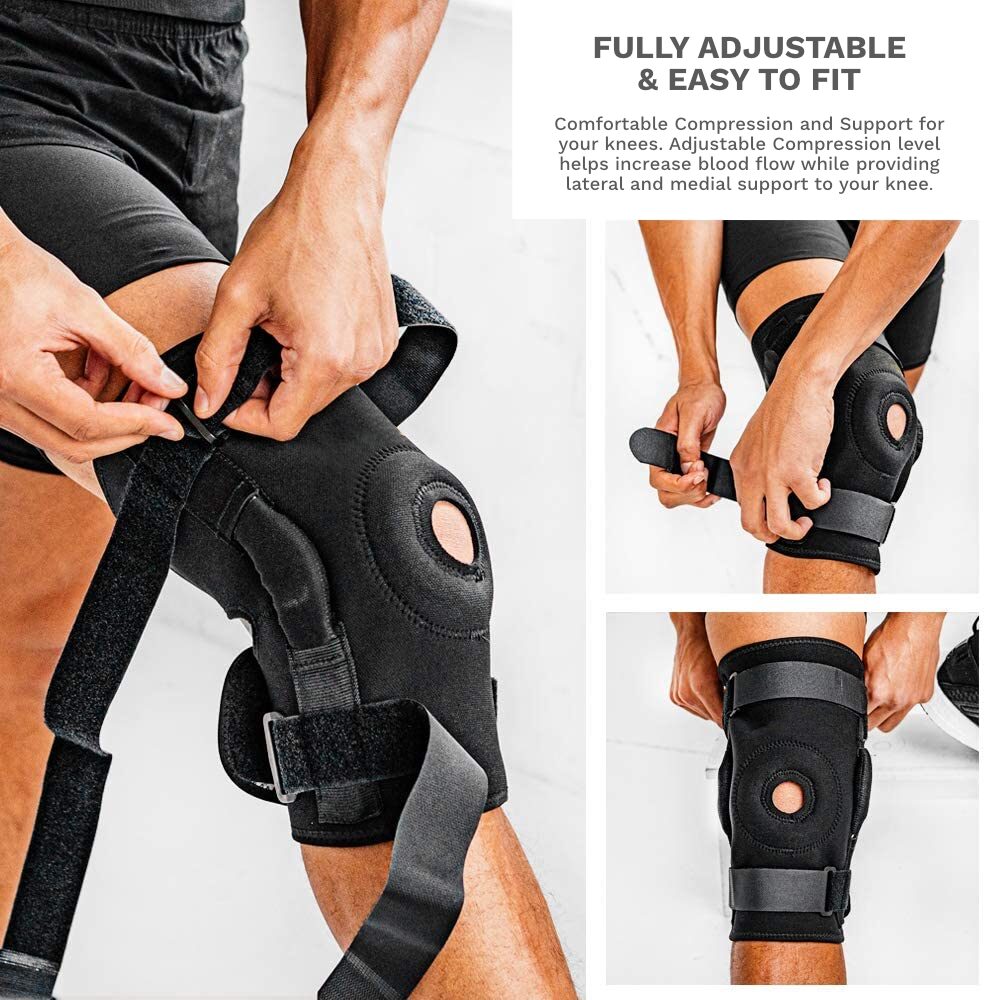
The brace provides compression around your knee. That helps control swelling, improves blood flow, and sharpens your sense of where your knee is and how it’s moving. When you can sense your knee more clearly, you move with better control. You avoid the awkward positions that cause pain and instability.
The adjustable straps let you control compression level. Tighten them for more support during activity. Loosen them if your knee swells during the day.
Breathable, Durable Materials
The brace is made from breathable neoprene-blend fabric that wicks moisture away from your skin. It’s comfortable during extended wear, durable enough for daily use and regular washing, but soft enough to avoid chafing or irritation.
The metal hinges are lightweight but strong. They maintain their shape and support even after months of use.
Easy to Put On and Take Off
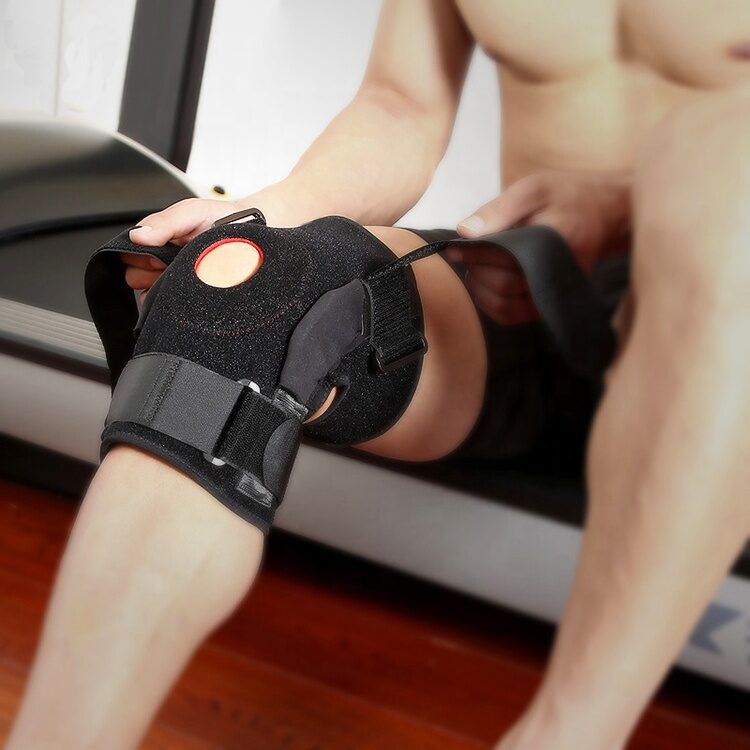
The brace wraps around your knee and fastens with adjustable hook-and-loop straps. You don’t need to step into it or pull it up over your foot, which makes it easier to put on if you’ve got limited mobility or if bending down is difficult.
Why Your Knee Hurts More When You’re Carrying Extra Weight
Your knee is a hinge joint connecting your thigh bone to your shin bone. When you stand, walk, or climb stairs, your knee has to support your body weight and absorb the forces generated by movement.
But the forces acting on your knee are much higher than your body weight alone. Put your hand on your thigh while you climb stairs—feel how hard your quadriceps muscle works? That muscular effort creates compression forces inside your joint. The harder your muscles work to control your movement and prevent your knee from collapsing, the higher the forces pressing your bones together.
When you walk on flat ground, the force through your knee is roughly 2–3 times your body weight. Climb stairs, and it’s 3–4 times. Squat or kneel, and it can reach 5–7 times your body weight.
If you weigh 70 kg, your knee experiences roughly 140–210 kg of force when you walk, and 210–280 kg when you climb stairs. If you weigh 120 kg, those forces increase to 240–360 kg when walking and 360–480 kg when climbing stairs.
Those higher forces accelerate wear and tear on your cartilage, increase stress on your ligaments and tendons, and make existing knee problems more painful. They also make it harder for damaged structures to heal, because the tissue is under constant load.
This isn’t about blame. It’s biomechanics. Understanding the forces involved helps explain why knee pain is so common in people who carry extra weight, and why interventions that reduce those forces—weight loss, strengthening exercises, or external support from a brace—can make such a significant difference.
How the Brace Reduces Those Forces
The brace provides external support that reduces the load on structures inside your knee:
The dual hinges hold your bones in proper alignment. When your knee is properly aligned, forces are distributed more evenly across the joint surface. Peak pressure on any single area of cartilage drops, which reduces pain and slows the progression of conditions like osteoarthritis.
The hinges resist unwanted movements. By preventing side-to-side wobbling and twisting, they reduce stress on your ligaments—particularly the ACL and MCL—and menisci. That matters most if those structures are already damaged or weakened.
Compression improves muscle activation. When your muscles can sense your knee more clearly, they fire more effectively. Your quadriceps, hamstrings, and calf muscles do a better job of controlling your knee and absorbing forces, which takes some of the load off the joint itself.
The gel ring reduces pressure on your kneecap. By centring your kneecap and distributing forces more evenly, it reduces the grinding and friction that cause pain in conditions like patellofemoral pain syndrome and arthritis behind the kneecap.
The brace doesn’t eliminate the forces acting on your knee. Nothing can do that except reducing your body weight or avoiding weight-bearing activities entirely. But it changes how those forces are distributed, which reduces pain, improves stability, and makes movement more comfortable.
Conditions This Brace Helps
This brace is designed to help manage a range of knee conditions that benefit from structural support, stability, and compression. Below, we explain the most common conditions, what’s happening inside your knee, and how this brace helps.
Osteoarthritis (Wear-and-Tear Arthritis)
What’s Happening Inside Your Knee
Osteoarthritis is the gradual breakdown of the cartilage that cushions the ends of your bones. Cartilage is a smooth, slippery tissue that allows your bones to glide past each other without friction. When it wears away, your bones start to rub together. You get pain, stiffness, swelling, and often a grinding or crunching sensation when you move.
The cartilage doesn’t regenerate. Once it’s damaged, the focus shifts to managing symptoms and slowing further breakdown.
Every kilogram of body weight you lose takes roughly 4 kilograms of force off your knee. That’s because of how forces multiply through the lever system of your leg—your muscles have to work harder to control a heavier body, which increases the compression forces inside your joint. Losing weight is one of the most effective ways to slow osteoarthritis progression, but it takes time. You still need to stay active in the meantime.
How This Brace Helps
The dual hinges hold your bones in proper alignment, spreading load evenly across what cartilage remains. Peak pressure drops on the most damaged areas, which slows breakdown and eases pain when you’re on your feet.
Compression helps control swelling and improves the feedback from your knee to your brain. You move with better control, put less stress on the joint, and find it easier to stay active.
Staying active is essential for managing osteoarthritis. Movement keeps your muscles strong, maintains your range of motion, and helps control your weight. The brace gives you the support and pain relief you need to keep moving, which improves your long-term outcomes.
What You Can Realistically Expect
Most people notice less pain during walking, stair climbing, and standing within the first few days of wearing the brace. You’ll likely find you can walk further before pain stops you, and activities like shopping or light housework become more manageable.
Over weeks to months, the brace makes it easier to complete strengthening exercises—particularly for your quadriceps and hip muscles. Building that strength is what protects your knee long-term and slows the progression of arthritis.
The brace won’t reverse cartilage damage or eliminate all pain. But it can significantly reduce pain during activity, improve your ability to stay mobile, and slow the rate at which your arthritis progresses.
Exercises That Work Well With This Brace
Sit-to-stand practice: Use a sturdy chair. Sit down and stand up repeatedly, focusing on controlled movement. The brace provides stability that lets you work on leg strength without your knee wobbling or giving way. Start with 5–10 repetitions, build up to 15–20.
Step-ups: Use a low step (10–15 cm high). Step up with your affected leg, bring the other leg up to meet it, then step back down. The hinges prevent your knee from collapsing inward, which is the movement that usually causes pain during this exercise. Start with 5 repetitions per leg, build gradually.
Straight-leg raises: Lie on your back with your unaffected leg bent and your affected leg straight. Lift your straight leg to the height of your bent knee, hold for 2–3 seconds, then lower slowly. The brace isn’t essential for this exercise, but many people find it gives them confidence to work harder. Aim for 10–15 repetitions.
What to avoid: Deep squats, kneeling, or any activity that puts your knee into extreme bent positions. These load your damaged cartilage heavily and often make pain worse.
Ligament Injuries (ACL, MCL, PCL, LCL Sprains or Tears)
What’s Happening Inside Your Knee
Your knee is held together by four main ligaments—thick bands of tissue that connect your thigh bone to your shin bone and prevent excessive movement. The ACL and PCL control forward and backward movement. The MCL and LCL control side-to-side movement.
When a ligament is sprained (stretched) or torn, your knee becomes unstable. You may feel like your knee is going to give way, particularly during twisting movements or when changing direction. You may also experience pain, swelling, and difficulty bearing weight.
Ligament injuries are graded from 1 to 3. Grade 1 is a mild sprain with no instability. Grade 2 is a partial tear with some instability. Grade 3 is a complete tear with significant instability. Severe tears—particularly ACL tears—often require surgical reconstruction, but many partial tears and sprains can be managed without surgery if you’ve got the right support and rehabilitation.
How This Brace Helps
Damaged ligaments can’t stabilise your knee on their own. The dual hinges take over some of that work, preventing the side-to-side wobbling and twisting that stress injured tissue. This external support lets the ligament heal while you stay mobile.
Compression improves your sense of knee position. You’ll avoid the awkward movements that cause instability—matters most during rehabilitation when you’re rebuilding confidence and coordination.
The brace won’t replace a torn ligament. If you’ve got a complete tear, you may still need surgery. But it gives you the support to stay mobile during recovery and reduces the risk of further injury while your ligament heals or while you’re waiting for surgery.
Timeline: What to Expect
Week 1–2: You’ll notice immediate improvement in stability. The feeling that your knee might give way reduces significantly. Pain during weight-bearing activities drops.
Week 3–6: As inflammation settles and the ligament begins to heal, you’ll find you can increase your activity level. Walking distances improve. You can start gentle strengthening exercises without fear of your knee collapsing.
Month 2–3: For partial tears, you may find you can reduce how often you wear the brace as strength and stability improve. For complete tears awaiting surgery, the brace remains essential for safe mobility.
Exercises That Work Well With This Brace
Mini squats: Stand with feet shoulder-width apart. Bend your knees slightly (no more than 30 degrees), hold for 2–3 seconds, then straighten. The hinges prevent your knee from wobbling during the movement. Start with 10 repetitions, build to 20.
Side-stepping: Take small steps sideways, keeping your knees slightly bent. The brace provides the side-to-side stability your damaged ligament can’t provide. Walk 10 steps in each direction, repeat 3 times.
Balance exercises: Stand on your affected leg for 10–30 seconds. The brace gives you confidence to challenge your balance without fear of your knee giving way. Progress by closing your eyes or standing on an unstable surface.
What to avoid: Pivoting, twisting, or any rapid change of direction. These movements stress healing ligaments and increase the risk of re-injury.
Patellofemoral Pain Syndrome (Runner’s Knee, Kneecap Pain)
What’s Happening Inside Your Knee
Patellofemoral pain syndrome is pain around or behind your kneecap, caused by your kneecap not tracking correctly in the groove at the front of your thigh bone. When your kneecap moves out of alignment—usually tilting or shifting to the outside—it creates uneven pressure on the cartilage underneath. You get pain, grinding, and sometimes a clicking or popping sensation.
This condition is often caused by muscle imbalances. If your inner quadriceps muscle—the vastus medialis oblique, or VMO—is weak, it can’t hold your kneecap in the correct position, and the kneecap drifts outward. Tight muscles on the outside of your thigh can also pull your kneecap out of alignment.
Carrying extra weight increases the pressure between your kneecap and the groove. That makes the pain worse and accelerates cartilage breakdown. The higher forces also make it harder for your VMO to do its job of holding the kneecap in position.
How This Brace Helps
Here’s where the gel ring matters most. It applies gentle, even pressure around your kneecap, guiding the patella into the correct position in the groove. Grinding and pain drop as a result.
Compression also helps activate your VMO more effectively, addressing the root cause of the tracking problem. When your VMO fires properly, it pulls your kneecap into position naturally.
Together, these features make it easier to complete the strengthening exercises that correct the muscle imbalances driving your pain. The brace gives you support and pain relief during exercise, so you can build the strength you need for long-term improvement.
Common Triggers and How the Brace Helps
Climbing stairs: Going upstairs loads your kneecap heavily. Most people with patellofemoral pain find this is when pain is worst. The gel ring centres your kneecap and spreads pressure more evenly, which makes stair climbing significantly more comfortable.
Sitting for long periods: When you sit with your knee bent for a long time—at a desk, in a car, at the cinema—your kneecap is pressed into the groove. Standing up after prolonged sitting often causes sharp pain. The brace reduces that pressure, which makes the pain less severe.
Squatting or kneeling: These positions create very high forces between your kneecap and the groove. The brace helps, but you may still need to avoid deep squats or prolonged kneeling until your symptoms improve.
Exercises That Work Well With This Brace
VMO activation (straight-leg raises with external rotation): Lie on your back with your affected leg straight and turned slightly outward. Lift your leg to about 30 cm, hold for 5 seconds, lower slowly. The outward rotation targets your VMO specifically. Aim for 10–15 repetitions, 2–3 times daily.
Wall squats (mini range): Stand with your back against a wall. Slide down until your knees are bent to about 30 degrees (not a deep squat). Hold for 10–20 seconds. The brace centres your kneecap during the movement, which reduces pain and lets you work on quad strength. Build up to 5 repetitions.
Step-downs: Stand on a low step with your affected leg. Slowly lower your unaffected leg toward the floor, then lift it back up. This exercise strengthens your quad while controlling kneecap position. The brace provides stability and reduces pain during the movement. Start with 5 repetitions, build to 15.
What to avoid: Deep squats, lunges, or any exercise that bends your knee beyond 60 degrees. These positions load your kneecap heavily and often make pain worse.
Meniscus Tears
What’s Happening Inside Your Knee
Your knee has two menisci—C-shaped pieces of cartilage that sit between your thigh bone and shin bone and act as shock absorbers. They distribute load across your knee and reduce the pressure on the cartilage that covers your bones.
Meniscus tears can occur suddenly—from a twisting injury—or gradually from wear and tear over time. Degenerative tears are particularly common in people over 40, and they’re often associated with osteoarthritis.
Symptoms include pain along the joint line, swelling, stiffness, and sometimes a catching or locking sensation if a torn fragment gets stuck in the joint. Some tears cause instability or a feeling that your knee might give way.
How This Brace Helps
Twisting and side-to-side movements stress your menisci most. The dual hinges prevent both, which stops torn fragments from catching or shifting. Pain drops and the tear is less likely to progress.
Compression controls swelling and improves stability, reducing the load on your menisci when you’re on your feet. Movement becomes more comfortable.
Not all meniscus tears need surgery. Many small, stable tears can be managed without surgery if you’ve got the right support and rehabilitation. The brace gives you the support to stay active while your body adapts to the tear and reduces the risk of further injury.
When Surgery Might Still Be Needed
If your knee locks frequently—meaning you can’t fully straighten it because a torn fragment is stuck in the joint—you’ll likely need surgery to remove or repair the torn piece. The brace can’t fix a mechanical block like that.
If your symptoms don’t improve after 6–12 weeks of conservative management with bracing, physiotherapy, and activity modification, your doctor may recommend an MRI scan to assess the tear and discuss surgical options.
But many people with meniscus tears—particularly degenerative tears in older adults—do well without surgery if they’ve got good support and they work on strengthening their leg muscles.
Exercises That Work Well With This Brace
Straight-leg raises: Lie on your back with your affected leg straight. Lift your leg to about 30 cm, hold for 3 seconds, lower slowly. This strengthens your quadriceps without bending your knee, which avoids stressing the torn meniscus. Aim for 15–20 repetitions, 2–3 times daily.
Hamstring curls (standing): Stand holding onto a chair for balance. Bend your affected knee, bringing your heel toward your bottom. Lower slowly. This strengthens your hamstring without twisting or rotating your knee. Start with 10 repetitions, build to 20.
Stationary cycling (low resistance): Cycling is excellent for meniscus tears because it strengthens your leg muscles without the twisting or impact that aggravates tears. Keep resistance low and avoid standing on the pedals. Start with 5–10 minutes, build up gradually.
What to avoid: Twisting, pivoting, deep squatting, or kneeling. These movements stress your menisci and increase the risk of the tear progressing or a fragment getting stuck in the joint.
Patellar Tendonitis (Jumper’s Knee)
What’s Happening Inside Your Knee
Patellar tendonitis is inflammation and micro-tearing of the tendon that connects your kneecap to your shin bone. This tendon transmits the force from your quadriceps muscle to your lower leg, which allows you to straighten your knee and absorb impact when you land from a jump or step down from a height.
The condition is caused by repetitive stress on the tendon—usually from activities that involve jumping, running, or climbing stairs. Over time, the tendon develops small tears that don’t heal properly. You get pain, stiffness, and sometimes swelling just below the kneecap.
The force transmitted through your patellar tendon is proportional to your body weight and the strength of your quadriceps contraction. Carrying extra weight means the tendon has to work harder to control your knee during movement, which increases stress on the tissue and makes inflammation worse. Damage accumulates faster than your body can repair it.
How This Brace Helps
Your patellar tendon normally handles all the load from your quadriceps. The dual hinges share that burden by providing external support—stress on the tendon drops, giving it room to heal.
The gel ring spreads pressure more evenly around your kneecap, reducing the pulling force on the tendon attachment point. That’s especially helpful during activities like climbing stairs or squatting, which put high loads on the tendon.
The brace works best when combined with a structured rehabilitation programme that includes eccentric strengthening exercises—exercises where the muscle lengthens under load. These exercises rebuild the tendon’s capacity to handle load, and the brace gives you the support to complete them without aggravating your symptoms.
Why Eccentric Exercises Matter for Tendonitis
Tendons heal and strengthen in response to controlled loading. But not all loading is equal. Eccentric exercises—where your muscle lengthens while working—are particularly effective for tendon rehabilitation because they stimulate collagen production and remodel the tendon structure.
The problem is that eccentric exercises can be painful in the early stages, which makes people avoid them. The brace reduces that pain by offloading the tendon, which lets you do the exercises consistently. Consistency is what drives tendon healing.
Exercises That Work Well With This Brace
Eccentric step-downs: Stand on a step with your affected leg. Slowly lower your unaffected leg toward the floor over 3–5 seconds, then use both legs to return to the starting position. The slow lowering phase is the eccentric load that strengthens your tendon. Start with 10 repetitions, build to 15–20. Do this 2–3 times daily.
Eccentric squats: Stand with feet shoulder-width apart. Lower yourself slowly into a shallow squat over 3–5 seconds, then stand up normally. The slow lowering phase loads your patellar tendon eccentrically. Start with 10 repetitions, build to 15–20.
Isometric holds (wall squat): Stand with your back against a wall. Slide down until your knees are bent to about 60 degrees. Hold this position for 30–45 seconds. This loads your tendon without movement, which can reduce pain and build strength. Repeat 3–5 times.
What to avoid: Jumping, running, or any high-impact activity until your symptoms have significantly improved. These activities load your tendon heavily and can make inflammation worse.
How Long Does Tendonitis Take to Heal?
Tendon healing is slow. Most people notice some improvement within 2–4 weeks of starting eccentric exercises and wearing the brace, but full recovery typically takes 3–6 months.
The key is consistency. You need to do the exercises regularly—ideally daily—and gradually increase the load as your tendon adapts. The brace makes that possible by reducing pain during the exercises.
If your symptoms aren’t improving after 6–8 weeks of consistent rehabilitation, consult a physiotherapist or doctor. You may need additional treatment such as shockwave therapy or, in rare cases, surgery.
General Knee Instability (Weak or Damaged Structures)
What’s Happening Inside Your Knee
Knee instability is a feeling that your knee is going to give way or buckle, particularly during weight-bearing activities or when changing direction. It can be caused by ligament damage, muscle weakness, previous injury, or a combination of factors.
Some people experience instability after a specific injury—such as an ACL tear—while others develop it gradually over time as their muscles weaken or their joint structures degenerate. The instability can be mild—a vague sense of unease—or severe, with frequent episodes of the knee actually giving way.
Carrying extra weight makes instability worse. Your muscles and ligaments have to work harder to control your knee, and if they’re already weak or damaged, they may not be able to cope with the load. The higher forces also increase the risk of falls and further injury.
How This Brace Helps
External stability from the dual hinges cuts down on the feeling of instability and stops your knee from moving in ways that could cause it to give way. Your confidence during movement improves—essential for staying active and rebuilding strength.
Better proprioception from compression means you sense your knee position more clearly. You react faster to unstable positions and avoid falls. This improved feedback matters most if your instability stems from muscle weakness or poor coordination rather than structural damage.
The brace gives you the support and confidence to complete strengthening exercises for your quadriceps, hamstrings, and hip muscles. Building strength in these muscles is the most effective long-term solution for instability, and the brace makes it easier to do the exercises without fear of your knee giving way.
Can You Stop Using the Brace Eventually?
Many people find they can gradually reduce their reliance on the brace as strength and confidence improve. The goal is to use the brace as a tool during rehabilitation, not as a permanent solution.
Start by wearing it during high-demand activities—long walks, stair climbing, uneven ground. As your strength improves, try going without it during easier activities—short walks on flat ground, light housework. If your knee feels stable and you’re not anxious about it giving way, you’re making progress.
But if your instability is caused by significant structural damage—such as a complete ligament tear—you may need surgery to restore stability. The brace can support you while you’re waiting for surgery or deciding whether surgery is right for you, but it won’t replace a torn ligament.
Exercises That Work Well With This Brace
Single-leg balance: Stand on your affected leg for 10–30 seconds. The brace gives you confidence to challenge your balance without fear of your knee giving way. Progress by closing your eyes or standing on a cushion. Aim for 3–5 repetitions, 2–3 times daily.
Mini lunges: Step forward with your affected leg into a shallow lunge (don’t go deep). Push back to standing. The brace provides stability during the movement, which lets you work on leg strength and control. Start with 5 repetitions per leg, build to 15.
Side-lying hip abduction: Lie on your side with your affected leg on top. Lift your top leg toward the ceiling, hold for 2 seconds, lower slowly. This strengthens your hip muscles, which play a crucial role in controlling your knee. Weak hips often contribute to knee instability. Aim for 15–20 repetitions, 2–3 times daily.
What to avoid: Rapid changes of direction, pivoting, or walking on very uneven ground until your strength and confidence have improved significantly.
Other Conditions This Brace Can Help
In addition to the main conditions above, this brace can provide support and pain relief for several other knee problems. Click each condition below to learn more.
Chondromalacia Patellae (Cartilage Softening Behind the Kneecap)
What’s Happening Inside Your Knee
Chondromalacia patellae is softening and breakdown of the cartilage on the underside of your kneecap. This cartilage normally provides a smooth, slippery surface that allows your kneecap to glide smoothly in the groove at the front of your thigh bone. When it softens and breaks down, you get pain, grinding, and sometimes swelling around or behind the kneecap.
The condition is closely related to patellofemoral pain syndrome. The main difference is that chondromalacia refers specifically to cartilage damage that can be seen on imaging or during surgery, while patellofemoral pain syndrome is a broader term that includes pain around the kneecap regardless of whether cartilage damage is visible.
How This Brace Helps
The gel ring centres your kneecap in the groove and spreads pressure more evenly across the cartilage underneath. Peak pressure on any single area drops, which slows further breakdown and reduces pain.
Compression improves muscle activation—particularly your VMO—helping hold your kneecap in the correct position naturally. The dual hinges provide stability that cuts down on the jarring, high-impact forces that aggravate damaged cartilage.
The brace won’t reverse cartilage damage, but it makes it easier to stay active and complete the strengthening exercises that improve your long-term outcomes.
Rheumatoid Arthritis (Autoimmune Joint Inflammation)
What’s Happening Inside Your Knee
Rheumatoid arthritis is an autoimmune condition where your immune system attacks the lining of your joints—the synovium—causing inflammation, pain, swelling, and eventually joint damage. Unlike osteoarthritis, which is caused by wear and tear, rheumatoid arthritis is caused by your immune system mistakenly attacking healthy tissue.
The inflammation causes the synovium to thicken and produce excess fluid, which makes your knee swollen, warm, and stiff—particularly in the morning or after periods of rest. Over time, the chronic inflammation can damage your cartilage, ligaments, and bones, which leads to deformity and loss of function.
How This Brace Helps
Compression controls swelling and provides gentle support to the inflamed joint, reducing pain and stiffness. Many people with rheumatoid arthritis find that compression makes their knee feel more comfortable and makes it easier to move, particularly during flare-ups.
The dual hinges protect your joint from excessive movements that can damage already-weakened ligaments and cartilage—particularly important if your rheumatoid arthritis has caused joint laxity or deformity.
The brace doesn’t treat the underlying autoimmune process—you still need disease-modifying drugs and medical management. But it provides symptomatic relief and support that makes it easier to stay active, which is important for maintaining muscle strength and joint function.
If you’ve got rheumatoid arthritis, work closely with your rheumatologist to manage your condition. The brace is a useful tool for symptom management, but it’s not a substitute for proper medical treatment.
Post-Traumatic Arthritis (Secondary Osteoarthritis After Injury)
What’s Happening Inside Your Knee
Post-traumatic arthritis is osteoarthritis that develops after a knee injury—such as an ACL tear, meniscus tear, fracture, or dislocation. Even if the injury was treated successfully at the time, the damage to the cartilage, ligaments, or bone can trigger accelerated wear and tear in the years that follow.
Unlike primary osteoarthritis, which typically develops slowly over decades in older adults, post-traumatic arthritis can occur in younger people—sometimes within a few years of the original injury. The symptoms are similar to primary osteoarthritis: pain, stiffness, swelling, and reduced mobility. But the progression is often faster, particularly if the injury was severe or if the joint wasn’t properly rehabilitated.
How This Brace Helps
The dual hinges hold your bones in proper alignment and spread load more evenly across the joint, reducing stress on damaged cartilage. Arthritis progression slows, and weight-bearing activities become less painful.
Compression controls swelling and improves muscle activation—essential for protecting the joint. When your quadriceps is strong and active, it takes some of the load off damaged cartilage, reducing pain and slowing further breakdown.
The brace won’t reverse cartilage damage or prevent post-traumatic arthritis from developing if you’ve had a significant injury. But it makes it easier to stay active, maintain strength, and manage the condition—all of which slow progression and improve your quality of life.
If you’ve had a serious knee injury in the past and you’re starting to notice increasing pain, stiffness, or instability, consult a physiotherapist or doctor. Early intervention—including weight management, strengthening exercises, and appropriate support—can significantly slow the progression of post-traumatic arthritis.
Gout Flare-Ups in the Knee (Gouty Arthritis)
What’s Happening Inside Your Knee
Gout is a type of arthritis caused by a build-up of uric acid in your blood. When uric acid levels get too high, sharp crystals can form in your joints, triggering sudden, severe inflammation. While gout most commonly affects the big toe, it can also occur in the knee—particularly in people who are overweight or who have other risk factors such as high blood pressure, kidney disease, or a diet high in purines, which are found in red meat, seafood, and alcohol.
A gout flare-up in the knee causes sudden, intense pain, swelling, redness, and warmth. The joint may be so painful that even light touch or movement is unbearable. Flare-ups typically come on quickly—often overnight—and can last for several days to a couple of weeks if untreated.
Carrying extra weight affects gout in two ways. First, obesity increases uric acid production and reduces your kidneys’ ability to clear it from your blood, which makes flare-ups more likely. Second, the extra weight increases the mechanical stress on your knee during a flare-up, which makes the pain worse.
How This Brace Helps
Compression controls swelling and inflammation during a flare-up, reducing pain and making movement more tolerable. The dual hinges provide stability that cuts down on the jarring, high-impact forces that aggravate the inflamed joint—easier to walk and bear weight during the acute phase.
The brace doesn’t treat the underlying metabolic problem—you still need medical treatment to lower your uric acid levels and prevent future flare-ups. This typically involves medication such as allopurinol or febuxostat, dietary changes to reduce purine-rich foods and alcohol, and weight management. But the brace provides support and pain relief during flare-ups, making it easier to stay mobile while the inflammation settles.
If you’re experiencing sudden, severe knee pain with redness and swelling, and you haven’t been diagnosed with gout, see a doctor. Gout can be diagnosed with a blood test to check uric acid levels or by analysing fluid from the joint to look for uric acid crystals. Early diagnosis and treatment reduce the risk of joint damage and future flare-ups.
If you’ve got a history of gout and you’re managing it with medication, the brace can be a useful tool to have on hand for flare-ups. Many people find that wearing the brace during the first few days of a flare-up—when the pain and swelling are at their worst—makes it easier to move and complete daily activities while waiting for the medication to take effect.
Knee Bursitis (Prepatellar Bursitis, Housemaid’s Knee)
What’s Happening Inside Your Knee
Bursitis is inflammation of a bursa—a small, fluid-filled sac that sits between your skin and bone and reduces friction during movement. Prepatellar bursitis affects the bursa at the front of your kneecap, and it’s usually caused by prolonged kneeling, a direct blow to the knee, or repetitive friction.
The condition causes swelling, warmth, and pain at the front of your knee. The swelling can be quite pronounced—sometimes the bursa fills with so much fluid that it looks like a soft, squishy lump over your kneecap. The pain is worse when you kneel or put direct pressure on the front of your knee.
How This Brace Helps
The open patella design is key here. Because the brace has a circular opening over your kneecap, there’s no direct pressure on the inflamed bursa—much more comfortable than a fully enclosed brace, which would press on the swollen area and make pain worse.
Compression around the sides and back of your knee controls swelling and provides support without aggravating the bursa. The dual hinges provide stability that reduces jarring movements that can irritate inflamed tissue.
The brace is most helpful during the recovery phase, once acute inflammation has started to settle. It lets you gradually return to activity while protecting the bursa from further irritation. If the bursitis is severe or infected, you may need medical treatment—such as draining the fluid or antibiotics—before the brace will be helpful.
Post-Surgical Recovery (ACL Reconstruction, Meniscus Repair, Total Knee Replacement)
What’s Happening Inside Your Knee
After knee surgery, your joint needs time to heal. The structures that were repaired or reconstructed are vulnerable during the early recovery phase, and they need protection from excessive forces and awkward movements that could damage the repair.
At the same time, you need to start moving and bearing weight as soon as possible to prevent stiffness, muscle wasting, and other complications. This creates a tension: you need to move, but you also need to protect the healing tissue.
How This Brace Helps
The dual hinges protect the surgical repair during early recovery. They prevent excessive movements that could damage the repair, while still allowing the controlled, gentle movements you need to maintain range of motion and prevent stiffness.
Compression controls post-surgical swelling—essential for healing and comfort. It also improves your sense of where your knee is, helping you move with better control and reducing the risk of awkward movements that could damage the repair.
The brace provides psychological reassurance as well as physical support. Many people feel anxious about bearing weight on their knee after surgery, and this anxiety can make them move stiffly or avoid activities that are actually safe and beneficial. The brace gives you the confidence to move more naturally, which improves recovery.
Your surgeon or physiotherapist will tell you when to start using the brace and how long to wear it. Some people use it for a few weeks during early recovery, while others use it for several months during the return-to-activity phase. Follow their guidance—the brace is a tool to support your recovery, not a substitute for proper rehabilitation.
Should You Use This Brace?
This brace is designed for people who need structural support and stability for their knee. It’s most helpful if you’ve got one or more of the following:
- Osteoarthritis with pain during weight-bearing activities
- Ligament injuries (ACL, MCL, PCL, or LCL sprains or partial tears)
- Meniscus tears causing pain, instability, or catching sensations
- Patellofemoral pain syndrome (pain around or behind the kneecap)
- Patellar tendonitis (pain just below the kneecap)
- General knee instability or a feeling that your knee might give way
- Post-surgical recovery (after ACL reconstruction, meniscus repair, or other knee surgery)
- Rheumatoid arthritis with knee involvement
- Post-traumatic arthritis following a previous knee injury
- Gout flare-ups affecting the knee
- Knee bursitis (inflammation of the fluid-filled sac in front of the kneecap)
The brace is particularly helpful if you’re carrying extra weight and you’re finding that your knee pain is limiting your ability to stay active, work, or complete daily activities.
When This Brace Isn’t Right for You
Don’t use this brace if you’ve got:
- An active infection in or around your knee. Signs include severe pain, redness, warmth, swelling, fever, or discharge from a wound. If you suspect an infection, see a doctor immediately. Don’t use the brace until the infection has been treated and cleared.
- A blood clot (deep vein thrombosis, DVT) or you’re at high risk of developing one. The compression from the brace can interfere with blood flow, which may worsen a clot or increase the risk of one forming. If you’ve got a history of blood clots, or if you’ve got risk factors such as recent surgery, prolonged immobility, or certain medical conditions, consult your doctor before using this brace.
- Severe circulatory problems or peripheral artery disease. The compression can reduce blood flow to your lower leg, which may cause pain, numbness, or tissue damage. If you’ve got diabetes, vascular disease, or poor circulation, consult your doctor before using this brace.
- Severe swelling (oedema) in your leg that hasn’t been assessed by a doctor. Unexplained swelling can be a sign of a serious underlying condition, such as heart failure, kidney disease, or a blood clot. Get a proper diagnosis before using compression.
- Open wounds, severe skin conditions, or fragile skin around your knee. The brace can irritate broken skin or make skin conditions worse. Wait until your skin has healed before using the brace.
- A complete ligament rupture or severe structural damage that requires surgery. The brace provides support, but it’s not a substitute for surgical repair. If your doctor has recommended surgery, follow their advice. The brace may be helpful during recovery after surgery, but it won’t fix a completely torn ligament or severely damaged joint.
When to See a Doctor Before Using This Brace
Consult a doctor or physiotherapist before using this brace if:
- You’ve got sudden, severe knee pain that came on without an obvious cause
- Your knee is hot, red, and swollen (this could indicate infection or gout)
- You heard or felt a pop in your knee followed by immediate swelling and inability to bear weight (this could indicate a ligament rupture or fracture)
- Your knee locks or catches frequently, or you can’t fully straighten it
- You’ve got numbness, tingling, or weakness in your leg or foot
- Your symptoms are getting worse despite rest and over-the-counter pain relief
- You’ve got a history of blood clots, circulatory problems, or diabetes
A proper diagnosis is essential for effective treatment. The brace can help manage many knee conditions, but it’s not a substitute for medical assessment and treatment when needed.
Setting Realistic Expectations
This brace is a tool to help you manage your knee condition and stay active. It’s not a cure, and it won’t reverse structural damage such as cartilage loss or ligament tears. Here’s what you can realistically expect:
- Reduced pain during weight-bearing activities. Most people notice that activities like walking, climbing stairs, and standing are less painful when they’re wearing the brace.
- Improved stability and confidence. The brace reduces the feeling of instability and makes you feel more secure during movement, which helps you stay active.
- Better ability to complete strengthening exercises. The support and pain relief from the brace make it easier to do the exercises you need to rebuild strength and improve your long-term outcomes.
- Slower progression of degenerative conditions. By reducing the forces on your knee and improving your movement patterns, the brace can help slow the progression of conditions like osteoarthritis.
The brace works best when it’s part of a broader management plan that includes weight management, strengthening exercises, and—when appropriate—medical treatment. It’s a support tool, not a standalone solution.
How Does This Compare to a Simple Compression Sleeve?
Many people start with a simple compression sleeve—a stretchy tube that slides over your knee. Sleeves are cheaper, lighter, and easier to put on. But they don’t provide structural support.
A sleeve can help with mild swelling and can improve proprioception (your sense of where your knee is). But if you’ve got ligament damage, significant instability, or conditions that need more than just compression, a sleeve won’t be enough.
This hinged brace provides:
- Structural support from metal hinges that prevent unwanted movements and hold your bones in proper alignment
- Targeted pressure from the gel ring that centres your kneecap and reduces pain
- Adjustable compression that you can tighten or loosen based on your needs
- Stability during weight-bearing activities that a sleeve simply can’t provide
If you’ve tried a sleeve and it hasn’t helped, or if your condition is more severe, this hinged brace is the next step up.
What If the Brace Helps But Not Enough?
If you’ve been wearing the brace consistently for 4–6 weeks and you’ve noticed some improvement but you’re still struggling with pain or instability, here’s what to consider:
Are you doing strengthening exercises? The brace provides external support, but building muscle strength is what protects your knee long-term. If you’re not doing regular strengthening work for your quadriceps, hamstrings, and hip muscles, that’s the missing piece.
Is your weight affecting your progress? Every kilogram you lose takes roughly 4 kilograms of force off your knee. If you’re carrying significant extra weight, even the best brace can only do so much. Weight management—combined with the brace and strengthening exercises—produces the best outcomes.
Do you need medical treatment? Some conditions need more than conservative management. If you’ve got a complete ligament tear, a large meniscus tear that’s locking your knee, or severe arthritis, you may need injections, surgery, or other medical interventions. The brace can support you during that process, but it’s not a substitute for treatment.
Is the brace fitting correctly? If the brace is sliding down, feeling too tight, or not positioned correctly, it won’t work as well as it should. Check the sizing guide and make sure you’re adjusting the straps properly. If you’re between sizes, you may need to try a different size.
If you’re unsure what’s limiting your progress, consult a physiotherapist. They can assess your knee, check your brace fit, and help you develop a comprehensive management plan.
What to Expect from This Brace
Immediate Effects (First Few Days)
Most people notice some immediate benefits when they first start wearing the brace:
- Reduced pain during weight-bearing activities. Walking, climbing stairs, and standing feel more comfortable. You’ll likely notice less sharp or grinding pain when you move.
- Improved sense of stability. The external support reduces the feeling of instability or the fear that your knee might give way.
- Better awareness of your knee position. Compression sharpens proprioception—your sense of where your knee is and how it’s moving—helping you move with better control.
You may also notice some initial discomfort as you get used to wearing the brace. The straps may feel tight, the hinges may feel bulky, or you may find it awkward to move at first. That’s normal. Most people adapt within a few days.
Week-by-Week Timeline
Week 1: You’ll notice immediate pain reduction during weight-bearing activities. Stability improves. You may feel more confident moving around. Some initial discomfort from the brace itself is normal—it takes a few days to get used to the bulk and the straps.
Week 2–4: As your pain reduces and your confidence improves, you’ll find it easier to walk further, climb more stairs, and complete daily activities that were previously difficult or painful. You should be able to start or progress strengthening exercises without aggravating your symptoms. Swelling should be better controlled.
Month 2–3: You should notice improved muscle strength and control. Activities that were painful or difficult at the start should be significantly easier. Some people find they can reduce how often they wear the brace as strength improves—for example, wearing it only during high-demand activities like long walks or physically demanding work.
Month 3–6: For many conditions, this is when you see the most significant functional improvement. Your muscles are stronger, your movement patterns are better, and you’ve adapted to managing your condition. Some people can stop wearing the brace entirely by this point. Others continue to use it during high-demand activities to manage symptoms.
These timelines are general guides. Your progress will depend on your specific condition, how consistently you wear the brace, whether you’re doing strengthening exercises, and whether you’re managing other factors like weight and activity level.
What the Brace Won’t Do
It’s important to have realistic expectations. The brace is a support tool, not a cure. Here’s what it won’t do:
- It won’t reverse structural damage. If you’ve got cartilage loss, ligament tears, or other structural damage, the brace won’t repair or regenerate that tissue. It can help you manage the symptoms and slow further damage, but it can’t undo existing damage.
- It won’t replace the need for weight management. Reducing your body weight is one of the most effective ways to reduce the forces on your knee and slow the progression of degenerative conditions. The brace helps you stay active while you work on weight management, but it’s not a substitute for it.
- It won’t replace the need for strengthening exercises. Building strength in your quadriceps, hamstrings, and hip muscles is essential for long-term knee health. The brace makes it easier to do those exercises, but it doesn’t replace them.
- It won’t eliminate all pain. Most people experience significant pain reduction when wearing the brace, but some discomfort may remain—particularly during high-demand activities or if your condition is severe.
- It won’t prevent all injuries. The brace reduces the risk of further injury by providing stability and support, but it can’t eliminate the risk entirely. You still need to move carefully and avoid activities that are beyond your current capacity.
How Long Should You Wear the Brace?
That depends on your condition and your goals:
- For acute injuries (such as ligament sprains or meniscus tears): You may only need to wear the brace for a few weeks to a few months while the injury heals and you rebuild strength.
- For chronic conditions (such as osteoarthritis or chronic instability): You may need to wear the brace long-term during activities that put high loads on your knee, such as walking, climbing stairs, or physically demanding work.
- For post-surgical recovery: Your surgeon or physiotherapist will tell you how long to wear the brace. That’s typically a few weeks to a few months, depending on the type of surgery and your progress.
Many people find they can gradually reduce how often they wear the brace as strength and function improve. Start by wearing it during high-demand activities, and see how your knee feels. If you can manage without it, that’s great. If you still need it, that’s fine too—use it as much as you need to stay active and comfortable.
When to Stop Using the Brace
You can consider reducing or stopping brace use when:
- Your pain has reduced significantly and you can complete daily activities comfortably without the brace
- You’ve rebuilt sufficient strength in your quadriceps, hamstrings, and hip muscles to control your knee effectively
- You no longer feel unstable or anxious about your knee giving way during normal activities
- Your physiotherapist or doctor advises that you’re ready to progress without the brace
If you’re unsure whether you still need the brace, try going without it for a day or two during low-demand activities and see how your knee feels. If your pain or instability returns, continue using the brace. If you feel fine, you may be ready to reduce your reliance on it.
How to Use This Brace
Putting the Brace On
- Position the brace behind your knee. The brace wraps around from behind, so start by holding it behind your leg with the hinges on either side of your knee and the gel ring at the front, centred over your kneecap.
- Wrap the brace around your knee. Bring the two sides around to the front of your knee, making sure the gel ring sits evenly around your kneecap. The circular opening should frame your kneecap, with the gel ring in contact with your skin all the way around.
- Fasten the straps. Start with the middle strap and fasten it snugly but not too tight. You should be able to slide one finger under the strap, but no more. Work your way up and down from the middle strap, adjusting each one until the brace feels secure and comfortable.
- Check the position. Make sure the hinges are centred on either side of your knee, not rotated forward or backward. The gel ring should sit evenly around your kneecap, and the brace should feel snug but not restrictive.
- Test the fit. Bend and straighten your knee a few times to make sure the brace stays in place and doesn’t slide down. If it slides, tighten the straps. If it feels too tight or uncomfortable, loosen them slightly.
How Long to Wear the Brace
Wear the brace as much or as little as you need to manage your symptoms. Most people wear it during activities that put load on their knee—walking, climbing stairs, standing for long periods, or doing strengthening exercises—and take it off when resting.
Some people wear it all day, others only during specific activities. There’s no single right answer—use it in whatever way helps you stay active and comfortable.
If you’re wearing the brace for extended periods (more than a few hours at a time), check your skin regularly for signs of irritation, redness, or pressure marks. If you notice any problems, adjust the fit or take a break.
What Activities Can You Do While Wearing the Brace?
The brace is designed to support your knee during weight-bearing activities. You can wear it for:
- Walking (indoors or outdoors)
- Climbing stairs
- Standing for extended periods (at work, while cooking, etc.)
- Light exercise (such as walking, cycling, or swimming—though you’ll need to remove it for swimming)
- Strengthening exercises (squats, lunges, step-ups, etc.)
- Daily activities (shopping, housework, gardening, etc.)
The brace isn’t designed for high-impact sports or activities that involve rapid changes of direction, jumping, or running—unless your physiotherapist or doctor has specifically advised that it’s safe for you to do those activities and that the brace will provide adequate support.
If you’re returning to sport after an injury, work with a physiotherapist to develop a structured rehabilitation programme. The brace can be part of that programme, but it’s not a substitute for proper rehabilitation and gradual progression.
Real-World Scenarios: Will the Brace Help?
Shopping trips: Yes. Walking around shops, standing in queues, and carrying bags all put load on your knee. The brace provides stability and reduces pain during these activities. Many people find they can shop for longer without needing to sit down and rest.
Gardening: Yes, for most gardening tasks. The brace helps with standing, walking, and light squatting. But if your gardening involves prolonged kneeling, the brace may not be comfortable—the straps and hinges can dig in when you’re on your knees. For kneeling tasks, you might be better off using knee pads and taking the brace off.
Playing with grandchildren: Yes, for activities like walking, standing, and light play. The brace gives you the stability and confidence to move around without worrying about your knee giving way. But if play involves getting down on the floor, kneeling, or very active movement, you may find the brace restrictive.
Long walks: Yes. The brace is excellent for walking—it reduces pain, improves stability, and helps you walk further before fatigue or discomfort stops you. Start with shorter walks and build up gradually as your strength and confidence improve.
Work (standing jobs): Yes. If your job involves standing for long periods—retail, hospitality, healthcare—the brace can significantly reduce knee pain and fatigue. You may need to adjust the straps during the day if your knee swells.
Work (physical labour): Depends on the specific tasks. The brace helps with walking, standing, and controlled movements. But if your job involves heavy lifting, kneeling, or very dynamic movements, the brace may not provide enough support or may be too restrictive. Consult a physiotherapist or occupational health professional for advice on whether the brace is appropriate for your specific work tasks.
Adjusting the Fit Throughout the Day
Your knee may swell during the day, particularly if you’re active or if you’ve been standing for long periods. If the brace starts to feel too tight, loosen the straps slightly. If it starts to feel loose or slides down, tighten them.
It’s normal to need to adjust the fit once or twice during the day, particularly in the first few weeks while you’re getting used to wearing the brace.
Taking the Brace Off
To remove the brace, simply unfasten the straps and unwrap it from your knee. Check your skin for any signs of irritation, redness, or pressure marks. If you notice any problems, adjust the fit next time you put the brace on, or consult a physiotherapist or doctor if the irritation persists.
Cleaning and Care
Clean the brace regularly to prevent odour and skin irritation. Hand wash it in warm water with mild soap or detergent, then rinse thoroughly and allow it to air dry. Don’t machine wash, tumble dry, or iron the brace—this can damage the fabric and hinges.
If the brace gets wet from sweat or rain, let it dry completely before storing it. Store it in a cool, dry place away from direct sunlight.
Check the hinges and straps regularly for signs of wear or damage. If the hinges become loose or bent, or if the straps lose their grip, the brace may not provide adequate support. Replace the brace if it shows significant wear or damage.
Wearing the Brace Under or Over Clothing
You can wear the brace directly against your skin or over a thin layer of clothing such as leggings or tights. Wearing it directly on your skin provides better compression and proprioception, but some people find it more comfortable to wear it over clothing—particularly if they’ve got sensitive skin or if they’re wearing it for extended periods.
If you wear it over clothing, make sure the fabric is thin and smooth, not bulky or textured, so the brace can grip properly and doesn’t slide down.
The brace is quite bulky due to the hinges, so it may be visible under tight-fitting trousers or leggings. If discretion is important to you, wear it under loose-fitting trousers or tracksuit bottoms.
Can You Wear This Under Jeans or Work Trousers?
Yes, but it depends on the fit of your trousers. The hinges add bulk to either side of your knee, so you’ll need trousers with a relaxed or loose fit through the leg. Slim-fit or skinny jeans probably won’t work—the brace will be too bulky and uncomfortable.
If you need to wear the brace at work and you’ve got a dress code that requires smart trousers, look for styles with a straight or relaxed leg. Many people find that wearing the brace over thin leggings or tights, then putting trousers over the top, works well.
Will Airport Security Be a Problem?
The metal hinges may trigger metal detectors at airport security. If you’re travelling, let security staff know you’re wearing a knee brace before you go through the scanner. They may ask you to remove it for inspection, or they may use a hand-held scanner or pat-down instead.
It’s a good idea to arrive at the airport with extra time if you’re wearing the brace, just in case security checks take longer than usual.
Safety and Precautions
Warning Signs to Watch For
Stop using the brace and seek medical advice if you experience:
- Increased pain, redness, warmth, or swelling in your knee or leg (this could indicate infection, inflammation, or a blood clot)
- Numbness, tingling, or pins and needles in your leg or foot (this could indicate nerve compression or reduced blood flow)
- Skin irritation, blistering, or breakdown (this indicates the brace is too tight or rubbing against your skin)
- Sudden severe pain or a feeling that something has “given way” in your knee (this could indicate a new injury or worsening of an existing condition)
- Coldness, paleness, or bluish discolouration in your lower leg or foot (this could indicate reduced blood flow)
These symptoms require prompt medical assessment. Don’t continue wearing the brace if you experience any of them.
Skin Care and Hygiene
To reduce the risk of skin irritation:
- Make sure your skin is clean and dry before putting the brace on
- Check your skin regularly for signs of redness, irritation, or pressure marks
- If you notice any irritation, adjust the fit or take a break from wearing the brace
- Clean the brace regularly (hand wash in warm water with mild soap, air dry)
- If you’ve got sensitive skin, consider wearing the brace over a thin layer of clothing rather than directly on your skin
- If you develop a rash, persistent redness, or skin breakdown, stop using the brace and consult a doctor
Circulation and Nerve Health
The compression from the brace can affect blood flow and nerve function if it’s too tight. To reduce the risk:
- Make sure the straps are snug but not overly tight—you should be able to slide one finger under each strap
- Check your lower leg and foot regularly for signs of reduced circulation (coldness, paleness, bluish colour, numbness, or tingling)
- If you notice any of these signs, loosen the straps immediately. If the symptoms don’t resolve within a few minutes, remove the brace and consult a doctor
- If you’ve got diabetes, vascular disease, or neuropathy (nerve damage), consult your doctor before using this brace
This Brace Is Not a Substitute for Medical Treatment
The brace is a support tool that helps you manage symptoms and stay active. It’s not a substitute for:
- Proper medical diagnosis and treatment
- Surgical repair of severe structural damage (such as complete ligament tears)
- Weight management and lifestyle changes
- Strengthening exercises and physiotherapy
- Medication (such as pain relief, anti-inflammatory drugs, or disease-modifying drugs for conditions like rheumatoid arthritis)
If your symptoms are severe, getting worse, or not improving with conservative management, consult a doctor or physiotherapist. Early intervention can prevent complications and improve your long-term outcomes.
How to Explain This to Your Physio or Doctor
If you’re seeing a physiotherapist or doctor for your knee problem, let them know you’re using this brace. They may want to check the fit, assess whether it’s appropriate for your condition, and make sure it’s part of a comprehensive management plan.
You can say something like: “I’ve been using a hinged knee brace with metal supports on either side and a gel ring around my kneecap. It’s helping with pain and stability, but I wanted to check with you that it’s appropriate for my condition and that I’m using it correctly.”
Most physiotherapists and doctors are supportive of bracing when it’s used appropriately. They may suggest adjustments to how you’re using it, or they may recommend additional treatments or exercises to complement the brace.
For Adults Only
This brace is designed for adults. It’s not suitable for children or adolescents. Growing bones and joints have different needs, and a brace designed for adults may not be appropriate and could interfere with normal development.
Not Recommended During Pregnancy
This brace isn’t recommended for use during pregnancy. Pregnancy increases the risk of blood clots and can affect circulation, and compression devices may pose additional risks during this time. If you’re pregnant and experiencing knee pain, consult your doctor or midwife for appropriate management options.
Frequently Asked Questions
How do I know which size to choose?
Measure around the widest part of your thigh, approximately 15 cm above the centre of your kneecap. Measure while standing, with your leg straight and relaxed. Use the sizing guide below:
- Medium: Thigh circumference 45–52 cm
- Large: Thigh circumference 52–59 cm
- X-Large: Thigh circumference 59–66 cm
- XX-Large: Thigh circumference 66–70 cm
If you’re between sizes, go for the larger one. The adjustable straps let you tighten the fit once it’s on.
Can I use this brace on either leg?
Yes—it fits either knee. Just position the hinges on either side and wrap it round from behind.
Can I wear the brace while sleeping?
Usually not—most knee conditions don’t need bracing overnight, and it can be uncomfortable or affect circulation. Only wear it at night if your doctor or physio has specifically told you to.
Can I wear braces on both knees at the same time?
Yes, if both knees need support. But wearing braces on both can be quite restrictive and may make it harder to move naturally. If you’re considering this, consult a physiotherapist first. They can assess whether it’s appropriate for your condition and help you develop a plan to build strength and reduce your reliance on the braces over time.
Will this brace make my muscles weaker over time?
Not if you’re using it correctly. The concern about braces causing muscle weakness comes from the idea that if you rely on external support, your muscles won’t have to work as hard and will get weaker.
But that’s not how it works in practice. The brace provides support that reduces pain and improves stability, which makes it easier to stay active and do strengthening exercises. Most people who use a brace actually get stronger over time because they can move more and exercise more consistently.
The key is to combine the brace with a strengthening programme. Don’t just wear the brace and do nothing else—work on building your quadriceps, hamstrings, and hip muscles. The brace is a tool that helps you stay active while you rebuild strength, not a replacement for that strength.
If you’re worried about becoming dependent on the brace, work with a physiotherapist to develop a plan for gradually reducing how often you wear it as your strength improves.
Can I drive while wearing the brace?
Depends on which knee you’re bracing and whether the brace affects your ability to control the pedals safely. If you’re bracing your right knee (the leg you use for the accelerator and brake), the brace may restrict your movement or slow your reaction time, which could make driving unsafe.
Before driving with the brace on, test your ability to operate the pedals in a safe environment such as a quiet car park. If you’ve got any doubt about your ability to control the vehicle safely, don’t drive. Consult your doctor or physiotherapist for advice, and check with your insurance company whether wearing a brace affects your cover.
Can I wear the brace in the shower or bath?
No. The brace isn’t waterproof, and prolonged exposure to water can damage the fabric and hinges. Remove it before showering, bathing, or swimming.
If the brace gets wet from sweat or rain, let it air dry completely before storing it.
Can I use the brace alongside other treatments?
Yes. The brace works well alongside other treatments such as:
- Physiotherapy and strengthening exercises
- Pain relief medication (paracetamol, ibuprofen, etc.)
- Weight management programmes
- Ice or heat therapy
- Corticosteroid injections or other medical treatments
The brace is a support tool that helps you stay active and manage symptoms. It’s most effective when used as part of a comprehensive management plan.
What’s the difference between this and a basic brace?
Basic braces are often simple compression sleeves or wraps. They can provide gentle compression and help you feel more aware of your knee position, but they don’t offer structural support.
This brace is built around a more supportive design:
- Metal hinges that help control unwanted side-to-side and forward-back movement
- A gel ring that helps centre the kneecap and reduce pressure on damaged cartilage
- Adjustable straps that let you fine-tune compression and keep the fit secure
- A broader size range that accommodates larger thigh circumferences
- Durable materials designed for daily wear and regular washing
If your symptoms are mild and you mainly need compression, a simple sleeve may be enough. But if you’re dealing with ligament damage, significant instability, or a condition that needs more than compression alone, this brace is designed to provide the structural support that basic sleeves cannot.
Think of it this way: a compression sleeve is like a bandage—it supports and compresses, but it doesn’t help hold the joint in alignment or limit unwanted movement. A hinged brace is more like a splint—it gives structural support that helps protect damaged structures while they heal.
Can I use this for hiking or long walks?
Yes. The brace is excellent for walking—it reduces pain, improves stability, and helps you walk further before fatigue or discomfort stops you. Many people use it for hiking, particularly on uneven terrain where the risk of twisting or instability is higher.
Start with shorter walks on flat, even ground and build up gradually as your strength and confidence improve. If you’re planning a longer hike, test the brace on a shorter walk first to make sure it’s comfortable and doesn’t cause any rubbing or pressure points.
For very rough terrain or steep descents, consider using walking poles as well. They reduce the load on your knees and improve stability, which complements the support from the brace.
How long will the brace last?
Depends on how often you wear it and how well you care for it. With regular use and proper care—hand washing, air drying, storing in a cool dry place—the brace should last for several months to a year or more.
Check the hinges and straps regularly for signs of wear or damage. If the hinges become loose or bent, or if the straps lose their grip, the brace may not provide adequate support. Replace it if it shows significant wear or damage.
The brace feels too tight. What should I do?
Loosen the straps slightly. The brace should feel snug and supportive, but not restrictive or painful. You should be able to slide one finger under each strap, but no more.
If the brace still feels too tight after loosening the straps, you may need a larger size. Check your thigh measurement against the sizing guide.
If you experience numbness, tingling, coldness, or discolouration in your lower leg or foot, the brace is too tight and may be affecting your circulation. Loosen the straps immediately, and if the symptoms don’t resolve within a few minutes, remove the brace and consult a doctor.
The brace keeps sliding down. What should I do?
Tighten the straps, starting with the top strap. Make sure the brace is positioned correctly, with the hinges centred on either side of your knee and the gel ring sitting evenly around your kneecap.
If the brace continues to slide after tightening the straps, you may need a smaller size. Check your thigh measurement against the sizing guide.
Some people find that wearing the brace over a thin layer of clothing such as leggings or tights helps it grip better and reduces sliding.
The brace is causing skin irritation. What should I do?
Check the fit—the brace may be too tight or positioned incorrectly. Make sure your skin is clean and dry before putting the brace on, and check for any rough edges or seams that might be rubbing against your skin.
If you’ve got sensitive skin, try wearing the brace over a thin layer of clothing rather than directly on your skin. Make sure you’re cleaning the brace regularly—hand wash in warm water with mild soap, air dry.
If the irritation persists or worsens, stop using the brace and consult a doctor or physiotherapist.
How do I know if I need a brace or just a sleeve?
If you’ve got mild symptoms—occasional pain, minor swelling, or slight discomfort during activity—a compression sleeve might be enough. Sleeves are cheaper, lighter, and easier to put on, and they provide compression and proprioceptive feedback that can help with mild conditions.
But if you’ve got any of the following, you need a hinged brace:
- Ligament damage or instability (feeling that your knee might give way)
- Moderate to severe osteoarthritis with pain during weight-bearing activities
- Meniscus tears causing pain or catching sensations
- Patellofemoral pain syndrome with significant kneecap maltracking
- Patellar tendonitis that hasn’t improved with rest and simple compression
- Post-surgical recovery where your surgeon or physio has recommended a hinged brace
If you’ve tried a sleeve and it hasn’t helped, or if your symptoms are more than mild, a hinged brace is the next step up.
Can I return the brace if it doesn’t fit?
That depends on the returns policy of the retailer you purchased from. Check their policy before ordering, and make sure you understand the conditions for returns—such as whether the brace needs to be unused or in its original packaging.
If you’re unsure about sizing, measure carefully and refer to the sizing guide before ordering. If you’re between sizes, choose the larger size—the adjustable straps let you tighten the fit.
Will my health insurance cover this?
Some private health insurance policies cover knee braces if they’re prescribed by a doctor or physiotherapist as part of your treatment plan. Check with your insurance provider to see if braces are covered under your policy and what documentation you need to submit a claim.
NHS doesn’t typically provide hinged knee braces for chronic conditions like osteoarthritis, but they may provide them for post-surgical recovery or acute injuries. If you’re under NHS care, ask your physiotherapist or consultant whether a brace can be provided or whether you need to purchase one yourself.
Get the Support Your Knee Needs
If you’re struggling with knee pain, instability, or limited mobility, this hinged knee brace provides the structural support and confidence you need to stay active. With sizing up to 70 cm thigh circumference, dual side hinges for stability, and a gel ring that centres your kneecap and reduces pain, it’s designed to help you manage your condition and improve your quality of life.
The brace works best when used as part of a comprehensive management plan that includes weight management, strengthening exercises, and appropriate medical treatment. It’s a tool to support your activity and rehabilitation—not a standalone solution, but an effective part of your overall strategy.
Ready to take the next step? Choose your size, add the brace to your basket, and start experiencing the difference that proper support can make.
Need Expert Advice?
If you’re unsure whether this brace is right for your condition, or if you’d like personalised guidance on managing your knee pain, our team is here to help.
5 Reviews For This Product
Fast & Secure Checkout Through Paypal
Pay with Paypal the secure payment gateway that accepts all credit and debit cards. Paypal is free and secure and no credit or bank information is ever stored or shared with us.
Fast Dispatch
Enjoy your items soon with quick dispatch via Royal Mail. Expect to have your items between 1-3 working days for domestic orders. 7-10 Working days for international orders.
Return Policy – 30 Day Money Back Guarantee
In the unlikely event, you are unhappy with your purchase you can return it within 30 days for a refund. Please contact us via the form on the contact us page to start your return.
To return an item please send it to: Nuova Health UK, 81 Highfield Lane, Waverley, Rotherham, S60 8AL. Please include a note with your order id so we know who to refund. Please retain your postage receipt as proof of postage. All that we ask is that the item is in the original packaging and unused.
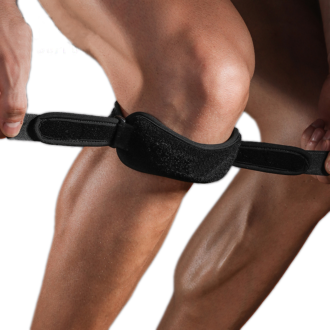
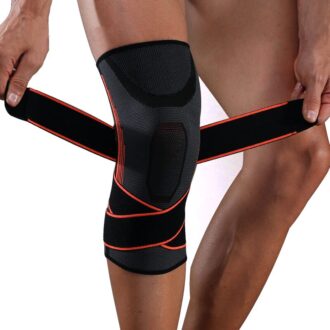
by Brian Norton
Finally a knee brace that actually fits! I don’t have overly massive legs but non of the other knee braces I have bought fitted because they were all so so tiny but this one fits great. The knee brace itself is very robust, comfortable to wear and most importantly provides lots of support 👍
by T man
This actually works, I can not believe, bought mine had pain in knees for years now all gone amazing
by Kelly Hakes
Amazing! I’ve been looking for a plus size knee support for a while (trying loads) and this one fits perfectly. Doesn’t slide down. Comfortable to wear. Well recommend. Super quick delivery
Thank you 🙂
by Marion
Being on the heavier side, I often faced knee pain and discomfort. My doctor suggested me a knee brace and I came across KneeReviver. Not only is it comfortable, but it also provides excellent support to my knee. I wish I’d discovered it sooner. It’s a game-changer for people struggling with knee problems with plus sized legs.
by Paul Roberts
Believe me when I say, the KneeReviver Brace has been a lifesaver for me. After suffering an ACL injury, I was in constant pain and finding a brace that fits my plus-sized knee was a challenge. This brace not only fits perfectly but also provides the necessary compression and support, easing my pain considerably. It’s well-constructed and the material is comfortable against my skin. I can’t recommend it highly enough.