
Night Splint for Plantar Fasciitis & Achilles Tendinitis
£11.99inc VAT
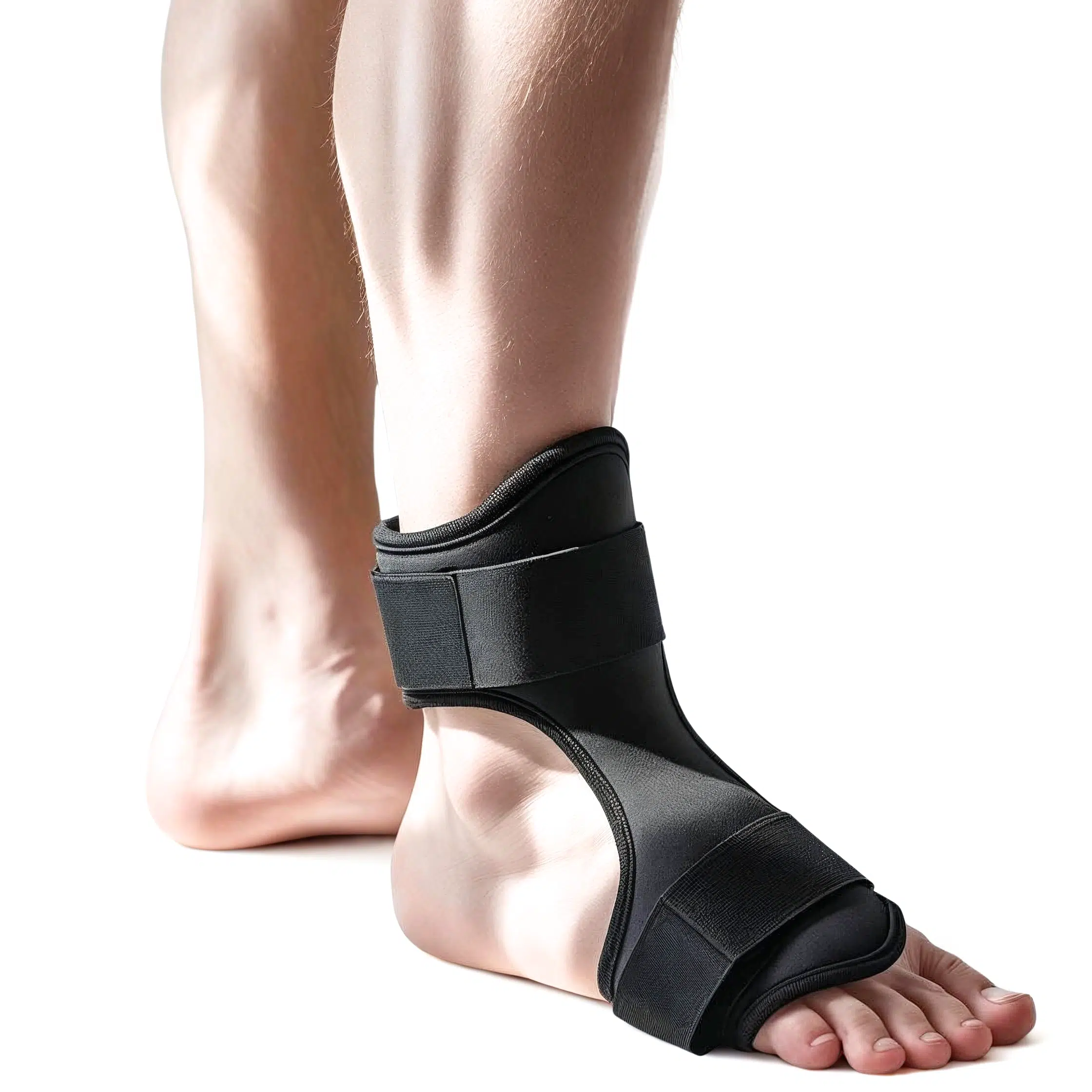
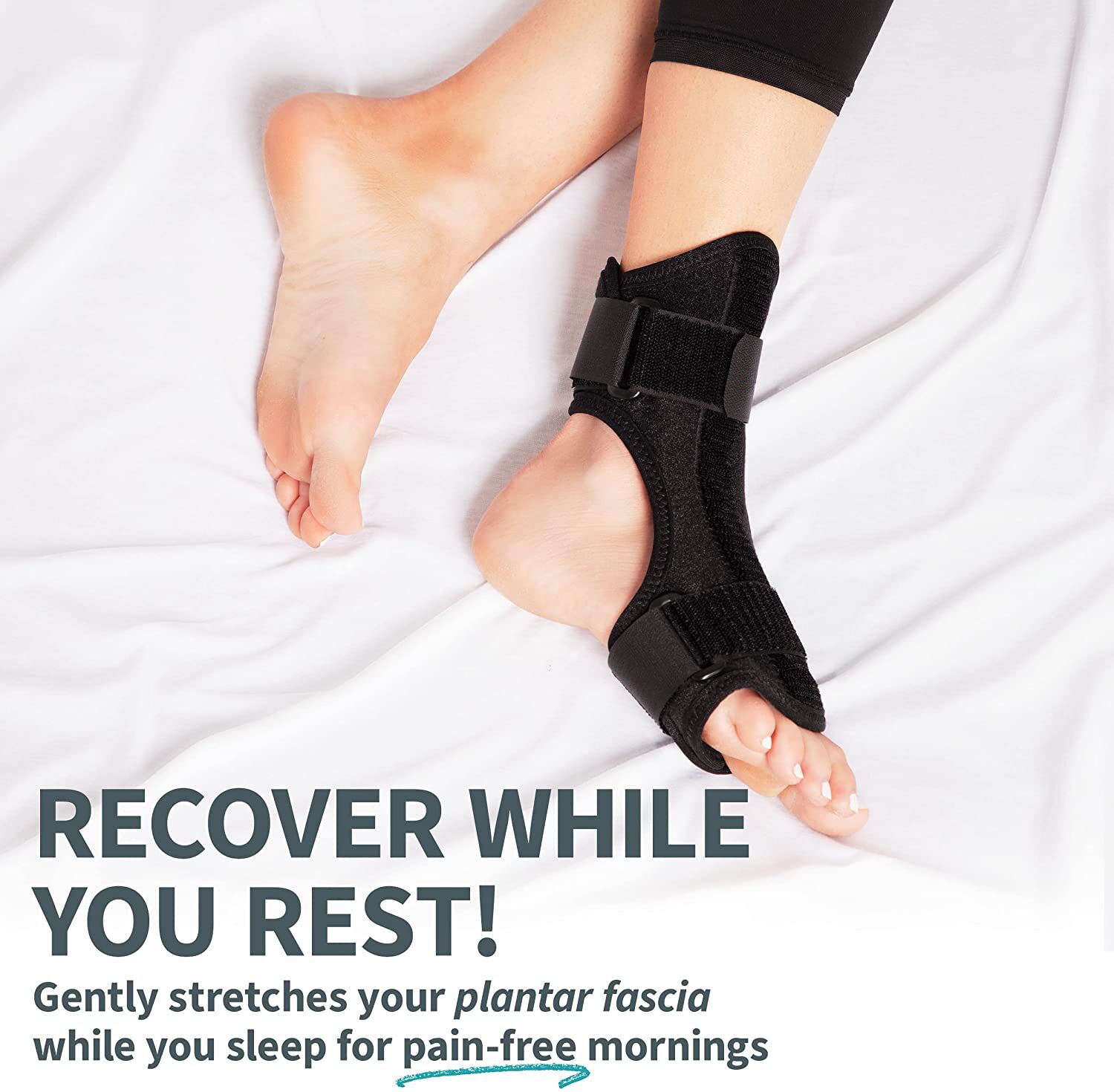
- Reduces morning heel and ankle pain — holds your foot in a gently stretched position overnight to prevent the tissue tightening that causes sharp pain when you first stand
- Designed for plantar fasciitis and Achilles tendonitis — addresses the overnight shortening pattern that makes mornings particularly painful with both conditions
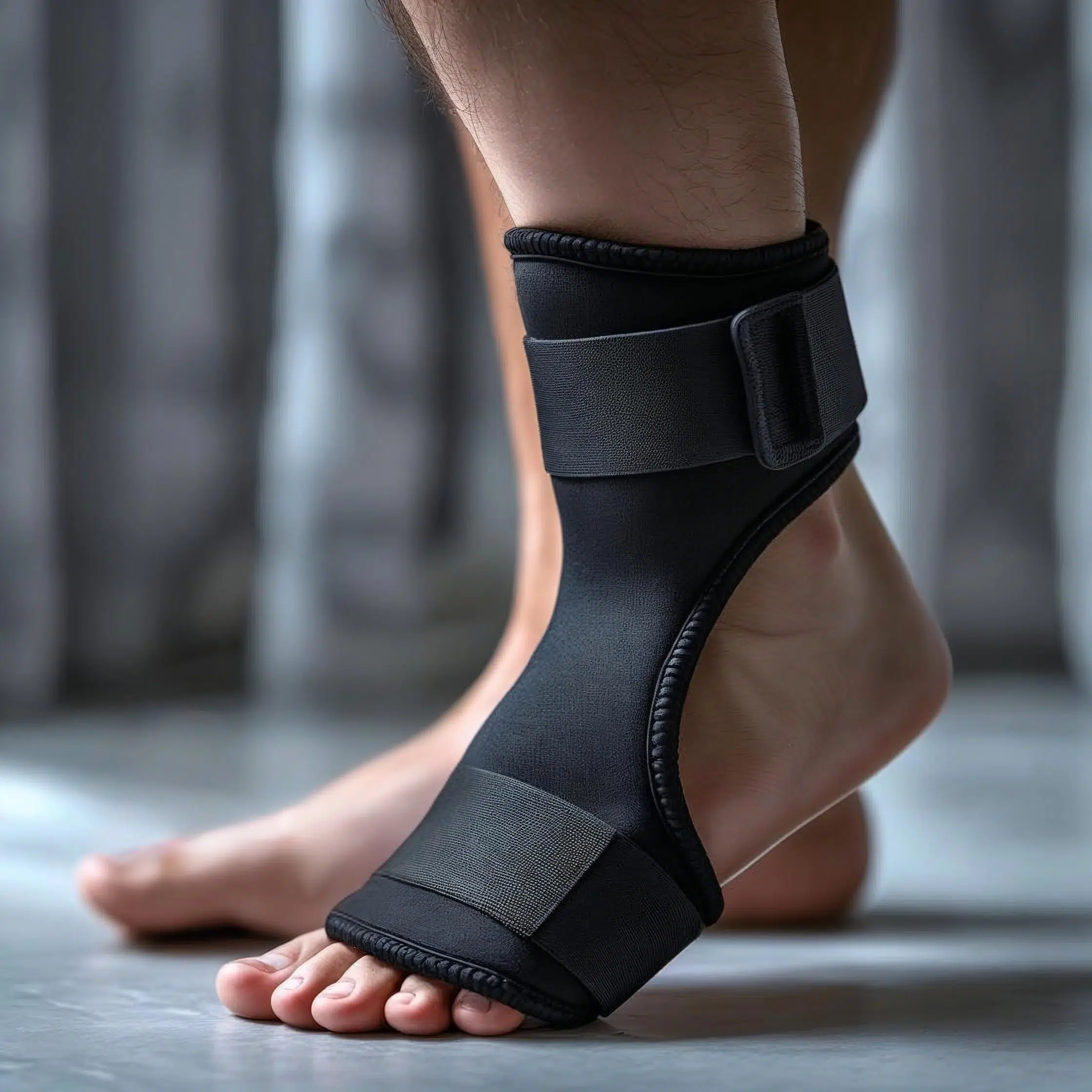
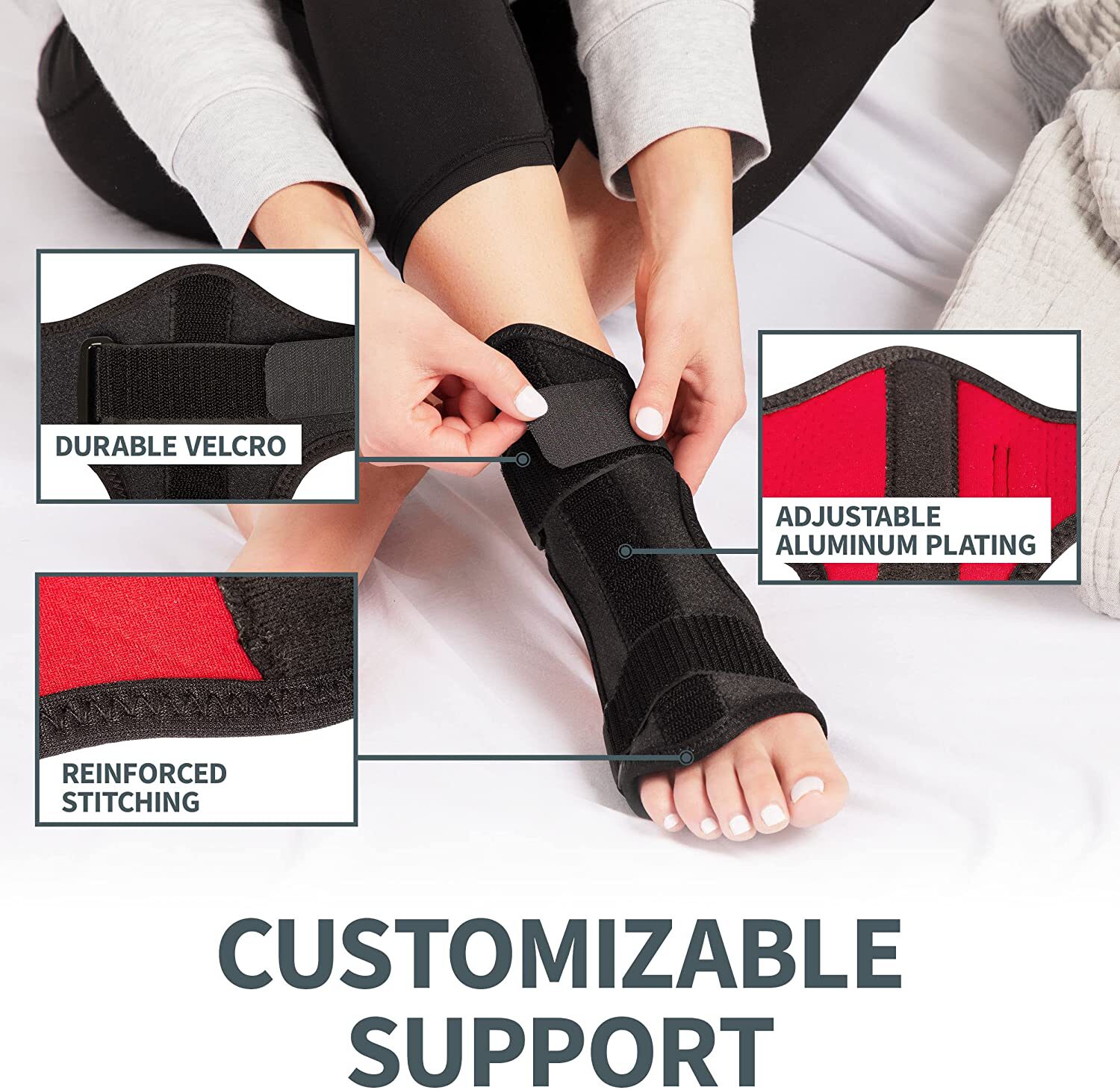
- Adjustable aluminium splint — flexible metal frame lets you set a comfortable 90-degree angle, keeping your foot and lower leg aligned to reduce tension on the plantar fascia and Achilles tendon
- Breathable, padded design for overnight comfort — soft padding cushions bony contact points, ventilated neoprene prevents heat buildup during 6-8 hours of wear
- Front-only coverage — open back and sides give you more freedom to move your leg during sleep compared to full-boot designs
- Adjustable straps for secure fit — two hook-and-loop straps (ankle and forefoot) fit most adult feet with 5-8cm overlap for optimal grip
- Gentle compression supports healing — adjustable strap tension improves blood flow to irritated tissues, helping remove inflammatory waste products
- Suitable for men and women — one-size design accommodates different foot widths and ankle sizes
- Works best alongside supportive footwear and stretching — addresses overnight tightening as part of a broader approach to managing foot and ankle pain
- 30-day money-back guarantee — return within 30 days if you’re not satisfied, no questions asked
NuovaHealth Night Splint for Plantar Fasciitis & Achilles Tendonitis
Sharp heel pain when you first get up. Stiffness at the back of your ankle after sitting for a while. These aren’t just minor niggles—they can make you hesitate before standing, shorten your stride, or leave you limping for the first few minutes of the day.
If this sounds familiar, you’re likely dealing with plantar fasciitis or Achilles tendonitis—two common causes of foot and ankle pain that often feel worse in the morning or after rest.
A night splint is a device designed to address this overnight tightening. By holding your foot in a gently stretched position while you sleep, it helps prevent the tissues from shortening and reduces that sharp pain when you first stand.
The NuovaHealth night splint uses an adjustable aluminium splint and soft, breathable materials to keep your foot at a comfortable angle throughout the night. It’s designed for people dealing with plantar fasciitis, Achilles tendonitis, or related foot and ankle conditions that benefit from overnight stretching.
Understanding Plantar Fasciitis and Achilles Tendonitis
Plantar Fasciitis
Plantar fasciitis is inflammation of the plantar fascia—a thick band of tissue running along the bottom of your foot from your heel to your toes. This tissue works like a tension cable under your arch—as you put weight on your foot, the arch naturally flattens slightly, stretching the fascia. This stretch stores elastic energy that releases as you push off, helping propel you forward.
Repeated stress on the plantar fascia—especially when the tissue is tight or your foot mechanics are off—creates tiny tears in the tissue fibres (micro-damage) faster than your body can repair them. This happens when your arch collapses too much or your ankle rolls inward with each step. Your body responds with inflammation—swelling, pain, and stiffness—as part of the repair process. If the stress continues, the inflammation persists. The tissue never gets a chance to calm down and repair, and the pain becomes chronic—lasting weeks, months, or even years. Over time, the area becomes more sensitive, so even normal activities that didn’t hurt before start causing discomfort.
You’ll typically feel sharp, stabbing pain under the heel—often towards the inside edge where the fascia attaches to the heel bone. Some describe it as a sharp stab, others as a deep ache or burning sensation. How it feels varies depending on how irritated the tissue is and whether you’ve been standing, walking, or resting.
The classic pattern is sharp pain on those first few steps out of bed, which then eases as you move around. The pain often returns or worsens after standing or walking for more than 20-30 minutes, once the fascia has been stretched and loaded repeatedly.
Pain may spread along the arch or affect how you walk—people often shift weight to the outside of the foot or shorten their stride to avoid the painful heel strike. This altered gait changes how forces travel up through your ankle, knee, and hip, placing unusual stress on joints and muscles that aren’t designed to handle those loads.
Common causes include spending long periods on hard surfaces that don’t absorb impact, tight calf muscles that pull on the fascia, wearing shoes without adequate arch support or cushioning, or having very high or very flat arches. Both extremes change how forces distribute through your foot—high arches concentrate stress on the heel and ball of the foot, while flat arches allow the fascia to stretch more than it should with each step.
Achilles Tendonitis
Achilles tendonitis is inflammation of the Achilles tendon—the thick cord connecting your calf muscles to your heel bone. This is the largest tendon in your body and it handles enormous forces. With each step, it takes several times your body weight—even more during running or jumping.
The tendon acts like a spring, storing and releasing energy with each step. This elastic recoil helps you push off efficiently and reduces the work your calf muscles need to do.
Tendons adapt to load gradually—they need time to strengthen and thicken in response to increased demand. Suddenly increasing activity—longer distances, more hills, more frequent sessions—or repeating the same movement too often without adequate rest causes the tendon fibres to develop tiny tears (micro-damage) faster than they can repair. Your body responds with inflammation—pain, swelling, and stiffness as it attempts to heal the damage. Continuing to ask too much of it means the inflammation persists and the pain becomes chronic—especially with activities involving repeated pushing up onto your toes, such as running, jumping, or climbing hills and stairs.
You’ll typically feel pain a few centimetres above where the tendon attaches to your heel bone, or sometimes right at the attachment point itself. The pain often feels like a dull ache or tightness at the back of the ankle. The area may be stiff and sore after sitting at your desk, getting up from the car, or sitting through a meeting. The pain often warms up with gentle movement, but then worsens again if you continue with activities that put more force through the tendon—running, jumping, or hill walking.
Common causes include suddenly increasing how much you’re doing—carrying heavy loads, spending time on ladders or uneven surfaces, or ramping up training too quickly. Tight calf muscles increase the pull on the tendon, and shoes without proper heel support or cushioning can increase the stress on the tendon with each step.
This is worth dealing with early—you want to calm the inflammation before the tendon structure breaks down. Persistent inflammation can disorganise the arrangement of collagen fibres—the protein strands that give the tendon its strength. The tendon may thicken and feel lumpy, and in severe cases, it can develop tears or even rupture completely.
Why Overnight Tightening Happens
Both plantar fasciitis and Achilles tendonitis share a pattern that makes mornings particularly painful. Here’s the mechanism behind it.
Lying down and relaxing your foot for 6-8 hours lets your foot naturally point downward—the same position it would be in if you were standing on your toes. In this position, both the plantar fascia and the Achilles tendon are at their shortest length. The tissues settle into this shortened, relaxed state overnight.
Standing up in the morning and putting weight on your foot moves your ankle back to a 90-degree angle and your arch flattens slightly under load. This suddenly stretches tissues that have been in a shortened position for hours. If those tissues are already inflamed and irritated, this sudden stretch pulls sharply on already damaged fibres—that’s why you get the sharp pain on those initial steps after waking.
This overnight shortening is why morning pain is such a common feature of both conditions. Over a few weeks of consistent use, a night splint helps break this pattern by preventing the tissues from shortening overnight in the first place.
How a Night Splint Helps
A night splint holds your foot in a gently stretched position while you sleep—usually at roughly 90 degrees, similar to the angle your foot would be at when standing. This is called passive stretching—holding your foot in a stretched position without any effort from you. By maintaining this position for several hours each night, the splint stops the plantar fascia and Achilles tendon from tightening while you sleep.
Standing in the morning means the tissues are already at their standing length—there’s no sudden stretch, so there’s less sharp pain when you first put weight on your foot. The splint doesn’t cure the underlying inflammation, but it addresses the pattern where your foot tightens overnight and hurts when you first move. For many people, this reduces that sharp pain and helps them move more easily in the morning.
Night splints come in various designs. Some are rigid boot-style designs that enclose the entire foot and lower leg. Others use adjustable straps and a front splint that holds the foot in position without fully enclosing it.
A night splint works best alongside other approaches—supportive footwear during the day, calf stretches, and pacing your activity. The splint addresses the overnight tightening, but managing the condition effectively usually means looking at what’s causing the stress on the tissue in the first place.
How the NuovaHealth Night Splint Works
The NuovaHealth night splint uses a flexible aluminium splint that runs along the front of your foot and ankle. This front-only design gives you more freedom to move your leg during sleep compared to full-boot designs, but still holds your foot at the angle needed to maintain the stretch.
The aluminium splint is flexible, so you can adjust it to hold your foot at roughly 90 degrees—the position that keeps a light stretch on both the plantar fascia and the Achilles tendon. The adjustable aluminium splint lets you find the angle that feels comfortable for you. Some people tolerate a slightly greater stretch, others prefer a gentler angle—especially when first starting out.
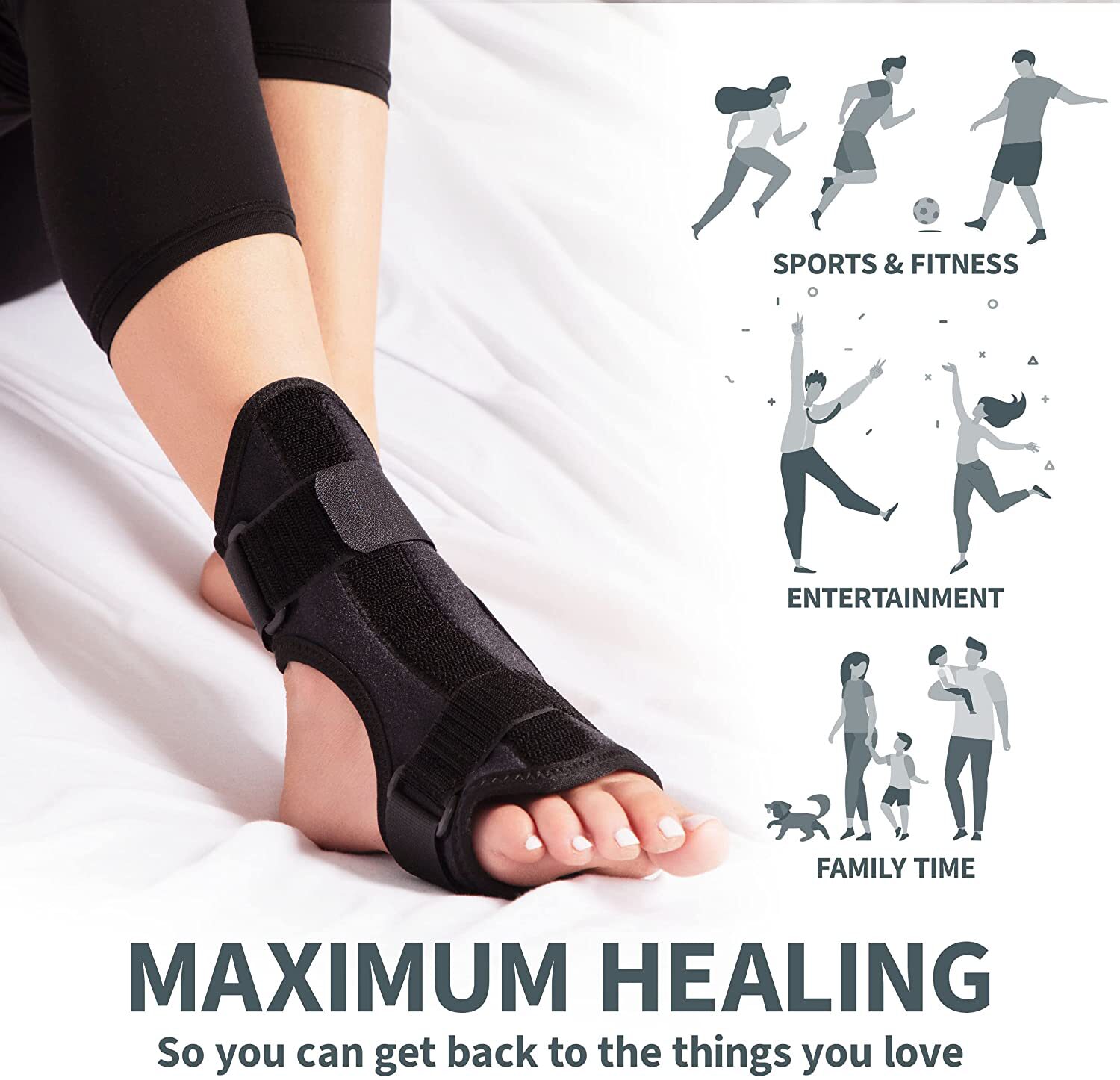
Two adjustable straps secure the splint in place. One wraps around your ankle and lower leg, the other around the front part of your foot near where your toes meet the main body of your foot. Both use hook-and-loop fastening through plastic buckle anchors, letting you adjust the fit and tension to suit your comfort.
For plantar fasciitis, this position stretches the tissue along the arch. By maintaining this stretch overnight, you’re preventing the fascia from adapting to a shortened position. The fascia stays at its standing length, so stepping down in the morning doesn’t create that sudden pull on the heel attachment.
For Achilles tendonitis, the 90-degree angle keeps the tendon at the length it would be when you’re standing. This prevents the tendon from shortening overnight in the pointed-foot position. Standing in the morning means the tendon is already elongated, so there’s no sudden stretch at the back of your ankle.
Design Features
You’ll wear this splint for 6-8 hours each night once you’ve built up to it, so comfort matters. The design balances holding your foot in the right position with letting you sleep comfortably.
Soft Padding for Bony Contact Points
The splint contacts your shin, ankle, and top of foot—areas where bone sits close to the skin with little natural cushioning. Without padding, the rigid aluminium would press directly on these bony spots, causing discomfort or pain over several hours. Soft padding inside the splint cushions these contact points, distributing pressure more evenly across the surface rather than concentrating it on small bony areas.
Breathable Neoprene with Ventilation
The base material is neoprene with ventilation holes across the surface. Neoprene is durable and provides some cushioning, but it can trap heat. The ventilation holes allow air to circulate against your skin while your body temperature changes during sleep. This helps prevent moisture buildup and keeps the splint more comfortable for extended wear.
Front-Only Coverage for Sleep Freedom
The open back and sides give you more freedom to adjust your leg position during the night. Full-boot designs can feel restrictive and make it harder to find a comfortable sleeping position. This design holds your foot securely without the bulk.
Adjustable Compression for Support
The two adjustable straps provide gentle but firm compression to your foot and ankle—how tight it feels depends on how you fasten the straps.
Compression helps healing by improving blood flow to the area, delivering oxygen and nutrients to the irritated tissues while helping remove the chemical byproducts of inflammation—substances that signal pain and maintain swelling.
During the resolution phase of inflammation—when your body is actively repairing tissue after the acute injury stage—improved circulation can help speed this process. Fresh blood brings the building blocks needed for tissue repair, and removing inflammatory waste products helps reduce pain signals and swelling.
You can adjust the strap tension to find what feels right for you. The compression should feel supportive—you should notice the splint is holding your foot securely—but not restrictive. If the straps feel too tight or you notice numbness or tingling, loosen them slightly. You may need to adjust the tightness as you get used to wearing the splint overnight.
Adjustable Fit for Most Adult Feet
The adjustable strap system fits most adult feet. The straps are long enough to accommodate different foot widths and ankle sizes, and the hook-and-loop fastening lets you adjust the fit precisely.
Fastening the straps with about 5-8cm of overlap where the hook-and-loop sections meet gives you enough grip to hold securely without the straps being stretched to their limit or having excessive overlap that bunches up.
If you’re not sure whether it will fit—particularly if you have very small or large feet, or if swelling is a concern—check the product specifications before ordering.
How to Use the Night Splint
Getting Started
Start gradually. Your body needs time to adapt to sleeping with your foot held in this position, and your calf muscles may feel tight at first as they adjust to the sustained stretch.
Begin with 1-2 hours on the first night—wear the splint for the first part of the night, then remove it if it becomes uncomfortable. Over the first week or so, gradually increase the wear time as your body adapts. Most people can build up to wearing the splint for the full night (6-8 hours) within a week or two.
You’ll likely feel the stretch along your calf and the bottom of your foot initially. This sensation is normal—it’s the gentle stretch the splint is designed to provide. You shouldn’t feel sharp pain or numbness. If you do, the splint may be adjusted too tightly or positioned incorrectly.
Adjusting the Fit
Fasten the ankle strap first, then the forefoot strap. Both should feel snug but not tight. You should be able to slide a finger under the strap, but it shouldn’t feel loose or allow your foot to move significantly within the splint.
Check the angle of the aluminium splint. Your foot should be at roughly 90 degrees—your toes pointing up towards your shin, not pointing down or pulled back excessively. If the angle feels too aggressive, gently bend the aluminium splint to reduce the stretch slightly.
Troubleshooting
Splint feels too tight? Loosen the straps slightly and check for numbness or tingling—signs the compression needs adjusting. The splint should feel secure without cutting off circulation. If you notice your foot feeling unusually cold, showing colour changes (pale, blue, or mottled), or feeling numb even after loosening the straps, remove the splint and contact your GP.
Calf feels uncomfortably tight? This is common in the first few nights as your calf muscles adapt to the sustained stretch. If it’s preventing sleep, reduce the angle slightly by adjusting the aluminium splint, or reduce your wear time and build up more gradually. The tightness should ease as your muscles adapt over the first week.
Can’t find a comfortable sleeping position? Try placing a pillow under your knee on the side wearing the splint—this takes some tension off the calf and may make the position more comfortable. The pillow creates a slight bend at the knee, which slackens the calf muscle slightly and reduces the pull on the Achilles tendon. Some people find it easier to sleep on their back when first adapting to the splint.
Skin irritation where the splint contacts your foot? Check that the padding is positioned correctly and that there are no wrinkles or bunched fabric creating pressure points. If irritation persists, try wearing a thin sock under the splint to reduce friction.
What to Expect
A night splint works gradually—it’s not an instant fix. You’re addressing a pattern of overnight tightening that’s been contributing to your pain, and it takes time for your body to respond.
Many people notice getting up is easier, or that standing after rest feels more comfortable. Instead of hobbling for the first 5-10 minutes, you might find you can walk normally within a minute or two. This reduction in morning stiffness is often the first sign the splint is helping.
How quickly you notice a difference varies. It depends on how long you’ve had the condition, how severe the inflammation is, and how consistently you wear the splint. Some people notice improvement within a few days, others take 2-3 weeks of consistent use before they feel a meaningful change.
The splint addresses the overnight tightening, but it works best as part of a broader approach. Supportive footwear during the day, calf stretches, and pacing your activity all contribute to managing plantar fasciitis or Achilles tendonitis. The splint helps prevent the tissues from shortening overnight, but daytime habits matter too.
If you’re not noticing any improvement after 2-3 weeks of consistent use, or if your symptoms are getting worse, see your GP or a physiotherapist. They can assess whether the splint is positioned correctly, whether there are other contributing factors, and what additional treatments might help.
Also Suitable For
While the NuovaHealth night splint is primarily designed for plantar fasciitis and Achilles tendonitis, it may also help with related conditions where overnight stretching of the foot and ankle tissues could be beneficial.
Ankle or Foot Sprains and Strains (During Recovery)
After the acute phase of a sprain or strain has passed—once initial swelling and severe pain have settled—a night splint may help maintain range of motion during recovery. Naturally moving your injured ankle or foot less to avoid pain can lead to stiffness as the tissues heal in a shortened position.
By holding your foot at 90 degrees overnight, the splint maintains the length of the healing tissues and may reduce morning stiffness. This is most relevant during the later stages of recovery when you’re working on regaining normal movement, not in the first few days after injury when rest and protection are the priority.
If you’ve recently sprained or strained your ankle or foot, check with your GP or physiotherapist before using a night splint. They can advise whether it’s appropriate for your stage of recovery and whether any precautions apply.
Flat Arches (Fallen Arches)
People with flat arches—where the arch of the foot collapses significantly when standing—often experience strain on the plantar fascia and surrounding structures. As your arch flattens under load, the plantar fascia has to stretch more with each step, which can lead to irritation and pain similar to plantar fasciitis.
The 90-degree position places your arch in a supported alignment and maintains tissue length overnight. For some people with flat arches who experience morning foot pain or stiffness, this overnight positioning helps reduce discomfort when first standing. However, a night splint doesn’t address the underlying arch structure—daytime support through appropriate footwear or insoles is usually the primary management approach for flat arches.
Metatarsalgia (Ball-of-Foot Pain)
Metatarsalgia is pain in the ball of your foot—the front part of your foot, near where your toes meet the main body of your foot—often caused by excessive pressure on the metatarsal heads (the ends of the long bones in your foot).
The connection to a night splint is less direct than with plantar fasciitis or Achilles tendonitis. However, holding your foot in the toes-up position (dorsiflexion) changes the position of the forefoot slightly, which may reduce pressure on the metatarsal heads. Some people with metatarsalgia find this overnight positioning helps reduce morning discomfort, though results vary considerably.
If metatarsalgia is your primary concern, addressing footwear, using metatarsal pads, and managing the activities that aggravate the pain are usually more effective approaches. A night splint may provide some additional benefit, but it’s not a primary treatment for this condition.
Important Note
These secondary uses are based on the mechanical principles of overnight stretching and positioning, but they’re not the primary purpose of this splint. If you’re considering the splint for one of these conditions, it’s worth discussing with your GP or physiotherapist first to ensure it’s appropriate for your situation and that you’re addressing the underlying cause effectively.
Care & Maintenance
Cleaning
Wipe the splint down regularly with a damp cloth to remove sweat and skin oils. For a deeper clean, hand wash the splint in lukewarm water with mild soap, then rinse thoroughly and air dry. Don’t machine wash or tumble dry—the heat and agitation can damage the aluminium splint and the hook-and-loop fastenings.
Make sure the splint is completely dry before wearing it again. Damp neoprene against your skin for several hours can cause irritation and may encourage bacterial or fungal growth.
Storage
Store the splint in a cool, dry place away from direct sunlight. Prolonged exposure to heat or UV light can degrade the neoprene and weaken the hook-and-loop fastenings over time.
Fasten the straps loosely when not in use to prevent the hook-and-loop sections from collecting dust or lint, which can reduce their grip.
Checking for Wear
Inspect the splint periodically for signs of wear—particularly the hook-and-loop fastenings, the padding, and the aluminium splint itself. If the hook-and-loop sections no longer grip securely, if the padding is compressed or torn, or if the aluminium splint has cracked or bent in a way that you can’t adjust, it may be time to replace the splint.
Durability & Lifespan
The NuovaHealth night splint is built to withstand regular nightly use. The aluminium splint is flexible enough to adjust but rigid enough to maintain the position throughout the night. The neoprene material is durable and the stitching is reinforced at stress points where the straps attach.
With proper care—regular cleaning, air drying, and appropriate storage—the splint should last several months of nightly use. How long it lasts depends on how often you wear it, how you care for it, and your individual wear patterns.
The most common wear points are the hook-and-loop fastenings, which may lose grip over time with repeated use, and the padding, which may compress or show signs of wear where it contacts bony areas. If you notice the splint is no longer holding your foot securely or the padding is no longer providing adequate cushioning, it’s time to consider replacing it.
Safety & When to Seek Help
A night splint is generally safe for most people with plantar fasciitis or Achilles tendonitis, but there are some situations where you should be cautious or seek advice before using one.
When to Avoid or Check First
If you have any of the following conditions, speak to your GP or physiotherapist before using a night splint:
- Diabetes with peripheral neuropathy (reduced sensation in your feet)—you may not feel if the splint is too tight or causing pressure points
- Circulatory problems or conditions affecting blood flow to your feet
- Recent fracture or surgery to your foot, ankle, or lower leg
- Open wounds, ulcers, or active skin infections on your foot or ankle
- Severe swelling that makes it difficult to fasten the straps comfortably
Warning Signs—Remove the Splint and Contact Your GP if You Experience:
- Sharp, severe pain that doesn’t ease when you loosen or remove the splint
- Numbness, tingling, or pins-and-needles that persists after removing the splint
- Colour changes in your foot—pale, blue, or mottled skin
- Your foot feeling unusually cold compared to the other foot
- Increased swelling or redness that worsens while wearing the splint
These signs may indicate the splint is too tight, positioned incorrectly, or that there’s an underlying issue that needs medical assessment.
When to See Your GP or Physiotherapist
If your symptoms aren’t improving after 2-3 weeks of consistent use, or if they’re getting worse, see your GP or a physiotherapist. Persistent or worsening pain may indicate that additional treatment is needed, or that there’s another underlying cause that hasn’t been addressed.
Developing new symptoms—such as pain spreading to other areas, significant swelling, or difficulty bearing weight—means you should seek advice promptly. These may be signs of a different or more serious condition.
Medical Disclaimer
The information on this page is general guidance about plantar fasciitis, Achilles tendonitis, and the use of night splints. It’s not a substitute for individual medical advice, diagnosis, or treatment.
If you have complex symptoms, new or unexplained pain, or you’re unsure whether a night splint is appropriate for your situation, speak to your GP or physiotherapist for personalised advice. They can assess your specific circumstances and recommend the most suitable approach for you.
While many people find night splints helpful for managing morning foot and ankle pain, individual results vary and no specific outcomes are guaranteed.
30-Day Money-Back Guarantee
We offer a 30-day money-back guarantee on the NuovaHealth night splint. If you’re not satisfied with the splint for any reason, you can return it within 30 days of purchase for a full refund.
The splint should be in clean, resaleable condition. We understand you’ll need to try it to assess fit and comfort, but please take reasonable care of the product during the trial period.
For returns or questions about the guarantee, full details are available on our returns policy page.
Conclusion
If you’re dealing with plantar fasciitis or Achilles tendonitis, a night splint offers a practical way to address the overnight tightening that contributes to morning pain and stiffness. The NuovaHealth night splint uses adjustable positioning and breathable materials to keep your foot comfortably stretched throughout the night, helping reduce that sharp pain when you first stand.
It’s not a standalone solution—it works best alongside supportive footwear, appropriate stretching, and sensible activity management—but for many people, it makes a meaningful difference to how they feel in the morning.
If you have questions about whether the splint is right for your situation, or if you need advice on fit or sizing, check the product specifications or speak to your GP or physiotherapist for personalised guidance.
Fast & Secure Checkout Through Paypal
Pay with Paypal the secure payment gateway that accepts all credit and debit cards. Paypal is free and secure and no credit or bank information is ever stored or shared with us.
Fast Dispatch
Enjoy your items soon with quick dispatch via Royal Mail. Expect to have your items between 1-3 working days for domestic orders. 7-10 Working days for international orders.
Return Policy – 30 Day Money Back Guarantee
In the unlikely event, you are unhappy with your purchase you can return it within 30 days for a refund. Please contact us via the form on the contact us page to start your return.
To return an item please send it to: Nuova Health UK, 81 Highfield Lane, Waverley, Rotherham, S60 8AL. Please include a note with your order id so we know who to refund. Please retain your postage receipt as proof of postage. All that we ask is that the item is in the original packaging and unused.
Reviews
There are no reviews yet.