
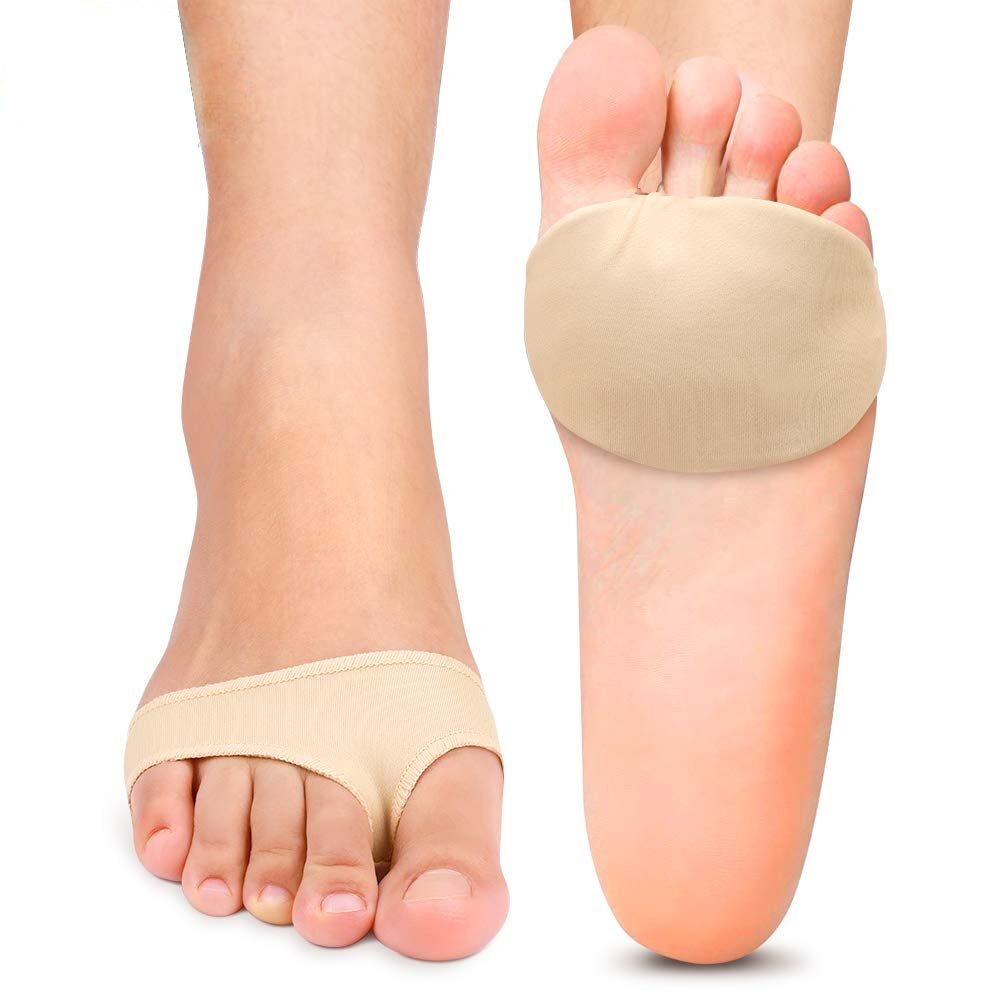
Morton’s Neuroma Pads With Gel Cushion & Metatarsal Support
£10.99inc VAT
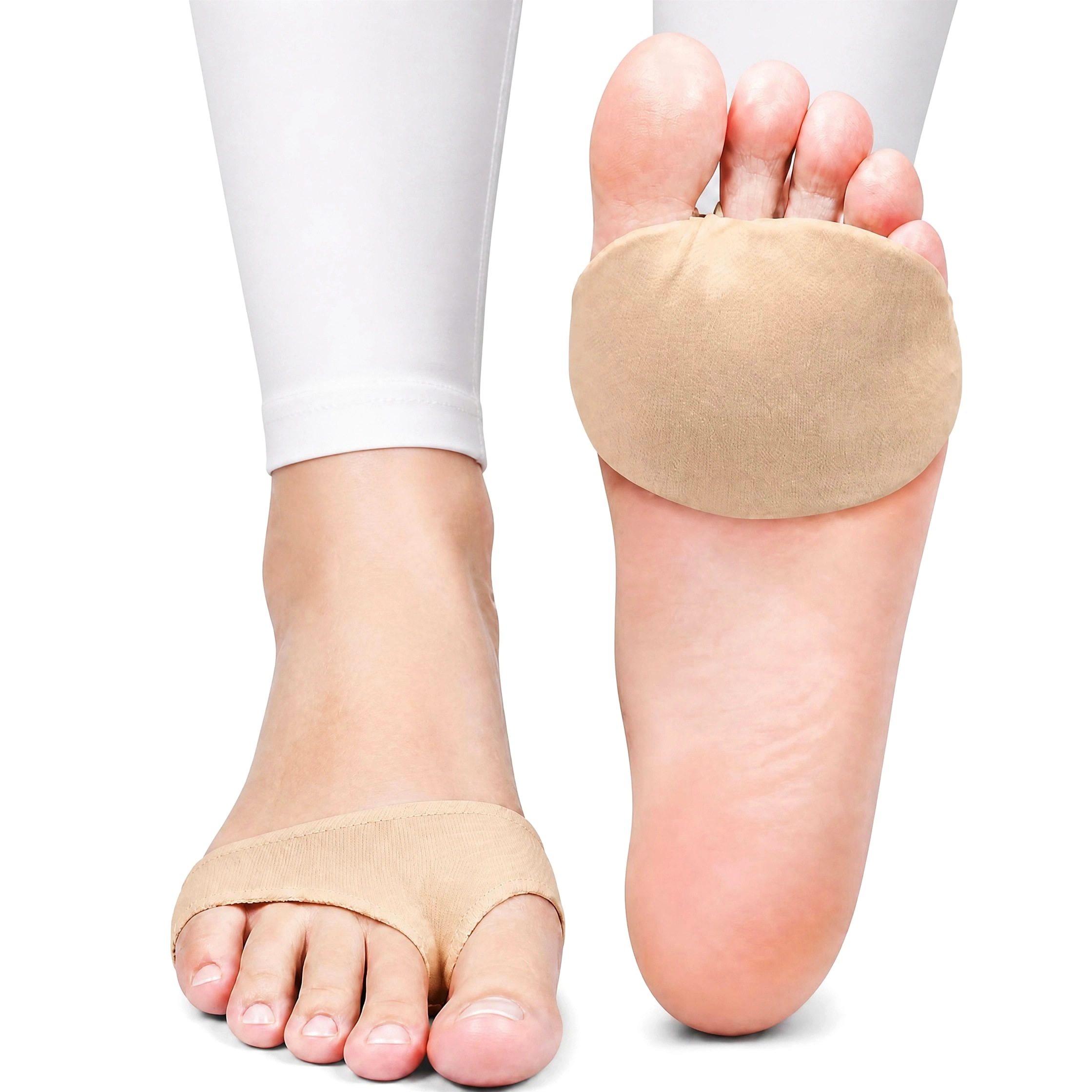
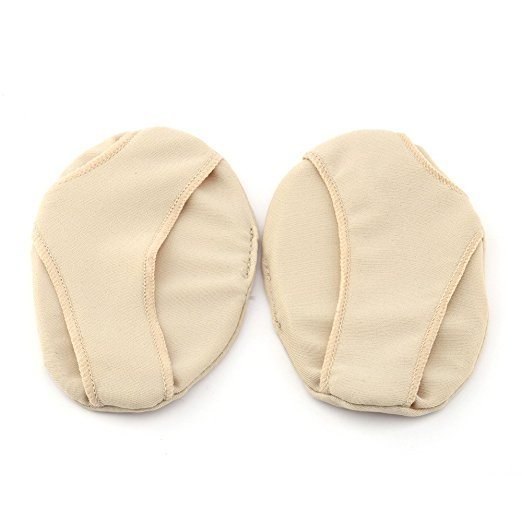
- 1x pair of FootReviver Morton’s Neuroma gel cushion pads (one for each foot).
- Find relief from burning, tingling, “stone under the foot” pain, and related symptoms.
- The pads sit just behind the ball of the foot to gently lift the metatarsal shafts.
- This lifting action eases pressure on the nerve between the metatarsal heads and spreads load over a wider area.
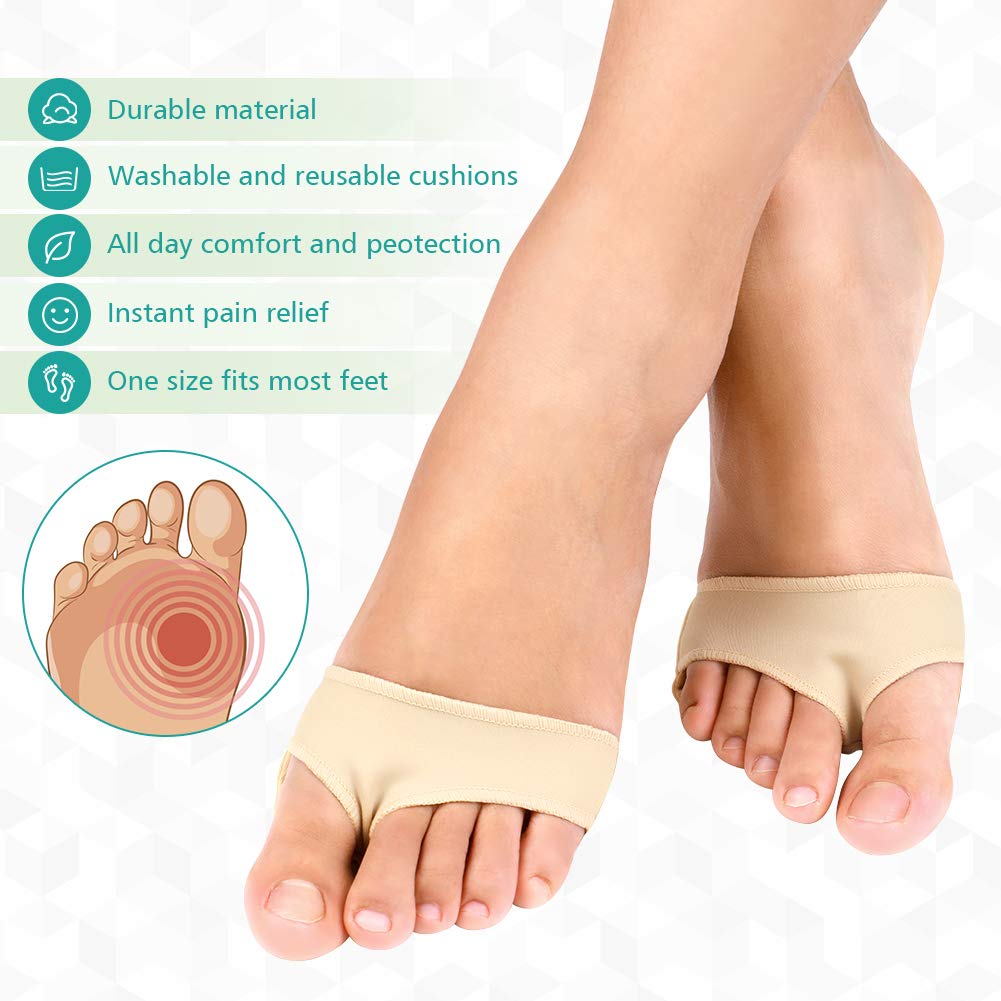
- Secure, comfortable fit is ensured by two toe loops that keep the dome correctly positioned during movement.
- The soft silicone gel effectively cushions impact on hard indoor floors and pavements.
- Slim, skin-friendly fabric allows wear in many trainers, walking shoes, and roomier work shoes.
- Suitable for both men and women.
- Available in two sizes: Small (UK 3-6) and Large (UK 7-11).
- Can be worn on either foot and used alongside existing insoles, arch supports, or custom orthotics.
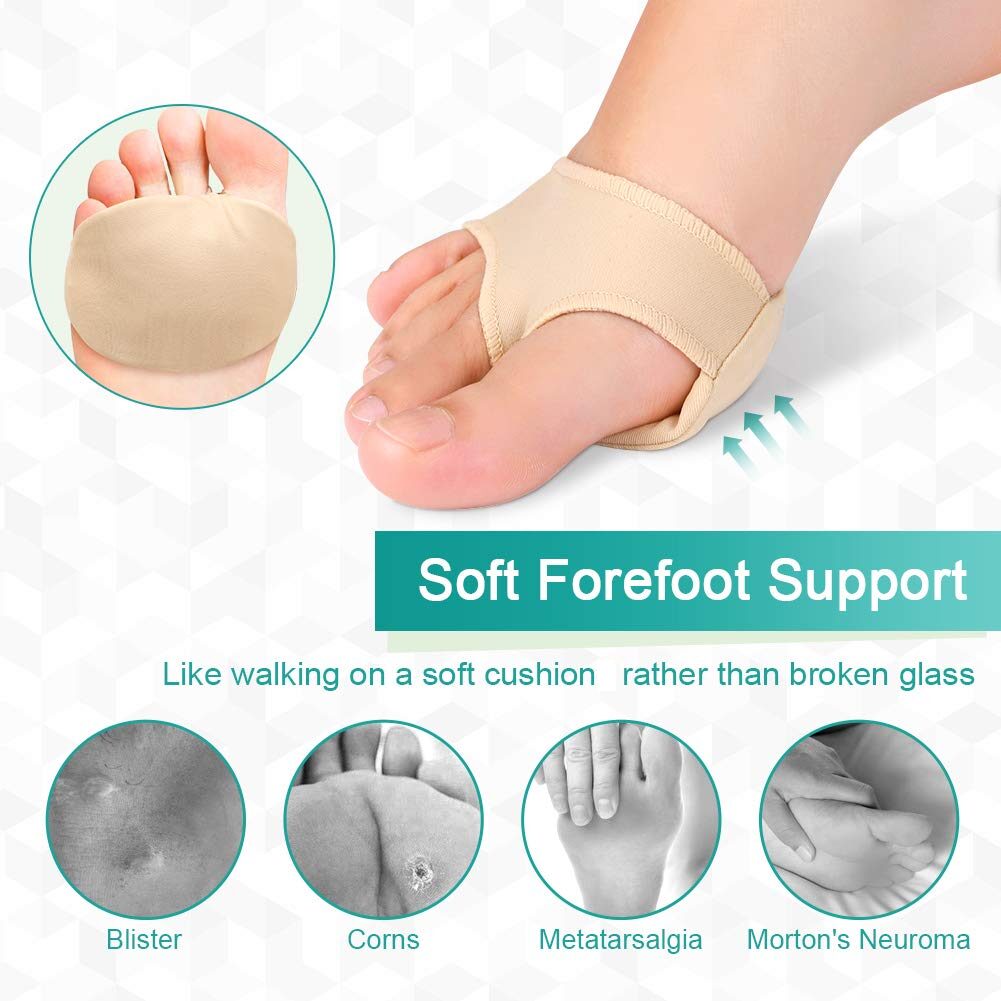
- Useful for addressing Morton’s neuroma, metatarsalgia, corns, calluses, blisters, and loss of forefoot cushioning.
- Hand-washable and reusable, designed for months of regular use with proper care.
- For best results, start with short wear times and build up gradually.
- Adjust fit and footwear if symptoms increase, and seek professional advice if pain is severe, changing, or does not settle.
Get 15% off - When bought together with:
Morton’s Neuroma Gel Cushion Pads by FootReviver
If every step feels as though there is a stone under the front of your foot that you can never quite find, you are not imagining it. Burning, tingling, sharp “electric” pains and that stubborn “pebble” feeling under the ball of the foot are typical when a small nerve there is being squeezed between bone and ground.
You may start planning your day around how long you will be on your feet, which shoes you can tolerate and how far you can walk before that familiar hot, sharp spot flares. You might find yourself choosing routes with fewer stairs, avoiding standing chats, or hesitating before saying yes to a walk or outing that you once took for granted. There is a straightforward mechanical reason why such a small area can hurt so much, and it is something you can influence. For many people, this mix of burning, “stone under the foot” pain and tingling in the toes points to a small nerve in the front of the foot being squeezed – often described as Morton’s neuroma.
FootReviver Morton’s Neuroma Gel Cushion Pads – often simply called Morton’s neuroma pads – are designed to change how your body weight passes through the front of your foot when you stand and walk. Each soft elastic FootReviver pad has a gently curved silicone gel dome built in, sitting just behind the ball of your foot. The dome is only a few millimetres high and spreads across the width of the forefoot, so it feels like a smooth, shallow ridge rather than a hard lump.
As you put weight through the front of the foot, this dome gently lifts the metatarsal shafts – the long bones leading into the ball of your foot. That small lift:
- creates a little more room around the irritated nerve between them,
- spreads pressure away from the sore spot, and
- softens impact on hard surfaces.
When the nerve is pinched less often and less forcefully, many people notice that sharp, “zappy” forefoot pain shifts towards pressure they can tolerate for longer before it stops them. That is a significant change for a very small nerve.
Each pack contains one pair of elasticated FootReviver pads with integrated silicone gel domes – one for each foot. They are available in Small (UK 3–6) and Large (UK 7–11) sizes, suitable for men and women. Each pad can be worn on either left or right foot, with or without socks, inside most everyday shoes with a reasonably roomy toe box. A roomier toe box (the front part of the shoe around your toes) allows your toes and the rounded bone ends under the ball of your foot to spread more naturally, which reduces how tightly the small nerve tunnels are squeezed.
Is this your type of forefoot pain?
Pain under the ball of your foot can turn everyday things – standing for a while, walking on pavements or using stairs – into something you have to plan around or avoid. It might start as an occasional ache after a busy day, but over time that soreness can become a persistent problem. It often begins to dictate which shoes you put on and gradually limits what you feel able to do on your feet.
You might recognise:
- A burning or aching pain under the front of one or both feet that builds the longer you stand or walk on hard ground.
- Sharp, stabbing or electric‑shock‑like pains under the ball of the foot, often between the third and fourth, or second and third toes.
- Tingling, pins and needles or numbness spreading into one or two toes, especially after you have been on your feet for a while.
- A stubborn sensation of a stone, lump or “bunched‑up sock” under the ball of the foot that you never find when you check inside your shoe.
- Pain that is worse as you push off through your toes – for example, walking briskly, climbing stairs or stepping off a kerb – and eases when you sit down or take your shoes off.
This combination of symptoms often fits with a small nerve between the metatarsal heads being pinched (commonly called Morton’s neuroma), and with other problems where the joints, ligaments and skin under the forefoot are under repeated pressure. Similar symptoms can sometimes come from other causes, which is why a clinical assessment is sensible if you are unsure.
To cope, you may unconsciously change how you move: taking shorter steps so you spend less time rolling onto the front of the foot, putting more weight on the outer edge of the foot to avoid pressure between the middle toes, or leaning slightly onto the less painful leg when standing. All of these are understandable ways of keeping pressure off the sore area under the ball of the foot. In the short term they make sense. Over time, they can shift extra stress onto certain metatarsal heads and nerve spaces, which keeps the nerve irritated and feeds into the same cycle of pain and cautious walking.
What is Morton’s neuroma, and why does it hurt so much?
Just behind your toes lies a row of rounded bone ends: the metatarsal heads. The heads of the second, third and fourth metatarsals form the central part of the ball of your foot. Between each pair of heads runs a small digital (toe) nerve as it travels forwards to supply feeling to the facing sides of two neighbouring toes.
Each of these nerves runs through a very tight space. The “floor” of the space is formed by the ligaments and fat pad under the ball of the foot. The “sides” are the metatarsal heads themselves. The “roof” is a strong band of tissue – the deep transverse intermetatarsal ligament – which runs across the forefoot and helps hold the metatarsal heads together so they move as a unit.
You can picture each nerve as a soft cable passing through a narrow gap between two rounded door handles, with a strap over the top. Normally the cable can slide and flex a little as you move. There is just enough room for it and a small blood supply, but very little spare space for any extra swelling or thickening.
In normal walking, your heel touches down first, weight moves forwards through the arch and midfoot, then you roll over the metatarsal heads and finally push off through the toes. As you roll forwards, the metatarsal heads spread slightly and move in their joints. The nerve in each tunnel is briefly squashed and stretched, but this is modest and short‑lived. The soft tissues around the nerve cushion and support it, and between steps the nerve has time to restore its blood flow and clear irritant chemicals. In a healthy foot the metatarsal heads and toes share the pressure between them so no single head does all the work. You do not notice any of this when everything is sharing load smoothly, even though it happens with every step.
Put simply: a small nerve runs through a tight bony tunnel under the ball of your foot. In a healthy foot, that nerve is briefly squeezed with each step but easily copes and stays quiet.
Trouble begins when that small nerve tunnel is squeezed harder and for longer than it can comfortably handle. The amount and pattern of force that passes through it step after step becomes too much for the space and the tissue to cope with.
When that happens again and again, the body responds by sending more blood and fluid into the area. The sheath around the nerve becomes a little swollen and thickened and, over time, small areas of scar‑like tissue can develop in the tunnel. The tunnel effectively becomes narrower. There is now less spare room, so even normal walking can pinch the nerve more sharply. The nerve fibres themselves become more sensitive, sending burning, stabbing or electric‑shock‑like signals instead of quiet, background messages. Because each nerve supplies feeling to two toes, you may also feel tingling, pins and needles or numbness in those toes.
A healthy, non‑irritated nerve can tolerate the small, brief squeezes of everyday walking without you noticing them at all. Once it has become over‑sensitive, the same everyday activities – a short walk to the shops, standing in a queue, going up a couple of flights of stairs – can feel as though they are ‘setting it off’ for no obvious reason.
When this process has been going on for months, clinicians often use the term “Morton’s neuroma”. In this context, “neuroma” does not mean a tumour in the everyday sense. It refers to a short section of nerve that has become thickened, irritable and much easier to trigger because it has been compressed in a tight tunnel for a long time. The nerve is still very small, but its sensitivity has gone up dramatically.
For many people, this does not feel like a sudden injury so much as a slow change. It often starts with the odd “bad day” after heavier use, then those bad days become more frequent, start to appear after smaller amounts of walking or standing, and eventually it feels as though you are always only a little extra time on your feet away from a flare‑up.
In other words: Morton’s neuroma is what happens when a small nerve between the metatarsal heads has been squeezed so often, and for so long, that it becomes thicker, more inflamed and far easier to set off by ordinary everyday forces.
How everyday pressure turns into ongoing nerve pain
Problems often begin when that small nerve tunnel is squeezed harder, more often, or for longer than it is designed to tolerate. This does not usually happen overnight. It often creeps in over time, as small everyday pressures steadily add up.
Footwear and surfaces
The front of the foot can be driven forwards into a tight toe box, narrowing the space from the sides and crowding the metatarsal heads together. Heels or steeply pitched shoes tip more of your body weight onto the ball of the foot, so the metatarsal heads are driven harder into the ground. Very thin or hard soles mean there is little natural “give” under the forefoot, so ground impact is passed more directly into the nerve spaces.
Common examples include long days in narrow dress shoes, fashion shoes with a noticeable heel, or firm work shoes on hard floors. They may feel fine at first, but hours of wear quietly drive extra force into the same small area under the ball of your foot.
You can also spend long spells on hard, flat surfaces such as concrete, tiles or laminate, with little change in pace or direction. Walking round shops, up and down corridors, standing at a counter or working in one place all day on firm flooring means your forefoot meets an unforgiving surface again and again. Even in fairly ordinary shoes, this can steadily increase the pressure on the metatarsal heads and the nerves between them.
How things change over time
At first, this extra pressure may only irritate the nerve after longer or more demanding days – for example, after a late shift on hard floors or an evening in steeper shoes. You may recognise a pattern where symptoms only appear after a full day on your feet and ease quickly once you sit down and take your shoes off.
If the same demands continue day after day, the nerve and its tunnel do not get enough quiet time between steps to settle fully. The sheath around the nerve remains slightly swollen and the tunnel stays a little narrower than before. Over time, this can shift your symptoms from “only after big days” to “after fairly ordinary days”, and eventually to “appearing quite early, even on days when you are not doing anything unusual on your feet”.
Many people notice that:
- shoes they once found comfortable now seem to “set it off”,
- walking to the bus stop or round the supermarket is enough to trigger the familiar hot, sharp area under the ball of the foot, and
- pain and tingling take longer to settle after they sit down.
By this stage, the nerve has become much easier to trigger. Even moderate, everyday tasks – a short walk on pavements, standing at a counter, going up a few flights of stairs – can be enough to set off burning, zapping or “electric” sensations.
How you adapt your walking – and why that can backfire
Once the nerve is highly sensitive, it often changes the way you move. Without realising, you may:
- take shorter steps so you spend less time rolling onto the front of the foot,
- put more weight on the outer edge of the foot to avoid pressure between the middle toes, or
- lean more onto the less painful leg when you are standing still.
All of these are understandable ways of keeping pressure off the sore area under the ball of the foot. In the short term they can seem to help, because they slightly move the sore spot away from the highest pressure. Over time, however, they shift extra stress onto certain metatarsal heads and nerve spaces and make your movement less even.
In effect, you end up not only with an irritated nerve, but with a guarded way of walking that keeps feeding extra pressure into the same small region while overworking other parts of the foot and leg. That is why the time you can comfortably spend on your feet often narrows, and why symptoms can take longer to settle once they have flared.
This gradual shift – from a nerve that quietly tolerates everyday pressure, to one that reacts sharply to ordinary loads – is how many Morton’s neuromas develop. Simply resting for a day or two may no longer be enough: the moment you go back to your usual shoes, surfaces and habits, the same small nerve space is asked to cope with the same way of taking pressure again.
Alongside footwear and surfaces, the way your own feet are shaped and how they move also make a real difference to which areas under the ball of the foot work hardest. That is what the next section looks at.
How your foot shape and movement feed into this pain
The way your foot looks and moves changes where forces build up under the ball of your foot. You do not need to know every anatomical term to make sense of this. A few simple observations about your arches, toes and shoes can be enough to see how pressure is being shared.
Flatter, more “rolled‑in” feet
If your arches look quite flat when you stand – the inner curve between heel and ball of the foot almost disappears – and your ankles seem to lean inwards, you may notice:
- aching along the inside of the foot and ankle after long periods on your feet,
- a sense that your feet “spread” in your shoes during the day, and
- tiredness or burning under the central part of the ball of the foot.
Here, the second and third metatarsal heads tend to drop and roll inwards. They stay in contact with the ground for longer with each step and can press closer together, leaving the nerve between them with less space.
A quick way to see this at home is to look at a wet footprint on a dry surface, or at the imprint on an old insole. If you see a broad, full print along the inside of the foot with very little “cut‑out” where the arch would be, your foot is probably flattening more when you stand.
Higher, firmer arches
If your arches stay high when you stand and your feet feel quite “bony” through the middle, you may feel:
- most of your weight through your heel and the ball of your foot, especially on hard floors,
- relatively little contact along the midfoot, and
- a sense that firm surfaces feel harsh or “direct” under the front of the foot.
Because the midfoot does not flex and flatten much to share pressure, more of each step is carried by small contact areas under the heel and particular metatarsal heads. One or two heads may then be asked to absorb more than their share of each landing, repeatedly squeezing the nerve between them.
In a wet footprint, this often looks like a print that mainly shows the heel and forefoot, with a large gap under the arch.
Walking more on the outer edge of the foot
If you tend to stand or walk more on the outer edge of your feet, you may notice:
- extra wear on the outer corners of your shoe soles when you look from behind,
- soreness along the outer border of the foot after a day on your feet, and
- a subtle feeling that you “tip” slightly outwards when you land.
In this case, you land more towards the outside and then move your weight quickly across the ball of the foot to push off. That quick cut across can squeeze one or two of the nerve spaces between the metatarsal heads more sharply as your weight passes over them.
Bunions and bent toes
If you have a bunion – with the big toe drifting towards the smaller toes – or if some of the lesser toes are bent or curled, the front of your foot can become crowded. The metatarsal heads move closer together and the tunnels for the nerves become narrower. You may see more hard skin or callus under certain heads where they are working harder, and feel more burning or tingling between the toes in that region.
These toe and joint changes usually arise over years from a mix of inherited foot structure, footwear and soft‑tissue looseness, rather than from any single choice or event. They alter how your toes and the ball of your foot share pressure. When toes cannot lie flat and spread, the metatarsal heads behind them often drop more firmly into the ground and squeeze the nerves between them more directly.
Thinning of the natural fat pad
If the fat pad under the ball of the foot has thinned, there is simply less soft tissue between the bones and the ground. You may feel:
- as though you are “walking on bone” or on small stones, especially on tiles, laminate or concrete,
- burning or aching appearing quite quickly when you stand still on a hard floor or walk on pavements, and
- that the bony ends of the metatarsals are easier to feel if you press under the ball of the foot with your thumb.
With less soft tissue to deform, the same body weight is delivered to a smaller area under each metatarsal head and over a shorter time. The small nerves, joint surfaces and ligaments under the ball of the foot are exposed to sharper, more focused pressure with each step. If you also have a neuroma or joint irritation, those structures are even more exposed and can flare more easily.
The transverse arch – the curve across the ball of the foot
Across the front of the foot there is a small, gentle curve from the big‑toe side to the little‑toe side – the transverse arch. In normal walking this curve helps the metatarsal heads share weight between them as you roll forwards, instead of letting one spot take most of the pressure. When one or two heads drop, are pushed closer together, or are left to cope with most of your weight, that shared job breaks down and the nerve tunnel between them is more likely to become irritated.
However your feet look from the outside – flatter, higher‑arched, with or without bunions or bent toes – the underlying issue in neuroma‑type problems is the same: too much force, too often, through too small an area under the metatarsal heads, with a sensitive nerve caught between them.
Once you can see how everyday demands and your own foot shape are combining to focus pressure into a small area under the ball of the foot, it becomes clearer what any helpful support has to do: take some of that pressure away and give the nerve a little more space to breathe.
Why a metatarsal neuroma pad makes sense
If the problem is a sensitive nerve in a tight space being pinched every time you roll onto the front of the foot, the key question is how you can reduce that pinch during ordinary daily activities – standing on hard floors, walking on pavements, using stairs – without having to change every part of your life.
A metatarsal neuroma pad – often referred to as a Morton’s neuroma pad – is a small dome placed just behind the ball of the foot. It is designed to change how pressure reaches the sore area in three main ways:
- It carries some of your weight under the metatarsal shafts instead of directly under the sore spot.
- It nudges the metatarsal heads a fraction further apart and a little higher off the ground, creating a touch more space in the nerve tunnel.
- It softens the way your forefoot meets firm surfaces so contact is less abrupt and more spread out.
Put simply, it gives the nerve more space and less direct, sudden pressure every time you roll over the ball of the foot. The physical changes are small – a few millimetres of lift and spreading – but repeated over the thousands of steps you take each day they can make a real difference to how often and how sharply the nerve is squeezed.
The crucial detail is that the dome sits just behind the sore spot under the ball of the foot. It supports and slightly separates the bone ends from behind instead of pressing directly on the most painful area. A pad that is too far forwards, with the dome under the sore point itself, can increase pressure instead of relieving it.
A flat insole or general forefoot cushion can feel softer overall, but they do not create the specific lift and spacing in the tight nerve space that a metatarsal dome does.
If changes in how you walk are feeding into your symptoms – taking shorter steps, rolling onto the outer edge of your foot, avoiding push‑off – a pad that reliably lifts and spaces the metatarsal heads can also help to interrupt that cycle. With less sharp pain under the ball of the foot, you do not need to limp, twist your foot or rise onto your toes as much to protect one small area, so the overall loading can gradually even out again. As you stop bracing against each step, the small muscles in the forefoot can work in a more relaxed, coordinated way instead of constantly gripping to protect the sore spot.
A neuroma pad cannot dissolve a neuroma or straighten bones, and it is not a substitute for an assessment if you have unexplained or severe symptoms. What it can do is change the way your forefoot meets the ground and takes pressure thousands of times a day. For many people, that mechanical change is what makes the nerve much harder to trigger and everyday activities more manageable again.
FootReviver Morton’s Neuroma Pads take this idea – supporting and separating the metatarsal heads from just behind the sore area – and build it into a design that stays aligned with your foot as you move.
How FootReviver Morton’s Neuroma Pads work
FootReviver Morton’s Neuroma Pads take the concept of a metatarsal dome and build it into a soft, elastic sleeve that moves with your foot rather than sliding around inside your shoe. Each part of the design is there for a reason:
- the sleeve and toe loops keep the support in the right place under your forefoot,
- the gently raised silicone dome lifts and spreads pressure under the metatarsal shafts, and
- the soft gel behaves more like missing fat‑pad cushioning than a hard block under bone.
Together, they aim to give you a consistent, targeted lift just behind the ball of the foot, whichever shoes you happen to be wearing that day.
Sleeve and toe loops – keeping the dome where it needs to be
Loose metatarsal pads often move as your foot slides and flexes slightly in the shoe. An unanchored pad can:
- creep forwards under the toe joints so the dome sits directly under sensitive joint surfaces instead of behind the ball of the foot,
- shift sideways and create a new ridge under a part of the forefoot that does not need extra pressure, or
- fold and crumple, causing rubbing and making you want to remove it.
When the dome ends up under the toe joints, it can actually increase pressure on the very nerve space you are trying to protect.
With FootReviver pads, the dome is stitched into a soft, stretchy sleeve that fits snugly around the ball of your foot. A small loop sits around the big toe and a larger loop sits around the other toes. The loops are made from soft, broad elastic with smooth edges and are designed to sit around the toes rather than cutting between them. Using two loops means the holding force is shared between the big toe and the lesser toes, which helps keep the sleeve centred under the forefoot instead of twisting to one side.
Because the dome is fixed inside the FootReviver pad, every time you pull the sleeve on you place the dome in the same position under the shafts of your metatarsals. As you walk at a normal pace, stand still on hard floors, climb stairs or walk quickly to catch a bus, the gel dome stays in that position relative to your foot. It does not gradually work its way under the toe joints or slide away from the sore region as the day goes on. That consistent alignment is what allows the dome to keep lifting and spacing the metatarsal heads from just behind the ball of the foot, rather than creating new pressure points by wandering into the wrong place.
Gently curved gel dome just behind the ball of the foot
Each FootReviver pad has a gently curved silicone dome placed deliberately under the shafts of the metatarsals, just behind the line of the ball of the foot, nearer the arch than the toe joints. The dome is only a few millimetres high and runs as a shallow ridge under the front of the foot, so it feels like a smooth rise rather than a hard, pointy bump.
When you stand or walk, your weight comes down through the metatarsal shafts onto this dome. The smooth, shallow profile means the shafts are lifted gently along a strip rather than pushed up sharply at one point. That lift then carries through to the metatarsal heads, which sit a fraction higher and a touch more evenly spread.
This means that:
- the heads do not drop as far into the soft tissues with each step, so they squeeze the nerve between them less firmly,
- the shallow curve across the ball of the foot (the transverse arch) is supported more evenly instead of allowing one or two heads to take most of the force, and
- the highest part of the dome is behind, not directly under, the most sensitive area, so you are supported from just behind the sore region rather than walking directly on a lump.
When you first use the pads, it is normal to notice this new contact under the front of the foot to begin with. Most people feel the lift distinctly for the first few wears; then, as the tissues and nervous system adapt, it becomes part of the background feel of the shoe.
If the dome is pushed too far forwards so it sits under the metatarsal heads or under the toe joints, pressure over the sore area can increase. If it is pulled too far back towards the arch, the toe loops may feel tight while the dome no longer sits under the front of the foot where it can help. Getting that “just behind the ball of the foot” position right is what allows this particular dome shape to do its job.
Soft, compressible gel for cushioning and pressure sharing
Some metatarsal pads are made from firmer plastics that may look supportive but can feel like stepping on a hard lump, especially if the natural fat pad under your forefoot has already thinned.
FootReviver pads use a soft silicone‑based gel that compresses as you put weight on it, then slowly springs back as you take weight off. It yields first under pressure and then gently recovers, rather than snapping back sharply against already sensitive bone and nerve endings. Over the course of a day, it moulds slightly to the contours of your forefoot and is designed to keep its dome shape over months of normal use rather than flattening quickly like simple foams. This moulding is minor and temporary during each wear; it is not a permanent custom impression.
When you step, the gel deforms first, which means your body weight is passed to the ground over a slightly longer moment and the force spreads out from the centre of the dome into the surrounding gel. Parts of the forefoot just behind and to the sides of the sore spot share more of the pressure, and the highest pressure directly under the nerve and joint at any one moment is lower. If you have also lost some of your natural fat pad, the gel behaves as a shaped replacement for some of that missing cushioning, without feeling rigid or bulky.
Slim, soft sleeve that works with everyday footwear
The FootReviver pad uses a thin, soft polyamide/elastane sleeve. It lies flat against the skin, slides easily under a sock or against a shoe lining and adds very little bulk around the forefoot.
Because the fabric is slim and the gel dome is relatively low, this combination works in trainers, walking shoes and many work shoes with a reasonable amount of depth in the toe box. In most everyday footwear with a broader, deeper front, your toes can still lie flat and spread. That is important for balance and for avoiding new sore spots over the tops of the toes.
Very shallow, narrow or very rigid shoes will often continue to crowd the toes and aggravate the neuroma even with a pad in place, so they are usually best kept for shorter spells if your symptoms are active. If the shoe upper is already pressing down on your toes or squeezing them together, no pad under the foot can fully offset that compression from above.
To sum up, FootReviver Morton’s Neuroma Pads are designed to:
- stay aligned with the right part of your foot as you move,
- lift and spread the metatarsal heads from just behind the sore area, and
- cushion and share pressure under the ball of the foot without feeling bulky.
They use the principle described earlier – changing how that tight nerve space is loaded step after step – and build it into a practical sleeve‑and‑dome design that can move with you between different pairs of everyday shoes. The next question is whether your type of pain and your day‑to‑day demands are the kind these pads are designed for.
When FootReviver Morton’s Neuroma Pads are worth considering
The main aim of FootReviver Morton’s Neuroma Pads is to ease pressure on small nerves between the metatarsal heads – the situation commonly called Morton’s neuroma. The same style of support can also be useful when the tissues under the ball of the foot in general are being asked to do more than they can comfortably manage.
People often find this type of pad helpful when they recognise one or more of the following:
- Burning, sharp or “electric” pains under the ball of the foot, often between the third and fourth, or second and third toes.
- A stubborn feeling of a stone, lump or “bunched‑up sock” under the ball of the foot that you cannot find when you check inside your shoe.
- Tingling, pins and needles or numbness in one or two toes, especially after walking on hard pavements or standing on firm floors.
- A bruised, aching, “walking on bone” feeling under the front of the foot, which appears more quickly on hard surfaces and when you push off through your toes.
- Pain that eases when you sit down, take weight off, or take your shoes off, and returns when you go back on your feet in the same footwear.
Situations where this type of support is often worthwhile include:
- Morton’s neuroma and other nerve squeeze problems between the metatarsal heads.
- General ball‑of‑foot overload (metatarsalgia) where one or more joints under the lesser toes feel sore and overworked.
- Plantar plate strain and capsulitis under a lesser toe, where the joint is being pushed into the top part of its upwards bend too often.
- Corns, calluses and recurrent blisters under the metatarsal heads, which are the skin’s way of defending themselves against focused pressure.
- Bent toes (hammer, mallet or claw toes) that change how the front of the foot meets the ground and shift pressure under certain joints.
- Loss of natural cushioning (fat‑pad thinning) under the ball of the foot, where there is simply less padding between bone and ground.
- Early sesamoid irritation and big‑toe joint overload, where sharing load across the rest of the forefoot can ease pressure under the big toe joint.
- Aches higher up the leg or in the lower back that are clearly worse on days when forefoot pain has made you limp, rise onto your toes or roll onto the outer edge of the foot.
You are more likely to notice a benefit if your main symptoms:
- sit under the ball of the foot,
- are clearly worse on hard, flat surfaces and when you push off, and
- match the burning, “stone under the foot” or sharp “electric” pains described earlier.
If most of your pain is in the heel or arch, or linked to a recent injury, it is sensible to have it assessed before relying on forefoot pads.
In all of the situations above, a small area under the ball of your foot is doing more than its share of the work, too often, for the tissues there to cope. If that is the case, a FootReviver pad that reliably lifts and shares pressure from just behind that area is usually worth considering as part of the overall plan you and your clinician put in place. In more marked structural changes, the pad is unlikely to move bones back into place, but it can still make everyday standing and walking more comfortable.
How FootReviver pads fit common forefoot problems
Although the underlying issue is usually the same – too much force through too small an area under the ball of the foot – it can show up in different ways. Some people mainly notice burning or electric‑like pains between the toes, others feel deep bruising under one joint, and others are most aware of stubborn hard skin or a “walking on bone” feeling.
To make sense of this, it helps to look at some of the more common ways these problems show up and see how a metatarsal pad interacts with each. The detailed explanations for those sit in an accordion section on the page so you can open only the parts that sound most like you.
The aim in every case is the same: to reduce how sharply and how often the same small region under the ball of your foot is being overloaded, and to give the nerve tunnels and soft tissues there a more forgiving environment to work in.
Sizing and how to fit FootReviver pads
Getting the size and position right is the most important part. The sleeve should feel comfortably snug around the front of your foot – secure enough not to slip, but not tight, cutting in or restricting your toes. These pads are designed to sit just behind the ball of your foot, closer to the arch, so they lift and separate the metatarsal heads without putting a lump directly under the sore spot. A few minutes spent finding that position usually pays off every time you stand or walk.
Choosing your size
FootReviver Morton’s Neuroma Pads are supplied as a pair and available in two sizes:
- Small – UK shoe sizes 3–6
- Large – UK shoe sizes 7–11
If you are between sizes:
- choose Small if your forefoot is slimmer or you prefer a closer, more held‑in feel,
- choose Large if your forefoot is broader or you prefer the sleeve to feel slightly looser.
The fabric has some stretch, so both sizes are forgiving within their ranges. Each pad can be worn on either the left or right foot; there is no dedicated left or right in the design.
Because FootReviver pads only cover the front of the foot and are slim, you can often use them together with an existing insole, arch support or custom orthotic (a device made to fit your foot). In that combination, the insole or orthotic helps guide how your heel and arch land and roll, while the FootReviver dome directly supports the front of the foot by lifting and cushioning the metatarsal region.
Quick fitting steps
- Start with bare feet. The toe loops are designed to sit directly against the skin, and it is easier to feel when the dome is in the right place without a sock in the way.
- Place your big toe through the smaller front loop and your other toes together through the larger loop. The loops should sit around the toes, not forced between them.
- Gently pull the FootReviver pad back towards the arch so that the main fabric section sits around the ball of your foot – the padded area just behind the toe joints.
- Adjust the sleeve so that the gel dome sits just behind the ball of your foot, closer to the arch than to the point where you feel the sharpest pain.
- Put on your socks (if you wear them) over the FootReviver pad, then put on your shoes. Check that your toes still have room to lie flat and spread.
Fine‑tuning the position
Once you have put the pad on using the steps above, take a moment to check that the dome is sitting where it can help most.
A simple way to check the position is:
- Feel for the crease where your toes join your foot by gently bending your toes upwards.
- The highest part of the dome should sit roughly a fingertip’s breadth behind that crease when you stand. This keeps the main support behind the sore region rather than directly underneath it.
When you stand in your usual shoes on a flat surface and take a few slow steps, you should feel:
- a gentle lift and fullness just behind the ball of the foot,
- slightly less sense that the most painful point is meeting the ground directly, and
- toe loops that feel secure but are not digging in or being pulled backwards.
If the dome feels as though it is pressing right into your main sore spot or under the toe joints, the pad is probably too far forwards. Take it off, move it slightly back towards the arch and try again.
If the toe loops feel as though they are being pulled hard backwards, or the dome feels more under the middle of the foot than under the front, the pad is likely to be too far back. In that case, move it a little forwards towards the ball of the foot and reassess.
Most people need a couple of goes to find the position that suits them best. Once you have found that position, you will usually be able to reproduce it quickly each time you put the pads on.
If you notice numbness, tingling, colour change in the toes or the sleeve digging into the skin, remove the pad and refit it so it feels less tight. If this does not solve the issue, seek advice before continuing.
Footwear tips
FootReviver pads work best in shoes that give your forefoot some space and a reasonable amount of cushioning under the ball of the foot. You will generally find them more comfortable in footwear with:
- a broad, rounded or square toe box,
- enough depth over the toes to accommodate the sleeve without pressing the toes upwards, and
- some cushioning in the sole under the ball of the foot.
Moderate heel height is usually more comfortable than very high heels, as it reduces the proportion of body weight borne by the forefoot. Very tight, narrow or very minimal shoes with thin, hard soles may not have enough room for both your foot and the pad to sit comfortably. If a shoe upper is already pressing down on your toes or squeezing them together, no pad under the foot can fully offset that compression from above.
You can wear the pads with or without socks, depending on what feels most comfortable in your shoes. Wearing a sock over the top of the sleeve often helps keep everything smooth and reduces friction.
What to expect, how to care for them, and when to replace
What to expect when you start using them
When you first start using FootReviver pads, it is normal to notice the new sensation under the front of your foot. For the first few wears most people are aware of the gentle lift and cushioning. As you get used to them, this often becomes part of the background feel of the shoe rather than something you think about with every step.
How your symptoms behave depends on how long the problem has been present and how irritated the nerve and other tissues are. As a rough guide:
- In the first few days you may simply notice that the nerve is less easily “set off” by some of your usual triggers – for example, walking to the bus stop, standing at a counter or going up a flight of stairs. Pain may still appear, but often feels a little less sharp or takes slightly longer to build.
- Over the next few weeks of regular use many people find that burning or electric‑like pains become less frequent. The familiar “stone under the foot” feeling may still be there at times, but it usually takes longer to appear and settles more quickly when you sit down. You may realise you have reached the end of a supermarket shop or a walk to the station without thinking about your foot the whole time.
- Over longer periods, as you stop limping, rising onto your toes or rolling the foot to one side quite so often, walking can begin to feel more even again. You may notice you can walk round a supermarket, stand in a queue or use stairs without planning every step around the sore spot.
For many people with longer‑standing problems, the nerve needs a consistent spell where it is not being pinched as firmly with each step before it becomes less reactive. That is why it is usually better to judge the effect over days and weeks of regular use, rather than on a single short try.
To help your feet adapt comfortably, build up gradually:
- Start by wearing the FootReviver pads for shorter spells – for example, an hour or two – in familiar, reasonably roomy shoes.
- Notice how your symptoms behave during and after that time.
- If pain feels less sharp, less “electric” or takes longer to appear, extend wear time into longer parts of the day and into the activities that usually bring on your symptoms, such as walking on pavements or standing for work.
These pads do not remove a neuroma or permanently change bone position. What they can do, when correctly positioned in suitable footwear, is reduce the repeated, sharp compression that nerve region sees with each step. That change in everyday pressure is what can make symptoms easier to manage over time alongside any other advice from your clinician.
If you find that wearing the pads increases discomfort, creates new pressure points or seems to make your main sore area worse, first check:
- whether the dome is sitting too far forwards under the toe joints or directly under the most painful point,
- whether the shoe you are using is too tight or shallow over the toes, and
- whether a small adjustment in pad position improves things.
If, despite careful positioning and sensible footwear, the pads consistently make your pain worse, stop using them and seek advice from a GP, physiotherapist or podiatrist. They can confirm whether these are the right type of support for you or suggest alternatives if another way your foot is being overloaded is present.
Care instructions
To look after your FootReviver pads:
- Hand wash the sleeves in lukewarm water with a mild soap. Gently rub the fabric and gel area, then rinse thoroughly.
- Squeeze out excess water without wringing and allow them to air dry completely away from direct heat sources such as radiators or tumble dryers.
- Avoid machine washing or tumble drying, as this can damage both the fabric and the gel.
- Do not cut, pierce or trim the gel dome, as this can affect its shape and performance.
Regular gentle cleaning keeps the materials softer and fresher, and helps the pads stay comfortable for longer. Keeping the pads clean and dry between uses also helps reduce the risk of skin irritation, particularly if you are prone to fungal infections or dermatitis.
When to replace your pads
With normal use and proper care, FootReviver pads are designed to provide effective support and cushioning for months. As with any support worn under the forefoot, the gel will gradually compress and the fabric sleeve may stretch over time.
You may find it is time to replace your pads if:
- the dome feels noticeably flatter or less springy under the ball of your foot,
- the sleeve no longer grips the forefoot and tends to slip out of place, or
- you no longer get the same reduction in sharp, focused pressure you did when they were new, despite using them in the same shoes and in the same way.
As the dome flattens, it no longer lifts and spaces the metatarsal heads as effectively. The nerve and other tissues can drift back towards their old levels of daily irritation, and you may notice old habits creeping back – shorter steps, rolling onto the outer edge of the foot, or avoiding push‑off. Replacing worn pads helps keep that lifting and cushioning effect working as intended.
If you are thinking about trying FootReviver Morton’s Neuroma Pads
FootReviver Morton’s Neuroma Pads come with a 30‑day money‑back guarantee. If, after using them as described, you feel they do not help your symptoms, you can return them in their original condition within 30 days for a refund.
If your pain matches the Morton’s neuroma description earlier – burning or electric‑like pains, a “stone under the ball of the foot”, worse on hard ground and when you push off – then lifting and cushioning the metatarsal region from just behind that sore area is a straightforward mechanical way to ease some of the squeeze on the nerve. That is exactly what FootReviver Morton’s Neuroma Pads are built to do.
To give them a fair try, it usually helps to:
- use the pads regularly in the shoes you rely on most when you are on your feet – for example, your main work shoes or walking shoes,
- build up wear time over the first week, as described in the “What to expect” section, and
- wear them for the longer standing periods, walks on hard pavements and other situations that normally bring on your symptoms.
Notice whether you can stand or walk for longer before discomfort builds, whether the “stone under the ball of the foot” feeling is less sharp or less constant, and whether you are relying less on limping, rising onto your toes or rolling the foot to one side.
If, despite careful positioning, appropriate footwear and using the pads regularly for a while, you find that pain becomes consistently worse with use, or there is no meaningful change in how easily your symptoms are triggered, stop using them and seek professional advice so that the underlying cause of your symptoms can be reviewed.
Disclaimer and when to seek advice
The information on this page is general guidance and does not replace individual medical advice, diagnosis or treatment. Foot problems can have many causes, and similar symptoms may need different approaches.
You should speak to a GP, physiotherapist, podiatrist or another suitably qualified healthcare professional if:
- you are unsure about the cause of your symptoms,
- your foot pain is severe, persistent or getting worse,
- you notice new or unexplained swelling, a change in toe position or a lump in the foot or toes,
- you have conditions that affect blood flow or nerve health in your feet and are unsure which supports are safe for you, or
- you notice new pain, numbness or weakness higher up the leg, or symptoms that do not match the descriptions here.
These pads are not a substitute for prescribed treatments or clinical monitoring. No product can guarantee specific results, and responses to supports such as these pads vary between individuals. If you are under the care of a clinician, it is sensible to mention any new supports you are using so they can advise how best to fit them into your overall plan.
23 Reviews For This Product
Fast & Secure Checkout Through Paypal
Pay with Paypal the secure payment gateway that accepts all credit and debit cards. Paypal is free and secure and no credit or bank information is ever stored or shared with us.
Fast Dispatch
Enjoy your items soon with quick dispatch via Royal Mail. Expect to have your items between 1-3 working days for domestic orders. 7-10 Working days for international orders.
Return Policy – 30 Day Money Back Guarantee
In the unlikely event, you are unhappy with your purchase you can return it within 30 days for a refund. Please contact us via the form on the contact us page to start your return.
To return an item please send it to: Nuova Health UK, 81 Highfield Lane, Waverley, Rotherham, S60 8AL. Please include a note with your order id so we know who to refund. Please retain your postage receipt as proof of postage. All that we ask is that the item is in the original packaging and unused.
by Carol
I’ve been dealing with Morton’s neuroma for quite some time, and it’s been an uphill battle. However, these neuroma pads have really really helped. They offer decent relief, particularly when I’m on my feet all day. They cushion the balls of my feet well, stopping that uncomfortable sensation of walking on a pebble. I would recommend these to anyone who spends a lot of time standing or walking on hard surfaces. My only gripe is that they can slip occasionally, but it’s a small price to pay for the comfort they provide.
by Marcus
After a few days of wearing them, the constant burning sensation in the ball of my foot started to ease up. They’re incredibly comfortable and lightweight, so I hardly notice them in my shoes. One day, I even managed to play a full game of footie with my friends without the usual pain flaring up.
One minor downside is that you have to ensure they’re positioned correctly in your shoe to get the full benefit, but once you get the hang of it, it’s smooth sailing. For anyone struggling with foot pain, these pads are definitely worth considering.
by pgmitchell1971
Great for wearing with shoes and socks on, providing good cushioining and relief. One negative is they slip down side of small toes when barefoot or with flip-flops on.