
Magnetic Back Posture Brace
£12.99inc VAT
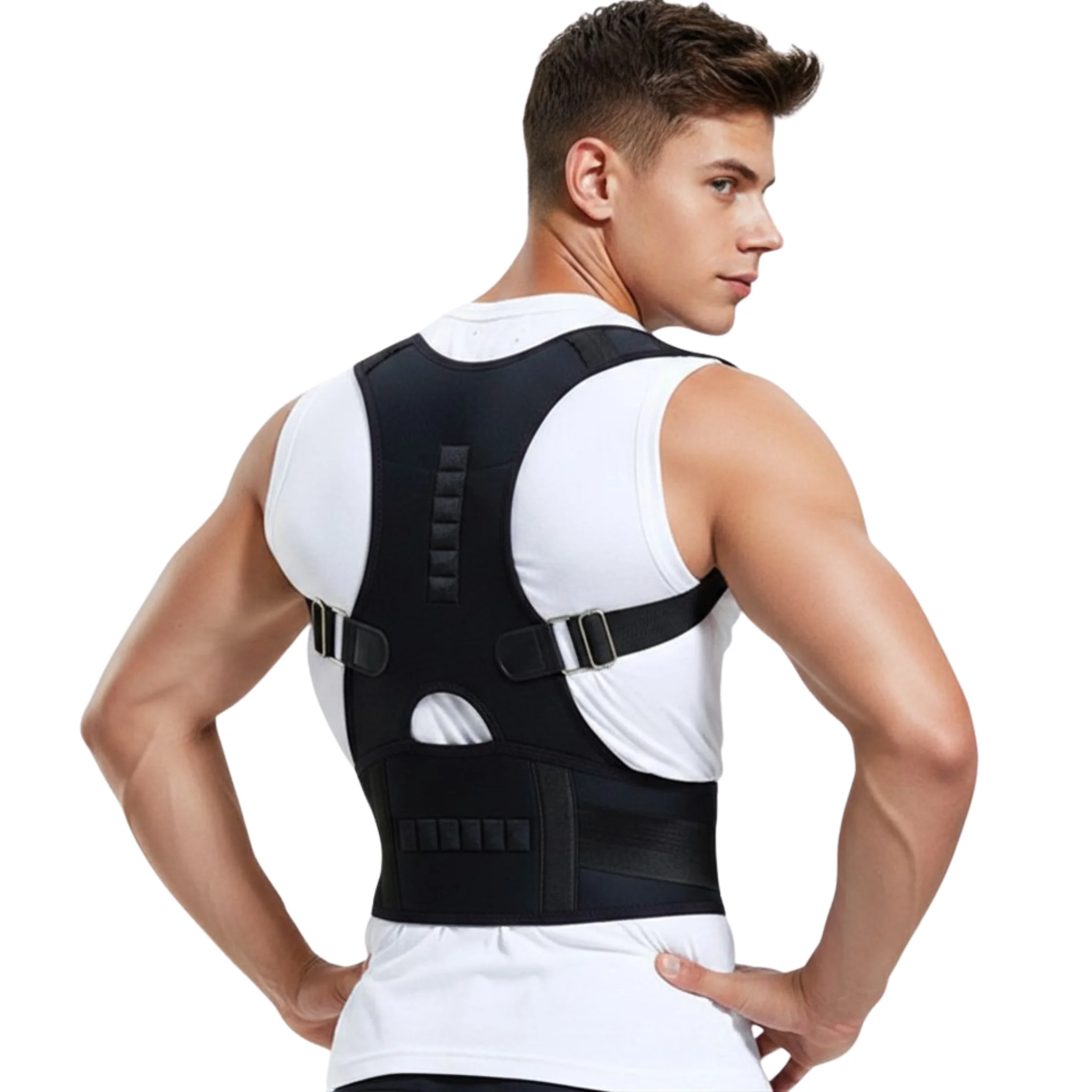
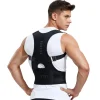
- 1 x BackReviver Magnetic Back Posture Brace designed to support the upper, mid, and lower back while helping improve posture
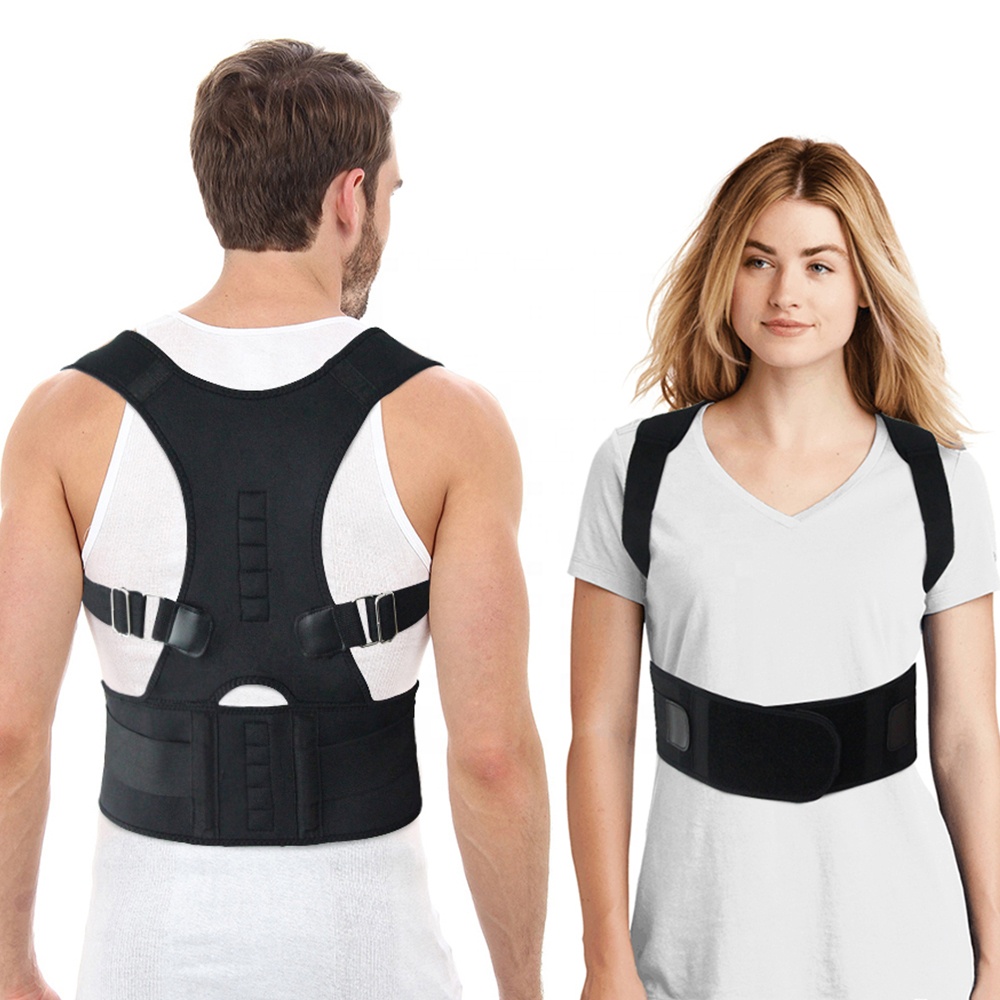
- Combined posture-and-back brace for men and women
- Sizes available: Medium = 90cm (for height up to 160cm), Large = 100cm (for height up to 170cm), XL = 110cm (for height up to 185cm), XXL = 120cm (for height 195cm and above)
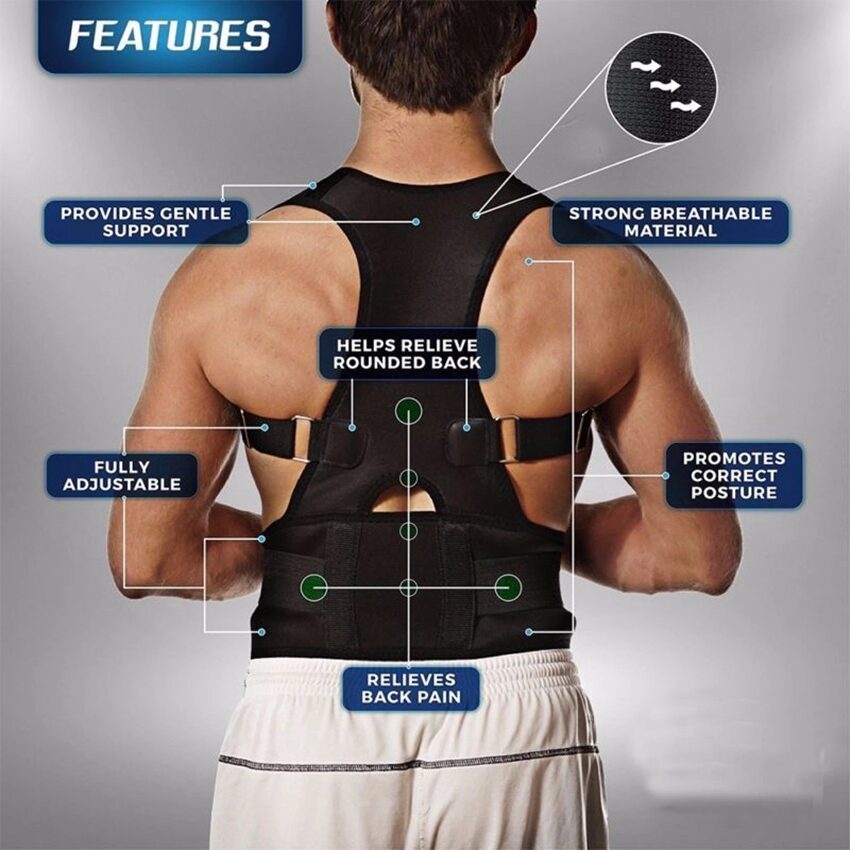
- Helps encourage better posture by supporting the shoulders, upper back, mid back, and lower back in a more upright and better-supported position
- May help with poor posture, slouching, rounded shoulders, upper back tension, lower back strain, general back discomfort, and recovery support following minor strains and sprains
- Provides moderate adjustable compression around the lower back to help the lumbar area feel more secure and supported during daily activity, work, travel, and exercise
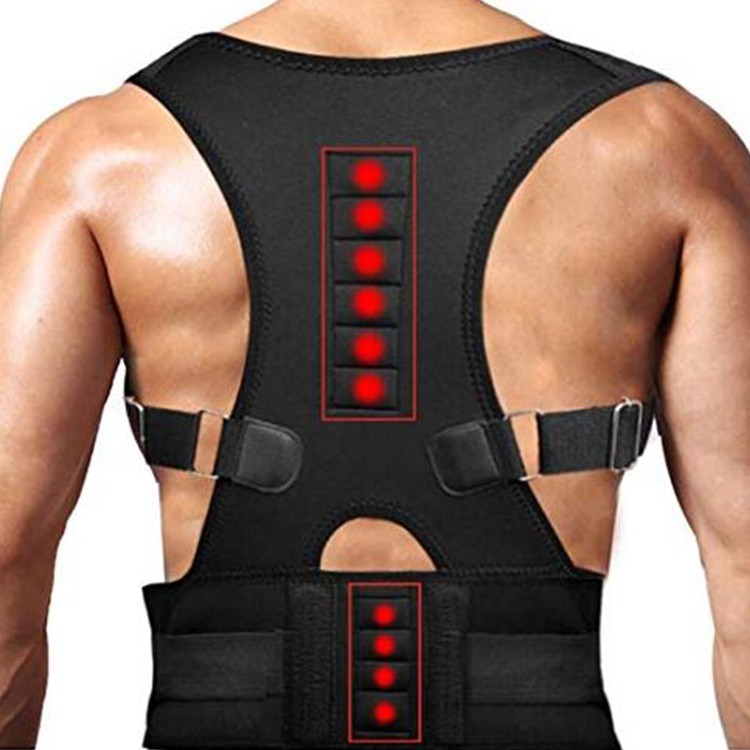
- Built-in lower back panel with metal stays helps give the lumbar area added structure and support
- Magnets are positioned in the lower back panel for those looking for a magnetic back posture brace
- Fully adjustable design with front Velcro pull straps and underarm buckle straps allows you to customise the fit, support, and compression more easily
- Made from breathable, lightweight, moisture-wicking neoprene for everyday comfort
- Can be worn under clothing and is suitable for sitting, walking, working, driving, gym use, and general day-to-day wear
- Includes a full 30 day money back guarantee
Important: This brace contains magnets and must not be worn by anyone with a pacemaker, defibrillator, or other implanted medical device that may be affected by magnets. Do not wear during pregnancy. If you have a diagnosed spinal condition, severe back pain, recent surgery, or are unsure whether this brace is suitable for you, seek professional medical advice before use.
Magnetic Back Posture Brace by BackReviver
Back discomfort and poor posture rarely have one obvious cause. They build up gradually through small, repeated demands on the body — long hours at a desk, days spent on your feet, repeated bending and lifting, or simply holding the same position for too long. At first, it’s a dull ache in the lower back after a long day, or tension across the shoulders, or the sense that you keep catching yourself slumping. As muscles tire, posture starts to slip. And as posture slips, the back has to work harder to keep you upright. Before long, what began as a mild ache becomes something you notice regularly.
Unless you’ve had a specific injury — a fall, an accident, a sudden awkward lift — there’s usually no single moment you can point to. The neck sits on the upper back, the upper back links to the ribs and shoulders, and the mid back passes load down through the trunk. At the base, your lower back handles a huge amount of bending, twisting, and weight transfer between your ribcage and pelvis. When one section falls out of alignment, the others have to overcompensate. If your head drifts forward, your neck and upper back strain to hold it. If your shoulders round, your upper back curves further. If your upper body collapses forward, your lower back tightens as it tries to keep you upright. That’s why tension often appears in several places at once. You’ll probably recognise the pattern: sitting upright feels fine at first, but within twenty minutes you’re slumping again. Your lower back stiffens when you first get up from a chair. Your upper back feels heavy by mid-afternoon. These regular signals point to a clear conclusion — your back is fatigued, and it isn’t getting the support it needs.
A Different Approach to Support
A standard posture corrector pulls the shoulders back. That works if your only issue is upper body slouching, but it does nothing for the lower back. A basic lumbar wrap works the opposite way — it supports the lower back while leaving the shoulders to fend for themselves. Most people dealing with everyday back fatigue don’t fit neatly into either category. They have rounded shoulders and upper back tiredness, but also feel strain in the lower back after prolonged sitting or standing. They need support that works across the whole trunk.
The Magnetic Back Posture Brace by BackReviver is built to address both ends of that problem. The upper section discourages the shoulders from rolling forward and helps you notice when you’re starting to slump. It won’t force your body into an unnatural position — it’s about awareness and gentle resistance, a nudge to straighten up before strain builds. When your upper body stays in a better position, your lower back can hold its natural curve more easily. The lower section adds adjustable compression and solid structure across the lower back, with front straps that let you control how firm the support feels — tighter for demanding moments, looser for quieter ones. Together, the two sections work as one unit for your whole back.
How the Design Actually Works
You can feel why this brace is more substantial the moment you put it on.
The upper section wraps around your shoulders and torso, stopping them from rolling forward and your upper back from bending into a slump. If you start to slouch, you’ll feel it — so you can correct yourself early, before your back gets tired. To keep it securely in place, the design includes underarm buckled straps, like backpack straps. Without them, the upper part would slip or bunch as you move, weakening support and getting uncomfortable fast.
The lower section has a different job. Your lower back bends, twists, and carries weight between your upper body and pelvis. When it’s overworked, it feels weak and stiff. So this part of the brace uses a structured panel with built-in metal stays, sewn in to hold its shape so it won’t bunch, fold, or roll up as you move. It stays against your lower back, creating genuine support — something a soft wrap can’t offer.
Magnets are integrated into that same lower panel, positioned where the brace provides its most structured coverage. They are not a medical treatment, and no claim is made that they can cure or treat any condition. They are simply there for those who prefer a magnetic design, placed exactly where the brace does its most important work — supporting the lumbar spine. If you aren’t interested in magnets, the brace functions fully on its own as a posture and lower back support.
Across the front, hook-and-loop fastening straps wrap around your waist and fasten securely. You can adjust compression to suit whatever you’re doing: firmer when walking, standing, lifting, or putting more demand on your trunk; looser when sitting at a desk or working at home. The brace is adjustable, secure, and comfortable enough to keep on through the day.
What Makes This Better Than a Basic Posture Corrector
Many people start with a simple shoulder-only posture corrector, but those have clear limitations. A shoulder-only device does exactly one thing — pulls your shoulders back — and nothing else. It won’t touch lower back strain, one of the most common complaints about backs. You could sit with your shoulders held back for eight hours and still finish the day with an aching lower back. A lumbar wrap, by contrast, supports the lower back but offers nothing for the rounded shoulders and heavy upper back that often go with it.
This brace does not separate the two problems. The upper and lower sections work as a unit, supporting your posture and reinforcing your lower back at the same time. It’s also more versatile: a shoulder-only device tends to feel natural at a desk but awkward during exercise or manual work, while this brace is built to be worn across a wider range of situations — work, being on your feet, driving, travelling, training, or running errands — without drawing attention to itself. A basic posture corrector only changes your position; this brace actually supports you. That difference becomes clear when your back is tired and strained.
What It Feels Like to Wear
When the fit is right, the brace feels reassuring rather than restrictive. Across the shoulders and upper back, you’ll feel gentle resistance and a sharper awareness of your posture. It isn’t straining to hold you in place or pushing you into an uncomfortable shape — it simply makes slumping more noticeable, so you correct it earlier than you otherwise would.
Lower down, the sensation is different. After adjusting the compression straps, you’ll feel firm contact around the lower back — most people describe it as a feeling of being held and contained, rather than under pressure. The lower back feels more settled and secure.
The brace moves with you through the day. It won’t dig in, restrict your breathing, or get in the way of normal movement. If it feels uncomfortable, the fit usually needs adjustment rather than the brace being wrong for you.
The difference is most noticeable in the situations that normally cause trouble. If your back tires during office work, the brace may help you sit longer before slumping. If standing or walking drains you, the lumbar compression can help you feel more stable on your feet. If driving wears you out, the combination of posture support and lower back reinforcement can make a noticeable difference. For people recovering from a minor strain or sprain, the brace can also make the back feel less vulnerable — movement feels more controlled and less worrying when you have firm, reliable support in place.
Who This Brace Is For
This brace is designed for people who want support across the whole back, rather than a narrow solution for one area. It’s suitable for men and women, and it’s built for everyday wear across a broad range of activities.
You’ll probably get the most from it if several of the following apply to you:
- Your shoulders tend to round forward when you sit or stand
- Your upper back feels heavy and tired as the day goes on
- Your lower back feels strained after prolonged sitting, standing, walking, or driving
- You want a brace that supports your posture and your lower back at the same time
- You’d rather adjust your own level of compression than have it pre-set
- You need something that fits discreetly under your clothes
- You’ve tried a simple posture corrector and found it too limited
- You want moderate, practical support for work, travel, exercise, or daily wear
It can also help during recovery from a minor strain or sprain. After a flare-up, many people feel cautious about moving because the back feels vulnerable and unsupported. Having firm, reliable support in place can make movement feel more controlled and less worrying.
The bottom line is straightforward. If you’re dealing with rounded shoulders, upper back tension, lower back strain, or general back fatigue — and you want more complete support than a simple shoulder strap or lumbar wrap can offer — this brace is designed for you.
Common Back and Posture Concerns
Because back problems rarely have one single cause, it helps to look at this brace in relation to the concerns people most often ask about. The following sections cover those concerns one by one, with a clear explanation of how the brace may help, how to use it well, and what it realistically can and cannot do.
Making the Brace Part of Your Day
The most common mistake with a back brace is wearing it from morning to night, every day, without giving your back a break. That blunts its usefulness and creates quiet dependence. The brace is not a permanent fixture; it is a supportive tool. The skill is in learning when your back genuinely needs it, and when it is better off working without it. There is no fixed schedule that works for everyone — the right rhythm emerges from paying attention to how your back behaves.
Getting to know the signs
Before deciding when to wear the brace, spend a few days noticing how your back tells you it’s tiring. Everyone has a different early sign. For some, it’s a dull ache across the lower back after twenty minutes of standing. For others, it’s the feeling of shoulders creeping forward during screen work. You might catch yourself shifting in your chair, leaning onto the desk, or propping your head in your hands. These small habits are not random — they’re your body’s way of saying the postural muscles are running low. The sooner you recognise your own sign, the sooner you can put the brace on before strain builds, not after.
Let your back wake up first
After a night lying down, the spine is unloaded, and the muscles haven’t had to hold anything upright. Unless you’re managing a specific diagnosis like spondylolysis or severe arthritic stiffness, give your back a little time to get used to being upright again before reaching for the brace. Move freely — stretch, walk around the kitchen, bend and reach as you go about your morning. This gentle activity helps joints get used to weight bearing again and reminds muscles what they’re meant to do. If your back is noticeably stiff or painful on rising, that’s a clear sign to put the brace on earlier. Let it carry you through that difficult period, and take it off when movement feels more natural.
Desk work: catching the drift before it settles
A desk day is not one long stretch of the same demand. It’s a series of blocks — meetings, reports, emails, calls — and your posture wanders during each one. The brace is most useful at the point in each block when you would normally start to crumple: the second half of a meeting, the hour after lunch, or the last stretch of the afternoon. Rather than wearing it from nine to five, start without it while your posture is fresh. When you notice the familiar slump — heavy upper back, forward drag on the shoulders — put it on. Keep it on for the sustained stretch of sitting that follows. Take it off when you get up to walk to another room, refill your cup, or break for a few minutes. The brace isn’t there to lock you into one rigid position; it’s there to catch the drift early, so you can correct yourself before the strain settles in.
Standing and walking
Standing work and longer walks place a steady, continuous load on the lower back. The muscles have to hold you upright for far longer than they do when you’re moving freely, and they tire accordingly. For these periods, set the lower straps a little firmer so the back panel feels properly wrapped. The compression gives deep muscles useful feedback, and the upper section stops the shoulders from sagging as the day wears on. You may not notice the difference at first, but after an hour on your feet or a sustained walk, the back tends to feel noticeably less drained.
Driving and travel
Driving is special because you can’t easily change position once you’re on the road. The seat holds you in one posture, and the body naturally settles into a slouched shape as the journey goes on. Don’t wait for the first ache. Put the brace on while you’re still at home or in the car park, with the lower straps firm enough to support the lower back curve against the seat. On a long drive, loosen it slightly after a couple of hours to relieve sustained pressure, then tighten it again when you get out and need more support. The same applies on flights and train journeys.
Lifting, physical work, and exercise
When the day involves bending, carrying, lifting, or training, the brace takes on a more active role. For heavier tasks, tighten the lower straps so the whole lower back region feels contained. The stays hold the panel in place through movement, giving a consistent line of support whether you’re lifting boxes, gardening, or working through a gym session. For freer movement — stretching, walking, or lighter tasks — loosen the straps. The brace should never push against a movement. If it feels as though it’s fighting your body, it’s too tight.
Recovery and back strain
If you’re moving through a period of recovery from a strain or sprain, the approach changes slightly. In the early days, a firmer fit can feel reassuring, even during light daily activity. The external containment helps movement feel controlled and less worrying, exactly what a guarded, recovering back needs. As symptoms settle, gradually loosen the straps and reduce wear time. This lets the muscles slowly rebuild their own support. The brace is a bridge during this phase — it supports your return to normal activity without becoming a permanent habit.
Knowing when to leave it off
There’s a natural impulse to keep the brace on until the back feels completely better. But the muscles also need time to develop their own endurance. When you’re at home in the evening and moving freely, let the brace come off. Give your back the chance to manage ordinary activity unaided. If you’ve had a long day on your feet, keeping it on while you relax is perfectly reasonable. Just make it a deliberate choice, not a reflex.
A simple way to decide
If you’re ever unsure whether to put the brace on, ask yourself two things. First: Is something about to make my back work harder than usual — a long sit, a heavy lift, a stretch of standing? If yes, the brace will probably help. Second: Is my back already sending early signs of fatigue? If yes, support now will stop strain from building later. If your back feels comfortable and you’re moving freely, leaving the brace off is often the better option. Using the brace less, on purpose, keeps you from depending on it. That’s what makes it a tool rather than a crutch.
Designed for Comfort as Well as Support
A support brace has to be wearable to be useful. If it feels too bulky, awkward, or hot, most people simply stop using it. That’s why comfort isn’t a secondary feature here — it’s part of what makes the brace practical.
Constructed from breathable neoprene with enough thickness to offer firm support without bulk, the brace balances support and flexibility. The material doesn’t hold sweat against the skin during longer sessions, and it moves with the trunk as you bend, reach overhead, or twist side to side. The structured stays are sewn into the lower panel, holding the brace against your natural lumbar curve while preventing bunching or rolling. That combination of stretch and structure makes the brace feel less like equipment and more like an extension of the body.
The black colour keeps things simple and discreet. Because it can be worn under clothing, it’s suitable for work and day-to-day use where you want support without a bulky outer layer. The hook-and-loop fasteners are placed so you can adjust them quickly and easily, even while wearing the brace. That matters when you’re in the middle of a long sit or a physical task and need to dial the fit up or down without taking the whole thing off.
The shape also contributes to comfort. The lower panel is structured enough to support the lower back, while the adjustable fastening system lets you alter how closely it sits. That flexibility matters because comfort isn’t just about soft material — it’s also about getting the fit right. When the brace sits properly, you should almost forget you’re wearing it.
For people comparing braces, this is one of the important differences between a product that sounds helpful and one that is genuinely practical to wear. The materials, stitching, strap placement, and the way the stays hold their shape all feed into that daily experience.
Adjusting the Fit and How to Wear It
Getting the best from this brace is about two things: knowing how to put it on correctly, and understanding how to adjust it to suit the moment. Both are straightforward, and both affect how it feels.
To put it on, place the upper section comfortably around your shoulders and upper torso. The underarm buckled straps secure that section in place, rather like backpack straps — without them, the upper part would slip or bunch as you move, weakening support and causing discomfort. The lower support panel should sit across your lower back, with the front straps wrapping around your waist and fastening at the front.
Once it’s on, adjust the fit carefully. The hook-and-loop fastening straps around the lower back let you increase or reduce compression. The upper straps adjust how closely the brace sits around your shoulders and upper torso. There’s no single correct tightness — it depends on what you’re doing and how your back feels at that time.
This brace provides moderate support: a clear sense of reinforcement without being as rigid as a medical brace that restricts movement. For most people, that’s the most useful level for daily wear because it supports the back while still allowing ordinary movement.
The final feel depends on the size you choose and the way you adjust the straps. Because the straps give you so much control, the brace can be adapted for sitting, standing, walking, travel, exercise, or general wear. You’re not stuck with one fixed level of tension.
The brace is also straightforward to put on without help. A support product can be well designed on paper, but if it’s fiddly to manage, it quickly becomes impractical. The strap system is built so you can secure and adjust it yourself. And because it can be worn discreetly under normal clothes, many people find it easier to use regularly at work or out and about, making it a practical part of a support routine rather than something left aside because it’s inconvenient.
How to Choose Your Size
The BackReviver Magnetic Back Posture Brace is available in the following sizes:
- Medium = 90cm for height up to 160cm
- Large = 100cm for height up to 170cm
- XL = 110cm for height up to 185cm
- XXL = 120cm for height 195cm and above
If you’re between sizes, think about how close and supportive you want the brace to feel. The adjustment straps give flexibility, but the starting size still matters. A brace that fits well is more likely to feel comfortable, supportive, and easy to wear consistently. If you prefer a firmer hold, the larger of two sizes may feel too loose; if you prefer a gentler fit, the smaller may feel too tight around the waist. Use the height guide as a starting point and fine-tune with the straps.
What This Brace Can and Can’t Do
Let’s be clear about what a brace like this can and can’t do. It can’t cure an underlying medical condition, and it isn’t a substitute for professional advice if your symptoms are severe, persistent, or getting worse. What it can do is practical and straightforward: support your posture, reinforce your lower back, and reduce the effort your back has to put in during ordinary daily activity. It is a support tool, not a medical treatment.
Expect the benefits to show up in the situations that normally cause you the most trouble. A brace feels most useful when you wear it consistently in the parts of the day where your back usually struggles — sitting at a desk, standing on your feet, driving, walking, or exercising. It’s normal for it to feel more valuable in those moments and less necessary when you’re relaxed and well rested.
If you’re recovering from a specific injury or managing a diagnosed spinal condition, the brace should be seen as one part of a broader plan. It is not a replacement for physiotherapy, medication, or any treatment prescribed by a healthcare professional. Instead, think of it as a practical aid that helps you get through the day with less strain, while you do the other things that support long-term back health.
Important Safety Information
This brace is designed as a support aid. It may help support posture, provide moderate compression, and give the upper and lower back a more secure feel during everyday activity. It is not intended to diagnose, treat, or cure medical conditions.
- Do not wear this brace during pregnancy.
- Because the brace contains magnets in the lower back panel, it should not be worn by anyone with a pacemaker or similar implanted medical device.
- If you have a diagnosed spinal condition, severe back pain, persistent numbness, marked weakness, recent injury, or recent surgery, seek medical advice before using a back brace. The same applies if your symptoms are worsening or not settling.
- A brace should feel supportive, not painful. If wearing it causes discomfort, remove it and reassess the fit. If symptoms remain concerning, seek professional advice.
30 Day Money Back Guarantee
The BackReviver Magnetic Back Posture Brace includes a full 30 day money back guarantee. That gives you extra reassurance when deciding whether this style of support is right for you. You have time to wear it, adjust it, and decide whether it helps you through the parts of the day that normally cause you trouble. If it does not do what you hoped, you can return it within 30 days.
Why Choose the BackReviver Magnetic Back Posture Brace
Choosing a support brace isn’t only about finding something that sounds good on paper. It’s about choosing a design that makes sense for how back discomfort and poor posture are actually experienced. Many people don’t need support in only one place — they need help across the upper back, shoulders, and lower back together. They need a brace that feels supportive enough to wear when the day gets demanding, but practical enough to use regularly.
That’s where the BackReviver Magnetic Back Posture Brace stands out. It combines upper body posture support with a structured lower back panel, built-in metal stays, front wrap compression, and an adjustable fastening system. It’s designed to support the back more completely than many basic posture correctors or simple lumbar wraps.
It’s also built for ordinary wear. The neoprene construction is breathable and comfortable enough for regular use, and it can be worn discreetly under normal clothes — suitable for work, travel, walking, exercise, and general daily support. The underarm buckled straps secure the upper section properly, while the front fastening lower straps let you adjust lower back support to suit the moment.
For many people, that combination is what makes the difference. It’s not just a posture reminder, and it’s not just a lower back belt. It’s a more complete support brace for people who want both functions in one design.
A Practical Choice for Everyday Back and Posture Support
If your back feels tired too easily, if poor posture is showing up in how you sit or stand, or if you want a brace that gives broader support than basic designs usually offer, the BackReviver Magnetic Back Posture Brace is well worth considering.
It’s designed to help you feel more upright through the upper body, more supported through the lower back, and more secure during the parts of the day that usually bring on strain, stiffness, or fatigue. The combined design, adjustable fit, built-in lumbar stays, front wrap compression, and ease of wearing it day after day all contribute.
This is the sort of support that can make a genuine difference to how your back feels by the end of the day — not by making unrealistic promises, but by offering the structure, coverage, and support many people are looking for when basic posture correctors or simple back belts haven’t been enough.
If you want a magnetic back posture brace that supports the upper and lower back together, feels adjustable and wearable, and is designed for everyday life, this BackReviver brace is a strong and practical option.
Fast & Secure Checkout Through Paypal
Pay with Paypal the secure payment gateway that accepts all credit and debit cards. Paypal is free and secure and no credit or bank information is ever stored or shared with us.
Fast Dispatch
Enjoy your items soon with quick dispatch via Royal Mail. Expect to have your items between 1-3 working days for domestic orders. 7-10 Working days for international orders.
Return Policy – 30 Day Money Back Guarantee
In the unlikely event, you are unhappy with your purchase you can return it within 30 days for a refund. Please contact us via the form on the contact us page to start your return.
To return an item please send it to: Nuova Health UK, 81 Highfield Lane, Waverley, Rotherham, S60 8AL. Please include a note with your order id so we know who to refund. Please retain your postage receipt as proof of postage. All that we ask is that the item is in the original packaging and unused.
Reviews
There are no reviews yet.