
Lower Back Support Brace
£16.99inc VAT
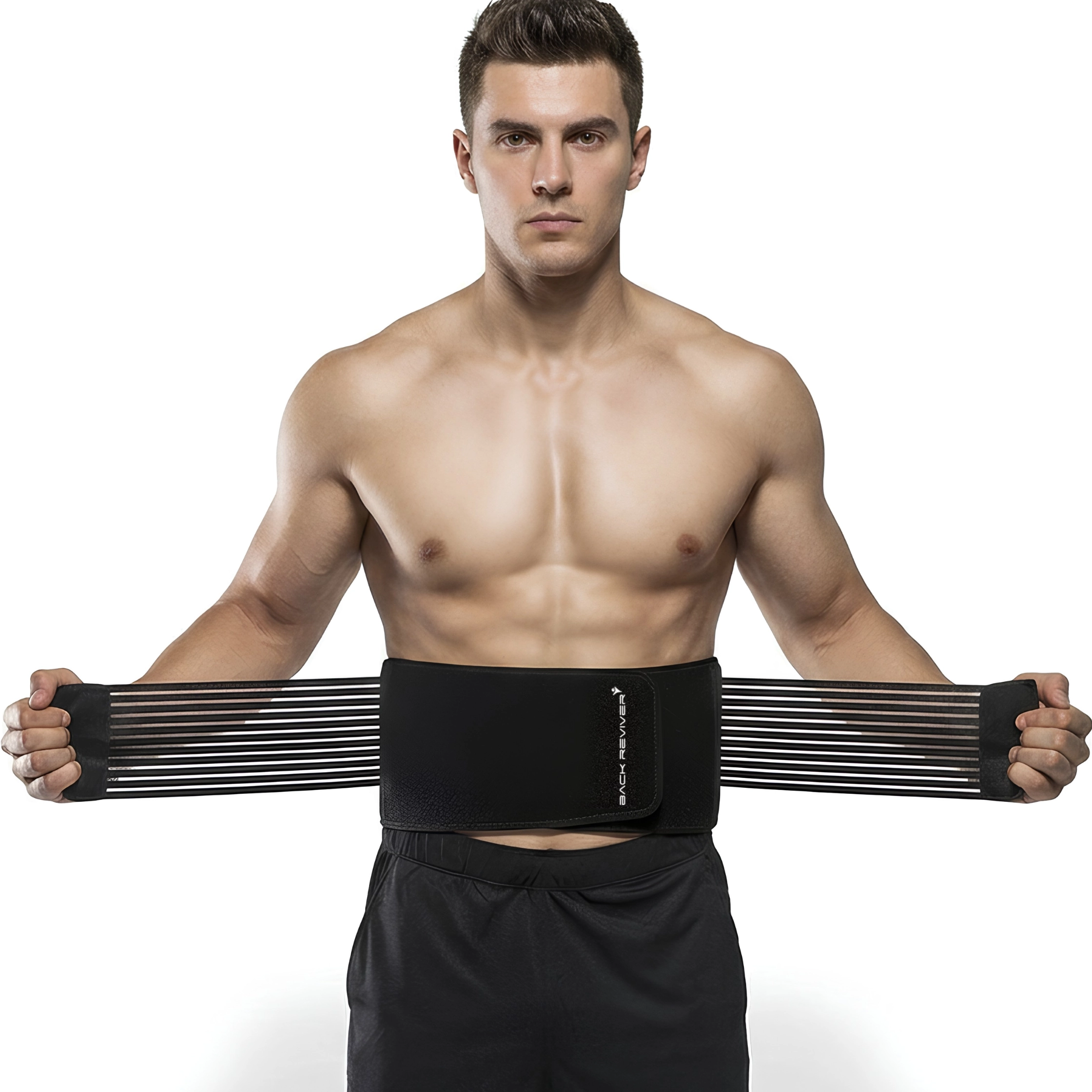
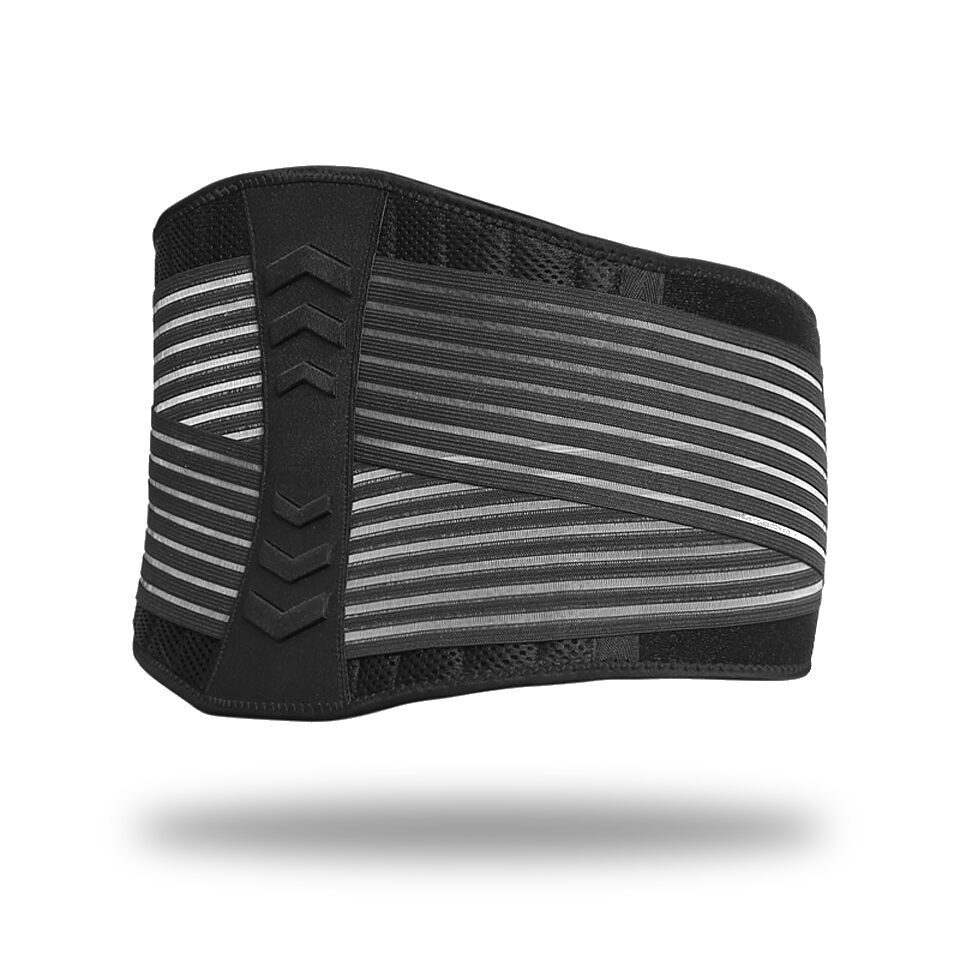
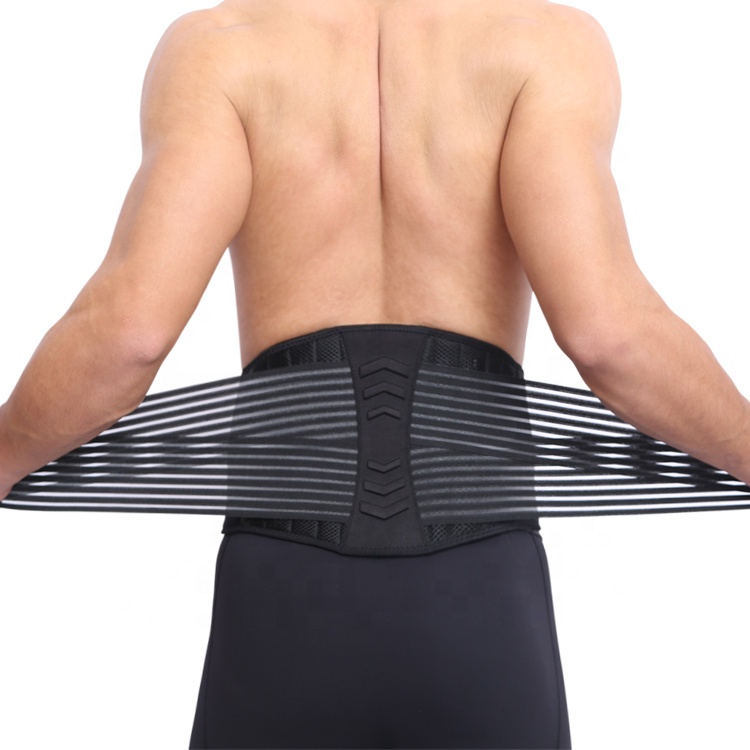
- Lower back brace with two vertical support rods that hold your spine in a neutral position
- Limits forward bending, backward arching, and twisting movements that overload painful tissues
- May help with herniated discs, sacroiliac joint dysfunction, lumbar strains, sciatica, and other lower back pain
- Two compression straps—one on each side—pull forward and fasten at the front for adjustable support
- Made from breathable, moisture-wicking fabric that sits flat under clothing
- Available in three sizes: Medium (25.2–28.8 inches), Large (28.8–32.4 inches), Extra Large (32.4–36 inches)
- Not a rigid brace—you can still move, but it keeps you within a safer range
- Seek assessment before use if you have severe pain that doesn’t ease, numbness or weakness in both legs, or loss of bladder or bowel control
- 30-day money-back guarantee if it doesn’t feel right or doesn’t help
What’s happening in your lower back
Your lower back—the lumbar region—is made up of five vertebrae stacked on top of each other, separated by discs that act as shock absorbers. Between each pair of vertebrae sit two small facet joints, one on each side, which guide and control how your spine bends and twists. Muscles and ligaments wrap around and between the vertebrae, holding everything stable and letting you move in a controlled way.
When you bend forward, lift something heavy, twist to reach behind you, or stand for a long time, forces pass through these structures. The discs compress and bulge slightly outward. The facet joints slide and tilt. Muscles contract to control the movement and hold you upright. Ligaments stretch to their limit, then pull back to stop you going too far.
Most of the time, this works well. But when the forces are too large, too frequent, or too sustained—lifting something awkward, bending and twisting at the same time, standing in one position for hours—the tissues can become overloaded. Pain develops when these structures are strained, compressed, or irritated beyond what they can tolerate.
It may start as a dull ache after a long day on your feet, or as a sharp catch when you bend forward to pick something up. It eases when you lie down and rest, then returns when you stand or move again. Over time, if the same movements or positions keep overloading the same structures, the pain can become persistent—flaring with certain activities, settling with rest, but never quite disappearing.
The sections below describe common patterns of lower back pain. Click the one that matches your symptoms to understand what’s likely happening.
Common patterns of lower back pain
Each condition below has its own pattern of pain and movement. You may not have a formal diagnosis—that’s fine. Click any that match what you’re feeling.
When a brace helps and when it doesn’t
A lower back brace is most helpful when you need to stay active—work, caregiving, daily tasks—but certain movements or positions trigger pain. It’s a way to keep moving while reducing the load on painful structures.
If you’re able to rest completely for a few days, you may not need a brace—rest alone may be enough for an acute strain to settle. But if you can’t rest, or if rest alone hasn’t helped after a week, a brace can make it easier to function while your back heals.
A brace works best alongside other strategies: gentle movement, strengthening exercises, and adjustments to how you lift, bend, and sit. It’s not a replacement for physiotherapy, but it can make physio exercises more tolerable by reducing pain during the day.
For some types of lower back pain—particularly sacroiliac joint dysfunction—a different type of support may be more appropriate. A sacroiliac belt sits lower on your pelvis and provides targeted compression across the SI joints. If your pain is localised to one side of your lower back or buttock and gets worse with single-leg activities like stairs or getting in and out of a car, an SI belt may be a better fit than a lumbar brace.
If you’re unsure which type of support is right for you, speak to a physiotherapist or your GP. They can assess how your back moves and recommend the most appropriate option for your symptoms.
How a lower back brace helps
A lower back brace works by changing the forces that pass through your spine and the range of movement available to you. It does this in three main ways.
Holds your spine in a neutral position
When your spine’s in a neutral position, the load is distributed more evenly across the discs, facet joints, and surrounding muscles. The BackReviver has two vertical support rods built into the fabric, one on each side of your spine. These sit along the muscles that run either side of your spinal column. When you wear the brace, the rods hold your lower back in this neutral position, which reduces the strain on the discs and facet joints.
You can still move, bend, and twist—your spine isn’t locked rigid—but the brace limits how far you can go into the positions that usually trigger pain.
This is particularly helpful for disc-related pain, such as herniated disc or degenerative disc disease, where uneven loading on the discs is a key driver of symptoms.
Limits movements that can strain your back further
Bending forward increases the pressure on the front of the discs. Arching backward compresses the facet joints and can pinch the structures at the back of the spinal canal. Twisting loads the discs and facet joints unevenly.
The BackReviver’s support rods and adjustable straps limit how far you can move into these positions. You can still bend forward enough to tie your shoes or pick something up from waist height, but the brace stops you going all the way down to the floor where the load on your discs and ligaments is highest. You can still twist to look over your shoulder or reach to the side, but the brace reduces how far you can rotate.
That’s the job—keeping you within a range where the forces on your back are lower and the risk of aggravating the tissues is reduced.
This is particularly helpful for spondylolisthesis and facet joint pain, where backward bending and rotation are the main triggers.
Provides compression to support healing
When you wear a brace that fits snugly around your lower back and abdomen, it creates gentle compression across the area. This increases the pressure inside your abdomen slightly, which helps support your spine from the front. The compression also gives you a clearer sense of where your back is in space and how it’s moving, which can help you avoid positions or movements that usually trigger pain.
The BackReviver’s breathable fabric provides this compression without feeling restrictive or making it hard to breathe. The fabric is designed to sit flat under clothing without feeling bulky. Two compression straps—one on each side of the brace—pull forward from the back and fasten at the front, letting you control how much support you need. Tighten them to increase compression during activities that load your back, loosen them when you’re resting or doing lighter tasks.
This is particularly helpful for lumbar strains and muscle-related pain, where the compression reduces muscle guarding and fatigue.
Those three mechanisms work together to support your back while it heals.
What to expect and realistic timeframes
A brace can make day-to-day activities more manageable, but it won’t fix the underlying problem on its own. Your back will settle more quickly and more completely if you also work on strengthening the muscles that support your spine, improving flexibility in areas that have become stiff, and adjusting how you move and load your back during everyday tasks.
For some people, pain eases within a few days of wearing the brace—especially if the pain is acute and related to a recent strain or flare-up. Standing, walking, or doing light tasks feels more comfortable. You’re able to do a bit more without the sharp catch or dull ache that usually stops you.
For others, especially if the pain’s been present for weeks or months, the improvement is more gradual. Certain activities feel slightly easier. The pain doesn’t build as quickly as it used to. But it may take two to three weeks of consistent use before you notice a clear difference.
Full recovery—getting back to your usual activities without pain or limitation—takes longer. Depending on what’s causing your pain and how long it’s been present, it may take several weeks to several months. A brace supports your back while it heals, but healing itself depends on the tissues settling, inflammation reducing, and the muscles and ligaments regaining their strength and flexibility. That process can’t be rushed.
What improvement looks like
Improvement usually happens in stages. You may notice that certain activities feel easier first—standing for longer without pain building, or bending forward without a sharp catch. The pain may still be there, but it’s less intense or takes longer to start.
It’s normal for pain to fluctuate, especially in the first few weeks. You may have a good day followed by a flare-up if you do more than usual. That doesn’t mean the brace isn’t working—it means your back is still settling and you’re finding your limits.
If you’re only pain-free when wearing the brace, but pain returns immediately when you take it off, that’s a sign you’re relying on the brace too much. Gradually reduce wear-time and work on strengthening exercises so your muscles can take over the support role.
Reducing wear-time as you improve
As the pain eases and you feel more confident moving, you’ll naturally need the brace less—that’s a sign your back’s settling and your muscles are doing more of the work. Most people wear it more in the first one to two weeks, then start to reduce as their back settles.
A physiotherapist can assess how your back moves, identify which structures are most likely causing your symptoms, and recommend exercises and activity modifications that suit your situation. If you’re not seeing improvement after two to three weeks of consistent brace use, or if your pain’s worsening, it’s worth seeking assessment to check whether something else is needed.
When to seek assessment
A brace can be a helpful part of recovery for many types of lower back pain, but some symptoms need assessment.
Seek assessment within a few days—via your GP or a physiotherapist—if you have pain that’s getting worse despite rest and simple painkillers, numbness or tingling or weakness spreading down one leg, especially if it’s affecting your ability to walk or lift your foot, pain that’s been present for more than two to three weeks without improvement, or new or unexplained symptoms that don’t fit the patterns described above.
A physiotherapist can assess how your back moves, identify which structures are most likely causing your symptoms, and recommend exercises and activity modifications that suit your situation. Your GP can check for other causes of back pain, prescribe stronger painkillers if needed, or refer you for imaging or specialist assessment if appropriate.
A brace is one part of recovery, not the whole plan. If you’re not seeing improvement after two to three weeks of consistent brace use, or if your pain’s worsening, seek assessment to check whether something else is needed.
Ready to try the BackReviver?
If the patterns described above match your symptoms, and you’re looking for support that’ll let you stay active while your back settles, the BackReviver may be a good fit.
It holds your spine in a neutral position, limits the movements that overload painful tissues, and provides compression to support healing—all while sitting flat under clothing and letting you adjust the support as you need it.
Check the sizing guide below to find the right fit. The brace needs to sit snugly around your lower back and abdomen to provide effective support.
If you’re unsure whether this brace is suitable for your symptoms, or if your pain doesn’t match any of the patterns described, speak to a physiotherapist or your GP. They can assess your back and recommend the best approach for your situation. You can also contact the support team if you have questions about sizing, fit, or whether the BackReviver is right for you.
How to wear and care for your brace
Fit and adjustment
The BackReviver should sit snugly around your lower back and abdomen, with the bottom edge sitting just above your hips and the top edge sitting just below your ribs. The two vertical support rods should sit either side of your spine, along the muscles that run down your back, not directly on top of the vertebrae themselves.
To put the brace on, wrap it around your lower back with the support rods positioned either side of your spine. Two compression straps sit at the back of the brace, one on each side. Pull each strap forward around your sides and fasten them at the front. Start with both straps fairly loose, then gradually tighten them—pulling each strap forward until the brace feels snug and supportive without digging into your ribs or hips or making it hard to breathe. You should be able to slide two fingers between the brace and your body. If you can’t, it’s too tight.
The brace may feel slightly restrictive at first, especially if you’re not used to wearing one. This is normal. After a few minutes, you should adjust to the feeling and be able to move, sit, and stand without discomfort. If the brace is digging into your ribs, hips, or groin, or if it’s riding up or sliding down as you move, adjust the position and tighten or loosen the straps until it sits comfortably.
You can wear the brace over a thin layer of clothing—a T-shirt or vest—if you find it more comfortable, or directly against your skin. If you’re wearing it directly against your skin, make sure the area is clean and dry to reduce the risk of irritation.
Wear-time
How much you wear the brace depends on your symptoms and what you’re doing. You might wear it during work if your job involves lifting, bending, or prolonged standing. You might wear it during exercise or heavier tasks around the house such as lifting and carrying shopping or moving furniture. You might wear it only in the morning when your back feels stiffest, or only on days when you know you’ll be on your feet for longer than usual.
There’s no fixed rule for how long to wear it each day—listen to your body and adjust based on how you feel. If you’re doing an activity that usually triggers pain, wear the brace. If you’re resting or doing light tasks that don’t bother your back, you can take it off.
For acute strains, most people wear the brace more in the first one to two weeks, then gradually reduce as the pain settles over the following two to four weeks. For chronic conditions, you may find it helpful to wear the brace during flare-ups or during activities that you know will load your back, even after the initial pain has settled.
Don’t wear the brace 24 hours a day for weeks on end—your muscles need to work and move to stay strong. Use the brace as a support during activities that challenge your back, and take it off when you’re resting or doing tasks that don’t trigger symptoms.
Care and cleaning
The BackReviver is made from breathable, moisture-wicking fabric that helps keep you dry and comfortable during wear. The fabric is designed to sit flat under clothing without feeling bulky.
Hand-wash the brace in warm water with mild detergent, then rinse thoroughly and leave it to air-dry. Don’t put it in the washing machine or tumble dryer, as this can damage the support rods and Velcro fastenings. Don’t iron it or dry it on a radiator.
If the brace becomes sweaty or dirty during the day, wipe it down with a damp cloth and leave it to air-dry overnight. If you’re wearing it every day, wash it every few days to keep it fresh and reduce the risk of skin irritation.
Check the Velcro fastenings regularly. If they become clogged with fluff or lint, pick it out with your fingers or a pair of tweezers to keep them fastening securely.
Sizing guide
The BackReviver is available in three sizes based on waist measurement. Measure around your waist at the level where you’d wear the brace—just above your hips and below your ribs—and choose the size that matches your measurement.
- Medium: 25.2 inches to 28.8 inches (2.1 to 2.4 feet)
- Large: 28.8 inches to 32.4 inches (2.4 to 2.7 feet)
- Extra Large: 32.4 inches to 36 inches (2.7 to 3 feet)
If your measurement falls on the boundary between two sizes, choose the larger size for a more comfortable fit. The adjustable compression straps let you fine-tune the fit once the brace is on.
The brace is designed for both men and women.
Medical disclaimer
The information on this page is general guidance based on common patterns of lower back pain and how a lumbar support brace may help. It is not a substitute for individual medical advice, diagnosis, or treatment.
If you’re unsure whether a brace is suitable for your symptoms, if your pain is severe or getting worse, or if you have new or unexplained symptoms that don’t settle, speak to a GP or physiotherapist for personalised advice. They can assess your back, identify what’s causing your symptoms, and recommend the most appropriate treatment for your situation.
No guaranteed outcomes are promised. Individual results will vary depending on the cause of your pain, how long it’s been present, and how consistently you use the brace alongside other recovery strategies such as strengthening exercises and activity modification.
2 Reviews For This Product
Fast & Secure Checkout Through Paypal
Pay with Paypal the secure payment gateway that accepts all credit and debit cards. Paypal is free and secure and no credit or bank information is ever stored or shared with us.
Fast Dispatch
Enjoy your items soon with quick dispatch via Royal Mail. Expect to have your items between 1-3 working days for domestic orders. 7-10 Working days for international orders.
Return Policy – 30 Day Money Back Guarantee
In the unlikely event, you are unhappy with your purchase you can return it within 30 days for a refund. Please contact us via the form on the contact us page to start your return.
To return an item please send it to: Nuova Health UK, 81 Highfield Lane, Waverley, Rotherham, S60 8AL. Please include a note with your order id so we know who to refund. Please retain your postage receipt as proof of postage. All that we ask is that the item is in the original packaging and unused.
by Terence O.
Wearing this support belt has definitely helped me after getting diagnosed with a bulging disc. Worn it everyday now for past three weeks and it has eased my back pain considerably and stopped me slouching and making things worse for myself… Would highly recommend!!!
by Karen
So, I’ve been dealing with lower back pain for a while now. I’m a nurse, and long shifts on my feet were becoming unbearable. A colleague recommended this lower back support, and I thought, why not give it a try? Best decision ever.
The first time I wore it, I felt a noticeable difference. It’s like having a little extra strength in my lower back, just enough to keep me mobile and comfortable throughout my shift. The support is firm yet flexible, allowing me to move freely without feeling restricted.
One of the best things about it is how discreet it is. Under my uniform, it’s practically invisible, so I don’t feel self-conscious about wearing it. Also, it’s super easy to clean, which is great given my hectic schedule.
I only wish I’d found this sooner. It’s definitely made a positive impact on my daily life, and I’m so grateful for the little extra support it provides.