
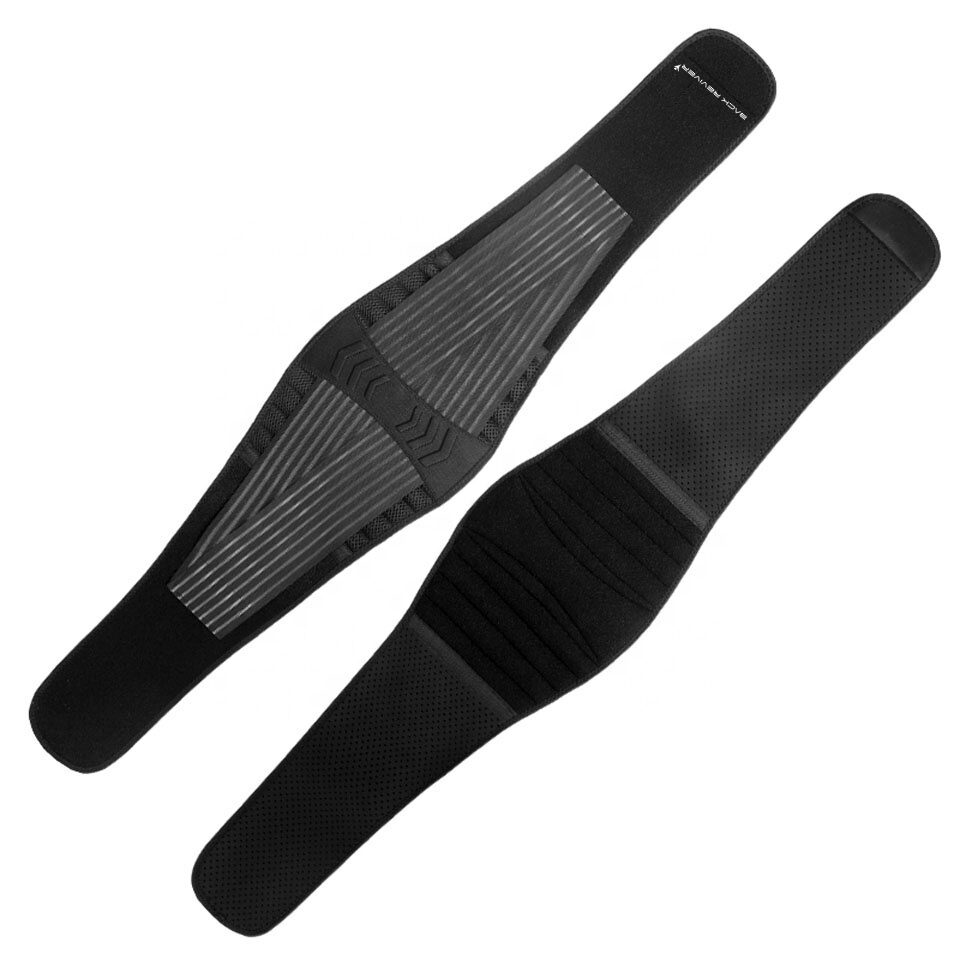
BackReviver Lower Back Brace Support Belt for Sciatica, Back Pain, Strain & Herniated Disc
£16.99inc VAT
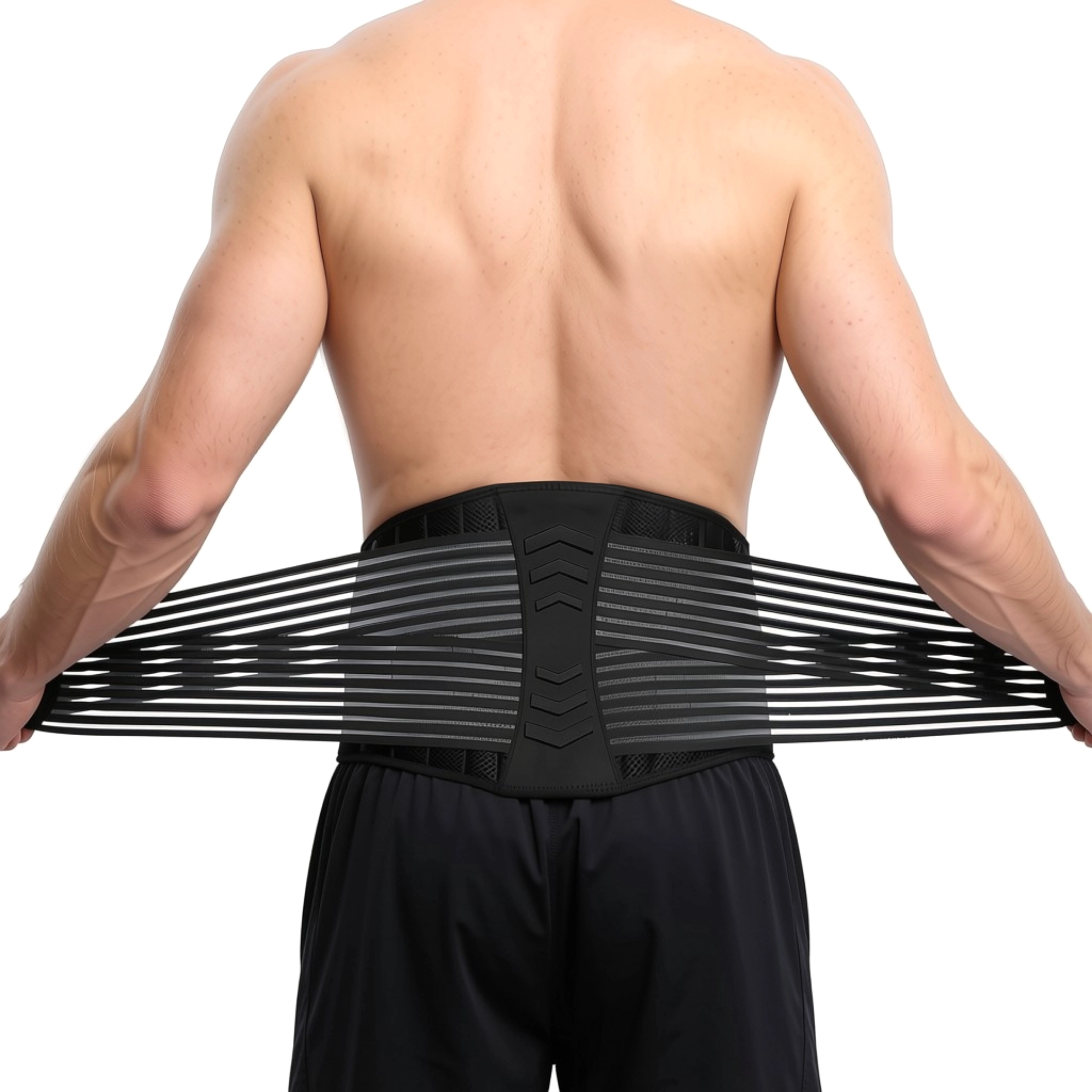
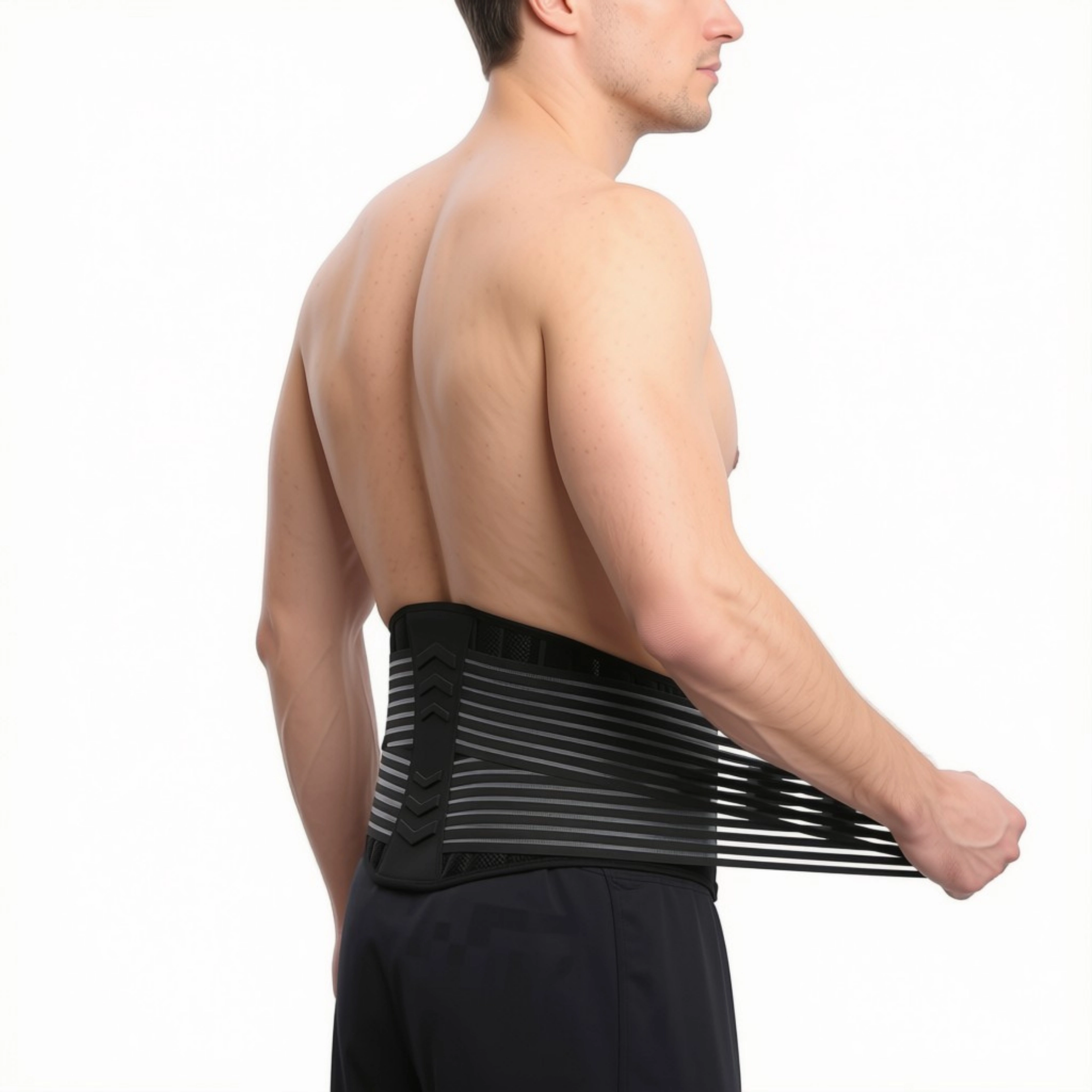
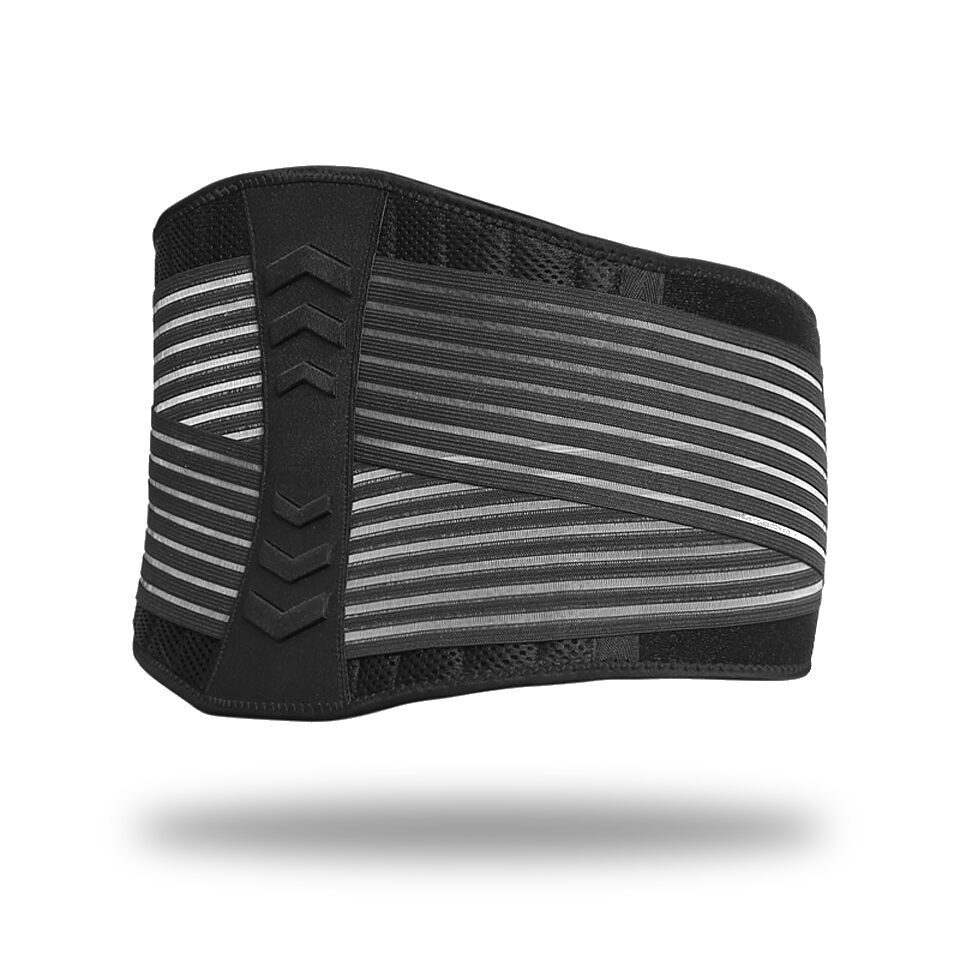
- A firm lower back brace that wraps around the lower back and lower abdomen to give steadier, more even support through the trunk.
- Made for adults with lower back pain that becomes worse with sitting, standing, bending, lifting, walking, or repeated daily activity.
- Suitable for lower back strain, movement-linked lower back pain, sciatica-type pain, and disc-related flare-ups where the back feels less steady and more easily irritated.
- Sciatica-type pain means pain, tingling, or altered feeling that can start in the lower back or buttock and travel into the leg.
- Disc-related pain usually refers to irritation of one of the cushions between the vertebrae, often making sitting, bending forwards, or lifting from a low position feel more provoking.
- Size guide: Medium 25.2–28.8 inches | Large 28.8–32.4 inches | Extra Large 32.4–36 inches.
- The wraparound design matters because support at the front of the trunk can help as well as support at the back, especially when bending, standing up, or lifting and carrying.
- The main belt creates the initial fit, while forward-pull side straps let you tighten or ease the support depending on how your back feels that day.
- That adjustable support is useful because lower back pain often changes through the day, with some people feeling stiffer after sitting and others becoming more sore later on.
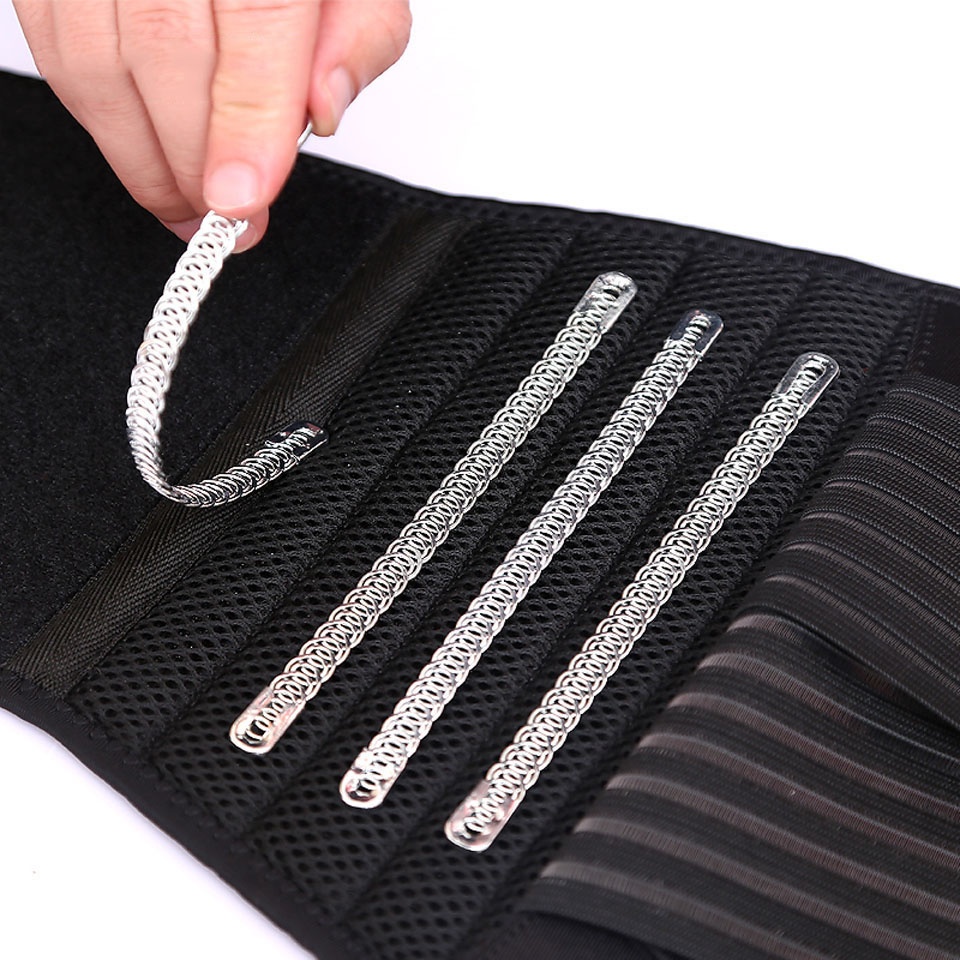
- Built-in aluminium stays give the back panel firmer structure, helping the brace stay supportive when you bend, straighten, reach, or carry.
- Contoured shaping helps spread pressure more evenly across the lower back instead of concentrating it in one narrow strip.
- A padded inner lining helps make firm support easier to wear when the lower back feels sore or sensitive.
- Ventilation holes and moisture-handling fabric help with comfort during longer periods of wear, especially when the back needs support for more than a few minutes.
- A good fit should feel snug and secure, not tight enough to restrict breathing, dig in, or bunch awkwardly when you sit or move.
- Best used during the tasks and times that usually bring your pain on, rather than worn tightly all day without a clear reason.
- Adults only and not for use during pregnancy, with a 30-day money-back guarantee to help you check the fit and level of support.
BackReviver Lower Back Brace Support Belt for Sciatica, Back Pain, Strain & Herniated Disc
Support for lower back pain, strain, sciatica-type pain, slipped or herniated disc symptoms, and more demanding lifting and carrying
If your lower back has reached the point where even ordinary movement makes you pause, you will know how quickly it can change the day. Standing up after sitting, bending to pick something up, walking further than usual, lifting and carrying, or staying on your feet too long can all leave the lower back feeling tight, sharp, tired, or less steady than it should.
That is often when people start moving more carefully. Not because every movement is severe, but because the back becomes sore, tight, or more likely to catch sooner than expected. Some people feel the pain across the middle of the lower back. Others notice it more on one side. Some feel especially stiff after rest, then a little easier once they have been moving for a few minutes. Often, the pain is not worst during the task itself. It shows up just after, when you straighten up, turn, or try to move normally again. For many people, that is the part that catches them out.
This sort of lower back pain changes with movement and posture. In plain terms, it changes depending on what the back has been doing. The lumbar spine, which is the part of the back between the ribs and the pelvis, has to support the trunk while also allowing bending, turning, shifting weight, and walking. It also has to manage force passing between the upper body and the legs during ordinary tasks such as lifting, rising from a chair, or carrying something from one place to another. When the tissues in that area become more sensitive, these everyday jobs can start to feel much harder than they should.
The lower back does not usually become painful for no reason. Pain that changes through the day often reflects how the area is coping with repeated movement, time spent in one position, or force through irritated joints, discs, muscles, ligaments, or nearby nerves. That is why support can make practical sense. When the trunk feels steadier, ordinary movement often feels less abrupt through the part of the back that is already sore.
Why this sort of back pain behaves the way it does
One of the most frustrating things about lower back pain is that it does not always behave consistently. You may feel stiff first thing, then easier once you are moving. Or you may start the day fairly well and become steadily more uncomfortable after sitting, standing, walking, bending, or lifting several times. That variation often makes more sense once you look at which structures are involved and what they are being asked to do.
The lower back is made up of bones, discs, joints, muscles, ligaments, and nerves working together. The discs sit between the vertebrae and act as cushions, helping the spine absorb force and move smoothly. The facet joints sit at the back of the spine and guide movement between one vertebra and the next. The muscles help steady and move the trunk. The ligaments are the strong bands that support the spinal joints. Nerves leave the lower spine and travel into the buttock and leg, which is why pain in the back can sometimes be felt further down.
When these structures are coping well, movement feels unremarkable. You bend, stand up, twist, walk, or lift without thinking much about it. When one or more parts become irritated, that changes. The lower back may become stiff after stillness, sore with repetition, sharper during certain movements, or more tired and achy as the day goes on. The muscles around the area may also tighten protectively, which can make the back feel guarded or difficult to trust.
The way the pain behaves often gives useful clues. If sitting for too long leaves the back stiff and sore when you first stand, that usually points to structures that dislike being held still and then loaded again suddenly. If prolonged standing or walking builds a deeper ache, the joints at the back of the spine and the muscles supporting the trunk may be taking more strain than they are handling comfortably. If forward bending or lifting from low positions feels especially sharp, the discs, muscles, or ligaments may be more involved. If pain spreads into the buttock or leg, a nearby nerve may also be irritated.
That is why lower back pain can feel different from one person to the next, and even from one day to another in the same person. The important question is not simply where it hurts. It is what usually brings it on, what sort of movement makes it worse, and whether it feels most local to the lower back or starts to travel further.
Why sitting can make the back feel worse
Sitting itself is not automatically a problem, but staying seated for too long can be. The lower back is held in one position, the discs and joints stay under steady pressure, and the muscles around the trunk do less changing of position than they do during walking or standing. If those structures are already sensitive, they can become stiff or sore while they are being held still. Then, when you stand up, they have to move and take body weight again. That is why the first few movements after sitting are often the awkward ones.
A back like this often dislikes the transition more than the sitting itself. The difficult part is not always being seated. It is what happens when the lower back has to start moving again.
Why standing and walking can build discomfort
Standing for long periods and walking for longer than usual can produce a different pattern. The joints at the back of the spine may stay under pressure for too long, especially if upright posture is already aggravating them. The muscles around the lower back may also start working harder to support the trunk over time. Instead of one sharp moment, the result may be a gradual ache, a feeling of compression, or a back that becomes less comfortable the longer you stay on your feet.
That is one reason standing and walking do not always feel the same. Walking may ease stiffness for some people at first because the back is moving. But if the same structures keep taking strain for long enough, the ache can still build later.
Why bending, lifting, and carrying can trigger pain
Bending forwards, lifting from a lower position, and carrying weight all increase demand on the lower back. The discs, joints, muscles, and ligaments have to manage movement and force at the same time. If the lower back is already sensitive, these tasks can feel sharper than they should. For some people, the bend itself is the problem. For others, the pain bites more when they try to straighten afterwards. That often happens because the tissues stretched or loaded during the bend now have to control the movement back up as well.
Lifting and carrying matter for another reason too. The trunk works as a unit. The lower back is not handling the effort alone. Support around the lower abdomen can help because the front of the trunk also contributes to how steady and controlled the movement feels.
Why pain can build later in the day
Many people expect pain to be linked to one dramatic movement. In reality, it often builds from repeated ordinary tasks. A series of bends, lifts, longer walks, or periods on your feet may gradually increase irritation in the lower back until the area feels tired, sore, or less reliable. That is why the pain may seem to come out of nowhere when it has actually been building under the surface for hours.
This is also why support can help even when there has been no obvious injury. If the lower back is becoming more uncomfortable because it is no longer tolerating ordinary demands very well, making the trunk feel steadier during those demands can reduce how provoking they feel.
Why pain sometimes travels into the buttock or leg
Not all lower back pain stays local. If a disc or nearby structure irritates a nerve root, the pain may travel into the buttock or down the leg. That is often called sciatica-type pain. The source is still in the lower back, but the symptoms can be felt more strongly further down. That is one reason some people describe the leg as the bigger problem even though the lower back is where it starts.
Once you understand that lower back pain can be local, posture-linked, strain-related, disc-related, or nerve-related, the role of the brace becomes easier to understand. It is there to support the lower back during the movements and positions the area is currently coping with badly.
How this brace responds to that problem
The BackReviver Lower Back Brace Support Belt is made for adults who need firmer, adjustable support during lower back flare-ups and during the parts of the day that usually make the back worse. It is not just a simple band around the waist. It is a brace designed to give a closer, more stable hold around both the lower back and the lower abdomen, because support through the whole lower trunk often matters more than pressure at the back alone.
That distinction is important. When lower back pain is linked to bending, sitting, standing, lifting, carrying, or repeated movement, the issue is usually not one small spot acting in isolation. The way the trunk handles movement as a whole becomes part of the problem. That is why wraparound support can feel more useful than a narrow back panel on its own.
This brace is also designed for symptom patterns that change through the day. A back that feels manageable first thing may feel very different after sitting too long, standing for a long period, travelling, or doing more lifting and carrying than usual. That is why a fixed level of support is not always enough. Adjustability matters because the lower back is not asking for exactly the same thing at every hour.
Adjustable wraparound support
The main belt fastens around the lower back and the front of the abdomen to create the initial fit. Two wide elastic side straps then pull forwards and fasten at the front, so you can tighten or ease the support depending on how your back feels and what the day involves. That forward pull matters because it creates a firmer hold around the lower trunk rather than simply pressing harder into one line across the back.
For many people, this is where the brace starts to feel different from a simpler support. A closer wraparound fit can make bending, standing up, turning, walking, or carrying feel more controlled because the lower trunk feels better held together while the sore part of the back is working. The point is not to clamp the area rigidly. It is to reduce how abrupt or poorly supported those movements feel.
Firmer structure where movement often provokes pain
Soft support is not always enough when the lower back feels quick to tighten, catch, or lose confidence during movement. This brace includes built-in aluminium stays to give the back panel firmer structure. In practical terms, that helps the brace remain supportive against the lower spine instead of softening too easily when you bend, straighten, reach, or lift.
The lower back still needs to move. That matters. The purpose of the stays is not to hold you stiff. It is to make the support feel more stable during the parts of movement that often provoke pain. If standing up after sitting, lifting from a lower surface, or changing direction tends to trigger discomfort, a firmer back panel can make those transitions feel less sudden and less exposed through the sore area.
A close, contoured fit that feels steady, not harsh
A brace has to feel secure if it is going to be useful. This design has a contoured shape that helps it sit closely around the lower back and lower abdomen, spreading pressure more evenly instead of concentrating it in one narrow strip. That usually feels steadier and less irritating when the lower back is already sore or tense.
The padded inner lining helps here as well. When the lower back feels sensitive, contact pressure matters. A firm brace can still feel comfortable enough to wear if it sits evenly and does not dig in. That is one of the things that makes this sort of design more practical for real day-to-day use rather than only for one short effort.
Wearable enough to use when you actually need it
If a brace feels too hot, bulky, or awkward after a short time, people stop using it exactly when support might have helped. This design includes ventilation holes through the back panel to improve airflow, while the fabric is made to handle moisture more effectively during wear. That does not change what is happening in the spine itself, but it does make firm support easier to keep on during the times your lower back is most likely to become sore or tired.
This is one of the reasons thoughtful brace design matters. A support that feels good for a minute while standing still but becomes unpleasant during normal use is not much use in practice. The point is not only firmness. It is firmness you can still live with during ordinary activity.
When this brace is most likely to help, and when it may not
This brace is usually most helpful when your lower back pain changes with what you are doing. That might mean pain after bending, lifting, standing, walking, or sitting too long, rather than pain that stays identical whatever you do. It can also mean stiffness after rest, a sharp catch when you straighten up, or an ache that builds gradually after repeated movement. Those signs usually suggest a lower back that is reacting to movement, position, or effort in a way it is not currently tolerating well.
It is especially worth considering when the lower back feels less steady than usual during ordinary tasks. Some people notice that the first few movements after sitting are difficult. Others cope reasonably well at first and then feel the pain build later in the day. Others find that lifting and carrying, longer standing, or repeated bending are the main things that bring the problem out. These are the kinds of situations in which external support can make a practical difference.
Some adults wear this sort of brace during longer periods of standing, longer journeys, repeated bending, lifting and carrying heavier items, or more demanding days when the lower back is likely to tighten up. Others use it when returning to normal activity after a strain, once the sharpest pain has eased but the back still feels less dependable than usual. It can also be useful when pain travels from the lower back into the buttock or leg and the lower back still feels like the starting point of the problem.
There are also situations where a brace should not be treated as the whole answer. If symptoms are severe, unusual, steadily worsening, or no longer clearly linked to movement and posture, relying on support alone is not enough. A brace can help ordinary mechanical flare-ups feel more manageable, but it is not there to explain away symptoms that need proper assessment.
Common misunderstandings about lower back braces
Back braces are sometimes talked about in extremes. Either they are treated as though they solve everything, or as though they should never be used. Neither view is especially helpful.
A brace does not need to be a cure to be useful. In many adults, the real value is that it makes symptom-provoking movement feel steadier and less aggravating while sensitive tissues settle. That can be enough to change how manageable the day feels.
Another misunderstanding is that the firmer the support, the better. In reality, the best support is the level that helps the lower back feel more settled without becoming uncomfortably restrictive. The lower back still needs to move. For most routine flare-ups, the aim is not full immobilisation. It is better-supported movement.
Some people also worry that wearing a brace automatically means the back will become weak. That is too simplistic. Using a brace deliberately for flare-ups, symptom-provoking tasks, or periods when the lower back is much less tolerant is not the same as relying on it thoughtlessly all the time. In many situations, it is simply a practical way to reduce how provoking ordinary movement feels while the back is reacting badly.
Another point worth clearing up is this: if the brace helps, that does not mean the problem has vanished. It means support is changing how the lower back feels during certain tasks. That is useful information, but it is not a reason to ignore signs that the pattern is worsening or no longer behaving in a familiar way.
Common lower back problems this brace may suit
The sections below explain some of the common ways lower back pain behaves. They are included as general guidance for adults in the UK and are there to help you decide whether this brace fits the way your pain behaves. They are not a personal diagnosis, and some symptoms can overlap.
How to choose when to wear it
This kind of brace usually works best when you match it to the times your lower back tends to struggle most. For some adults, that means wearing it during a flare-up when the back feels less steady than usual. For others, it means using it for the particular tasks that reliably bring pain on, such as longer standing, repeated bending, prolonged sitting followed by movement, lifting and carrying, or a more demanding stretch of the day.
That is often more useful than wearing it by default without thinking about what the back is doing. If sitting is the main trigger, use it for that situation and the movements around it. If standing and walking are the issue, those may be the times support matters most. If lifting and carrying are the problem, that is where a firmer wraparound hold often feels most worthwhile.
It also makes sense to think about how firm the support needs to feel. A lighter fit may be enough when the lower back is only mildly irritated. A firmer fit may suit the periods when the back is becoming sore, tight, or less reliable with movement. That is one reason adjustable tension matters. The lower back rarely asks for exactly the same level of support at every point in the day.
The clearer you are about what usually sets the pain off, the more usefully you can wear the brace. In that sense, support works best when it is part of paying attention to the problem, not a way of ignoring it.
How to fit the brace and what it should feel like
For the best fit, the brace should sit low enough to support the lower back and lower abdomen without digging in awkwardly when you sit or move. In practical terms, it should wrap around the lower part of the back rather than riding up towards the ribs. Secure the main belt first to create the initial fit, then pull the side tension straps forwards and fasten them at the front to increase or ease the level of support.
Because the fit is adjustable, you can match it to the task and to how your back feels at that point in the day. A lighter level of support may be enough for easier movement. A firmer fit may suit periods when the lower back is becoming sore, tight, or more likely to catch. The brace should feel snug, steady, and supportive, but not so tight that it restricts breathing, creates uncomfortable pressure, pinches at the edges, or bunches as you move.
A good fit usually gives a steadier feeling around the lower trunk without making you feel trapped in one position. If the support feels harsh, rides up too easily, or creates new discomfort at the edges, the fit probably needs adjusting.
In most cases, this kind of brace works best when used deliberately during the tasks and times that usually bring your pain on, rather than worn tightly all day without noticing how the back is responding. The aim is to make movement feel better supported and easier to manage, not to ignore signs that the pain is becoming more severe or no longer behaving like your usual lower back flare-up.
Important safety guidance
If lower back pain is sudden and severe after an injury, if numbness is spreading, if one or both legs are becoming noticeably weaker, or if there are changes in bladder or bowel control, speak to a GP or physiotherapist promptly rather than relying on a brace alone. Those changes can point to a problem that needs proper assessment rather than simple self-management.
The same applies if symptoms are new and unexplained, are steadily worsening, or no longer behave like the sort of lower back pain that usually changes with sitting, standing, bending, lifting, or walking. A brace can be useful for many ordinary movement-linked flare-ups, but it should not be used as a reason to delay advice when the pattern has changed or something clearly feels different from usual.
This support belt is intended for adults only and should not be worn during pregnancy.
Is this brace worth considering for your back pain?
If your lower back pain is the sort that flares with sitting, standing, bending, lifting, walking, or repeated daily activity, the BackReviver Lower Back Brace Support Belt is built to answer that problem in a practical way. It gives firmer, adjustable wraparound support through the lower back and lower abdomen, with added structure from the stays so the brace keeps doing its job during movement rather than only when you are standing still.
This is a more supportive design for times when the lower back feels less steady than usual and ordinary tasks start needing more control than they normally should. It is particularly worth considering if you recognise the pattern: the back that stiffens after sitting, aches after standing, catches when straightening, or becomes less comfortable after bending, lifting, carrying, or a longer day on your feet.
The combination of wraparound support, adjustable tension, firmer back-panel structure, close contouring, and day-to-day wearability is there for a reason. These details help the brace stay useful during the moments when the lower back usually needs support most. That is what makes it more than a simple soft wrap.
If that sounds like the way your pain behaves, it is worth checking the sizing carefully and deciding whether this level of support matches the jobs, movements, and times of day that usually trigger your symptoms. If you are unsure whether your pain fits a straightforward movement-linked lower back problem, a GP or physiotherapist can help you decide what is most appropriate.
Size options: Medium: 25.2–28.8 inches | Large: 28.8–32.4 inches | Extra Large: 32.4–36 inches.
30-day reassurance: This product includes a 30-day money-back guarantee, giving you the chance to check the fit and decide whether the level of support feels right for your needs.
Disclaimer
This information is general guidance only and is not a substitute for individual medical advice, diagnosis, or treatment. If you are unsure, or if you have more complex, new, or changing symptoms, speak to a GP, physiotherapist, or another appropriate clinician for personalised advice. No specific outcome can be guaranteed.
2 Reviews For This Product
Fast & Secure Checkout Through Paypal
Pay with Paypal the secure payment gateway that accepts all credit and debit cards. Paypal is free and secure and no credit or bank information is ever stored or shared with us.
Fast Dispatch
Enjoy your items soon with quick dispatch via Royal Mail. Expect to have your items between 1-3 working days for domestic orders. 7-10 Working days for international orders.
Return Policy – 30 Day Money Back Guarantee
In the unlikely event, you are unhappy with your purchase you can return it within 30 days for a refund. Please contact us via the form on the contact us page to start your return.
To return an item please send it to: Nuova Health UK, 81 Highfield Lane, Waverley, Rotherham, S60 8AL. Please include a note with your order id so we know who to refund. Please retain your postage receipt as proof of postage. All that we ask is that the item is in the original packaging and unused.
by Amina Farouk
Having recently taken up weightlifting, I started experiencing some pretty serious lower back pain. My friend suggested I try this lower back support, and I’m glad I did. It provides the extra stability I need during my workouts. I love that it’s breathable and doesn’t make me sweaty. However, I do wish it came in more sizes as the fit could be better. Nonetheless, it’s been great in preventing my back from feeling like it’s been through a wringer after every session.
by Samira Al-Zahid
After struggling for months with nagging lower back pain from sitting at my desk all day, I finally decided to invest in a lower back support. Let me just say, I wish I had done this sooner! Within a week, the sharp twinges I used to feel every time I stood up started to fade away. It’s like my back finally got the TLC it deserved.
The material is super comfortable, and it feels quite sturdy, too. No more shifting around in my chair trying to find that sweet spot of comfort. My posture has improved noticeably, and the support even gives a gentle reminder to sit up straight. Plus, the sleek design means I can wear it under my clothes without looking like I’m packing on the pounds. I’ve even taken it to the gym a few times, and it holds up well during light workouts. Honestly, I was skeptical at first, but if you’re on the fence, you wont regret it!