
Heel Lifts
£11.99£14.99 (-20%)inc VAT
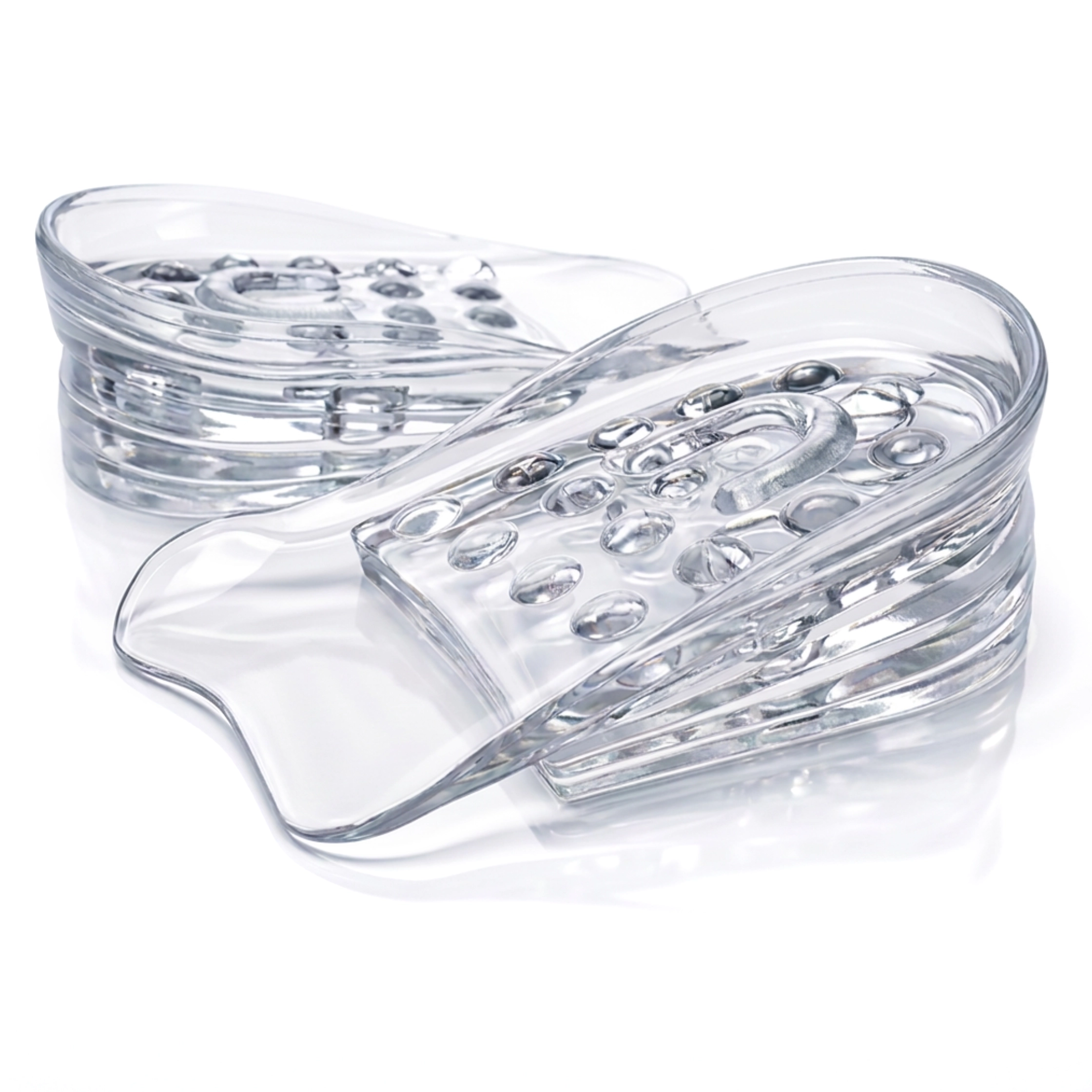
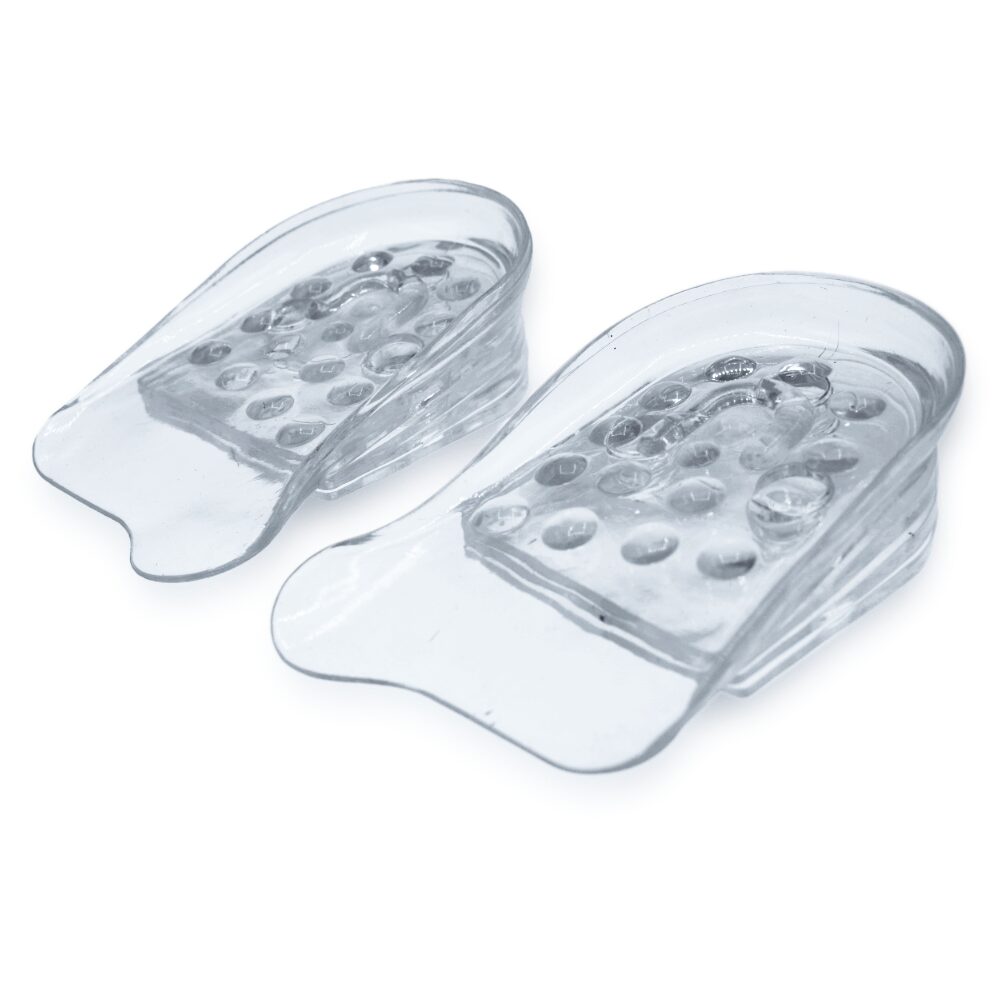
- Discreet internal heel lifts for everyday comfort and alignment – Discreet internal heel lifts for adults made from firm, medical‑grade silicone that sit under your heels inside enclosed shoes to change how your heels, calves, knees, hips and lower back take your weight throughout the day.
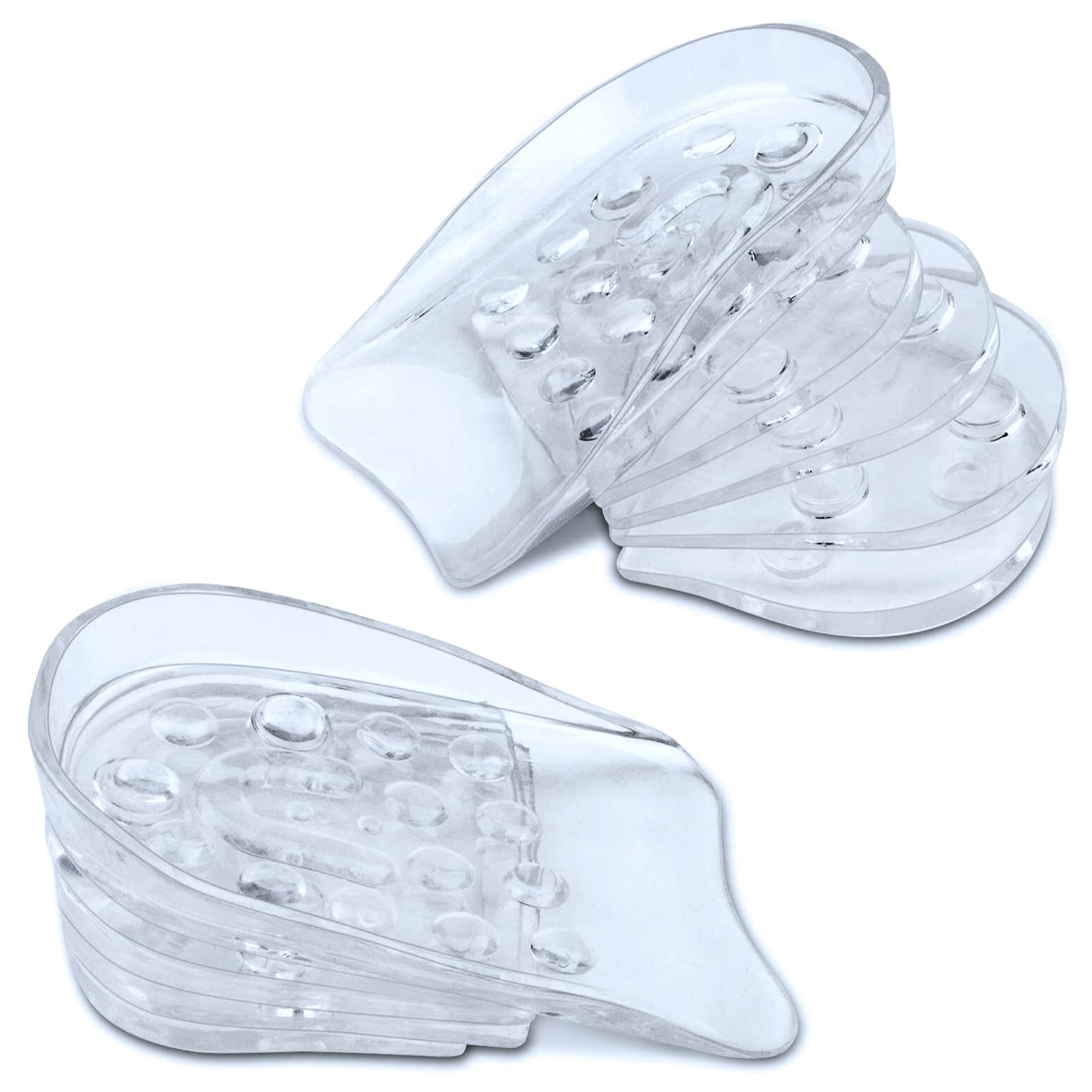
- Stacked, interlocking layers for precise, adjustable height – Five stacked, interlocking layers for precise height control, with each HeightBoosters heel lift featuring five firm silicone layers that lock together securely so you can start with a modest stack under each heel, usually 2–3 layers, for a gentle initial raise, add or remove layers in small, predictable steps to find the lowest height that eases your symptoms, and avoid sudden jumps in heel height that can tighten calves, irritate the Achilles tendon or unsettle the lower back, giving you a layered system that lets you gradually “dial in” the amount of heel raise that suits you instead of being stuck with a fixed, all‑or‑nothing lift.
- Targeted support to ease common heel and lower‑leg pain – Designed to ease familiar types of heel and lower‑leg pain through the combination of controlled heel height and local support, it is intended to take the edge off sharp, first‑step pain under or just in front of the heel by gently lifting and cushioning the heel area, reduce pulling on a sensitive Achilles tendon, particularly on stairs, slopes and longer walks, soften the “walking on bone” feeling on firm floors when shoes feel thin or flat, and help, under professional guidance, to gently reduce small pelvic tilts linked to mild leg length differences so one side of the lower back is not always working harder, reflecting some of the most common ways heel and lower‑leg pain behave in everyday life, especially for people who spend a lot of time on their feet.
- Firm, forgiving silicone gel cushioning right where you need it – Firm, forgiving silicone gel cushioning positioned directly under the heel, which compresses a little and springs back so it supports your natural heel fat pad instead of collapsing under it, spreads impact over a slightly larger area and longer time with each step to take some shock away from the heel bone itself, and helps reduce that deep, bruised heel feeling and heavy, tired legs after long days on firm floors, particularly in thin or very flat shoes, with material that holds its shape rather than packing down quickly so the height and cushioning you choose stay more consistent from day to day.
- Deep heel cup and heel‑only design to protect toe room – Deep heel cup and heel‑only shape to protect toe space, with the lift cupping the sides and back of your heel and stopping at the rear arch so your heel sits centred and is less likely to roll off the edge when you turn, walk on slopes or use stairs, your ankle and knee track in a more predictable line that reduces the need for your ankle muscles to work just to control wobble, and the ball of the foot and toes stay on the shoe’s own insole to preserve space at the front of the shoe and avoid the “sliding into the toes” feeling that is common with higher‑heeled shoes, as the lift runs from the very back of the heel into the start of the arch and no further, so it does not sit under the ball of the foot or the toes.
- Grippy surfaces for stable, confident steps – Grippy top and bottom surfaces for real‑world stability, with silicone designed to cling to both the shoe insole and your sock so the lift stays in place instead of sliding forwards or backwards as you walk, your heel does not feel as though it is “skating” inside the shoe, and your ankle and foot muscles do not have to overwork just to keep you steady on stairs, slopes or uneven ground, reducing the need to claw with the toes for grip and providing a stable base that helps the ankle and knee receive more predictable forces with each step.
- Suitable for many everyday heel, leg and low‑back issues – May suit several situations many people recognise, including when you get sharp pain under the heel with the first few steps after rest that eases into a dull ache as you move around, feel pulling or burning at the back of the heel or lower calf on stairs, inclines or after busier days, finish long days on firm floors with heels that feel bruised and legs or lower back that feel heavy and tired, have been told you have a mild leg length difference and notice one‑sided hip or low‑back aching when you stand or walk for longer periods, or would like to stand a little taller inside everyday trainers, walking shoes, work shoes or boots without relying on higher‑heeled shoes that often push more weight into your toes, can feel less stable on stairs and uneven ground, and make it obvious the extra height is coming from your shoes rather than from a discreet change inside them, which are exactly the kinds of day‑to‑day patterns NuovaHealth customers report when they choose HeightBoosters heel lifts.
- Durable, easy‑clean silicone for long‑lasting support – Durable and easy to clean for consistent support, with resilient silicone designed to hold its shape rather than packing down quickly to help the heel height and cushioning you choose stay steady over weeks of use, and a non‑porous surface that wipes clean with mild soap and water and should be dried fully before reuse, which is especially helpful if you wear them for long hours or in warmer conditions.
- 30‑day money‑back guarantee so you can test them properly – 30‑day money‑back guarantee so you can test them properly, with NuovaHealth supplying HeightBoosters heel lifts with a 30‑day money‑back guarantee that gives you time to try different layer heights in your usual enclosed shoes, build up wear time gradually over a couple of weeks so your muscles and joints can adapt comfortably, see how your heels, calves, hips and lower back respond across typical work and home days in real‑life conditions, and return them within 30 days if they do not suit you or your shoes, letting you make a controlled change in heel height and cushioning with the reassurance that you have space to adjust and assess the difference rather than committing to a permanent change straight away.
Heel pain, tight calves or tired legs? How heel lifts can help
Heel pain often shows itself in the morning or after sitting for a while. That sharp jab under the heel with the first few steps is one of the most common patterns people describe. You might notice a tight pull through the back of your heel and calf when walking up or down stairs, or a deep ache after long hours on hard floors that leaves your legs or lower back heavy and tired by the end of the day.
You may also be aware that standing a little taller improves posture and confidence. A small lift in height can help with comfort and alignment as well as confidence. But many ways of adding height – such as high or bulky heels – push your weight forwards into your toes, crowd the front of the foot and strain the ankles and back. They also make it clear that the added height comes from the shoe itself, which isn’t ideal if you prefer a discreet lift.
If these symptoms sound familiar, it helps to understand what’s happening inside the heel and how a small, adjustable heel raise – designed in the right way – can ease those pressures safely and steadily. These symptoms are common and often respond well when the heel is properly supported and cushioned.
Plantar fascia pain – that sharp first step in the morning
A strong band of tissue runs from your heel bone to your toes, supporting the arch and helping your foot spring forward. This band, called the plantar fascia, helps stop the arch flattening too much when you stand or walk. As you roll forwards and push off, it tightens slightly, storing and releasing energy to make walking more efficient.
After resting or sitting for a while, that band shortens and cools. Circulation slows, and the tissue becomes less flexible. When you stand up again, your full weight comes through the heel, the arch flattens slightly, and the band is stretched quickly from its shortened position. At the same time, the fat pad and soft tissues under the heel are compressed against the floor or shoe.
If the band is irritated where it attaches to the heel bone, that sudden pull and compression focus strain on a sensitive spot. This explains why the first few steps after getting up can feel sharp and stabbing. As you keep walking, the tissues warm and lengthen, and the pain often eases into a dull ache, even though the irritation remains.
Later in the day, long periods of standing or walking – especially on hard floors in flat or worn shoes, or after a sudden increase in walking or running – can bring back a tired ache around the heel and inner edge of the arch. You may notice this more if you:
- spend many hours on your feet,
- have tight calves,
- increase your walking or running quickly,
- carry more body weight,
- or have lower, more flexible arches.
Each of these adds extra strain to the plantar fascia. If your walking pattern stays the same, the irritation can persist. Over time, pain can start earlier in the day and with less activity, and you may unconsciously adjust your walking to avoid the sore spot – for example, landing further forward on the foot or spending less time on that heel. These changes can shift strain to the other foot, the knees or the lower back, making the problem harder to settle with rest alone.
A small, cushioned heel lift that supports the rear of the arch can ease that first pull and soften impact, helping the area recover.
Tight calves or sore Achilles? Why steps and slopes make it worse
At the back of the ankle, the calf muscles join into the Achilles tendon, which attaches to the back of the heel bone. Together, they store and release energy with each step, helping you move forwards efficiently.
Movements that flex the ankle upwards – such as walking uphill or downhill, climbing stairs, squatting, or leaning forwards while standing – lengthen this calf‑Achilles system. If the calf is tight or the tendon is already sore, the last part of that upward bend, when the ankle reaches its limit, can feel particularly uncomfortable. By then, the tendon is near its limit, so any extra pull focuses on a small, sore area.
Repeatedly stretching the tendon to its limit – for example, climbing stairs or walking uphill – can keep it irritated. Over time, parts of the tendon may thicken slightly and become more sensitive, so they ache more easily with everyday activity. Tendons don’t get as much blood flow as muscles, so they heal more slowly.
You might notice that familiar stiffness or soreness at the back of the heel or lower calf when you first get up, which eases after a few minutes of walking. As the day goes on, a pulling or burning sensation may return when walking on slopes, climbing stairs or rising onto tiptoe. Pressing along the tendon may reveal a tender or thickened area. After busier days or longer walks, the aching often returns and takes time to calm. If these stresses continue, the tendon can stay sensitive, with discomfort starting sooner and lasting longer after activity.
A small heel lift takes some of the stretch out of the tendon, letting it work in a more comfortable range. The ankle doesn’t have to bend as far upwards with each step, especially on stairs or slopes, so the tendon spends less time in its tightest position. This often results in less stiffness when you first stand and less soreness on steps and inclines.
Hard floors and sore heels – how cushioning helps
Your heel bone sits on a natural fat pad that cushions each step. This pad acts as your main shock absorber under the heel, flattening and springing back as you move. On softer or uneven ground, that’s usually enough, helped by a little give in the surface itself.
On hard floors, there’s almost no give — every step feels sharper. Because the surface doesn’t compress, the impact travels straight back into the heel. If your footwear has limited cushioning, or your fat pad is thinner or already sore, more of the impact is taken directly by the heel bone and the small joints and ligaments around it. Step after step, especially during long hours on your feet, the fat pad is squashed more heavily.
By the end of the day, it can feel as though there’s nothing cushioning your heel from the floor. Muscles from your calves up through your lower back have to work harder to steady each step and keep you balanced when standing still. This extra effort can leave your legs and lower back feeling heavy and tired.
A firm yet cushioned heel lift placed under the heel can absorb some of that impact, support the fat pad and reduce how sore the area feels after long hours on hard floors. It’s often surprising how much difference a few millimetres of lift can make to comfort and fatigue by the end of the day.
Small leg length differences and feeling uneven
It’s common for one leg to be slightly shorter, or to function as if it were. For some, this comes from a true difference in bone length — a structural difference. In others, the bones are similar lengths, but the way the joints and feet move makes one leg behave as though it were shorter or longer. This is called a functional difference.
A functional difference often develops when the pelvis tilts slightly to one side, when one hip cannot fully straighten while standing, or when one foot turns inwards more than the other. These small changes can make one side functionally shorter. As a result, one heel may touch the ground a little earlier with each step, one hip may sit lower when standing, and the lower back may twist slightly to keep your posture balanced.
Over time, you may feel uneven when you stand. One hip or side of the pelvis may ache more after long periods on your feet. One side of the lower back may feel tighter or more compressed. You might notice one shoe wearing down faster or one side of your waistband sitting lower. These differences often become more noticeable after long periods of standing or walking.
If that tilt and extra workload persist, the joints and muscles on one side may progress from occasional aches to more regular pain that interferes with everyday tasks.
In these cases, raising the shorter or functionally shorter heel by a small, measured amount can help level the pelvis and share load more evenly. This should always be done gradually and, ideally, under professional guidance.
How heel and ankle position affect your knees, hips and back
Each step begins with the heel, but the effects can be felt through the legs and into the back. The way the heel meets the ground sets the starting position for the ankle. If the heel sits very low and the ankle has to bend further upwards, or if the heel tilts inwards more on one side, the knee often twists slightly inwards to stay over the foot. With repetition, this can increase strain on the tissues around the kneecap and on the supporting structures at the front and inner side of the knee.
Higher up, the hip and pelvis adjust to the movements of the legs to keep you balanced. If one leg is effectively shorter, the pelvis may drop slightly on that side. The lower back then bends or rotates to bring your trunk upright. The small joints in the lower spine and the muscles around the outer hips and buttocks on one side often work harder. You may notice a dull ache around the front or inside of the knee after long walking or standing, a tight or aching feeling around the outer hip or buttock on one side, and a dull ache across the lower back after a day on your feet.
This does not necessarily mean there is serious damage in those joints, but they may be working at awkward angles or for longer than they need to because of what is happening lower down at the heel and ankle. People who spend long hours standing or walking, particularly on hard floors, who already have some stiffness at the ankle or hip, or who have had previous joint injuries, are more likely to notice these effects.
Taken together, a few clear needs stand out. The key is to reduce the sudden stretch and compression under the heel that cause sharp first‑step pain. It also helps to ease the pull on the Achilles when climbing stairs or walking on slopes, soften impact on hard floors, and gently correct small pelvic tilts under professional guidance. For some, a small height increase that keeps the heel secure, avoids shifting weight too far into the toes, and remains discreet can make walking and standing feel more balanced. Meeting these needs often means first steps feel less sharp, stairs and slopes are more manageable, hard floors feel less punishing, and standing posture feels more even.
What a heel lift needs to do – and how this design answers that
A heel lift is a shaped insert that sits inside your shoe to raise the heel slightly. Any raise changes the angle at the ankle and shifts your weight slightly forwards and upwards. If the lift sinks unevenly, lacks a heel cup to hold the heel, or slides about inside the shoe, that shift can make you feel less stable or push more weight into the front of the foot.
For everyday use, a well‑designed heel lift should provide a small, adjustable raise so you can find a height that reduces strain on the band under the arch and the Achilles without over‑shortening the calves or straining the lower back. It should add firm yet cushioned support directly under the heel to spread impact and support the natural fat pad on hard floors. It needs a deep heel cup and grippy surfaces to keep the heel centred and the lift securely in place inside the shoe, including when climbing stairs or walking on slopes. A heel‑only shape is important so the ball of the foot and toes stay on the shoe’s original insole and are not pushed forwards into a cramped or high‑pressure position. For those who prefer a small, discreet height increase, it should give a modest internal lift as an alternative to relying on higher‑heeled shoes that tend to shift more weight into the toes, compress the front of the foot, feel less stable, and make it clear that the extra height is coming from the footwear.
HeightBoosters adjustable heel lifts use a five‑layer silicone design, a deep heel cup, a heel‑only shape, and grippy materials specifically to meet these needs. NuovaHealth stocks HeightBoosters heel lifts because this combination of firm, layered height adjustment and secure heel control closely matches what many physiotherapists, podiatrists, and other clinicians look for when recommending a heel lift for regular, everyday use.
How these adjustable heel lifts work for your body
Adjustable stacked layers – finding the right height for your comfort
These adjustable heel lifts are built in five interlocking layers, designed so you can fine‑tune the height to your comfort. With all layers in place, the heel is raised by up to around 1.5 inches. Removing one or more layers changes the height in small, predictable steps.
This design lets you increase the height gradually. Starting with the full height immediately forces your calves and lower back into a new resting angle in one go. Your muscles and tendons don’t have time to adjust, which can cause tightness or discomfort higher up, even if your heel feels better. Beginning with fewer layers and building up over several days allows the band under the arch, the Achilles tendon, the calves, hips and lower back to adjust to the new position. The structures in your legs and back have time to adapt without being strained by a sudden change.
If you have sharp first‑step heel pain, even a modest raise can ease the discomfort. Others with more persistent symptoms may feel better with a slightly higher position. The layered system helps you find what suits you within a comfortable, clinically safe range. If a clinician has measured a mild leg length difference, the small increments make it easier to match the recommended correction and adjust gradually, helping to reduce the tilt and one‑sided strain described earlier. Under guidance, you might build up to a slightly higher lift on one side while keeping the other side lower.
Each additional layer increases the heel height relative to the front of the foot. As a result, the band under the arch and the Achilles tendon sit slightly shorter at rest, and the ankle does not have to bend as far upwards with each step. Because the layers interlock to form a single stable block, the heel rests on a firm platform rather than on loose pieces that could shift or tilt. That stability is especially helpful when turning, walking on slopes or climbing stairs.
Firm silicone gel – steady support that doesn’t flatten out
These heel lifts are made from medical‑grade silicone gel that compresses slightly under your body weight but holds its shape, rather than sinking or packing down quickly as some softer foams can. With each step, the gel deforms a little, spreading the load more evenly and for a little longer. Some of the impact is absorbed within the gel before it reaches your natural heel pad and bone.
This supports the fat pad rather than replacing it. Your heel can still move naturally, but without taking as much direct impact on firm floors. Because the material springs back between steps and from day to day, the cushioning and heel height you experience stay consistent. That stable height means your muscles and joints aren’t having to readjust with every step.
If your heel feels tender or bruised, it may feel less as though there’s a sharp bruise‑like pain under the heel with each step. The deep soreness under the heel by the end of the day is often less intense, and long periods of standing on hard surfaces can feel more tolerable.
Deep heel cup and heel‑only design – keeping you stable without crowding your toes
The top of each lift is shaped into a shallow cup that wraps around the sides and back of the heel. This keeps the heel centred on the lift and reduces the tendency to roll off the edge, particularly when your foot lands near the edge of a step or when walking on uneven ground. A centred heel means the ankle and knee move in a more predictable line, so the muscles around the ankle don’t have to work as hard to correct wobble. Used at a suitable height in enclosed shoes, this design is intended to feel secure, including on stairs and slopes.
The lift runs from the very back of the heel into the start of the arch, and no further. The ball of the foot and toes still rest on the shoe’s own insole. This preserves the original fit and feel under the forefoot and toes, avoids pushing the toes forwards into a tight space — a common problem with some full‑length inserts or built‑in high‑heeled shoes — and lets the heel be adjusted in height without forcing the front of the foot onto a steep slope. It differs from many higher‑heeled shoes that shift more weight into the front of the foot, compress the toes and make it obvious that the extra height comes from the shoe itself.
Grippy surfaces – keeping the lift steady under your heel
The upper and lower surfaces of these heel lifts are designed to grip both the shoe’s insole and the bottom of the sock. This reduces the chance of the lift sliding forwards or backwards as you walk, particularly in shoes with smoother linings. If a lift moves under the foot, it can cause friction, rubbing or blisters, give the sense that the heel is slipping inside the shoe, and make the ankle and foot muscles work harder to keep you steady, often felt as needing to grip with the toes or tense the ankle more than usual.
By holding the lift firmly in place, the grippy surfaces give a consistent feeling under the heel from step to step, reduce the need to claw with the toes to stay stable, and increase confidence on slopes, stairs and uneven ground. A stable insert means the ankle and knee receive more predictable loads rather than constantly adjusting to a shifting base.
Rear‑arch support – easing strain where the arch meets the heel
The combination of a small heel raise, firm gel, and gentle support under the rear arch changes how the band under the arch behaves during the first part of each step. With the heel sitting higher and the rear arch supported, the arch doesn’t flatten as far when you first load the foot. The band starts at a slightly shorter, more comfortable length, and strain is shared along more of it rather than focused solely at the heel attachment.
In practice, this means the band isn’t pulled as abruptly after rest or first thing in the morning and spends less time at the very end of its stretch, where it’s easiest to irritate. For many people with pain under or just in front of the heel, this can mean less stabbing pain with the first few steps after getting out of bed or standing after sitting, a smoother move from sitting to walking, and a reduced sharp pull under the heel after rest.
The support here is localised to the rear arch. It isn’t a rigid brace running the full length of the foot. The lift doesn’t extend under the ball of the foot and toes, so the front of the foot can still bend and the band can tighten at push‑off to help propel you forwards. The aim is to soften that first stretch and impact, not to lock the arch rigidly. If heel pain remains severe, worsens quickly, or is associated with swelling or colour change, it should be checked by a clinician rather than ignored.
Supporting the Achilles and calf – easing tension where it’s tightest
By lifting the heel, these heel lifts allow the Achilles tendon and calf muscles to work in a slightly shorter, less irritated part of their movement. The tendon is often most sensitive at its tightest, most stretched position — for example, when the ankle bends as far upwards as it comfortably can on steep inclines, deep squats or heavy stair use. With a modest lift, the calf and Achilles work without being pulled to their limit. The ankle doesn’t have to bend as far upwards when you walk, especially on stairs or sloping ground, and the tendon spends less time in the position where it’s easily provoked.
If your main problem is stiffness or soreness at the back of the heel, this can reduce that morning stiffness, lessen the pulling or burning on stairs and slopes, and make longer walks feel smoother at the back of the ankle. Because the height can be adjusted layer by layer, you and your clinician can balance symptom relief with maintaining calf flexibility. In practice, clinicians often combine heel lifts with specific calf and Achilles exercises rather than using lifts alone. As symptoms settle and exercises strengthen and lengthen the tendon, it may be possible to reduce the height gradually, helping the calf regain its usual length while keeping pain manageable.
A sudden pop or tearing sensation, major weakness or marked swelling around the tendon isn’t something to manage with heel lifts and needs prompt assessment.
Levelling mild leg length differences – done gradually and safely
If you’ve been told one leg is slightly shorter, a heel lift under the shorter or functionally lower side is a common way to reduce asymmetry. The adjustability and stability of these heel lifts make them well suited to this role.
Under professional guidance, you might build up a small height under the shorter side that roughly matches the recommended correction, rely on the deep heel cup and grippy surfaces to keep the taller lift stable, and then adjust height gradually based on how your pelvis and back feel. Raising the shorter heel brings the pelvis closer to level, so one side of the lower back isn’t consistently more compressed and one hip doesn’t always take extra load. Over time, this can reduce one‑sided pelvic or lower‑back aching and the sense of being slightly tilted.
Using too much lift, or placing it under the wrong side, can increase strain at the ankle and knee and create new problems. It’s important to agree this part of use with a GP, physiotherapist or podiatrist rather than guessing.
Discreet extra height – without the drawbacks of high heels
Many people consider heel lifts because they feel more confident when they stand a little taller. A common way to do that is to wear shoes with higher or built‑up heels. Those can add obvious height, but they often tip a large share of body weight forwards onto the ball of the foot and toes, crowd the toes into a smaller space and may feel less stable, particularly on uneven ground or stairs. They also make it clear that the extra height comes from the footwear.
These heel lifts take a different approach. The height increase is modest and adjustable in small steps, so you can stop at a level that feels natural for your calves, knees and back. The lift sits inside a stable, enclosed shoe with a firm heel counter, rather than acting as a separate, narrow heel under the shoe. Only the heel and rear arch are raised; the ball of the foot and toes stay on the shoe’s own insole, so your weight isn’t pushed too far into the forefoot. The deep heel cup and grippy surfaces hold your heel steady, so you’re less likely to feel as though you’re slipping or teetering. Because the lift is inside the shoe, the height change is discreet and less likely to draw attention.
If you’d normally choose higher‑heeled shoes mainly to feel taller, these heel lifts offer a way to gain some internal height while keeping impact cushioned and the forefoot in its usual position.
Durability and hygiene – keeping your lift effective and clean
The silicone gel used in these heel lifts is resilient and designed to withstand repeated compression. It springs back to shape rather than packing down, so height and cushioning remain consistent with regular use.
This consistency matters. If the lift were to flatten noticeably over days or weeks, your calves, the band under the arch and your lower back would gradually lose the support you’d gained and drift back towards the old, less comfortable way of taking weight, without you immediately realising why. First‑step heel pain or Achilles tightness might begin to creep back as the lift loses height. A durable material helps keep the heel height and cushioning you’ve chosen stable.
The non‑porous surface is easy to wipe clean with a damp cloth and mild soap. Drying them fully before placing them back in the shoe helps maintain hygiene, particularly if you wear them for long hours or in warmer conditions.
Who HeightBoosters heel lifts may suit
You might recognise some of these situations in your own experience. HeightBoosters heel lifts are worth considering or discussing with a clinician if one or more of the following describe what you’ve been feeling:
- You have sharp, localised pain under the heel or just in front of it with the first few steps after rest. It eases into a dull ache as you walk but often returns after long periods on hard floors. This pattern fits irritation of the band under the arch, where a small heel raise and rear‑arch support can ease the sudden stretch and impact.
- You notice a persistent ache, pulling or burning at the back of the heel or slightly above it, especially in the mornings or when using stairs or walking on slopes. A modest heel raise can help keep the Achilles tendon away from its tightest, most stretched position during everyday movement.
- After long hours on hard surfaces, your heels feel bruised and your feet and legs become unusually heavy or tired, particularly in flat or worn shoes. Extra controlled cushioning directly under the heel can support the natural fat pad and soften impact.
- You have been told you have a mild leg length difference and experience consistent one‑sided hip or lower‑back ache when standing or walking for longer periods. Gently raising the shorter side, under guidance, may help level the pelvis and share load more evenly.
- Your knees or hips tend to ache more in flat, unsupportive shoes and feel easier in footwear with a small, supportive heel. A modest internal heel raise with cushioning can make long periods on firm floors less tiring for these joints.
- You want a discreet way to stand a little taller inside everyday shoes, but without switching to higher‑heeled shoes that push more weight into your toes, feel less stable and make it obvious the extra height is coming from the footwear. HeightBoosters heel lifts can provide that height change, as long as you build up height gradually, so your muscles and joints have time to adapt.
If several of these points describe what you’ve been feeling, the changes in heel height, cushioning and stability offered by HeightBoosters heel lifts are likely to make a noticeable difference for you. At NuovaHealth, these are exactly the situations where this style of heel lift is most often used, and where customers and clinicians often report clear day‑to‑day improvements when the height is built up gradually and combined with suitable footwear.
Below, you can find the type of pain that most closely matches what you experience and see how this type of heel lift could help.
Trying HeightBoosters heel lifts for the first time — doing it safely
Changing what you stand and walk on each day can feel like a big step, especially if you already have pain or have tried other products with mixed results. HeightBoosters heel lifts, designed by the HeightBoosters team and supplied by NuovaHealth, come with a 30‑day money‑back guarantee. This gives you time to test different layer heights and notice how your heels, calves, hips and lower back respond over several typical days or weeks, and how well the lifts work with your usual closed shoes. It’s often surprising how much difference a few millimetres can make once your body has had time to adjust.
It’s best to allow a short adaptation period — usually a couple of weeks of gradual wear — before judging comfort. If, after regular use and allowing time for your body to adapt, you feel they do not suit you, they can be returned within 30 days for a refund. This gives you a straightforward way to see whether HeightBoosters’ adjustable design suits your needs, without committing to a permanent change.
Fitting your HeightBoosters heel lifts and getting used to them
Choosing the right footwear for HeightBoosters heel lifts
HeightBoosters heel lifts are designed to work best in closed shoes that have:
- a reasonably firm heel counter (the stiffened part around the back of the heel) to hold your heel steady,
- enough depth at the heel to accommodate the added height without your heel slipping out,
- a secure fit around the midfoot so the shoe does not gape or flap.
A snug hold around the midfoot helps keep your heel steady on the lift as you walk. Trainers, walking shoes, many work shoes and boots often meet these criteria. Very shallow slip‑ons or shoes already tight at the heel usually don’t leave enough room for the lift, especially if you plan to use several layers.
How to fit your HeightBoosters heel lifts
To fit the lifts:
- If your shoes already feel snug, start by removing the shoe’s insole. If there is plenty of depth, you can often leave it in.
- Place the stacked HeightBoosters heel lift firmly at the back of the shoe, with the highest edge snug against the heel counter, and check it sits flat and stable on the base of the shoe.
- Put your foot in and press your heel firmly down into the cup so it settles fully.
- Standard socks are fine, but very thick or very slippery socks may change the feel, so notice how different sock thicknesses affect stability.
Your heel should feel cradled with no obvious gaps or sharp edges. The ball of the foot and toes should still rest on the shoe’s main insole. Check that both heels feel similar in height and stability, unless you are using a different stack on one side under professional guidance. If the shoe feels tight over the top of your foot, the heel slips out, or the upper digs into the ankle, consider removing the original insole, reducing the number of layers, or switching to a deeper, more structured shoe. It’s often a matter of small adjustments — a single layer can make the difference between snug and comfortable.
Building up height gradually — letting your body adapt
The layered design allows careful, step‑by‑step changes in height. It’s safer to use that flexibility gradually rather than starting at the maximum height.
For general heel pain, Achilles stiffness or fatigue from hard floors, a realistic starting point is two or three layers under each heel. Start by wearing this height for an hour or two on the first day in situations where you can easily remove the lifts if needed. If that feels acceptable, extend wear time over the next few days. If you think a little more lift might help, add another layer and repeat the process. If you are using the lifts mainly for extra height, the same gradual approach lets your calves and lower back adapt to the new ankle angle.
Muscles and tendons are sensitive to sudden changes in their resting length and in how far they are taken towards the end of their stretch. Building up height in small steps over several days or a week or two gives them time to strengthen and lengthen with less risk of provoking new pain higher up. This is one of the reasons the HeightBoosters stacked‑layer system is so useful: it lets you make small, controlled changes rather than one big jump. Once symptoms such as first‑step heel pain or Achilles pulling feel more comfortable day to day, there’s usually no benefit in increasing height further once symptoms have settled. Think of it as giving your muscles time to catch up with the new position.
For mild leg length differences, the starting height and which side to lift should be agreed with a clinician. Avoid experimenting with large, uneven changes on your own.
Increasing wear time — what’s normal and what’s not
As you increase the time you wear the lifts, you might notice some mild fatigue in your calves or hips, particularly in the first few days, and some changes in how your heels feel on first standing, stairs, slopes or hard floors. A mild, even ache in the working muscles is a normal sign of adaptation and usually settles as muscles adjust to the new positions. Most people find that after a short adjustment phase, the lifts feel like a natural part of the shoe.
However, seek advice and reduce or stop use if you notice:
- a clear, sharp increase in joint pain,
- new or worsening swelling, warmth or colour change in the feet or legs,
- new tingling, numbness or weakness,
- an obvious change in your walking pattern that does not settle.
If you’re unsure, reduce the height by one layer or shorten wear time and speak to a GP, physiotherapist or podiatrist. If you are unsure about the right starting height, it can be helpful to take the lifts along to an appointment so your clinician can see them in your actual shoes. It’s better to make small adjustments than to push through discomfort.
When to seek professional advice before or during use
Heel lifts are one practical way to change how your heel and ankle take weight each day, usually alongside exercise, changes to activity and other measures. There are situations where individual assessment should come before, or alongside, using them. These signs suggest your symptoms may come from something more serious higher up, rather than from the heel itself, and that you should see a GP or seek urgent care rather than altering heel height on your own:
- sudden, severe pain in the heel, calf, knee, hip or back after a fall, twist or other injury,
- new or unexplained swelling, warmth or redness around the heel, ankle or calf,
- marked changes in your walking pattern, such as dragging a leg, repeated giving way where the leg suddenly feels as though it will not hold you, or being unable to fully bear weight,
- numbness, tingling or weakness in the legs that is spreading or worsening,
- changes in bladder or bowel control, or loss of feeling around the groin or inner thighs,
- significant conditions affecting circulation, sensation or bone strength – for example, poor circulation, reduced feeling in the feet, or very fragile bones – where changing load under the foot should be discussed with a GP or physiotherapist first,
- if you are pregnant, particularly in later stages, where posture and ligament support are already altered; speak to a clinician before using products that change heel height,
- pain that has persisted for several weeks or months and has not responded to simple changes in footwear or activity; this should not simply be put down to “getting older” and ignored.
If you notice pain worsening quickly after starting to use the lifts, or new swelling, colour changes, or discomfort higher up the body, it’s sensible to stop using them and seek professional advice. HeightBoosters heel lifts, supplied by NuovaHealth, are intended for adult use and are not a full solution for complex neurological or whole‑body conditions.
The information on this page provides general guidance about heel mechanics and the possible role of adjustable heel lifts. It is not a substitute for individual medical assessment, diagnosis or treatment. For personalised advice about heel, leg or back pain, or about using these products with existing medical conditions, please speak to a GP, physiotherapist, podiatrist or another appropriate clinician. Individual results vary, and no specific outcome can be guaranteed.
Deciding whether HeightBoosters heel lifts are right for you
Discomfort in the heels, calves, hips or lower back often reflects how the band under the arch, the Achilles tendon, the calf muscles and the joints higher up are being loaded day after day. For many people, this shows up as sharp first‑step pain under the heel, pulling at the back of the heel on stairs and slopes, deep bruised‑type pain on hard floors, or one‑sided aching around the hip or lower back when one leg effectively works shorter than the other.
HeightBoosters adjustable heel lifts, designed by the HeightBoosters team and supplied by NuovaHealth, are made to address these patterns of strain. Their layered silicone‑gel design and deep heel cup allow you to:
- gently raise the heel to reduce sudden stretch on sensitive tissues such as the band under the arch and the Achilles tendon,
- add firm but forgiving cushioning directly under the heel to support the natural fat pad on hard floors,
- keep the heel stable and secure within the shoe, including on stairs and slopes,
- under clinical guidance, fine‑tune mild leg length differences,
- and, for some people, discreetly increase height and confidence without relying on higher‑heeled shoes that shift weight into the toes.
Within NuovaHealth’s range of clinically reviewed supports, HeightBoosters heel lifts are often the first adjustable option recommended for people with sharp heel pain on first steps, pulling at the back of the heel, tired legs on hard floors or mild one‑sided pelvic and low‑back aching. The adjustable, layered construction makes it easier to match height precisely to both symptoms and footwear.
They work best when combined with suitable footwear, simple strengthening or stretching exercises, and professional advice where needed. If the situations described here sound familiar, HeightBoosters heel lifts are a sensible, low‑risk option to try in your usual enclosed shoes over a few weeks. Start with a modest layer height, build up gradually to allow your body to adapt, and use the 30‑day money‑back guarantee to judge the difference in how your heels, legs and back feel in everyday walking.
If your symptoms are severe, changing quickly or complex, or if you are unsure whether these lifts are suitable for you, discussing them with a clinician is a sensible next step. Taking your HeightBoosters heel lifts to an appointment can help your clinician check fit and height directly.
Disclaimer: The information on this page provides general guidance about heel mechanics and the safe use of HeightBoosters heel lifts supplied by NuovaHealth. It is not a substitute for individual medical assessment, diagnosis or treatment. If you have persistent or severe pain, recent injury, or significant medical conditions affecting your feet, legs or back, seek advice from a GP, physiotherapist, podiatrist or another qualified clinician before use. HeightBoosters heel lifts are designed for adult use and should be introduced gradually as described above. Individual responses vary, and no specific outcome can be guaranteed.
13 Reviews For This Product
Fast & Secure Checkout Through Paypal
Pay with Paypal the secure payment gateway that accepts all credit and debit cards. Paypal is free and secure and no credit or bank information is ever stored or shared with us.
Fast Dispatch
Enjoy your items soon with quick dispatch via Royal Mail. Expect to have your items between 1-3 working days for domestic orders. 7-10 Working days for international orders.
Return Policy – 30 Day Money Back Guarantee
In the unlikely event, you are unhappy with your purchase you can return it within 30 days for a refund. Please contact us via the form on the contact us page to start your return.
To return an item please send it to: Nuova Health UK, 81 Highfield Lane, Waverley, Rotherham, S60 8AL. Please include a note with your order id so we know who to refund. Please retain your postage receipt as proof of postage. All that we ask is that the item is in the original packaging and unused.
by Jade
I have had Achilles pain for a long time so thought I would try these out.
They have been amazing for me I no longer have any pain . Brilliant product and brilliant service . Thankyou so much .
by Sarah
I bought these after twisting my ankle on a hiking trip. The pain was unbearable, and walking was tough. These heel lifts provided just the right amount of elevation and comfort. Now, I can walk without limping! They’re super easy to fit into any shoe. Who knew such a small thing could make a BIG difference? Love them! 👟
by Tomoko Nakamura
These heel lifts are a hidden gem. 🌟 I bought them because I’ve had lower back pain for years due to a slight leg length discrepancy. The HeightBooster lifts evened things out perfectly. The pain has noticeably lessened, and I feel more balanced. Couldn’t be happier with my purchase!
by James Mitchell
After suffering from Achilles tendonitis, I needed something to alleviate the pain. HeightBooster heel lifts were suggested to me, and they’ve been wonderful. 🌟 The lifts have made walking much more bearable. I can finally go on my daily walks again without wincing. The soft cushioning is just right. A must-have!
by Elaine Smith
I have severe scoliosis and have tried all inserts. These are the first that actually work! This is my 2nd order, first ones still going strong though, can’t fault them. Highly recommend 👍
by Rajesh Kumar
I recently started dating someone taller, and while height isn’t everything, I did feel a tad self-conscious. These inserts gave me that extra boost without feeling awkward. They fit snugly in all my favorite shoes – from sneakers to boots. Plus, they’re super comfortable, even after wearing them all day. I’ve recommended them to a few friends who also love them. If you need a little extra height, go for it. You’ll be glad you did!
by Zhen Liu
After a minor foot surgery, my doctor recommended using lifts to balance out my gait. These have been perfect. They fit well, don’t slip, and provide excellent support. I also appreciate how durable they are – they’ve lasted through months of daily wear without any signs of wear and tear. Plus, the added height is a nice bonus.
by Priya
These heel lifts are truly amazing! I struggle with leg length discrepancy due to a past injury, and HeightBoosters have made walking and standing so much more comfortable. They even relieved some of my back pain. I used to dread long days on my feet, but not anymore. These inserts are like magic. They’re so discreet, too – no one can tell I’m wearing them. My shoes fit better, and I feel more balanced. If you have any discomfort or just want a little lift, you won’t regret trying these!
by Greggory
I bought HeightBooster heel lifts after my knee surgery. Wow, what a difference! 🦵 These lifts made walking less painful and more comfortable. Who knew a couple of inches could make such a big change? They fit snugly in my shoes and stay in place all day. Seriously, GIVE THEM A TRY!
by Bill
Being vertically challenged isn’t easy. I’ve tried all sorts of ways to increase my height, but nothing seemed to work. Then, I heard about the HeightBoosters heel lifts. At first, I was dubious. But let me tell you, these beauties worked like a charm.
The layer stack system is great. I can tweak the height as and when I fancy. And the shock-absorbing gel? Oh, it’s a treat for the feet. It takes care of all those nasty shocks and jolts, and it feels like walking on a cloud.
Not only do I stand taller, but I also feel more confident. And that’s a feeling no money can buy. So, here’s a shoutout to HeightBoosters for providing us with this wonderful product.
by Mike Ross
HeightBoosters are incredible! Been using them for a month now. I was dealing with a back injury and needed something to help with the pain. These lifts did the trick. My posture has improved, and the discomfort has lessened. Plus, an extra inch of height? Yes, please!
by Ahmed Khan
I’m 5’7”, and while it’s not short, sometimes I just want a little bit more height. HeightBoosters have been my secret weapon! With these, I feel like a giant (well, almost)! 😄 They are super comfortable and fit perfectly in my shoes. At first, I thought they might be obvious, but nope, they blend seamlessly. I wore them to a friend’s wedding last month, and the confidence boost was unreal. Just that extra inch or two makes such a difference. If you’re looking for a simple way to boost your height and confidence, these are it. Love them!
by Maria Gonzalez
Was I impressed? You betcha! HeightBooster heel lifts added that extra oomph my shoes needed. 👠 I work long hours as a nurse, and these lifts have been a blessing. My feet don’t feel as tired, and the added height gives me a bit more authority and presence. Love them!