
Gym Fitness Training Gloves for Exercise Workouts, CrossFit, Weightlifting, Pull Ups & Cycling
£9.99inc VAT
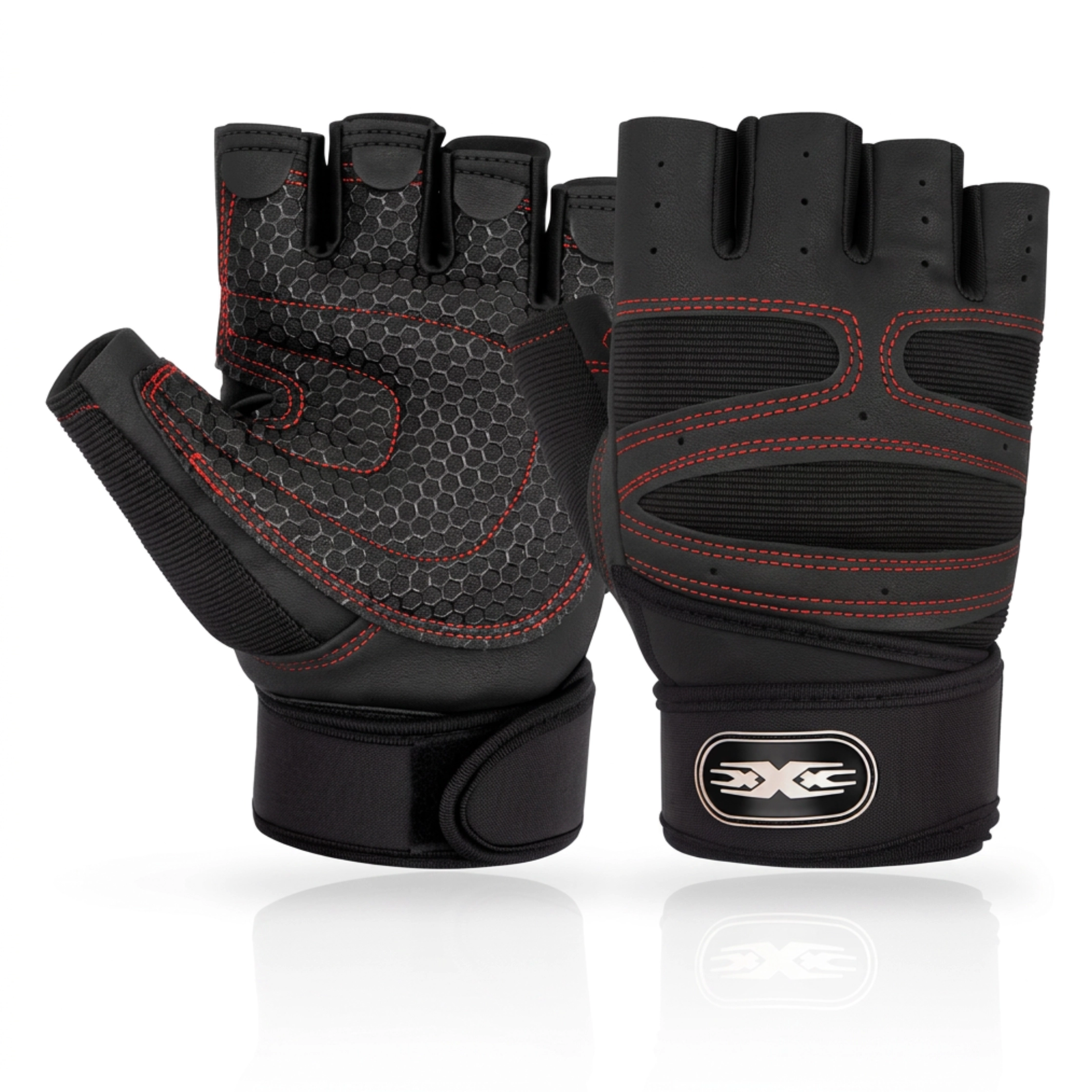
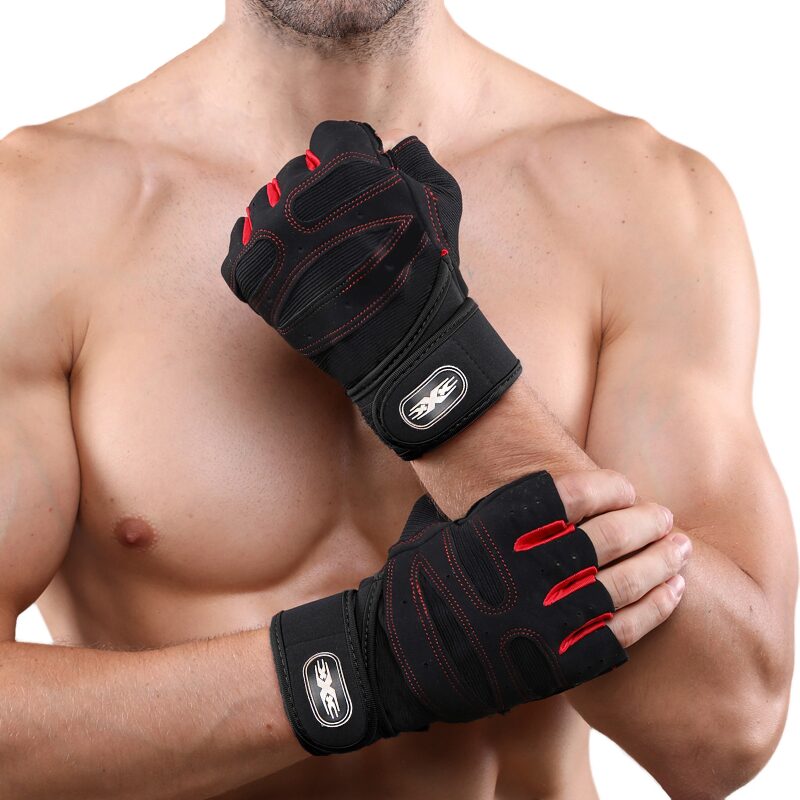
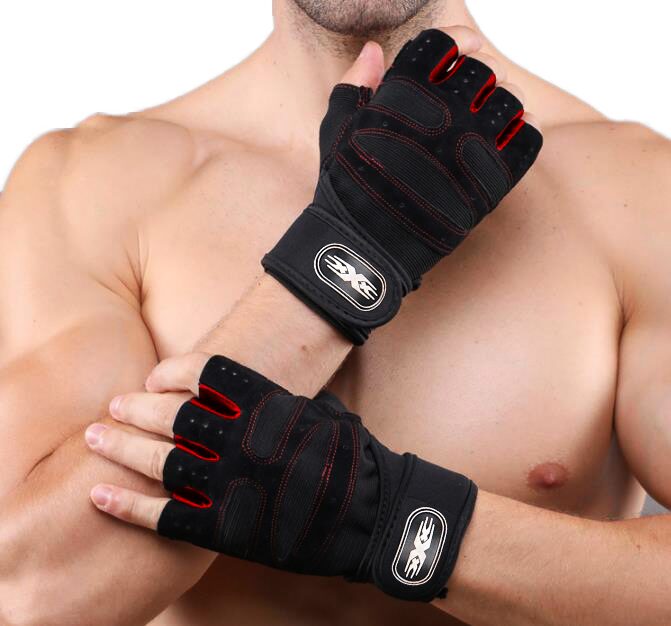
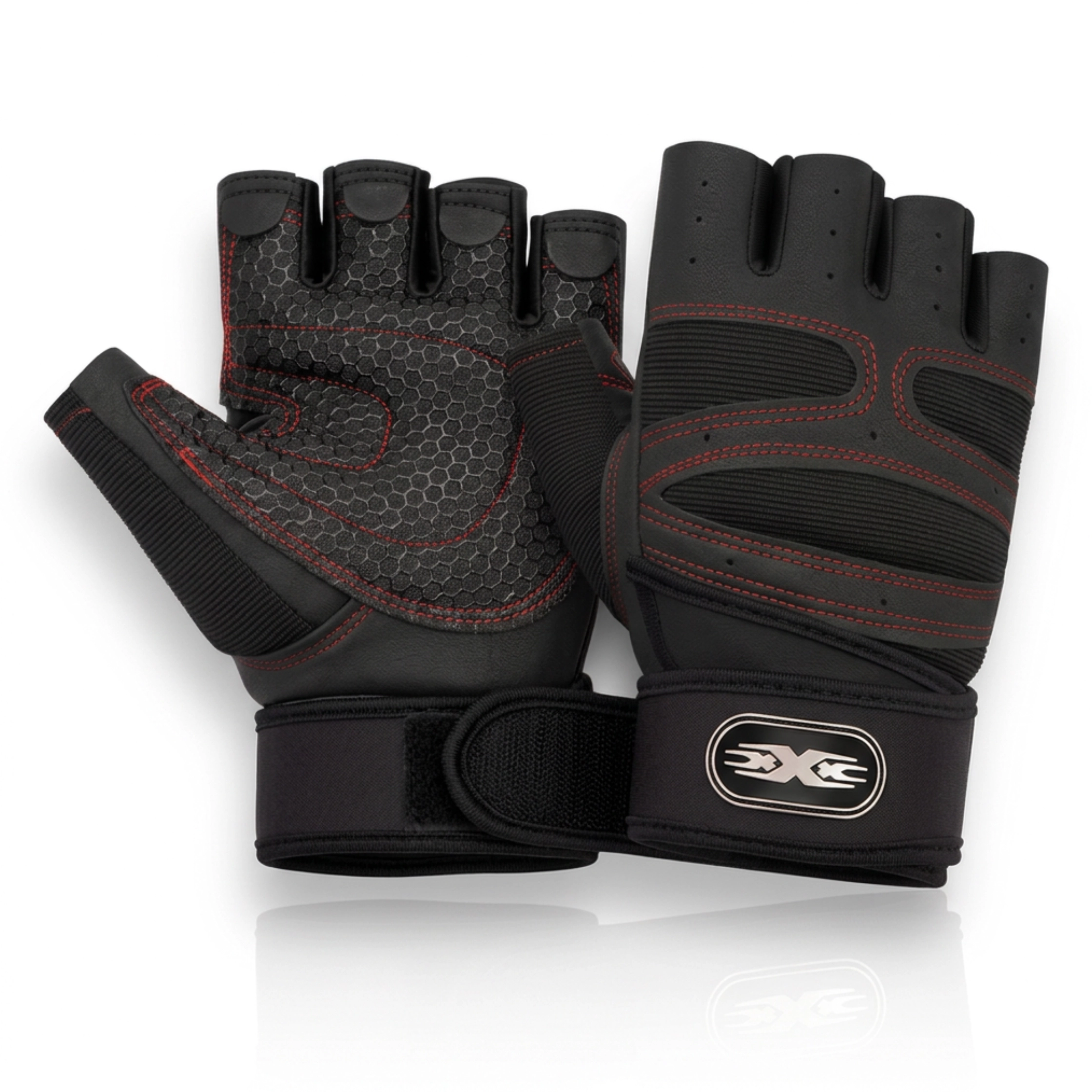
- Half-finger gym gloves with padded palms, adjustable wrist wrap, and anti-slip grip—designed to reduce hand soreness, wrist strain, and grip fatigue across barbell, dumbbell, kettlebell, pull-up, CrossFit, and cycling training
- Designed for adults who train regularly and want to keep their hands and wrists feeling strong and capable, session after session
- Half-finger design leaves fingertips free for direct bar contact, dexterity, and fine grip adjustments while protecting the areas where peak pressure concentrates
- Soft padding positioned under the base of the fingers and centre of the palm spreads pressure more evenly, reducing concentrated loads that can irritate skin and underlying tendons
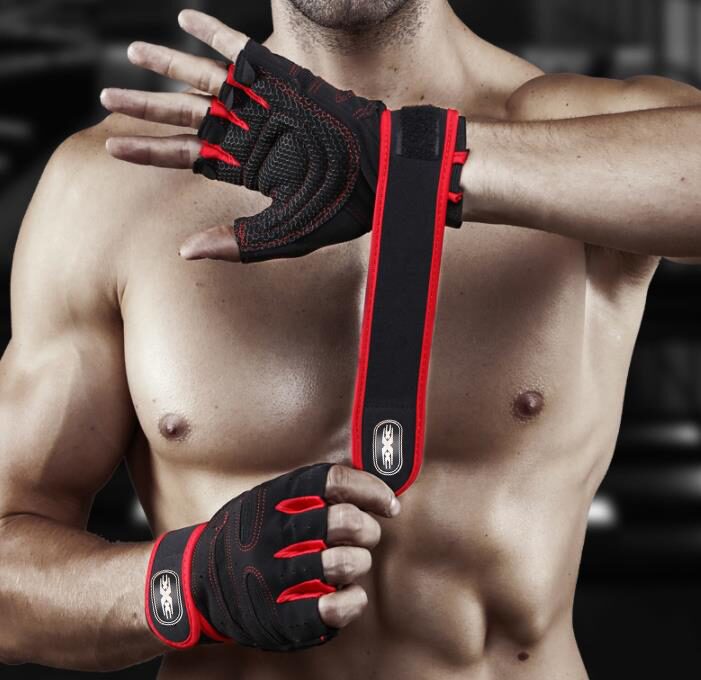
- Adjustable Velcro wrist wrap supports better wrist alignment during pressing and pulling, limiting excessive extension or flexion under load
- Textured synthetic leather palm with anti-slip silicone grip provides secure hold on bars and handles, reducing the need to clench as hard so forearms fatigue less quickly
- Breathable, moisture-wicking materials with anti-odour properties keep hands drier and more comfortable during longer sessions
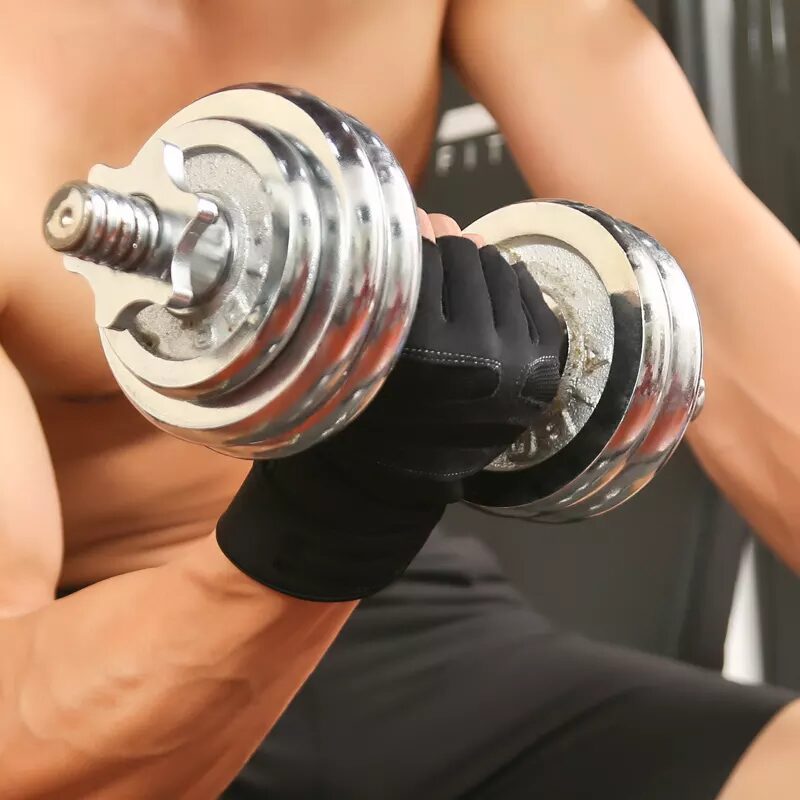
- Suitable for indoor and outdoor activities where hand and wrist support can help you train more comfortably: gym lifting, functional training, cycling—wear them for entire sessions or just for exercises where discomfort is most noticeable
- Not a substitute for proper technique, appropriate load progression, or clinical assessment if pain is significant, persistent, or worsening
- If you experience numbness, tingling, weakness, or pain that doesn’t improve with rest and supportive measures, speak to a GP or physiotherapist
- Available in Small, Medium, Large, and XL sizes
- Comes with full 30-day money-back guarantee
Train Harder, Recover Faster—Across Every Workout
Whether you’re lifting barbells, swinging kettlebells, hammering through pull-ups, holding a front rack in CrossFit, or cycling for miles, your hands and wrists are working harder than almost any other part of your body.
They’re gripping, stabilising, absorbing load—rep after rep, set after set, session after session.
For most people, hands and wrists become the limiting factor long before the bigger muscles give out. Grip starts to slip. Palms feel raw. Wrists ache after heavy pressing. Instead of pushing harder or training more often, you’re held back by discomfort that shouldn’t be there in the first place.
The NuovaHealth Gym Fitness Training Gloves are designed to change that. They spread pressure more evenly across your palms, support your wrists in better alignment, and give you a secure grip that doesn’t require you to clench as hard—so you can train harder, recover faster, and keep progressing without your hands holding you back.
Here’s how they work, and why the details matter.
What Happens to Your Hands and Wrists When You Train Hard
When you grip a barbell, pull-up bar, kettlebell, or bike handlebar, the entire load passes through a relatively small contact area in your hands. Palms, fingers, and wrists absorb and stabilise those forces. Over time, they add up—whether you’re lifting heavy, holding under tension, or gripping for endurance.
Your palms have a layer of skin, a thin cushion of fat beneath it, and deeper structures including the flexor tendons. These tendons run from your forearm muscles down into your fingers and allow you to grip. Beneath them sit small ligaments and the metacarpal bones that form the framework of your hand.
When you’re holding a heavy weight or gripping for extended periods, that concentrated pressure can irritate the skin—leading to calluses, soreness, or tender spots—and strain the underlying soft tissues. The tendons are working hard: they’re transmitting the pull from your forearm muscles through a narrow channel in your palm and fingers. When you grip tightly to stop the bar or handle slipping, you’re asking them to sustain high tension for prolonged periods.
Your wrists are involved too, but in a different way.
The wrist is a complex joint made up of eight small carpal bones arranged in two rows, held together by a network of ligaments. When you press, pull, or hold a weight, your wrist has to stabilise the load while your hand grips. If your wrist bends too far back—extension—the ligaments on the back are stretched, and the carpal bones are compressed together at the front. If it bends too far forward—flexion—the opposite happens: ligaments on the palm side are stretched, and the bones compress at the back.
Either way, when this happens under load, the ligaments and tendons round the wrist joint are stretched or compressed more than they’re designed for during everyday tasks.
The tendons that cross the wrist to reach your fingers have to change direction sharply when your wrist is bent. This increases friction and strain where they pass through the tight tunnels—called tendon sheaths—on the front and back of your wrist. Over time, this repetitive strain can lead to discomfort, stiffness, or a nagging ache that lingers between sessions.
You’ll often notice soreness across your palms after deadlifts or barbell rows. Tenderness at the base of your fingers after heavy kettlebell swings or farmer’s carries. Wrist discomfort during overhead presses or handstand push-ups where your wrist is forced into extension under load. Strain during front-rack positions in CrossFit movements where your wrist is held in flexion while supporting a heavy bar.
Grip fatigue during long sets of pull-ups or chin-ups. Palm numbness or soreness during extended cycling sessions where you’re holding the handlebars for miles at a time.
None of this means you’re doing anything wrong. It’s simply a reflection of the forces involved and the fact that your hands and wrists are working hard to manage them.
But when these forces are concentrated in the same spots, session after session, without enough recovery time in between, the tissues don’t get a chance to settle. The tendons and ligaments remain slightly irritated. The next session starts from a baseline of mild inflammation rather than full recovery.
This is how short-term fatigue can gradually become persistent discomfort that starts to limit how much you can lift, how long you can train, or how often you can get back in the gym or on the bike.
The good news is that you don’t have to accept this as an inevitable part of training hard. By spreading the load more evenly across your palms, supporting your wrists in better alignment, and reducing the amount of gripping force you need to apply, you can train just as hard—or harder—while giving your hands and wrists the support they need to recover properly between sessions.
Who These Gloves May Help
These gloves are designed for adults—both men and women—who train regularly across a range of activities and want to keep their hands and wrists feeling strong and capable, session after session.
They’re particularly helpful if you’re lifting moderate to heavy weights and want to push harder without your grip giving out first. They’re useful if you’re doing high-volume pulling work—pull-ups, rows, kettlebell swings—and want to protect your palms from the repetitive pressure that builds up over a long session.
If you’re involved in CrossFit or functional training where your wrists are constantly moving through different positions under load, or if you’re cycling regularly and want to reduce the numbness and soreness that can develop in your palms during longer rides, these gloves can make a real difference.
They’re also a sensible option if you’re newer to lifting and still building up tolerance in your hands and wrists. The tissues haven’t yet adapted to the repetitive high loads, so a bit of extra support and padding can help you train more consistently while that adaptation happens.
Similarly, if you’re returning to training after a break and want a bit of extra support while you rebuild your base, gloves can take the edge off the initial fatigue and soreness that often comes with getting back into regular training.
If you’re only lifting very light weights, or if you prefer the direct bar contact you get from bare hands, you may not need gloves. But if hand soreness, wrist strain, or grip fatigue is limiting how hard you can train or how often you can get back in the gym, gloves offer a practical solution.
When to Seek Clinical Advice
If you’re dealing with significant, persistent pain, numbness, tingling, or weakness in your hands or wrists, it’s worth speaking to a GP or physiotherapist before relying on gloves alone.
These symptoms can sometimes point to nerve compression. Carpal tunnel syndrome, where the median nerve is squeezed as it passes through the front of your wrist. Ulnar nerve compression at the elbow or wrist. Or more significant tendon or ligament strain that needs proper assessment.
Numbness and tingling often suggest that a nerve is being squeezed or irritated. This can happen when surrounding tissues are swollen or when you’re holding your wrist in positions that narrow the space the nerve passes through.
Weakness—such as difficulty gripping, dropping things, or a sense that your hand isn’t responding as it should—can indicate that the nerve or the muscles it supplies aren’t functioning properly.
That needs clinical assessment rather than just supportive equipment.
If you’re experiencing persistent pain that doesn’t improve with rest and supportive measures like gloves, or if your pain is getting worse rather than better, that’s another sign to seek help. Pain that doesn’t settle suggests the tissues are being irritated faster than they can recover. Continuing to push through without addressing the underlying cause can lead to more significant, longer-lasting problems.
If you develop any new or unexplained symptoms that concern you—such as sudden sharp pain, significant swelling, loss of movement, or symptoms that don’t fit the usual pattern of training-related fatigue—it’s sensible to get a proper assessment rather than hoping it settles on its own.
Early assessment and management usually leads to better outcomes and shorter recovery times.
Gloves are a helpful tool for supporting your hands and wrists during training and helping you perform at your best, but they’re not a substitute for proper assessment if something more significant is going on.
How the NuovaHealth Gym Fitness Training Gloves Work
The NuovaHealth Gym Fitness Training Gloves are designed to support your hands and wrists across a range of training activities—whether you’re lifting barbells or dumbbells, working with kettlebells, doing pull-ups or rowing movements, engaging in CrossFit sessions, or cycling.
They address the pressure and strain patterns through three key design features: padded palms that spread load more evenly, an adjustable wrist wrap that supports better alignment, and a textured grip surface that reduces the need to clench as hard.
Half-Finger Design with Padded Palms
These are half-finger gloves—they cover your palm and the base of your fingers, but leave your fingertips free. This design gives you the padding and wrist support where you need it, while still letting you feel the bar directly and maintain good dexterity for adjusting your grip or handling equipment.
You can still feel the knurling on the bar and make fine adjustments to your hand position mid-set, which matters for maintaining good form. But the areas where peak pressure concentrates—the base of your fingers and the centre of your palm—are protected.
The gloves feature soft padding across the palm, positioned specifically under the areas where bar pressure concentrates most. When you grip a bar without gloves, the entire force of the weight presses into a relatively narrow contact area. That concentrated pressure is what leads to soreness, tender spots, and calluses. The skin and the thin fat pad beneath it can only absorb so much force before they start to complain.
Deeper down, the flexor tendons running through your palm are transmitting high tension from your forearm muscles to your fingers. When the bar is pressing hard into the tissues above them, it adds an extra compressive load on top of the tensile load they’re already managing.
The padding spreads that force over a larger surface area, so instead of all the pressure landing on a few square centimetres, it’s distributed across your palm. You’re still lifting the same weight. But the peak pressure on any one spot is lower, skin is less likely to get irritated, and the underlying tendons aren’t being compressed as hard.
When you’re doing a set of barbell rows and you’re holding a heavy bar for eight to ten reps, the bar is pressing into the base of your fingers and the centre of your palm with every pull. Without gloves, by the fifth or sixth rep, you might start to notice a burning or aching sensation in your palms—not because your grip is failing, but because the concentrated pressure is irritating the tissues.
With padded gloves, that same set feels more manageable because the pressure is spread more evenly. You still feel the bar. You still have to grip it. But the peak pressure on any one spot is lower, so the discomfort builds more slowly—or doesn’t build at all.
This means you can focus on pulling with good form and engaging your back muscles, rather than being distracted by your hands.
The padding is designed to be thick enough to make a real difference, but not so bulky that it interferes with your grip or makes the bar feel distant or awkward in your hand. You still get a secure, connected feel, just with a more comfortable distribution of pressure underneath.
Adjustable Wrist Wrap for Alignment
Each glove includes a fully adjustable Velcro wrist wrap that straps all the way round your wrist. This wrap does two things.
First, it keeps the glove securely in place, so it won’t shift or slip during your set—which matters because if the padding moves out of position, you lose the benefit of the pressure distribution.
Second, and more importantly, it provides support that helps keep your wrist in a more neutral position when you’re gripping and lifting.
When your wrist is better aligned—not excessively bent back during a press, or forced into an awkward angle during a pull—the load is distributed more evenly through the wrist joint and the ligaments and tendons round it. The carpal bones sit in better alignment with each other, so there’s less compression at the front or back of the joint, and the ligaments aren’t stretched as far at their end range. The tendons crossing the wrist—both the flexor tendons on the palm side and the extensor tendons on the back—don’t have to change direction as sharply, so there’s less friction where they pass through the tight tendon sheaths.
This reduces the strain on those structures and can make a noticeable difference to how your wrists feel, both during the session and afterwards.
When you’re doing an overhead press and the bar is directly above your wrist, there’s a natural tendency for your wrist to extend—bend back—under the load. Without support, your wrist might extend to near its end range, compressing the carpal bones at the back and stretching the ligaments on the palm side. The wrist wrap provides a gentle external cue that helps limit how far your wrist extends, keeping it closer to neutral. The ligaments aren’t stretched as far, the bones aren’t compressed as hard, and the tendons crossing the wrist don’t have to work as hard to stabilise the joint.
Over a set of ten presses, that small reduction in strain on each rep adds up—and over weeks and months of training, it can be the difference between wrists that feel fine and wrists that ache for days after every pressing session.
Similarly, when you’re doing front-rack work in CrossFit—holding a barbell across the front of your shoulders with your wrists in flexion—the wrap helps prevent your wrists from collapsing into excessive flexion, which would compress the carpal bones at the front and stretch the structures at the back. By supporting a more neutral wrist position, the wrap reduces the cumulative strain on the ligaments and tendons that would otherwise be working overtime to stabilise a bent or awkward wrist under load.
You can adjust the level of compression and support depending on what feels right for you and the activity you’re doing. Some people prefer a firmer wrap for heavier lifts where wrist stability matters most; others like a lighter, more flexible feel for higher-rep work or cycling where you need more freedom of movement.
The key is that you’re in control, and the wrap adapts to your needs rather than forcing a one-size-fits-all approach.
Textured Grip and Breathable Materials
The palm surface is made from textured synthetic leather with anti-slip silicone grip, which provides a secure hold on bars and handles and helps prevent equipment slipping from your grasp. This means you don’t have to clench as hard to keep the bar from shifting or slipping, especially when your hands start to sweat or the bar itself is smooth or slightly slippery.
When you’re not having to grip as hard, the flexor tendons in your palm and the small muscles in your forearm don’t fatigue as quickly. These structures are working every time you grip, but the harder you have to clench, the higher the tension they have to sustain, and the faster they tire.
By providing a more secure grip surface, the gloves reduce the amount of gripping force you need to apply to hold the bar safely. This can help you maintain better form throughout your set—because you’re not distracted by worrying about the bar slipping—and it reduces the cumulative strain on your tendons and muscles over the course of a session.
When you’re doing pull-ups and your hands are sweaty, you might find yourself gripping the bar much harder than you need to, just to feel secure. That extra gripping force doesn’t help you pull yourself up—it just tires out your forearms faster. With gloves that provide a secure, non-slip surface, you can grip just hard enough to hold on safely, and save your forearm strength for the actual pulling movement.
The gloves are made from breathable, padded materials with moisture-wicking properties. This helps keep your hands drier and more comfortable during longer sessions. They won’t keep your hands completely sweat-free—no glove can do that—but they do a good job of managing moisture so your hands don’t feel clammy or uncomfortable, and the anti-odour properties help keep them fresher between washes.
The gloves are available in Small, Medium, Large, and XL sizes to suit different hand sizes, so you can find a fit that works comfortably for you.
What to Expect
Most people notice a difference within the first few sessions. Palms feel less sore after lifting. You can complete your sets without that uncomfortable pressure building up in your hands.
The padding spreads the load more evenly, so the peak pressure on any one spot is lower, and the skin and underlying tissues aren’t being irritated as much. Wrists often feel more stable and less strained, especially during pressing and pulling movements where wrist position matters most.
The wrap helps keep your wrist closer to neutral, so the ligaments and tendons round the joint aren’t being stretched or compressed as far at their end range, and the cumulative strain over a session is lower.
The gloves won’t eliminate every bit of discomfort—your hands and wrists are still working, and some fatigue is normal and expected as part of training. The flexor tendons in your palm are still transmitting high tension when you grip. The muscles in your forearm are still contracting to generate that grip force. The ligaments round your wrist are still stabilising the joint under load.
But the gloves should take the edge off the concentrated pressure and strain that can make sessions uncomfortable or leave you sore for days afterwards.
It’s worth remembering that gloves are one tool, not a complete solution on their own. If your hand or wrist pain is related to your lifting technique—for example, if you’re letting your wrists collapse into excessive extension during presses, or if you’re gripping the bar in a way that puts unnecessary strain on your fingers—gloves can help manage the symptoms but they won’t fix the root cause.
Similarly, if you’re progressing load too quickly and your tissues haven’t had time to adapt, or if there’s an underlying issue in the joint or soft tissues—such as early tendon irritation in the flexor tendons, or ligament strain in the wrist—gloves can provide support and reduce discomfort, but they’re not a substitute for addressing the underlying problem.
If you’re finding that discomfort persists despite wearing gloves, or if it’s getting worse rather than better, it’s worth taking a step back and considering whether your technique needs adjusting, whether you’re progressing load too quickly, or whether you’d benefit from some guidance from a coach or physiotherapist.
Persistent pain that doesn’t respond to rest and supportive measures like gloves can be a sign that the tissues are being irritated faster than they can recover.
Continuing to push through without addressing the underlying cause can lead to more significant, longer-lasting problems.
Gloves work best when they’re part of a sensible overall approach: appropriate weights that match your current strength and tissue tolerance, good form that distributes load efficiently and doesn’t put unnecessary strain on vulnerable structures, adequate recovery between sessions so tissues have time to adapt, and attention to any warning signs your body is giving you.
Making the Decision
If hand or wrist discomfort is holding you back from training as consistently or as confidently as you’d like, these gloves offer a straightforward way to address the problem.
They work by spreading the load more evenly across your palms—so the peak pressure on any one spot is lower and the skin and underlying tendons aren’t being irritated as much—and by supporting your wrists in a more neutral, stable position, which reduces the strain on the ligaments and tendons round the joint.
These are simple mechanical changes, but they can make a noticeable difference to how your hands and wrists feel during and after your sessions.
They’re not a magic fix, and they won’t solve every issue on their own. If your discomfort is related to technique, load progression, or an underlying problem in the tissues or joints, gloves can help manage the symptoms and make training more comfortable, but they’re not a substitute for addressing the root cause.
But for many people, they’re a practical, affordable tool that takes the edge off the concentrated pressure and strain that can make lifting uncomfortable or leave you sore for days.
The NuovaHealth Gym Fitness Training Gloves come with a full 30-day money-back guarantee, so you can try them out and see if they help without any risk. If they don’t make a difference for you, or if you simply don’t get on with wearing gloves, you can return them for a full refund.
If you’re ready to give them a try, or if you’re looking for a practical gift for someone who trains regularly and has mentioned hand or wrist discomfort, these gloves are designed to do exactly what they say: support your hands, protect your wrists, and help you train more comfortably.
Using and Caring for Your Gloves
Getting the fit right makes a real difference to how well the gloves work and how comfortable they feel.
When you first put the gloves on, make sure they sit snugly across your palm and fingers, with no excessive bunching or loose fabric. The padding should sit directly under the base of your fingers and across the centre of your palm—the areas where you feel the most pressure when you grip a bar.
If the padding is sitting too far forward or too far back, it won’t be in the right place to spread the load effectively, and you’ll lose much of the benefit.
If you’re between sizes or unsure, the adjustable wrist wrap gives you some flexibility to fine-tune the fit, but it’s worth starting with a size that matches your hand comfortably rather than relying entirely on the wrap to compensate.
A glove that’s too small will feel tight and restrictive across your palm and fingers, which can actually increase discomfort rather than reduce it. A glove that’s too large will have excess fabric that bunches up when you grip, and the padding won’t stay in the right position.
Adjusting the Wrist Wrap
Adjust the wrist wrap so it feels secure and supportive, but not so tight that it restricts your movement or feels uncomfortable. You should be able to move your wrist through its normal range—flexion, extension, and side-to-side—without the wrap digging in or cutting off circulation.
A good test is to make a fist and then open your hand fully a few times: if the wrap feels secure but doesn’t cause any tingling, numbness, or a feeling of your hand being squeezed too hard, you’ve got it about right.
If your fingers start to tingle or feel numb, the wrap is too tight—loosen it slightly and check again. The wrap should provide a sense of support and stability, not restriction.
When and How to Wear Them
These gloves are designed for activities where you’re gripping bars, handles, or other equipment under load: barbell and dumbbell work, kettlebell exercises, pull-ups, chin-ups, rowing movements, CrossFit training, and cycling. They’re suitable for both indoor and outdoor activities where hand and wrist support can help you train more comfortably.
You can wear them for your entire session, or just for the exercises where you notice the most hand or wrist discomfort. Some people prefer to take them off between sets to let their hands breathe; others keep them on throughout. There’s no single right way—do what feels most comfortable and practical for you.
If you’re doing a mix of exercises—say, some heavy barbell work followed by lighter accessory movements—you might find it helpful to wear the gloves for the heavier lifts where wrist stability and palm protection matter most, and take them off for the lighter work where you want more direct bar contact and feedback.
The gloves may feel slightly stiff at first. They’ll soften and mould to your hands after a session or two. The synthetic leather on the palm will also become slightly more supple, which can improve the feel of your grip.
Washing and Care
To keep your gloves in good condition and get the best lifespan from them, wash them regularly—especially if you’re training frequently or sweating heavily. The moisture-wicking properties help manage sweat during use, but over time, salt, oils, and bacteria build up in the fabric and padding, which can lead to odour and gradual breakdown of the materials.
Hand washing in cool or lukewarm water with a mild detergent works well. If you prefer to machine wash them, use a gentle cycle and place them in a mesh laundry bag to protect the Velcro and stitching.
The Velcro closure on the wrist wrap can catch on other fabrics or on the glove itself during washing, which can damage the hook-and-loop fastening or cause the fabric to pill. A mesh bag keeps everything contained and reduces that risk.
After washing, let them air dry naturally. Don’t tumble dry them or leave them on a radiator, as high heat can damage the padding—causing it to compress unevenly or lose its cushioning properties—and can degrade the elastic components in the wrist wrap, making it less supportive over time.
Drying them flat or hanging them in a well-ventilated spot works best. If you’re training frequently, it’s worth washing them after every few sessions rather than waiting until they’re noticeably dirty or smelly—regular washing keeps the materials fresher and extends their working life.
When to Replace
These gloves are designed to be long-lasting and durable. With proper care, they can last many months to years, depending on how frequently you train and how intensively you use them.
If you’re lifting heavy several times a week, the padding and materials will naturally wear faster than if you’re using them occasionally for lighter sessions. Over time, the padding will compress slightly—this is normal wear and happens with all padded products—and the Velcro may lose some of its grip as the hooks become clogged with lint or the loops become worn.
When you notice that the padding feels noticeably thinner or less supportive, the Velcro no longer holds securely even after you’ve cleaned it, or the fabric is starting to fray or tear, it’s time to replace them.
Continuing to use gloves that are significantly worn means you’re not getting the pressure distribution and wrist support they’re designed to provide, and you’re back to the same concentrated loads and strain patterns that were causing discomfort in the first place.
Disclaimer
The information on this page is general guidance based on common patterns of hand and wrist discomfort during training. It is not a substitute for individual medical advice, diagnosis, or treatment.
If you’re unsure whether these gloves are suitable for you, or if you have persistent, worsening, or unexplained symptoms in your hands or wrists—such as significant pain, numbness, tingling, weakness, or loss of movement—speak to a GP or physiotherapist for personalised advice and proper assessment.
While these gloves are designed to support your hands and wrists during training and help you train more comfortably, no guaranteed outcomes are promised. Individual results will vary depending on your training load, technique, tissue tolerance, and overall approach to recovery and progression.
Fast & Secure Checkout Through Paypal
Pay with Paypal the secure payment gateway that accepts all credit and debit cards. Paypal is free and secure and no credit or bank information is ever stored or shared with us.
Fast Dispatch
Enjoy your items soon with quick dispatch via Royal Mail. Expect to have your items between 1-3 working days for domestic orders. 7-10 Working days for international orders.
Return Policy – 30 Day Money Back Guarantee
In the unlikely event, you are unhappy with your purchase you can return it within 30 days for a refund. Please contact us via the form on the contact us page to start your return.
To return an item please send it to: Nuova Health UK, 81 Highfield Lane, Waverley, Rotherham, S60 8AL. Please include a note with your order id so we know who to refund. Please retain your postage receipt as proof of postage. All that we ask is that the item is in the original packaging and unused.
Reviews
There are no reviews yet.