
Gel Padded Skate Socks

£10.99inc VAT

In stock

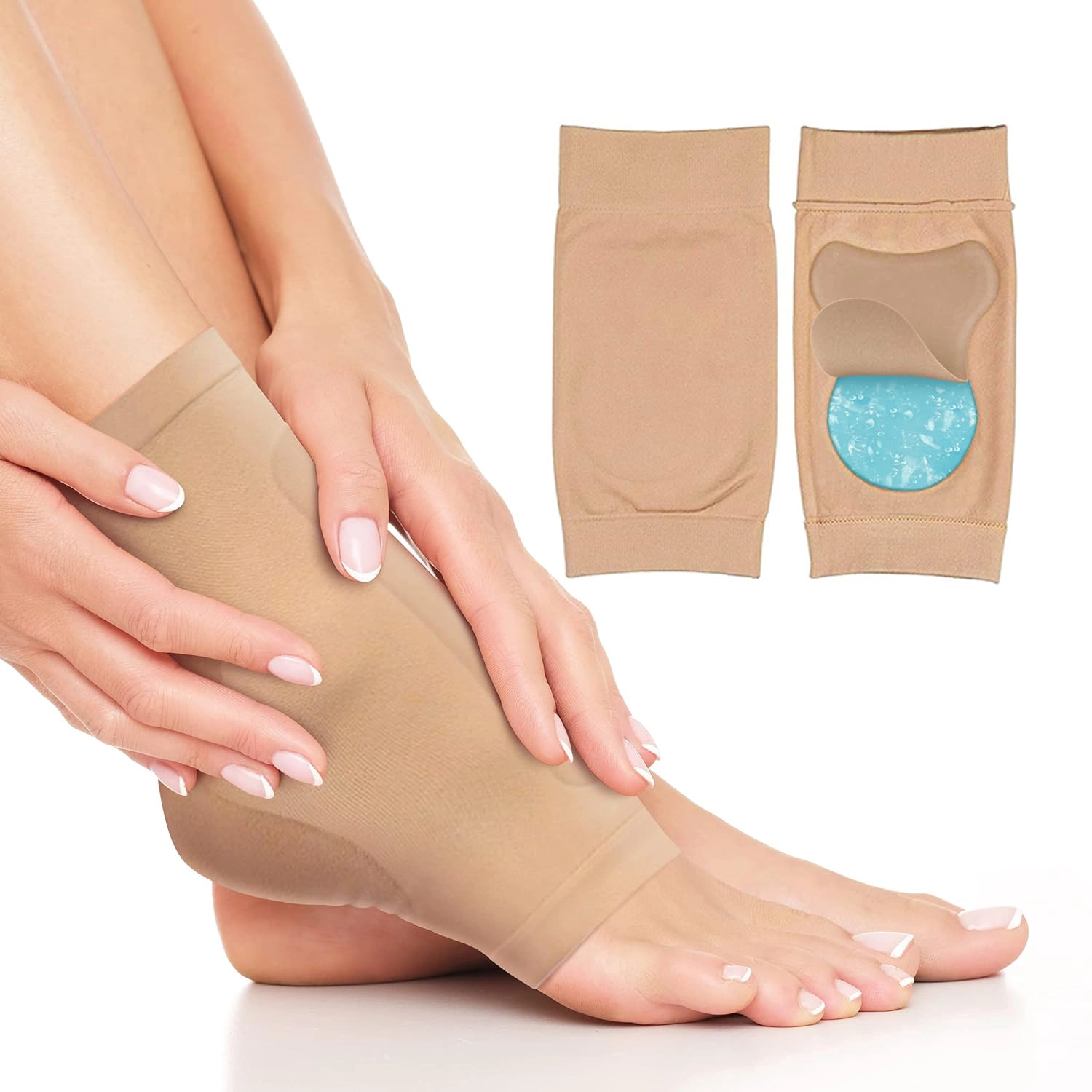
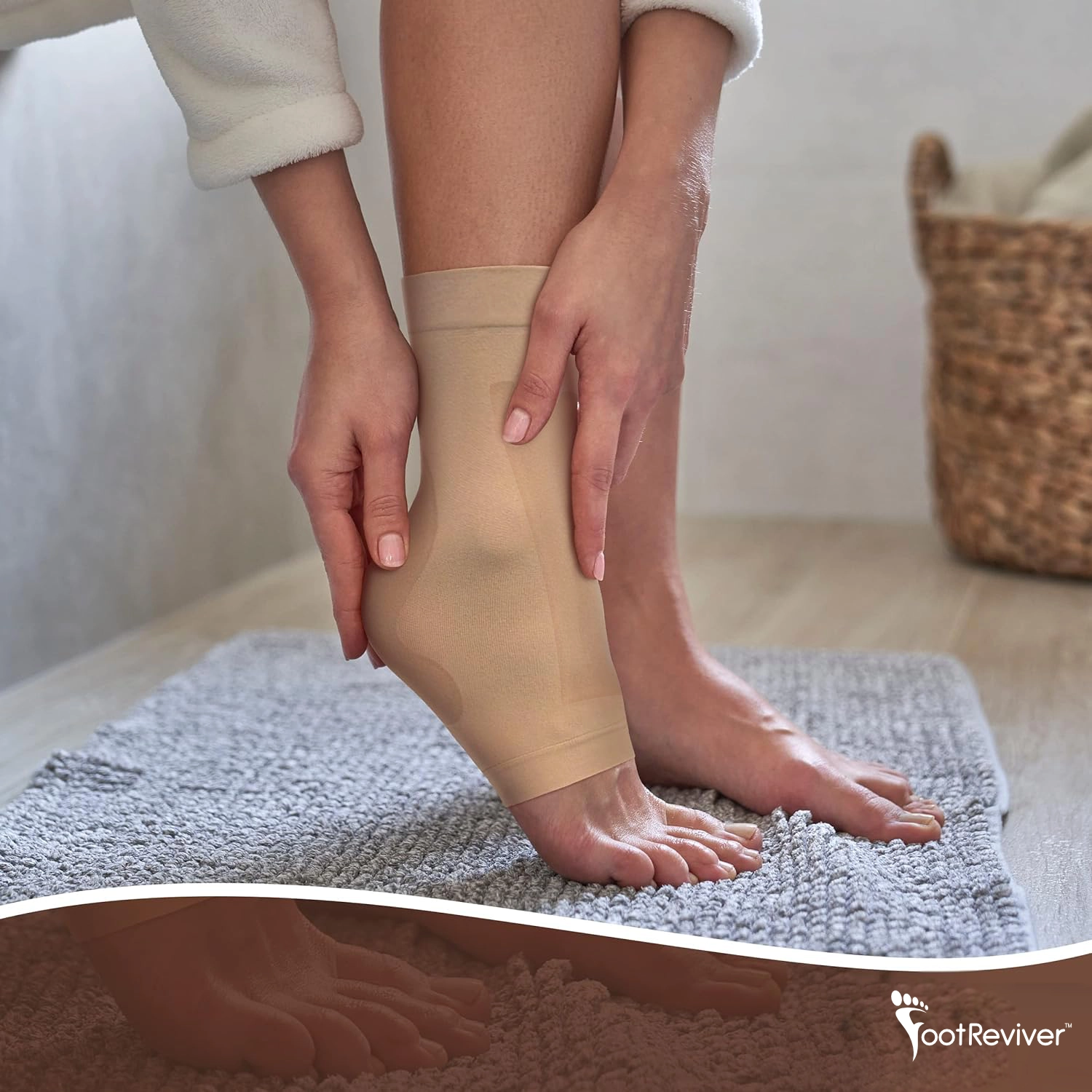
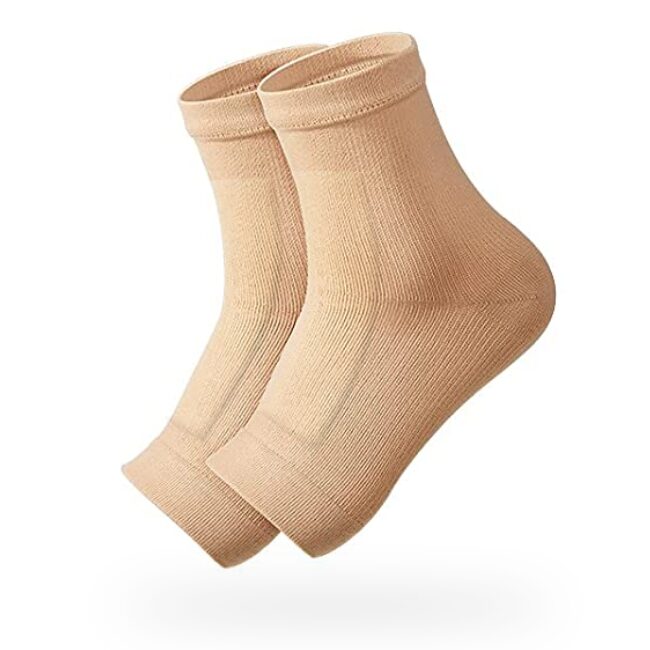
  • Open-toe compression foot sleeves with sewn-in silicone gel pads at the Achilles tendon and front of the ankle.
  • Built for skaters dealing with lace bite, Achilles soreness, heel pain, arch strain, or mild ankle instability.
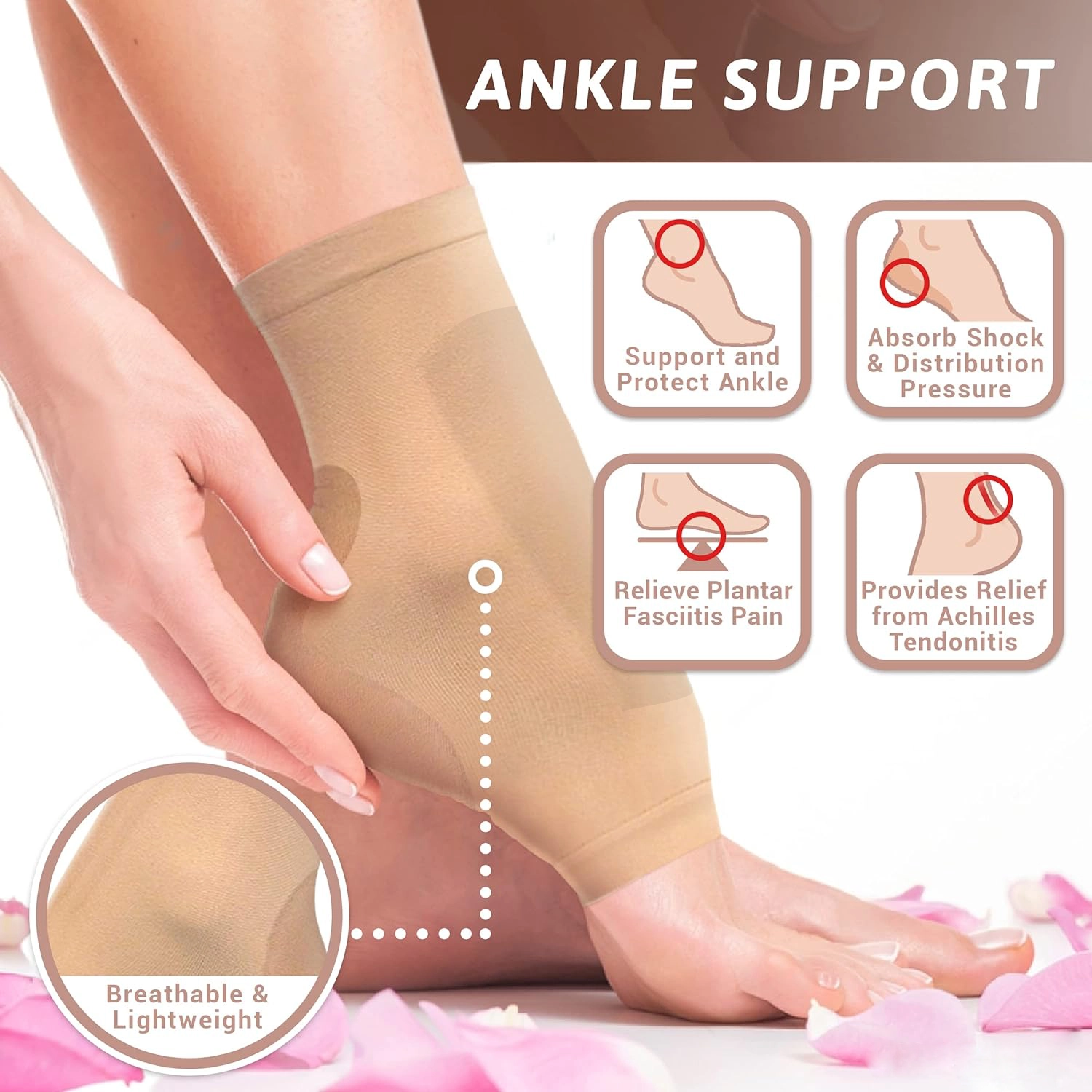
  • Gel pads absorb and spread impact and pressure where skate boots press hardest—reducing irritation during and after skating.
  • Compression fabric supports the arch and improves your sense of ankle position without restricting movement.
  • Rounded-edge cuffs cling securely to your calf without digging in, and smooth seams reduce friction inside your skate.
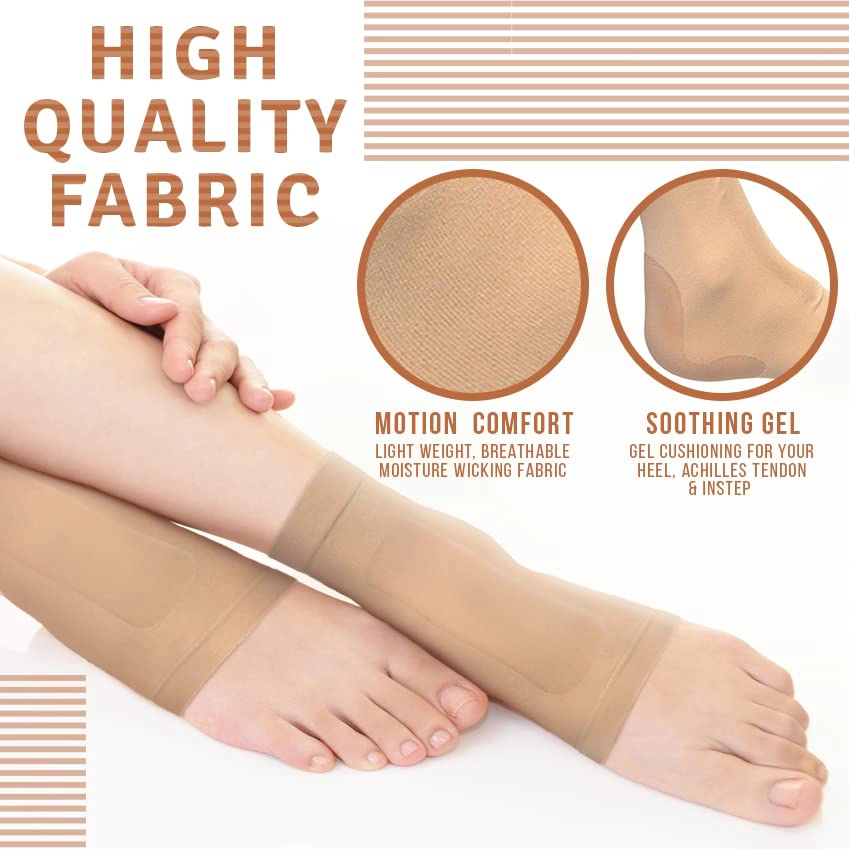
  • Lightweight, breathable, moisture-wicking fabric in neutral beige that sits discreetly under skate boots.
  • Wear directly against skin or over a thin liner sock for best cushioning and compression effect.
  • New to compression products? Start with shorter sessions—an hour or two—and build up gradually.
  • Don’t sleep in them—compression products are for active or upright wear, not overnight use.
  • Hand wash and air dry for best results; machine wash on low setting if needed.
  • Check with a GP or physiotherapist before use if you have diabetes, circulation issues, or reduced sensation in your feet.
  • A supportive aid, not a treatment—works best alongside rest, strengthening exercises, and clinical advice where needed.

Please note there is no guarantee of specific results and that the results can vary for this product.

SKU: 76537-GEL-BEIGE Category: Tag: Brand:

Gel-Padded Compression Sleeves for Skating – Extra Cushioning Where You Need It Most

FootReviver’s gel-padded skate sleeves are open-toe compression sleeves built for skaters who want extra protection at two key pressure points: the Achilles tendon and the front of the ankle where laces press. Sewn-in silicone gel pads sit exactly where impact, friction, and repetitive loading cause discomfort, while built-in compression supports the arch and ankle throughout your session.


Why Skating Puts Feet and Ankles Under Pressure

Skating (whether roller, ice, or skateboard) asks a lot of your feet and ankles. Every push-off loads the Achilles tendon as your calf muscles contract to drive you forward. Landings send impact force straight up through your heel and into the ankle joint. Turns shift your weight sideways, testing the ligaments that hold your ankle stable.

At the front of the ankle, the tongue and laces of your skate press against the extensor tendons (the tendons that lift your toes upward) and the soft tissue beneath as your ankle flexes. Over a long session, that pressure irritates the skin and the structures beneath. At the back, the Achilles tendon (the thick cord connecting your calf to your heel) absorbs repeated tension with every stride. If it’s already sore or overworked, that repetitive load leaves it stiff and painful.

Your foot’s arch works hard during skating. It flattens slightly on landing to absorb shock, then springs back to help propel you forward. If the arch is tired or poorly supported, that cycle becomes less efficient, and the plantar fascia (the thick band of tissue running along the sole) becomes strained.

Skating is dynamic, repetitive, and high-impact. Your feet and ankles manage forces in multiple directions, often for extended periods. Cushioning exactly where the boot presses hardest makes skating noticeably more comfortable.


What These Sleeves Do and How They Work

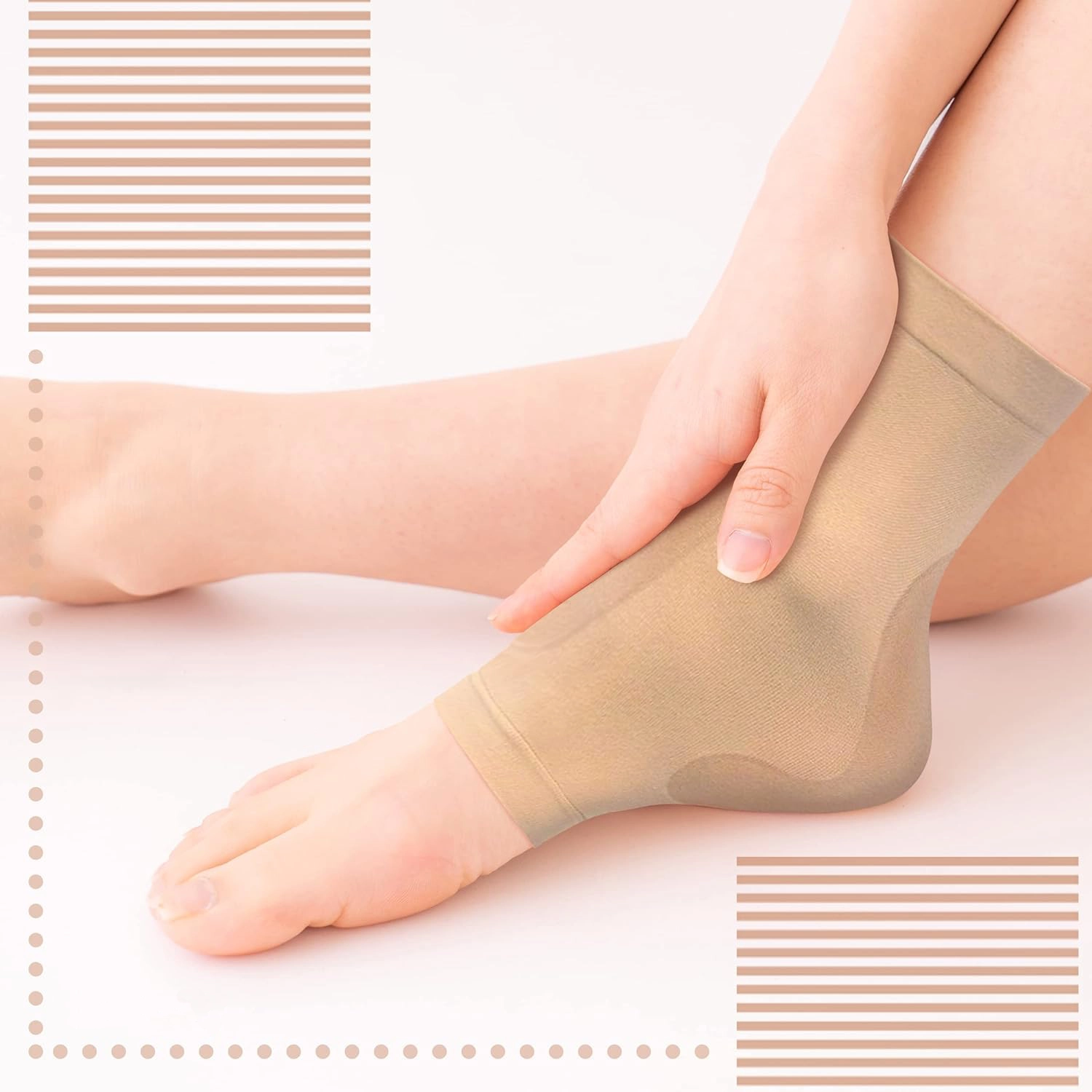
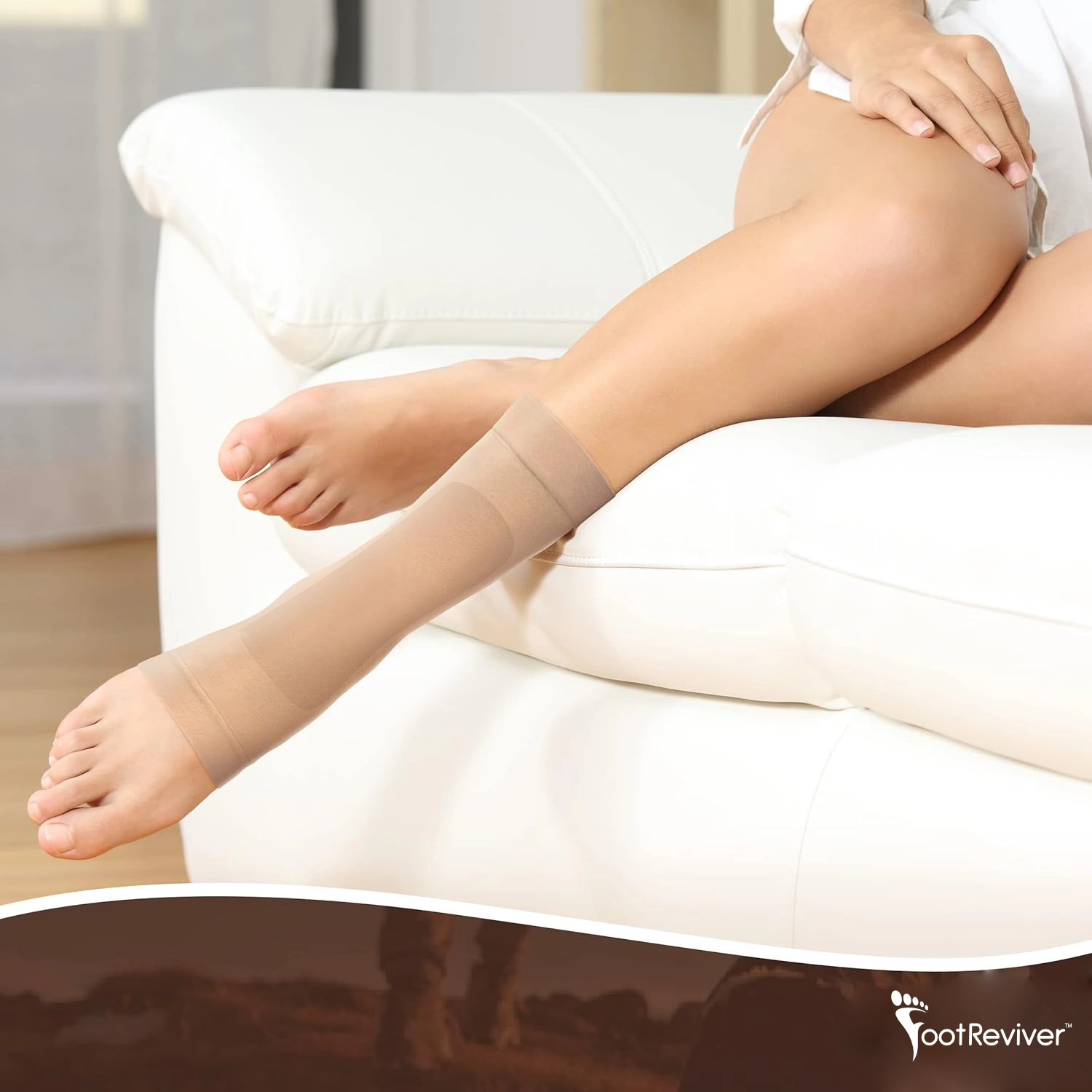
FootReviver’s gel-padded skate sleeves are open-toe compression sleeves that cover your heel, arch, and ankle, leaving your toes free. Two sewn-in silicone gel pads are positioned exactly where skaters need them: one over the Achilles tendon at the back of the heel, and one over the front of the ankle where laces press as your ankle bends upward.

Gel pads are thick and shaped to fit the contours of your foot and ankle, providing meaningful cushioning without bunching or shifting inside your skate. Compression fabric is snug and supportive without feeling restrictive. It holds the gel pads in place and provides gentle, even pressure around the arch and ankle. Cuffs have rounded edges that won’t dig in, and they cling securely to your calf without rolling down or shifting during your session. Smooth, flat seams sit comfortably against your skin, reducing friction and irritation inside your skate.

The fabric is lightweight, breathable, and moisture-wicking, helping to keep your feet comfortable even during intense skating. It’s available in a neutral beige tone that sits discreetly under most skate boots.

You can wear these sleeves directly against your skin or over a thin liner sock, depending on your preference. Most skaters wear them directly against skin for the best cushioning and compression. They’re built to fit snugly (supportive and secure, not tight or constricting).

For care, hand wash in cool water and air dry for best results. Machine wash on a low temperature, gentle cycle if needed. Avoid tumble drying (heat degrades the gel and elastic over time). The gel pads are sewn in and won’t shift or degrade with normal washing.

How the Gel and Compression Work Together

Silicone gel deforms under pressure, spreading load across a wider area so impact and friction don’t concentrate on bone, tendon, or skin. At the Achilles tendon, the gel pad acts as a buffer between the tendon and the back of your skate boot, reducing direct pressure and friction so the tendon can work without being constantly rubbed or compressed against a hard surface.

At the front of the ankle, the gel pad sits between your skin and the skate tongue, cushioning the extensor tendons and the front of the ankle joint. Instead of force focusing on a narrow band of tissue, the gel spreads it across a broader surface, reducing irritation and discomfort.

Compression works alongside the gel, improving proprioception around the arch and ankle (your brain’s sense of where your ankle is in space) and providing gentle support to the ligaments and soft tissues. Movement isn’t restricted, but your ankle gets a more stable base, which is particularly helpful if you’re managing mild instability or returning to skating after a strain.

Compression also encourages blood flow, helping to clear metabolic waste from working muscles and reduce the heaviness or fatigue that builds up during long sessions. It’s not a dramatic effect, but over time it contributes to how your feet feel at the end of a skate and into recovery.

The combination (gel cushioning at high-pressure points, compression support around the structure) addresses both the mechanical forces (impact, friction, shear) and the fatigue that makes feet more vulnerable as a session goes on.

These sleeves are built for skating (roller, ice, or skateboard), but they’re also useful for other high-impact activities where your feet and ankles take repetitive loading, or where you need targeted cushioning and arch support.


Who This May Help

  • Lace bite or pain at the front of the ankle – gel pad cushions where laces press when your ankle bends upward
  • Achilles tendon soreness – gel pad buffers tendon from boot pressure and friction, compression supports alignment
  • Plantar fasciitis or arch strain – compression reduces excessive arch collapse and takes load off the plantar fascia
  • Heel pain or bruising – gel and compression absorb and redistribute impact forces
  • Mild ankle instability – compression improves your sense of ankle position and provides a more stable base without restricting movement
  • Blisters and friction hotspots – gel pads and compression fabric create a smoother interface between your foot and skate

When to Check with a Clinician First

Check with a GP or physiotherapist before using these sleeves if you have new or unexplained foot or ankle pain that hasn’t been assessed, significant swelling, bruising, or inability to bear weight, suspected fracture or severe ligament injury, numbness, tingling, or changes in skin colour or temperature, or diabetes or circulation issues affecting your feet. Compression and cushioning products should be used only with clinical guidance in these cases.

These sleeves are a supportive aid, not a treatment. If you have an existing injury or persistent symptoms, they work best alongside rest, appropriate strengthening exercises, and advice from a GP or physiotherapist.


Sizing and Fit

These sleeves are one-size-fits-most. The compression fabric stretches to conform to the contours of your foot, ankle, and calf, providing a snug, supportive fit without the need for straps or adjustments.

Fit Check

When you first put the sleeves on, they should feel snug but not tight. You should be able to slide them on without excessive pulling, and once in place, they shouldn’t leave deep marks or cause numbness, tingling, or discomfort. The gel pads should sit over your Achilles tendon and the front of your ankle without shifting or bunching.

If the sleeves feel too tight, leave deep marks, or cause any numbness or tingling, they may not be the right fit for you. Remove them immediately.

If the sleeves feel loose or the gel pads shift out of position during skating, the stretch may not be providing enough compression for your foot and calf size.

Break-In Period

New to compression products? Your feet may need a session or two to get used to the feel. Start with shorter wear times (an hour or two) and build up gradually as your feet adapt.


How to Wear Them

Fit and Positioning

Pull the sleeve up so the gel pad at the back sits over your Achilles tendon, and the gel pad at the front covers where your skate laces press. Compression fabric should feel snug and supportive around your arch and ankle, not tight or restrictive. Cuffs should sit comfortably against your leg without digging in. If they feel too tight or leave deep marks, the sleeve may not be the right fit for you.

Wear-Time

New to compression products? Start with shorter sessions (an hour or two) and build up gradually. Your feet need time to adapt to the compression, so check that circulation and comfort remain good throughout. Wear these sleeves during skating and remove them afterwards, or keep them on for a while post-session if you find the compression helps with recovery.

Don’t sleep in them.

Compression products are for wearing when you’re active or upright, not overnight.

Care

Hand wash in cool water and air dry for best results. Machine wash on a low temperature, gentle cycle if needed. Avoid tumble drying (heat degrades the gel and elastic over time). The gel pads are sewn in and won’t shift or come loose with normal washing.


What to Expect and When to Seek Help

Immediate Effects

You’ll likely notice the cushioning straight away—less pressure at the Achilles and front ankle, and a more comfortable fit. Lace bite and friction hotspots often improve within a few sessions.

Gradual Improvement

For things like Achilles soreness, arch strain, or plantar fasciitis, improvement takes time (often weeks rather than days). You may find that post-skate stiffness reduces gradually as the combination of cushioning and compression takes some load off tired structures. These sleeves don’t cure underlying problems, but they make skating more comfortable and reduce aggravation while you address the root cause (whether that’s rest, strengthening, footwear changes, or physiotherapy).

When to Pause and Seek Advice

If symptoms worsen or new pain develops despite using the sleeves, that’s a signal to pause and seek advice. Supportive products work best as part of a broader approach, not as a standalone fix.

Stop using the sleeves and speak to a GP or physiotherapist if you notice any of these:

New or worsening pain despite wearing the sleeves and resting appropriately, swelling that doesn’t settle within a day or two, or bruising that appears without clear cause, inability to bear weight or significant limping, numbness, tingling, or pins and needles in your foot or toes, changes in skin colour or temperature (feet that feel unusually cold, hot, or look pale or bluish), or persistent symptoms that don’t improve over a few weeks, even with rest and supportive measures.

Diabetes, peripheral neuropathy, or any condition affecting circulation or sensation in your feet? Check with your GP or podiatrist before using compression products. Reduced sensation makes it harder to notice if something isn’t fitting correctly or causing pressure.

Don’t use these sleeves to push through significant pain or injury. They’re a supportive tool, not a substitute for proper assessment and treatment when something isn’t right.


When to Dig Deeper: Condition-Specific Guidance

Want to understand why skating aggravates these conditions, what’s happening in the tissue, and what else can help? The sections below go deeper into mechanics and rehab (not just product information).

Lace Bite and Anterior Ankle Pain – Immediate Relief and Prevention

Quick summary: Lace bite happens when skate laces press against the front of your ankle, irritating the tendons and soft tissue beneath. The gel pad in these sleeves sits between your skin and the skate tongue, spreading the pressure across a broader surface. Most skaters notice relief within a few sessions. Adjusting lace tension and using a thicker tongue also help.

Lace bite is pain and irritation at the front of the ankle where your skate laces press against the extensor tendons (the tendons that lift your toes upward) and the bone beneath. The cause is straightforward: as your ankle bends upward, the front of your ankle comes into contact with the skate tongue, and the laces compress that area with every stride. Over a long session, that constant pressure irritates the soft tissue and leaves the area tender, swollen, or bruised.

The silicone gel pad at the front of the ankle sits between your skin and the skate tongue, absorbing and redistributing the pressure so it doesn’t concentrate on a narrow band of tissue. Instead of the laces pressing directly onto tendon and bone, the gel spreads the load across a broader surface, reducing peak force and friction. Most skaters notice relief within a few sessions (less sharp pain during skating and reduced tenderness afterwards).

If lace bite has already caused swelling or bruising, the gel pad won’t heal it straight away, but it will prevent further aggravation while the tissue recovers.

Quick Wins for Lace Bite

Adjusting lace tension is usually the first thing to try. Loosen the laces at the front of the ankle where your ankle bends upward, and keep them tighter at the top for ankle support. This reduces direct compression on the irritated area without sacrificing stability.

Some skaters find a thicker or more padded skate tongue helps. It creates a softer interface between the laces and your ankle. If your skate tongue is thin or worn, replacing it or adding an aftermarket padded tongue makes a noticeable difference.

Taking short breaks to loosen your laces also helps, especially if you’re already dealing with irritation. Even a minute or two of reduced compression gives the tissue a chance to recover before you tighten up again.

Most skaters find that a combination of gel padding, lace adjustments, and a thicker tongue solves lace bite within a few sessions. If the pain is severe enough to limit your skating, or if you’ve tried these adjustments and symptoms persist, speak to a physiotherapist. Occasionally, persistent pain at the front of the ankle signals other issues (impingement of soft tissue or bone spurs at the front of the ankle joint) that need clinical assessment.

Achilles Tendon Soreness and Tendonitis – Load Management and Rehab

Quick summary: Achilles tendonitis happens when the tendon is being asked to do more than it can currently handle. Rest alone doesn’t fix it (you need eccentric strengthening to rebuild the tendon’s capacity). The gel pad in these sleeves reduces friction and compression from your skate boot, which helps prevent further aggravation while you rehab. If you feel a sudden pop or can’t push up onto your toes, stop skating and seek urgent assessment (these are signs of a possible rupture).

Achilles tendonitis (inflammation or irritation of the Achilles tendon) often flares when you increase skating intensity, duration, or frequency without giving the tendon time to adapt. Every push-off loads the tendon, and if it’s already sore or fatigued, that cumulative strain leaves it painful and stiff, especially in the morning or after rest.

Your Achilles tendon connects your calf muscles to your heel bone. Every time you push off during skating, your calf contracts and pulls on the tendon, creating the force that drives you forward. If the tendon is overworked, hasn’t recovered properly, or is dealing with poor foot mechanics (tight calves, weak ankles, stiff footwear), the repetitive loading exceeds its capacity. This causes tiny tears in the tendon fibres and inflammation. The back of your skate boot also presses directly against the tendon, adding friction and compression to the pulling force already running through it.

The gel pad positioned over the Achilles tendon acts as a buffer between the tendon and the back of your skate boot. It absorbs some of the direct pressure and reduces friction, so the tendon isn’t being compressed and rubbed with every movement. This doesn’t reduce the pulling force from your calf contraction, but it removes one layer of aggravation (the external mechanical irritation that makes an inflamed tendon worse).

Compression provides gentle support around the ankle and heel, improving proprioception (your brain’s sense of where your ankle is in space) and encouraging slightly better alignment during push-off. It’s subtle, but it may help reduce inefficient movement that overloads the tendon.

Why Rest Alone Doesn’t Fix Achilles Tendonitis

Achilles tendonitis happens when the tendon is being asked to do more than it can currently handle. Rest reduces inflammation and pain short-term, but it doesn’t rebuild the tendon’s ability to handle load. If you return to skating after rest alone, the tendon is often still weak and vulnerable, and symptoms flare again quickly.

Eccentric strengthening is the most effective approach for Achilles rehab. Eccentric exercises involve controlled lengthening of the muscle-tendon unit under load. For example, slowly lowering your heel below the level of a step while your calf is under tension. This type of loading stimulates the tendon to adapt and build capacity, making it stronger and more resilient over time.

A physiotherapist can guide you through an eccentric programme tailored to your needs, starting with manageable loads and gradually progressing as the tendon adapts. This is typically combined with temporarily reducing how much or how hard you skate to give the tendon space to recover, and addressing any contributing factors like tight calves, poor footwear, or training errors such as sudden increases in mileage or intensity.

If your Achilles pain is severe, sudden, or accompanied by a popping sensation or inability to push up onto your toes, stop skating and seek assessment urgently. These are signs of a partial or complete tendon rupture, which needs immediate clinical attention.

Plantar Fasciitis, Arch Strain, and Heel Pain – Biomechanics, Footwear, and Impact Tolerance

Quick summary: Plantar fasciitis is irritation of the thick band running along your sole that supports your arch. Skating involves repetitive impact and push-off, both of which load the plantar fascia. The compression in these sleeves provides gentle arch support that reduces excessive collapse, taking some load off the fascia. The gel pad at the heel absorbs impact forces. Footwear changes, calf stretching, and gradual load progression are also essential for recovery.

Plantar fasciitis is irritation or degeneration of the plantar fascia—the thick band running along your sole from heel to toes that supports your arch and absorbs shock. If it’s overloaded, it becomes painful, typically at the heel attachment or along the arch itself. The pain is often worst first thing in the morning or after rest, when the fascia has stiffened.

Skating involves repetitive impact and push-off, both of which load the plantar fascia. Every landing compresses your arch slightly as your foot absorbs shock. If your arch flattens and rolls inward excessively when your foot lands (overpronation), or if the fascia is already irritated, that repetitive stretching exceeds the tissue’s capacity and causes inflammation or tiny tears. Without proper arch support inside your skate boots, the fascia has to work harder to stabilise your arch with every stride.

Heel pain and bruising often go hand in hand with plantar fasciitis, especially in skaters. Repetitive impact from landing and push-off bruises the fat pad under your heel or irritates the bone itself, leaving you with a deep, aching pain that worsens during and after skating. This is especially common if your skate boots have thin insoles or if you’ve recently increased your skating volume without giving your feet time to adapt.

How These Sleeves Help with Foot Mechanics

The gel pads in these sleeves sit at the Achilles and front of the ankle, so they don’t directly cushion the plantar fascia itself. However, the built-in compression around the arch provides gentle, even support that reduces excessive arch collapse during skating. This takes some load off the plantar fascia, particularly during the impact and push-off phases. Compression also improves proprioception and encourages slightly better foot posture, which may reduce inefficient movement that overloads the fascia.

The gel pad at the heel and the compression around it work together to reduce peak impact forces. The gel absorbs and redistributes some of the shock that would otherwise concentrate on the heel bone, while the compression provides a stable, supportive base that encourages better load distribution across your foot. Over time, this reduces the cumulative stress on the heel and allows bruised tissue to recover.

Why Footwear and Biomechanics Matter

Plantar fasciitis and heel pain often come down to how your foot moves and how well it’s supported. If your arch collapses excessively during skating, or if your skate boots don’t provide adequate arch support, the plantar fascia has to work overtime to stabilise your foot. This repetitive overload breaks the tissue down.

Assessing your skate boots and insoles is a sensible step. If the insoles are thin, worn, or flat, replacing them with insoles that provide better arch support and heel cushioning makes a noticeable difference. Some skaters benefit from custom orthotics, especially if they have significant overpronation or other foot alignment issues. A physiotherapist or podiatrist can assess your foot mechanics and recommend appropriate footwear changes.

Calf flexibility also plays a role. Tight calves limit how far your ankle can bend upward, which shifts more load onto the plantar fascia during push-off. Regular calf stretching (both the gastrocnemius with a straight-knee stretch and the soleus with a bent-knee stretch) improves ankle mobility and reduces strain on the fascia.

Heel pain and plantar fasciitis often flare when skating volume or intensity increases too quickly. The tissues haven’t had time to adapt to the increased load, and they become overloaded and irritated. If you’re returning to skating after a break, or if you’re increasing your session length or frequency, build up gradually. Small, consistent increases in load give the tissues time to adapt without exceeding their capacity.

Resting from high-impact activity until the pain settles is often necessary in the acute phase, but complete rest for too long leaves the tissues deconditioned. If symptoms persist despite these changes over a few weeks, a physiotherapist can assess your foot mechanics, guide your rehab, and help you return to skating gradually.

Ankle Instability and Proprioception – Why Compression Helps Confidence and Control

Quick summary: Ankle instability (the feeling that your ankle might give way) often follows a sprain or develops from repeated minor strains. It’s partly mechanical (ligaments have stretched and don’t hold the joint as firmly) and partly neurological (your brain’s sense of where your ankle is becomes less accurate). Compression improves proprioception (your brain’s awareness of ankle position), helping you react more quickly to shifts in balance. Strengthening the muscles around the ankle, particularly on the outside, is essential for long-term stability.

Ankle instability is that feeling your ankle might roll or give way, especially on uneven surfaces or during quick direction changes. It often develops after an ankle sprain that didn’t fully heal, or from repeated minor strains that gradually stretch the ligaments. The ankle joint feels less secure, and you may find yourself hesitating or adjusting your movement to protect it.

Instability has two components: mechanical and neurological. Mechanically, you may have mild ligament laxity—the ligaments that hold your ankle stable have stretched and don’t provide the same firm support they once did. Neurologically, the injury disrupts proprioceptive feedback. Your brain relies on signals from receptors in the ligaments, tendons, and joint capsule to know where your ankle is and how it’s moving. If those signals are disrupted (either by ligament damage or by reduced confidence after injury), you can’t react as quickly to shifts in balance.

Skating demands quick weight shifts, lateral movements, and constant adjustments to maintain balance. If your ankle feels unstable, you’re more likely to compensate by tensing up, shifting weight awkwardly, or avoiding certain movements altogether. This protective strategy reduces your performance and increases fatigue, and it doesn’t address the underlying instability.

How Compression Improves Proprioception and Confidence

Compression around the ankle provides gentle support to the ligaments and soft tissues without restricting movement. More importantly, it improves proprioceptive feedback. The constant, even pressure reminds your brain where your ankle is and how it’s moving, helping you react more quickly to shifts in balance. This doesn’t replace the mechanical support that stretched ligaments used to provide, but it compensates for some of the lost neurological feedback.

Many skaters with mild instability find that compression gives them more confidence during skating. The ankle feels more secure, not because the compression is physically holding it in place (it’s not rigid enough for that), but because the improved proprioception allows better control and quicker reactions.

Strengthening Is Essential for Long-Term Stability

Compression is a supportive tool, not a fix for ankle instability. Long-term stability comes from strengthening the muscles around the ankle, particularly the muscles on the outside of your ankle (the peroneals). These resist inversion—the inward rolling motion that causes most ankle sprains. If these muscles are weak, your ankle is more vulnerable to rolling, even with compression.

A physiotherapist can guide you through a progressive strengthening and balance programme tailored to your needs. This typically includes exercises like single-leg balance (progressing to unstable surfaces like a wobble board), resistance band work for the peroneals, and controlled movements that challenge your ankle’s stability in multiple directions.

If your ankle instability is severe (frequent giving way, significant swelling after minor incidents, or a history of multiple sprains), or if you’re considering returning to high-level skating after a serious injury, speak to a physiotherapist or sports medicine clinician. Occasionally, persistent instability signals significant ligament damage that may need more intensive rehab or, rarely, surgical assessment.


Not Sure If These Will Help?

If you’re dealing with foot or ankle pain and you’re not sure whether these sleeves are right for you, speak to a physiotherapist. They can assess your feet, identify what’s causing the problem, and give you tailored advice on footwear, supportive products, and rehab exercises.

These sleeves work best as part of a broader approach: good skating technique, appropriate rest and recovery, strengthening exercises where needed, and clinical guidance if symptoms persist. They’re built to work alongside those things, not to replace them.

FootReviver’s gel-padded skate sleeves are designed for skaters who want targeted cushioning and compression at the pressure points that matter most. If lace bite, Achilles soreness, arch strain, or mild instability are limiting your skating, these sleeves may help you skate more comfortably and recover more effectively.

Be the first to review “Gel Padded Skate Socks”

Your email address will not be published. Required fields are marked *

Reviews

There are no reviews yet.

Fast & Secure Checkout Through Paypal

Pay with Paypal the secure payment gateway that accepts all credit and debit cards. Paypal is free and secure and no credit or bank information is ever stored or shared with us.

Fast Dispatch

Enjoy your items soon with quick dispatch via Royal Mail. Expect to have your items between 1-3 working days for domestic orders. 7-10 Working days for international orders.

Return Policy – 30 Day Money Back Guarantee

In the unlikely event, you are unhappy with your purchase you can return it within 30 days for a refund. Please contact us via the form on the contact us page to start your return.

To return an item please send it to: Nuova Health UK, 81 Highfield Lane, Waverley, Rotherham, S60 8AL. Please include a note with your order id so we know who to refund. Please retain your postage receipt as proof of postage. All that we ask is that the item is in the original packaging and unused.
Main Menu

£10.99inc VAT

Add to cart