
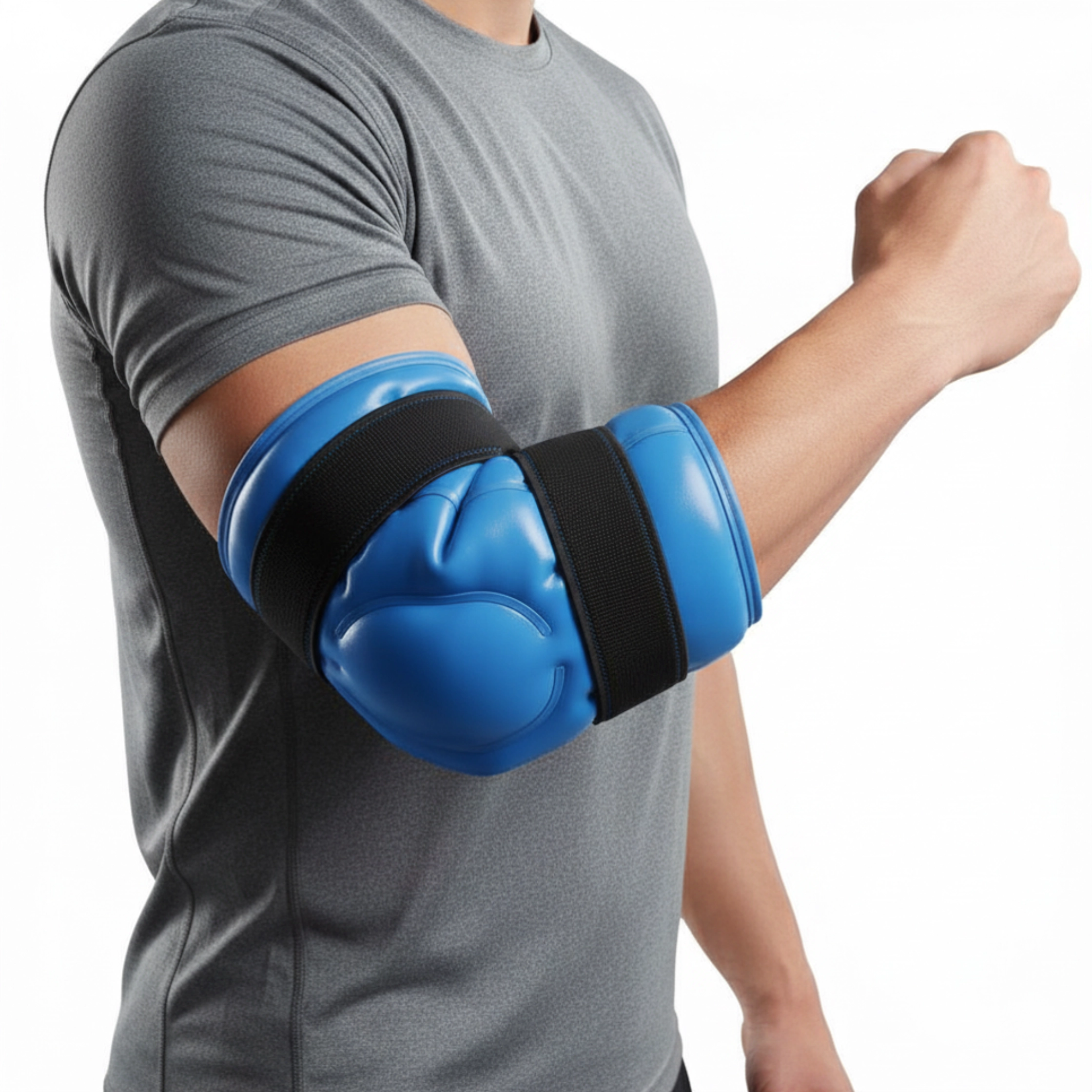
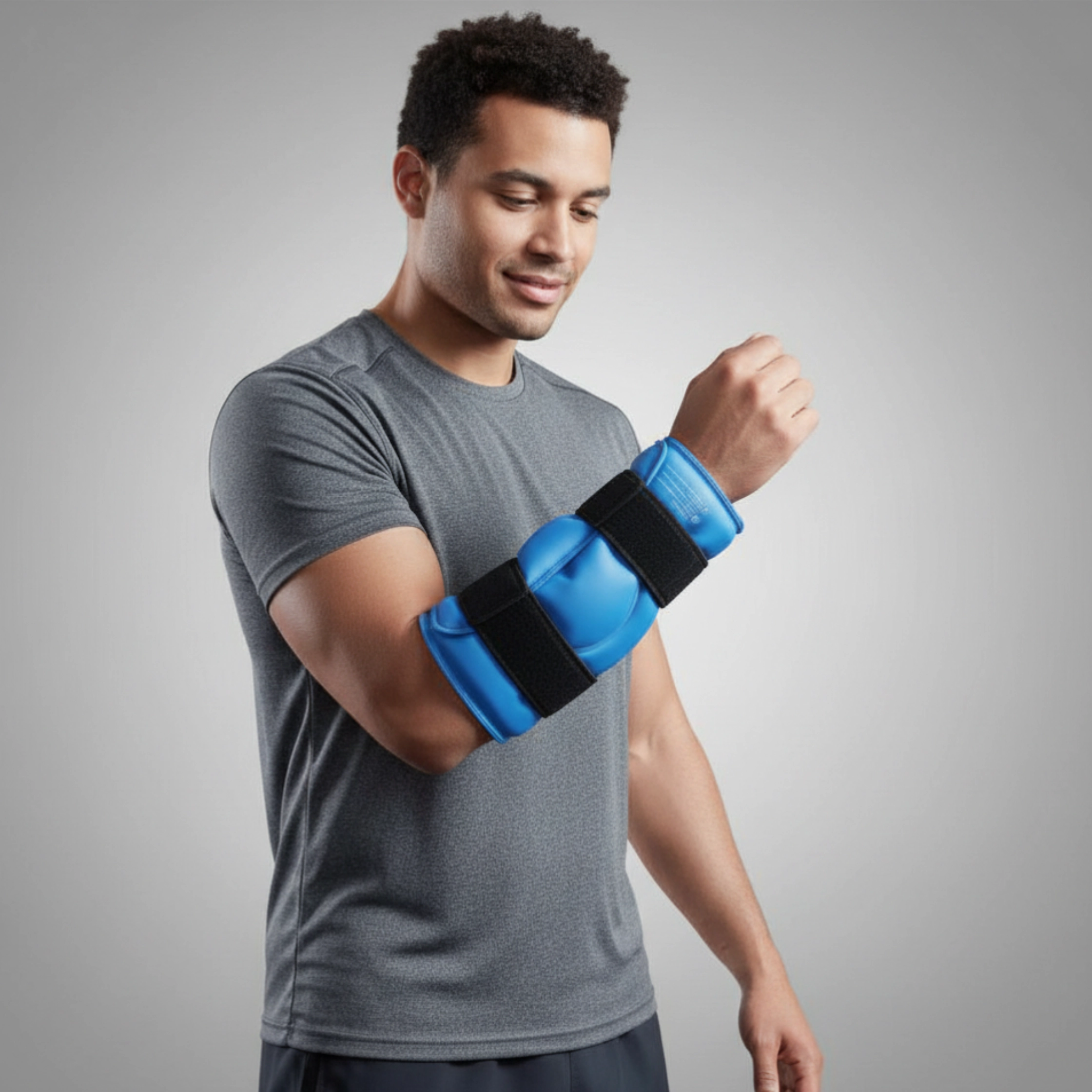
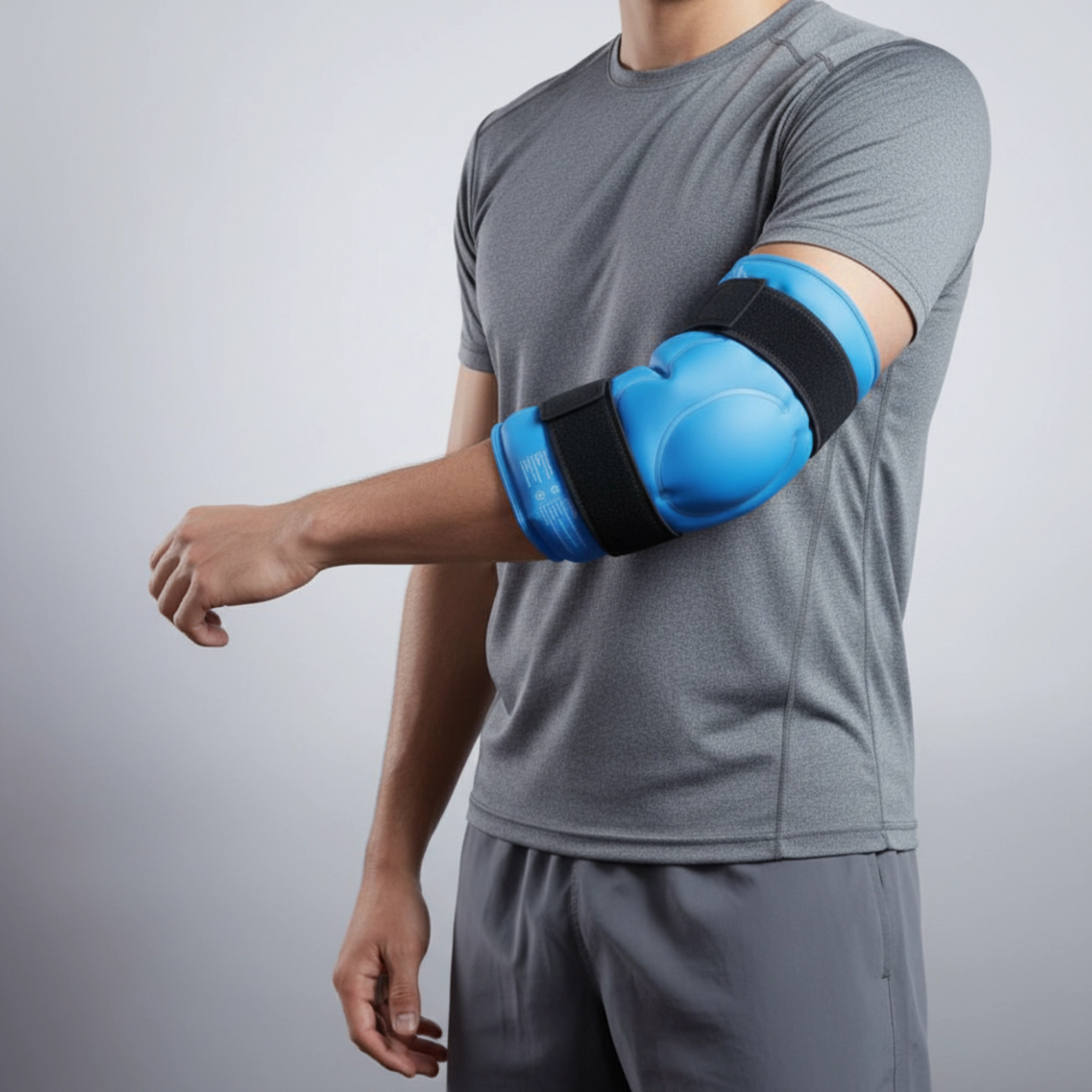
Gel Elbow Ice Pack Wrap for Elbow Pain Relief
£22.99£24.99 (-8%)inc VAT
- Flexible gel pack wrap designed for cold and heat compression therapy on the elbow
- Helps manage acute elbow pain, inflammation, and swelling during flare-ups or after injury
- Useful for tennis elbow, golfer’s elbow, post-injury inflammation, arthritis-related swelling, and tendonitis
- Gel pack stores in the freezer for cold therapy or warms in the microwave for heat therapy
- Stays cold for 20 to 30 minutes—well beyond the recommended 15 to 20 minute session
- Adjustable hook-and-loop straps provide snug, controlled compression without restricting circulation
- Lightweight, breathable fabric allows comfortable wear during rest or light activity
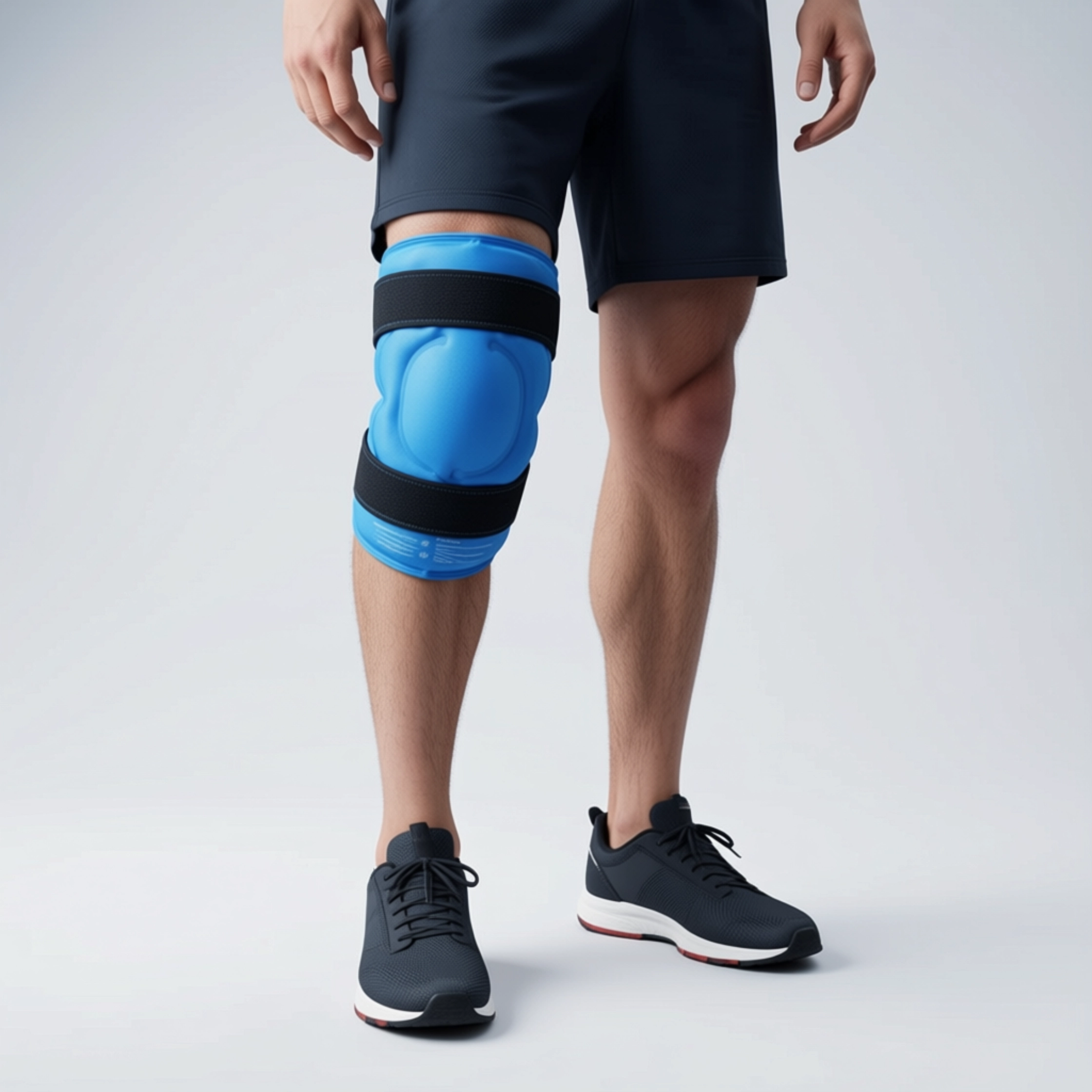
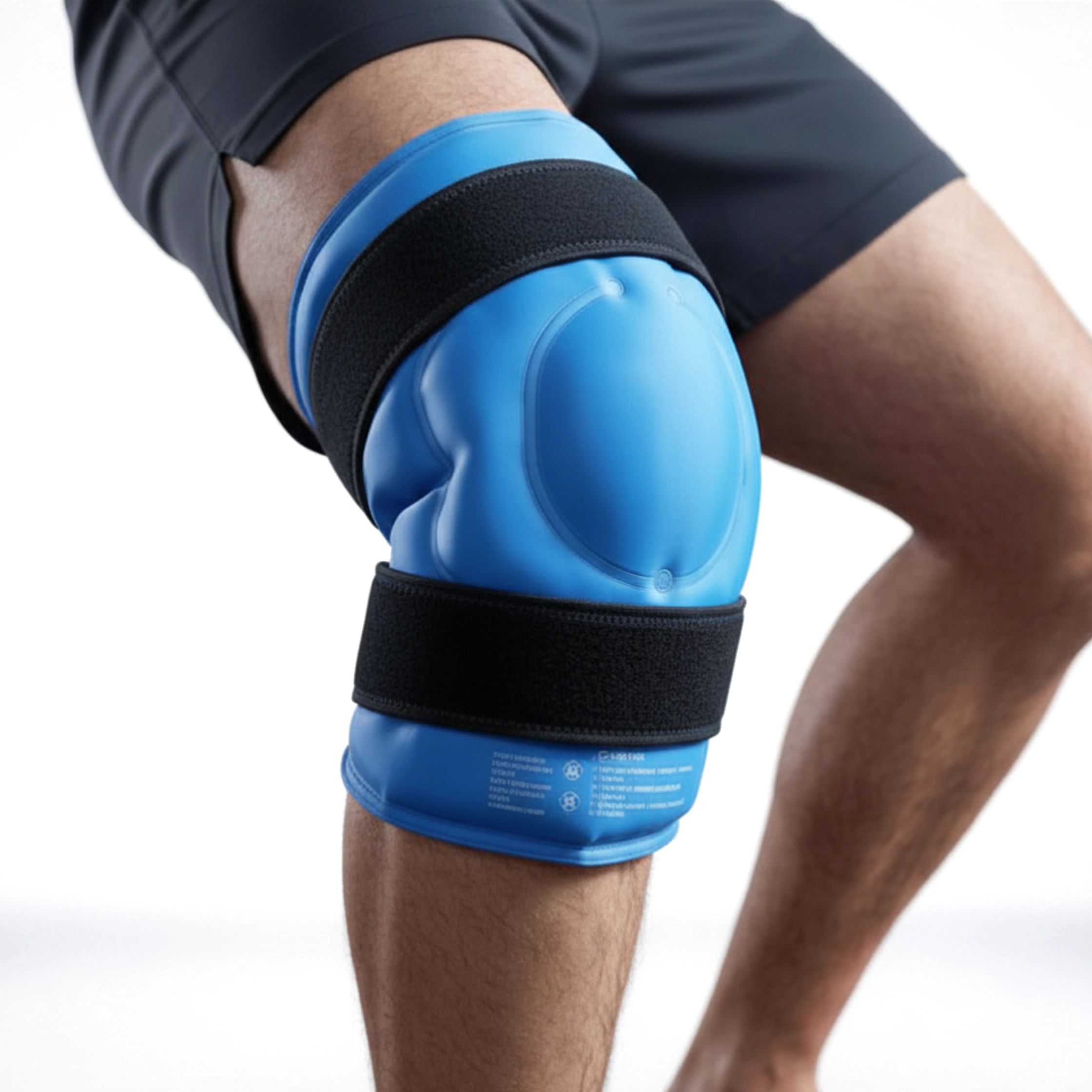
- Versatile design—can also be used on forearm, upper arm, knee, lower leg, or ankle
- Apply for 15 to 20 minutes, two to three times daily during the acute phase
- Most effective in the first 48 to 72 hours after injury or at the start of a flare-up
- Not suitable for use over open wounds, broken skin, or areas with impaired circulation or sensation
- Check temperature carefully before applying heat therapy; do not use heat during acute inflammation
- Speak to a GP or physiotherapist if pain worsens after two weeks, or if you experience new numbness, weakness, or restricted movement
- Designed for adults in the UK managing acute elbow pain at home as part of a broader recovery approach
Elbow pain has a way of making itself known throughout your day. Perhaps it started after a long session at the gym, a weekend of DIY, or just gradually crept in from repetitive movements at work. You might notice a dull ache on the outside or inside of your elbow, stiffness first thing in the morning, or a sharp twinge when you grip, lift, or twist your arm. Even simple tasks—opening a jar, lifting a kettle, turning a door handle—can suddenly feel like a challenge.
If you’re dealing with a flare-up right now—when symptoms that have been manageable suddenly spike after increased activity or stress on the joint—you’re likely looking for relief that works quickly and fits into your routine. Cold compression is one of the most straightforward ways to manage acute inflammation at home, and this elbow ice pack wrap is designed to deliver it effectively.
Why elbow pain happens—and why it lingers
Your elbow is a hardworking joint. Three bones meet here—the humerus in your upper arm and the radius and ulna in your forearm—held together by ligaments, supported by tendons, and moved by muscles that run from your shoulder right down to your fingers. Every time you grip a door handle, twist a jar lid, lift a bag, or push yourself up from a chair, forces travel through this compact joint—from your hand, through your forearm, and into your upper arm. When those forces are repeated often enough, or applied suddenly with enough intensity, the soft tissues around the elbow can become irritated and inflamed.
Inflammation is how your body responds to strain or injury. Blood flow increases to the area, bringing immune cells and nutrients to start the repair process. But that increase in fluid and activity also causes swelling, warmth, and pain. In the first few days after a strain or during an acute flare-up—when inflammation is at its peak and symptoms are most intense—this inflammatory response is working hardest. Cold compression is most useful at this point.
The most common elbow problems we see are overuse conditions—injuries that develop gradually when the same movement is repeated often enough that the tissues don’t get time to recover. Tennis elbow—lateral epicondylitis—affects the tendons on the outside of the elbow, specifically where the extensor muscles of your forearm attach to the bony prominence called the lateral epicondyle. These muscles lift your wrist and fingers back against resistance. When you grip something tightly or extend your wrist repeatedly—painting a ceiling, typing with your wrists cocked back, or hitting a backhand in tennis—those tendons are working hard. Over time, if you’re asking more of the tendon than it can handle, micro-tears develop in the tissue, triggering inflammation and pain. You’ll often feel tenderness right over that bony point on the outside of your elbow, and the pain can radiate down your forearm, especially when you try to grip or lift.
Golfer’s elbow—medial epicondylitis—is similar, but affects the inside of the elbow where the flexor muscles attach. These muscles bend your wrist and fingers towards your palm. Repetitive gripping, lifting, or wrist flexion—think gardening, carrying shopping bags, or swinging a golf club—can overload these tendons in the same way. The pain is usually felt on the inner side of the elbow and can spread down the inside of your forearm.
Post-injury inflammation is another common situation. If you’ve had a fall, knocked your elbow, or overstretched it during sport, the immediate aftermath often involves swelling and pain as the tissues react. In older adults, arthritis-related flare-ups can cause similar symptoms—stiffness, swelling, and discomfort that comes and goes with activity and the weather.
You might also be dealing with cubital tunnel syndrome, where the ulnar nerve along the inside of your elbow becomes compressed or irritated—often from prolonged bending or leaning on the elbow. This can cause numbness, tingling, and weakness in your hand and fingers, particularly the ring and little fingers. Elbow dislocations and fractures are traumatic injuries that can damage bone, ligaments, and other structures, usually from falls or high-impact accidents. Elbow sprains involve stretched or torn ligaments, common in activities that involve throwing, lifting, or falling. Tendonitis—inflammation of the tendons that connect muscle to bone—often results from repetitive motion or overuse. And bursitis, inflammation of the small fluid-filled sac that reduces friction in the elbow, can be triggered by repetitive motion, prolonged pressure, or a direct blow.
All of these cause acute inflammation in a relatively small area. Because the elbow doesn’t have much padding, when the tendons, ligaments, or joint lining become inflamed, you feel it quickly. And because the elbow is involved in so many everyday movements, it’s hard to rest it completely—which is why managing inflammation early can make such a difference to how quickly you start to feel better.
Who this may help
This wrap is most useful during the acute phase—the first few days after an injury or flare-up, when inflammation is at its peak and symptoms are most intense. It’s designed for adults dealing with:
Tennis elbow or golfer’s elbow flare-ups
If you’ve been managing one of these overuse conditions and you’ve had a spike in symptoms after a busy day or a return to activity, cold compression helps settle the inflammation and gives you time to adjust your activity levels.
Post-injury inflammation
If you’ve strained, twisted, or knocked your elbow and you’re in the first two to three days after the incident, applying cold and compression helps manage the immediate swelling and discomfort as your body starts the repair process.
Arthritis-related swelling
For people with osteoarthritis or inflammatory arthritis affecting the elbow, flare-ups can cause localised swelling and stiffness. Cold therapy won’t change the underlying condition, but it eases the symptoms during a difficult patch.
Post-activity soreness
If you’ve pushed a bit harder than usual—whether at the gym, in the garden, or during a DIY project—and your elbow is letting you know about it, a session with the ice pack wrap calms things down before the soreness becomes more persistent.
Cubital tunnel syndrome symptoms
When the ulnar nerve becomes irritated from prolonged bending or pressure on the elbow, cold compression helps reduce the inflammation around the nerve and eases the numbness or tingling in your hand and fingers.
Elbow dislocations, fractures, and sprains
After a traumatic injury—once you’ve had it checked and treated by a healthcare professional—cold compression is an important part of managing swelling and pain during the early healing phase.
Tendonitis and bursitis flare-ups
Whether it’s inflammation of the tendons from repetitive motion or irritation of the bursa from pressure or impact, cold therapy helps settle the acute inflammatory response and provides relief while you adjust how you do tasks or temporarily avoid movements that aggravate the pain.
Who should be cautious
This wrap isn’t suitable for everyone. Speak to a GP or physiotherapist before using it if you have:
- Open wounds, cuts, or broken skin around the elbow
- Conditions affecting circulation or sensation in your arms, such as Raynaud’s phenomenon, peripheral neuropathy, or certain cardiovascular conditions
- Uncertain diagnosis—if you’re not sure what’s causing your elbow pain, or if this is the first time you’ve experienced it, a proper assessment can help you understand whether cold compression is the right approach
This wrap isn’t a substitute for a proper diagnosis or a treatment plan. Cold compression is a tool for managing symptoms and supporting recovery—it works best when you understand what you’re dealing with and you’re using it as part of a broader approach that might include rest, adjusting how you do tasks or temporarily avoiding movements that hurt, and strengthening exercises.
How cold compression helps in the acute phase
Cold therapy works by triggering several responses in the tissues beneath the skin. When you apply cold to an inflamed area, the small blood vessels near the surface—capillaries and arterioles—start to narrow. This is called vasoconstriction. When these vessels constrict, less blood flows into the inflamed area. Less blood means less fluid leaking out into the surrounding tissues, which is what causes swelling. By limiting that fluid build-up, you reduce the pressure on the nerves and other structures around the elbow, and that often translates directly to less pain.
Cold also slows down the speed at which nerve endings send signals, creating a numbing effect that dulls the sharp, stabbing pain you might feel when you grip or bend your elbow. It doesn’t switch off pain completely, but it does dull the intensity of the signals being sent to your brain, giving you a window of relief that can make it easier to rest, move gently, or get on with your day without constantly being reminded of the discomfort.
Once you remove the cold and the tissues start to warm up again, your body responds by dilating those blood vessels wider than they were before you applied the cold. This rebound effect is called reactive hyperaemia. Fresh, oxygen-rich blood rushes back into the area, bringing nutrients that support tissue repair and clearing away waste products—lactate and inflammatory mediators—that build up during inflammation. This cycle of cooling and rewarming can support the natural healing process, especially in the first 48 to 72 hours after an injury or during an acute flare-up.
Compression adds another layer of benefit. A snug, even pressure around the elbow helps to support the tendons and ligaments and reduce movement of fluid into the area by gently counteracting the outward pressure from swelling. It also provides a sense of stability. When you combine cold and compression—as this wrap does—you’re addressing both the inflammation and the mechanical support your elbow needs during the early stages of recovery.
This approach is part of what physiotherapists often call the P.R.I.C.E. protocol: Protection, Rest, Ice, Compression, and Elevation. You’re protecting the area from further strain, resting it as much as your daily life allows, applying ice to manage inflammation, using compression to support the tissues, and—where practical—elevating the elbow to help fluid drain away. An elbow ice pack wrap makes the “Ice” and “Compression” parts straightforward and effective.
How this elbow ice pack wrap works
This wrap is designed to make cold compression therapy straightforward and practical. It consists of a flexible gel pack that moulds to the shape of your elbow, held in place by an adjustable fabric wrap with secure hook-and-loop straps. You store the gel pack in your freezer, and when you need it, you slip it into the wrap, position it over the sore area, and fasten the straps to create a snug, stable fit.
The gel pack stays cold for around 20 to 30 minutes—well beyond the recommended 15 to 20 minute session—so you get consistent cold therapy for the full duration without the pack warming up halfway through. If you need heat therapy instead—useful later in recovery or for chronic stiffness—you can warm the same gel pack in the microwave for about a minute. The gel retains both cold and heat for extended periods, giving you flexibility depending on what your elbow needs at different stages. Cold when it’s inflamed and swollen, warmth when it’s stiff and achy—or alternating between the two for contrast therapy if that’s what works best for you.
Because the wrap is adjustable, you can control how much compression you apply. You want it snug enough to hold the pack firmly in place and provide gentle support, but not so tight that it restricts circulation or feels uncomfortable.
The fabric is lightweight and breathable, so you can wear the wrap while you’re sitting, resting, or doing light tasks around the house without it feeling bulky or getting in the way. The design is simple, but that simplicity is the point—it does one job well, and it does it in a way that fits into your day easily.
One of the most practical features is its versatility. While it’s designed with the elbow in mind, the adjustable straps and flexible gel pack mean you can also use it on your forearm, upper arm, knee, lower leg, or ankle if you need targeted cold or heat compression elsewhere. If you’re active or prone to the occasional strain in different areas, this wrap can serve multiple purposes in your home recovery kit.
How to use your elbow ice wrap
Using the wrap is straightforward, but a few practical points will help you get the most out of it safely and comfortably.
Before you first use it, place the gel pack in your freezer for at least two hours, or until it’s fully frozen. Keep it in the freezer between uses so it’s ready when you need it. If you’re planning to use heat therapy instead, warm the gel pack in the microwave for about a minute—check the temperature carefully before applying it to your skin.
When you’re ready to apply it, take the gel pack out of the freezer (or microwave) and slide it into the fabric wrap. Position the wrap so the gel pack sits directly over the sore area—usually the bony point you can feel on the outside of your elbow for tennis elbow, or the inside for golfer’s elbow. Fasten the straps snugly, but not so tight that the wrap digs in or causes numbness or tingling. If you’re not sure how tight is right, start looser and adjust. You should feel firm, even pressure—like a supportive hand around your elbow—not a tourniquet. If your fingers start to tingle, or if the skin below the wrap looks pale or feels cold to the touch beyond the area covered by the gel pack, loosen the straps immediately. You want compression, not constriction.
Wear the wrap for 15 to 20 minutes at a time. This is long enough for the cold (or heat) to penetrate the tissues and provide relief, but not so long that you risk skin irritation, cold injury, or a rebound increase in blood flow that can worsen swelling. If your skin starts to feel uncomfortably numb, or if you notice any unusual tingling or colour change, remove the wrap immediately.
Repeat two to three times a day during the acute phase—when inflammation is at its peak and symptoms are most intense. You can use it more often if needed, but always allow your skin to return to normal temperature between sessions—at least an hour or two of rest between applications.
Most people notice the pain starting to ease within the first 10 to 15 minutes as the cold takes effect. The sharp, stabbing sensation often softens to a duller ache. The area may feel numb or tingly while the pack is on—that’s the cold slowing down nerve signals. Some people describe it as a ‘heavy’ or ‘thick’ feeling around the elbow, which is normal. Once you remove the wrap, sensation gradually returns over the next few minutes, and you’re often left with an hour or more of reduced pain—enough time to rest, move gently, or get on with tasks that were uncomfortable before.
Cold compression is most effective in the early stages. If you’re still experiencing significant pain after a week or two of home management, or if your symptoms are getting worse rather than better, seek advice from a physiotherapist or GP. Persistent elbow pain often benefits from a more active approach—strengthening exercises, adjusting how you do tasks or temporarily avoiding movements that hurt, and sometimes treatment from a physiotherapist who can work directly on the joint and soft tissues to restore movement—and a professional can help you work out what’s needed.
When to seek help
Cold compression is a safe, well-established approach for managing acute elbow pain at home, but it’s not appropriate for every situation. There are times when professional advice is needed, and recognising those moments early can save you weeks of frustration or prevent a minor problem from becoming a more persistent one.
Speak to a GP or physiotherapist if your pain is getting worse after two weeks of home management instead of gradually improving. Acute inflammation should start to settle within the first few days to a week. If it’s not, there may be something else going on that needs assessment.
If you’re experiencing new or worsening numbness, tingling, or weakness in your hand or fingers, that can suggest nerve involvement—such as irritation of the ulnar nerve, which runs along the inside of the elbow—and it’s worth getting checked sooner rather than later.
If you can’t straighten or bend your elbow fully, or movement is severely restricted and painful, seek advice. Significant loss of movement, especially if it came on suddenly, may indicate a more serious injury to the joint, ligaments, or surrounding structures.
If you’ve had a fall or direct blow to the elbow and you’re concerned about a possible fracture or dislocation, seek medical attention promptly. If the area is very swollen, deformed, or you heard or felt something give way at the time of injury, don’t wait.
If you notice skin changes where you’ve been applying the wrap—persistent redness, blistering, or unusual sensitivity—stop using the wrap and speak to a healthcare professional. While rare, some people can have a reaction to prolonged cold application, especially if the gel pack has been applied directly to the skin without a barrier.
If you’re not sure what’s causing your elbow pain, or if this is the first time you’ve experienced it, a proper assessment can help you understand what you’re dealing with and whether cold compression is the right approach, or whether you’d benefit from other treatments such as exercises, treatment from a physiotherapist who can work directly on the joint and soft tissues to restore movement, or adjusting how you do tasks to avoid aggravating the pain.
When using the wrap for heat therapy, always check the temperature of the gel pack before applying it to your skin. If it feels uncomfortably hot to the touch, let it cool slightly. Don’t use heat therapy if you have acute swelling or in the first two to three days after an injury—stick to cold during that initial inflammatory phase. Heat is more appropriate for chronic stiffness, muscle tension, or once the acute inflammation has settled.
Supporting your recovery
Cold compression is one tool for acute elbow pain, and it’s a good one—but it works best when it’s part of a broader approach. Once the initial inflammation has settled, the focus usually shifts to restoring movement, building strength, and gradually returning to the activities that matter to you.
If you’re dealing with an overuse condition like tennis elbow or golfer’s elbow, recovery usually involves working on the strength and endurance of the muscles in your forearm and upper arm. The goal is to help them handle the loads you’re asking of them without flaring up again. A physiotherapist can guide you through a progressive exercise programme—starting with gentle movements like wrist curls or controlled elbow bends, and gradually building up strength and endurance as your tissues adapt—tailored to your situation.
If you’ve had an acute injury, recovery usually involves avoiding movements that hurt—like gripping, lifting, or twisting—while keeping the elbow gently mobile with simple bends and straightens that don’t aggravate it. As the tissues heal, you gradually put weight and force back through the elbow in controlled amounts. The ice pack wrap can be a helpful companion during that early phase, giving you relief when you need it and helping you stay comfortable enough to keep moving within safe limits.
For arthritis-related pain, cold therapy during flare-ups can be combined with heat therapy at other times, depending on what feels most helpful. Some people find that alternating between the two—cold when the joint is hot and swollen, warmth when it’s stiff and achy—gives them the most relief. A physiotherapist or GP can help you work out what makes sense for your particular pattern of symptoms.
This wrap is one part of the picture, not the whole solution. It’s designed to help you manage symptoms and support your body’s natural healing process during the acute phase. What happens after that—how you rebuild strength, adjust your activities, and prevent future flare-ups—is just as important, and professional guidance and a bit of patience with the process really pay off here.
If your elbow pain is new, persistent, or you’re not sure what’s causing it, start with a conversation with your GP or a physiotherapist. They can help you understand what’s going on, rule out anything that needs more urgent attention, and point you in the right direction for treatment. If you’re already managing a known condition and you’re looking for a practical way to handle flare-ups at home, this wrap offers a straightforward, effective option that fits into your routine easily.
Cold and heat compression won’t solve every elbow problem, but for acute inflammation, post-activity soreness, and the early stages of strain or injury, it’s a sensible, evidence-based approach that can make a real difference to how quickly you start to feel better—and how well you’re able to keep moving while your elbow heals.
Caring for your wrap
The gel pack itself doesn’t need any special maintenance—just keep it in the freezer between uses when you’re planning cold therapy. Wipe it down with a damp cloth if it gets dirty, and make sure it’s dry before putting it back in the freezer or storing it away.
The fabric wrap can be hand-washed in cool water with a mild detergent when needed. Let it air dry completely before using it again. Avoid machine washing or tumble drying, as the heat and agitation can damage the hook-and-loop fastenings over time.
Care for it properly and it’ll last through multiple flare-ups. If the straps start to lose their grip or the fabric becomes worn, it’s time to replace it. A well-maintained wrap is more comfortable and more effective, so it’s worth taking a few minutes to care for it properly.
Important information
The information on this page is intended as general guidance for adults in the UK managing elbow pain at home. It is not a substitute for individual medical advice, diagnosis, or treatment. If you’re not sure what’s causing your symptoms, if your pain is new or unexplained, or if your condition is more complex, please speak to a GP, physiotherapist, or another appropriate healthcare professional for personalised advice. No guaranteed outcomes are promised, and this product is designed to support your recovery as part of a broader approach, not to replace professional care.
Fast & Secure Checkout Through Paypal
Pay with Paypal the secure payment gateway that accepts all credit and debit cards. Paypal is free and secure and no credit or bank information is ever stored or shared with us.
Fast Dispatch
Enjoy your items soon with quick dispatch via Royal Mail. Expect to have your items between 1-3 working days for domestic orders. 7-10 Working days for international orders.
Return Policy – 30 Day Money Back Guarantee
In the unlikely event, you are unhappy with your purchase you can return it within 30 days for a refund. Please contact us via the form on the contact us page to start your return.
To return an item please send it to: Nuova Health UK, 81 Highfield Lane, Waverley, Rotherham, S60 8AL. Please include a note with your order id so we know who to refund. Please retain your postage receipt as proof of postage. All that we ask is that the item is in the original packaging and unused.
Reviews
There are no reviews yet.