

Fingerless Raynauds Disease Gloves
£10.99inc VAT
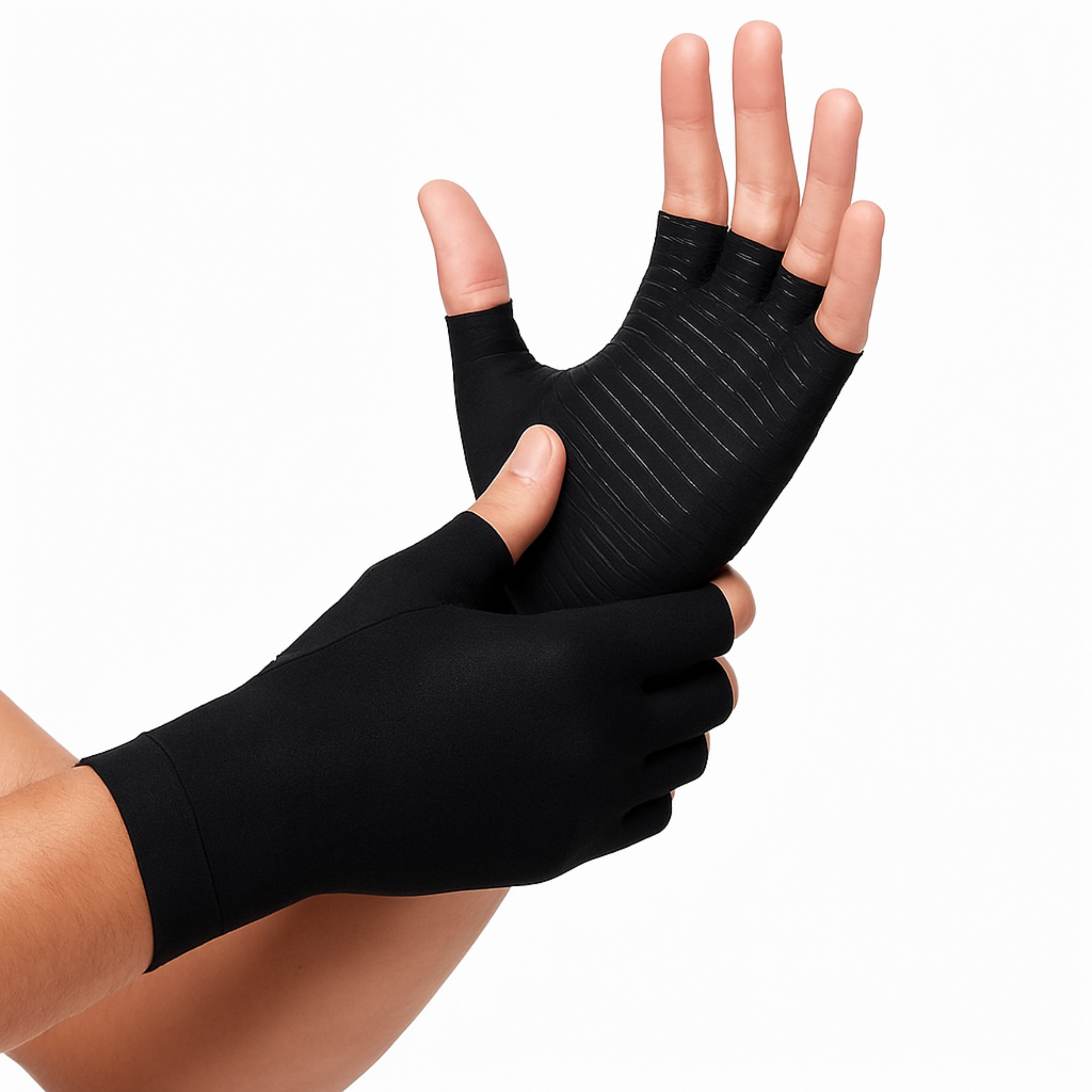
- RevitaFit Half Finger Compression Gloves are a base-layer glove for adults living with Raynaud’s in the hands.
- The gloves combine gentle, even compression with breathable warmth to help support circulation and keep hands comfortable.
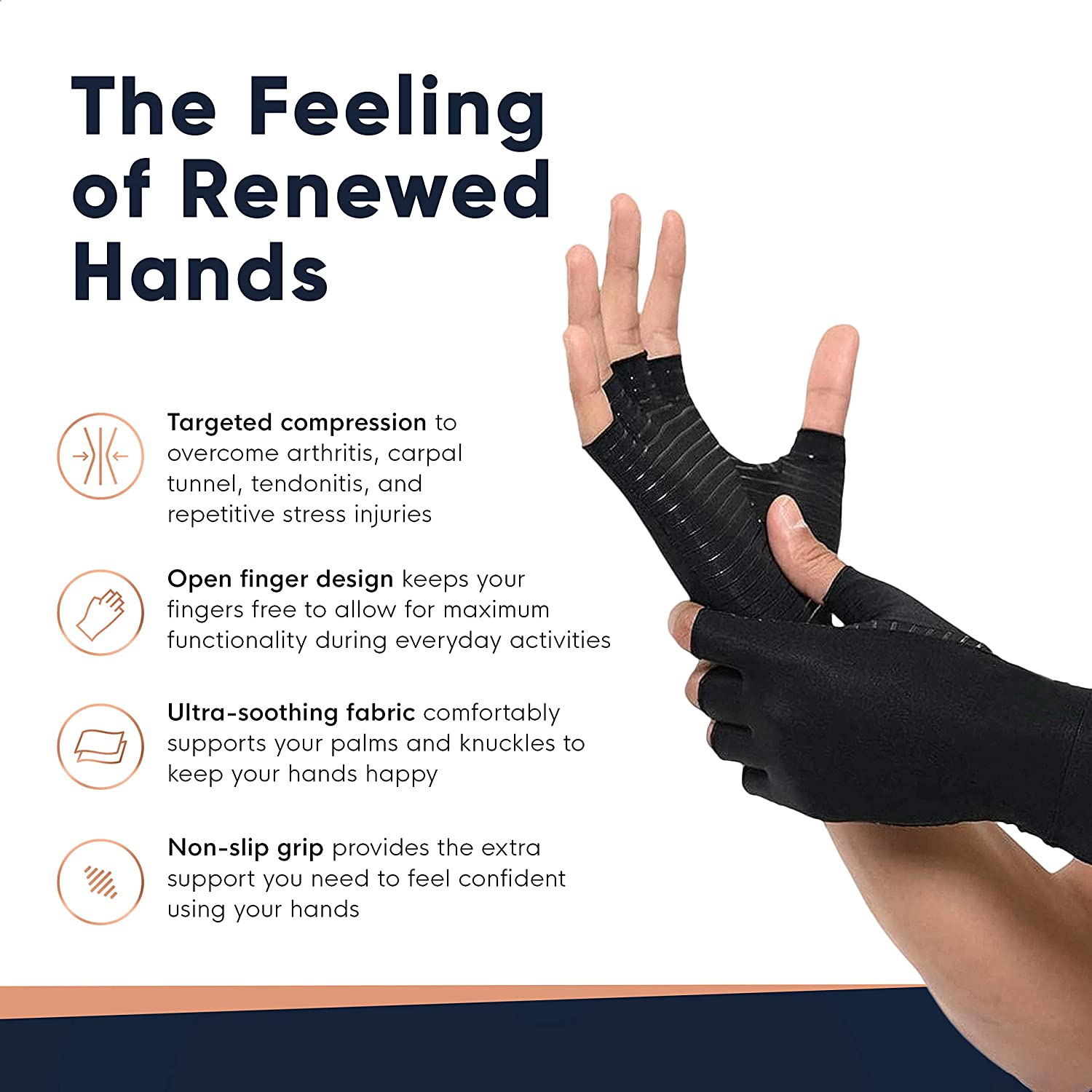
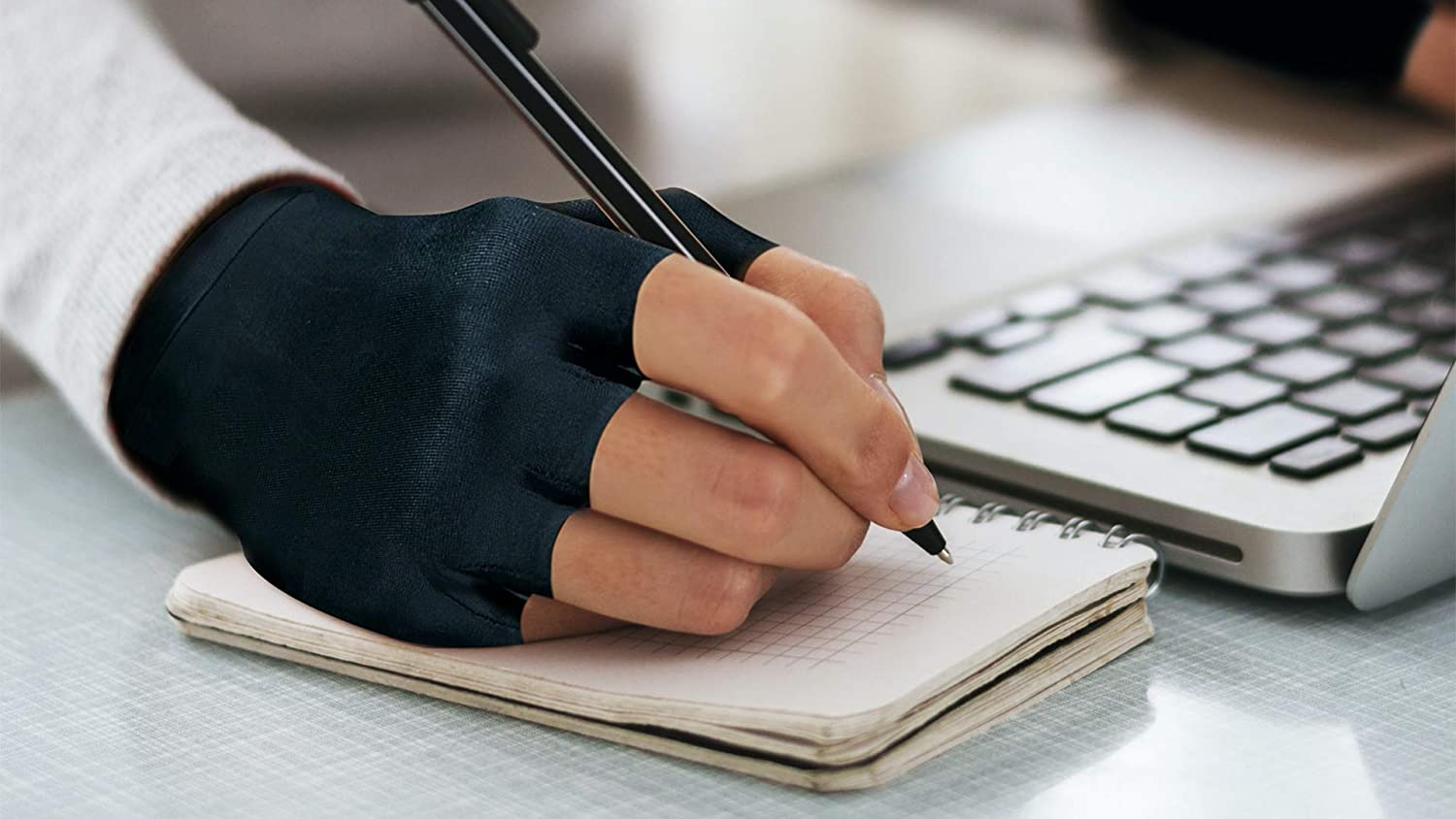
- The half-finger design keeps your fingertips uncovered, so you can type, text, and handle fine objects without taking them off.
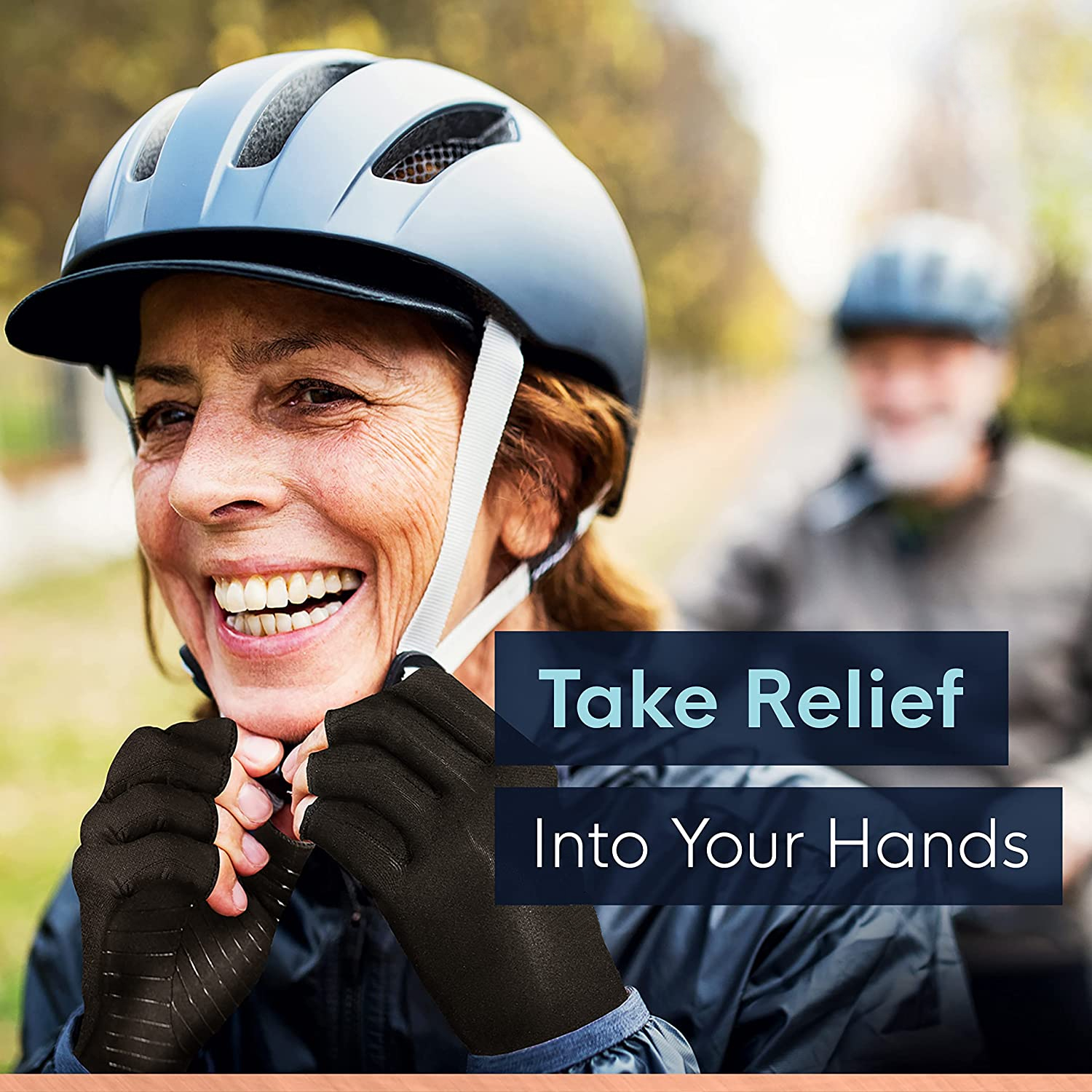
- Wear them on their own around the house, or layer them under mittens or winter gloves when you go outside.
- The seamless knit helps prevent rubbing and pressure marks, making them suitable for all-day wear.
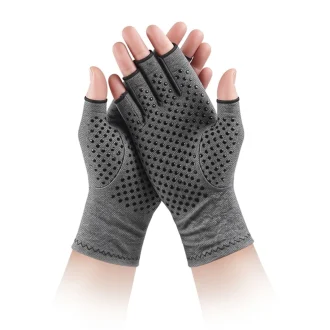
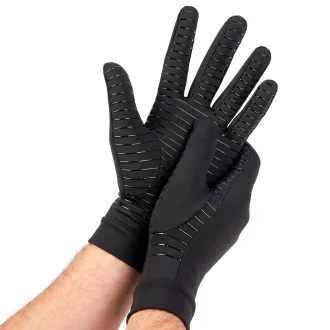
- Silicone grip strips on the palms and fingers add traction when your grip feels less certain.
- Medical-grade elastic fibres provide consistent support to the small arteries and capillaries in your hands.
- The breathable fabric draws moisture away from the skin, so your hands stay dry and warm without overheating.
- Most useful for people who experience cold, white, blue, or numb fingers in response to cold or stress.
- Not recommended for anyone with severe circulatory problems, diabetes with reduced hand sensation, or neuropathy unless a clinician advises otherwise.
- These gloves do not treat or prevent blood clots. If you have circulation concerns, speak to a GP before using them.
- Backed by a 30-day money-back guarantee.
What Raynaud’s feels like: more than just cold hands
If you’ve ever watched your fingers turn white in the cold, then blue, then sting and throb as they warm up, you know it’s not ordinary cold hands. That sequence is your circulation cutting off and then rushing back. And it’s a sign that something more specific is going on — something called Raynaud’s phenomenon.
It’s far more common than many people realise. A significant number of adults in the UK experience Raynaud’s symptoms, though plenty never seek help or even realise there’s a name for what they’re going through. Women are affected more often than men, and the condition often becomes noticeable in early adult life. But because the symptoms can come and go, and can be put down to “just having poor circulation,” many people don’t mention it to a GP.
When Raynaud’s strikes, it can make everyday tasks feel unexpectedly difficult. Typing an email, turning a key in the ignition, picking up a chilled drink, or fastening a button can suddenly become clumsy and awkward. Your fingers feel stiff and unresponsive, as though the fine control you normally rely on has temporarily switched off. For some people, episodes are brief and mildly uncomfortable. For others, they happen often and begin to interfere with work, hobbies, and daily routines.
Night-time can be almost as disruptive as going outside in winter. As your body temperature naturally dips while you sleep, an attack can pull you out of a deep sleep with cold, throbbing fingers. You might lie there, trying to warm your hands under a pillow or duvet, struggling to get comfortable again. That’s not just a minor irritation — it can genuinely disrupt rest and leave you feeling drained the next day.
The good news is that Raynaud’s is manageable. With the right understanding, the right habits, and the right support, most people can reduce the frequency and severity of attacks. Warmth, circulation support, and a practical daily routine make a real difference.
What’s actually happening inside your hands?
To understand Raynaud’s, it helps to picture how blood normally reaches your fingers.
Inside your hands and fingers, tiny arteries and capillaries carry warm, oxygen-rich blood from your core to your fingertips. The walls of these small blood vessels are lined with a layer of smooth muscle — this is called the tunica media. When you’re cold or under stress, that muscle contracts. It’s a normal, protective response: your body is prioritising blood flow to your vital organs and limiting heat loss from your hands and feet.
In Raynaud’s, this normal response goes into overdrive. The blood vessels tighten too much and too quickly. This exaggerated narrowing is called a vasospasm. The spasm is so strong that it dramatically reduces blood flow to the fingertips, which is why your hands lose warmth and colour so rapidly.
The classic colour changes tell the story of what’s happening:
-
- White appears when the blood vessels are fully constricted and the fingertips are being starved of blood.
-
- Blue follows as the small amount of oxygen still in the stagnant blood is used up, and the tissue briefly becomes oxygen-deprived.
-
- Red happens as the spasm releases, blood flow returns, and the small vessels reopen. That sudden return often brings tingling, throbbing, or a stinging sensation.
So when someone says their fingers go white, then blue, then red, that’s not a random sequence. It’s a direct reflection of circulation being shut off, then restored.
During an attack, you may also notice numbness, stiffness, coldness, or a “pins and needles” feeling. That odd tingling happens because the nerves in your fingers are briefly starved of blood too. Most episodes last a few minutes, though some can last longer. When blood flow returns, it’s common to feel a deep ache or a throbbing pulse as the tissues warm again.
The exact reason the blood vessels overreact in this way isn’t fully understood for everyone. For many people, cold is the main trigger — even a slight drop in temperature can set off an attack. For others, emotional stress or anxiety is the culprit. Sometimes both combine. The underlying point is that the muscles in the vessel walls are responding too strongly to signals that should only cause a mild, brief narrowing.
Who gets Raynaud’s and what can trigger it?
Raynaud’s can affect anyone, but some people are more likely to develop it than others.
Women are affected more often than men. Researchers aren’t entirely sure why, but hormonal influences on blood vessel tone may play a part. Some evidence suggests that oestrogen can affect the way blood vessel walls respond to cold and stress, which may help explain the difference.
The condition often first appears in early adulthood, usually before age 30. Many people live with intermittent symptoms for years before they realise it has a name.
There’s also a family link. Raynaud’s can run in families, which suggests an inherited tendency in how reactive your blood vessels are to cold and stress. If a close relative has it, you’re more likely to develop it too.
Where you live or work can play a role as well. People who spend long periods in cold environments — whether that’s working outdoors, in a cold storeroom, or simply living in a poorly heated home — are more prone to developing Raynaud’s symptoms. Using vibrating tools such as pneumatic drills and angle grinders can also increase your risk. Repeated cold exposure or vibration appears to sensitise the vessel walls over time; the constant physical stress on the small blood vessels makes them more likely to overreact.
For some people, Raynaud’s happens alongside another health condition. Autoimmune and connective tissue conditions like scleroderma, lupus, or rheumatoid arthritis can affect the blood vessels or the tissues around them, making vasospasms more likely. In this situation it’s known as secondary Raynaud’s. If Raynaud’s appears alongside other symptoms, your doctor will want to look more closely — which is why getting a proper diagnosis matters.
Certain lifestyle factors can also have an effect. Smoking is a major contributor because nicotine directly narrows blood vessels and reduces circulation. Caffeine can have a mild constricting effect, and some medications that influence blood vessel tone can make symptoms worse. If you notice your symptoms coincide with starting a new medicine, it’s worth mentioning to your GP or pharmacist.
If you have several of these risk factors, or if your attacks are becoming more frequent, it’s worth speaking to a healthcare professional. Raynaud’s is more than “prone to cold hands” — it’s a recognised condition with effective management strategies. A GP can confirm the diagnosis, rule out any underlying causes, and help you put together a plan that actually works for your day-to-day life.
Why it’s worth managing Raynaud’s properly
It can be tempting to dismiss cold fingers as a minor nuisance. But repeated vasospasms take a toll over time.
Every time your blood vessels clamp down hard, the tissues in your fingertips are briefly starved of oxygen. In most cases, the spasm resolves and circulation returns without lasting harm. But if attacks happen frequently and last a long time, they strain the small blood vessels. Over months and years, that repeated strain can lead to changes in the vessel walls, making them less responsive and more prone to spasms.
There’s also the practical side. Raynaud’s can interrupt your day. You might have to stop what you’re doing to warm your hands. You might avoid activities that trigger attacks. For people who work outdoors or with their hands, this can be genuinely disruptive. And the discomfort — the cold numbness, the throbbing when circulation returns — can make even simple pleasures like holding a warm mug or walking the dog feel less enjoyable.
Managing Raynaud’s early helps protect your hands from long-term strain and keeps you comfortable day to day. That means understanding your triggers, dressing appropriately, managing stress, and using supportive products that maintain warmth and circulation. One of the most practical, non-invasive ways to support your hands is a pair of well-designed compression gloves.
Why compression gloves help with Raynaud’s
Compression gloves aren’t a cure, but for many people with Raynaud’s, they’re a genuinely helpful addition. Here’s what they do and why that matters.
They support blood flow through gentle pressure
When the small blood vessels in your hands tighten during a Raynaud’s episode, blood flow drops sharply. Compression gloves apply a controlled, even pressure across the hands and fingers. That pressure helps the small vessels stay slightly more open, counteracting the tendency for them to constrict too forcefully. It also helps move blood back from the fingertips toward the heart, reducing blood pooling and encouraging a steadier circulation.
This isn’t about squeezing tightly — quite the opposite. The gloves are designed to provide a gentle, consistent hold that supports the vessel walls and stops them from collapsing as easily when exposed to cold or stress. By reducing the severity of the vasospasm, the gloves can help you experience fewer, less intense attacks.
They keep heat close to your skin
Cold is the most common trigger for Raynaud’s, and your hands are especially exposed. Compression gloves act as a thermal layer, trapping a thin layer of body heat against your skin. That warmth helps the small blood vessels stay relaxed, so they are less likely to spasm in response to a sudden drop in temperature.
The effect works in both directions. The glove fabric shields your hands from cold air, while the trapped heat keeps your fingers warm for longer when you move between environments — from a warm house to a chilly car, for example. This is one of the reasons why compression gloves offer more than just ordinary winter gloves: they combine warmth with active circulation support.
They work best as part of a broader management plan
Compression gloves should never replace medical treatment or other sensible habits. For some people, lifestyle measures alone aren’t enough to keep symptoms under control. In that situation, a GP may prescribe medication such as calcium channel blockers, which work by relaxing the muscle in the vessel walls so the blood vessels don’t constrict as forcefully. Compression gloves can complement that kind of treatment — they add another layer of physical support, but they don’t replace professional advice or prescribed medicine.
Keeping your whole body warm, dressing in layers, wearing thick outer gloves in winter, avoiding sudden temperature changes, and finding ways to manage stress are all important foundations. The gloves add an extra layer of support, but they aren’t a magic cure. Used consistently and correctly, they can make a meaningful difference in how often attacks happen and how severe they feel.
Meet the RevitaFit Half Finger Compression Gloves
RevitaFit Half Finger Compression Gloves are designed specifically for people who live with cold, reactive hands. They combine two essential principles: gentle compression to support circulation, and warm, breathable insulation to protect against temperature triggers. As base-layer gloves, they’re made to be worn on their own around the house, or slipped under a thicker pair of mittens or winter gloves when you head outside.
Every element of the design has been chosen with the realities of daily life in mind. These are not clinical-looking, awkward gloves that you’ll want to hide in a drawer. They’re lightweight, comfortable, and discreet enough to wear while working, driving, commuting, or relaxing at home. They’re also thoughtfully constructed to stand up to repeated washing and regular use.
If you have secondary Raynaud’s or another circulatory condition, check the safety guidance near the end of this page before using any compression product.
How RevitaFit is designed to help
The RevitaFit gloves don’t rely on one single feature. They combine several design elements that work together to keep your hands warm, supported, and functional. Here’s how each one contributes.
Steady circulation support
The most important feature of the RevitaFit design is gentle, even compression. The gloves are knitted from medical-grade elastic fibres that stretch uniformly across the hand. This isn’t a tight, restrictive squeeze — it’s a consistent pressure that supports the small arteries and capillaries in your fingers.
When a Raynaud’s episode is triggered, the blood vessels try to clamp down. The compression from the gloves acts as a physical reminder to those vessel walls to stay relaxed. The result is that blood flow is maintained more smoothly, and your fingers are less likely to lose warmth and colour as quickly.
This even pressure also helps blood move back from the fingertips. Your hands are at the end of a long circulation route, and gravity plus the distance from the heart can make returning blood flow sluggish. The gentle compression encourages more efficient circulation, which can help your hands feel less cold and settle more quickly after exposure to cold.
Warmth without overheating
Cold is the enemy when you have Raynaud’s. But sweaty, clammy hands aren’t comfortable either — and dampness can actually make you feel colder. RevitaFit gloves solve this with a dual-layer approach.
The inner layer retains body heat. It sits close to your skin and keeps the small surface vessels warm, helping them stay relaxed and open. The outer layer acts as a barrier against cold air. This combination reduces the sudden temperature drop that can trigger an attack, especially when you move from indoors to outdoors.
The fabric also wicks moisture away from your skin. If your hands begin to perspire — whether from stress or from wearing gloves indoors — the moisture is drawn toward the outer surface, where it can evaporate. That keeps your hands dry, and dry skin holds heat far better than damp skin.
The material is breathable too. The knit structure allows airflow, so the gloves naturally adapt to your activity level. If you’re working at a desk, they feel warm but not stifling. If you go outside into a cold wind, the fabric traps more heat. No overheating, no clamminess — just a steady, comfortable warmth.
Comfort for all-day wear
A glove only helps if you actually want to wear it. RevitaFit is designed to be comfortable enough for hours of use, whether you’re at work, at home, or asleep.
The most important comfort feature is the seamless construction. Many gloves have stitched seams that rub against sensitive skin, especially across the knuckles and between the fingers. With RevitaFit, the gloves are knitted as one continuous piece, so there are no seam ridges pressing into your hands. That makes them particularly suitable for people with sensitive skin or tender hands.
The fabric itself is a soft nylon blend infused with copper fibres. The copper doesn’t make the gloves stiff or uncomfortable — it’s woven into the material in a way that remains flexible and smooth. One practical benefit is that the copper helps reduce bacterial growth, which keeps the gloves fresher for longer and prevents odour build-up even if you wear them every day. That’s especially valuable if you wear them through the night or during long working days.
The gloves are also designed to move with you. They’re not baggy or loose, and they’re not skin-tight. The fit is snug enough to maintain compression, but flexible enough that you can bend your fingers freely. Whether you’re typing, writing, kneading dough, or gripping a steering wheel, the fabric moulds to your hand without resisting.
Practical for everyday tasks
Some compression gloves are so bulky that they make daily life difficult. RevitaFit gloves are deliberately lightweight and half-finger.
The half-finger design is a huge advantage if you need to use your hands with precision. Your fingertips remain uncovered, so you can feel buttons, coins, touchscreens, and fine objects. You can type, text, play an instrument, or pick up small items without fumbling. The gloves don’t get in the way.
Silicone grip strips on the palms and along the fingers provide extra traction. This is particularly useful when your hands are cold and your grip feels less certain. Holding a cup of tea, a door handle, or a set of keys becomes easier with that added friction. It also means the gloves stay put while you wear them — they don’t slide around as you move.
Because they’re so low-profile, RevitaFit gloves fit easily under thicker outdoor gloves or mittens. You can wear them as a base layer during winter walks or commutes, adding an extra layer of warmth without feeling like you’ve got two pairs of gloves on. At home, they work well on their own for indoor tasks.
How to wear them and what to expect
Getting the most from RevitaFit gloves comes down to wearing them at the right times and ensuring they fit properly.
When to wear them
-
- During trigger activities. If you know that certain tasks set off your Raynaud’s — like going outside in cold weather, working in a cool office, or handling cold objects — put the gloves on beforehand. It’s easier to prevent an attack than to recover from one.
-
- Indoors. Many people wear them around the house, especially in the morning or evening when temperatures dip.
-
- At night. Night-time is a common time for Raynaud’s attacks because body temperature drops while you sleep. Wearing compression gloves to bed can keep your hands warm, help you stay asleep, and reduce morning stiffness.
-
- As a base layer outdoors. In colder weather, wear them under mittens or waterproof gloves for extra insulation. This is where the half-finger design comes into its own — you get the warmth and compression, plus the dexterity to use your phone or keys without exposing your hands to the cold.
How they should fit
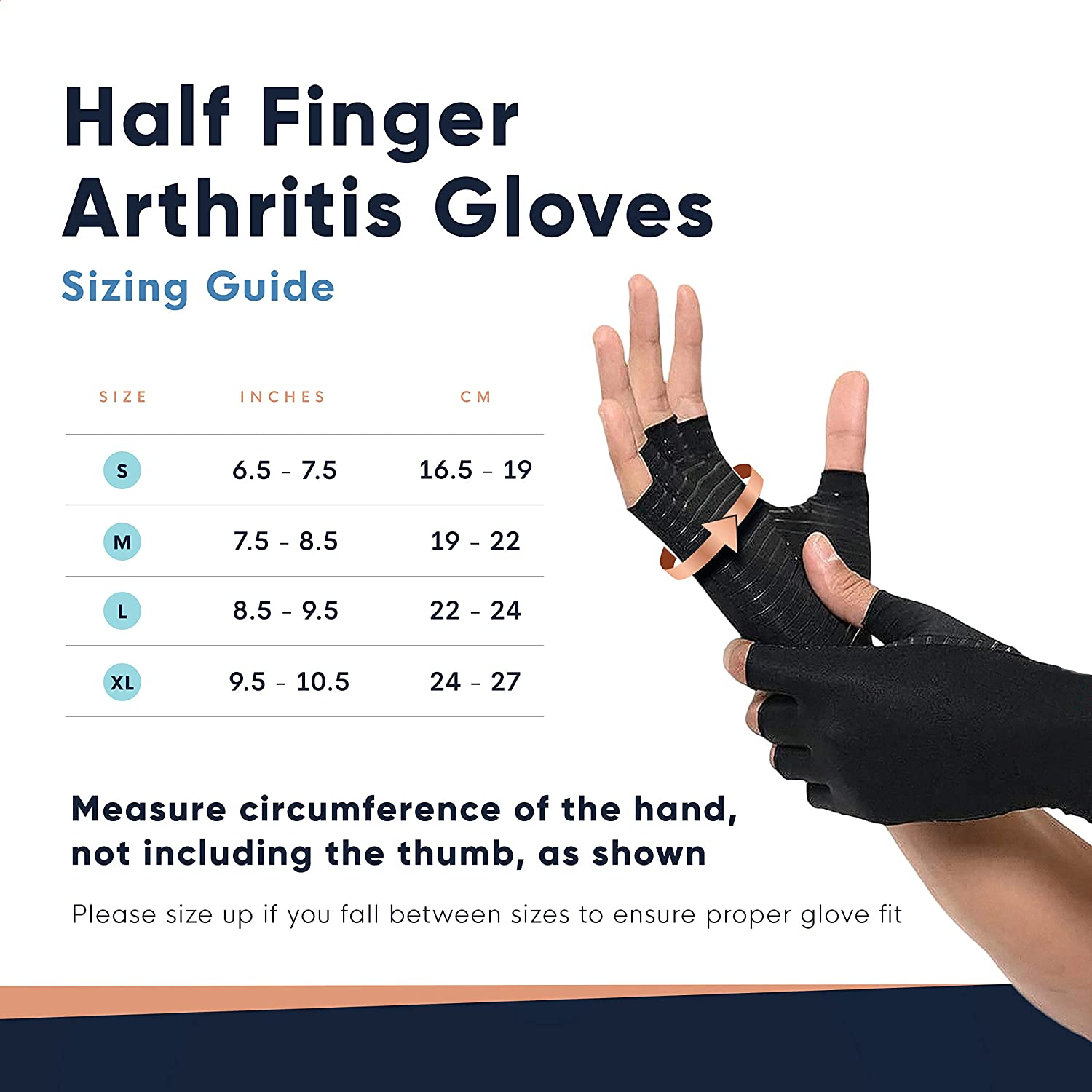
A good fit is essential. The gloves should feel snug and supportive, but they must never feel tight, painful, or leave deep marks in your skin. If the fabric digs in at the wrist or across the palm, it can reduce blood flow rather than help it — which defeats the purpose.
When you first put the gloves on, check that:
-
- The fingers aren’t so long that they bunch or restrict movement.
-
- The palm feels pleasantly supported, not squeezed.
-
- You can bend each finger fully without resistance.
-
- The wrist band, if there is one, sits comfortably and doesn’t pinch.
If you’re between sizes, it’s usually better to choose the slightly larger option. A glove that’s too small will be uncomfortable and may actually worsen circulation.
What to realistically expect
Compression gloves aren’t an instant fix. They work gradually. The first time you wear them, you may notice that your hands feel warmer more quickly and that episodes feel less intense. Over a few weeks of consistent use, many people report fewer attacks and a greater sense of control over their symptoms.
No product can switch off Raynaud’s entirely. You may still experience some colour changes or discomfort when you’re very cold or very stressed. But the gloves can reduce the severity and frequency of those episodes, helping your hands stay comfortable for longer.
Also remember to keep up the good habits alongside the gloves: dress warmly overall, wear a hat and scarf so your body core stays warm, avoid sudden temperature swings, stay active to promote circulation, and manage stress where possible. The gloves are a partner in your management plan, not a substitute for sensible self-care.
A note on other hand conditions
Although RevitaFit gloves were developed with Raynaud’s in mind, their gentle warmth and compression can also feel supportive for people dealing with other types of hand discomfort.
Arthritis, repetitive strain injury, wrist sprains, and carpal tunnel syndrome are different conditions with different causes. But they share one thing in common: the hands can feel stiff, aching, or fatigued in ways that make daily tasks harder. For those situations, the same principles that help Raynaud’s — even pressure, warmth, and gentle support — can also bring a degree of comfort. The light compression may help reduce mild swelling, support tired muscles and tendons, and ease a feeling of tightness in the hands. The warmth can promote relaxation and make movement feel a little smoother, especially first thing in the morning.
This doesn’t mean the gloves treat those conditions. They don’t change the underlying diagnosis, and they shouldn’t be used instead of prescribed treatments. But if you have Raynaud’s alongside another hand condition, or if you simply need steady, comfortable hand support, you may find the gloves helpful beyond their primary purpose.
If you have a diagnosed hand condition and are unsure about compression, it’s always sensible to ask a physiotherapist, occupational therapist, or GP before trying them.
Safety and when to speak to a healthcare professional
Compression gloves are safe for most people, but they’re not right for everyone. It’s important to be honest about your health situation and get professional advice if you’re uncertain.
If you haven’t been diagnosed
If you recognise the symptoms of Raynaud’s but have never spoken to a doctor about them, it’s worth getting a proper diagnosis. Raynaud’s itself isn’t dangerous, but the symptoms can occasionally point to an underlying condition such as scleroderma or lupus, which need specific treatment. A GP can assess your symptoms, check for other signs, and confirm whether Raynaud’s is primary or secondary. They can also advise whether compression gloves are appropriate for you.
If you have an existing health condition
Check with your healthcare provider before using compression gloves if you have:
-
- Severe circulatory problems
-
- Diabetes, especially if you have reduced sensation in your hands or feet
-
- Neuropathy, which means nerve damage causing numbness or tingling
-
- Secondary Raynaud’s linked to an autoimmune condition
-
- Any condition that causes swelling in the hands that isn’t well controlled
In these situations, compression may not be advisable, because it could interfere with circulation or mask changes in sensation that are clinically important. That’s not to say you definitely can’t use them — it just means it’s best to get individual advice.
Using them safely
If you do choose to wear these gloves, pay attention to how they feel. They should never cause tingling, pain, numbness, or a change in skin colour beyond what you already experience with Raynaud’s. If you notice any of these, remove the gloves and speak to your clinician.
These gloves are not designed to treat or prevent blood clots, and you should never rely on them for that. If you have any concerns about your circulation or a history of blood clots, talk to a GP or another appropriate clinician before using compression products.
Wash the gloves regularly according to the care instructions to keep them clean and maintain their elasticity. Over time, all compression garments lose some of their firmness. If you notice the gloves no longer feel snug, or if they’ve lost their shape, it may be time for a new pair.
Your 30-day guarantee and next step
Living with Raynaud’s shouldn’t mean constantly fighting with cold, stiff, uncomfortable hands. The right support can make a real difference to your comfort, your confidence, and your ability to get through the day without interruption.
RevitaFit Half Finger Compression Gloves are designed to give you that support. They offer gentle, even compression to help maintain circulation, breathable warmth to protect against cold triggers, and a comfortable, practical design that fits into your daily routine. Whether you’re working at a desk, heading out on a winter walk, or settling down for the night, they work alongside you — not against you. And because they work so well as a base layer, you don’t have to choose between staying warm and getting things done.
Every pair is backed by a 30-day money-back guarantee. That means you can try them at home, wear them during your normal routine, and see for yourself whether they make a difference. If they’re not right for you for any reason, simply return them within 30 days for a full refund. No complicated process, no hassle.
If you’re unsure whether compression gloves are suitable for you, or if you haven’t yet had your symptoms assessed, a quick conversation with your GP is the best first step.
A note on this guidance
The information on this page is general guidance for adults living with Raynaud’s symptoms. It is not a substitute for individual medical advice, diagnosis, or treatment. If you have new or unexplained symptoms, a history of blood clots, or any condition that might make compression unsuitable, please speak to a GP, physiotherapist, or another appropriate clinician before using compression gloves. Everyone is different, and no specific outcome is guaranteed.
Fast & Secure Checkout Through Paypal
Pay with Paypal the secure payment gateway that accepts all credit and debit cards. Paypal is free and secure and no credit or bank information is ever stored or shared with us.
Fast Dispatch
Enjoy your items soon with quick dispatch via Royal Mail. Expect to have your items between 1-3 working days for domestic orders. 7-10 Working days for international orders.
Return Policy – 30 Day Money Back Guarantee
In the unlikely event, you are unhappy with your purchase you can return it within 30 days for a refund. Please contact us via the form on the contact us page to start your return.
To return an item please send it to: Nuova Health UK, 81 Highfield Lane, Waverley, Rotherham, S60 8AL. Please include a note with your order id so we know who to refund. Please retain your postage receipt as proof of postage. All that we ask is that the item is in the original packaging and unused.
Reviews
There are no reviews yet.