
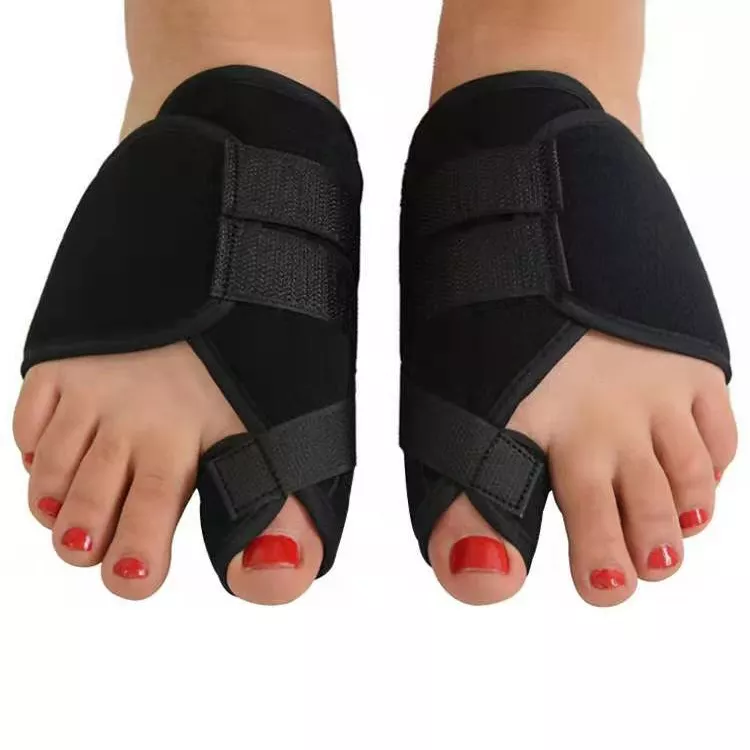
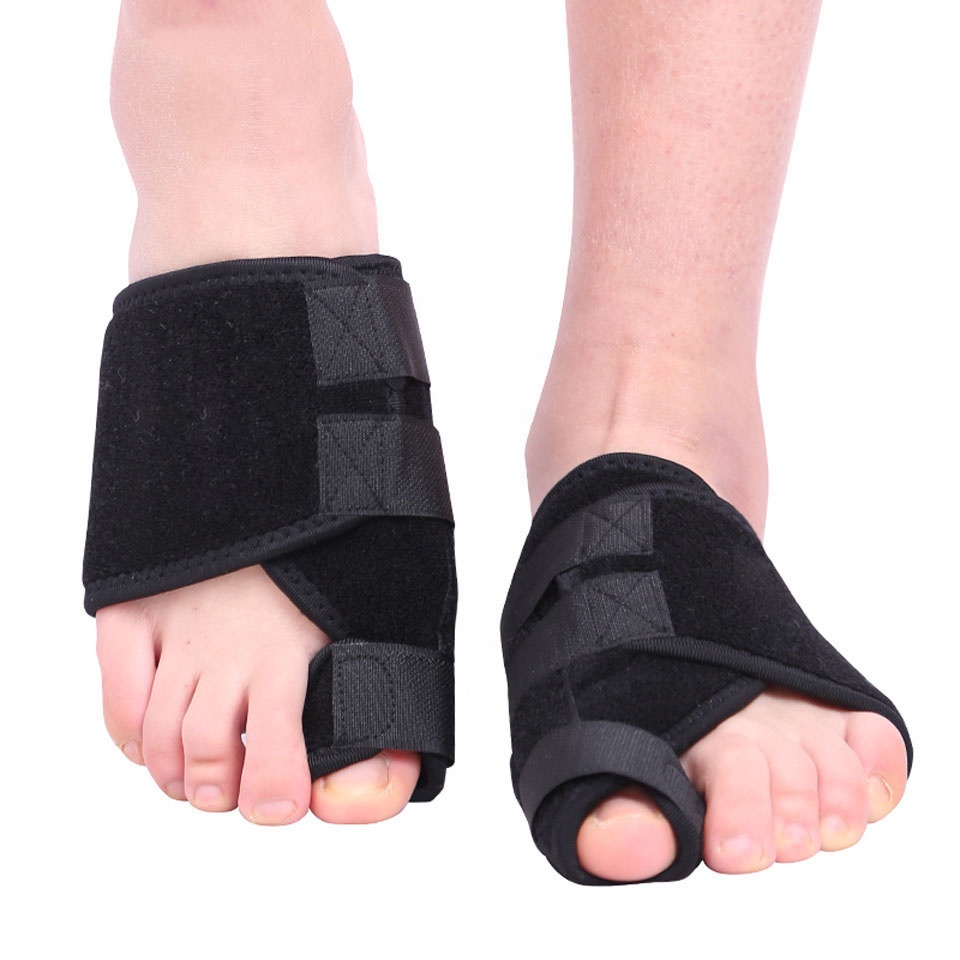
Bunion Night Splint for Bunion Relief & Correction
£10.99inc VAT
- Bunion splint sold as a pair (left and right foot), designed to hold your big toe in a straighter position
- Wear overnight for sustained positioning, or during the day while resting at home, watching TV, sitting at a desk, or doing light activity
- Built around a flexible aluminium bar running along the inside of your foot, secured with two adjustable Velcro straps
- One size fits all, adjustable for both men and women
- Padded cushioning over the bunion prominence and ball of the foot to reduce pressure and ease inflammation
- Moisture-wicking fabric to keep your foot comfortable
- May help if you have a flexible bunion where the toe can still be moved back towards straight without forcing it
- Suitable for early-stage bunion pain, morning stiffness, and reduced mobility in the big toe joint
- Won’t reverse a rigid, fixed bunion deformity or severe arthritis in the joint
- Can be worn with roomy footwear if needed during the day
- Start with shorter wear periods (an hour or two) and build up gradually
- Adjust strap tension gradually—tighter isn’t always better; aim for gentle support without pain or numbness
- Not suitable if you have diabetes with reduced sensation, poor circulation, open wounds, or unexplained severe swelling in your feet
- 30-day money-back guarantee
Bunions: what they are and why they matter
If your big toe is angled outward, the bony bump on the inside of your foot is sore to touch, and you’re struggling to find shoes that don’t rub or press on it, you have a bunion. The medical term is hallux valgus—”hallux” meaning big toe, “valgus” meaning angled away from the midline. What matters isn’t the label. It’s what’s happening mechanically and why it’s affecting you.
When your big toe drifts outward, the joint at its base is no longer moving through its normal, straight line. Instead, it’s being pushed and pulled at an angle with every step. **The soft tissues on the inside of the joint—the capsule, ligaments, and tendons—get stretched.** The tissues on the outside get compressed and bunched up. The bone itself starts to remodel in response to these forces. The bump you see is partly the head of the metatarsal—the long bone behind your big toe—being pushed inward, and partly new bone forming where the changed load is concentrated.
Around one in four adults in the UK will develop a bunion at some point. The causes run deeper than footwear alone. **Genetics plays a role:** if your parents or grandparents had bunions, you’re more likely to develop them. So does the way your foot moves when you walk, your foot shape—high arches, flat feet, or ligaments that are naturally more lax—and the load your big toe has to manage day after day.
Bunions are more than cosmetic. The misalignment changes how your foot distributes weight. Your big toe is supposed to take a significant share of the load when you push off during walking. It’s the last part of your foot to leave the ground with each step. When the toe is angled outward, it can’t do that job properly. **Weight shifts onto the ball of your foot, onto the second toe—which wasn’t designed to take that much pressure—and onto the inside edge of your foot where the bunion prominence now sits.**
You’ll feel this as pain: sharp or aching around the joint, swelling, redness, stiffness, and difficulty finding shoes that don’t rub or press on the bump. You might notice it most after you’ve been on your feet for a while—standing in a queue, walking on hard pavements, or towards the end of a working day. First thing in the morning, the joint often feels stiff and sore, easing slightly as you move but never quite comfortable.
An untreated bunion can affect your gait more broadly. You might start walking more on the outside of your foot to avoid pressure on the bunion, or you might shorten your stride. The bunion changes how your foot works, which changes how your ankle, knee, and hip have to compensate. Eventually, that compensation creates pain and stiffness in areas that seem unrelated to your feet—your knees, hips, lower back.
**Catching it early makes a difference.** A bunion that’s still flexible—where you can manually straighten the toe without force and it moves back towards the midline—responds better to conservative measures like splinting, footwear changes, and exercises. Once the joint becomes rigid, often because of arthritis developing in the joint itself (a condition called hallux rigidus), or once the soft tissues have shortened and tightened so much that the toe won’t move back, your options narrow. At that point, a splint becomes more of a comfort and protection tool than a corrective one.
What makes you more likely to develop bunions?
Genetics and family history
If your parents, grandparents, or siblings have bunions, you’re at higher risk. You inherit not just the shape of your feet, but also the laxity of your ligaments, the alignment of your bones, and the way your foot naturally moves when you walk. All of these influence whether your big toe will stay in line or drift outward over time.
The way you walk
Family history isn’t the whole story. **If you overpronate—your foot rolls inward excessively when you walk, flattening the arch and pushing the big toe outward—the forces through your big toe joint change.** The toe is repeatedly pushed into an outward position with every step. Over thousands of steps a day, that repetitive stress encourages the joint to remodel in that direction. If you supinate—roll outward—the load distribution is different but can still place unusual stress on the big toe joint, especially if your foot is rigid and doesn’t absorb shock well.
Foot structure
High arches can mean your foot is stiffer and doesn’t spread load evenly, concentrating pressure on the ball of the foot and the big toe joint. Flat feet or fallen arches can allow the foot to collapse inward, again pushing the big toe outward. **Ligaments that are naturally more lax—common in people who are hypermobile—mean the joints have less passive support,** so they’re more likely to drift out of alignment under load.
Footwear
Footwear doesn’t cause bunions on its own, but it can accelerate the process if you’re already predisposed. Tight, narrow, or high-heeled shoes squeeze the toes together and shift weight forward onto the ball of the foot, increasing pressure on the big toe joint and encouraging the toe to angle outward. If you spend a lot of time in shoes like that, and you already have a genetic or biomechanical tendency towards bunions, you’re giving that tendency every opportunity to express itself.
Bunions tend to progress if left unmanaged. The misalignment creates forces that worsen the misalignment. **Breaking that cycle early—by improving foot mechanics, choosing better footwear, strengthening the muscles that support the arch and the big toe, and using supports like this splint—gives you the best chance of slowing or halting progression** before the joint becomes rigid or arthritic.
The knock-on effects: why bunions deserve attention
When your big toe angles outward, it doesn’t just affect that one joint. The whole front of your foot has to adapt.
Your other toes crowd and overlap
The second toe, in particular, often bears the brunt. With the big toe pushing across, the second toe gets squeezed upward or to the side. Over time, that can lead to a hammertoe: the toe bends at the middle joint and stays bent, creating a new pressure point on top of the toe where it rubs against your shoe. Bunionettes—a smaller bunion on the outside of the foot, at the base of the little toe—are also common companions to a progressing bunion, because the changed weight distribution affects the whole forefoot.
The ball of your foot takes more pressure
Normally, your big toe takes a significant share of the load when you push off during walking. When the toe is angled outward and the joint is stiff or sore, you instinctively shift weight away from it. **That means the second and third metatarsal heads—the bones just behind your second and third toes—have to take more load than they were designed for.** The result is metatarsalgia: aching, burning pain in the ball of the foot, often worst after you’ve been standing or walking for a while. You might feel like you’re walking on pebbles, or you might notice calluses building up under the ball of your foot where the pressure is highest.
Your gait changes and problems travel upward
You might start walking more on the outside of your foot to avoid pressure on the bunion prominence. You might shorten your stride, or you might push off less forcefully with your big toe, which makes your walking less efficient and puts more strain on your calf and Achilles tendon. You might favour the other foot, which over time can lead to problems on that side too.
Those gait changes don’t stay in your feet. Your ankle has to adjust. Your knee has to compensate for the changed angle and timing of load. Your hip has to work differently to keep you balanced and moving forward. **Eventually, those adjustments create pain and stiffness in your knees, hips, and lower back**—areas that seem completely unrelated to your feet, but are directly affected by how your foot works.
By holding your toe straighter and cushioning the bunion prominence, the splint gives inflamed tissues time to settle rather than being compressed hour after hour.
Who this splint may help
This splint is designed for adults with:
Flexible bunions
Where the big toe can still be moved back towards straight without force. If you can gently push your toe back towards the midline and it moves, even if it drifts back out when you let go, that’s a flexible bunion. **These respond best to splinting because the soft tissues are still capable of adapting.**
Early-stage bunion pain
Aching, swelling, or soreness around the big toe joint, especially after you’ve been on your feet for a while. You might notice it most towards the end of a working day, after standing in queues, walking on hard pavements, or spending time in shoes that press on the bunion prominence. The pain often eases with rest but comes back with activity.
Morning stiffness and reduced mobility
First thing in the morning, your big toe feels locked. You swing your legs out of bed, put weight on your foot, and the joint feels stiff and sore—like it’s been held in one position all night. It takes a few steps, maybe a minute or two of moving around, before it loosens up enough to walk normally. **The splint holds the joint in a more neutral position, which can reduce that morning stiffness and help maintain range of motion over time.**
Bunion-related gait changes
If you’ve started walking differently to avoid pressure on the bunion, or if you’re noticing discomfort in your knees, hips, or lower back that seems linked to the way your foot is working. When your big toe is angled outward and sore, you instinctively shift weight away from it. That changes your gait, and those changes can create problems further up the chain.
The splint may also help if you have arthritis in the big toe joint (hallux rigidus), gout (once the acute flare has settled), hammertoes, metatarsalgia, or Morton’s neuroma linked to your bunion, by reducing pressure, cushioning sore areas, and supporting better alignment. If you’re recovering from a fracture or foot surgery, check with your GP or physiotherapist before using the splint.
Flexible vs rigid: what the splint can and can’t do
The splint works best for flexible bunions: cases where the toe can still be moved back towards straight without force, and where the joint itself isn’t yet rigid or severely arthritic. In those cases, consistent use—holding the toe straighter for extended periods—can help maintain or gently improve the angle of the joint over several weeks.
**If the joint is rigid, or if it has significant arthritis (hallux rigidus), the splint becomes more of a comfort and protection tool than a corrective one.** It can still ease pain by reducing pressure on the bunion prominence and by cushioning the ball of your foot, but it won’t change a fixed deformity. The joint simply won’t move, and trying to force it would cause more harm than good.
Common misconceptions about bunion splints
“It will straighten my toe overnight”
No. A bunion splint works gradually over several weeks, not days. The soft tissues need sustained, repeated exposure to a better position before they can adapt. If you’re expecting visible change after a few nights, you’ll be disappointed. Realistic expectations matter.
“Tighter is better”
No. Cranking the straps as tight as they’ll go doesn’t speed up the process. **It increases the risk of cutting off circulation, compressing nerves, or irritating the soft tissues to the point where they become more inflamed.** Gentle, sustained pressure is more effective than aggressive force.
“I can stop wearing it once the pain goes away”
Not quite. If you stop wearing the splint as soon as the pain eases, the underlying misalignment is still there. The forces that caused the bunion in the first place are still present. Without ongoing support—whether from the splint, better footwear, exercises, or a combination—the bunion is likely to progress again.
“It will fix my bunion so I don’t need surgery”
Maybe, maybe not. For flexible bunions caught early, consistent use of a splint combined with footwear changes and exercises can slow or halt progression, and in some cases gently improve alignment. **But if the joint is rigid, severely arthritic, or the bunion is significantly affecting your quality of life despite conservative measures, surgery may still be the most appropriate option.** This is part of managing a bunion, not a guaranteed alternative to surgery.
How this splint works and what it does
This splint is built around a flexible aluminium bar that runs along the inside of your foot, from the big toe down past the first metatarsal bone. That bar holds your big toe in a straighter position, reducing the outward drift that defines a bunion.
**When the toe is held straighter for hours at a time, the soft tissues on the inside of the joint—the medial capsule and collateral ligament—are no longer being stretched to their limit.** With consistent use over time, that sustained positioning allows those tissues to adapt. They shorten slightly and regain some of their normal tension, which means better passive support when you’re up and moving.
Two adjustable Velcro straps wrap over the top of your foot, securing the splint in place and allowing you to control the tension. You’re not forcing the toe back into perfect alignment in one go. That would be painful and counterproductive. You’re applying gentle, sustained pressure that holds the toe in a better position, allowing the tissues to adapt gradually. Start with the straps fairly loose and tighten them over days and weeks as your toe becomes more flexible and comfortable. You should feel the toe being held straighter, but comfortably—not pressure, pinching, or pain.
Cushioning and pressure relief
Padding cushions the bunion prominence—the bony bump on the inside of your foot—and the ball of your foot, protecting these areas from pressure and absorbing load. When your big toe is angled outward, that bony bump takes direct pressure from the inside of your shoe with every step, and from contact with the other foot or the bed at night. Over time, that repeated pressure causes the overlying skin to thicken, the bursa—a small fluid-filled sac over the joint—to become inflamed and swollen, and the joint itself to become sore and irritated.
**The padding spreads that pressure over a wider area, reducing the peak load on the sorest spot.** That’s particularly helpful overnight. Even when you’re lying down, if you shift position or press your feet together, the padding absorbs that contact and gives the inflamed tissues a chance to settle.
During the day, whether you’re resting at home or wearing the splint with roomy shoes, the same cushioning effect applies. You’re reducing the direct pressure on the bunion prominence, which can make a noticeable difference to pain levels, especially if you’re on your feet for long periods.
Improving how your foot carries load
When your big toe is angled outward, your foot doesn’t work the way it’s supposed to. The muscles and tendons that control the big toe—particularly the flexor hallucis longus, which runs down the back of your calf and under your foot to the tip of your big toe—are pulling at an angle rather than in a straight line. That’s less efficient and places unusual stress on the joint itself. **Weight shifts onto the second metatarsal head—the bone just behind your second toe—which wasn’t designed to take that much pressure,** and onto the inside edge of your foot where the bunion prominence now sits.
By holding the toe straighter—whether overnight or during daytime rest—the splint helps restore more normal alignment. When you’re active, the soft tissues that have been held in a better position are better able to support the joint. The muscles and tendons can pull more efficiently, weight is distributed more evenly across the forefoot, and the excessive strain on the big toe joint is reduced.
Maintaining range of motion
Bunions often come with stiffness, especially first thing in the morning. The joint feels stuck, and it takes a few minutes of moving around before it loosens up. That stiffness is partly due to inflammation—inflamed tissues are stiffer and less mobile—and partly due to the joint being held in a poor position for long periods. Curled up in bed, or sitting with your feet tucked under you, the toe often ends up angled even further outward, and the joint capsule tightens in that position.
**The splint holds the joint in a more neutral position, preventing it from stiffening into an even more extreme angle.** The joint is being gently stretched in the direction of normal alignment, rather than being allowed to stiffen further. With consistent use, many people find their big toe feels more mobile and less stuck. They can bend and straighten it more easily, and the sharp, catching sensation that sometimes accompanies a stiff bunion—where the joint feels like it’s jamming or grinding at certain angles—becomes less frequent.
What to expect: realistic timelines
A bunion splint isn’t a quick fix. It’s a tool that works over time, not days. How quickly you see results depends on how flexible the joint is, how long it’s been progressing, how consistently you wear the splint, and what else you’re doing to support your foot health—footwear, exercises, weight management, addressing gait issues.
In the first few days
You may notice less aching and swelling. **The reduced pressure on the bunion prominence and the more neutral joint position allow inflammation to settle.** Many people find that the deep, throbbing ache they’ve been waking up with—often worst first thing, before they’ve even got out of bed—is noticeably less after a few days of consistent wear.
Over the first few weeks
Stiffness often improves. Many people find their big toe feels more mobile and less stuck first thing in the morning. The joint moves more easily through its range, and the sharp, catching sensation that sometimes accompanies a stiff bunion—where the joint feels like it’s jamming or grinding at certain angles—becomes less frequent.
You may also notice that your foot feels more comfortable during the day, especially if you’ve been consistent with wear. Weight is distributed more evenly across the forefoot, the strain on the big toe joint is reduced, and the bunion prominence isn’t taking as much direct pressure with each step.
Over months
If the joint is flexible, consistent use may help maintain or gently improve the alignment of your big toe. The angle of deviation—the outward drift of the toe—may reduce slightly, and the bunion prominence may become less pronounced. Progress is gradual and varies from person to person. Some people see noticeable improvement in alignment. Others find the main benefit is pain relief and maintained function rather than a visible change in the angle of the toe.
**Consistency is key.** Regular wear—whether overnight, during daytime rest, or both—gives the soft tissues sustained, repeated exposure to a better position. The tissues on the inside of the joint may shorten slightly and regain some of their normal tension. The tissues on the outside may lengthen and become less bunched up. The joint itself may settle into a more neutral alignment.
This works best alongside other measures. Good footwear—wide toe box, low heel, supportive sole—reduces the forces that push your toe outward during the day. Foot-strengthening exercises, particularly for the muscles that control the arch and the big toe, help support better alignment actively rather than relying solely on passive support from the splint. Weight management, if relevant, reduces the overall load on your feet. Addressing any gait issues—overpronation, supination, or compensatory patterns—with a physiotherapist or podiatrist can tackle the root cause of what’s driving the bunion in the first place.
What it won’t do
**It won’t reverse a rigid, fixed deformity.** If your big toe won’t move back towards straight when you push it gently, or if the joint is severely arthritic and has lost most of its cartilage, the splint can’t change that. The joint is structurally set in its angled position.
It won’t cure a bunion that’s been progressing for years, especially if the underlying causes—genetics, gait issues, foot structure—are still present and unaddressed. This is part of a broader management strategy, not a standalone solution.
And it won’t work if you only wear it occasionally. If you wear the splint a few times a week, or if you wear it for a week then stop for a month, the tissues don’t have enough sustained time in the better position to adapt.
When to reassess
If you’ve been wearing the splint regularly for several months and you’re not seeing any improvement in pain, stiffness, or function, or if the bunion is still progressing despite consistent use, speak to a podiatrist or physiotherapist. You may need a different approach: custom orthotics to address gait issues, specific exercises to strengthen the muscles that support the arch and the big toe, or in some cases a referral to discuss surgical options.
**Surgery is usually considered only when conservative measures have been tried and haven’t worked,** and when the bunion is significantly affecting your quality of life—causing persistent pain, making it difficult to walk or stand, or limiting your ability to wear normal shoes. A podiatrist or orthopaedic surgeon can assess your foot, explain the options, and help you decide whether surgery is appropriate for your situation.
How to wear and adjust the splint
Fitting
The splint is one size, adjustable to fit most adults. The flexible aluminium bar sits along the inside of your foot, running from your big toe down past the first metatarsal bone—the long bone in the middle of your foot, just behind your big toe. The two Velcro straps wrap over the top of your foot and secure the splint in place.
Start with the straps fairly loose. Position the splint so the bar sits comfortably along the inside edge of your foot, with the padding cushioning the bunion prominence—the bony bump on the inside of your foot—and the ball of your foot. **The padding should sit over the areas that are sorest,** usually the bunion itself and the area just behind your toes where the metatarsal heads sit.
Tighten the straps gradually until the splint feels secure but not tight. You should feel the toe being held straighter, but comfortably. Not pressure, pinching, or pain. If you feel numbness, tingling, or a sharp increase in pain, loosen the straps immediately.
When and how long to wear it
Overnight use is the most effective approach. Wear the splint while you sleep to hold your big toe in a straighter position for six, seven, eight hours without interruption. That sustained positioning allows the soft tissues to settle and, with consistent use, to adapt. The joint isn’t being pushed and pulled at an extreme angle with every tiny movement, and the bunion prominence isn’t being pressed against anything.
Daytime use is equally valid and encouraged. Wear the splint while resting at home—watching TV, reading, sitting at your desk, or doing light activity around the house. The same benefits apply: reduced pressure on the bunion prominence, cushioning for the ball of your foot, and gentle support holding the toe straighter.
You can also wear the splint with shoes if needed, as long as the footwear has a roomy toe box—enough space that the splint doesn’t press against the inside of the shoe or cause rubbing. Avoid tight, narrow, or high-heeled shoes. They’ll compress the splint and your toes, which defeats the purpose and can make pain worse.
**The more consistently you wear it, the better.** Whether that’s overnight every night, several hours during the day, or a combination of both, regular use gives the tissues sustained time in a better position.
Building up use gradually
If you’re new to wearing a splint, start with shorter periods—an hour or two—and build up gradually. Some people feel a gentle stretch or mild discomfort at first as the toe is held in a straighter position, especially if the bunion has been progressing for a while and the soft tissues have adapted to the poor alignment. That’s normal, as long as it’s not painful.
You’re feeling the soft tissues on the inside of the joint being gently stretched back towards their normal length. It’s similar to the feeling you get when you gently stretch a tight muscle—a mild pull, but not sharp or unbearable. If it hurts, or if you feel numbness or tingling, loosen the straps or take a break.
Aim for consistent use once you’re comfortable. **The benefits build with regular wear—every night, most nights, or extended daytime periods—rather than occasional use.**
Adjusting tension: gentle beats aggressive
You control the tension with the two Velcro straps. Tighter isn’t always better. The goal is to hold the toe straighter without forcing it or causing pain. If you crank the straps as tight as they’ll go, you risk cutting off circulation, compressing nerves, or irritating the soft tissues to the point where they become more inflamed, not less.
Start with gentle tension and increase it gradually over days and weeks as your toe becomes more flexible and the tissues adapt. **Let comfort and function guide you, not a fixed rule.** If you wake up and your toe feels sore, or if you notice red marks or indentations from the straps that take more than a few minutes to fade, you’ve gone too tight. Loosen the straps slightly and give the tissues a chance to settle before tightening again.
As the joint becomes more flexible and the soft tissues adapt, you may find you can tolerate slightly more tension. But the increase should be gradual and guided by how your foot feels, not by a desire to speed up the process.
Wearing with shoes
If you want to wear the splint during the day with shoes, choose footwear with a wide, roomy toe box. The splint adds bulk along the inside of your foot, so you need extra space to accommodate it without compressing your toes or the splint itself.
Trainers, walking shoes, or casual shoes with a soft, flexible upper work well. Avoid tight, narrow, or high-heeled shoes—they’ll press the splint against your foot, which can cause rubbing, pressure sores, or increased pain. If the shoe feels tight or uncomfortable with the splint in place, don’t force it. Wear the splint at home instead, or choose different footwear.
Some people find it helpful to wear the splint with shoes for short periods—an hour or two while running errands, or during a gentle walk—to get the benefits of support and cushioning while they’re on their feet. Others prefer to keep the splint for home use only, where they can move around freely without worrying about footwear fit.
Troubleshooting common issues
If the splint feels uncomfortable: Check the position of the padding. It should sit directly over the bunion prominence and the ball of your foot, not pressing into the arch or rubbing against the side of your foot. Adjust the straps so they’re snug but not tight, and make sure the aluminium bar is sitting flat along the inside edge of your foot, not twisted or digging in.
If you wake up with numbness or tingling: The straps are too tight. Loosen them before you go to bed. You should feel gentle support, not compression. If numbness persists even with loose straps, stop using the splint and speak to your GP or physiotherapist.
If the straps keep loosening during the night: The Velcro may have debris caught in it, reducing its grip. Pick out any lint or fibres with your fingers or a small brush. If the Velcro is worn out and no longer holds securely, it’s time to replace the splint.
If your toe feels more sore after wearing the splint: You may be tightening the straps too quickly or wearing it for too long too soon. Go back to shorter wear periods with looser tension, and build up more gradually. Some mild stretching sensation is normal, but increased pain is not.
Safety and precautions
When not to use this splint
Diabetes with reduced sensation (peripheral neuropathy) – If you have diabetes and you’ve lost some or all of the feeling in your feet, you may not notice if the splint is too tight, rubbing, or causing a pressure sore. By the time you see the damage, it may already be significant. **Nerve damage also means your body’s warning system—pain—isn’t working properly,** so you can’t rely on discomfort to tell you when something’s wrong. If you have diabetes and reduced sensation in your feet, speak to your GP or podiatrist before using any splint or support.
Poor circulation – If you have peripheral arterial disease, Raynaud’s phenomenon, or any other condition that reduces blood flow to your feet, adding external pressure from a splint can further restrict circulation. That increases the risk of tissue damage, ulcers, and delayed healing. If your feet are often cold, pale, or slow to heal from minor cuts or blisters, check with your GP or a vascular specialist before using the splint.
Open wounds, cuts, or ulcers on your feet – The splint sits directly against your skin. If you have any broken skin, the pressure and friction from the splint can prevent healing, introduce infection, or make the wound worse. Wait until the skin has fully healed before using the splint, or speak to a podiatrist about wound care and whether a splint is appropriate for your situation.
Unexplained severe swelling – If your foot or ankle is significantly swollen and you don’t know why, don’t use the splint until you’ve had it checked. **Severe swelling can be a sign of infection, a blood clot (deep vein thrombosis), a fracture, or another serious condition that needs medical attention.** Adding compression or pressure from a splint could make things worse.
When to seek help while using the splint
Stop using the splint and speak to your GP, physiotherapist, or podiatrist if you develop any of the following while using the splint:
- Pain that gets worse rather than better after several weeks of consistent use
- Numbness, tingling, or a pins-and-needles sensation in your toes that doesn’t go away when you loosen or remove the splint
- Your foot becomes red, hot, or significantly more swollen than before you started using the splint—these can be signs of infection or inflammation that needs assessment
- You develop blisters, pressure sores, or broken skin where the splint sits
- Your big toe becomes more rigid or the bunion progresses despite regular use of the splint
- You’re unsure whether the splint is appropriate for your situation, or if you have other foot or health conditions that might be affected
**If you have sudden, severe pain in your foot or toe, or if you notice signs of infection—increasing redness, warmth, swelling, pus, or fever—seek medical attention promptly.** These are not normal responses to wearing a splint and need assessment.
Care and maintenance
Hand wash the splint in warm water with mild soap or detergent. Rinse thoroughly and allow it to air dry completely before wearing it again. Don’t machine wash, tumble dry, or use harsh chemicals or bleach—these can damage the fabric, the padding, and the Velcro straps.
The aluminium bar is flexible and can be gently adjusted if needed, but avoid bending it repeatedly or forcing it into extreme angles—it may weaken or break. If the bar becomes damaged or the splint no longer holds its shape, it’s time to replace it.
**Check the Velcro straps regularly.** Over time, they can become less effective as lint and debris build up in the hooks. Pick out any debris with your fingers or a small brush to keep the straps secure.
Store the splint in a cool, dry place when not in use. Avoid leaving it in direct sunlight or in damp conditions, which can degrade the fabric and padding over time.
What else helps: footwear, exercises, and broader management
If you’ve been wearing the splint consistently and you’re seeing some improvement, you’re on the right track. But this works best alongside other measures that address the underlying causes and reduce the forces driving the bunion in the first place.
Footwear: the foundation
Good footwear makes a significant difference. Look for shoes with a wide toe box—enough room for your toes to spread naturally without being squeezed—a low heel, ideally less than 2.5 cm, and a supportive sole that doesn’t collapse or twist easily. **Avoid tight, narrow, or high-heeled shoes.** They squeeze the toes together, shift weight forward onto the ball of the foot, and increase pressure on the big toe joint.
If you’re not sure whether your shoes fit properly, stand up and check. You should be able to wiggle your toes freely, and there should be about a thumb’s width of space between the end of your longest toe and the front of the shoe. The shoe should feel snug around the heel and midfoot, but not tight across the toes.
If you have a job that requires you to wear formal or narrow shoes, try to limit the time you spend in them. Change into more supportive footwear as soon as you can, and give your feet a chance to recover.
Exercises: active support
Foot-strengthening exercises help support better alignment actively, rather than relying solely on passive support from the splint. **Strengthening the muscles that control the arch and the big toe can improve the way your foot moves and reduce the forces driving the bunion.**
Simple exercises include:
- Toe spreading – Sit with your feet flat on the floor and try to spread your toes apart, holding for a few seconds. Repeat 10–15 times. This strengthens the small muscles in your foot that help control toe position.
- Big toe lifts – Sit with your feet flat and try to lift just your big toe off the floor while keeping the other toes down. Hold for a few seconds, then relax. Repeat 10–15 times. This targets the muscles that pull the big toe towards the midline.
- Towel scrunches – Place a towel on the floor and use your toes to scrunch it towards you. This strengthens the muscles in the arch and the front of the foot.
- Calf stretches – Tight calves can contribute to altered foot mechanics. Stand facing a wall, place one foot behind you with the heel on the ground, and lean forward until you feel a stretch in the back of your calf. Hold for 20–30 seconds and repeat on both sides.
A physiotherapist or podiatrist can assess your foot mechanics and give you specific exercises tailored to your situation. If you overpronate, supinate, or have other gait issues, they can also recommend orthotics or other supports to address the root cause.
Weight management and gait issues
If you’re carrying extra weight, your feet have to absorb more load with every step. That increases the pressure on the big toe joint and can accelerate bunion progression. **Losing even a modest amount of weight—5–10% of your body weight—can reduce the load on your feet and make a noticeable difference to pain and function.**
If you overpronate—your foot rolls inward excessively when you walk—supinate (roll outward), or have other gait patterns that place unusual stress on your big toe joint, those patterns are encouraging the joint to remodel in the wrong direction with every step. A physiotherapist or podiatrist can assess your gait, identify any issues, and recommend interventions: exercises to strengthen weak muscles, stretches to release tight tissues, or custom orthotics to support better alignment. Addressing the root cause is more effective than managing the symptoms alone.
Final thoughts
Bunion pain doesn’t have to be something you just live with. If your big toe is still flexible, if you’re catching it early, and if you’re willing to be consistent—overnight wear, better shoes, a few simple exercises—this splint can make a real difference. Not overnight. Not a miracle. But with regular use, many people find their foot feels more comfortable, moves more easily, and the sharp, nagging ache that’s been there for months starts to settle.
**By holding your toe straighter and cushioning the bunion prominence, the splint reduces pressure and gives inflamed tissues time to settle rather than being compressed hour after hour.** Pair that with good footwear and foot exercises, and you’re giving yourself the best chance of slowing or halting progression before the joint becomes rigid or arthritic.
Progress is gradual. Some people see noticeable improvement in alignment. Others find the main benefit is pain relief and maintained function rather than a visible change in the angle of the toe. Either way, if you’re more comfortable, moving better, and able to wear normal shoes without wincing, that’s a win.
If it doesn’t work for you, you’ve got 30 days to return it. But if it does, you’ve got a tool that can help manage bunion pain for the long term without surgery.
If you’ve been wearing the splint regularly for several months and you’re not seeing any improvement, or if the bunion is progressing despite your efforts, speak to a podiatrist or physiotherapist. They can assess your foot, identify any underlying issues, and help you decide on the next steps. **Surgery is usually considered only when conservative measures have been tried and haven’t worked,** and when the bunion is significantly affecting your quality of life.
Your feet carry you through every day. Looking after them—whether that’s choosing better shoes, strengthening the muscles that support your arches, or using a splint to hold your big toe in a better position—is time well spent.
4 Reviews For This Product
Fast & Secure Checkout Through Paypal
Pay with Paypal the secure payment gateway that accepts all credit and debit cards. Paypal is free and secure and no credit or bank information is ever stored or shared with us.
Fast Dispatch
Enjoy your items soon with quick dispatch via Royal Mail. Expect to have your items between 1-3 working days for domestic orders. 7-10 Working days for international orders.
Return Policy – 30 Day Money Back Guarantee
In the unlikely event, you are unhappy with your purchase you can return it within 30 days for a refund. Please contact us via the form on the contact us page to start your return.
To return an item please send it to: Nuova Health UK, 81 Highfield Lane, Waverley, Rotherham, S60 8AL. Please include a note with your order id so we know who to refund. Please retain your postage receipt as proof of postage. All that we ask is that the item is in the original packaging and unused.
by Macleod
Looks right
by Hannah Spink
Great product that does the job very well.
by Wendy Collins
As someone who works long hours on their feet, these bunion correctors have been a blessing. They are easy to put on, non-bulky, and surprisingly comfortable. While they provide some relief, what I appreciate the most is the protection they provide against blisters. I’ve noticed a significant reduction in my bunion size since using them and can now carry on with my daily activities without constant discomfort. Highly recommended!
by Elly
OH BOY! Got these bunion correctors for my mum who loves her high heels a bit too much. SHE LOVES THEM! They have helped her bunion pain and she can wear her favorite shoes again. Definitely recommend!