
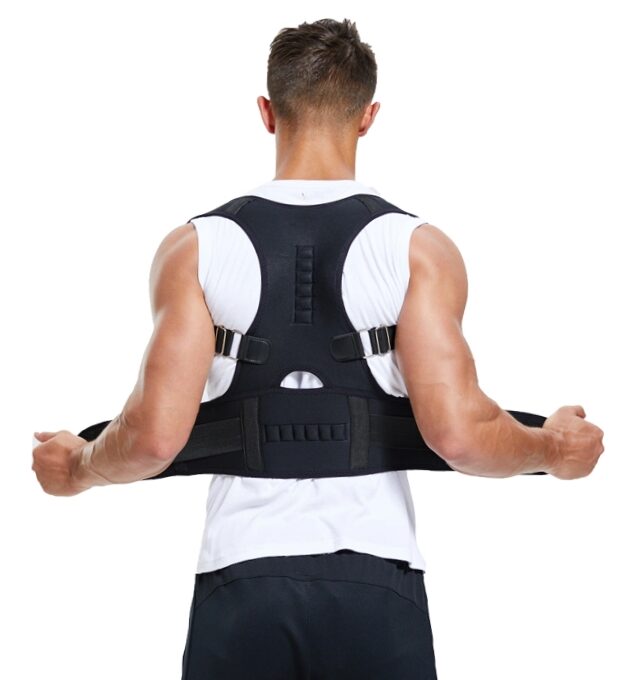

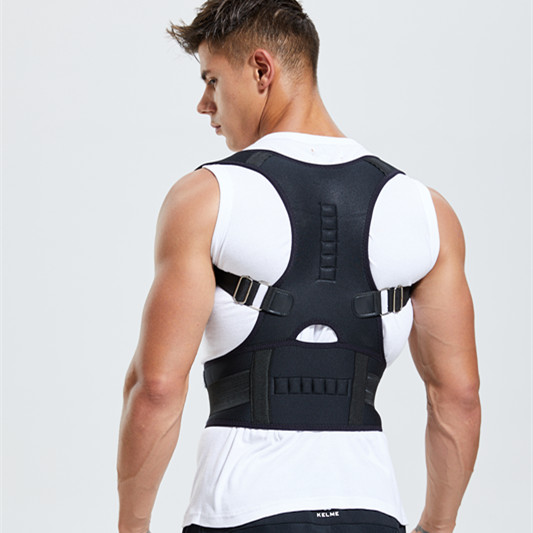
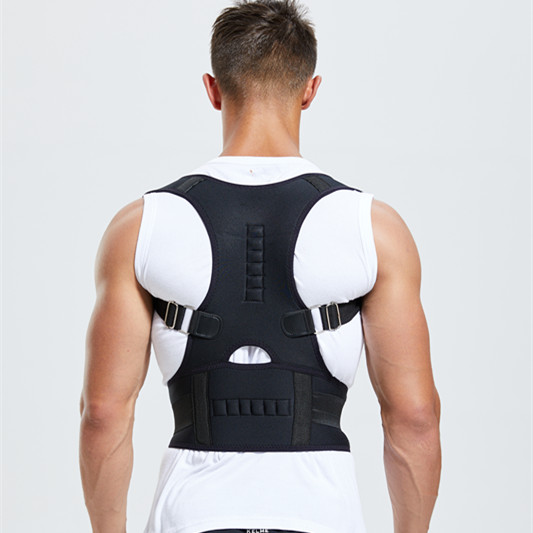
Magnetic Back Brace For Men
£15.99inc VAT
- 1 magnetic back brace for men designed to support both the upper and lower back.
- Suitable for back discomfort linked to poor posture, muscular strain, tiredness through the back, or repeated daily stress on the spine.
- Helps encourage a more upright position when sitting, standing, walking, exercising, or doing routine daily tasks.
- Designed to help with slouching, rounded shoulders, and the upper-back and lower-back fatigue that often builds as the day goes on.
- Provides gentle compression for a closer, more secure feel around the back during movement.
- Includes strategically placed magnets as part of the brace design. Not suitable for people with pacemakers, defibrillators, or other implanted medical devices.
- May be useful during recovery from back strain and for support during flare-ups linked to posture or repeated activity.
- Can be worn during exercise, at the gym, while running, or during ordinary day-to-day activity.
- Made from lightweight, breathable, durable materials for more comfortable regular wear.
- Padded arm straps and adjustable fastenings help improve comfort, fit, and day-to-day practicality.
- Slim, low-bulk design can be worn under clothing more discreetly than heavier braces.
- Available in 5 sizes: Small, Medium, Large, XL, and XXL. Choosing the right fit matters for both comfort and support.
- If your symptoms are new, worsening, or unexplained, it is sensible to speak to a GP or physiotherapist before relying on a brace alone.
- Includes a 30-day money-back guarantee for added reassurance.
A practical back brace for everyday support
If your back often feels tired, tight, achy, or easy to aggravate, the right support can make a real difference to how the day feels. For many men, back discomfort is not always severe, but it turns up often enough to affect comfort, posture, and confidence. You might notice a dull ache across the lower back after standing, stiffness through the upper back after sitting for too long, or a sense that your back feels less reliable during exercise, lifting, walking, or other routine activity. Even when pain comes and goes, repeated strain and poor posture can slowly make everyday life feel more difficult than it should.
The Magnetic Back Brace for Men by BackReviver is made for those situations. It supports both the upper and lower back, helps you stay more upright, and gives gentle compression in a lightweight design that is practical for regular wear. You can wear it around the house, during exercise, at the gym, or while running, so it suits men who want extra back support without the bulk of a heavier brace.
Most people are not looking for something that only distracts from discomfort for a short while. They want the back to feel steadier, better supported, and easier to manage during the parts of the day that usually cause trouble. That may mean standing for longer without the back tiring so quickly, sitting more upright at work, walking with more confidence, or getting through physical tasks without feeling as though the back is close to flaring.
This page looks at why back pain and strain build up, how a back brace can help, how this brace is designed to work, and the kinds of back problems that often lead men to look for extra support. If you want a brace that feels practical, wearable, and supportive in daily life, this one is built with that in mind.
Why back pain and strain build up
Your back is involved in almost every part of daily movement. It keeps you upright, supports body weight, transfers force when you walk or run, and allows you to bend, twist, reach, lift, and carry. Because it does so much, fairly ordinary habits and workloads can build into noticeable discomfort over time.
The spine is made up of stacked bones called vertebrae. Between many of these bones sit discs, which act as cushions and help absorb force. Small joints at the back of the spine guide movement as you bend and twist. Around these structures are muscles and ligaments that help hold the spine steady. When these parts share the work well, the back usually feels strong and capable. When one area becomes irritated, overworked, or poorly supported, other parts often have to take on more strain.
Posture is one of the commonest reasons discomfort develops. Usually, it is not one slouched position on its own that causes the problem. It is what happens when you spend repeated long periods sitting with the shoulders rounded, leaning forwards over a desk, driving for hours, standing with poor alignment, or letting the upper and lower back drift into positions that ask the muscles to work harder than they should. Over time, those muscles tire, posture slips further, and the joints and discs can end up under more stress than they would in a better-supported position.
When clinicians talk about load on the back, they simply mean the forces the back has to deal with. That includes your body weight, the force of lifting or carrying, the effort of staying upright, and the repeated pressure of bending, twisting, walking, or standing for long periods. Most backs cope with a great deal. Trouble usually starts when the same tissues are being asked to deal with the same demands again and again without enough support or recovery.
That repeated demand is also what people often mean by strain. Sometimes a muscle or ligament has been stretched further than it can comfortably manage. Sometimes the discs or joints are being put under more pressure than they tolerate well. It does not always happen because of one major incident. Very often, back pain builds gradually through smaller repeated stresses that eventually become too much.
The lower back often carries the biggest share of this effort. It has to control a lot of force during lifting, bending, carrying, and prolonged standing. If you lift from an awkward position, twist while carrying something, or spend long stretches on your feet, the tissues around the lower spine can become irritated. Sometimes that leads to a local patch of pain or tightness. At other times, deeper structures become more sensitive, so the back feels stiffer, less tolerant of certain movements, or more likely to catch.
Muscle fatigue is another common part of the picture. The muscles that support the spine are active for much of the day. As they tire, they stop holding the back as well as they did earlier on. That is often when posture starts to slip. The shoulders round, the chest drops, or the lower back loses support. Once that happens, other tissues have to work harder. Many men notice this later in the day, after desk work, or during the later part of exercise or physical activity.
Awkward or poorly controlled movement can add to the problem as well. Twisting while lifting, reaching from a bent position, trying to move quickly when the back is already tired, or training when posture is fading can all increase the stress going through the spine. It can feel as though pain appeared suddenly after one small movement, but often the back was already under strain before that final trigger happened.
Age-related change can make the back easier to irritate too. Over time, discs can lose some of their elasticity, and the joints in the spine can become stiffer. That does not automatically mean serious damage. Often, it simply means the back has less tolerance for long periods of sitting, standing, walking, or heavier activity than it once did. The same day-to-day tasks that used to feel manageable may start to bring symptoms on more quickly.
For some men, discomfort stays local to the back. For others, the problem can irritate nearby nerves, especially in the lower back. When that happens, pain may spread into the buttock or leg, sometimes with tingling, numbness, or heaviness. In those cases, the position of the spine still matters, because the way the lower back is held can affect how much stress goes through the sensitive area.
Stress and reduced movement can also keep the problem going. When your back hurts, it is common to tense around the painful area, move more cautiously, and stop trusting the back. That extra tension can make the muscles even more tired, while moving less can leave the back feeling stiffer. This is one reason recurring back pain can become a cycle. The same posture habits, work demands, and movement stresses keep loading the same tissues, so the problem keeps returning.
That is why it is worth doing something about back pain rather than simply putting up with it. The aim is not only to reduce pain. It is to improve comfort at work, make movement easier through the day, restore confidence with activity, and cut down the repeated flare-ups that wear you down over time.
Why a back brace can help
A back brace helps by supporting the back from the outside when the muscles and other tissues are struggling to cope comfortably on their own. In practical terms, it can help your back feel more held, more upright, and less exposed during the activities that usually bring symptoms on.
One of the clearest ways a brace helps is through posture support. When you start to slump, round the shoulders, or let the lower back settle into a less supported position, the muscles around the spine often have to work harder to stop you dropping further into that posture. A brace gives the body a physical prompt when posture starts to drift. That can make it easier to stay in a more supported position for longer, especially if you spend a lot of time sitting, standing, driving, or doing repeated tasks.
A brace can also reduce some of the physical demand placed on the back during movement. If the back already feels irritated, tired, or vulnerable, even ordinary tasks can feel more effortful than usual. Walking, standing, lifting and carrying, housework, and exercise may all seem to ask more from the back than it can comfortably give. Added support can make those activities feel steadier and better controlled.
Compression is another important part of the picture. This simply means the brace fits closely around the back and gives it a firmer, more contained feel. Many men find this reassuring when the back is sore or recovering from strain. It can make movement feel more secure and may reduce the sense that the back is unsupported or close to catching. Often, that close and supportive feel is one of the first things people notice when they put a brace on.
A brace can be especially useful in the situations where symptoms usually flare. For some men, that is prolonged standing. For others, it is sitting too long, exercise, physical work, or repeated tasks that gradually tire the back. The link is straightforward: the back has to control repeated force, hold posture for too long, or cope when the muscles are already fatigued. Wearing a brace during those times can be a practical way to reduce repeated aggravation.
That can matter during recovery too. If the back has been strained or has flared up, daily life does not stop. You may still need to work, travel, move about, or stay active in a modified way. A brace can help by giving the back more support while things settle, which may reduce the extra effort and poor positioning that would otherwise keep symptoms stirred up.
There is also a confidence benefit. When the back hurts, it is common to tense the body and move more cautiously than you need to. That guarded style of movement can leave the back feeling even more tired and stiff. A supportive brace can make movement feel more controlled, which may help reduce some of that extra muscular tension.
A brace is not a cure, and it does not replace everything else the back may need. Its role is more straightforward than that. It supports posture, adds gentle compression, reduces some of the strain that builds during activity, and makes the more difficult parts of the day easier to get through. That is what this Magnetic Back Brace for Men is designed to do.
How the Magnetic Back Brace for Men is designed to help
The Magnetic Back Brace for Men is made for the times when the back tends to struggle most: long periods of sitting or standing, physical tasks, exercise, recovery after strain, and days when posture seems to fall apart more quickly than usual. It combines upper and lower back support, posture assistance, gentle compression, an adjustable fit, and a magnetic element in one wearable brace designed for regular use.
The aim is not to make your back rigid. It is to help you feel more supported, more upright, and more comfortable while still moving through the day normally.
Support for the upper and lower back
Back discomfort often does not stay neatly in one place. The lower back may ache after standing or lifting, while the upper back and shoulders become tired and rounded after sitting or desk work. These problems often feed into each other. If the upper back slumps and the shoulders roll forwards, the lower back may end up compensating. If the lower back feels tired and unsupported, the whole trunk can move less efficiently.
That is why support for both the upper and lower back can be so useful. In the lower back, the brace provides extra support during lifting, bending, carrying, standing, and other activities that place force through the lumbar area. When that part of the back is tired or irritated, added support may make movement feel less effortful and less exposed.
In the upper back, support matters because posture often starts to fail there first. When the chest drops and the shoulders round forwards, staying upright becomes harder work. The brace helps encourage a more open position through the upper body, which may reduce the muscular effort involved in resisting slumped posture for long periods.
By supporting both regions together, the brace helps the trunk feel more stable as one connected system rather than trying to help one small area on its own.
Posture support in daily life, work, and exercise
One of the most useful jobs of a back brace is helping to stop posture from gradually collapsing as the day goes on. Many men begin the day sitting or standing reasonably well, then slowly drift into a rounded, slouched position as fatigue builds. Once that happens, the back often starts to ache more quickly because the muscles and spinal structures are working from a less efficient position.
This brace helps by giving the body feedback when posture starts to slip. In simple terms, it helps you notice when you are rounding forwards and encourages you back towards a more upright position. That matters because less time spent slumped usually means less time stressing the tissues that tend to become sore, tight, or irritated in that posture.
This can help in ordinary daily life just as much as in more active situations. If you work at a desk, drive regularly, spend long hours on your feet, or do repeated tasks that pull you forwards, the brace helps counter that gradual posture drift. It can also be useful during exercise when fatigue starts to affect the position of the trunk and the way the back controls movement.
For many men, posture support is not mainly about looking straighter. It is about reducing the ache, tension, and fatigue that build when the back spends too long in positions it does not tolerate well.
Gentle compression for a secure feel
Compression is a simple but important part of this brace. When worn properly, it sits close to the body and gives the back a firmer, more supported feel. That can be especially reassuring when the back has been strained, feels vulnerable, or tends to flare during movement.
Often, one of the first things people notice is not a dramatic change in pain, but the feeling that the back is more contained and secure. That can make standing, walking, and everyday activity feel less provoking. It may also reduce the sense that the back is loose, unprotected, or likely to catch with a sudden movement.
Because the brace fits closely, compression also helps the support feel more stable on the body. If a brace feels secure and stays in place, it is more likely to feel reliable during movement.
The magnetic element
This brace also includes strategically placed magnets as part of its overall build. The important point is to see the magnetic element as an added feature within a brace that already provides posture support, upper and lower back support, and gentle compression.
In other words, the main reasons this product may feel helpful are still the practical ones. It helps support posture, gives the back a more secure feel, and may reduce some of the strain that builds during daily activity. The magnets sit within that wider support design rather than replacing it.
For men who specifically want a magnetic back brace rather than a standard support garment, this adds that extra feature while keeping the main focus on fit, comfort, support, and day-to-day wearability.
Lightweight comfort and everyday wear
A back brace only helps if it is comfortable enough to wear in real life. If it feels too hot, too heavy, too bulky, or too awkward, most people stop using it even if the support itself is good. That is why comfort matters so much.
This brace is made from lightweight, breathable, durable materials intended to make regular wear easier. Breathability is especially important if you want to use it during exercise, at the gym, while running, or during active daily tasks. If a brace traps too much heat or becomes uncomfortable as you move, you are far less likely to keep wearing it when support would otherwise help.
The padded arm straps are there to improve comfort through the shoulders. Straps that dig in can quickly make a brace unpleasant to wear, especially over longer periods. Padding helps it feel more manageable and less harsh.
The adjustable straps allow you to fine-tune the fit so the brace feels secure without being too tight. A better fit means it is less likely to slip, less likely to dig in, and more likely to give steady support where you need it.
Its slim, non-bulky profile also makes it more practical for daily wear. Many men want a brace they can wear under clothing without feeling awkward or overly restricted. A lower-profile design makes that much more realistic.
The brace comes in five sizes, which matters because fit affects both comfort and function. Too loose, and the support may not feel effective. Too tight, and it may become uncomfortable. A good fit should feel secure, supportive, and realistic to wear in the situations where your back needs help.
Who this back brace may help
This brace may suit men who want extra support during the times their back usually starts to complain. In many cases, the signs are familiar. The back gets tired, posture starts to slip, repeated activity becomes more uncomfortable, and symptoms build as the day goes on.
-
- upper or lower back ache linked to slouching or poor posture
-
- a back that becomes tired or tight as the day goes on
-
- extra support during standing, walking, lifting, exercise, or gym sessions
-
- flare-ups after physical work, training, or repeated daily tasks
-
- recovery after a back strain or a heavier-than-usual period of activity
-
- help staying more upright during desk work, driving, or daily routines
-
- a preference for a brace that combines posture support, compression, and a magnetic element
-
- a slim design that is practical enough for regular wear
Some men mainly use this sort of brace during activity. Others wear it when the back already feels irritated or after a flare-up. Some want posture support most of all, while others value the close, secure feel that compression gives. The reason varies, but the aim is usually the same: making the back feel better supported during the situations that tend to bring symptoms on.
Common back problems and injuries a back brace may help support
How to wear the brace and what to expect
A back brace works best when it fits properly, feels comfortable enough for real-life use, and is worn in the situations where your back genuinely needs support. Even a well-made brace will feel disappointing if it is the wrong size, slips out of place, digs in, or is worn so loosely that it cannot do its job.
Getting the fit right
This brace comes in five sizes so you can choose the fit that best suits your build. A good fit should feel secure and supportive across the back without feeling excessively tight or restrictive. The adjustable straps let you fine-tune how the brace sits so it feels firm enough to support you, while still being comfortable enough for regular wear.
A poor fit is usually easy to recognise. If the brace keeps slipping, does not seem to support the back properly, digs into the shoulders, or feels uncomfortably tight, the fit is unlikely to be right. The padded arm straps are there to improve comfort through the shoulders, while the slim profile helps the brace sit more naturally under clothing.
When the fit is right, the brace should feel as though it is helping hold your back in a better-supported position rather than simply wrapping around you loosely.
When many men choose to wear it
Many men choose to wear a back brace during the parts of the day that most reliably trigger symptoms. That might be during exercise, at the gym, while running, during long periods of standing, while lifting and carrying, or on days when the back already feels irritated and easy to aggravate.
The common thread is that these are the times when the back is under repeated force, posture starts to fade, or the tissues are already a bit sensitive. Wearing the brace then can help make those situations easier to manage. It is not necessarily about wearing it all the time. It is about having support available when your back is most likely to struggle.
That flexibility is part of what makes a practical brace useful. It can move with you from ordinary daily tasks to more active situations without feeling like something that only works in one setting.
What you may notice first
For many men, the first thing they notice is simply that the back feels more supported. Standing may feel steadier. Walking may feel less tiring. Sitting upright may feel easier to maintain. If your symptoms are usually linked to posture drifting or the back tiring during activity, this change may be noticeable fairly quickly when you wear the brace in those provoking situations.
You may also notice that you become more aware of your posture. When you start to round forwards or slump, the brace can make that drift easier to feel, which gives you the chance to correct it sooner. Some men notice the compression element first instead: that close, secure feeling through the back that makes movement feel more contained and controlled.
What to expect over time
Over time, the brace may help you manage the situations that usually aggravate your back more comfortably. You may find that a long day on your feet feels less punishing, that exercise is easier to tolerate, or that flare-ups linked to posture or strain feel less disruptive when you have support in place.
It is important to keep expectations realistic. A brace is not a cure on its own. Its job is to support posture, help the back feel more secure, reduce some of the strain that builds during activity, and make everyday movement easier to tolerate. How much difference you notice will depend on why your back hurts, how well the brace fits, and when you wear it.
In many cases, the benefit is most obvious in the situations that usually trigger symptoms rather than as a dramatic all-day change. That is often where a good support product proves its worth.
Important safety information
This back brace contains magnets, so it is not recommended for people with pacemakers, defibrillators, or other implanted medical devices.
If you are unsure whether this type of support is suitable for you, it is sensible to get advice before using it. That is especially relevant if your symptoms are new, worsening, or unexplained, or if you have a more complex back problem and want individual guidance on whether a brace is appropriate.
If you notice spreading numbness or weakness, changes in bladder or bowel control, or other new or unexplained symptoms that do not settle, it is sensible to speak to a GP or physiotherapist rather than relying on a brace alone.
A support brace can be a helpful part of managing back discomfort, but it works best when it matches your needs and situation.
Take the next step towards better everyday back support
If your back regularly feels tired, strained, posture-related, or easy to aggravate during work, exercise, or everyday life, the Magnetic Back Brace for Men offers practical support aimed at making movement easier to manage. It supports the upper and lower back, helps encourage a more upright position, provides gentle compression, and is made to be light, breathable, adjustable, and comfortable enough for regular wear.
Whether you want extra support around the house, at the gym, while running, during long periods on your feet, or through the daily routines that usually wear your back down, this brace is designed to help you feel steadier and better supported. Its magnetic element sits within a design that already focuses on the things most men care about in real life: support, posture help, fit, comfort, and practicality.
Back pain can make ordinary life feel more difficult than it should. The right brace cannot do everything, but it can help your back feel more supported during the situations that usually cause the most trouble. If that sounds like the sort of help you have been looking for, it is worth checking the sizing carefully and considering whether this brace fits the way your symptoms tend to behave from day to day.
For added reassurance, every purchase comes with a full 30-day money-back guarantee. Choose the size that fits you best and give your back the support it needs to feel more comfortable, more secure, and easier to manage through the day.
Disclaimer
This information is general guidance only and is not a substitute for individual medical advice, diagnosis, or treatment. If you are unsure whether this brace is suitable for you, or if you have new, worsening, or more complex symptoms, speak to a GP, physiotherapist, or another appropriate clinician for personalised advice. Individual results can vary, and no specific outcome can be guaranteed.
2 Reviews For This Product
Fast & Secure Checkout Through Paypal
Pay with Paypal the secure payment gateway that accepts all credit and debit cards. Paypal is free and secure and no credit or bank information is ever stored or shared with us.
Fast Dispatch
Enjoy your items soon with quick dispatch via Royal Mail. Expect to have your items between 1-3 working days for domestic orders. 7-10 Working days for international orders.
Return Policy – 30 Day Money Back Guarantee
In the unlikely event, you are unhappy with your purchase you can return it within 30 days for a refund. Please contact us via the form on the contact us page to start your return.
To return an item please send it to: Nuova Health UK, 81 Highfield Lane, Waverley, Rotherham, S60 8AL. Please include a note with your order id so we know who to refund. Please retain your postage receipt as proof of postage. All that we ask is that the item is in the original packaging and unused.
by Greggory
Took a little bit longer than expected to arrive but very comfortable to wear and works very well.
by Josh120
Works good for protecting back when exercising!