

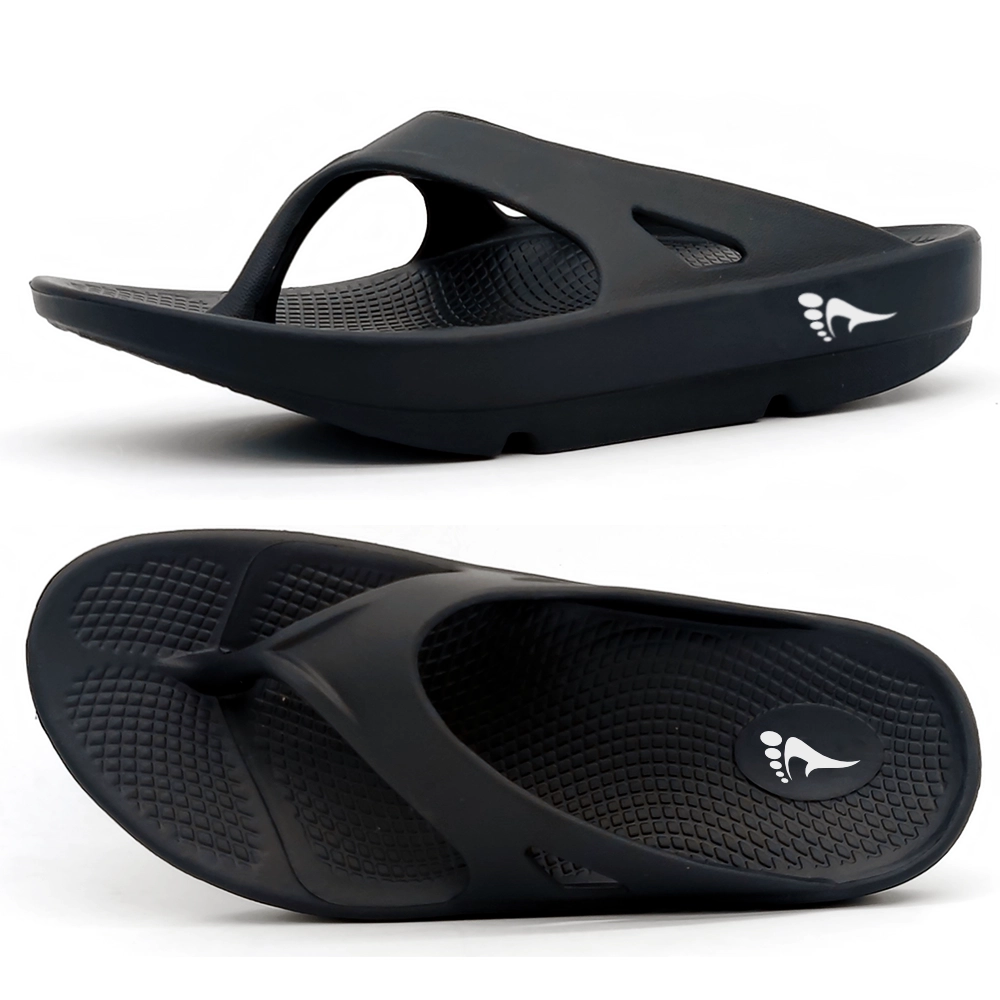


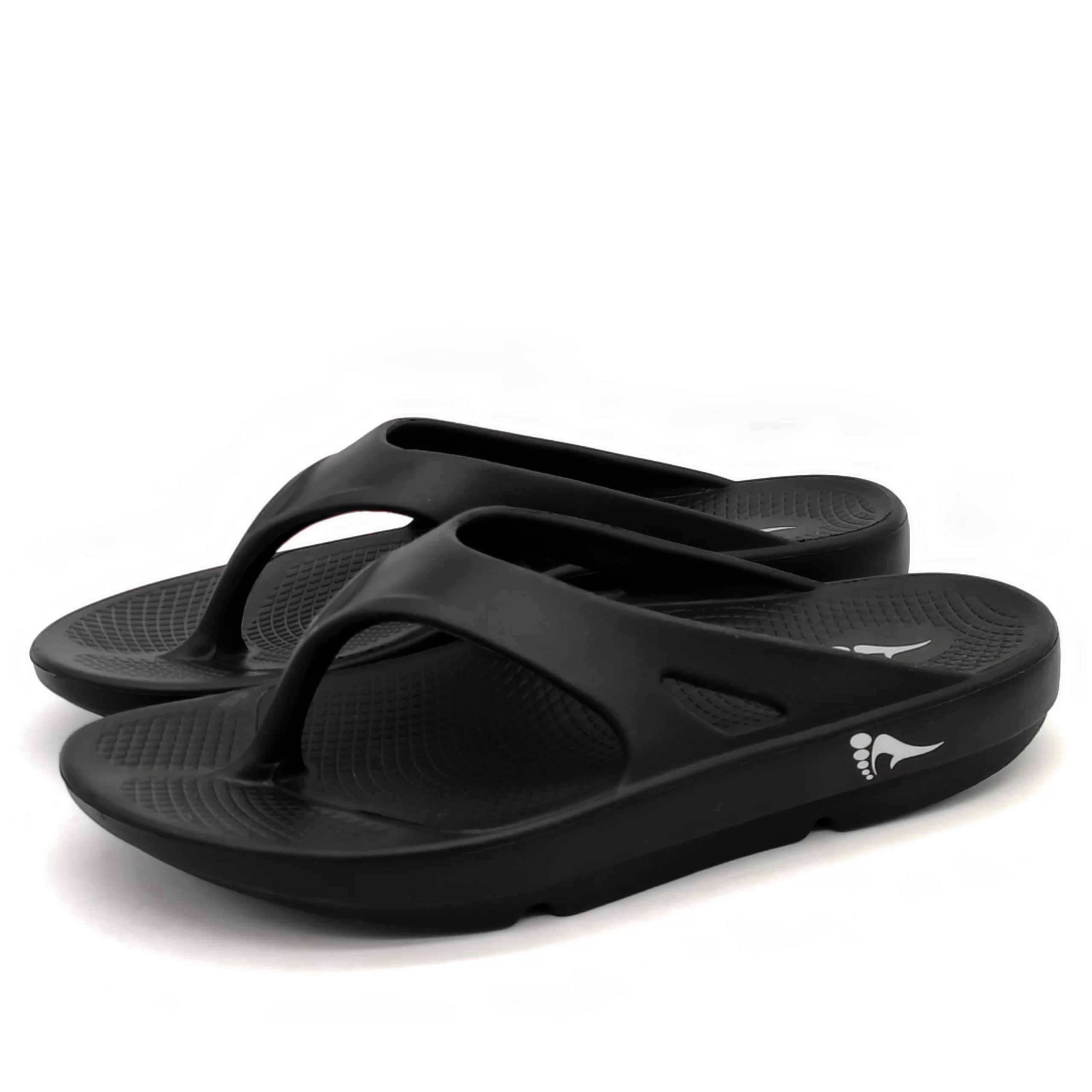
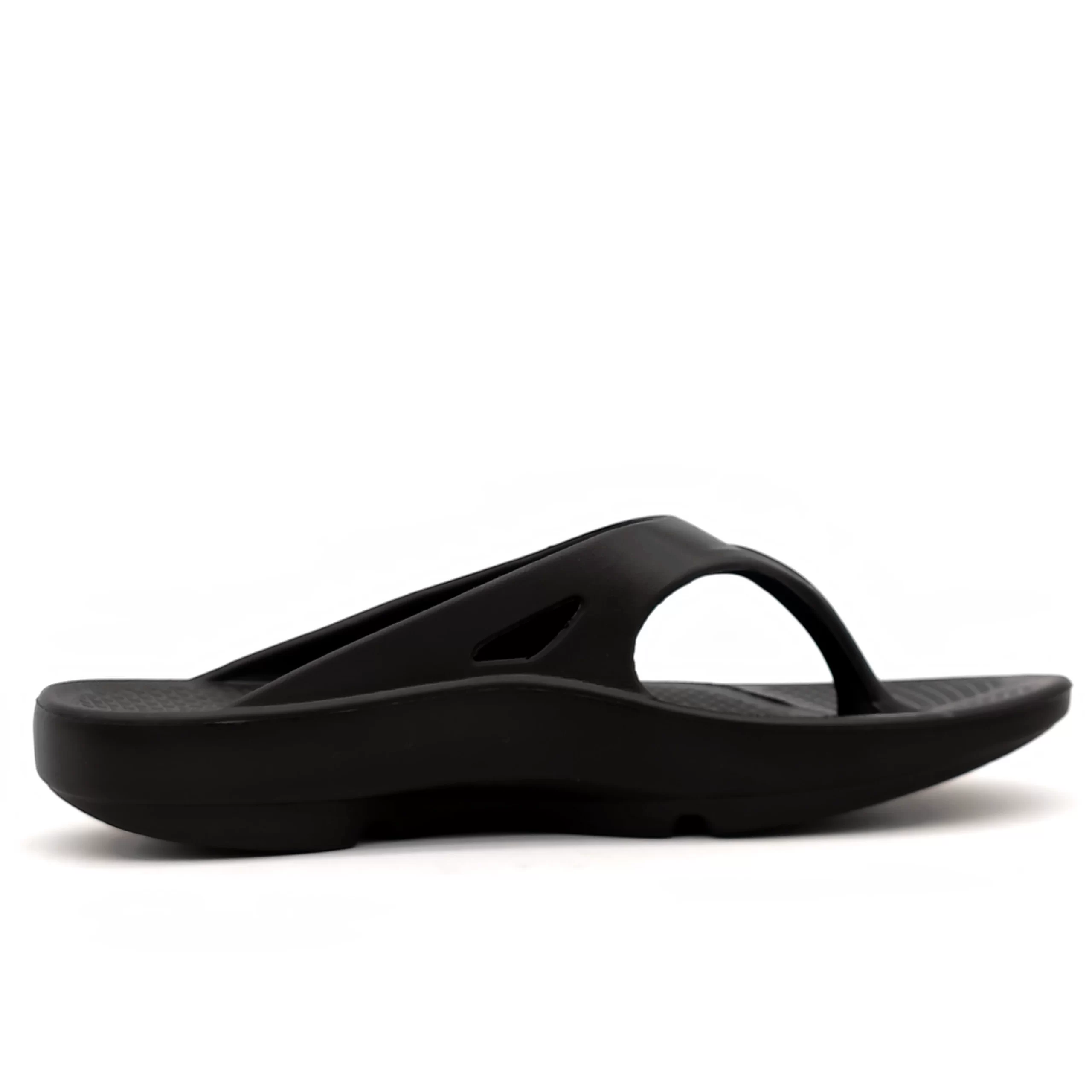
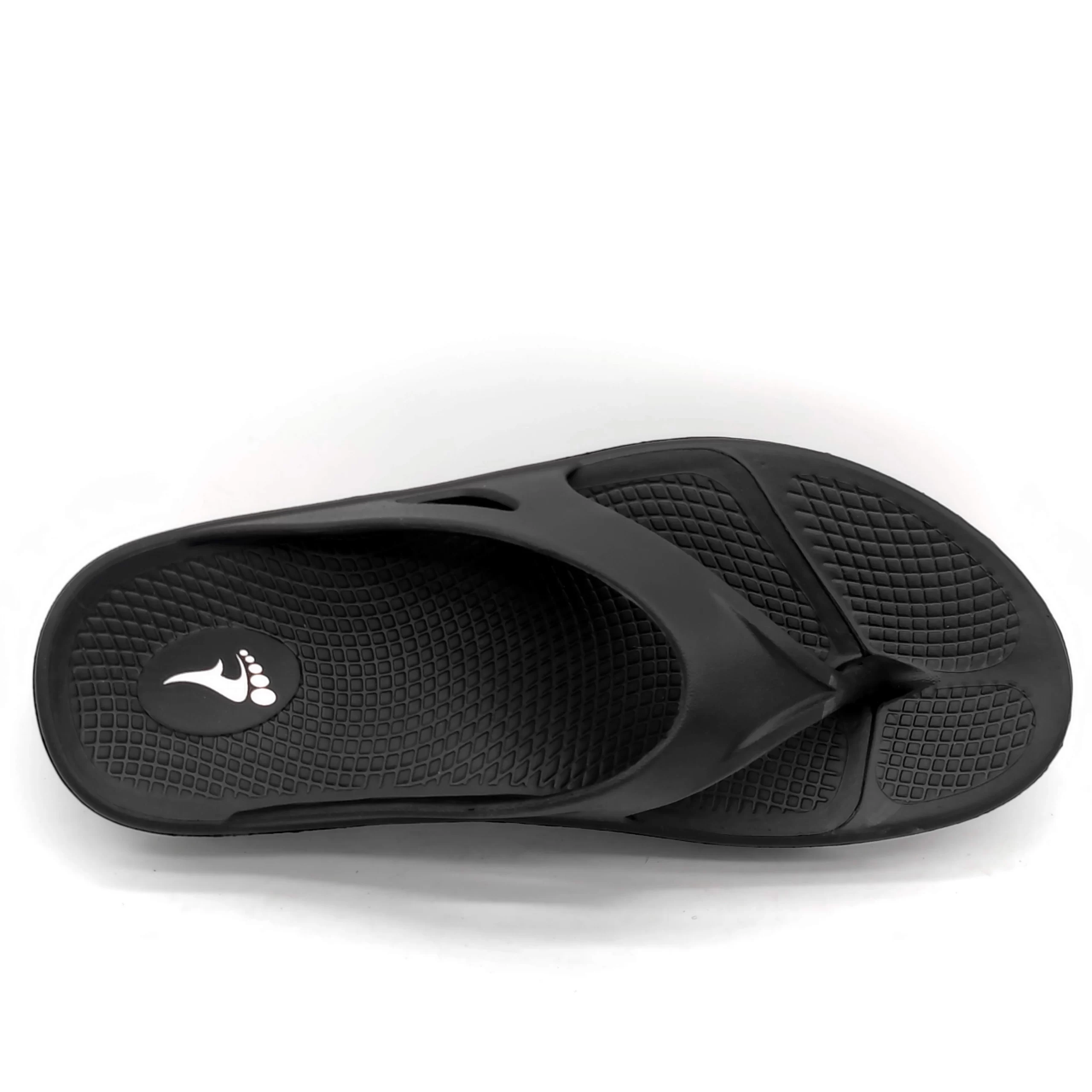
Arch Support Recovery Sandals
£28.99£34.99 (-17%)inc VAT
- A stylish, unisex recovery sandal available in multiple sizes — designed for comfort around the house, at work, and outdoors.
- Built-in contoured arch support helps spread your body weight more evenly. This encourages a more natural step and eases strain on the arch, plantar fascia, knees, hips, and lower back.
- A deep, cushioned heel cradle keeps your heel stable. This can help with heel pain — often linked to plantar fasciitis — while also giving your Achilles tendon a more steady base.
- Shock-absorbing EVA sole softens every foot strike on hard surfaces, so your feet feel less jarred after long shifts, standing at home, or walking on pavement.
- Textured footbed grips your skin, preventing your foot from sliding forward and keeping the arch support exactly where it should be.
- Anti-slip tread adds stability on dry, everyday surfaces. On wet tiles, soapy floors, or near a swimming pool, always switch to rubber-soled shoes.
- Water-resistant, wipe-clean, and breathable — they stay fresh and light, even in warm weather or during longer periods of wear.
- Open, lightweight, and non-bulky design lets your feet move freely without feeling weighed down.
- Convenient for home use: worn them indoors as supportive slippers, then step outside without changing shoes.
- Helpful for those with flat feet, high arches, overpronation, or supination — and for recovering from minor foot strain once your clinician has cleared you for normal footwear.
- Not a medical device and not a replacement for custom orthotics. Begin with two to three hours a day, then build up slowly.
Available in the following unisex sizes:

EU Size 36: UK Size - 3.5
EU Size 37: UK Size - 4 - 4.5
EU Size 38: UK Size - 5
EU Size 39: UK Size - 6
EU Size 40: UK Size - 6
EU Size 41: UK Size - 7
EU Size 42: UK Size - 7.5 - 8
EU Size 43: UK Size - 8 - 8.5
EU Size 44: UK Size - 9
EU Size 45: UK Size - 10
EU Size 46: UK Size - 11

*Note: The conversion chart above is for reference only.
The sandals are manufactured to EU sizing standards,
we recommend selecting your EU size.
FootReviver Arch Support Recovery Sandals
Your feet carry you from your first step out of bed to the moment you kick off your shoes at night. Each stride sends around one and a half times your body weight through a single foot. Yet you rarely give them a second thought — until they start to complain.
By late afternoon, you know the feeling: heavy legs, aching arches, sore heels, tired calves. That isn’t weakness. It’s just what happens after hours on hard, flat surfaces without proper cushioning.
The FootReviver is a cushioned, open sandal designed for exactly that kind of day. It won’t repair damaged tissue, and it isn’t a replacement for medical care. It gives your feet a well-contoured surface to stand and walk on. For many people, that small change makes a real difference by the time evening comes.
What “recovery” means here
Recovery sounds clinical, but here it simply means a sandal you reach for after a long day on your feet — whether that’s a long shift, a long walk, or an afternoon spent in the kitchen.
A recovery sandal won’t rebuild tired muscles or change the shape of your foot. What it gives you is a softer landing than flat flip-flops, hard-soled slippers, or bare feet on tile and concrete.
The FootReviver supports your arch, cushions your heel, and gives you a stable base as you move around normally. That’s the simple version. The rest of this page explains why that support matters and what you should feel when you put the sandals on.
Why your feet feel tired and achy
To see what these sandals can do, it helps to know why feet get sore in the first place.
What your feet do all day
Every time you stand, your full body weight presses down through your feet. When you walk, the load increases. With each step you land on your heel, roll through your arch, and push off from the ball of your foot. If you’re on your feet through a working day, that cycle repeats thousands of times.
The surface you stand on changes how hard your feet have to work. Concrete, tile, pavement and wood absorb very little impact. The surface gives nothing back, so your feet have to do the absorbing. A long shift on a firm, unyielding floor feels very different from an afternoon walking on a well-cushioned sports track or a natural path. By the end of the day, you can feel that difference in your shins, heels and arches.
The arch and the plantar fascia
The arch of your foot isn’t a fixed, rigid bridge. It moves with every step. Every time you put weight through your foot, the arch lowers a little to absorb the impact. As your weight shifts forward, the arch springs back to its natural resting shape. This happens with every single step.
A strong band of tissue called the plantar fascia runs along the underside of your foot, from your heel to the base of your toes. Think of it as a natural tension strap. It stops the arch from flattening too far and helps your foot transfer force smoothly from back to front.
With proper support, the plantar fascia doesn’t get overstretched. But if the arch sags — or if you spend hours on unyielding floors — the tissue stretches and re-stretches. Over a long day, that repetitive strain can lead to aching under the foot or pain on your first steps after sitting down.
Heel pain isn’t always caused by the plantar fascia. A natural pad of fat beneath your heel bone acts as a built-in shock absorber. With age, or after years of walking on hard ground, that fat pad can become thinner and less effective. When that happens, the heel bone takes more of the impact directly. The result is a deep, bruised ache in the heel, especially after walking on concrete or tile.
Both arch strain and heel pain respond to the same kind of help: gentle lift under the arch and cushioning under the heel.
What happens when the arch has no support
A flat sole doesn’t help with any of that. When your foot rests on a completely flat surface, the space under your arch has nothing beneath it. Body weight pushes the arch down further than it should, and it can stay in that lowered position for longer.
That extra movement keeps the plantar fascia stretched for longer. It also changes how the heel and ankle move. When the arch drops, the heel bone tilts inward. That tilt carries into the ankle joint, making it less stable. The muscles and tendons around the calf, including the Achilles tendon at the back of the heel, then have to work harder to control that movement with every step.
Over a whole day, that repeated inward tilt adds up. Each step forces your ankle to make a small correction, and your calf muscles keep working to control it. No wonder your calves feel tired, your ankles stiff and your arches achy after a long day on a hard floor in flat shoes, soft slippers or nothing at all.
Why arch support helps
Arch support doesn’t remove body weight. What it changes is how that weight spreads across the bottom of your foot.
The underside of your foot is curved. When you stand on a flat surface, only part of the foot makes full contact with the ground. A contoured footbed fills that space, increasing the contact area between your foot and the floor. That spreads pressure more evenly across your heel, the outer edge and the ball of your foot. It also gives the arch a firm surface to rest against, instead of letting it drop into empty space.
Supporting the arch also steadies the heel. When your heel stays in a more neutral position, the alignment from foot to ankle to knee to hip stays stable. That’s why supportive footwear can help your calves, shins, knees and lower back too.
Who might find these sandals helpful
Not everyone needs a contoured footbed under their foot. Some people never need arch support, even after years of flat shoes — and that’s perfectly fine. The simplest way to tell if this kind of sandal might help you is to look at how your feet feel at the end of the day.
Ask yourself:
- Do your feet ache more at the end of the day than at the beginning?
- Do you feel a dull soreness under your arch or around your heel after standing for long periods?
- Do your calves or shins feel tight or heavy after walking on hard floors?
- Do you avoid certain shoes because they leave your feet feeling tired?
- Do you feel noticeably better on days when you wear a supportive trainer with a contoured footbed than on days when you wear flat sandals or go barefoot?
If you answered yes to several of these, a supportive, cushioned sandal is worth trying. If your feet feel generally comfortable in flat shoes and you never notice discomfort, you may not need arch support — and there’s no reason to add it just because it sounds like a sensible idea.
These sandals tend to suit people who spend long shifts on hard floors — in a kitchen, a shop, a workshop, a hospital, or a warehouse. They’re also a good match if you walk a lot outdoors on hard, firm ground.
If you’re already managing plantar fasciitis and your clinician has advised supportive footwear, these sandals can offer that support while you keep up with any exercises, stretches, or orthoses you’ve been given. The same applies to flat feet, high arches, overpronation, or supination — especially when those patterns are making long hours harder than they should be. People with arthritis in the foot or ankle can also benefit from a cushioned, supportive sandal. When joints are already uncomfortable, walking on a hard, unforgiving surface adds an avoidable jolt to every step. The EVA sole absorbs some of that initial shock before it reaches the joint.
The sandals are also worth considering if you simply want something open and breathable to wear around the house. Many people who work from home are surprised by how much time they actually spend standing, moving between a desk, a kitchen, and other rooms. A supportive sandal for those hours gives your feet a consistent base, which may keep late-day soreness from developing in the first place.
When to check with a clinician first
These sandals are designed for adults, and they are a general everyday support rather than a medical device. But if you have specific concerns, it’s worth having a quick conversation with a GP, physiotherapist, or podiatrist before making them your regular footwear.
If you have balance concerns, reduced feeling in your feet, or a condition such as diabetic neuropathy, speak to a clinician before switching to an unadjustable open sandal. An open toe-post sandal doesn’t hold your foot the way an enclosed shoe does. And if you can’t feel small slips, you may not notice your foot moving until it’s become a problem.
Similarly, if you’re recovering from an injury or procedure, wait until your GP, physiotherapist, or podiatrist has confirmed you can return to normal footwear before using them.
What makes FootReviver different from a flat flip-flop
The material: EVA
EVA stands for ethylene-vinyl acetate. It’s a lightweight, closed-cell foam used widely in recovery footwear and everyday sandals because it absorbs shock well and feels pleasantly cushioned underfoot.
Rubbery soles can feel stiff and heavy. Rigid plastic can feel harsh. EVA sits somewhere in between: firm enough to give structure, yet soft enough to soften hard surfaces.
The EVA isn’t just a soft layer sitting on top of a harder sole. The whole sandal is one continuous piece of EVA. The sole, the footbed, the arch contour, the heel cradle, and the toe-post upper are all one part. There’s no glue line, no separate strap, and no small fittings to loosen or break.
Because EVA is closed-cell, it doesn’t absorb water the way fabric or open-cell foam does. If you wear these sandals on damp grass or step through a light puddle, they won’t become heavy and waterlogged. They dry quickly and are easy to wipe clean. This also means stale odours are less likely to build up over time, since the material doesn’t retain moisture.
Why a one-piece design matters
Most sandals are made by attaching a separate upper to a sole. That join is where they usually break. Flip-flops snap where the strap enters the footbed. Glue lines weaken. Small fittings loosen.
The FootReviver avoids all these problems because there is no join. When you walk, the entire sandal flexes as one piece, and it keeps that shape day after day.
This also means the support stays exactly where it was designed to sit. There’s no removable insole to shift, no separate arch insert to lose, and no footbed that can detach from the sole. An arch support that’s just placed into a footbed can move as you walk. Here, the arch support is shaped directly into the footbed, and the upper is part of the same structure. The upper helps hold your foot in position over that contour, rather than allowing it to drift forward or sideways as you walk. That combination keeps the support aligned with your foot all day.
The toe-post upper
The upper uses the familiar toe-post layout: one band passes between your big toe and second toe, then connects to both sides of the sandal. In this design, the band isn’t a separate, thin strap. It’s a smooth extension of the EVA footbed itself, flexible enough to move naturally with your foot but structured enough to hold the sandal in place.
There is nothing to adjust. You slide your foot in, and the shape of the sandal keeps it secure while you walk. This matters for more than just convenience. When a sandal doesn’t hold the foot firmly, your toes instinctively grip the footbed to stop the sandal from flicking off with each step. Constant gripping makes the small muscles in your feet and calves work harder than they should, so they feel tired by the end of the day. With the toe-post doing the holding, your toes can stay relaxed and let the sandal do that work.
How the design supports your foot
Each element of the sandal has a specific role. Some are immediately obvious when you put it on. Others reveal themselves over a long day.
Contoured arch support
Slip the sandal on and the first thing you’ll notice is a raised contour under the inside of your arch. It isn’t a rigid orthotic or an aggressive wedge. It’s a moderate, cushioned lift made from the same EVA as the rest of the sandal.
When you stand, the foam compresses slightly, so the contour meets your arch with a firm but forgiving surface. It should feel like something is present under your arch — not like a pressure point and not like you’re standing on a lump. The aim is to stop your arch from flattening into an unsupported position during long periods of standing or walking.
Because the contour is moderate rather than pronounced, it can suit a broad range of foot types. Flat feet tend to benefit from having something under the arch. High arches tend to appreciate the even cushioning and reduced impact of walking on hard ground. Every foot is different, though. Trust how it feels: a well-placed arch contour should feel neutral and supportive, never painful or intrusive.
Deepened heel cradle
The heel area of the footbed is shaped like a shallow bowl. The edges rise around the back and sides, so your heel sits down into the sandal rather than resting on top of it. This helps your heel stay in roughly the same spot with every step. It doesn’t slide forward towards the toe-post, and it doesn’t rock from side to side.
A stable heel has knock-on effects higher up the body. When the heel is steady, your ankle doesn’t need to make constant small balancing corrections. The knee and lower back will often feel the benefit of that improved alignment as well.
There is also a mechanical reason this matters for the Achilles tendon. The Achilles attaches at the back of the heel bone and runs up to the calf muscles. When the heel rocks sideways on a flat sole, that tendon is pulled slightly out of its natural line with every step. Over time, that repeated sideways tug can irritate the tendon and create discomfort at the back of the heel. The cradle limits this sideways rocking. It doesn’t restrict the ankle from bending normally; it simply gives the heel a stable base so the tendon can work close to its natural angle.
Cushioned EVA sole
The entire sole is made of EVA, which is why it compresses under your weight. When your heel strikes the ground, the sole deforms slightly, spreading the force of the impact over a fraction of a second longer than it would with a hard rubber sole. You experience that as a softer feel underfoot rather than a hard thud.
That soft feel is especially relevant for the natural fat pad beneath the heel bone. As that pad becomes thinner with age or use, the heel bone absorbs more direct impact. A cushioned EVA sole can step in as a secondary layer of shock absorption. People with arthritis in the foot or ankle often notice the same benefit in a different way: when the initial jolt of each step is muted, the joint isn’t jarred as forcefully.
The cushioning also eases strain on the structures higher up the leg. Less impact at the foot means less impact travelling through the ankle, shin, and knee. If you’re prone to shin soreness or aching knees after walking on firm pavements, a sole that absorbs some of the impact is likely to feel more comfortable than one that sends it straight through.
A gentle rocker sole
Look at the underside of the sandal and you’ll notice that it isn’t perfectly flat. There’s a gentle curve running from the heel towards the toe. It isn’t there for looks. It’s there to make walking easier.
When you walk, you push off the ground with the ball of your foot and your big toe. On a flat rigid sole, that part of your foot has to work harder to lift the whole sole and move you forward. The curved rocker shape lets your foot roll smoothly as you push off, so your calf muscles and the front of your foot don’t have to work as hard.
After thousands of steps, this makes a noticeable difference to how your lower legs feel by the end of the day. It isn’t a dramatic rocking sensation, but you’ll appreciate it most after a long walk.
Textured footbed to reduce slipping
The top surface isn’t smooth. It has a subtle texture that gives your skin something to grip. This matters most in warm weather, when feet tend to perspire and a smooth surface can become slippery.
If your foot slides forward even slightly inside a sandal, the toe-post can begin to rub and the arch contour can move out of line. Over a full day, that small amount of movement can lead to sore spots and reduce the effectiveness of the support. The texture helps keep your foot in place, so your heel stays in its cradle and your arch remains over the contour. It’s a quiet detail, but it’s one of the reasons the sandal can remain comfortable through many hours of wear.
Traction and safety on wet surfaces
The tread on the underside gives dependable grip on ordinary surfaces like pavement, concrete, wooden floors and dry garden paths. It helps you feel stable and reduces the chance of your foot slipping on smooth indoor flooring.
It’s also important to be honest about the limits of EVA. EVA is a soft, lightweight foam. It gives excellent cushioning, but it isn’t as grippy as a harder rubber sole on very smooth, wet surfaces. The tread pattern can’t work miracles.
Take extra care on wet polished tiles or stone, freshly mopped floors, wet changing rooms, surfaces around a swimming pool, wet decking or wooden steps, and moss-covered stone. In those situations, a rubber-soled shoe is the safer choice. On stairs, always use the handrail and place your whole foot on the step. If you have balance concerns or reduced feeling in your feet, use the sandals only on surfaces you know to be dry and stable.
This isn’t meant to worry you. It’s just part of wearing EVA sandals safely. The cushioning that makes these sandals comfortable is the same characteristic that makes them less ideal on wet, polished floors.
What they feel like in everyday use
Around the house
Most homes have at least one room with a hard, unforgiving floor. Wooden planks, ceramic tile, laminate, and concrete absorb very little impact. If you’re in bare feet or flat slippers, standing in the kitchen, moving between rooms or walking out to the bin puts hours of unsupported strain on your arches and heels.
The FootReviver changes that indoor experience. The arch contour gives the underside of your foot a firm place to rest, and the cushioned sole softens the contact between your heel and the floor. The open design keeps your feet cool, and because the sandal is lightweight, it doesn’t feel like wearing a heavy outdoor shoe indoors.
If you move between a home desk, the kitchen, and other rooms all day, you may be surprised how much standing you do without noticing. These sandals stop that standing time from taking a toll. Because they can also be worn outdoors, you don’t need to change footwear every time you step into the garden or answer the door.
When you’re in the kitchen, wait for freshly mopped floors to dry completely before walking across them.
Out and about
These are everyday sandals, not athletic shoes. They’re comfortable on pavements, garden paths, short walks, and trips to the shops or a café. The open upper allows air to move around the foot, making them pleasant in warm weather. The water-resistant EVA means light rain or damp grass doesn’t ruin them — they dry quickly if they get wet.
They aren’t intended for running, court sports, hiking, or rough trails. Those activities need a deeper sole, a more secure fit and better side-to-side support than an open toe-post sandal can give. Save these for the kind of walking they were designed for.
After long days and on rest days
This is where the word “recovery” makes the most sense. Many people take off their work shoes at the end of the day and then walk around the house in bare feet or very flat slippers. It feels like rest, but the feet are still working. The kitchen floor is still hard. The arch still flattens with every step. The heel still meets an unyielding surface.
A recovery sandal earns its keep in the hours after a long day. Your feet have already done the hard work. They may be tired, but they still have to support you whenever you move. By keeping the arch supported and the heel cushioned during those later hours, the sandal extends the feeling of relief into the parts of the day when you’re still on your feet.
Through all those small evening trips — cooking dinner, letting the dog out, carrying laundry — that continued support can decide whether your feet settle down or stay uncomfortable until bedtime.
Sizing and getting the right fit
Because the toe-post upper is fixed, choosing the correct size is more important than with an adjustable sandal. There’s no buckle or strap to compensate for a poor fit.
The FootReviver sizing follows EU measurements. If you know your usual EU shoe size, that’s the most reliable starting point. Check the manufacturer’s size guide before ordering and, if possible, measure your foot length in centimetres as a second reference.
Here’s what a good fit feels like:
- The toe-post sits comfortably between your big toe and second toe, without pressing hard or rubbing.
- The arch contour sits under your arch — not too far forward and not too far back.
- Your heel rests in the cradle at the back of the sandal.
- When you walk, your heel doesn’t slide forward and your toes don’t slide towards the front edge.
- There’s a small amount of space ahead of your toes, but not so much that the sandal feels loose.
Choosing between two neighbouring sizes can be tricky. A roomier sandal may feel easier for a wider foot, but if it’s too long, your foot can slide forward slightly as you walk — putting the toe-post in the wrong position and pushing your heel out of the cradle. A sandal that’s too small will press the toe-post into the skin between your toes and force your arch to sit too far back.
A well-fitting sandal should feel secure from the moment you put it on. If something feels off in the first few minutes, it won’t improve with time. EVA is flexible, but it doesn’t stretch the way leather or fabric can. The toe-post may soften slightly through regular use, but the overall size and shape won’t change significantly. Trying another size before wearing the sandals for extended periods is always the right approach.
Adjusting to a contoured footbed
If you’re used to bare feet, flat sandals, or shoes that have lost their structural support over time, your feet may need a little time to adapt to a contoured footbed. This isn’t a problem with the sandal. It’s your muscles and soft tissue becoming accustomed to having weight supported from underneath for the first time in a while.
During the first few days, some people feel a mild sense of tightness in the arch or the calf. This is normal. It generally settles within a week or two as your tissues adapt. A gradual introduction makes the process easier.
Start by wearing the sandals for two or three hours a day, ideally while moving around rather than sitting still. Over the following one to two weeks, slowly increase the amount of time you wear them. Most people find that the contour starts to feel natural and comfortable within a week or two.
There’s a difference between normal adjustment and a real problem. A feeling of mild tightness can be expected. Sharp pain, numbness, tingling, or discomfort that gets worse rather than better with continued wear is not normal. Stop using the sandals and speak to a healthcare professional if that occurs.
Caring for your FootReviver sandals
EVA requires very little maintenance. After a normal day, wipe the sandals with a damp, soft cloth to remove dust and dirt. If they need a more thorough clean, rinse them under cool or lukewarm water, shake off the excess, and leave them to air dry in a well-ventilated space away from direct heat.
Don’t put them in a washing machine or tumble dryer. Keep them away from radiators, heaters, and strong direct sunlight for long periods, because high temperatures can alter the shape of the material. Harsh chemical cleaners and abrasive brushes can also damage the surface of the EVA. Plain water and a soft cloth are all you need.
Do that, and the sandals should keep their cushioning and shape for many months.
Realistic expectations
A supportive sandal doesn’t perform miracles. It can’t permanently change the structure of your foot. It isn’t a substitute for custom orthotics, prescribed insoles, or treatment plans developed by a health professional. No supportive footwear can guarantee that symptoms will disappear completely.
What it can do is reduce the mechanical strain that builds up over a normal day. The arch contour gives the underside of your foot a solid surface to meet as the arch begins to flatten. The cushioned sole softens the contact between the heel and the ground. The heel cradle keeps the Achilles tendon working closer to its natural line, and the rocker sole makes the push-off phase of walking less demanding.
The real difference shows when you wear them through a full day, most days. Wearing them for a few hours once in a while won’t tell you much. Many people notice the biggest improvement in the evening — their feet feel less heavy and less achy than they did before.
If you’re already working with a physiotherapist or podiatrist, continue to follow their advice. The sandals are designed to fit into a wider approach to foot health, not to replace it.
When to seek professional help
Foot discomfort is common, but you shouldn’t just accept it. If you’ve tried supportive footwear and the pain still affects your daily life — or you’re not sure what’s causing it — get it properly assessed. A GP, physiotherapist, or podiatrist can identify the source of the pain and tell you whether supportive footwear is appropriate for your situation.
Seek professional advice if:
- Foot pain has lasted more than a few weeks and isn’t improving.
- The pain is severe enough to alter the way you walk.
- The pain began after a fall, twist, or other specific injury.
- You feel numbness, tingling, or weakness in your feet or toes.
- You notice swelling, redness, or warmth that doesn’t settle.
- You have a medical condition such as diabetes that affects sensation in your feet.
- A specialist has told you not to change your footwear without their guidance.
Wearing a supportive sandal doesn’t remove the need for a proper assessment if your feet are causing concern. New symptoms, unexplained symptoms, or symptoms that are getting worse should always be checked by a clinician.
Frequently asked questions
How is FootReviver different from adding a gel insole to my current flat sandals?
A gel insole sits on top of the sole, so it adds cushioning, but it doesn’t control how your foot sits within the sandal. The insert can shift, the arch support can move away from where your foot actually presses down, and the sandal itself still flexes too much under your arch.
With FootReviver, the arch contour is moulded directly into the EVA layer, and the whole sole is made from the shock-absorbing material. The heel cradle and toe-post work together to hold your foot steady, so the arch contour stays under your arch the whole time you’re walking. An insert gives you cushioning in one particular spot. This design spreads support across the whole footbed and keeps it there.
Will these feel strange if I’ve only ever worn flat sandals?
Many people who are new to arch support describe the first few days as feeling like there’s a gentle rounded object pressing up under the inside of their foot — not painful, but definitely noticeable. You may also feel a mild sense of stretch along the arch or calf when you take them off in the evening.
That’s not the sandal pressing on a nerve. It’s your own muscles and soft tissue adjusting to having weight supported from underneath for the first time. If the arch feels like a pressure point, or you’re constantly aware of it digging in, that’s usually a sign the size is wrong. It should feel like a firm hand sitting under your arch, not a thumb digging into it.
Can I wear these for plantar fasciitis even if I’ve been given custom orthotics?
Yes. Many people with plantar fasciitis find that arch support and heel cushioning reduce the stretching strain on the plantar fascia during ordinary daily walking. These sandals aren’t a treatment on their own, and they shouldn’t replace any exercises, stretches, or custom orthoses prescribed by a clinician.
They are a comfortable everyday footwear option that can sit alongside your existing care plan. If you normally wear your orthotics inside closed shoes, the FootReviver gives you a supportive option for times when you want something open — around the house, in warm weather, or after a shift when your work shoes come off.
Do they work for flat feet and high arches?
The arch contour is moderate rather than aggressive, which gives it broad appeal. Flat feet generally benefit from having something firm under the arch. High arches carry less weight through the arch itself, so they tend to appreciate the even cushioning of a contoured footbed that spreads load across a larger area.
If your feet are high arched, you may find this gentler, cushioned contour feels more like a soft landing than an aggressive wedge. The key for any arch type is whether your heel sits securely in the cradle and the toe-post prevents your foot from sliding. If both of those are working, the footbed will follow your natural shape regardless of whether your arch is high, low, or somewhere in between.
Can I wear them if I stand for long shifts on hard floors?
You can wear them during breaks and after your shift, but they aren’t a replacement for proper work footwear. A toe-post open sandal doesn’t provide the lateral containment, ankle support, or foot protection that a closed-toe work shoe offers.
What these sandals can do is act as a genuinely supportive option for the hours before and after your shift. Many kitchen and retail workers wear them at home in the evening specifically to reduce the leftover fatigue that carries into the next morning. If you’re standing on concrete for ten hours, your work boots or clogs should be the main support. The FootReviver is the supporting act, not the headline.
If I’m a heavier person, will the EVA foam flatten out quickly?
EVA compresses under weight — that’s how it cushions your step. The question is whether it compresses too much and stops bouncing back.
FootReviver uses a single moulded EVA density rather than a soft foam layer over a rigid block. The footbed is firm enough that it doesn’t bottom out under heavier loads, but still has enough give to absorb heel strike. Over months of daily wear, you’ll notice a slow, natural compression — that’s true of any foam product, including running shoes and high-end recovery sandals.
The difference here is that the arch contour isn’t a separate insert that can flatten independently. It’s part of the same piece of material, so even as the foam conforms, the basic shape remains. A heavier person is unlikely to wear through the sole in a season, though you may notice slightly less bounce after a year of full-day wear.
Will the toe-post rub between my toes?
The toe-post is a smooth, moulded extension of the EVA footbed, not a thin, hard strap. Most people find it comfortable from the start, but if you’ve never worn a toe-post sandal, the sensation can take a few short wears to get used to.
Sizing matters here. If the sandal is too long, your foot can slide forward and push the toe-post into the web between your toes. If it’s too short, the toe-post sits too close to the base of your toes and can chafe. In the correct size, the toe-post should sit comfortably at the natural space between your big toe and second toe. A little softening where it passes between your toes is normal over time, but overall shape and size won’t change.
Can I wear them with socks?
You can, and some people do around the house in cooler months. The toe-post sits between your toes, so it works best with toe socks or socks you don’t mind having a small gap between the first two toes.
Most people prefer wearing them barefoot because the EVA footbed is breathable and doesn’t retain moisture. But if your feet get cold in the evenings and you want the support indoors, wearing them with a normal pair of socks is perfectly possible — just make sure the sock fabric doesn’t create extra friction under the toe-post.
The design looks very simple. Does that mean it’s lacking in support?
Simplicity isn’t the same as being unsupportive. The support here is in the shape of the footbed, not in visible straps or padding. The raised contour under your arch, the deepened heel cradle and the rocker curve under the sole are all moulded directly into the one-piece EVA. You won’t see them from a distance; you feel them as soon as you stand. That’s why the sandals look uncomplicated but still offer a genuinely contoured footbed.
I wear different sizes in different brands. How should I choose the right size?
Start with your usual EU shoe size as a rough guide, then measure your foot length in centimetres to double-check. FootReviver follows standard EU sizing, but because the toe-post is fixed, getting the fit right matters more than with an adjustable sandal. The number on the box is less important than how the arch contour sits under your foot and whether your heel stays in the cradle. A different brand may label the same foot length differently, so measuring is your safest bet. If it feels wrong in the first few minutes, it won’t improve with wear — try another size before committing to a long walk.
Are they waterproof?
They are water-resistant rather than fully waterproof. EVA is a closed-cell foam, so it doesn’t absorb water the way fabric does. The sandals can be worn in light rain or on damp grass without becoming heavy, and they’ll dry quickly. They aren’t designed for long periods of submersion, and they should be allowed to dry fully before being worn again.
Remember that EVA isn’t as grippy as rubber on wet surfaces, so avoid wearing them on freshly mopped floors, wet changing rooms, or pool surrounds.
How long should I wear them when I first start?
Start with two or three hours a day for the first few days, then increase by roughly an hour every few days. During the first week, a mild sense of tightness in the arch or calf is normal. If you experience any sharp pain, numbness, or tingling, stop wearing them and check in with a healthcare professional.
Final thoughts
You don’t need to understand every detail of foot biomechanics to know when your feet feel heavy and uncomfortable. Most people experience that feeling at the end of a long day on hard floors.
The FootReviver sandal is designed to address that exact pattern: arch support, heel cushioning, a stable footbed, and a sole that helps your step roll forward naturally. That isn’t a medical claim. It’s simply a description of what the design does. Whether it’s enough to make a meaningful difference for you depends on your individual situation. For everyday soreness that builds up through ordinary hours on your feet, it’s a simple and practical change worth trying.
Before ordering, measure your foot against the manufacturer’s size guide. Choose the size where the toe-post and arch contour sit naturally. When they arrive, ease into them gradually. Start with a couple of hours a day and build up from there. If you haven’t worn arch support before, be patient — the adjustment period is short, and the end result is usually worth it.
If you’re already managing a foot problem and have been advised to look for supportive footwear, give these sandals the chance to do what they were designed for: keeping your feet comfortable through all the hours you stand, walk, and move.
Your feet do more work in a day than most people ever count. Supporting them through those hours isn’t complicated — it’s just a matter of giving them the surface they need.
Health disclaimer
The information in this description is general guidance, not individual medical advice. It doesn’t replace a consultation with a qualified healthcare professional and isn’t intended to diagnose, treat, cure, or prevent any medical condition. Everyone’s feet are different, and no specific outcome can be guaranteed.
If you have symptoms that are new, unexplained, persistent, or worrying, or if you’re under the care of a specialist for a foot problem, speak to a GP, physiotherapist, or podiatrist before changing your footwear or your level of activity.
3 Reviews For This Product
Fast & Secure Checkout Through Paypal
Pay with Paypal the secure payment gateway that accepts all credit and debit cards. Paypal is free and secure and no credit or bank information is ever stored or shared with us.
Fast Dispatch
Enjoy your items soon with quick dispatch via Royal Mail. Expect to have your items between 1-3 working days for domestic orders. 7-10 Working days for international orders.
Return Policy – 30 Day Money Back Guarantee
In the unlikely event, you are unhappy with your purchase you can return it within 30 days for a refund. Please contact us via the form on the contact us page to start your return.
To return an item please send it to: Nuova Health UK, 81 Highfield Lane, Waverley, Rotherham, S60 8AL. Please include a note with your order id so we know who to refund. Please retain your postage receipt as proof of postage. All that we ask is that the item is in the original packaging and unused.

by Damon
I recently purchased the FootReviver Arch Support Sandals, and I honestly can’t stop singing praises. After a nasty ankle injury, I was struggling to walk comfortably, and these sandals have been an absolute revelation.
They’re as sturdy as they come. The fit is perfect, and the comfort, oh, the comfort! The price might seem a bit steep, but given the relief they provide, they’re worth every penny. So easy to wear as well. I simply slide into them, and I’m good to go. The design is stylish and not at all embarrassing to wear in public. Would highly recommend!
by Omar Haddad
I was skeptical at first, but these orthopedic sandals have been great for my post-surgery recovery. My foot feels well-supported, and the cushioning reduces strain on my heel. They’re also fairly easy to clean, which is a bonus because I spend a lot of time outdoors. If I had one gripe, it’s that they could be a bit lighter. However, the overall comfort and support they provide far outweigh this minor drawback. I’d recommend these to anyone dealing with foot issues or just looking for a comfortable sandal.
by Fatima
My mom has arthritis, and she’s been raving about these sandals. So, I got a pair for myself. Totally worth it! They make standing for long hours at work a breeze. The cushioning is just right, not too soft, not too firm. And you know what? They’re super lightweight! No more dragging my feet by the end of the day. Isn’t that fab? If you’re on your feet a lot, you NEED these! 🌟