Orthotic Insoles
Orthotic Insoles for Better Support, Comfort and Everyday Foot Relief
If your feet often feel sore, tired or strained after walking, running or standing for long periods, it usually means one part of the foot is taking more force than it can comfortably manage. Your feet are there to support your bodyweight, soften the force of each step and help you move forward in a controlled way. When that load is not spread well, the same area can end up taking too much pressure again and again. You might notice that as pain under the heel, aching through the arch, soreness in the ball of the foot, or a general feeling that your feet do not feel as well supported as they should once you have been on them for a while.
For many people, this builds gradually rather than starting all at once. Your feet may feel fairly comfortable at first, then become more uncomfortable as the day goes on, or as walking, standing or exercise continues. Some people notice pain under the heel with their first few steps in the morning. Others feel it later in the day through the arch or the front of the foot. Where you feel it matters, because it often gives a useful clue about which part of the foot is under strain and what kind of support may help.
At NuovaHealth, the orthotic insole range is designed to improve comfort, support and pressure distribution under your feet throughout the day. The collection includes NuovaHealth orthotic insoles as well as selected specialist options such as FootReviver, giving you a wider choice for different foot shapes, symptom areas and common causes of foot discomfort. Whether you are dealing with heel pain, plantar fasciitis, flat feet, overpronation, pressure at the front of the foot, tired arches or general foot fatigue from time spent standing or walking, the right orthotic insoles can help your shoes support your feet more effectively.
Orthotic insoles are not just extra padding. They are shaped to help your foot deal with bodyweight and impact more effectively by supporting the arch, easing pressure on sensitive areas, helping limit rolling that places extra strain on the foot, and improving the way force moves through the foot as you walk and stand. In practical terms, that can mean less stress on the parts of your foot that keep becoming sore, and a steadier, more supported feeling during everyday movement.
Why Good Foot Support Matters
Every time your foot meets the ground, force passes through it. When the foot is supported well, that force moves in a fairly steady way from the heel into the middle of the foot, through the arch and then into the front of the foot as you push off. That order matters. The foot needs to adapt to the surface beneath you, absorb some of the force of landing and then become firm enough to help move you into the next step.
The arch has an important role here. It helps spread bodyweight across the foot and helps manage the change from heel strike to push-off through the front of the foot. If the arch is not supported well enough, or if the foot rolls too far inwards or outwards, pressure may stop being shared as evenly as it should be. When that happens, the same tissues can end up doing more work than they are coping with comfortably.
You may feel that in the plantar fascia, the strong band running along the sole of the foot, in the heel pad under the heel, in the ball of the foot, or around the ankle and Achilles tendon at the back of the heel. Over time, that can lead to soreness, irritation, tiredness and the feeling that your feet are not coping well with the demands you place on them. For some people the main issue is heel pain. For others it is arch fatigue, discomfort at the front of the foot, or a less steady feeling when walking.
This is often more noticeable if you spend a lot of time on your feet, walk regularly, take part in sport, or wear shoes that do not give enough support. Even when the discomfort starts in the foot, the way the foot moves and carries weight can affect how the ankle and lower leg move above it. That can add to the sense of strain further up the lower limb.
Orthotic insoles can help by improving support under the foot and helping force pass through it in a more even way. That can reduce repeated stress on sensitive areas and make standing, walking and day-to-day movement feel more comfortable and less tiring.
How Orthotic Insoles Work
Orthotic insoles do more than make the inside of a shoe feel softer. Their main job is to improve how your foot meets the ground and how force is managed each time you take a step. The exact effect depends on the shape of the insole and the kind of support your feet need.
Some orthotic insoles give firmer support under the arch so the foot does not flatten more than it can comfortably control when you put weight through it. Others focus more on cushioning and shock absorption, which can be especially helpful if you spend time walking or running on hard surfaces. Some are shaped to reduce pressure under the heel, while others aim to ease pressure at the front of the foot or improve stability around the heel.
That means the best insole is not always the softest one. If the main issue is poor support through the arch, simple softness may not do enough to improve how the foot handles bodyweight. If the main issue is repeated force under the heel or pressure under the ball of the foot, cushioning in the right area may matter more. The useful question is not only whether an insole feels comfortable when you first stand on it, but whether it helps the part of your foot that usually becomes sore later on.
Depending on the style, orthotic insoles may help by supporting the arch more effectively, reducing repeated pull through the plantar fascia under the sole of the foot, cushioning impact under the heel, spreading pressure more evenly across the foot, reducing pressure in the ball of the foot, helping limit excessive inward rolling of the foot, helping support feet that roll too far outwards, improving stability during standing and walking, making shoes feel more supportive over longer periods, and reducing foot fatigue through the day.
The main aim is to help the foot manage movement and bodyweight in a way that feels more comfortable and better supported. Instead of the same small area taking the same strain step after step, a good orthotic insole helps spread that demand more evenly. This can be especially helpful if your symptoms tend to build with use rather than starting with one obvious injury.
Orthotic Insoles for Different Foot Problems and Everyday Demands
No two feet move in exactly the same way, and not everyone needs the same type of support. Some people need firmer arch support because the foot rolls inwards too much and the tissues around the arch begin to ache. Others need more cushioning because repeated impact under the heel or the front of the foot is what triggers discomfort. Some need more specific support for one area, such as the heel or the ball of the foot, while others want a more generally supportive insole for long hours on their feet.
The signs are often easier to recognise when you focus on what you actually feel. In some people, discomfort starts under the heel with the first few steps after rest. In others, the arch gradually feels tired or strained as the day goes on. Some notice burning, tingling or pressure at the front of the foot. Others mainly feel that their feet tire too quickly or that their shoes do not seem to give enough support once they have been standing or walking for a while.
For that reason, the orthotic insole collection includes a range of options for different symptoms, routines and support needs. At NuovaHealth, we offer our own orthotic insoles alongside selected specialist products such as FootReviver, giving you more ways to choose the level of cushioning, support and pressure relief that feels right for your feet and for the way you use them each day.
Orthotic insoles may be worth considering if you regularly notice heel pain when you first stand up in the morning or after a long day on your feet, aching or tired arches, burning or pressure in the ball of the foot, discomfort on hard surfaces, foot fatigue that builds through the day, feet that roll too far inwards or outwards, uneven wear on the soles of your shoes, or the sense that your shoes are not giving you enough support.
Common Conditions Orthotic Insoles May Help Support
Many common foot problems come back to the same practical issue: one part of the foot is dealing with more pressure, pull or impact than it can comfortably manage. Orthotic insoles are not a cure for every cause of foot pain, but they can help improve comfort where support under the foot, foot position and pressure distribution are part of the problem.
Plantar Fasciitis
The plantar fascia is a strong band of tissue running along the sole of the foot from the heel towards the toes. It helps support the arch and tightens as your bodyweight moves over the foot during a step. If that band is pulled more than it can comfortably tolerate, especially near the heel where it attaches, it can become sore.
Plantar fasciitis often causes pain under the heel or along the arch. Many people notice it most with their first few steps in the morning or after sitting for a while, when the sole of the foot feels stiff and tender. It can also become more uncomfortable after longer periods of standing or walking.
Orthotic insoles may help by supporting the arch, easing repeated strain through the sole of the foot and helping force move more evenly from the heel into the front of the foot during each step. Insoles with heel cushioning and more structured arch support are often chosen for this reason.
Heel Pain
Heel pain can develop for a few different reasons, but repeated impact under the heel is a common one. Each time the heel lands, it has to deal with a noticeable share of bodyweight and ground force. If the heel is taking more force than it can comfortably absorb, or if the tissues around it are under repeated strain, soreness can build over time.
People often describe this as pain under the bottom of the heel, tenderness when standing, or a bruised feeling that becomes more noticeable the longer they are on their feet. If the rest of the foot is not supporting the heel well enough, that discomfort may build more quickly.
Orthotic insoles with heel cushioning can help soften some of that repeated impact. If the discomfort is also linked with poor support through the arch or reduced control of the heel during walking, an insole that combines cushioning with structured support may help more than soft padding alone.
Flat Feet and Fallen Arches
With flat feet, the arch sits lower when you stand and put weight through the foot. Not everyone with flat feet has pain, but some people find the foot has to work harder to stay comfortable and steady during standing and walking. When that happens, the muscles and soft tissues around the arch can start to feel overworked.
This often shows up as tired, aching arches, general foot fatigue, or reduced comfort on longer walks or later in the day. Some people also notice that their shoes feel less supportive than they used to, especially when they have been standing for several hours.
Orthotic insoles may help by supporting the arch and improving how pressure is shared across the heel, middle of the foot and front of the foot. For many people, that makes the foot feel steadier, less tired and more comfortable during everyday activity.
Morton’s Neuroma
Morton’s neuroma affects the front of the foot, usually between the toes, where one of the small nerves can become irritated by repeated pressure. When that area is squeezed again and again, the nerve and the surrounding tissue can become more sensitive.
People often describe burning, tingling, numbness or sharp discomfort in the ball of the foot, sometimes with the feeling that there is something inside the shoe under the toes. Symptoms often become more noticeable during walking or when footwear increases pressure across the front of the foot.
Insoles designed to spread pressure more evenly across the front of the foot, particularly those with support placed just behind the ball of the foot, may help reduce compression around the irritated nerve. That can make walking feel more comfortable and reduce the build-up of pressure in one small area.
Ball of Foot Pain
The ball of the foot can become sore when it repeatedly takes more load than it should, especially during push-off as you move from one step to the next. This may happen during long periods of standing, in shoes that do not support the front of the foot well, or when pressure keeps building under the same small area.
People often notice this as soreness, tenderness or a burning feeling under the front of the foot that becomes more obvious the longer they stay on their feet. In some cases it feels worse in thinner-soled shoes or on harder surfaces.
Orthotic insoles may help by cushioning the front of the foot and helping spread load across a wider area. This can be useful if discomfort builds gradually through the day or becomes more noticeable the longer you walk or stand.
Bunions
A bunion affects the joint at the base of the big toe. When that joint becomes more prominent and sensitive, the front of the foot may not deal with pressure as comfortably during walking, especially inside footwear that already feels tight around the toes.
Orthotic insoles cannot change the shape of a bunion, but they may help improve comfort by supporting the foot more evenly and reducing extra pressure around the front of the foot. For some people, better support under the arch and front of the foot helps reduce the stress that builds around the big toe joint during the day.
Overpronation
Overpronation means the foot rolls too far inwards as you move through a step. This is mainly about how the foot moves rather than foot shape alone. When the foot rolls in too much, the arch may flatten more than it should and the inside of the foot and ankle can end up under more strain.
Some people notice this as aching along the inside of the foot, arch fatigue, or a sense that the foot feels less steady during walking or running. You may also notice uneven wear on your shoes, especially if the inner side wears down more quickly.
Orthotic insoles designed to improve arch support and heel stability may help limit that inward rolling and encourage a steadier foot position, which can make walking and standing feel more comfortable.
Supination
Supination means the foot rolls too far outwards during a step. When that happens, more force may pass through the outer edge of the foot and the foot may not absorb impact as well as it should.
Some people notice discomfort along the outside of the foot, a harder feel underfoot on impact, or a sense that the foot is not adapting well to the ground during walking or running. If the outer edge of the shoe wears down more quickly, that can also suggest the foot is loading more heavily on that side.
Orthotic insoles that improve support and cushioning can help reduce concentrated loading along the outer side of the foot and make impact feel less harsh during walking or running.
Achilles Tendon Discomfort
The Achilles tendon joins the calf muscles to the back of the heel. It helps control the ankle as you move forward over the foot and helps with push-off when you walk or run. If the foot and heel are not supported well, the tendon can be exposed to more repeated strain than it is coping with comfortably.
People often notice discomfort or stiffness at the back of the heel or a little higher up the tendon, especially during activity, after activity, or when first moving after rest. Where the heel and arch are not being supported well, that strain may build more easily.
Orthotic insoles may help by improving support under the heel and arch, which can reduce some of the repeated stress linked with poor foot control during walking and standing.
Shin, Knee and Lower-Limb Strain
Your feet form the base for the rest of the lower limb. If they are not managing force well, the effect may sometimes be felt further up. For some people, that means soreness along the shin during repeated walking or running, discomfort around the knee, or a generally less steady and more tiring feeling when standing for longer periods.
Orthotic insoles are not a direct treatment for every cause of shin or knee pain, but where poor foot support is contributing to the problem, they may help by giving the foot a steadier base and improving the way force travels through the lower limb during movement.
Why Choose Orthotic Insoles from NuovaHealth?
At NuovaHealth, we know that one type of insole will not suit every foot, every symptom or every routine. Some customers want firmer support to ease arch strain and improve control of foot position. Others want more cushioning for heel pain, long hours standing, or repeated impact during exercise. Some need more targeted relief at the front of the foot, while others simply want their shoes to feel more supportive from the start of the day to the end.
The orthotic insole range includes NuovaHealth orthotic insoles designed for comfort, support and durability, selected specialist insole options such as FootReviver, styles for heel pain, plantar fasciitis and arch discomfort, options for flat feet and overpronation, insoles for forefoot pressure and ball of foot discomfort, choices for sport, work shoes and everyday footwear, and designs that combine cushioning, stability and pressure relief.
Having a broader range matters because the most suitable insole depends on what your feet are doing and where the discomfort is building. Some people need more structure. Others need more cushioning in a specific area. Others need a balance of both. By offering both NuovaHealth insoles and selected specialist options, we give you more scope to choose support that is better matched to your symptoms rather than settling for a one-style-fits-all insert.
The aim is to give you a broader choice of supportive insoles so you can find an option that suits both your symptoms and the shoes and activities that make up your day.
Choosing the Best Orthotic Insoles for Your Feet
If you are not sure which orthotic insoles are likely to suit you best, it helps to start with two simple questions: where do you feel the discomfort, and when do you notice it most? That usually gives a clearer guide than trying to guess based on foot shape alone.
For example, pain under the heel first thing in the morning points you towards a different kind of support than burning or pressure under the ball of the foot during walking. Tired arches during long periods of standing suggest something different again. The place you feel symptoms, the activity that brings them on and the kind of shoes you usually wear all help narrow down which type of insole is likely to be most useful.
As a general guide, heel pain often responds best to heel cushioning and supportive structure. Plantar fasciitis usually calls for more structured arch support and heel stability. Flat feet often need firmer support through the arch. Discomfort in the ball of the foot may call for cushioning or support placed just behind that area. For all-day standing, many people do best with a balance of shock absorption and support. For sport and regular exercise, it often helps to choose insoles that combine stability with impact protection. If your feet simply feel tired and achy by the end of the day, everyday comfort and fatigue reduction may matter most.
The best choice depends on your symptoms, your footwear and the level of support that feels comfortable under your feet. It is also worth remembering that the softest insole is not always the most suitable one. In many cases, the most useful insole is the one that matches the area of discomfort and gives the foot the kind of support it is currently missing.
What to Expect When Using Orthotic Insoles
Orthotic insoles are designed to help your feet feel better supported during the activities that usually bring on discomfort. For some people, the main difference is less heel pain with their first steps in the morning. For others, it is less arch fatigue, better comfort on hard floors, or reduced pressure at the front of the foot by the end of the day.
The benefit is not always one dramatic change straight away. Often, it shows up in a more everyday way. You may notice that your feet stay comfortable for longer, that walking feels less tiring, or that the area that usually becomes sore is less aggravated by the end of the day. That kind of change still matters, especially if your symptoms are linked with repeated strain rather than one clear injury.
They usually work best when you use them consistently in shoes that fit well, hold the foot securely and have enough space to accommodate the insole properly. Footwear matters because even a well-designed insole can only do so much if the shoe itself is unsupportive or does not hold the foot steadily in place. A good insole should not only feel comfortable when you first put your shoes on. It should continue to support your feet during the walking, standing or daily use that would normally make symptoms more noticeable.
It is also important to be realistic about what orthotic insoles can do. They can improve comfort, support and pressure distribution, but they are not the answer to every cause of foot pain. They are most helpful when poor support, repeated loading or uneven pressure are contributing to your symptoms.
When to Seek Professional Advice
If your foot pain is severe, keeps coming back, is getting worse, or comes with unusual symptoms, it is sensible to seek advice from a qualified clinician. Ongoing symptoms sometimes need a closer assessment to work out exactly which part of the foot is involved and whether you may need changes in footwear, exercises or other treatment alongside insole support.
If you are unsure, a GP, physiotherapist or podiatrist can help assess what is driving the pain and whether insoles are likely to be enough on their own or work best alongside other treatment. If you notice new or unexplained symptoms that do not settle, it is sensible to get that checked rather than relying on footwear changes alone.
Shop Orthotic Insoles with Confidence
If you are looking for better support for heel pain, plantar fasciitis, flat feet, arch strain, forefoot discomfort or everyday foot fatigue, the range of orthotic insoles is designed to help you move more comfortably and with better support through the day. With NuovaHealth orthotic insoles and selected specialist options such as FootReviver available across the category, you can choose from a wider range of support, cushioning and pressure-relief features to suit your needs.
Whether you want added support for work, walking, exercise or general daily comfort, the right orthotic insoles can help reduce repeated stress on sensitive areas of the foot and make each step feel more comfortable and secure. If you are deciding between styles, start with where you feel the discomfort most and what usually brings it on. That will often point you towards the kind of support most likely to suit you.
All insoles come with a full 30-day money-back guarantee, so you can choose the support you need with added peace of mind.
Disclaimer
This information is general guidance only and is not a substitute for individual medical advice, diagnosis or treatment. If you are unsure which insole is right for you, or if you have new, worsening or more complex symptoms, speak to a GP, physiotherapist, podiatrist or another appropriate clinician for personalised advice. No specific outcome can be guaranteed.
-
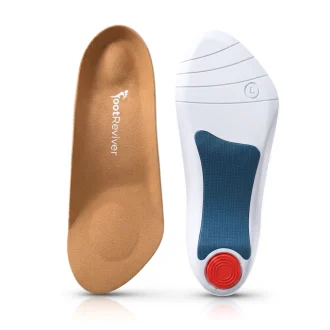
Plantar Fasciitis Arch Support 3/4 Length Heel Pain Relief Insoles
- 1x Pair of Arch Support Insoles — FootReviver Arch Support Insoles designed to steady your heel, support your arch, and help ease plantar‑fasciitis‑related heel discomfort during everyday wear
- For Men & Women
- Available in UK sizes 7–11 and 3–7; trim‑to‑fit forefoot for a closer match
- Slim 3/4‑length design fits most everyday shoes quickly and easily while leaving toes free
- Semi‑rigid plastic arch support, deep heel cup, and gentle medial posting (a small inner‑edge lift that guides alignment) help reduce excess inward roll and the strain it can place on the inner heel, arch, and plantar fascia
- Dual‑density foam cushioning with a built‑in heel pad absorbs impact while keeping midfoot support stable
- Soft, breathable fabric top cover with a moisture‑wicking surface helps keep feet drier and reduces rubbing; smooth against the skin to reduce irritation
- A practical choice for long shifts on your feet—retail, hospitality, healthcare—and for feet with low or high arches that benefit from steady support
- Designed to reduce strain on the plantar fascia and support comfortable daily movement; results vary and this is not a medical device
- Lightweight, durable, and easy to swap between shoes; trim the forefoot only, then seat the heel cup flush at the back
- Includes a full 30‑day money‑back guarantee
£9.99£10.99inc VAT -
Insoles for High Arches
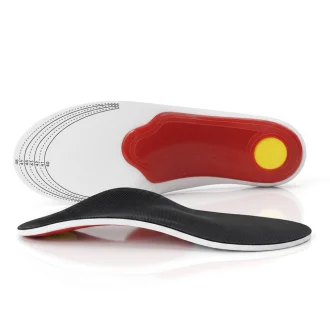
- Full-length orthotic insoles designed to support high-arched feet inside everyday and sports shoes.
- Made for adults whose feet feel sore, tired, or under-supported during standing, walking, or running.
- Especially relevant if pressure tends to build under the heel and the ball of the foot.
- Firm arch support helps the middle of the foot sit on a more supportive surface.
- A deep heel cup helps hold the heel more steadily inside the shoe.
- Heel cushioning helps soften repeated impact, especially on hard floors and pavements.
- Forefoot cushioning helps reduce pressure under the ball of the foot during push-off.
- Full-length coverage gives a more even underfoot feel from heel to toe.
- Best suited to shoes with removable insoles and enough depth to fit a supportive orthotic properly.
- Remove the original insole before fitting to avoid making the shoe too tight.
- If needed, trim the front carefully for a closer fit, making small adjustments at a time.
- Start by wearing them for one to two hours, then build up over several days.
- They are designed to improve support and comfort, but they are not a substitute for assessment if pain is severe, worsening, or unexplained.
£9.99£11.99inc VAT -

Morton’s Neuroma Insoles with Forefoot cushioning & Metatarsal support
- Full-length insoles made for pain in the ball of the foot that gets worse when too much pressure goes through one small area, especially burning, tingling, stabbing, or pebble-like discomfort between the third and fourth toes.
- Best suited to adults whose forefoot pain builds with walking, standing, commuting, or long periods on hard floors.
- Built-in left and right metatarsal support helps take pressure off the sore nerve area by supporting the foot just behind it, rather than letting the front of the foot take the full force of push-off.
- Full-length gel cushioning helps make repeated ground contact feel less harsh across the whole foot, especially on firmer surfaces.
- Moderate arch support helps the middle of the foot take more of your weight, so the front of the foot does not have to do quite so much.
- A firmer heel base and heel cup help the foot feel steadier from first contact, so weight moves forward more smoothly instead of dropping quickly into the ball of the foot.
- Slim, lightweight full-length shape is easier to fit into many everyday shoes with enough depth.
- Available in adult USA sizes 3–9 and 7–13, with a trim-to-fit forefoot so you can adjust the fit using the printed guide underneath.
- Usually most comfortable in trainers, work shoes, casual shoes, safety shoes, and other shoes with a roomier forefoot.
- Usually not a good match for high heels or tightly tapered shoes that still squeeze the front of the foot from the sides.
- For the best fit, remove the original liner if possible and place the insole fully back in the shoe so it lies flat from heel to toe.
- Build wear up gradually, starting with 1 to 2 hours a day before increasing as comfortable.
- A good fit should feel like a gentle lift behind the sore area, not a lump pressing into it.
- If the pain is severe, follows an injury, or does not fit the usual Morton’s neuroma symptoms, it is sensible to speak to a podiatrist, physiotherapist, GP, or another appropriate clinician.
£10.99inc VAT -
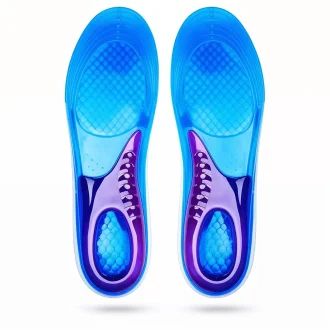
Gel Insoles for Morton’s Neuroma
- 1 pair of gel insoles designed to cushion the front of your feet and make pressure through the ball of the foot feel less harsh.
- Suitable for both men and women.
- Available in sizes 6–9 and 8–12.
- Mainly suited to adults with ball-of-foot pain, burning, tingling, numbness, or a “pebble in the shoe” feeling that may fit Morton’s neuroma.
- Soft medical-grade silicone gel helps absorb repeated impact during walking, standing, and everyday use.
- Forefoot cushioning helps reduce how concentrated pressure feels under the metatarsal region inside your shoes.
- Contoured arch support helps the foot work from a steadier base and may reduce how overloaded the front of the foot feels as the day goes on.
- Helps spread pressure more evenly across the sole rather than leaving one sore area to take most of the load.
- Can be useful for adults who spend long periods standing or walking, especially on hard floors.
- Trim-to-fit design helps the insoles sit more neatly inside different shoe shapes.
- Lightweight, breathable, durable build with moisture-wicking and odour-control features for everyday wear.
- Best used in shoes that do not crowd the forefoot, as tight shoes can still aggravate symptoms.
- It often helps to build up wear time gradually rather than wearing them all day straight away.
- Includes a 30-day money-back guarantee.
£11.99inc VAT -
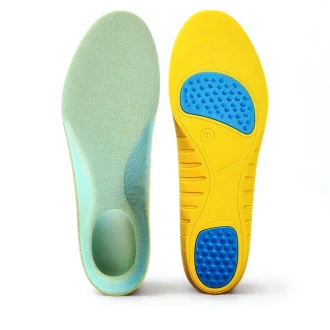
Orthotic insoles for knee pain
- 1x Pair of orthotic insoles designed to protect your knees from shock, pressure and strain – Consider slipping a pair of FootReviver orthotic insoles into your running shoes or even your everyday slippers. These insoles are designed to provide the advance orthotic support to your feet, thereby easing knee pain. By maintaining proper foot alignment and absorbing shocks, they prevent undue stress on the knees, keeping them safe and sound.
- For both Men & Women
- Available in a 5-7 & 8-10 UK shoe sizes (trim to fit)
- Made from shock absorbing EVA material that helps deplete shock and protect your lower limbs from damage every time your foot strikes the ground when walking, running and jumping
- Helps correct the way your feet function and restores biomechanical balance to your feet and lower limbs which will help you to place less strain and pressure on your knee joints
- These orthotic insoles are recommended by Podiatrists and Physiotherapists to help treat and ease a wide range of injuries and conditions affecting your feet and lower limbs such as Bunions, Morton’s Neuroma, Metatarsalgia, Atrophy of the Fat pad, Plantar Fasciitis, Achilles tendonitis, Heel spurs, Heel Bursitis, Shin Splints, Patella tendonitis, Meniscus Tears, Patellar tendon sprains and strains, Runners & Jumpers knee, Chondromalacia or irritated kneecap Arthritis and Osteoarthritis
- Features specially designed arch and heel support that keeps strain and pressure off key ligaments and tendonitis which are found in your feet such as your plantar fascia ligament to help prevent overuse injuries such as Plantar fasciitis
- Breathable ventilation holes help keep air circulating around your feet to keep them dry and prevent the build-up of bacteria and odour
- Ideal for wearing for your everyday activities, running, cycling, football, Rugby, basketball or just for standing for long periods on hard surfaces to properly protect, support and ease your feet and legs
- Includes a full 30-day money back guarantee!
£12.99inc VAT -
Orthotic Shoe Insoles for Flat Feet
- 1x Pair of Orthotic Shoe Insoles for Flat Feet that features specially designed heel and arch support technology to help reduce strain and pressure off your feet and ease foot and heel pain
- For both Men & Women
- Available in sizes: 7-11 & 3-7 (Can be cut to size and can be fitted inside virtually any type of shoes quickly and easily)
- Made from breathable, moisture wicking Active Carbon Fibre material that helps remove odour and keeps your feet fresh and dry
- Inbuilt arch support helps reduce strain and pressure off your feet and tilts your feet into the correct position as you walk
- Helps prevent common gait problems and biomechanical imbalances such as Overpronation and Supination which are leading causes of foot and lower limb injuries and pain
- Recommended for people with Flat Feet, High Arches, Plantar Fasciitis, Foot and Ankle Sprains and Strains, Achilles Tendonitis, Metatarsalgia, Bunions, Morton’s Neuroma, Heel Spurs, Foot Drop, Shin Splints Arthritis, Gout and more!
- Features a deep heel cup that stabilizes and supports your heels in the correct position preventing movement which could twist, sprain and damage your heels and ankles
- 3/4 Semi rigid plastic shell helps absorbs shock and spreads pressure evenly across the heel and foot stopping pressure points developing for better protection and comfort when standing for long periods of time
- Includes 30 day money back guarantee!
£9.99£11.99inc VAT -
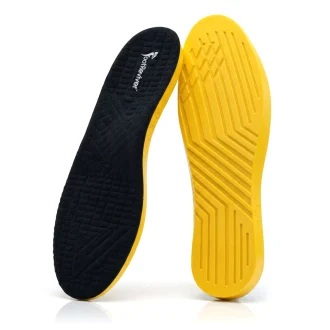
Pronation Insoles for Overpronation By FootReviver™
- Introducing the FootReviver Orthotic Pronation Insoles for Overpronation! These are more than just insoles, they are your first step towards alleviating foot pain and preventing debilitating conditions caused by overpronation. Here’s why you should consider them:
- For both Men & Women
- Available in a variety of shoe sizes
- Sizes are as follows: (XS: (EU 32-34) (UK: 1-2), Small (35-37) (2 – 3), Medium (38-40) (4-6), Large (41-43) (7-8.5), Extra Large (9-11)
- Innovatively Designed: These aren’t your average insoles. Their ergonomic design works to align your feet and ankles into an optimal position, preventing overpronation while walking. This simple yet effective strategy keeps your feet safe from overuse injuries like plantar fasciitis.
- Quality Material: Crafted from superior shock-absorbing EVA material, they shield your feet and lower limbs from impacts. This high-quality material helps provide a buffer between your feet and hard surfaces, reducing strain on your feet.
- Runner’s Best Friend: If you love to run but overpronation is holding you back, these insoles are just what you need. They offer the extra support runners require, allowing you to enjoy your passion without compromising on foot health.
- Perfect for Flat Feet: People with flat feet are more prone to overpronate. But fret not! These insoles are ideal for you, designed to offer the necessary support and comfort.
- Arch Support: They feature built-in arch support, relieving tension and pressure off your arches. This helps combat arch pain and strain, making each step more comfortable.
- Hassle-Free Guarantee: We’re so confident you’ll love the relief these insoles provide, we offer a full 30-day money-back guarantee. This means you can try them out risk-free and discover the difference they can make in your life.
- Take a step towards better foot health today with the FootReviver Orthotic Pronation Insoles for Overpronation. You’ll be amazed at the difference they can make! Don’t let overpronation hold you back any longer. Choose comfort, choose FootReviver.
£14.95inc VAT -
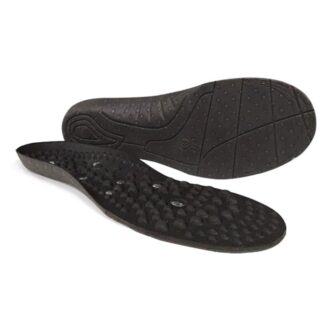
Magnetic Massaging Insoles
- 1x Magnetic massaging insoles designed by FootReviver™ to help ease foot and heel pain and massage your feet as you walk
- Available in size Large or Medium
- Medium (UK shoe size 7-10), Large (UK shoe size 10-13), cut to fit.
- Ideal for treating and easing a range of injuries and conditions affecting your feet including Plantar fasciitis, Heel Spurs, Metatarsalgia, Bunions, Hammer toes, Arthritis, Gout, Neuropathy and Diabetes
- Features strategically placed magnets that provide soothing magnetic therapy giving your feet deep targeted relief to help ease your aches and pains
- Massaging acupuncture nodes help massage your feet as you walk helping stimulate blood circulation to your feet aiding the natural heling process of injuries by supplying fresh oxygenated blood that will reduce inflammation, swelling and pain and improve your injury recovery
- Inbuilt orthotic arch support system supports your feet in the correct position helping to improve your gait and the biomechanical balance and function of your feet which will help to reduce pressure and strain on your lower limbs and prevent overuse injuries such as plantar fasciitis from occurring
- A deep heel cup helps to stabilize and protect your heels and prevent you from twisting and spraining your ankle
- Made from lightweight, flexible EVA material designed to protect your feet by absorbing shock and spreading pressure evenly underneath your feet to help prevent pressure points from forming and damaging your feet
- Helps keep your feet stay dry, sweat free and fresher for longer thanks to the insoles lightweight and breathable design
- Includes a full 30 day money back guarantee!
£12.99inc VAT -
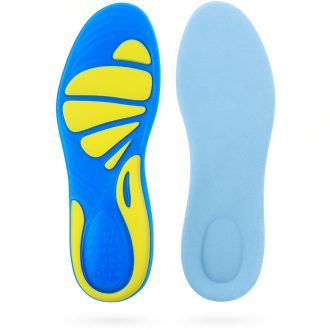
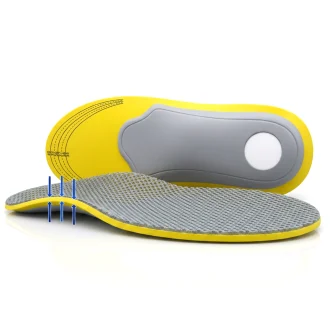
Gel Insoles for Heel Pain (Blue and Yellow)
- 1x pair of orthotic gel insoles for heel pain by FootReviver™
- For both Men & Women
- Available in a range of different sizes and can be easily slipped into virtually any type of shoes with total ease
- Ideal for people suffering from Plantar fasciitis, Metatarsalgia, Achilles tendonitis, Oedema (swollen feet), Gout, Neuropathy, Diabetes and Arthritis
- Made from shock absorbing silicone gel designed to provide better protection to your feet
- Inbuilt arch support helps correct the way your feet function and help ease pressure and strain off your feet
- Deep heel cup design provides extra support, stability and heel protection
- Designed to prevent the build up of pressure underneath your soles and heels making these insoles perfect for people who have to stand all day on hard surfaces
- Super lightweight to wear and constructed to be as durable as possible
- Includes a full 30 day money back guarantee if you are not 100% satisfied with your purchase!
£9.99inc VAT