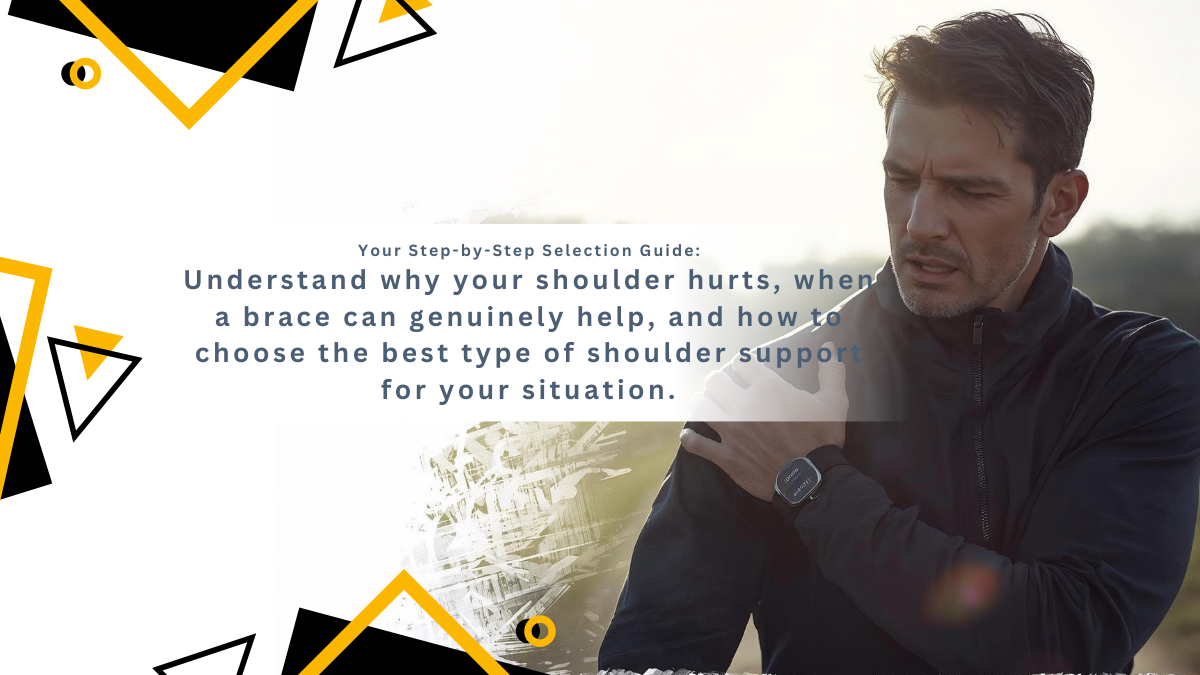
Shoulder Pain Remedies: What is the best Shoulder Brace to buy?
If your shoulder has started to ache with everyday movements, you’re not alone. Reaching up to a shelf, turning in bed, or holding your arms out in front of you for a while can all bring on a sharp catch or a deep ache. It’s common to feel frustrated when movements that used to feel easy suddenly become painful.
Shoulder braces & supports to consider
The supports below cover the four main types of shoulder brace described above: a compression sleeve, a stabiliser brace, a sling, and a clavicle/posture brace. Each is designed to change how forces act on your shoulder in a specific way. Matching the brace type to how your shoulder pain behaves is more important than simply choosing the firmest support.
If your shoulder pain has started suddenly after a significant injury, or your symptoms are severe or changing quickly, it’s important to have it assessed by a clinician before you decide on a brace.
The summaries that follow explain who each brace is typically used for, how its design changes the mechanics of the shoulder, and when it’s usually worn. These are the kinds of designs physiotherapists and doctors often recommend for common shoulder problems, because they reflect the patterns they see most often. If you’re unsure which option is right for you, it’s sensible to talk it through with a clinician who knows your shoulder problem before you decide.
Shoulder compression sleeve brace
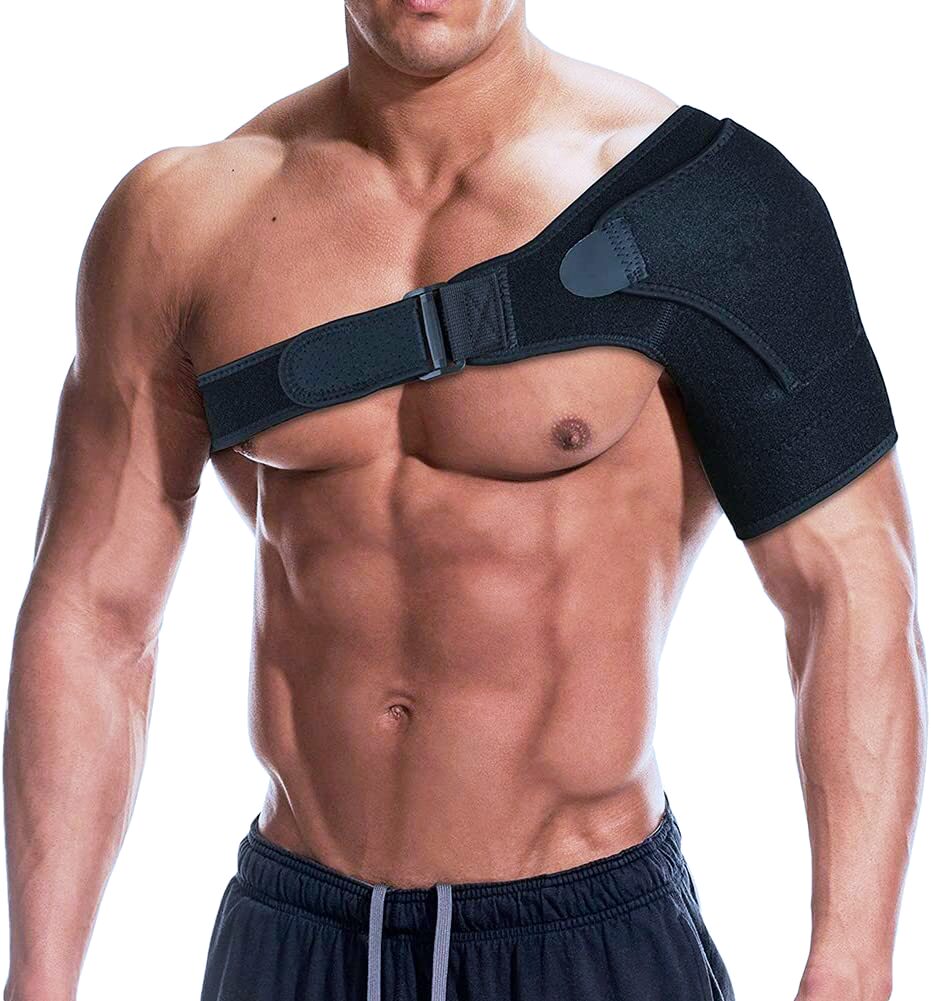
This NuovaHealth compression sleeve is often the most suitable support when the main problem is irritated or overworked shoulder tissues or a sharp “painful arc” while you can still move the arm fairly freely.
- May suit if: you want light support and extra awareness of shoulder position for everyday activities and exercises, rather than a firm brace that holds the joint almost still.
If your shoulder matches that “painful arc” pattern and you’re mainly looking for support you can wear during everyday activities or exercises, this is usually the best starting point. Open the section below to see how its shape and gentle compression change the way your shoulder moves and feels.
More about this brace
The sleeve fits closely around your upper arm and shoulder, providing gentle, even compression to the rotator cuff tendons and the soft tissues around them. This can help limit how much swelling builds up after you’ve used the shoulder and improve your awareness of exactly where the joint sits when you move. Many people find that this helps them lift to shoulder height with less catching or hesitation and reduces those sudden catches that make you stop mid‑movement. That’s why it often feels easier to lift once the sleeve is on.
Because irritation in these tissues often builds over the next few hours after they’ve been stressed, supporting them during and after activity can make the next‑day soreness feel more manageable. By lightly gripping the shoulder girdle, the sleeve also discourages the shoulder from shrugging up and rolling forwards as you lift. That shrugged, rounded position narrows the space under the bony arch at the top of the shoulder and can pinch the tendons and bursa. Helping the joint stay centred under that arch may reduce how sharply the tissues react as you pass through the painful band of movement.
This sleeve is designed to cover both the upper arm and the shoulder joint without digging into the side of the neck. The breathable, slightly stretchy material is chosen so you can wear it comfortably under a shirt or top without seams rubbing across the edge of the shoulder. That makes it practical to wear for a full work shift or while doing light daily activities, instead of only for very short periods.
In practice, people often wear a sleeve like this during the activities that tend to provoke their symptoms, such as repetitive reaching or lifting tasks at work or hobbies that place the arm in front of the body for long spells. It can also help on mornings when the shoulder feels stiff, providing warmth and support while you work through exercises. It’s not intended to immobilise the joint after a major injury or surgery and isn’t usually sufficient on its own for a shoulder that is significantly unstable or giving way.
Each NuovaHealth brace is designed with clinical precision and tested for comfort in daily use.
Shoulder stabiliser support brace
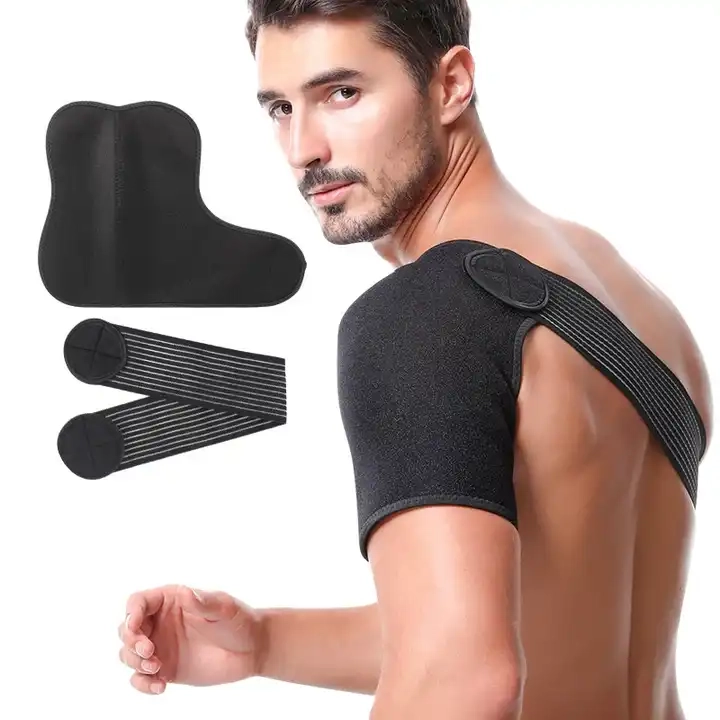
This NuovaHealth stabiliser brace is often the best option when the shoulder feels loose, unstable, or as if it might slip out of place in certain positions, especially after dislocation or with ongoing instability.
- May suit if: you’ve had a dislocation or repeated partial slips and want extra support and reassurance during sport, lifting and carrying, or early return to activity alongside a strengthening programme.
If your main concern is that the shoulder might slip again in certain positions, especially during sport or heavier work, this is typically the best type of brace to consider. Open the section below to see how the strap layout limits those risky angles while still letting you move within a safer range.
More about this brace
The brace uses adjustable straps to secure your upper arm closer to your body and limit how far it can lift and rotate. It’s specifically designed to restrict the movement where the arm is lifted out to the side and turned backwards, because that’s the position where unstable shoulders are most likely to slip. After a dislocation or repeated partial slips, the capsule, ligaments and labrum that help hold the ball in the socket can be stretched or torn, allowing the ball to move forwards or downwards more than it should at the edge of movement.
That feeling that the shoulder might pop out in certain arm positions is your body’s way of warning you about extra looseness in those tissues. Knowing the brace prevents the shoulder from moving into that risky position can make it easier to move more normally and take part in rehabilitation exercises that strengthen the rotator cuff and shoulder blade muscles. These muscles actively keep the ball centred in the socket when you lift, reach or carry. That’s the reassurance many people need to start moving again.
On this design, the main supporting strap runs across the front of the shoulder and chest in a way that specifically resists that out‑and‑back rotation. The secondary straps can be adjusted to give more or less restriction, so you can set it differently for non‑contact training, match play in suitable sports, or heavier manual work that involves lifting and pushing. The aim is to prevent the shoulder from moving into its most vulnerable positions while still letting you move usefully within a safer range.
This type of brace is usually worn for set periods, not all day and night. It’s often worn during sport, specific work shifts, or in the early weeks of a rehabilitation programme after a dislocation or subluxation that has already been assessed. It’s not a substitute for having a new injury assessed, and long‑term use without a strengthening plan can lead to stiffness and dependence. It works best as additional support while you rebuild strength and control, not as a replacement for that process.
NuovaHealth stabiliser braces are built for reliable control and comfort during recovery.
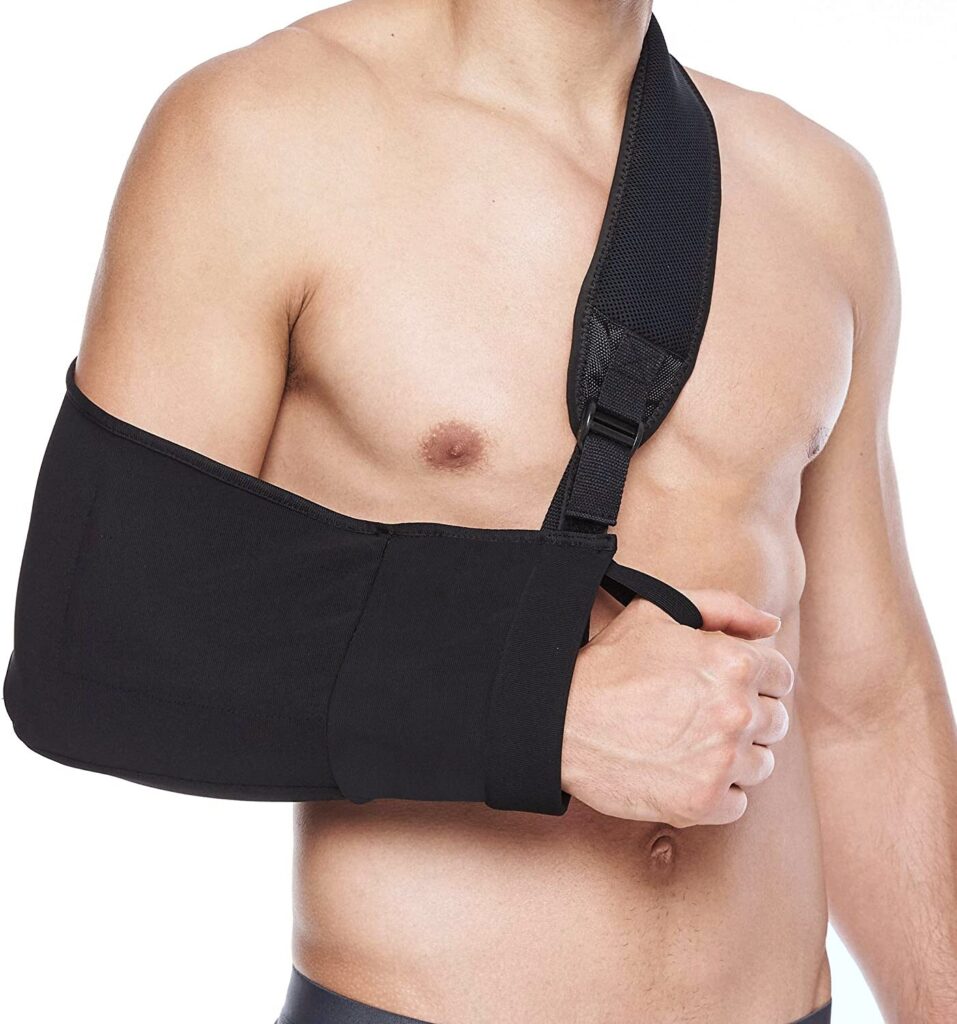
Rotator cuff sling
This NuovaHealth sling provides firm support against the weight of the arm when the shoulder and arm need protection from most movements, for example in the first days or weeks after certain fractures, significant tendon or ligament injuries, or surgery.
- May suit if: a hospital or clinic team has advised you to use a sling to rest the shoulder while bone or repaired soft tissues begin to heal, and you need help taking the weight of the limb off the painful area.
For confirmed fractures, dislocations or repairs, a sling like this is usually chosen for you by the hospital or clinic as part of a clear plan. Open the section below to read how it supports the arm’s weight and why that makes such a difference in the early stages.
More about this brace
The sling supports your forearm and holds the elbow close to your side, reducing the constant downward pull on the shoulder joint, the rotator cuff tendons and any healing bone. By taking the weight of the arm, it limits movement at the shoulder and helps control pain during the early recovery phase. Features such as a thumb loop help keep the hand and wrist comfortably supported, while a padded shoulder strap spreads pressure to reduce strain on the neck and upper back.
This design has a shaped pocket for the forearm and a thumb loop so you’re not constantly gripping to hold the sling in place, which can otherwise increase tension in the forearm and hand. The padded strap helps prevent new neck discomfort while you’re protecting the shoulder – a problem that’s common with narrower straps that dig in at the side of the neck.
This type of sling is usually worn for most of the day and sometimes at night for a period set by your treating team, especially when you’re moving around, travelling, or in busy environments where the arm might accidentally be knocked. It makes it easier to move around, get up from a chair, or use the non‑affected arm for washing and dressing without the injured shoulder being repeatedly jolted by its own weight or sudden movements. That’s why letting the arm hang freely can be painful straight after this kind of injury – the sling stops that constant pull. That’s what makes it so effective in the first stage of recovery.
As healing progresses and your team is happy with how the fracture or repair is behaving, you’ll usually be advised to spend short periods out of the sling for gentle, planned exercises and light use of the arm. Prolonged immobilisation can cause stiffness and muscle weakness, so a sling shouldn’t be used indefinitely without guidance. Its main role is to protect the shoulder and make pain and daily movement more manageable while you follow a structured rehabilitation plan.
NuovaHealth slings combine medical‑grade support with practical comfort for everyday wear.
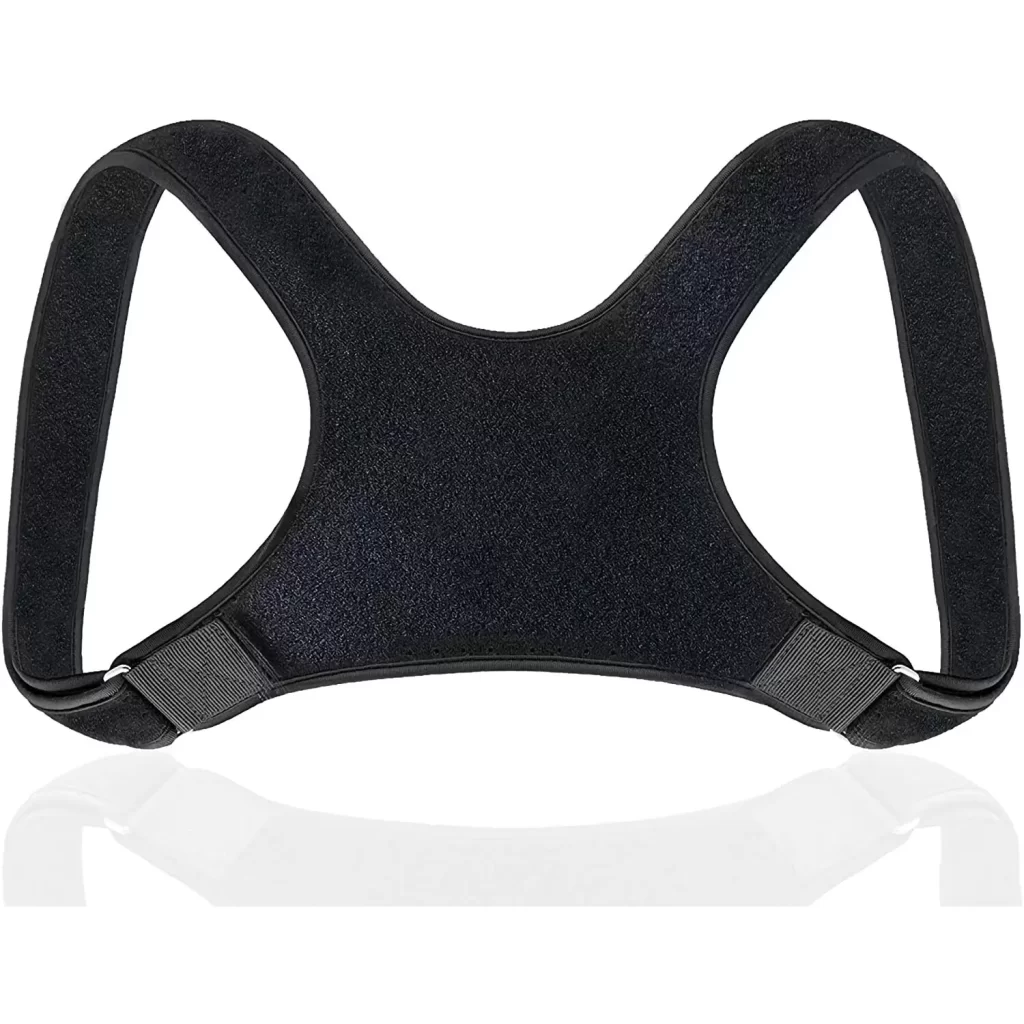
Clavicle brace support
This NuovaHealth clavicle brace is often the most suitable support when you need collarbone or postural support across the upper back and shoulders, under clinical guidance.
- May suit if: you notice a dull ache across the upper back and base of the neck after long periods sitting or standing with your shoulders rounded forwards, or you’ve been advised to wear one while a collarbone fracture heals.
If your discomfort increases when your shoulders round forwards for long periods, or you’ve been told to use a brace while a collarbone injury heals, this is often the best‑fitting design. Open the section below to see how it changes shoulder position and how to use it as a reminder rather than a rigid splint.
More about this brace
By gently drawing your shoulders back and supporting the upper back, the brace encourages a more open chest position and reduces prolonged forward rounding. This change in alignment can reduce strain on the muscles across the back of the neck and shoulders and alter how load is transmitted through the collarbones and the joints at the top of the shoulder. In the context of a healing clavicle fracture, this can help keep the broken ends of the bone, or the small joint at the top of the shoulder, in a better position while they knit, alongside limits on arm use set by a clinician.
For posture‑related discomfort, the main value of this design is as a reminder. When your shoulders begin to slump forwards, the brace gives a gentle cue to correct position, making it easier to spend less time in the postures that aggravate symptoms. Over time, and combined with strengthening and stretching exercises for the upper back and shoulders, this can support more sustainable improvements in posture and comfort. That’s why many people find it helps them stay aware of their shoulder position throughout the day.
This brace is built to be as low‑bulk as possible so it can sit under clothing without creating obvious lines or digging into the skin. The padded straps are adjustable so you can find a setting that reminds you to sit or stand taller without feeling as though the brace is cutting in across the shoulders, which is a common complaint with stiffer designs. That makes it practical to wear during the times of day when you know you tend to round forwards, such as long periods at a desk, standing at a counter, or doing tasks with your arms in front of you.
In practice, a clavicle brace like this is usually worn for set periods during the day when you tend to round your shoulders the most, rather than continuously. After a fracture or significant injury, the type of brace, how tightly it’s fitted, and how long it’s worn should all follow the advice of the treating team. When used for posture‑related pain, it should be thought of as a reminder and support while you work on the underlying muscle strength and flexibility. That’s what makes it effective as both a recovery aid and a posture‑training tool.
NuovaHealth clavicle braces combine clinical design with everyday comfort, helping you maintain better posture and support healing where needed.
Common shoulder problems and how these braces fit in
Shoulder pain and stiffness usually fall into a few main types. Each type is defined by where the pain sits, when it appears, and how it changes with different movements. Understanding your symptoms in this way can make it easier to see what’s happening inside the joint and how the braces described above can help. If you’ve already seen a clinician and been given a diagnosis, you can often match it to the description that feels most like your own shoulder experience.
Soft‑tissue overload and impingement
Soft‑tissue overload around the shoulder often becomes noticeable when you lift your arm through a certain part of its movement. The shoulder may feel comfortable when your arm rests by your side, but as you raise it towards shoulder height you may feel a sharp, catching pain. Sometimes it eases again when the arm is fully overhead. That sudden catch is often the first sign that the tissues are being pinched. The pain often sits across the top of the shoulder or runs down the outside of the upper arm. Conditions such as rotator cuff tendonitis, subacromial bursitis and shoulder impingement usually follow this pattern.
In this situation, the rotator cuff tendons and the small fluid‑filled sac called the bursa, which sits under the bony arch at the top of the shoulder, have become irritated. Repeated overhead work, frequent reaching at shoulder height, or suddenly doing much more lifting than usual can all place more strain on these tissues than they can tolerate. Overload means asking the shoulder tissues to work harder or more often than they can manage, so they become sore and inflamed. As they thicken, there is less space for them to glide under the arch, so they are more likely to be pinched as you move through that middle “painful arc”. This is why inflammation often builds gradually, and the ache is often worse later the same day or the following morning, especially after a period of lifting or reaching.
This type of shoulder pain often eases with gentle, controlled movement after rest but flares again with heavier or awkward lifting — for example, repeatedly placing objects into cupboards at shoulder height or lifting items onto shelves. It can feel as though there’s a painful section in the middle of the lift that eases again once you move past it.
A shoulder compression sleeve brace can help by applying light, even compression around the rotator cuff and bursa and by improving your awareness of shoulder position as you move. It also discourages the shoulder from lifting upwards and rolling forwards, which narrows the space under the bony arch and increases pinching. By helping the ball of the shoulder joint stay centred under that arch, the sleeve can reduce how sharply the tissues react as you move through the painful arc.
For shoulders that are more sensitive or painful, or where control at the top of the lift is poor, a shoulder stabiliser support brace can be useful during tasks that involve repeated lifting or carrying at shoulder height. Because it limits how far the arm can lift and rotate into the position that causes the worst pinching, it reduces how often the cuff and bursa are squeezed at their most vulnerable point. People often use this type of brace during tasks or activities that involve repeated lifting or carrying, while relying on tailored exercises to build longer‑term strength and movement control.
If your shoulder pain behaves in this painful arc pattern and the joint otherwise feels steady, the compression sleeve or, in some situations, the stabiliser brace may be worth discussing with a clinician as part of a wider rehabilitation plan. If the pain starts suddenly, is severe, or is linked with weakness, numbness or a visible change in shoulder shape, it’s important to have it assessed before using a brace without professional advice.
Instability, dislocations and labral problems
An unstable shoulder often feels as if it might move out of place, especially in certain positions. This group includes full dislocations, where the ball comes completely out of the socket, partial slips called subluxations, and labral tears, which affect the ring of cartilage that deepens the socket. If you’ve ever felt that your shoulder might slip or give way when you lift the arm out to the side and turn it backwards — for example, when throwing, tackling, reaching into the back seat of a car or bracing with an outstretched arm — this section may sound familiar.
After a first dislocation or repeated smaller slips, the capsule, ligaments and labrum that hold the ball in the socket can become stretched or torn. When the shoulder is lifted and turned outwards, the ball can move forwards or downwards more than it should. That extra movement can be painful and make the joint feel unreliable. You may notice yourself tensing or avoiding certain arm positions because they have triggered slips before. It’s understandable to feel cautious about moving the arm into those positions again once it has slipped there even once.
A shoulder stabiliser support brace is often recommended here. By securing the upper arm closer to the side of the body and limiting how far it can lift and rotate, especially into that out‑to‑the‑side and turned‑back position where the ball has slipped in the past, it reduces the chance of the ball moving into those problem positions. This gives the damaged capsule and labrum time to recover, reduces fear of movement, and allows you to take part in everyday or rehabilitation activities more safely while you strengthen the muscles that actively stabilise the shoulder.
In the first few days or weeks after a significant dislocation, surgery, or certain fractures, a rotator cuff sling is often used instead. It holds the arm close to the side of the body and takes most of the weight of the limb. Supporting the arm in this way reduces strain on the damaged capsule and labrum and limits stretching on healing tissues. Once pain and swelling have eased and healing has progressed, clinicians may suggest moving into a stabiliser‑type brace during higher‑risk activities such as contact sport, racquet sports, or manual work that involves lifting and pushing.
Any first‑time dislocation, traumatic injury, or new feeling of instability needs medical assessment and often imaging. Braces are just one part of treatment and should never delay proper assessment. In longer‑standing instability that has already been assessed, a stabiliser brace can be a practical way to reduce the risk of further episodes during sport and heavier tasks while you work on strength and control with a physiotherapist.
Stiffness, frozen shoulder and arthritis
If your shoulder feels stiff and achy rather than sharply painful, it may be due to a frozen shoulder or arthritis. Movements that take the arm through a wide range can become difficult. Two common causes are frozen shoulder (adhesive capsulitis) and arthritis of the shoulder joint.
With frozen shoulder, the capsule surrounding the joint gradually thickens and tightens over months. It usually passes through three overlapping phases. At first, there’s a painful phase, where even small movements can be very sore because the capsule is inflamed, and this often disturbs sleep. A stiffer phase then follows, where pain may ease a little but movement becomes very restricted, particularly when you try to turn the forearm outwards or reach overhead. Finally, movement gradually returns as the shoulder loosens.
With arthritis, the smooth cartilage covering the joint surfaces wears down, so the bone surfaces underneath are less cushioned. The joint becomes more sensitive when you take it to the end of its movement, such as reaching overhead, reaching behind your back to fasten clothing, or lifting something away from your body. Deep, dull aching is common, especially after heavier use and at night or first thing in the morning.
A compression sleeve brace can help by providing warmth and light support around the joint. The gentle compression may ease stiffness and improve awareness of shoulder position, making it easier to keep movements slow and controlled within a comfortable range. People often notice this is particularly useful when starting the day or when doing exercises prescribed by a physiotherapist to maintain or gradually regain movement.
Occasionally, a shoulder stabiliser brace is used short‑term to limit the very end of movement that strongly aggravates symptoms, for example in more advanced arthritis or in particularly painful phases of frozen shoulder. By preventing the arm from moving into the very top of its range of motion, it can make tasks such as dressing or reaching for items on higher shelves less uncomfortable. It’s important to balance brace use with guided exercise, as relying on a firm brace all the time can make stiffness worse if you stop moving the shoulder altogether.
Frozen shoulder and arthritis both tend to improve gradually over time and sometimes occur alongside other shoulder issues, so they’re best managed with professional input. A brace can make painful phases and demanding tasks more manageable and give you more confidence to move, but it won’t change the overall timeline of the condition and shouldn’t replace a broader plan that includes movement, strengthening and, where appropriate, other treatments recommended by a clinician.
Fractures and traumatic injuries
When a fracture occurs around the shoulder, it usually follows a clear injury such as a fall, a direct impact or a strong wrenching of the arm. The pain is usually immediate and quite severe, and you may find you can’t lift the arm at all. The shoulder may look deformed or shortened. This group includes fractures near the top of the arm bone (proximal humerus fractures), shoulder blade fractures (scapula fractures) and collarbone fractures (clavicle fractures).
These injuries need medical assessment, often including X‑rays or other imaging, to determine the exact break pattern and whether surgery is required. Where fractures are stable enough to be managed without surgery, braces or slings are used to keep the shoulder still and well aligned while bone healing takes place. Without that support, even the natural weight of the arm can pull on the healing bone, increasing pain and potentially delaying or altering the way the bone heals.
A rotator cuff sling is commonly used for proximal humerus and some scapula fractures. By supporting the weight of your arm and holding the elbow by your side, it reduces movement at the fracture site and the constant pull of gravity on the healing bone and surrounding soft tissues. This helps control pain and allows early healing to progress, while making routine movements such as walking or moving from sitting to standing less jolting for the injured shoulder.
For fractures of the collarbone or injuries at the top of the shoulder (shoulder separation at the acromioclavicular joint), a clavicle brace support is often used instead of, or alongside, a sling. By gently drawing the shoulders back, it can help keep the broken ends of the collarbone or the small joint at the top of the shoulder in a better position while they heal, as part of a wider treatment plan.
The type of brace, the position of your arm, and how long any support is worn should always follow the advice of the treating team. Braces are not a substitute for proper fracture assessment and guidance, but when correctly prescribed they can make movement around the home safer and more comfortable during the healing period and reduce the chance of the bone healing in a poor position.
Nerve‑related pain and thoracic outlet problems
Nerve‑related shoulder problems often cause pain, tingling, numbness or weakness that runs from the neck or shoulder into the arm and hand. The arm can sometimes feel heavy or full. Two examples are brachial plexus injuries and thoracic outlet syndrome.
In a brachial plexus injury, the network of nerves that runs from the neck to the arm is stretched or compressed, often after trauma where the shoulder is forced downwards away from the neck. If shoulder muscles become weak as a result, the arm may hang more heavily from the joint, increasing strain on the capsule and ligaments and predisposing to stiffness or partial slips. In thoracic outlet syndrome, nerves and blood vessels can be compressed in the narrow space between the collarbone, first rib and surrounding muscles, particularly when the shoulders are rolled forwards or the arms are held overhead for long periods, such as during overhead work or long spells at a keyboard with the shoulders hunched.
Typically, nerve compression causes tingling, numbness and weakness, while pressure on blood vessels can lead to changes in colour and temperature and a sense of heaviness in the arm. While braces don’t treat the nerve injury directly, they can help with the positional side of the problem — how your arm hangs and how your shoulders sit. A shoulder stabiliser brace or, in milder cases, a compression sleeve can support the weight of the arm and reduce downward drag on the shoulder joint when muscles are weak. A clavicle brace support that encourages a more open chest and less rounded shoulder position may help reduce the time you spend in postures that narrow the thoracic outlet, so the nerves and vessels are under less prolonged pressure.
Because nerve‑related problems can be complex and sometimes serious, it’s best to have them checked early. Braces are best used here as part of a plan set out by a specialist, rather than as a first‑line self‑treatment.
Using a shoulder brace safely and effectively
Whichever type of shoulder support you’re using, a few simple habits can make a big difference to comfort and safety.
- Check fit and comfort – A brace should feel snug but never tight enough to mark the skin or cause pins and needles. If it’s too tight, it can restrict circulation or irritate nerves; if it’s too loose, it won’t provide meaningful support. Adjust straps gradually and check the skin regularly, especially in the first few days of use.
- Build wear‑time gradually – Instead of wearing a new brace all day from the start, begin with shorter periods during the activities that bother your shoulder most and gradually build up as tolerated. This helps you notice how the shoulder responds and reduces the chance of leaning on the brace instead of improving muscle control.
- Use it alongside, not instead of, movement – For most shoulder conditions, controlled movement and strengthening are vital. If pain leads you to move the shoulder less and less, stiffness and weakness can build up, which in turn makes even small movements more painful. A well‑fitted brace can help interrupt that cycle. Follow any exercise plan given by your physiotherapist and use the brace to support, not replace, that work.
- Don’t sleep in a brace or sling unless you’ve been told to – As a rule, avoid sleeping in a shoulder brace or sling unless you’ve been told to. Worn without clear instructions, straps can move towards the neck or cause pressure and circulation problems if you do not naturally change position in your sleep. After certain operations or fractures, hospitals sometimes give very specific written instructions about night‑time use of a sling or brace. If you have been given clear advice like this, follow it exactly. If you have not been told to wear a brace or sling at night, do not decide to sleep in one without guidance.
- Review regularly – As pain improves and strength builds, you may be able to reduce how often or how long you wear a brace. Regular review with a clinician helps you decide when it’s sensible to start weaning off support.
A brace shouldn’t be used as a replacement for having a new or worrying shoulder problem properly assessed and diagnosed. If your symptoms are new, severe, or changing quickly, speak to a GP, physiotherapist or another appropriate clinician.
When to seek further help
Many shoulder problems improve with time, activity changes, exercises and, where appropriate, a brace. Sometimes, though, it’s important to have your shoulder checked.
Speak to a GP, physiotherapist or another appropriate clinician if:
- Pain is severe, worsening, or not improving over a few weeks despite sensible self‑care.
- You’ve had a recent fall or impact and are unable to lift the arm, or the shoulder looks obviously out of place.
- You notice new or spreading numbness, tingling or weakness in the arm or hand.
- The arm or hand becomes swollen, unusually cold or discoloured.
- Shoulder pain is associated with general symptoms such as fever, unexplained weight loss, or chest discomfort and breathlessness.
Shoulder braces and slings are not designed to prevent or treat blood clots. After an injury or operation your overall movement may be reduced, which can increase the risk of clots. New swelling, pain, warmth or redness in a limb, or sudden unexplained breathlessness, should be assessed urgently.
In these situations, a brace alone isn’t enough — you’ll need proper assessment. A clinician can help identify the underlying cause and guide safe, effective treatment, which may still include a brace as one component once more serious problems have been ruled out or managed.
Frequently asked questions
Below are clear, concise answers to the questions patients most often ask about our range of shoulder supports.
Do shoulder braces help shoulder pain?
Shoulder braces and supports can help with specific shoulder problems such as tendon irritation, instability or mild stiffness by changing how forces pass through the joint, supporting irritated tissues, or limiting movements that tend to aggravate symptoms. They won’t cure the underlying problem by themselves. Their main purpose is to reduce strain and give you more confidence while you follow a treatment plan, which usually includes exercises and adjustments to how you use your shoulder in your usual activities.
How do I choose the best shoulder brace for my problem?
The most suitable brace depends on how your shoulder feels and behaves:
- Achy, overloaded soft tissues and mild stiffness often respond best to a compression sleeve.
- Feelings that the shoulder might move out of place usually point towards a stabiliser brace, especially during higher‑risk activities such as contact sport or manual work.
- Fractures and early post‑operative recovery often need a sling, or sometimes a clavicle brace, as directed by your clinician.
- Postural or collarbone‑related problems may involve a clavicle brace if advised by a clinician.
If you’re unsure which description matches your symptoms, or your pain is severe, it’s best to have it reviewed by a clinician before choosing a brace.
Can I wear a shoulder brace all day?
How long you can wear a brace depends on its type and purpose. A light compression sleeve can often be worn for longer periods during the day if it feels comfortable and isn’t too tight. Firmer stabiliser braces and slings are usually worn for set periods, such as during specific tasks or in the early weeks after an injury or surgery, following a clear plan set by your clinician. Continuous wear without movement can actually make stiffness worse — that’s why regular exercise is essential. Braces from our range are clinically designed to support the joint while still allowing natural movement within your comfort range, helping you stay active and maintain shoulder mobility as you recover.
Should I sleep in a shoulder brace or sling?
In most cases, no, you shouldn’t sleep in a shoulder brace or sling unless you’ve been given specific written instructions to do so by your hospital or clinic. Without clear guidance, straps can move towards the neck and cause pressure or circulation problems during the night.
If you haven’t been told to wear one in bed, avoid doing this without professional advice. If you’re unsure, ask the clinician looking after your shoulder.
How tight should a shoulder brace feel?
A brace should feel supportive but still allow comfortable movement. It shouldn’t cause pins and needles, throbbing, obvious marks on the skin, or loss of feeling. You should be able to slip a finger easily under the strap or fabric. If you notice numbness, tingling, colour changes, or any significant discomfort, loosen the brace or remove it and get advice before using it again.
Do I still need exercises if I use a brace?
Yes. In most shoulder conditions, exercises and controlled movement are essential for long‑term recovery. A brace can make those movements more comfortable and help you feel more confident using the shoulder, but it doesn’t replace the need to rebuild strength, flexibility and control. The brace supports your shoulder while you rebuild strength — it can’t replace that process.
Should I buy a shoulder brace before seeing a clinician?
If your shoulder pain is recent or linked to an injury, it’s best to have it assessed before buying a brace. For longer‑term, familiar problems that match the types described here, a suitable brace can sometimes be tried while you’re waiting for or continuing treatment, especially if you’ve discussed it with a GP or physiotherapist.
If you’re in any doubt, a brief consultation before buying is safer than making assumptions.
What to do next
Shoulder pain often develops because of how the joint and surrounding tissues are loaded and moved when you lift, reach, carry or lie on your side. The tendons, bursae, joint surfaces, ligaments and nerves can all become irritated when they’re repeatedly pinched, overloaded, held at the very end of their movement range, or placed under sudden stress after an injury.
If your shoulder matches one of the types described above – a painful arc with soft‑tissue irritation, a sense of instability in certain positions, stiffness and deep aching, clear trauma with fractures, or nerve‑related tingling and heaviness – supports from our range are clinically designed to address those mechanical issues effectively. The compression sleeve, stabiliser brace, sling and clavicle brace each change how forces act on the shoulder in specific ways, so that rehabilitation feels more comfortable and steady. For many people, the right shoulder support makes the difference between pushing through everyday shoulder movements and managing them more calmly while the shoulder recovers.
If you’re considering a shoulder support, notice when your pain tends to flare up, which movements set it off, and whether your shoulder feels more stiff, weak, unstable or simply sore after use. If those symptoms sound familiar and you’ve already had the problem checked, it’s reasonable to try the brace type that fits and see how it affects day‑to‑day movements such as washing, dressing, reaching for objects or other typical arm movements. It’s advisable to speak with a GP or physiotherapist if your symptoms are new, changing quickly, or don’t quite fit these descriptions before deciding.
Safety and professional guidance
This guide provides general information to help you understand shoulder supports. It can’t provide a diagnosis or a personalised treatment plan for your individual situation.
Our range of shoulder supports should:
- Never replace medical assessment, diagnosis, or treatment,
- Not be used to prevent or treat serious conditions such as infections, fractures, deep vein thrombosis, heart or lung problems,
- Form just one part of managing shoulder problems, alongside appropriate exercises, activity changes and any other treatments advised.
Seek prompt medical assessment if you notice any of the following:
- New, severe or rapidly worsening shoulder pain,
- Obvious deformity, major swelling or a shoulder that looks out of place,
- New or spreading numbness, tingling or weakness,
- Changes in skin colour or temperature in the arm or hand,
- Shoulder pain with fever, unexplained weight loss, night sweats, chest discomfort or breathlessness.
Shoulder braces and slings are not designed to prevent or treat blood clots. After an injury or operation, your overall movement may be reduced, which can increase the risk of clots. If you notice new swelling, pain, warmth, or redness in a limb, or sudden unexplained breathlessness, seek urgent medical assessment.
Always follow the specific advice of the healthcare professionals guiding your care, including any instructions on how and when to use your shoulder support, and for how long. If you’re unsure whether a brace is right for you, or your symptoms are changing or not improving, seek professional advice before starting or continuing to use a shoulder support.